As a UNESCO Creative City, San Cristóbal de las Casas has a vibrant art scene that is woven into everyday life. Besides crafts and galleries, street art is widespread, especially in the historic center, and seen as much as a form of resistance as of communication.
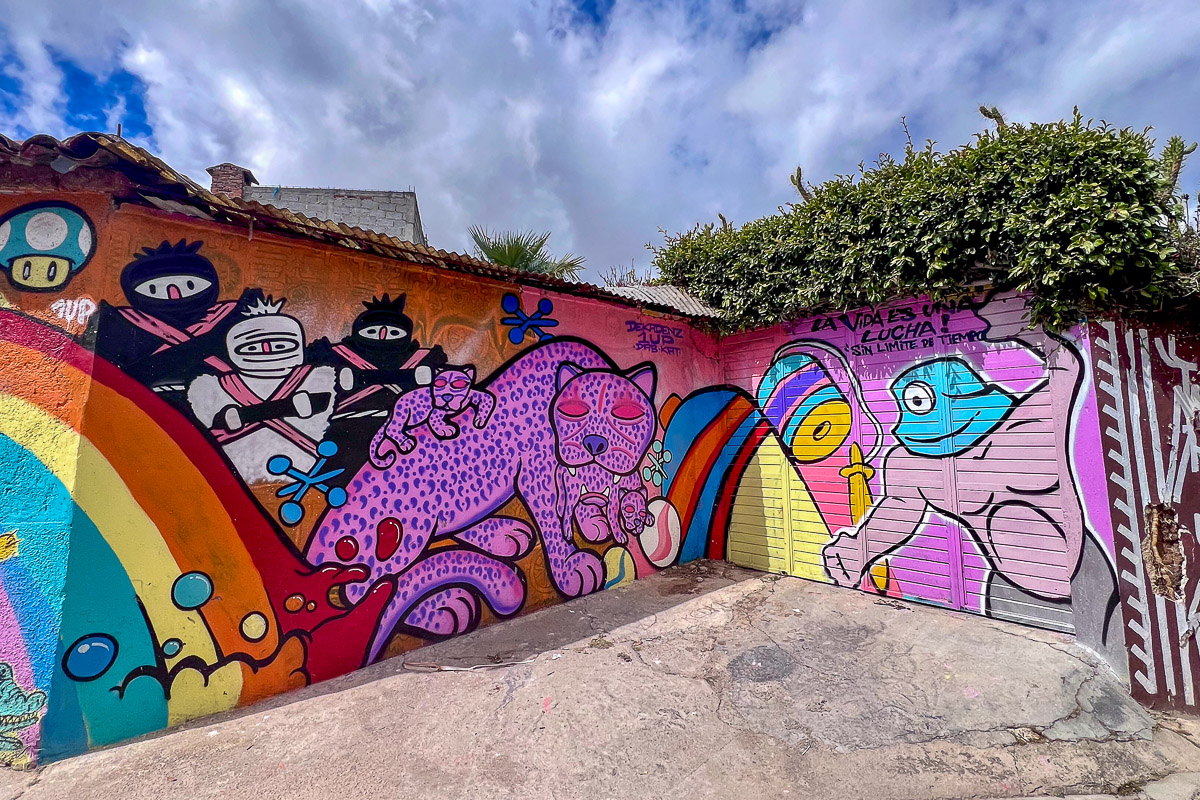
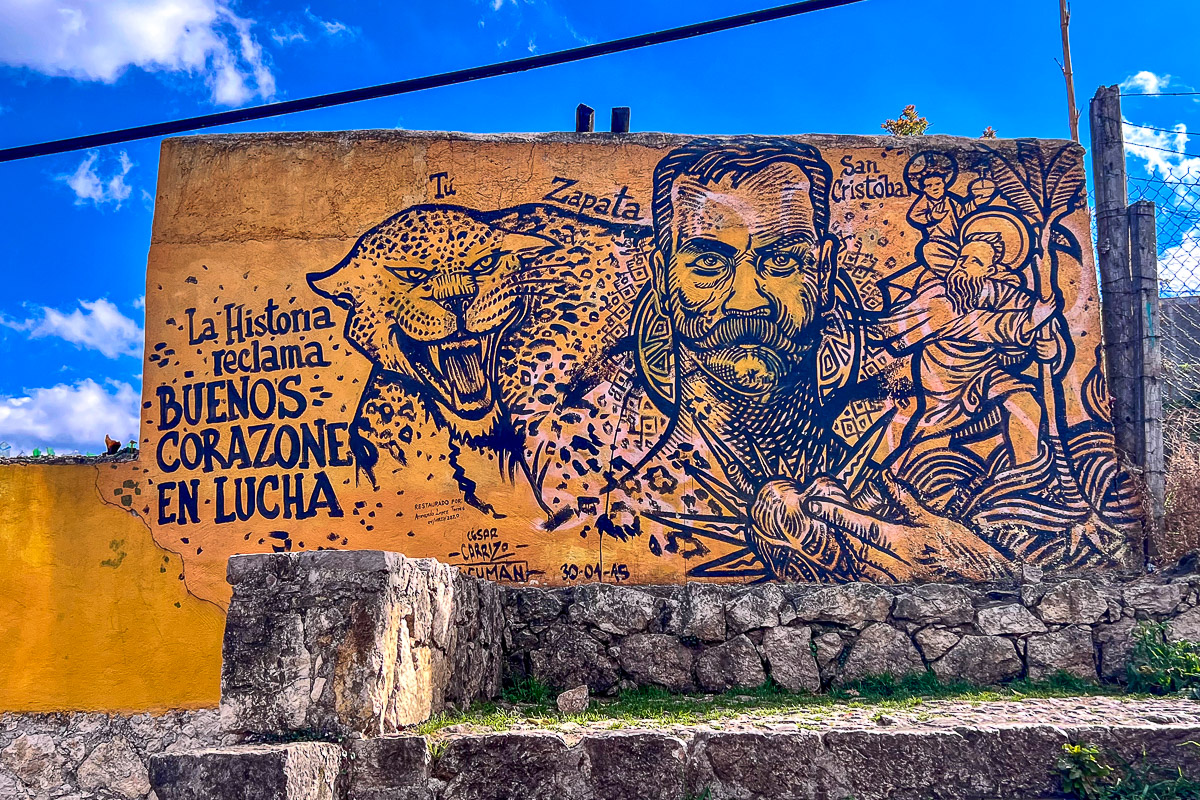
In a city known for its rebellious spirit and deep, indigenous roots, murals often reflect Chiapas’s indigenous culture and especially women, Zapatista (EZLN) history, jaguars, agricultural symbols like corn, and social struggles.
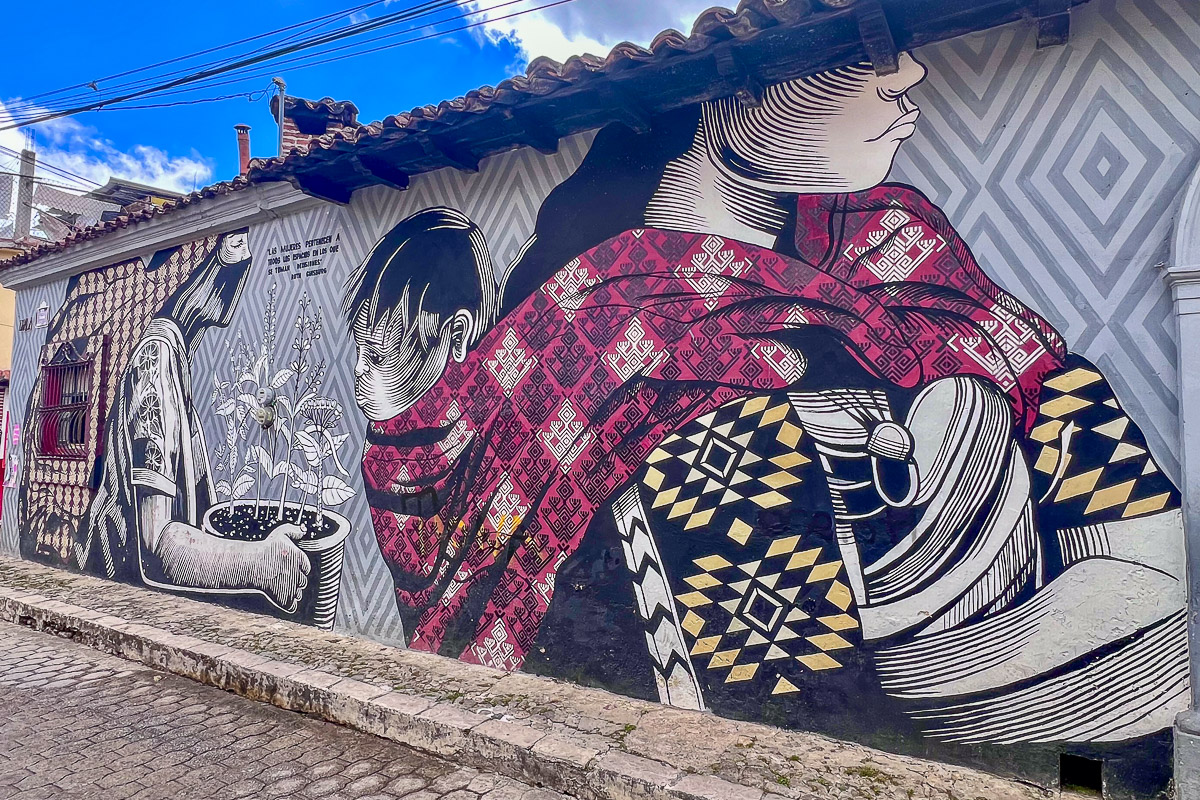
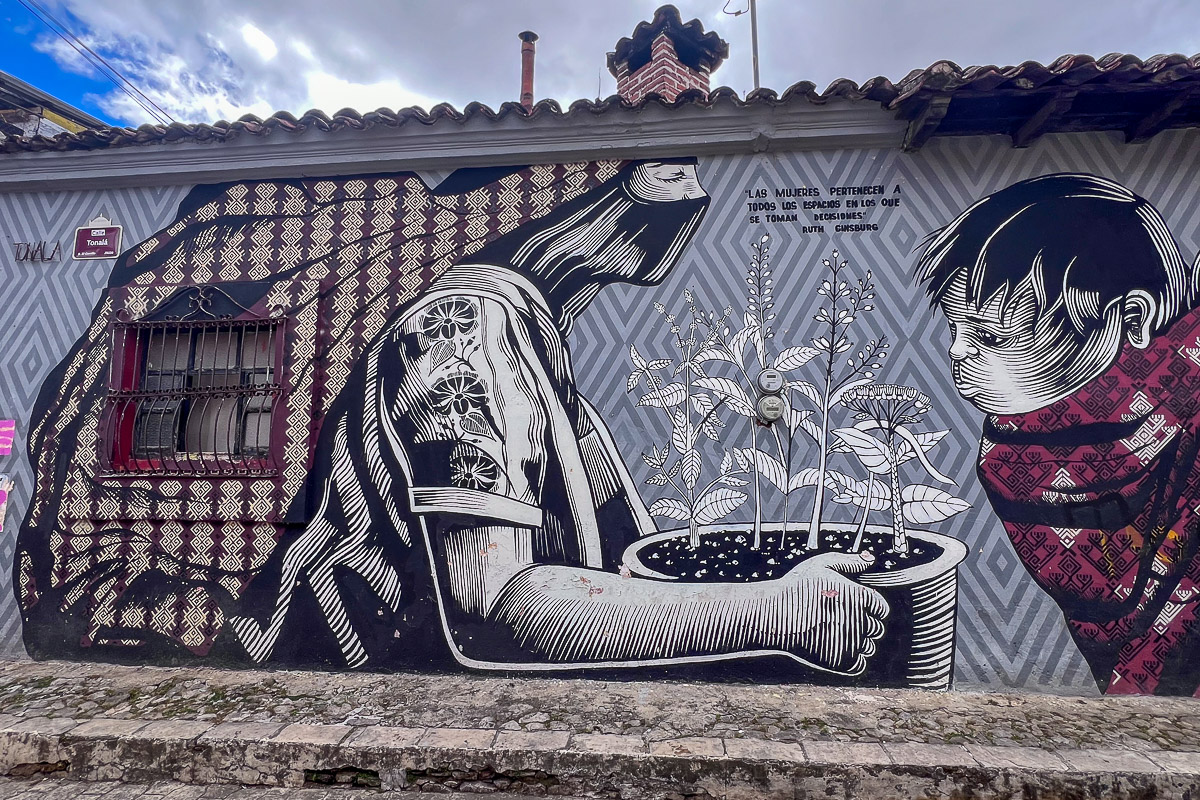
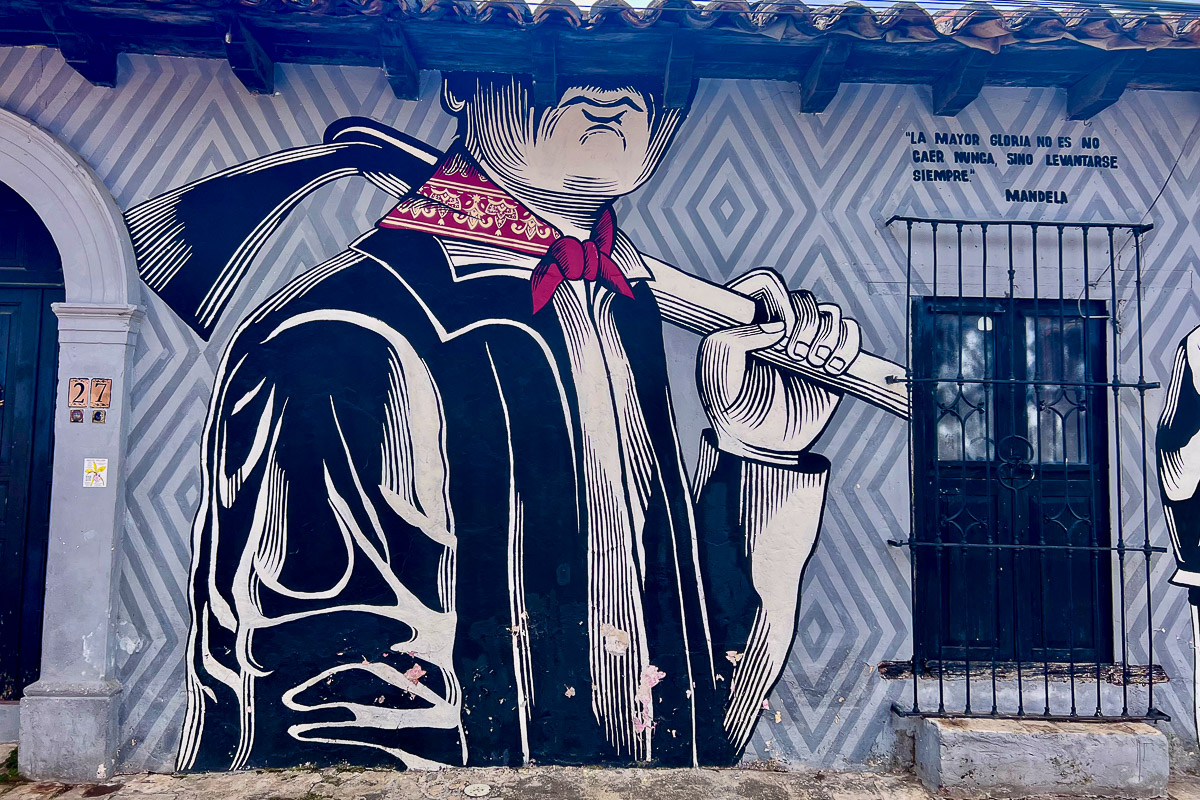
They often feature slogans emphasizing social justice, human rights, and the rejection of discrimination.
Coca-Cola and San Cristóbal
Another ubiquitous theme you’ll spot everywhere including in art galleries is Coca-Cola. It’s a long story and one the locals won’t be shy to discuss with you so I’ll just briefly sum it up here to explain the brand’s contradictory role in the city.
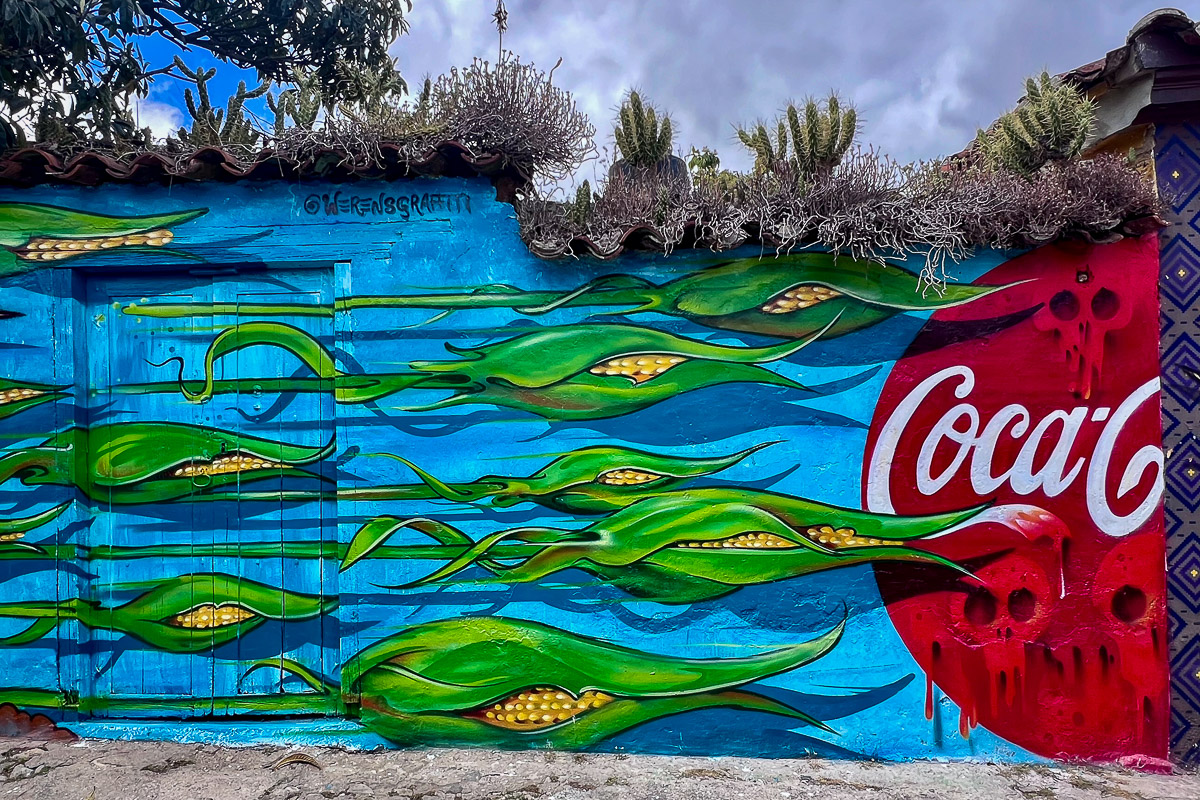
While it has created jobs, the local Coca-Cola plant which is one of the biggest in Mexico has sadly also caused much harm. With climate change (it rains less) and urbanization, demand for safe drinking water has steadily increased in San Cristóbal but not the supply. A decades-old government concession allows Coca-Cola to extract most of it for its bottling operations, leaving the town’s inhabitants without enough potable water. You’ll notice most street art representing Coca-Cola as a water thief…
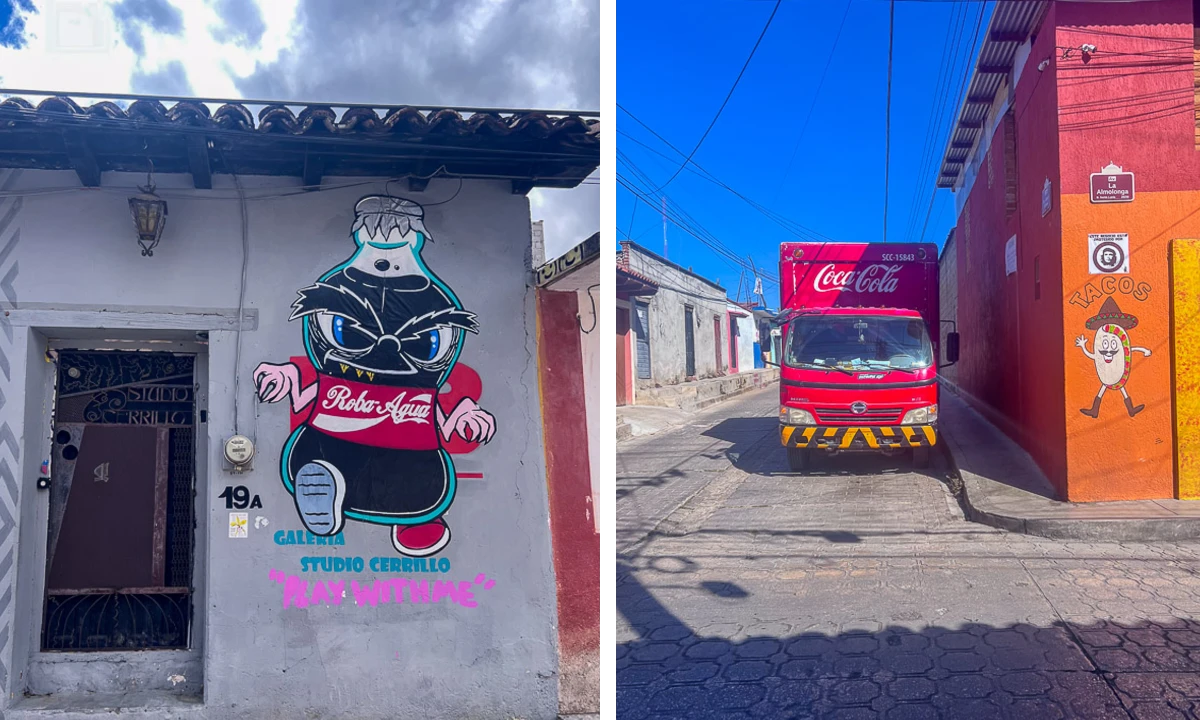
Add to this the subsidies offered by the beverage behemoth and the other sad truth is that a bottle of Coca-Cola is almost always cheaper than a bottle of water across the region. This compounding effect eventually made the locals the biggest drinkers of Coca-Cola in the world, ingesting just over 2 liters a day (!), to the point that health officials had to declare a diabetes emergency.
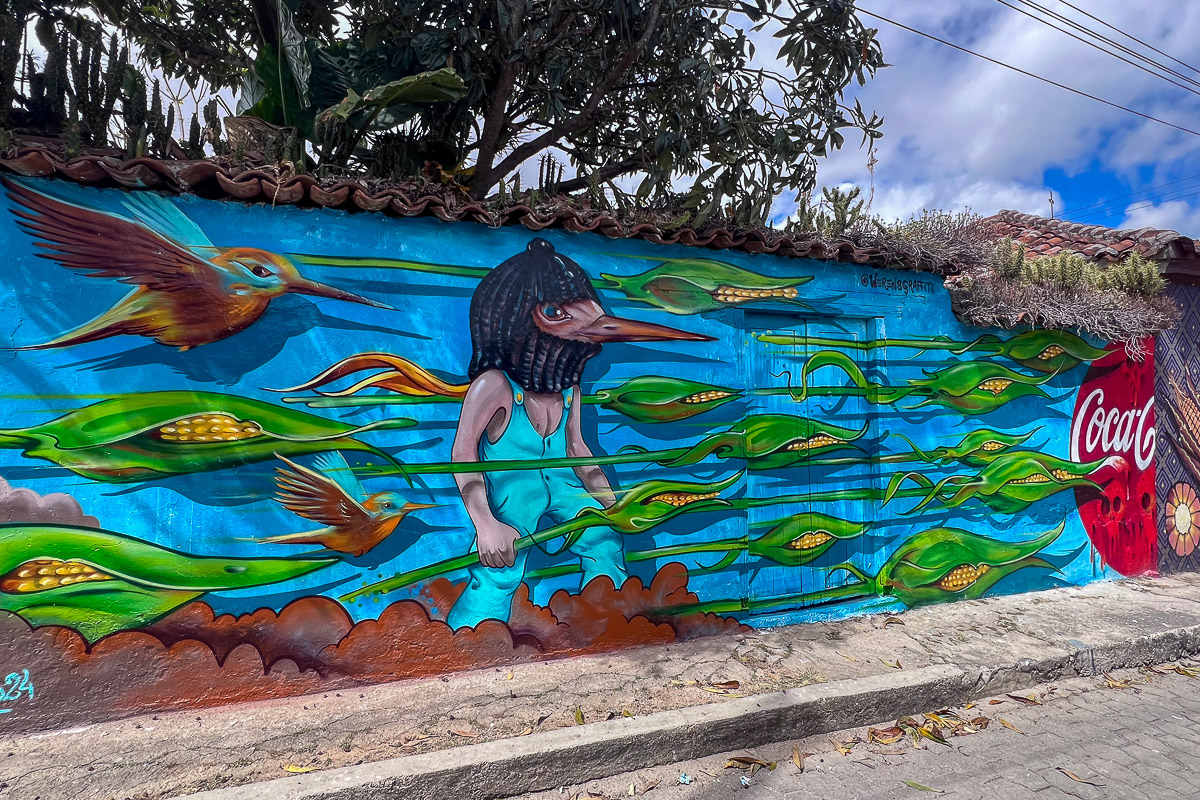
It’s no surprise then to see the many campaigns around town against the power and influence of Coca-Cola which has also diverted spring water away from crops vital to the region. Farmers often have to use raw sewage water to irrigate their fields which inevitably leads to more undesirable health outcomes. Tourists need to be aware that any food purchased at the market needs to be thoroughly washed with a chemical solution to get rid of the rampant E. coli, something I religiously did for the whole time I was there.
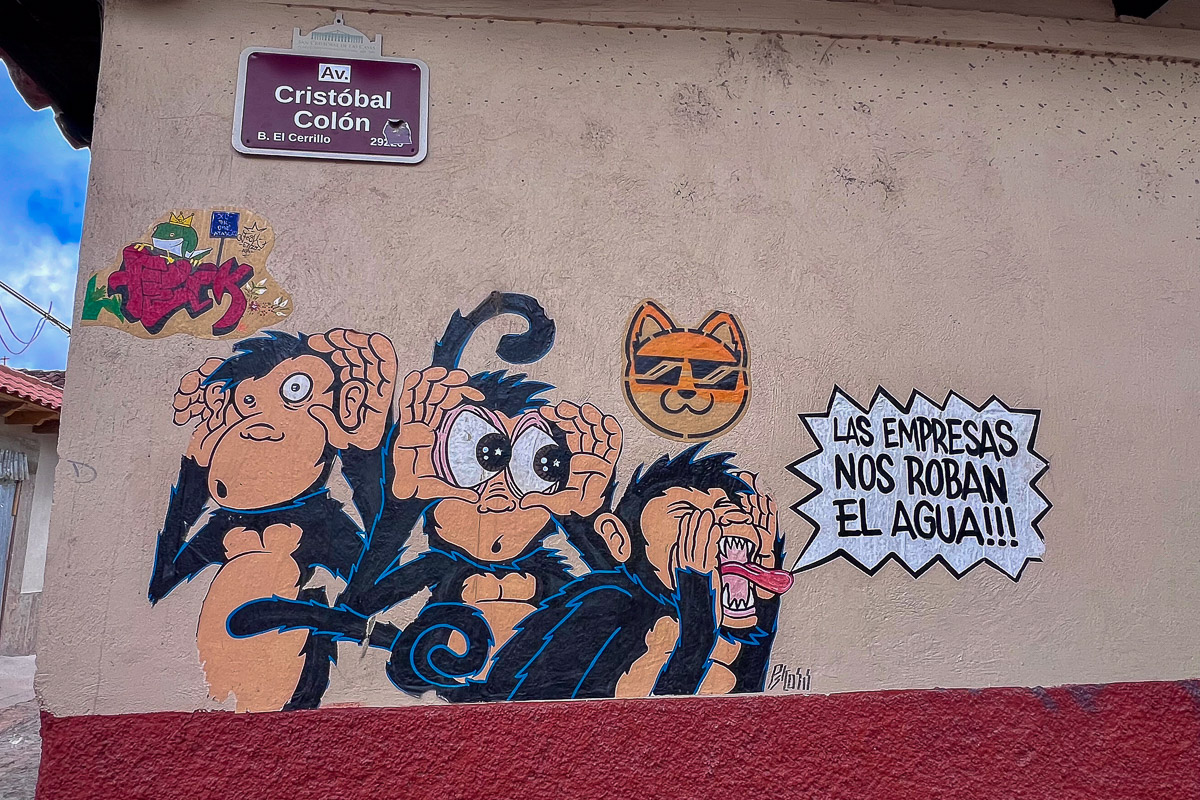
Closely related, the other prevalent imagery all over town is the Three Naughty Monkeys who actively seek out and amplify negativity.
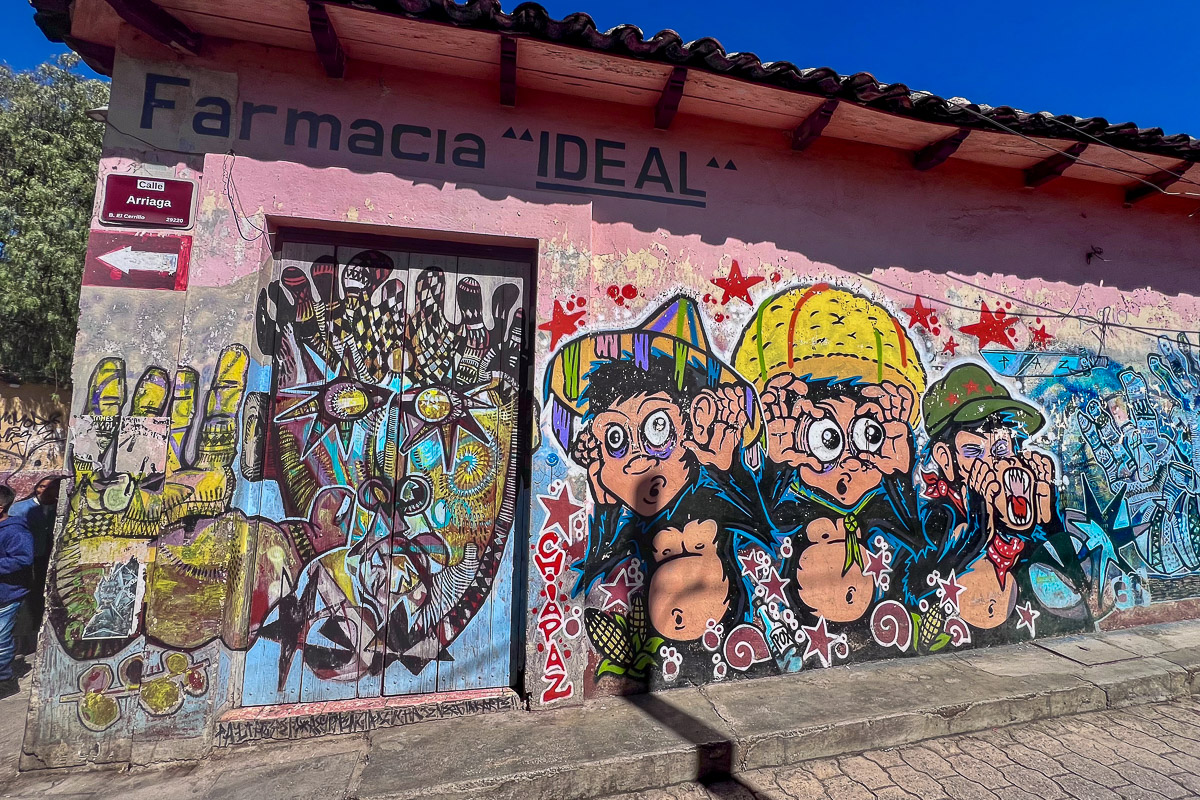
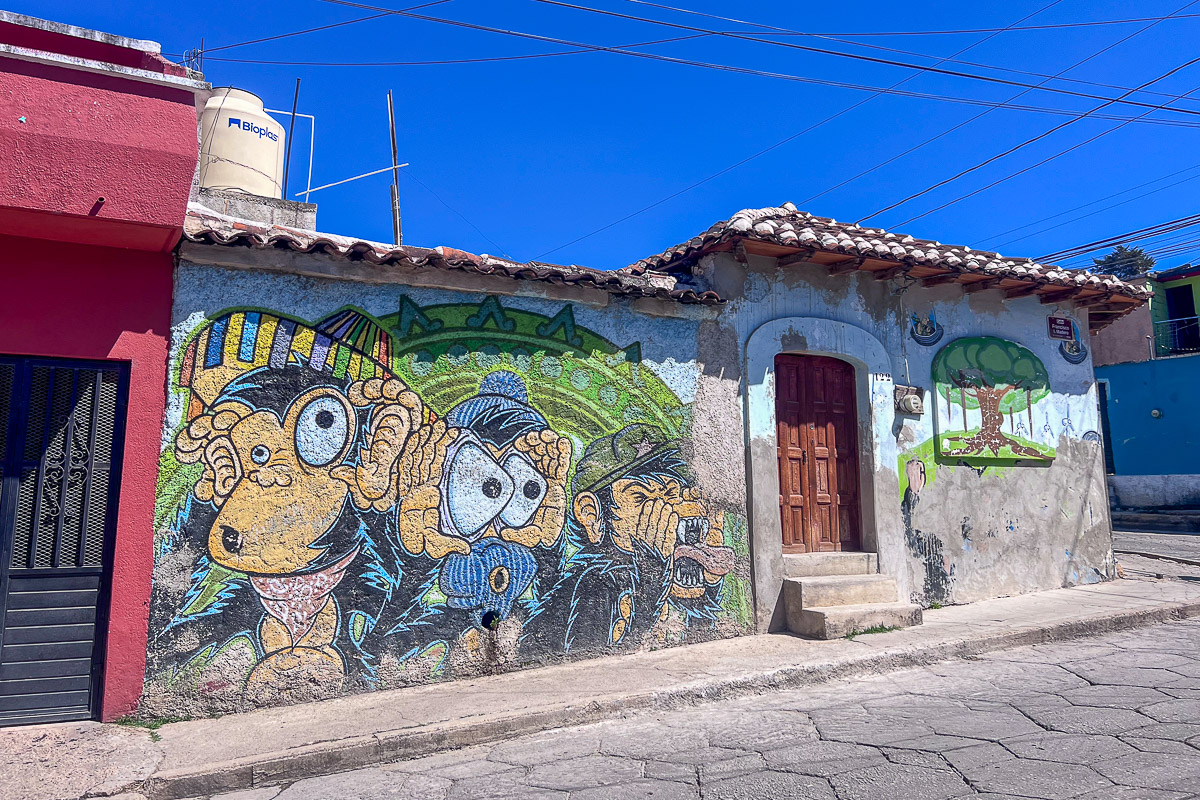
Colorful & diverse walls
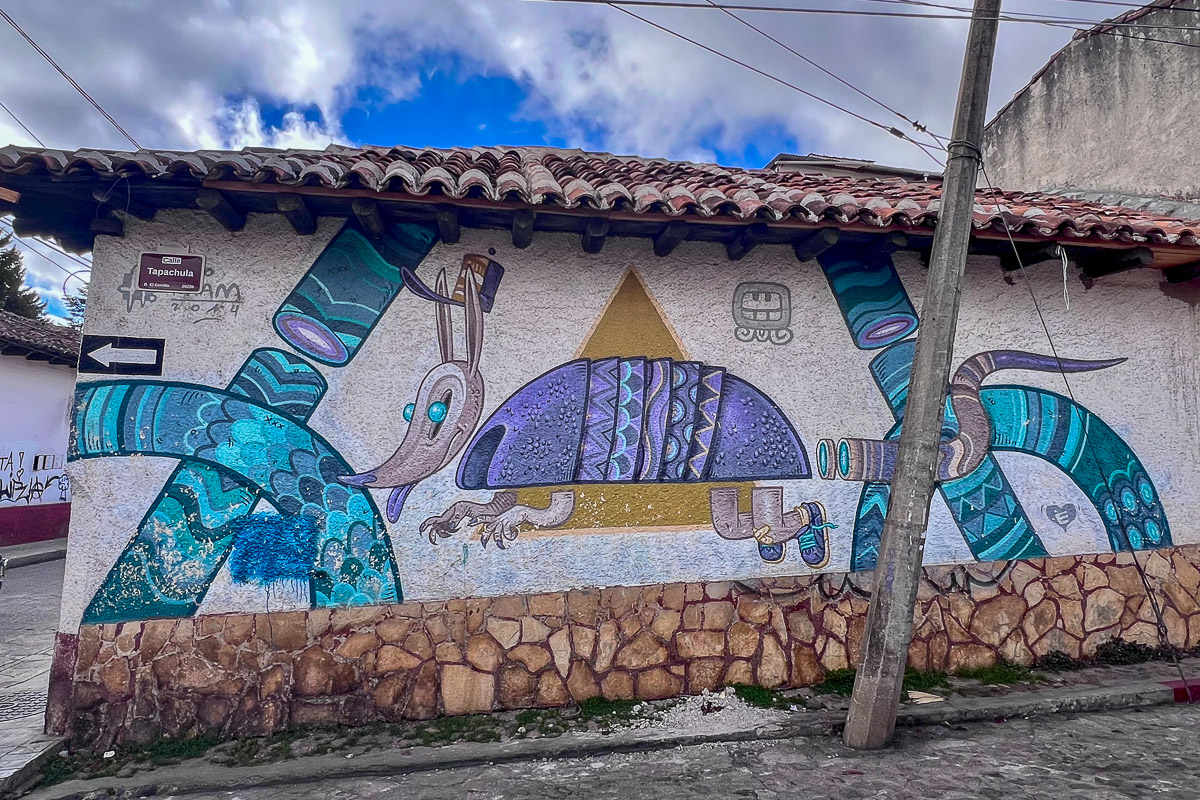
You can spend days exploring the center and every little streets to discover unexpectedly more of the vibrant murals.
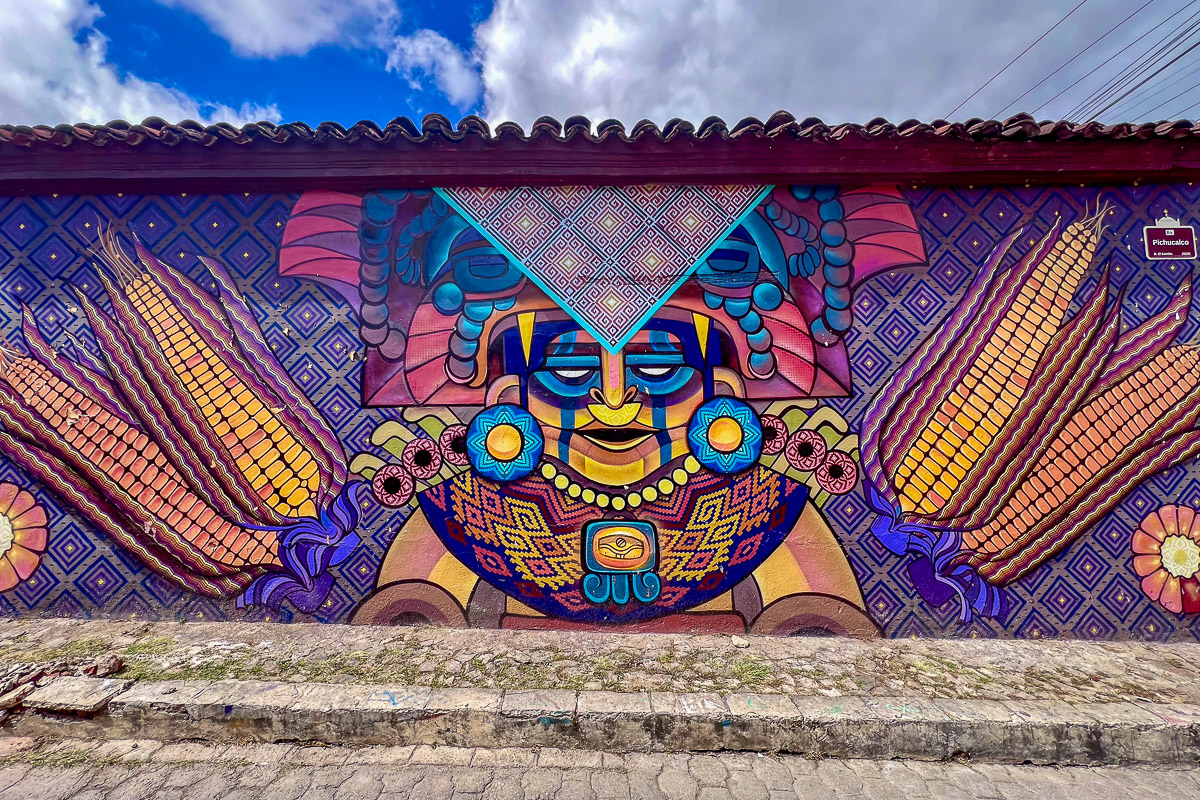
Some are clearly very recent with their bright colors while other have started to fade and crumble – a sign that this mode of artistic expression and still alive and well.
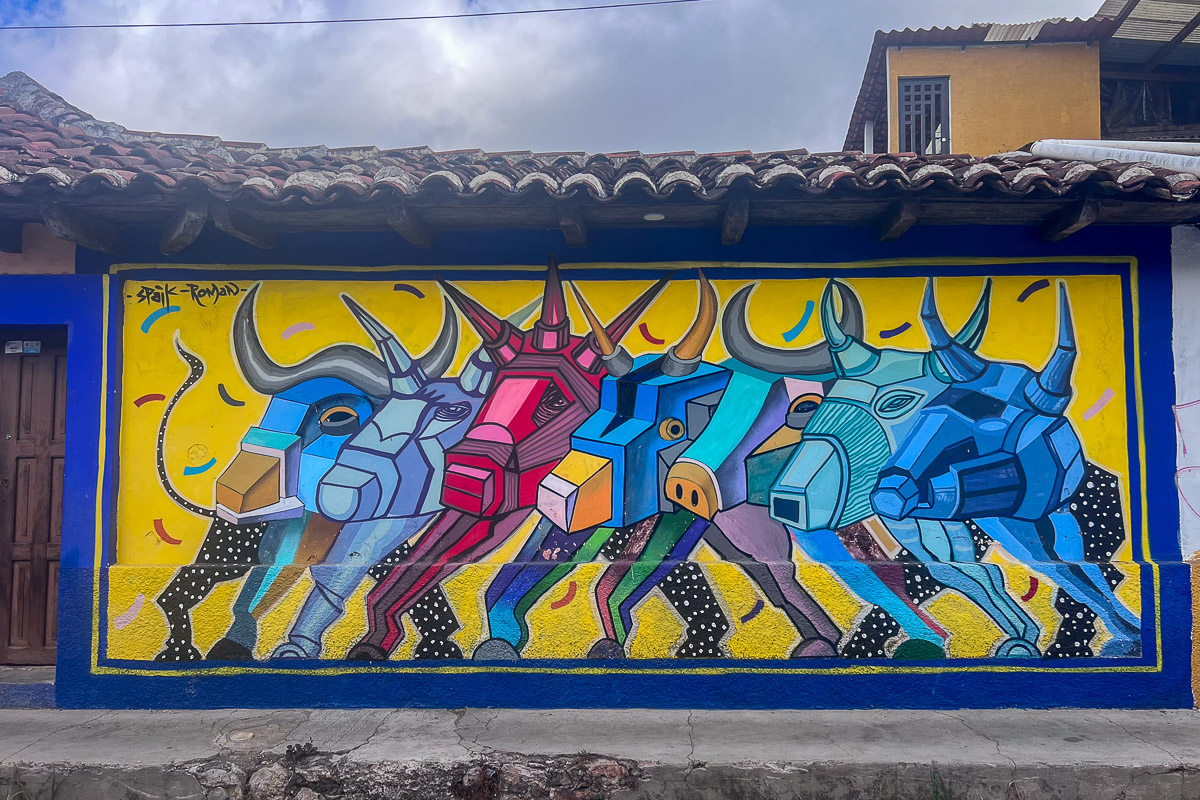
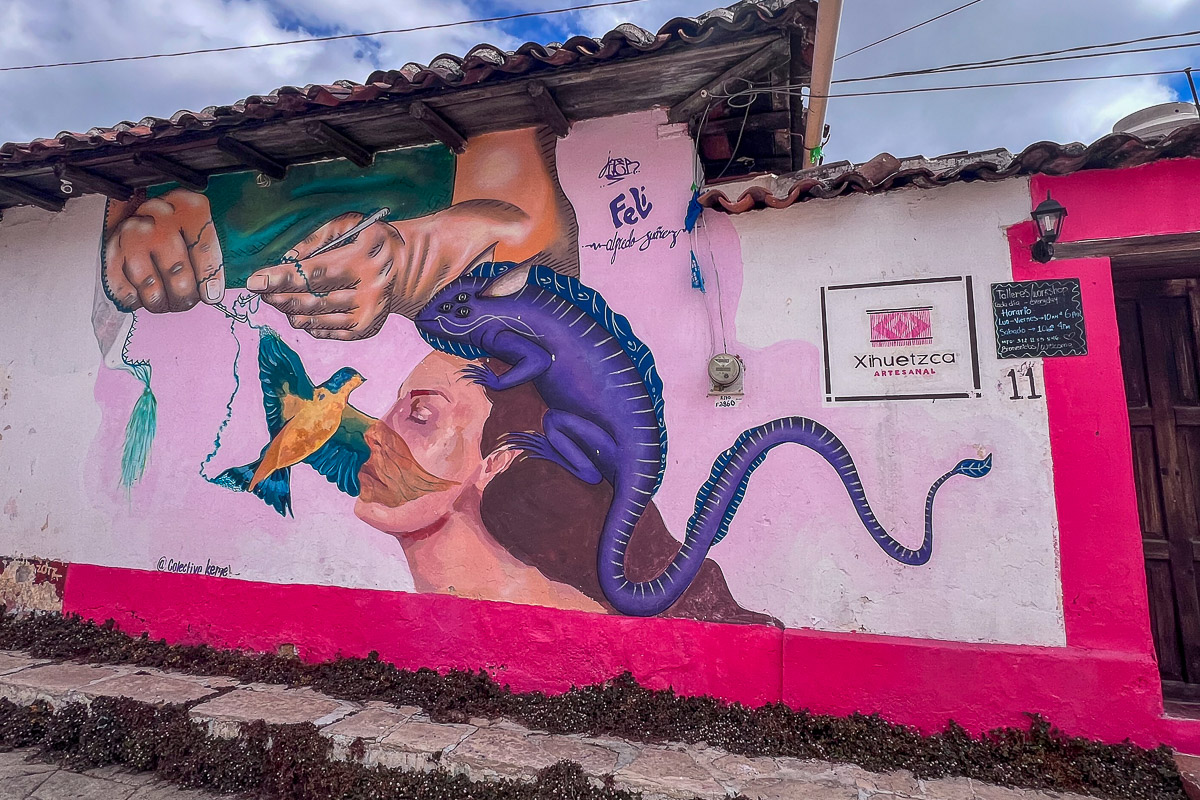
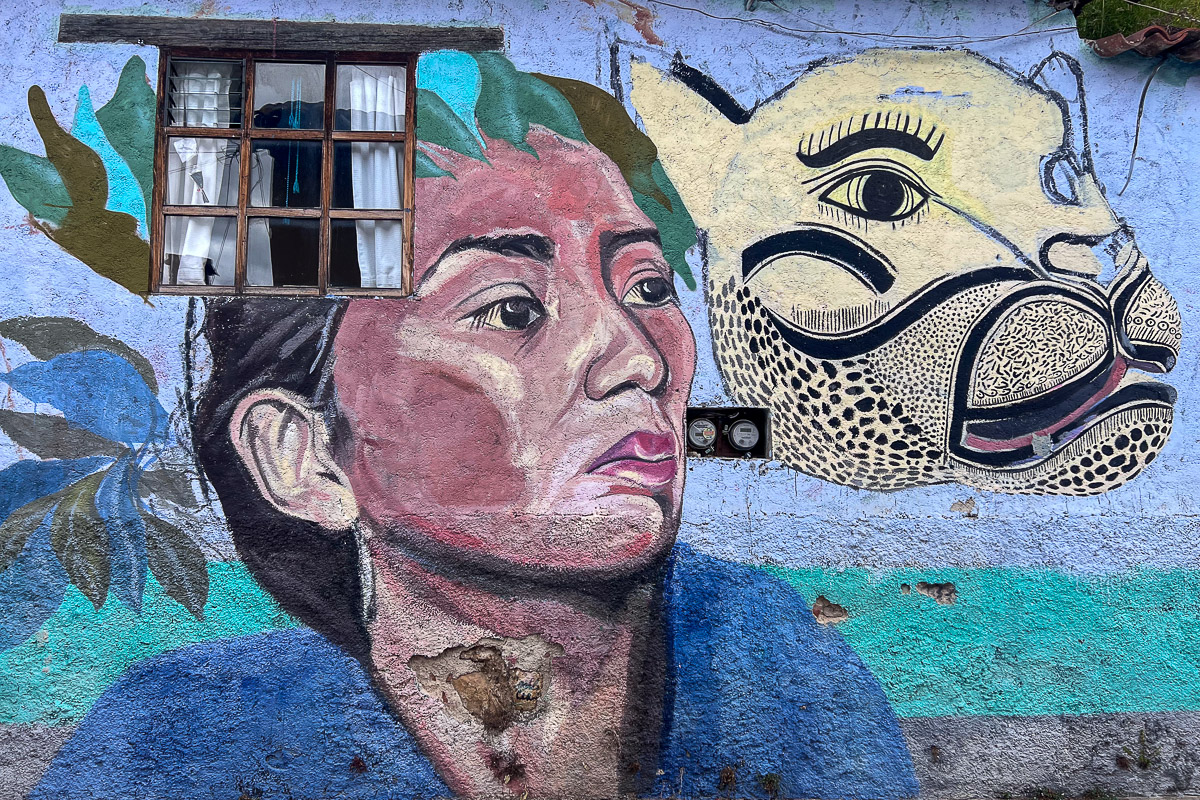
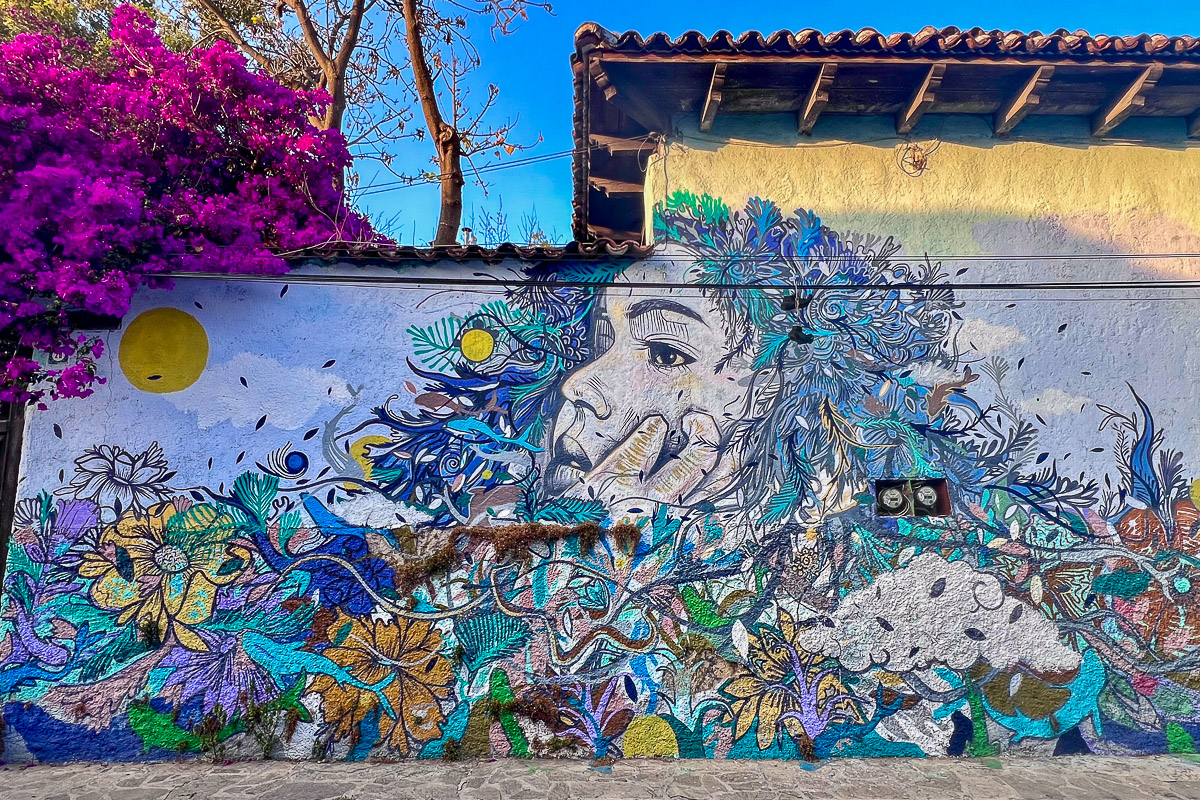
Intricate patterns form a genre all of their own, with entire blocks filled with a mosaic of shapes and animals to be decoded.
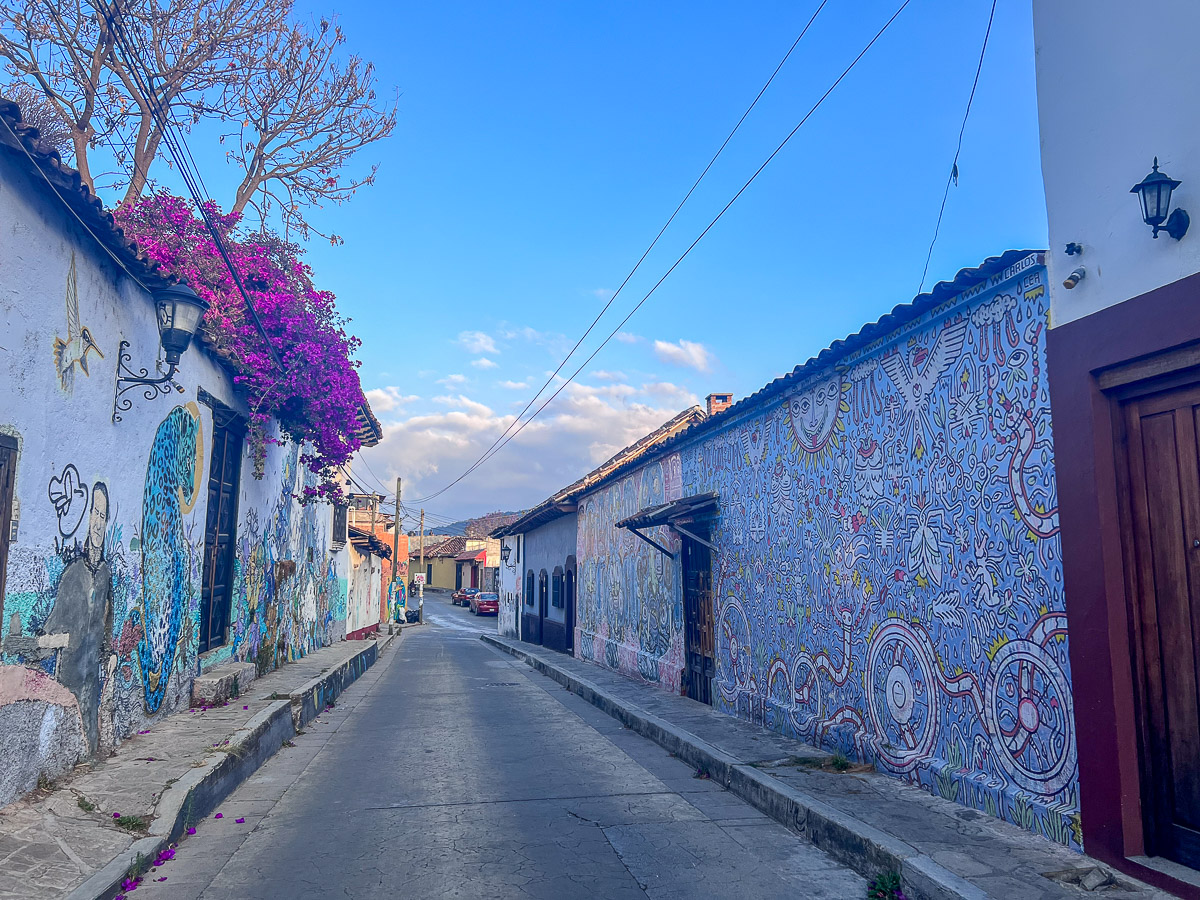
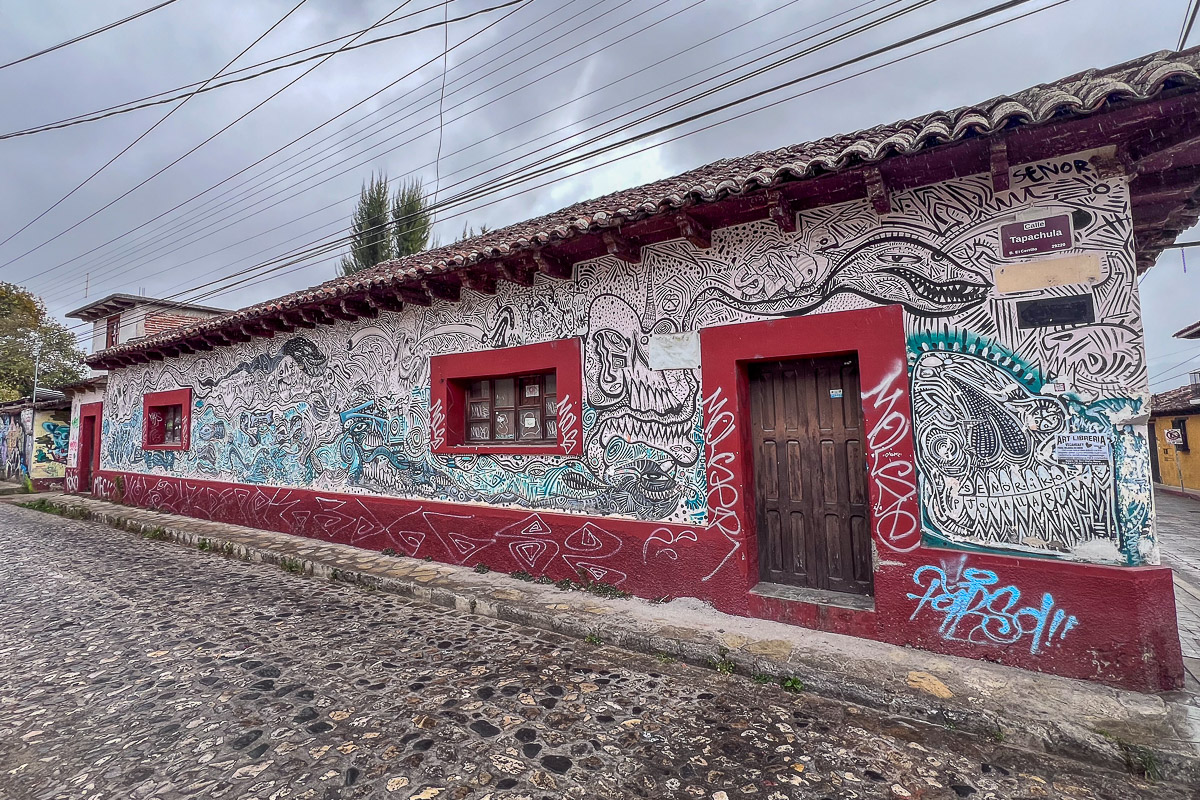
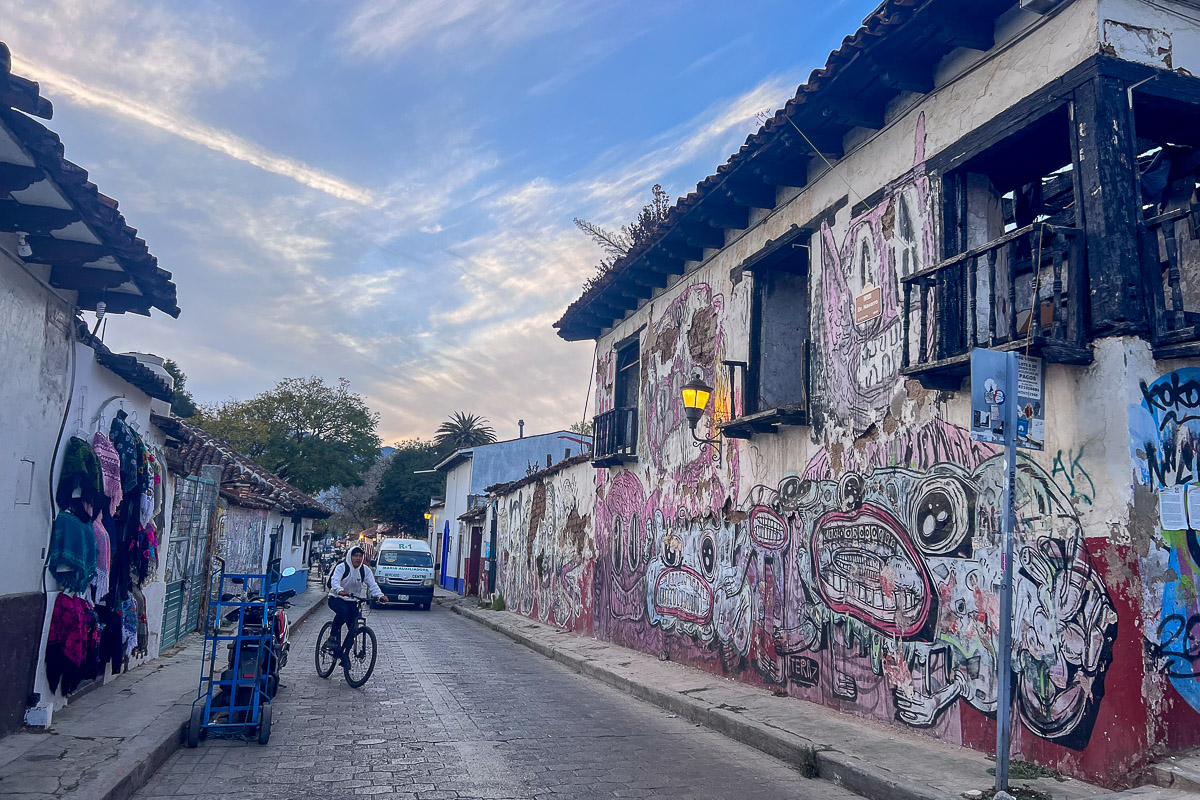
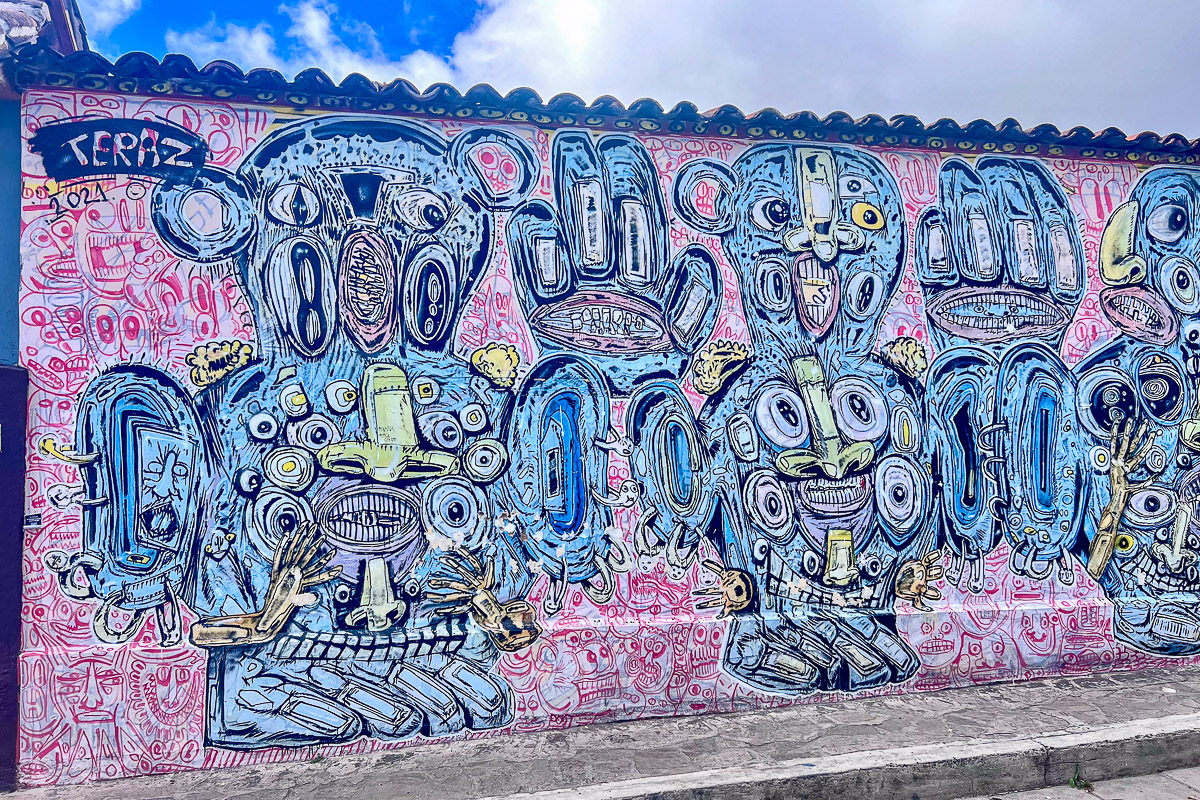
Local artists like Teraz have a distinct style you’ll easily recognize and their own gallery so you can bring a piece of their art back with you.
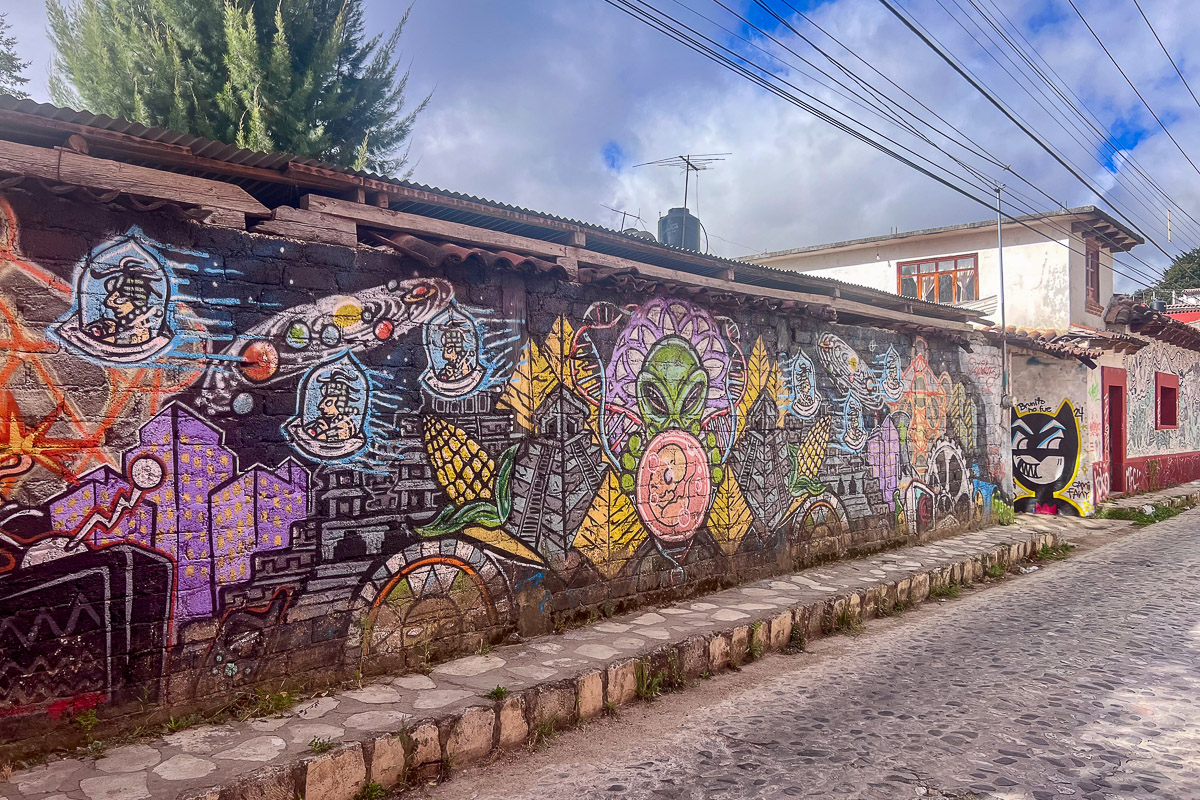
Revolutionary hero Emiliano Zapata also makes numerous appearances, a testament to his impact on all disenfranchised groups here and around the world.