Florence is a paradise for art and architecture lovers. With so many masterpieces packed into its compact historical center, it’s easy to fill a few days with just the big hitters though there are countless other riches near and far worth stretching your trip for. It would be impossible to write a single blog post on Florence so I’ve divided my visual story into tight walking areas with my favorite sights and eateries, from the iconic Duomo and Uffizi in the center to the surrounding Santa Croce, San Lorenzo, and Oltrarno neighborhoods and beyond.
Morning
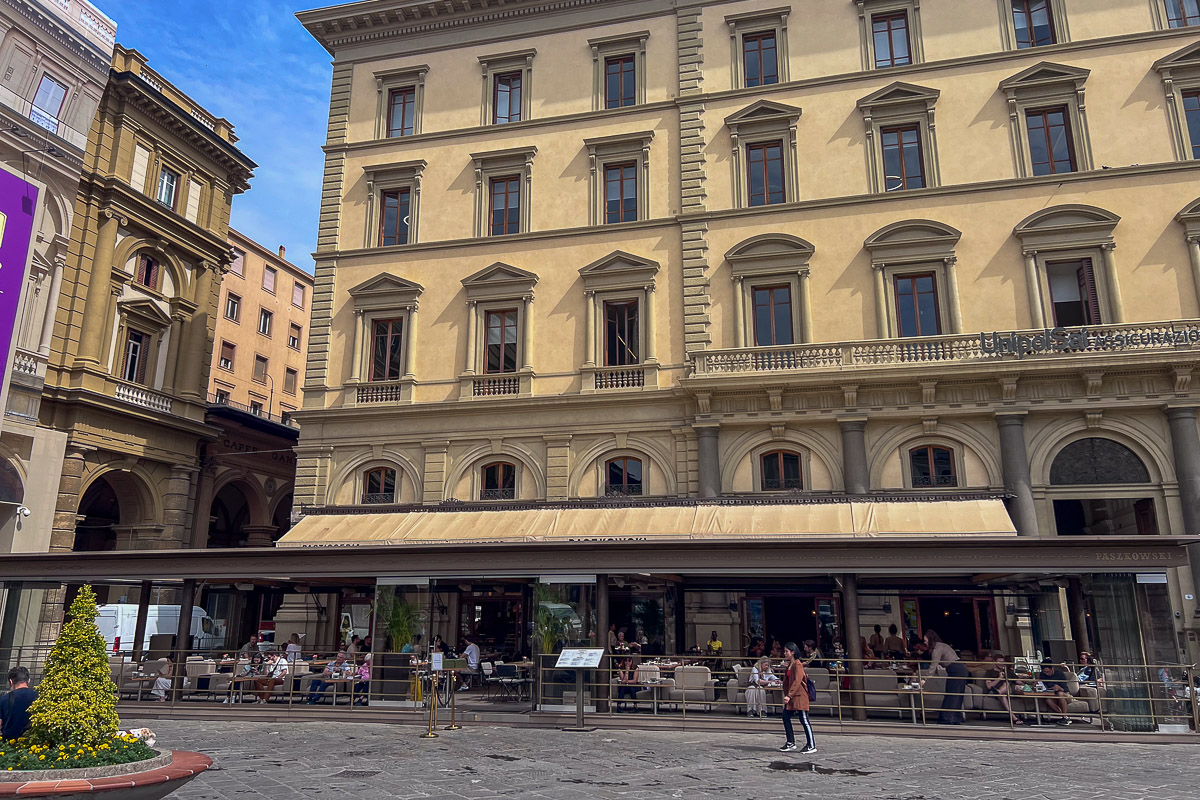
Make your way across the heart of the city with a stop at Piazza della Repubblica, a large pedestrian square which used to be the site of the Old Market (only a single column remains). The grand arch dominating the west side was built to commemorate that Florence was once Italy’s capital, albeit briefly (1865-1871).
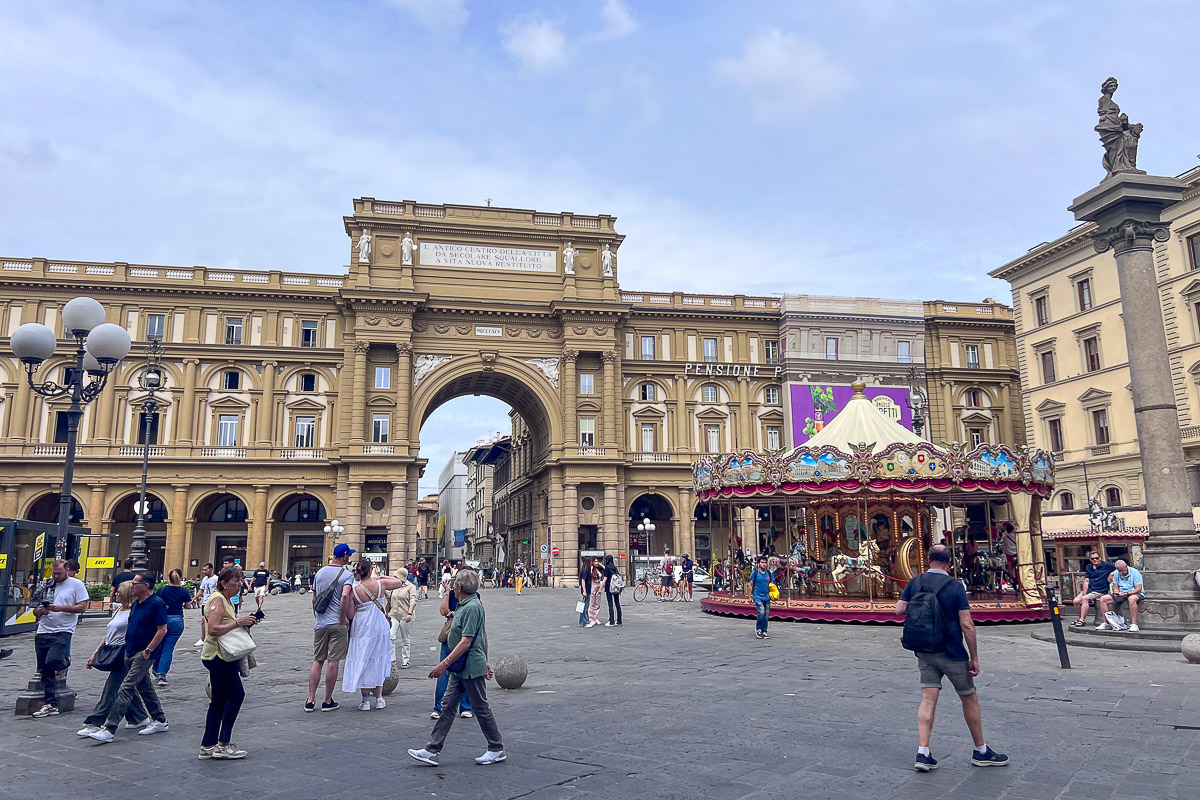
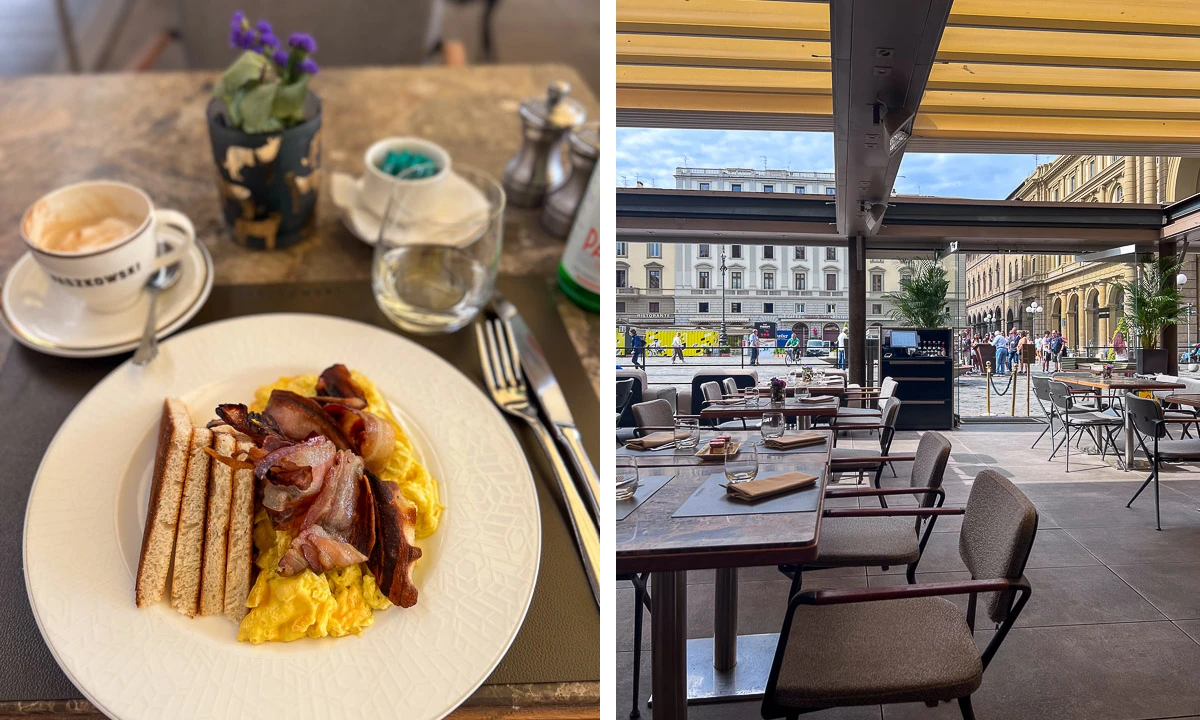
The square is lined with elegant cafes and I suggest you fuel up here in this pleasantly calm and serene refuge before you hit the tourist hordes around the Duomo, trust me. Caffe Concerto Paszkowski has the perfect shaded terrace for people watching while you eat your breakfast.
Take advantage of the full menu to fill up well if you want to make it through the entire Duomo complex without starving – another tip. Yes, perhaps not your typical Italian pastry breakfast but those won’t give you the energy for what’s to come and options around the Duomo are a bit thin….
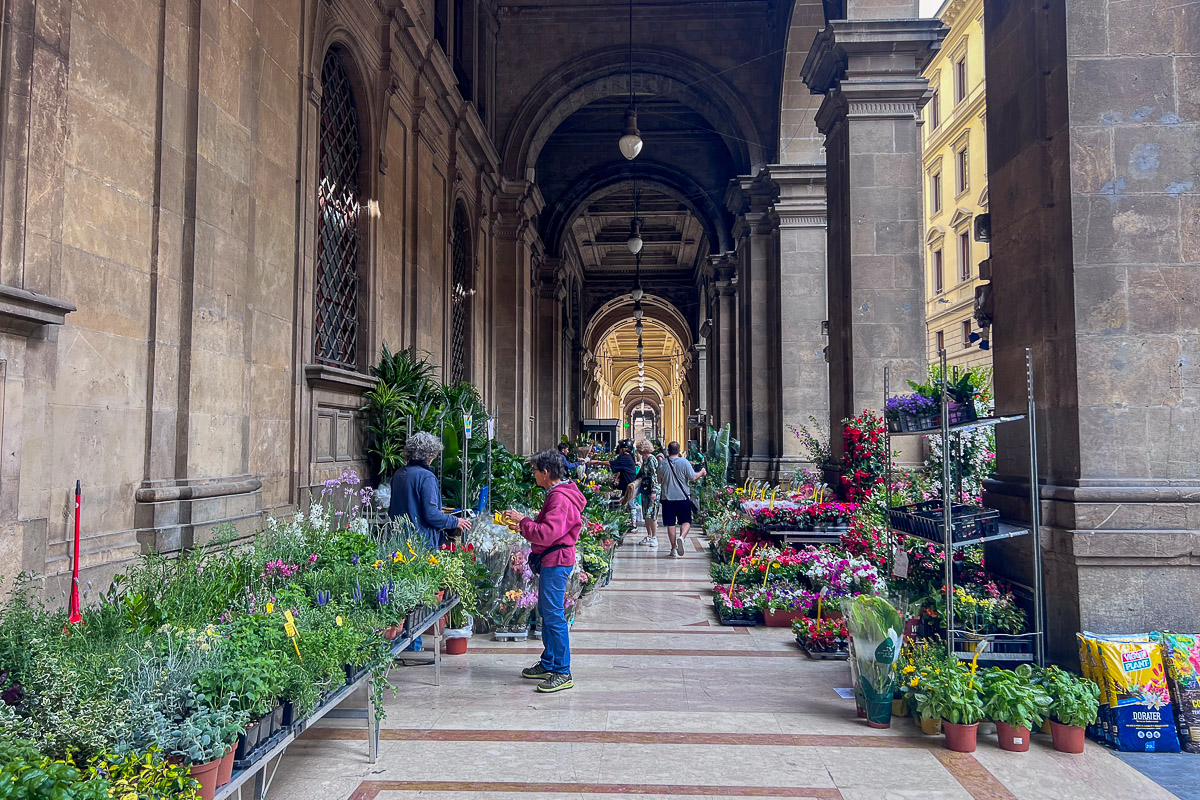
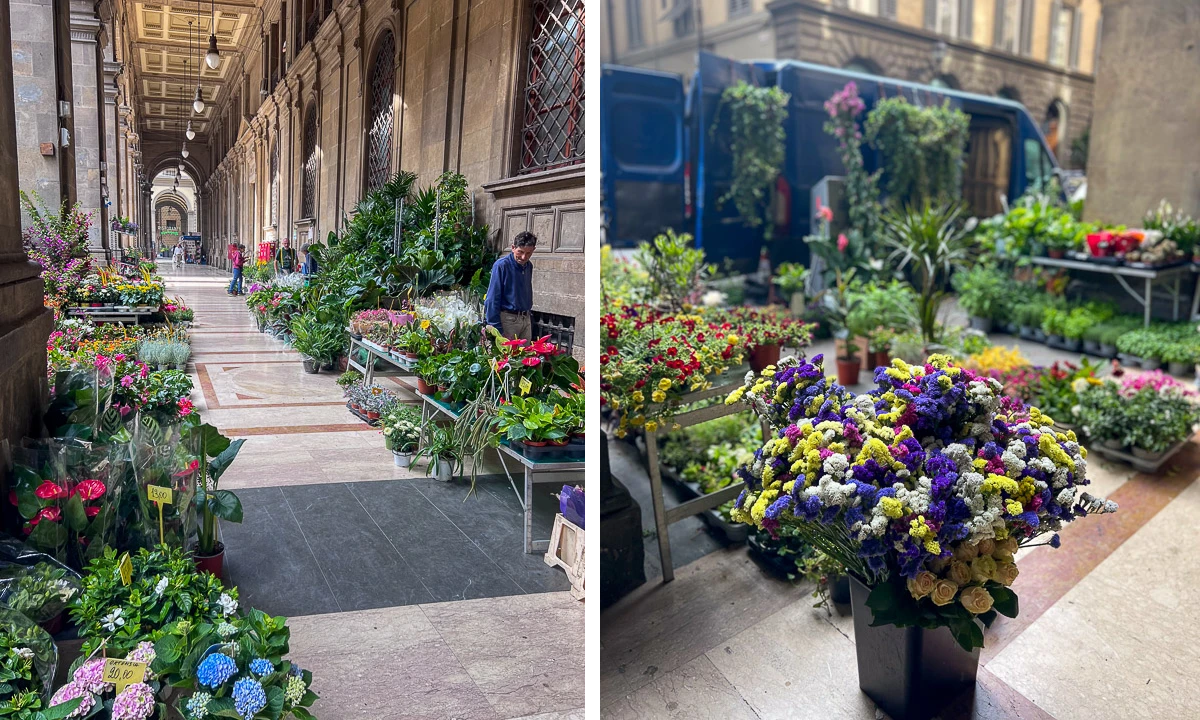
If you can, time your visit on a Thursday when the weekly flower market fills the arches southwest of Piazza della Repubblica with fresh flowers and potted plants.
Duomo
Florence’s most famous symbol is impossible to miss and will dwarf anything in its vicinity. The cathedral’s enormous dome dominates the city and no other building stands taller. Get ready to crane your neck and marvel at magnificent monuments.
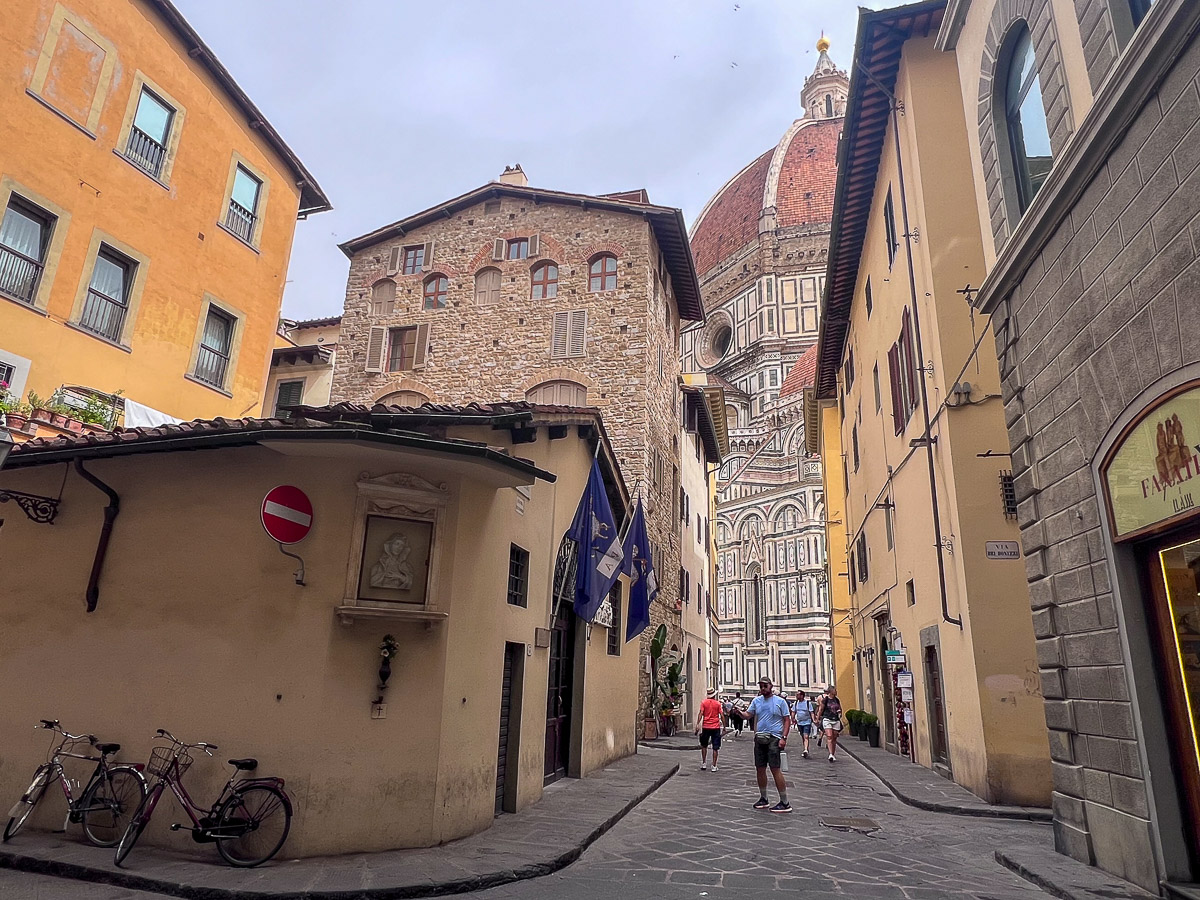
Arriving at Piazza Duomo puts you in the middle of the busiest square in the city with all the expected activities of itinerant artists and gelato-licking visitors.
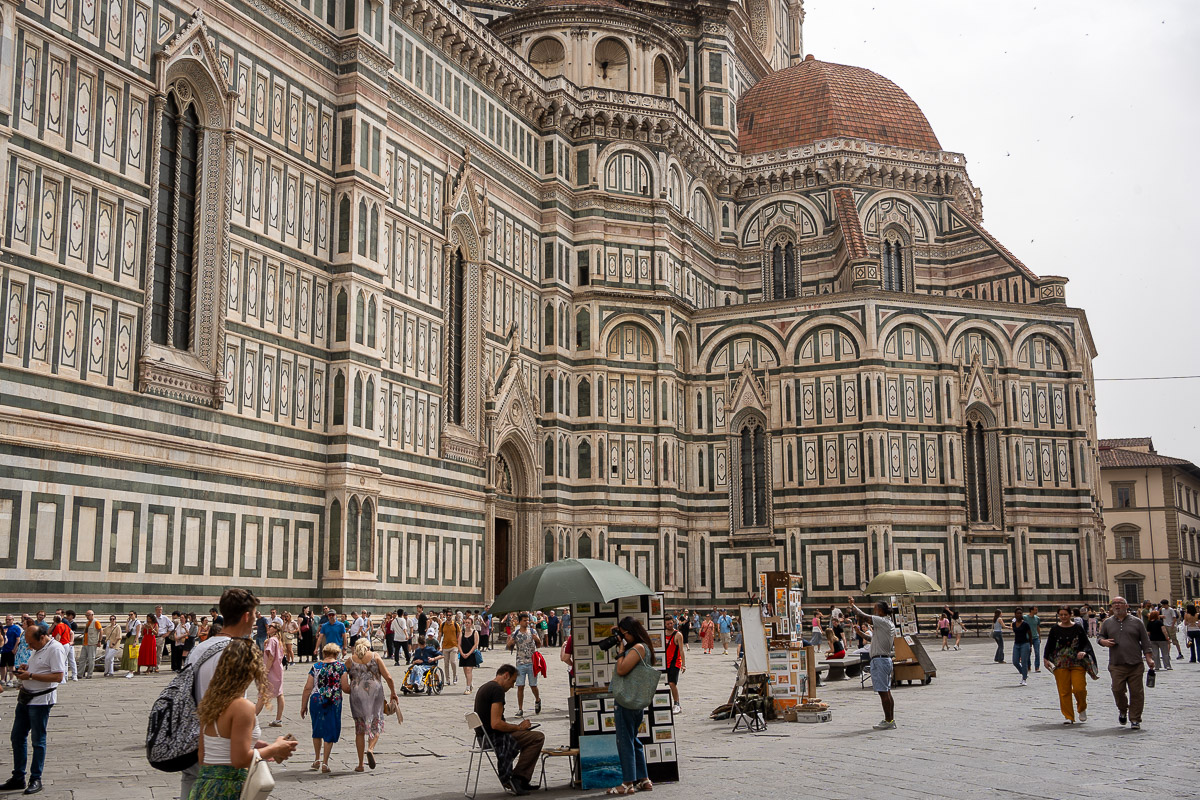
Other things of note: lines, incredibly long lines. While the Duomo is free to enter, you’ll need tickets to get into other areas such as the Baptistery, Campanile (tower), museum, and to climb to the top of the dome. I highly recommend buying a pass in advance which will give you access to all you want to see and timed entries so you never have to wait (including to enter the Duomo). This is where it pays to plan, especially if you want to climb the dome as the tickets sell out many weeks before.
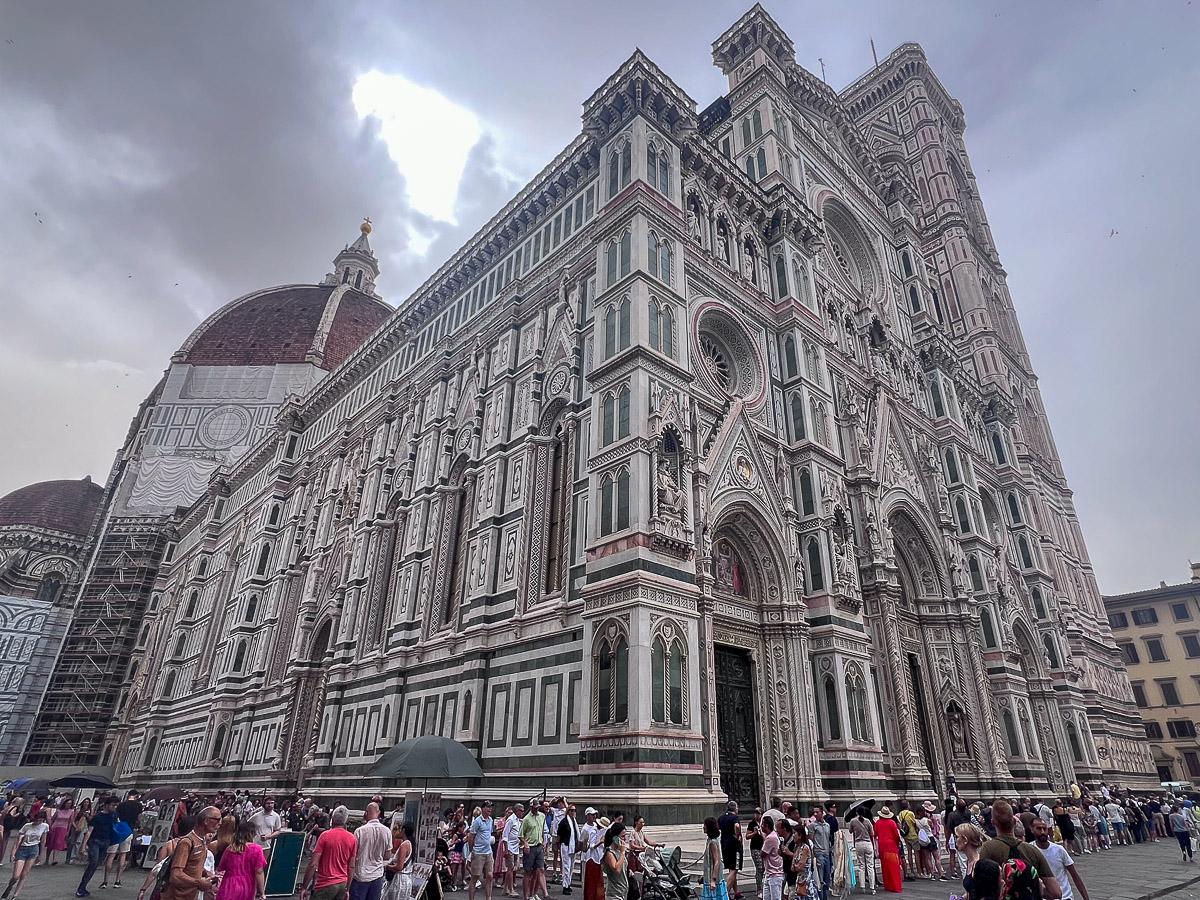
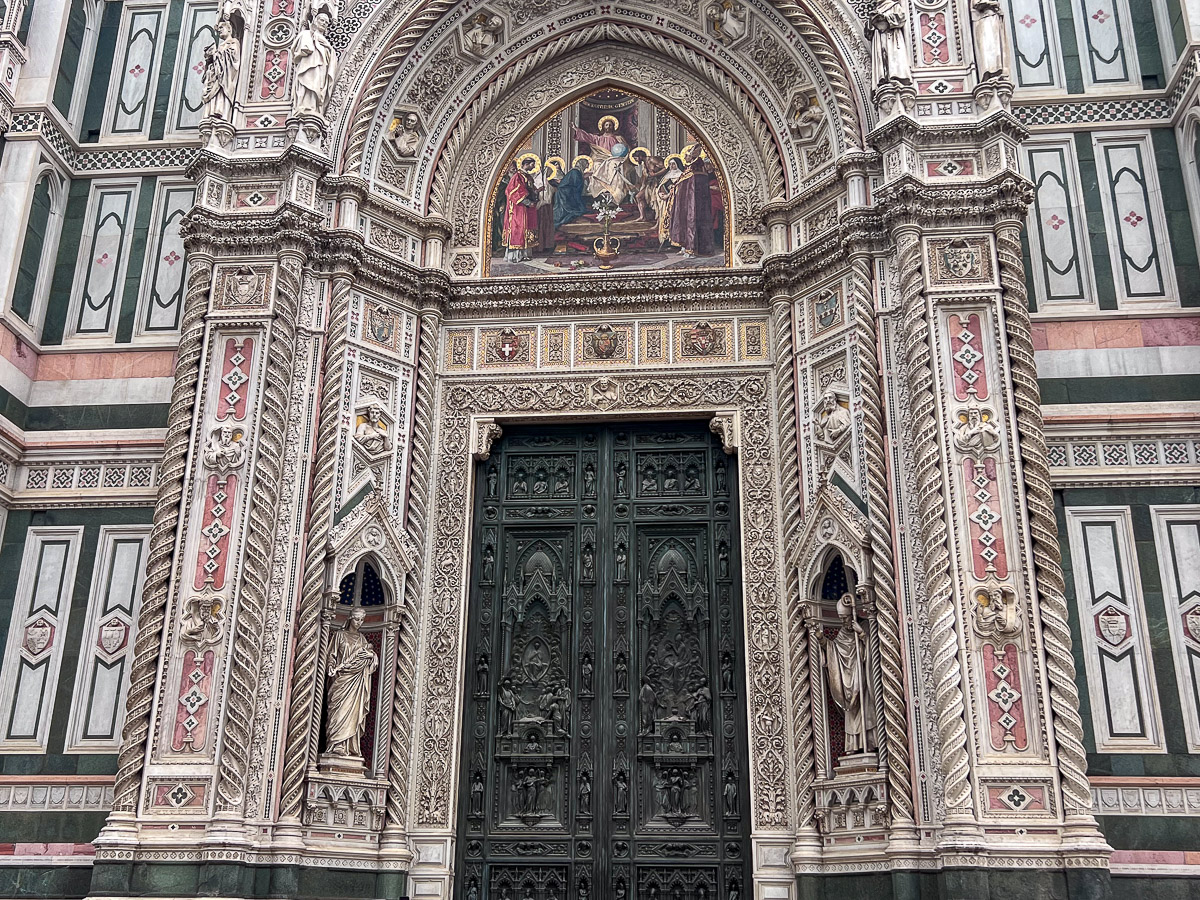
The richly decorated exterior with its colorful marble panels in shades of green and pink stuns and one can spend a long time admiring all of the intricate details surrounding such a vast building.
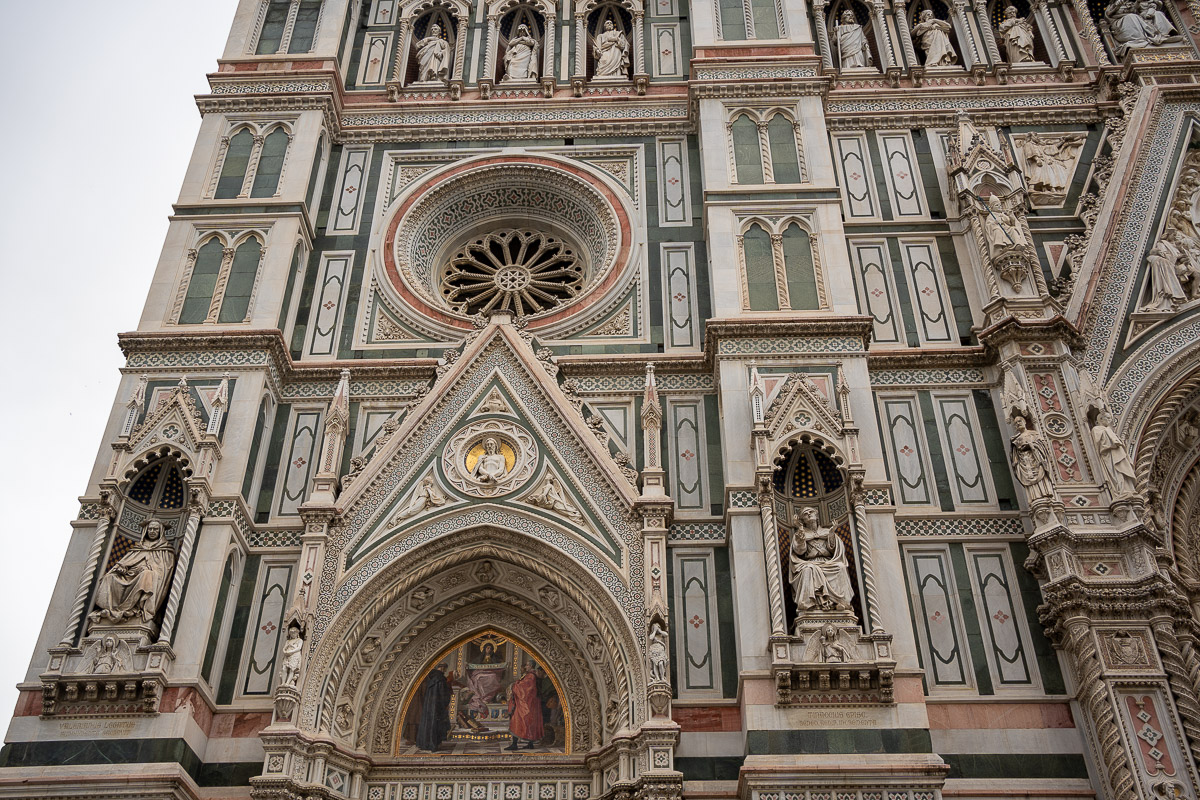
Other than its size, the inside of the cathedral is not that impressive compared with other religious buildings you’ll visit in the city – you’re really here like everybody else for the dome seen at the end.
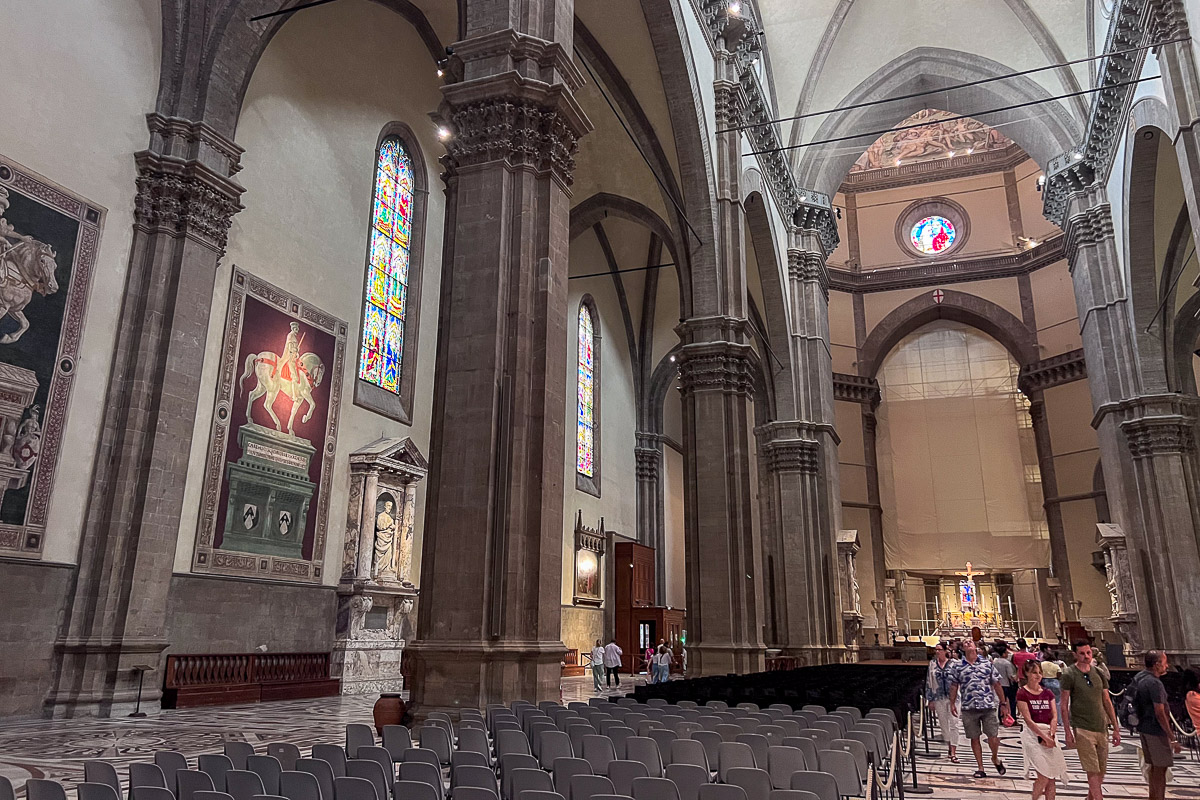
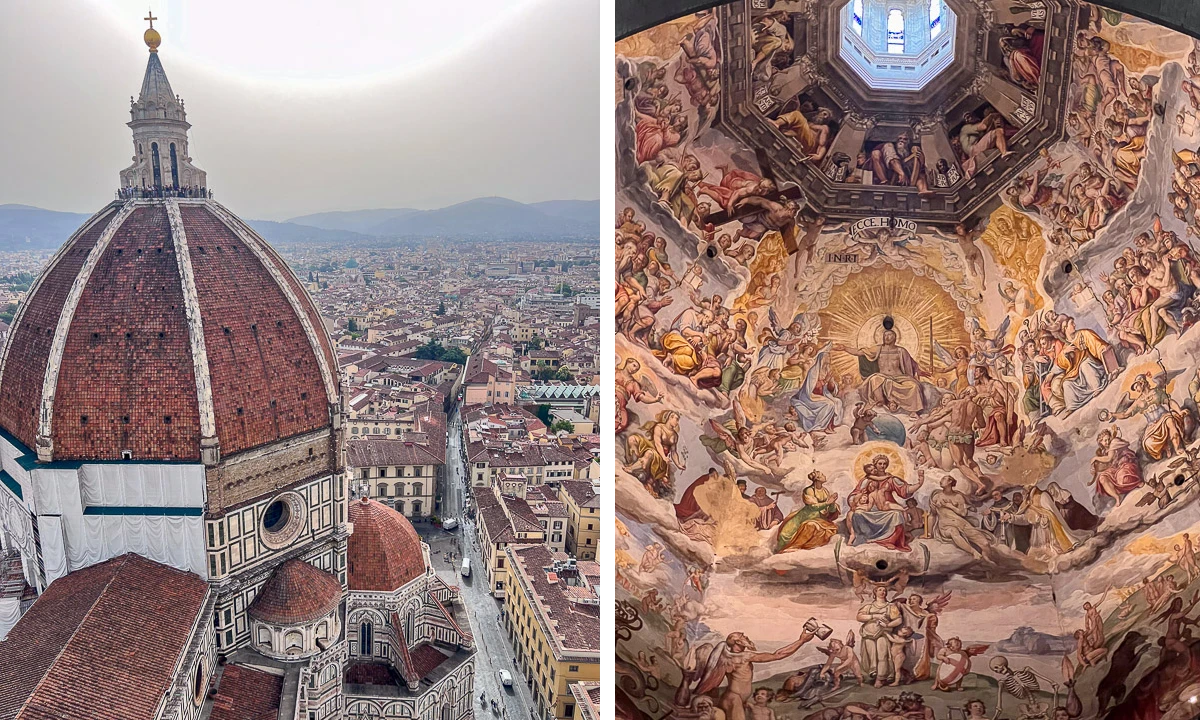
Catching a glimpse of the world-famous “Brunelleschi’s Dome” is awe-inspiring to say the least. The largest brick dome ever built, its construction marked a major breakthrough in architectural techniques. It’s worth getting your hands on the book Brunelleschi’s Dome: How a Renaissance Genius Reinvented Architecture before your trip – a fascinating read that will truly enrich your visit.
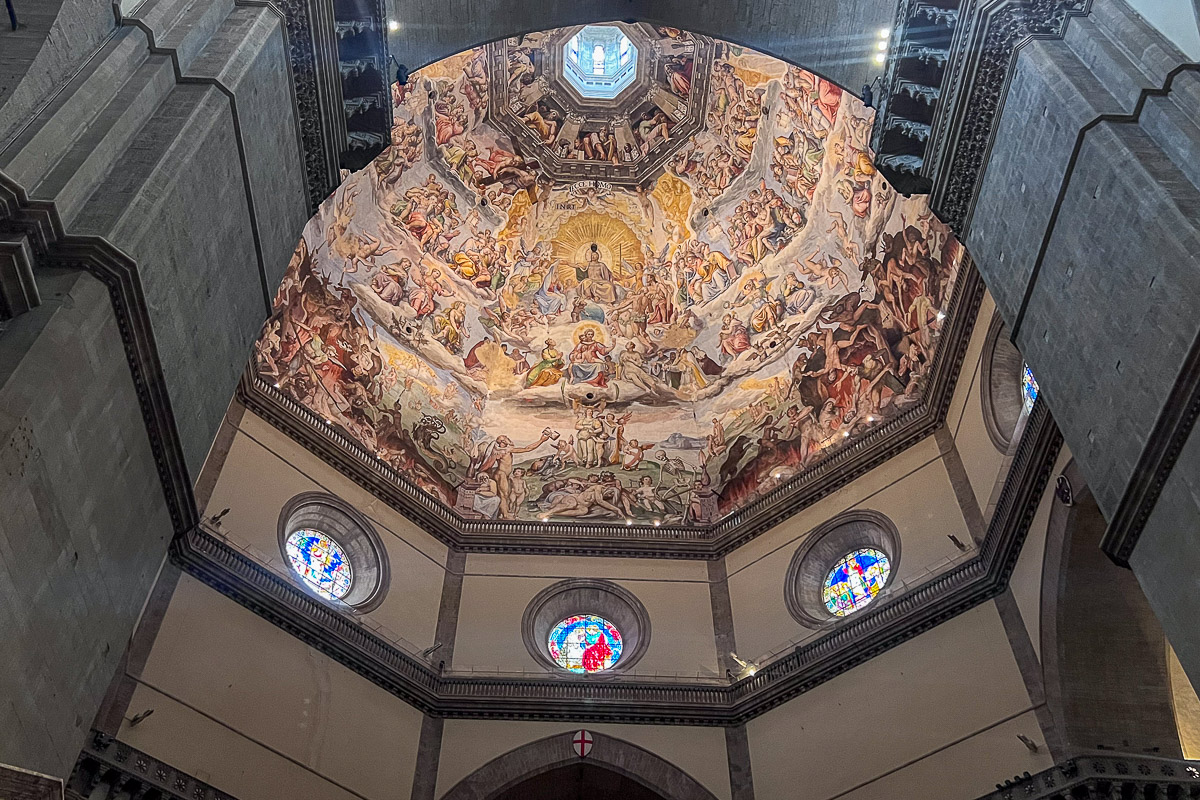
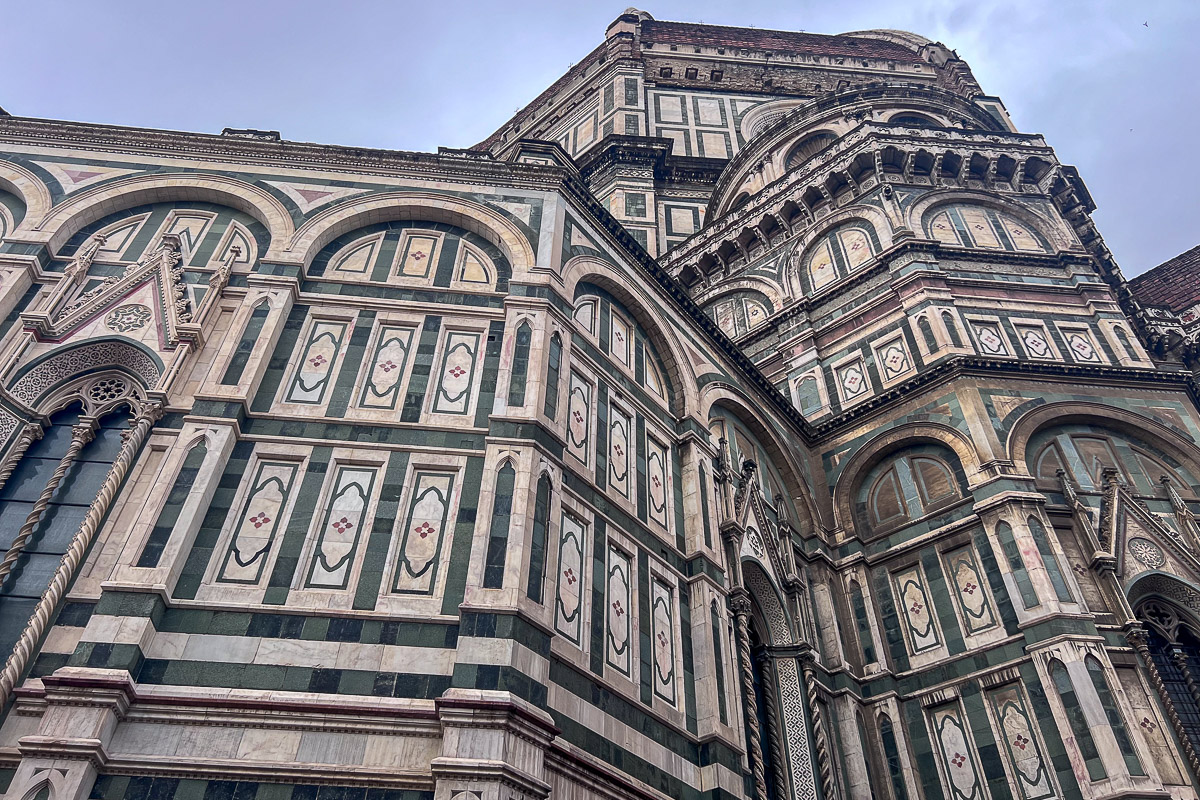
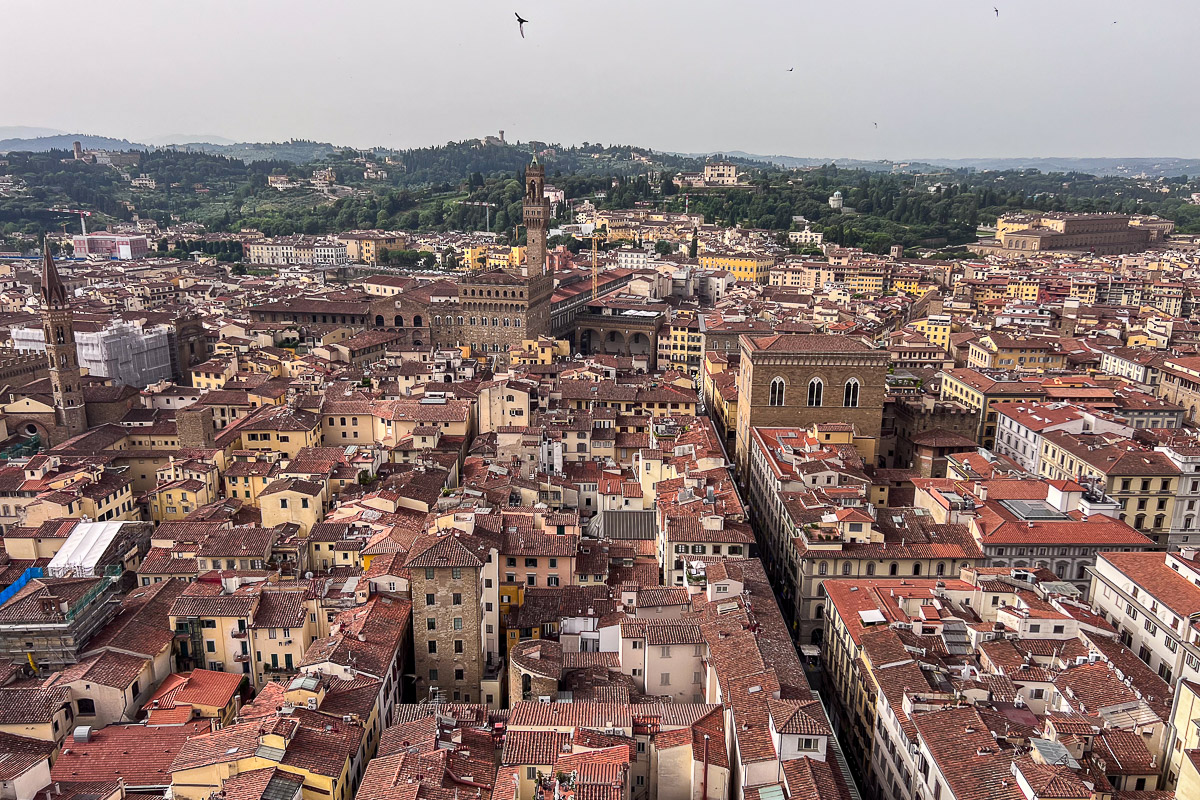
You can choose to either climb the Dome or Giotto’s Campanile (Bell Tower) when booking your tickets (you can also do both but I think it’s overkill?). I personally picked the tower to get the views over the dome, well worth it.
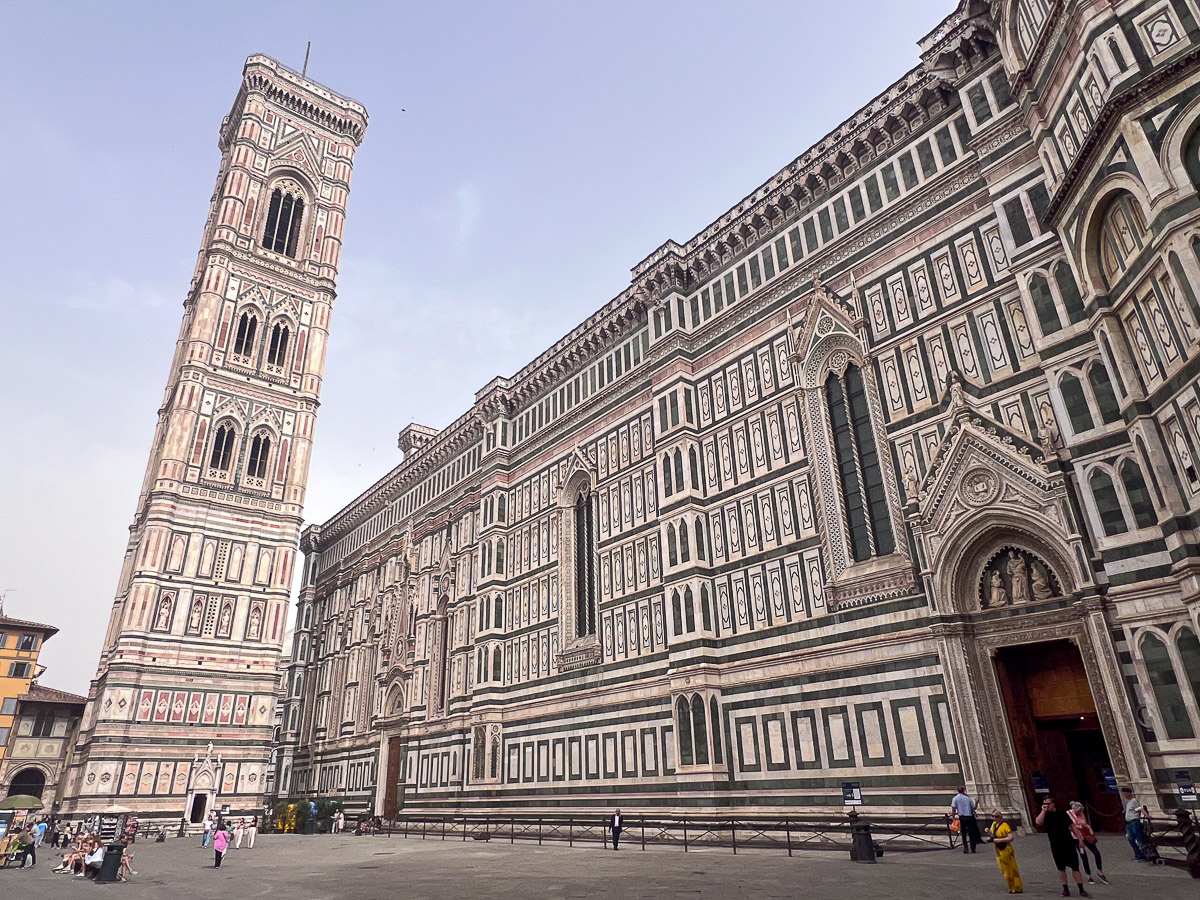
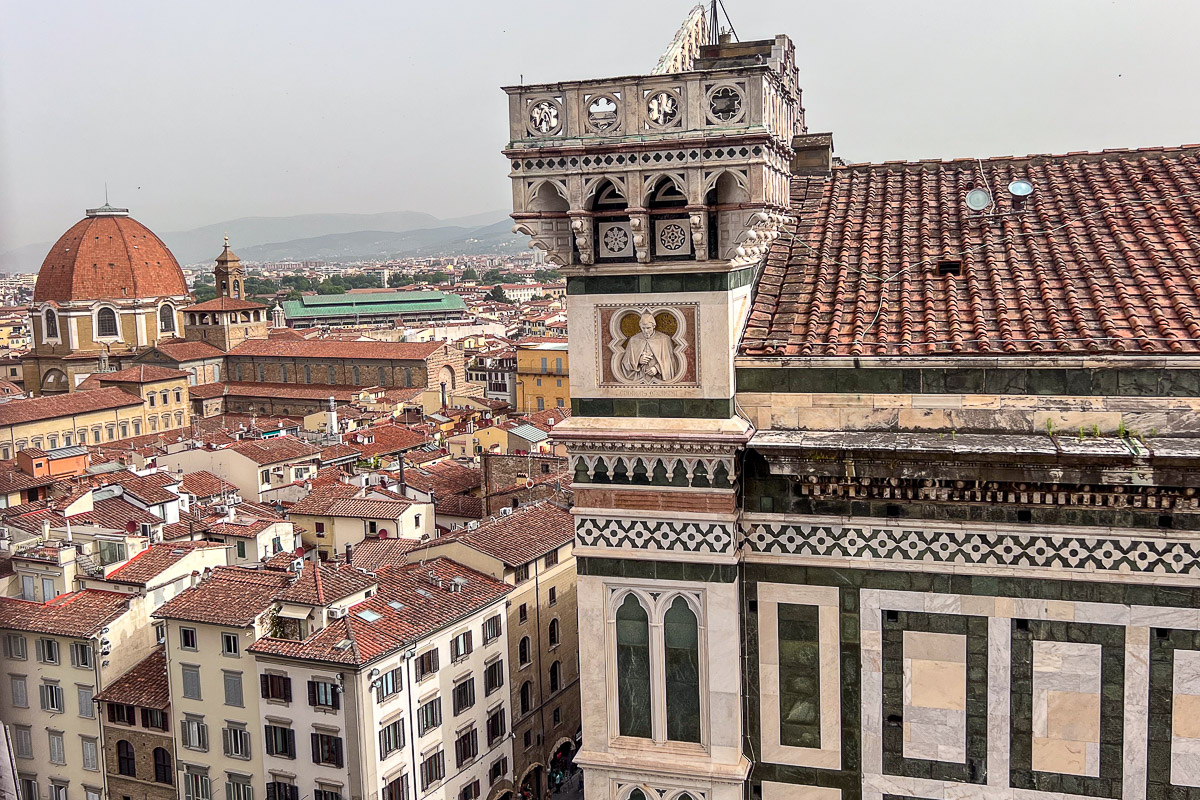
You get stunning 360-degree views over Florence…
… and a great perspective on the enormous orange-tiled dome.
Head next to the octagonal building in front of the cathedral – the Baptistery. One of Florence’s oldest and most important religious buildings, it is famous for its beautiful bronze doors made by renaissance sculptors such as Pisano (although to see the real ones you’ll need to go to the museum)…
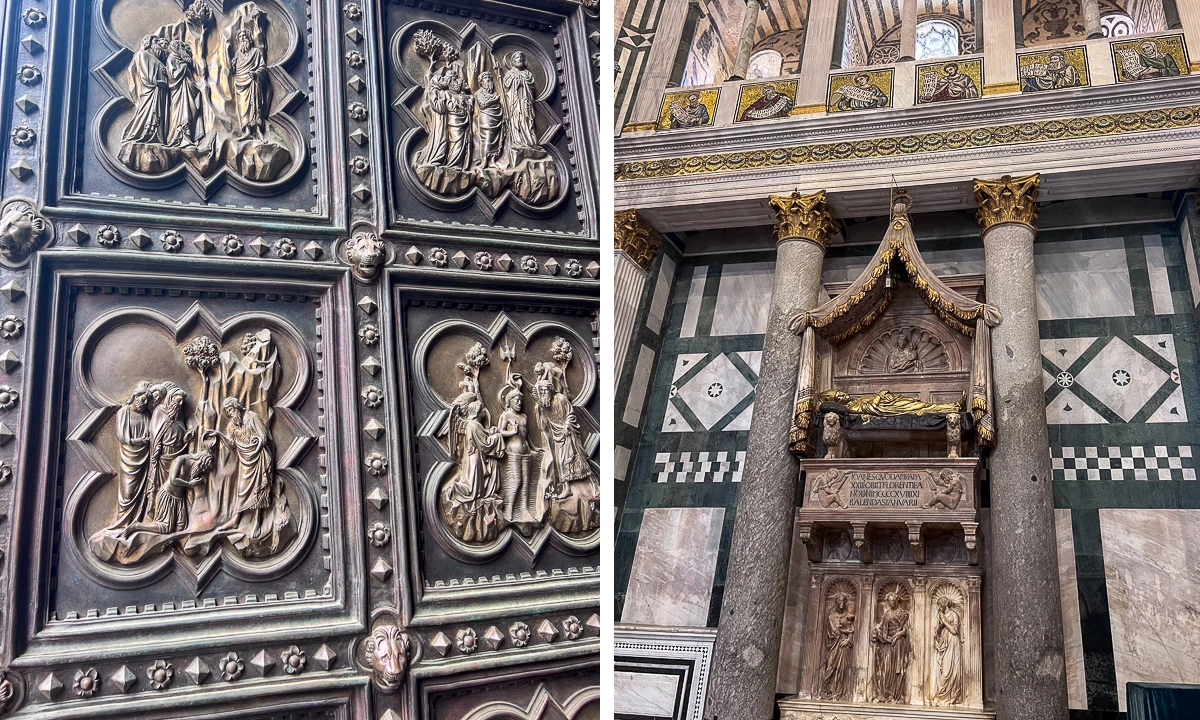
…and for its dazzling mosaic covering the entire ceiling and parts of the walls.
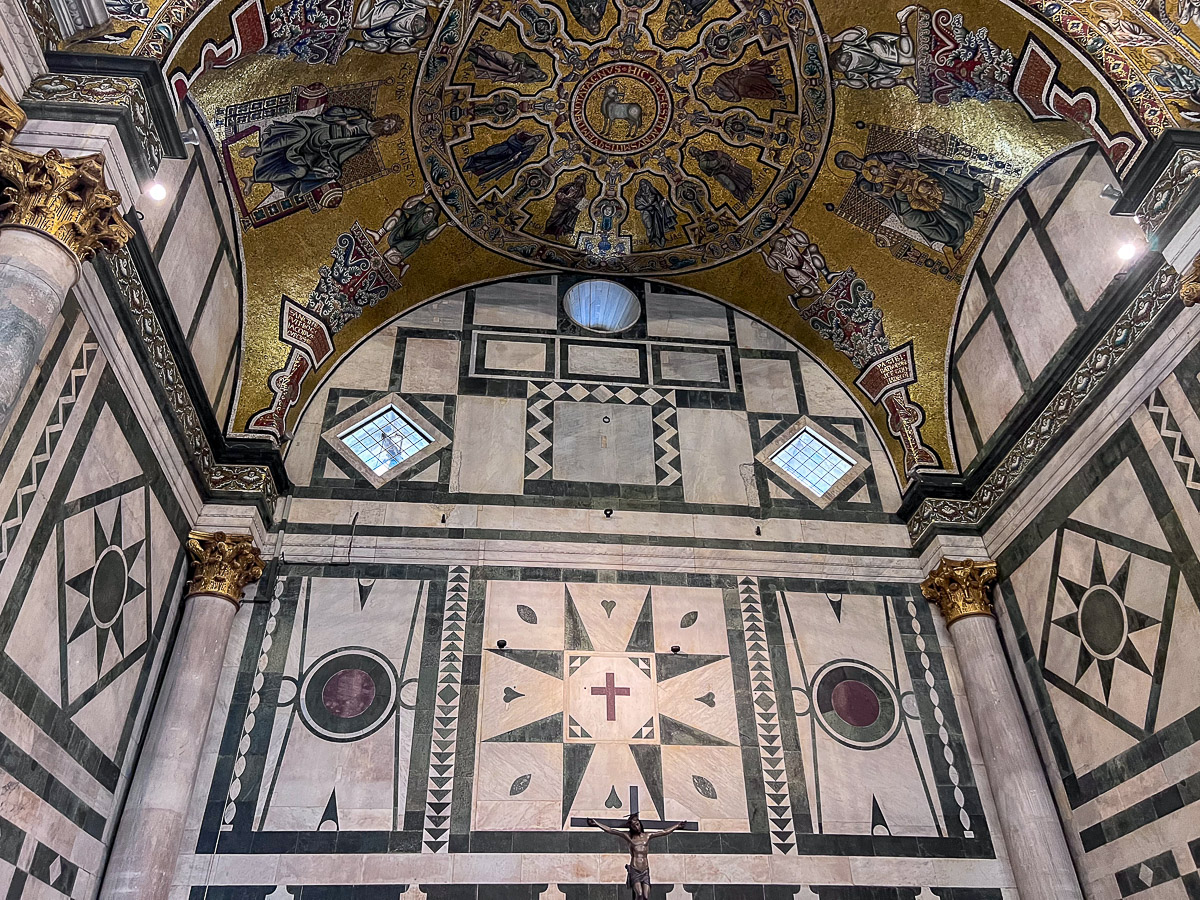
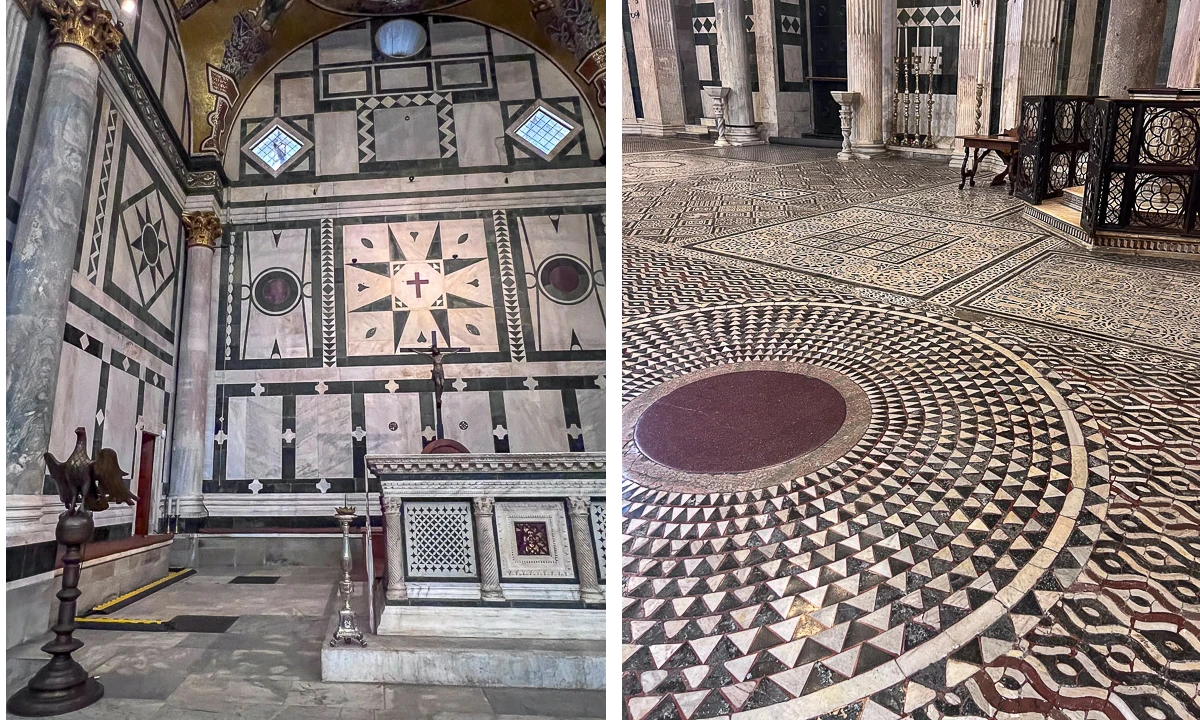
The walls are decorated with geometric designs in white and green marbles but I was most captivated by the floor, a splendid assemblage of “marble carpets” inspired by Middle Eastern textiles from the early 1200s.
When you’re done admiring the complex, go around the back of the cathedral to find the Opera del Duomo Museum housed in a yellow building. It truly brings the sheer scale and ambition of the construction of the Duomo alive through amazing exhibitions and display of the original artworks.
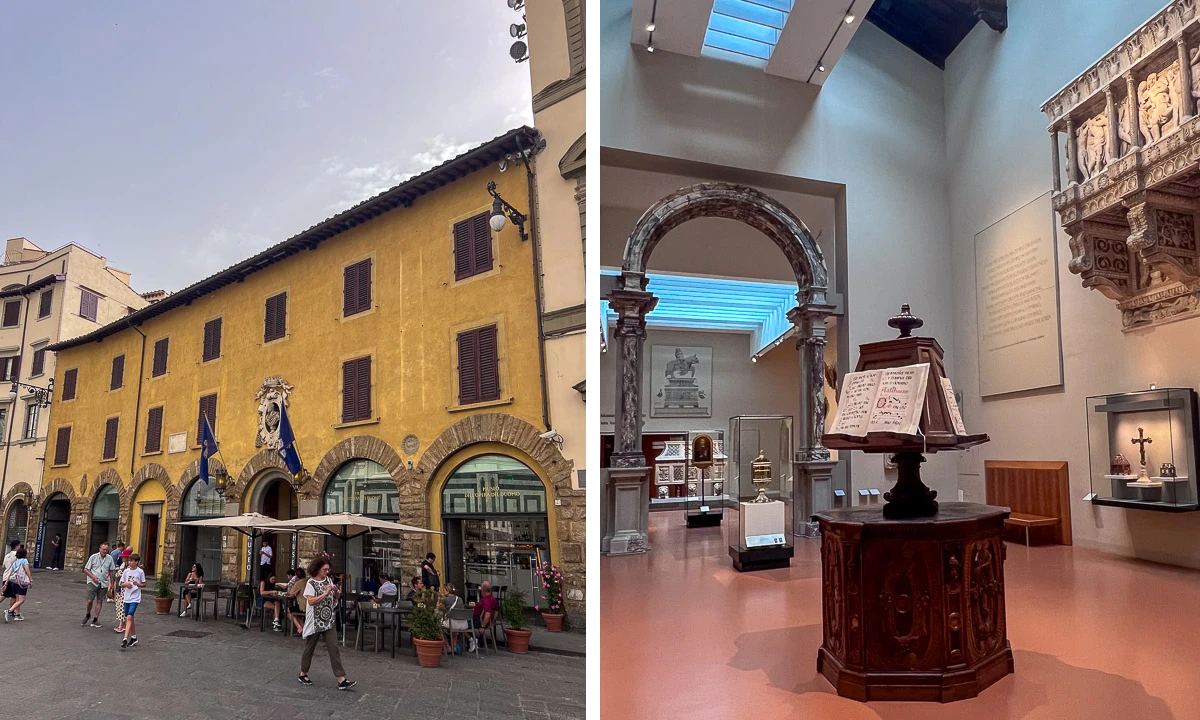
The main attraction on the ground floor is the recreation of the ancient façade of the Duomo, which was originally unfinished and dismantled in 1587.
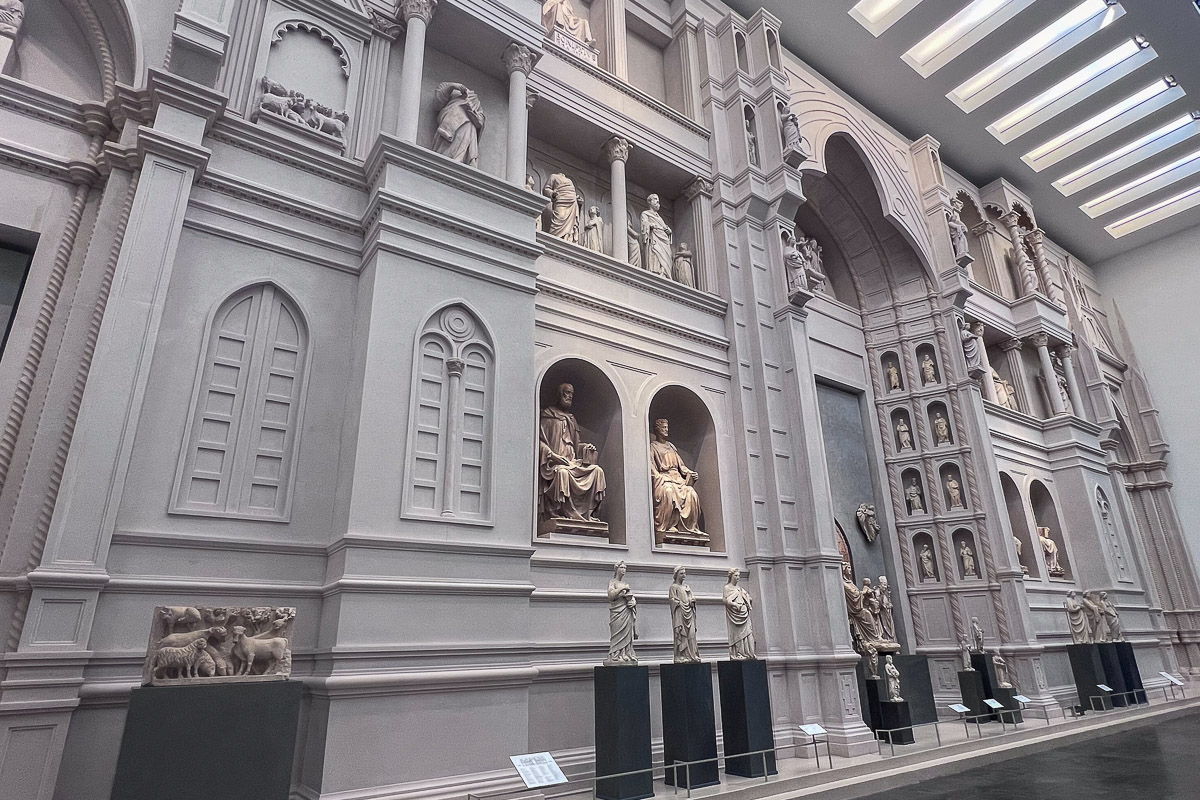
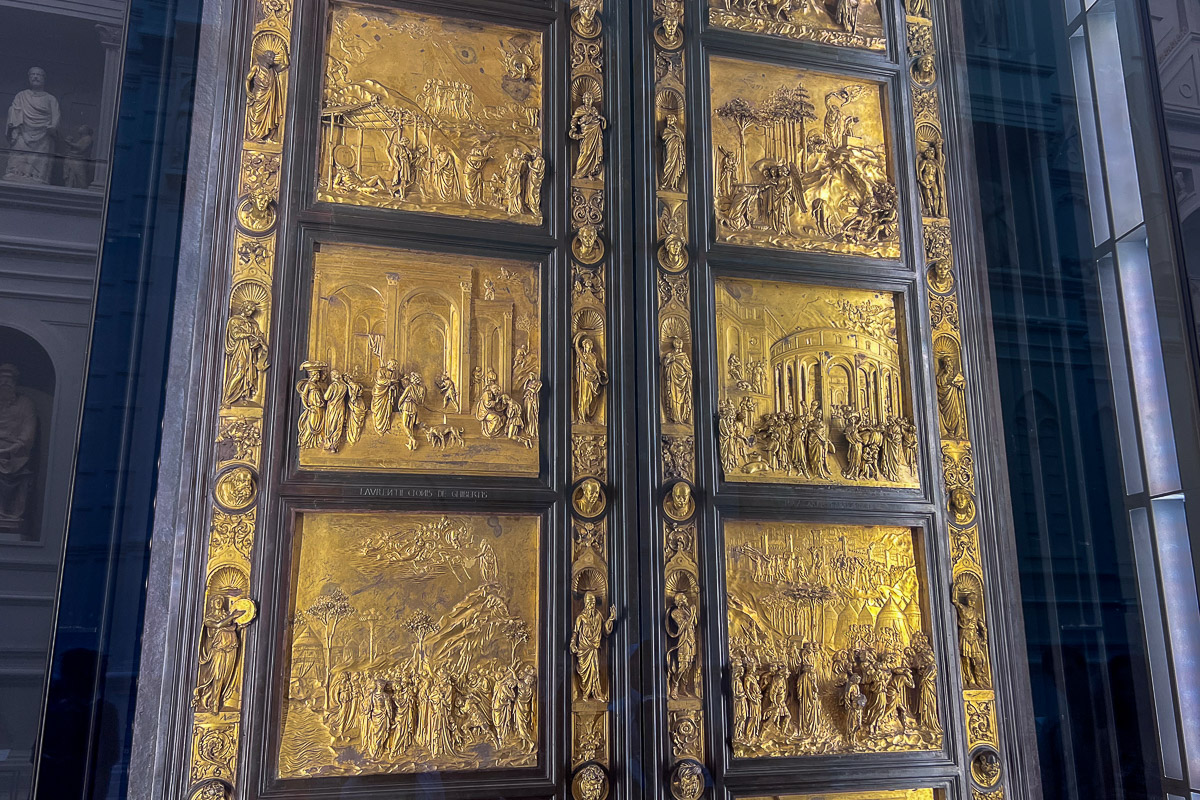
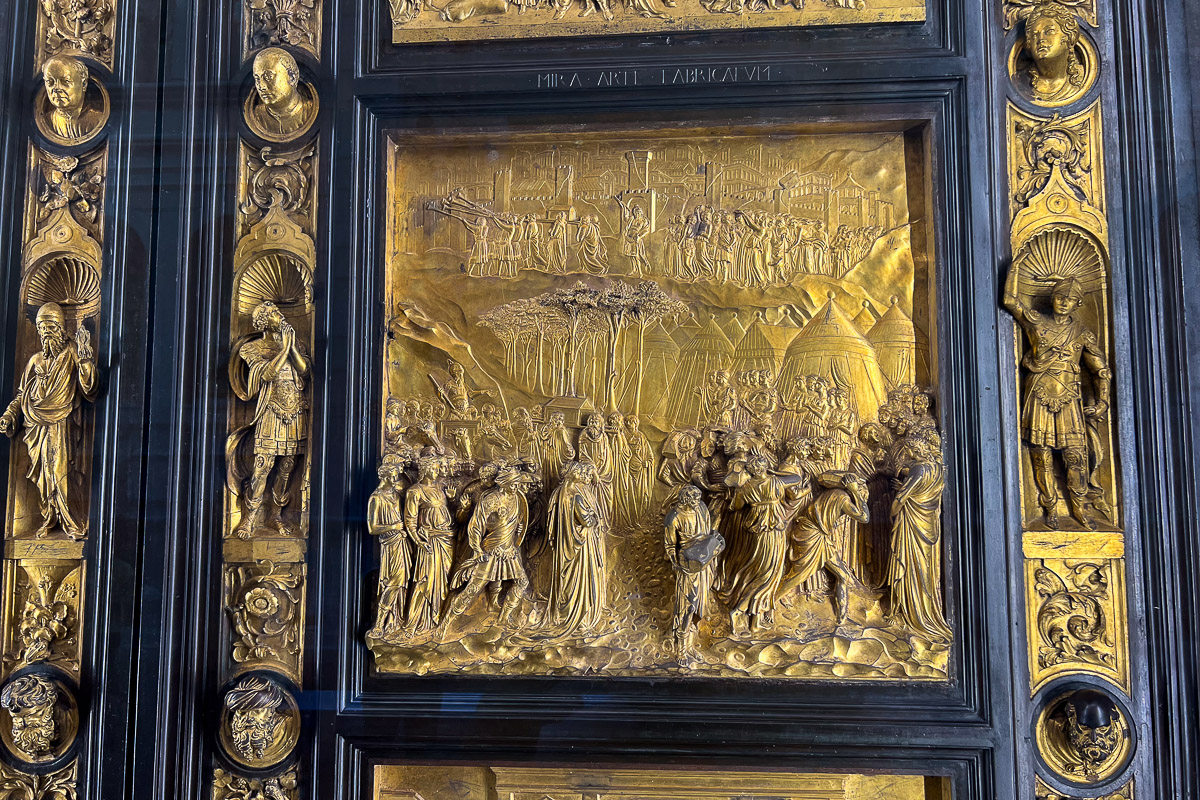
You also get to see up close the original bronze doors of the Baptistery and their intricate relief panels. The eastern pair, ornamented with 10 stories from the Old Testament, was dubbed the “Gates of Paradise” by Michelangelo and considered a renaissance masterpiece.
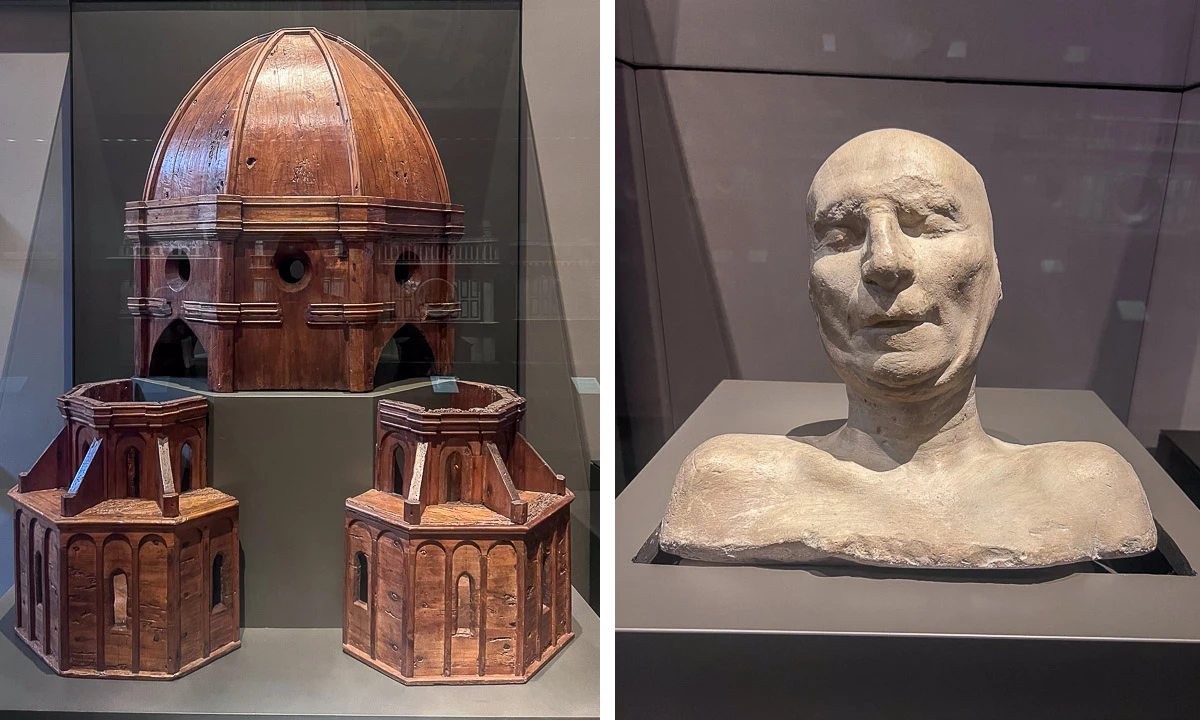
The Cupola Hall brought everything I had read about the difficult construction of the dome to life with a display of tools specifically invented for it, small scale models, and the funeral mask of the dome architect, Filippo Brunelleschi.
Around the Duomo
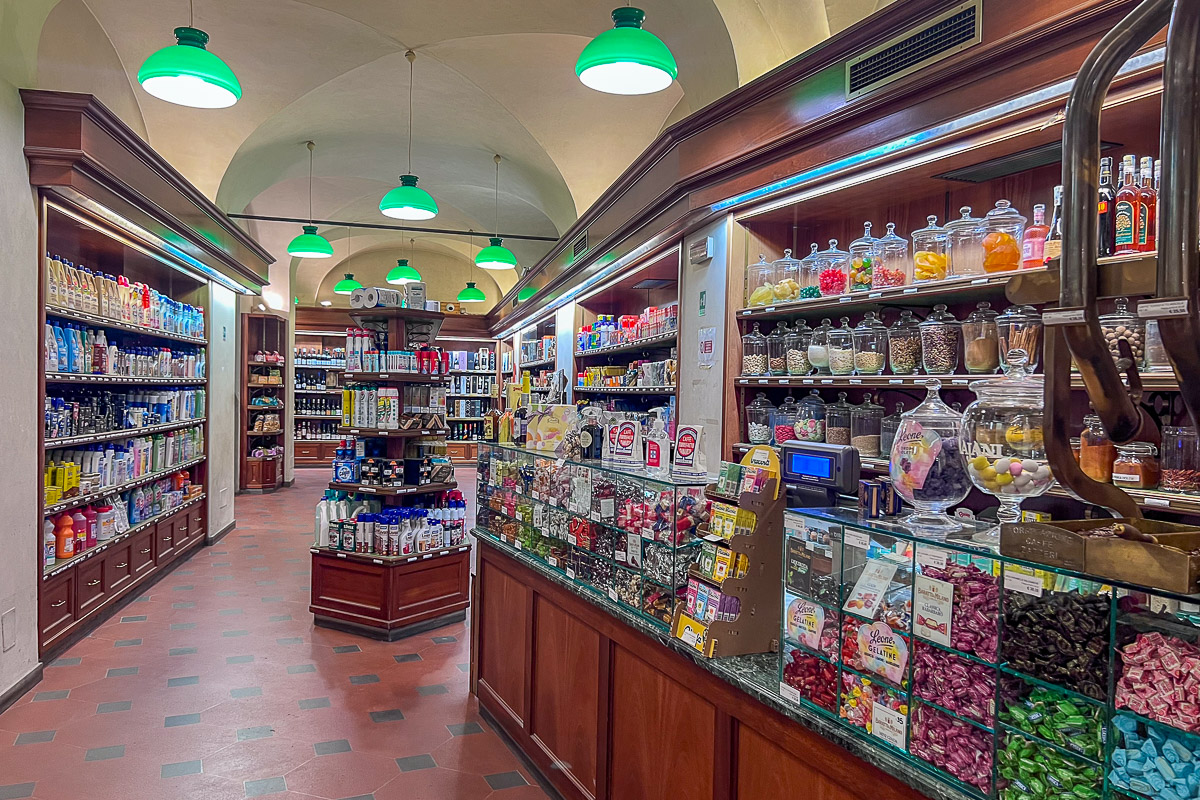
Lots of small pedestrian streets radiate south of the cathedral to let you catch your breath, find a bit of “quiet”, and discover local shops. Pegna dal 1860 is a historic gourmet grocery store located in a former monastery dating back to the 1600s just a block from the Duomo. It is THE place to buy Italian specialties for your pantry back home, from spices and chocolates to olive oil, wine and pastas.
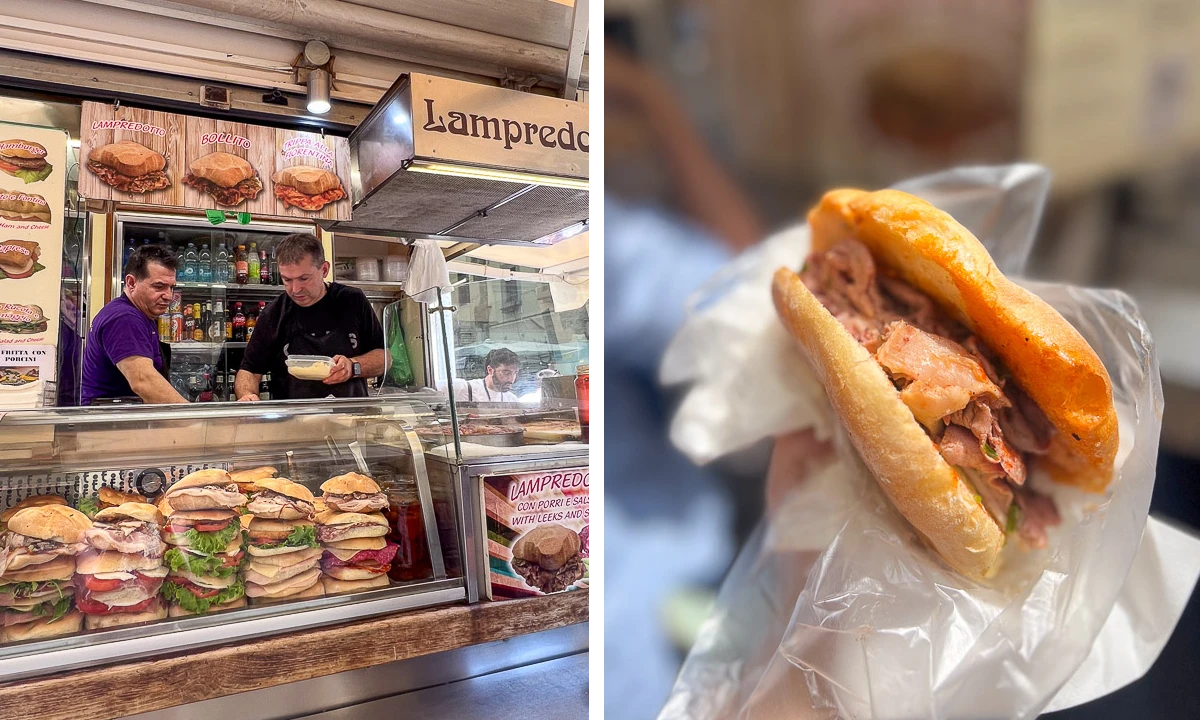
Continue south to find better food options for lunch than what’s available right by the cathedral, unsurprisingly. Make your way to Piazza dei Cimatori where you’ll find the sandwich cart L’ Antico Trippaio – a must try. You won’t find more local and authentic than sitting on a stool next to locals eating your very first lampredotto, a Florentine sandwich made with slow-simmered beef tripe, served piping hot inside a crusty roll soaked in broth… simply incredible!
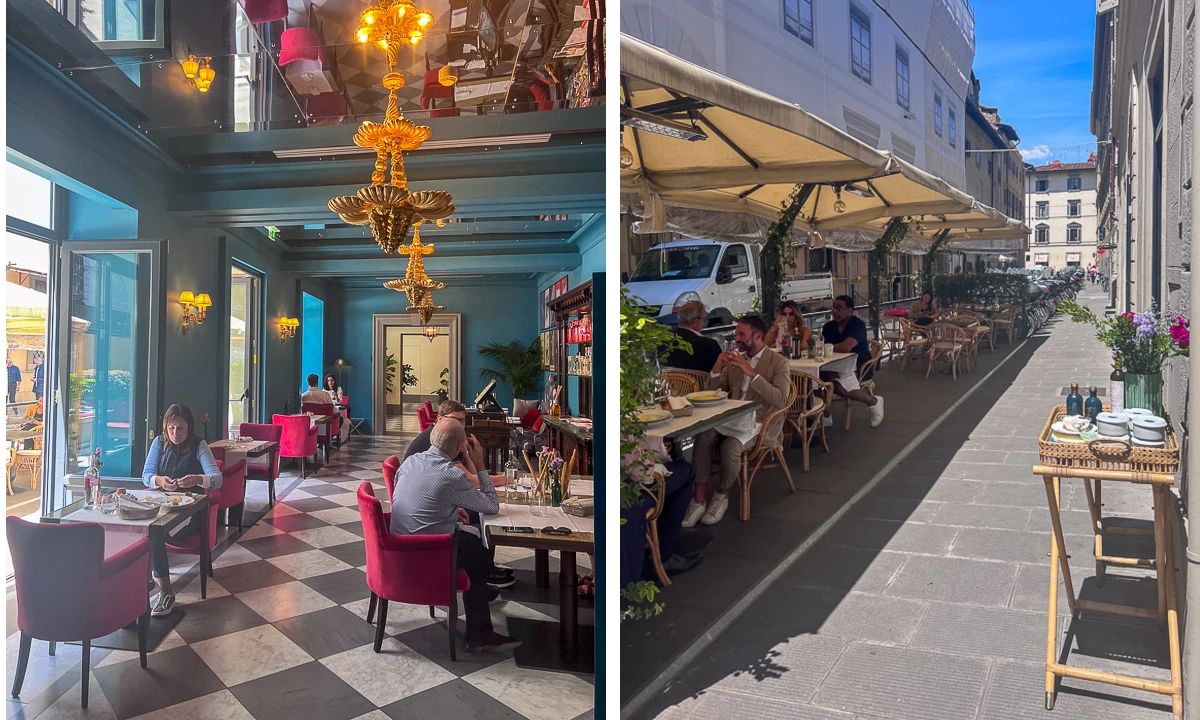
For a more upscale experience, there’s the elegant Cibrèo Caffè inside the Helvetia & Bristol hotel.
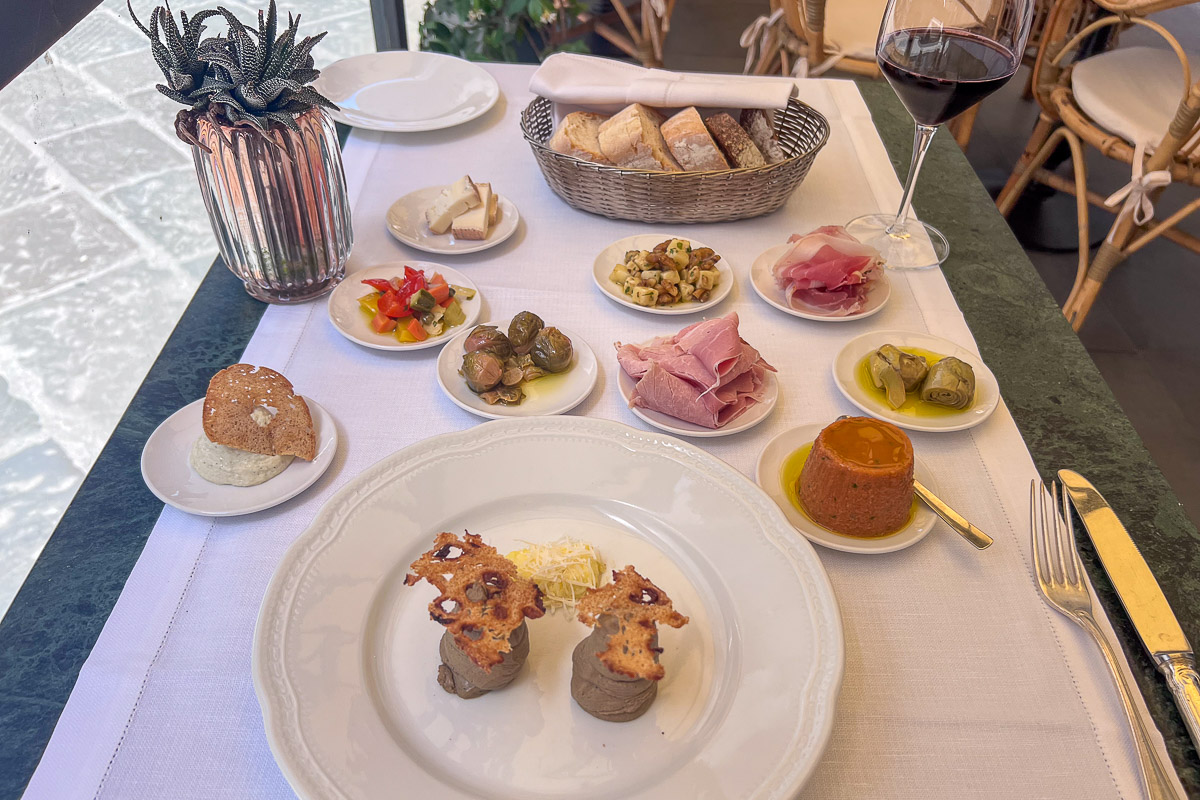
The Cibrèo Starters Selection is an epic way to try some of their most popular appetizers and make a full lunch out of it – think tomato and basil gelée, preserved vegetables, prosciutto, chicken liver paté, etc.
There’s the House of Dante nearby if you’re interested in seeing where the famed poet was born.
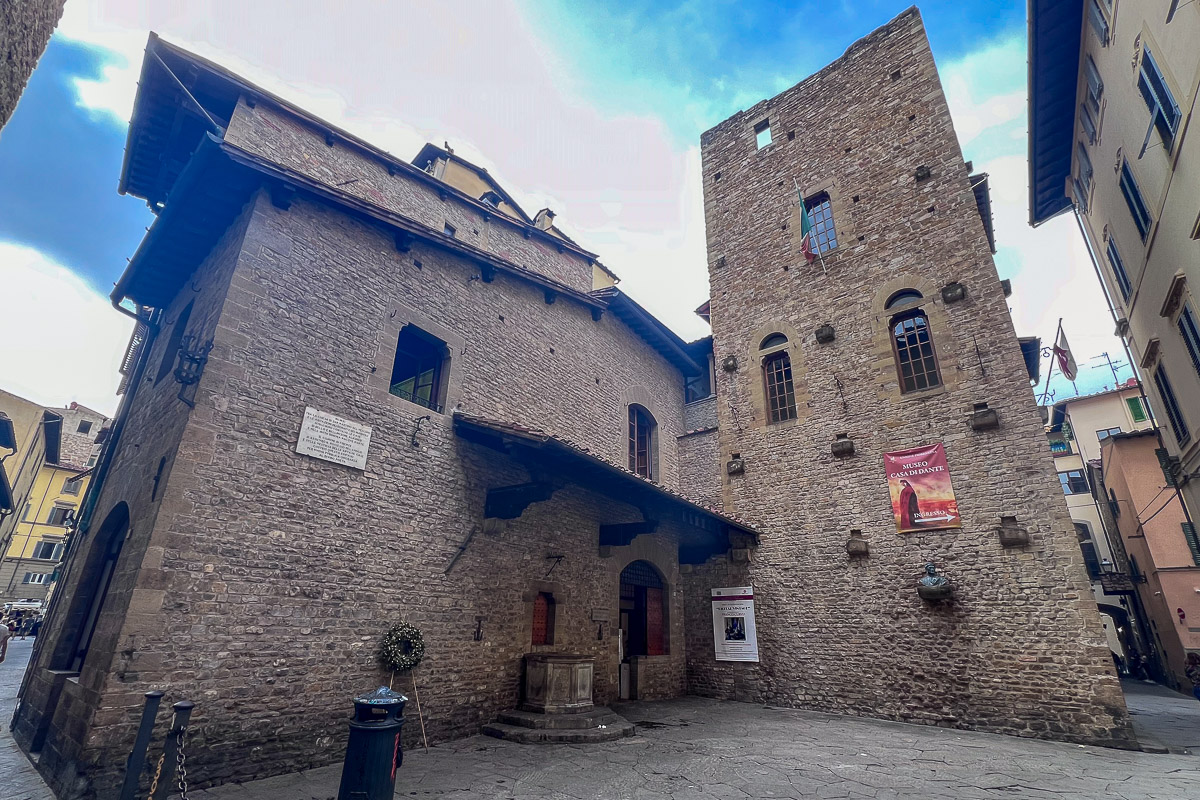
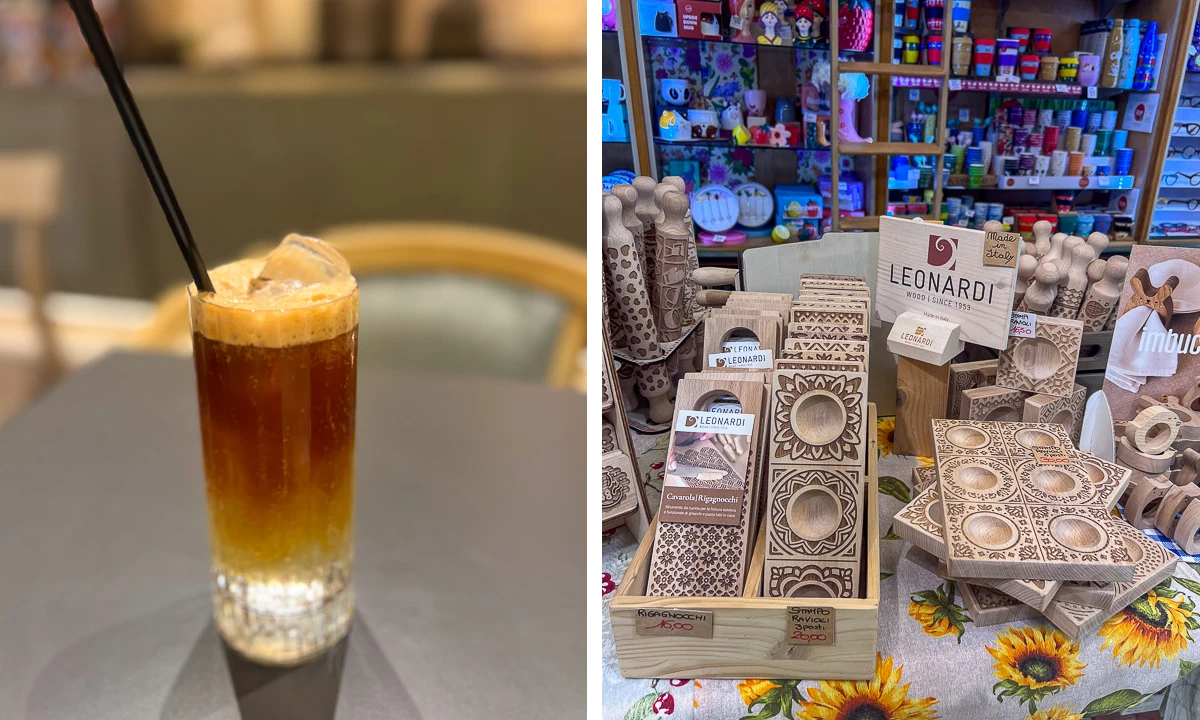
I didn’t go into the Dante Museum but admired the tower house from a little cafe across the courtyard with my first espresso tonic – a refreshing pick-me-up on a hot afternoon. I also stumbled upon a kitchen supply store, Ditta Braschi, with unique gift ideas you should check out, from intricately carved pasta molds to whimsical glasses.
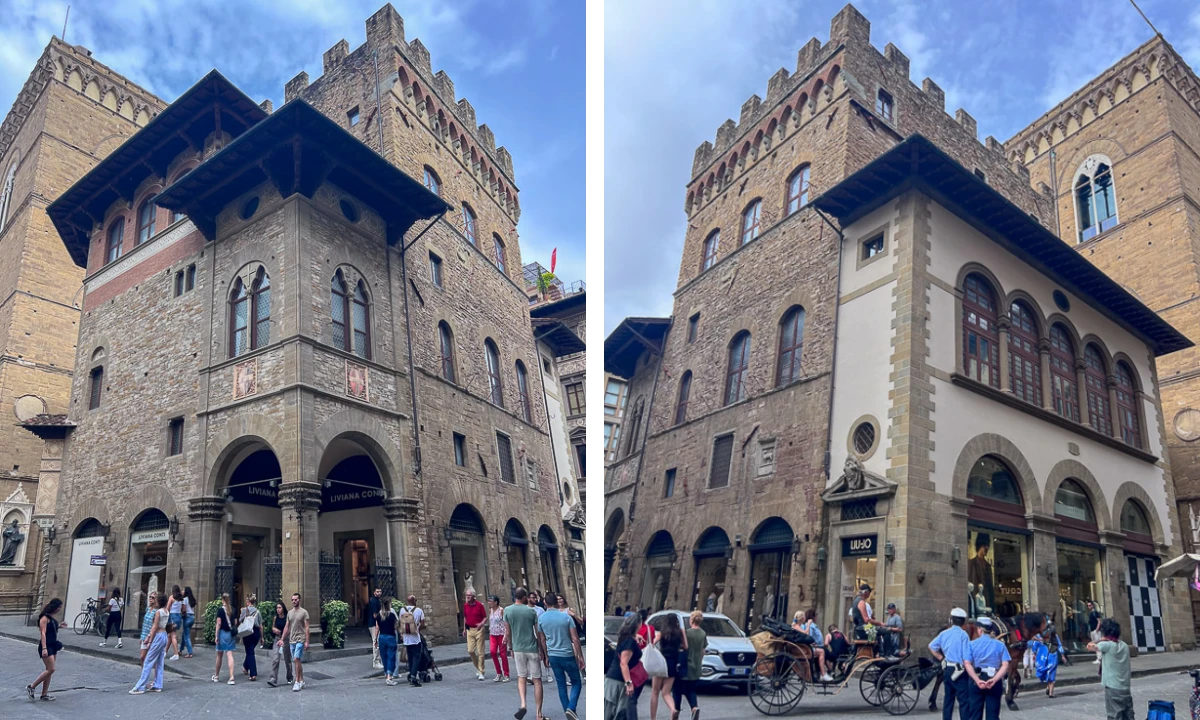
Make your way through narrow lanes to the buzzing shopping district where fortified towers house brand names.
Orsanmichele
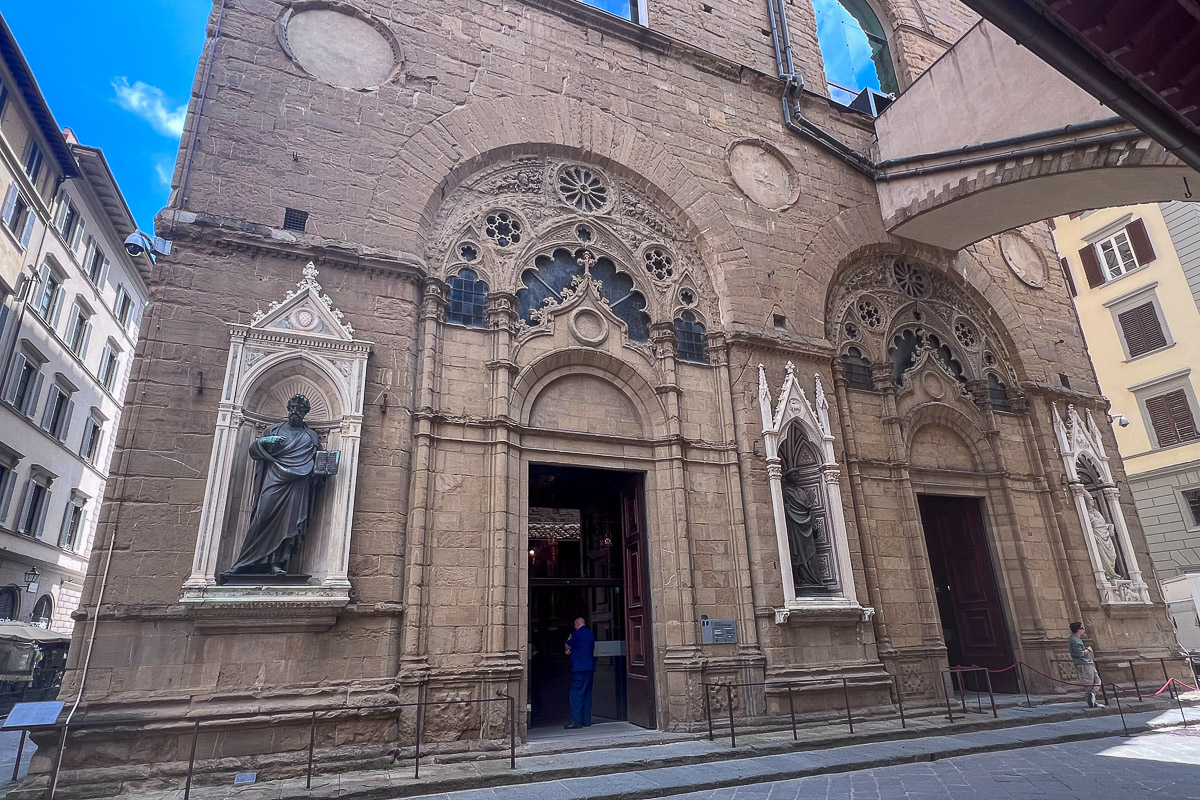
Surrounded by clothing stores and gift shops, the church and museum of Orsanmichele stands out with its gothic façade in the very heart of the ancient city center.
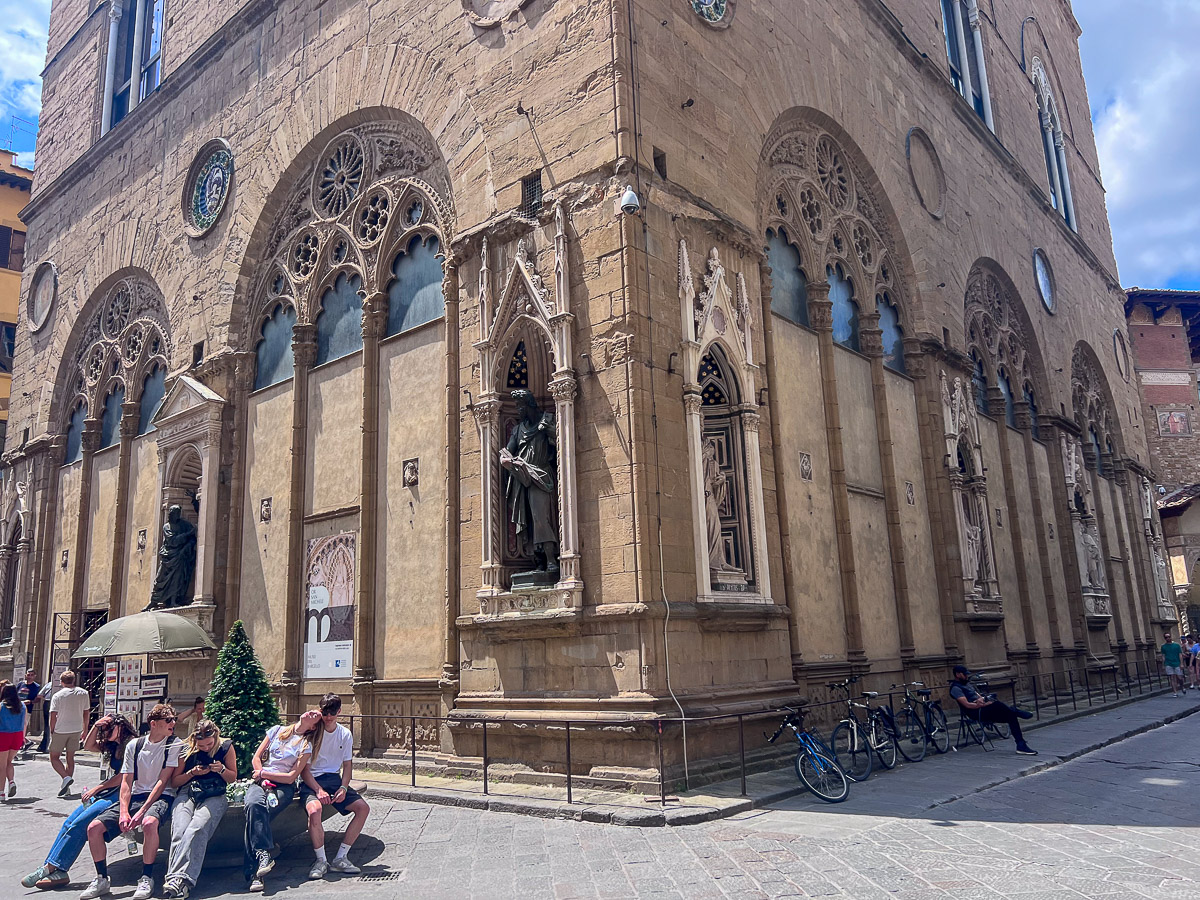
You’ll need a ticket to enter the building which used to be the city’s grain market in the 14th century before being transformed later into a beautiful church.
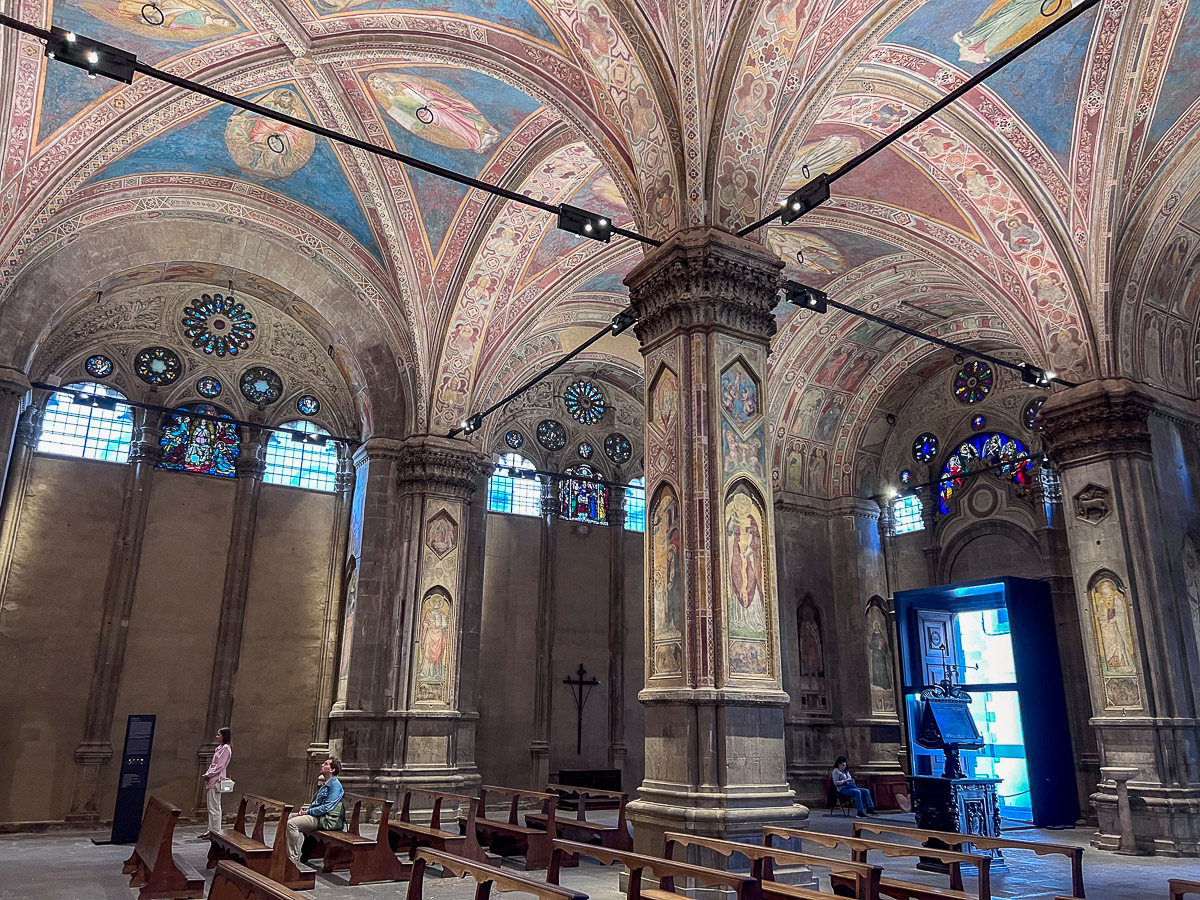
Frescoed vaults and painted images of patron saints of the Arts (guilds of arts and crafts) adorned the interior…
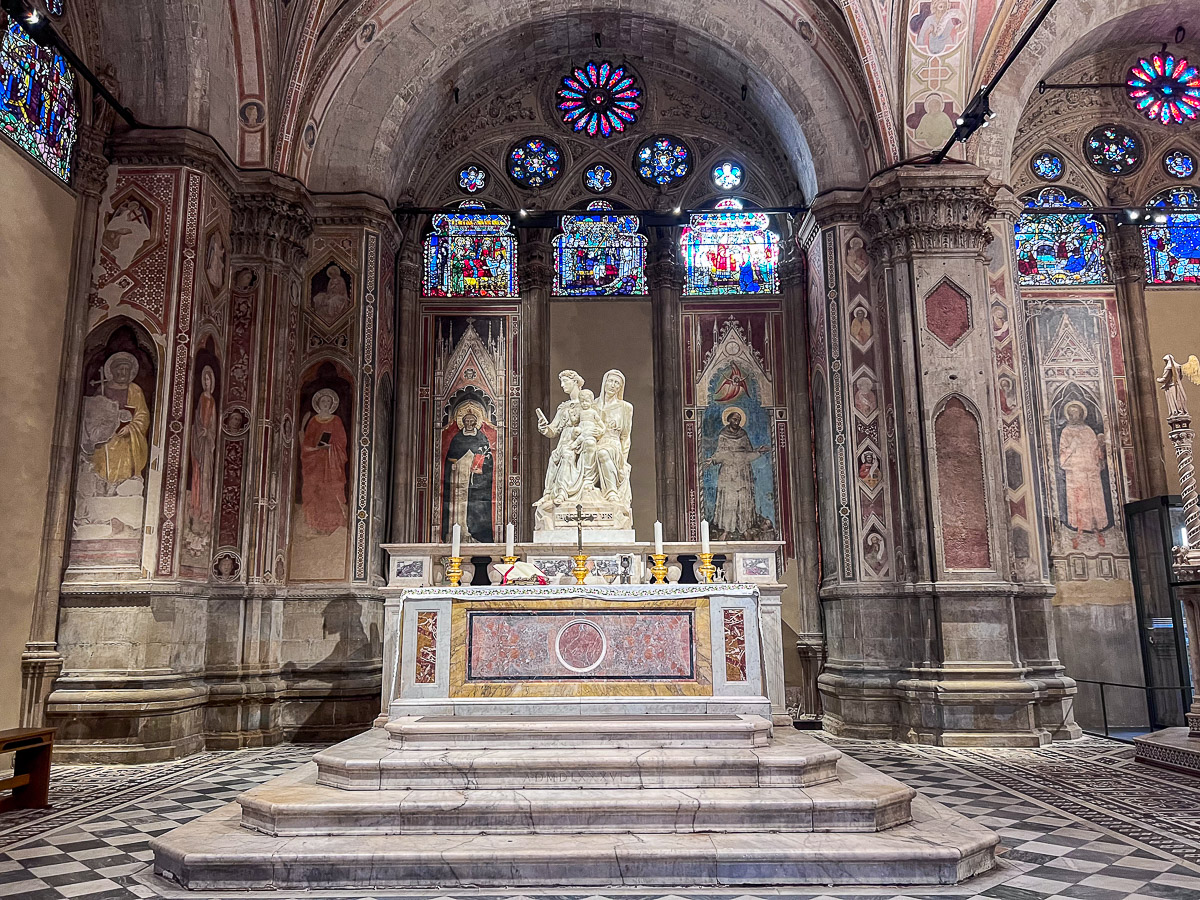
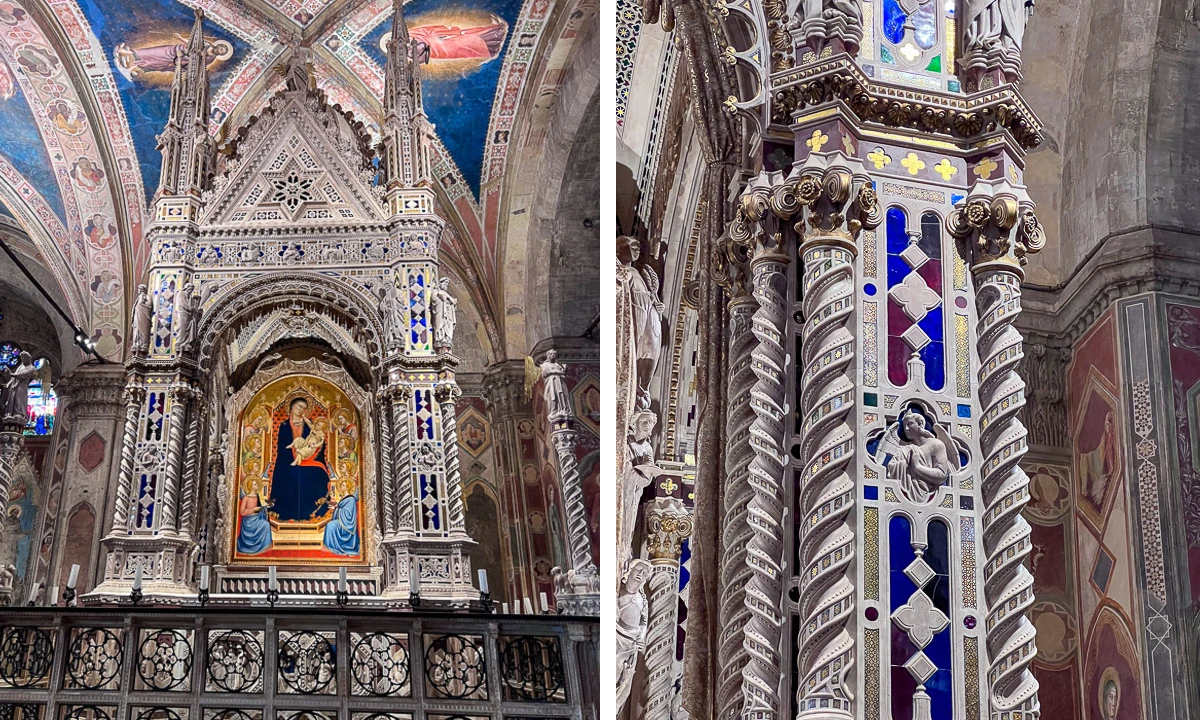
…but it’s the extraordinary 1350s tabernacle covered in carved reliefs and encrusted with colored marble and glass that catches the eye.
The upper floors house the museum with the original sculptures from the building and some nice perspectives on the city’s nearby historic buildings.
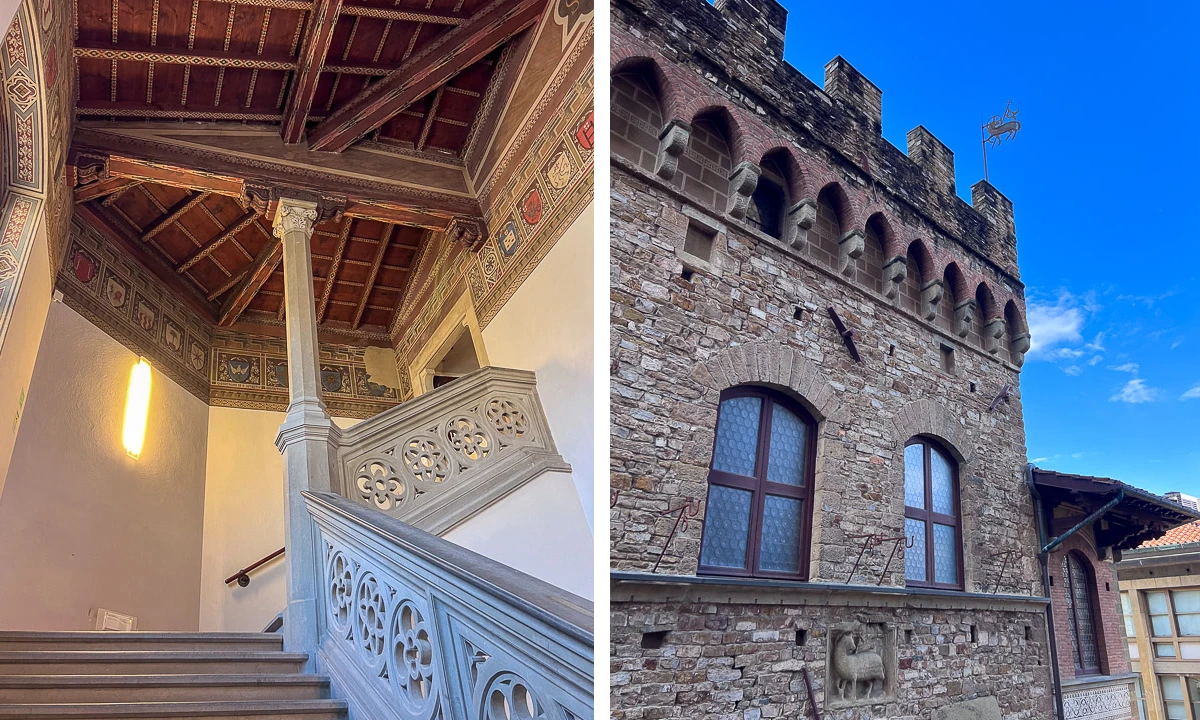
There are no bad angles to the Hotel Calimala on the next block in a 19th-century palazzo with its rooftop bar.
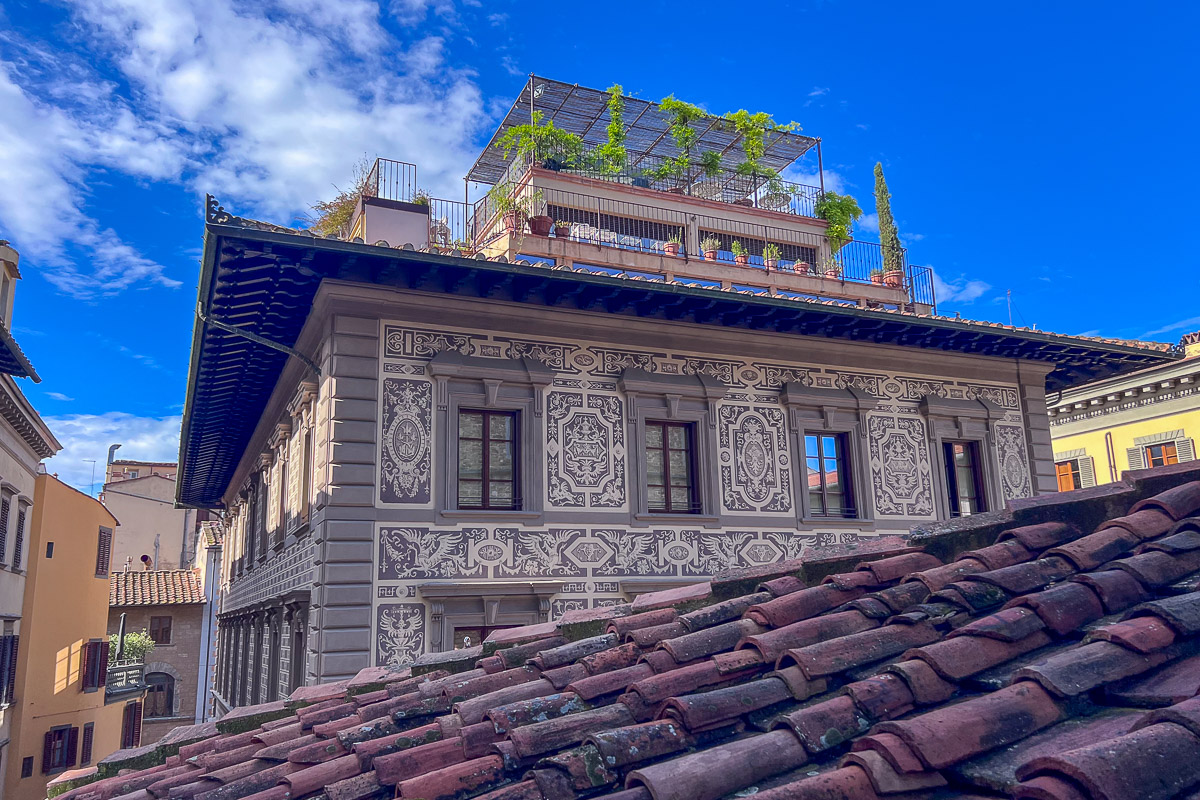
Visit the top floor for an incredible panorama of Florence before exploring more of the center.
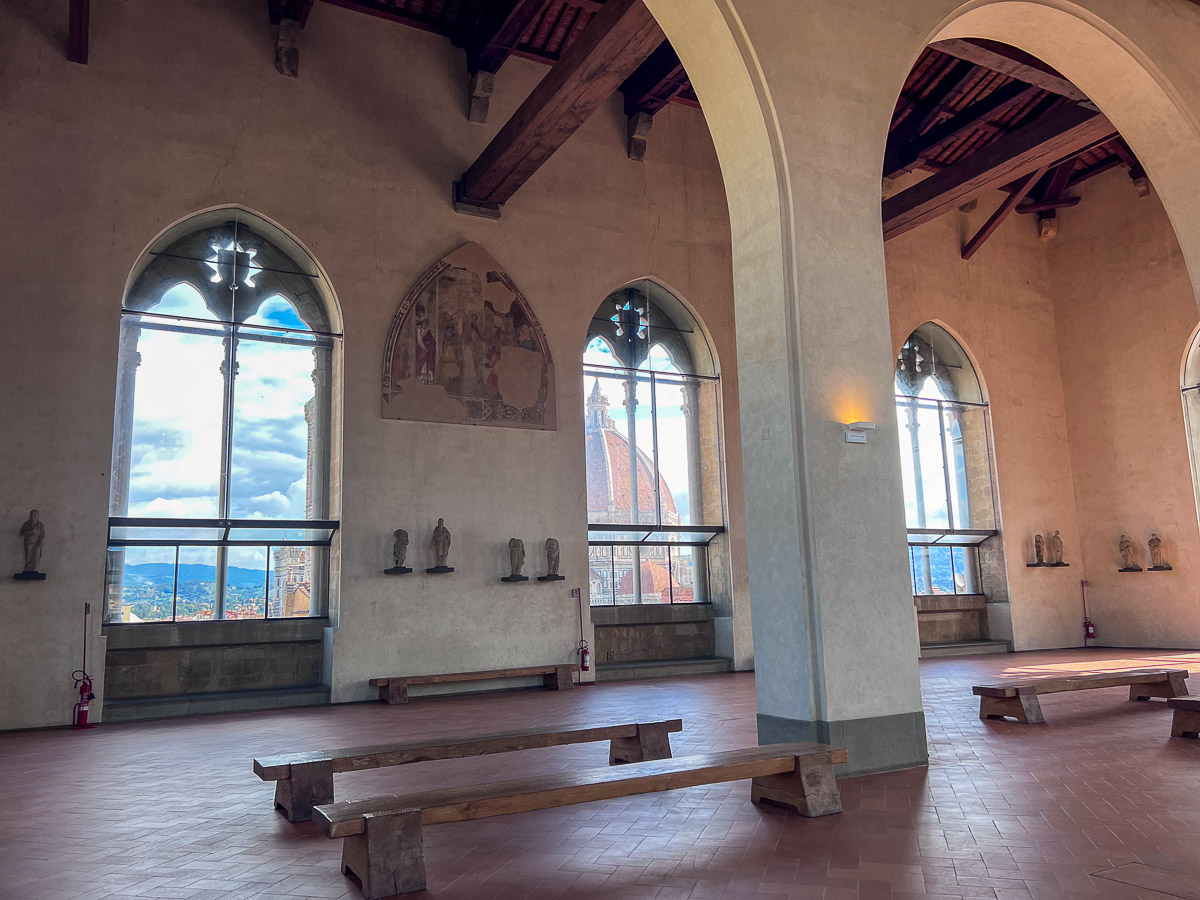
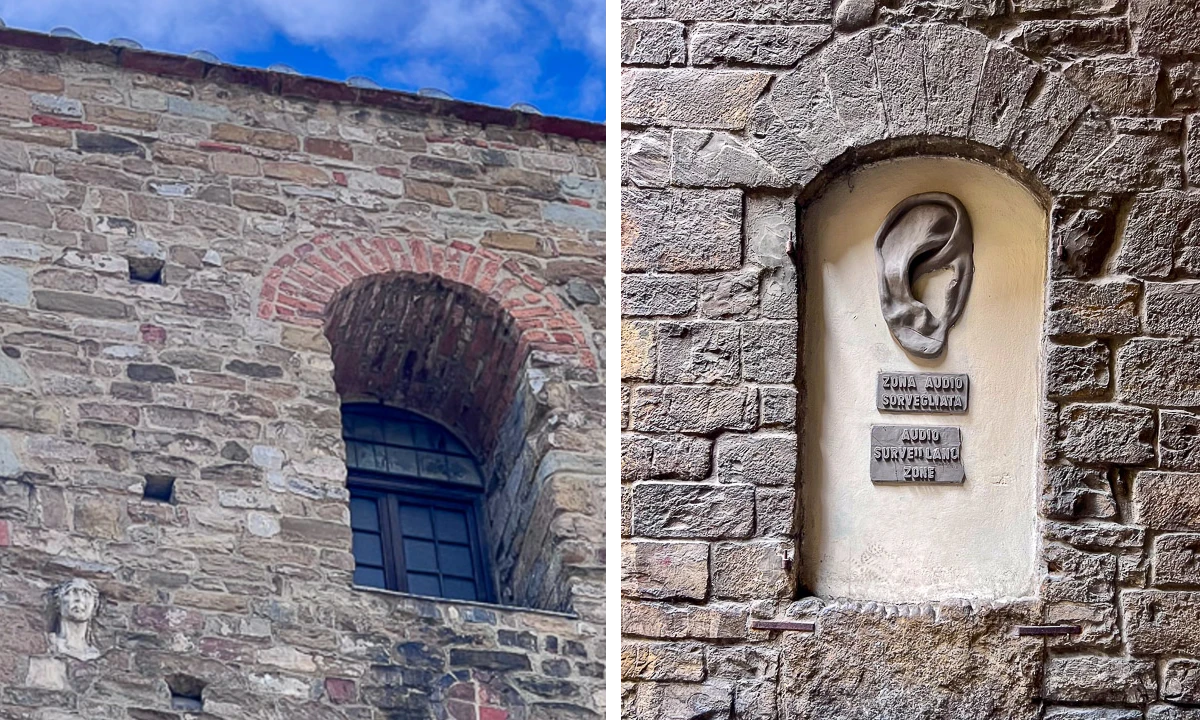
In a cityscape so compact and filled with so many visual marvels, finding the little hidden mysteries of Florence is extremely rewarding. See if you can spot La Berta – a mysterious disembodied head of a woman – sticking out of the Church of Santa Maria Maggiore. According to local legend, she’s either a medieval fruit seller cursed by a sorcerer, or a donor memorialized by the city.
Strozzi Palace
You’ve already seen a few Renaissance masterpieces and religious buildings today so I suggest a change of scenery by stepping into the gigantic Palazzo Strozzi.
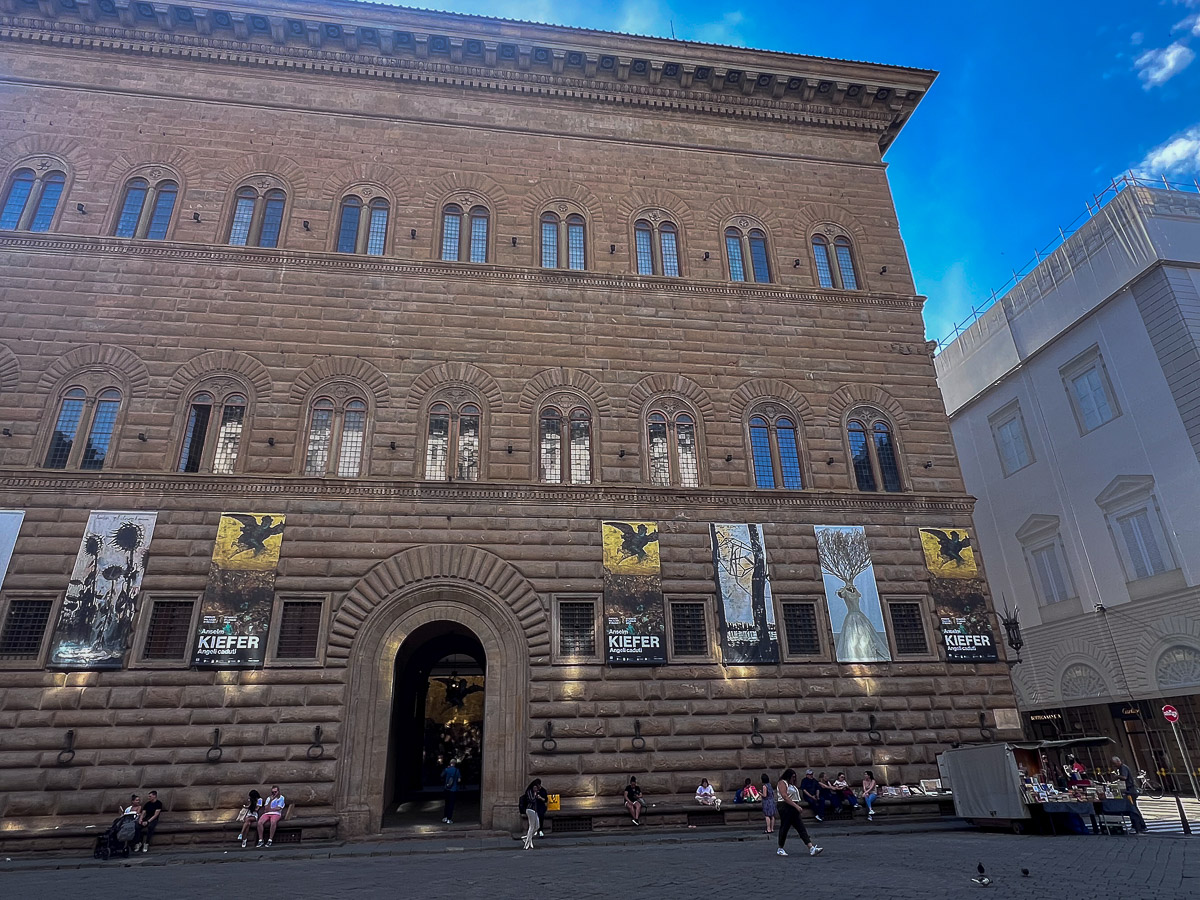
The massive palace is now a major cultural venue with world-class exhibitions of art and antiquities. Grabbing an aperitivo in the vast courtyard is a wonderful way to unwind with an impressive backdrop of contemporary art before making your way inside.
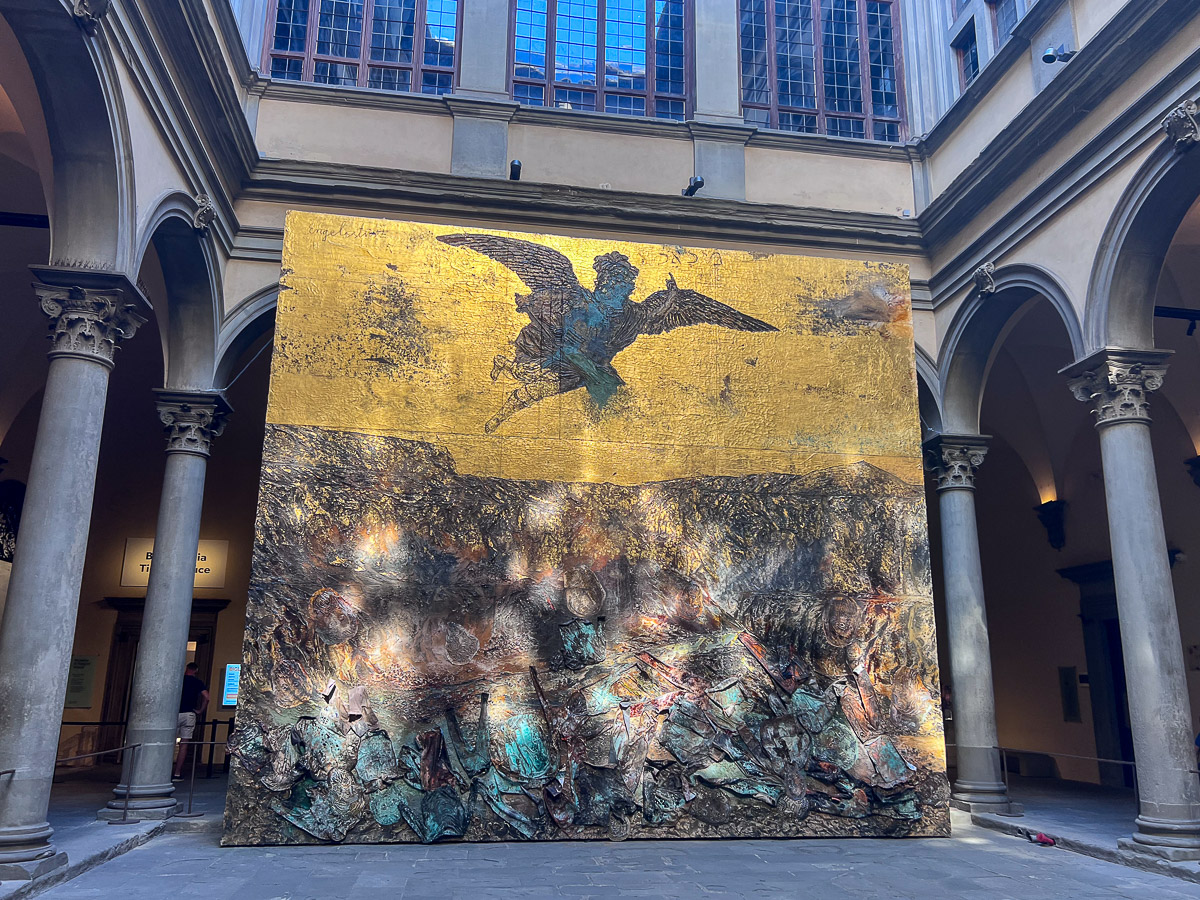
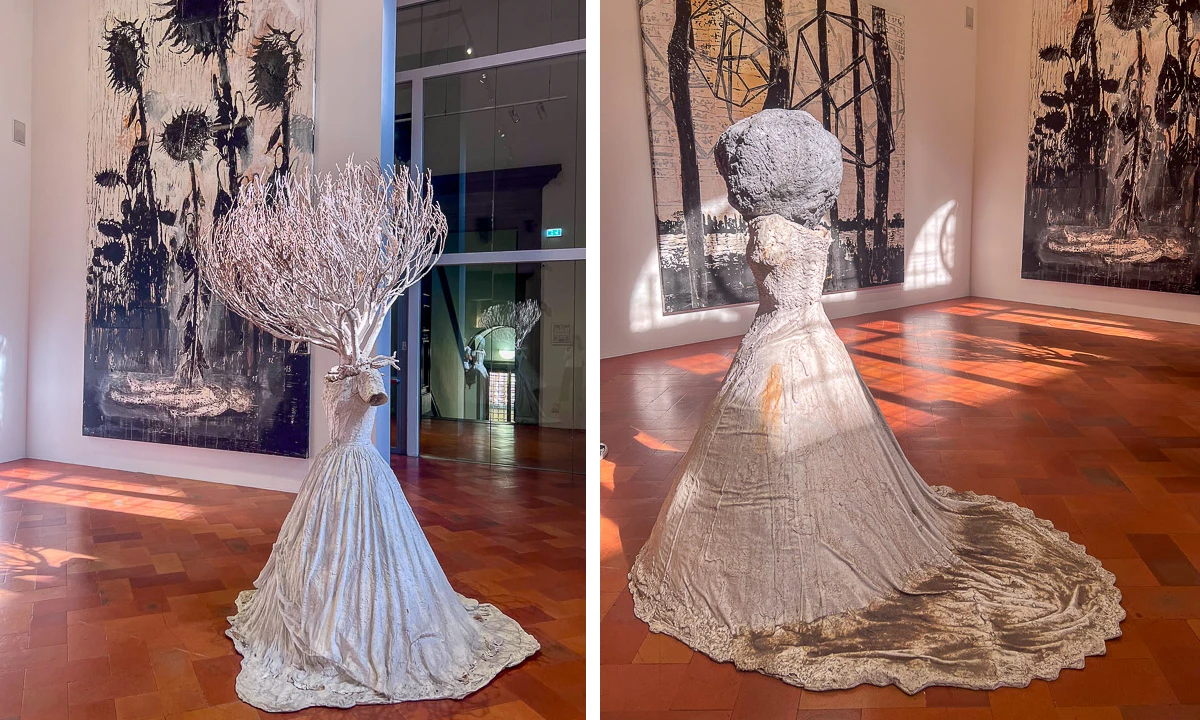
The palace is only three stories but each is massive and perfect for large-scale paintings and scupltures.
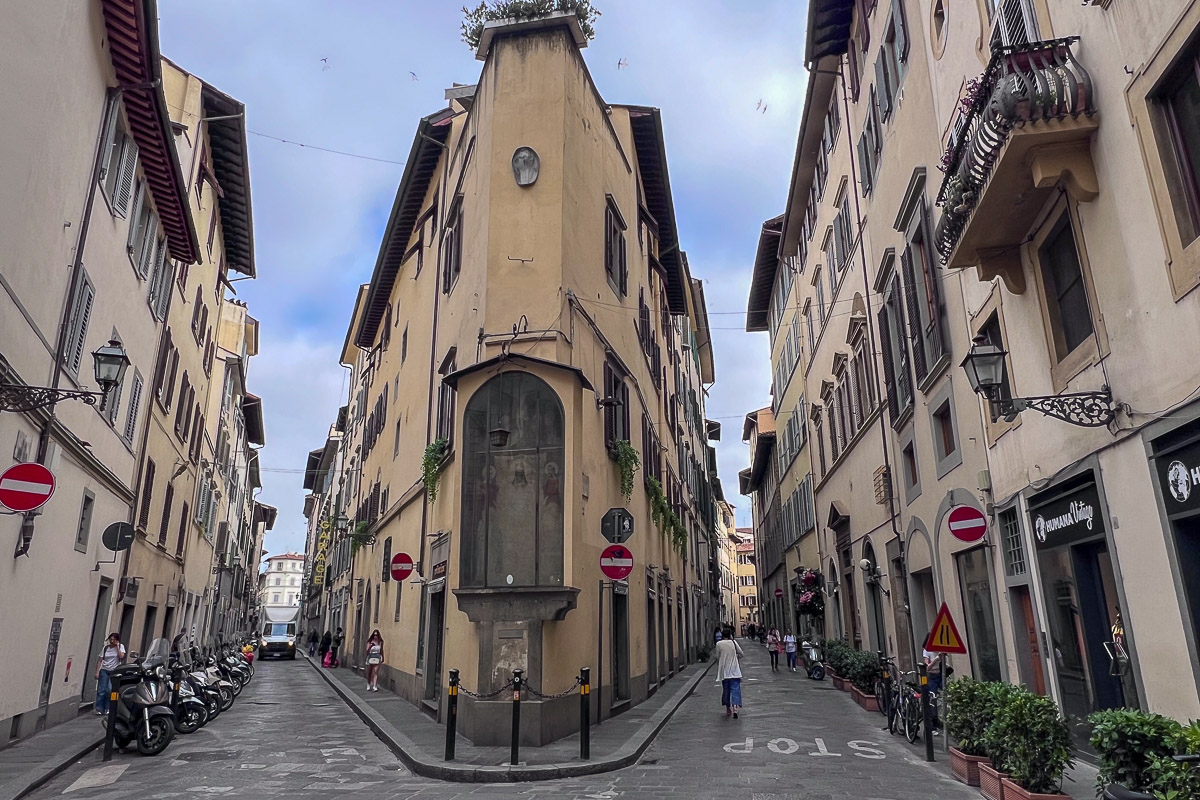
Keep this quiet, contemplative vibe by strolling the nearby historic streets, home to traditional Florentine architecture and quaint hotels.
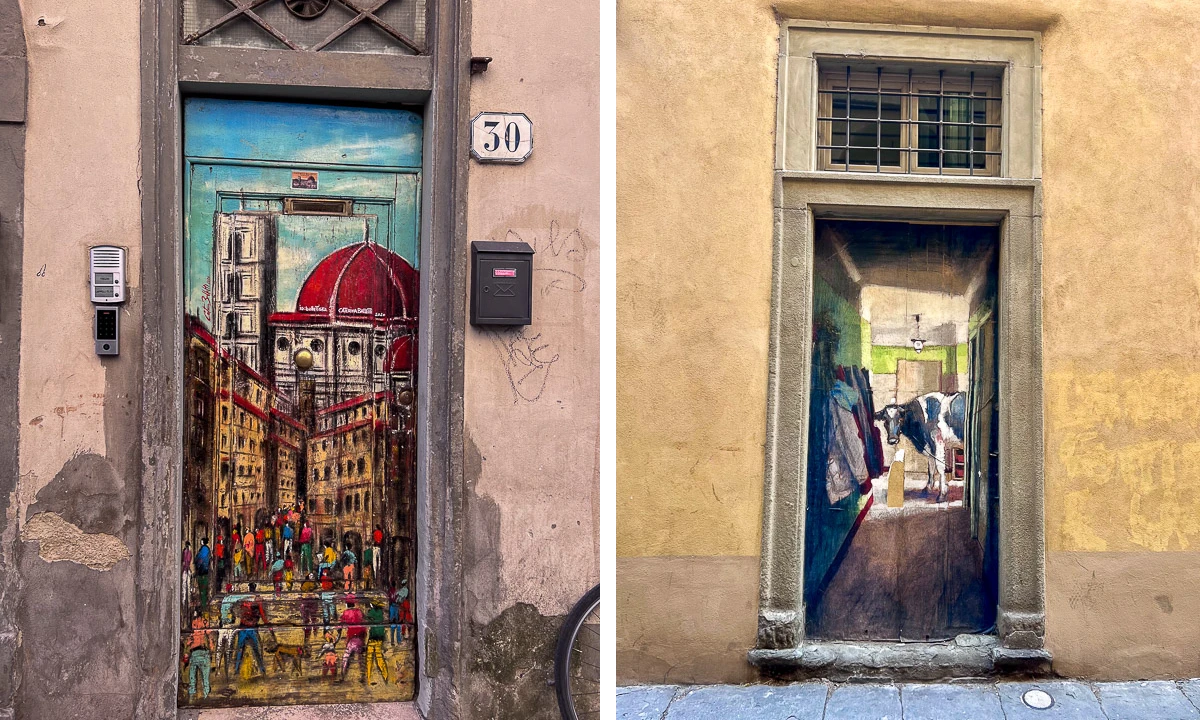
You won’t find any large wall murals in this UNESCO World Heritage city center, but art is tolerated on “low-risk surfaces” such as doors and utility boxes. Keep your eyes open and you’ll stumble upon a few surprises on your walks…
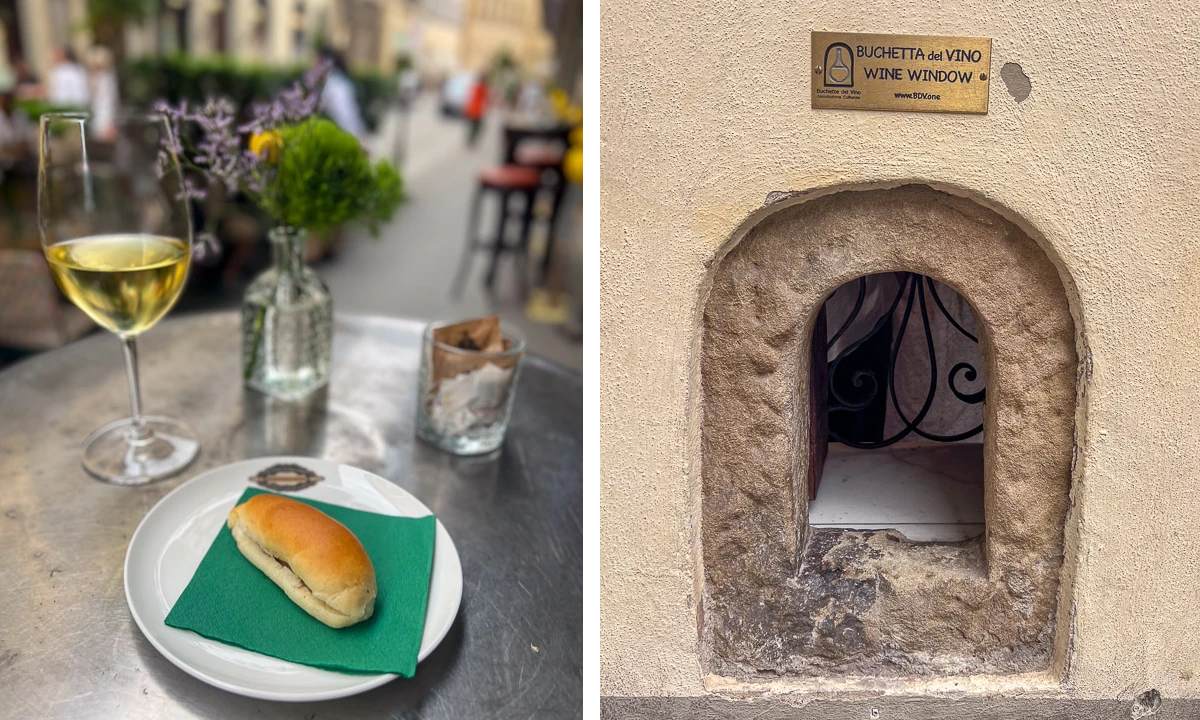
You won’t have to look that hard though to find another famous icon of Florence in this area – “wine windows” (buchetta del vino). These small hatches were once used by noble families in the 17th century to sell wine directly to the public. Several have reopened today, often attached to a restaurant or a bar. It’s a fun contactless experience where you simply ring a bell and order your wine from a faceless waiter which you’re free to sip on the street. If you’re craving a seat and a nice little bite, head to Procacci 1885 and order their tiny, delicate sandwiches filled with truffle cream, you won’t be able to stop at just one!
A packed day it was, and there are way more masterpieces just a few blocks away… Tomorrow, we head to the Uffizi Gallery!