As the birthplace of the Renaissance, Florence is home to innumerable artistic masterpieces, many of which can be found in what is now the oldest gallery in the world – The Uffizi Gallery. A must on every visitor’s list, it is best explored early in the morning while you still have full energy and a good 3-4 hours to do it justice. The walk along the Arno (the gallery entrance faces the river) in the morning is delightful with the south side bathed in light and the view of the Ponte Vecchio waking up.
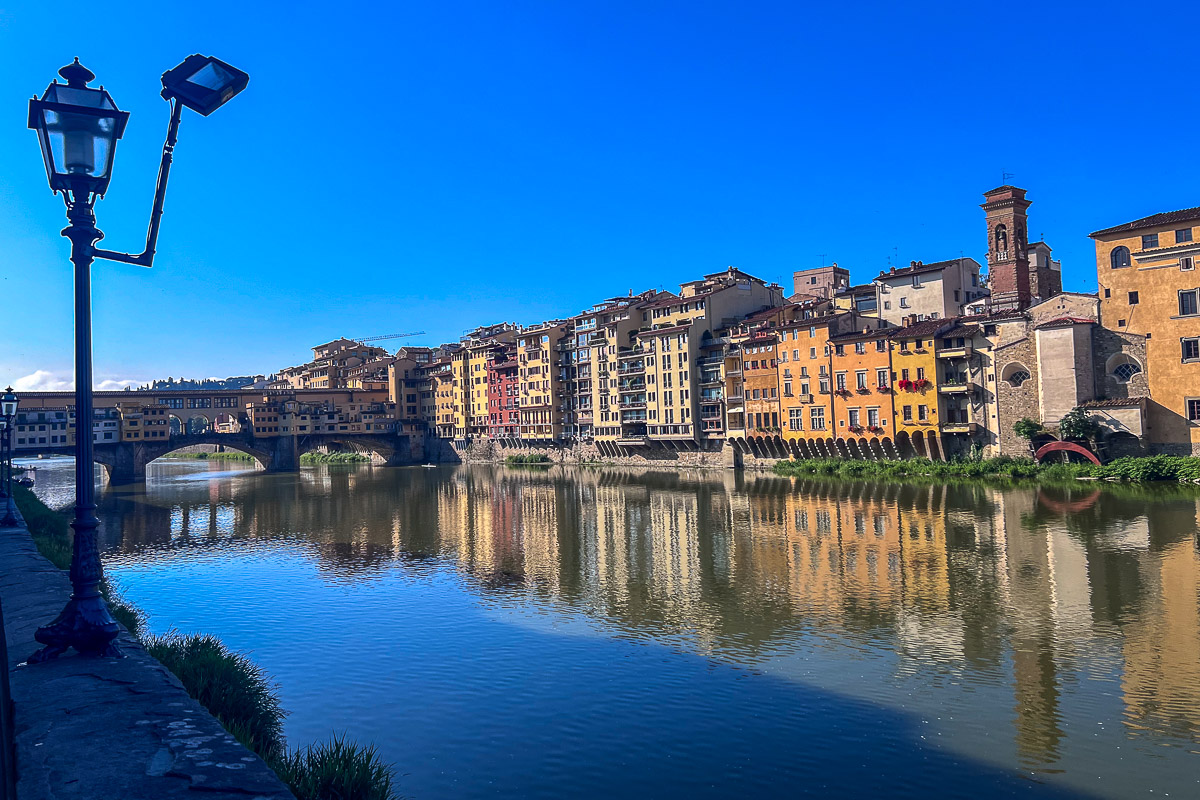
The Uffizi
Built in 1560-1580 as a suite of offices for the then duke of Florence, Cosimo I de’ Medici, the Uffizi was shortly afterwards used by his heirs to display the Medici family art treasures. With their immense wealth, they had commissioned pieces from many great Florentine masters and their descendants kept adding to it until 1737. While the Renaissance collection is undoubtedly the highlight, you can see works on display reaching into the 20th century.
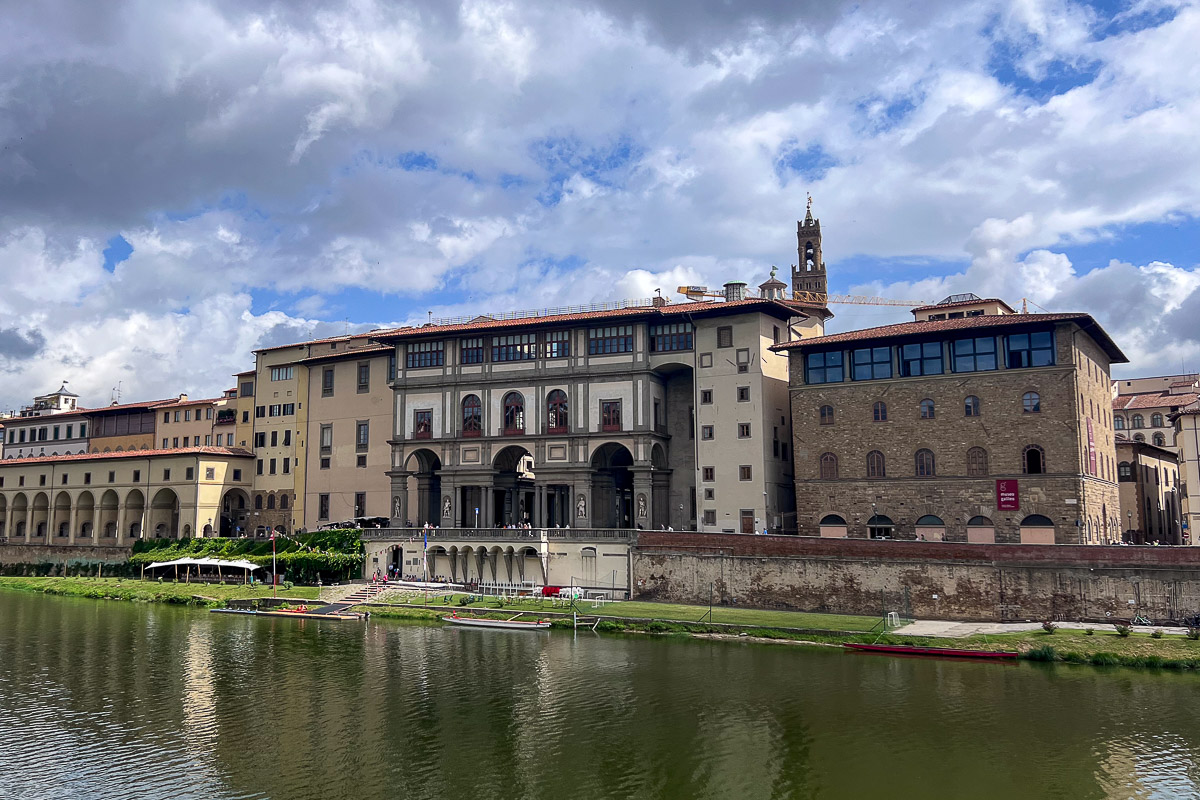
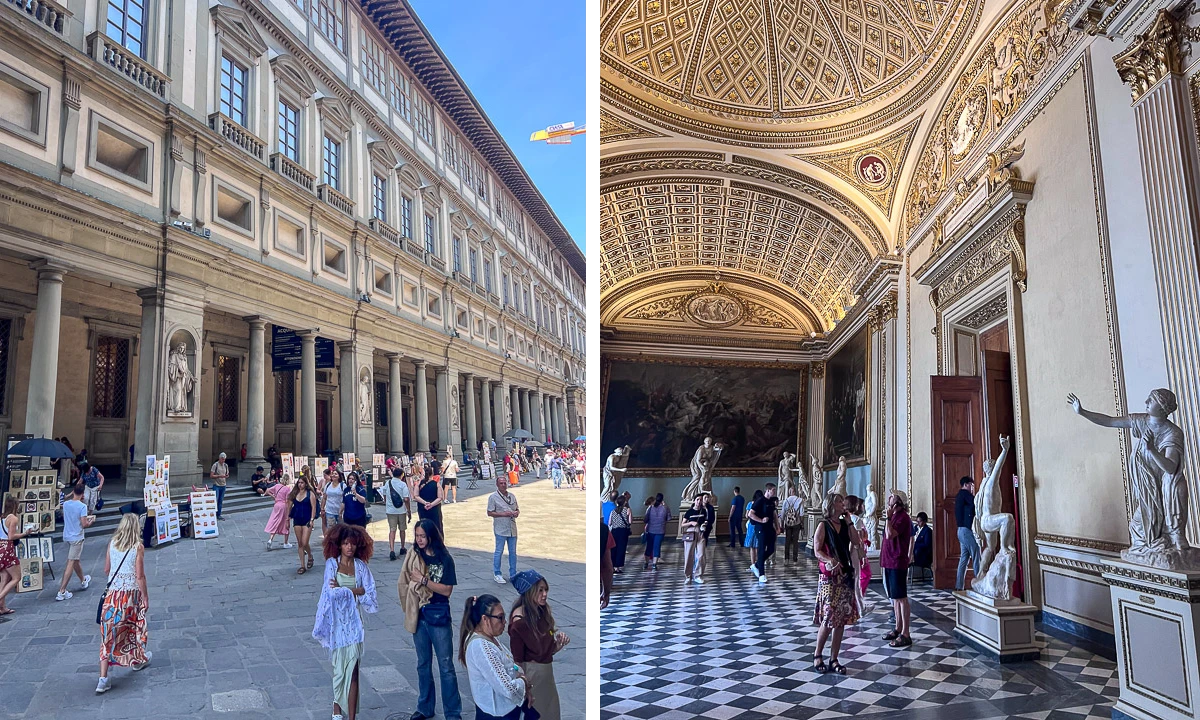
Armed with your timed-entry ticket, you enter the gallery through the narrow Piazzale degli Uffizi, buzzing with artists already in the early morning. You can make use of an audio-guide to navigate the series of rooms, with most people starting on the second floor to see the earliest works first and explore the collection in chronological order. Yes, there are people everywhere but the reason the Medici decided to used this space as an art gallery is due to the sizable rooms and abundance of light which you’ll appreciate – it truly is a stunning building worthy of the treasures it holds.
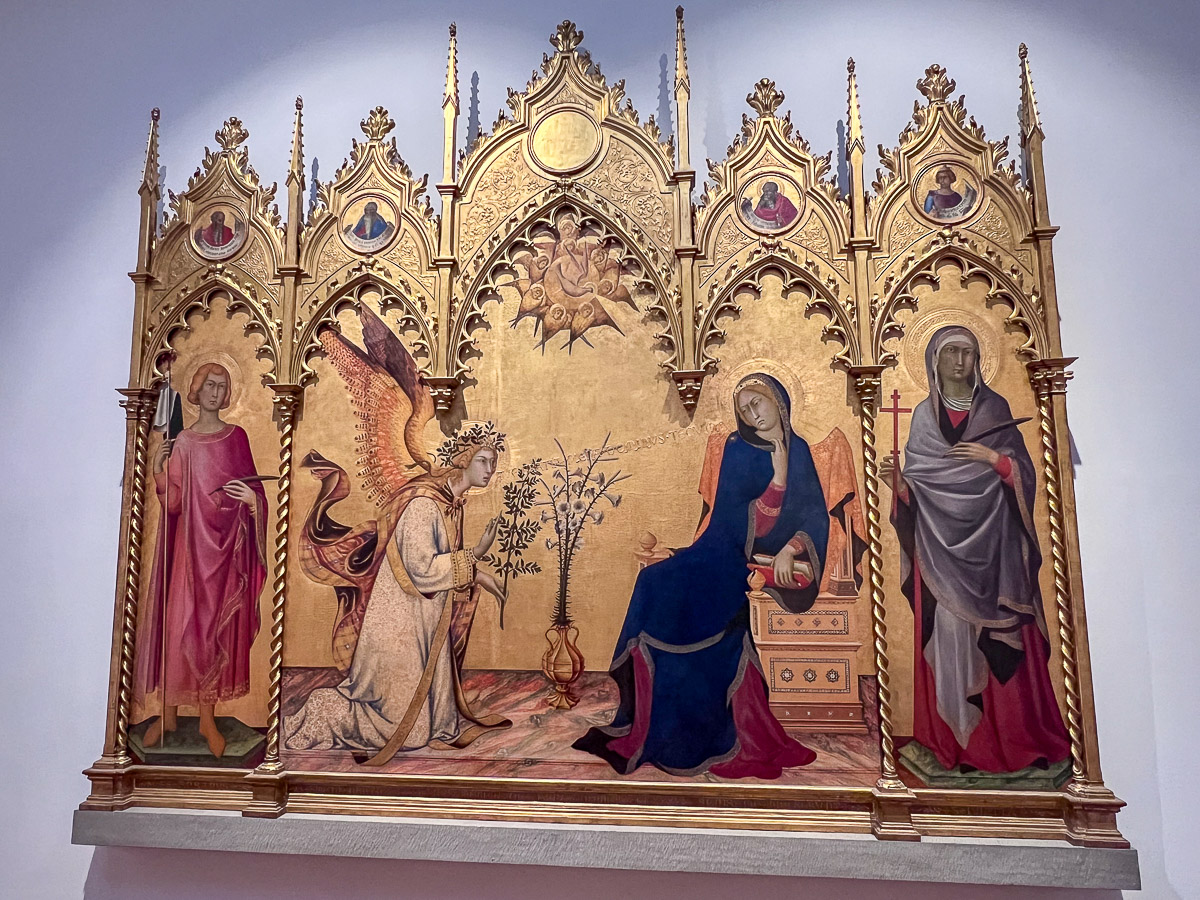
You start with Tuscan Gothic art from the 12th to the 14th century with pieces by Giotto, a lot of gold and mostly flat figures in medieval dresses.
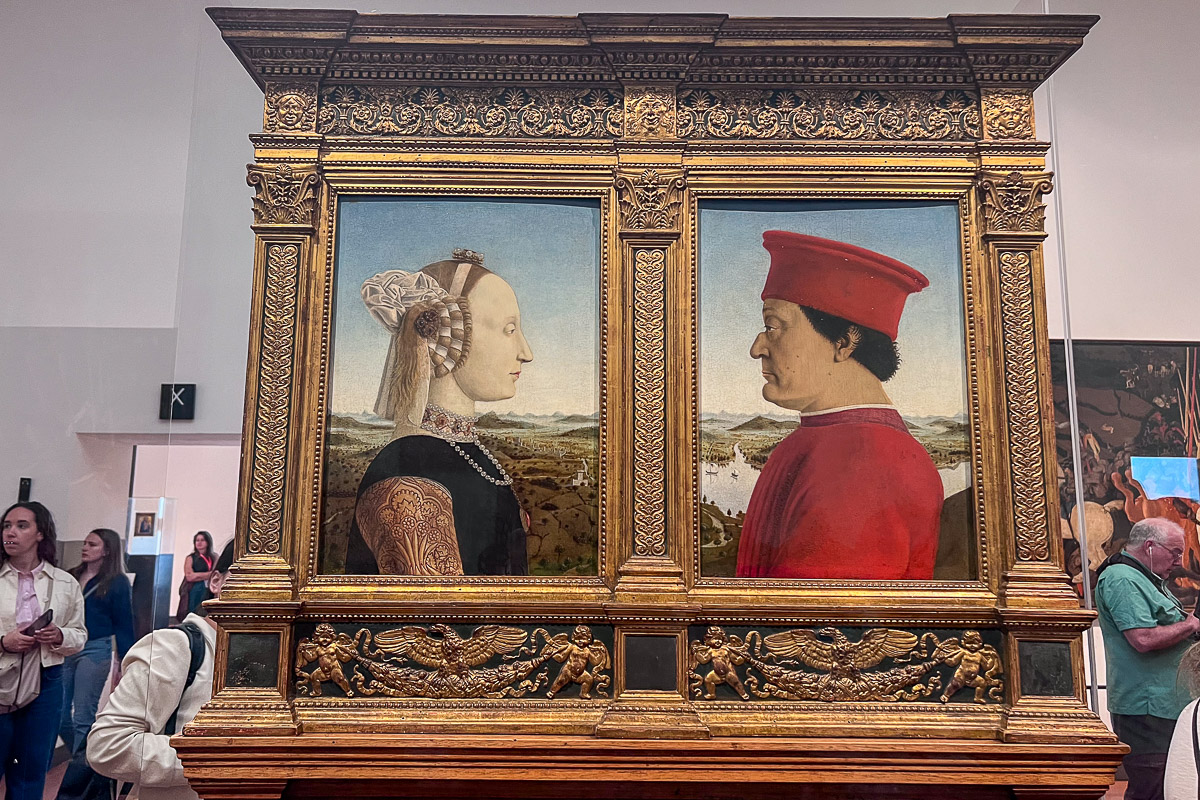
Next, the Renaissance galleries will have you wander and pause for much longer, admiring works you’ve seen referenced in school, books, and movies. The iconic double portrait of the Duke and Duchess of Urbino by Piero della Francesca (1473-1475), two of the first Renaissance portraits, stands proudly in the middle of the room so you can go around and see their painted back. On the reverse the husband and wife are portrayed as a pair of Roman gods, Mars and Venus.
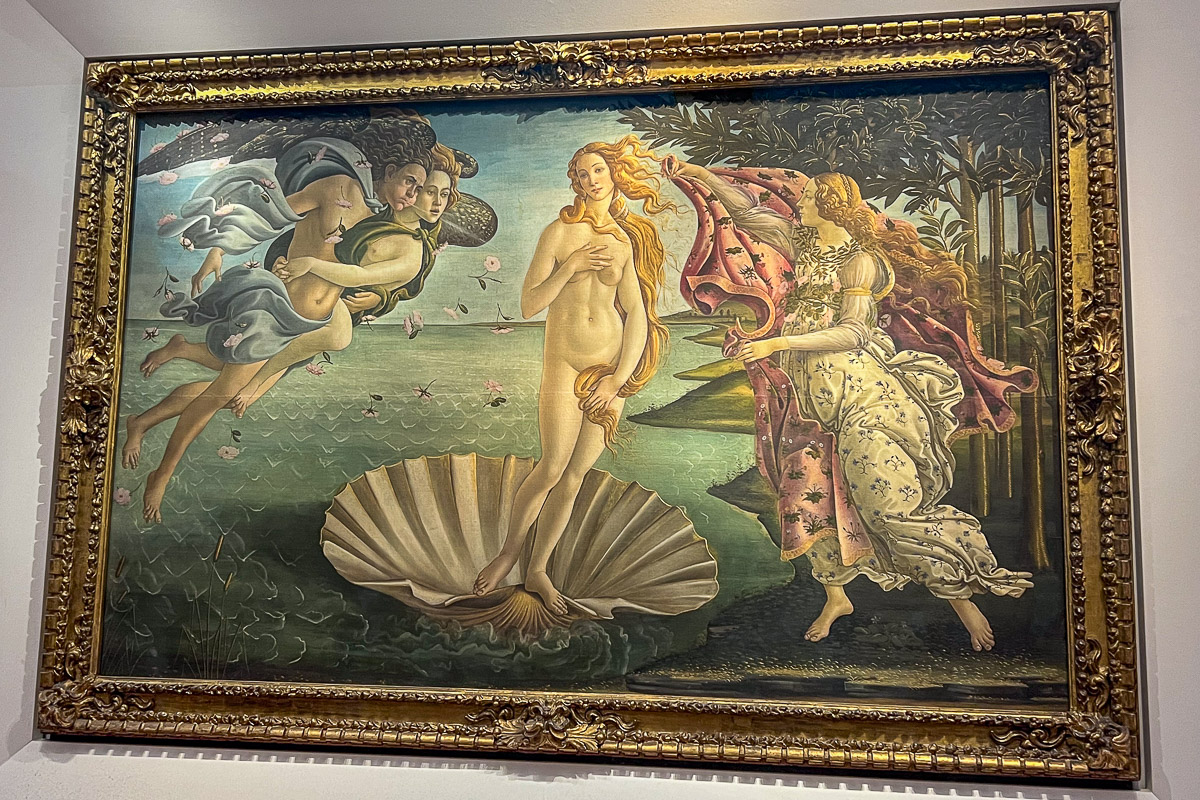
Known as the museum’s most famous artwork, Botticelli’s Birth of Venus takes up an entire wall. It will no doubt have a crowd in front admiring every detail as it is full of hidden meanings and symbols. Thankfully it is very large, unlike the Mona Lisa, and you can take in its incredible beauty from any angle.
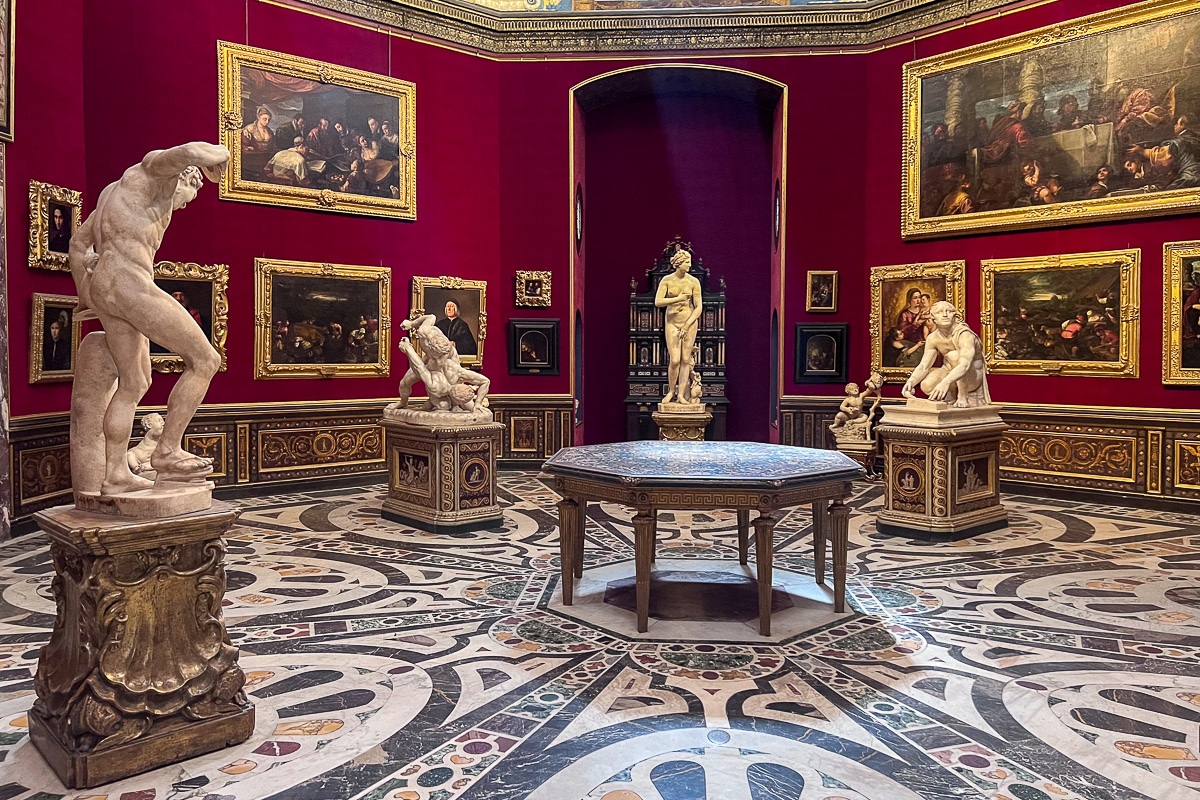
The Tribune is a gorgeous octagonal room designed by Buontalenti for Francesco I de’ Medici to showcase the most precious Medici artworks. It has served as the heart of the museum since the 16th century. While there might be a short line, I highly recommend taking the time to see this jewel box, the red velvet walls, the marble mosaic floor, and the intricate mother-of-pearl dome.
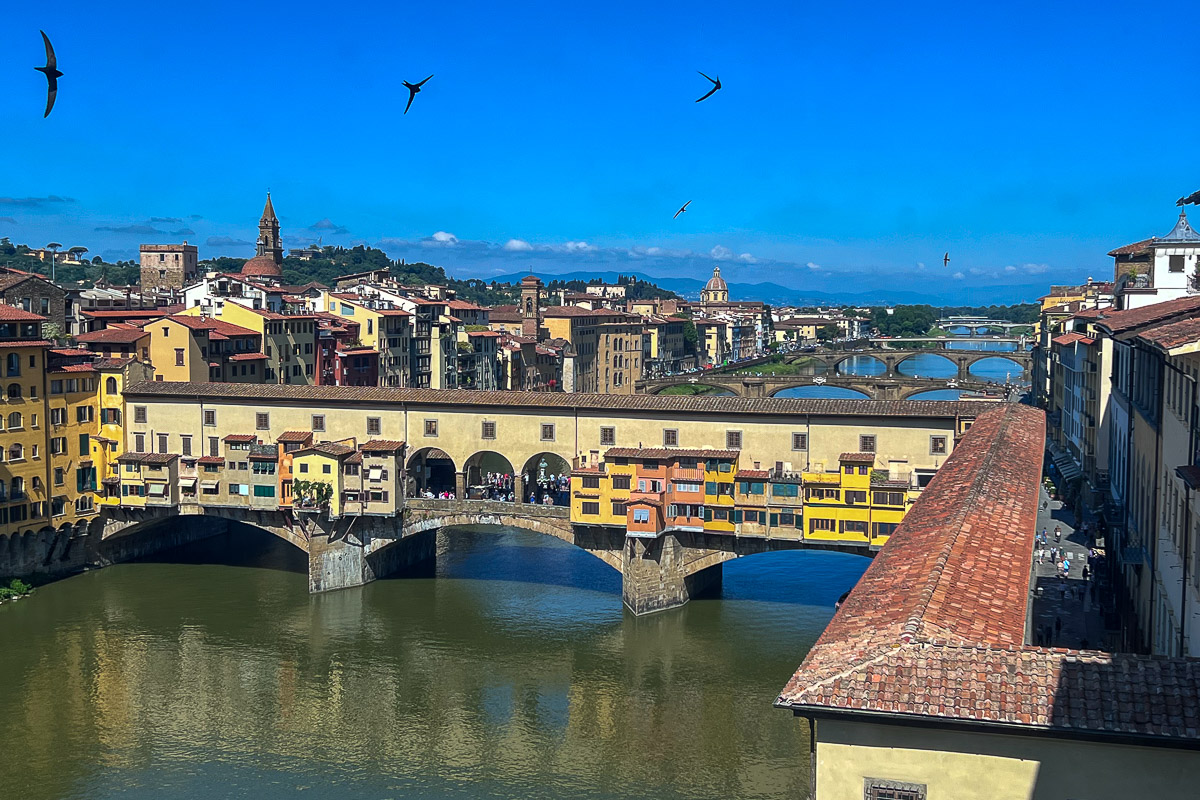
There are too many amazing paintings and sculptures for me to share here, from Leonardo da Vinci and Caravaggio to Botticelli, so you’ll have to go see them for yourself! Coming in and out of the rooms, don’t forget to peak out of the river-facing windows – the views over Ponte Vecchio from up here are just splendid.
You’ll surely need a break at this point. Thankfully, there’s a lovely terrace on the second floor’s rooftop from where you can get some fresh air with a close up look at the Palazzo Vecchio’s tower, right next door.
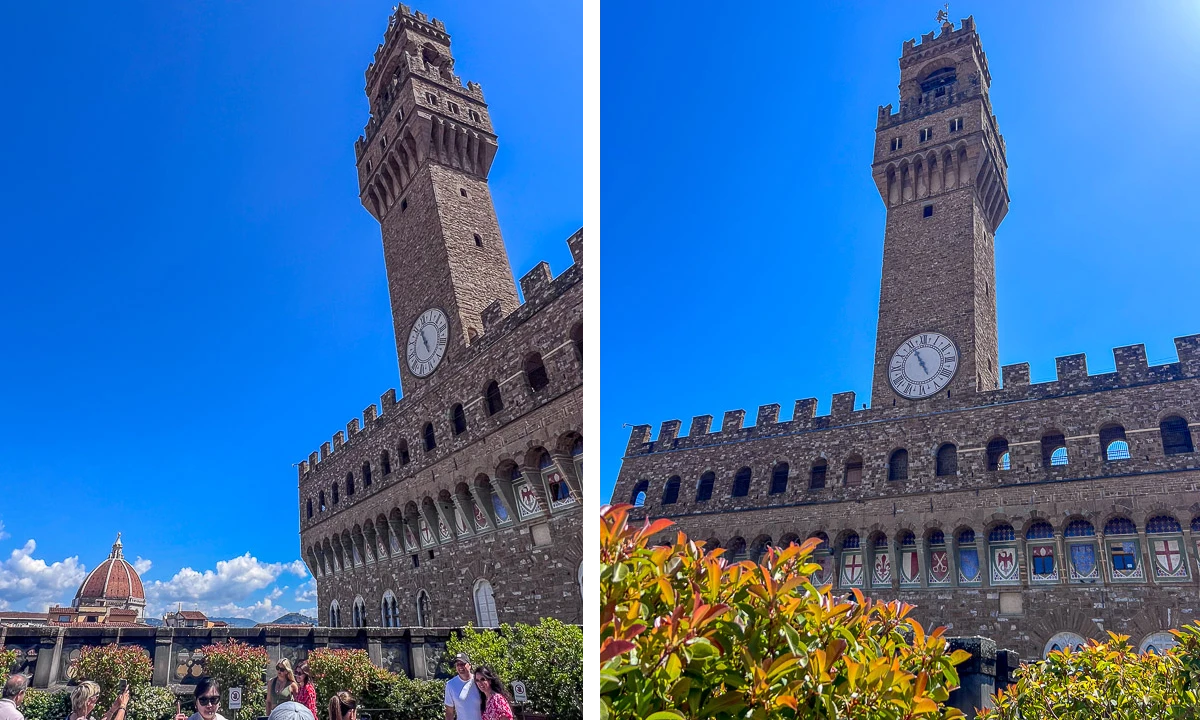
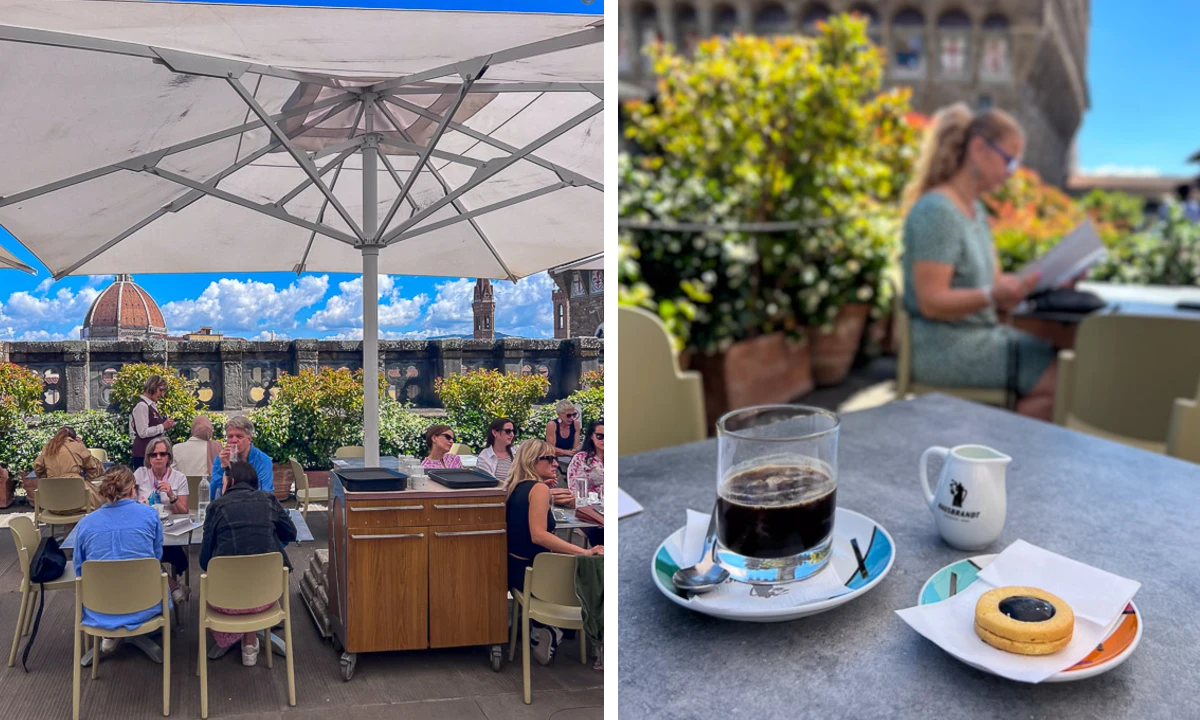
Sit at the café for some caffeine and a bite to see you through the rest of your visit. With over 1,700 artworks, the Uffizi can be a lot to take in. There’s even a so-called Florence Syndrome, often attributed to a visit at the Uffizi, which is a psychosomatic illness triggered by viewing lots of beautiful art in quick succession… you’ve be warned!
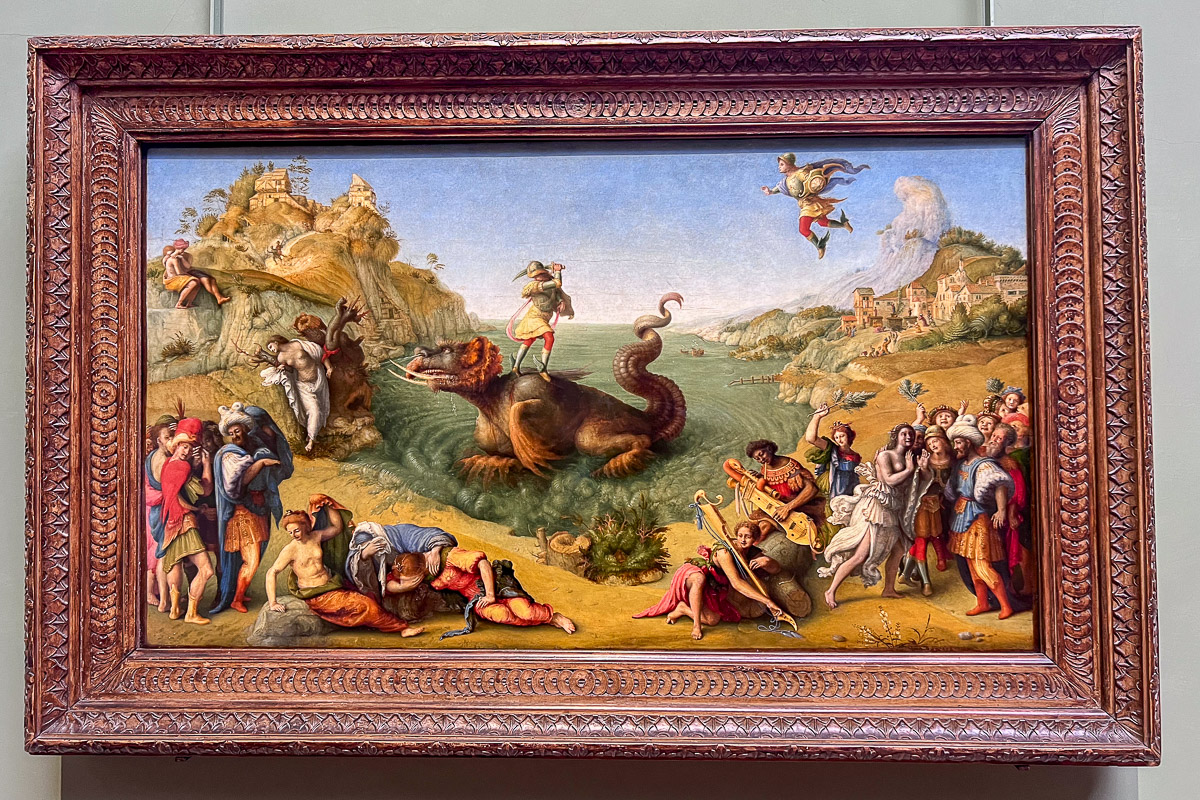
Now rested, continue your visit of the Renaissance galleries and later Italian paintings.
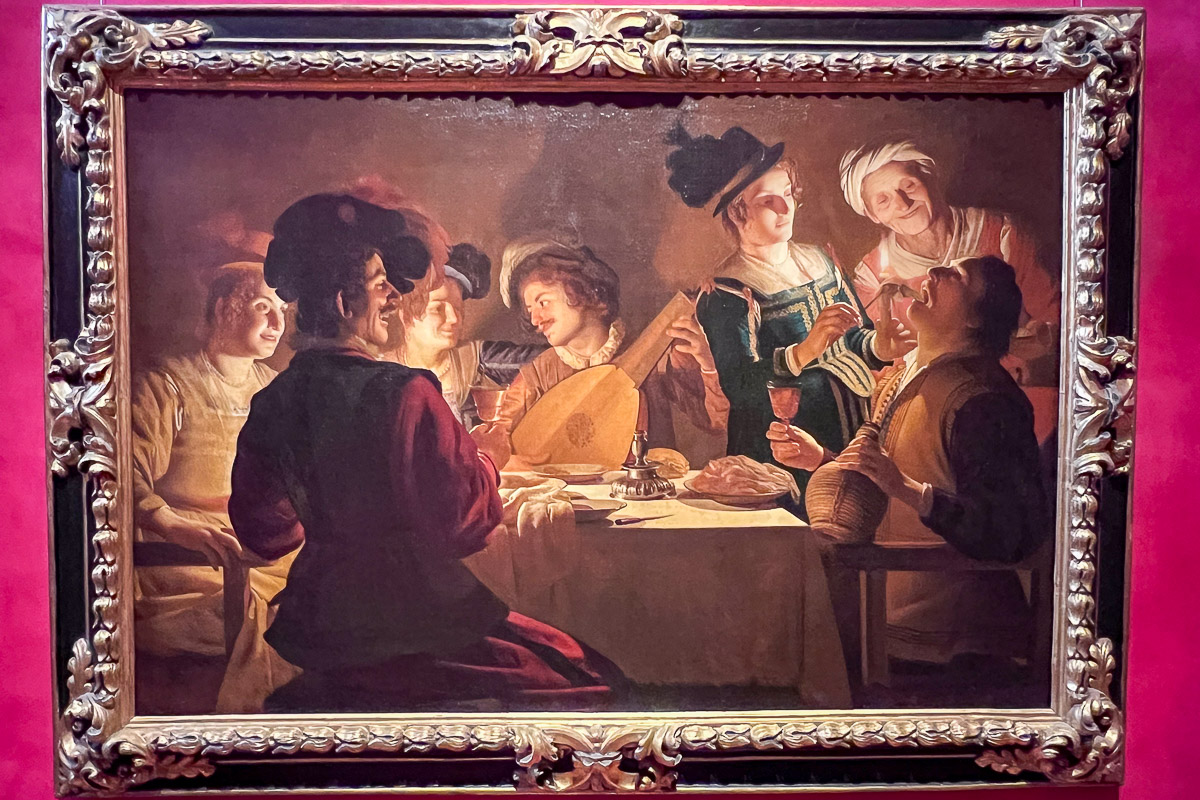
You’ll finish your visit on the first floor with more “modern” artworks and European art from famous Spanish, Dutch and French painters. There are still hundreds of exquisite pieces here but I was starting to think I’d rather come back with fresh eyes, feeling a bit visually exhausted by all the Renaissance works I had just spent a few hours admiring.
Ponte Vecchio
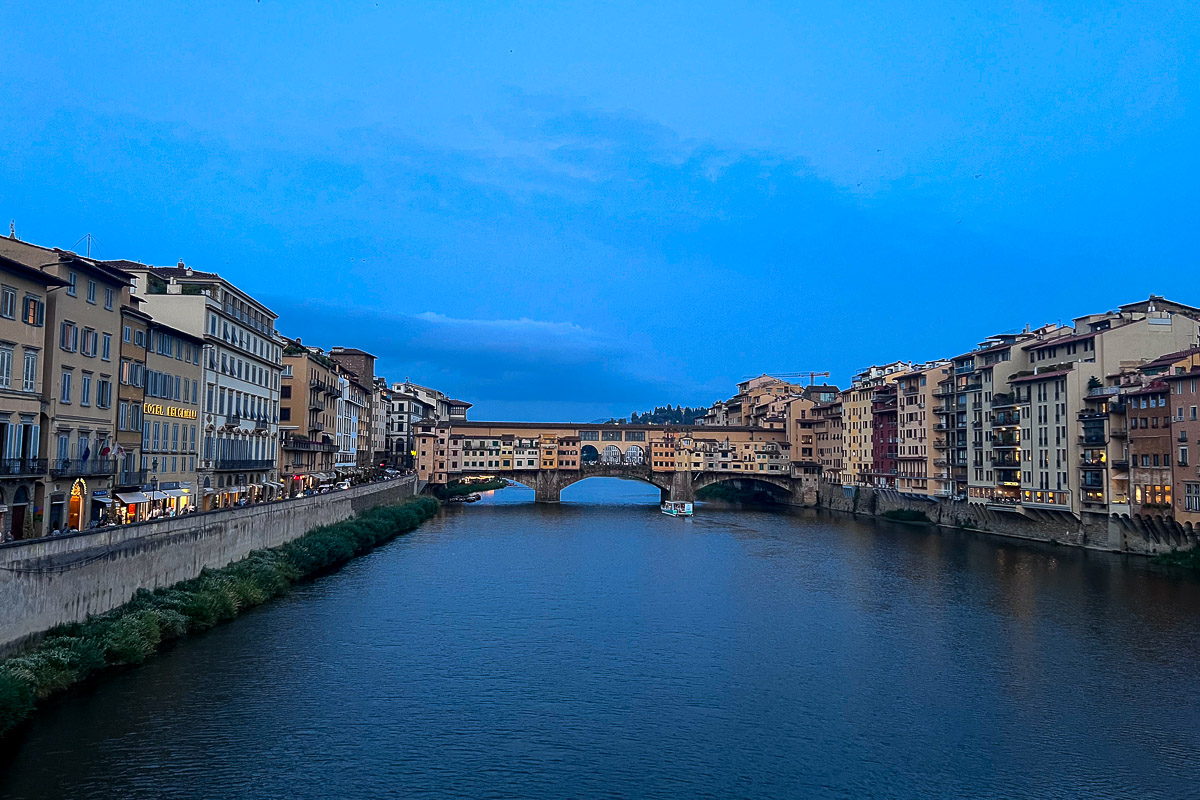
Back out in the glorious sunshine, now’s your chance to check out the iconic medieval bridge that is Ponte Vecchio, steps away from the Uffizi. The oldest bridge in Florence has withstood floods and wars since the 14th century and is still today a favorite spot to enjoy the river vistas.
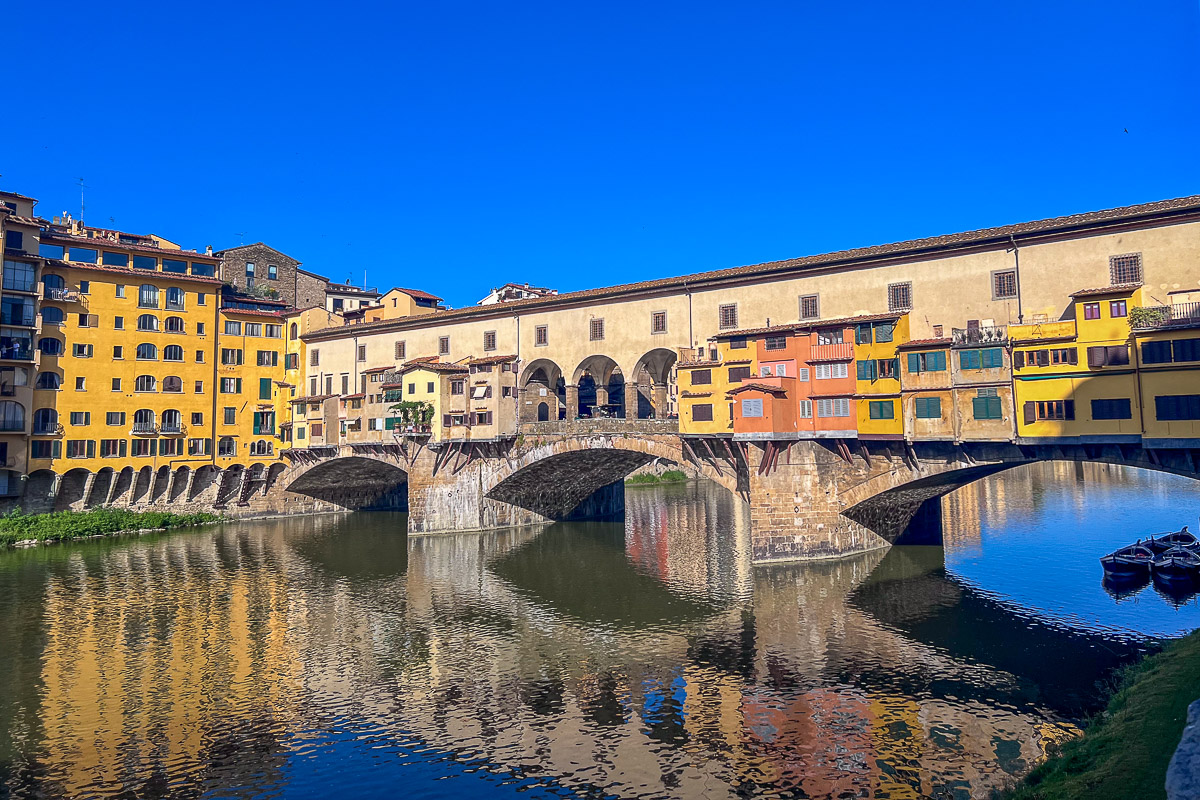
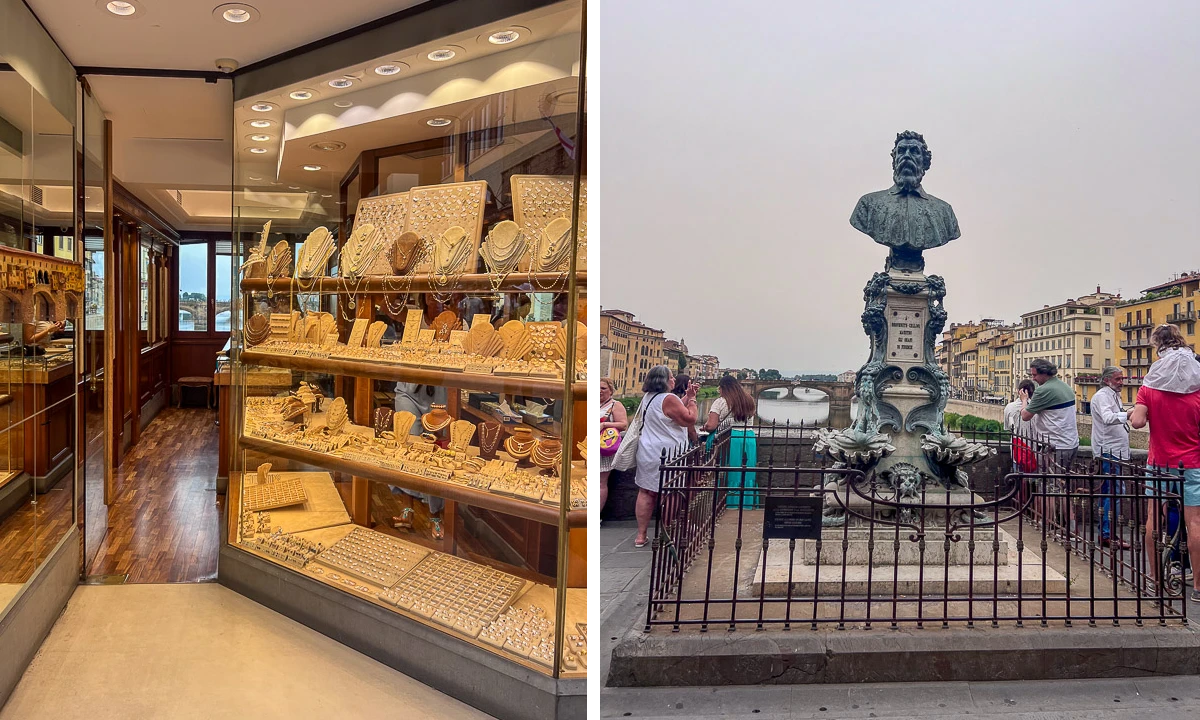
There have always been workshops on this bridge, though the noisy and smelly tanners, butchers, and blacksmiths shops have since been rebuilt to host the sweeter smelling goldsmiths.
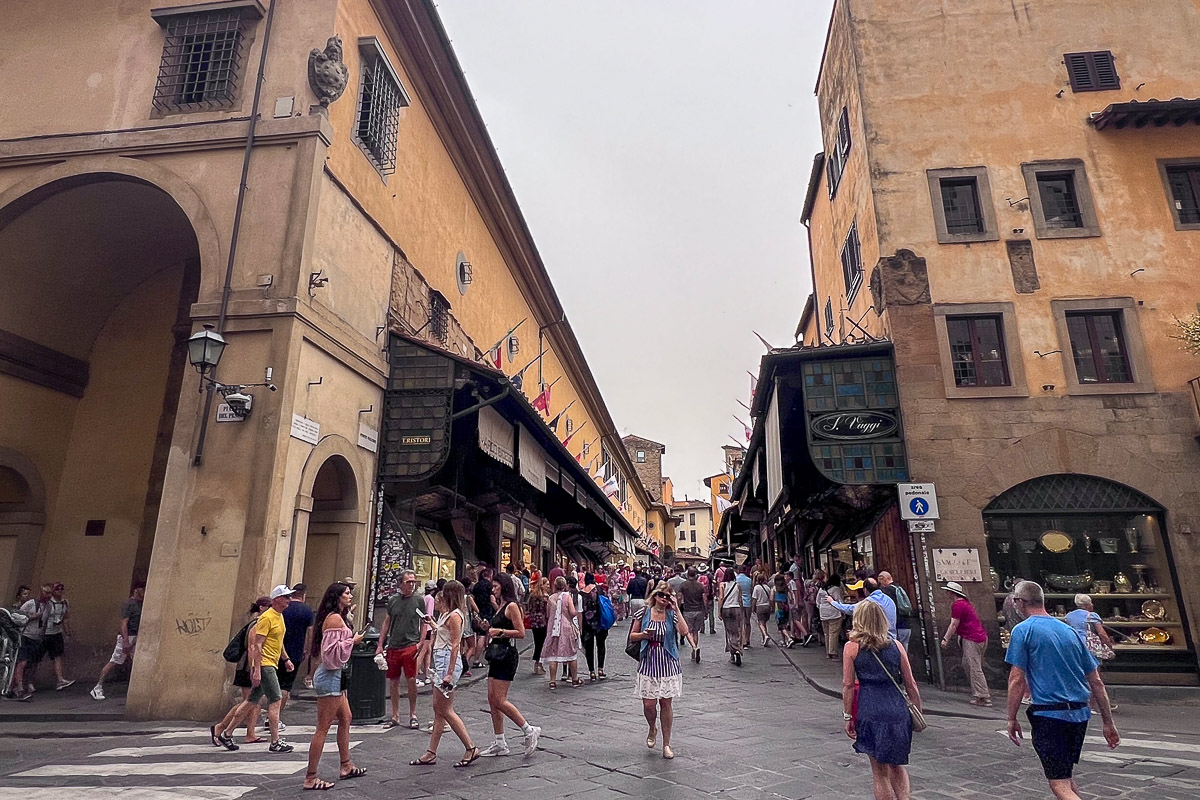
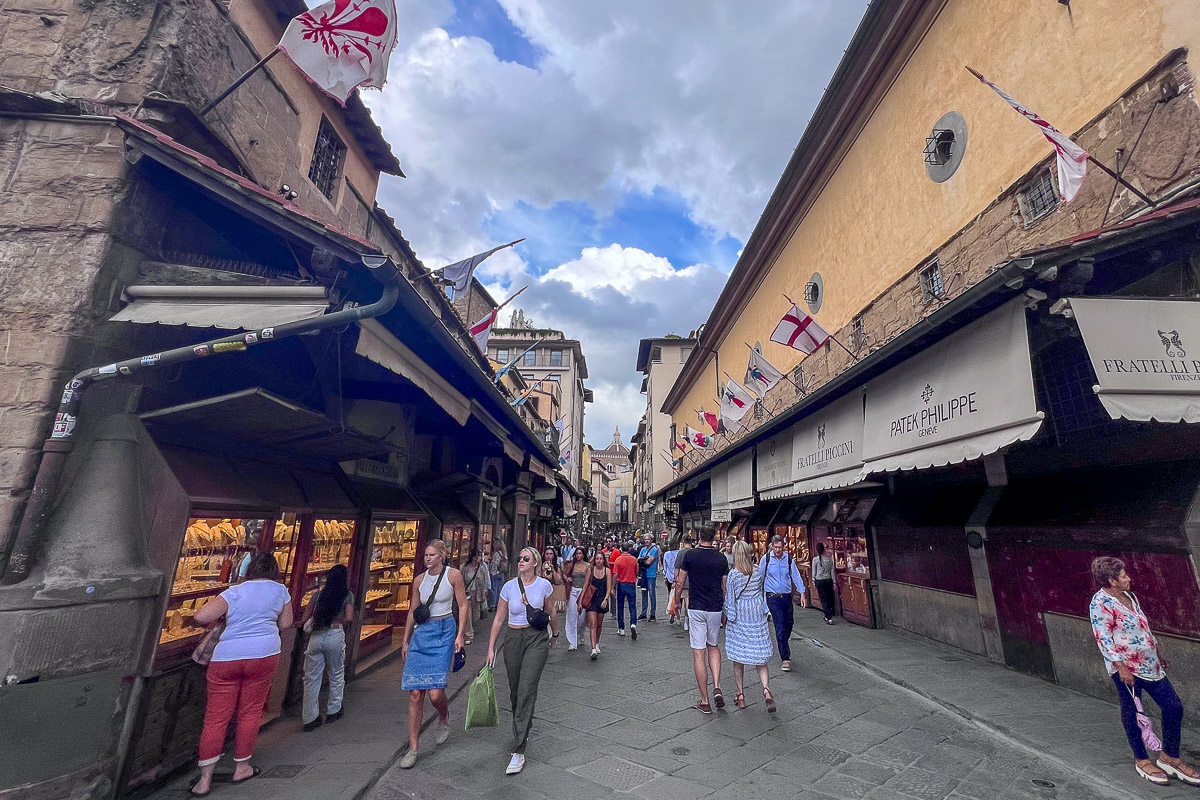
You can shop for everything from affordable modern earrings to antique rings and necklaces, or just enjoy the lively scene with performers and portrait painters mingling with the crowd.
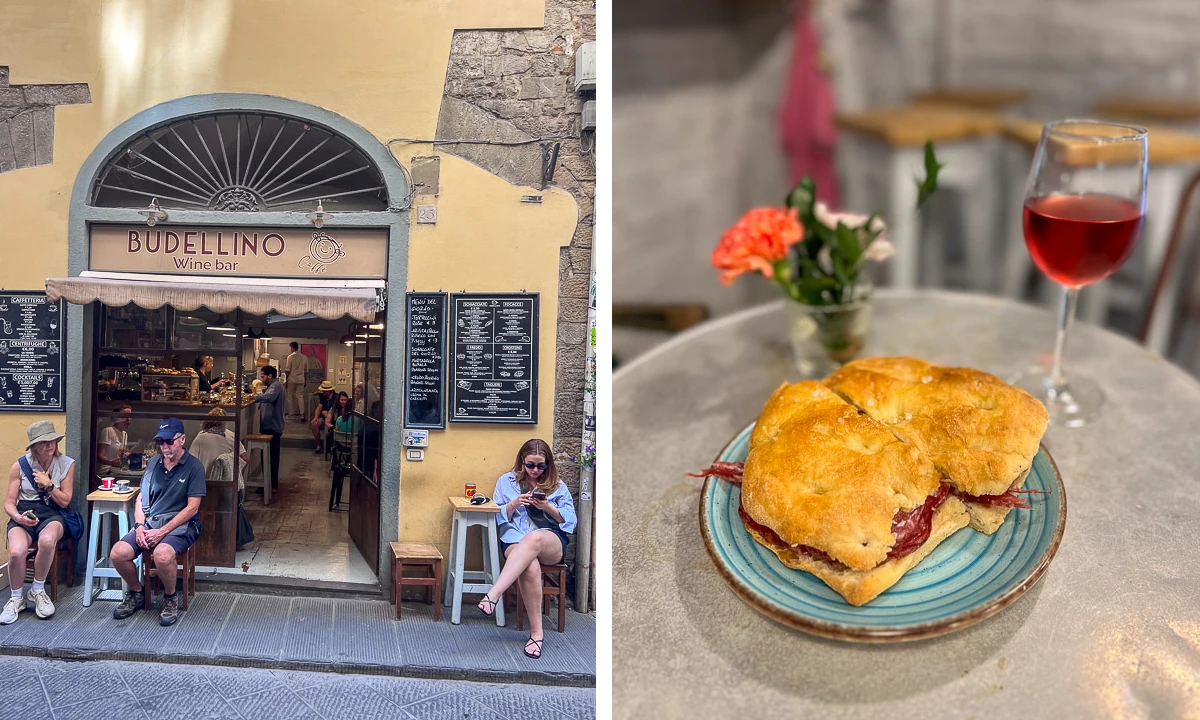
There are quite a few more options to stop for lunch near the Uffizi compared with near the Duomo, whether you want to sit down properly at a trattoria or get a quick snack at a cafe. Since most try to pack in as much as possible in a day, I can recommend Budellino, a cozy little wine bar with a sandwich menu perfect for a midday meal. My focaccia with salami was the perfect salty bite to pair with a glass of dry rosé.
Piazza della Signoria
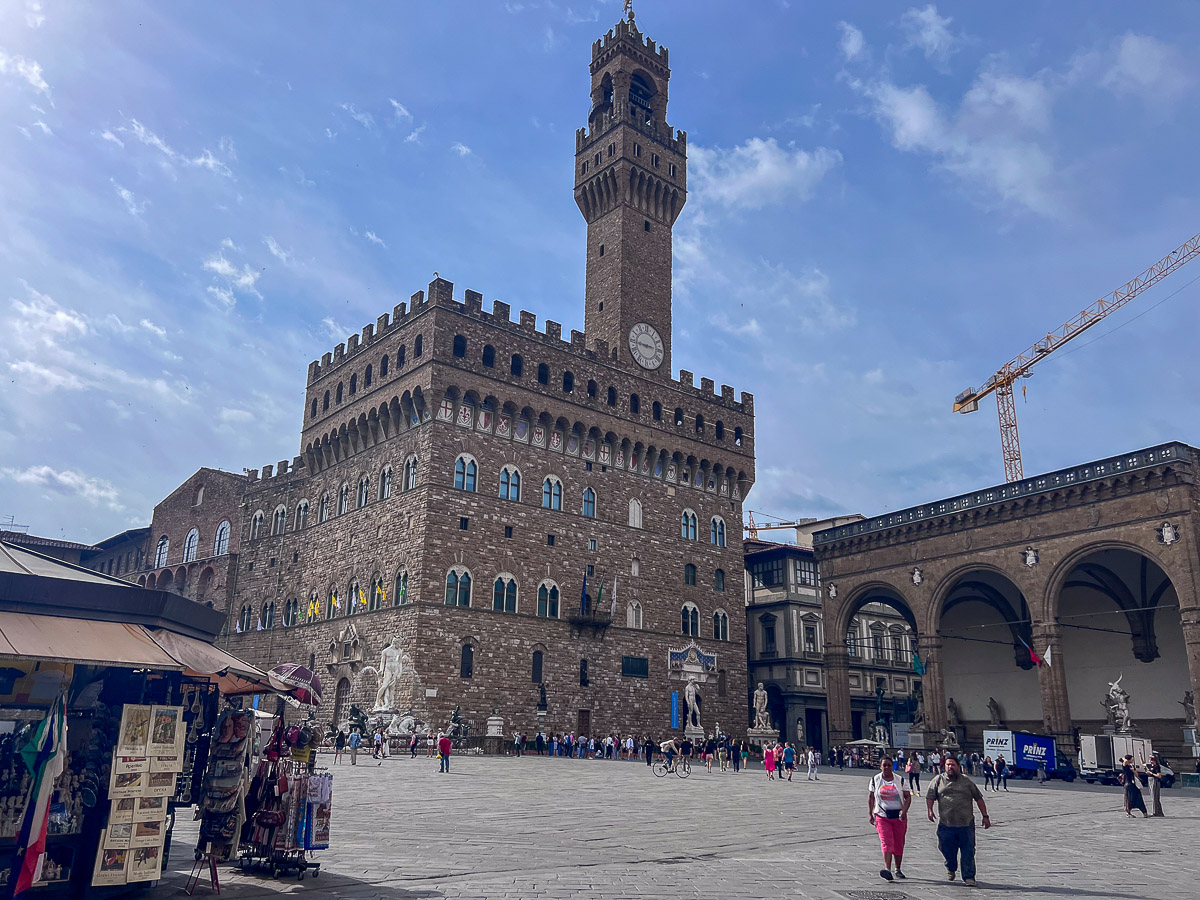
If you exit north of the Uffizi, you’ll arrive in this huge L-shaped square, Piazza della Signoria, which used to be the hub of Florentine politics since the 14th century. Today it is surrounded by famous buildings, notably the Palazzo Vecchio, and act as a unique outdoor sculpture gallery.
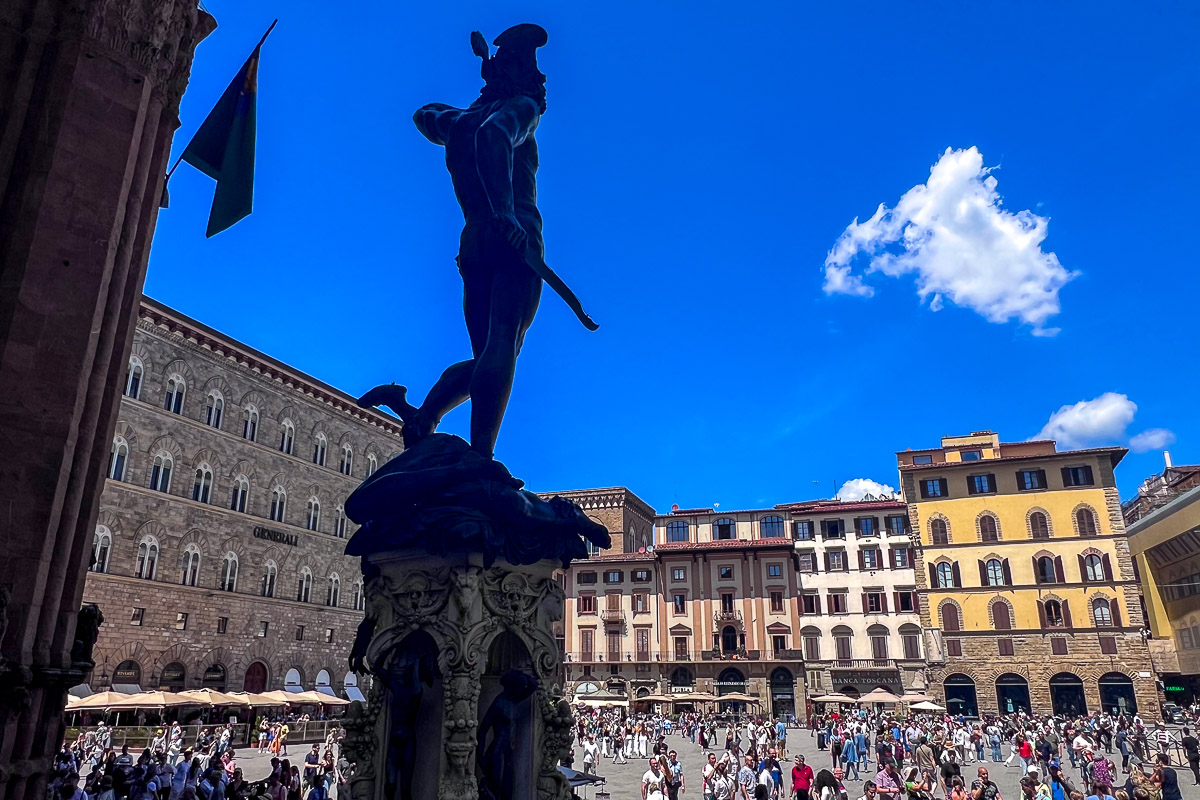
You can get a closer look at some of the most beautiful sculptures in the Loggia dei Lanzi, including the Medici lions and the famous Rape of a Sabine Woman. It’s just outside the Palazzo and you get a good view of the square from this elevated perspective as a bonus too.
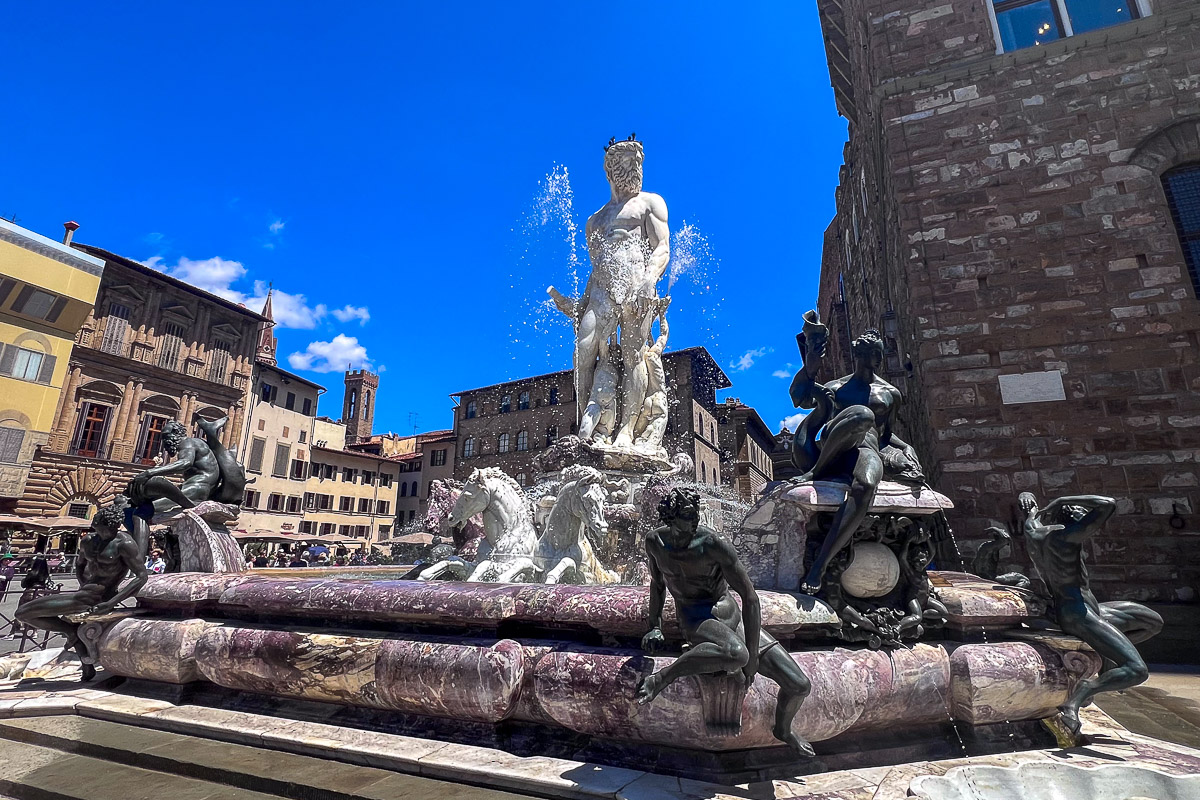
The Fountain of Neptune in front of the Palazzo is a masterpiece in marble and the first public fountain in Florence. If you look closely on the side facing the Palazzo, you can still see a plaque from 1720 which lists fines for using the fountain for laundry or washing animals.
Palazzo Vecchio
The “Old Palace” which looks like a castle with a spire currently houses Florence’s city hall and museum. Though it was built in 1299, its golden age coincided with the arrival of the Medici family who chose it as their residence in 1540, a familiar story when it comes to Florence’s most grandiose buildings. The austere medieval fortress was then transformed, creating magnificent rooms such as the Salone dei Cinquecento (the Hall of the Five Hundred) on the first floor.
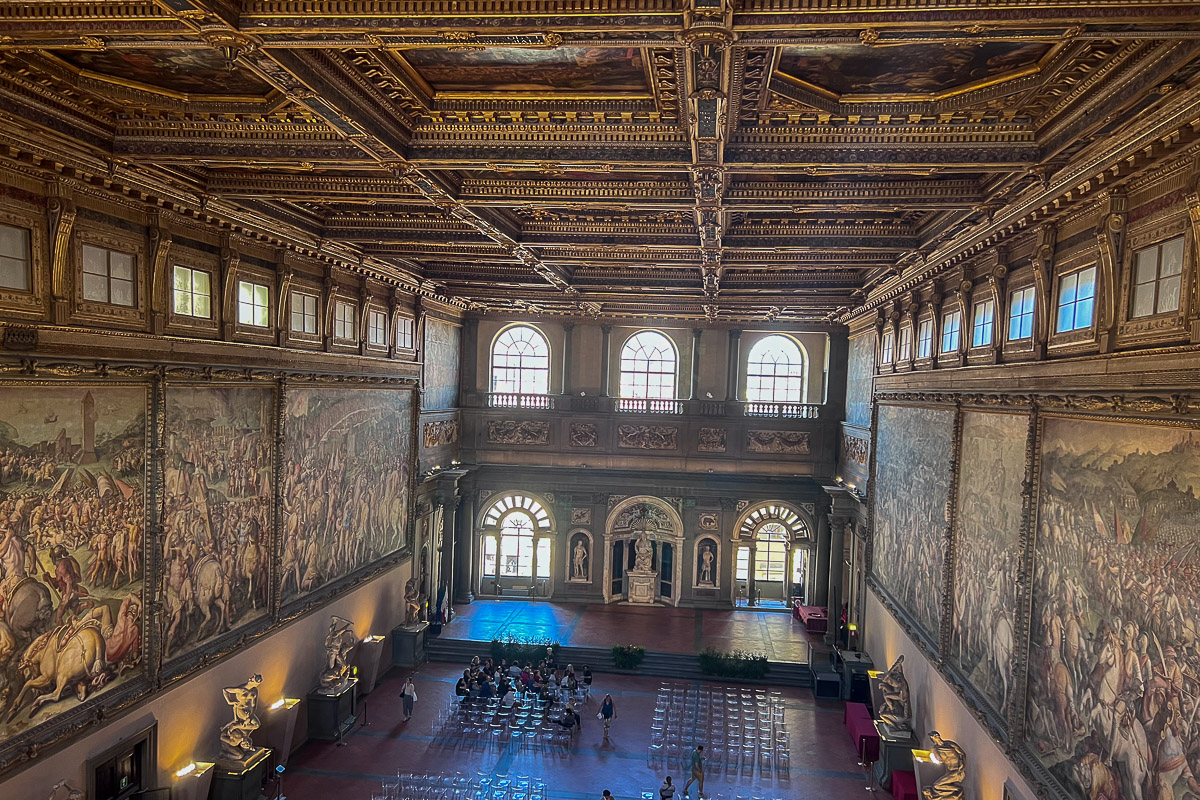
Everywhere you look, from the side walls to the ceiling, are frescoes depicting the victorious battles against Pisa and Siena, celebrating Florentine power and the dynasty.
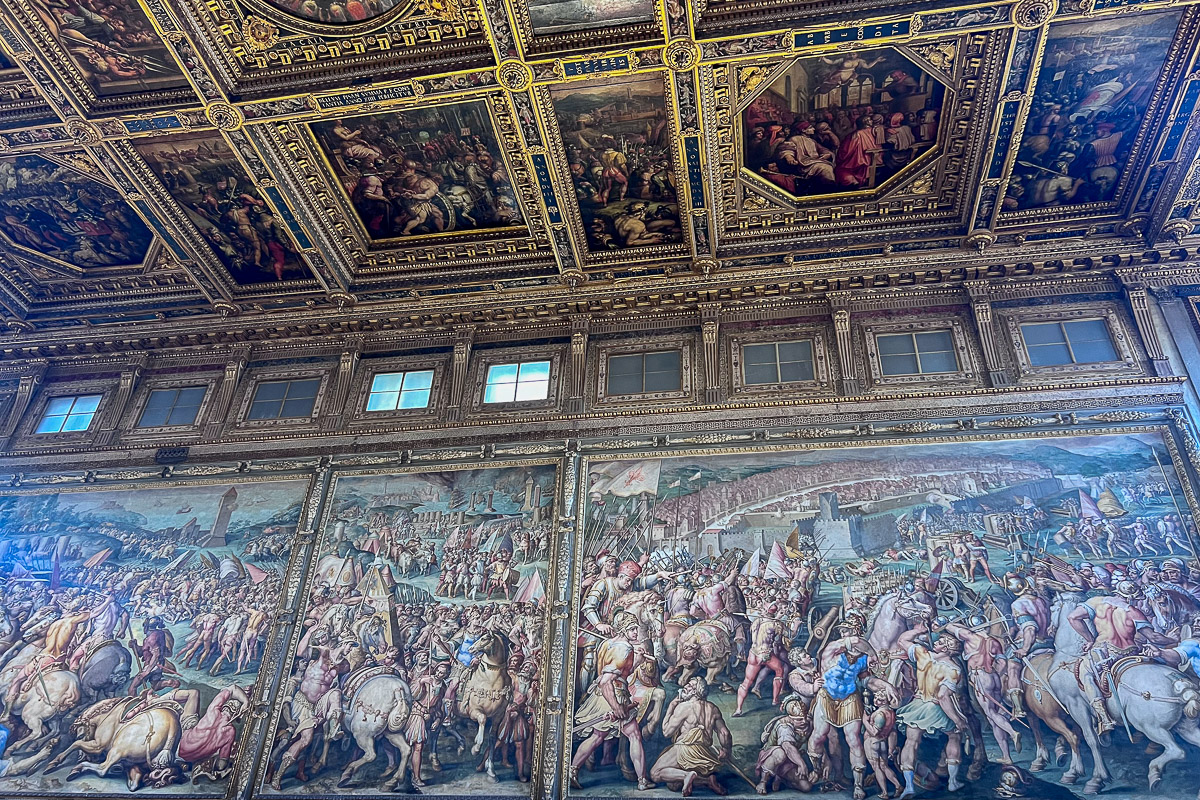
Private apartments follow, offering glimpses into the opulent lifestyle of the Medici family and the beautiful furniture and artworks they surrounded themselves with.
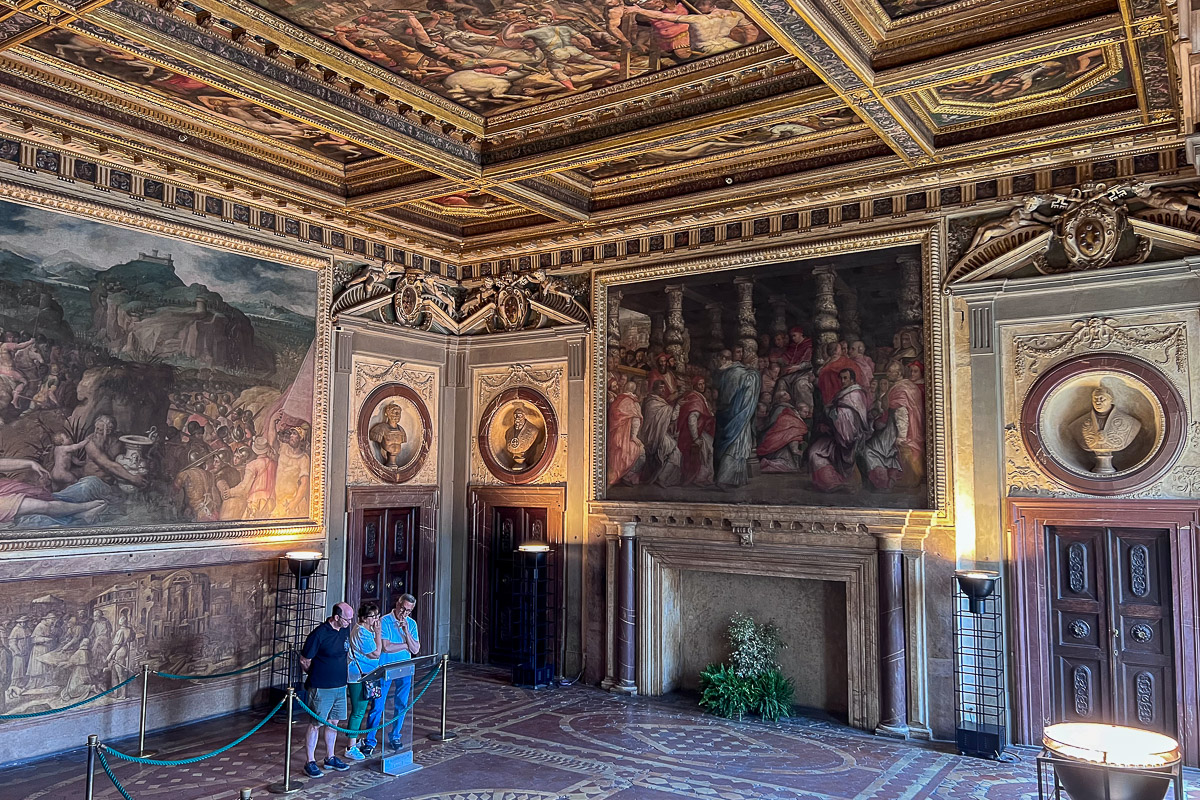
The second floor includes the living quarters of the duchess Eleonora and the calming, nature-inspired Green Room from where she used to administer the Palace’s daily life.
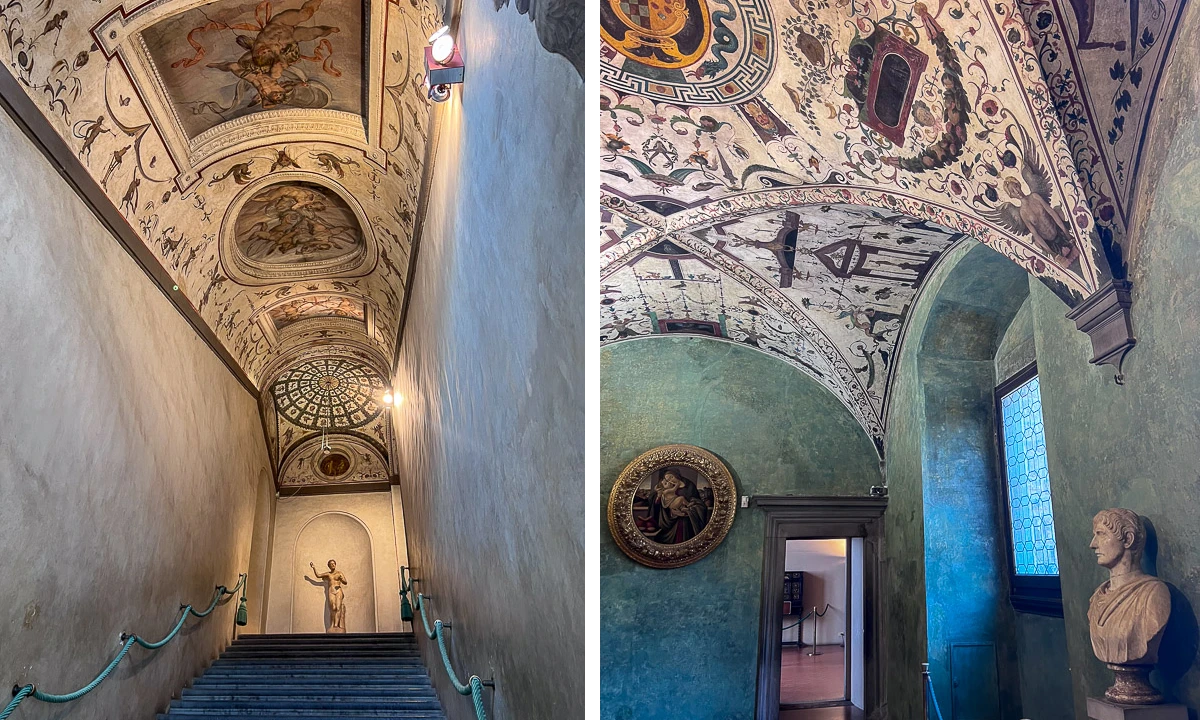
She even had a private, sumptuous chapel frescoed by Bronzino right next to her office where she spent a lot of time. It is one of the few places in Palazzo Vecchio that has not been decorated to the glory of the Medici, but instead with symbolic representations of cardinal virtues.
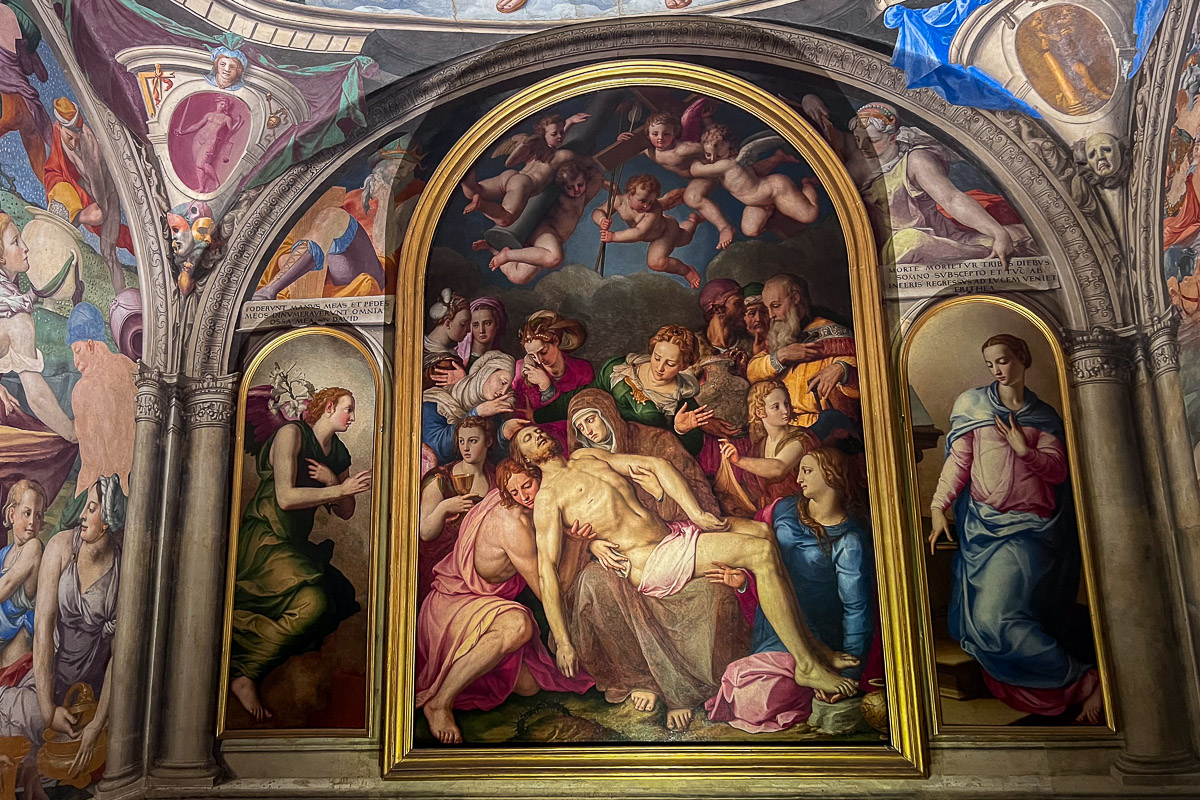
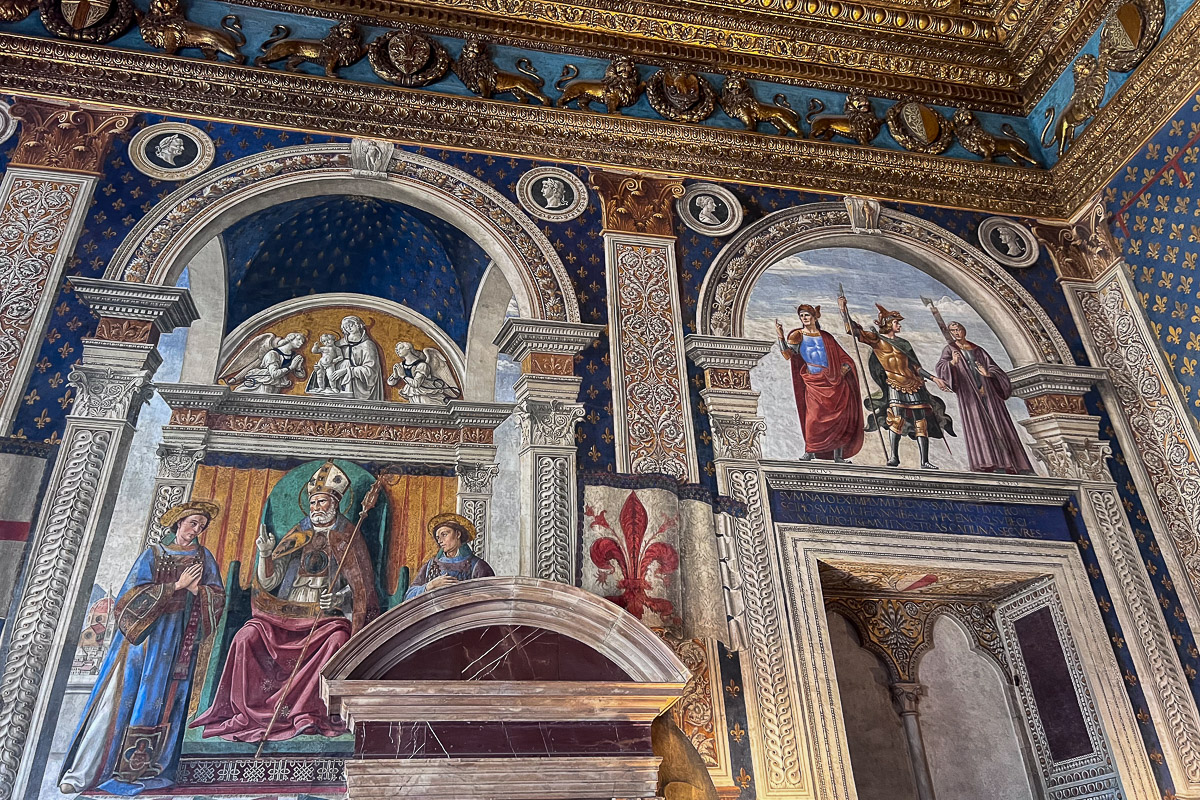
More monumental rooms can be seen on this floor like the Hall of the Lilies, named for the fleur-de-lis decorations, and the Room of the Maps with more than 50 painted world maps providing a glimpse of the world during that period.
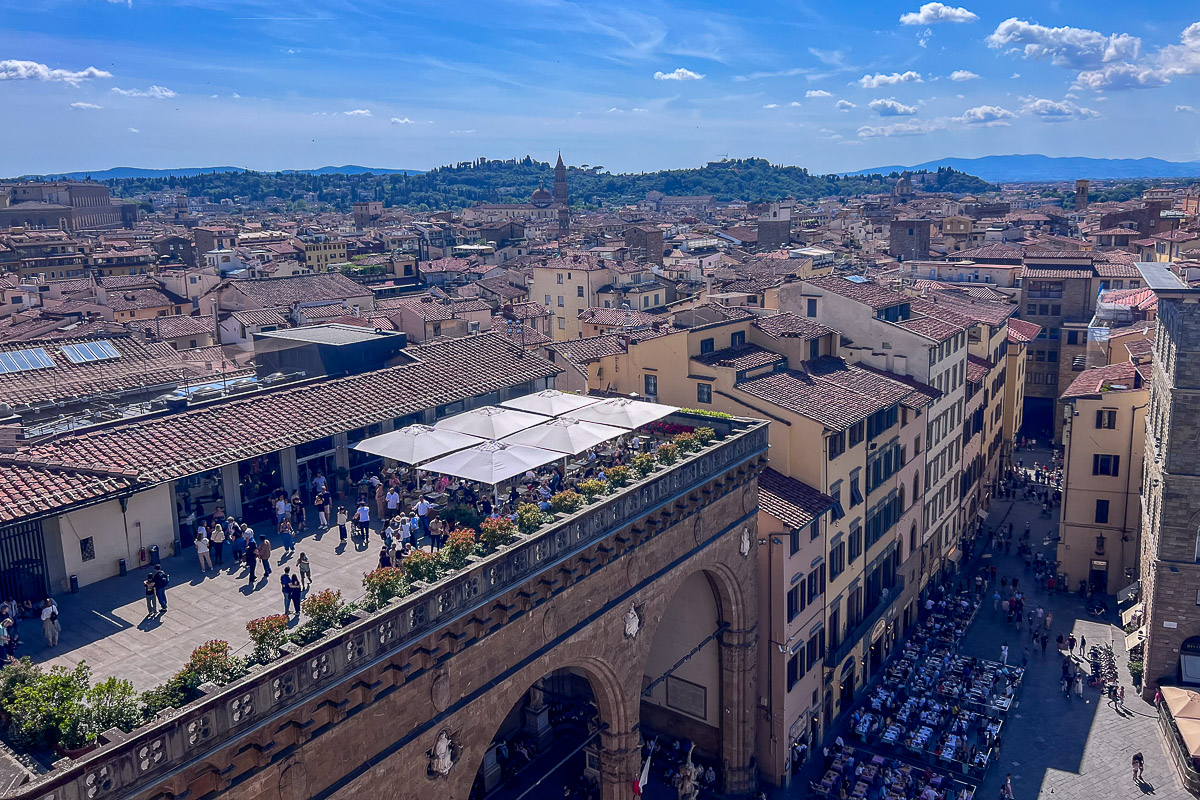
Find the access to the Tower of Arnolfo (named for its architect) or more appropriately Bell Tower (you’ll need a timed-entry ticket here too), so called since it was built to house a huge bell used to call citizens to meetings or warn them of fire, flood, or enemy attack. The 223-step climb is well worth it and you’ll see why…
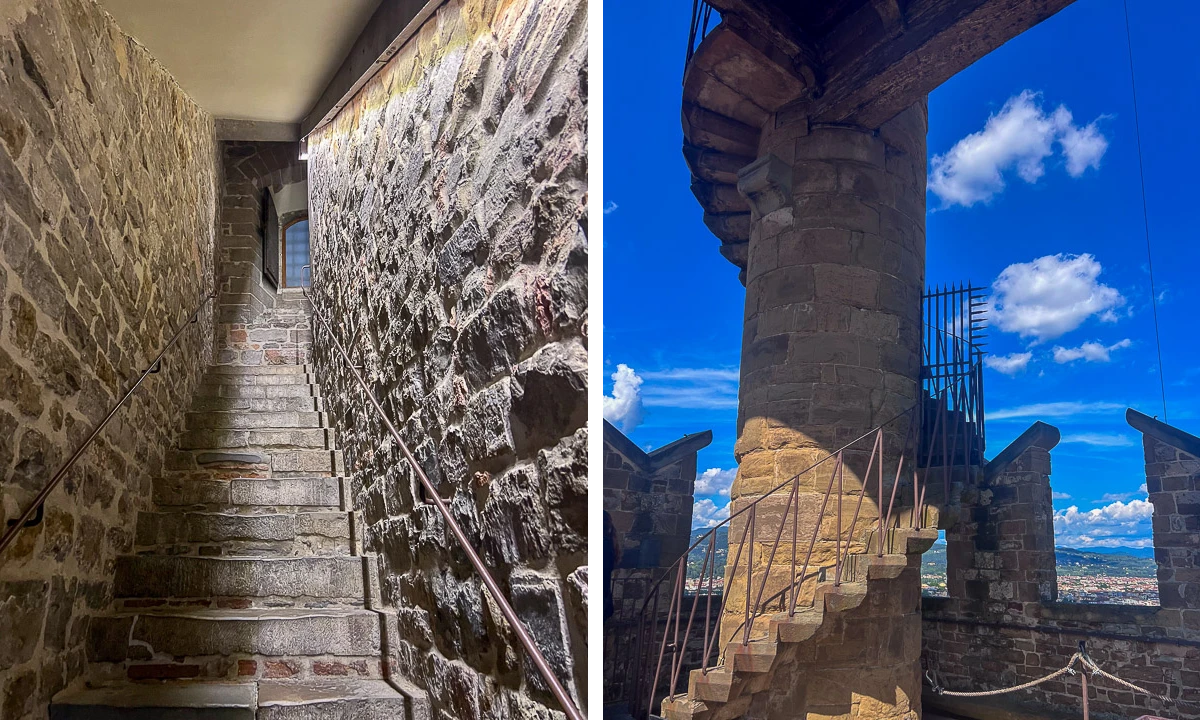
The views are incredible on a clear day, unsurprising as this is the highest tower in all of Tuscany at over 300-feet tall (yes, higher than the one in Pisa!).
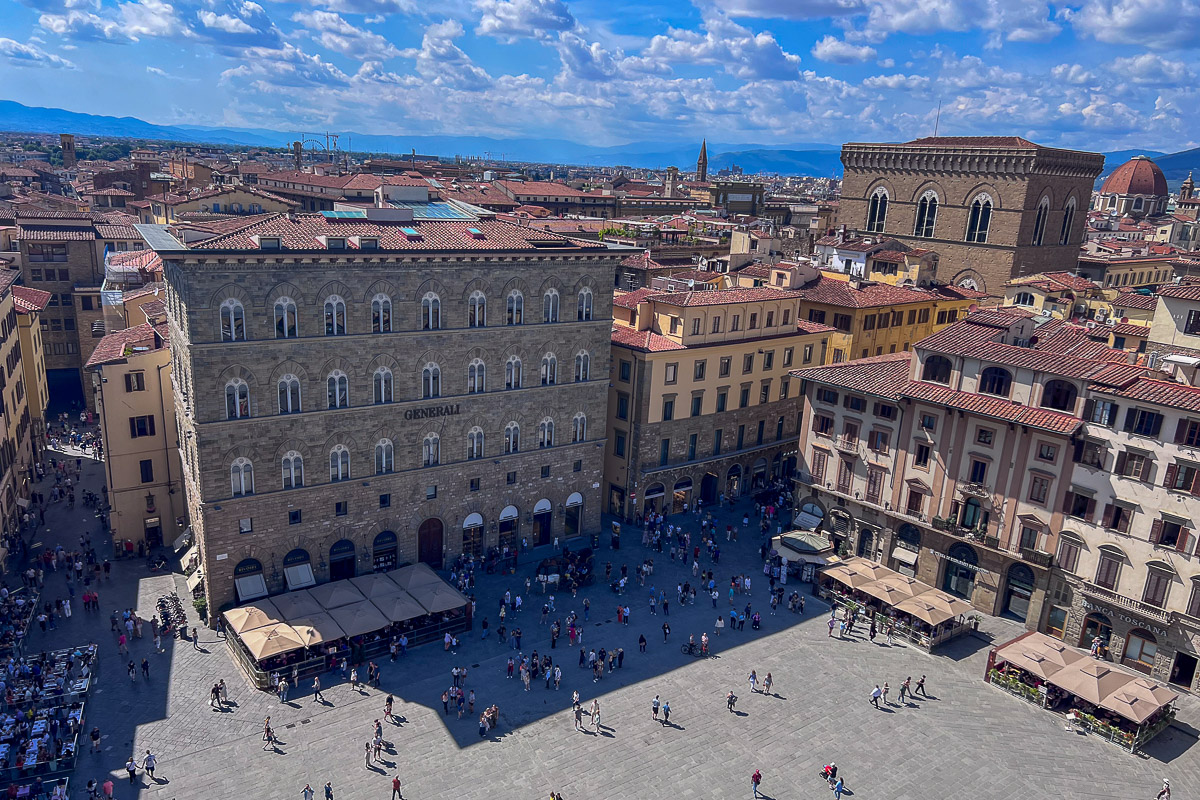
You have a direct line into the Uffizi’s cafe where you previously had a sweet break looking up at the tower you now stand in.
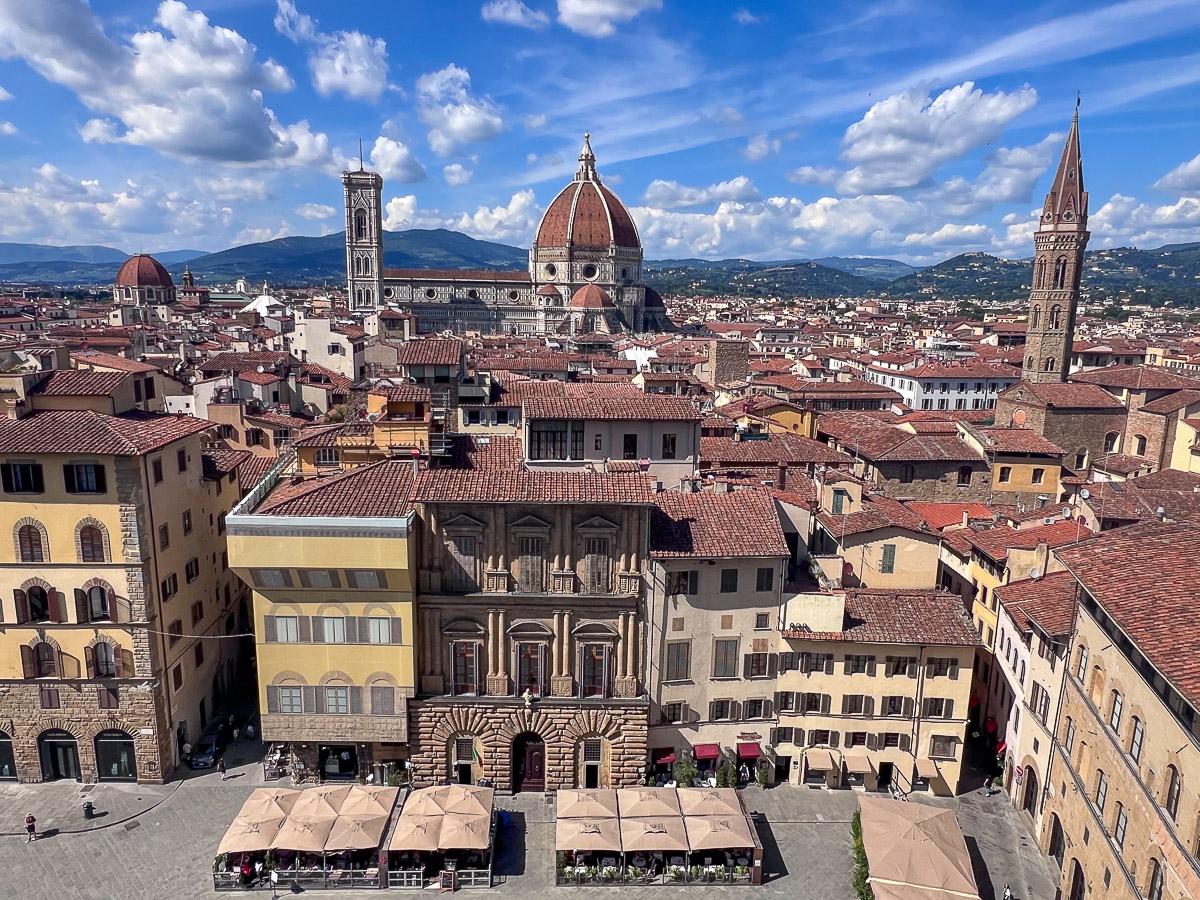
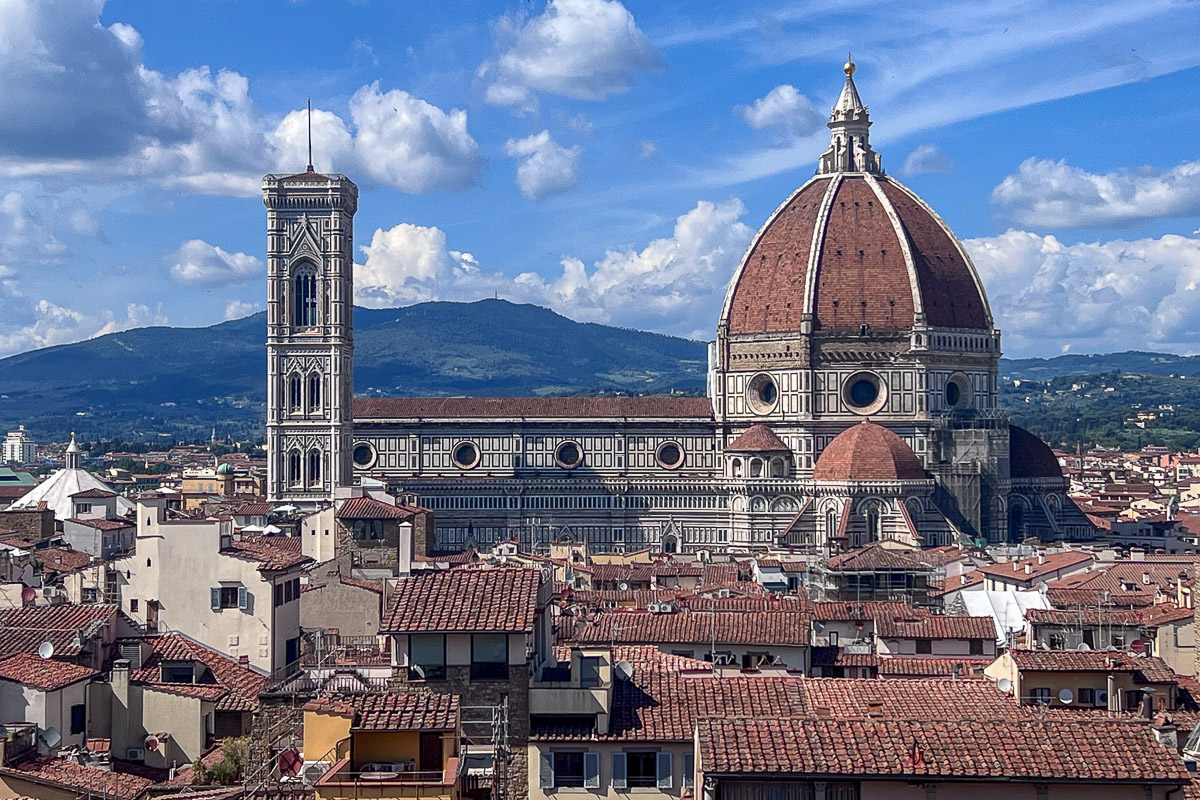
The Duomo’s scale with the mountains in the background comes to life in the prettiest Florence postcard imaginable.
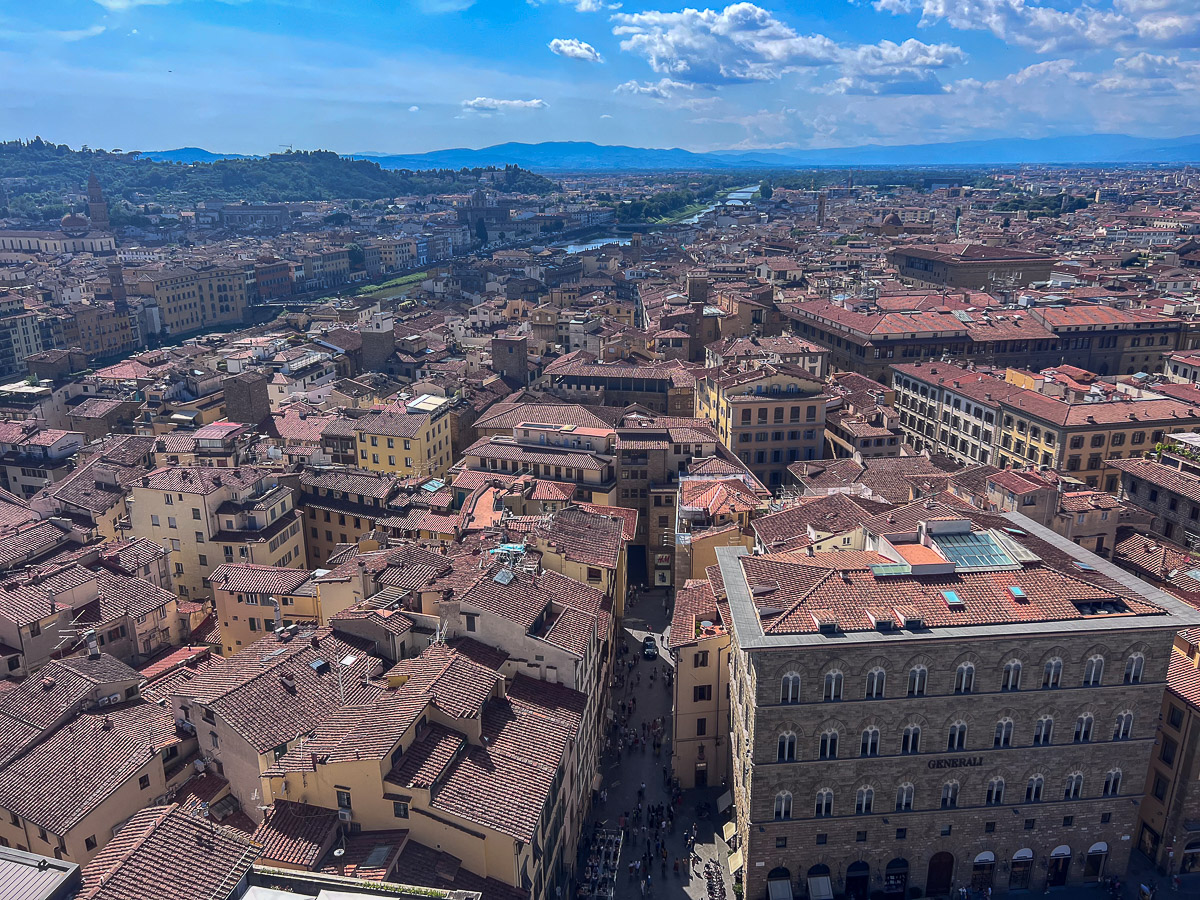
Let your gaze follow the Arno river from east to west, flowing through the city center, passing under iconic bridges and making its way towards Pisa. This was my favorite view of Florence so take your time here to soak it all in before going down.
Walk back toward the river through the little streets south of the Piazza to experience the charm of medieval Florence for a few minutes. Strolling underneath the narrow stone archways of pedestrian streets like Via dei Girolami is an instant trip back in time. The old-world atmosphere of the alley is so authentic it featured prominently in the movie A Room with a View.
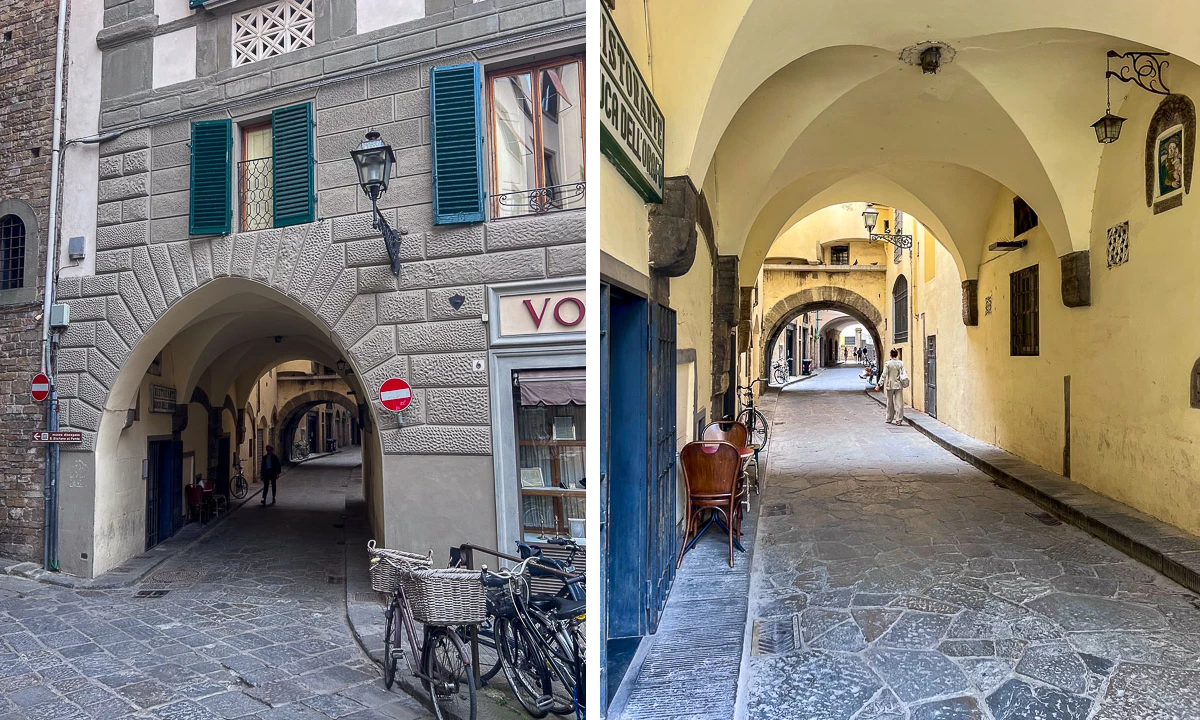
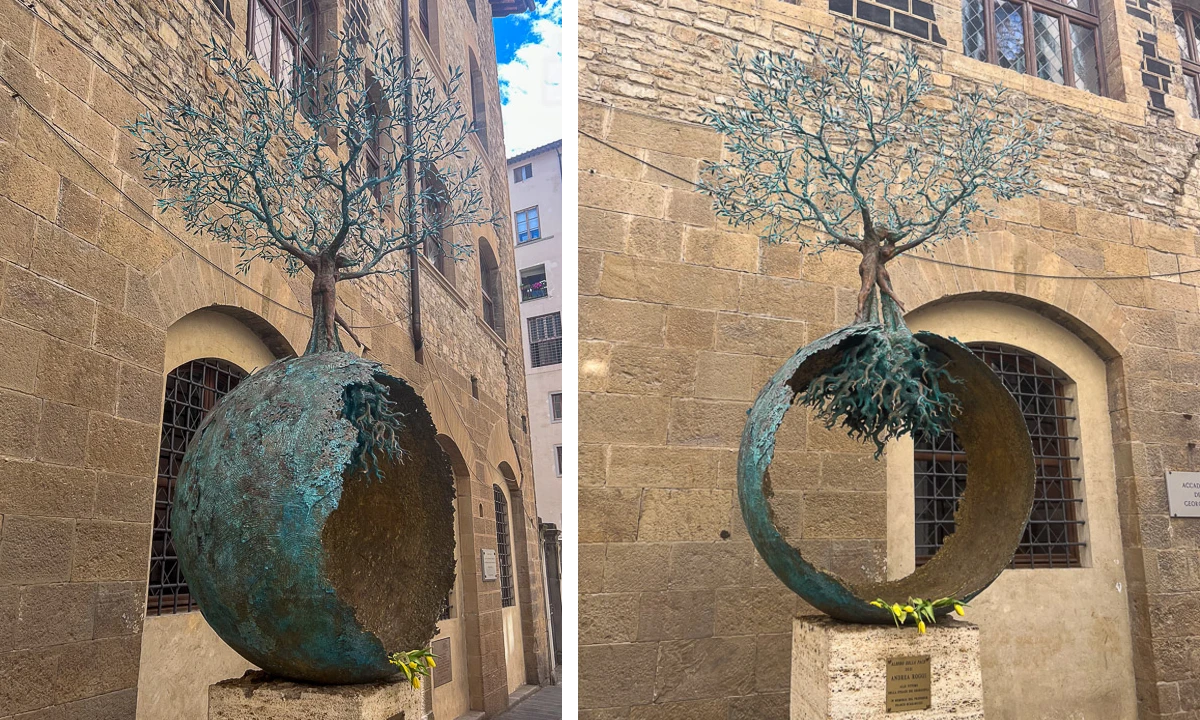
This cozy labyrinth just steps from the Uffizi opens up to little piazzas and artful surprises. The Tree of Peace (Albero della Pace), a bronze sculpture by Andrea Roggi, is displayed permanently on Via dei Georgofili right behind the gallery to commemorate the victims of the 1993 Florence bombing. A terrorist attack carried out by the Sicilian Mafia killed five people and injured a further 40 and Roggi made this sculpture to reunite Florence and promote love and compassion in memory of the attack.
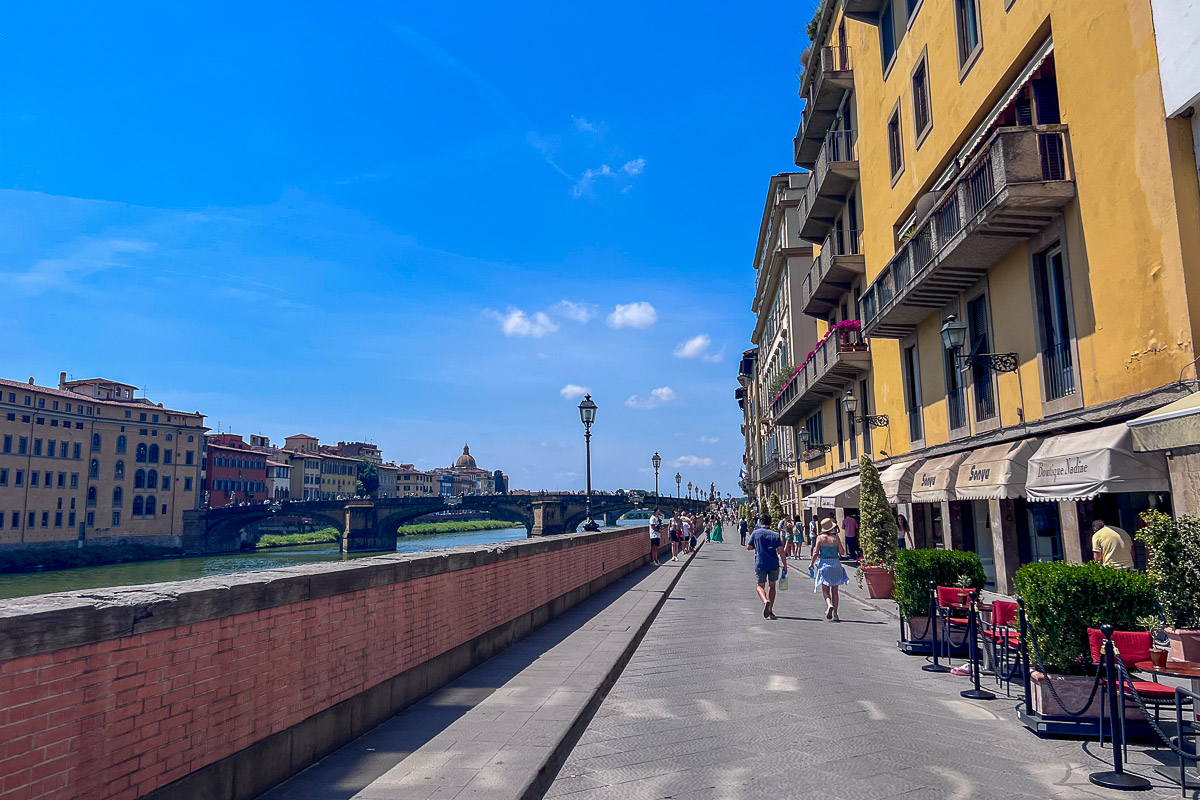
The afternoon sun is now shining on the north bank of the Arno so it’s a great time for a stroll and some luxury window shopping. When you’re ready to get back in, follow the street leading up from the Ponte Vecchio for a few blocks…
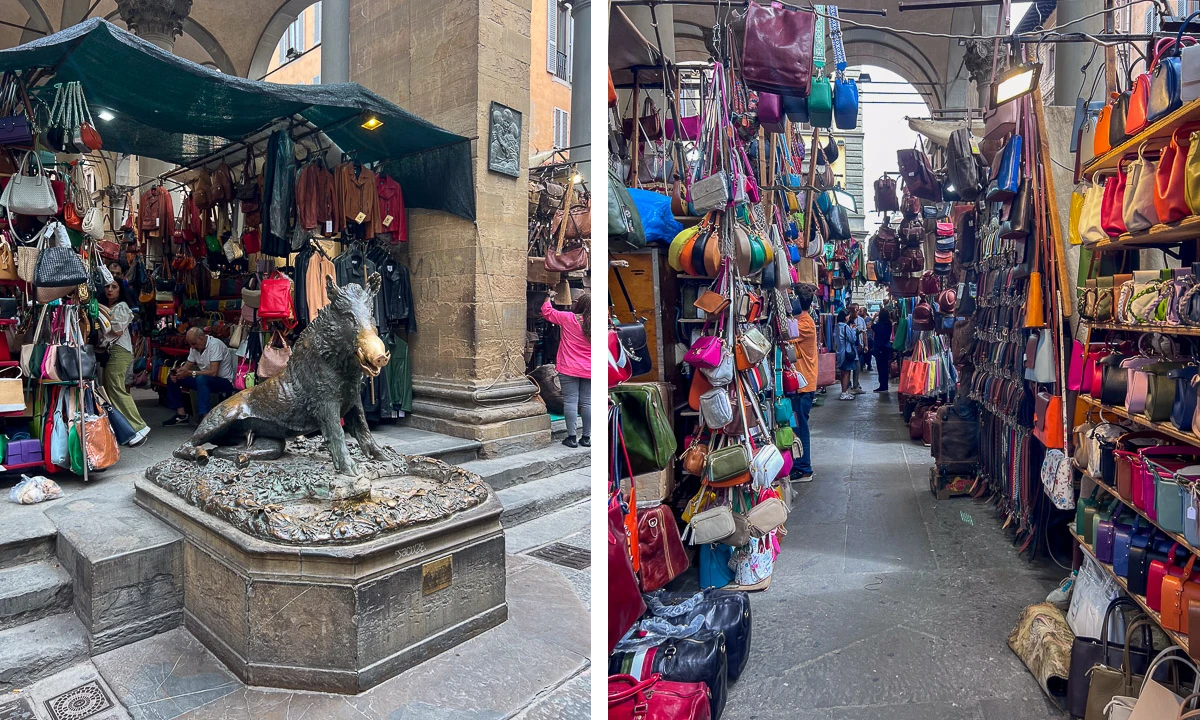
… and find the Mercato del Porcellino (also known as the Mercato Nuovo). The 16th-century Renaissance loggia has dozens of market stalls selling leather goods and other souvenirs.
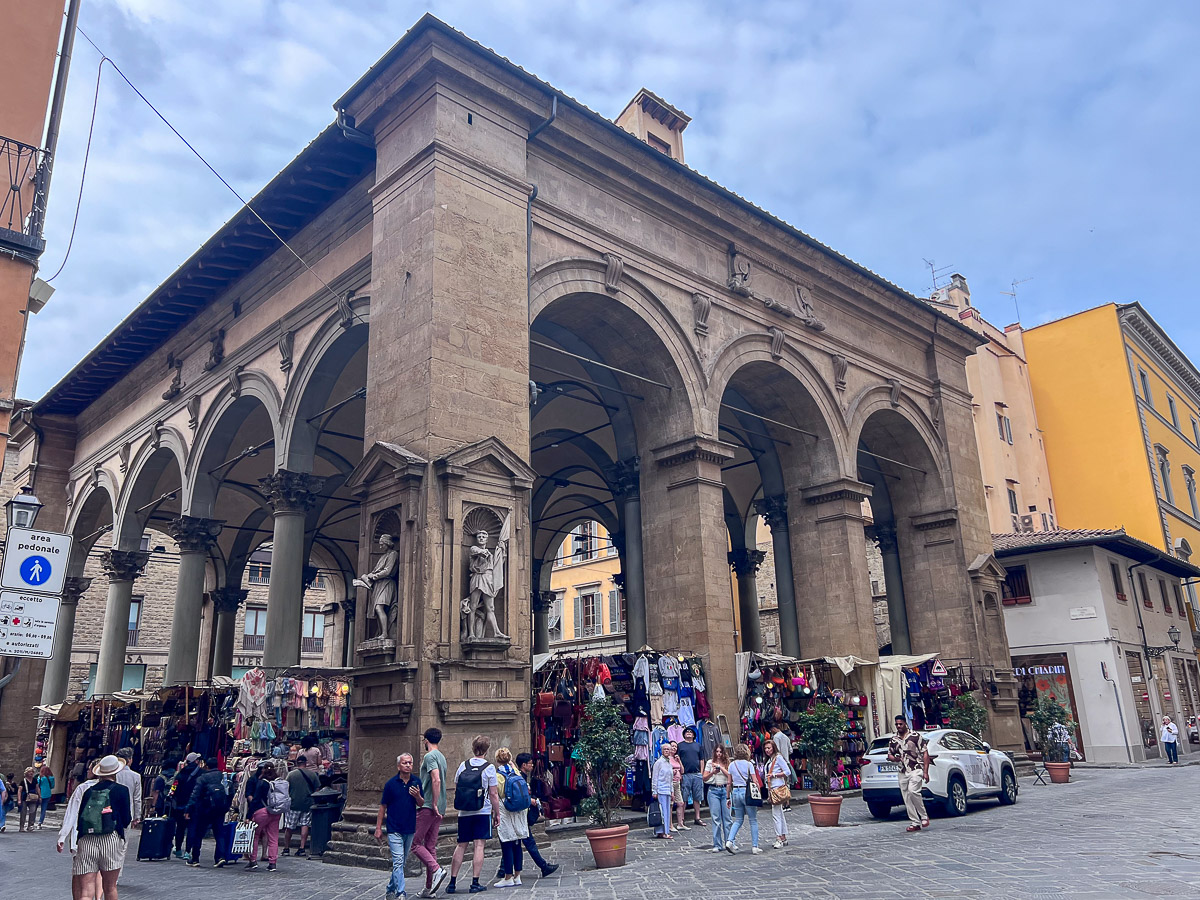
The main attraction though is the beloved bronze wild boar fountain (Il Porcellino) on the south side. According to Florentine tradition, rubbing the boar’s snout guarantees you will return to Florence…
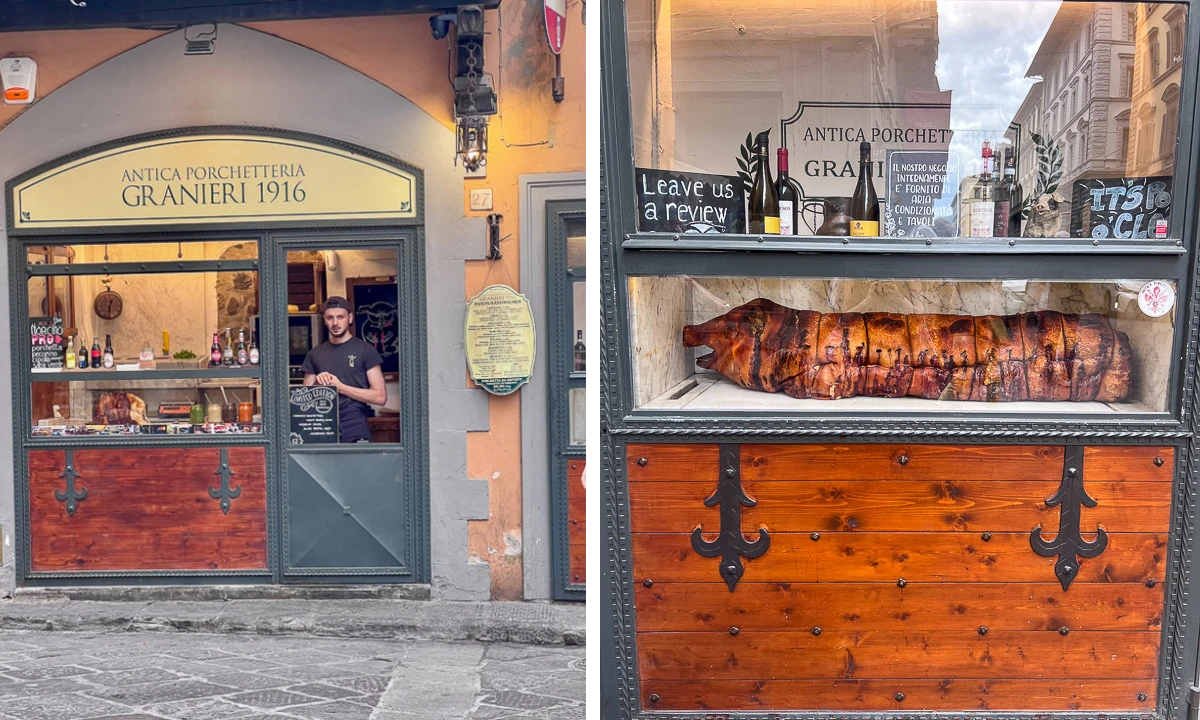
Options to fill your belly are vast around here. If you’re pressed for time, right at the corner of the market you’ll find Antica Porchetteria Granary 1916 for, you guessed it, freshly made porchetta sandwiches.
For a quick sit down with a bit more variety, head to Orizi Mariano, a family-owned sandwich shop where the wife and husband duo will craft a dreamy panino to order. Eat it with a glass of wine in their brick-vaulted, 13th-century cellar and watch as the locals drop by for a chat and a coffee.
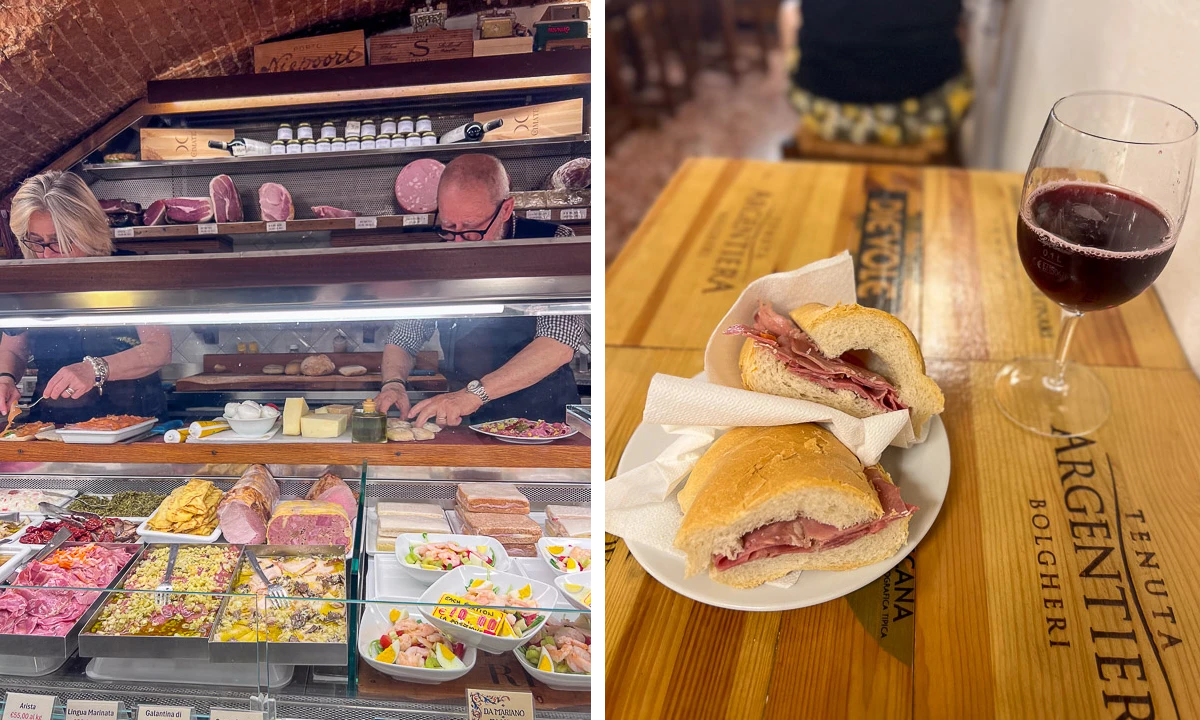
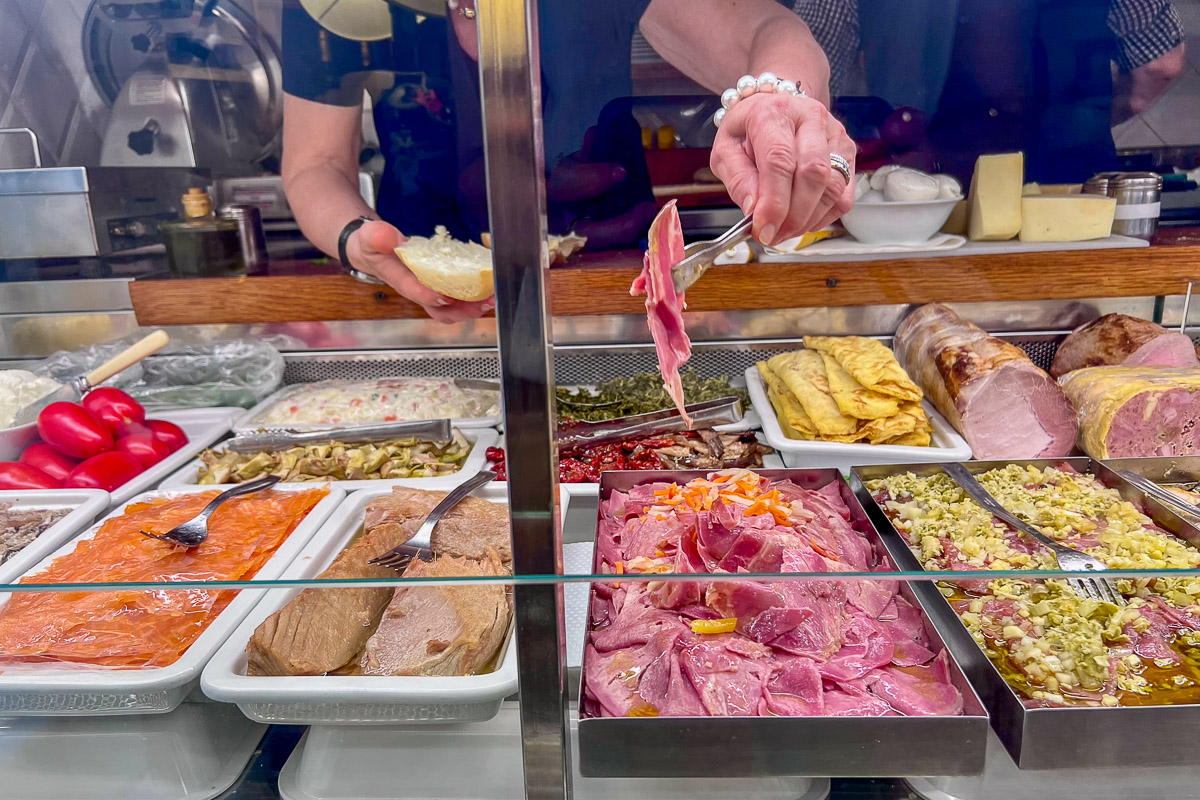
You can choose from classic cold cuts and cheese to smoked salmon and tongue, all paired wonderfully with marinated vegetables.
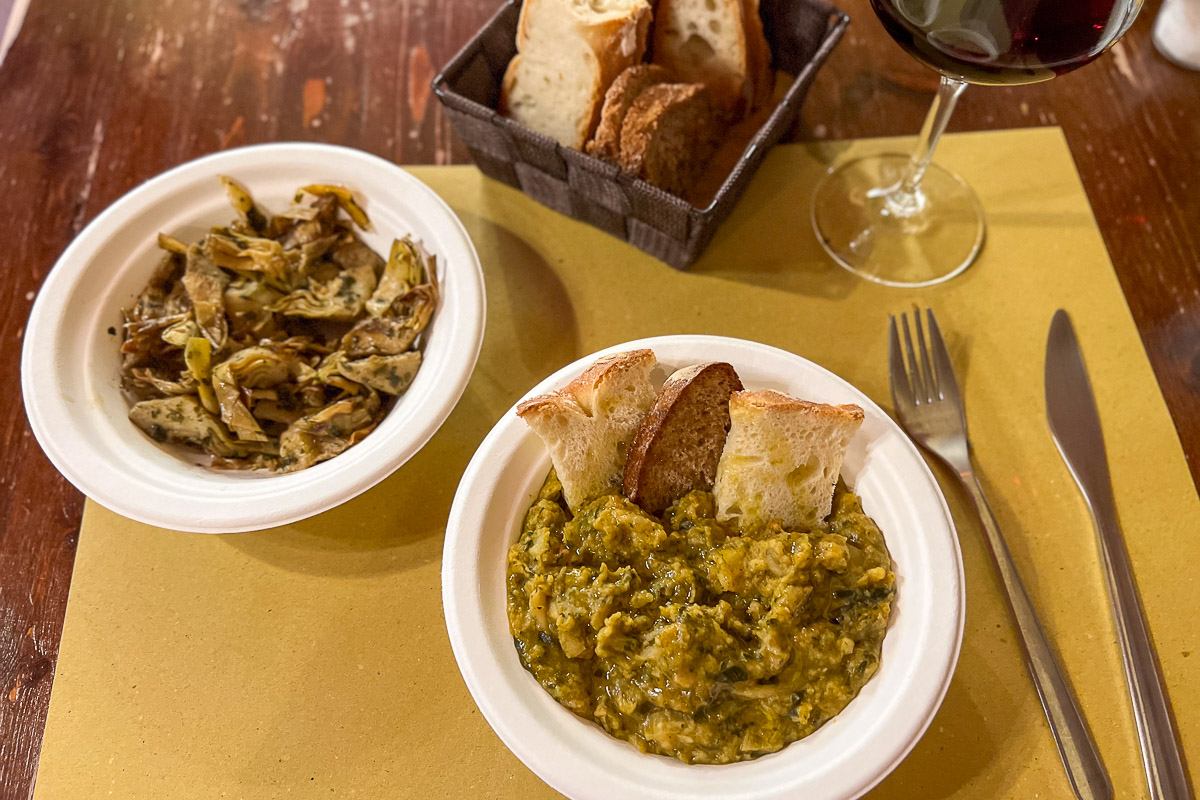
For a casual Tuscan comfort meal, Nerocarbone Bistró Toscano is a great cozy spot. Disregard the fact that they serve the food on paper plates (maybe it was just a one-off?), what comes out of the kitchen is delightful – crisp fried artichokes and ribolleta soup (traditional Tuscan white bean and vegetable stew, thickened with day-old bread), all brown and delicious!
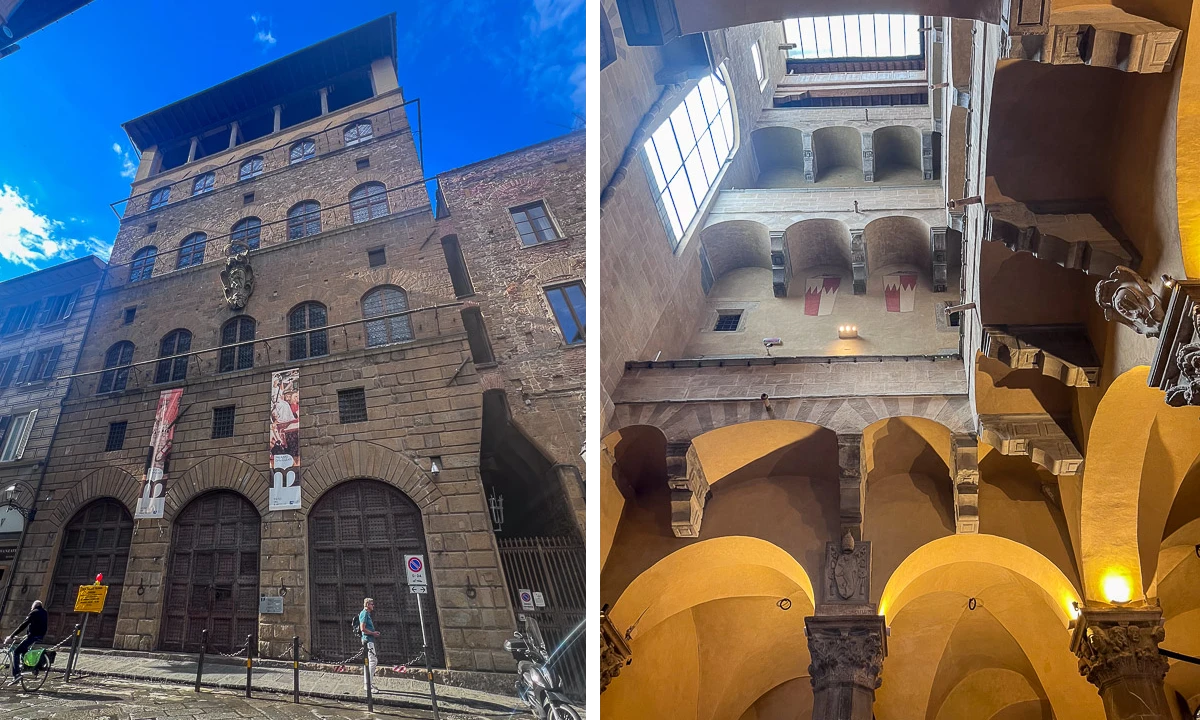
Palazzo Davanzati
Now that you got your energy back, there is still so much more to see and do in this jam-packed center. While not in the top of “must-see palaces”, I must admit that my visit to Palazzo Davanzati was among my favorites. Consider adding it to your visit if you like preserved houses and see what life was like in the 14th century (for wealthy merchants and bankers that is). You first walk into the inner courtyard where a staircase links to the four upper floors.
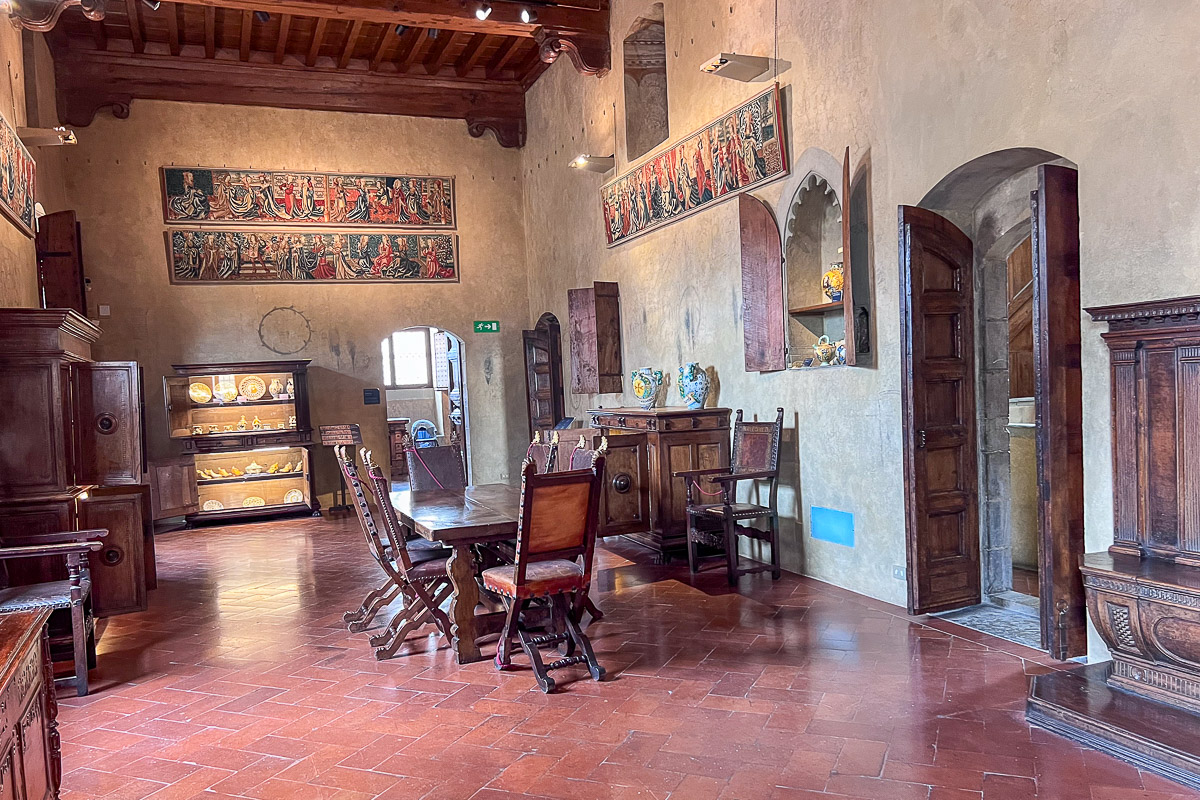
It’s a one-of-a-kind example of a medieval house in Florence with furniture and household tools from the 14th to the 19th centuries.
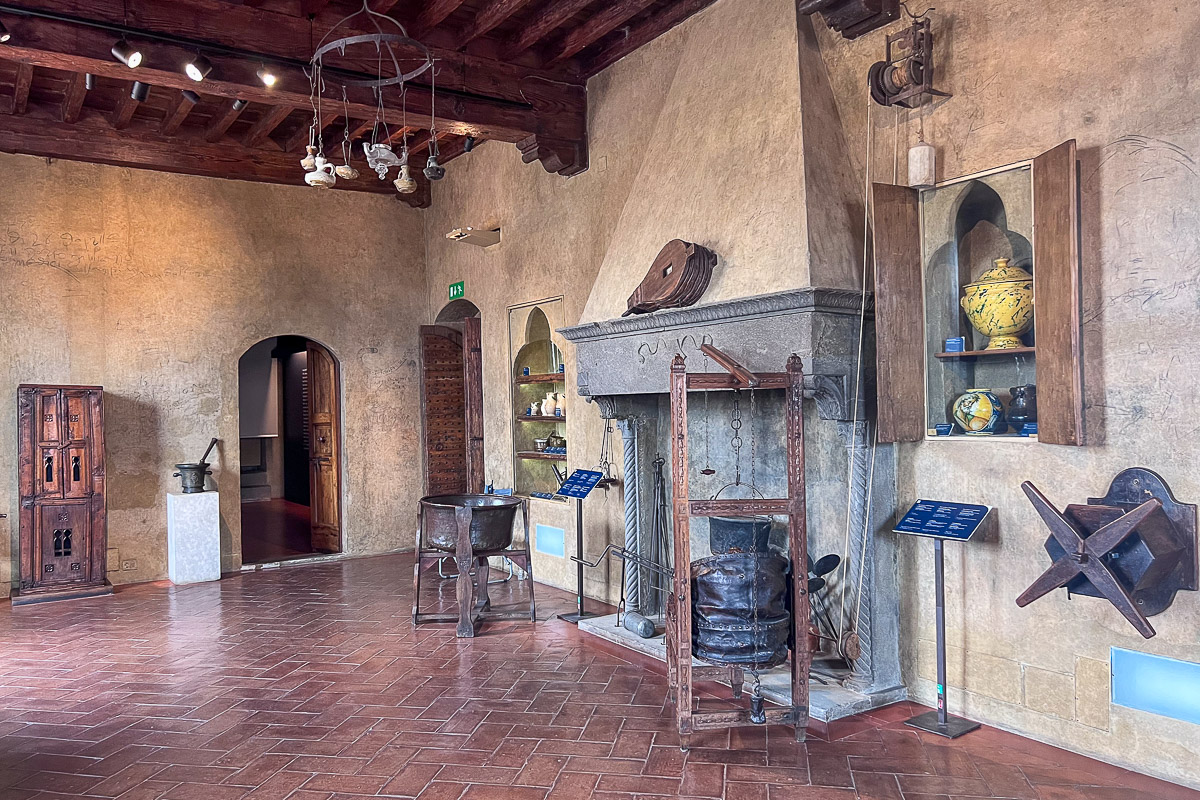
Some of the rooms are richly decorated with murals and frescoes dating back to the middle ages like The Parrots Room.
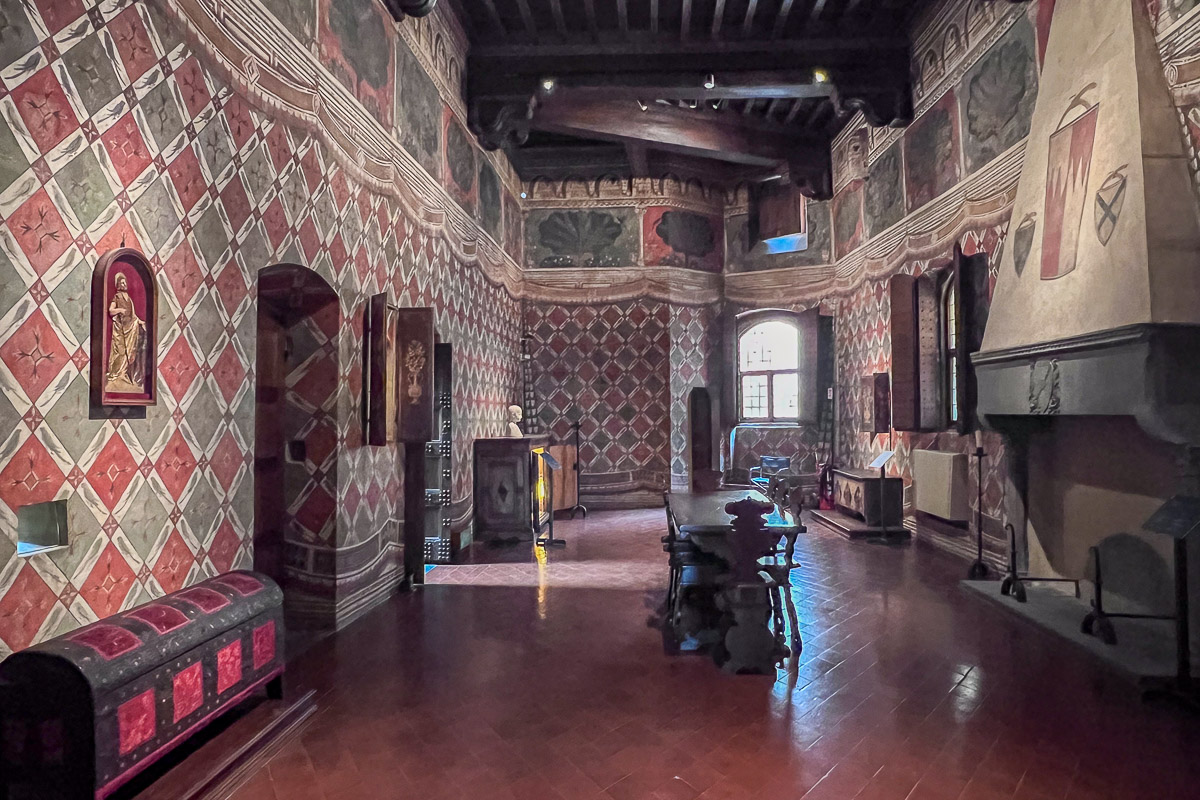
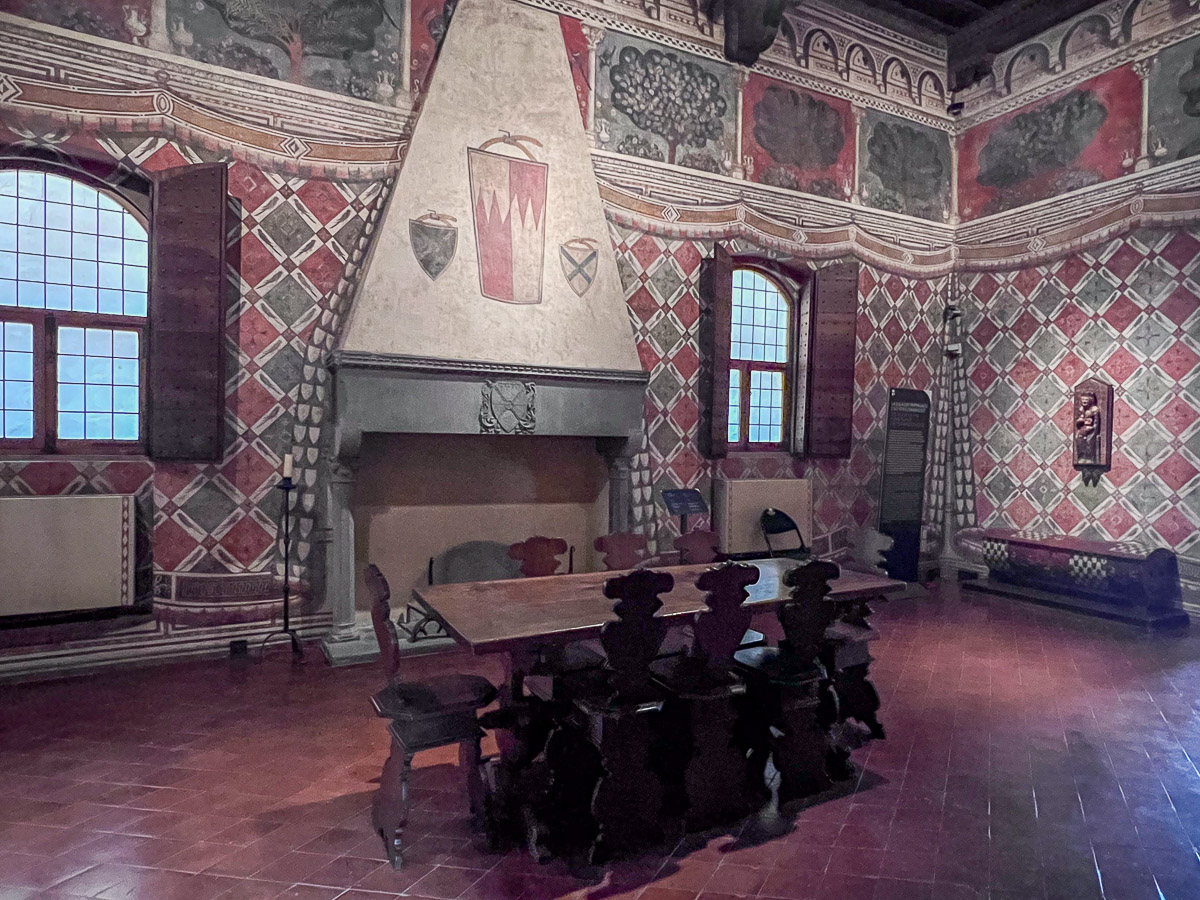
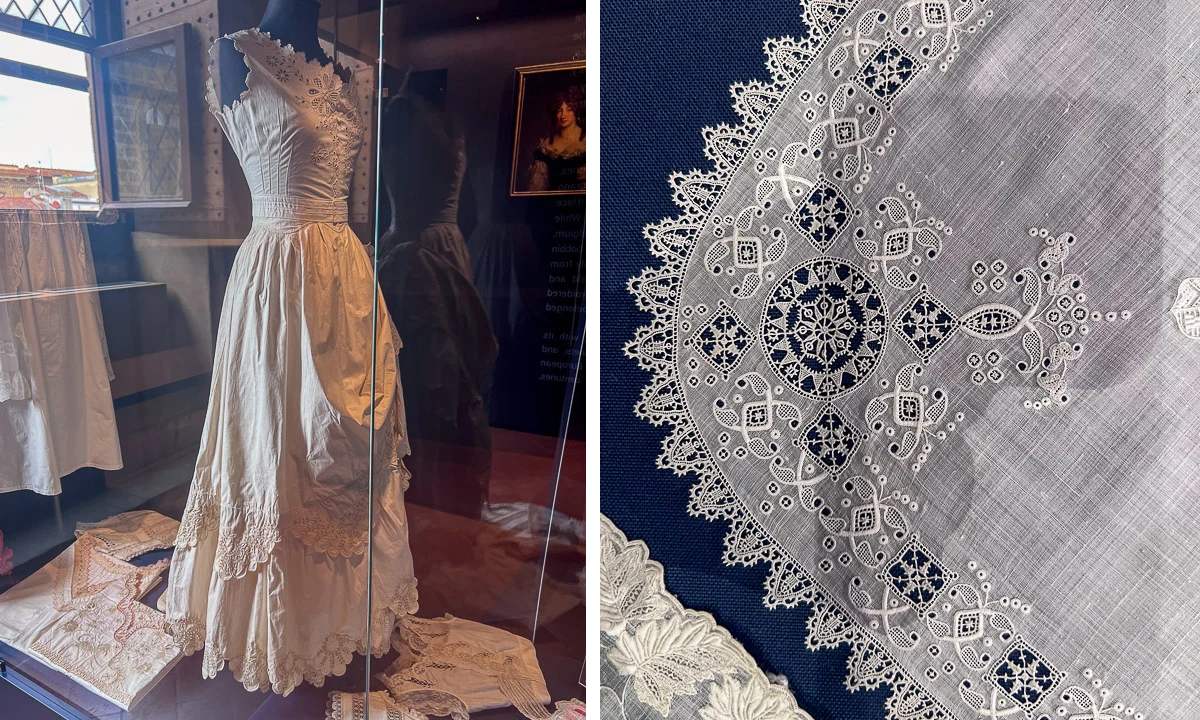
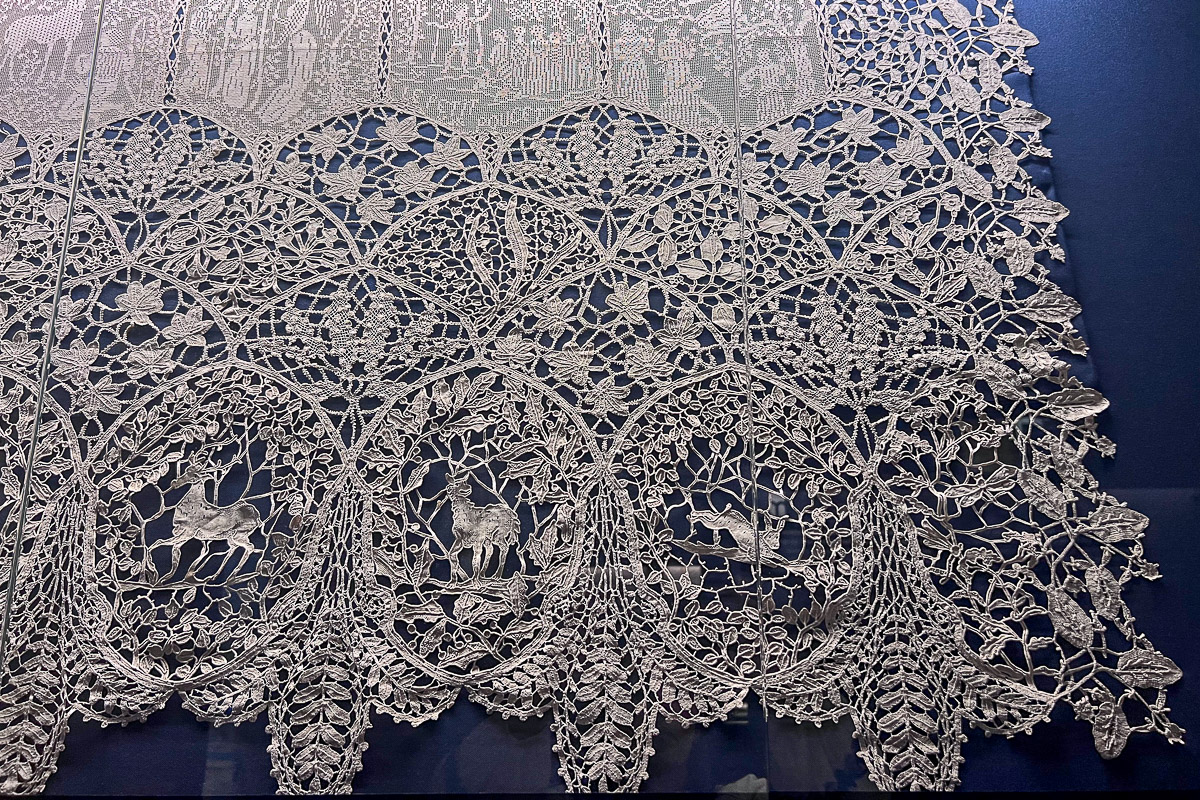
I was pleasantly surprised to find on the upper floor a very fine collection of lacework ranging from the 16th to the 20th centuries.
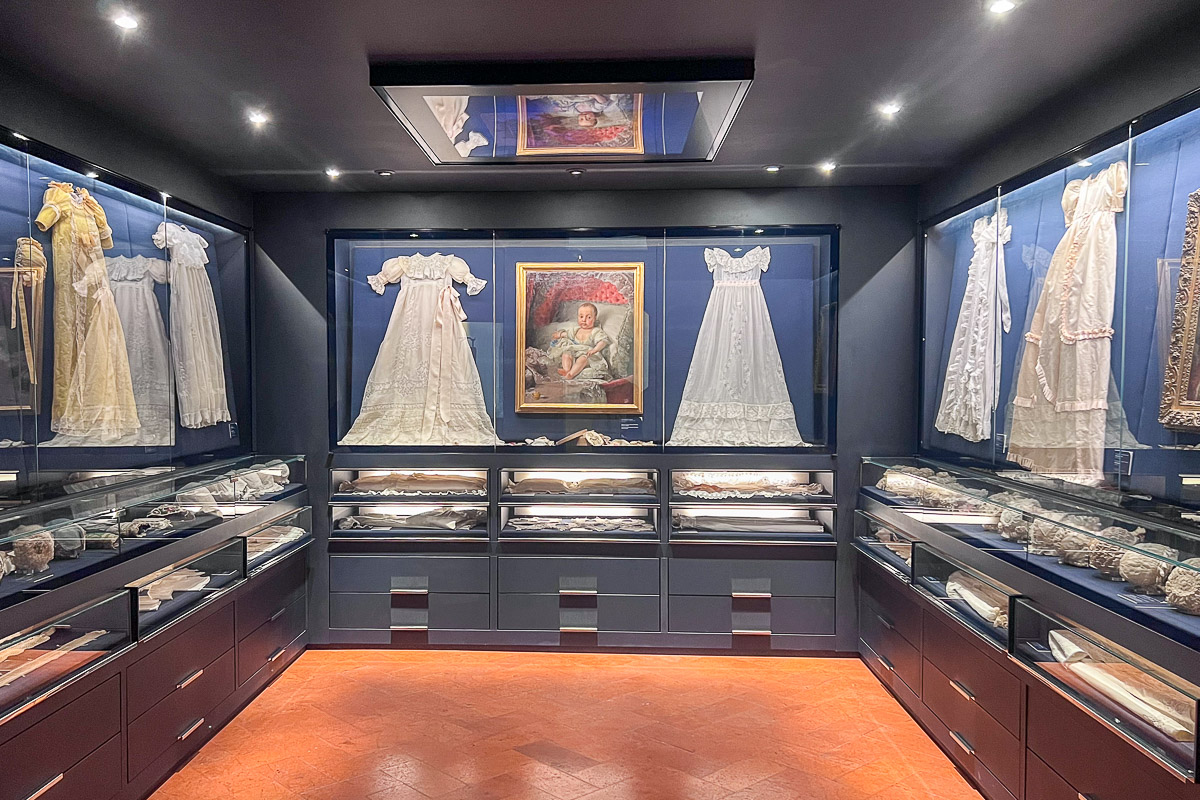
You can learn more about the history of lace and the various lace techniques alongside stunning Italian, French, Spanish and Flemish samples, from christening robes to handkerchiefs.
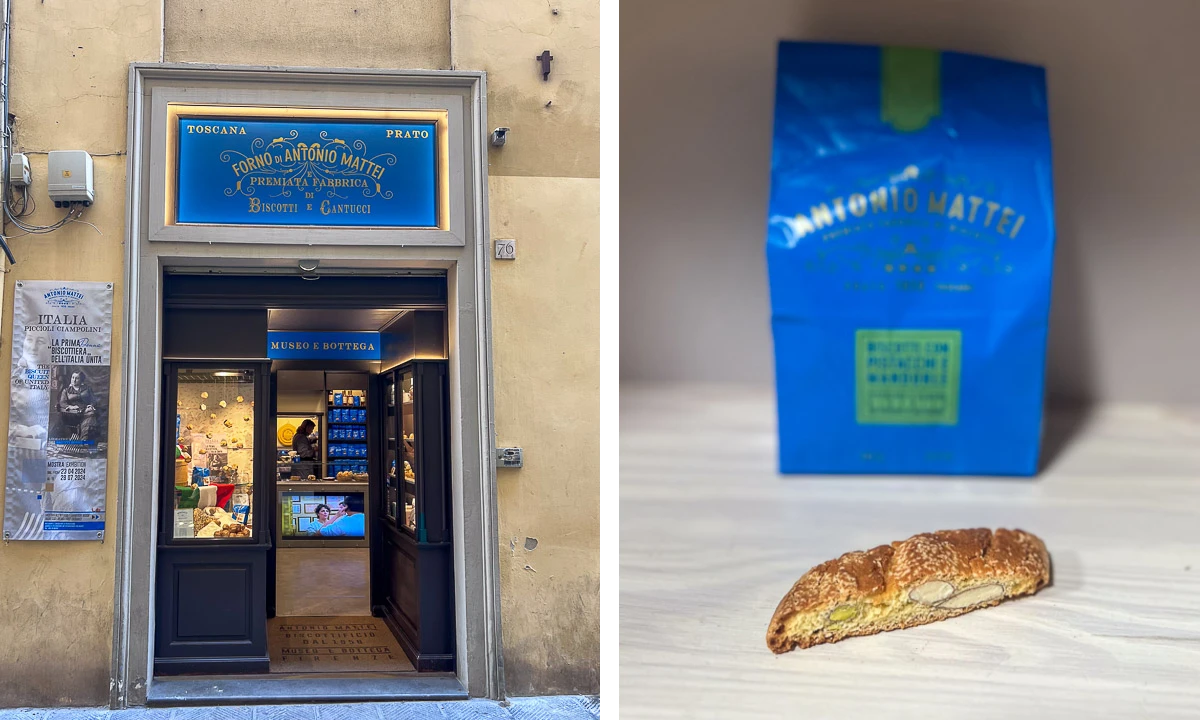
Down the block from the palace, step underneath the bright blue banner of Forno di Antonio Mattei for a snack on the go or a delicious souvenir to enjoy back home. The oldest and most renowned producer of cantucci (or biscotti di Prato) in Tuscany, they’ve been making the twice-baked almond biscuits since 1858 just outside of Florence. Go for classic or with chocolate, pistachio or hazelnut, traditionally dipped in Vin Santo after dinner or dunk in hot chocolate or frothy cappuccino.
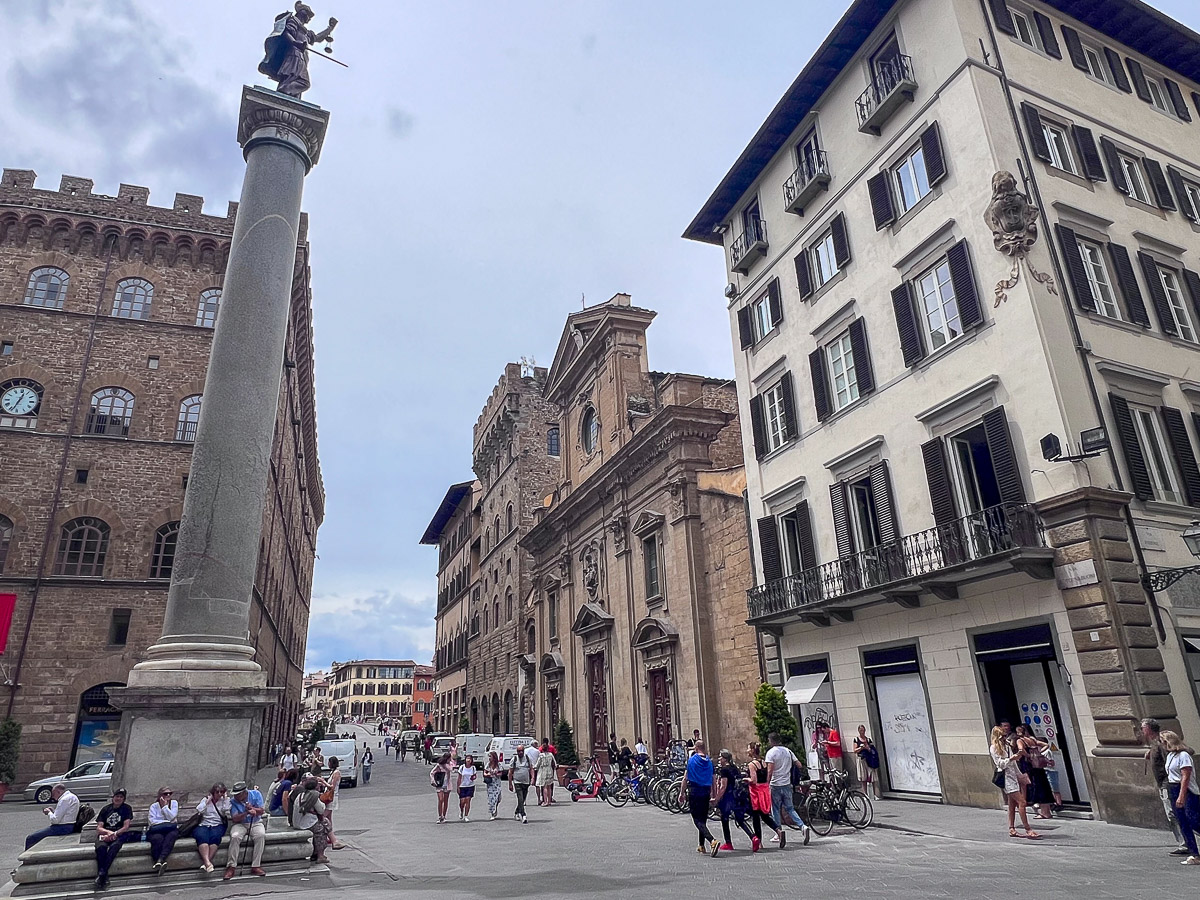
Sooner or later you’ll find yourself passing through the beautiful triangle-shaped Piazza di Santa Trinita with its massive Column of Justice and elegant palaces. It’s a central crossroads that connects the river with the city center and feels a bit of a hidden gem although you’ll never find it empty.
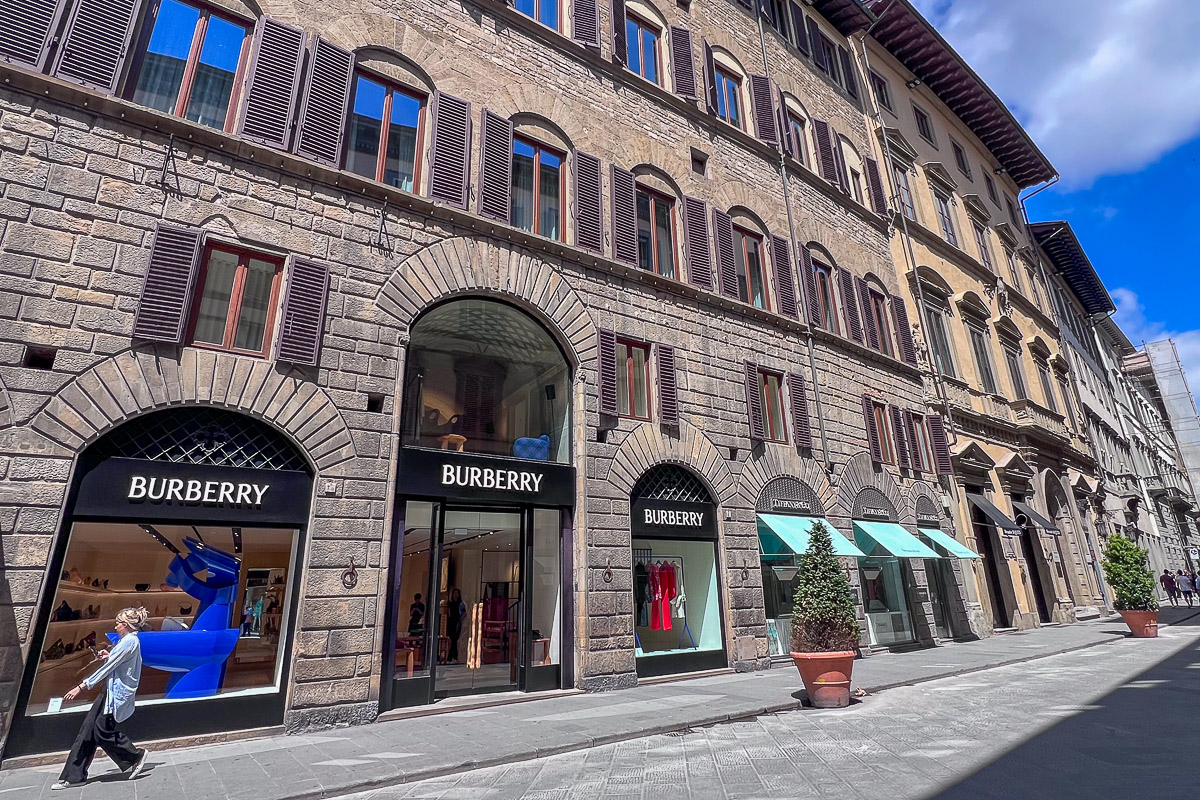
Crossing the piazza is the luxury shopping street Via de’ Tornabuoni if you’re looking for some Ferragamo shoes or a Pucci dress.
Modern art at Collezione Roberto Casamonti
Hidden among the palaces lining the piazza are fine museums, including Museo Ferragamo and Roberto Casamonti Collection. The latter is almost hidden in the Renaissance mansion on the east side of the piazza and is a must for modern art lovers.
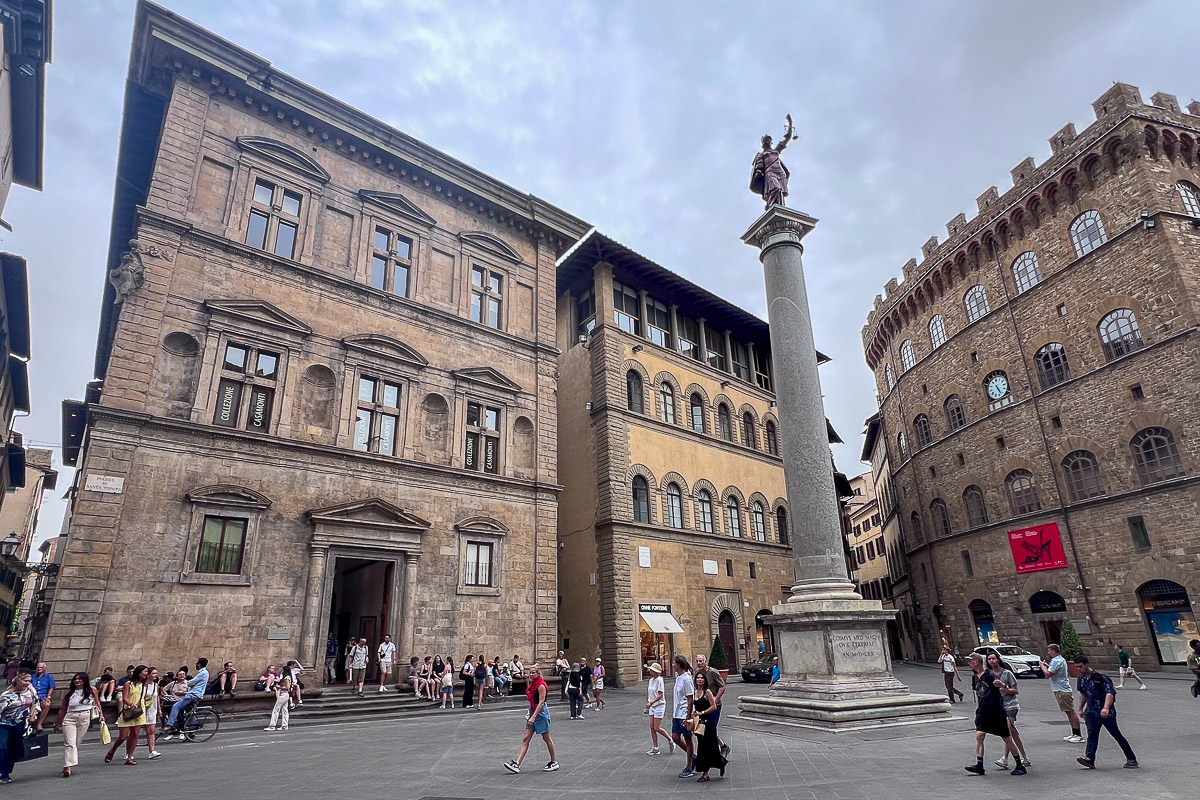
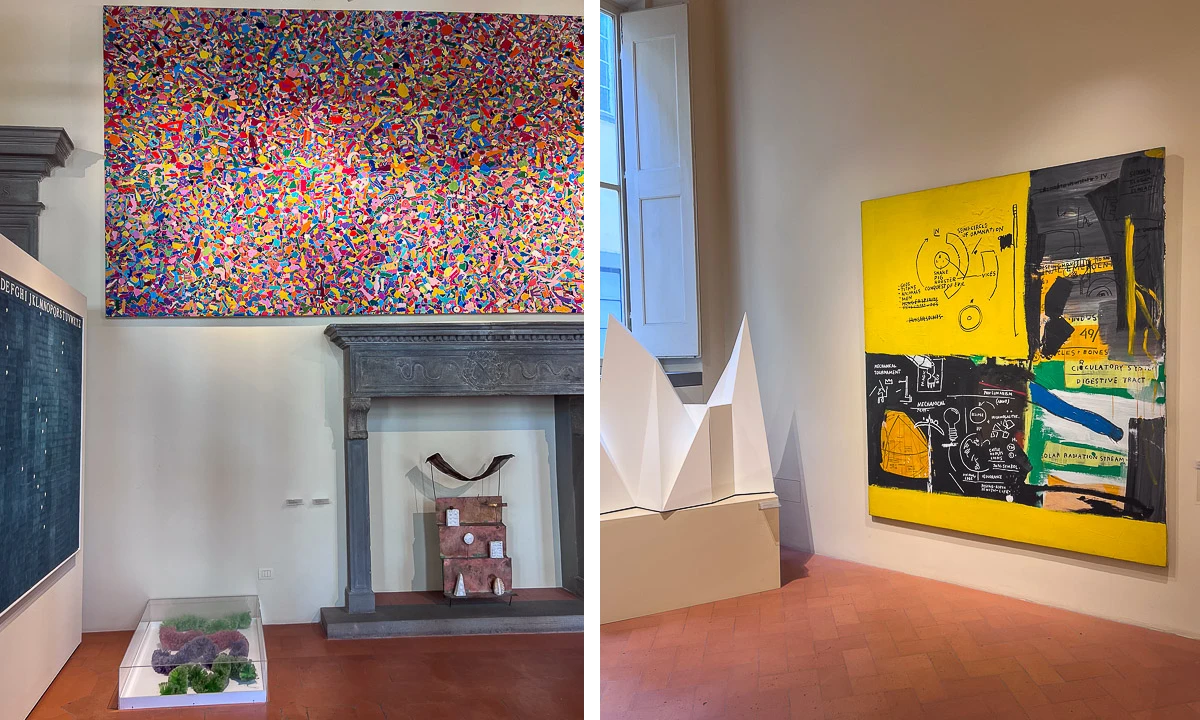
One of the largest private exhibitions open to the public, it’s housed in the home of gallery-owner and art collector Roberto Casamonti who wanted to showcase his personal collection of modern and contemporary art. Depending on when you go, you’ll see one of two parts of the collection: the first (not on display currently) includes works created from the early twentieth century to the 1960s by artists such as Picasso, Chagall, Kandinsky, Morandi, etc. and the second (currently on display) illustrates the art scene from the 1970s to the present day with Miró, Boetti, Warhol, Haring, Basquiat, Kapoor, etc.
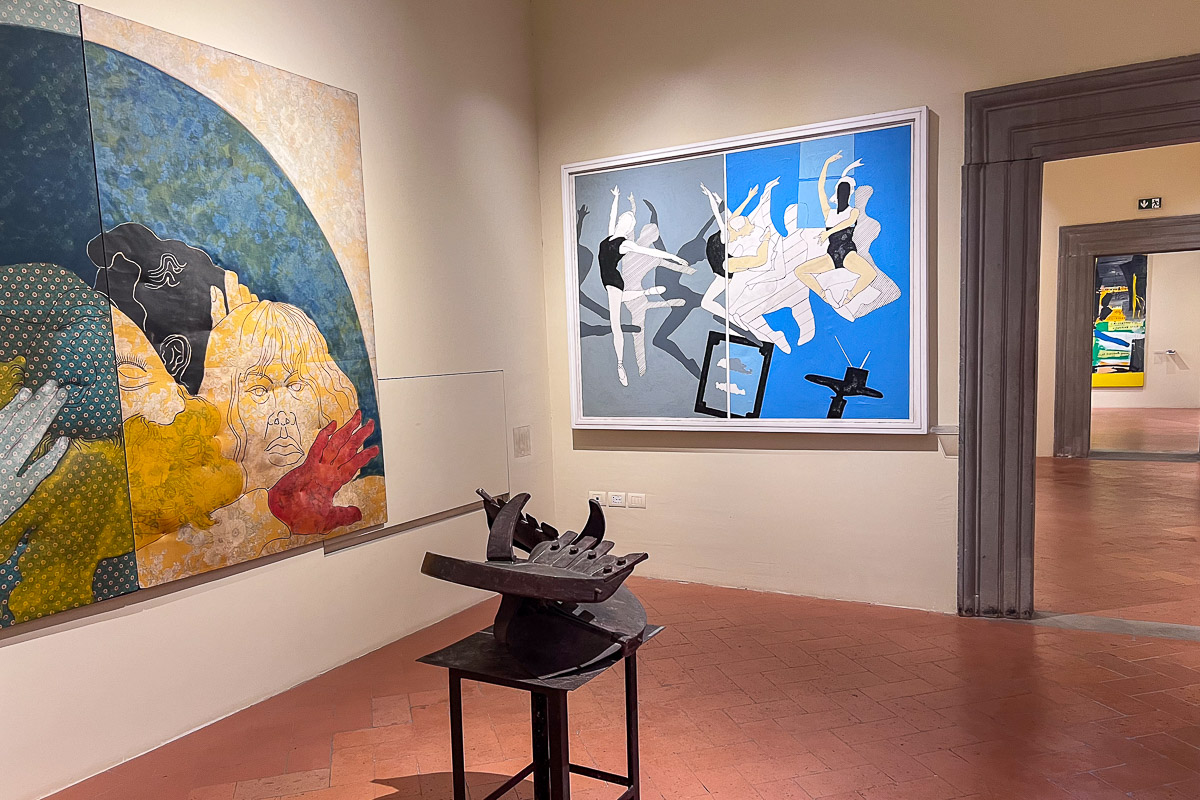
I was almost the only one there for a blissful hour, going from room to room and admiring this beautifully curated selection of 250 pieces. After looking at thousands of Renaissance paintings in the past few days, this felt like such a refreshing sight, almost like my eyes needed an “art rinse” before plunging back into the ‘Golden Age’.
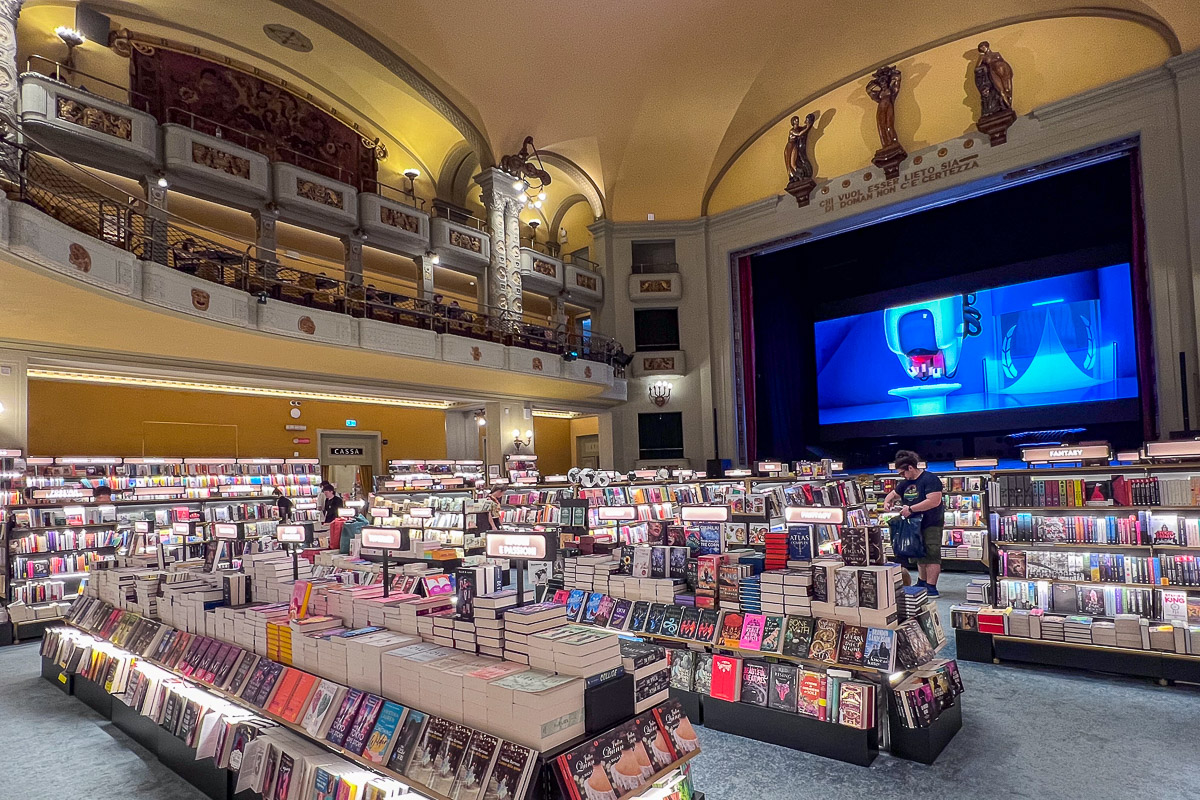
If you need even more modern entertainment, head to the Giunti Odeon for a multicultural experience in a very unique space.
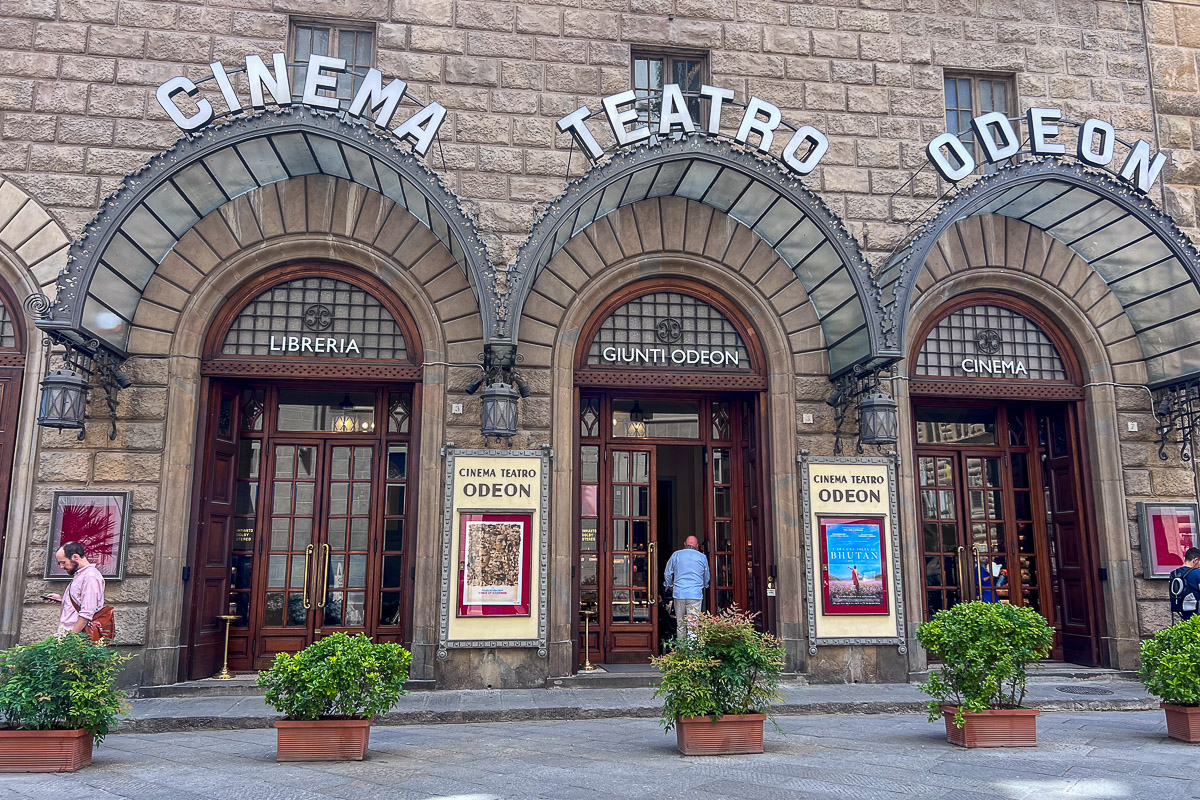
The stunning cinema also houses a bookshop and a cafe so you can peruse art books and contemporary bestsellers while catching glimpse of a movie on the big screen. How fun is that?
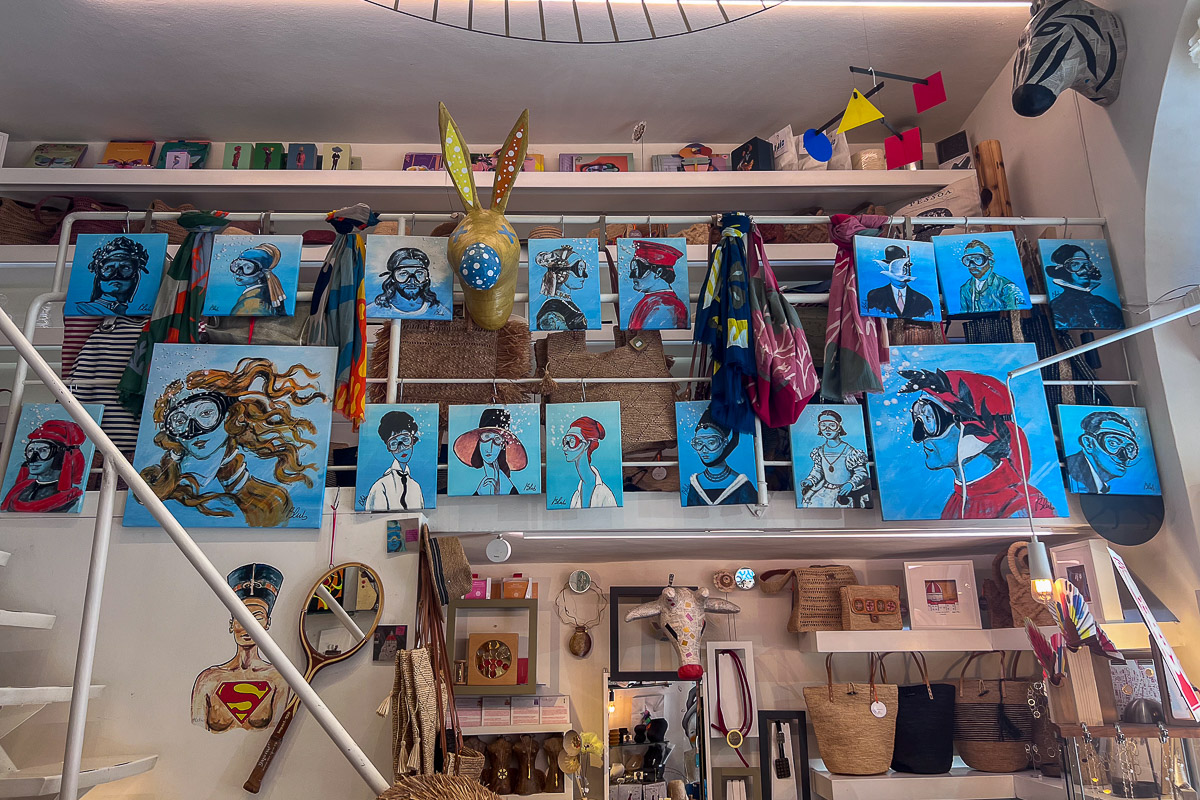
Art is not only found in medieval palaces and museums. Florence is full of artists creating one of a kind creations, many of them over in the Santa Croce neighborhood but a few hidden gems are right in the center. I happily stumbled upon Mio Concept Store one day and I’m still thinking about their clever spin on street art and original artworks.
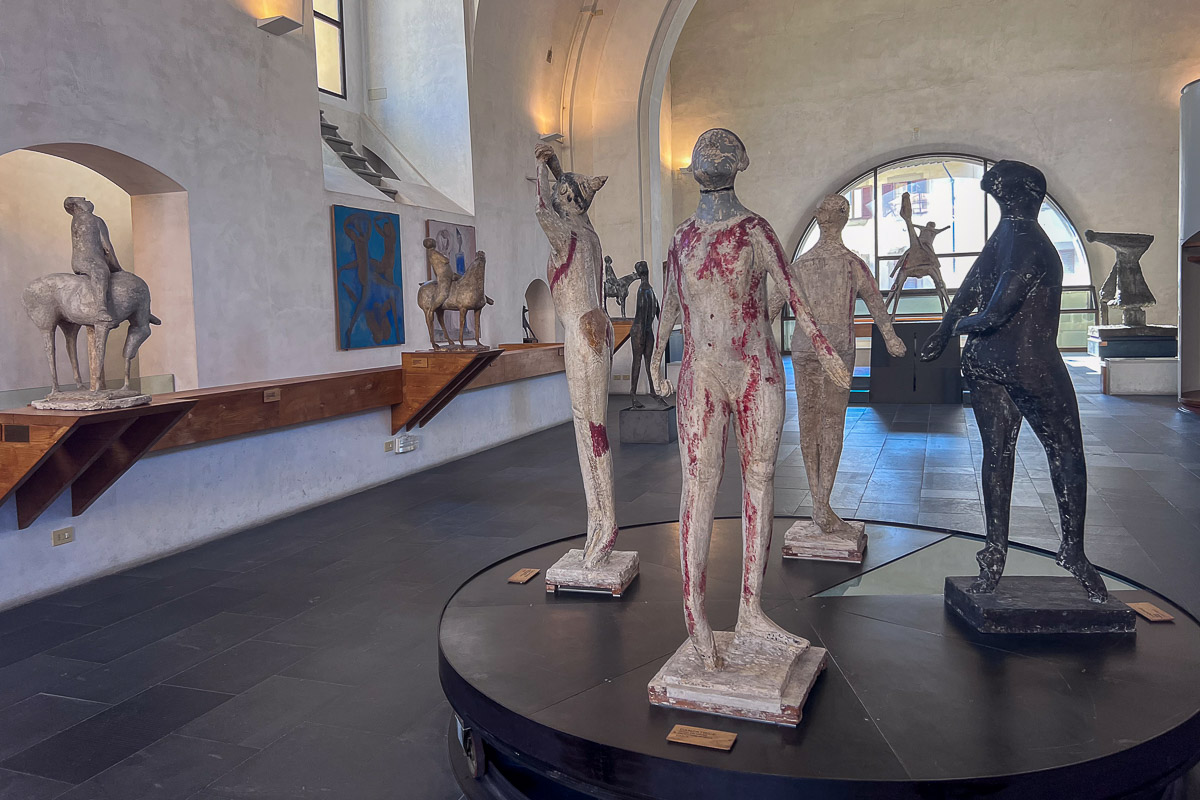
Museo Marino Marini
The modern art at Casamonti had me yearning for more, and there’s no better follow-up around than paying a visit to Museo Marino Marini. It’s not too big so can easily fill in a late afternoon wander before it’s time for aperitivo. The former church is devoted to the work of Italy’s best-known abstract artist, Marino Marini (1901-80).
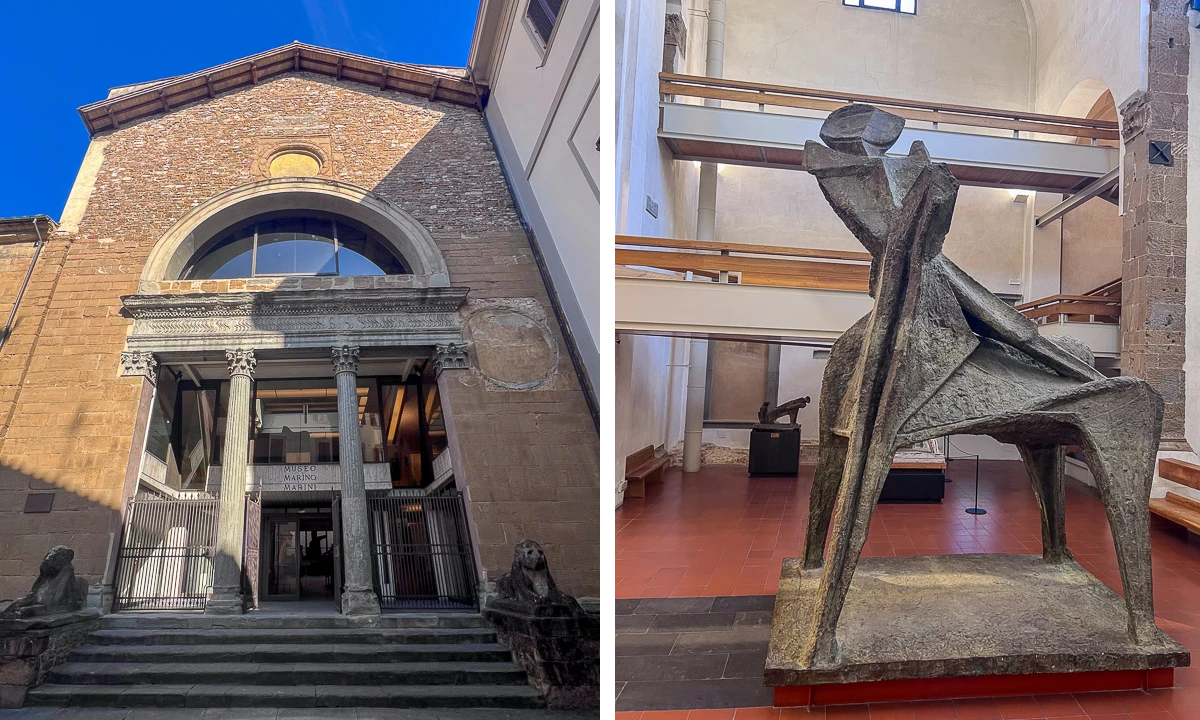
Even if you don’t know anything about the artist, you’ll appreciate the cleverly designed space with multiple viewpoints that let you take in the three dimensional bronze sculptures from their best angles and in the best light.
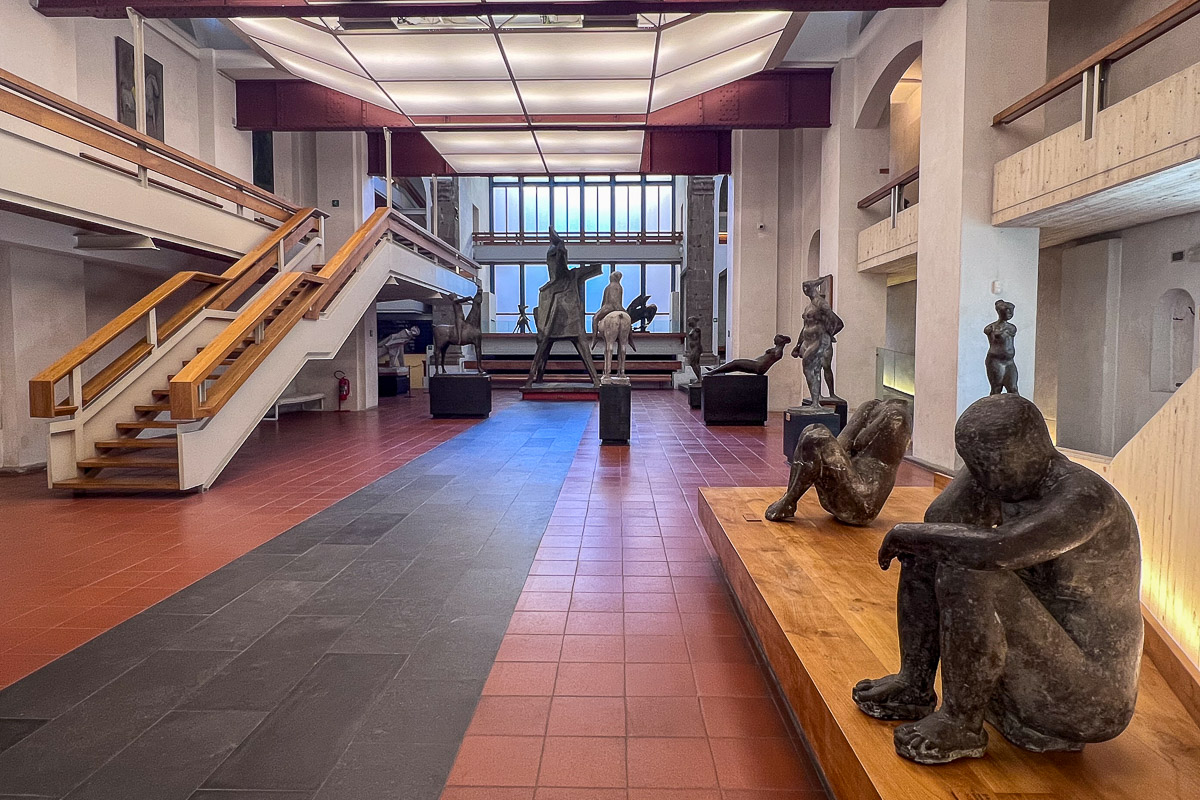
Famous all over the world for his “horses and knights”, Marini was also fond of dancers and jugglers which he also immortalized in paintings and drawings. A fascinating introduction to a new artist (well for me) and a striking building.
Head back to Santa Trinita bridge in time for sunset if you can. The central location gives you the best view, at once of the pink sky looking out west…
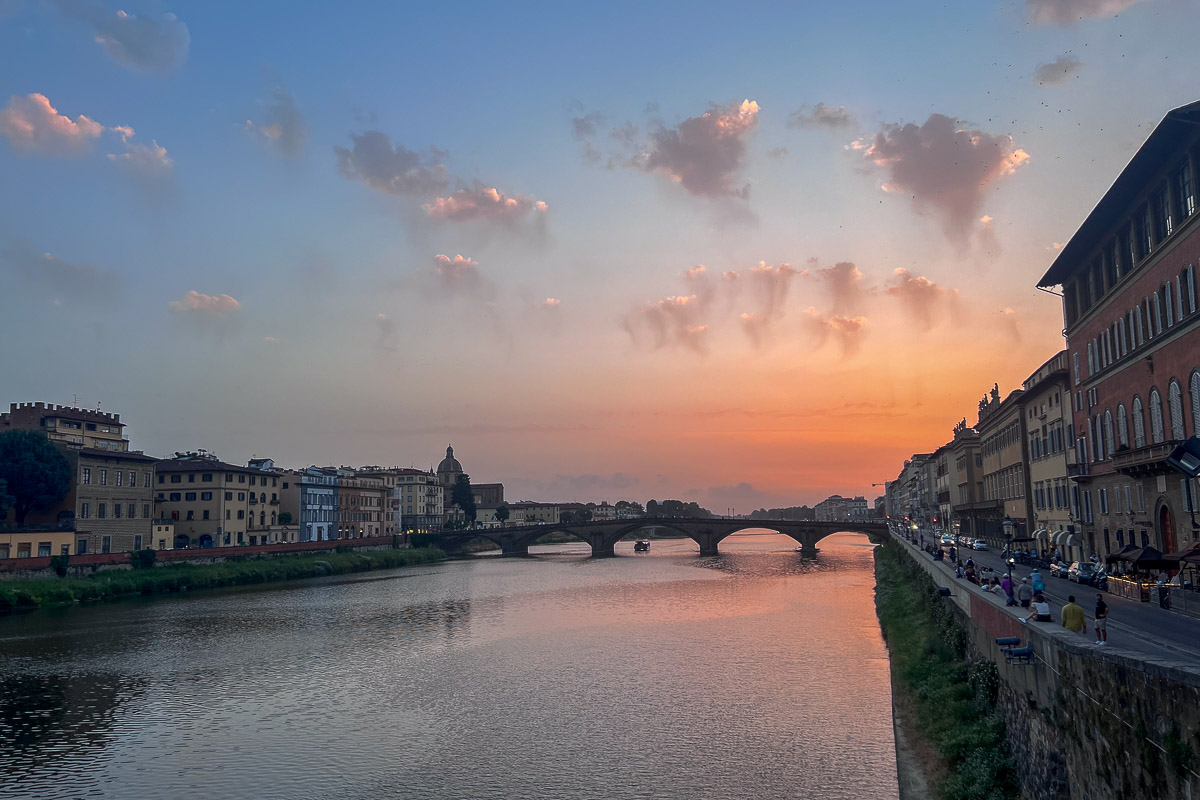
…and of the Ponte Vecchio at dusk if you just turn your head east.