Like many other New York neighborhoods, Astoria in Queens is a multi-ethnic melting pot where old-school Italian delis share the sidewalks with Middle Eastern shawarma stands and hip cafes selling kale sandwiches and smoothies. What makes Astoria special though is the concentration of Greek tavernas unseen anywhere else, a culinary core that sits like a welcoming Greek archipelago in the middle of the city’s international food scene.
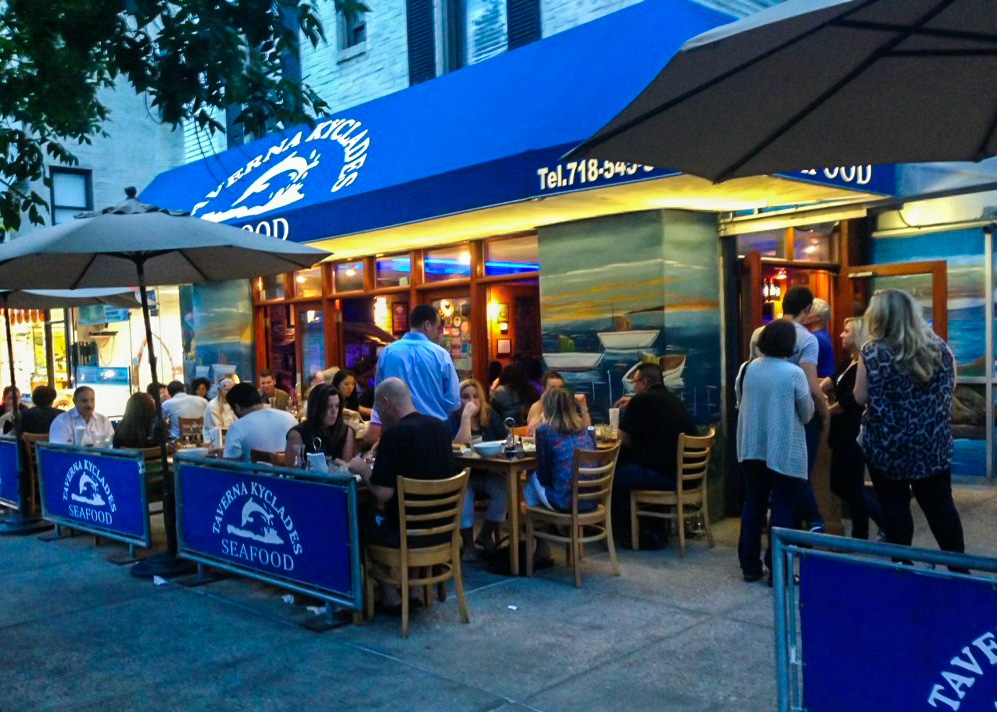
Stepping off the N train, you could almost walk into just about any restaurant and expect to find a nice display of flaky phyllo pastries or a sizzling grill with octopus curling up so perfectly. While there are more Greek establishments than you can shake a stick at, there’s truly one king reigning over the isles over there and it’s Taverna Kyclades.
The lively seafood staple has been drawing crowds to the neighborhood and is as famous for his fish as for his long waits for a table. I was lucky enough to be accompanied by a local friend and regular customer which got us to skip the line altogether and be seated immediately (the clubby community is part of the charm…J). Peak nights will have you easily wait for an hour or two so come prepared and enjoy the bustling spectacle of the rushing servers passing by with plates filled with some of the best grilled seafood you’ll eat this far of the Cyclades.
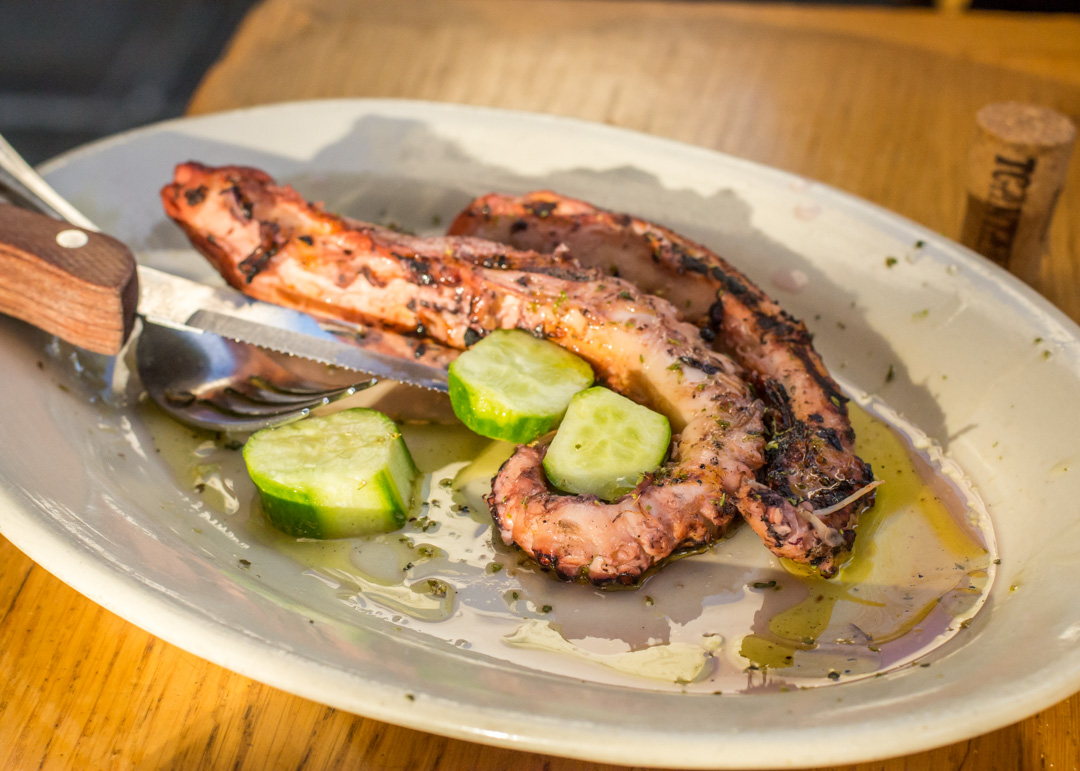
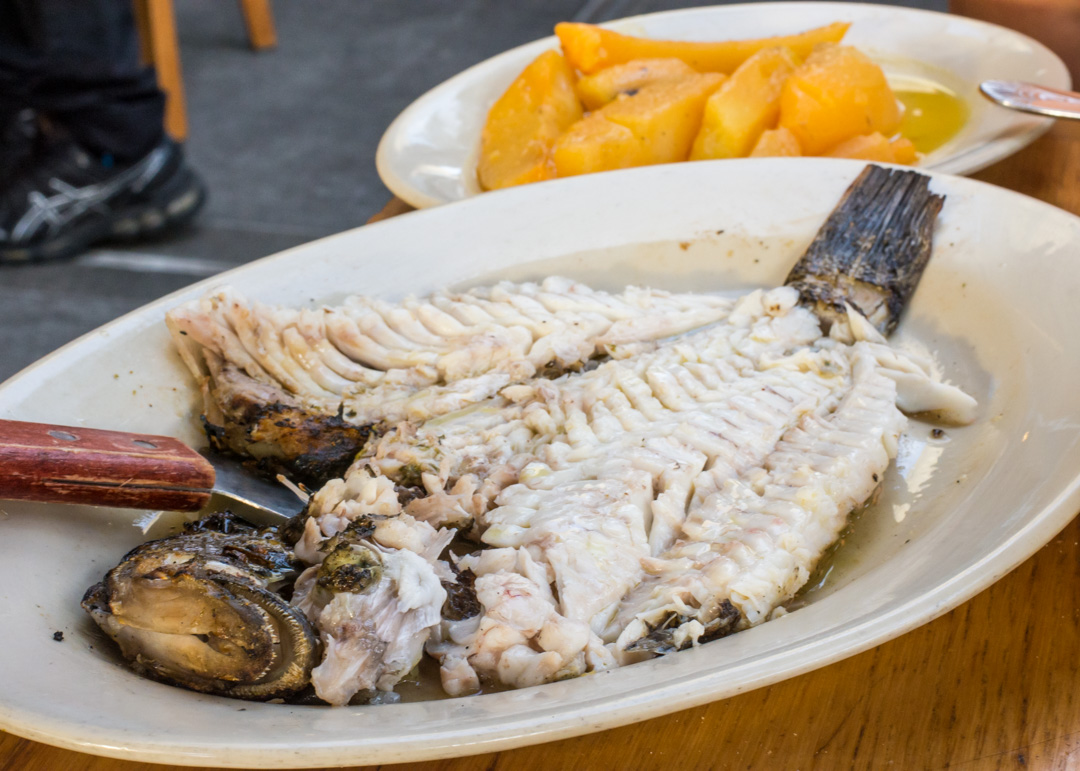
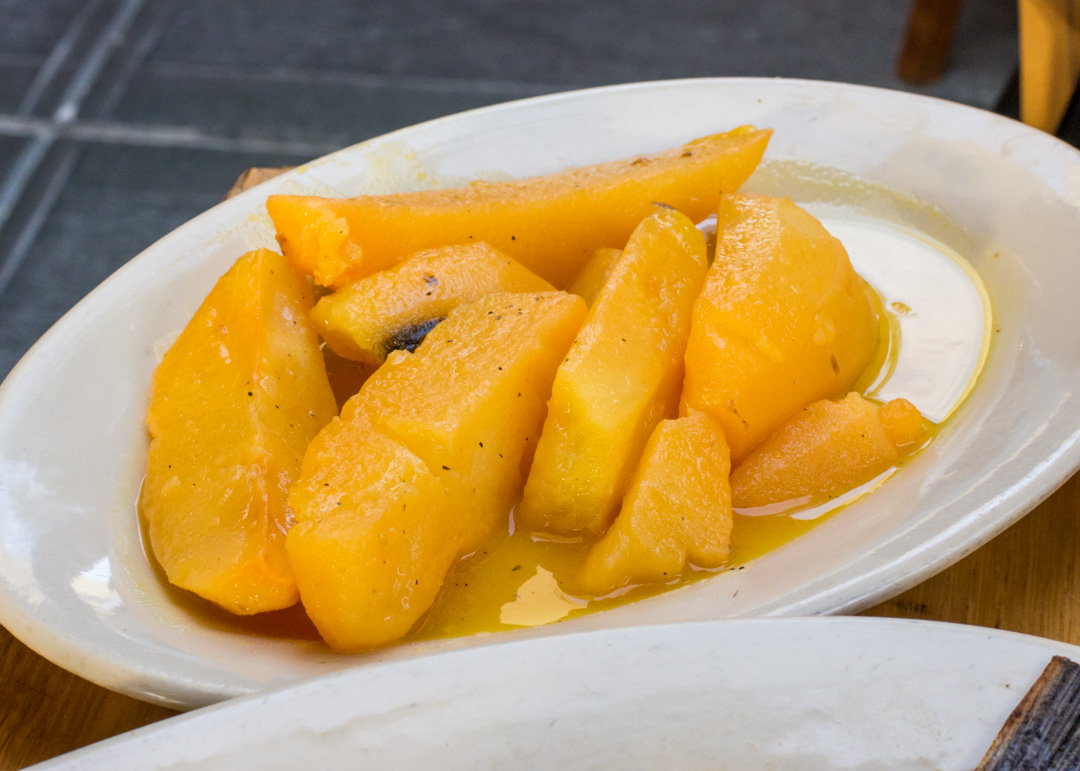
The menu is your straightforward Greek specialties and a few traditional items have gained cult status for their exquisite preparations. Don’t even dare coming here without getting the standout grilled octopus, as tender as a filet mignon, and the lemon potatoes to accompany your main. The spuds are cooked until super soft then doused in lots of lemons, the acidity brightening up the humble starch to new heights. The simplest dishes are the best so we ordered a whole grilled sea bass, lightly drizzled with olive oil and a sprinkling of herbs, so sweet and moist it barely needed anything at all.
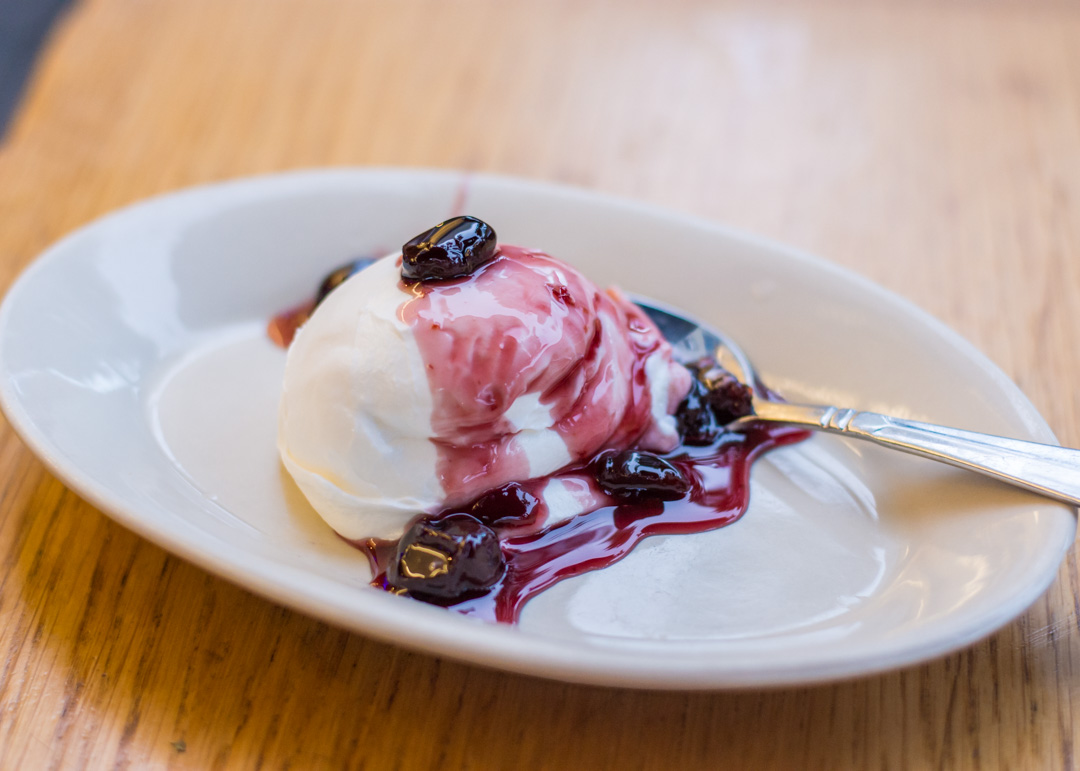
All meals end with a complimentary dessert which I imagine changes regularly though we loved our Greek yogurt topped with sour cherry preserves. There’s no lingering here as people are waiting (and Ditmars Boulevard is definitely not a match to Santorini’s seaside sunsets!) but the service and the food more than make up for any wait, trek, and noise you might have had to deal with. If you don’t feel like riding the N train all the way, note that they opened a second, identical restaurant in the East Village but the true vibe remains in Astoria…
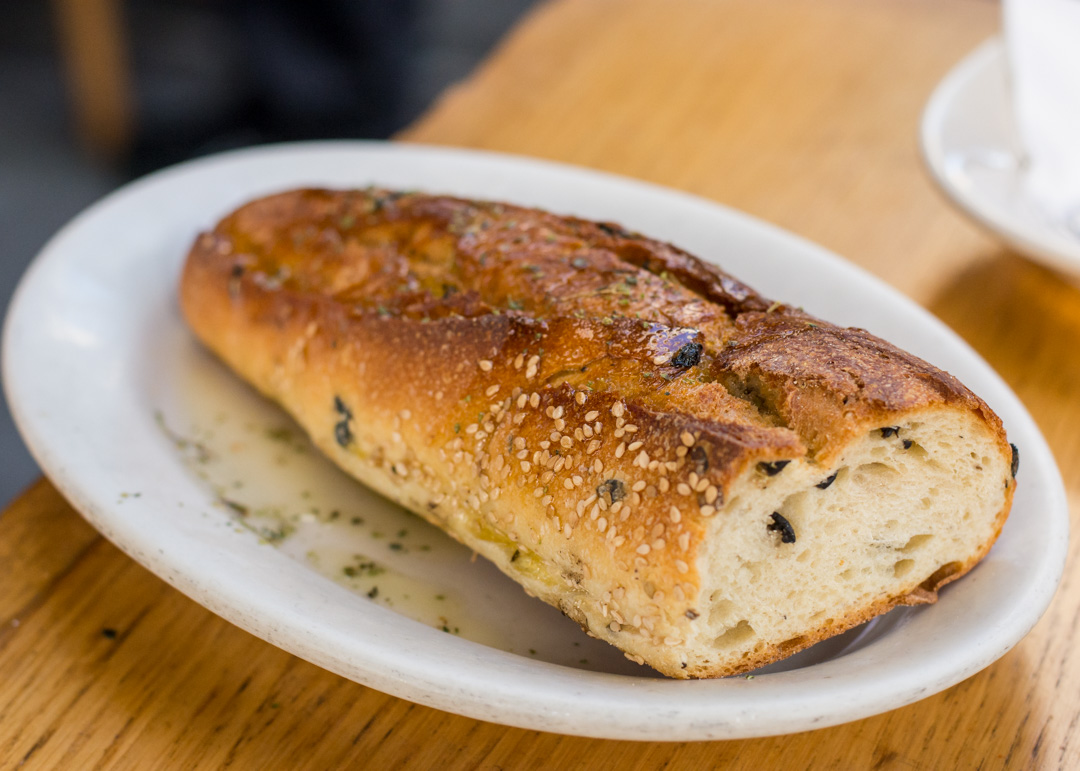
Complimentary oregano bread, hot and crusty and doused in olive oil
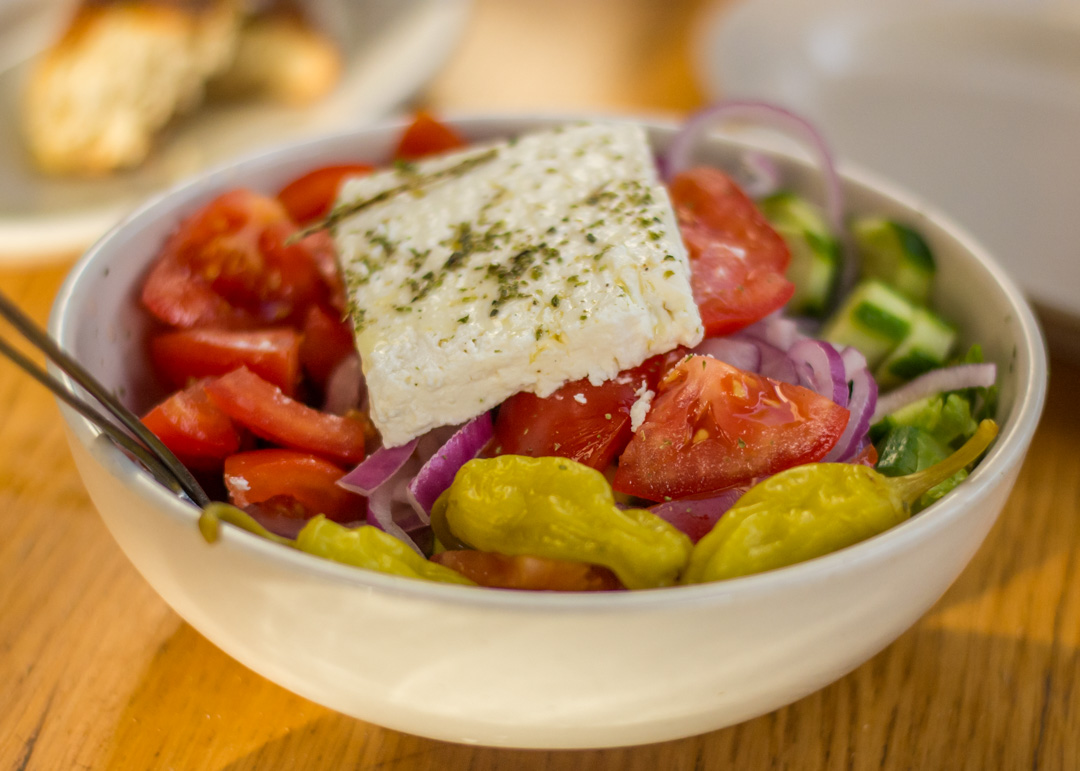
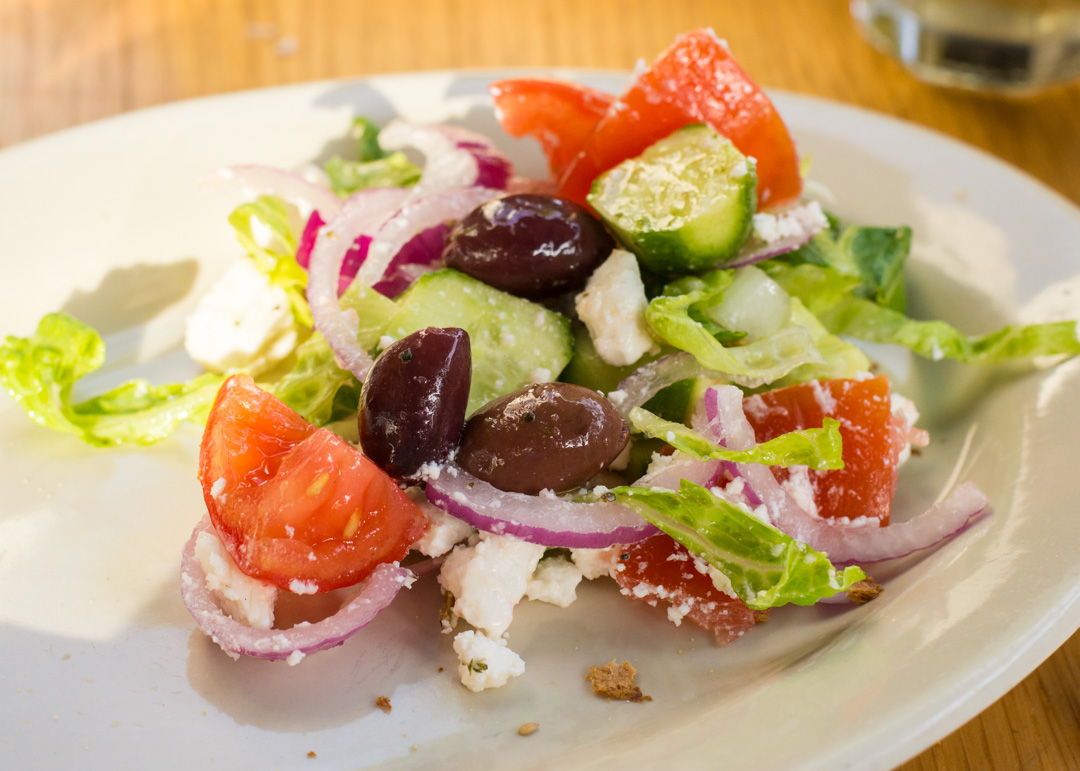
Greek salad
Grilled octopus
Grilled Sea Bass
The famous lemon potatoes
Complimentary dessert of Greek yogurt with sour cherry preserves
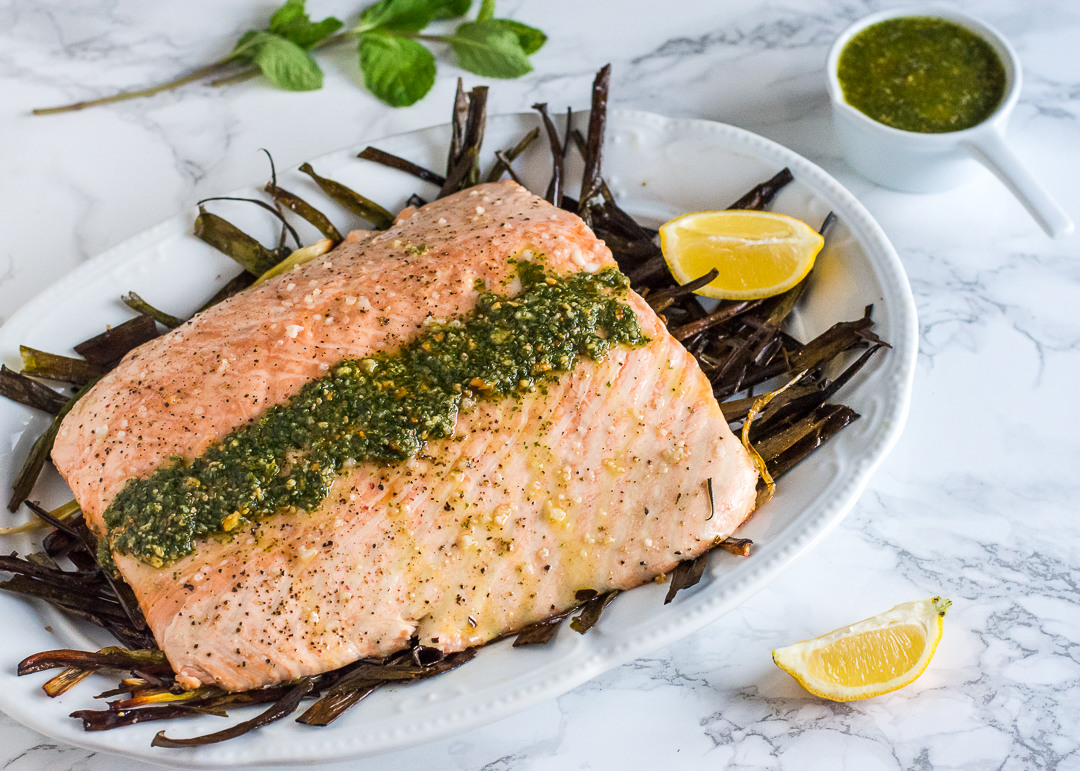
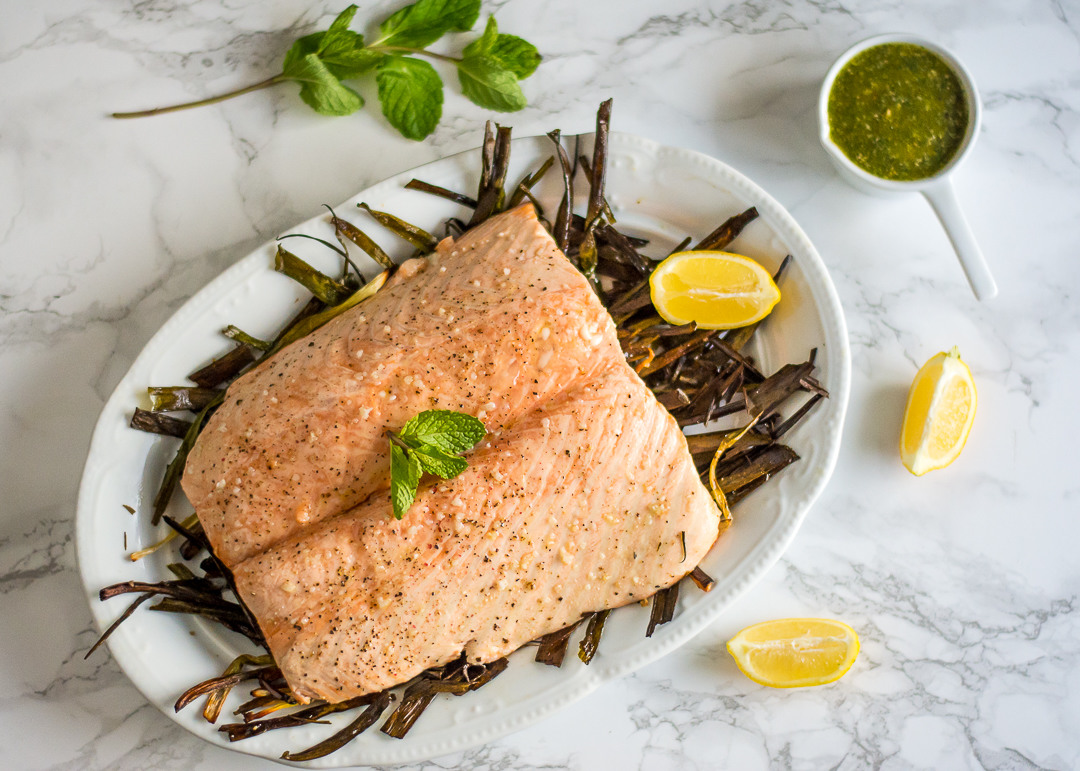
We’ve all been told to eat more fish and salmon is usually on top of everyone’s list, its versatility and ‘idiot-proof’ factor making it a favorite of weeknight dinner meals. It’s easy to fall into a boring routine of baked salmon with a side of veggies though so I make sure to try a new recipe at least every month. Since my love of pesto is almost as big as my love for the fatty fish, this Roasted Salmon with Mint-Caper Pesto from Martha Stewart made it into this month’s menu quite easily!
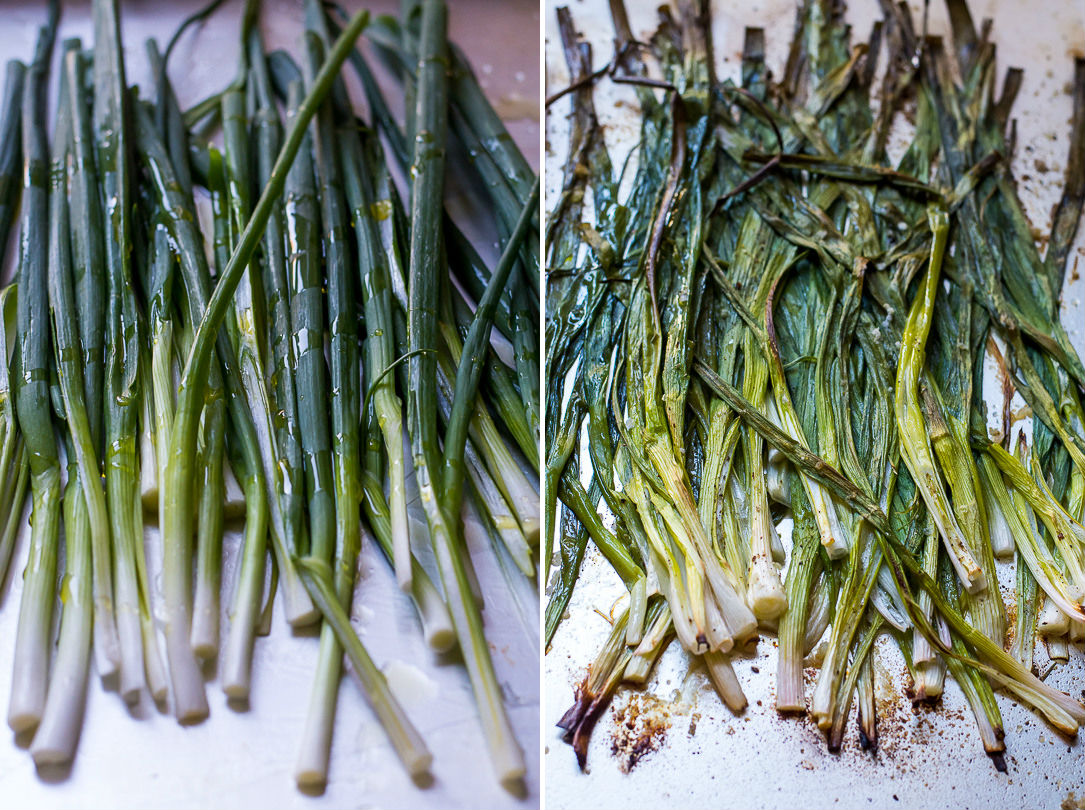
Roasted spring onions form a tasty nest for baking the salmon and add a nice textural contrast. For even better flavor you could swap them for baby leeks or fresh ramps in springtime.
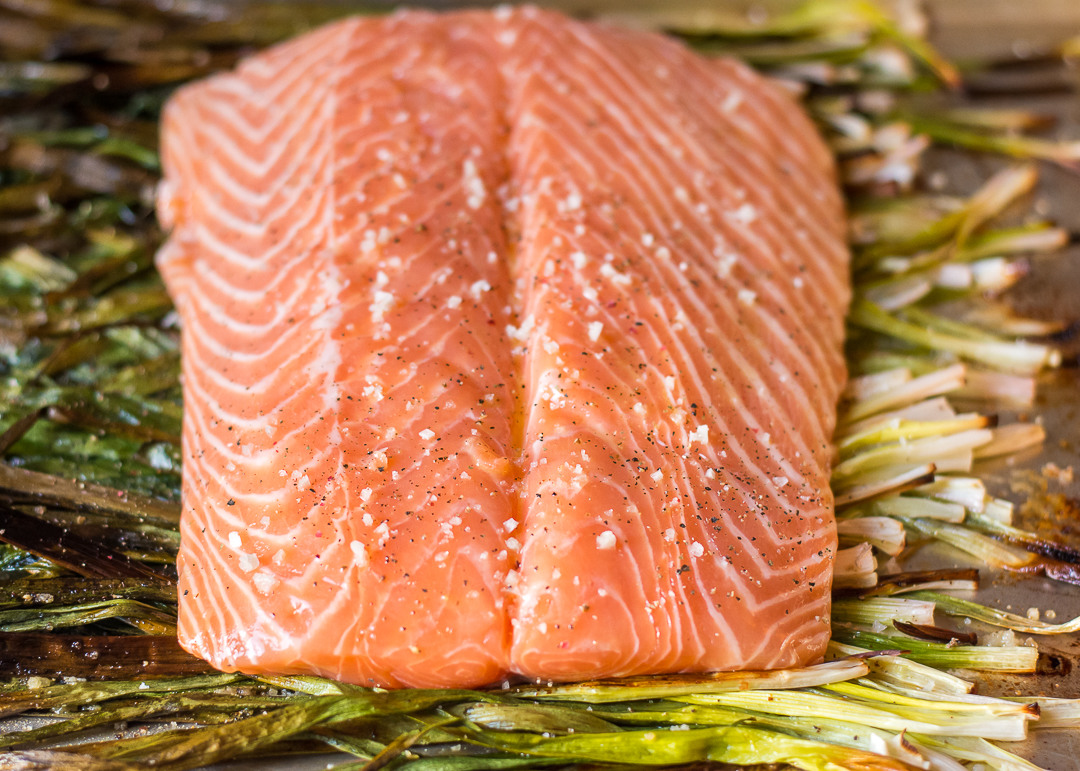
Just some coarse salt and freshly ground pepper is all that’s needed to roast this gorgeous fillet.
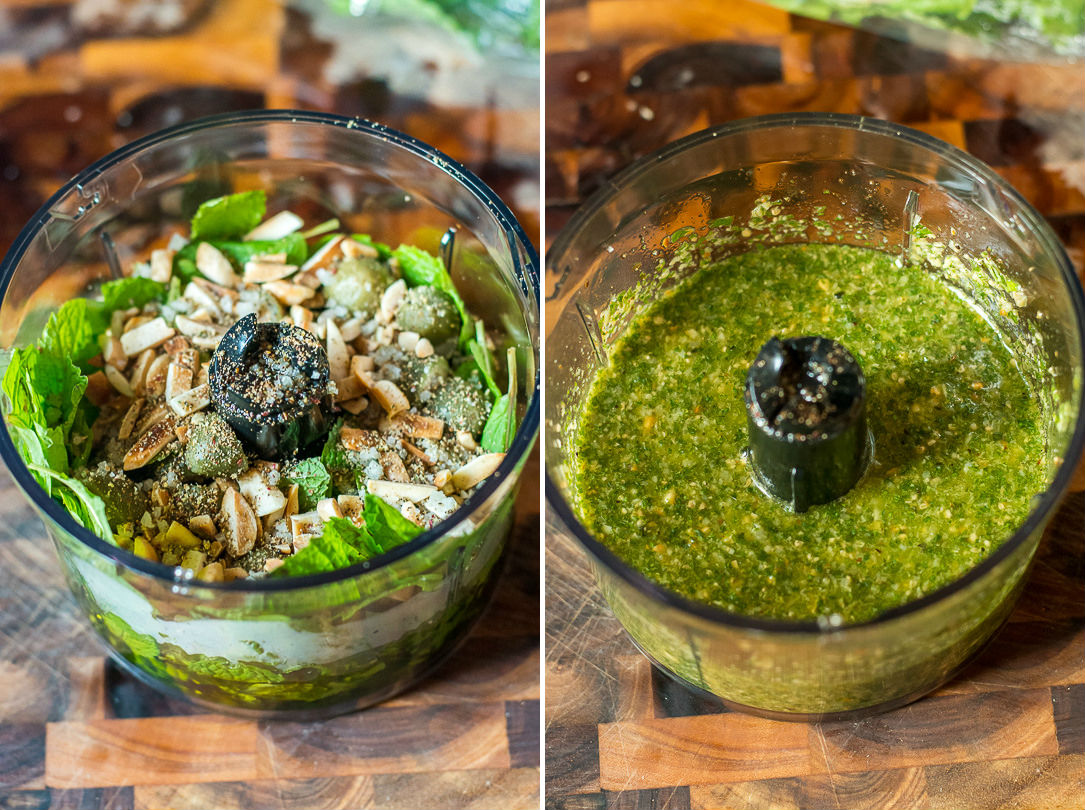
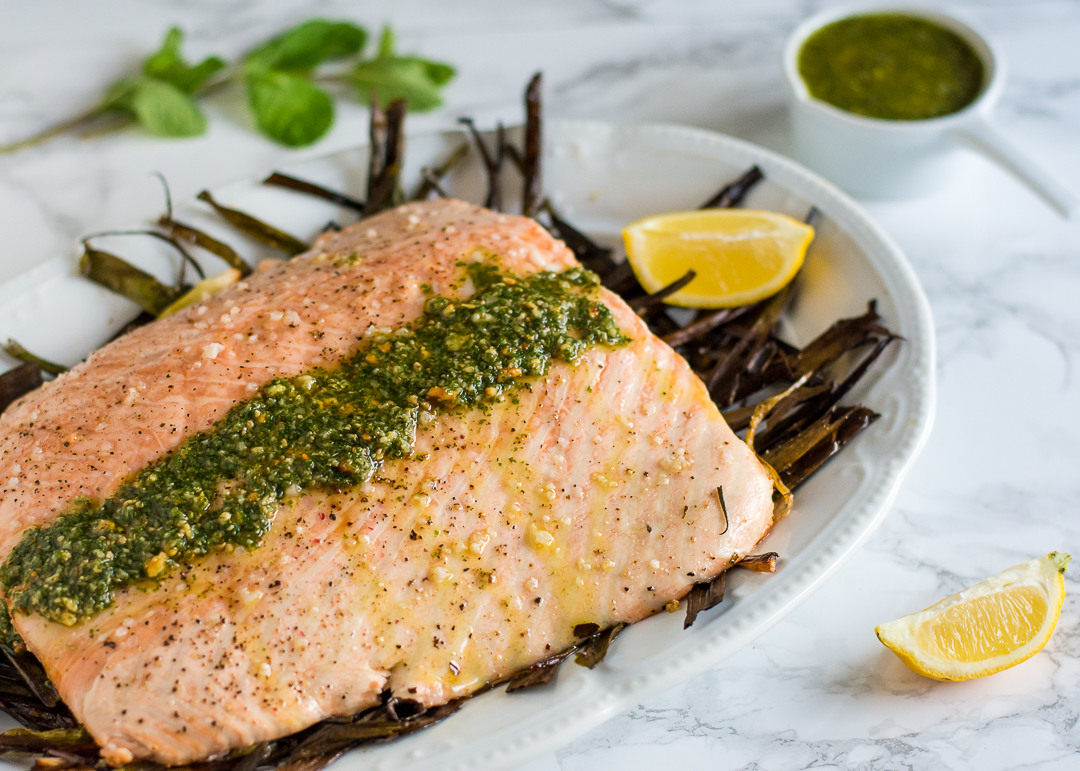
While the salmon cooks, prepare the minty pesto. This version is a deliciously refreshing take on the traditional basil blend with capers adding a sharp and salty flavor – a great match for the buttery salmon.
It’s sophisticated enough to be presented on a serving platter while retaining a rustic chic air – perfect for impromptu visitors. Serve with the pesto and lemon wedges on the side…
…or let the pesto do a bit of magical seasoning before slicing the salmon. Steamed veggies or simple pasta would make great side dishes if you wanted to add more components.
Beyond the shores of Malta’s main island you can find two more equally fascinating sceneries to explore in the shape of Gozo and Comino. A brief visit to both of these small islands, literally a stone throw from Malta, is the perfect way to get all the wonderful facets of this idyllic Mediterranean archipelago and an extra dose of surf and sun.
Regular ferries to both islands leave from the northern tip of Malta for the 25 min trip so up to you to decide which one you wish to visit first, though I would tend to suggest you start your day with tiny Comino.
Size really doesn’t matter here as the 3.5 square kilometers island packs a punch in terms of beauty. Car-free and almost uninhabited (only one family of farmers lives on the island), Comino is a picture-perfect vision in aquamarine.
You can in an hour or two to walk around the island, your hair whipped by the strong coastal winds and your nostrils filled with the smell of cumin which gave the island its name…
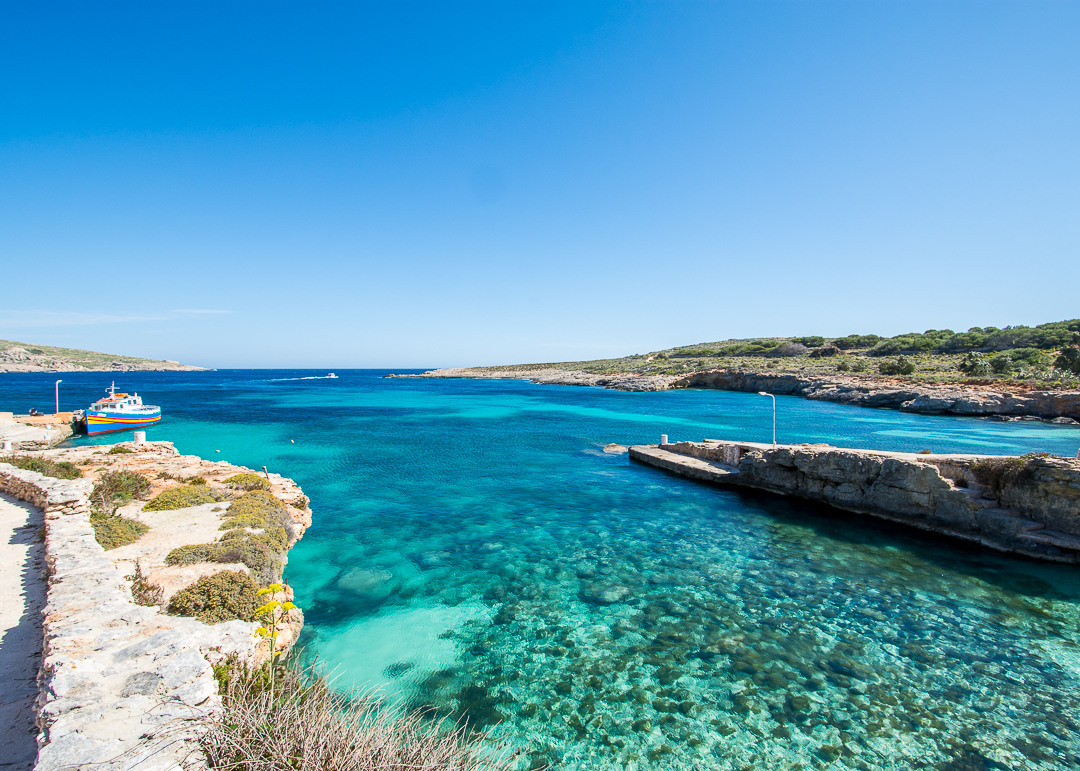
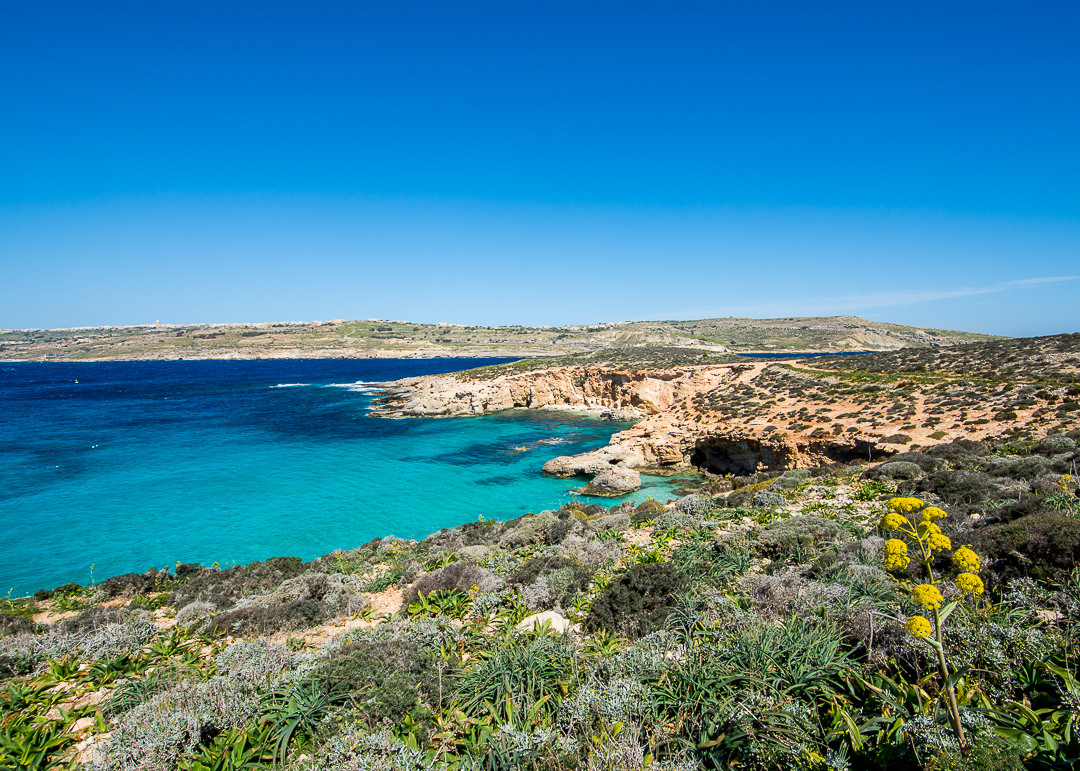
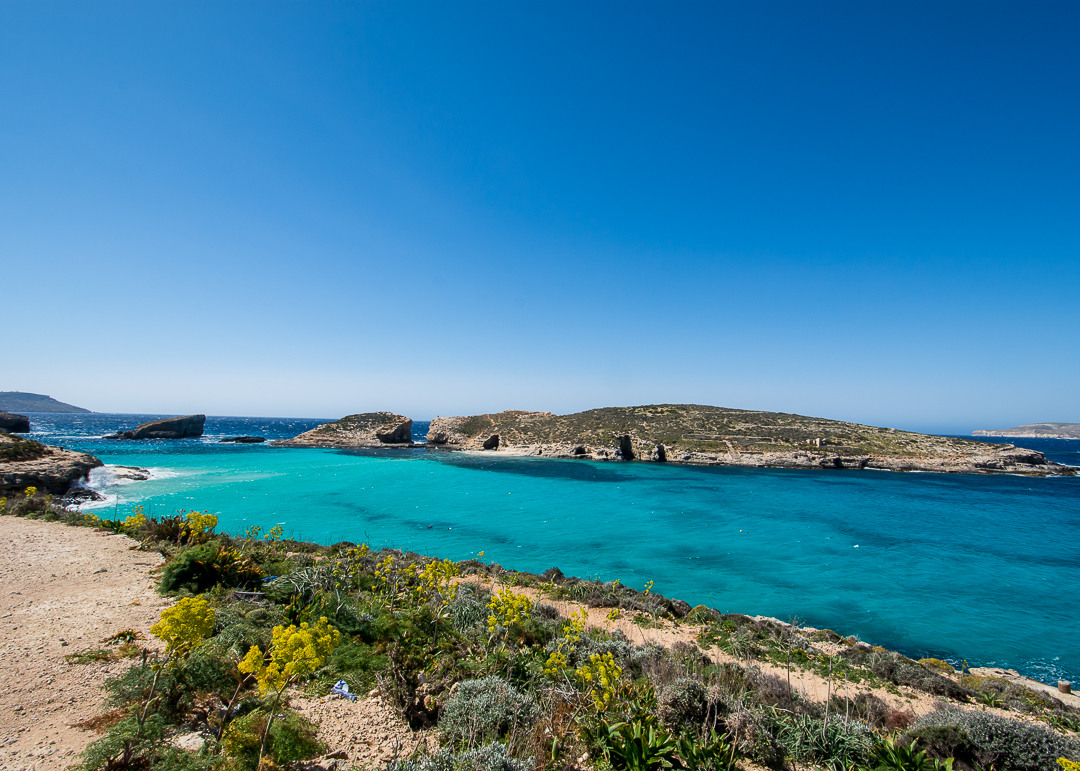
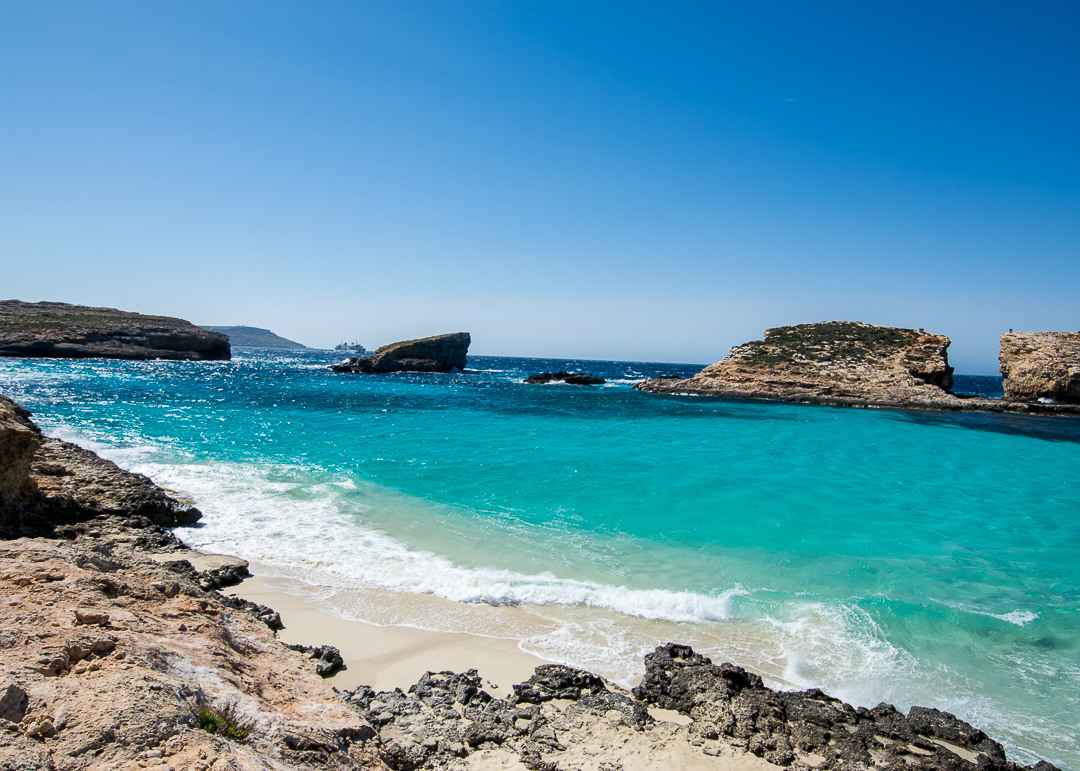
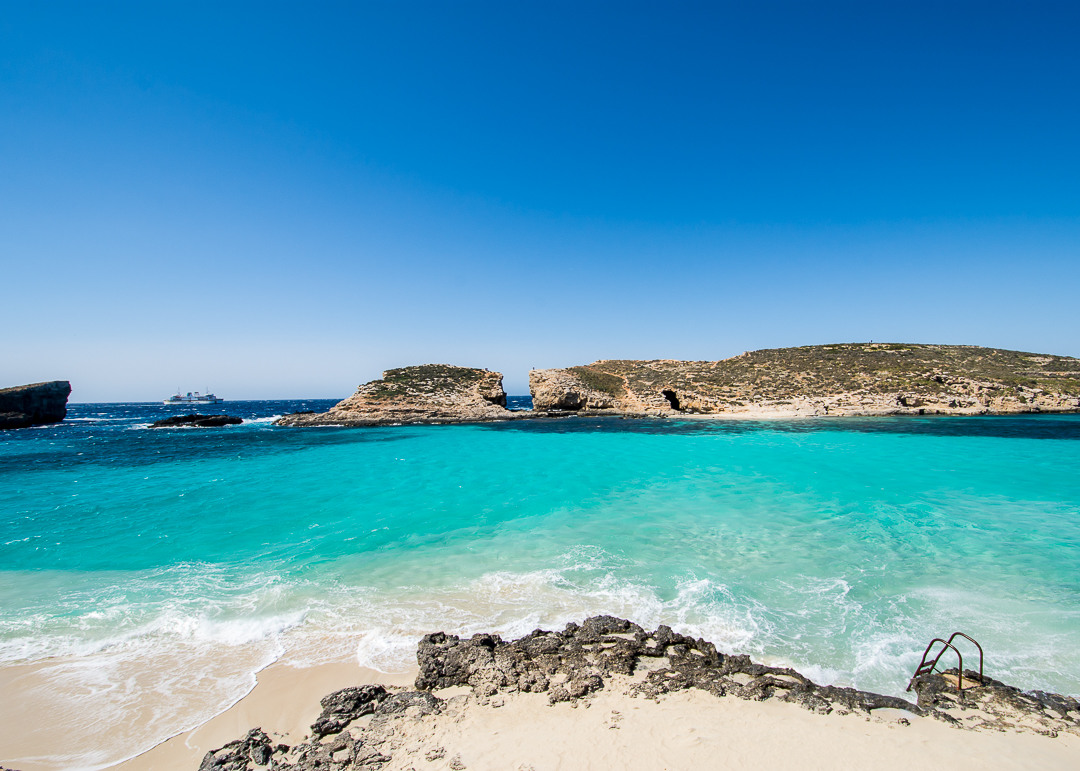
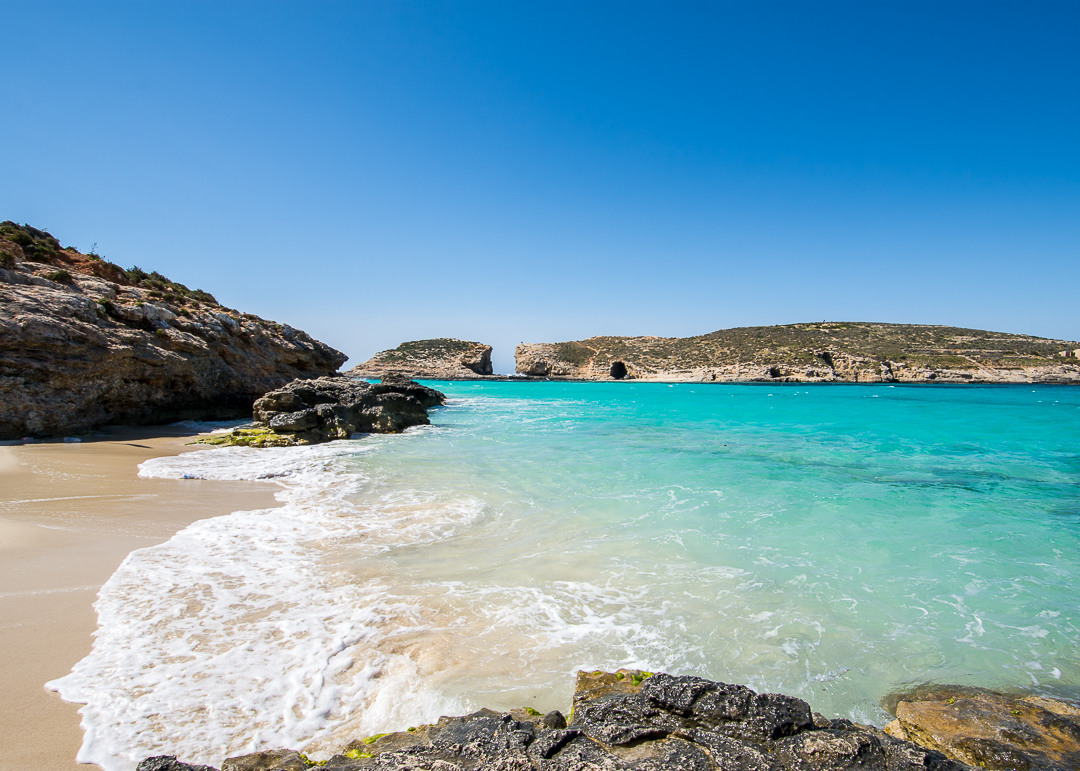
…though you’ll probably do like every visitor here and head straight to the island’s main attraction – the magical Blue Lagoon.
Crystal clear turquoise waters in a sheltered inlet look like the most beautiful of natural pools and are ideal for snorkeling and swimming. No wonder this is one of the best beaches in Malta.
In the high season it’ll quickly fill up with hundreds of day-trippers and make-shift snack bars so an early visit is recommended to enjoy the amazing views in peace and quiet.
If you have time, think of packing a picnic and spending the day soaking up the rays and simply relaxing on the beach – you’ll feel world away from everything and instantly re-energized.
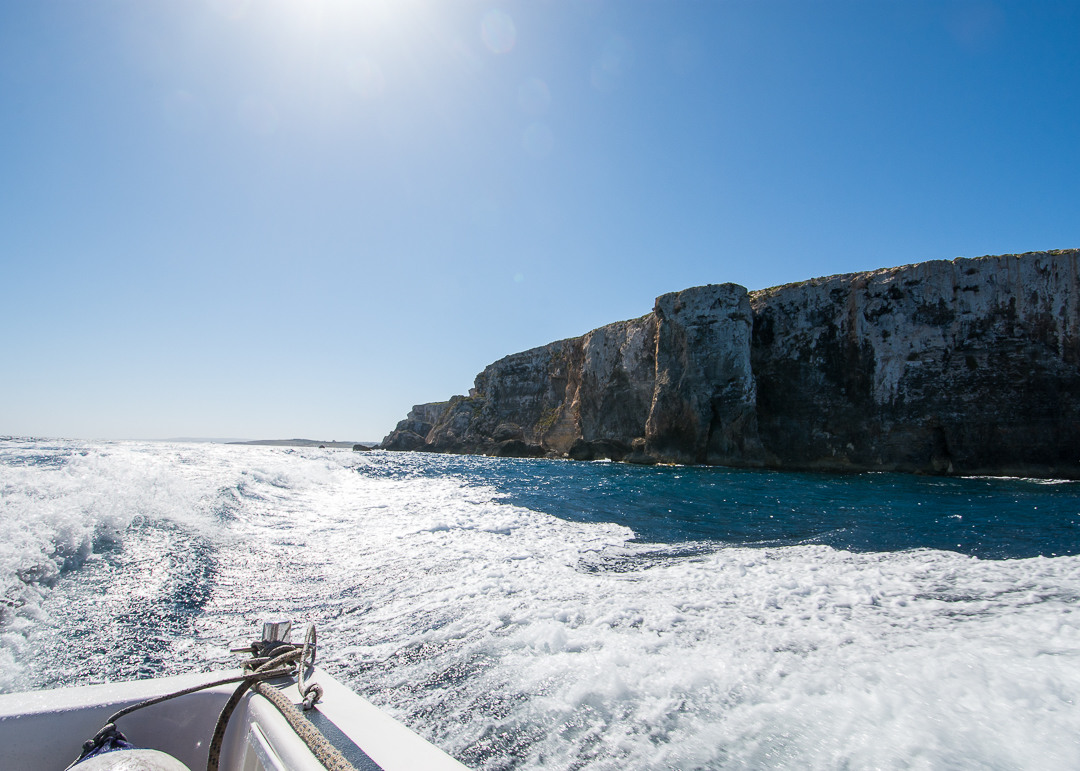
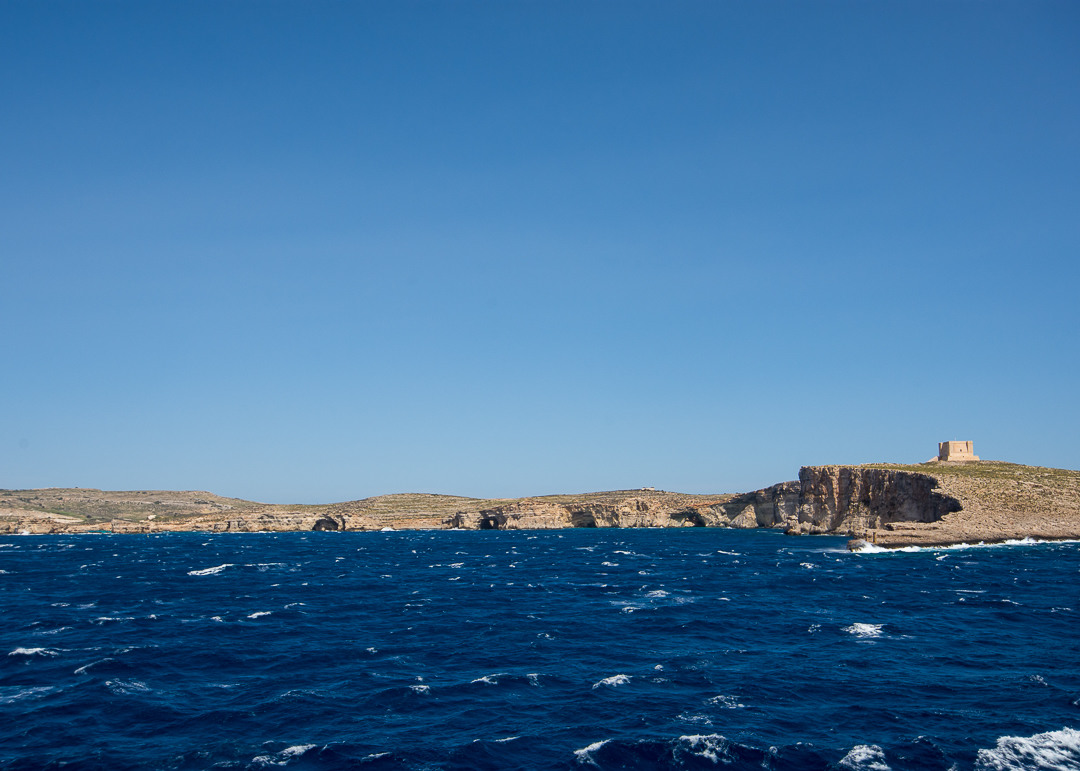
Depending on the day and the season, you can usually hop on a ferry from Comino going straight to Gozo a mere 15 min away, or in low season you might have to go back to the main island to catch the Gozo ferry, not such a big deal. Either way, the short ride along the rugged coast is very pleasant, offering unique views of Comino and the approaching, larger sister of Gozo.
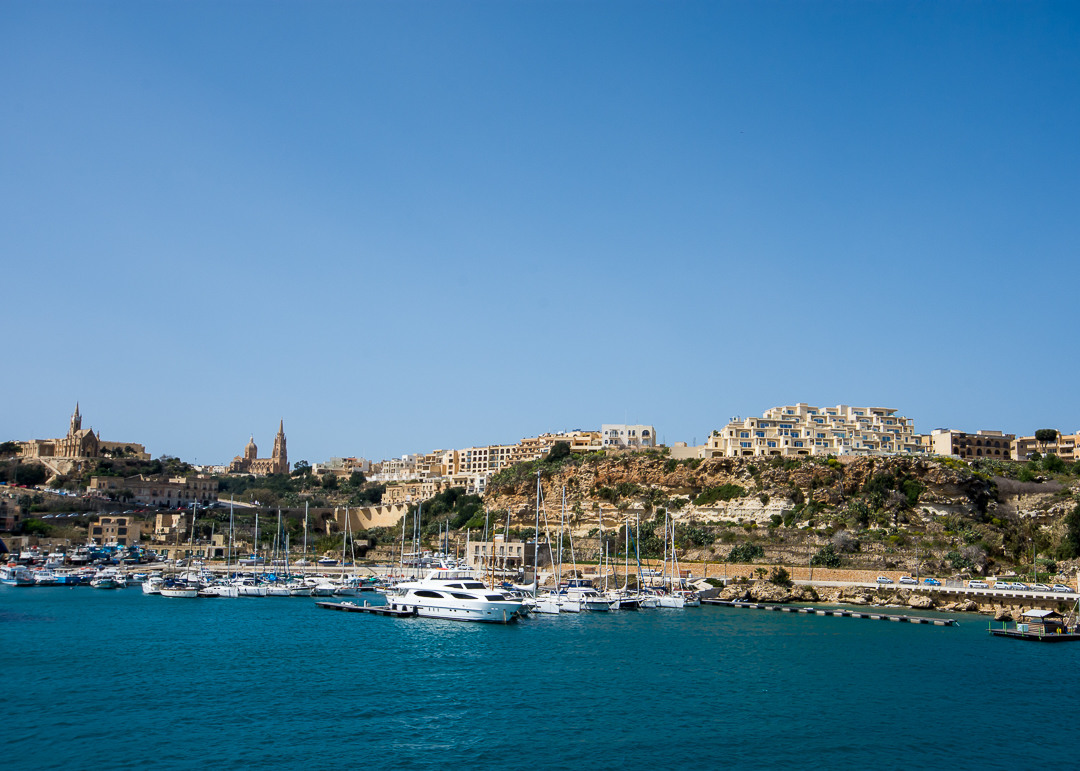
The first view you’ll get is that of the serene Mġarr Harbour where the ferry will drop you off. From here you can either rent a car to tour the island on your own, hop on one of the double-decker tour buses like we did, or use the public transport system if you stay here for more than a day.
Gozo is about a third the size of Malta and as soon as you arrive you’ll notice the slower pace and relaxed atmosphere the island is known for. Slowly make your way to the capital Victoria (also known to locals as ‘Rabat’), a natural start to any visits since all roads seem to lead to or from the city to go to the various sites around the island.
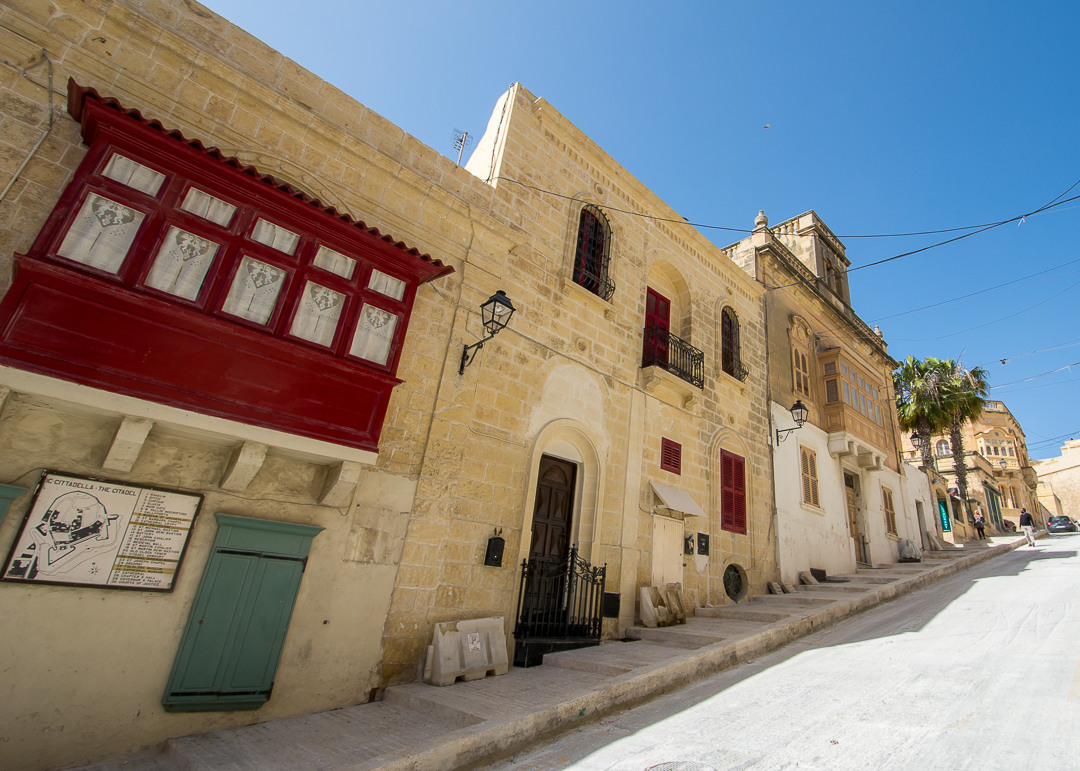
Despite being the largest city on the island, Victoria has the feel of a big village and you’ll want to leisurely explore its streets, stopping at various shops selling local traditional Maltese arts and crafts from lace to blown glass.
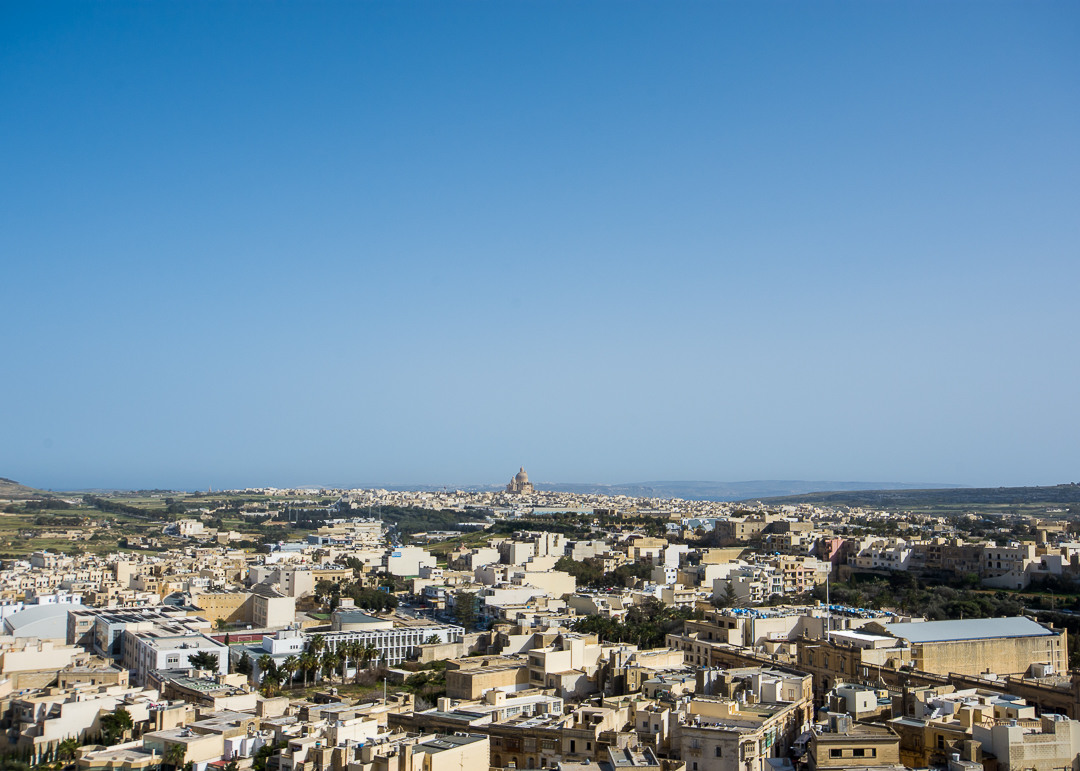
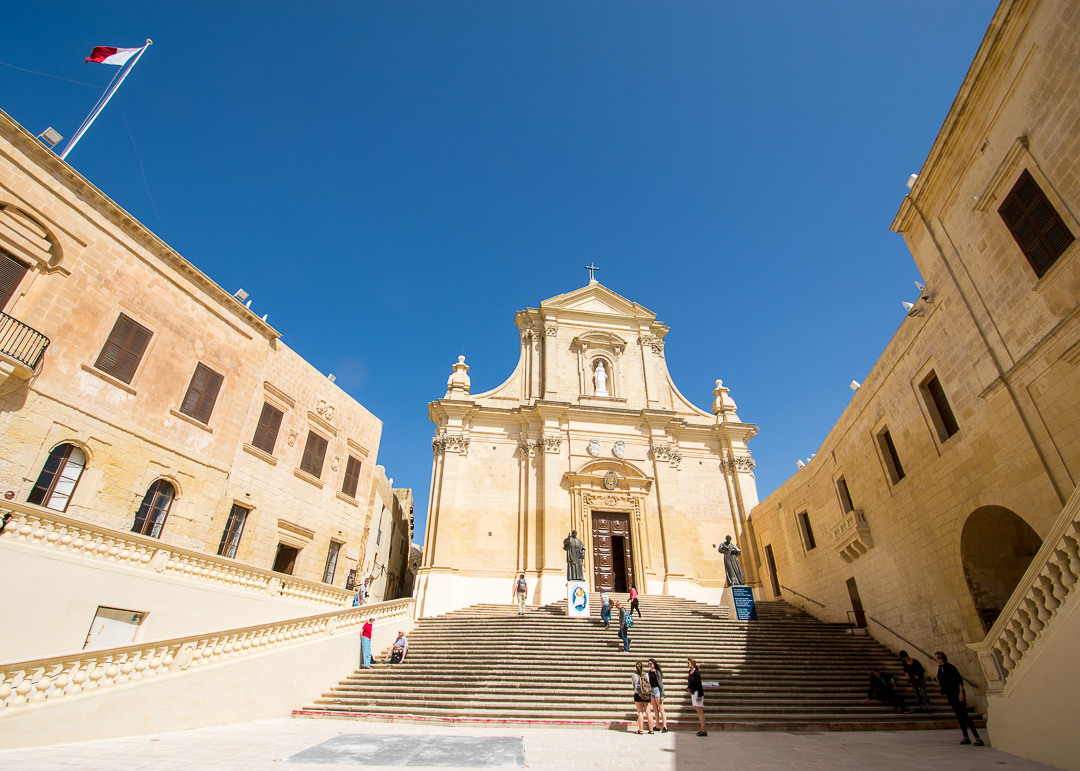
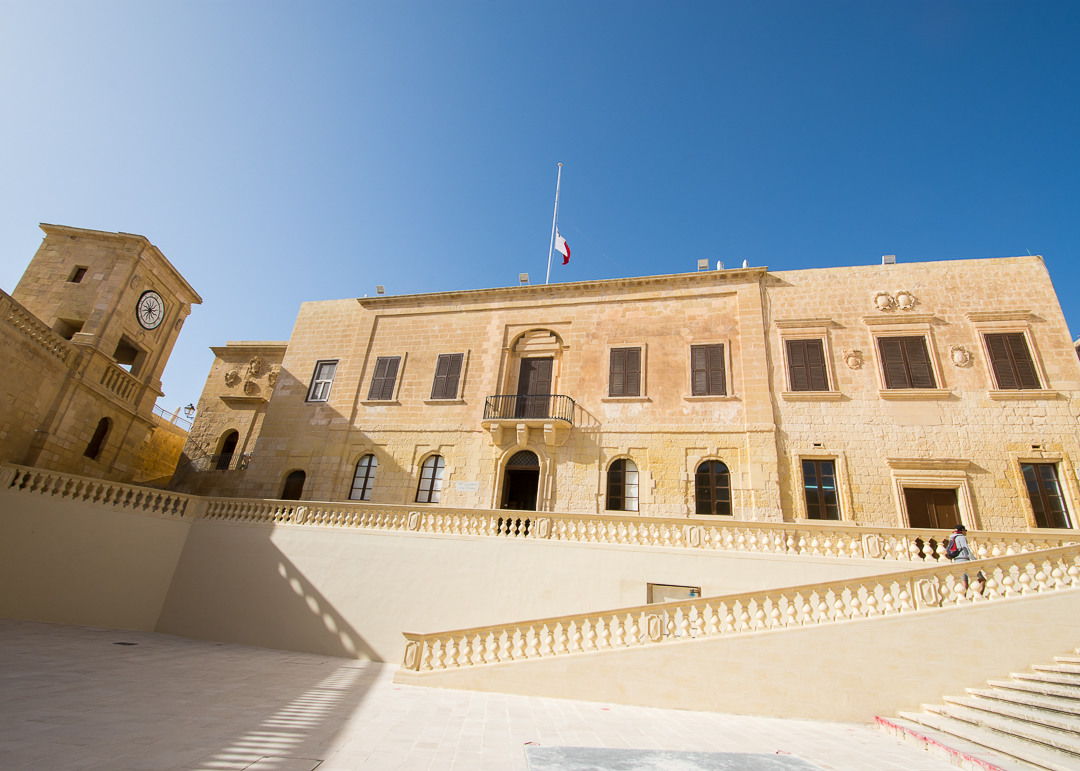
A visit to the Citadel, a small fortified city which rises dramatically over Victoria, should not be missed. Visible from all over the island, the most impressive of all its features is the cathedral which greets you as you enter the walls.
The surrounding buildings now house various museums and the old prisons.
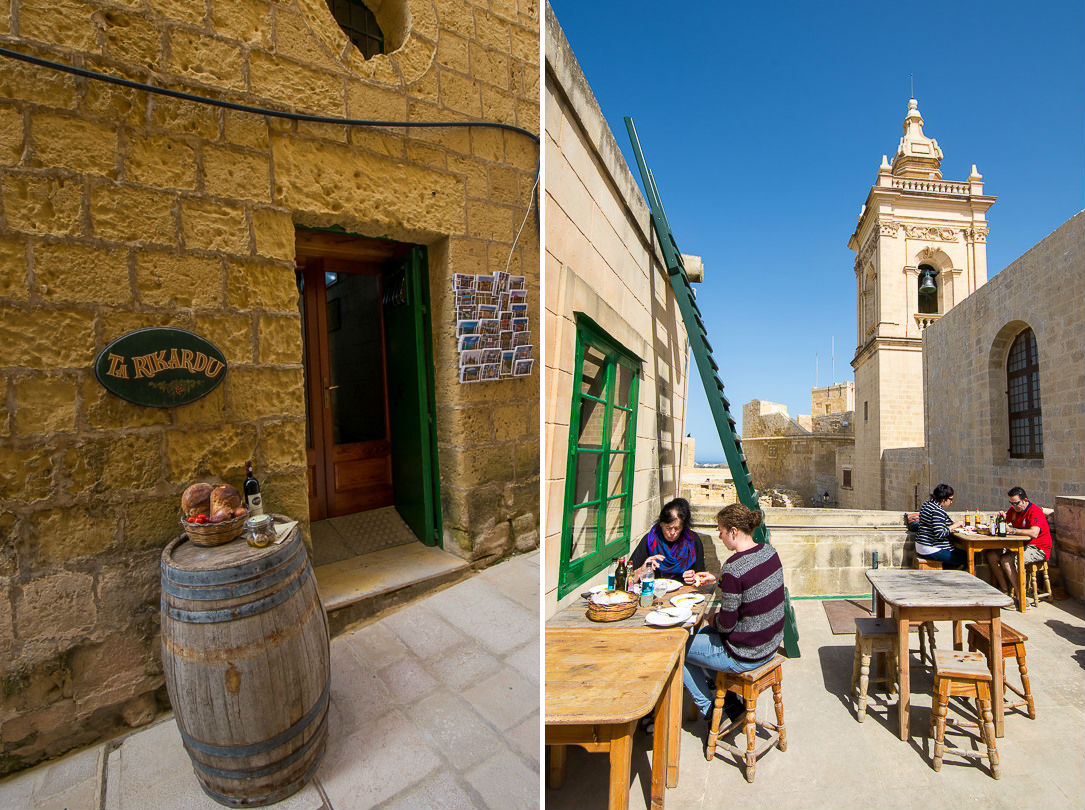
For a local bite with arresting views, it’s good to know that one of the capital’s most famous restaurant is located right besides the cathedral down an alley to the left. Look for the signs to Ta’ Rikardu and climb up the stairs inside to the roof terrace for a Gozo experience like no other.
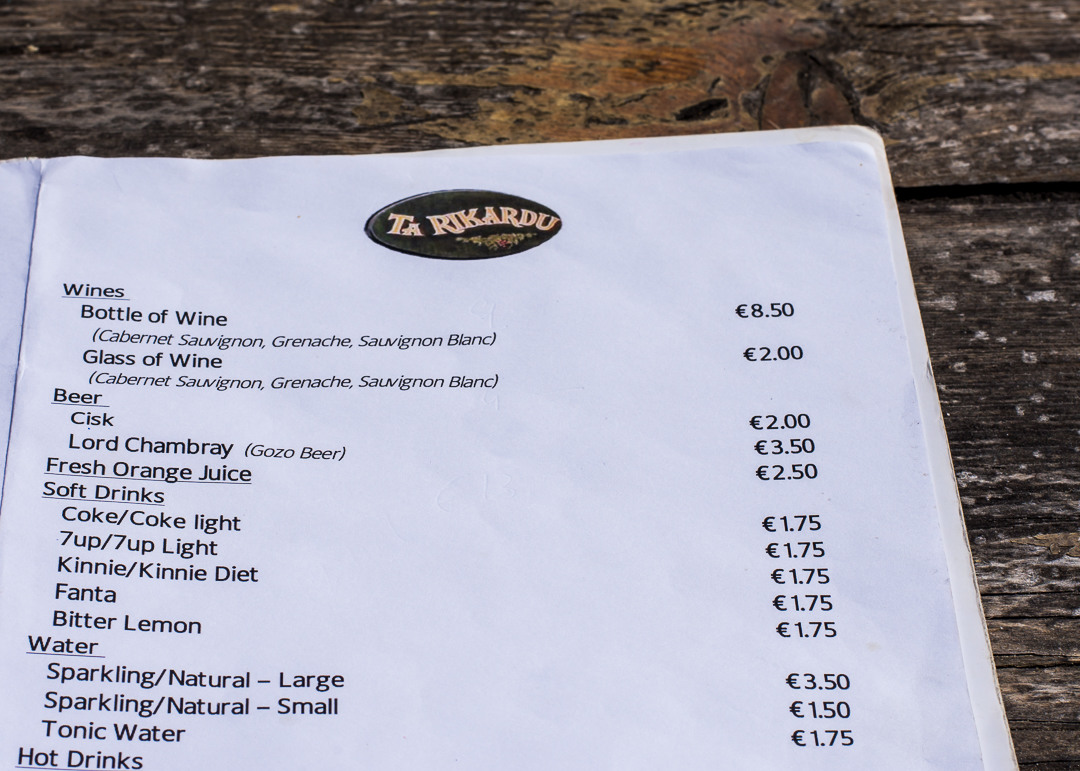
The rustic food as well as the wine are all coming from the owner’s farm nearby and the prices are so gentle you’ll want to spend a while here enjoying the historic setting as much as the Gozitan specialties.
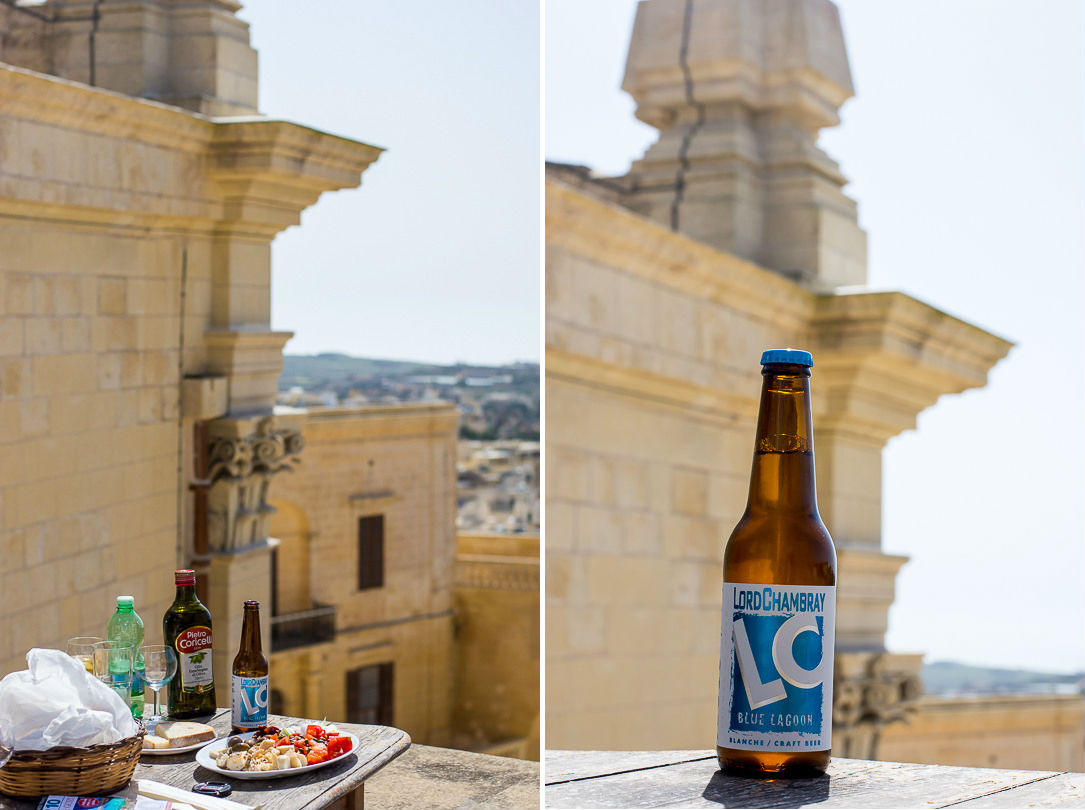
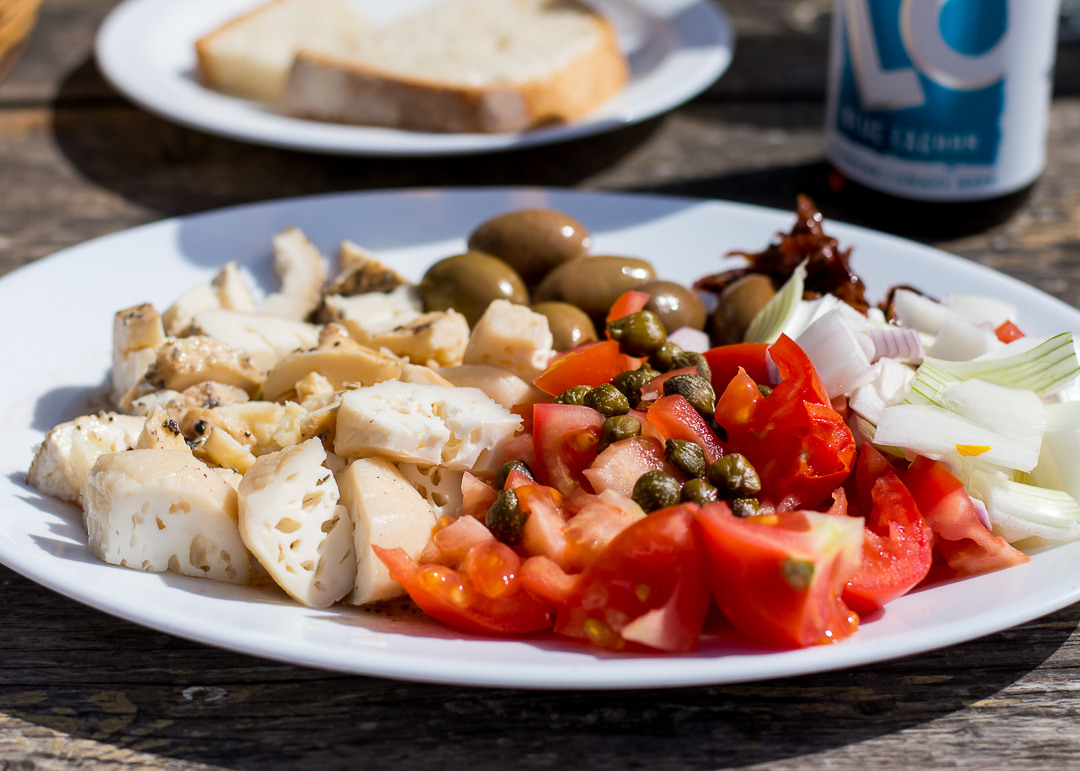
The traditional platter of local cheese, fresh tomatoes, sundried tomatoes, capers, olives, onion, and Maltese bread is fantastic for sharing and is a classic lunch for Gozitans, especially when washed down with a glass of delicious local wine or beer.
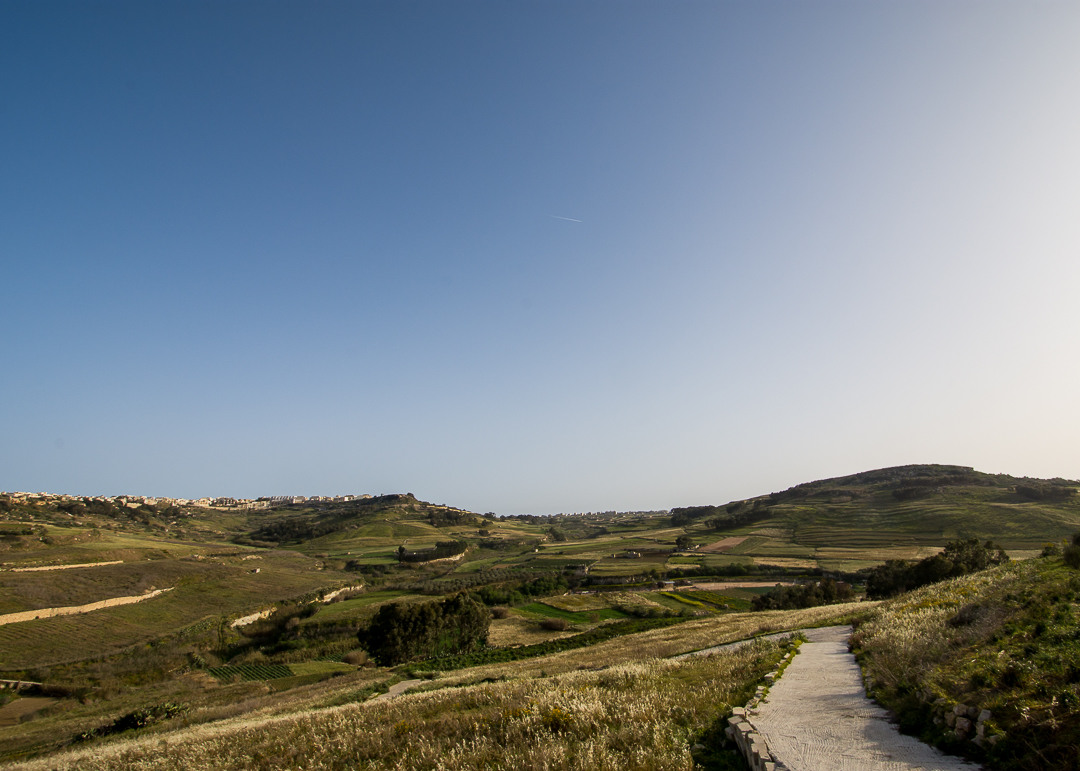
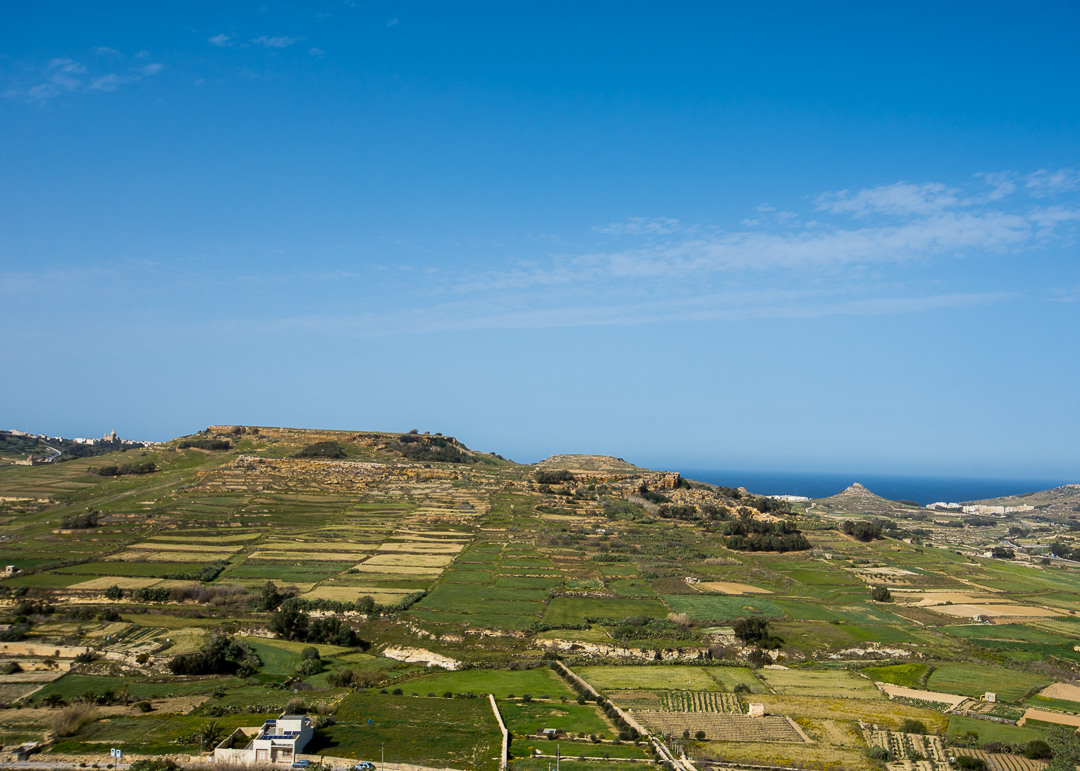
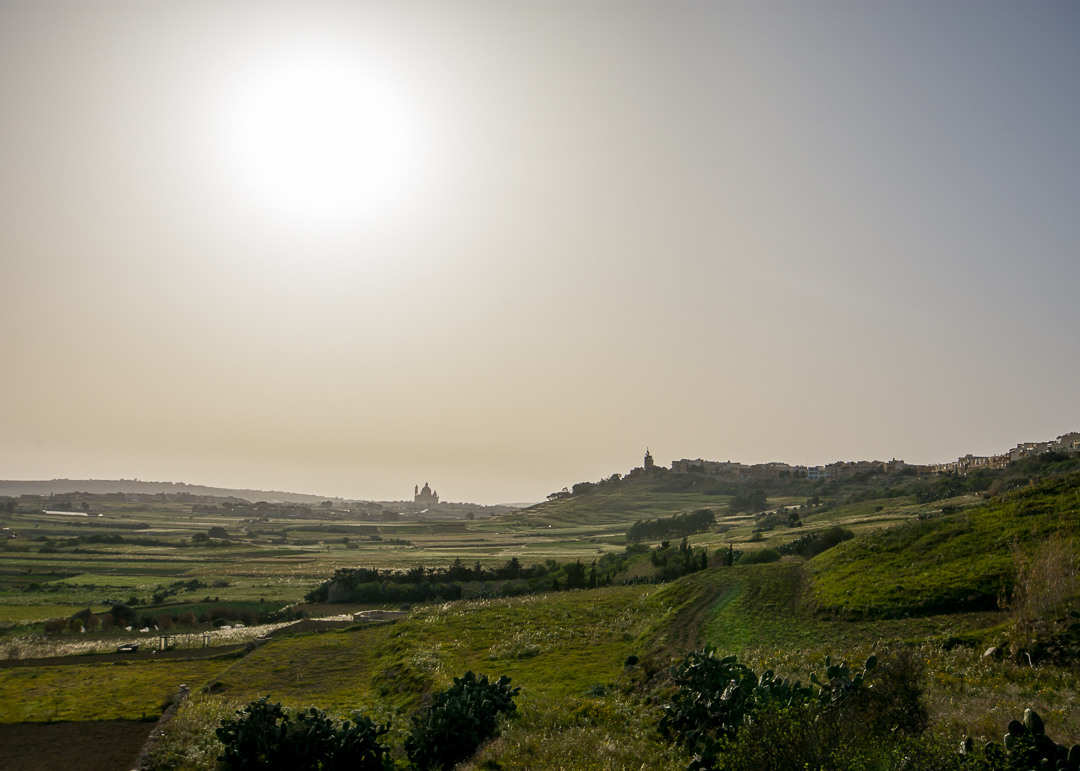
Spend the rest of the day exploring the enchanting country roads winding their way between green flat-topped hills and valleys.
The fertile landscape is a beautiful sight and you’ll see farmhouses so old they led Gozo to be often described as the ‘Island where time stood still’ – an impression you’ll fully agree with after a few hours here.
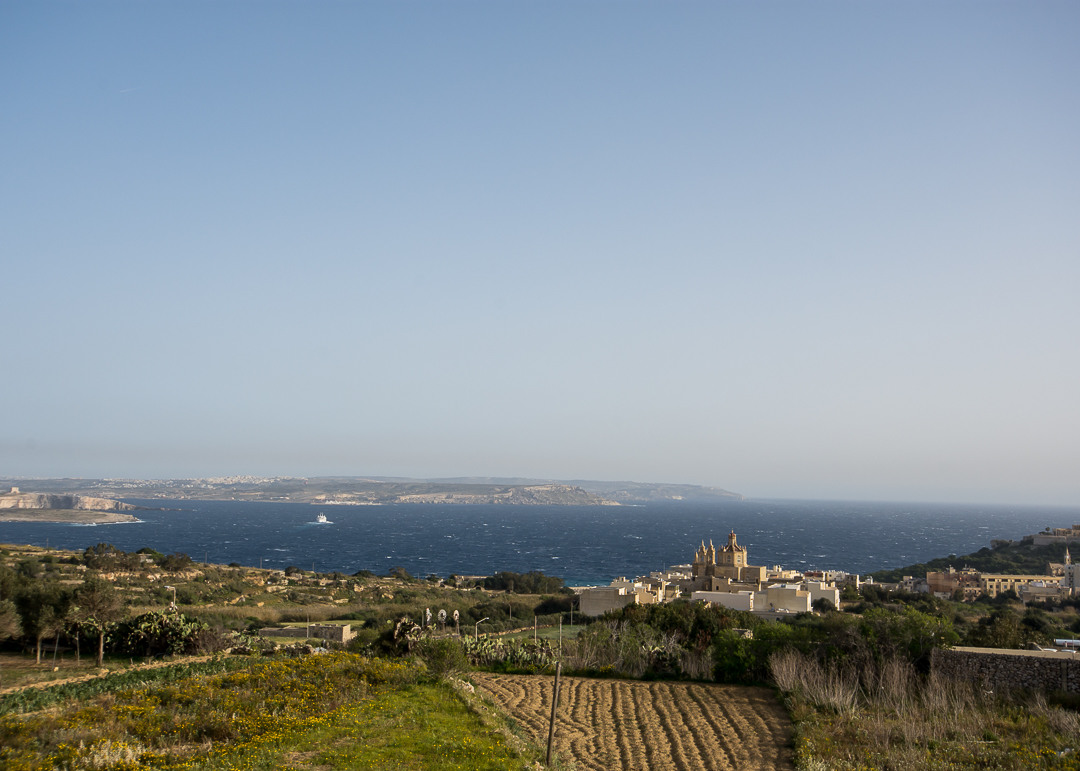
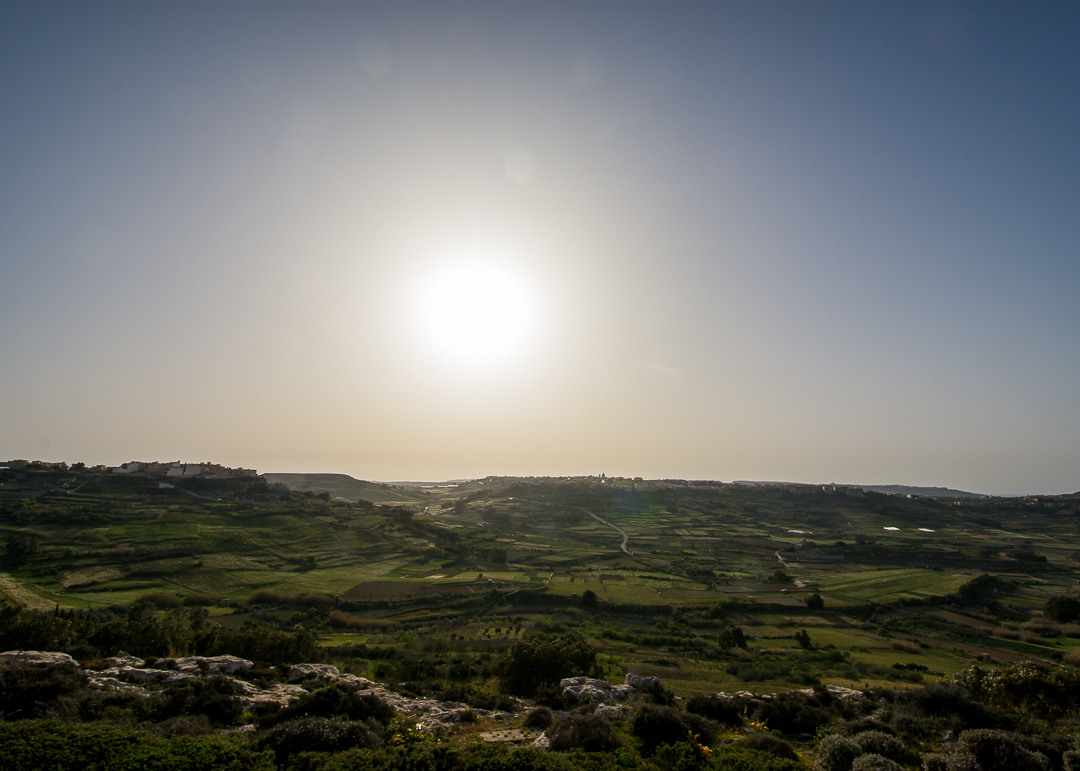
Hilltops afford scenic views of Malta and little Comino on the left as well as a glimpse of Gozo’s stunning coast. We unfortunately didn’t have time to do the full tour though after seeing pictures of the Azure Window and Ramla Bay we’re dying to come back for them!
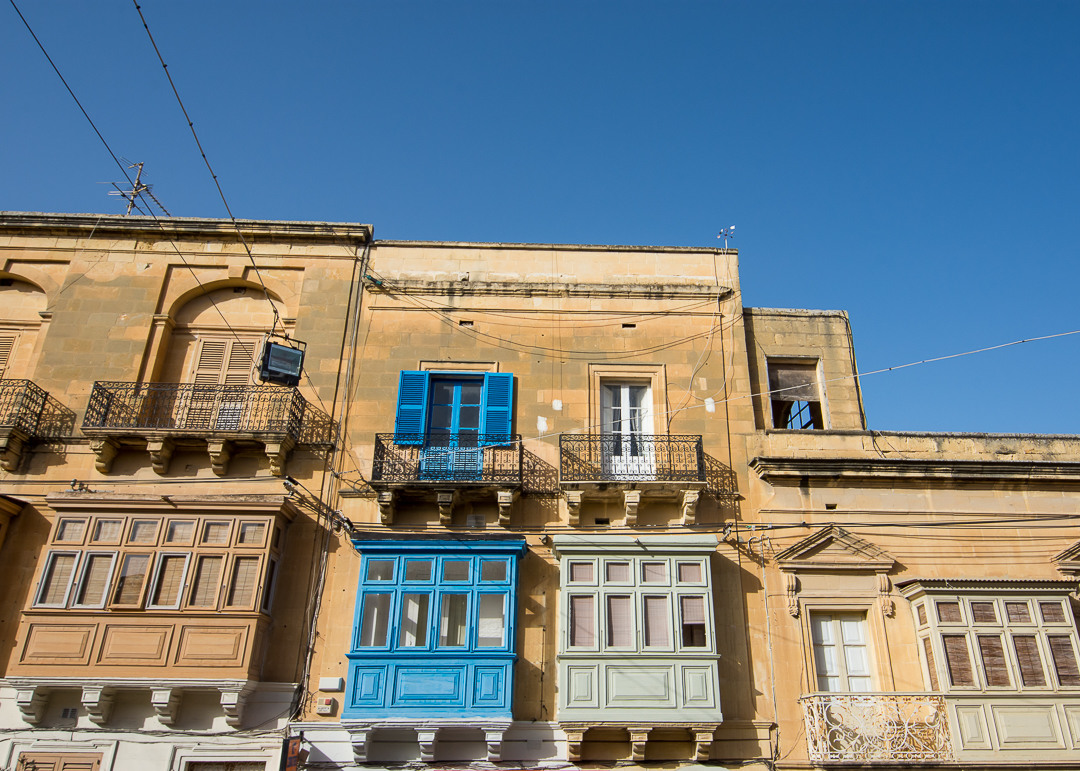
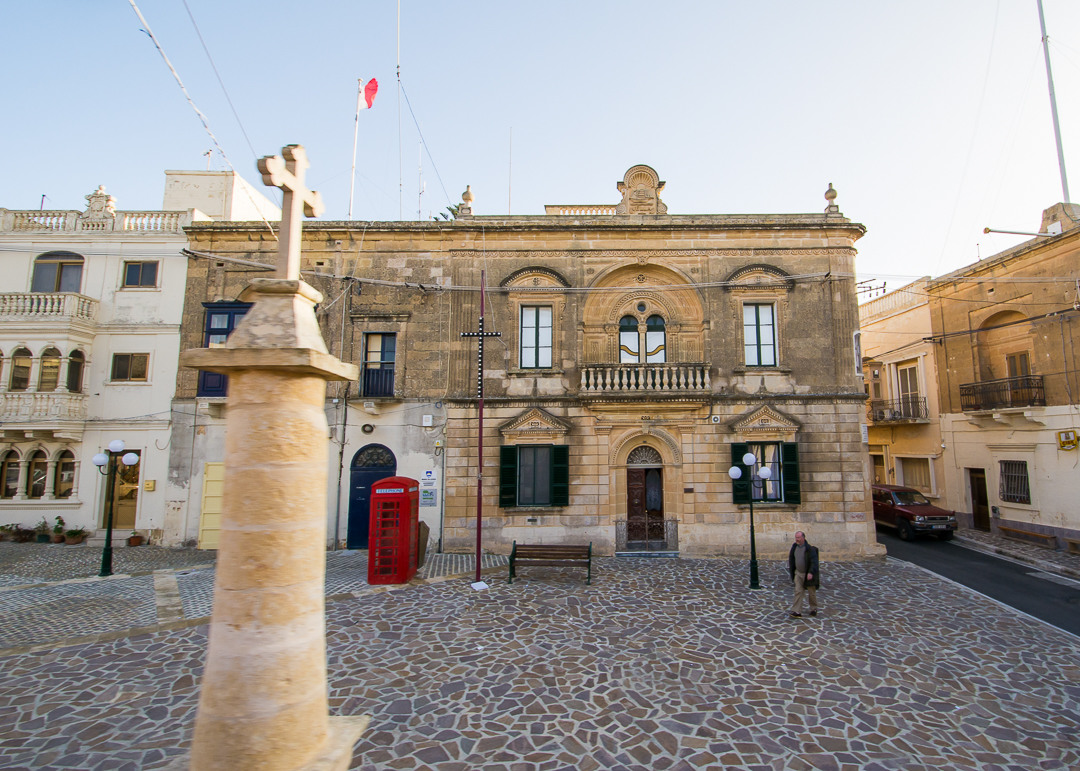
All the villages are sleepy affairs, tempting visitors with their quaint alleys and centuries old houses with old stone balconies.
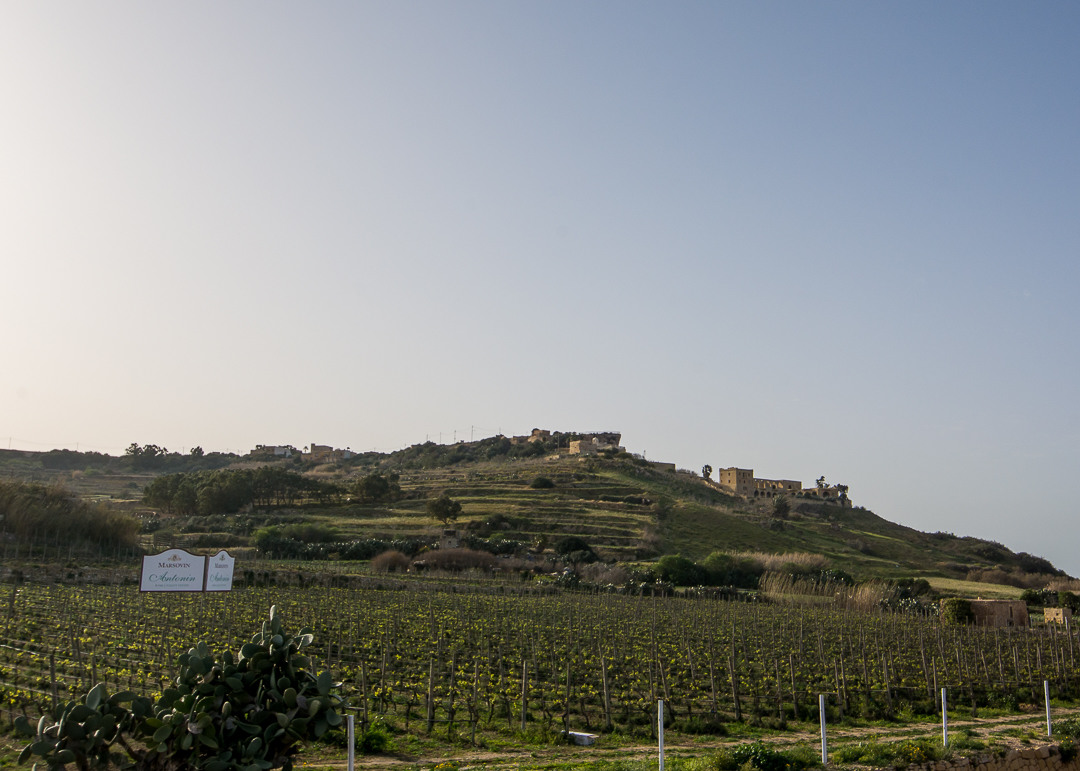
Valleys are ripe with vineyards and pastoral scenes which provided the scrumptious lunch we recently feasted on.
As the sun sets on this rural delight, we’re already making plans to rent a country house and indulge in total R&R aka Rustic Relaxation for which Gozo seems to be the perfect candidate…
After admiring the flamboyant architecture from the Order of the Knights of St John in Valletta, there is still much to be uncovered of Malta’s extremely rich heritage which spans over 7,000 years. Its small size means you can spend a day exploring prehistoric vestiges, crystalline waters, and historical cities, all within an hour’s drive of the capital.
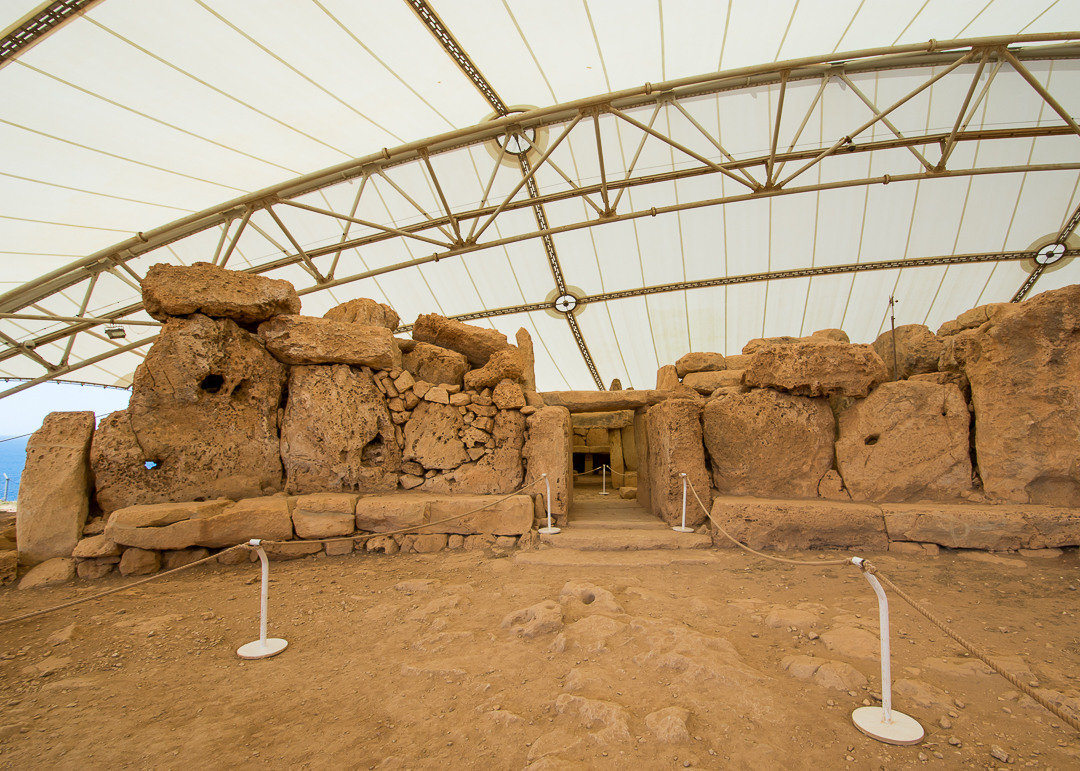
Very few know that the country boasts the world’s most ancient standing buildings, older than Stonehenge and even the Pyramids of Egypt. Malta is home to over 40 pre-historic temples, seven of which are on the UNESCO World Heritage List with the most famous found on the south west coast of the main island: Hagar Qim and Mnajdra.
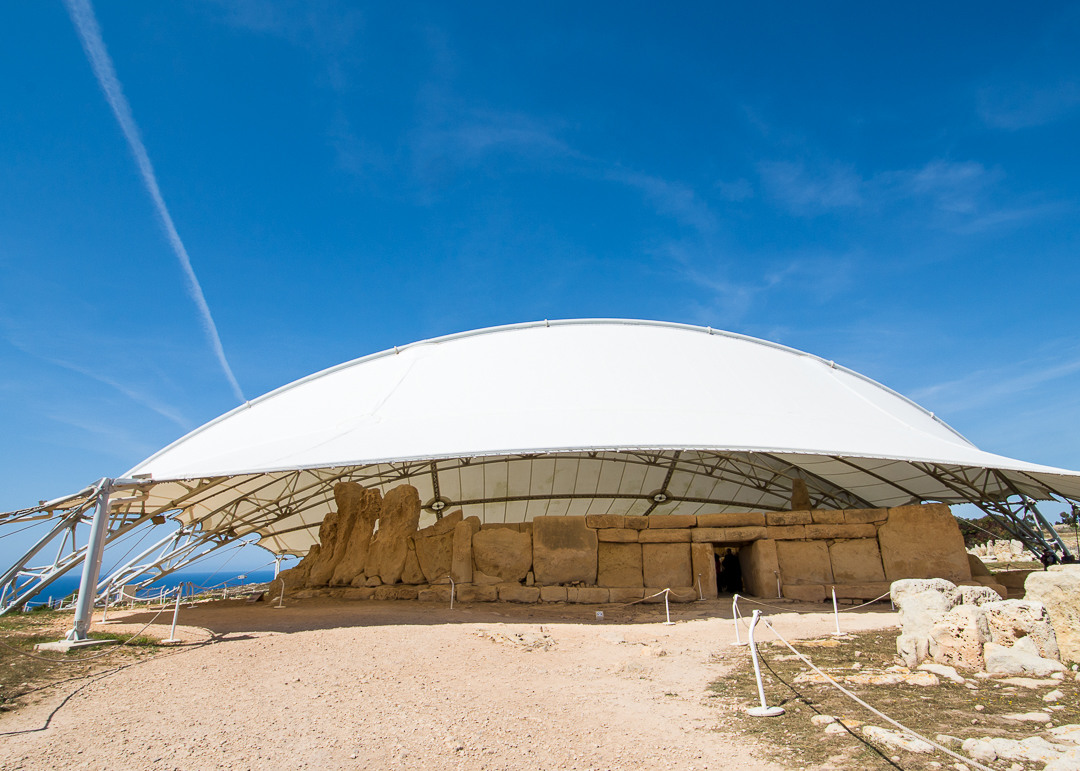
Hagar Qim
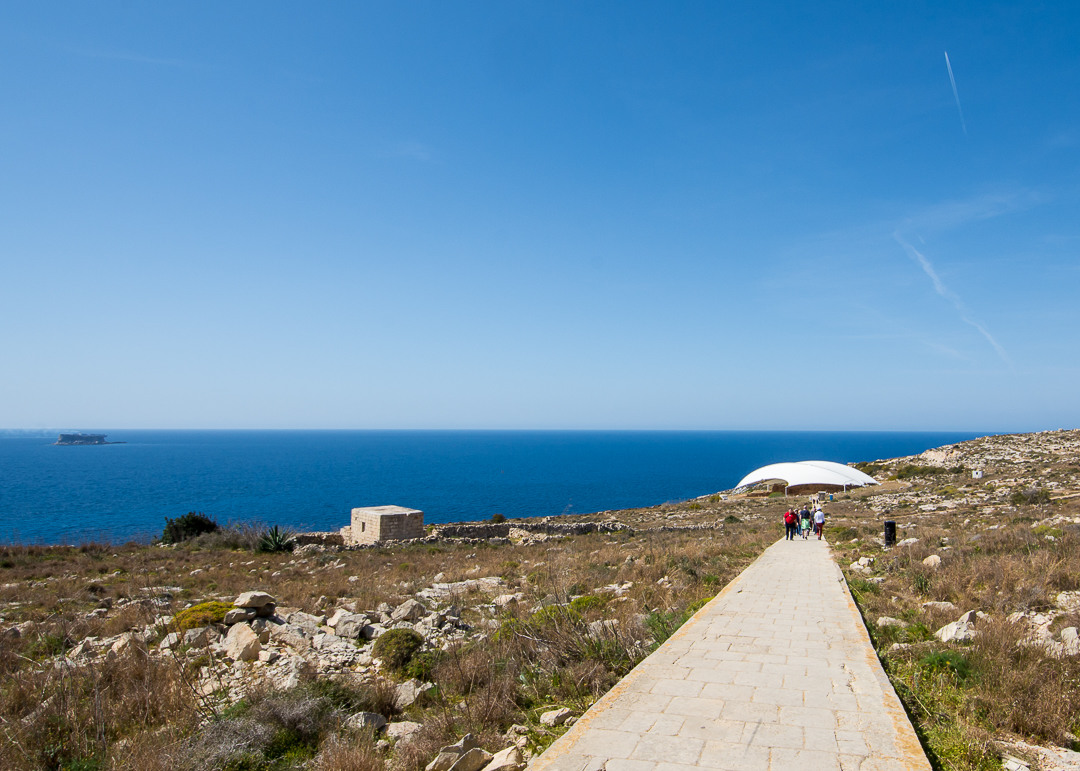
Protective tents lessen a bit their majesty but the cliff side setting is truly inspiring as you try and transport yourself back a few thousands of years.
Walking down towards Mnajdra
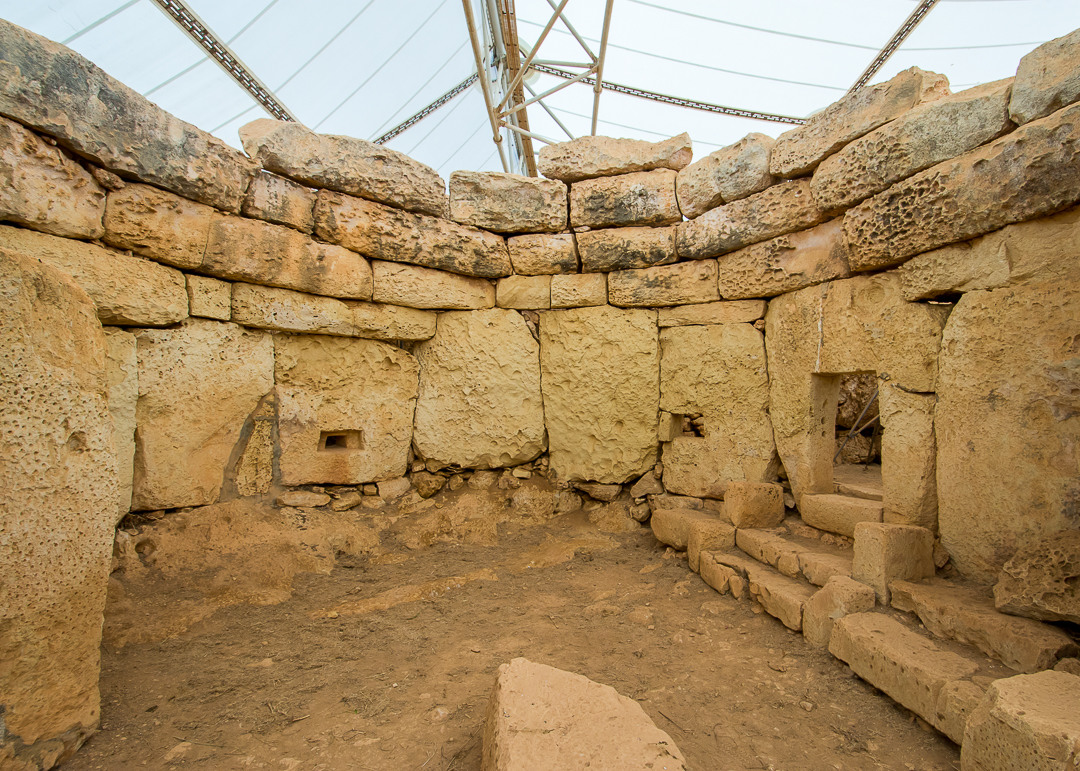
Archaeologists can’t state for certain how these massive stone temples were used but the common theory is that of a ceremonial place to honour and pray their gods which included animal sacrifice.
Entrance of Mnajdra
You can wander around the semi-circular chambers with a helpful audio-guide and try to imagine life back then, centered around spirituality no doubt, and the work it took to assemble these gigantic stones!
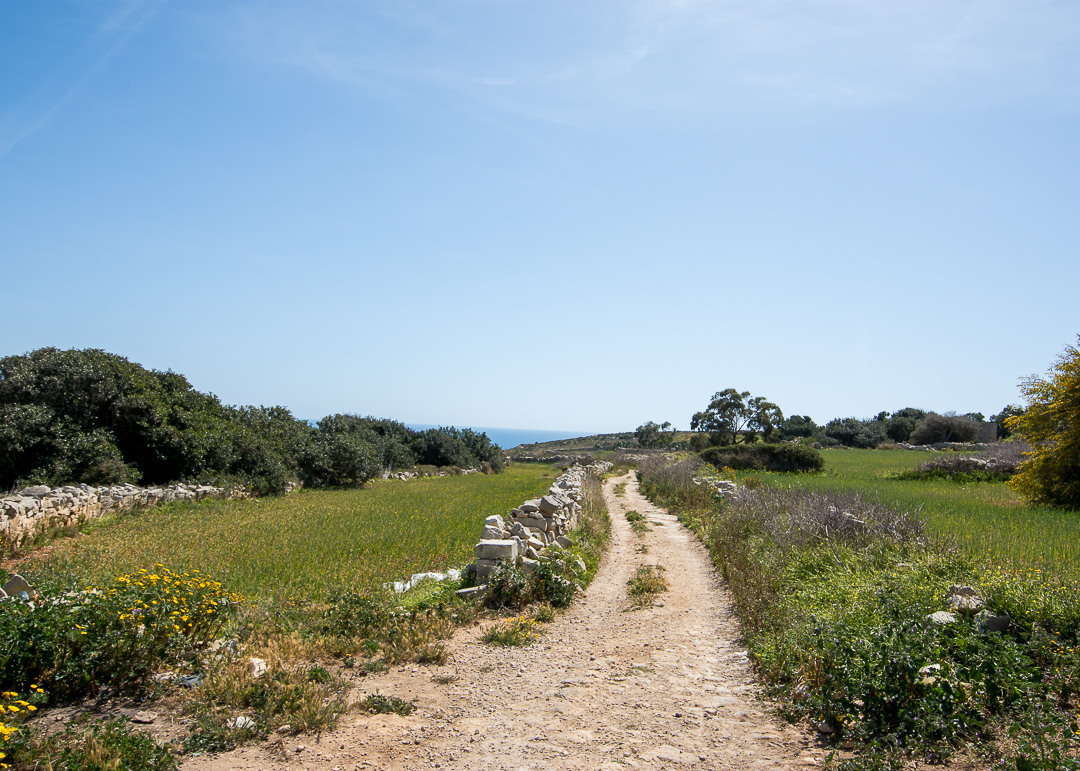
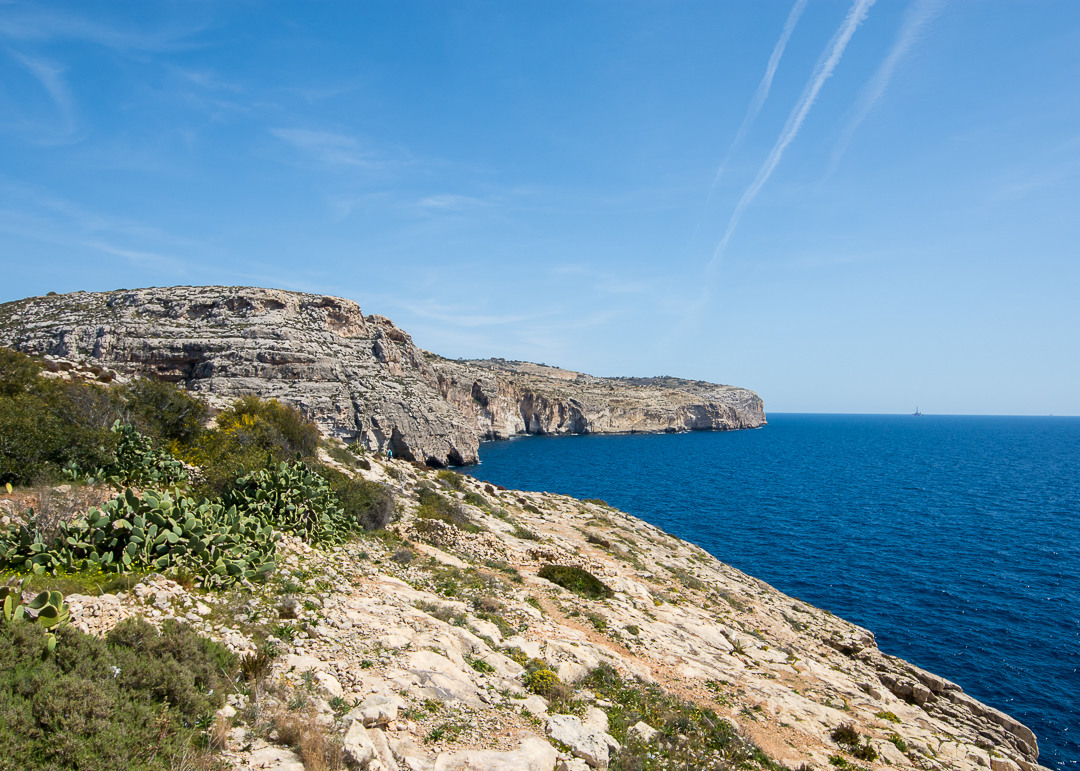
Although you’re only 30 minutes drive from Valletta, the landscape surrounding the temples is pure countryside charm with rolling hills, stone farms, and that blue Mediterranean sea lurking behind it all.
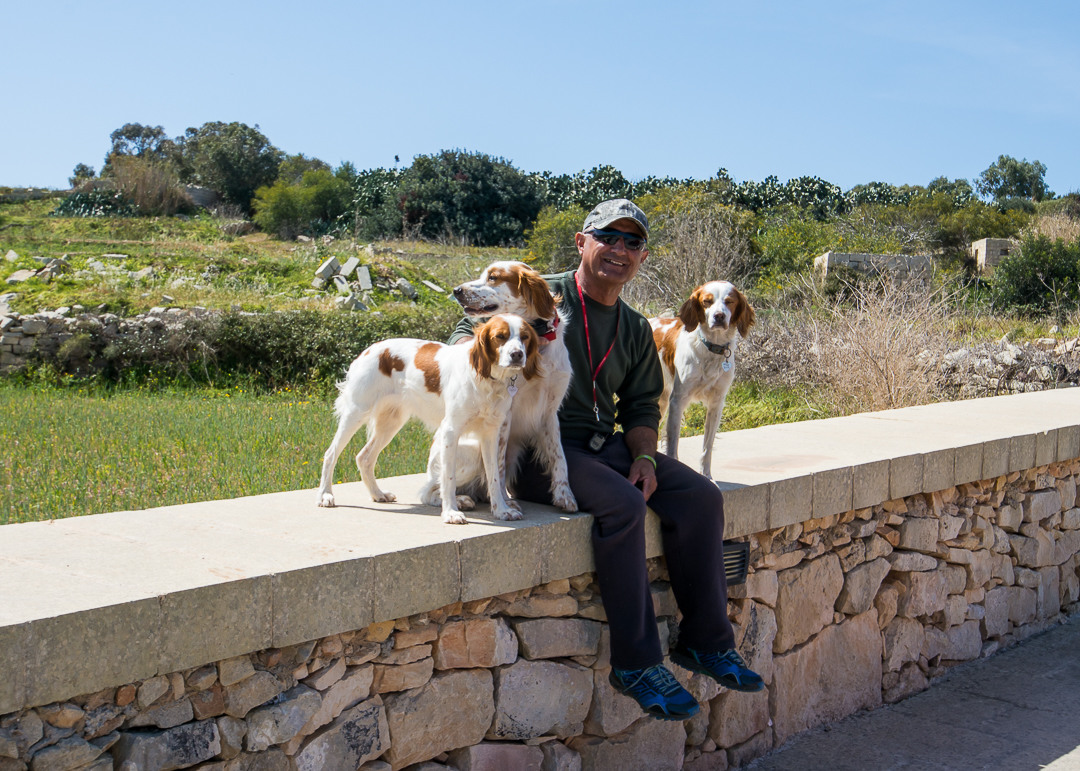
Locals are avid walkers, especially on Sundays, and so warm you’ll soon find yourself chatting and petting the island’s many dogs (and goats as well) along the way.
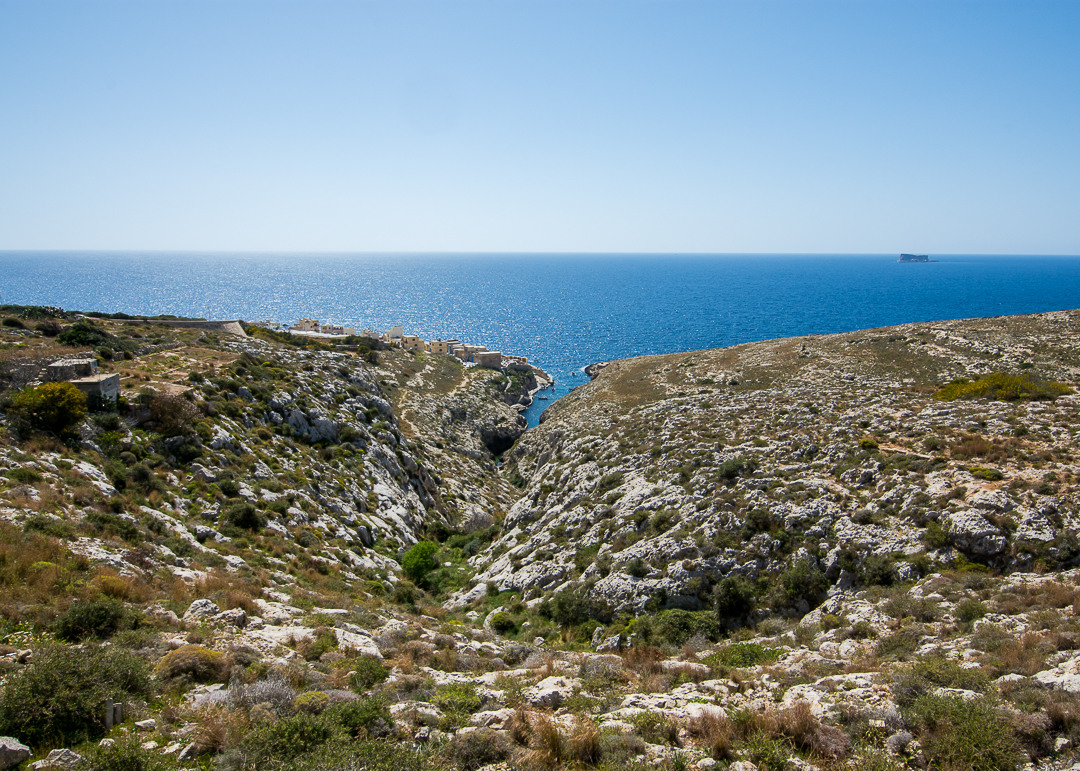
Take a short and very scenic coastal walk east of the temples to reach your next destination – the tiny fishing village of Wied iż-Żurrieq set in a narrow inlet in the cliffs.
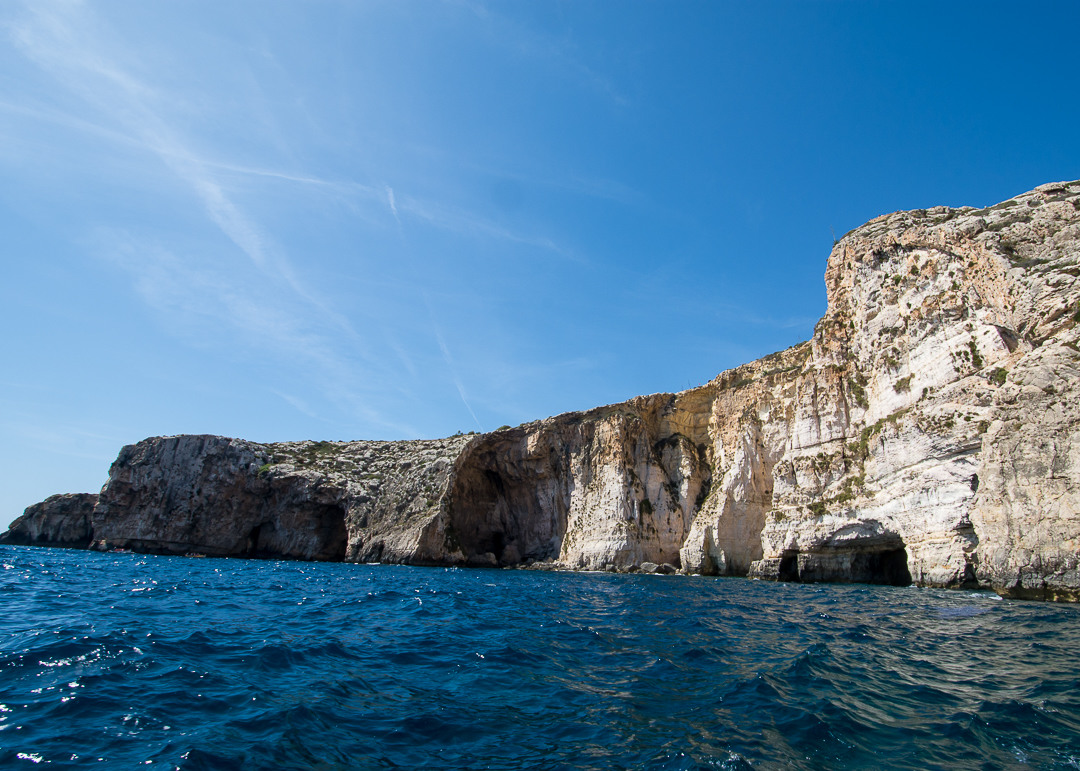
Heading down, you’ll get a nice teasing view of one of Malta’s top tourist attractions: the Blue Grotto. Don’t worry, you’ll be getting a lot closer in a few moments.
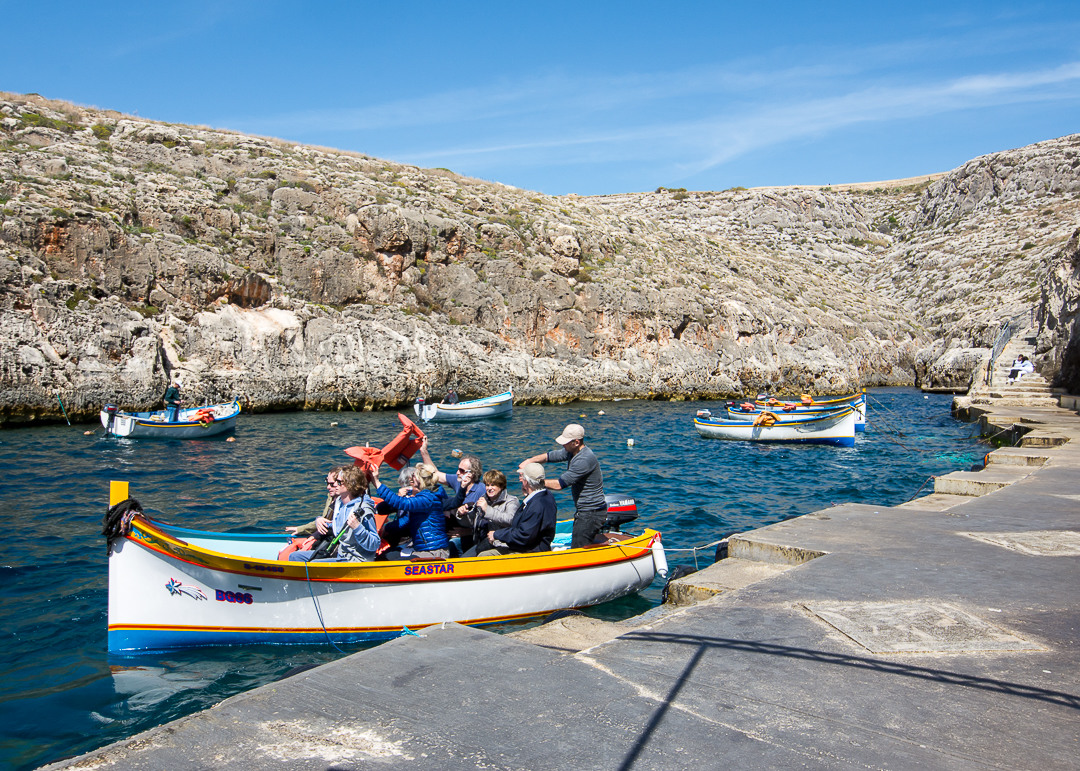
Small traditional boats regularly leave the village filled with tourists to go explore the caves and deep blue waters of the Blue Grotto just around the corner.
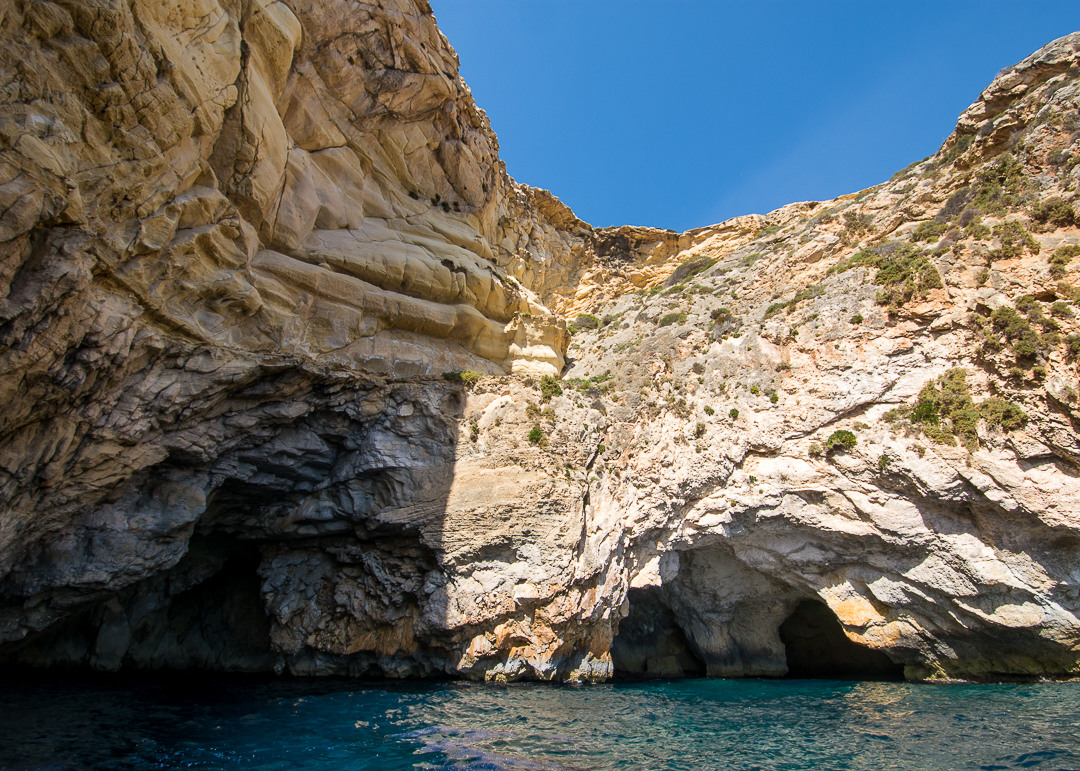
The series of seven caves and inlets on the southern side of Malta is famous for its deep blue waters and spectacular natural rock formations.
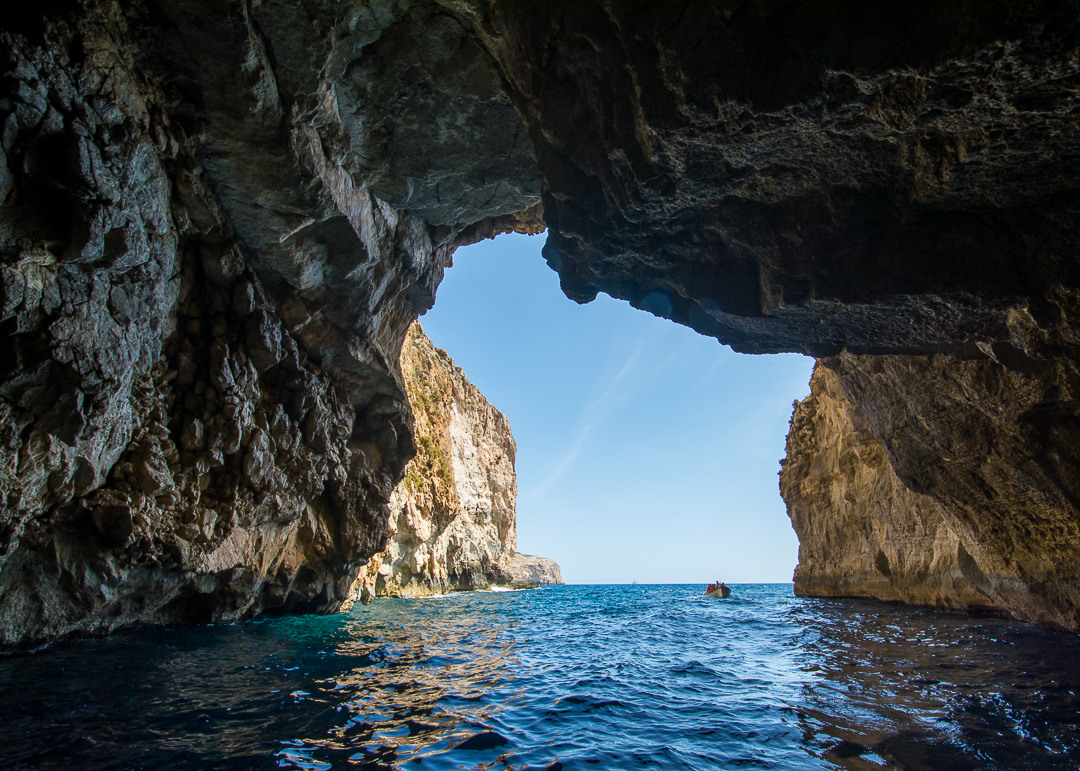
The 30-minute boat ride is a thrill you shouldn’t miss and one you won’t regret as you zigzag your way around the sheer cliffs into small openings and larger caverns.
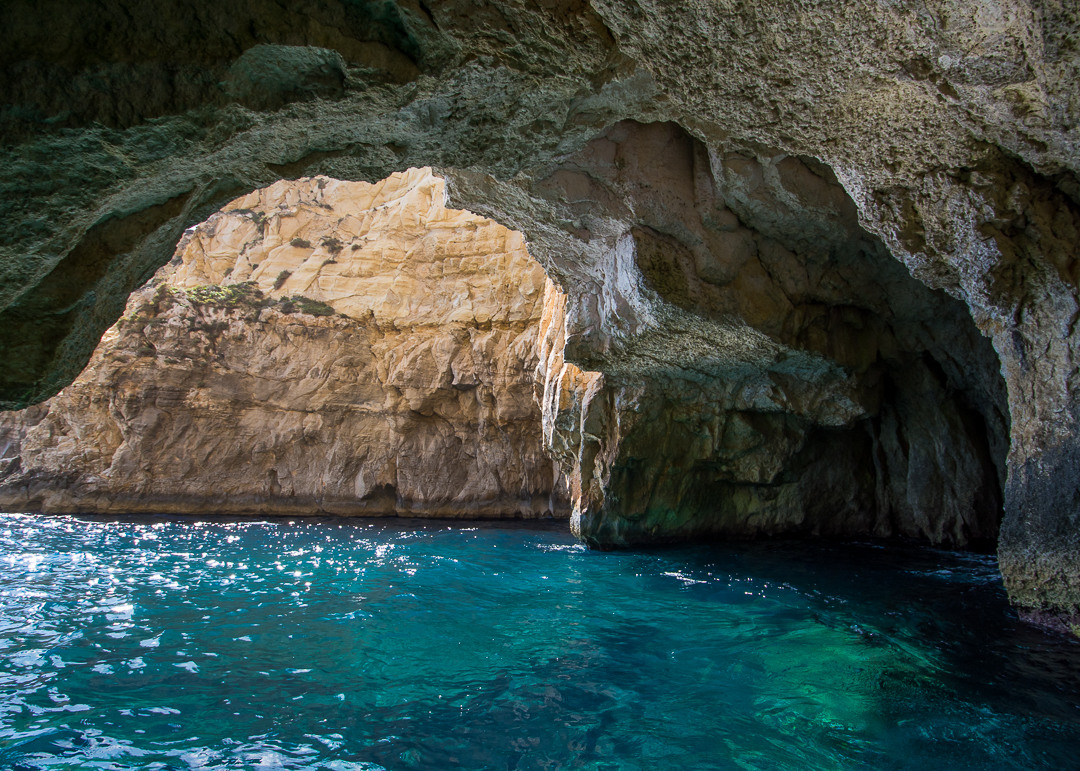
The biggest arch is 140 feet high and its inner walls sparkle with many different colors from the minerals present in the rocks.
What’s most amazing though is the spectacular sight of the sunlight mirroring multiple shades of blue which is unique to the Blue Grotto around here.
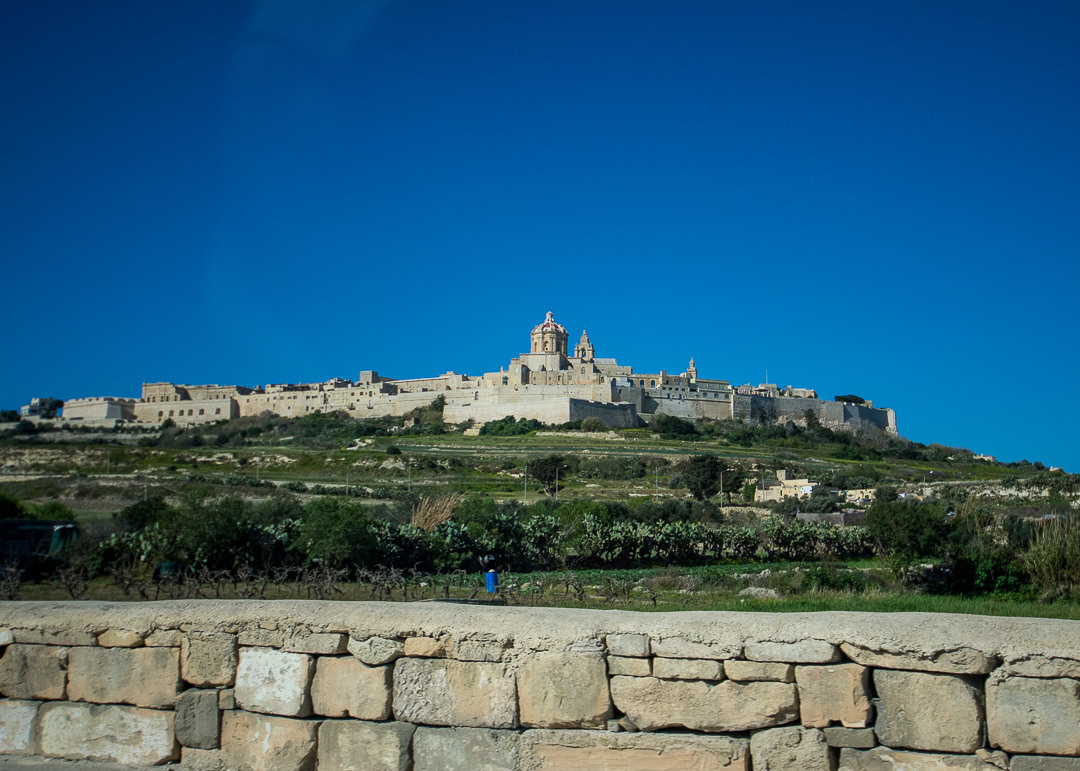
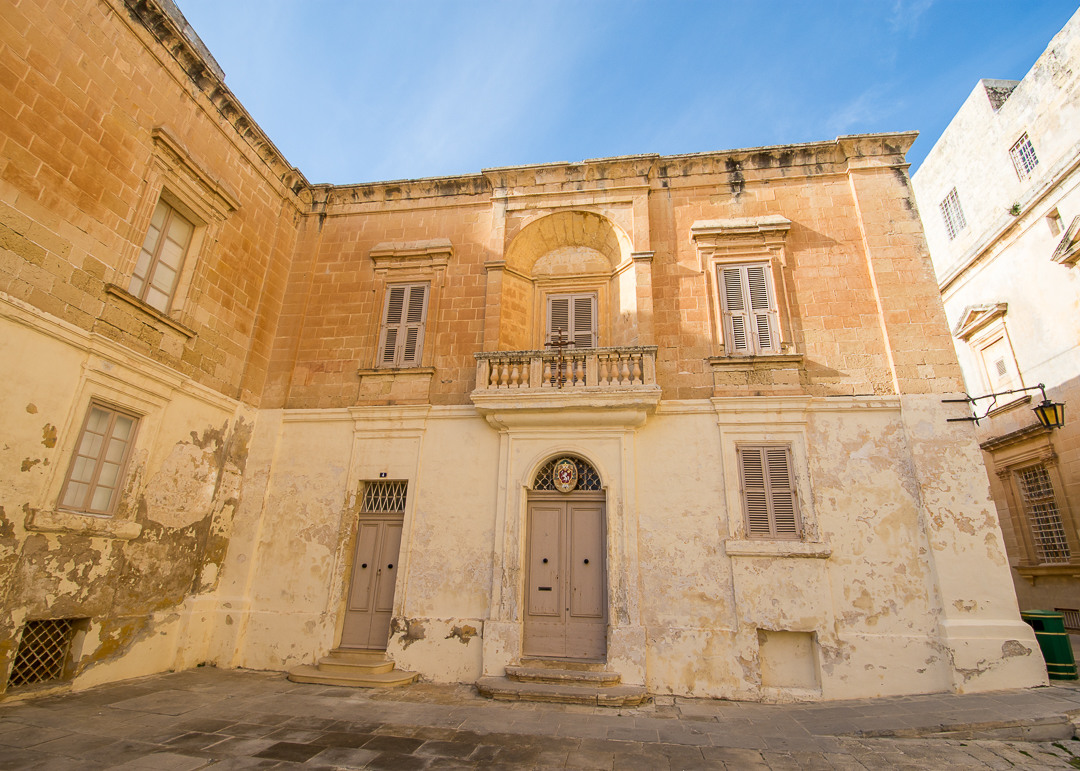
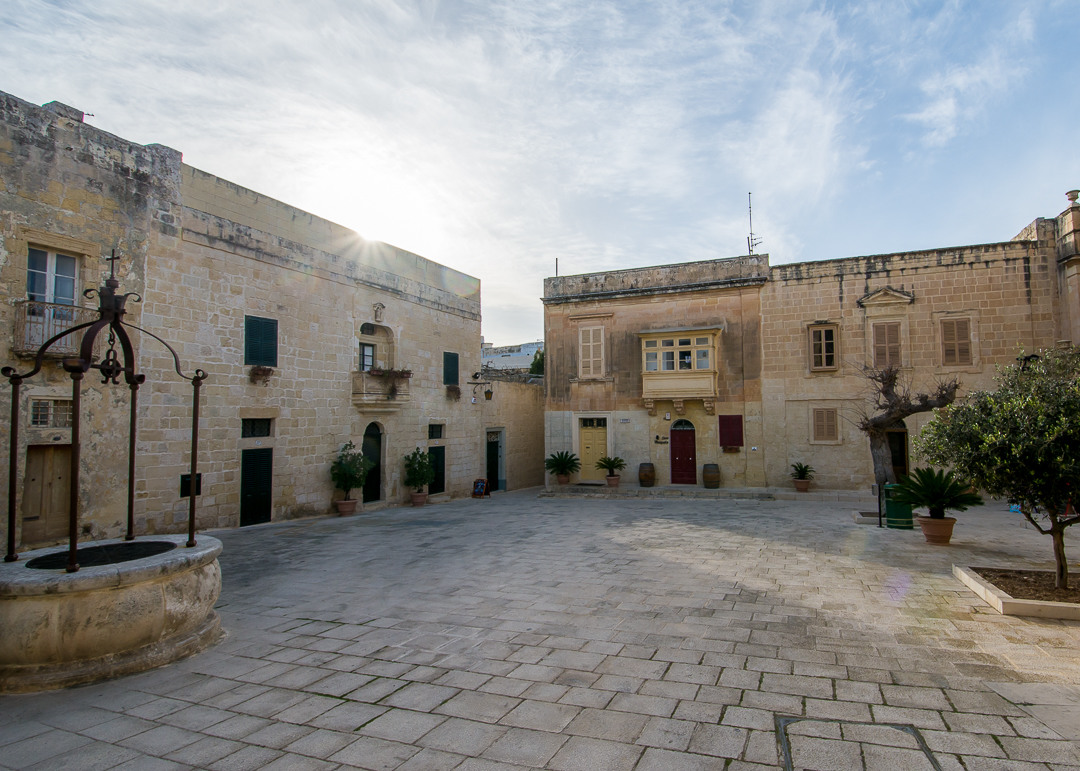
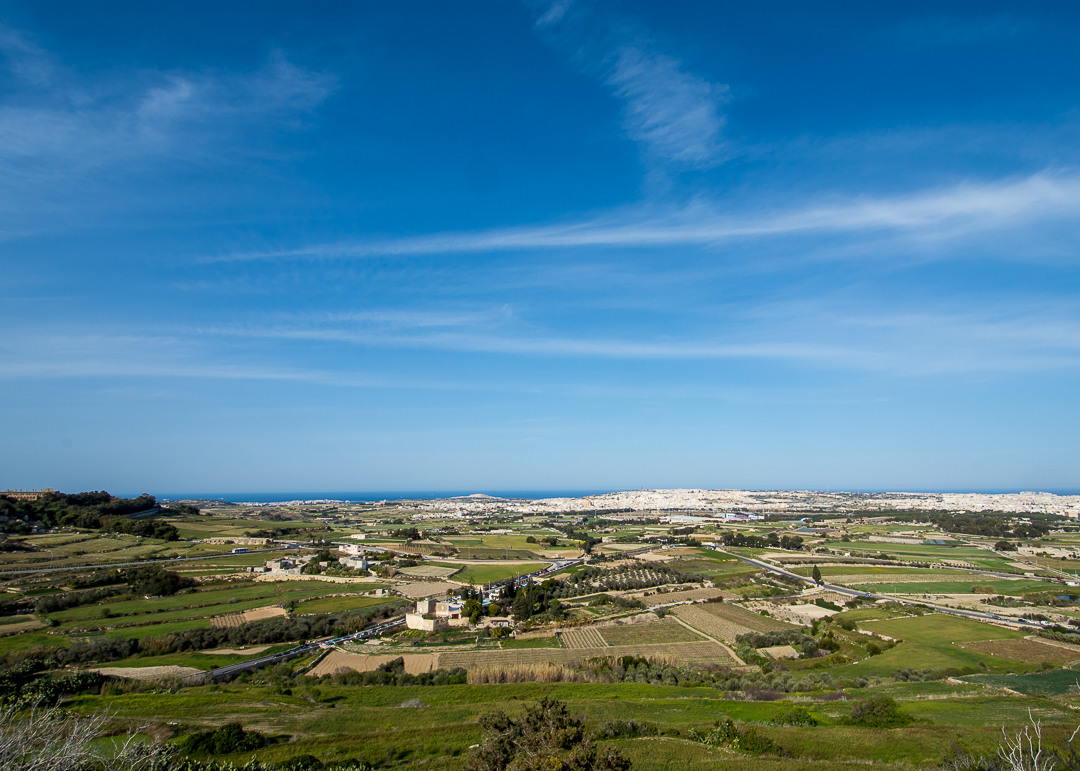
Now that we’ve checked the prehistoric sites and azure waters off the list, it’s time to move on to the historical city bit in time for lunch. Leaving the coast behind, a picturesque 20-minute drive towards the center of the island will bring you to Malta’s old and insanely gorgeous capital of Mdina, seen from miles away as it dominates the countryside from its perch on a hill.
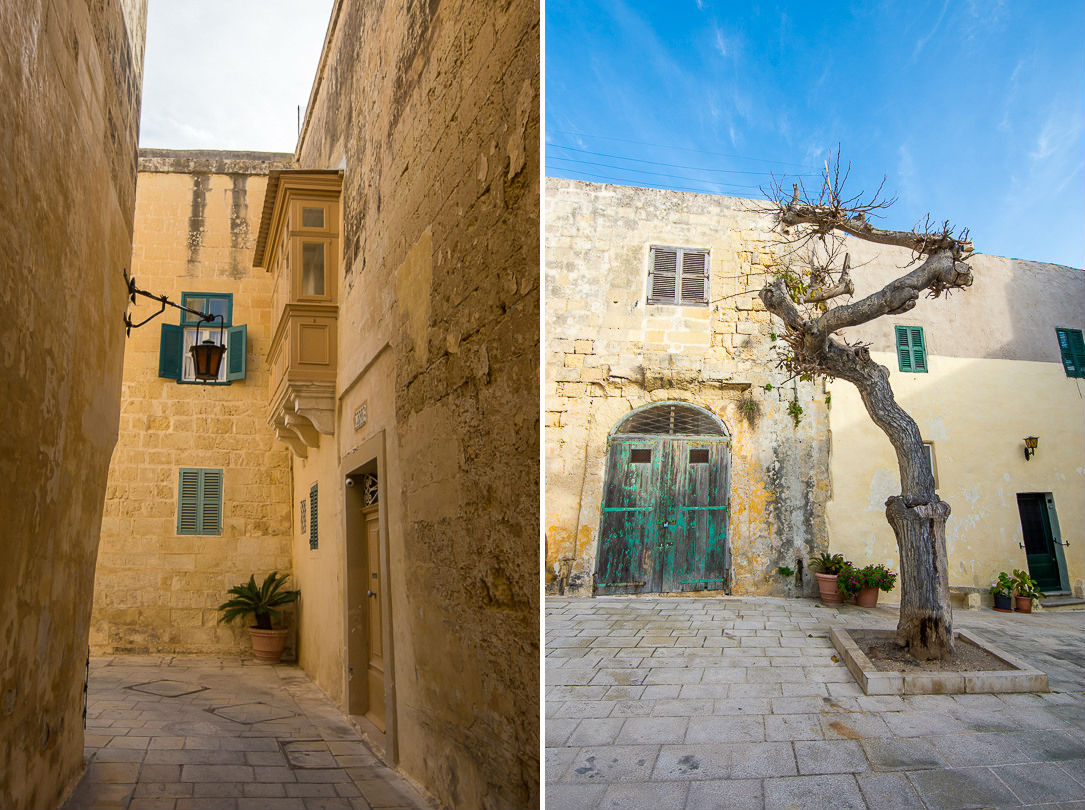
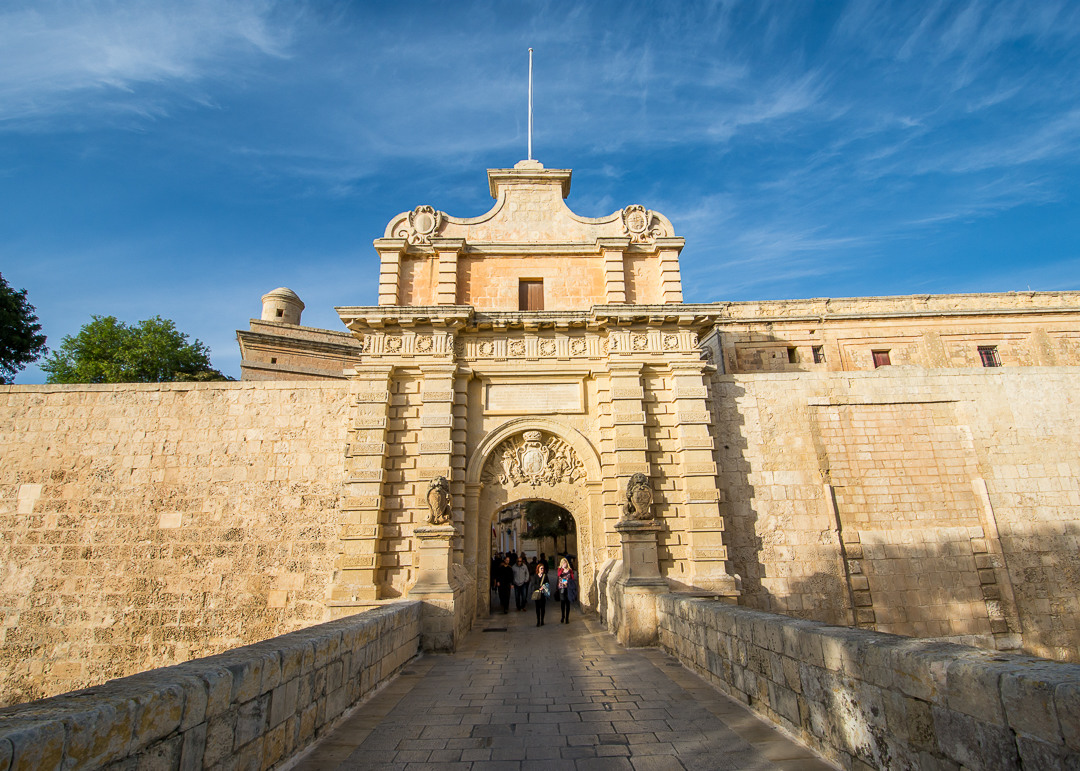
As one of the world’s finest examples of a medieval walled city that is still inhabited (albeit by a tiny population of around 300), Mdina is a magical place to visit and a highlight of any trip to Malta.
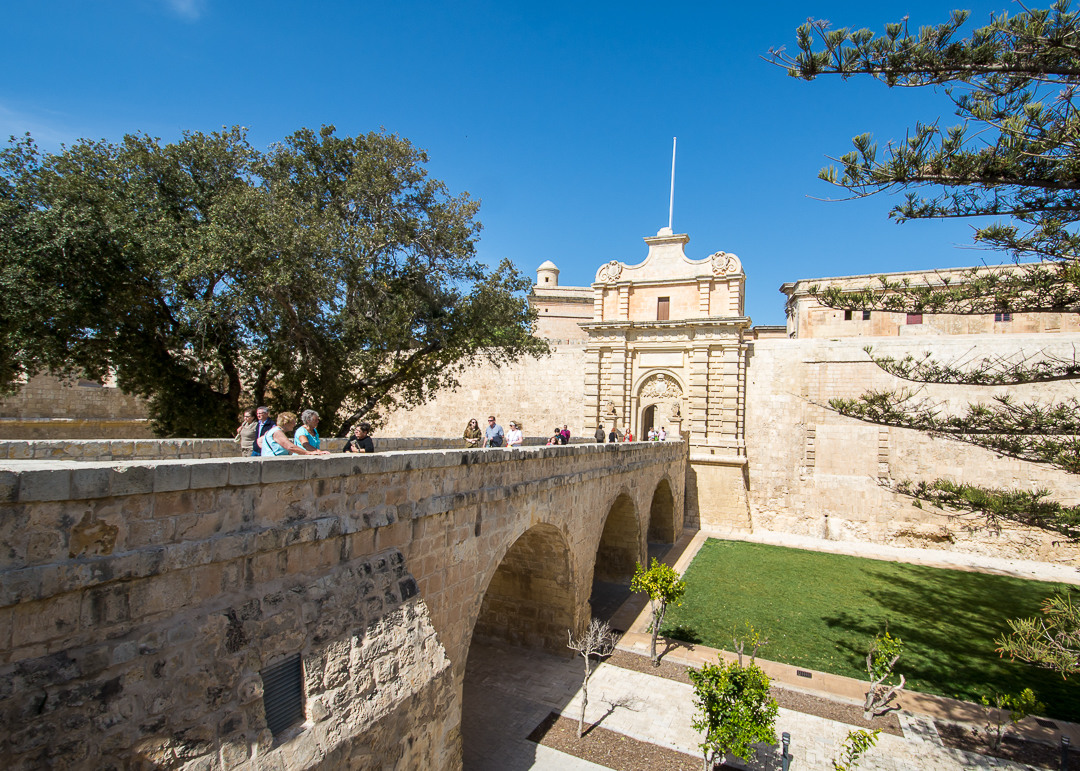
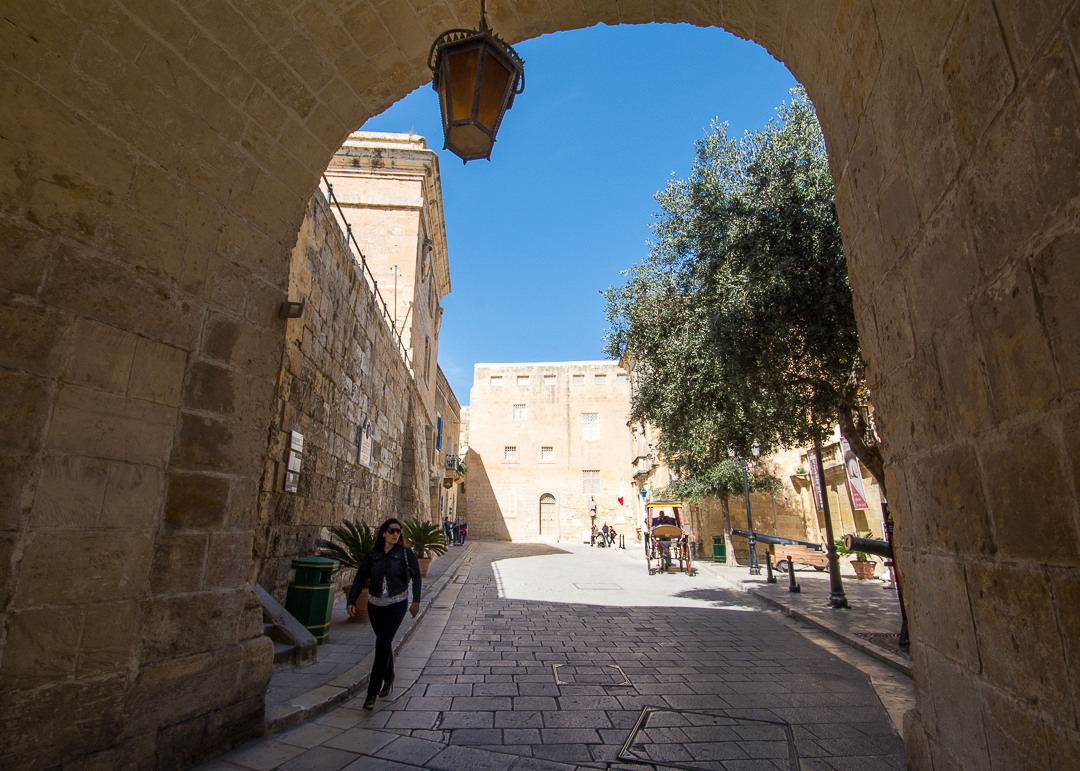
Entering by the main gate, you immediately feel like you’ve stepped through a portal into another world, one which is frozen in time in the best possible way.
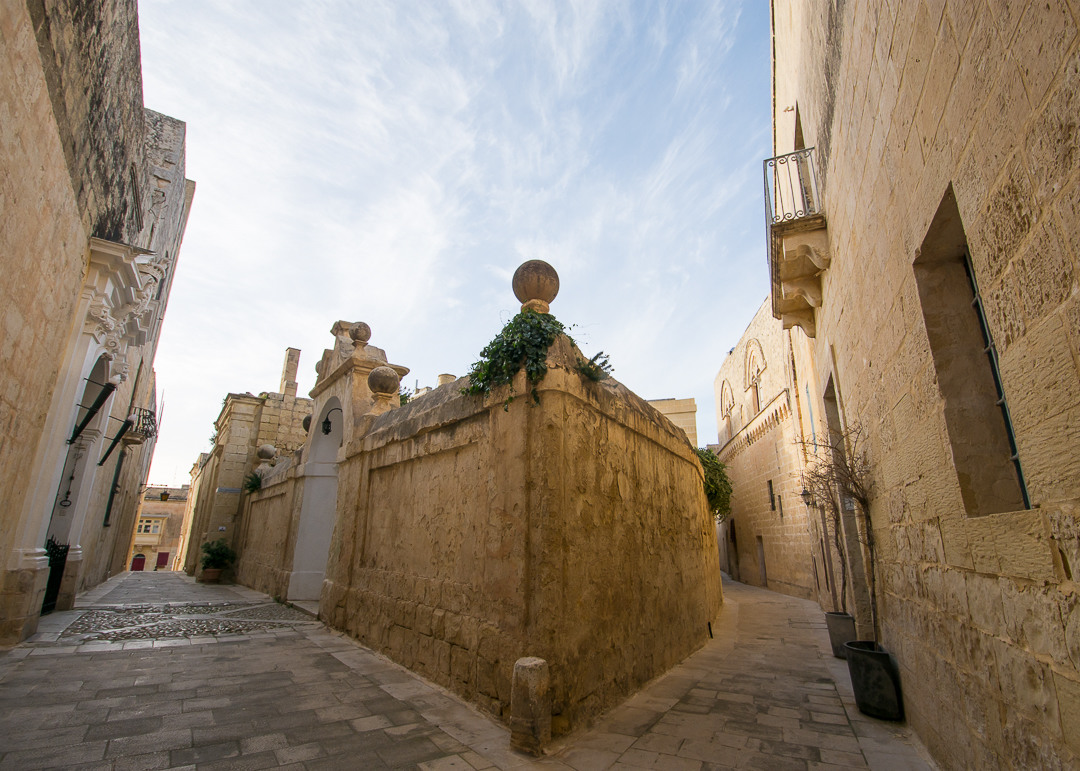
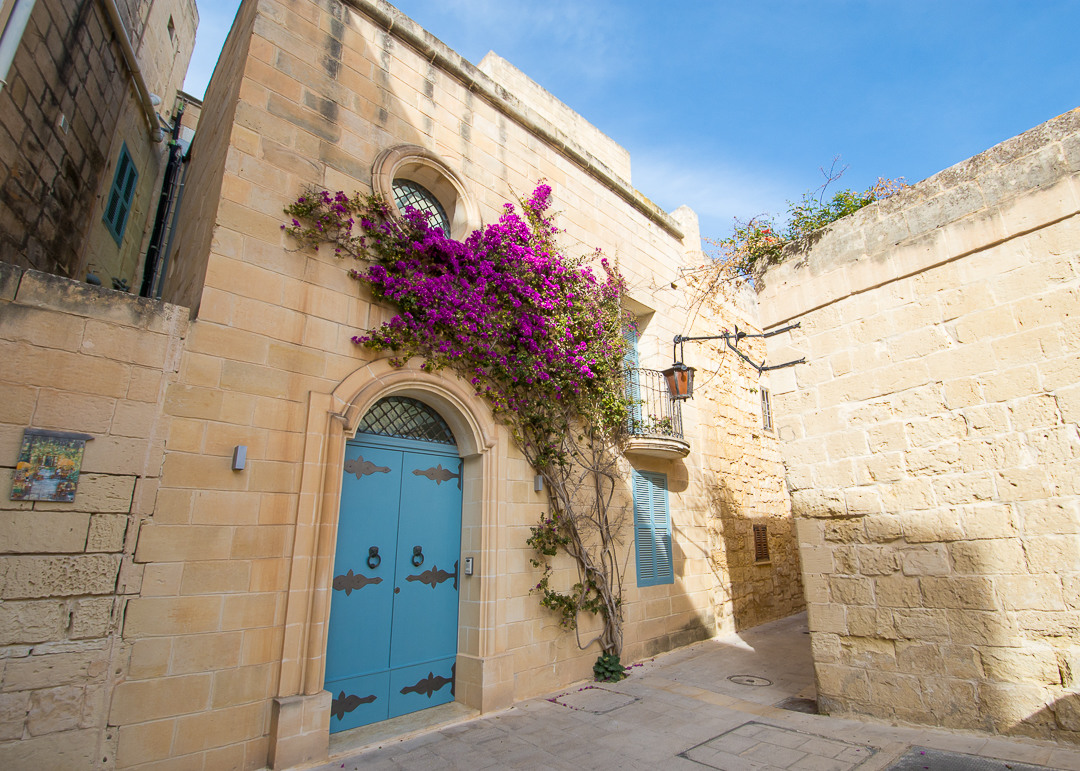
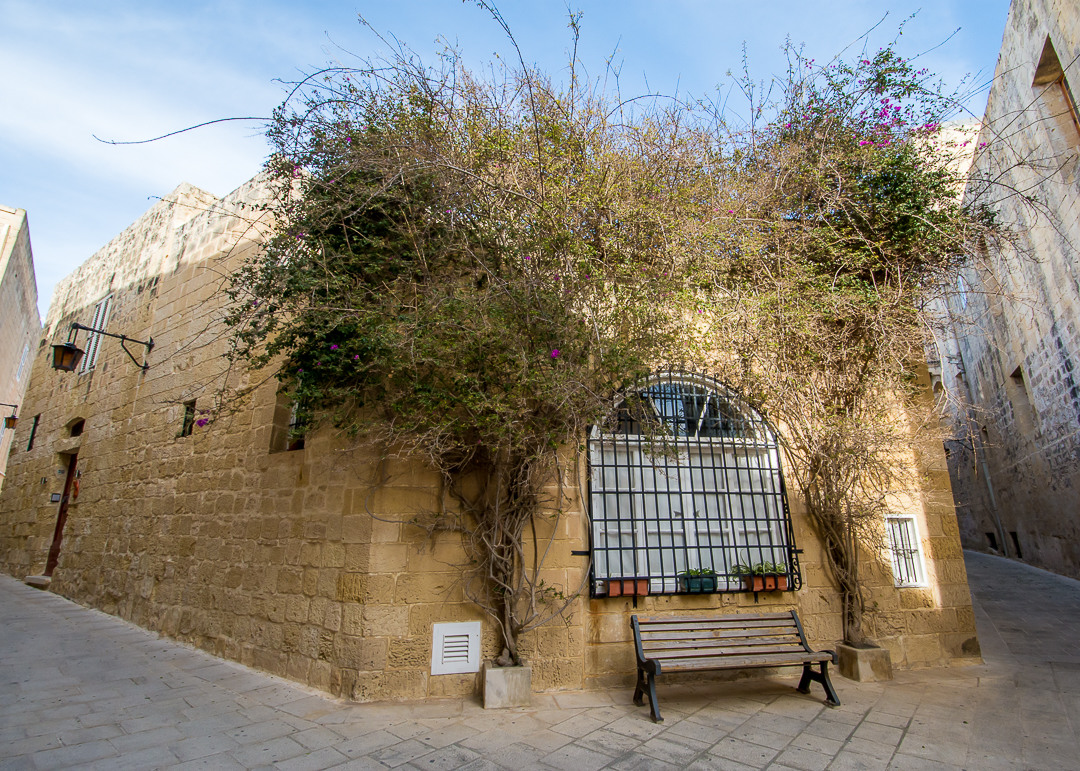
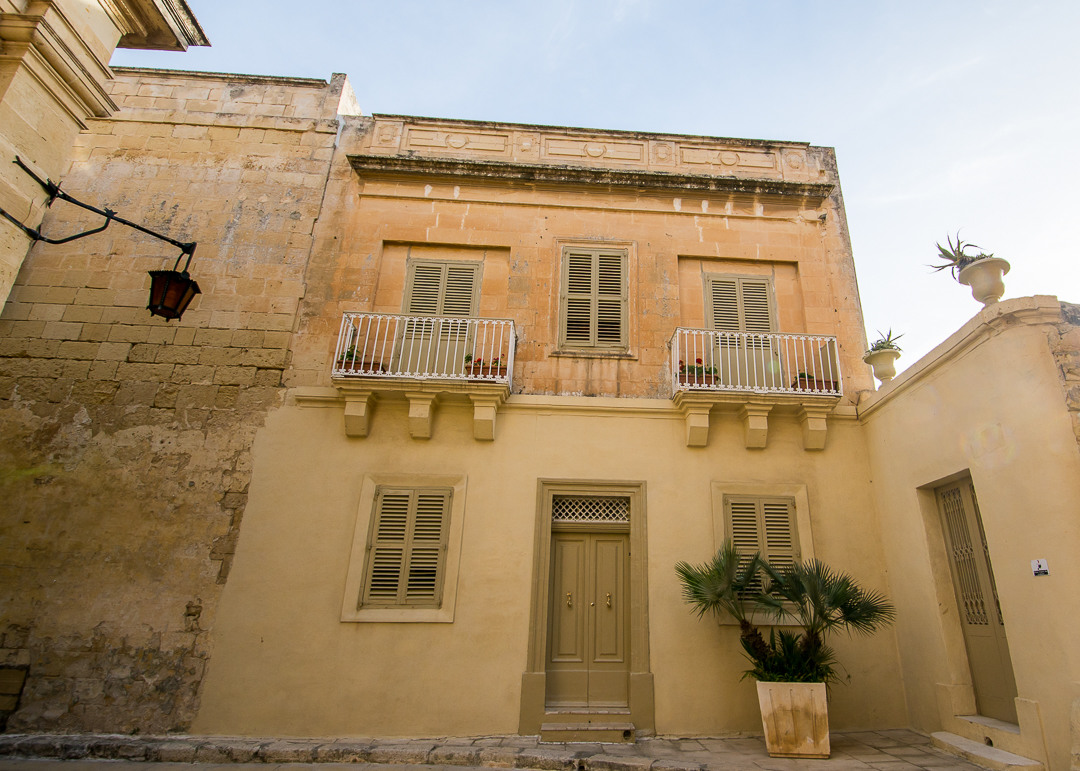
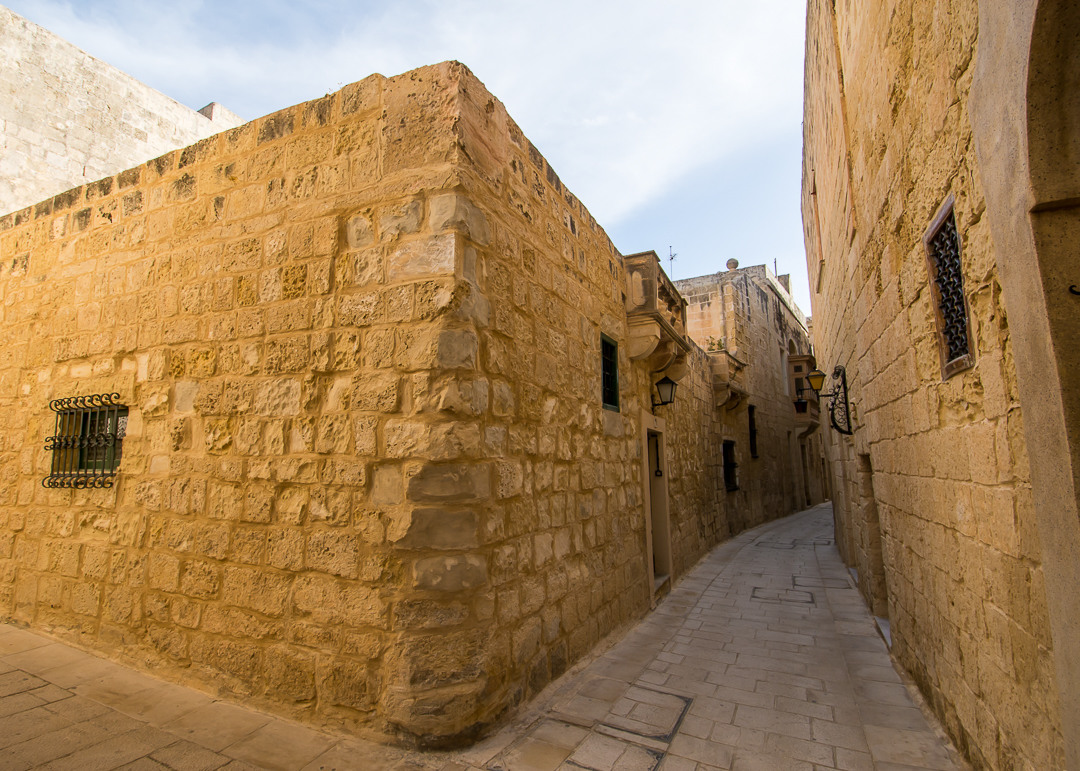
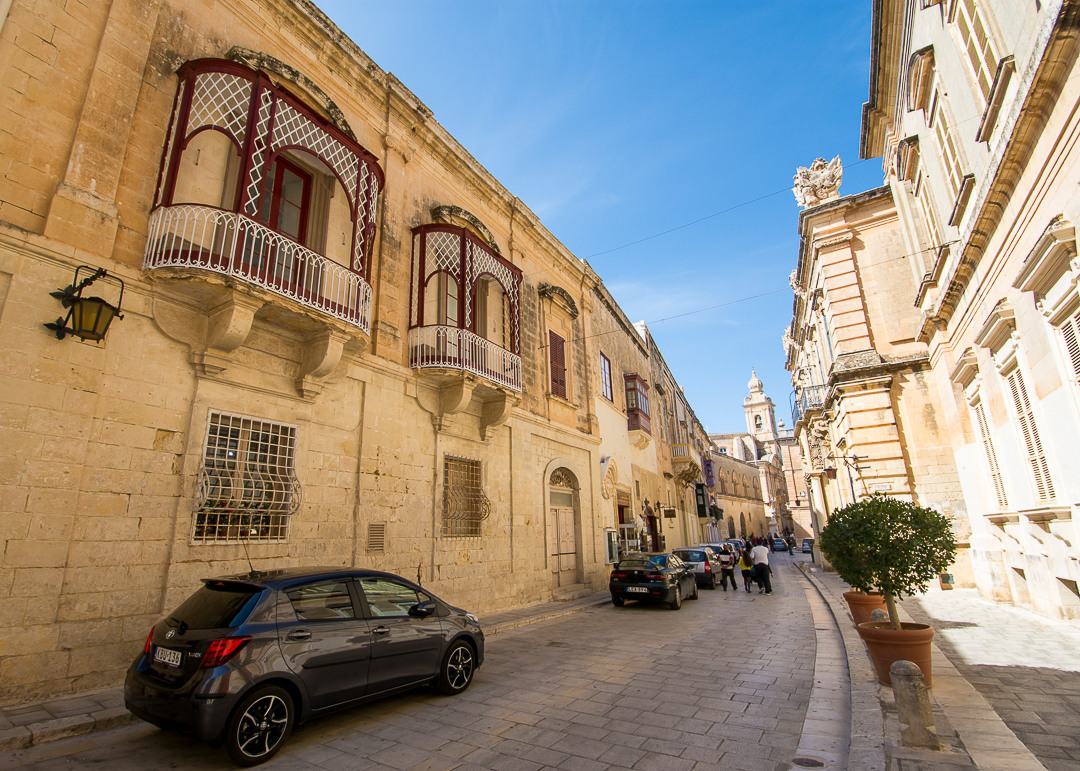
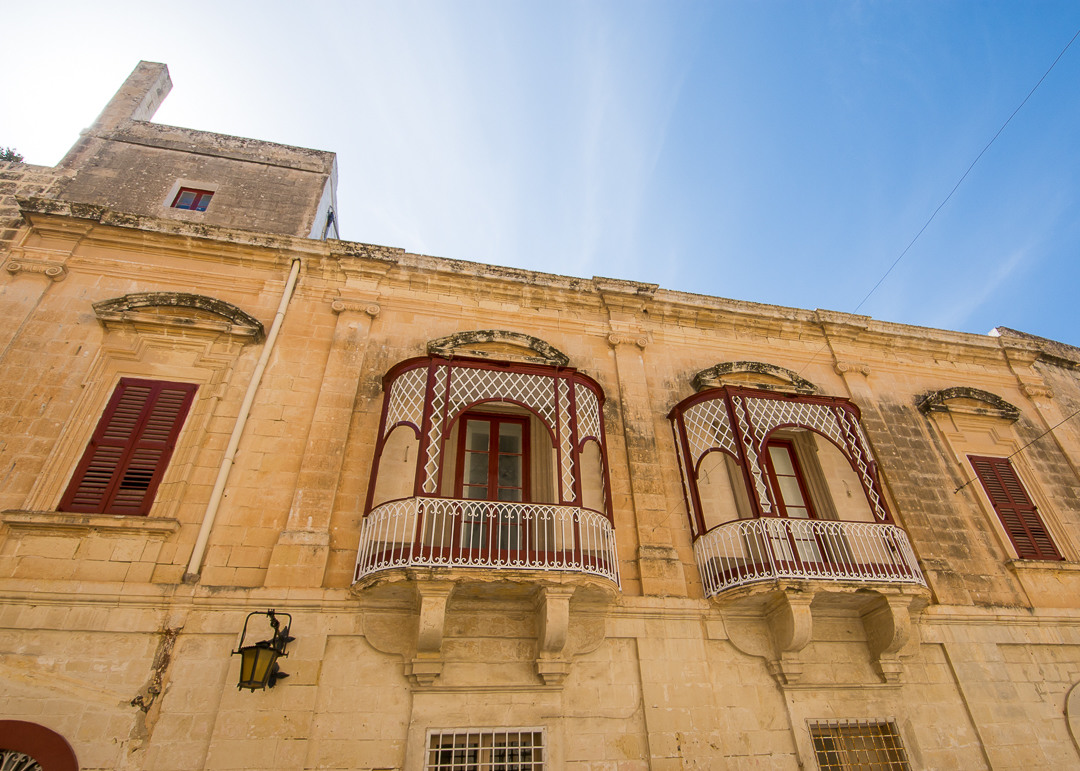
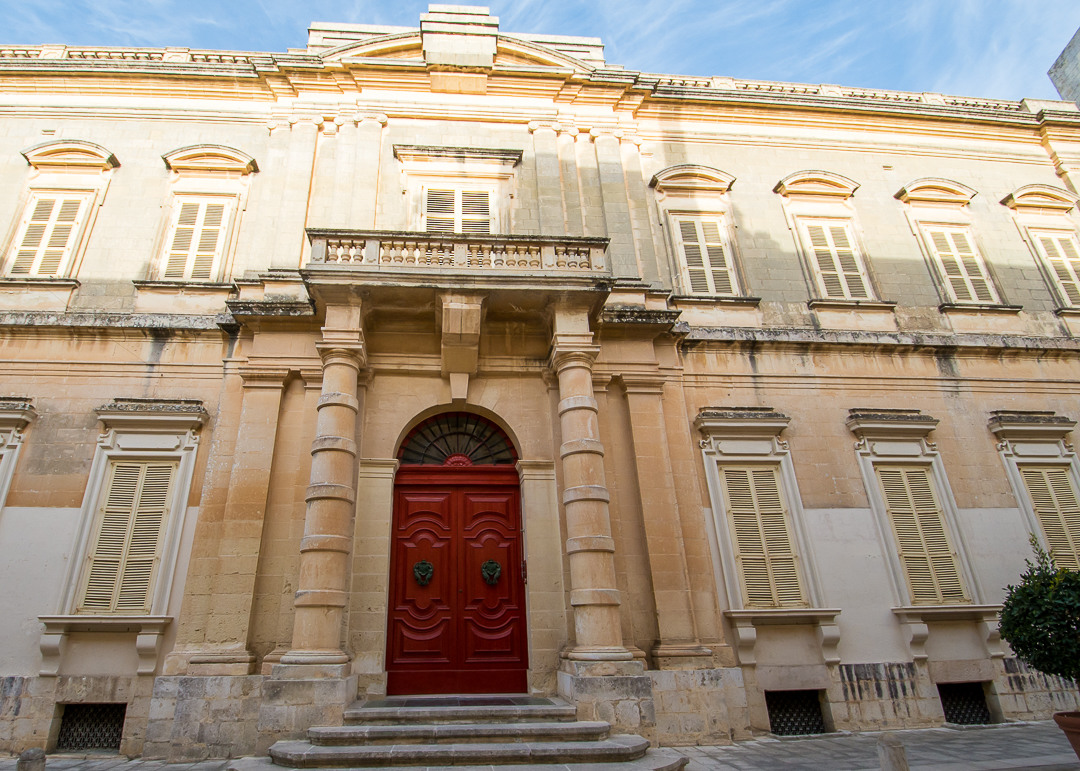
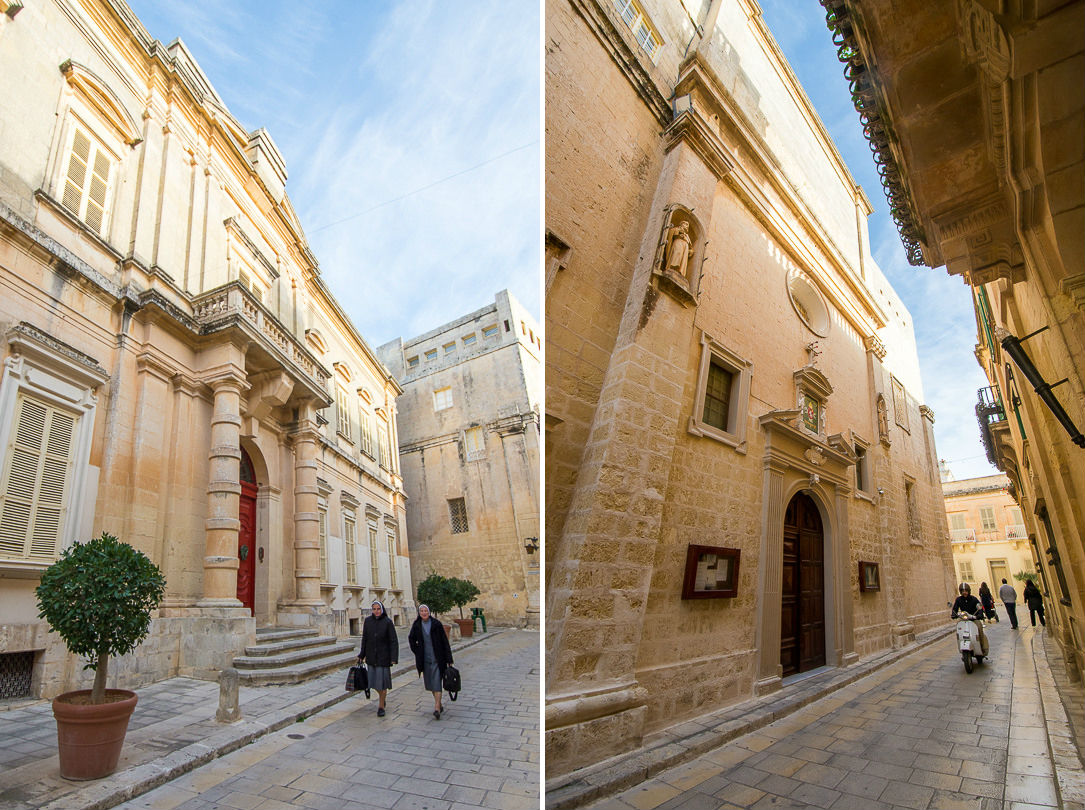
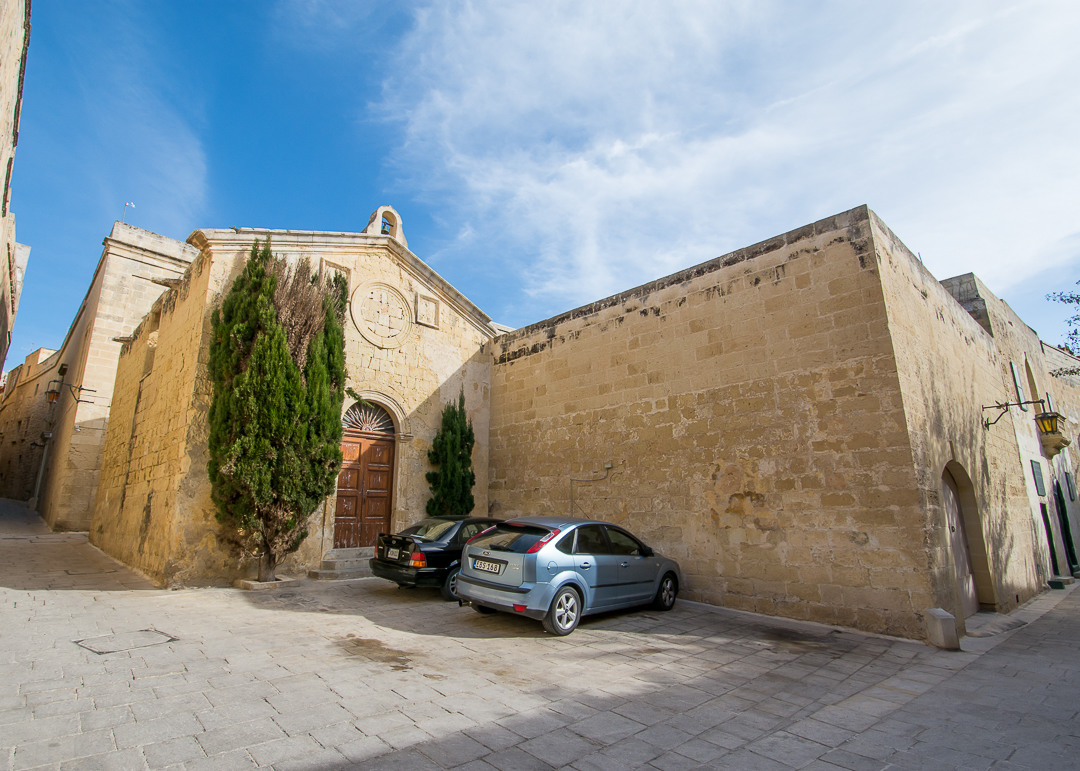
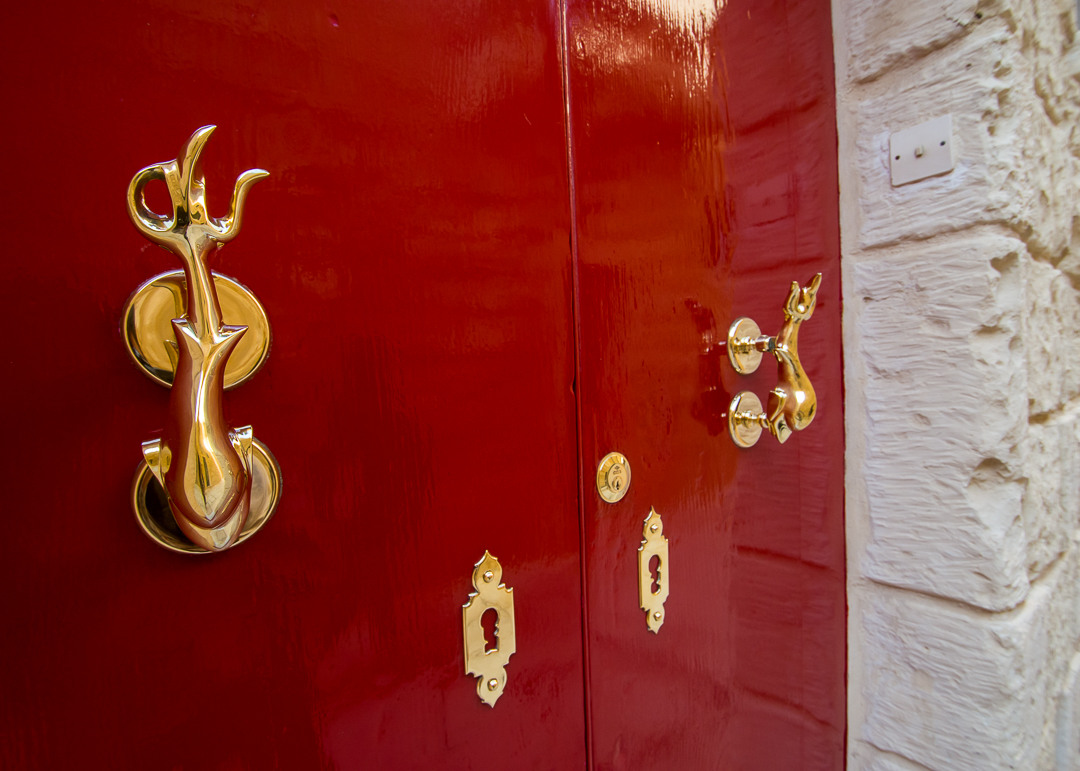
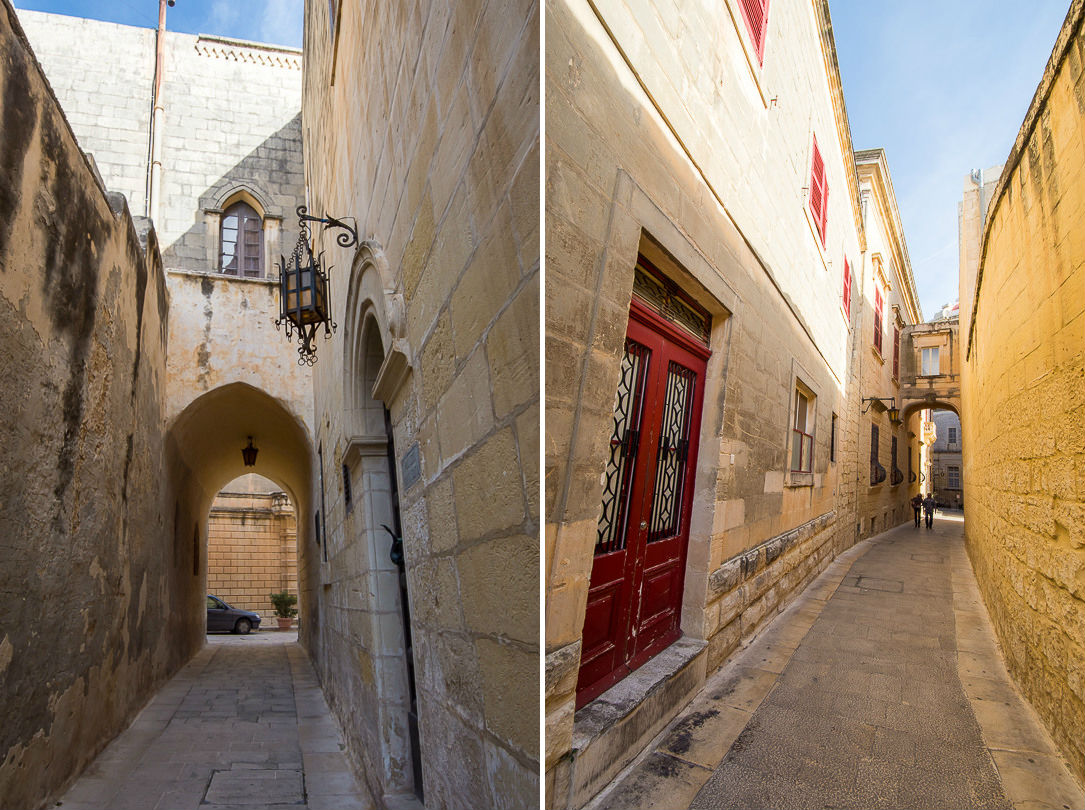
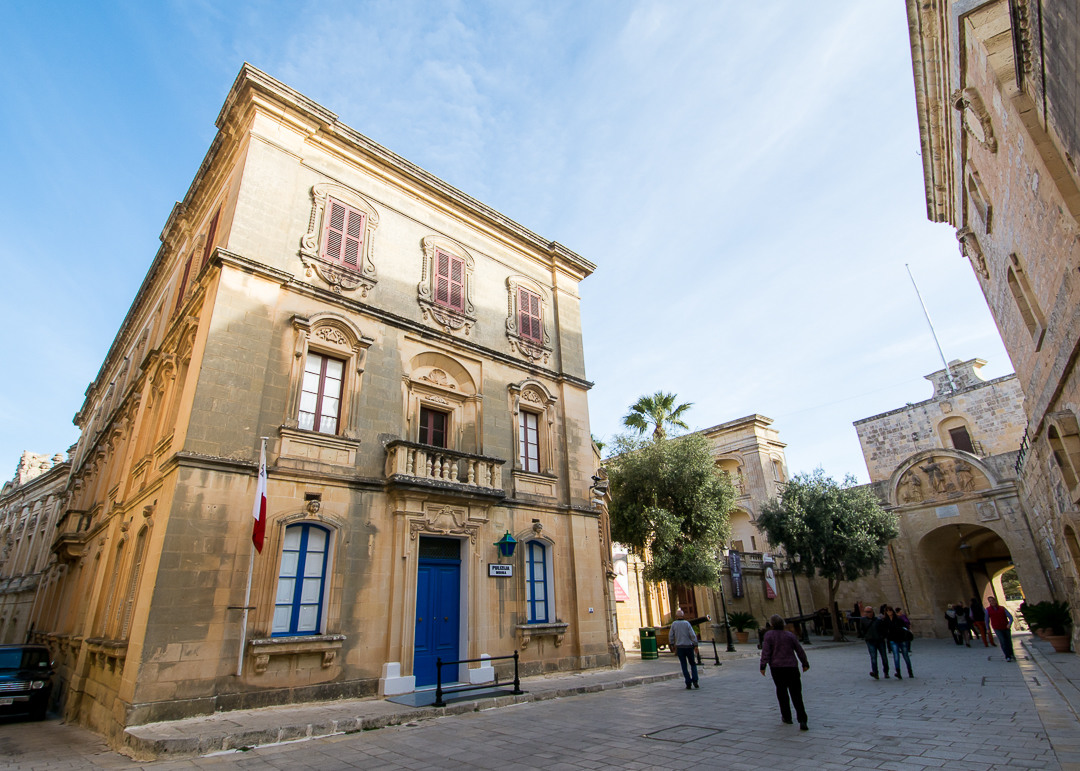
Mdina is still home to some of the oldest families in Malta and the whole place exudes timeless elegance and beauty. For once, there are no set ‘must-see and do’ as the city can be explored entirely on foot in an afternoon and every nook and crannies should be at least glanced at. Simply pick a turn and start getting lost in the labyrinth of narrow cobbled streets.
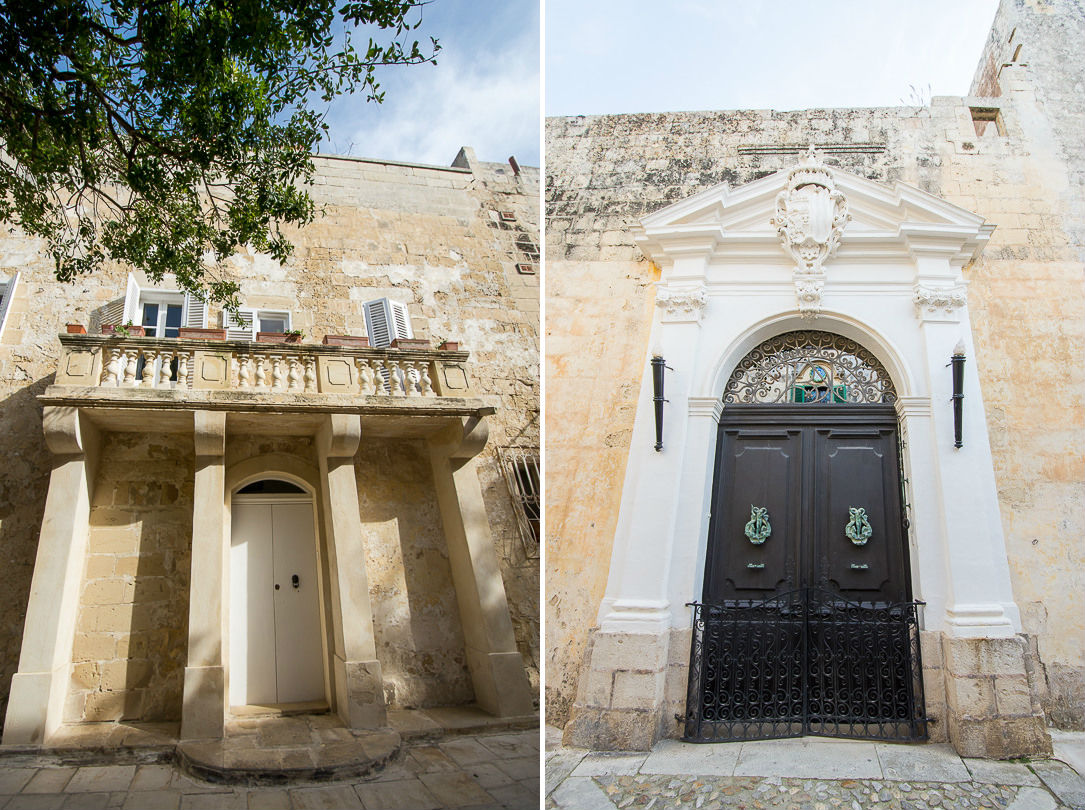
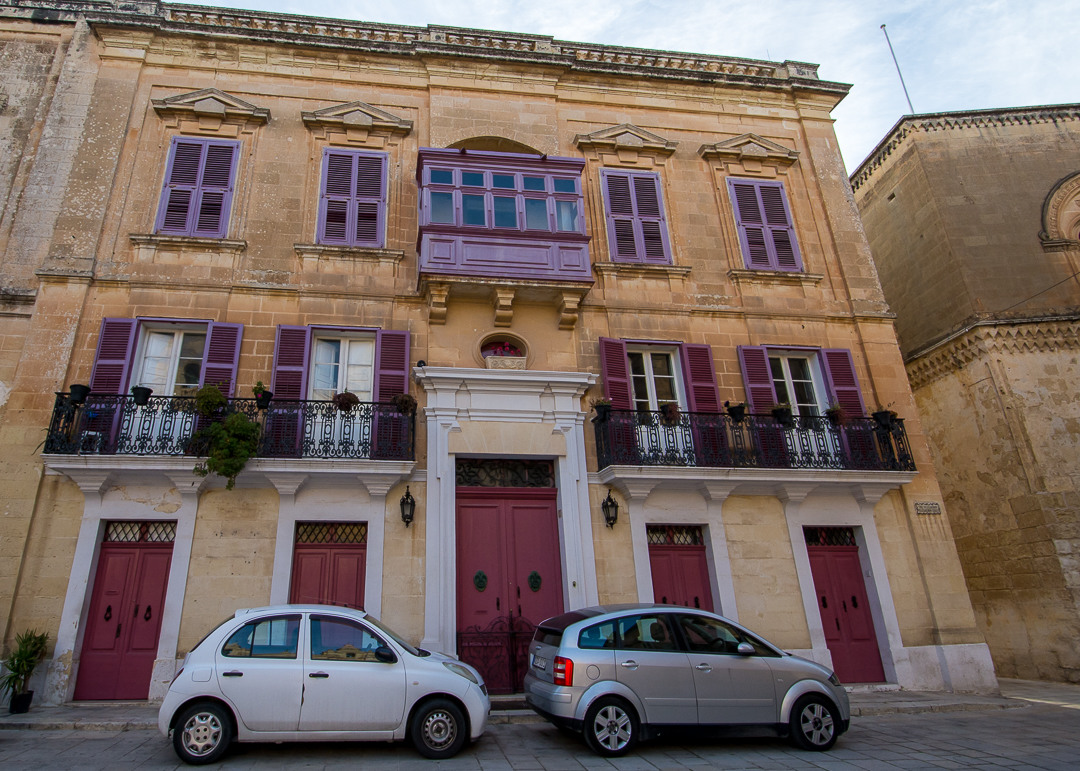
The colors are striking, from the ever-changing light over the honeyed stones against the bluest of skies, the pops from the bright doors and window shutters… the overall tableau will soon take your breath away.
Surprisingly, the place is eerily quiet which adds to the otherworldly impression, and is commonly known as the Silent City since most of its streets are pedestrian only and purely residential.
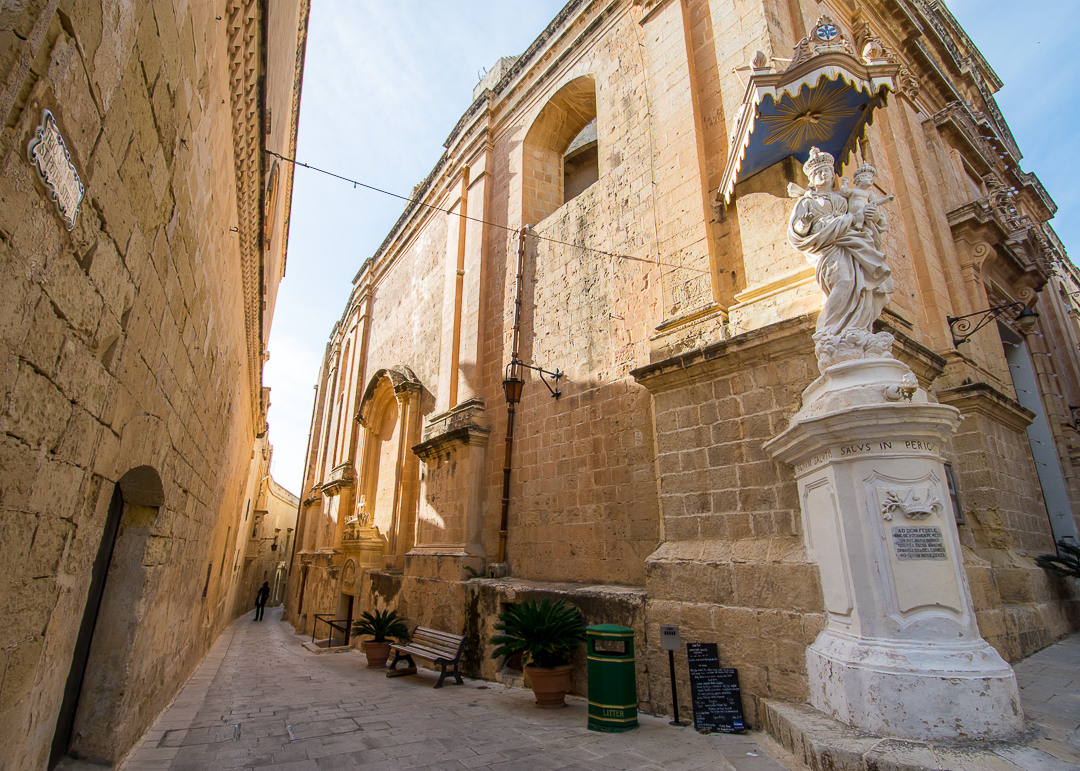
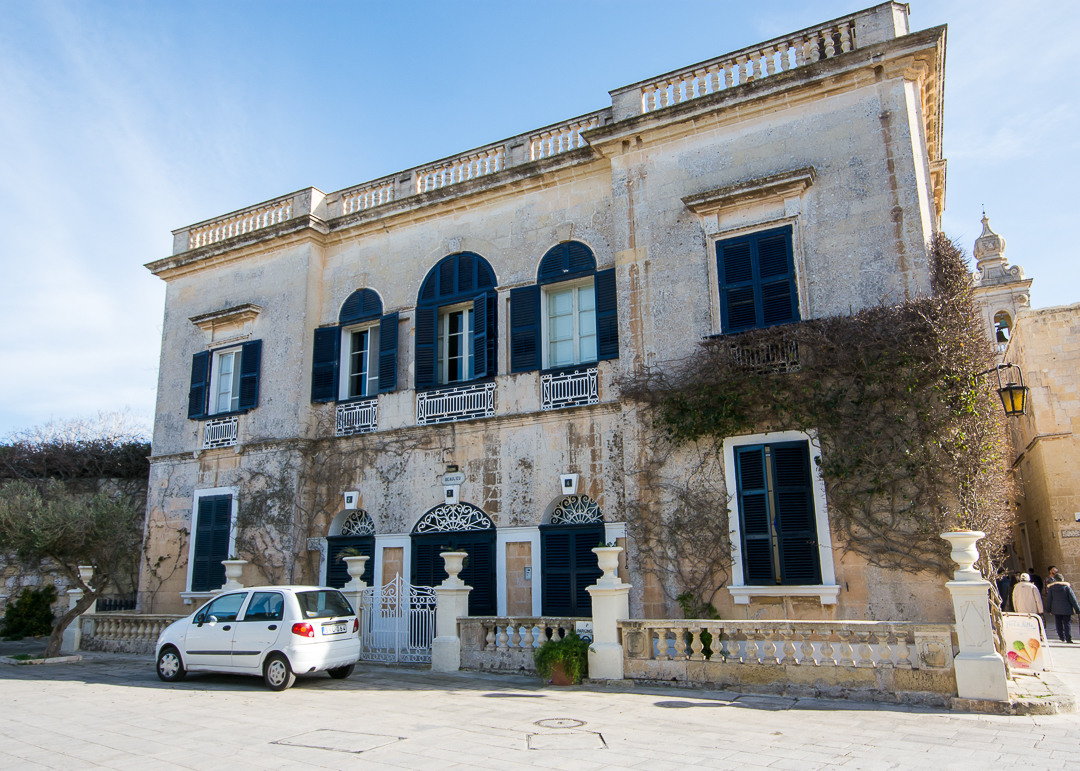
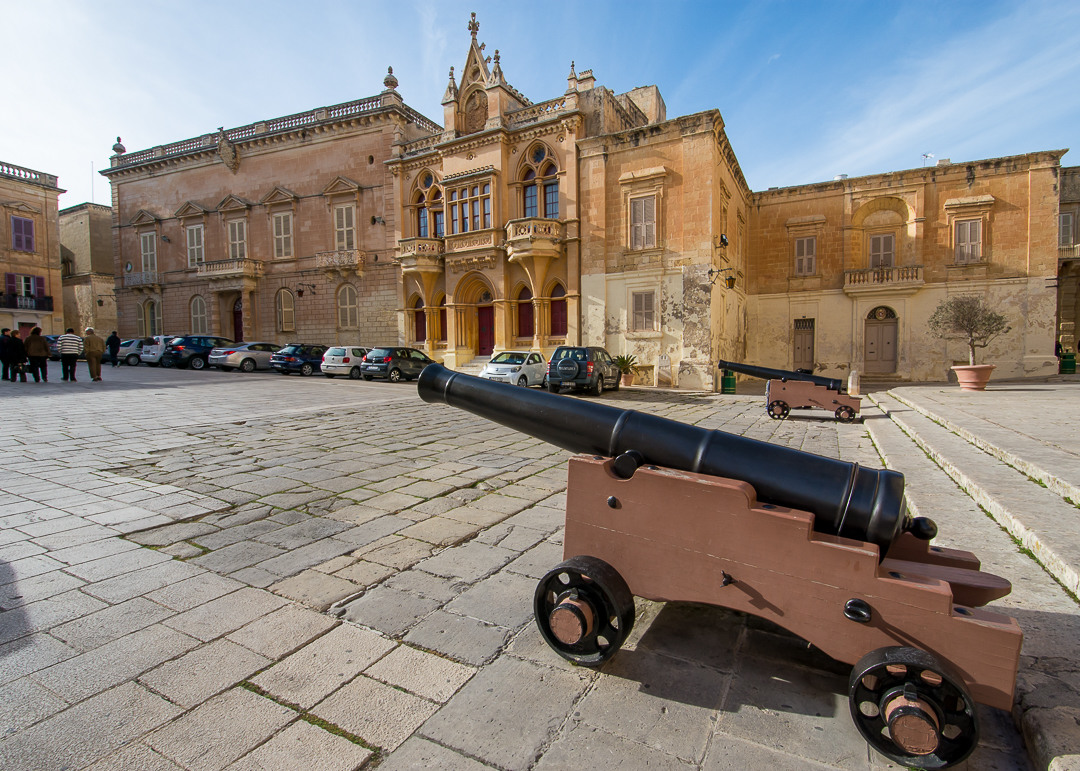
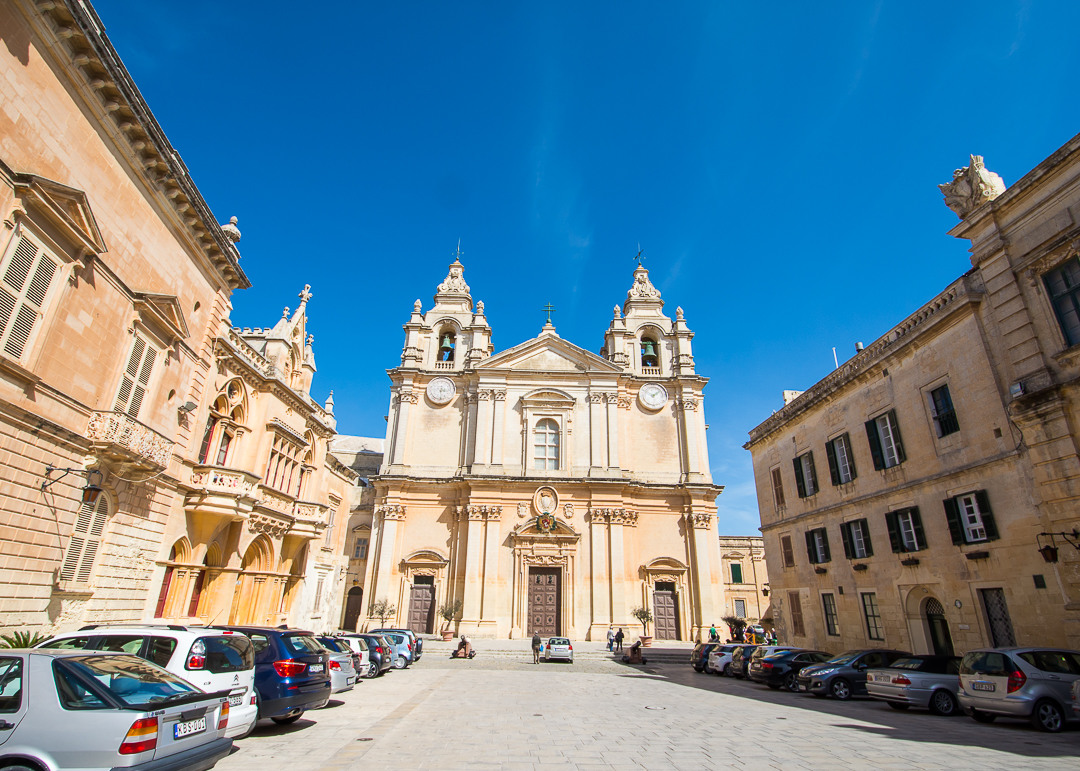
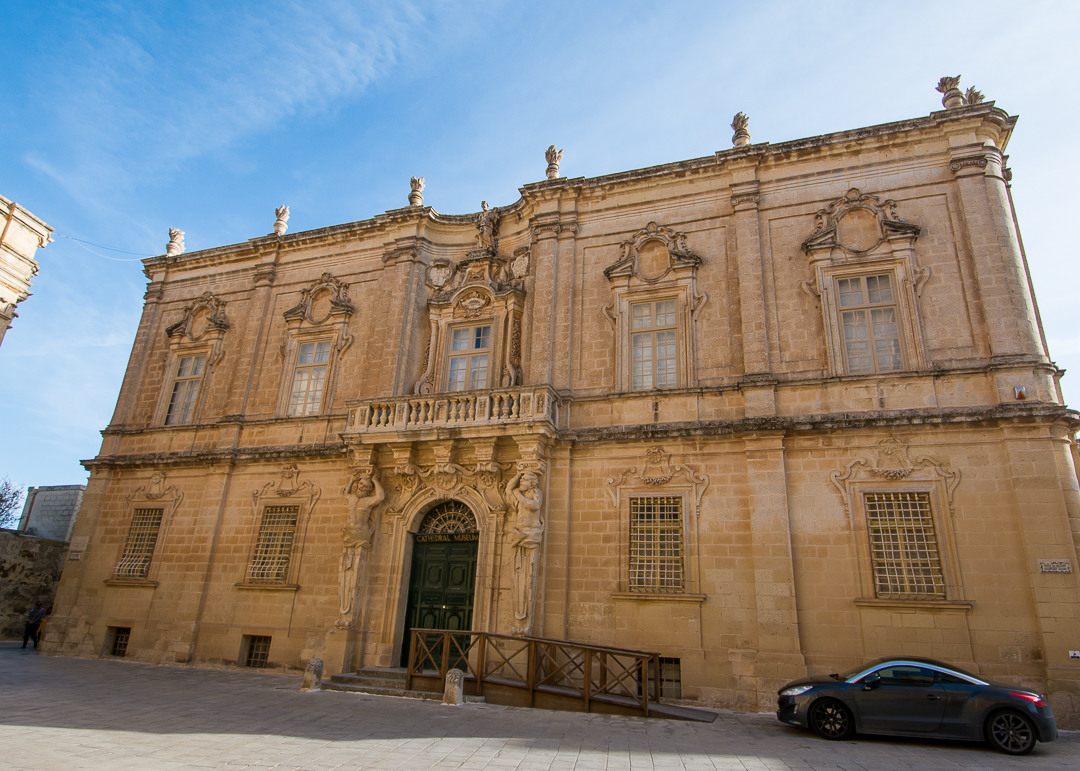
Few descriptions are necessary here as I’d rather let the photographs speak for themselves. The grandeur of the many palazzo, bastions and ornate churches can hardly be accurately put into words…
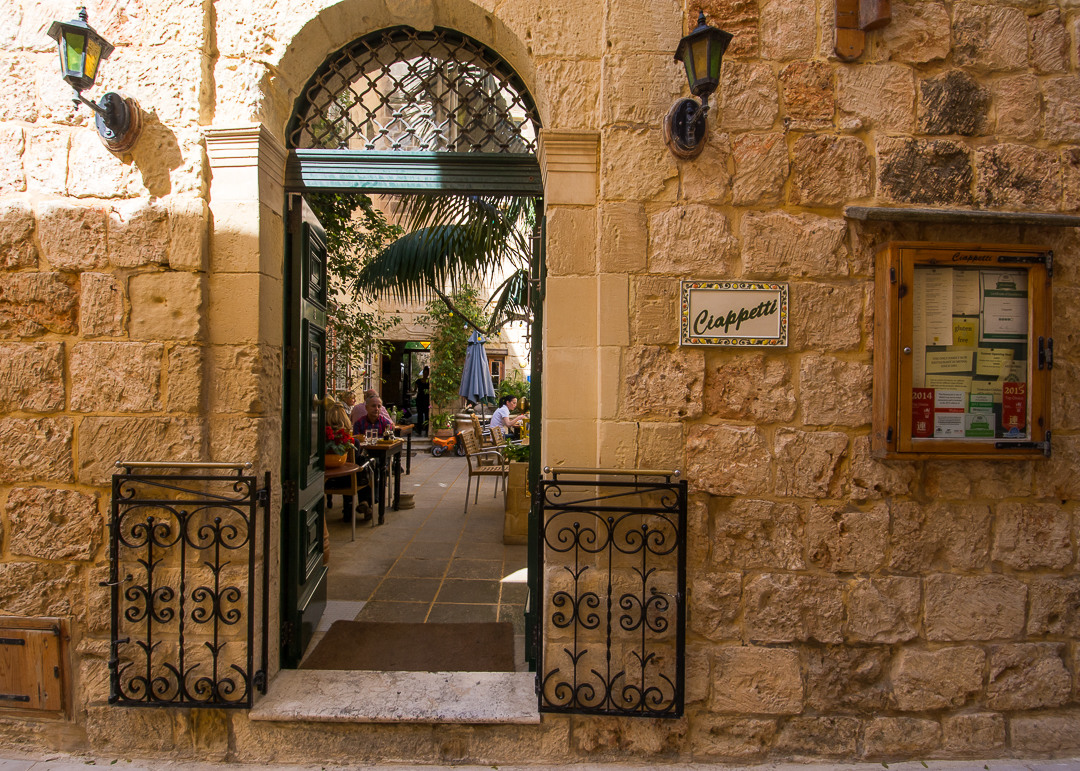
For a great meal in an equally enchanting setting, find your way to the family-run Ciappetti restaurant.
Sit inside the walled courtyard under the orange trees and grapevines and take your time savoring the local dishes flavored with home-grown herbs – a pure delight.
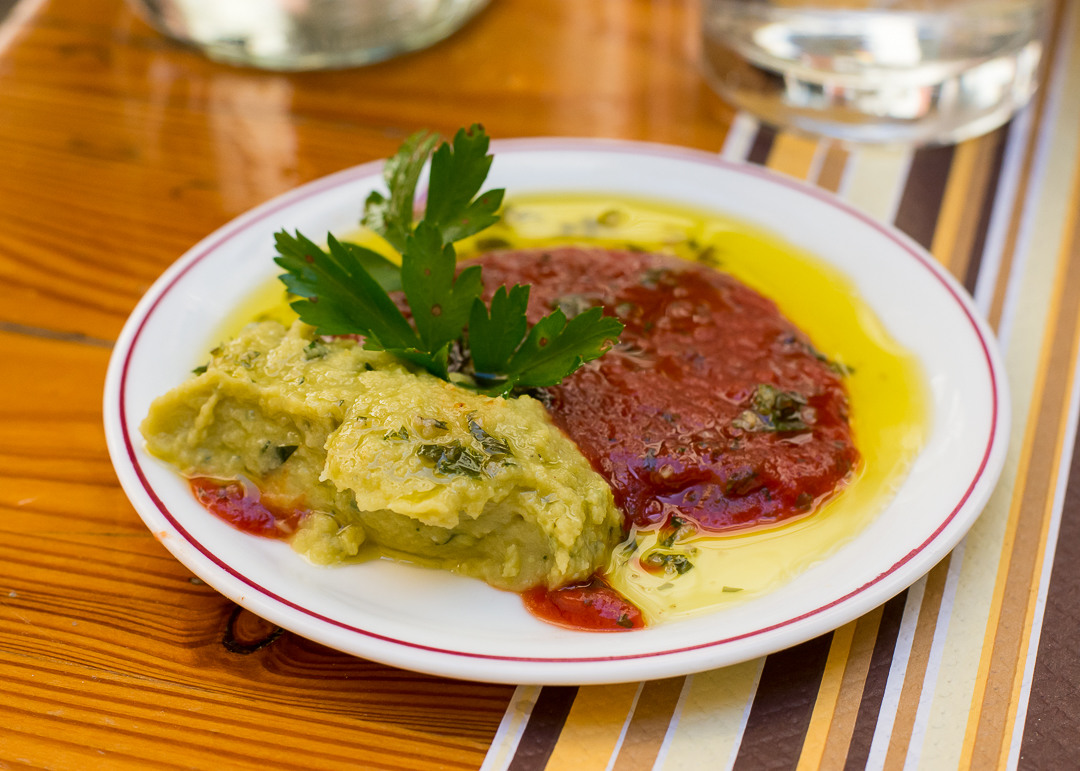
Local bean & tomato spread with parlsey
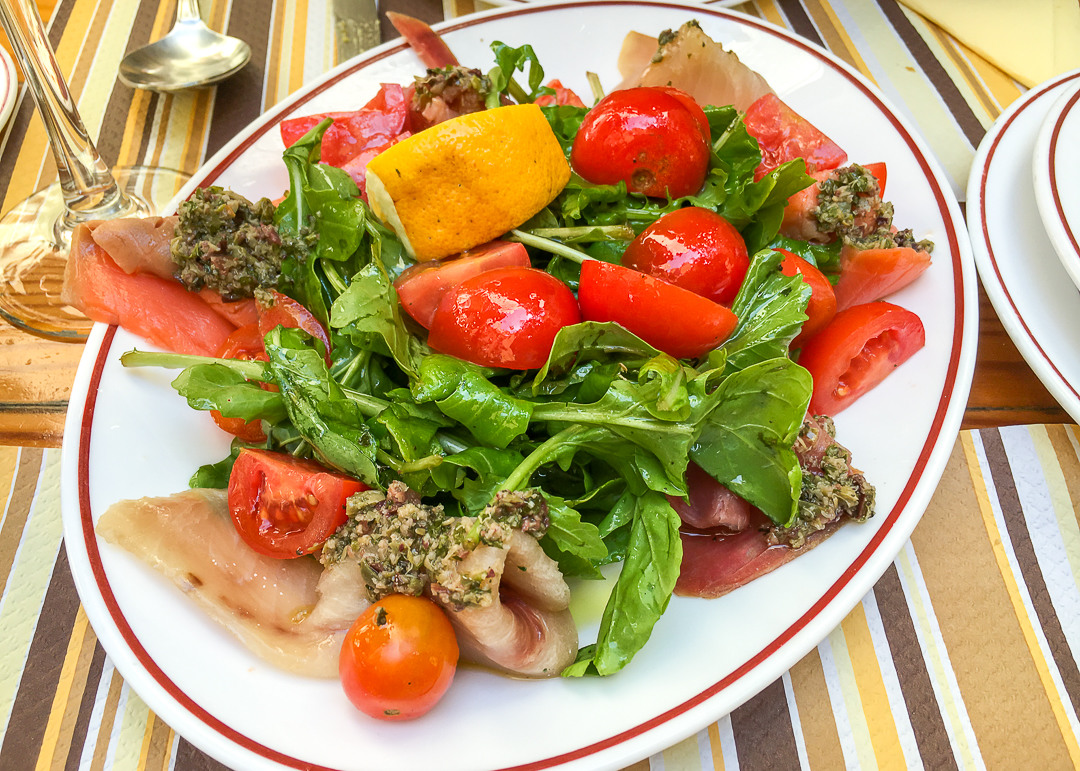
Trio of smoked fish salad
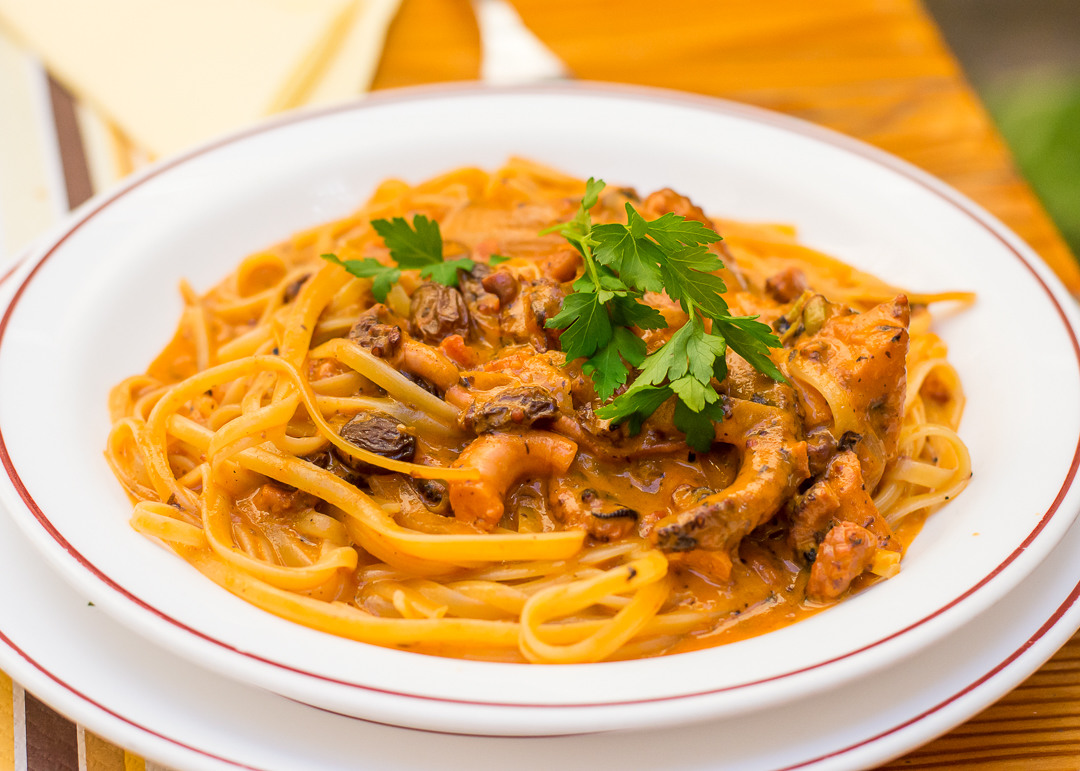
Pasta with octopus
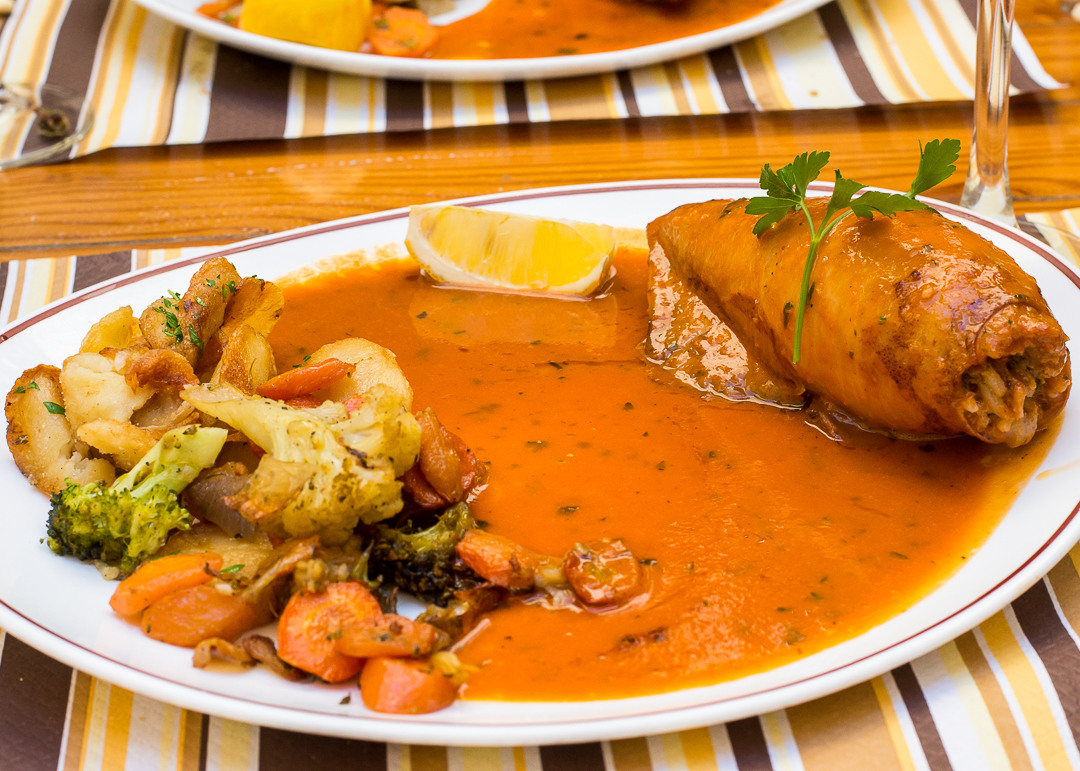
Stuffed squid
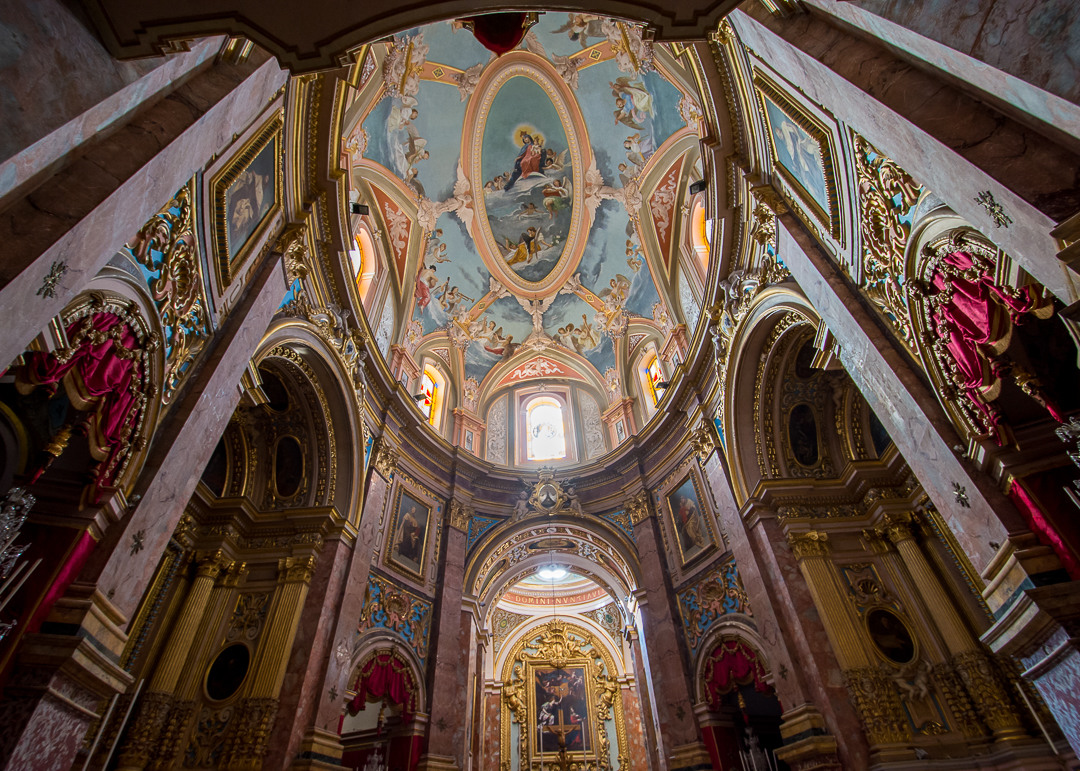
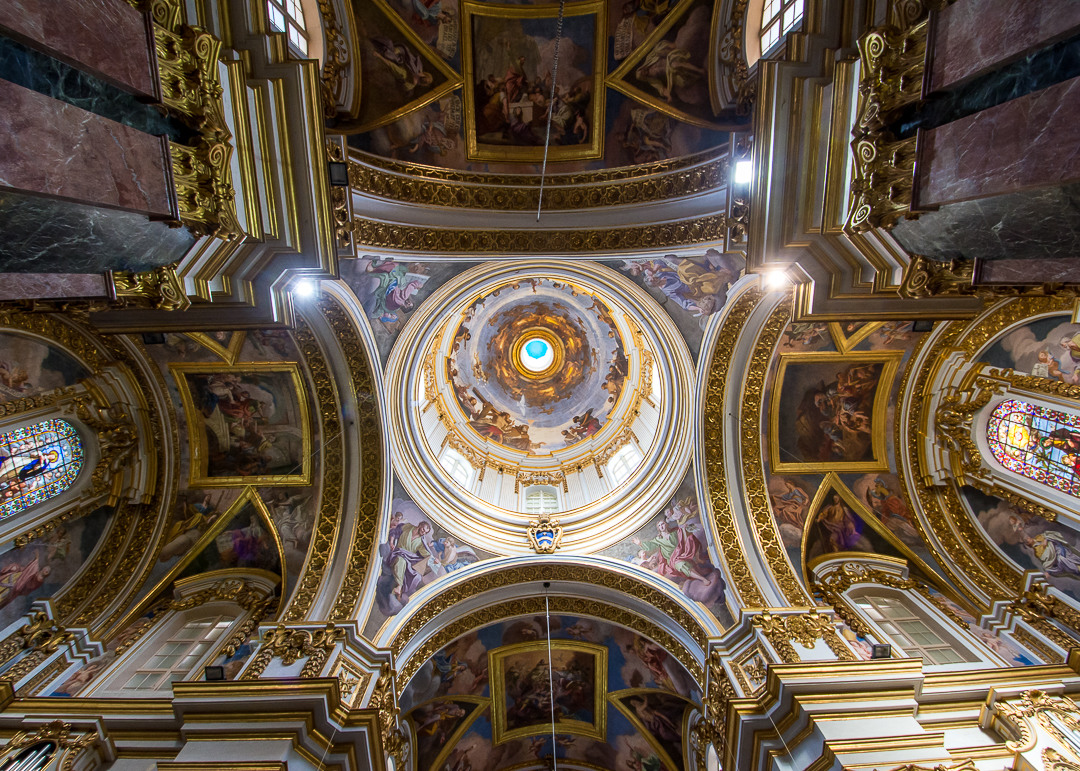
The cathedral’s magnificent Baroque dome can be seen from a distance and should be contemplated from inside where its boldness will surprise you.
It’ll be hard to walk back through that gate in the harsh sunlight at the end of the day without wishing you owned the key to one of these exquisite habitations, among the most coveted in all the country unsurprising1ly. You could always find a room in one of the few luxury palazzo to extent the reverie a bit, I sure wish I’ve had the time (a repetitive complaint of this trip, I know!)
Floating between Sicily and the North African coast, the archipelago of Malta quickly had me fooled by superlatives far from reality. While it features prominently on all of the world’s ‘smallest destinations lists’, the tiny islands pack such a vast amount of historic sites and beauties within their limited surface, thanks to a succession of rulers spanning thousands of years, that I can’t imagine anyone not underestimating the time it takes to truly explore the nation. I for one thought a long 3-day weekend would suffice though I was barely able to scratch the surface. What you’ll see in this post and the next is just a fragment of Malta’s glorious variety and should be the base to plan a much more fitted 10-days vacation…
On the largest island (Malta) you ‘ll find the tiny capital of Valletta, Europe’s smallest with its 1km by 600m size. Don’t let that fool you as you could easily spend a week here and still miss some of the major sights.
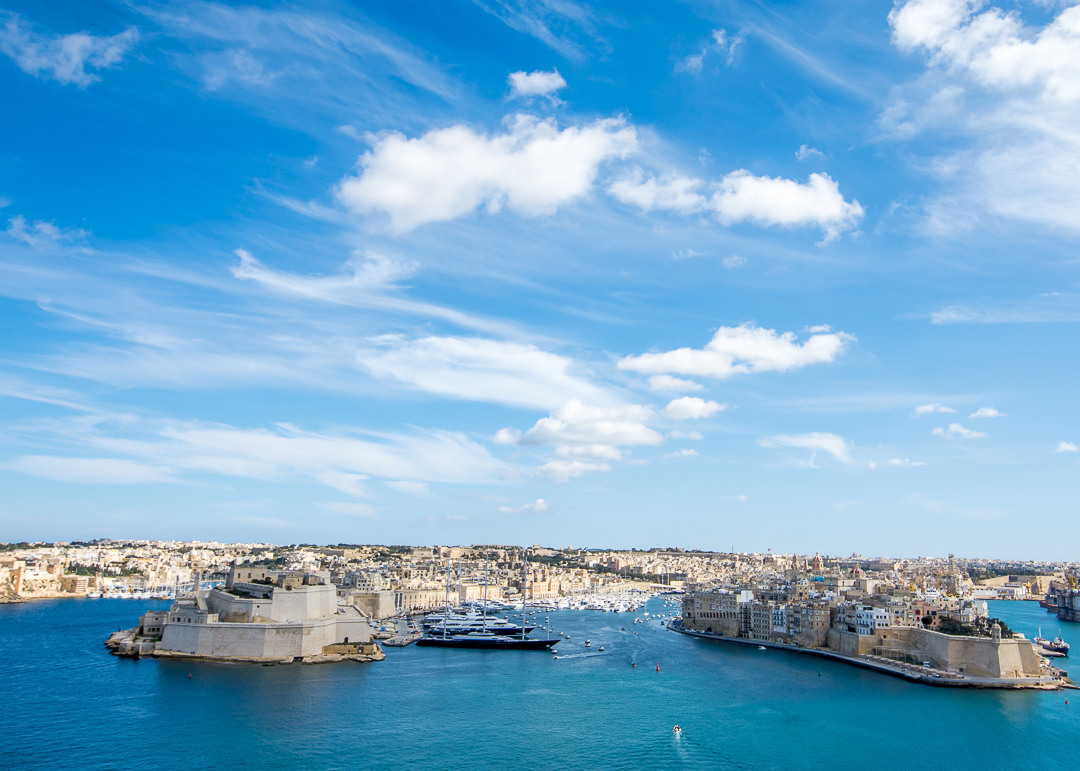
This is a splendid view from Valletta looking at the Three Cities across the Grand Harbour, none of which I had time to check out!
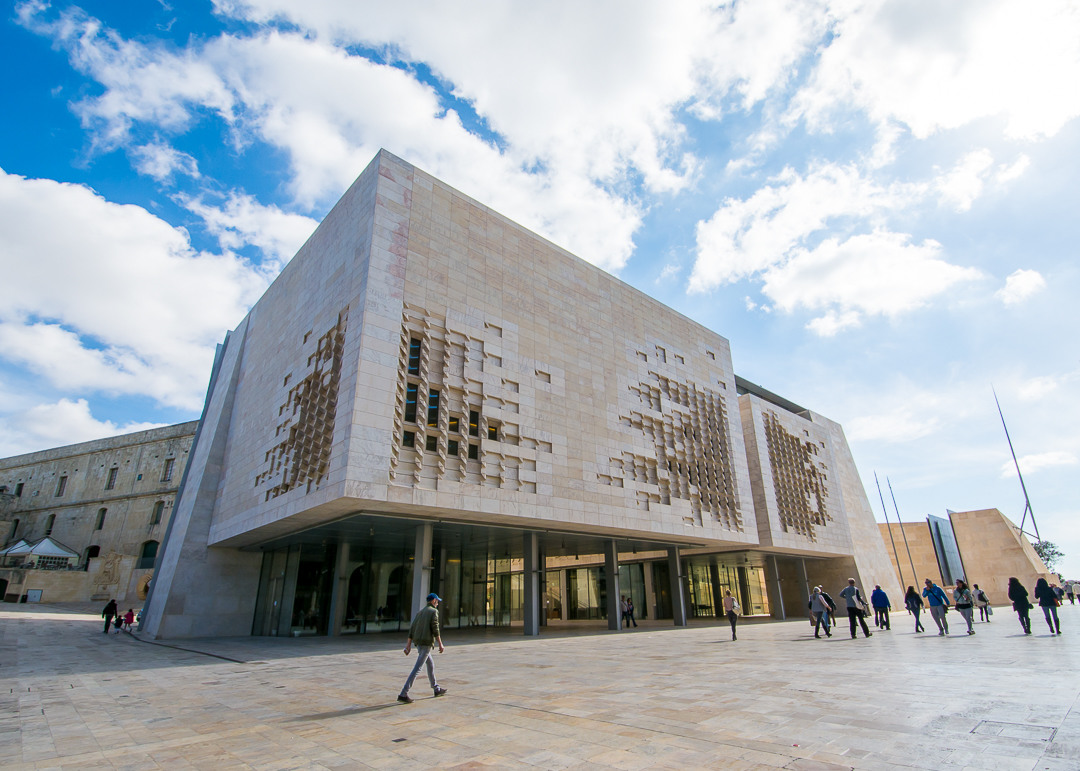
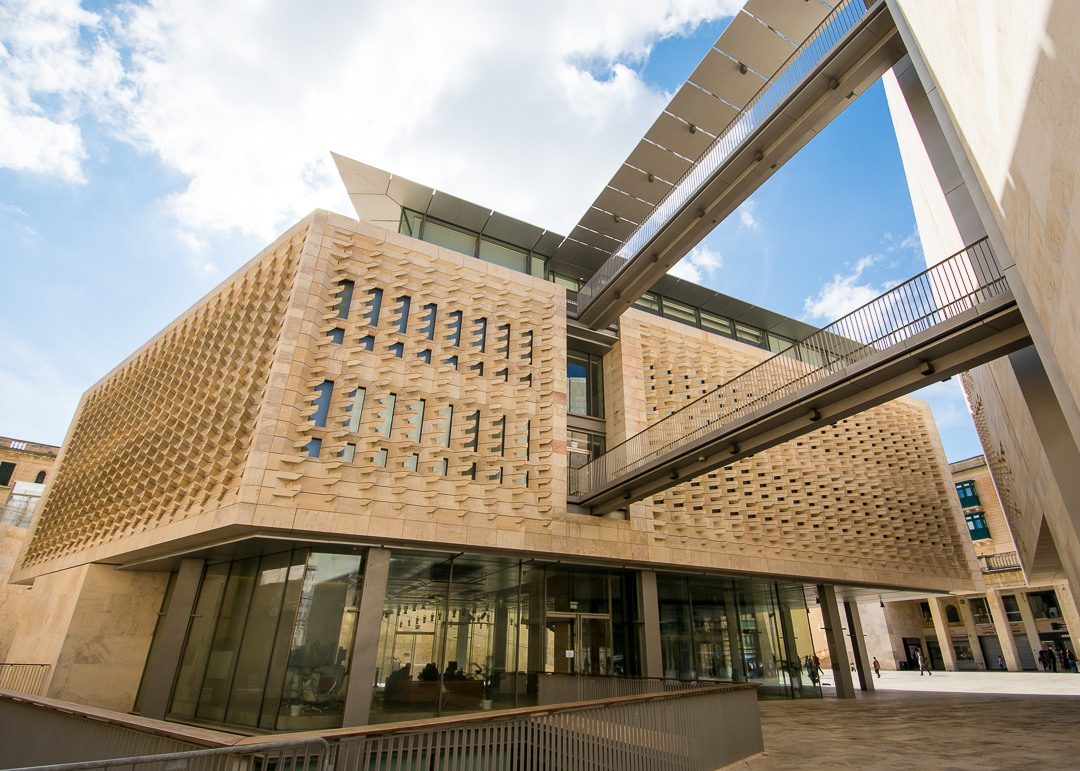
Everyone enters Valletta through the main city gates where you’ll find the bus station (a great way to get around the island) and right after you’ll be greeted by the unmissable new Parliament building designed by Renzo Piano and inaugurated last year. The two massive stone blocks, balanced on slender columns to give the building a sense of lightness, sure are a sign of modern times and a stark contrast to pretty much everything around it.
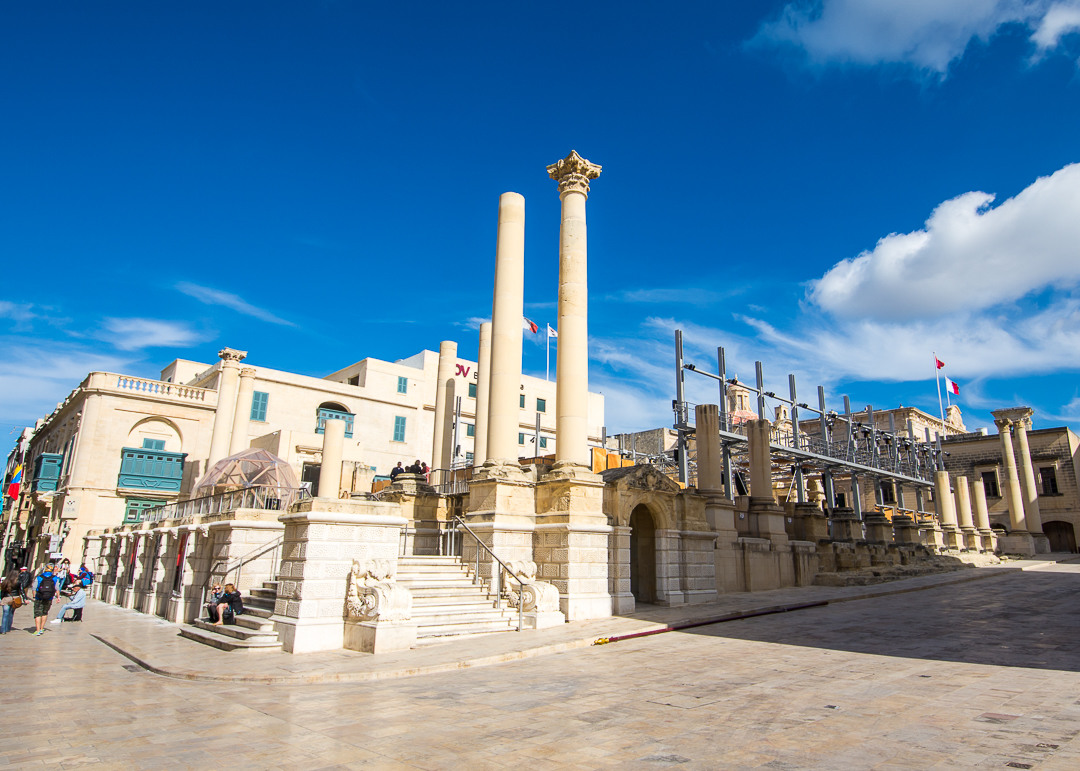
Right next door is the Royal Opera House or rather what remains of it. All over Malta are vestiges and reminders of the devastating destruction the island endured during WWII due to its strategic location in the Mediterranean.
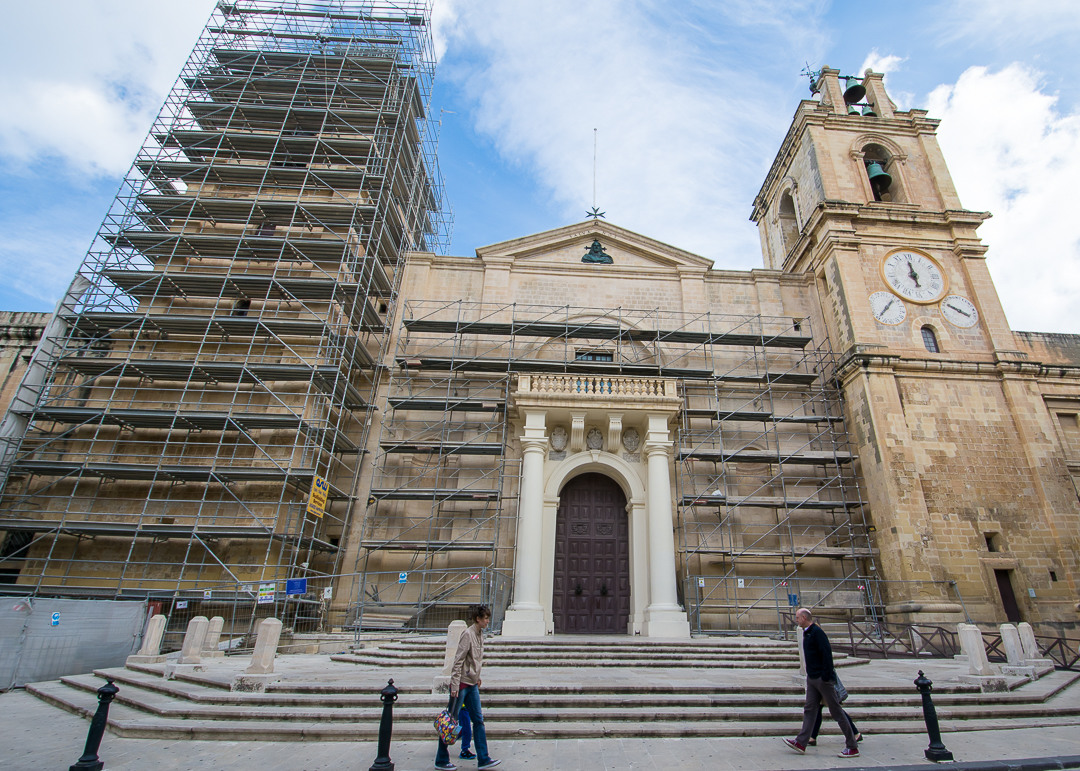
Instinctively you’ll find yourself following the main street straight ahead, called Republic, which will bring you right into the center of Valletta (in under 10 minutes, no more!), passing by some of the most famous sites. St John’s Co-Cathedral was unfortunately closed in preparation for a religious celebration so we had to content ourselves with its stern facade, trying not to think that we were missing the dazzling interior as well as a famous Caravaggio painting…
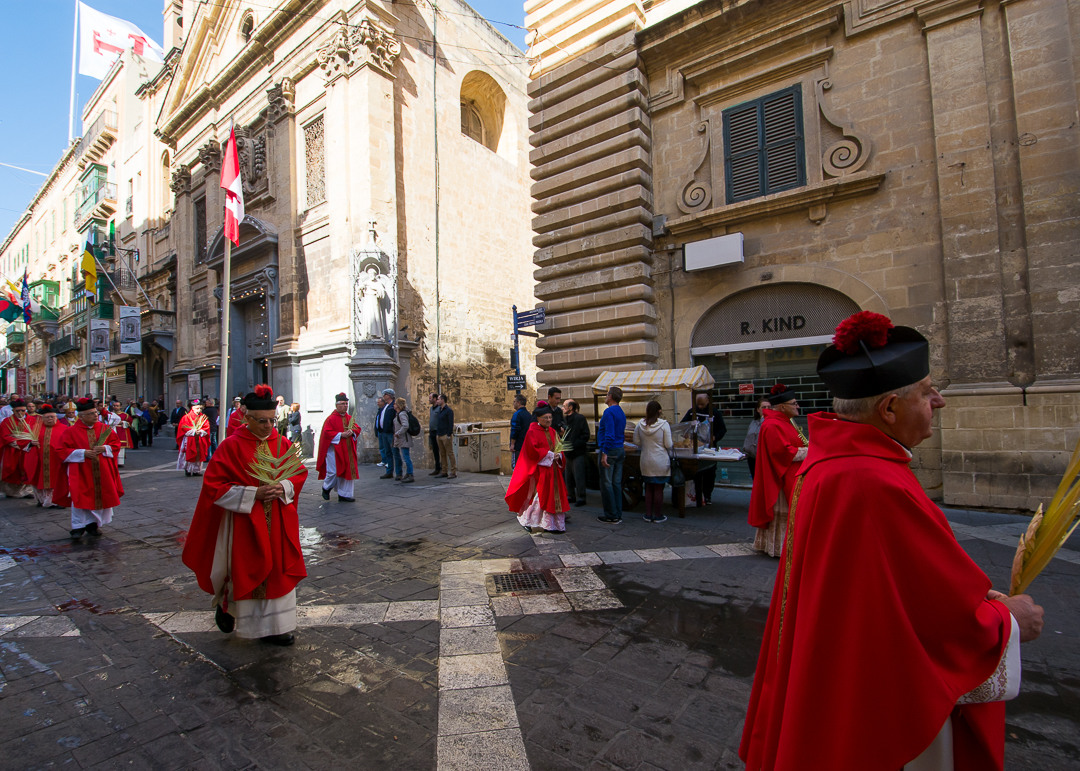
That day was the Feast of St Joseph and it’s a real treat to be here during one of the numerous festas, Malta being the most Catholic country in all of Europe.
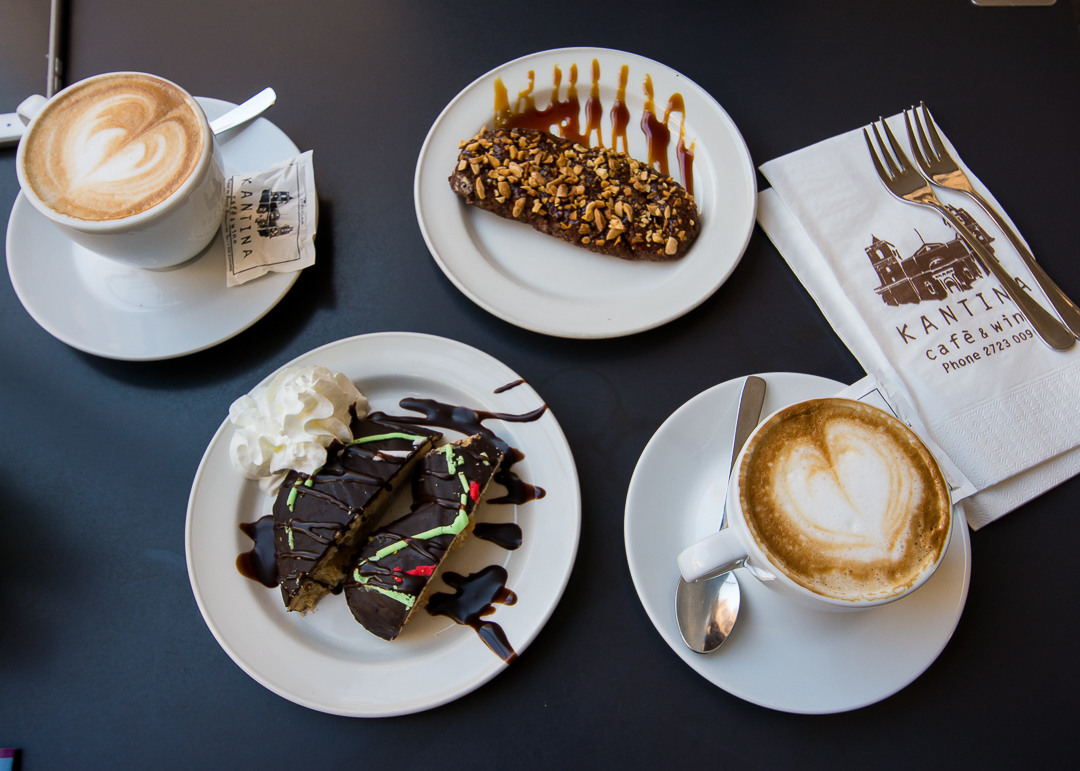
We watched the many processions from sidewalk cafes, snacking on traditional Easter cakes and lent biscuits at Kantina Cafe.
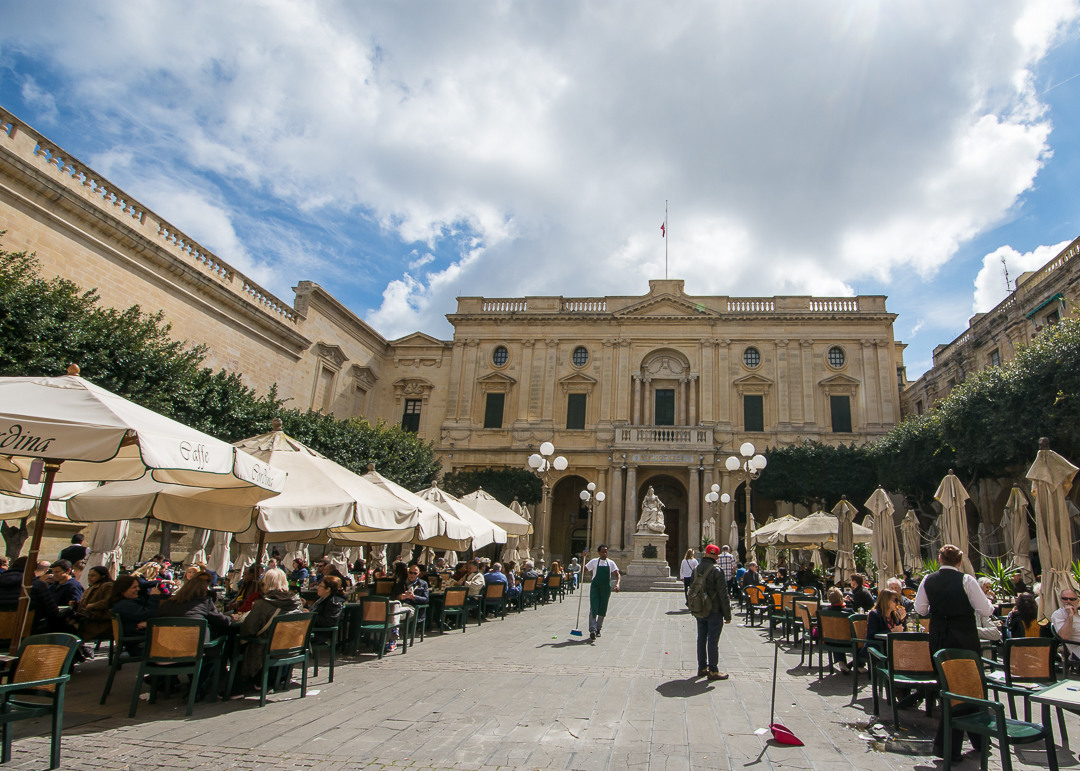
Further north you’ll find Valletta’s oldest and most popular cafe, Caffe Cordina. A real icon of the city, its terrace in the middle of Victoria Square is the best people-watching spot around.
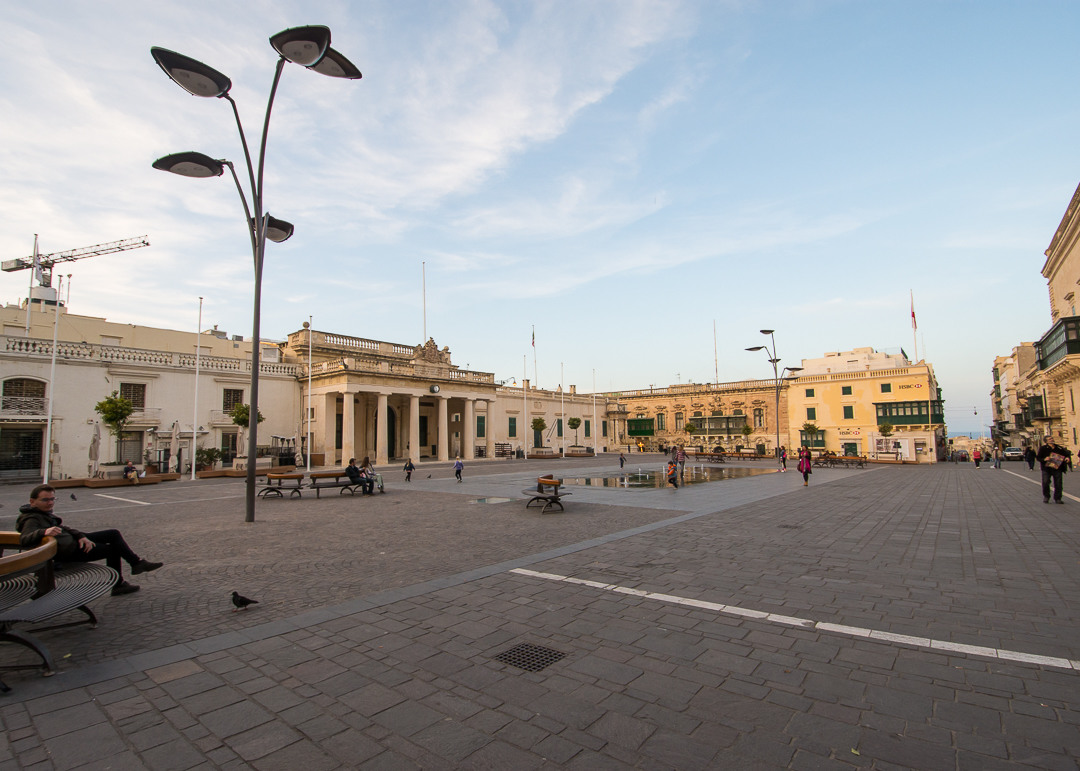
Right across you’ll find St George’s Square, Valletta’s largest and most prominent square which also acts as the true ‘city center’ and is where inhabitants still gather today to celebrate public events and the likes.
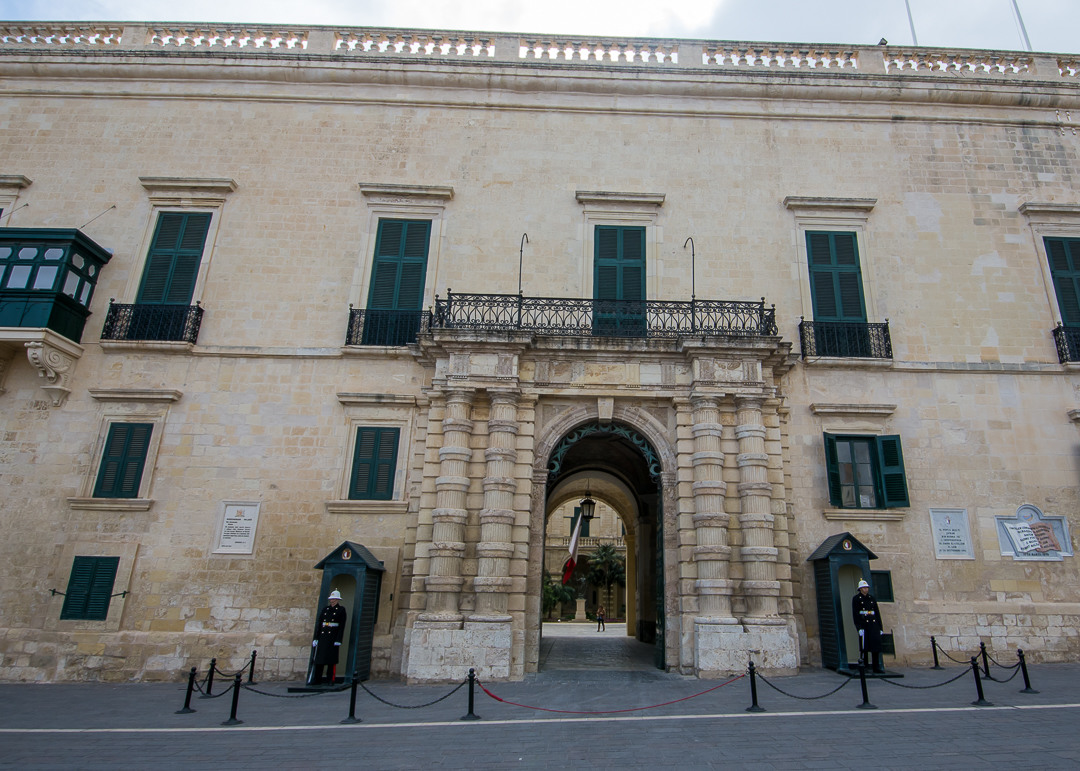
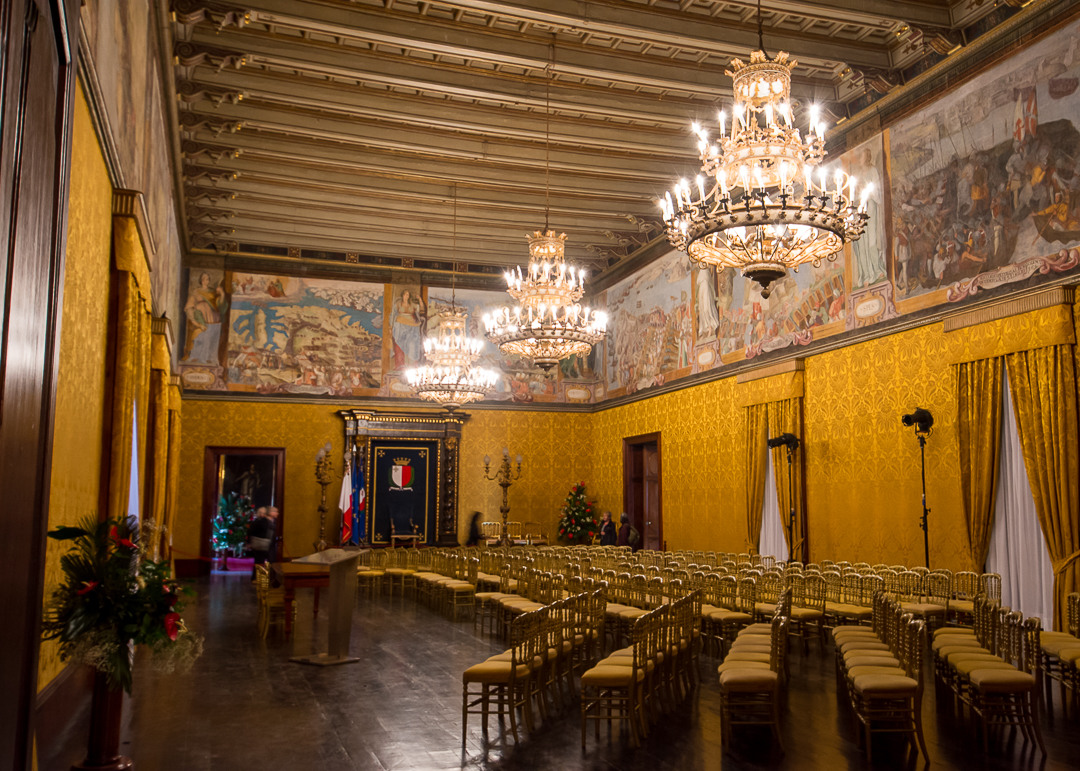
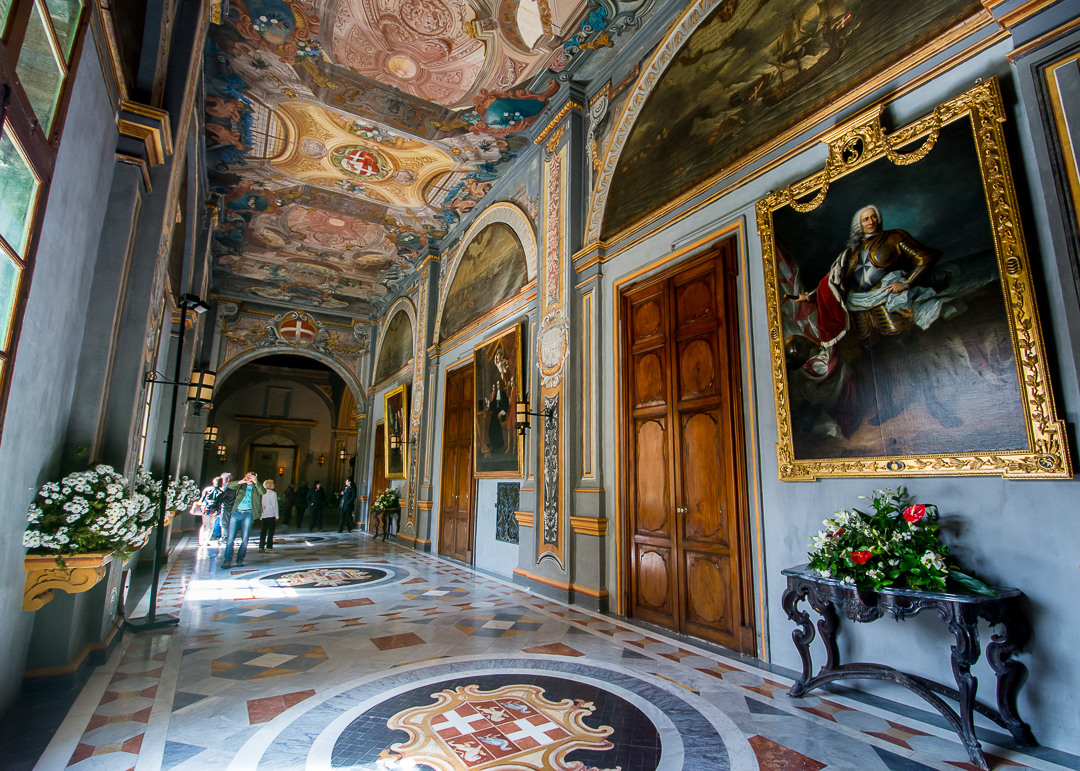
Facing the square is the imposing Grand Master’s Palace which has always been the seat of Government of the Maltese islands since the new city was built in 1565 (today it is the President’s office and seat of the Maltese Parliament).
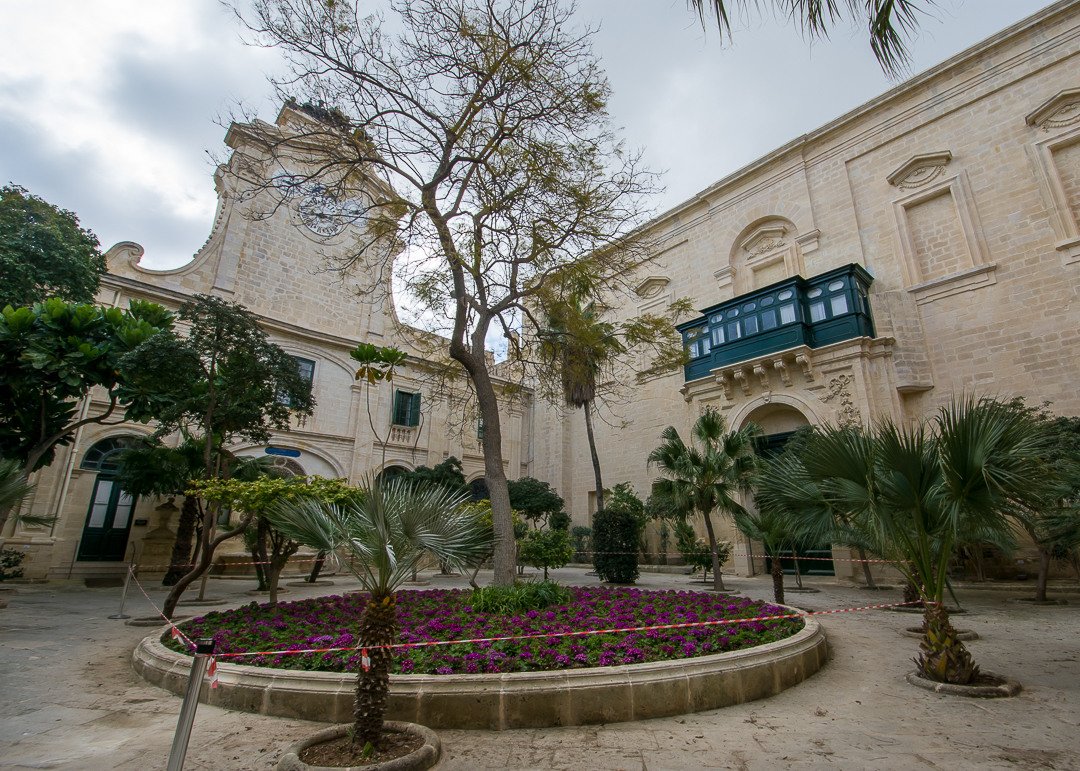
It’s worth visiting the handsome grounds and palace which was for over two hundred years the residence of the Grand Master, supreme head of the Order of the Knights of St John.
The Supreme Council Hall is the grandest room with glittering chandeliers and a magnificent frieze all around depicting the great siege of 1565.
My favorite part though had to be walking along the lavishly decorated Corridors of the Knights lined with portraits of the Grand Masters.
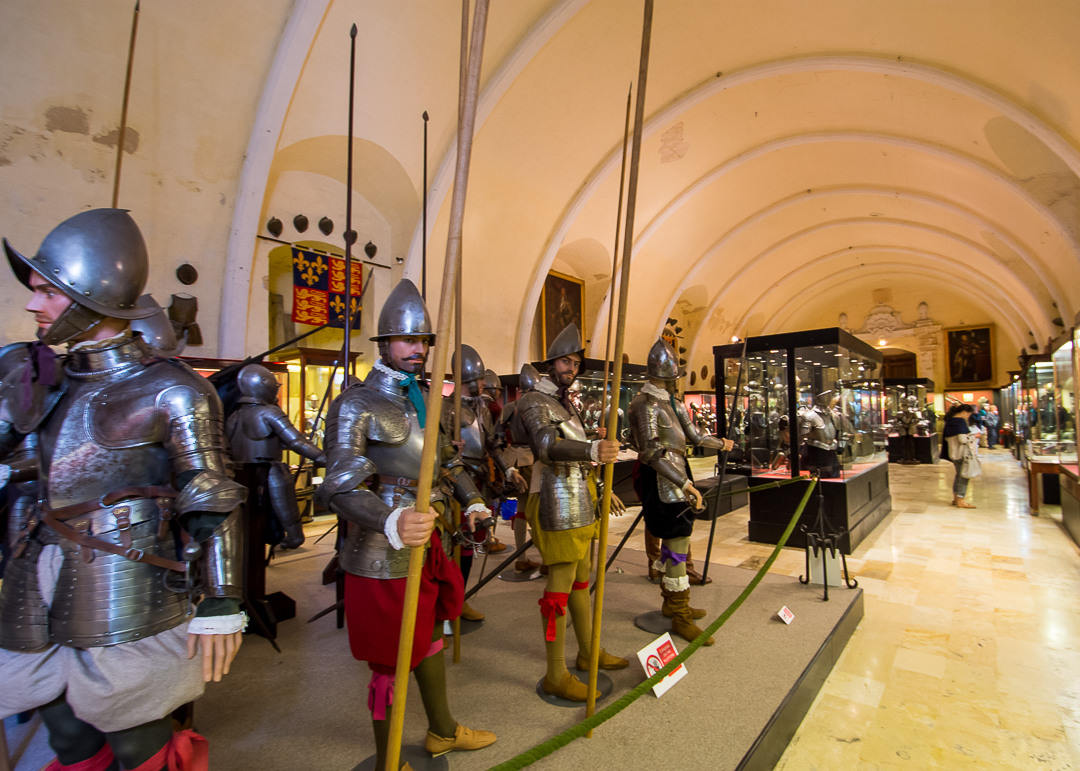
Before leaving the palace, the Armoury located in the former stables is a must for any fans of medieval weaponry and military hardware as more than 5,000 pieces are on display.
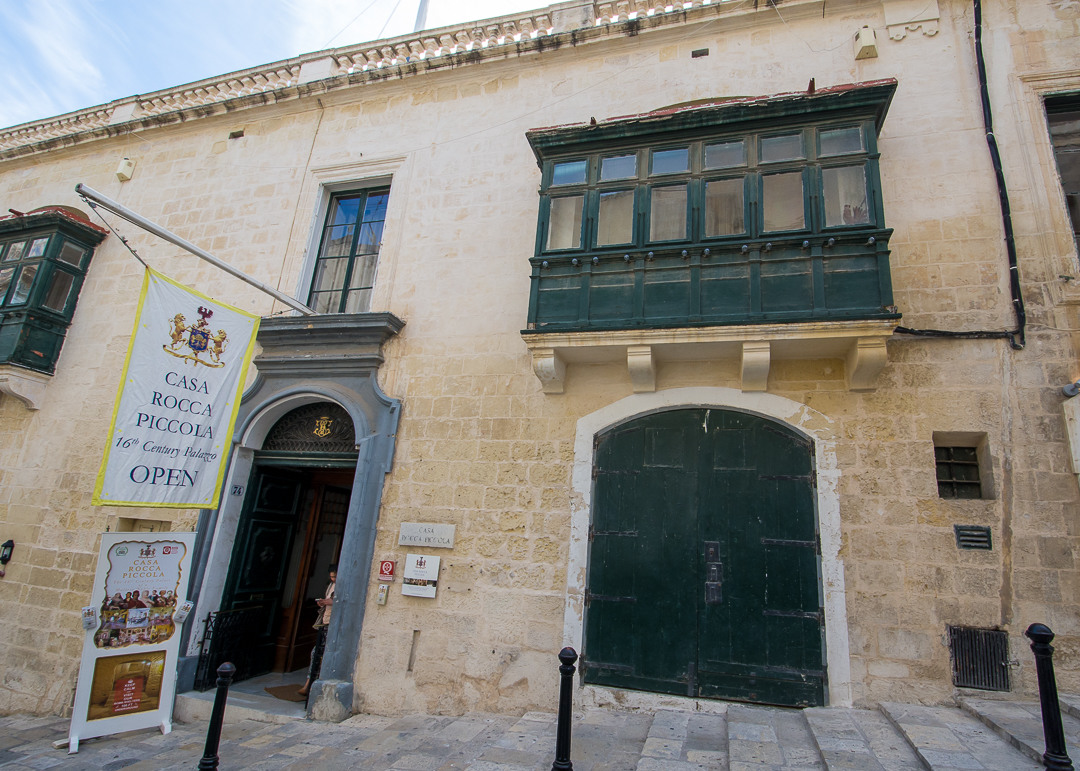
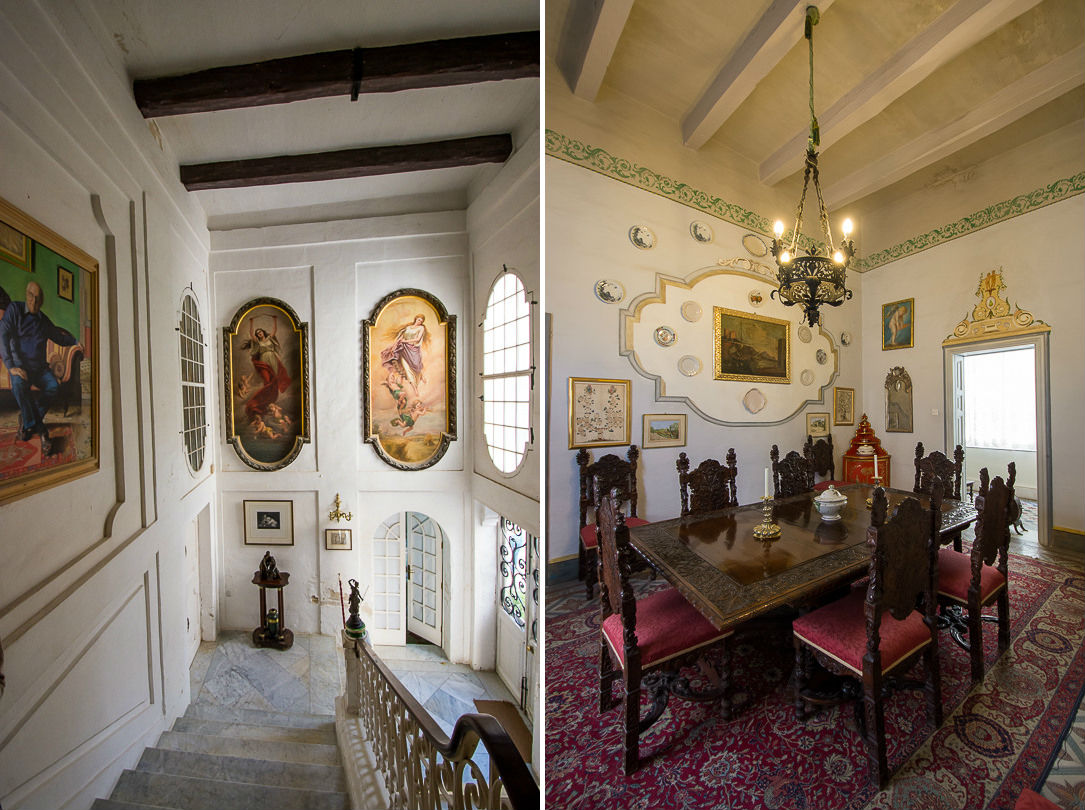
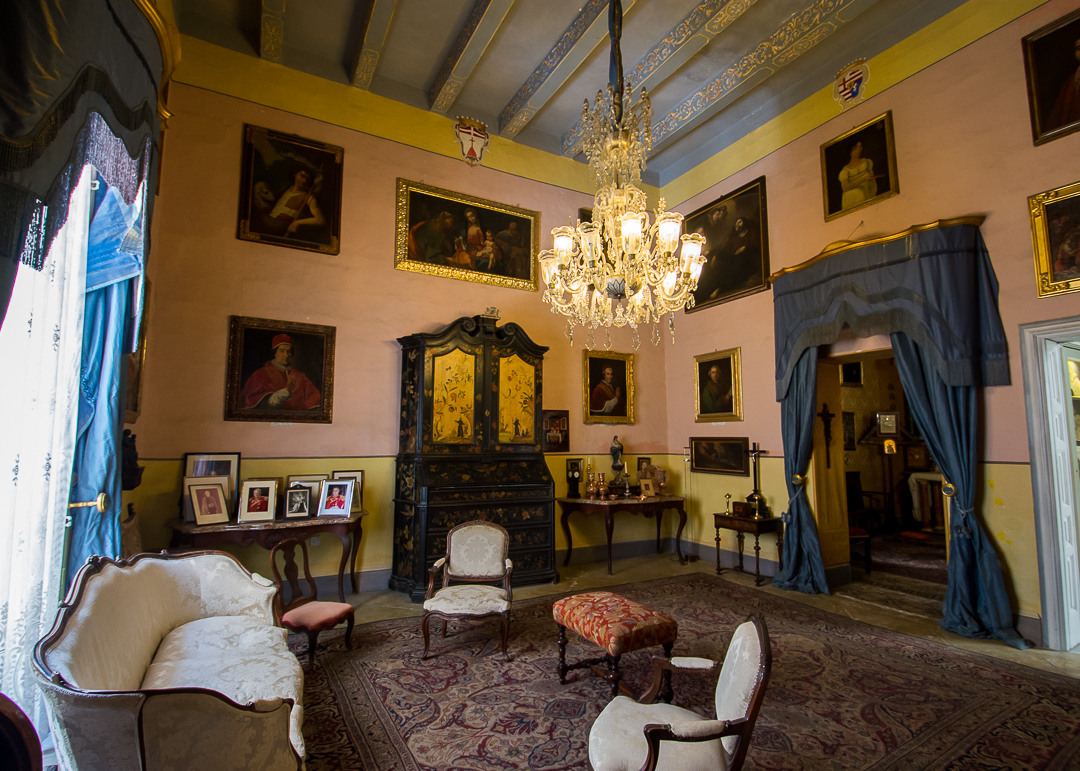
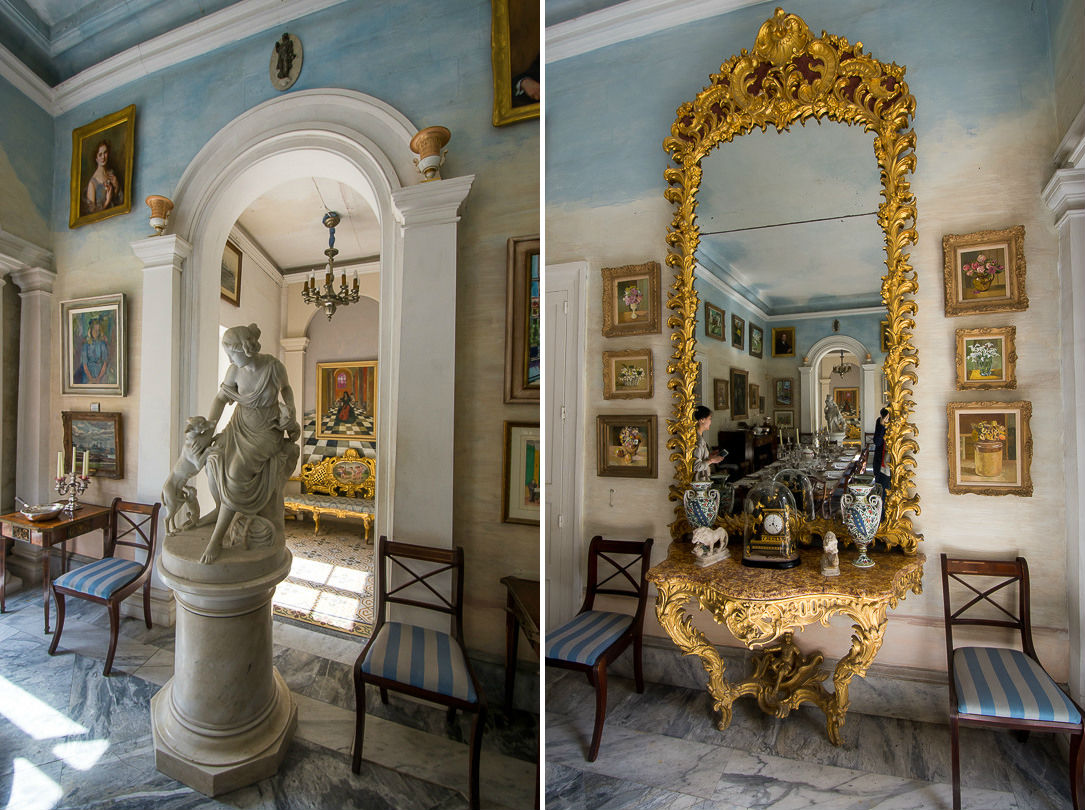
Two blocks ahead, la Casa Rocca Piccolais another chance to step back in time and learn loads about Malta’s notable past, the casa being the only private palazzo open to the public in Valletta. This beautiful palace is still the home of the noble Maltese de Piro family and guided tours every hour will let you peek into about a dozen out of the 50 rooms it contains.
Through the vast collection of rare and finely crafted furniture, curiosities, paintings and photographs, you get a unique insight into the customs and traditions of the Maltese nobility over the last 400 years.
Grand staircase and winter dining room
The Sala Grande is the tallest room in the house and contains some very important paintings as well as a great example of a portable chapel, hidden within the large black lacquer bureau against the wall.
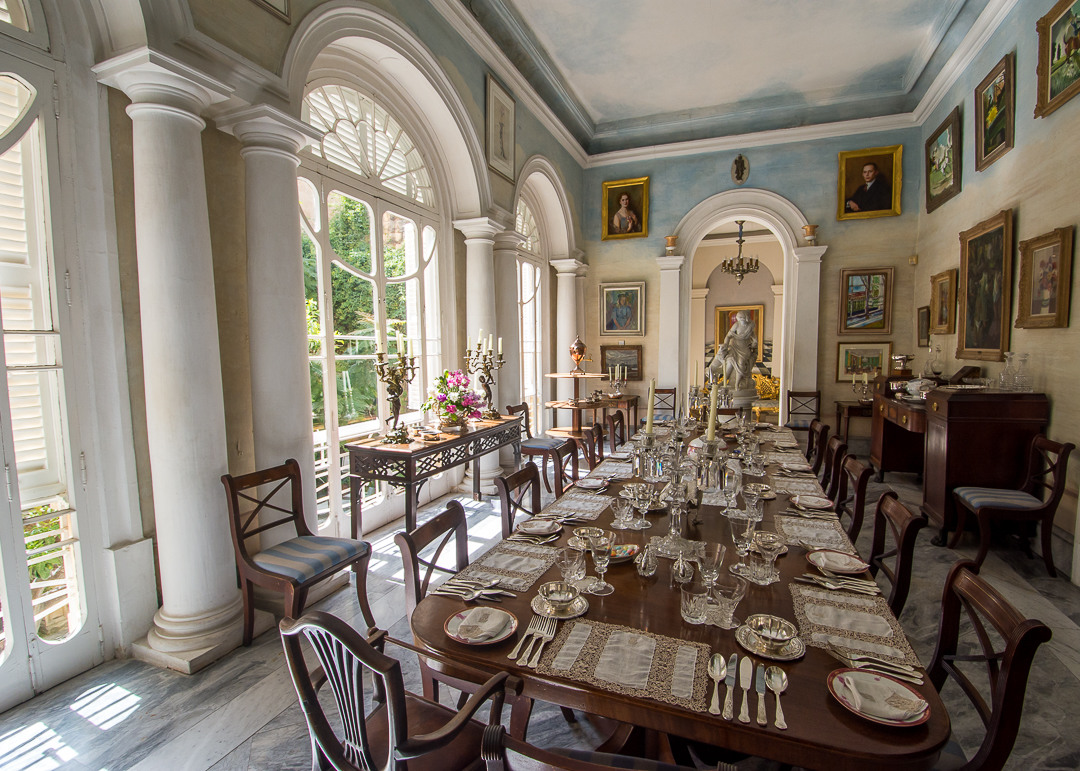
My vote goes to the art nouveau Summer Dining Room with its giant windows overlooking a secluded garden. The dinner parties I would throw in there…
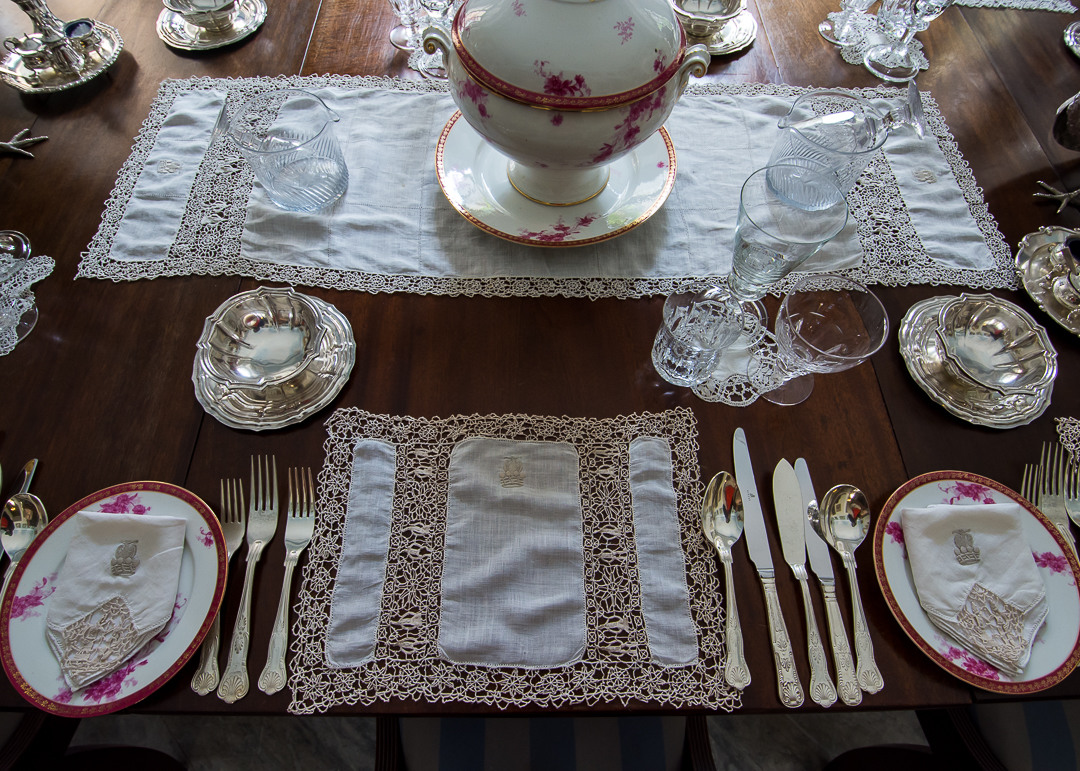
The table has been laid out with silver, china and Maltese lace with the tablemats showing the family’s embroidered coat of arms.
One side of the room is dominated by a marble statue of the goddess Diana and the other by a large gilt Maltese mirror for an all-around dazzling effect.
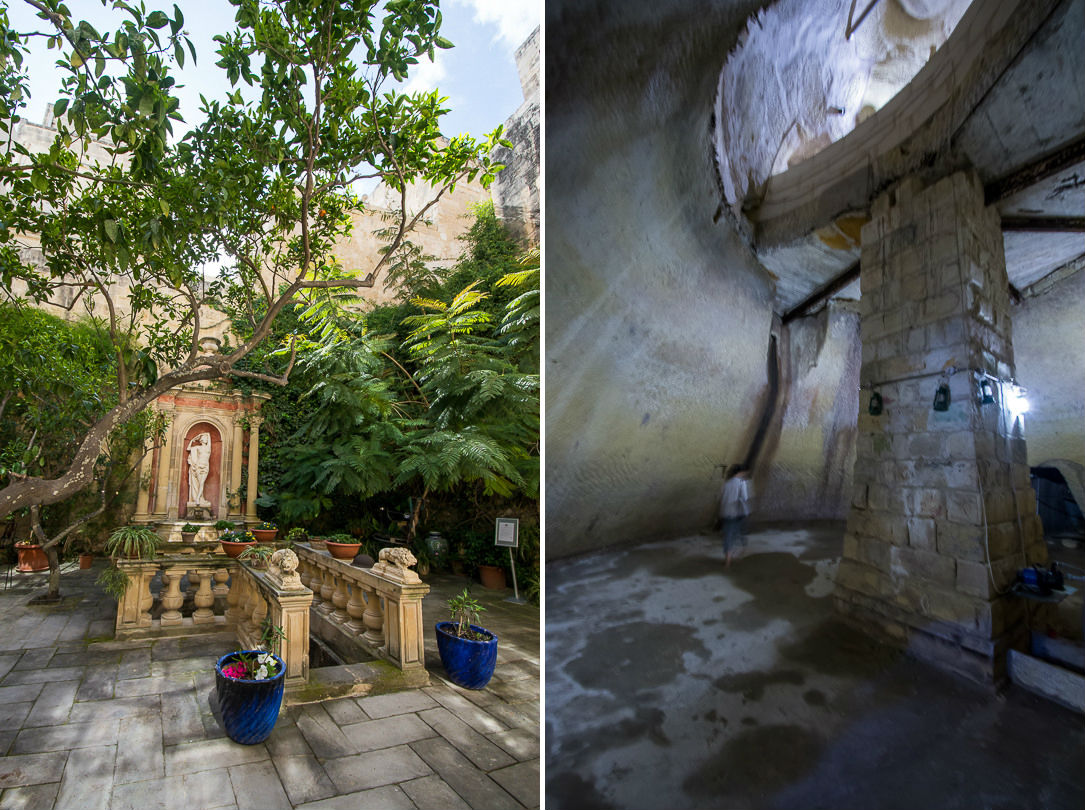
In the garden you’ll find a staircase leading down to the underground tunnels and bomb shelters that became sadly necessary during WWII. It is said that there are more streets under Valletta than on the surface though most of the passages have been blocked off today for safety reasons.
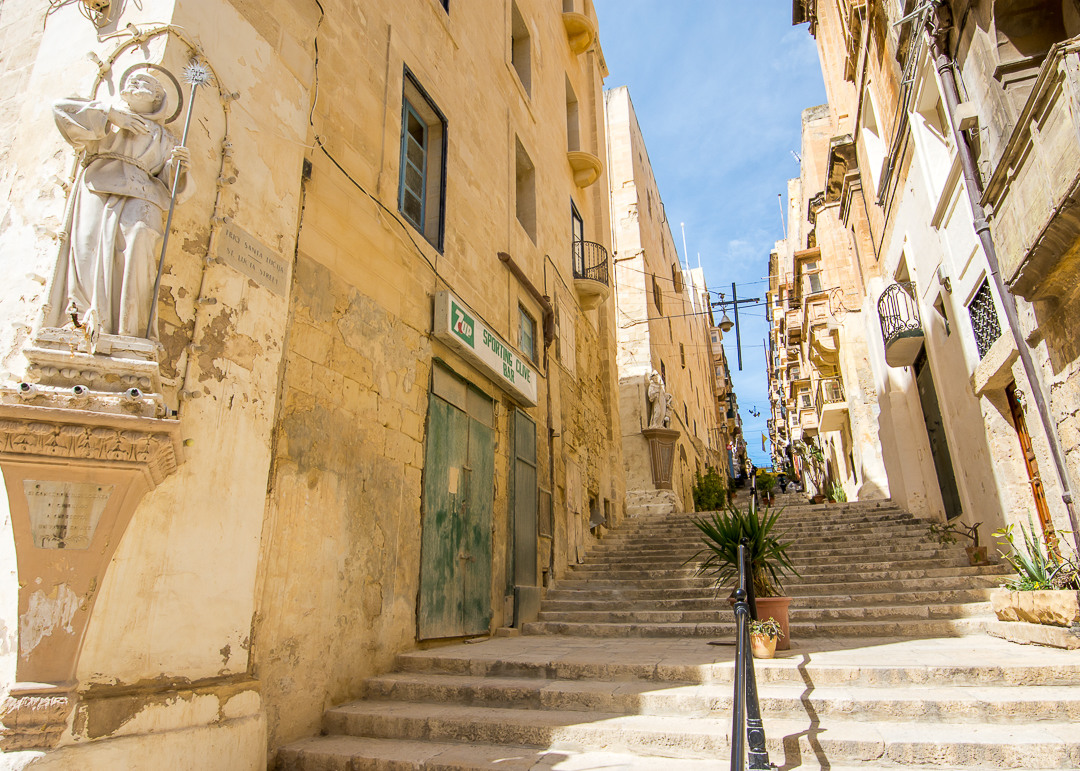
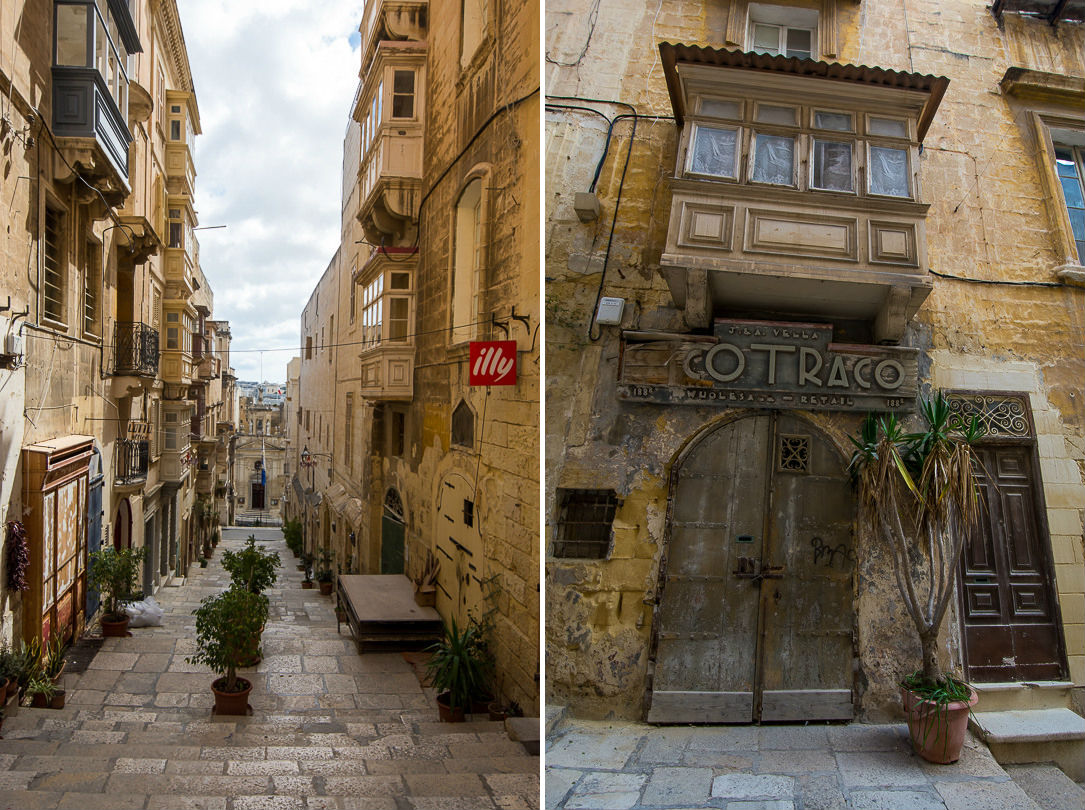
Back outside, it’s time to leave Republic behind and start meandering around the sloping and charming side streets.
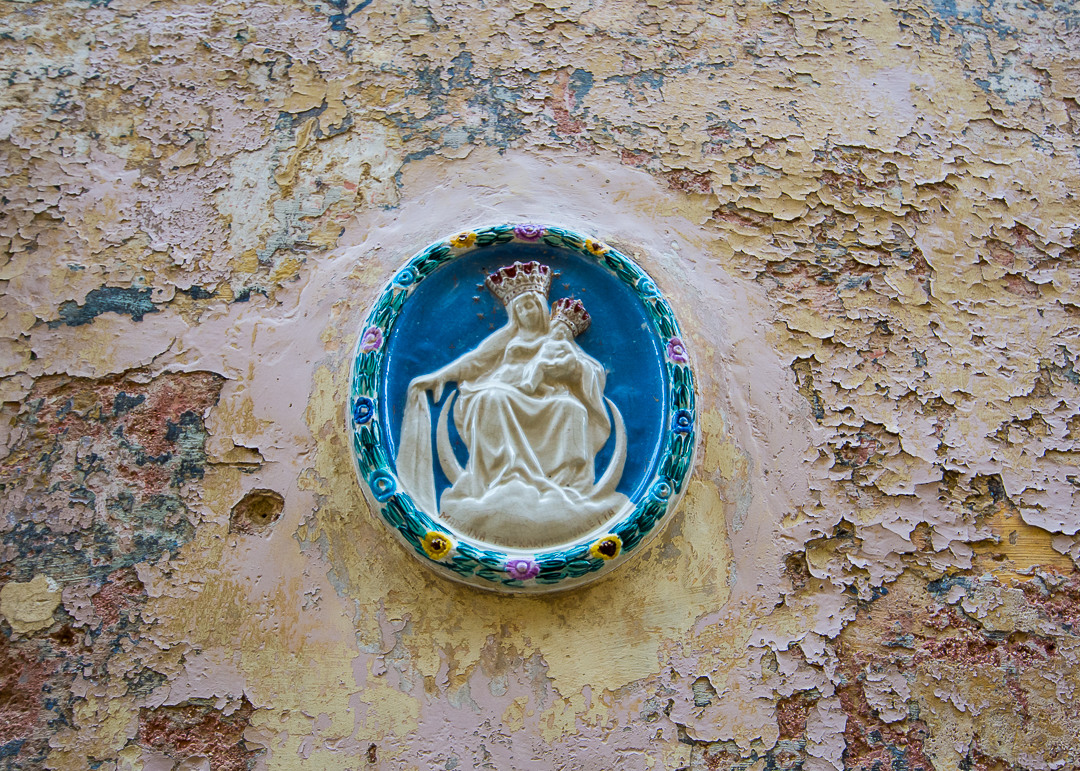
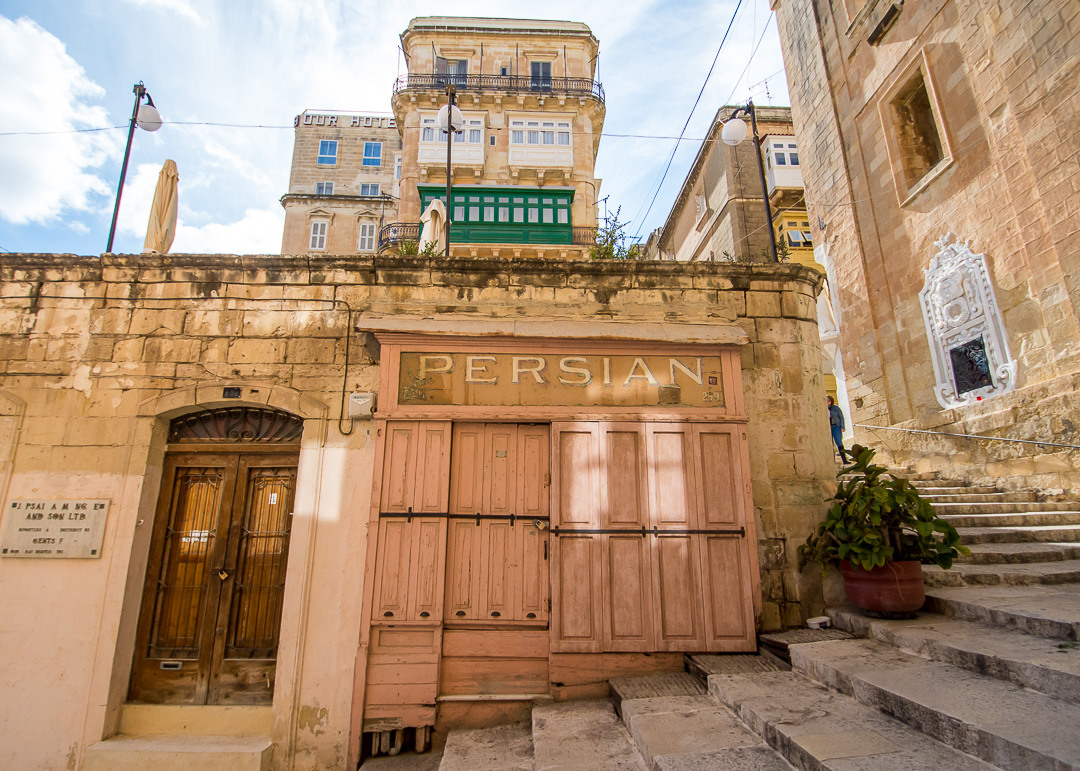
There’s so much to look at on every facade from the old balconies to the decaying signs and doors.
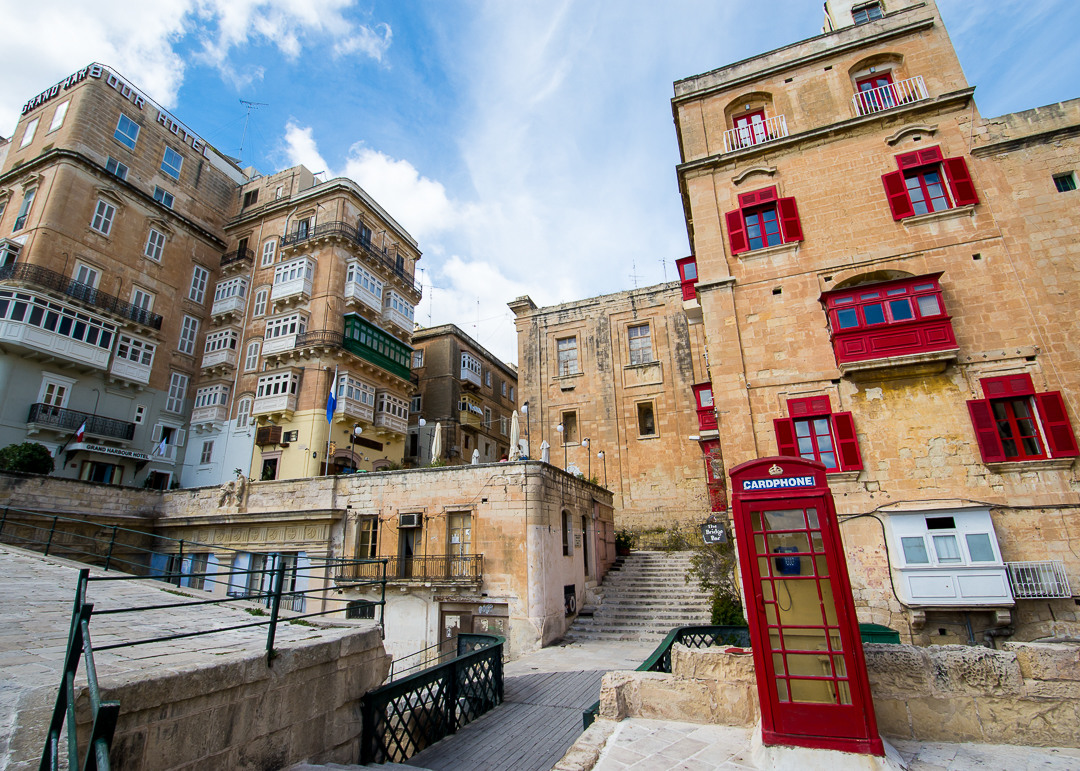
The red phone booths are a tell-tale sign of the British legacy on the island, as are the pubs and Maltese’s love for tea.
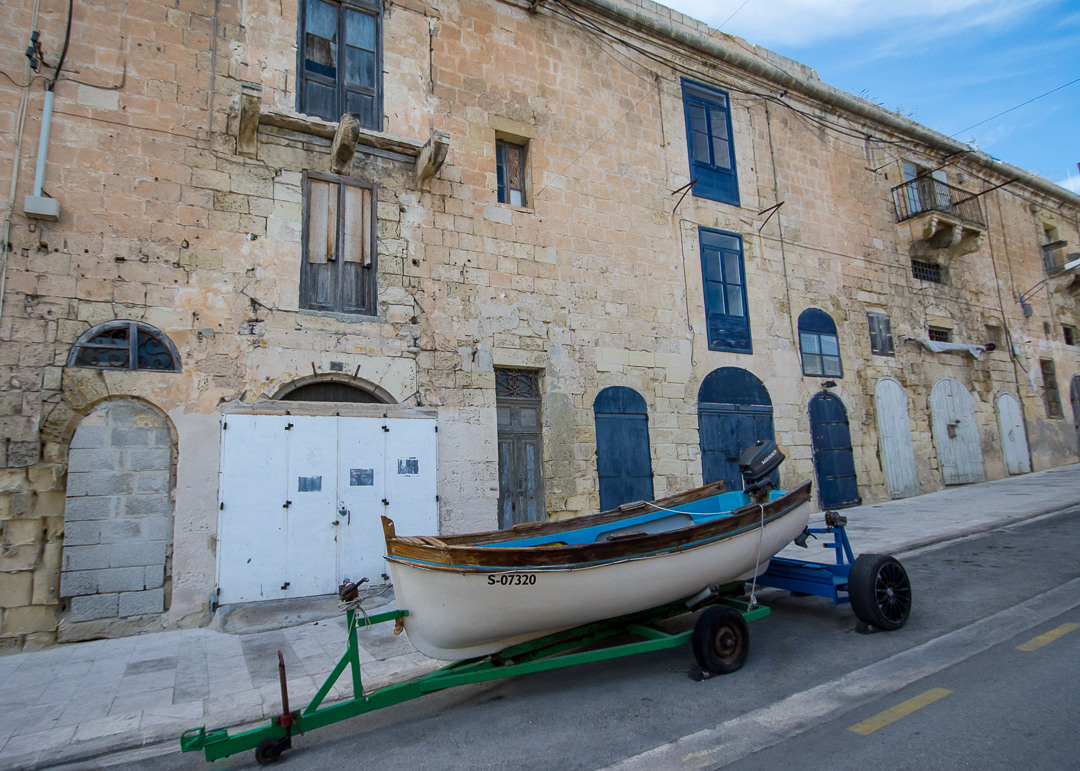
As you make your way down towards the water, you’ll encounter boats, storage rooms and old market stalls catering to the local fishermen.
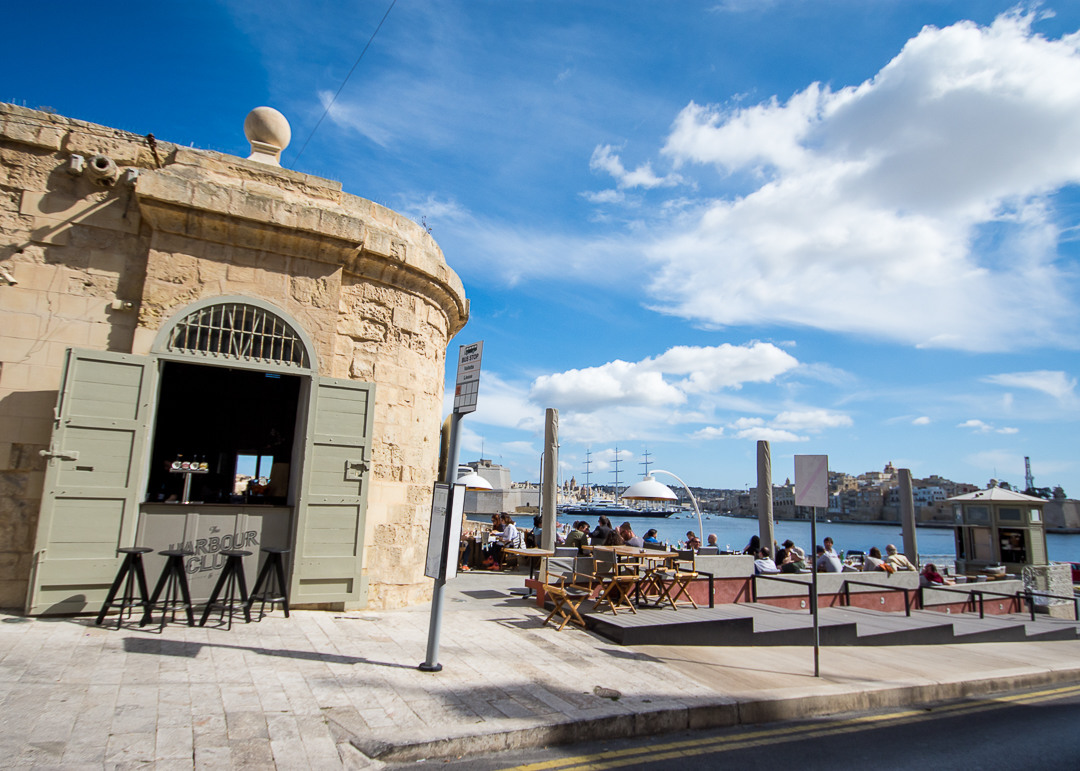
A beautiful example of Valletta’s harbour conservation and revitalization is The Harbour Club, a fantastic restaurant and bar converted from 17th-century boathouses. It has a superb terrace and wonderful harbour views, perfect for a long alfresco lunch, sunset drinks, or dinner under the stars.
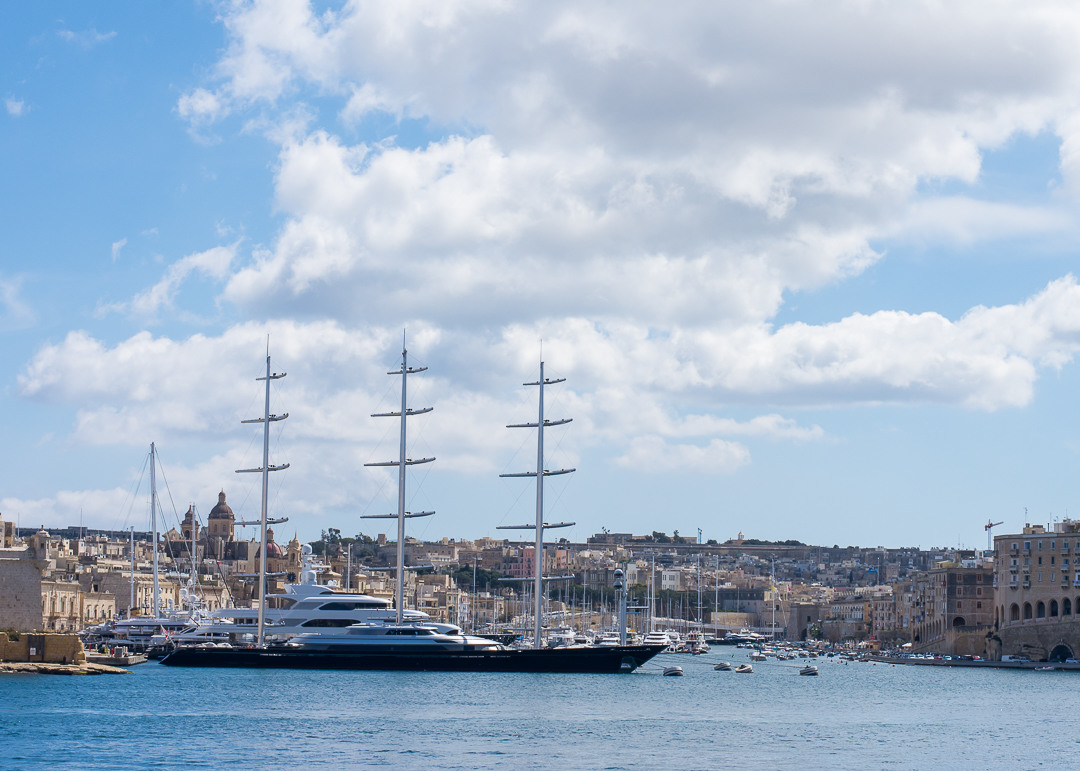
You’ll get prime views of the famous Maltese Falcon, one of the largest privately owned luxury sailing yachts in the world at 289ft long.
You’ll feast on impeccably prepared local dishes with a focus on seafood as you watch the busy boat traffic passing by and will surely find yourself lingering for much longer than you originally planned.
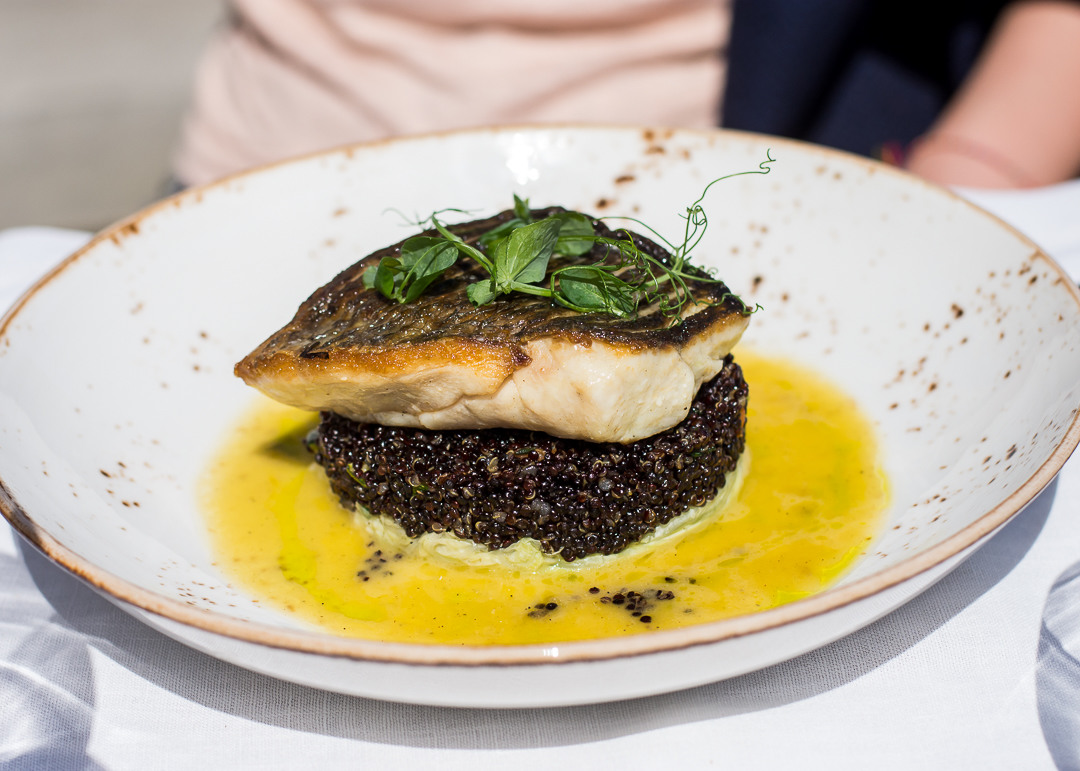
Steamed fillet of Sea bass with organic black quinoa and warm prawn bisque dressing
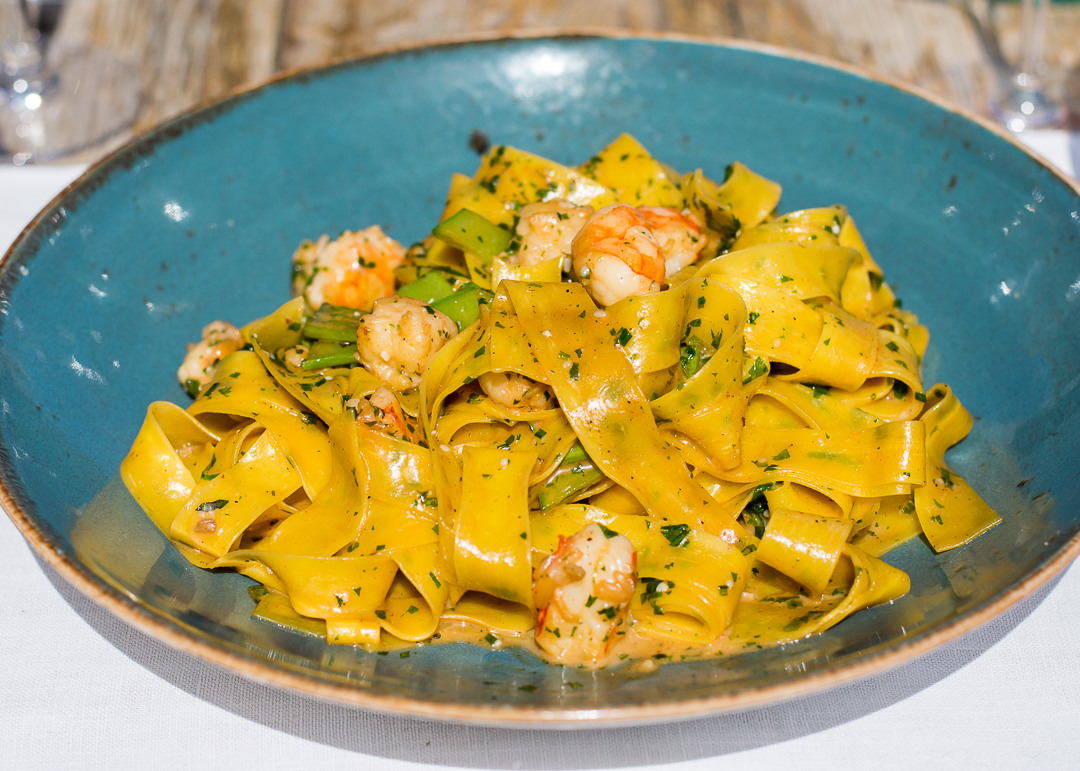
Pappardelle with fresh prawns, light prawn bisque, mangetout, soft herbs
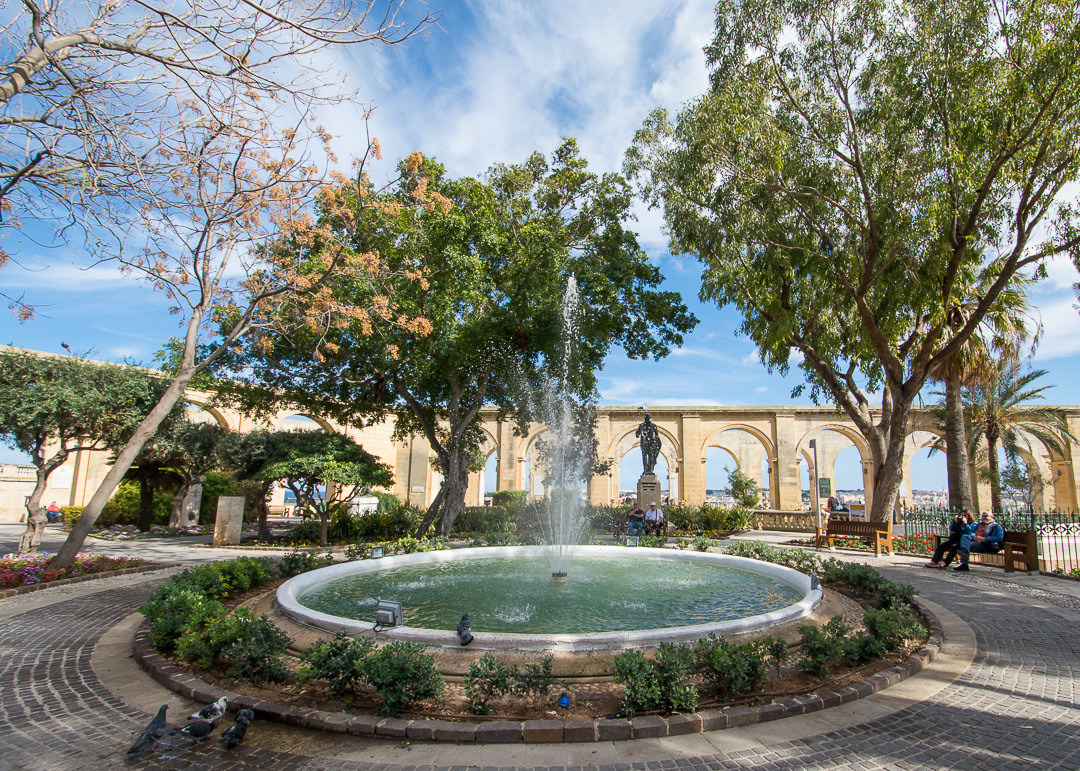
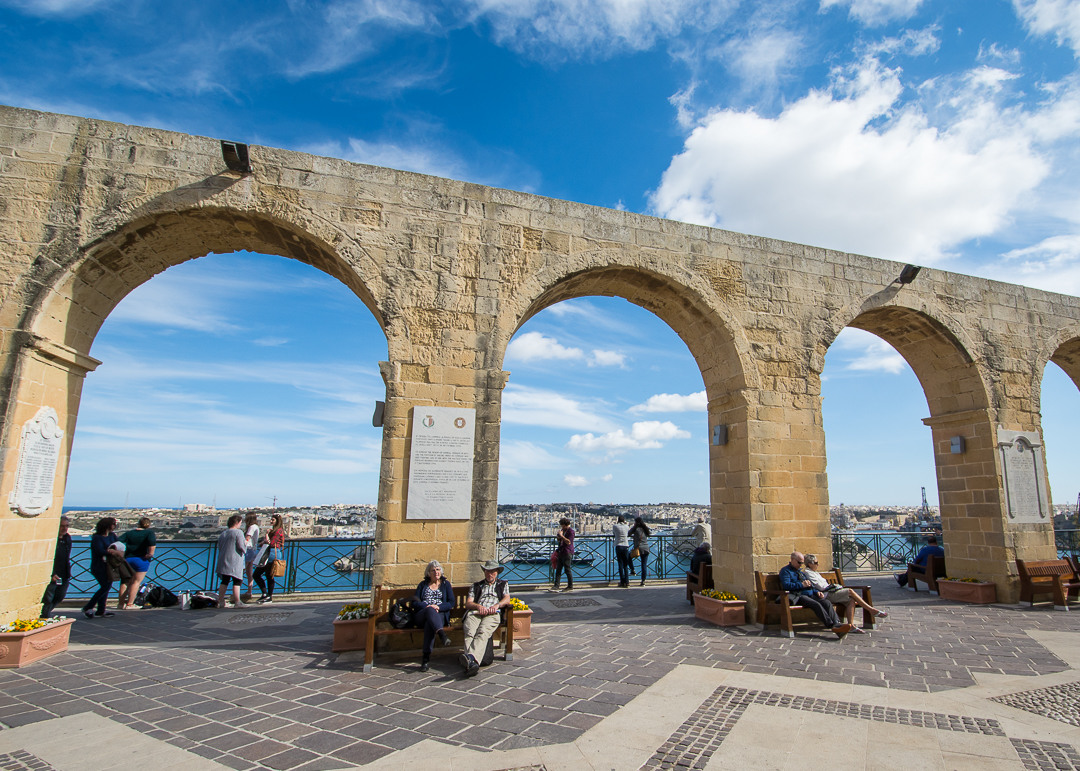
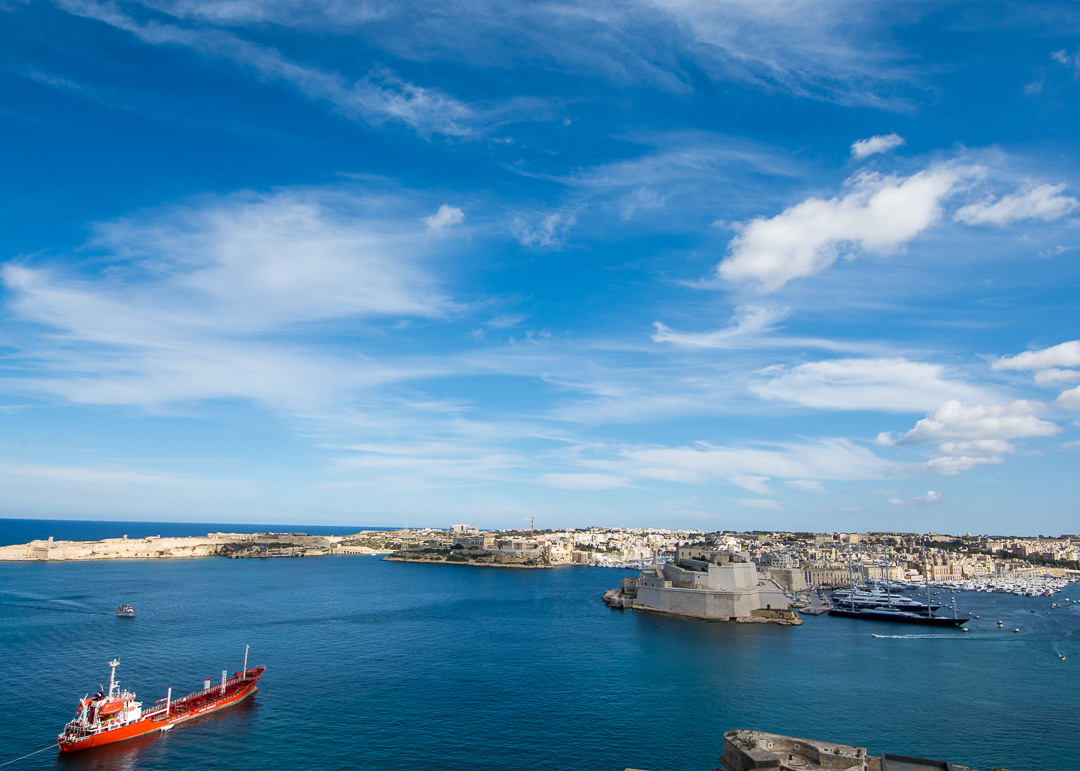
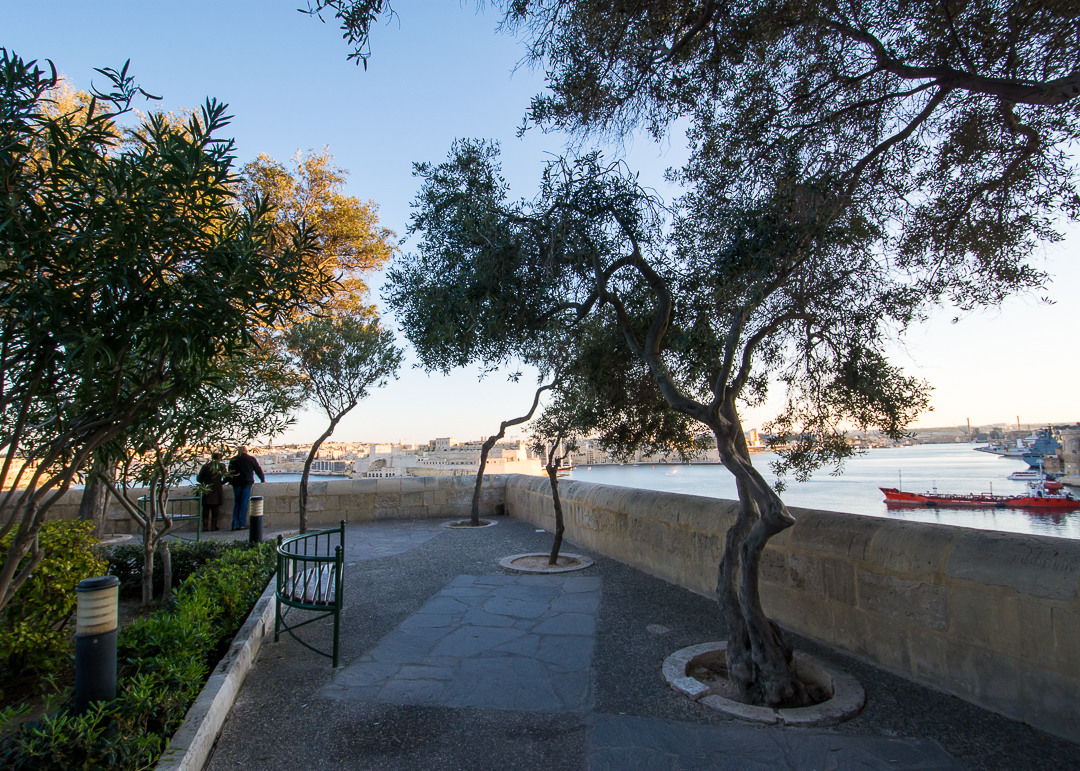
Make your way back up for an even better view of the Grand Harbour by entering the Upper Barrakka Gardens. Valletta has a number of very scenic gardens, all with stunning views, to provide some peace and tranquility amidst the busy city, and this one is by far the best of them all.
Built on top of a bastion on the highest point of the city, it used to be a private garden of the Knights and is now one of Valletta’s most breathtaking spots.
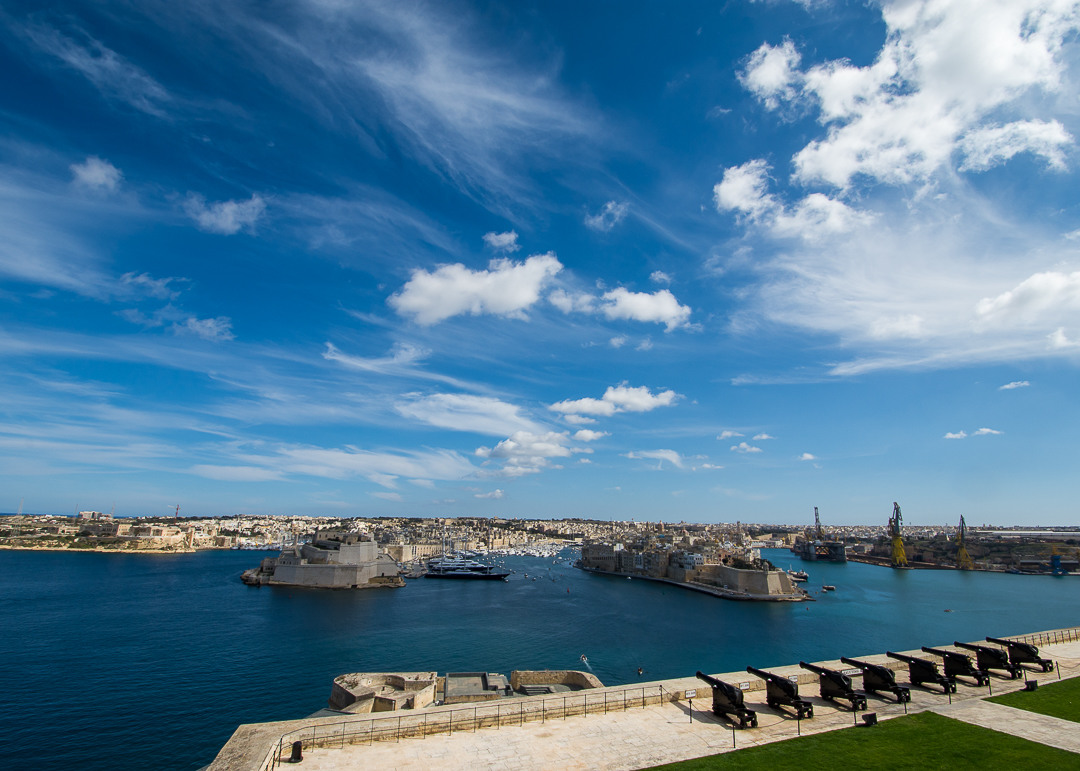
You can literally spend hours admiring the panoramic view of the Three Cities across with the Saluting Battery down below, where a cannon once fired salutes to visiting naval vessels.
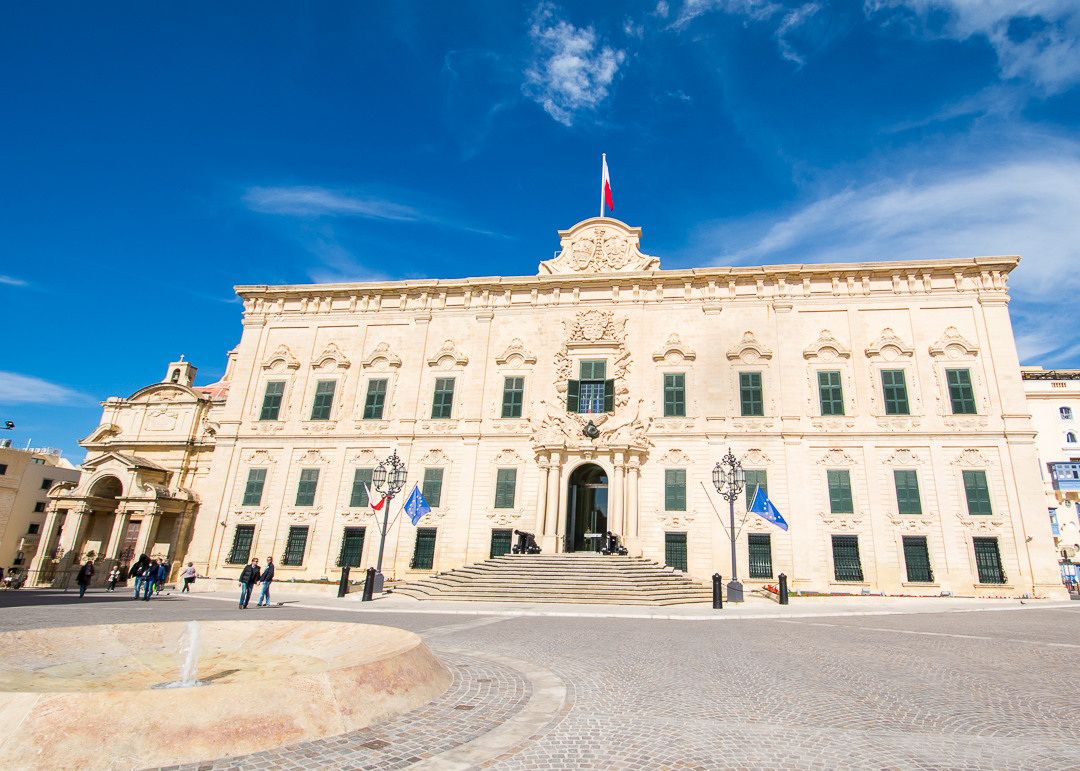
At the gardens exit you won’t be able to miss the imposing Auberge de Castille, one of the finest architectural works in Malta. Built in the 1570s to house knights of the Order of St John from the ‘Castille langue’, it was their hostel where they would live, host visitors and pilgrims from their home country and engage in social activities.
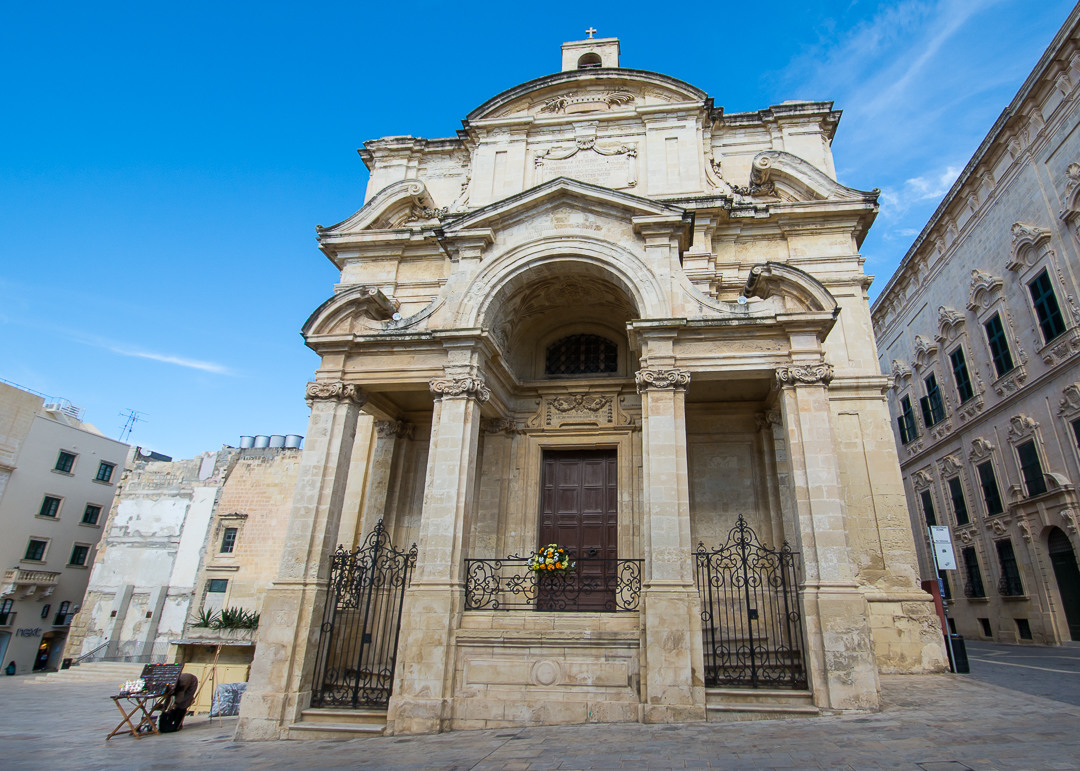
Some more baroque beauty can be seen right next door on the church of St. Catherine of Italy.
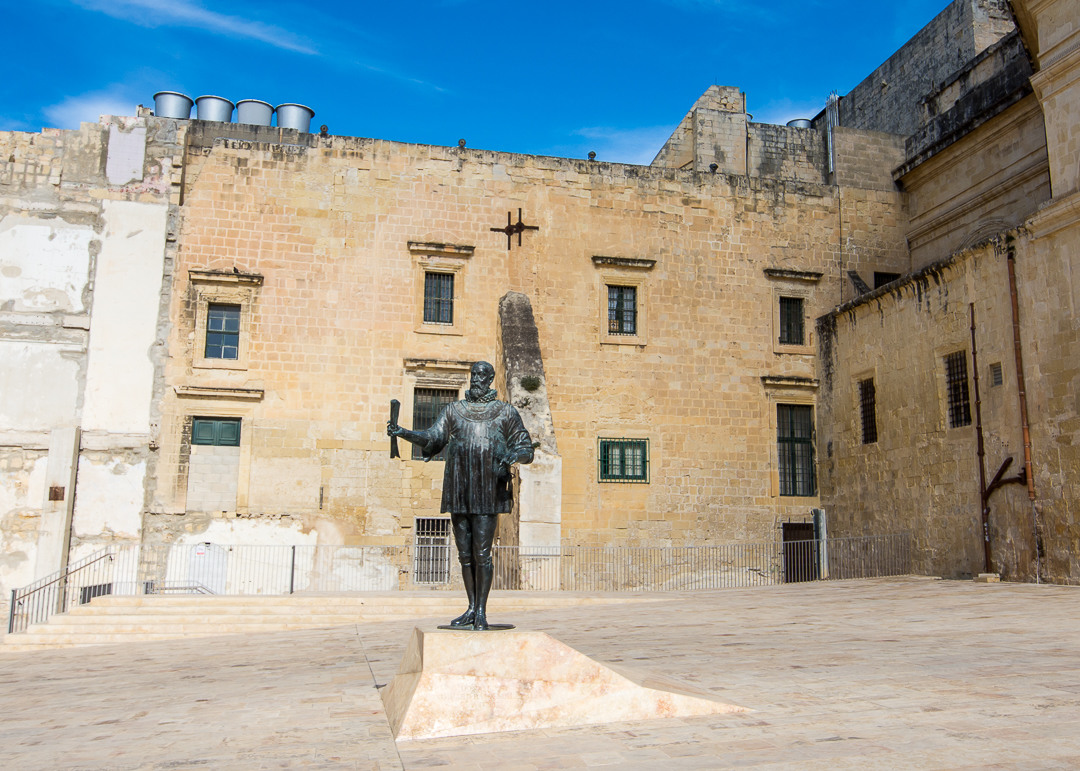
Pay your respect to the new city’s founder at Pjazza Jean De Valette which features a statue of the Grand Master. The Order’s hero and most illustrious leader fought and successfully repulsed the Turks during the Great Siege of 1565 after which he commissioned the construction of the new city of Valletta.
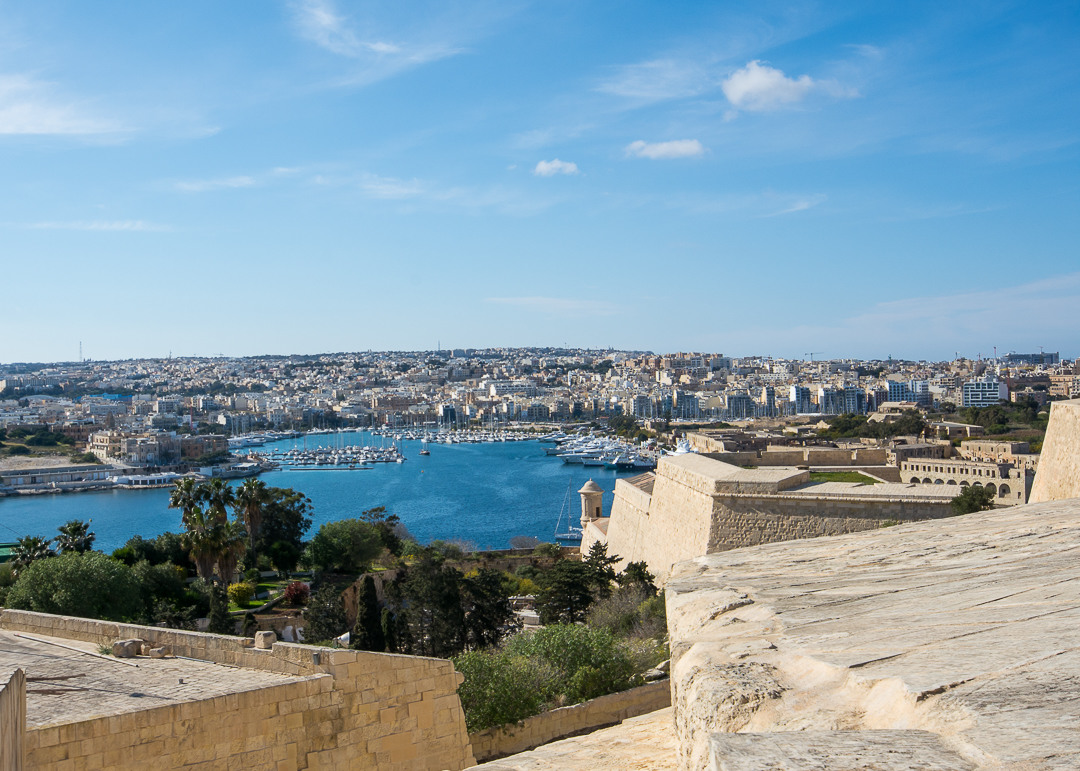
The Hastings Gardens on the west side gives you a glimpse of the ‘other’ harbour Marsamxett, the towns of Sliema, Msida and Manoel island (yes, more things I haven’t had time to explore!).
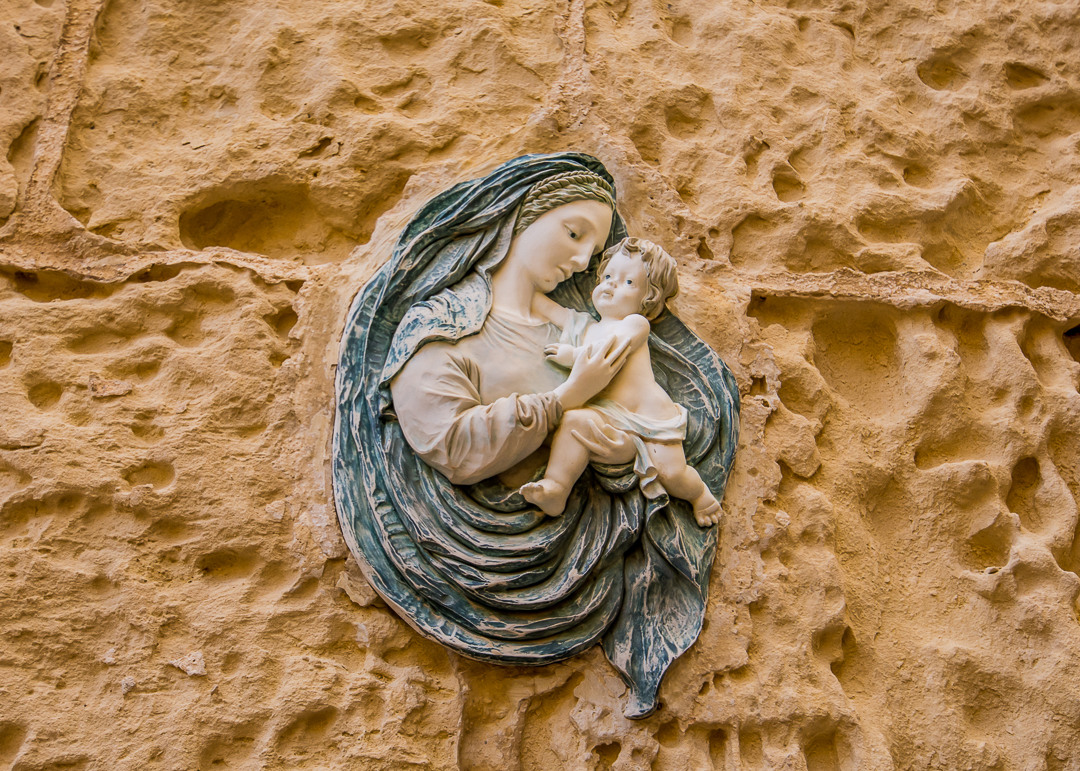
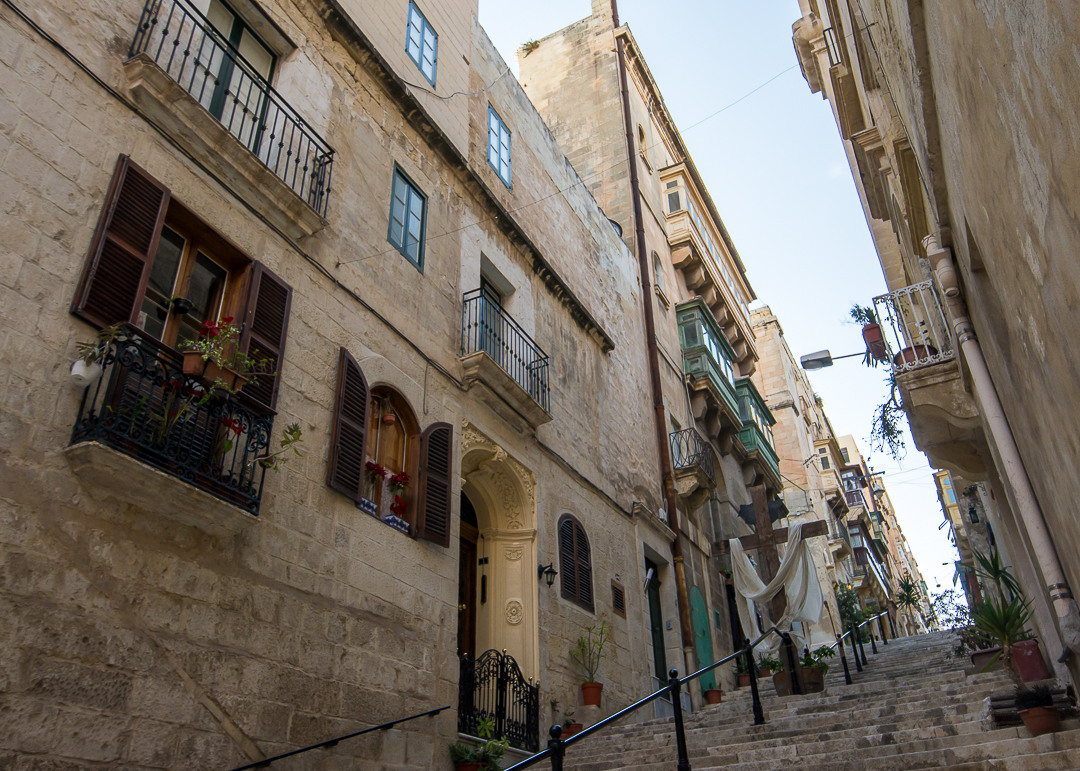
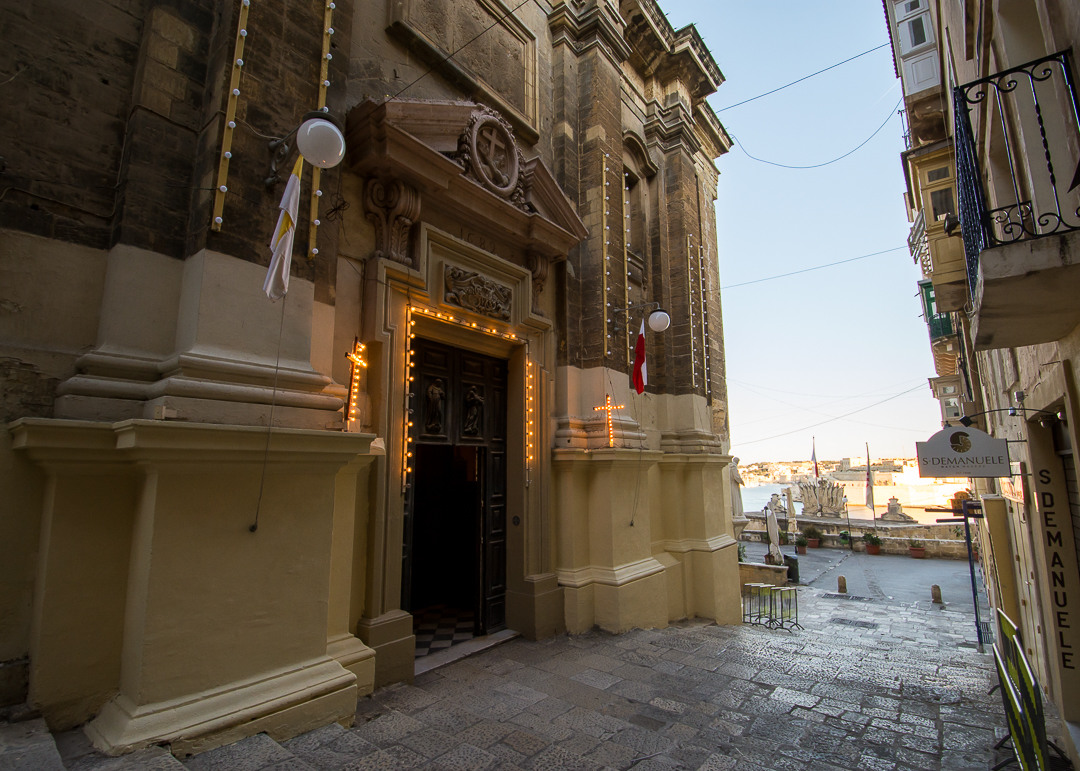
When in such a devoted catholic city, regardless of your own religious affiliation, it’s impossible to not be impressed by the myriad of statues adorning almost every street corners, the crosses graciously draped in the middle of a staircase…
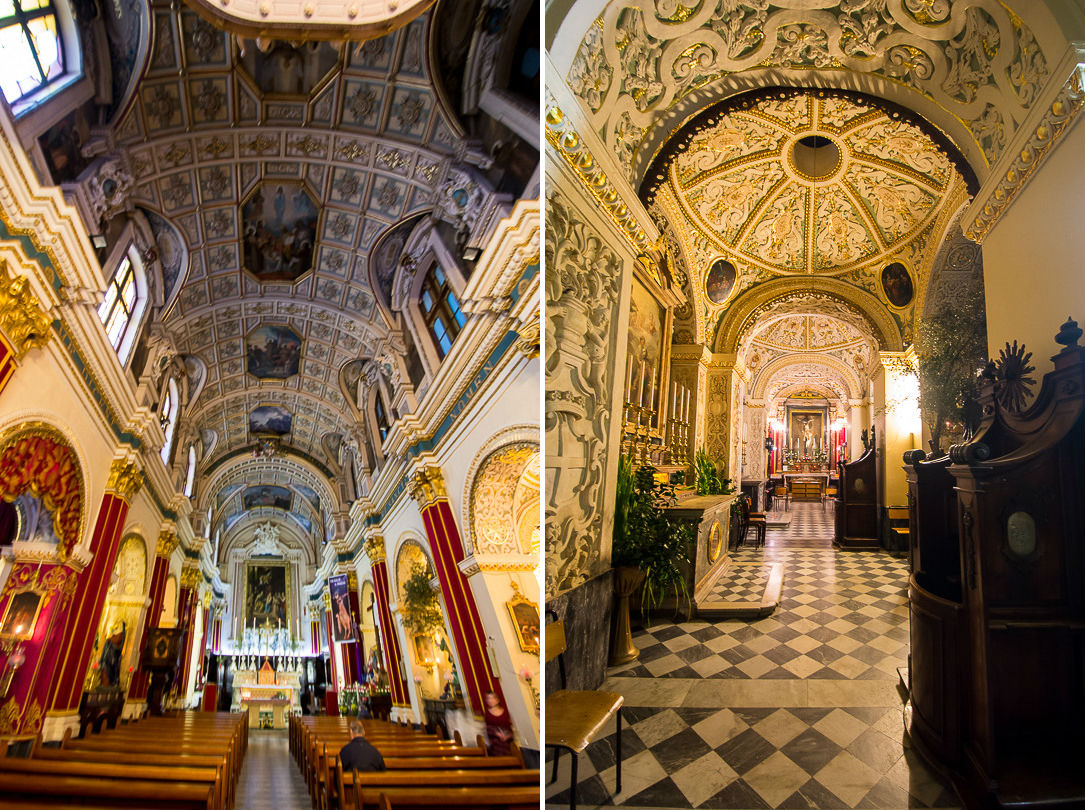
…and the multitude of gorgeous churches that seem to call you in. Of course you should go in as many as you can as they’ll all be stunning with an insanely decorated interior.
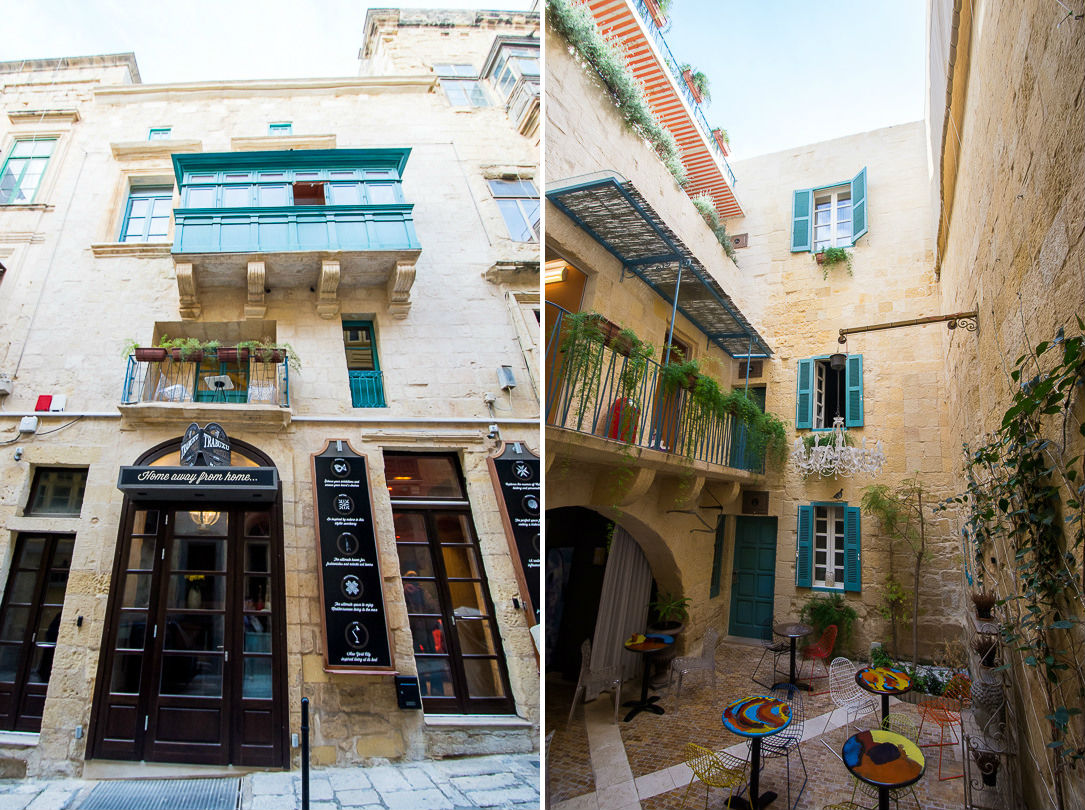
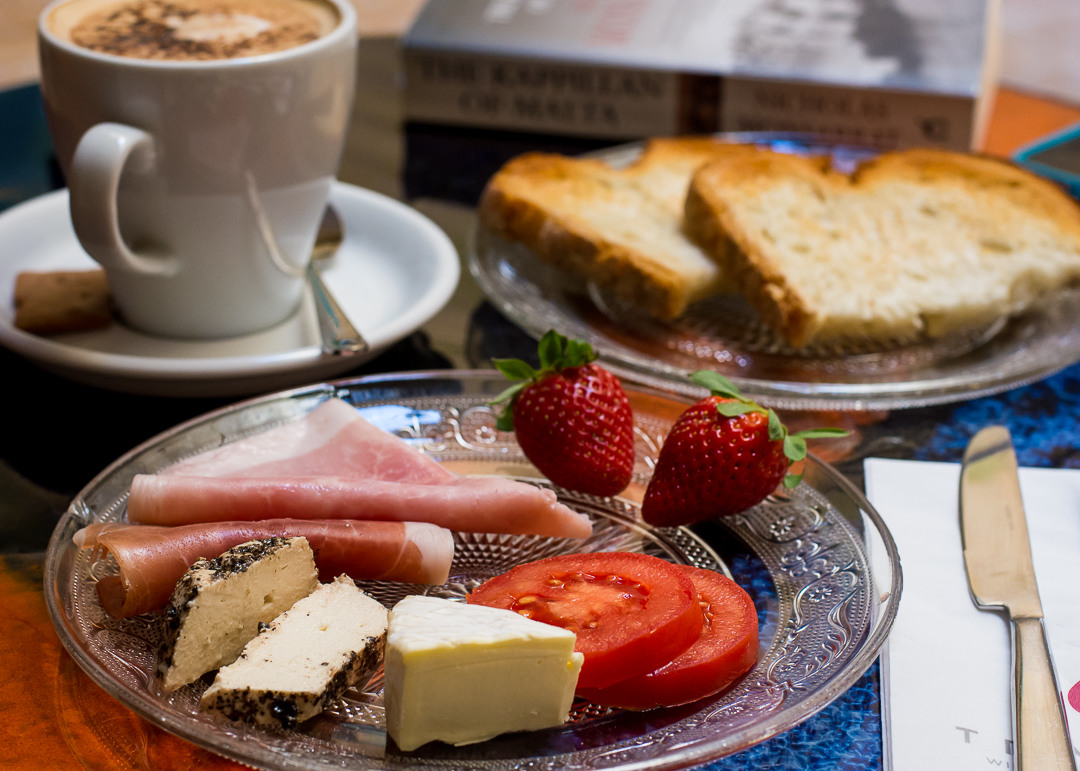
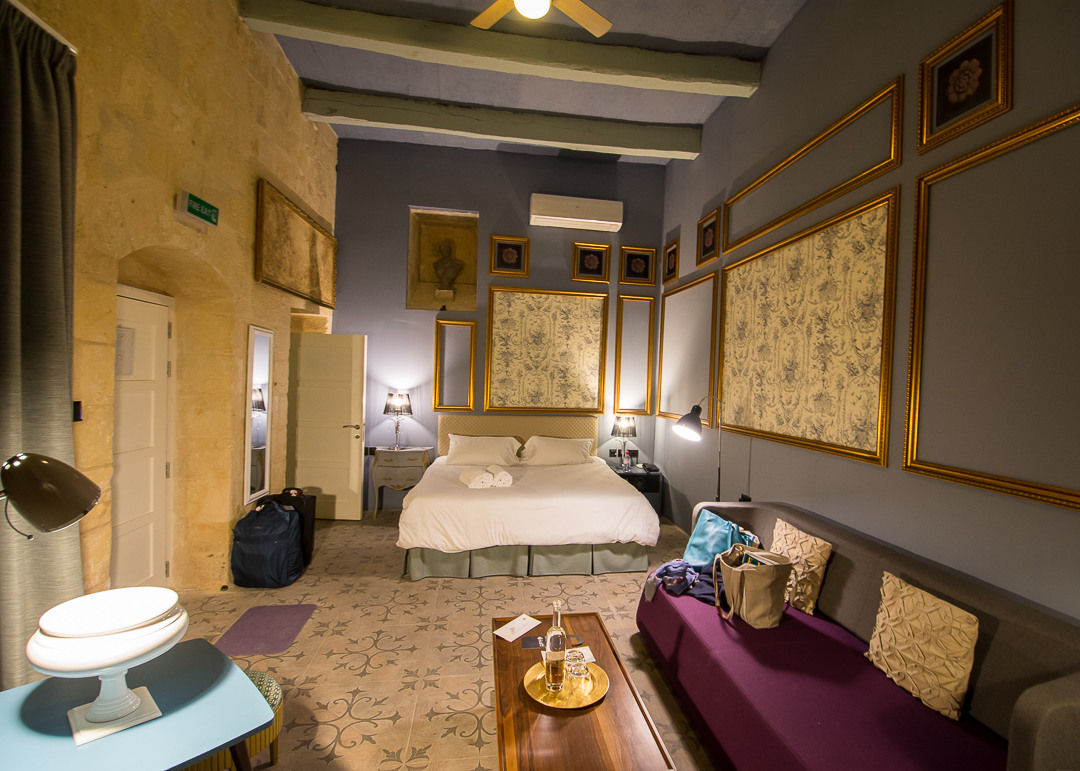
When it’s time for a break, the great thing with such a small city is that your hotel is never really far. We checked into the charming Trabuxu Boutique Living, a 400-year-old palazzo converted into a fun and contemporary boutique hotel. The small courtyard with its bright ceramic tables and crystal chandelier won me over and is where we’d take their delicious breakfast every day.
There are only nine rooms, all completely different, and we loved our Napoleon themed refuge with its opulent interior, a nod to the great man’s love for art, fashion and travel.
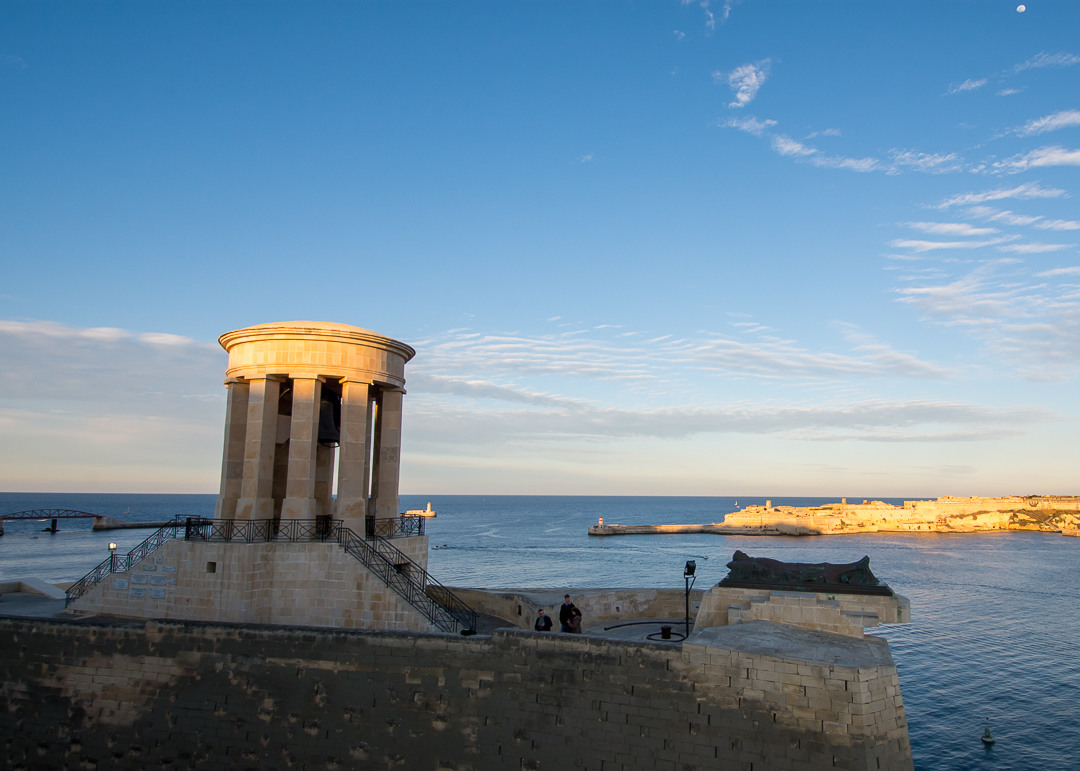
One last garden to end the day, this one a lot quieter but no less scenic, the Lower Barrakka Gardens. You get a better view here over the Breakwater entrance to the Grand Harbour.
At its northern end you’ll also get your first sight of the Siege Bell Memorial, a neoclassical temple containing a huge bronze bell which chimes everyday at noon. It was erected in 1992 to commemorate the 7,000 service personnel and civilians who lost their lives in the Siege of Malta during World War II.
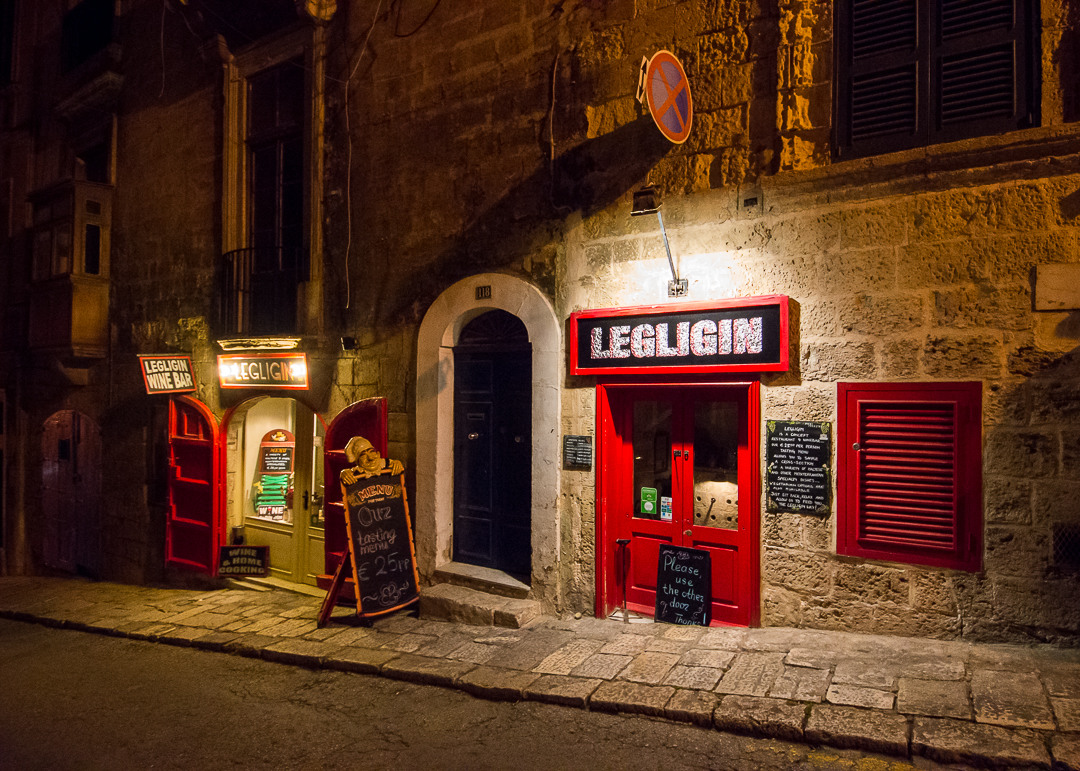
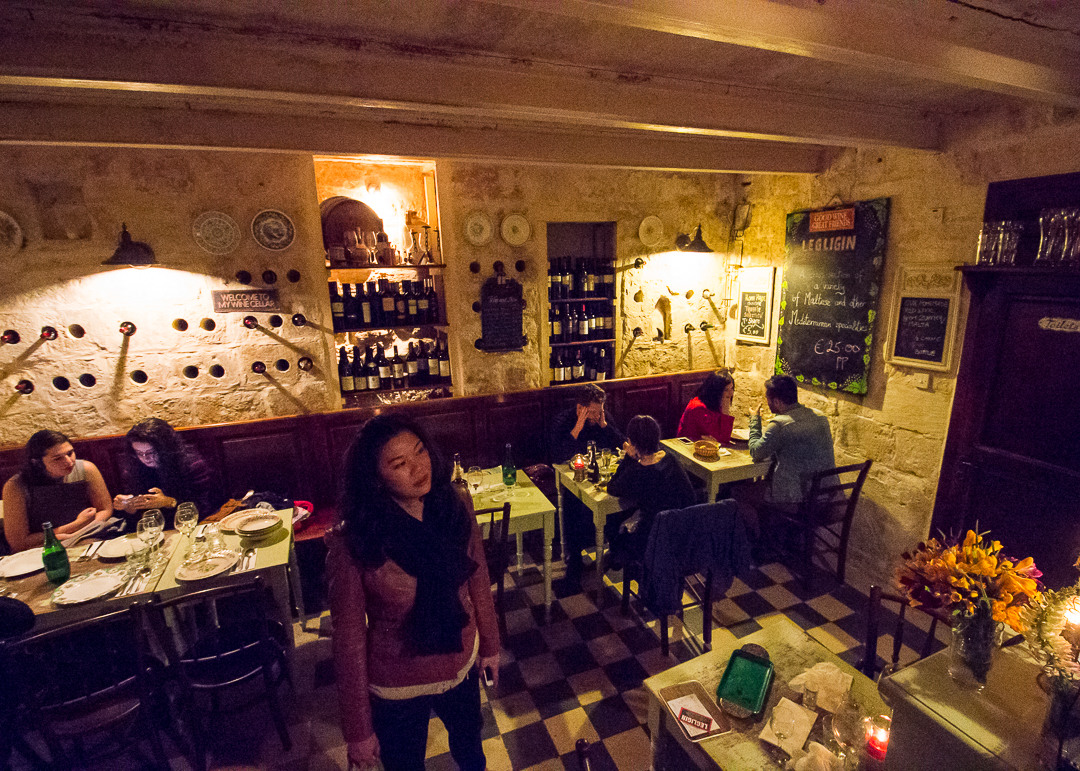
Dinner options abound, but if you’re looking for a great local experience I’d strongly suggest you hit Legligin first. The rustic wine bar tucked in a cellar below street level is a low-key and fantastic way to get introduced to Maltese traditional cuisine.
Cozy up in the small room and let the chef/owner show you Maltese food the way his mom used to make with a selection of nine-or-so meze, accompanied by tasty local wines.
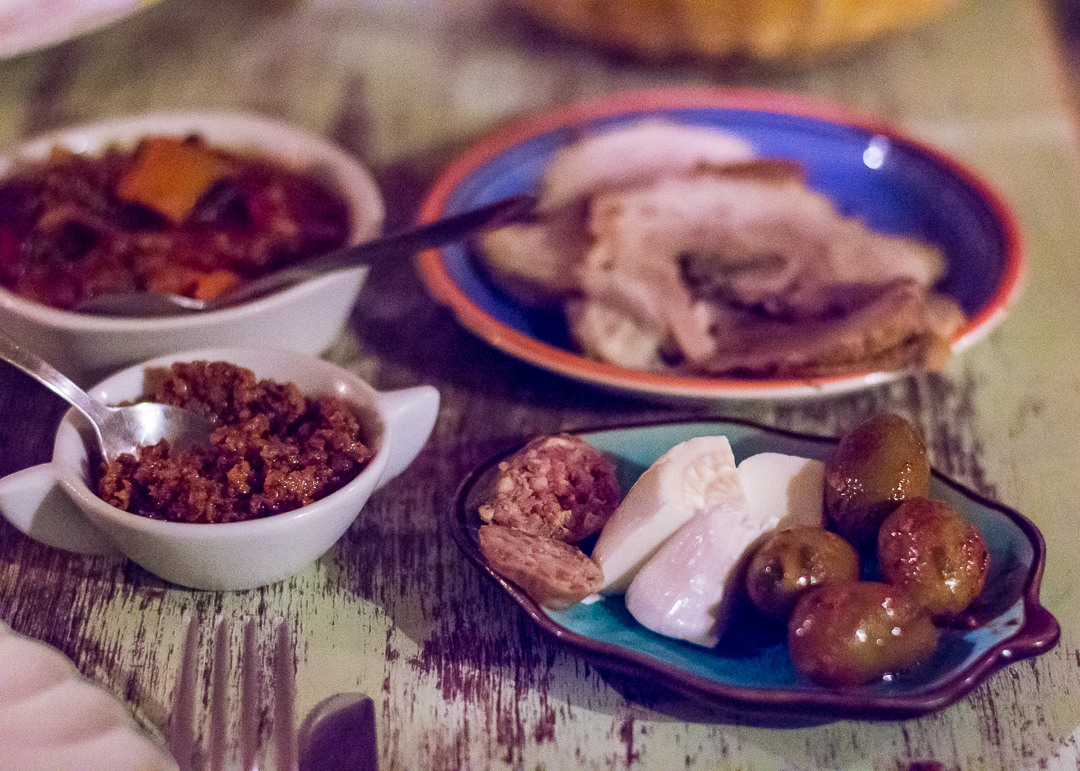
You’ll discover traditional starters like arjoli (tapenade of sun-dried tomatoes, capers, olives and anchovies), local goats’ cheese, sausage, cured pork, etc.
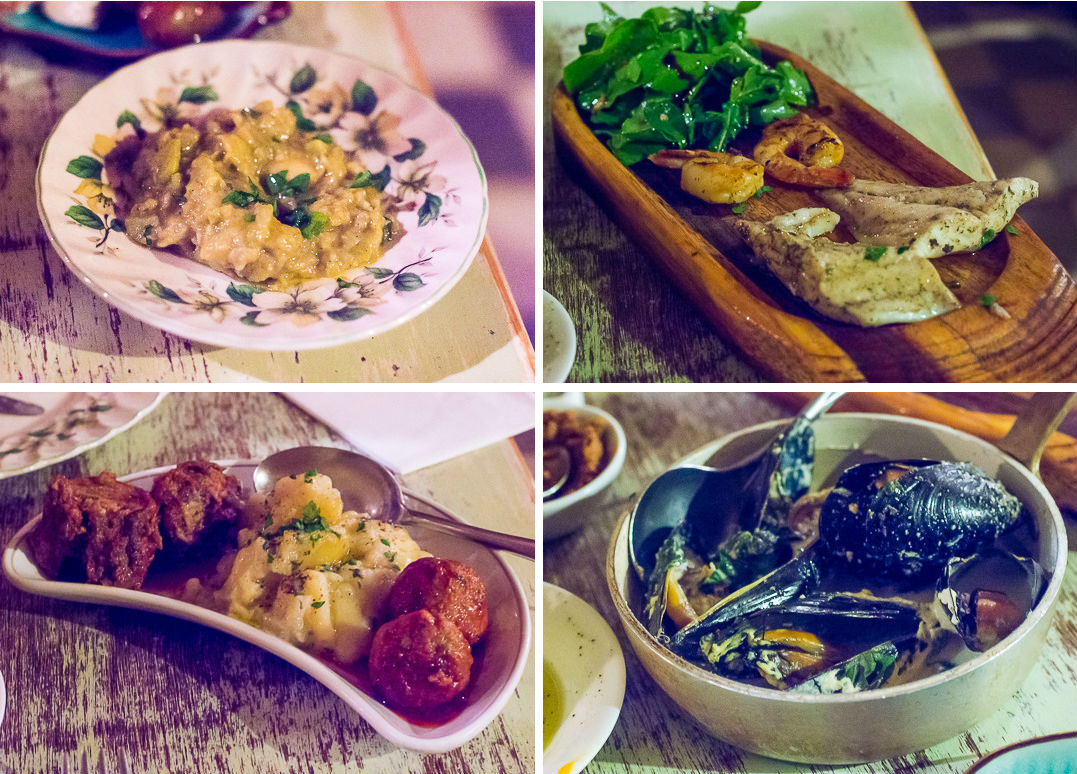
Fish and meat dishes will follow in succession amounting to a pretty big quantity of food despite being called ‘meze’ and costing a mere 25 euros for the whole thing! It’s hard to beat such value and hard to find such a fun atmosphere, with a guitarist arriving mid-meal to add to the vibe.
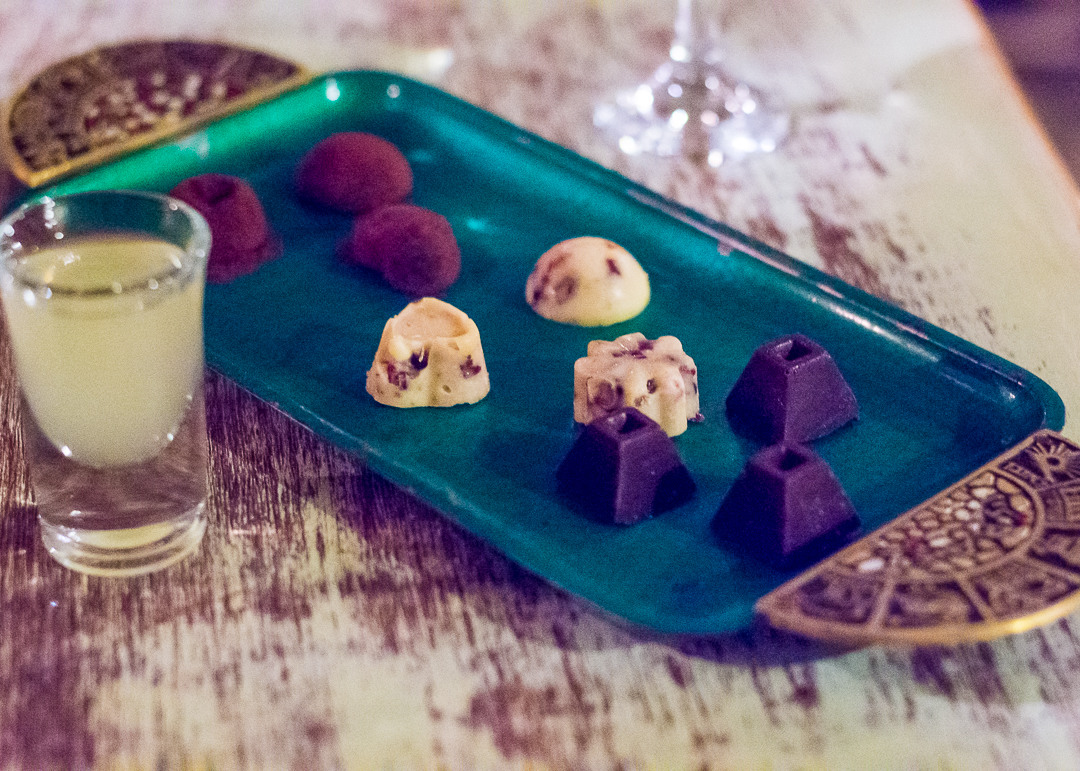
The meal ends with the owner’s handmade chocolates and we ordered a glass of their own limoncello… fantastic way to spend the night!
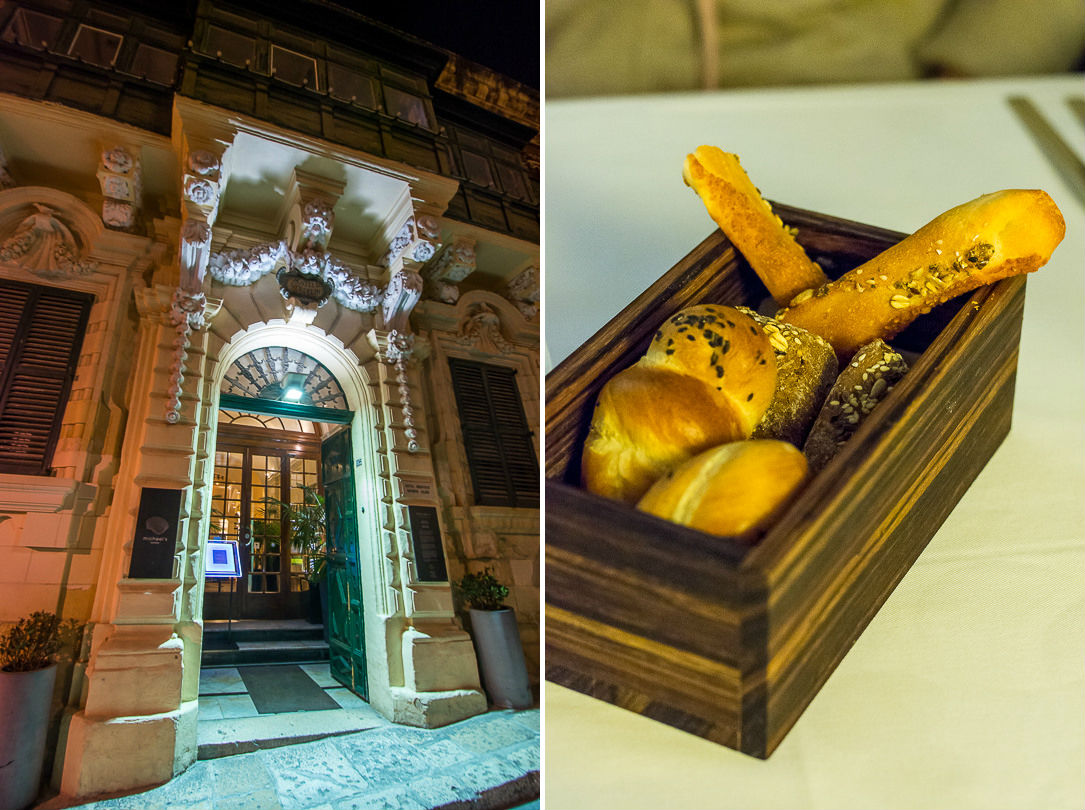
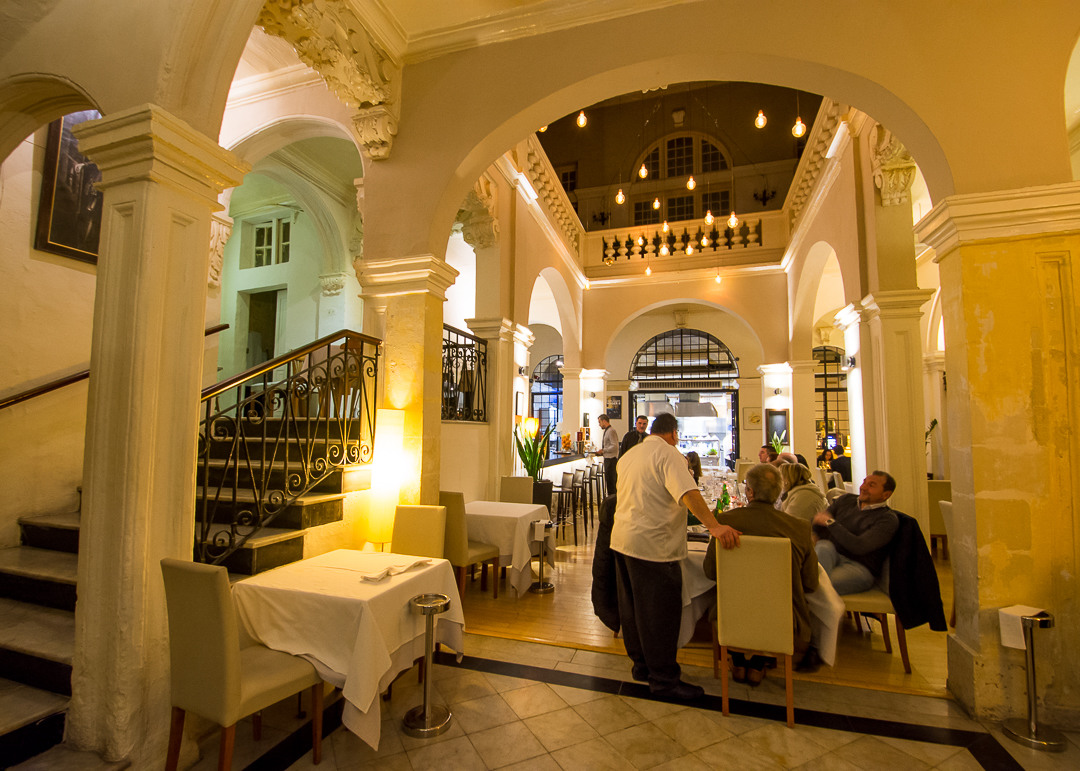
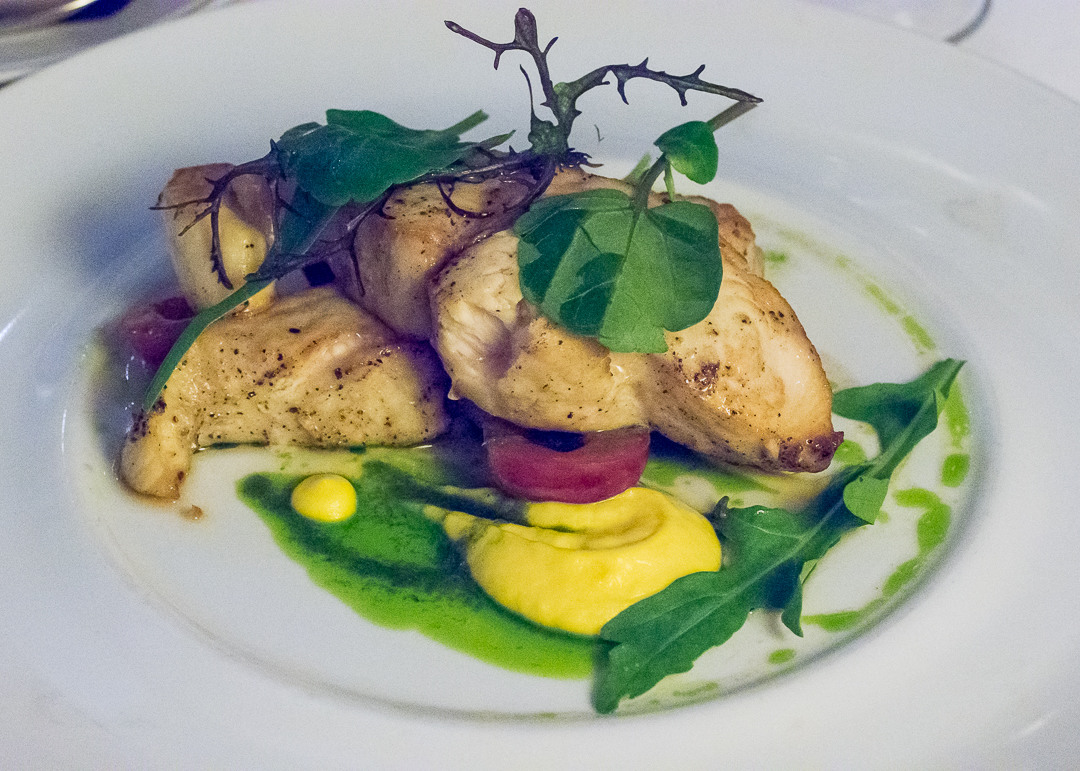
For something a bit more upscale but equally local and scrumptious, I highly recommend you visit Michael’s at the Civil Service Sports Club. Chef Michael Cauchi is well-known among the locals as a prodigy in fish cuisine and gave us a memorable last meal in Valletta we’ll be talking about for a while.
While the room does feel like a gentlemen’s club, the warm service with frequent apparition and greetings by Michael himself tells you you’re in a true family restaurant. The sophisticated comfort food served here comes with a gentle price tag and I could feel we were surrounded by regulars which is always a very good sign!
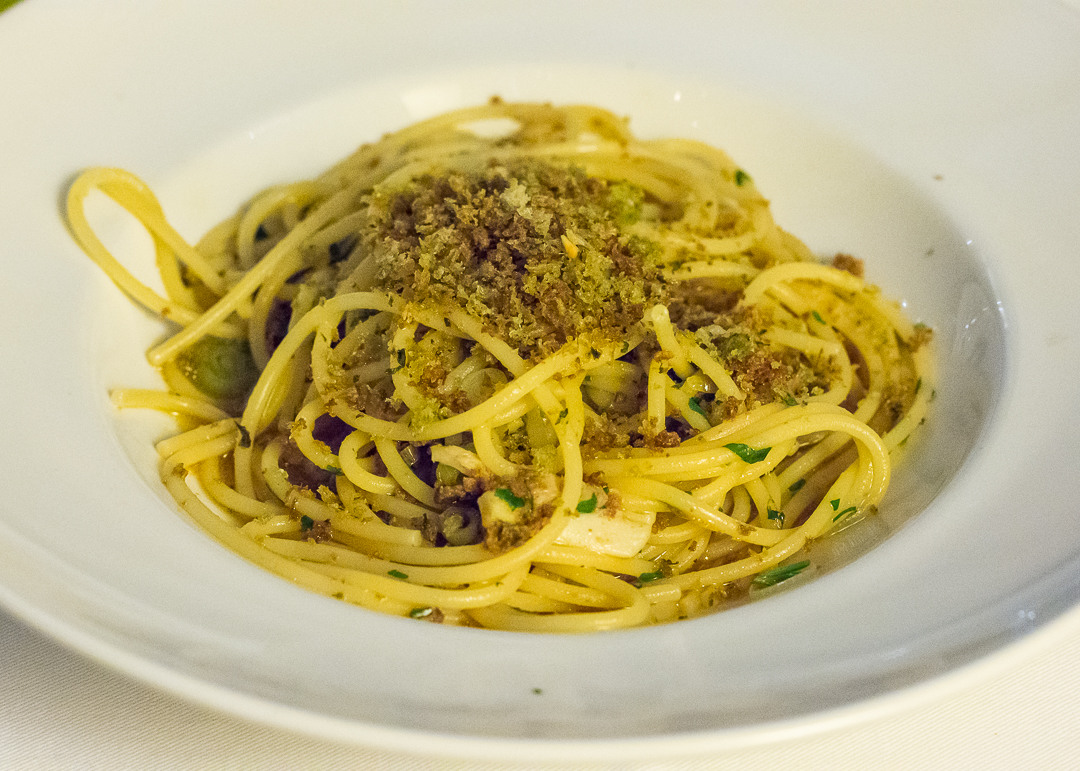
Spaghetti Bottarga with garlic, chili, spring onion and herb crumb
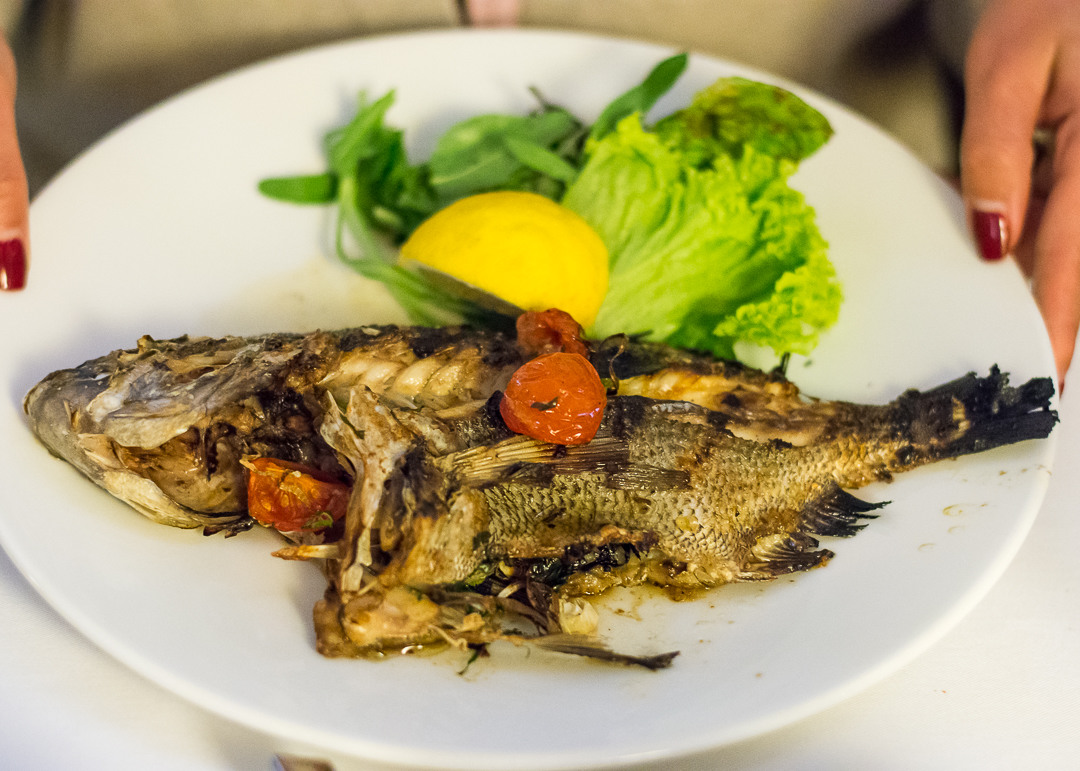
Fresh fish of the day, grilled
And here is the theatrical behind my main dish of Smoked Swordfish with basil pesto, sweetcorn puree and pickled grapes…incredible!
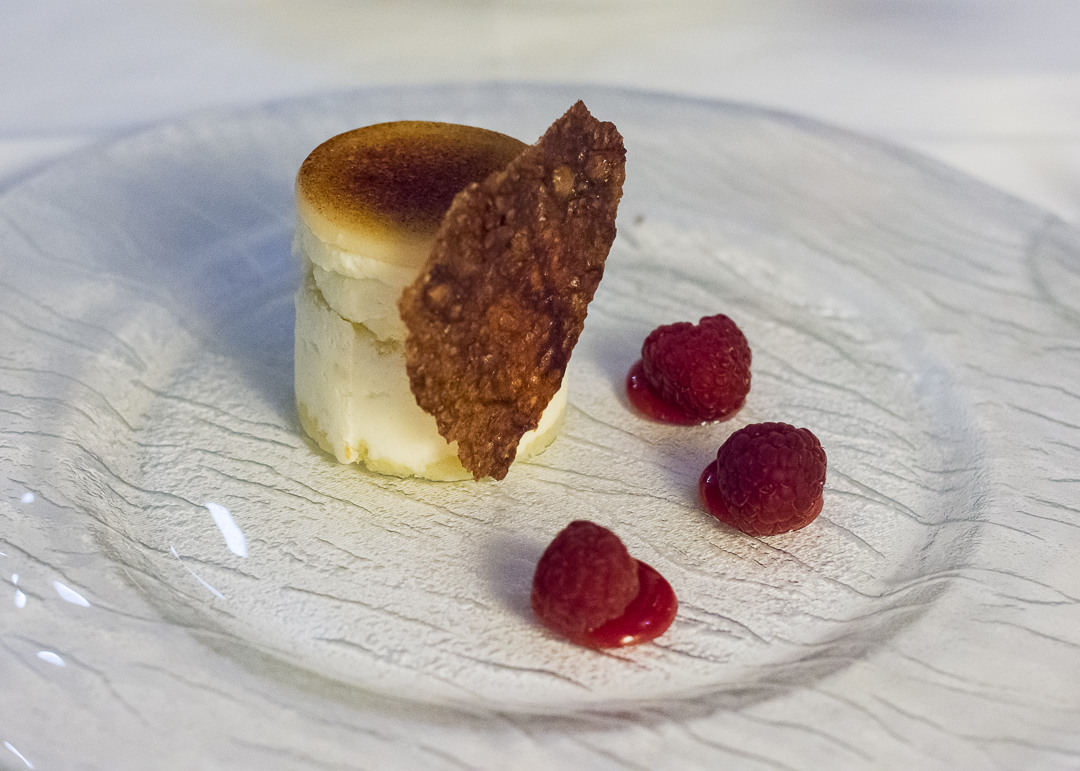
Ricotta cheesecake with berries
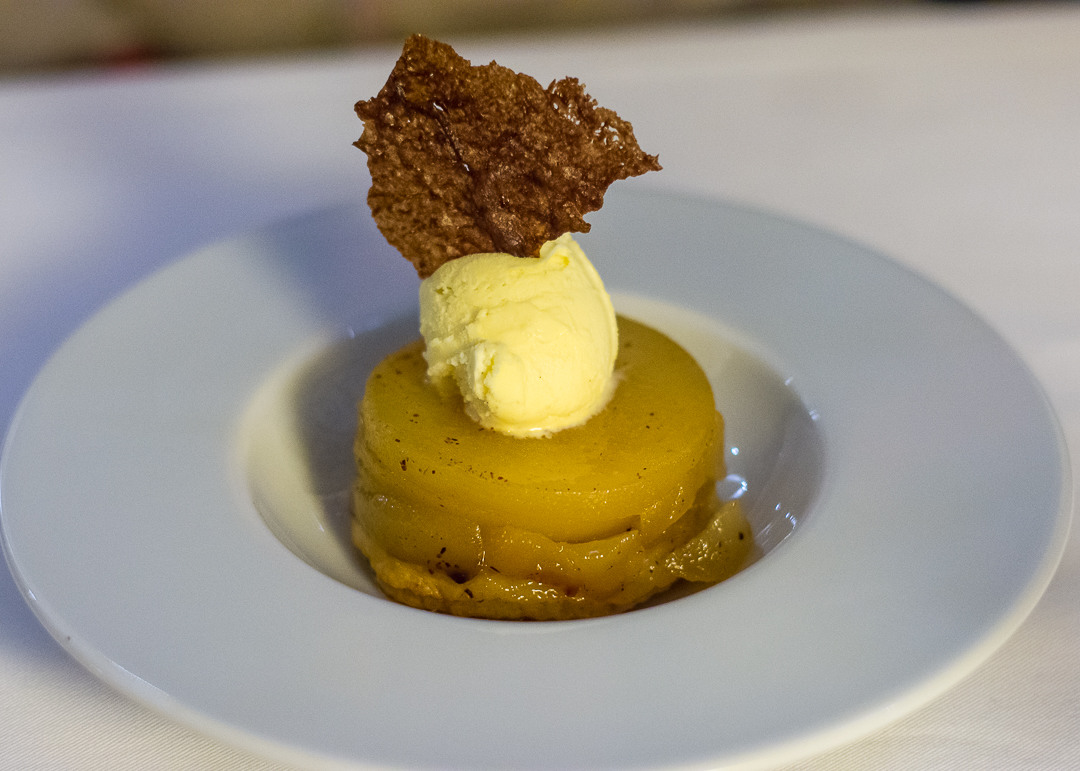
Tarte tatin
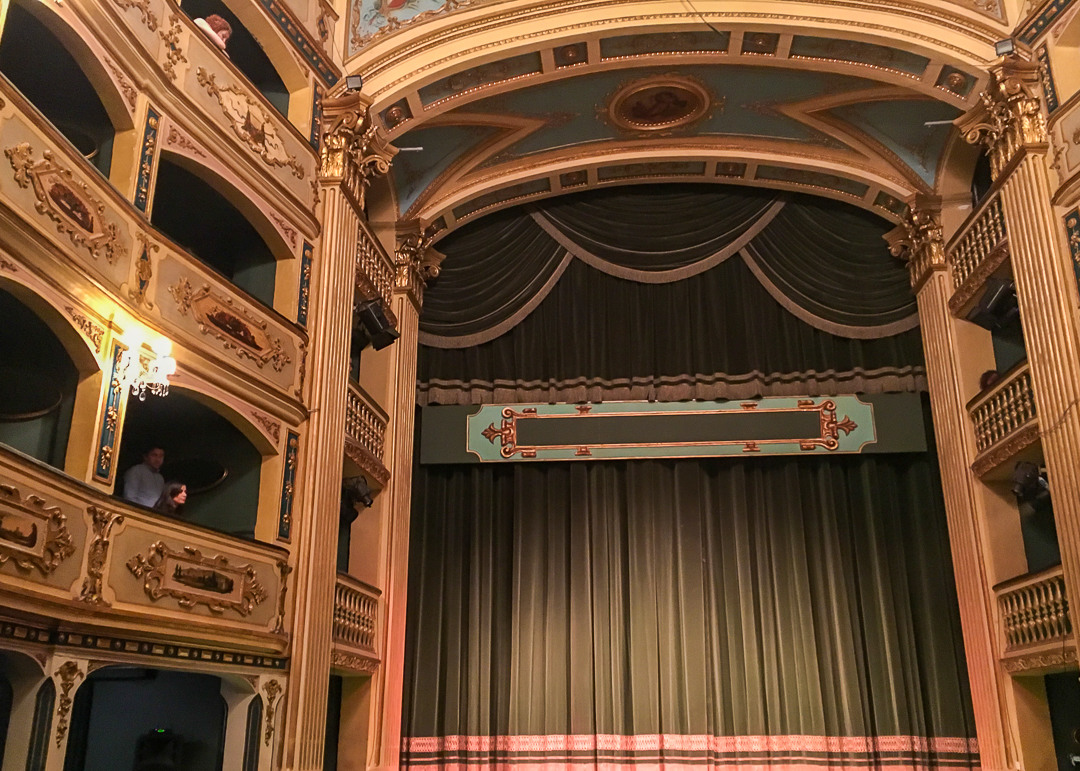
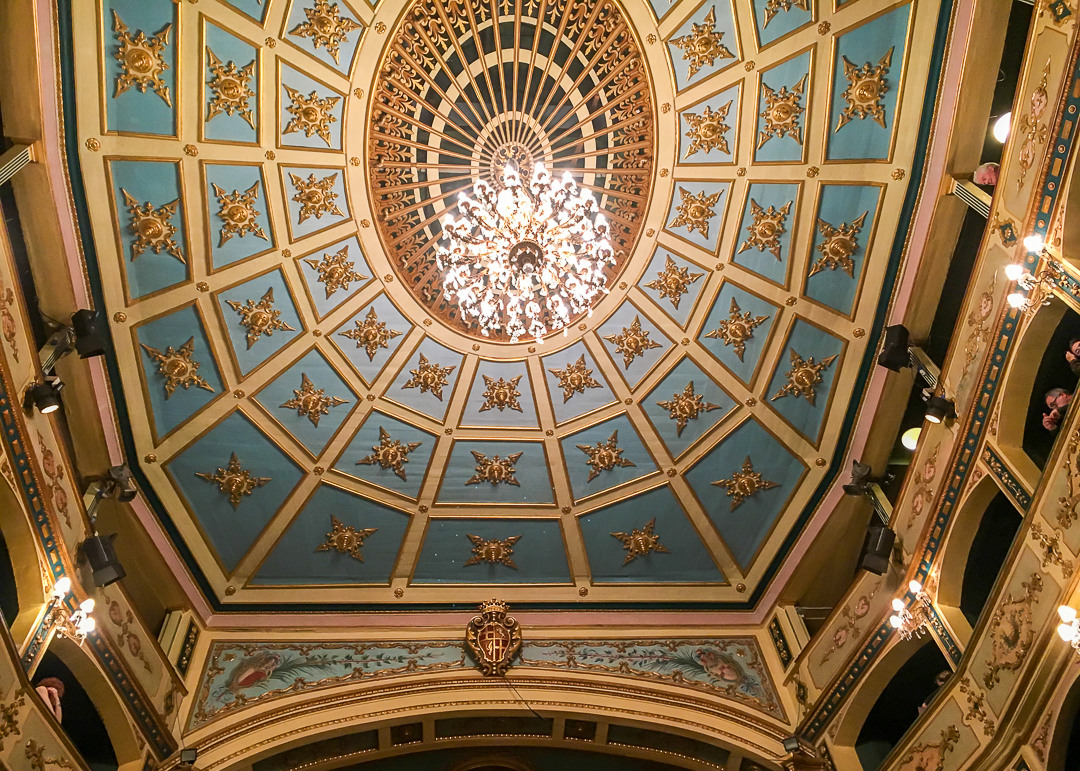
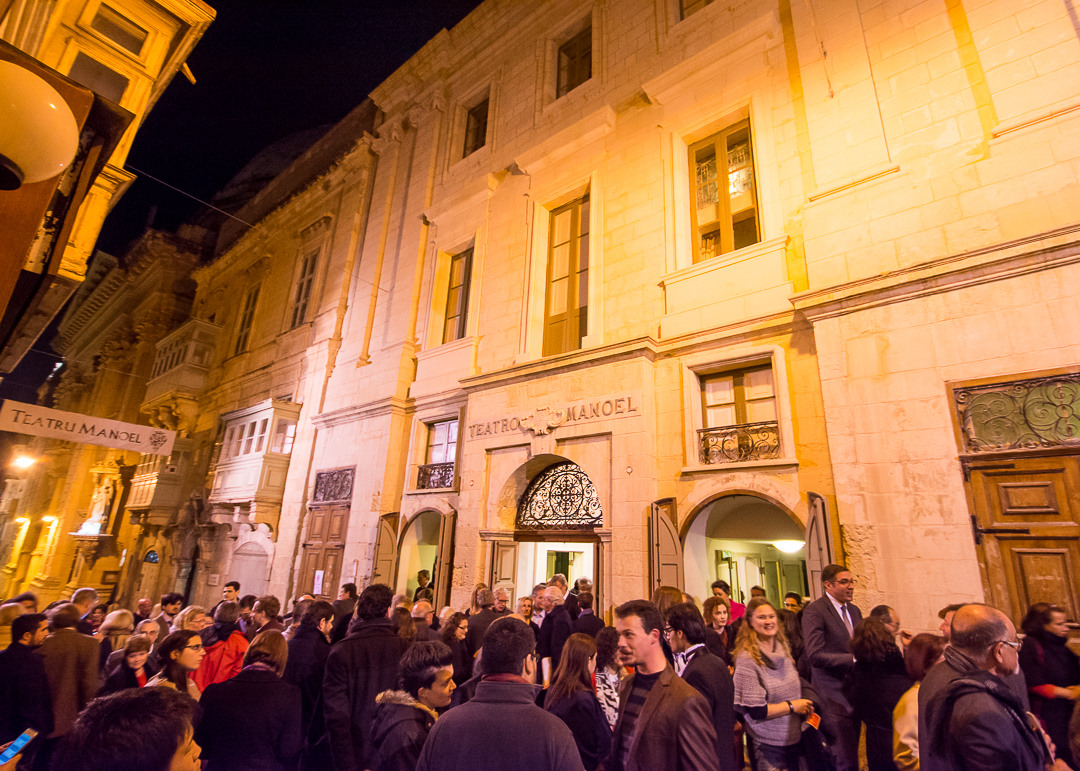
And if you’re lucky (like we were), you might get the chance to see a magnificent performance at the Teatru Manoel, one of the oldest working theaters in Europe.
The baroque interior is a gem with wonderful acoustic and well worth the ticket price.
Throwing a bit of culture is a favorite way to mix with the locals. Even though I didn’t get to spend nearly as much time as I would have liked in Valletta, I feel she gave quite a memorable performance, one I look forward to revisit…