San Lorenzo is one of the most characteristic and typical neighborhoods in Florence, steeped in history and boasting an extraordinary rich culture. After checking off the Duomo and Uffizi, this area is usually next in line and has something for truly anyone, whether you’re an art lover, history buff, or avid shopper.
Morning in San Lorenzo
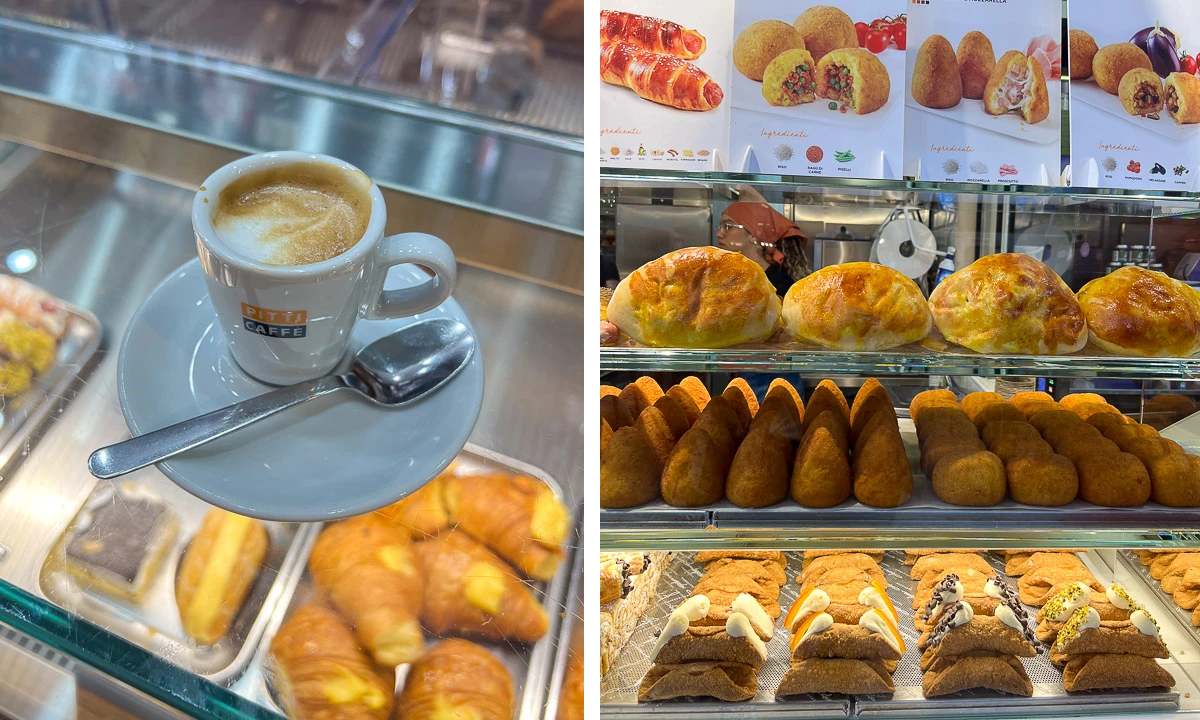
My favorite neighborhood to grab breakfast (coincidentally also where I was staying!), San Lorenzo is packed with old-school bakeries and local bars for that quintessential capuccino & cornetto. If like me you’re staying longer, there are countless other pastries and breads you should try, from Nutella-filled donuts (bomboloni) to rosemary and raisins rolls (pan ramerino). Just follow the locals in the morning cramming into tiny bakeries like Forno Becagli to find traditional baked goods to-go you wouldn’t get back home.
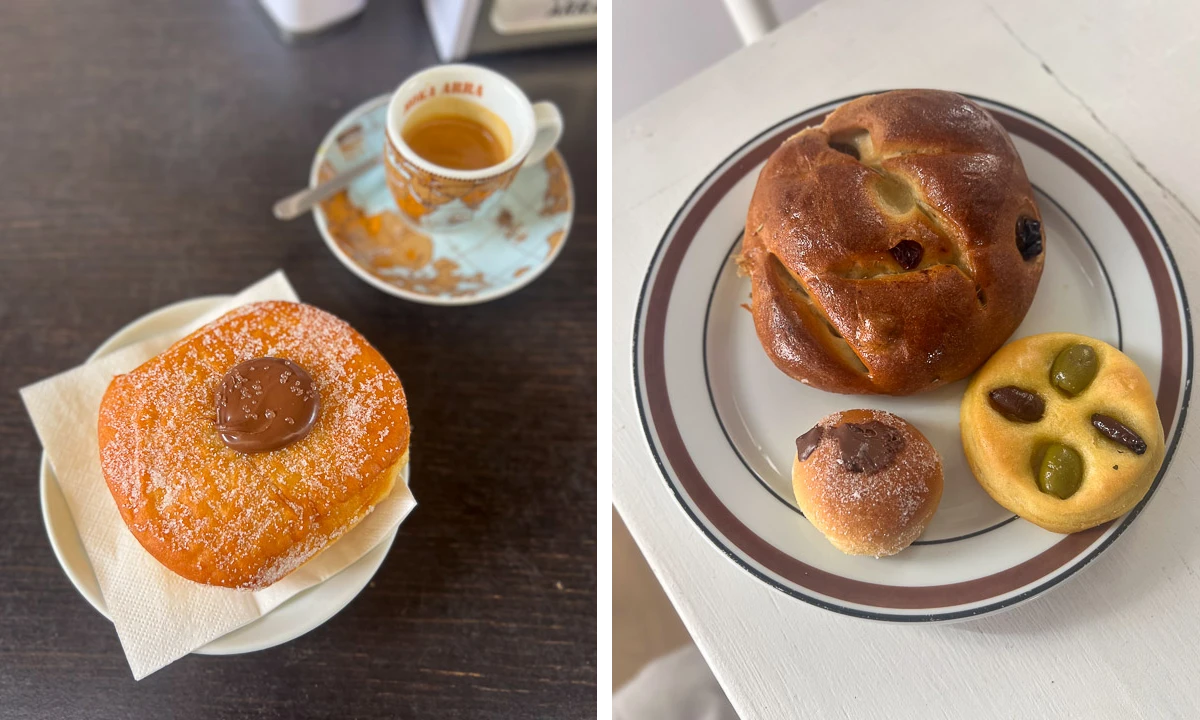
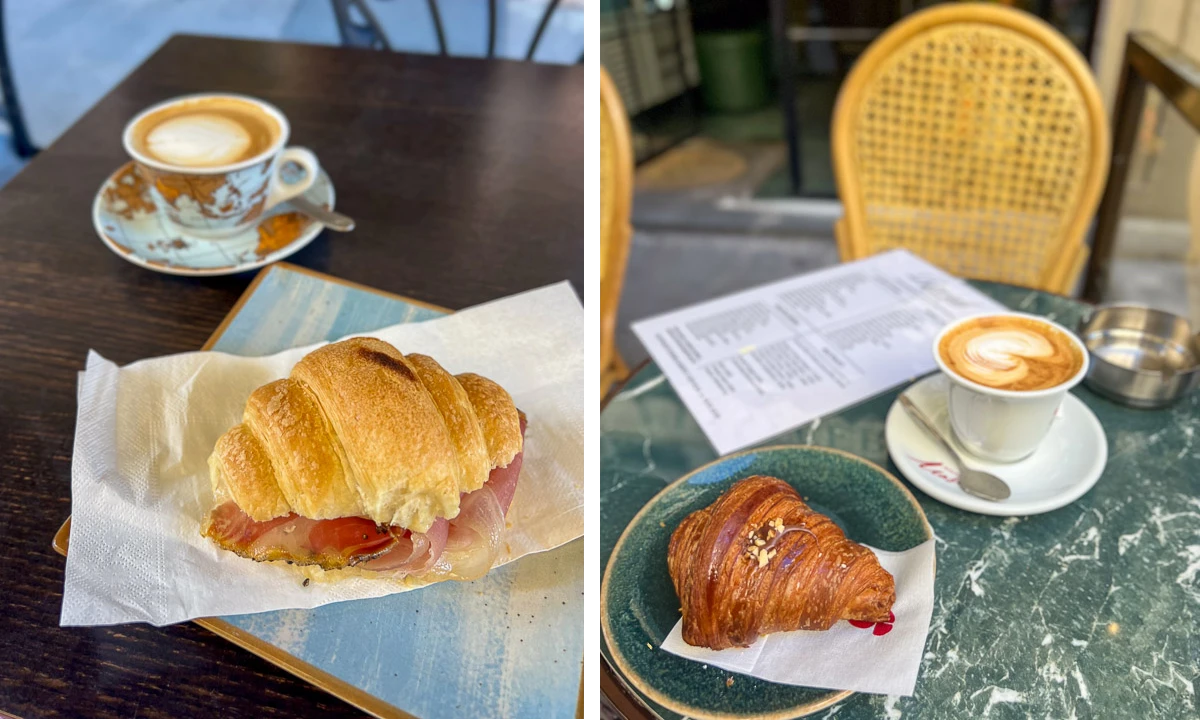
For a seated experience, any of the local cafes will do, from Caffè Del ‘900 for their prosciutto sandwich to Ricordi for a classic croissant.
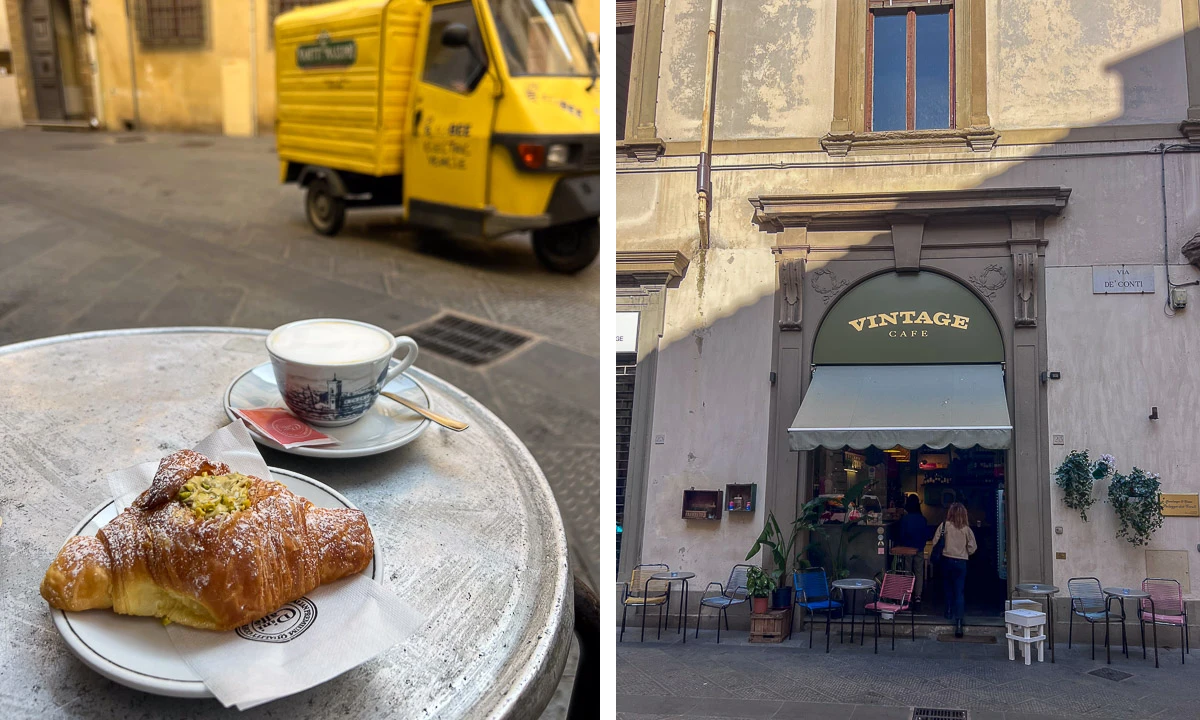
I especially loved Vintage Cafè on Via dei Conti. Sitting at one of the outdoor tables in the quiet street with old Italian songs playing in the background is pure bliss.
David at the Academy
If the extremely long lines taking up most of narrow Via Ricasoli aren’t enough of a hint, yes, seeing THE famous David seems to be on everyone’s bucket list. Getting into Galleria dell’Accademia, Europe’s first art school (1563), often requires reserving your timed-entry ticket days if not weeks in advance. It is all worth it though to see Michelangelo’s most iconic works and many other paintings and sculptures by members of the Accademia.
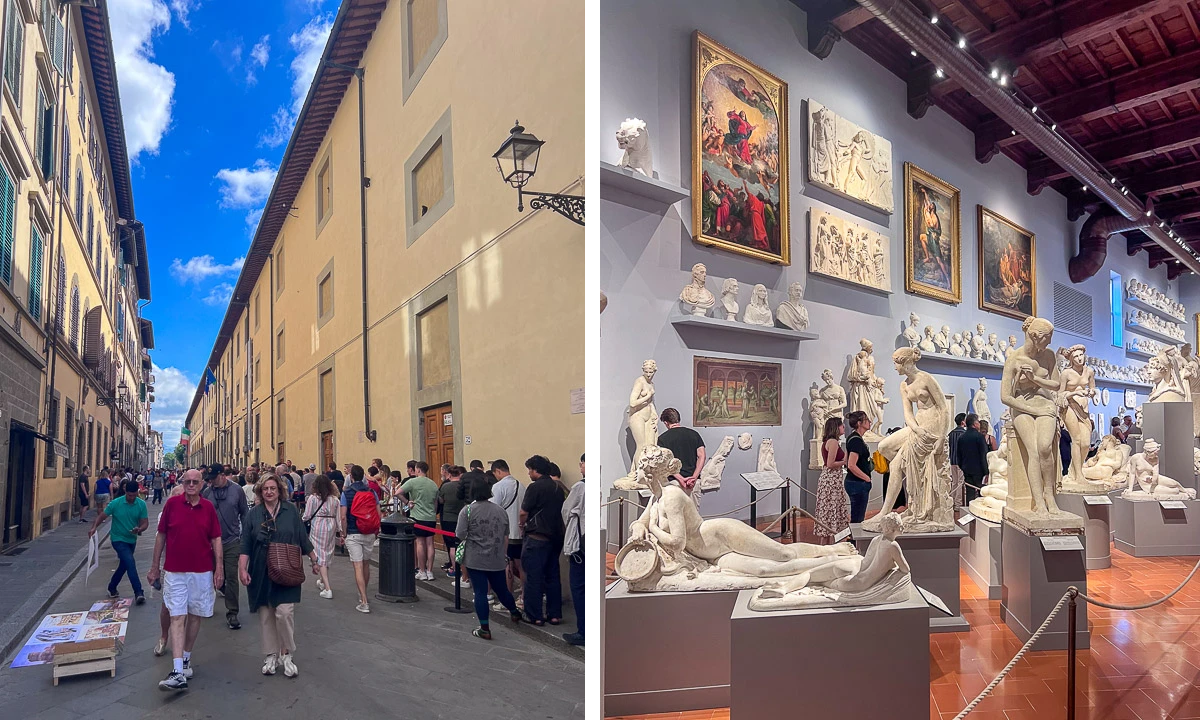
Wherever you stand in the main gallery, it is nearly impossible to look anywhere but at the colossal statue of David. The 17 ft tall biblical hero who killed the giant Goliath established Michelangelo in 1504, then aged 29, as the foremost sculptor of his time. If you visited the Palazzo Vecchio, the David that stands in front of it is a copy in its original place. It was moved to the Accademia to protect it from the elements in 1873.
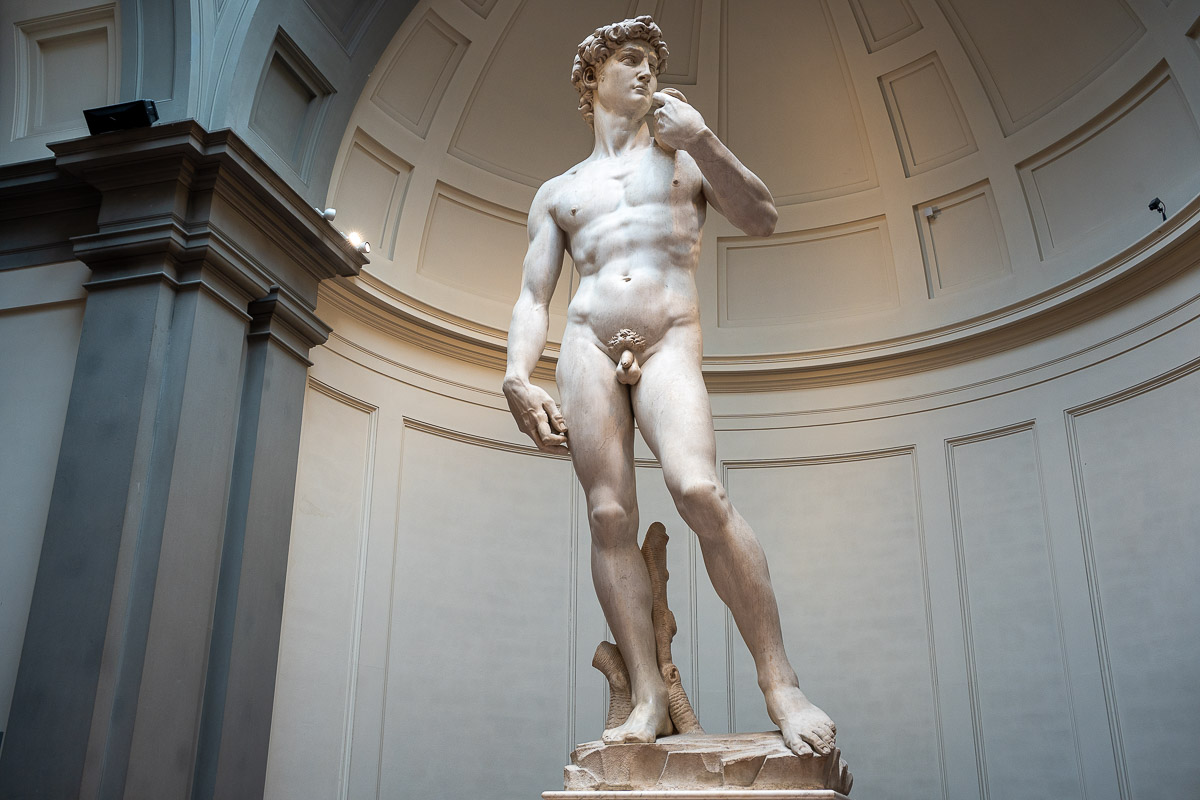
Visitors encircle the ultimate icon of the Renaissance, craning their neck to study the groundbreaking anatomical realism carved from a single discarded block of Carrara marble. It truly is a masterpiece, from the pulsing veins and flexed muscles to the furrowed brow – the technical feat still astounds to this day.
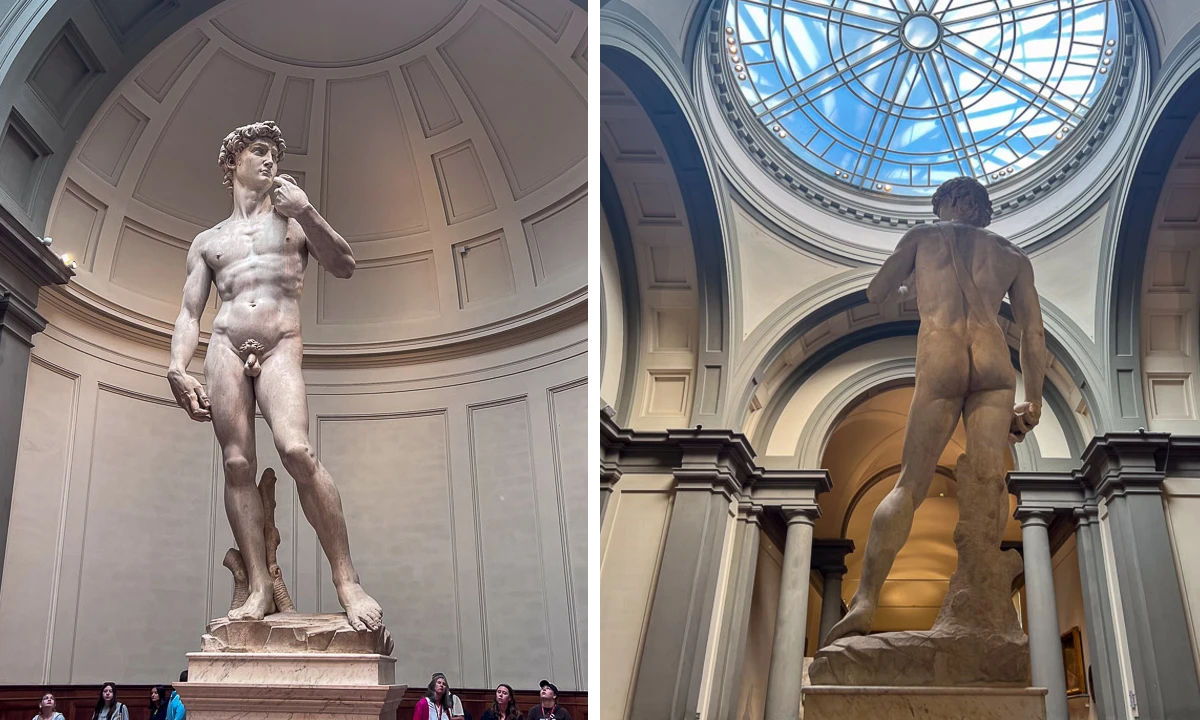
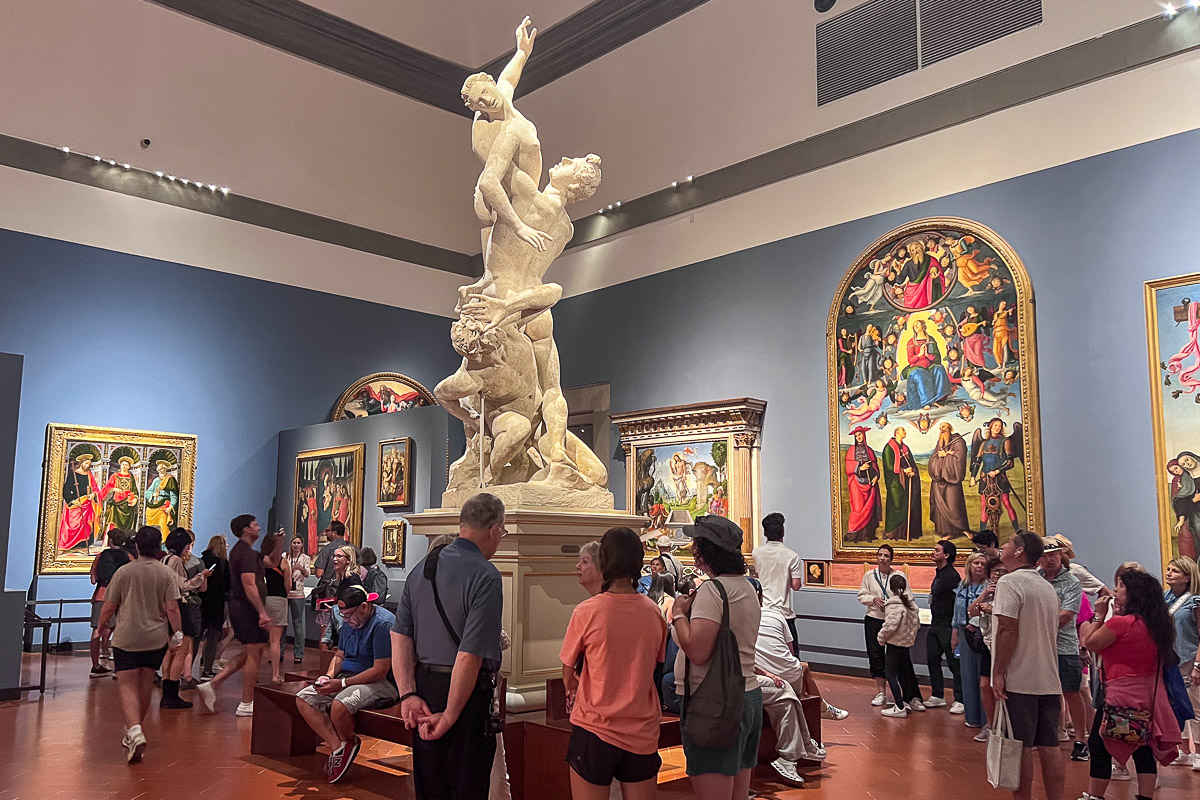
Once you’re able to peel your eyes away from the naked underdog, there are a few more rooms to explore with important paintings by contemporaries of Michelangelo. You won’t need more than an hour for your visit, most of which spent in the vicissitude of David as the rest isn’t as interesting once you’ve been to the Uffizi or the other palaces IMO.
The art of pietre dure
Just around the corner from the Accademia, you’ll find the Opificio delle Pietre Dure. Literally meaning “Workshop of semi-precious stones”, the small museum sheds a light on the stunning furniture and decorations you’ve seen in the city’s most beautiful palaces with a beautiful collection of semiprecious stone work.
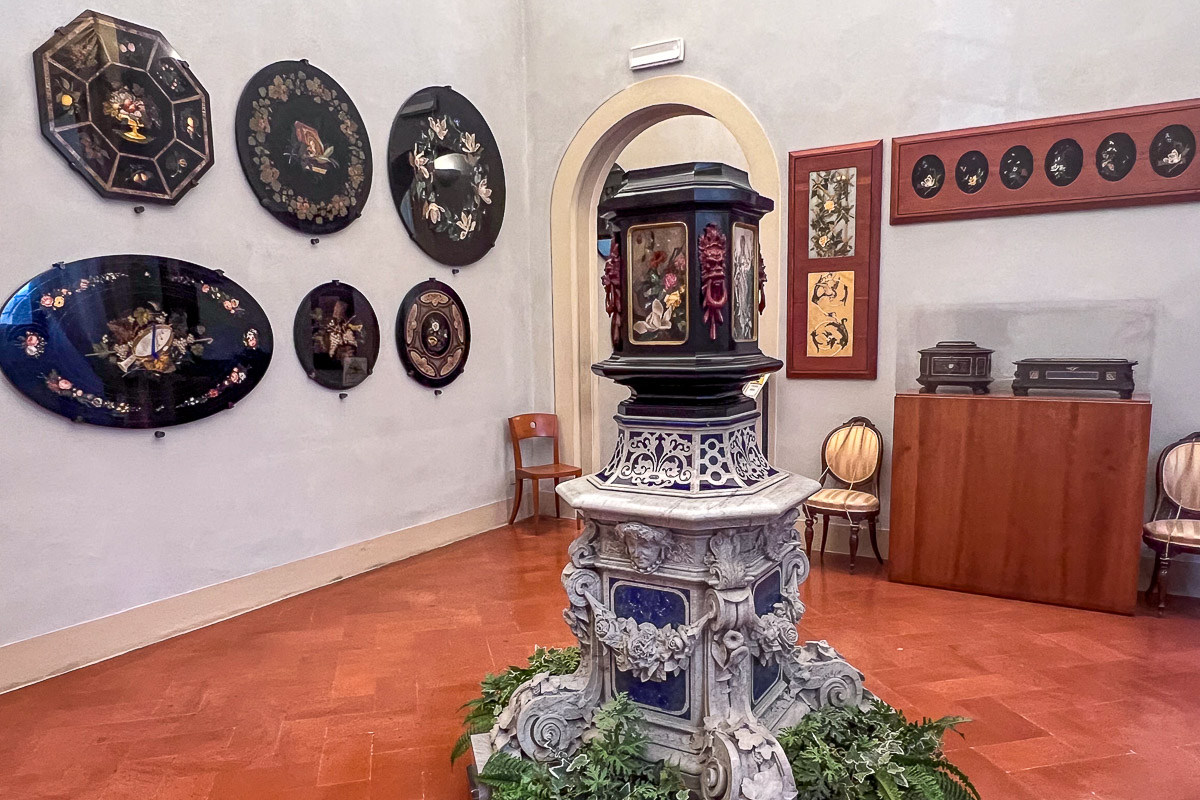
I didn’t know anything about this delicate craft before and became enamored with many of the works on display. Anyone into mosaics and colorful stones should make sure to devote a little hour to this gem of a museum. Particularly stunning were copies of paintings from the Medici era made entirely of marble and semiprecious stones using the inlay technique. I mean look at the level of details…!
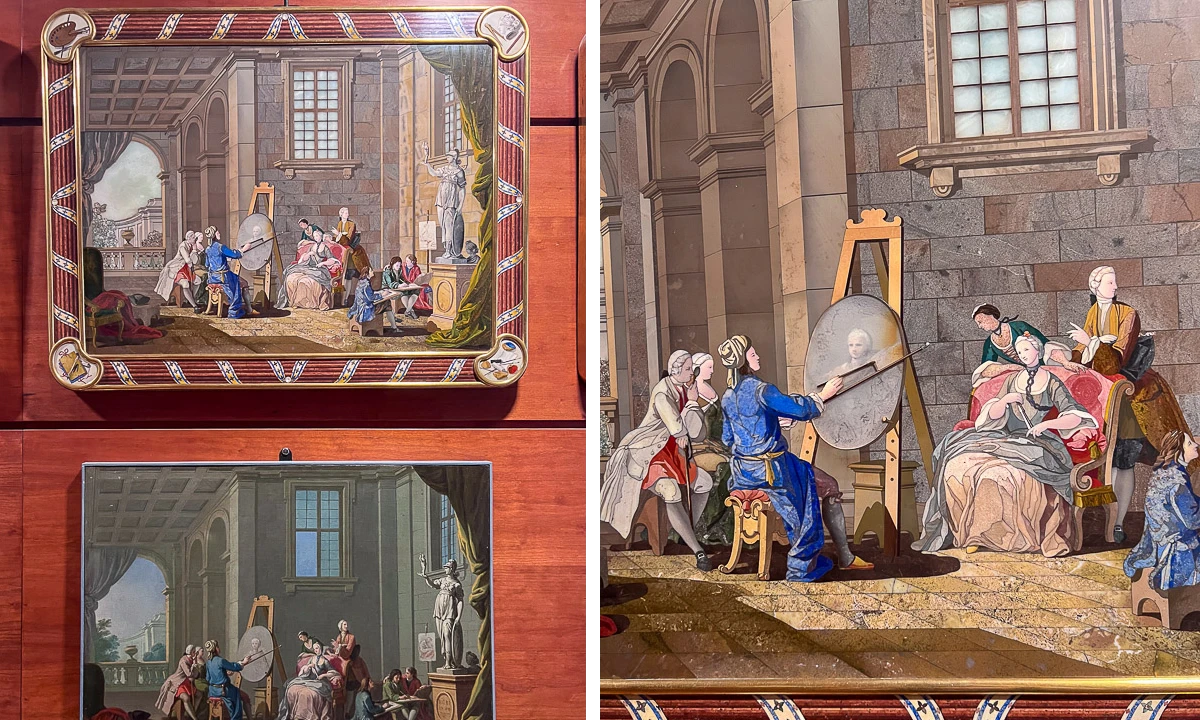
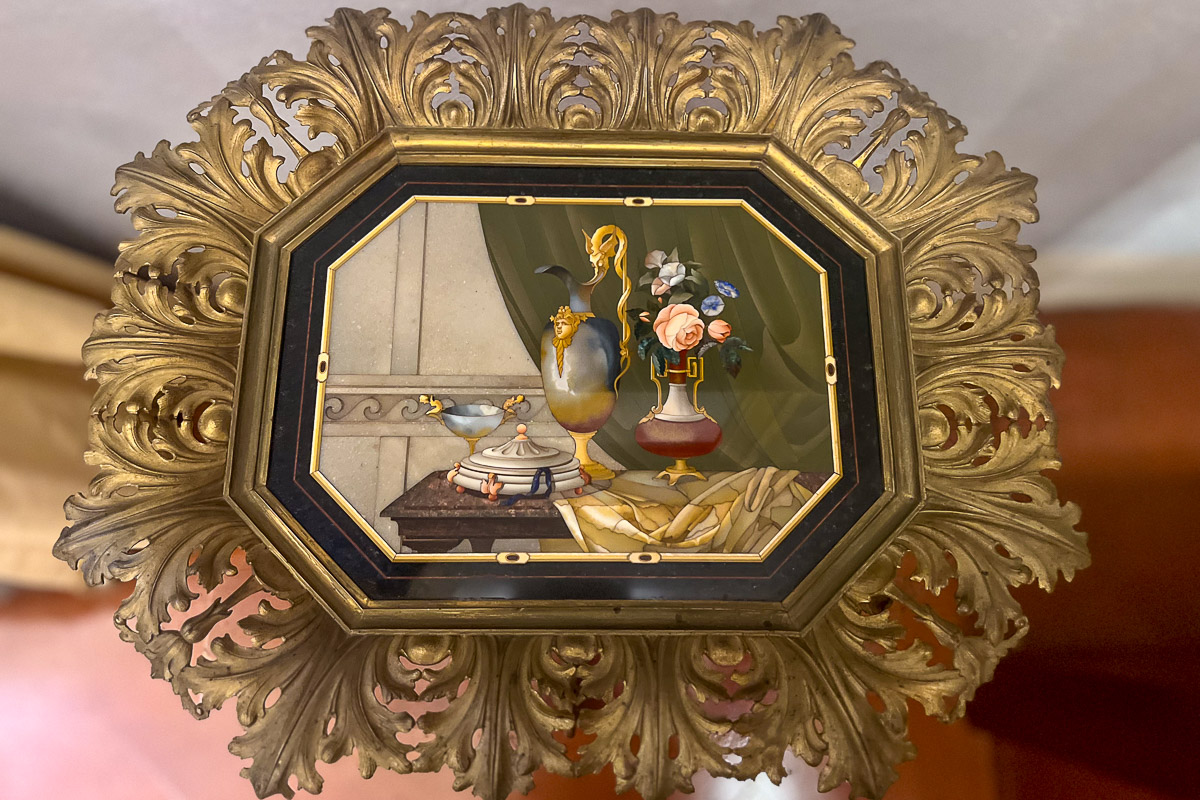
These insane works of art often grace table tops, plaques, and furnishings, with stones cut and arranged to create pictorial compositions, flowers, fruit, animals, and landscapes with their natural colors.
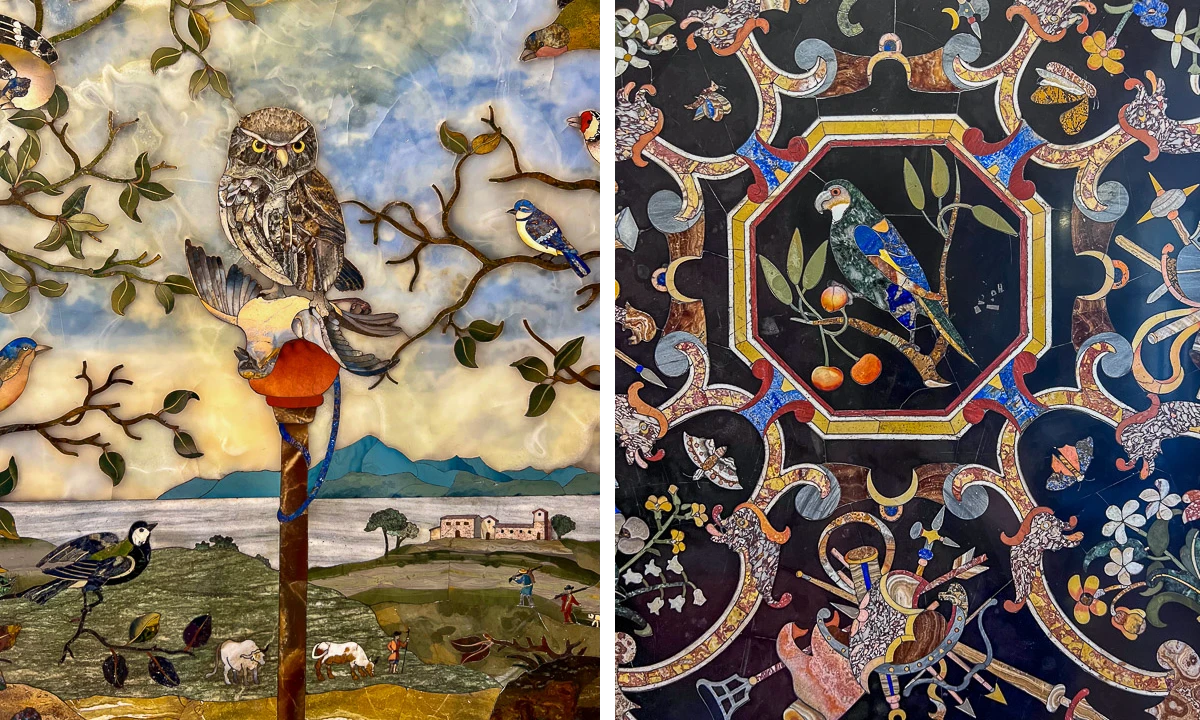
The opificio now runs a national institute teaching the craft, and you can see more “modern” pieces in the museum, with some Art Nouveau vases and objects from the 20th century.
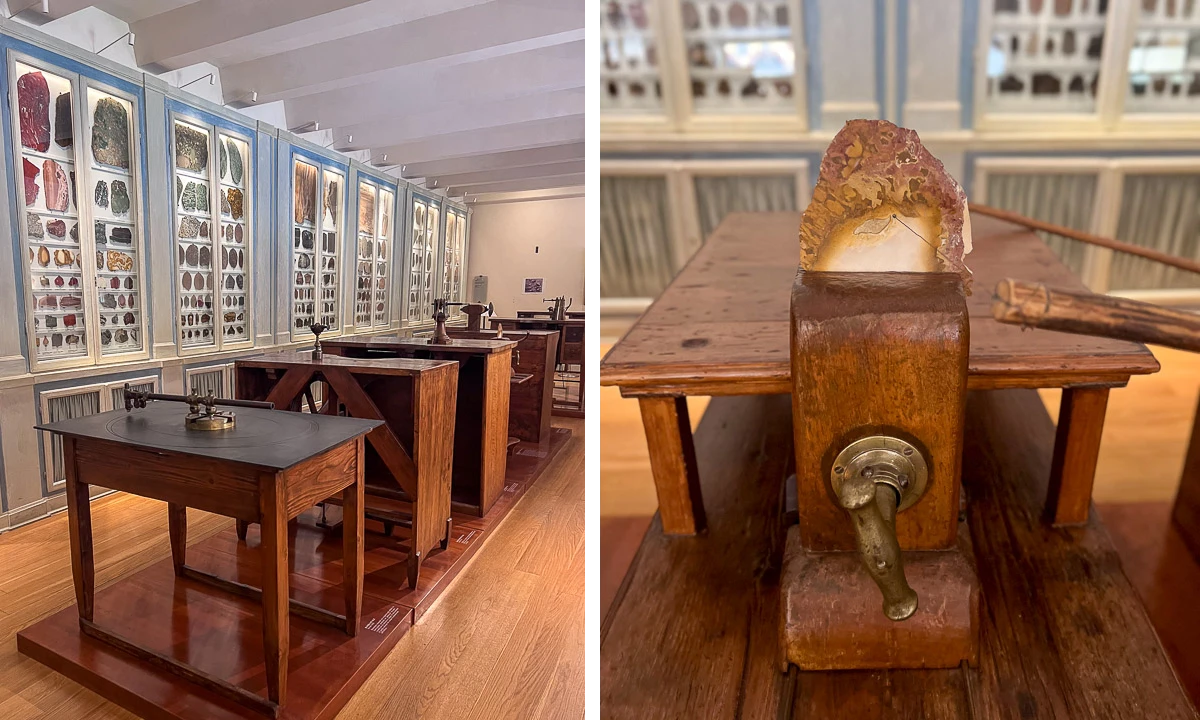
The upper level demonstrates all the stages of production and various stones used which blew my mind – another incredible Florentine artistic tradition.
Santa Maria Novella
One of the most important religious buildings in Florence and a World Unesco Site, the Basilica of Santa Maria Novella is above all an exhibition space for some of the greatest works of art from the Renaissance era.
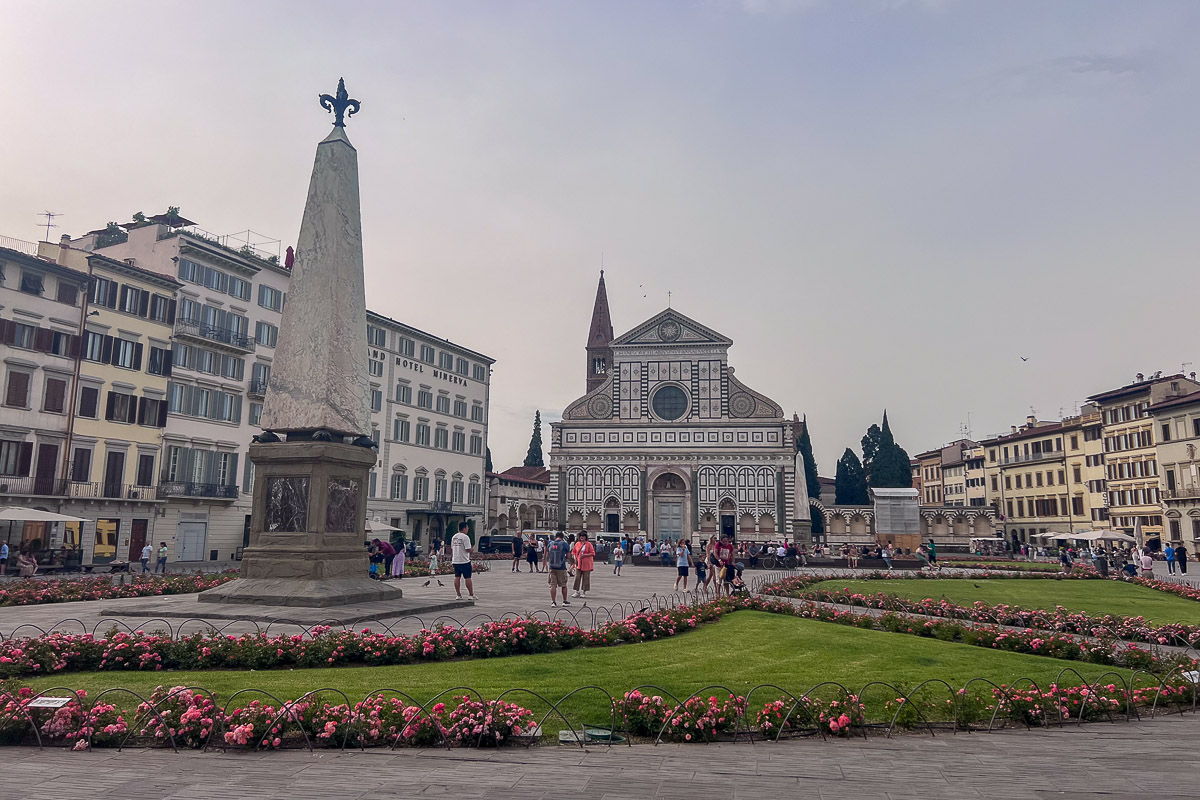
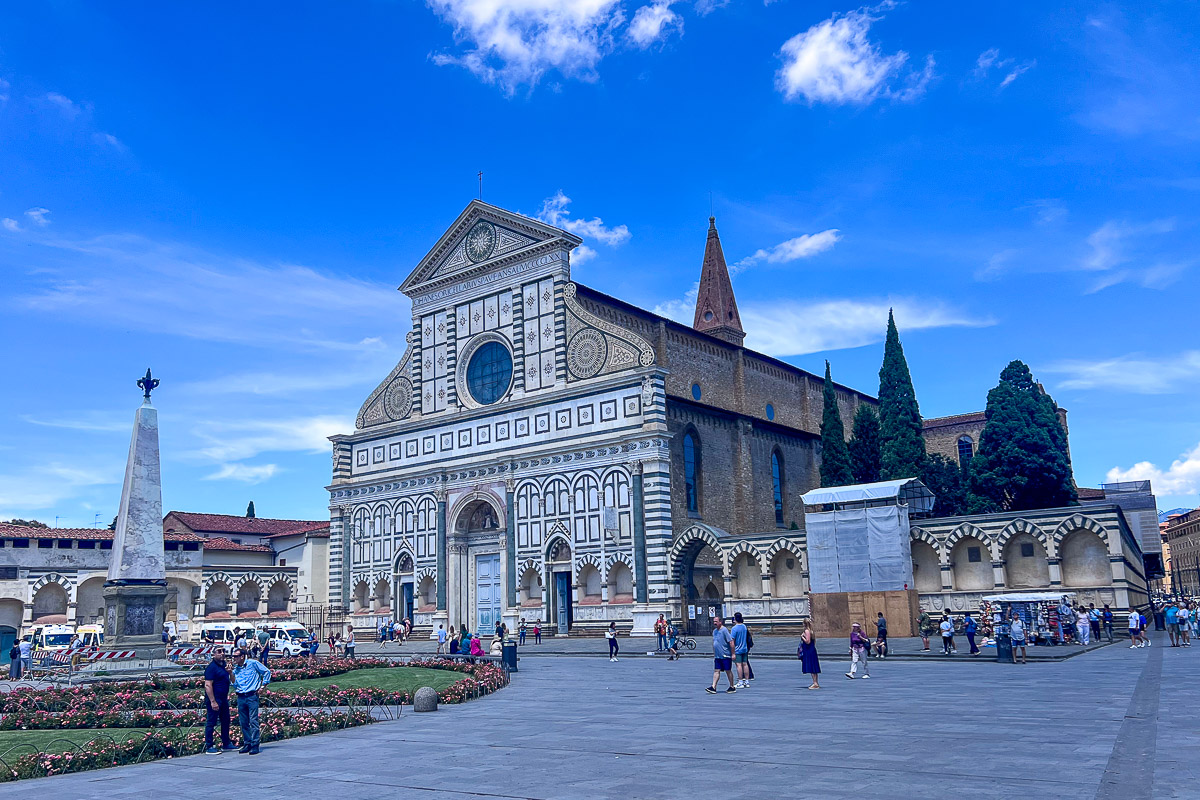
Behind the green-and-white marble façade, you’ll find a large complex comprising of a church, a 14th-century Dominican Basilica, and its adjacent monumental cloisters.
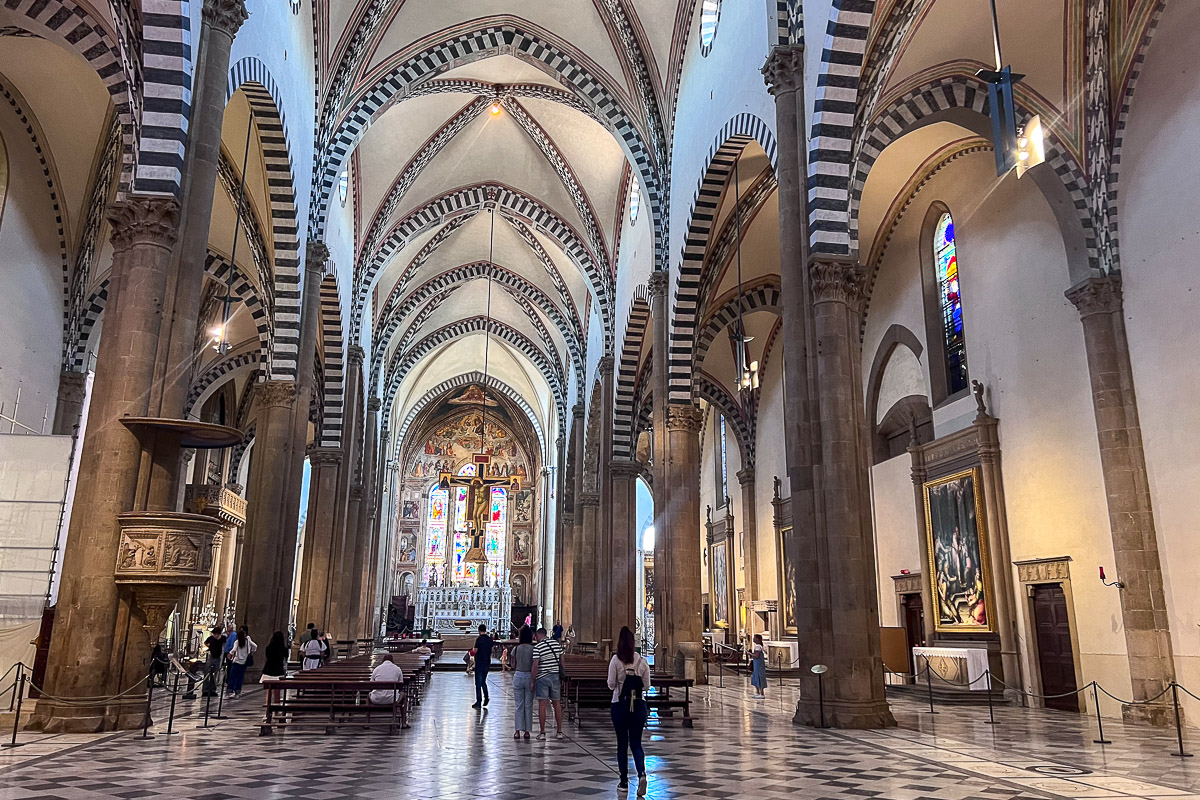
The interior has the somber and dignified look of the Duomo. It deserves a good exploration to admire some of the remarkable artworks found here, from stunning stained glass windows to large frescoes.
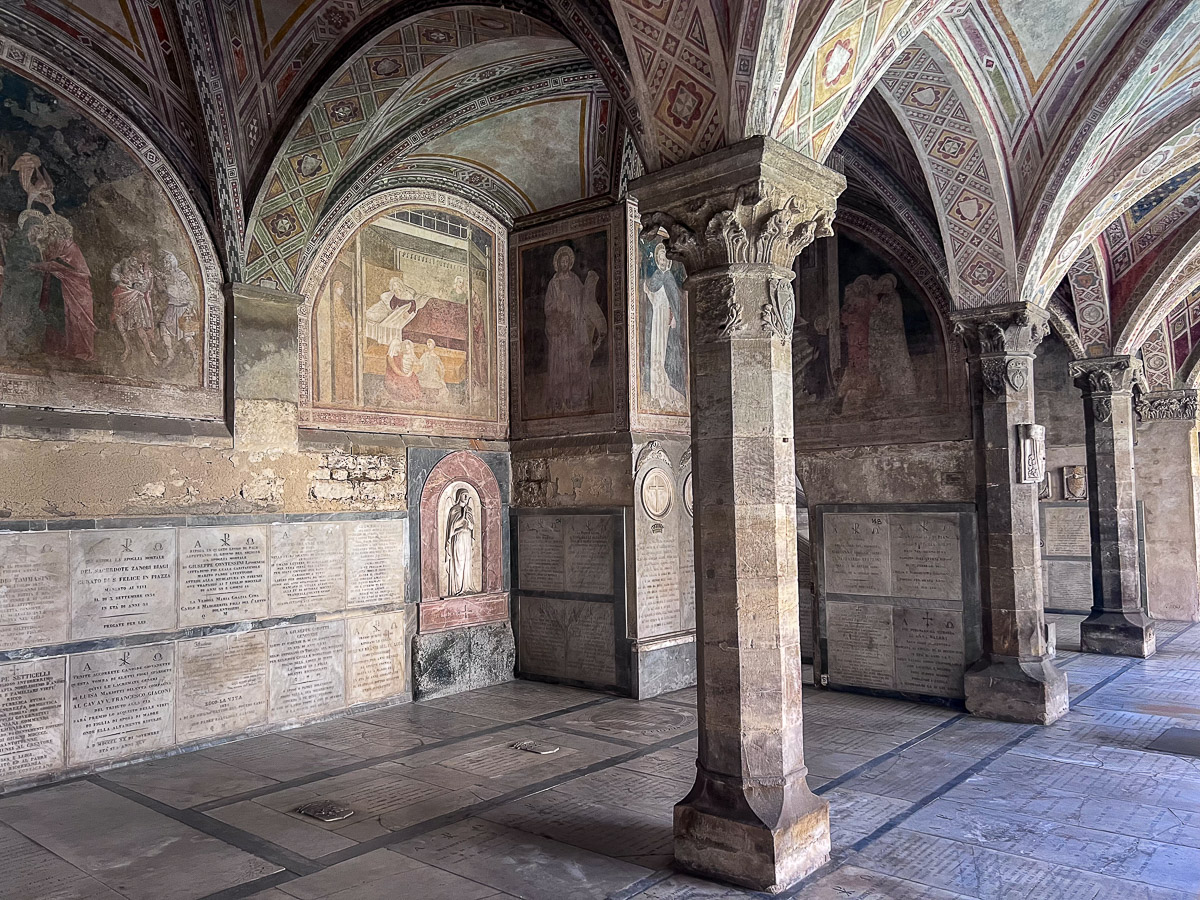
The Cloister of the Dead is the convent’s oldest cloister, dating back to 1270. It served as a cemetery and features weather-worn tombstones and surviving 14th-century frescoes.
The Spanish Chapel has better-preserved frescoes painted between 1348 and 1355 by Andrea di Firenze covering the entire vaulted space.
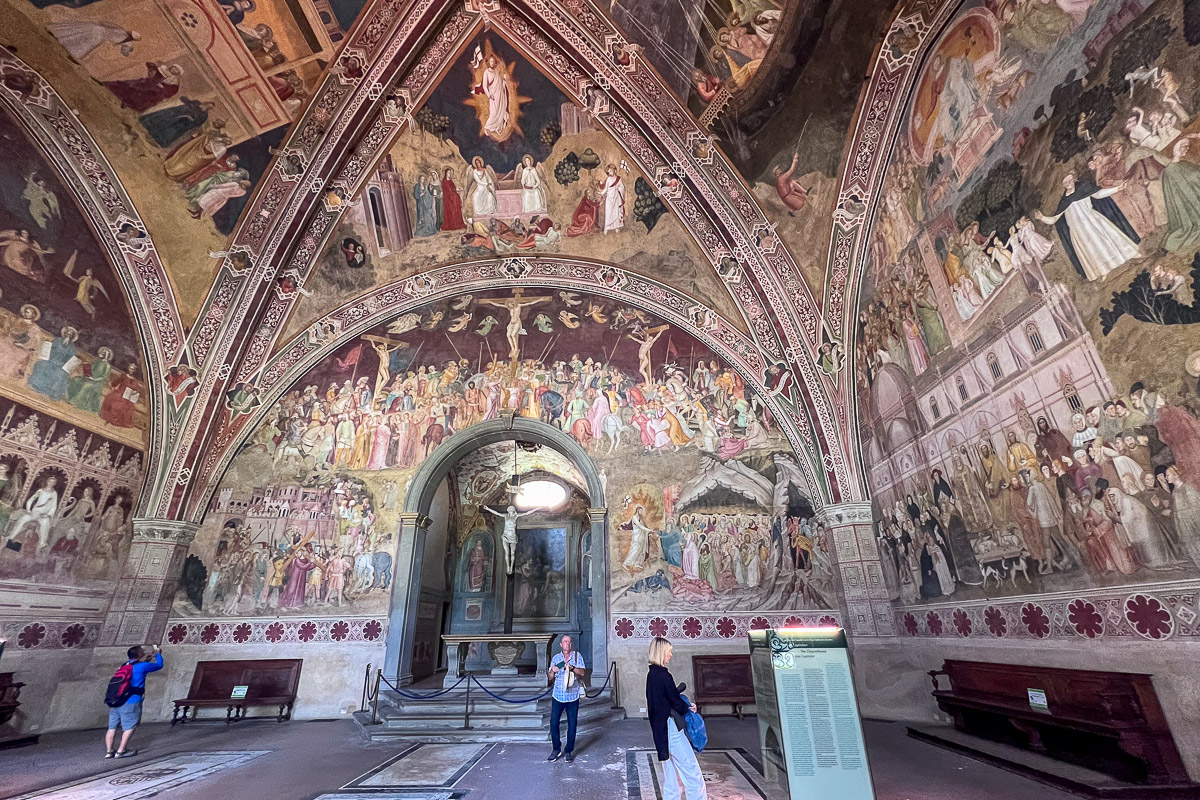
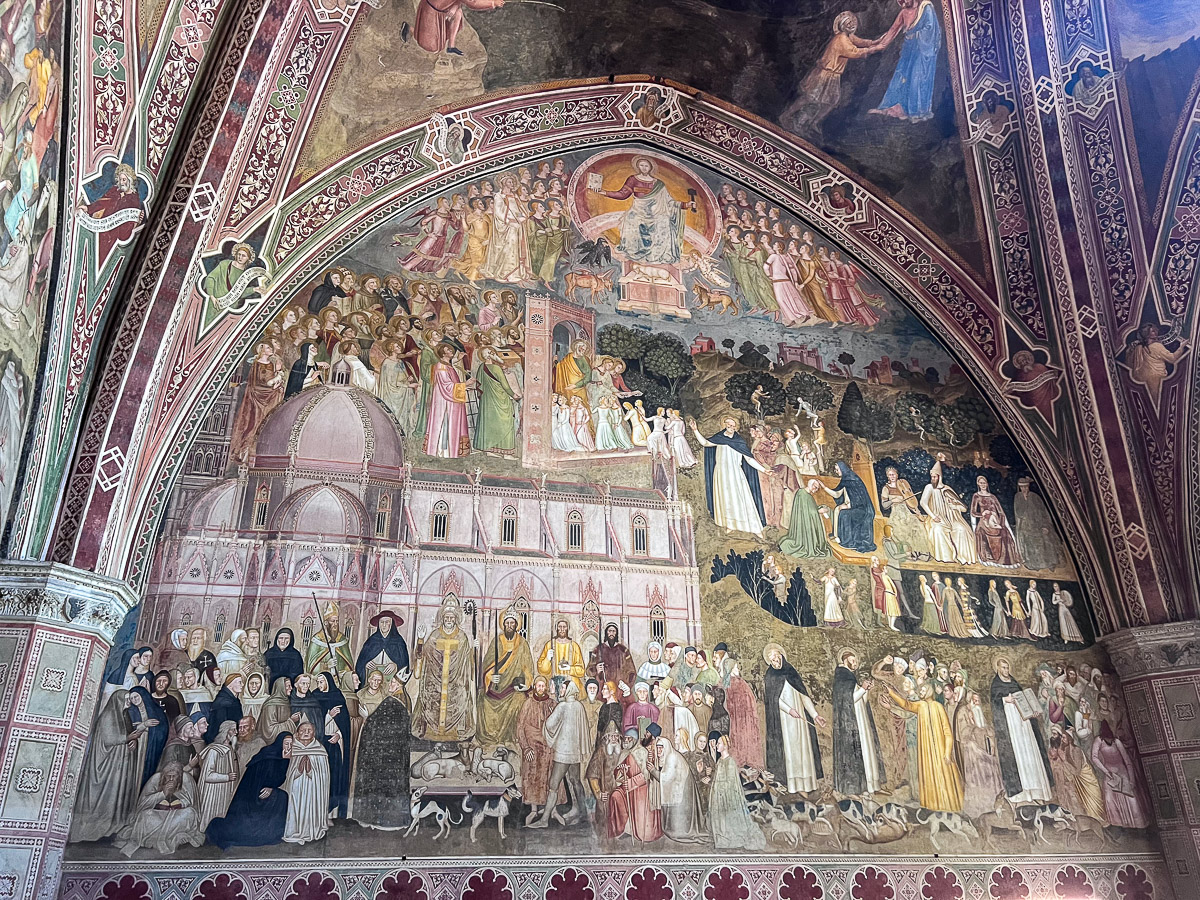
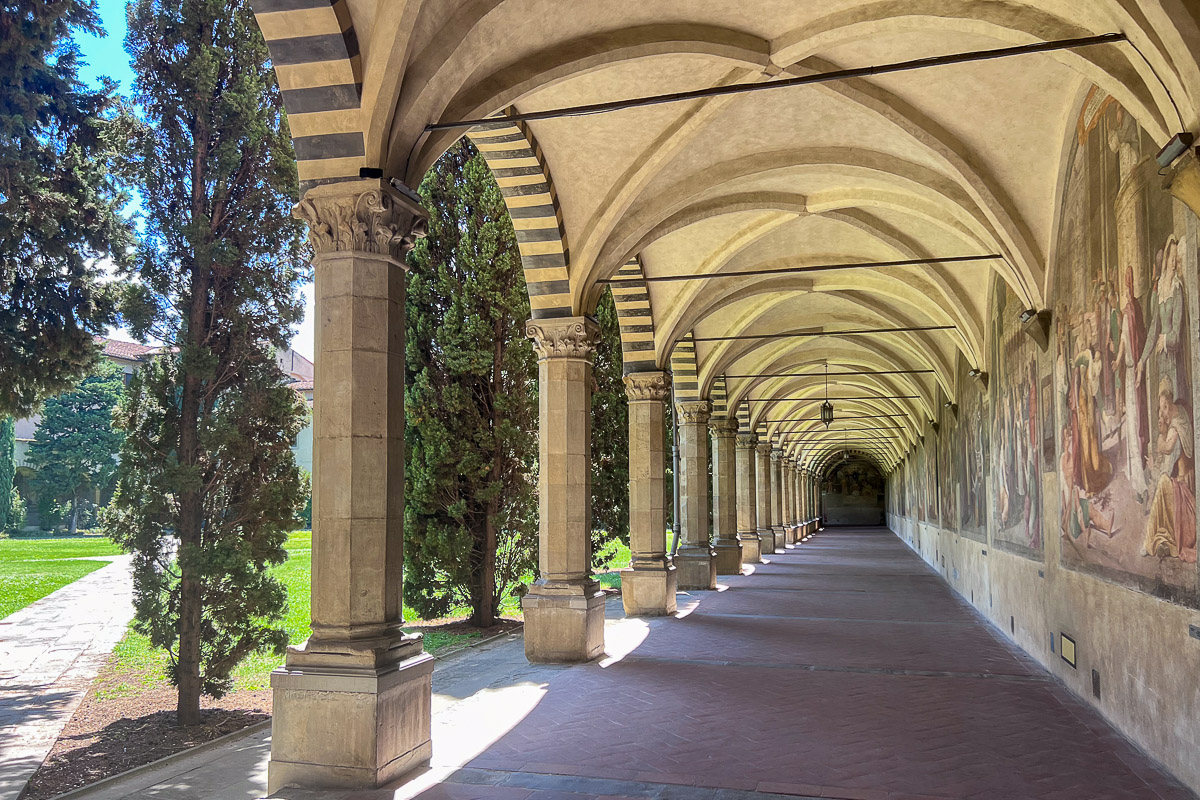
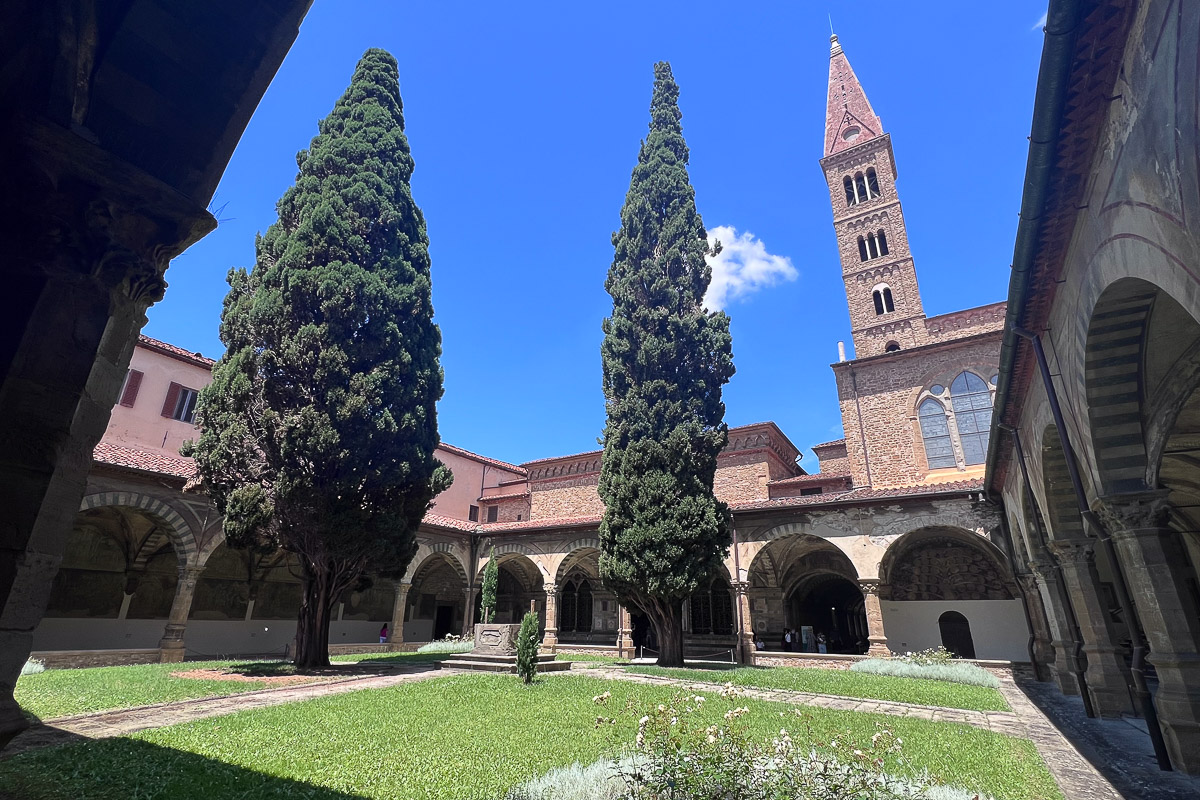
End your visit wandering through the Green Cloister with beautiful cypress trees on one side and Old Testament frescoes by Paolo Uccello lining the walls.
Cross the Piazza di Santa Maria Novella, one of Florence’s grandest squares, to reach the opposite side and the loggia of the old hospital.
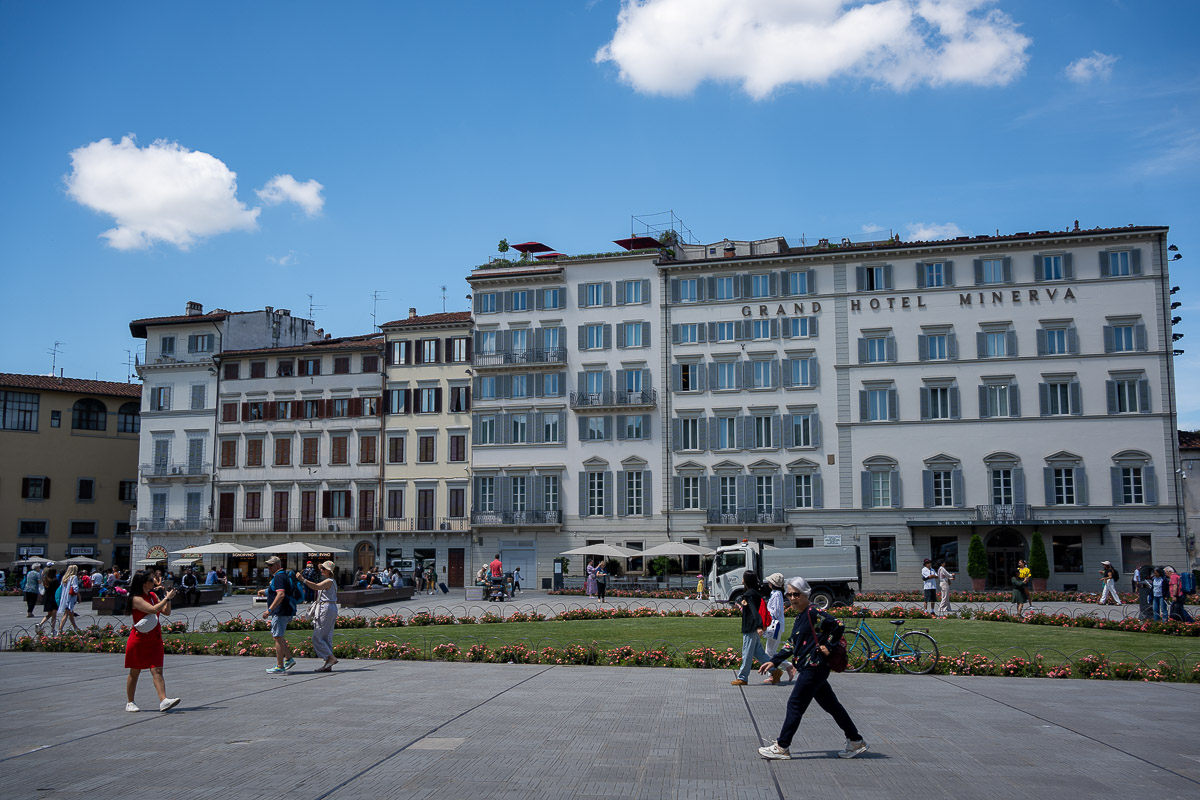
The hospital no longer exists today – it is now the home of the Novecento Museum, one of Florence’s newest museums inaugurated in 2014. Go there to see an intriguing selection of 20th and 21st-century Italian art – a quick visual refresh after the busy frescoes of the basilica.
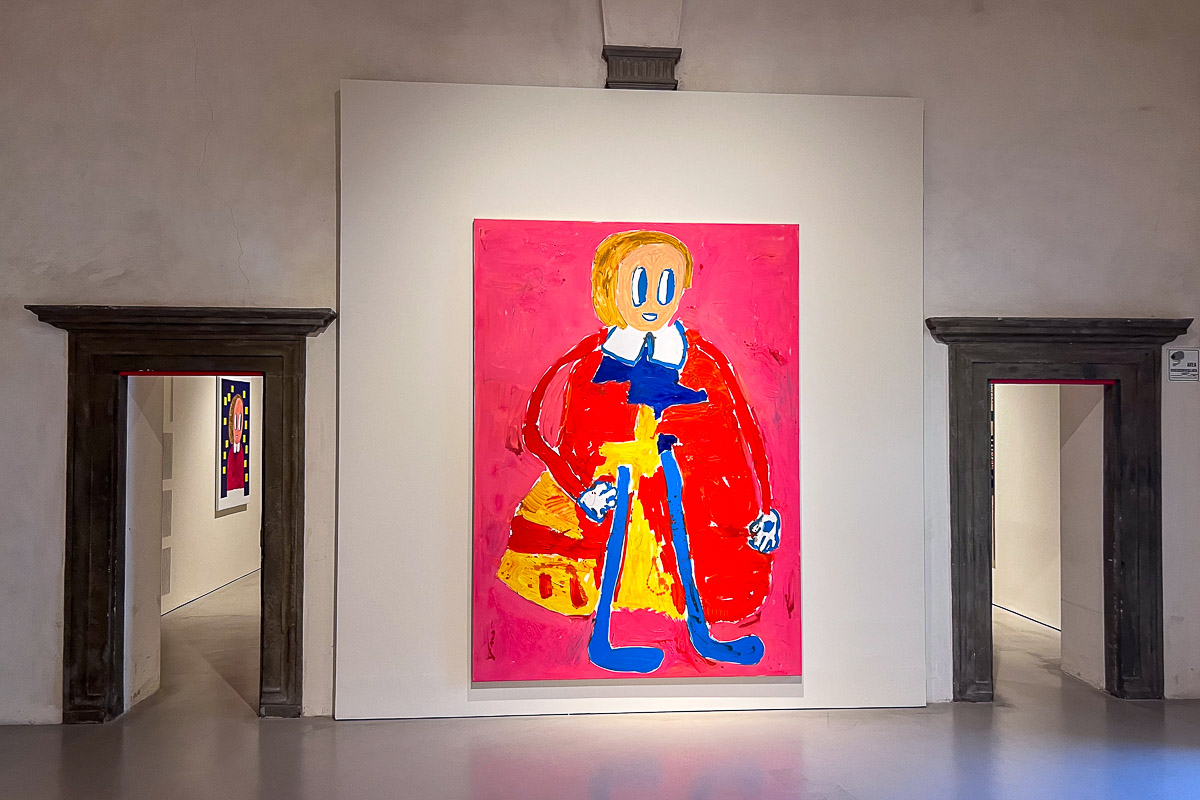
Scents from the past
The Dominican monks from Santa Maria Novella began growing medicinal herbs in the basilica’s gardens for all manner of ailments, including disinfectant used during plague outbreaks in the 14th century. They eventually opened the Officina Profumo Farmaceutica Santa Maria Novella in 1612 at Via della Scala 16 which you can visit today.
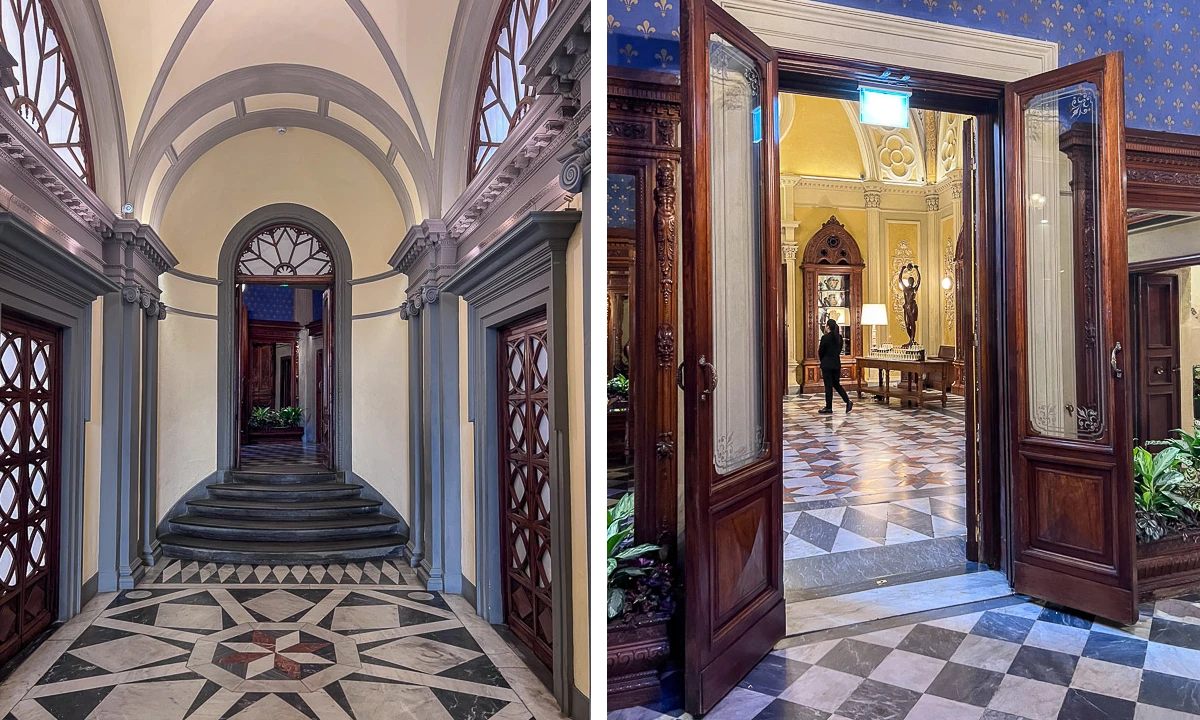
One of the oldest pharmacies in the world, visiting its rooms adorned with frescoes and lined with centuries-old glass vials is a real trip back in time. There’s a museum set in the old laboratories that paints a fascinating picture of the history, art, and science of perfumery.
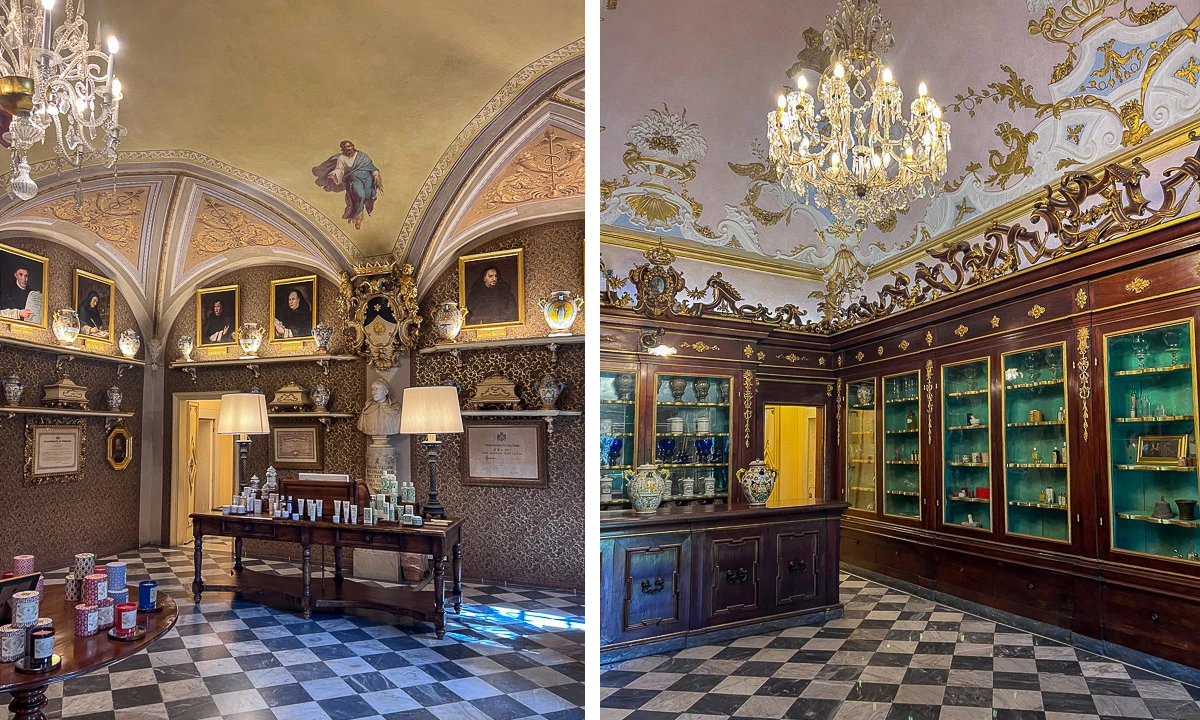
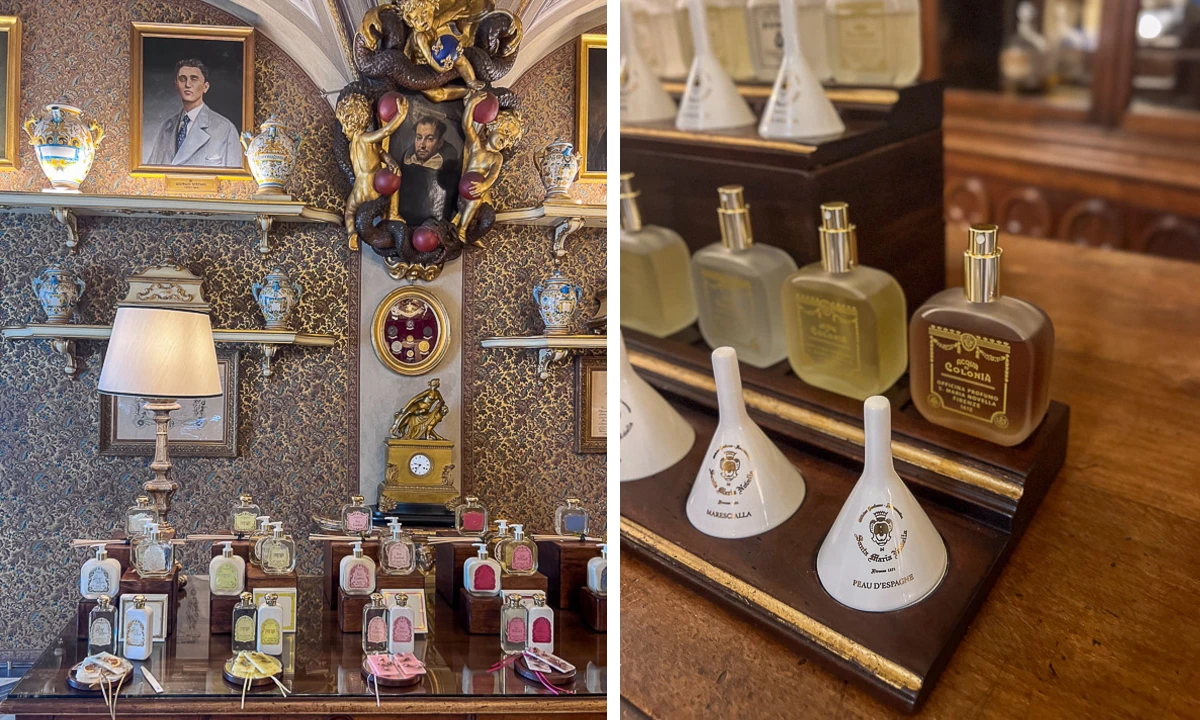
The sales room set in what was once a chapel is the beating heart of the Officina. Products displayed in neo-Gothic walnut cabinets range from perfumes to creams and products for the face and hair.
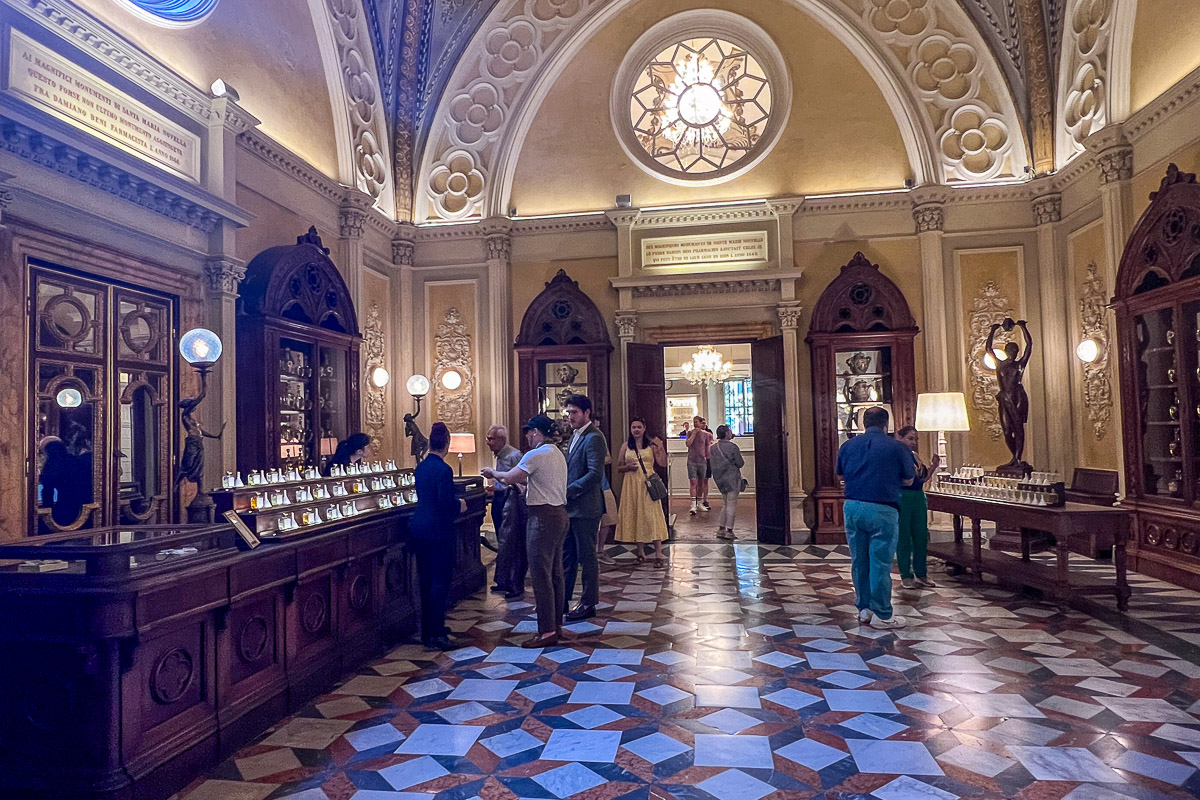
Many are still made to the original formulas used by the monks, and you can even get your hands on famous creations such as Acqua della Regina, the fragrance created in 1533 for Caterina de’ Medici.
Basilica of San Lorenzo
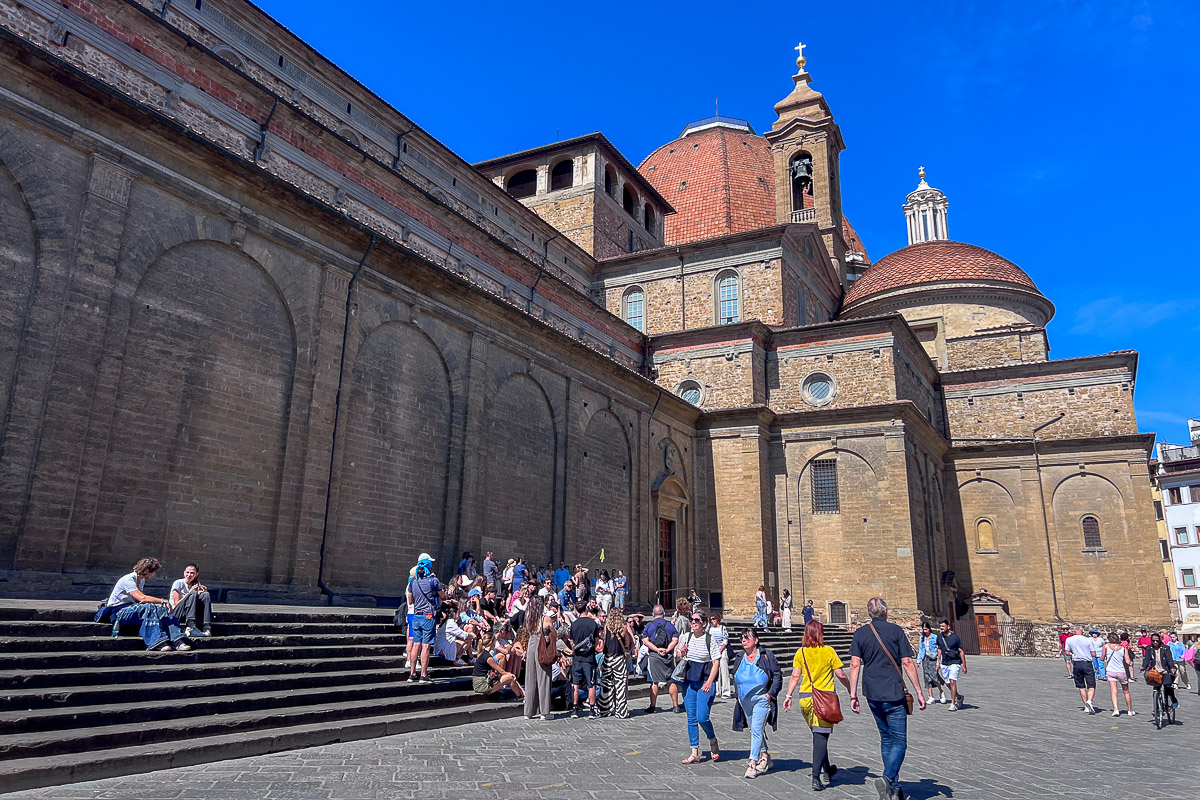
It’s impossible to miss the nearby Basilica of San Lorenzo, smack in the center of the market district and one of the largest chapels in Florence. Its rustic façade hints at its claim of being the oldest chapel in Florence (it was in fact built over a 4th century church), though as it was the church of the Medici family, you can be sure there’s nothing less than lavish as soon as you pass the entrance.
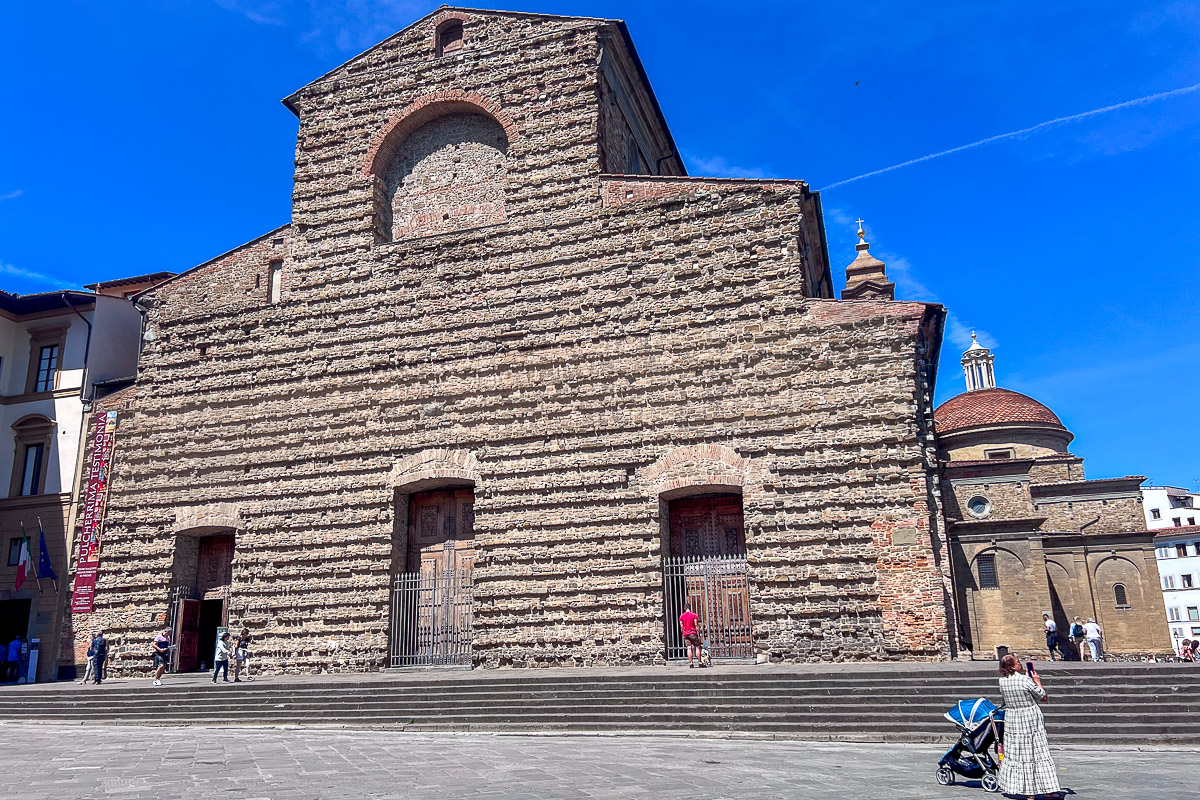
The imposing basilica was renovated in Renaissance Classical style in 1419 by none other than Brunelleschi (of the famous Duomo) and witnessed many celebrations of the Medici family, from wedding and funerals to state ceremonies.
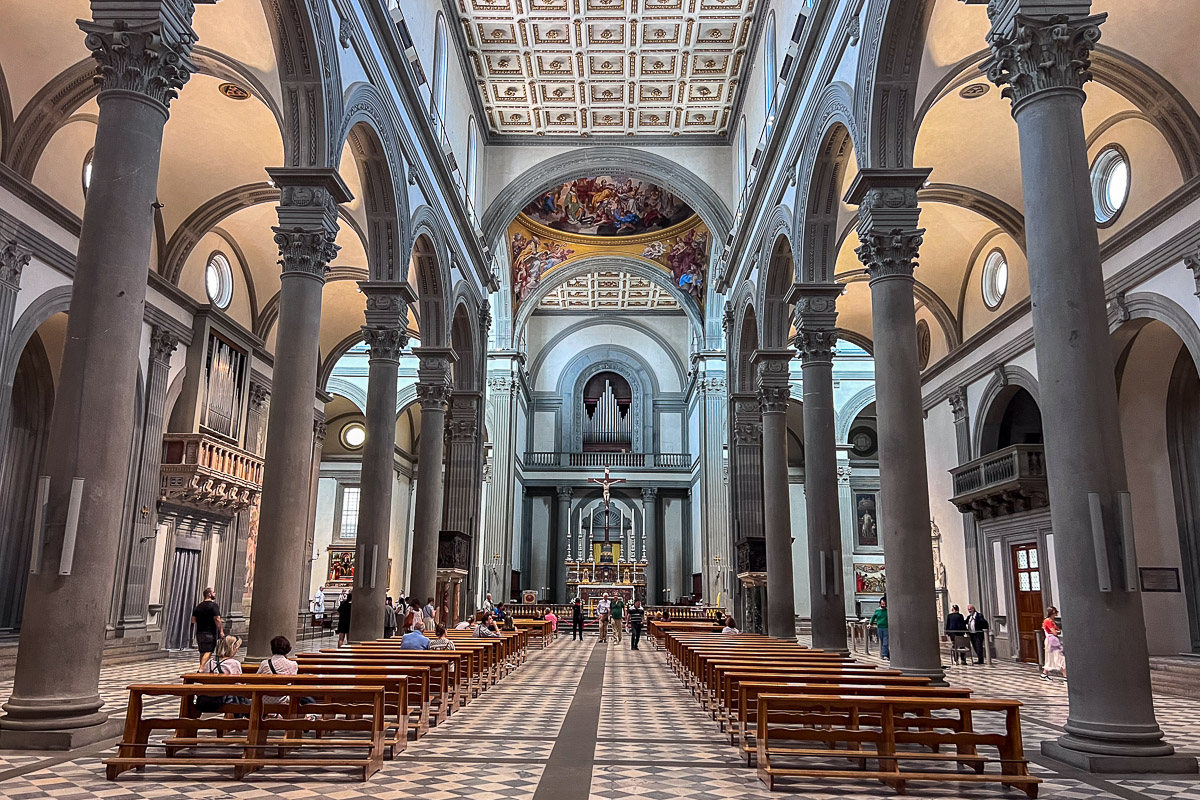
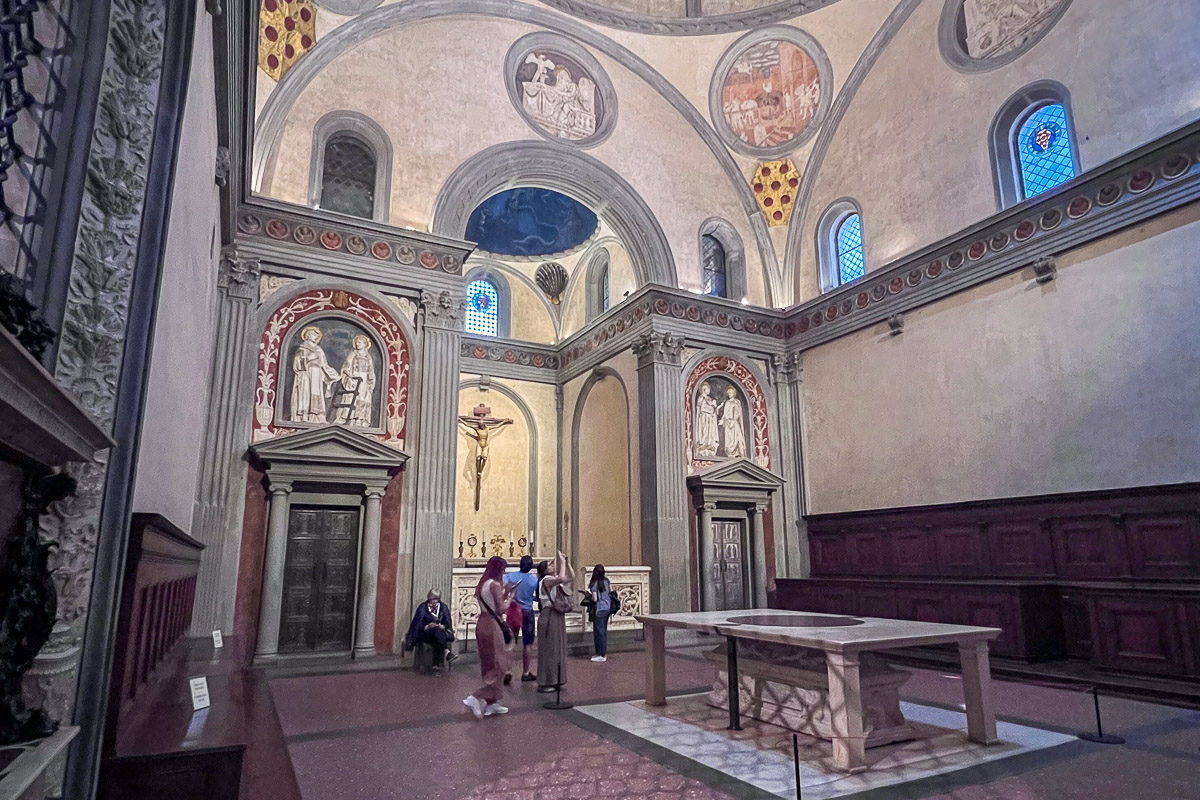
The Old Sacristy, designed by Brunelleschi and painted by Donatello, was the first space to be finished in the church. The design is quite simple but impressive, using the fundamental shapes of a square and circle, connecting geometry to ideas of eternity.
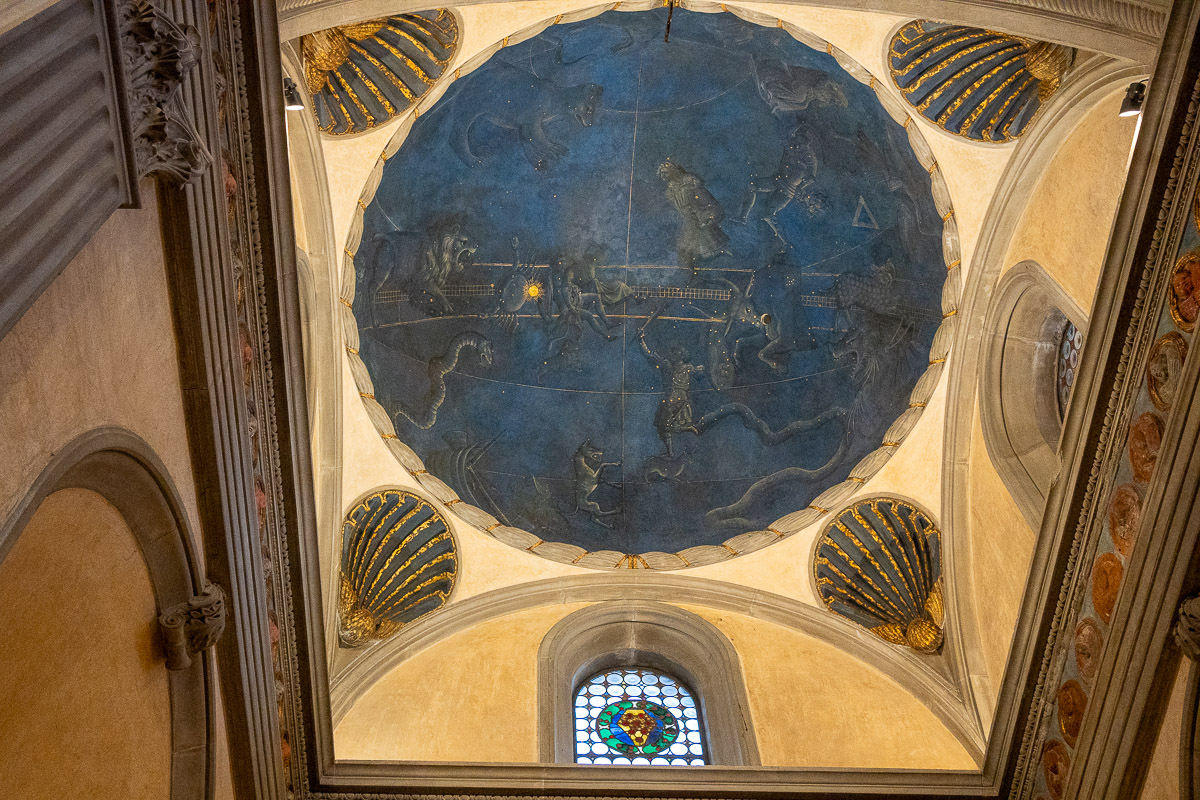
By studying the painted star constellation above the crucifix, astronomers concluded that it most likely represents the sky on July 6, 1439. That date marks the end of the Council of Florence, when leaders of the Eastern and Western Christian churches signed an agreement to unite.
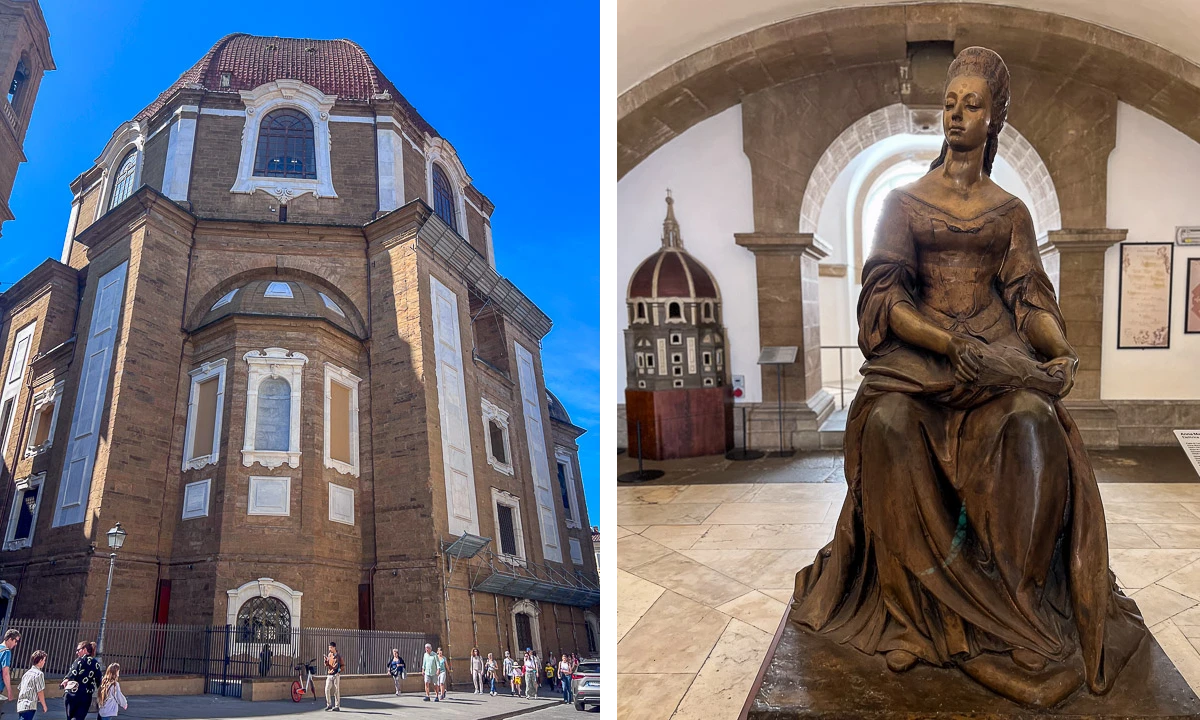
You’ll have to step back outside and go around the complex to find the entrance to the Medici Chapels and tombs, an extension built over almost two centuries between the 16th and 17 centuries.
The burial place of all the principal members of the Medici family, as well as other notable figures such as the artist Donatello, is another magnificent display of Renaissance architecture and artful genius.
Head to the New Sacristy to marvel at what is considered the masterpiece of Michelangelo. Beyond the architecture, Michelangelo also designed incredible tombs for the most prominent dukes at the time.
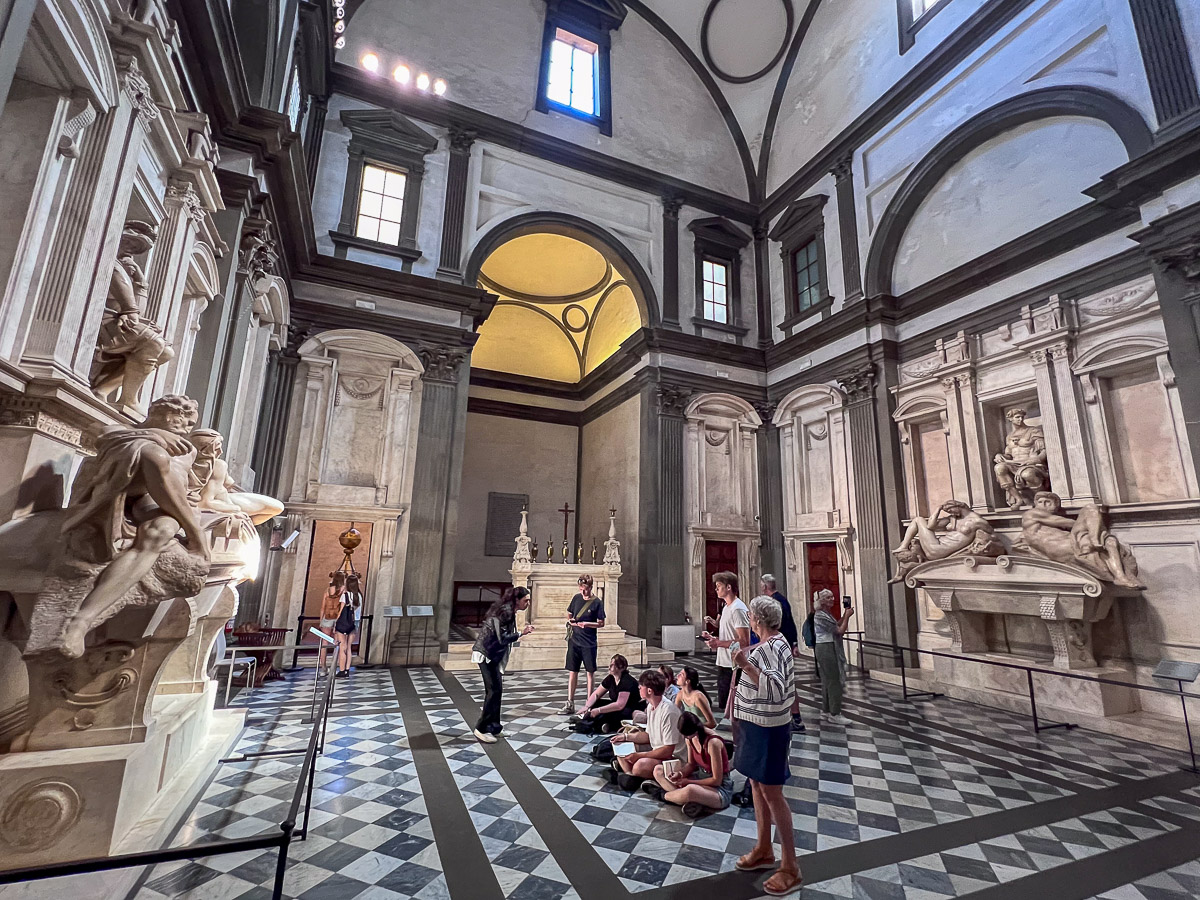
On one side, Giuliano de’ Medici’s tomb with the famous sculptures representing Day and Night spread out above it.
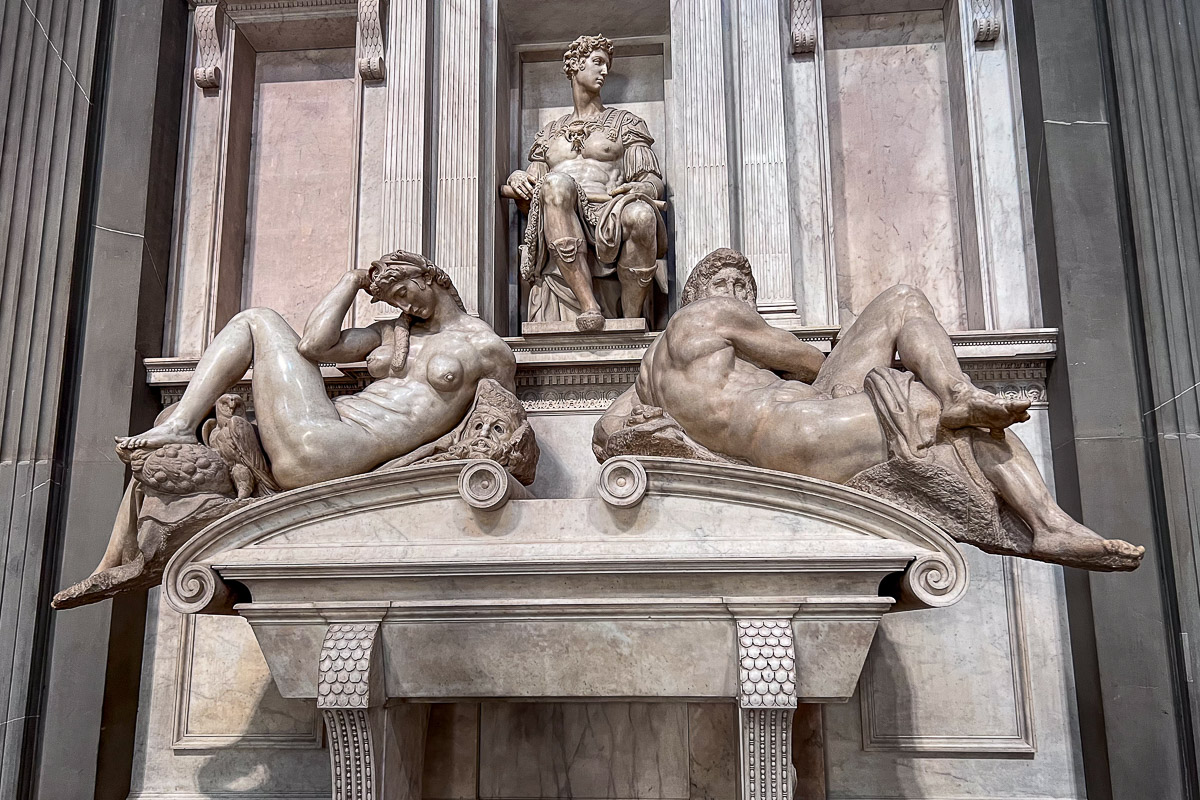
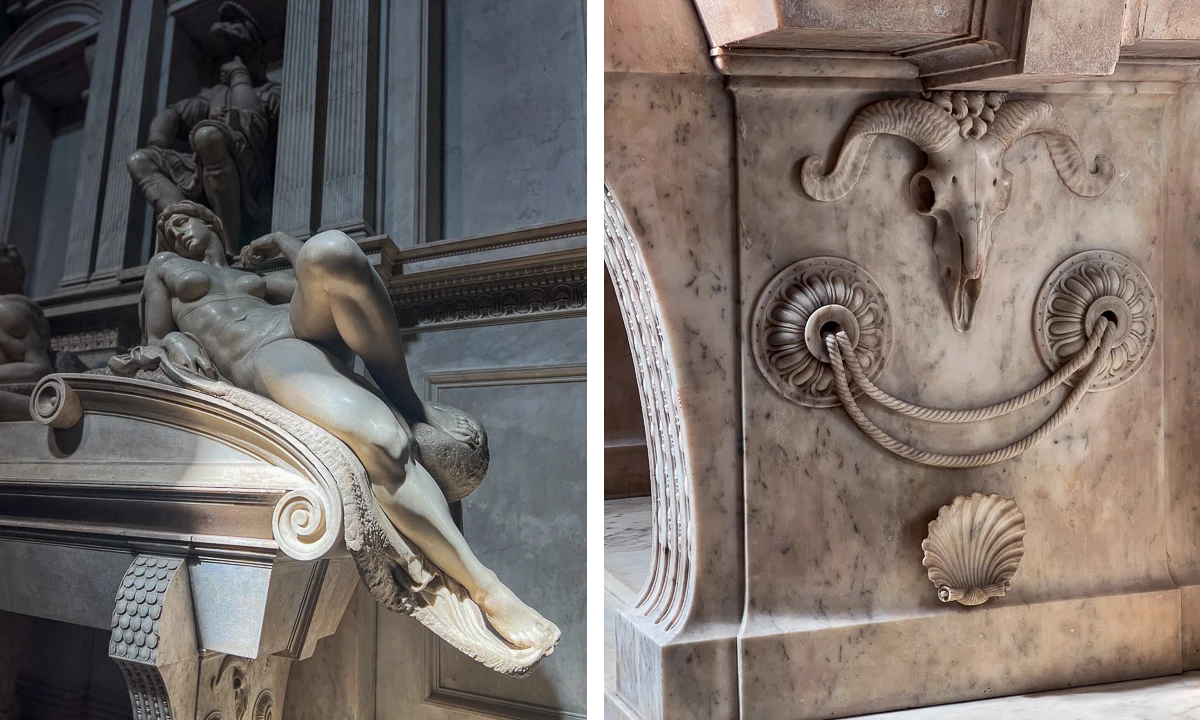
On the other, Lorenzo de’ Medici’s with the allegories of Dusk and Dawn. The splendid marble work all around is made even more spectacular with the way Michelangelo incorporated natural light to showcase specific elements of the room throughout the day.
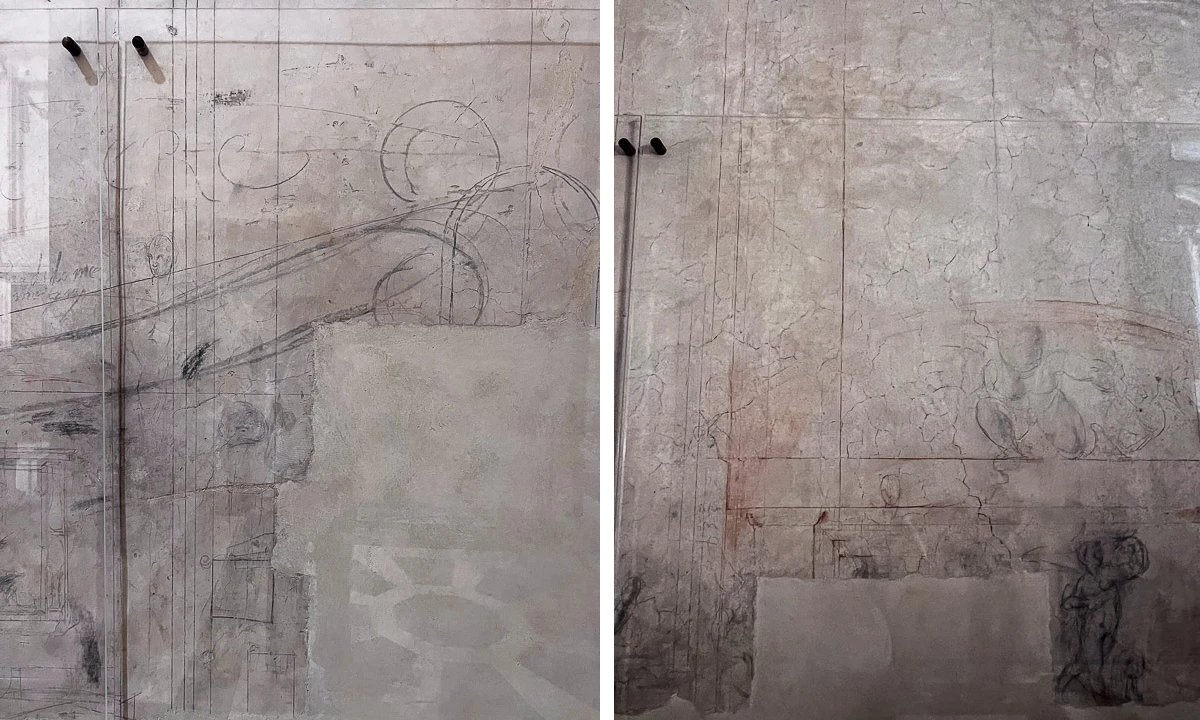
Numerous drawings by Michelangelo were found in a small space beneath the apse, and may be related to the statues and architecture of the Sacristy.
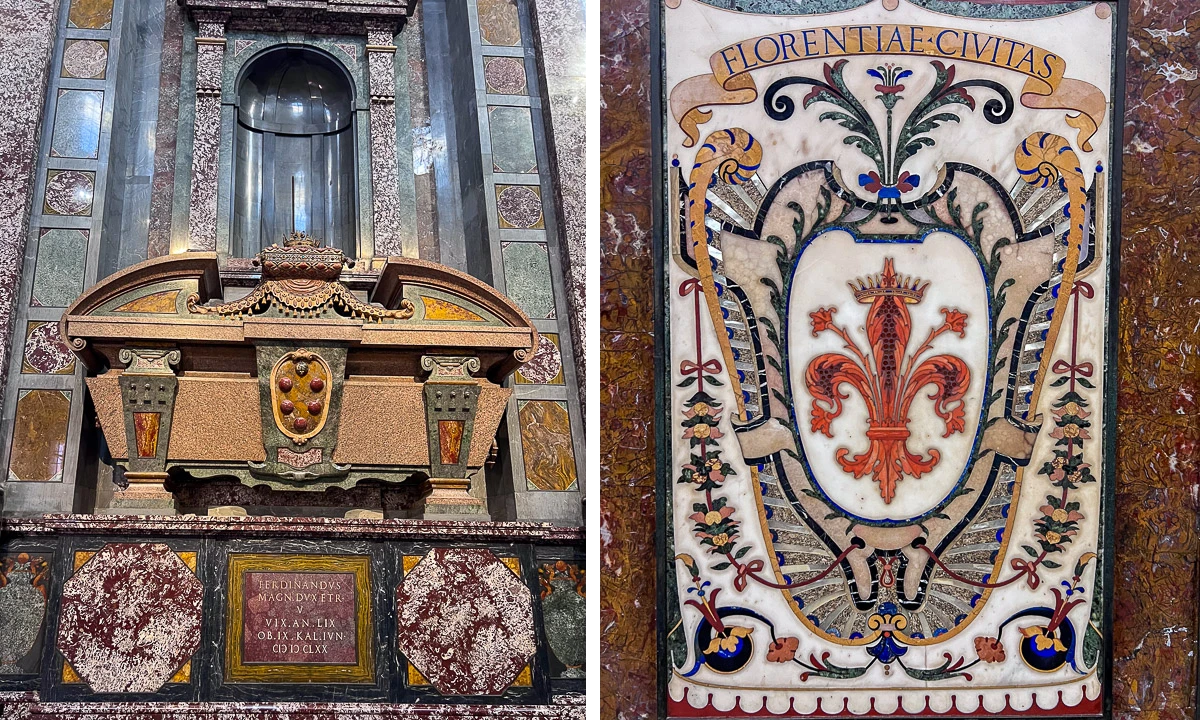
A few more steps and you find yourself in the masterpiece that is the Chapel of the Princes. Few things can prepare you for your entrance into this monumental mausoleum, lavishly decorated with semi-precious stones and colored marbles.
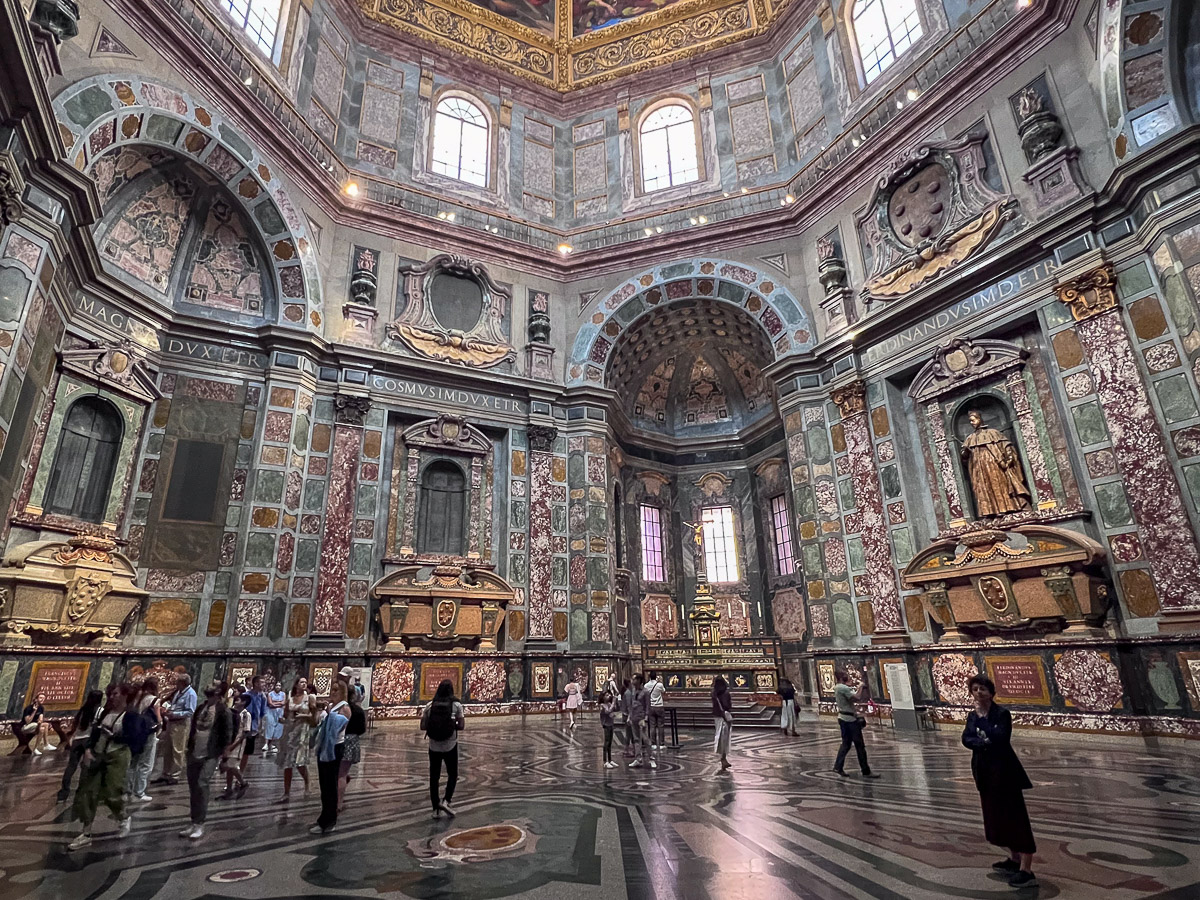
A huge dome above from Buontalenti echoes that of the Duomo. The Medici family clearly intended to highlight their prestige and status.
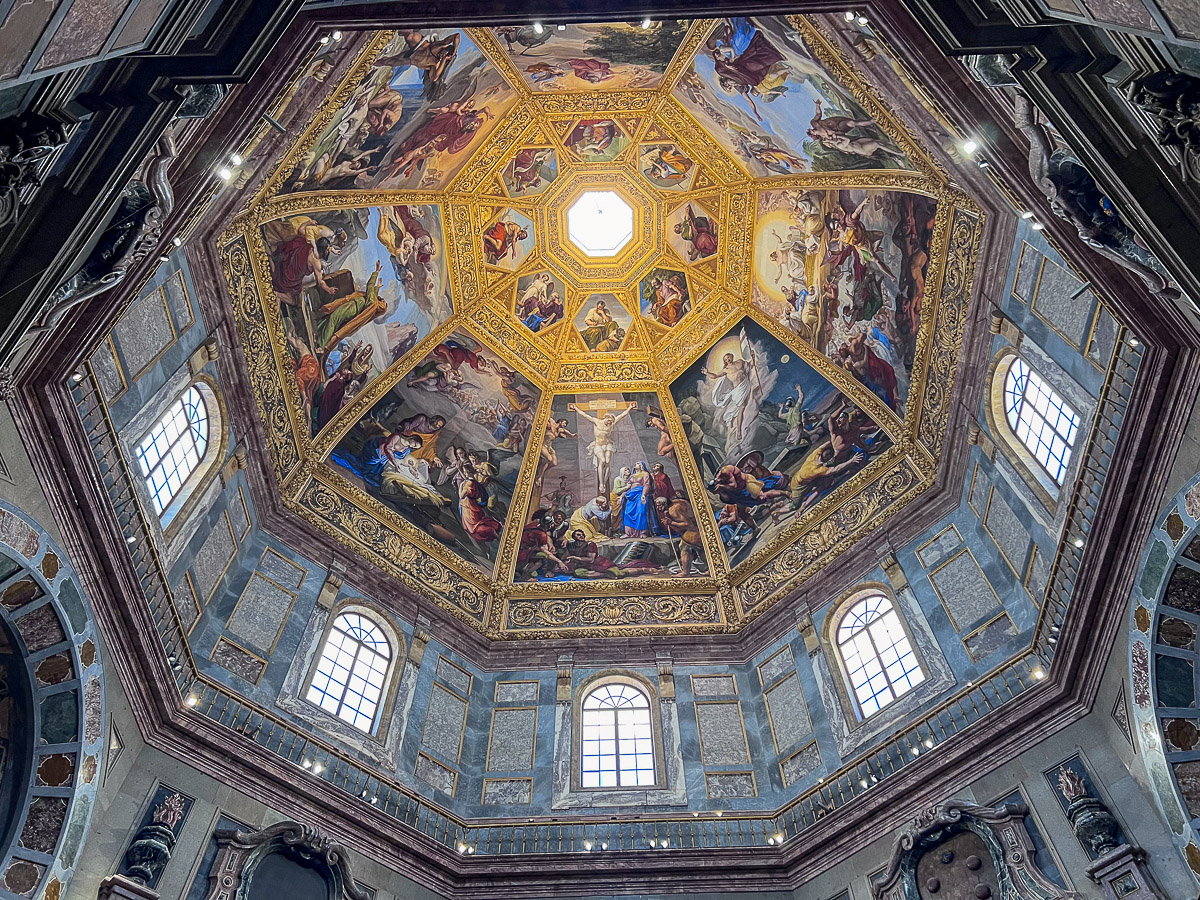
Walk around the octagonal room to admire the niches, each with a sarcophagus containing the remains of one of the Grand Dukes and their bronze statues.
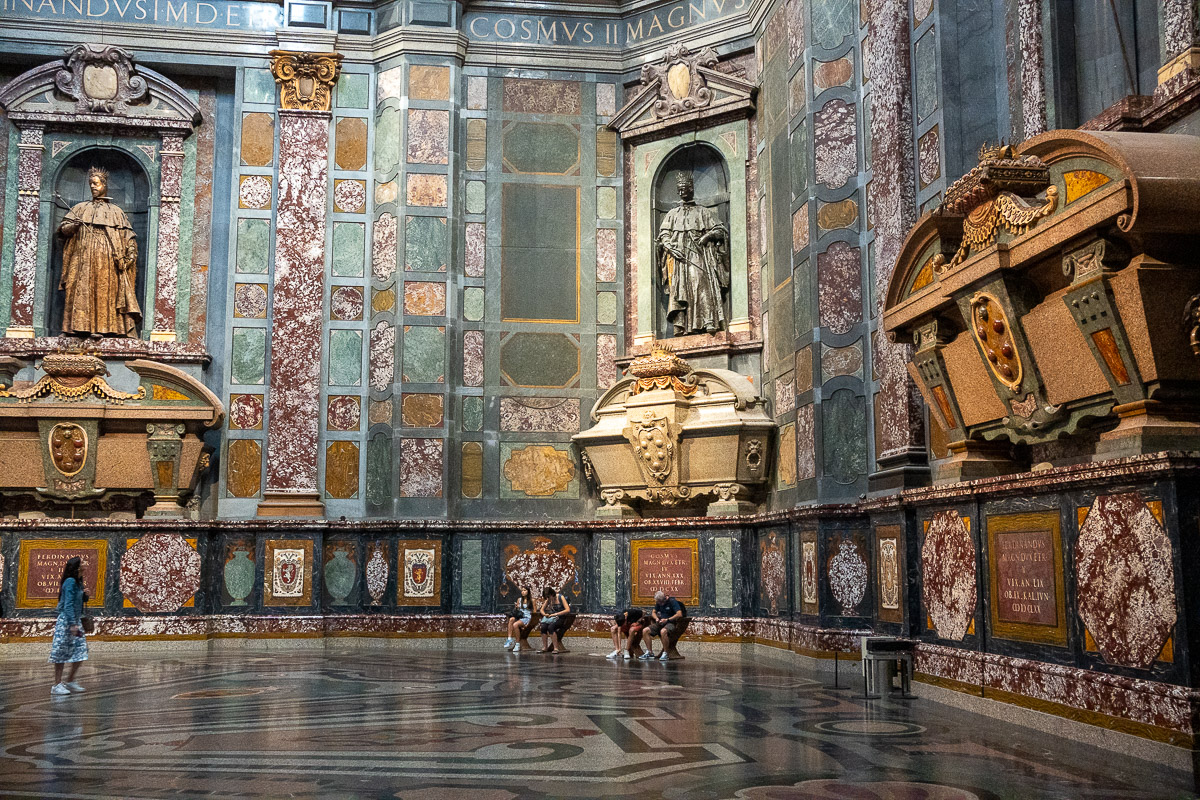
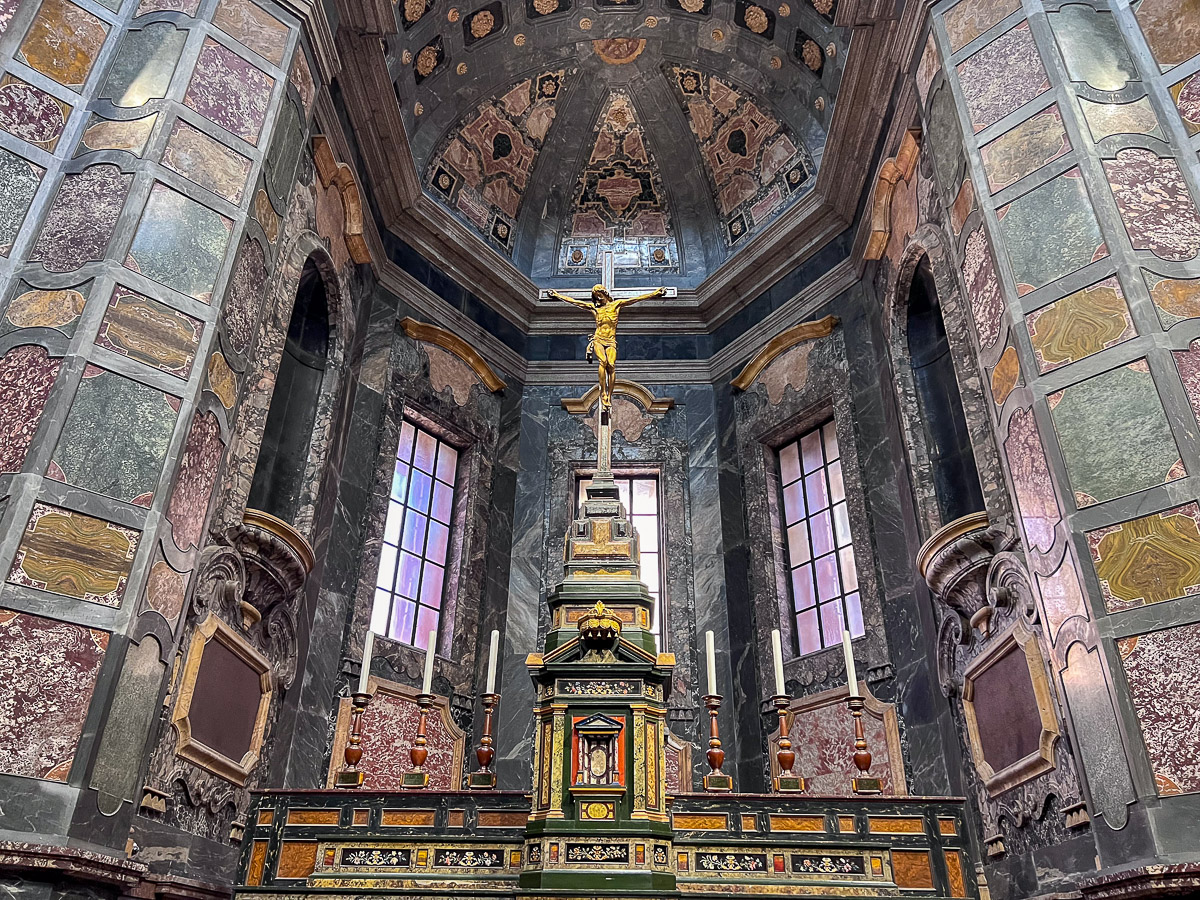
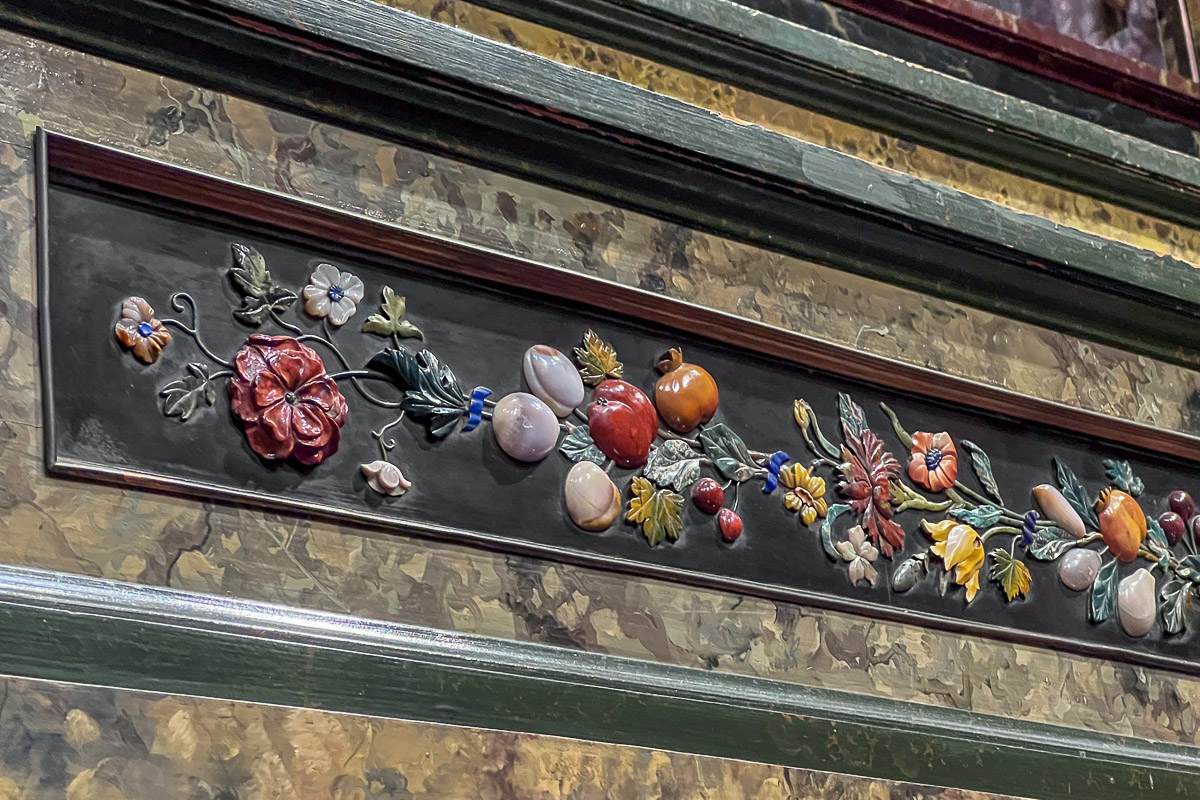
Besides the overall magnificence of the room, it’s the details that blew me away. All the inlays of semi-precious stones are incredibly delicate and took centuries to complete by the skilled artisans of the Opificio delle Pietre Dure we visited earlier.
Mercato Centrale
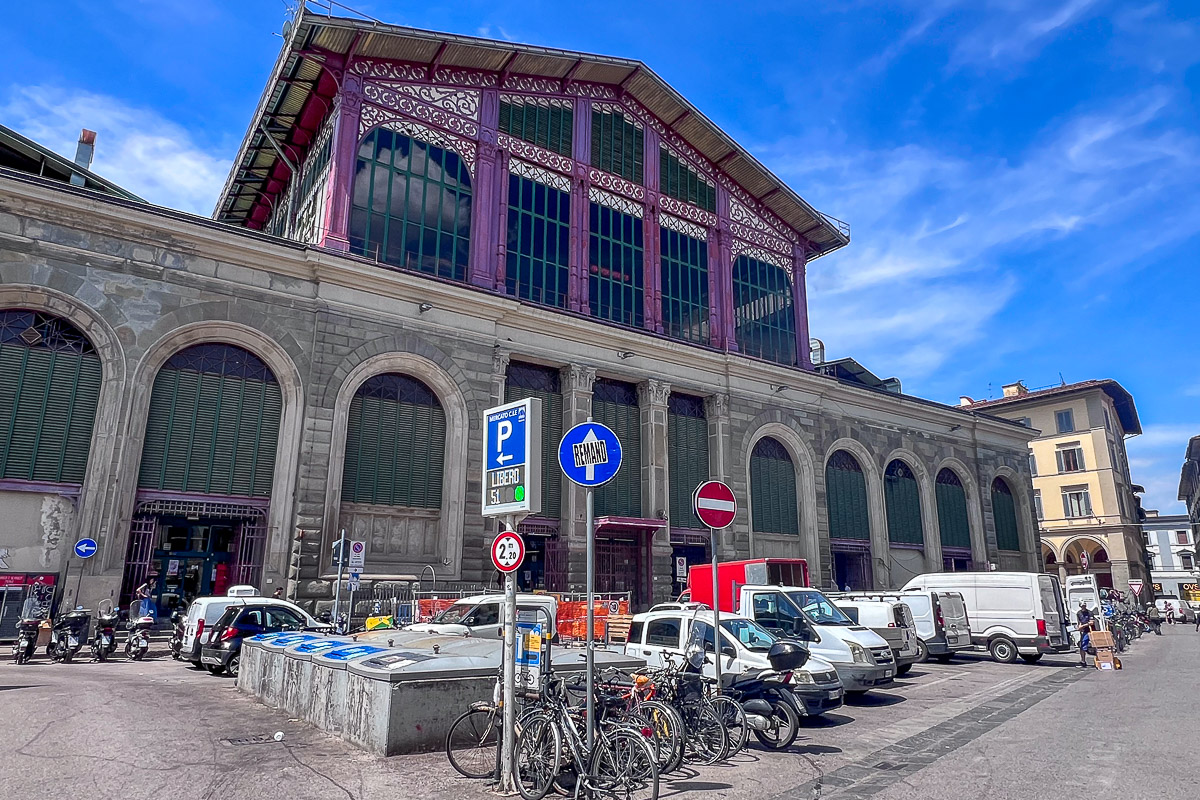
Now it’s time for my kind of glorious monument – the Central Market. Just a block away from the basilica, the bustling Mercato Centrale is housed in a late-19th century steel-and-glass building and is Florence’s busiest food market.
All around it, the San Lorenzo street market spreads out in every direction, selling leather goods, wool and silk garments, and souvenirs which can be of good value.
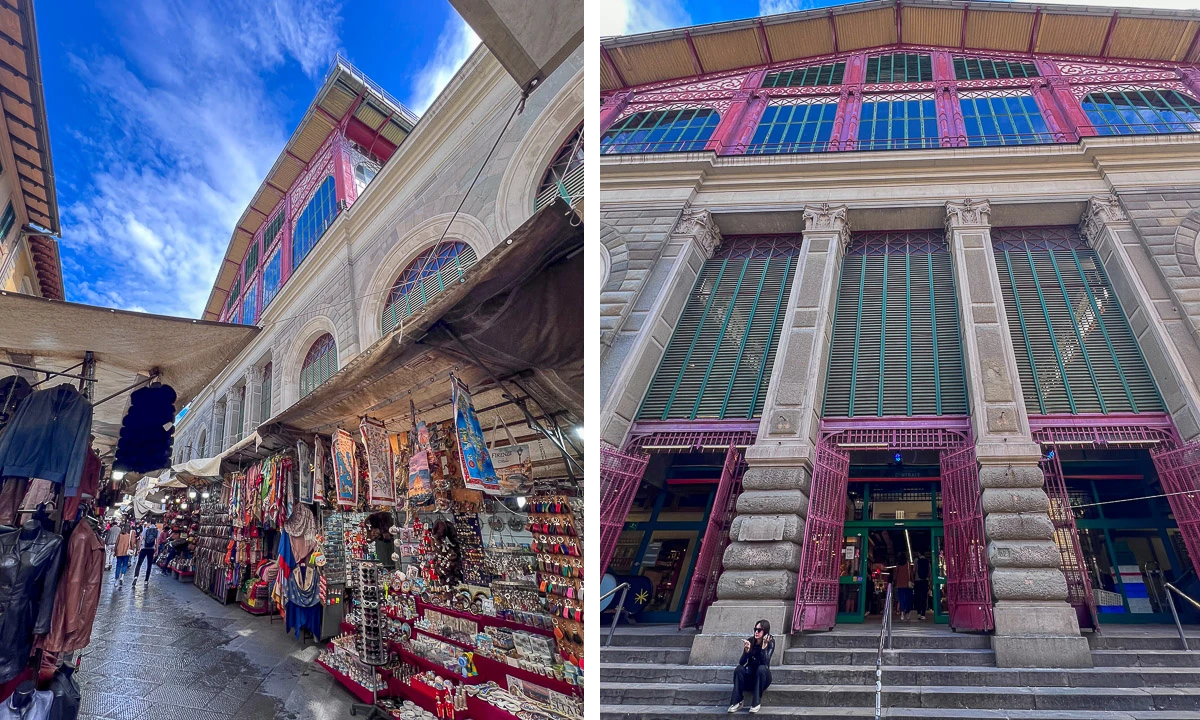
The stuff I’m into though lies inside, with the first floor of the market filled with traditional butchers, fishmongers, and produce vendors.
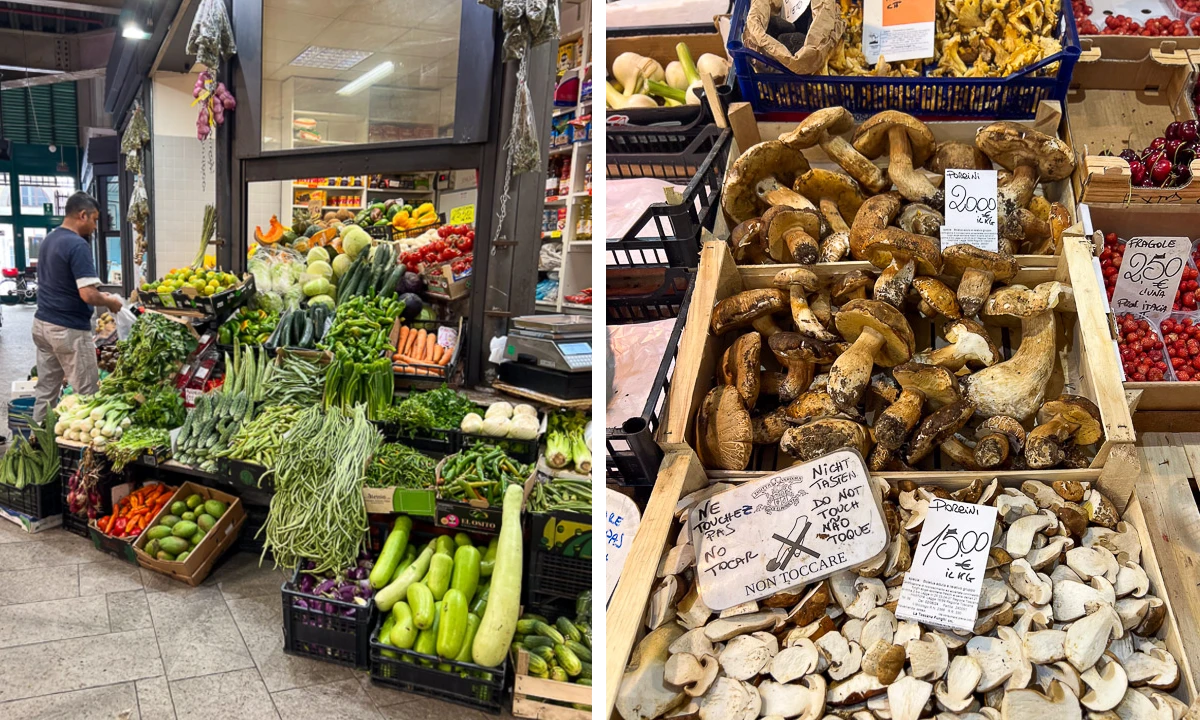
This is where locals shop daily and you’ll wish to have a kitchen and a lot more time here to buy all the cheeses, porchetta, and hams on display at every corner.
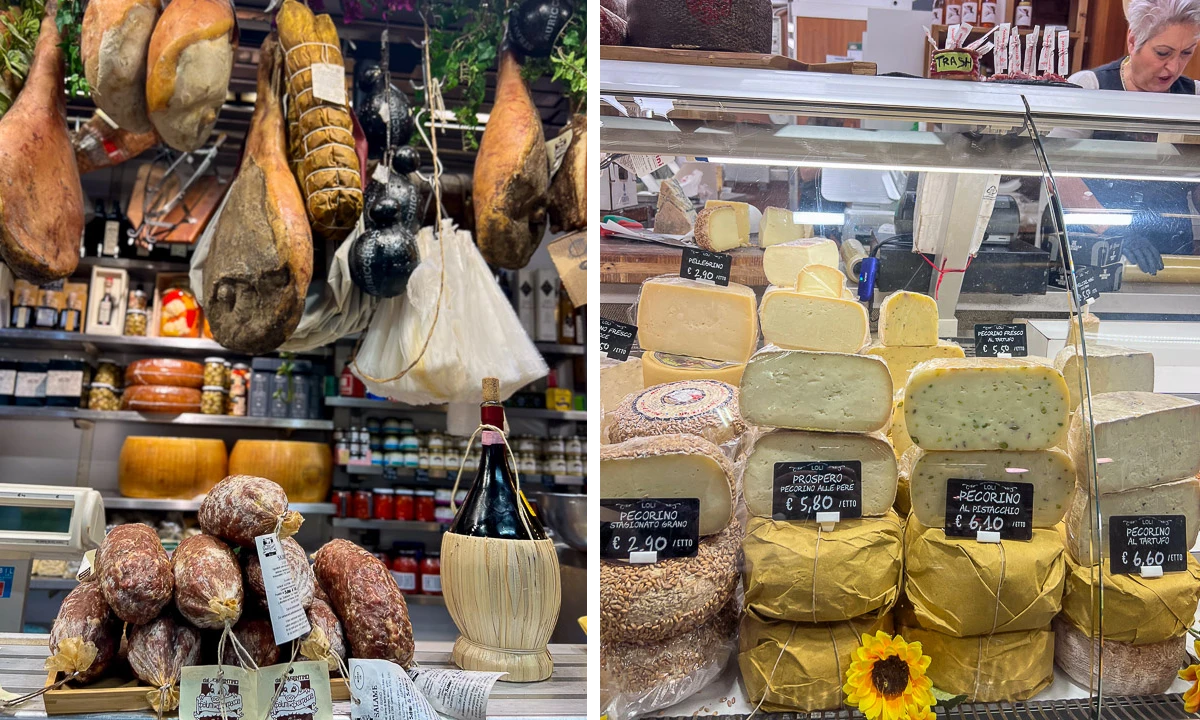
Sip a coffee standing at one of the bakery counters and observe the Florentines’ lively exchanges…
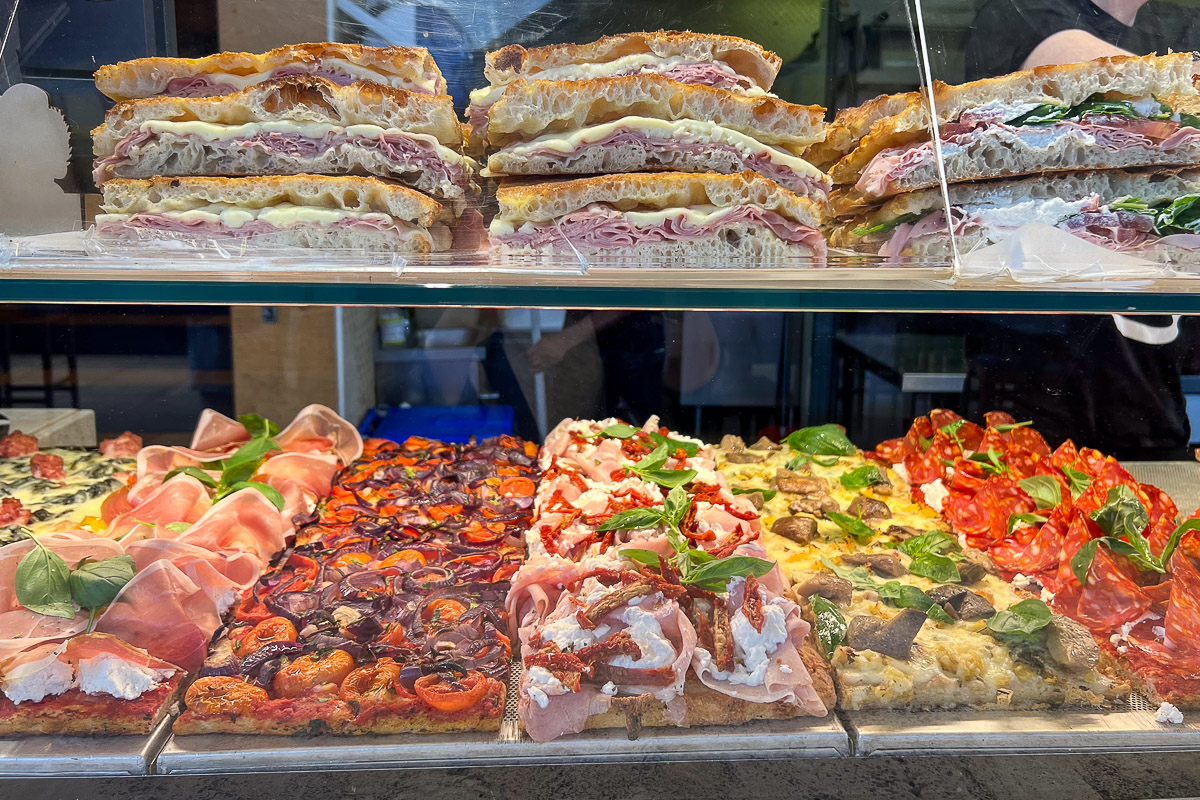
…then climb the staircase to the upper level. The dining hall is every food lover’s heaven with every Italian gustatory delights available to you in one place. Fresh truffles on buttery pasta? Delicately fried fish? Sumptuous pizzas?
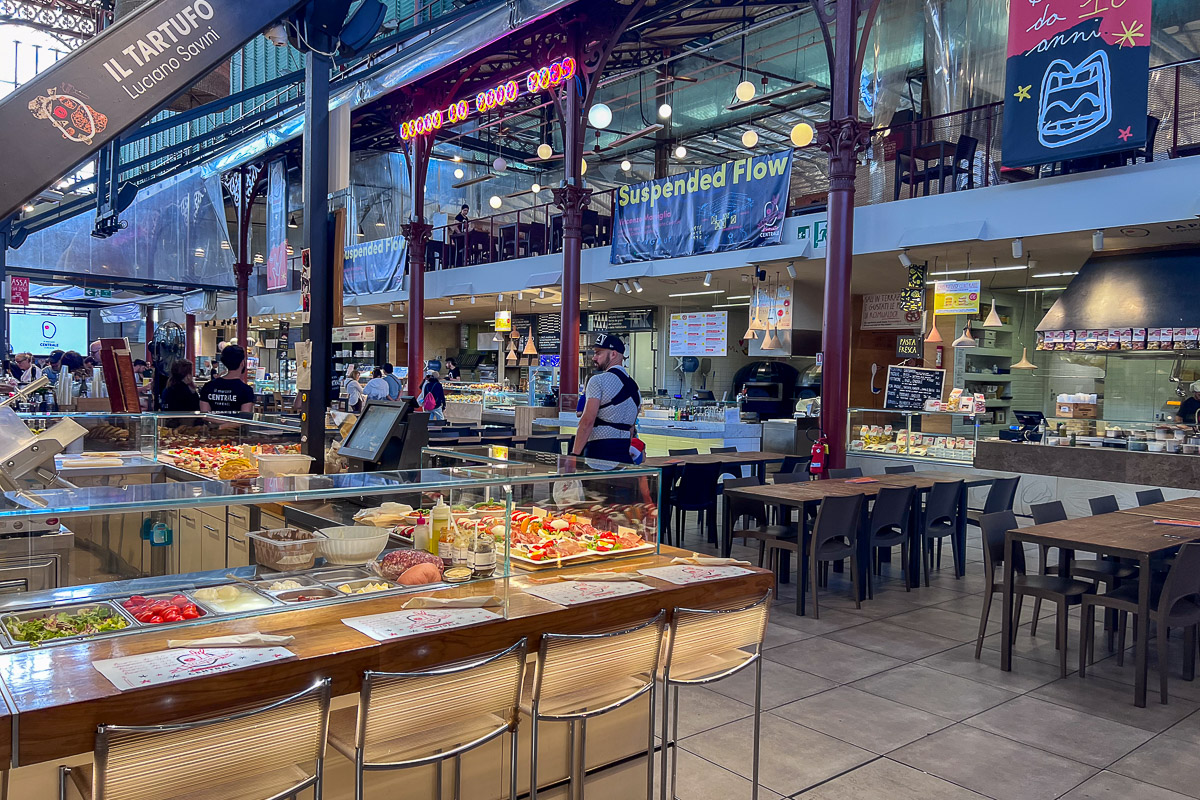
There’s too much choice and you’d need weeks to sample it all so pick what jumped out at you after walking around the whole place. This is best for a fast and delicious lunch in between visits.
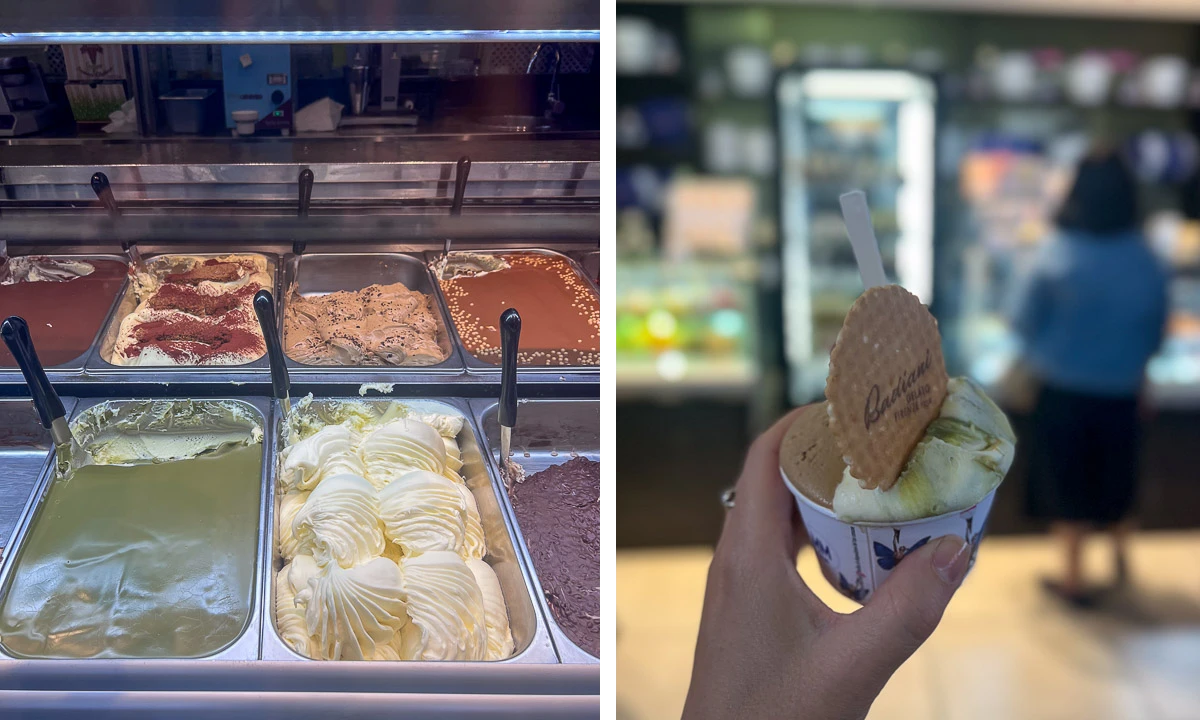
And don’t forget your sweet – there’s a stall of Gelateria Badiani for your on-the-go dessert before heading back out.
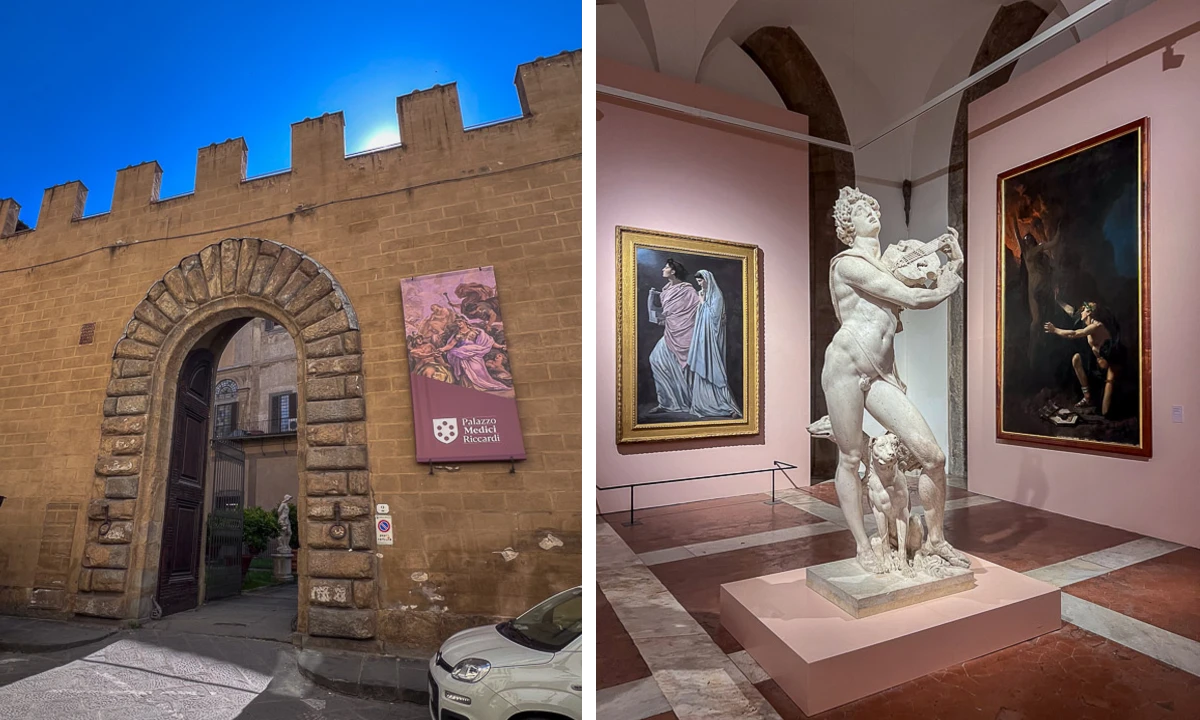
Palazzo Medici Ricardi
The Medici family’s first residence, Palazzo Medici Riccardi, is also a stone’s throw from the basilica and is considered as the palace that launched the Renaissance.
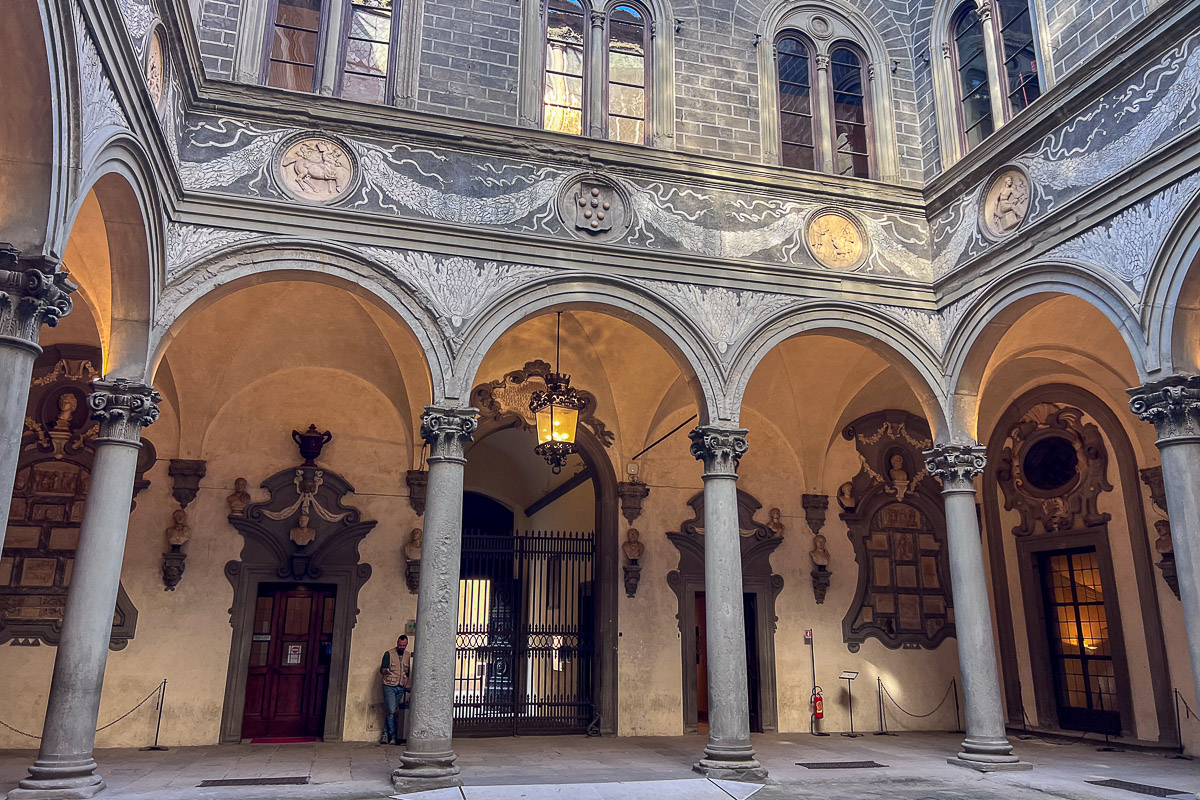
Step through the main door to find yourself in the elegant courtyard. Covered in Roman masonry fragments (and previously home to Donatello’s statue of David now in the Bargello museum), this space is one of the emblems of the Florentine Renaissance.
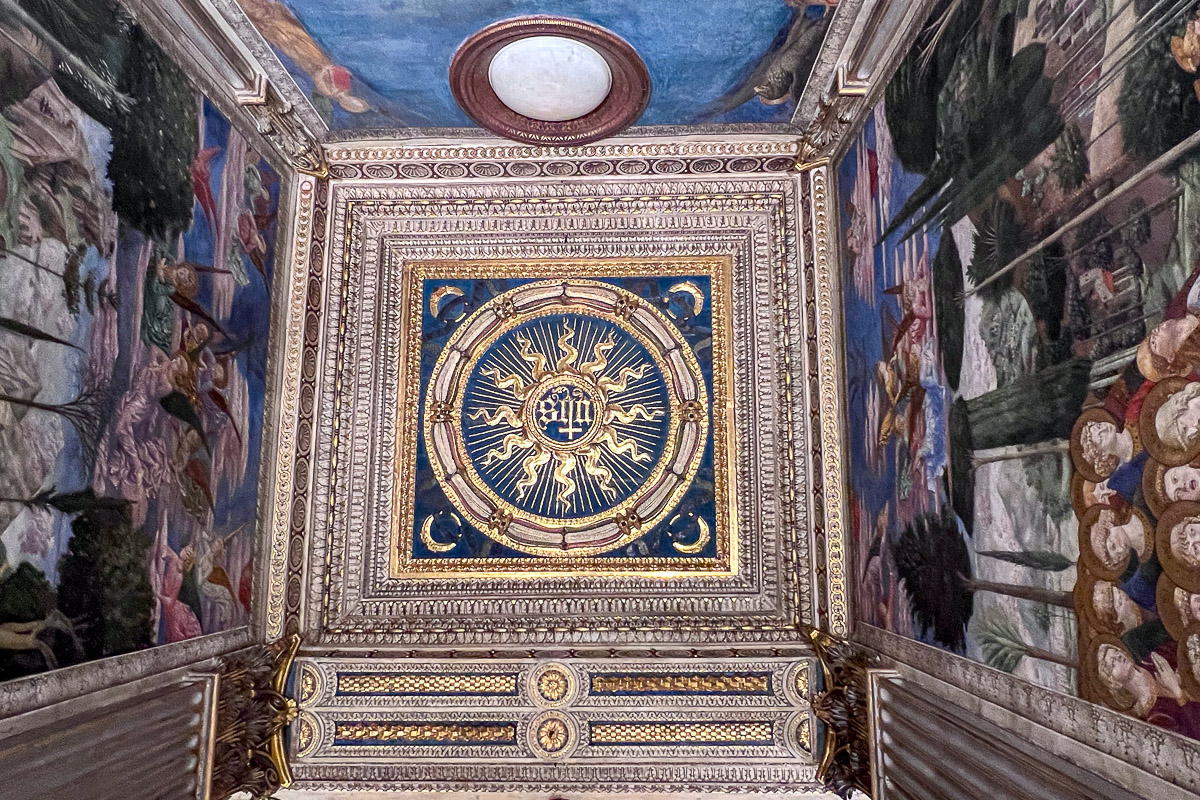
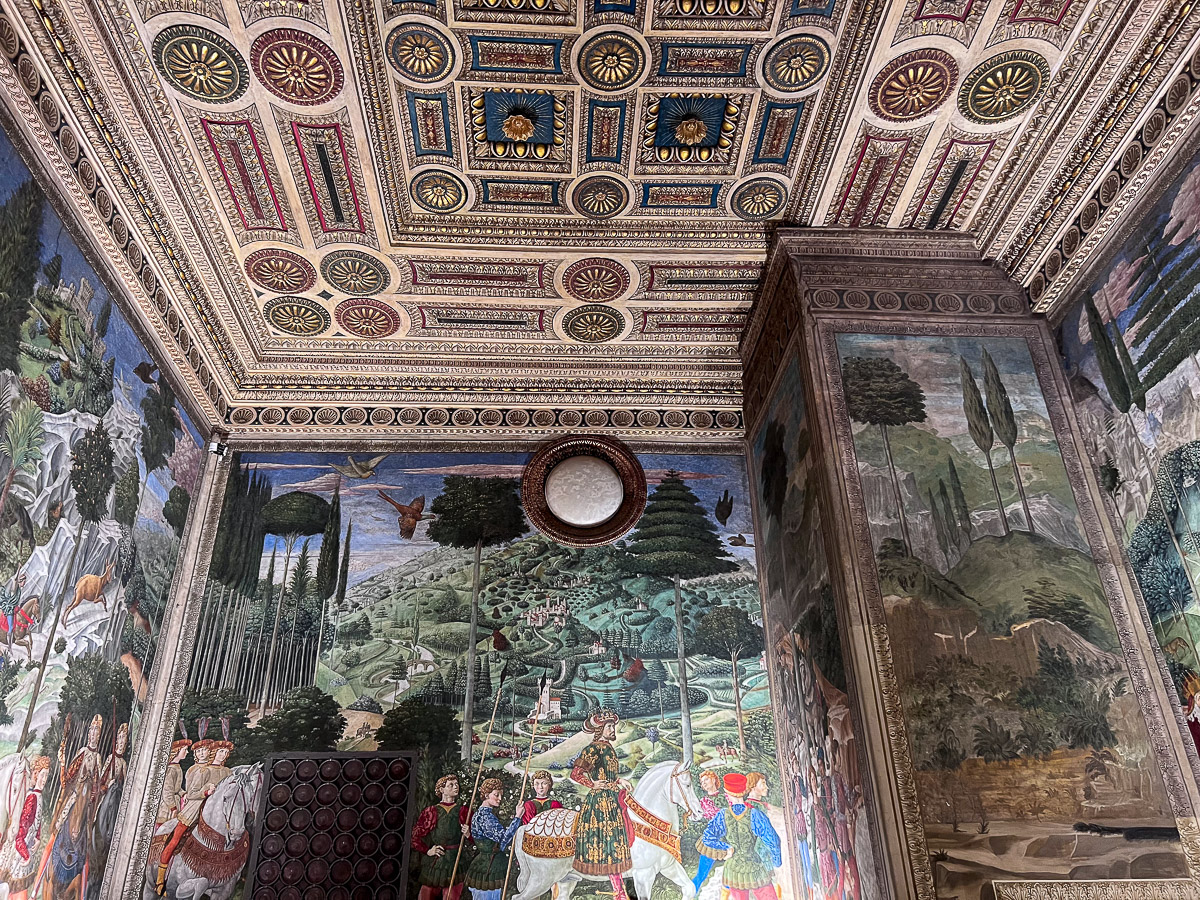
In the family’s private dwellings, only a few rooms are open to the public and one of them is the mesmerizing Chapel of the Magi. This small jewel box was the family’s private chapel and is famous for its colorful frescoes on the walls from Benozzo Gozzoli (1459). They depict The Procession of the Magi towards baby Jesus with easily recognizable members of the Medici family among the cavalcade.
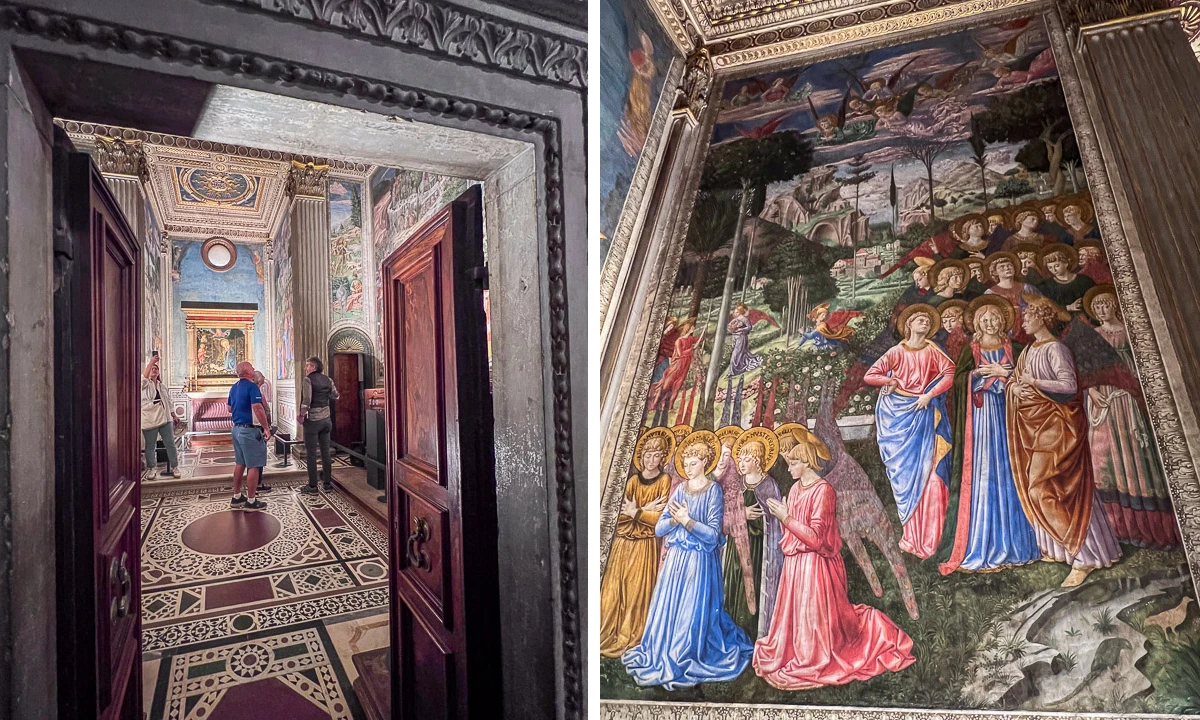
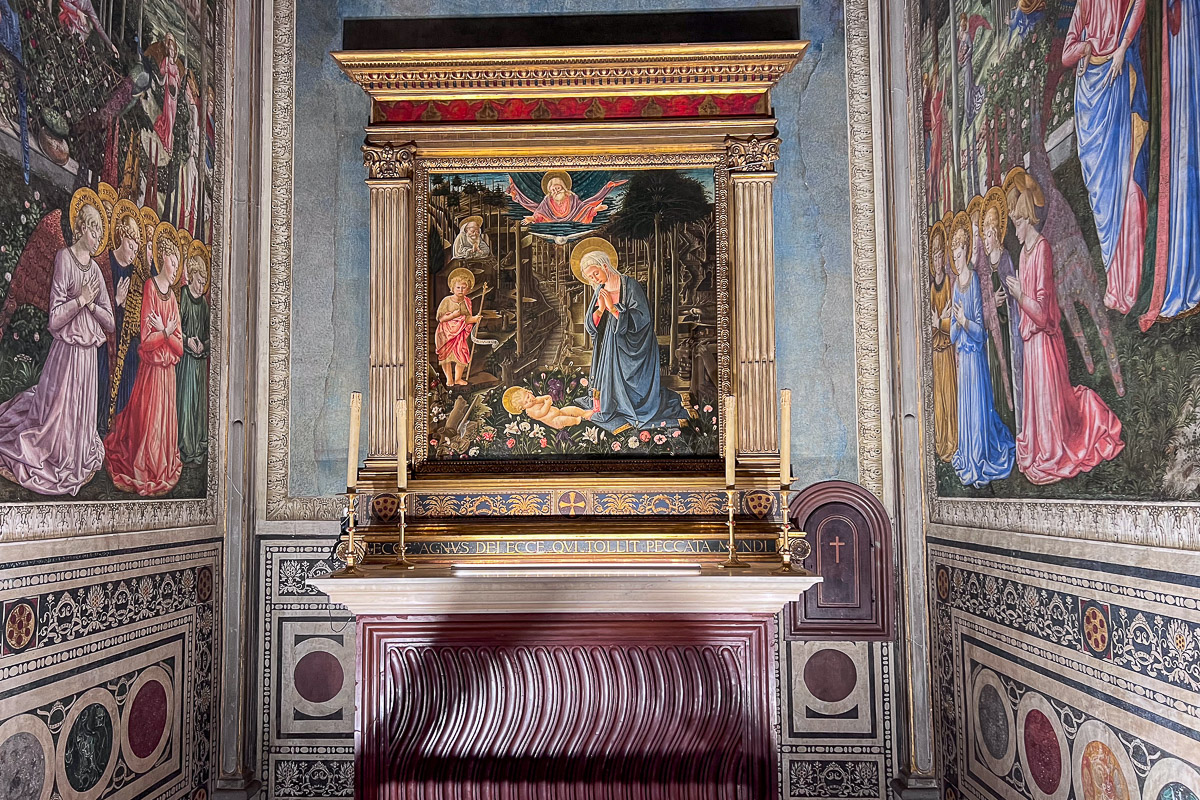
The wooden ceiling is finely carved and gilded and seems to mirror the gorgeous inlay marble floor.
The Medici eventually left and moved to the more strategic Palazzo Vecchio and the palace was sold to Marquis Gabriello Riccardi in 1659. Craving more lavishness as was the trend at the time, he extended the building and renovated the interiors in full Baroque style which you can see in the Gallery of Mirrors. Rich stuccoes, painted mirrors, and French windows overlooking the garden made this room the site of many sumptuous parties and important celebrations.
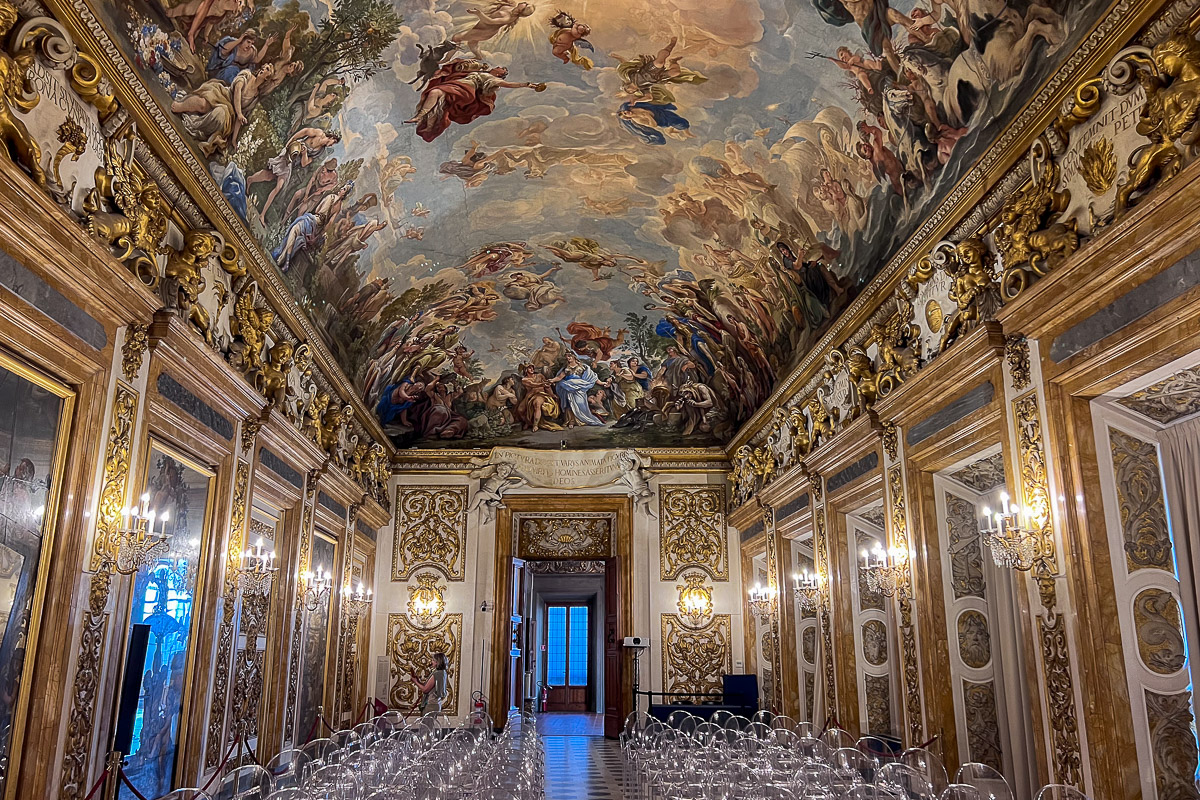
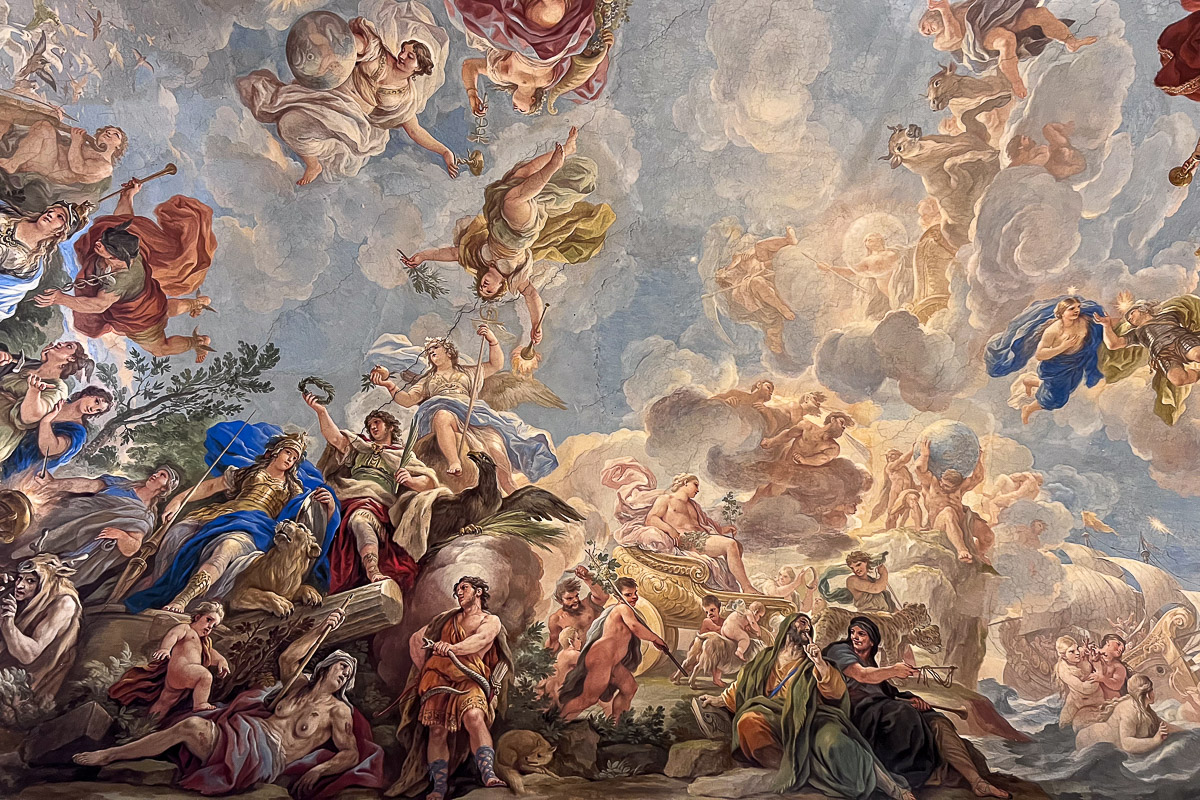
It’s the ceiling fresco that steals the show though, beautifully decorated by the most renowned Baroque painter of that age, Luca Giordano, with a fresco depicting the Apoteosi dei Medici (Medici’s Apotheosis).
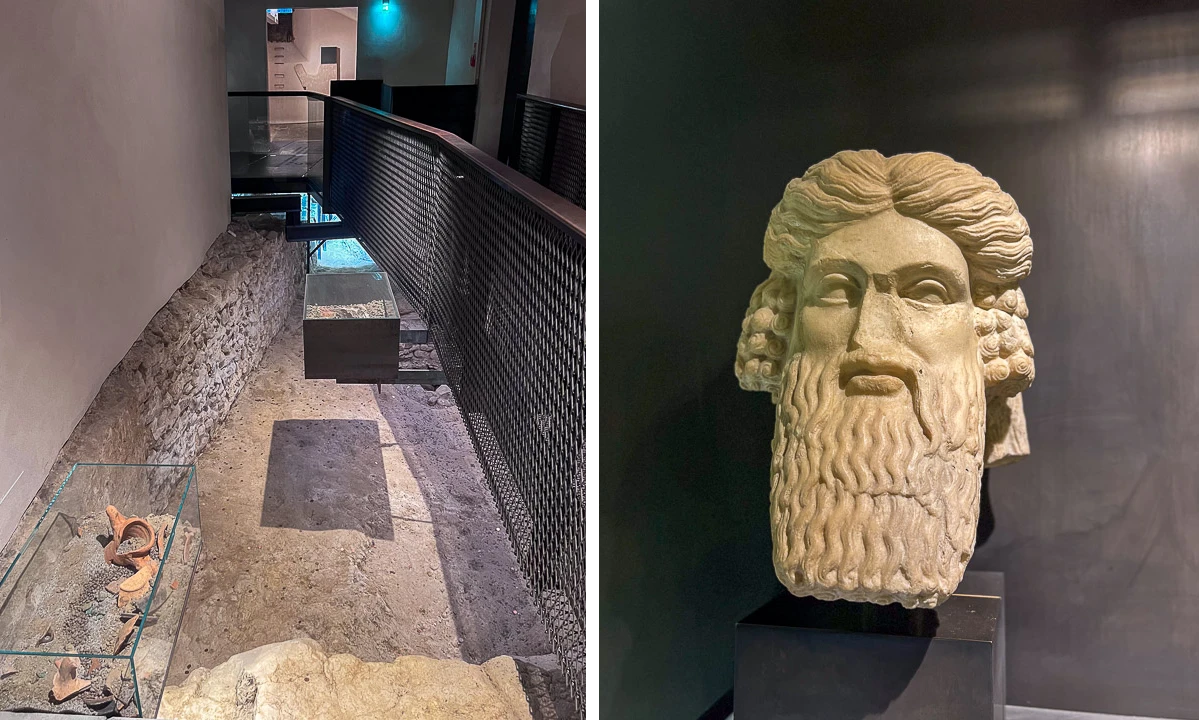
The underground (or basement) of the palazzo was excavated, making visible a portion of the original bed of a tributary of the Arno River and the remains of a late-antique burial site. You’ll also find the Marble Museum down there with part of the Riccardi’s collection of ancient marbles, mainly Roman busts.
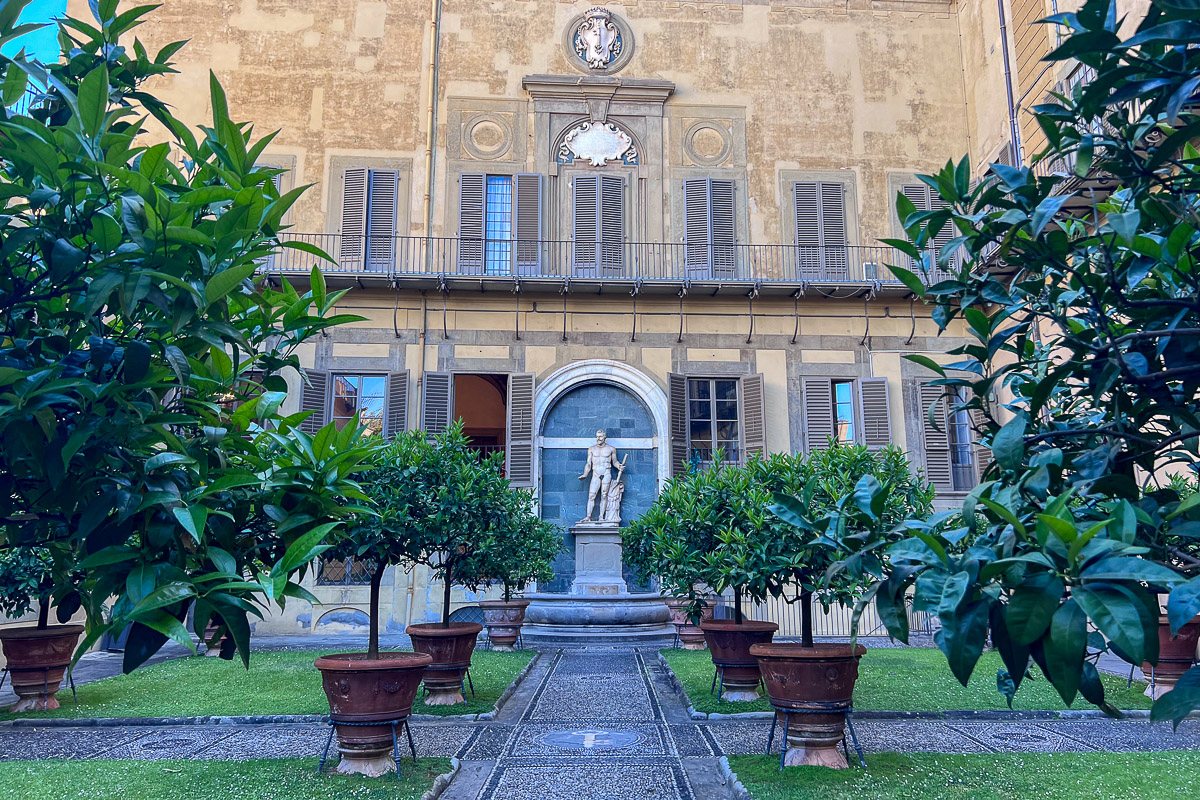
Exit through the lovely garden.
Around San Lorenzo
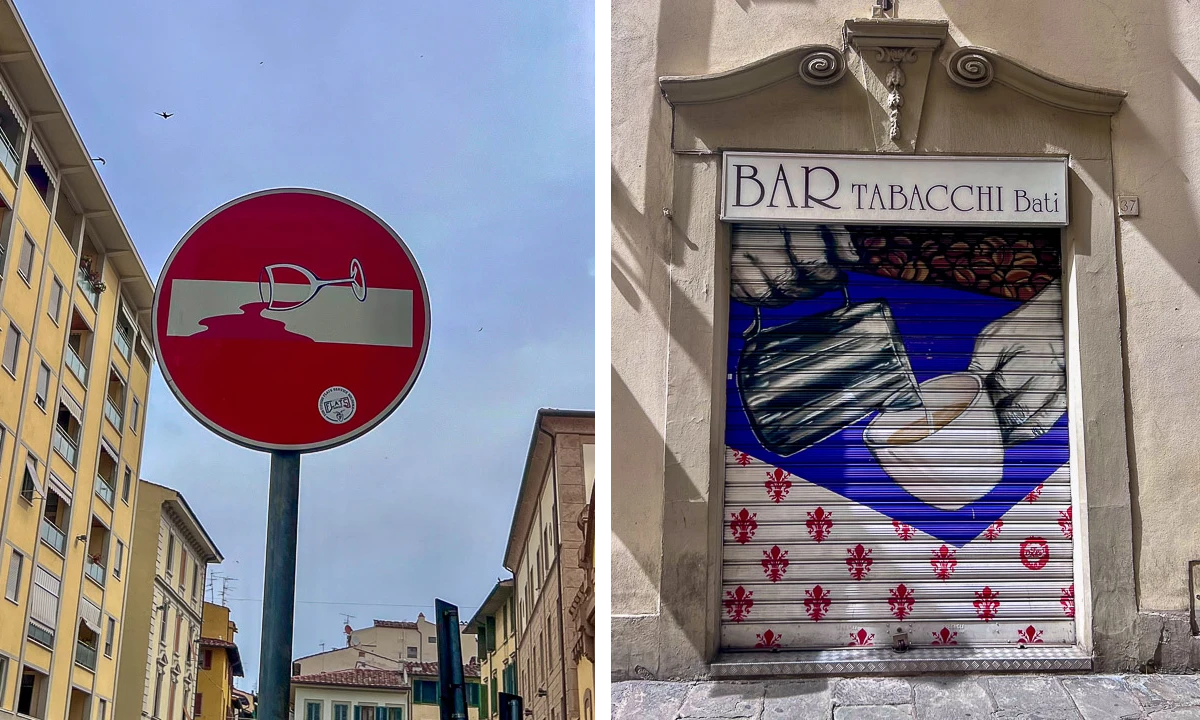
Take a break from the Medici and stroll the busy, working class neighborhood, keeping your eyes peeled for that iconic and subtle street art the city is known for.
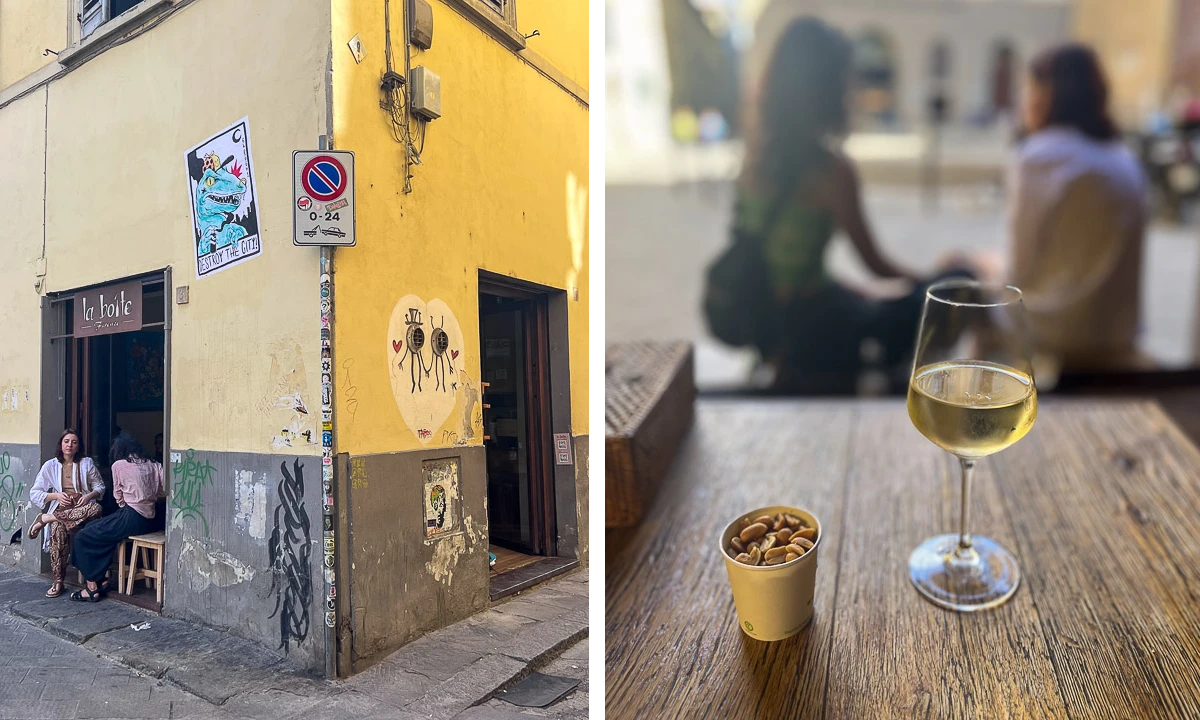
It’s been a long day, so pull up a stool at La Boîte for a glass of wine. The local haunt/wine bar sits right on quiet Piazza di S. Paolino for a relaxing aperitivo.
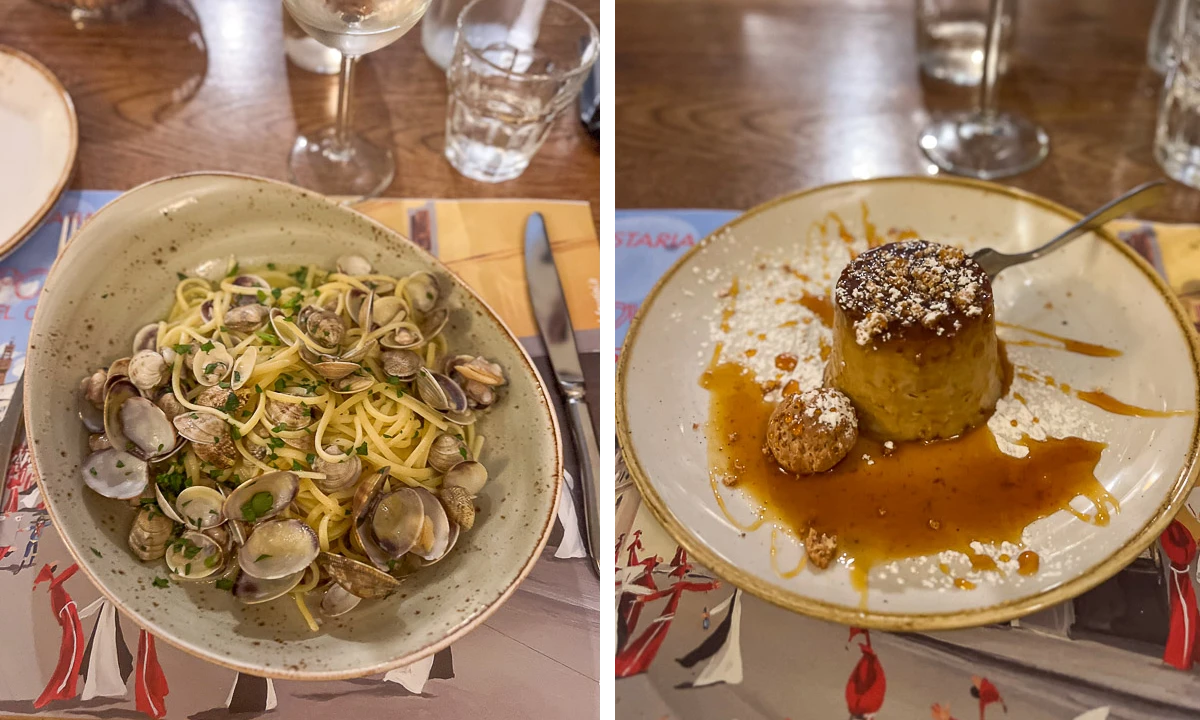
Nearby Ostaria dei Centopoveri will fill you up with traditional Tuscan food in a lively setting. The exquisite cuisine and extremely friendly service (the kind of place where they give you a complementary shot of liquor at the end of your meal) means it’s also perpetually packed so come early or book ahead.
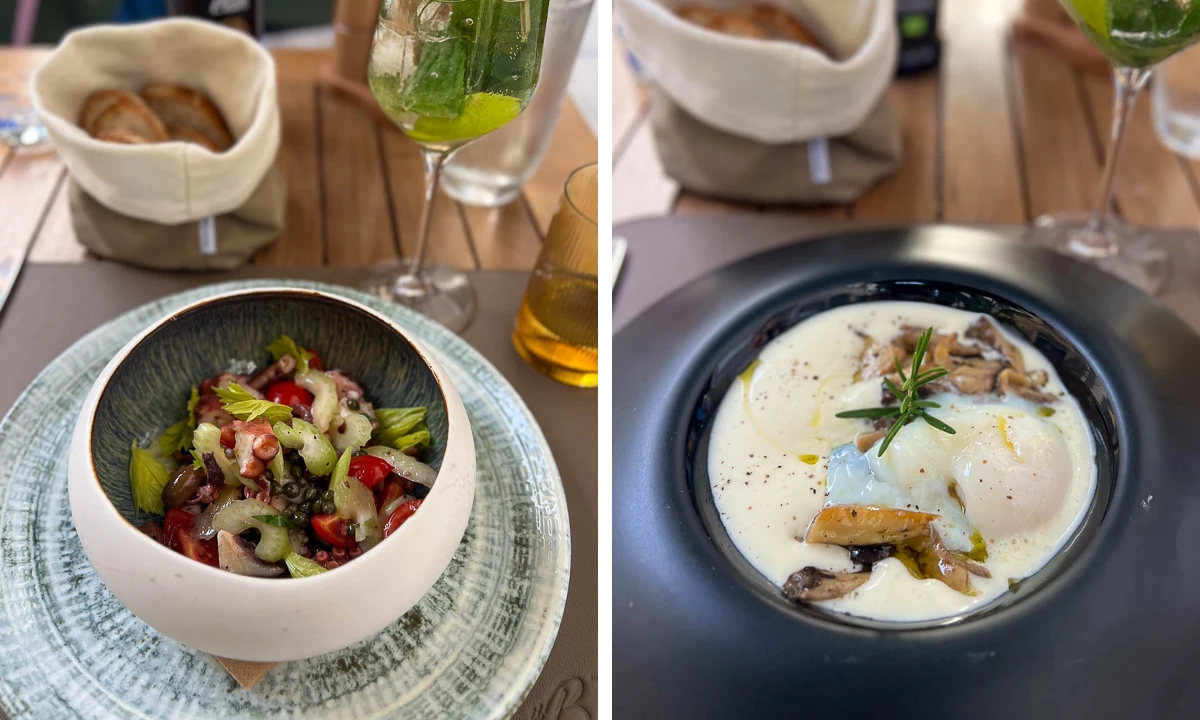
If you feel more “quiet terrace with light dishes”, Il Bacaro fiorentino on the same block serves Venetian dishes with a fresh perspective (and delicious cocktails).
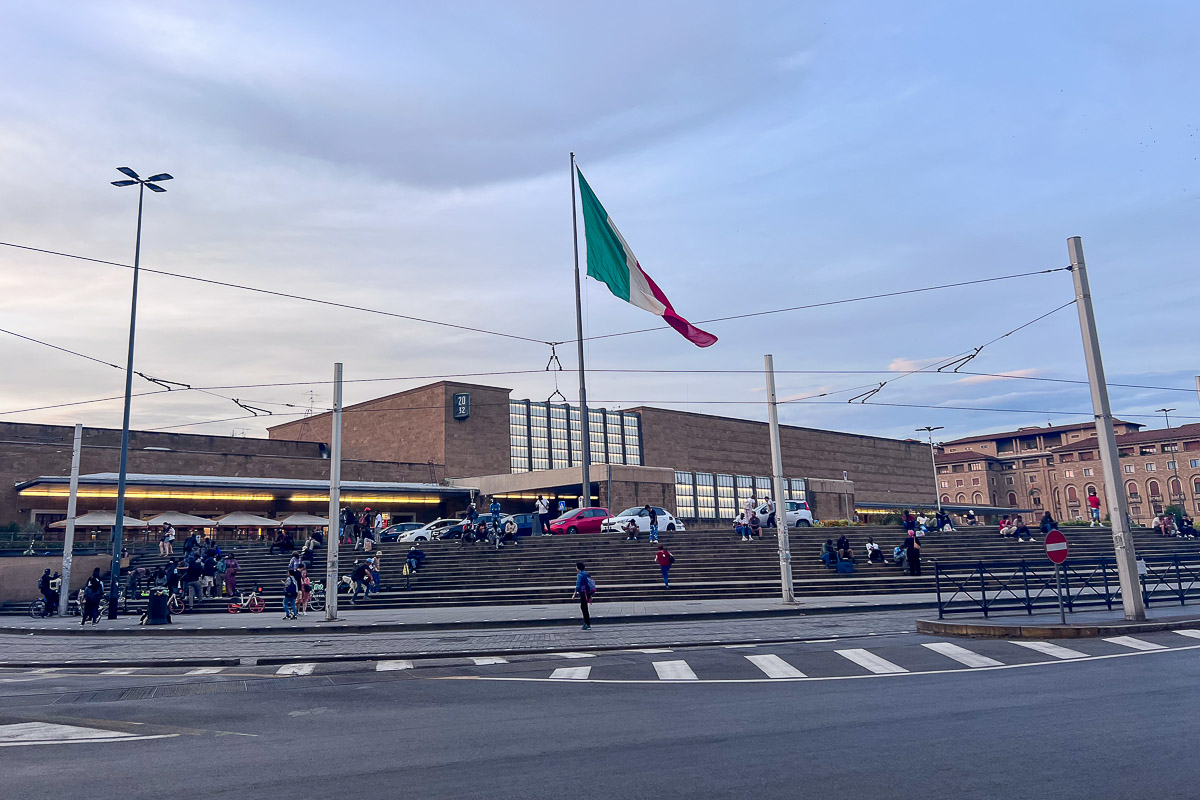
Don’t miss while you’re in the area the Santa Maria Novella train station, the city’s main railway hub. The modernist, blocky structure was built in 1935 and is buzzing with activity any time of day. This is where you’ll depart from if you’re doing any side trips in the gorgeous Tuscan countryside…
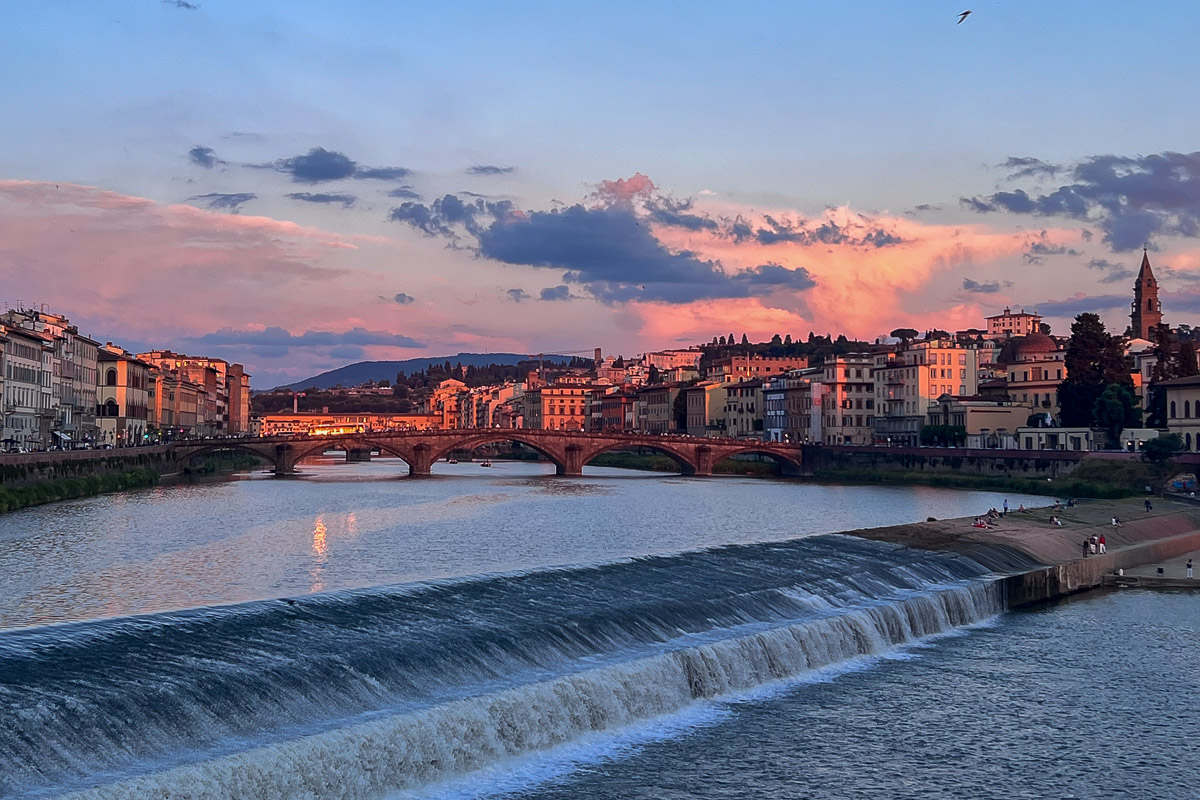
Try to end every day with a sunset walk by the river. The great thing about San Lorenzo is that you’ll find yourself smack in the middle of it with great view of the most famous bridges without the usual crowds…