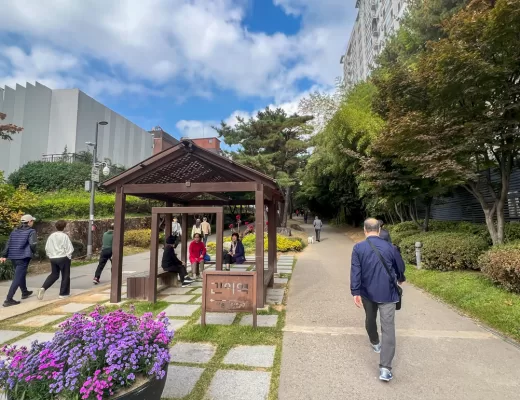
East of the Duomo, Santa Croce has all the usual attractions of the central neighborhoods: large church, buzzing food market, traditional shops. You’ll mingle with lots of tourists around the basilica, but go a few streets north and you’ll find that extra edge, a slightly louder area, more Florentine, that fuels locals with late-night eats and music in the streets.
Breakfast in Santa Croce
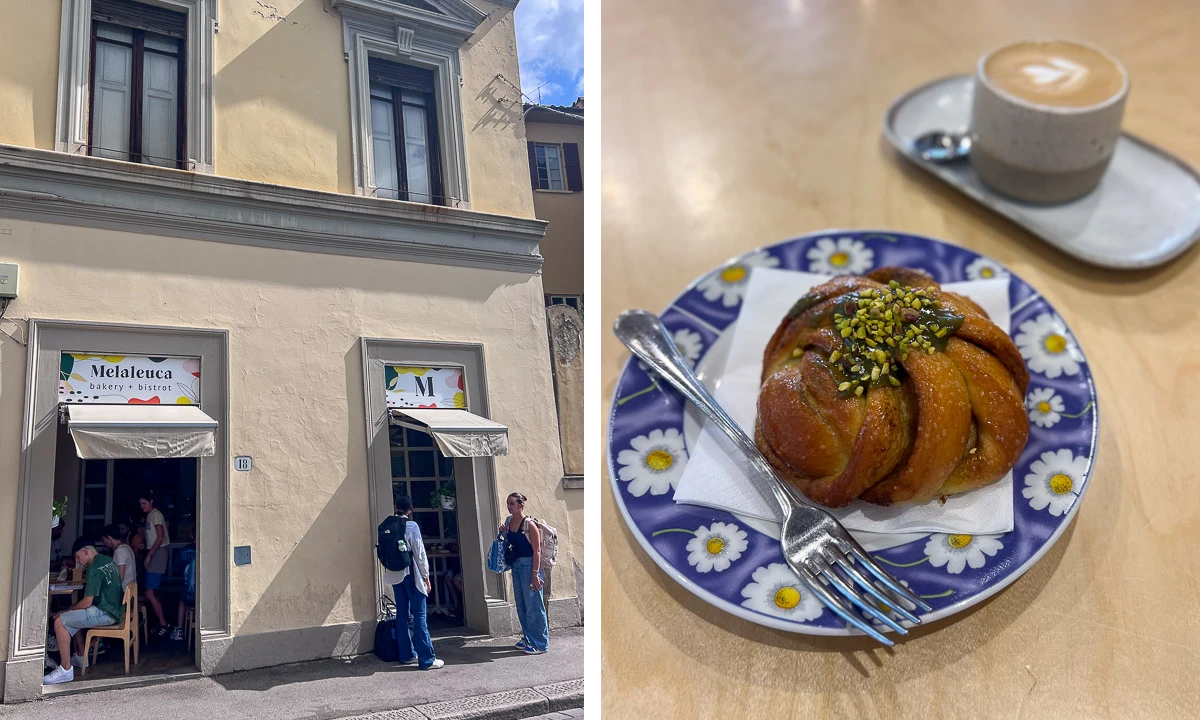
Head to Santa Croce’s favorite brunch cafe, Melaleuca, for a taste of their freshly baked cinnamon or cardamom buns. Expect a line to get in but at least it’s right on the river so the views will keep you entertained.
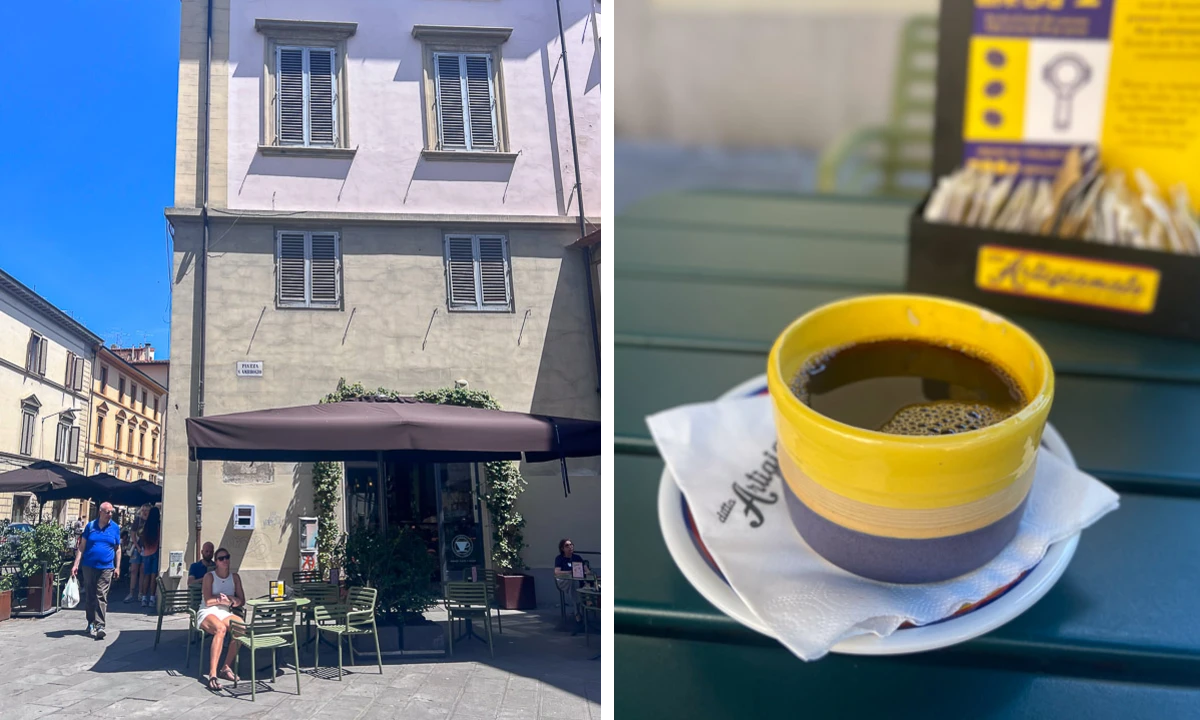
If you start your visit further up north, there’s a location of the always reliable Ditta Artigianale coffee roasters for a perfectly brewed caffeine kick.
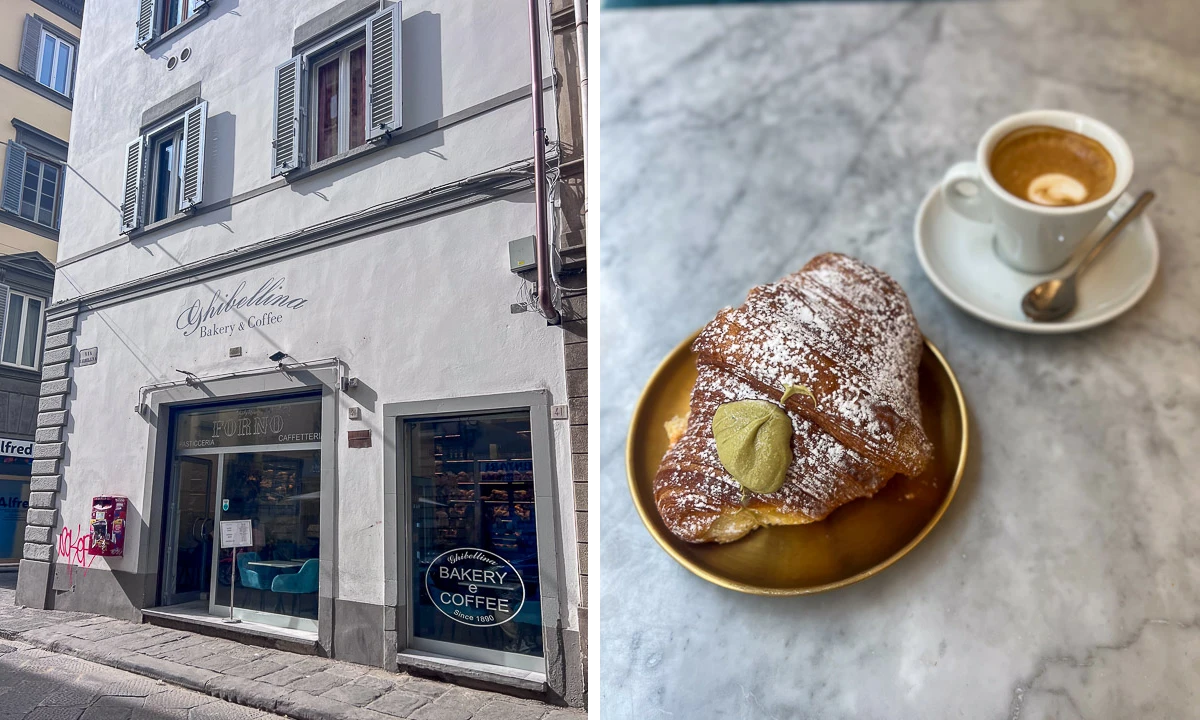
My top pick though would have to be Ghibellina – a historic bakery and pasticceria with a charming vintage interior and killer pistachio croissants.
Mercato di Sant’Ambrogio
Smaller than the Mercato Central in San Lorenzo, the Sant’Ambrogio Market is easier to navigate and is largely frequented by locals – I loved it. Prices seem fair, fresh fruits and vegetables overflow the outdoor tables, and the cutest traditional delis and butchers fill in the inside of the city’s oldest market (1873).
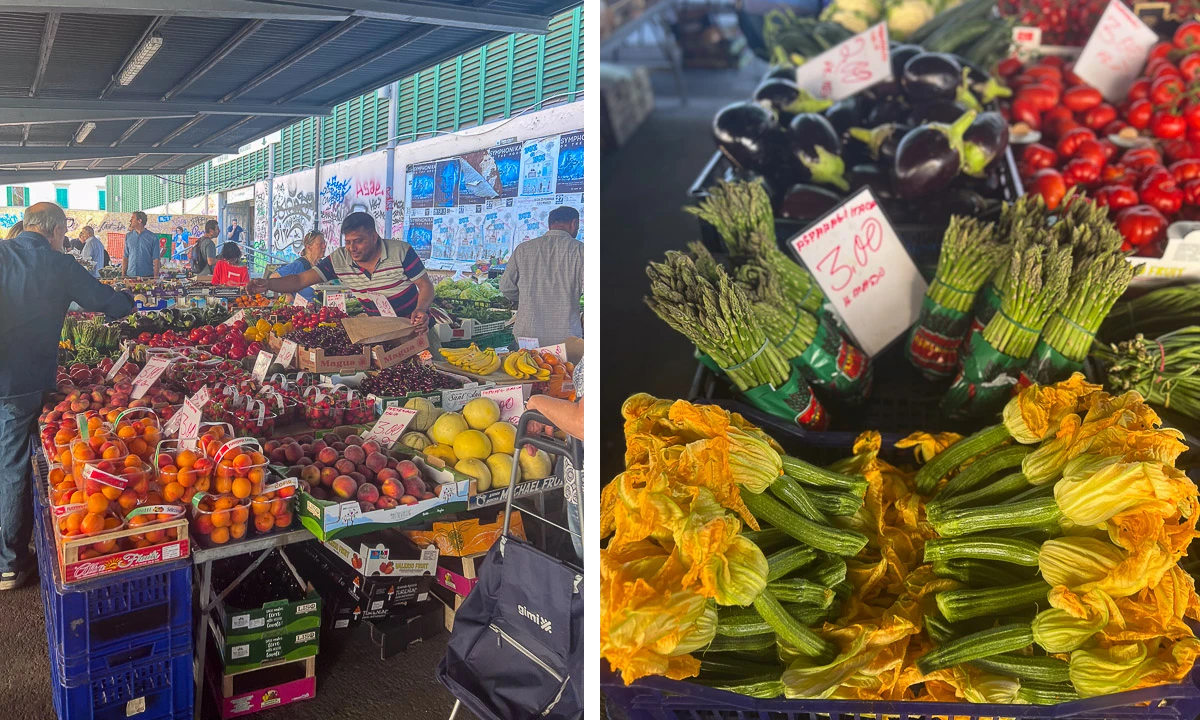
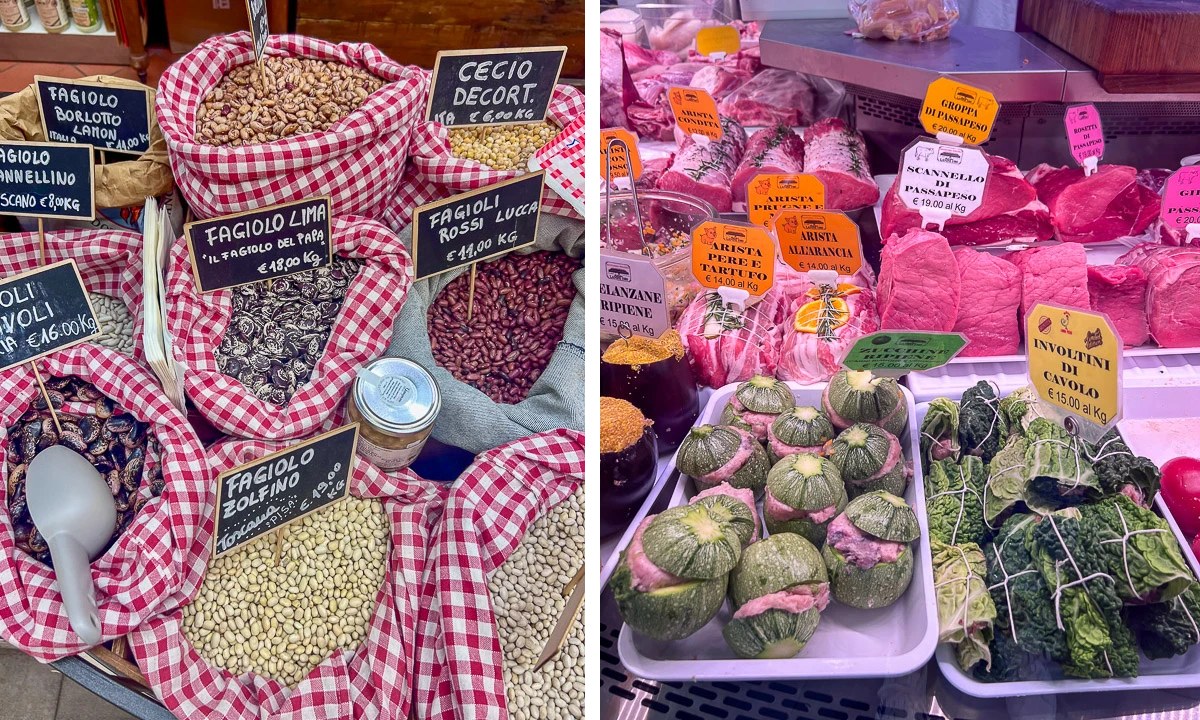
I dare you to resist getting a little mid-morning snack here…
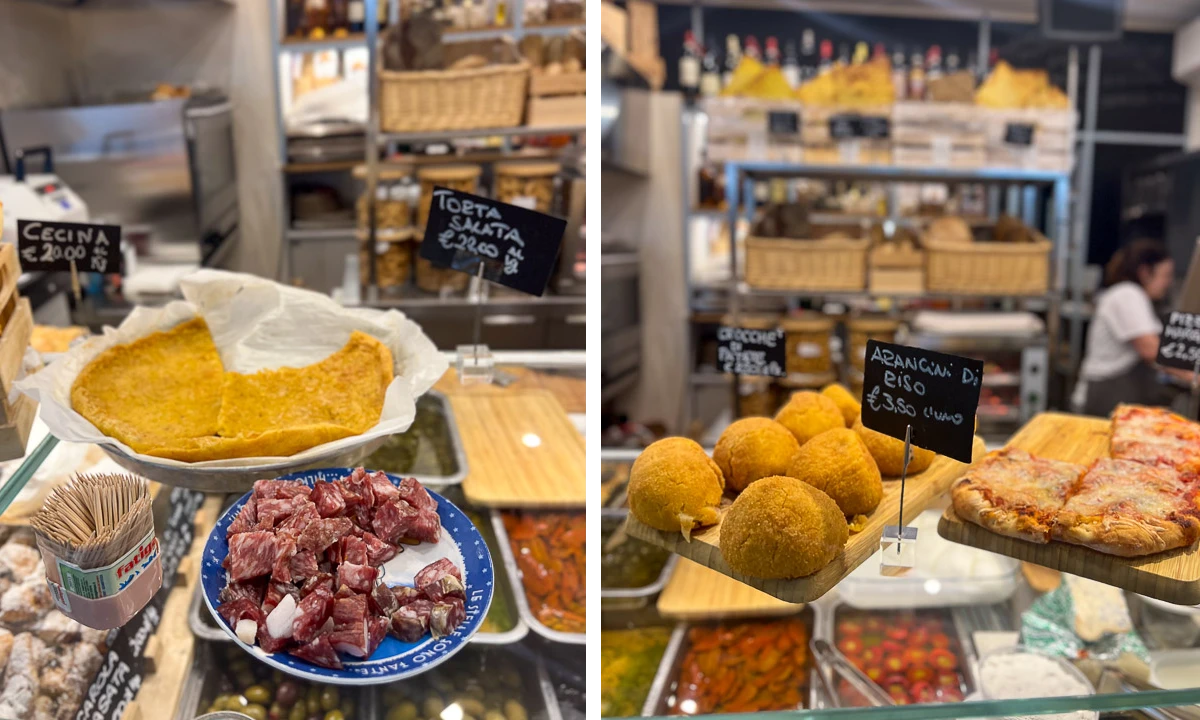
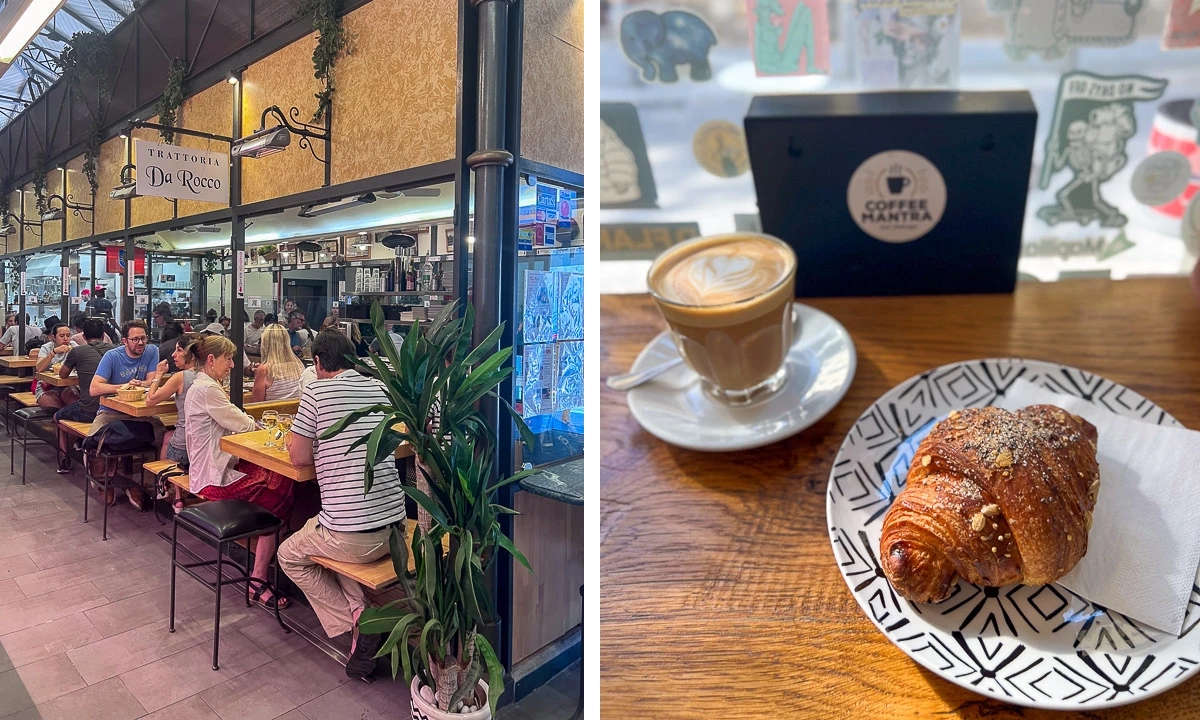
You can even sit down for a genuine lunch at Trattoria da Rocco smack in the middle of the market. Or cross the street for a superior coffee at Coffee Mantra.
Unique shopping
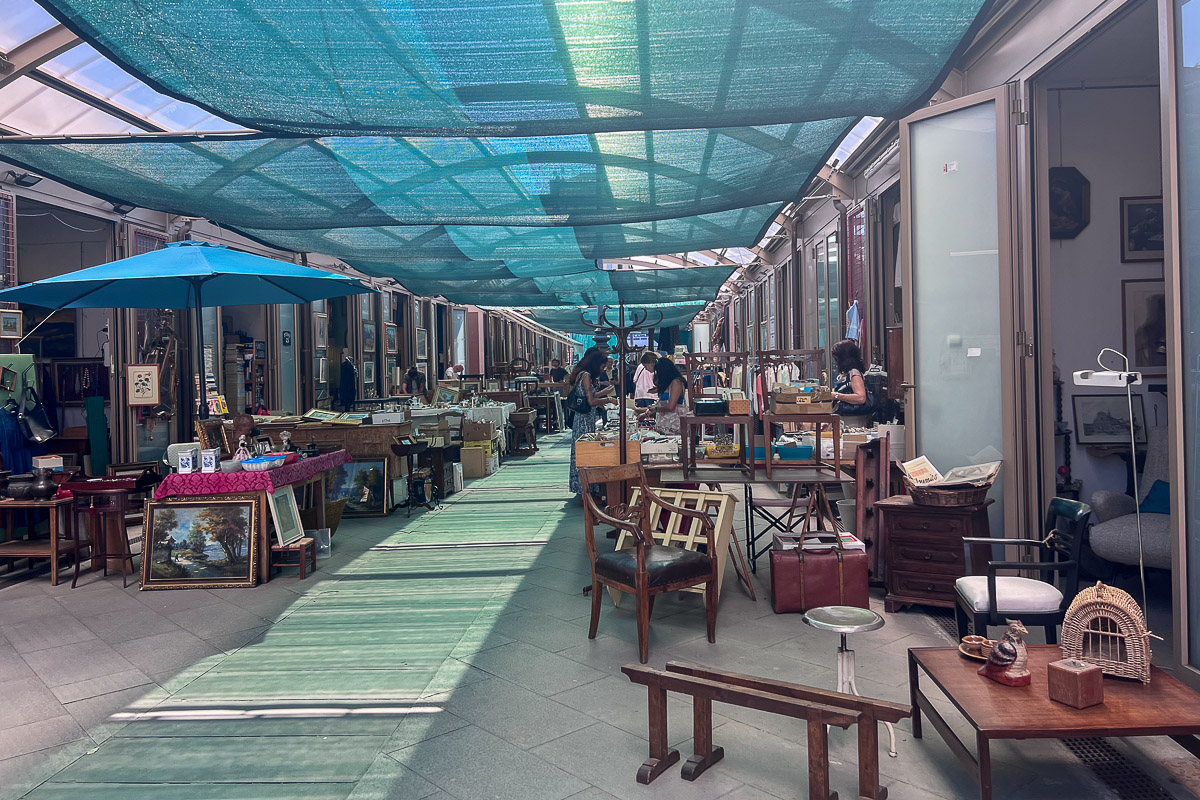
Directly across from the market in Piazza Lorenzo Ghiberti you’ll find the Sant’Ambrogio Flea Market, opened daily. The covered gallery has stalls on both sides selling mid-century furniture, vintage paintings and decor, used books and various curiosities. That retro leather chair might be a stretch to carry back, but small artwork, kitchenware, and embroidered curtains and napkins can make a really original addition to your home.
As soon as you start making your way south of the market, you’ll notice the growing craft movement that is slowly taking over the neighborhood. While the south of the river (Oltrarno) still has the bulk of artisanal activity with woodworkers, jewellers, and bookbinders, Sant’Ambrogio is becoming a hotbed of original makers. Make sure to walk down the streets of Borgo Allegri and Via dei Macci to discover authentic artisan studios keeping centuries-old techniques alive.
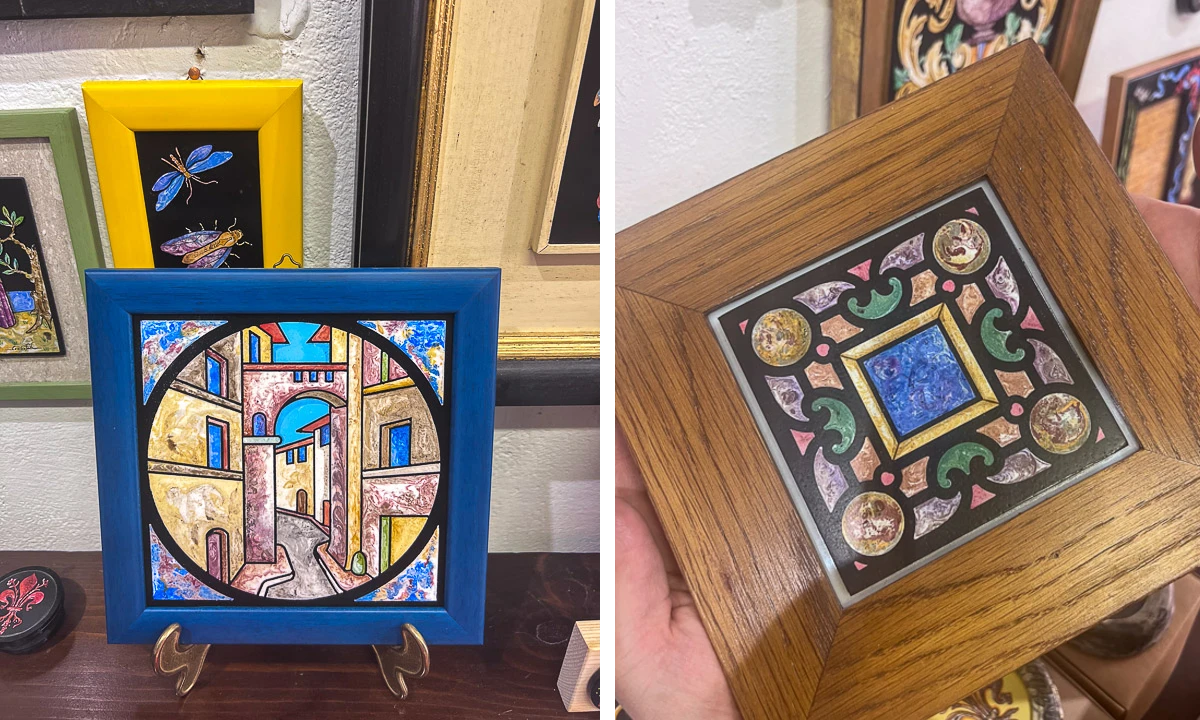
Of course I fell for that of Cecilia Falciai – an artisan specialized in Florentine mosaics, pietra dura, and scagliola (the historic art of inlaying colored plaster to look like marble).
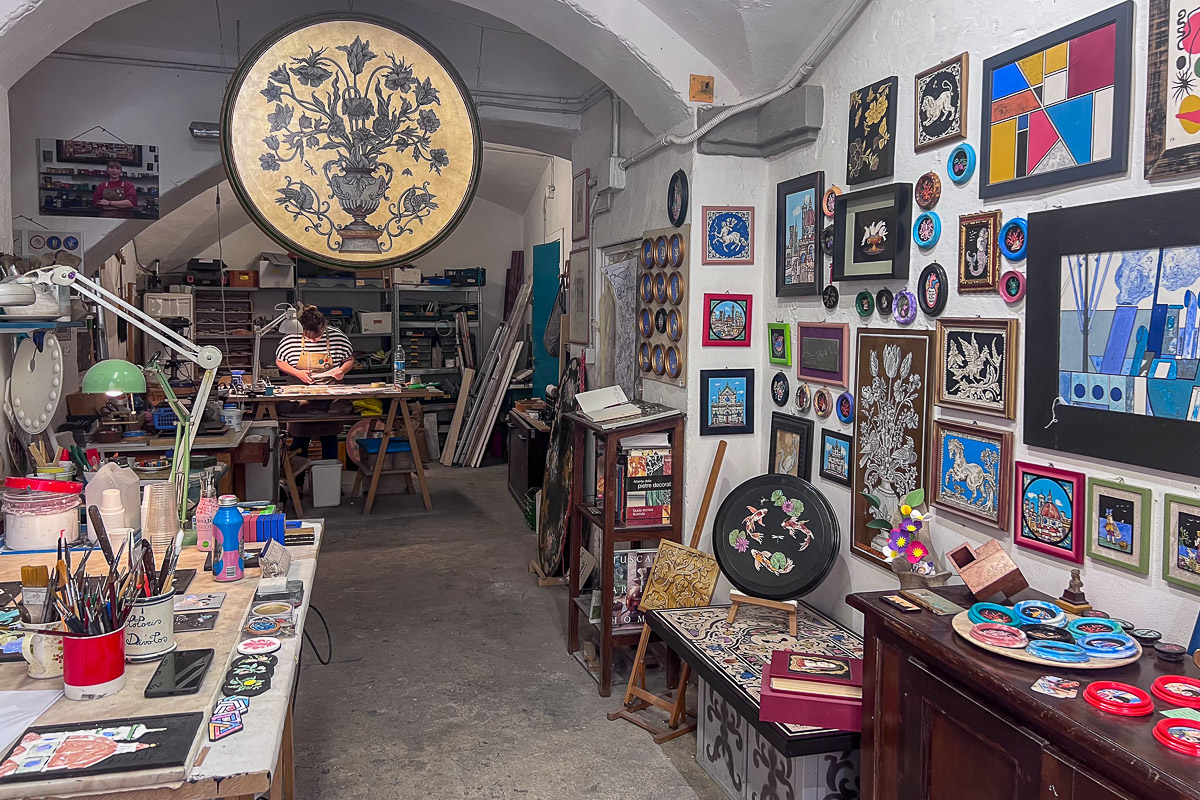
Her work is gorgeous and with pieces large and small (she makes jewelry too), you can treat yourself to a truly original work of art, unique to Florence, and help preserve the city’s storied decorative arts heritage.
If you didn’t find your scent at the Officina Profumo Farmaceutica in San Lorenzo, you can have another go by visiting Aquaflor in Santa Croce. Don’t let the almost hidden entrance fool you – this traditional Florentine perfumery is set within a beautiful palazzo and is as much a feast for the eyes as for the nose.
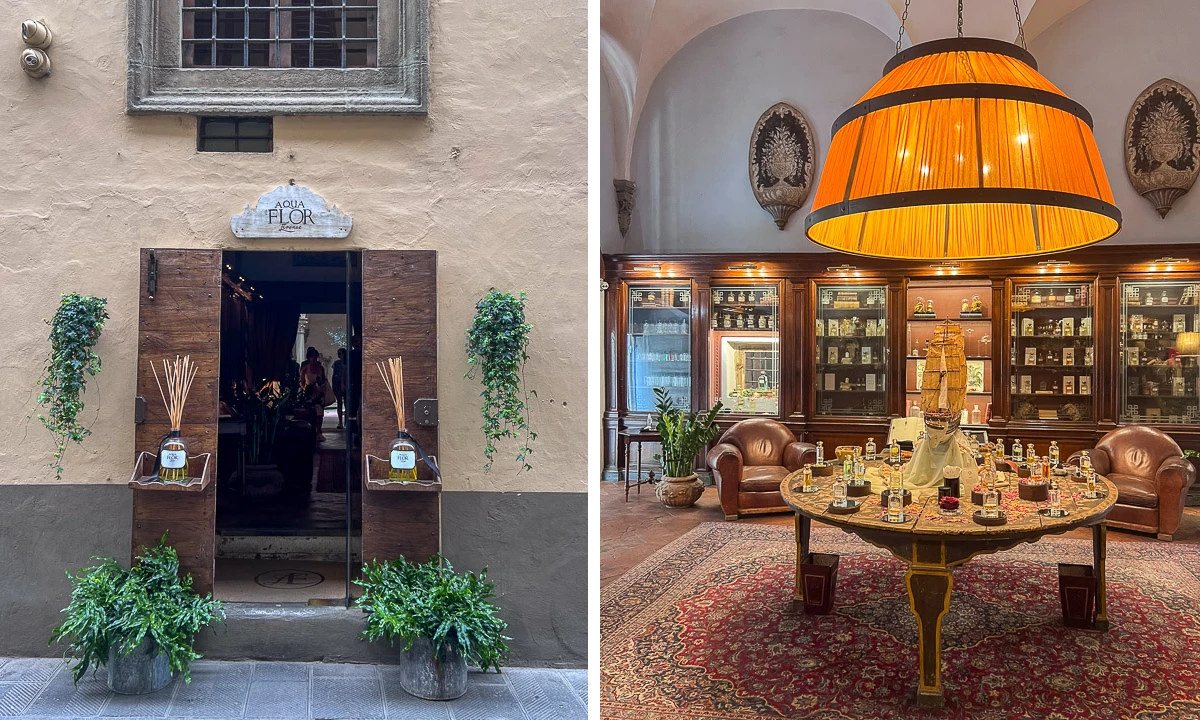
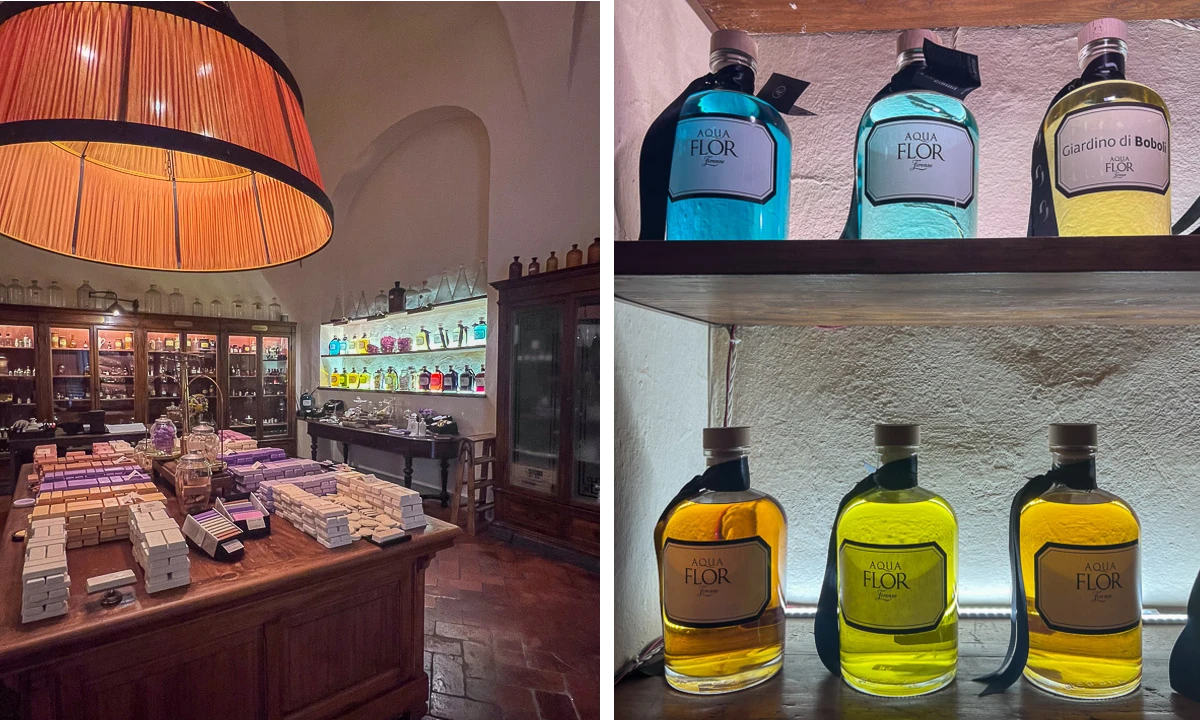
Perfumes, colognes, room fragrances, soaps, candles, and chic bathroom accessories are all beautifully displayed in mahogany cabinets and on antique tables. Each perfume is handcrafted on site using rare essences from around the world and sold exclusively here in elegant packaging bearing exotic names. You’ll find unique scent compositions and can even create your own signature perfume by joining one of their workshops.
Santa Croce
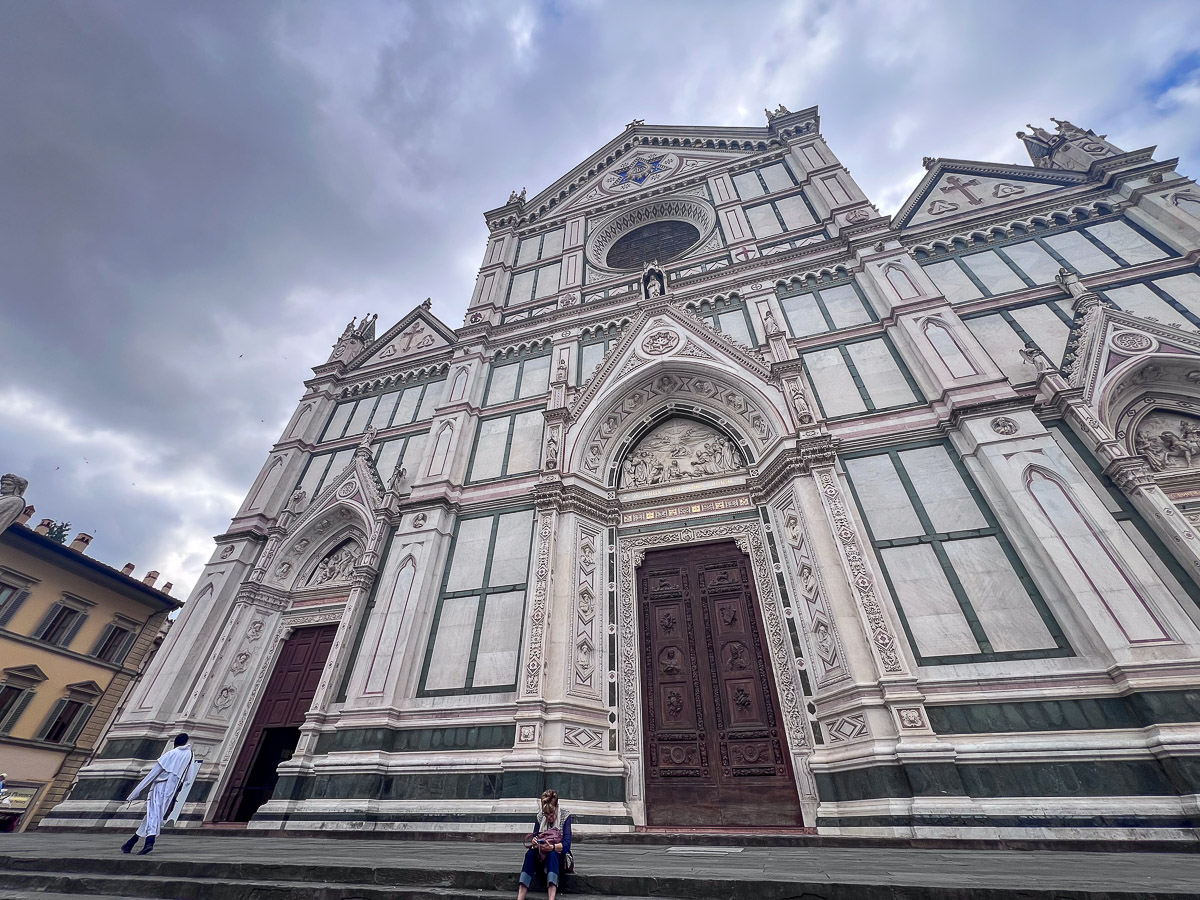
You won’t really need to look for it. Santa Croce will pop right out in front of you once you reach any corner of Piazza di Santa Croce. This 12,000 square meters Gothic church is considered the largest Franciscan church in the world and is worth a quick visit (yes, despite all the other churches you’ve no doubt visited up to now).
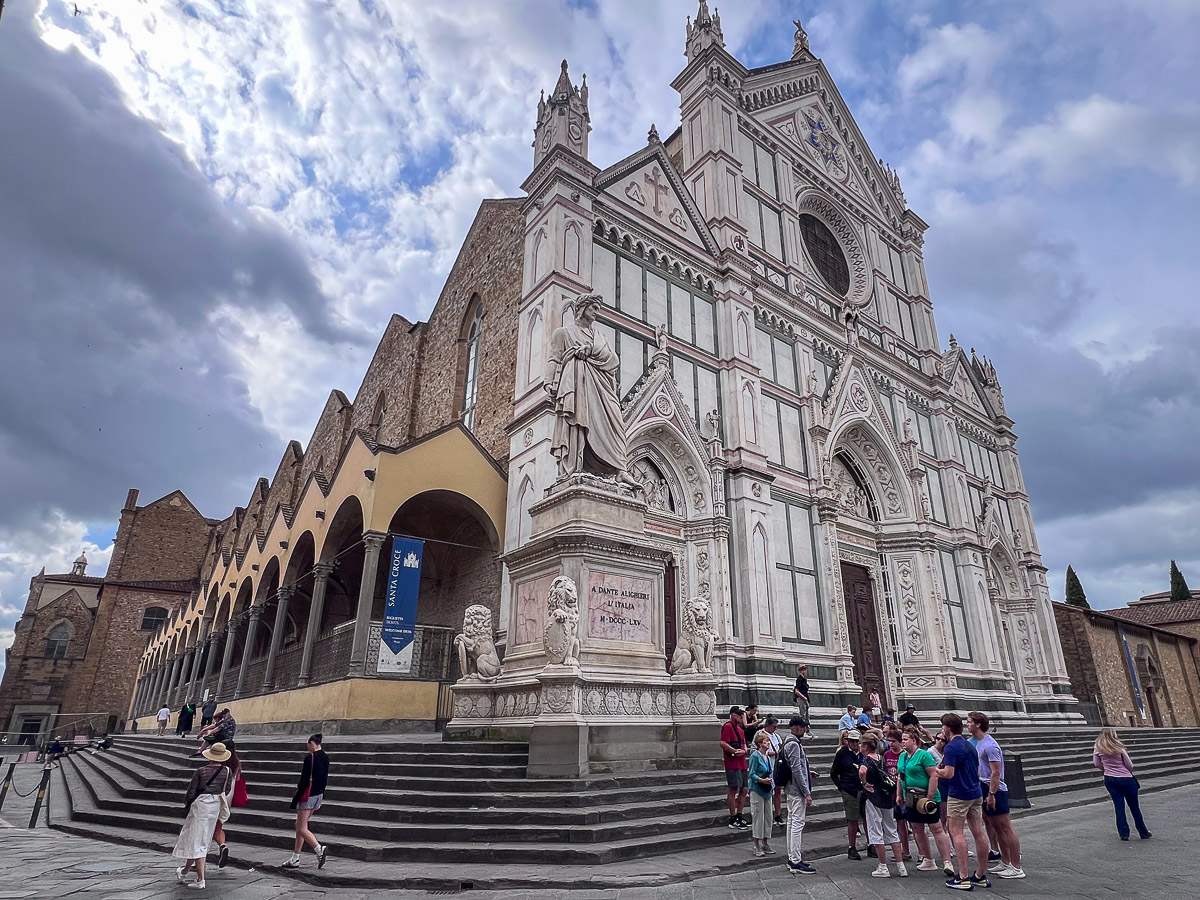
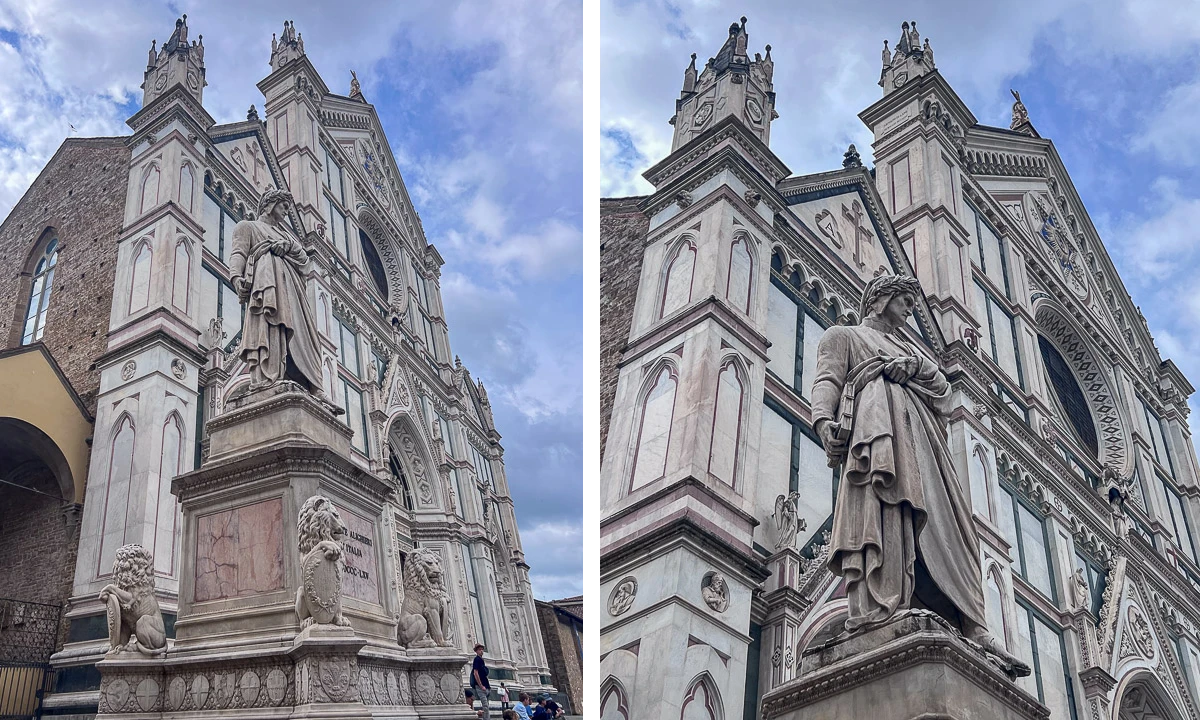
A large statue of Dante greets you as you approach the distinctive marble façade.
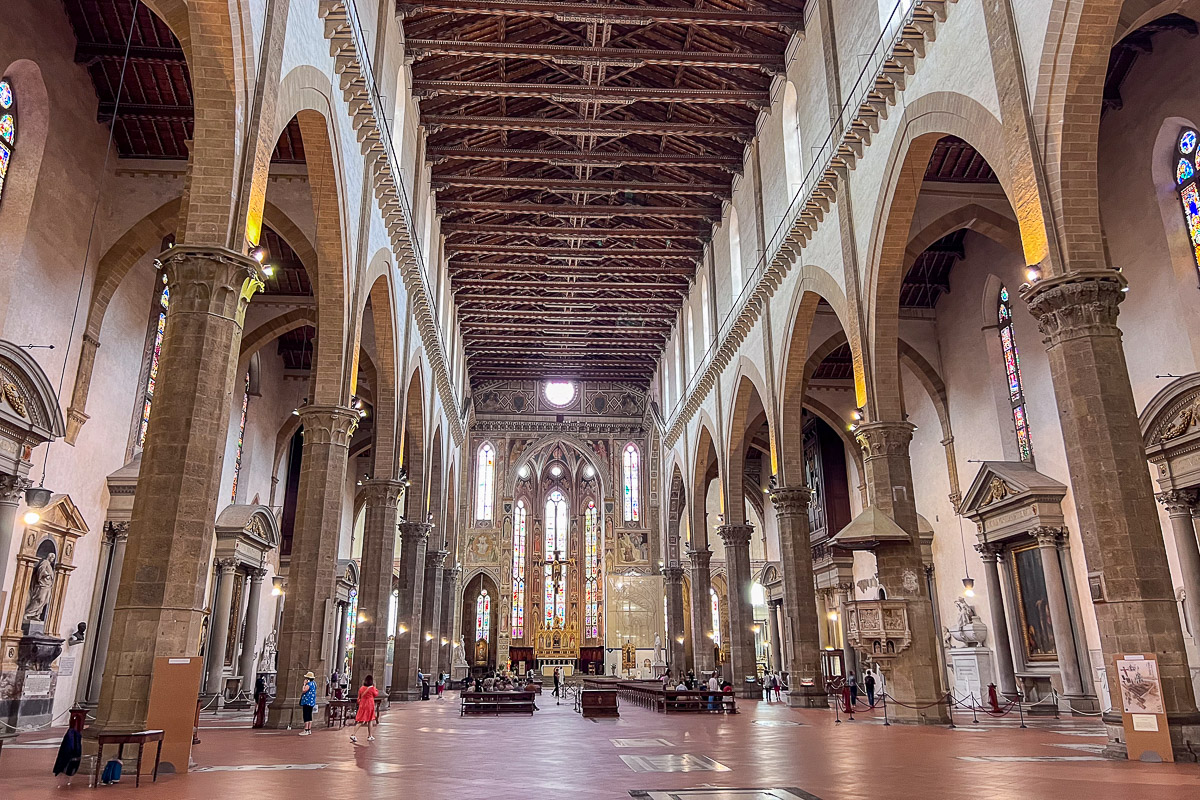
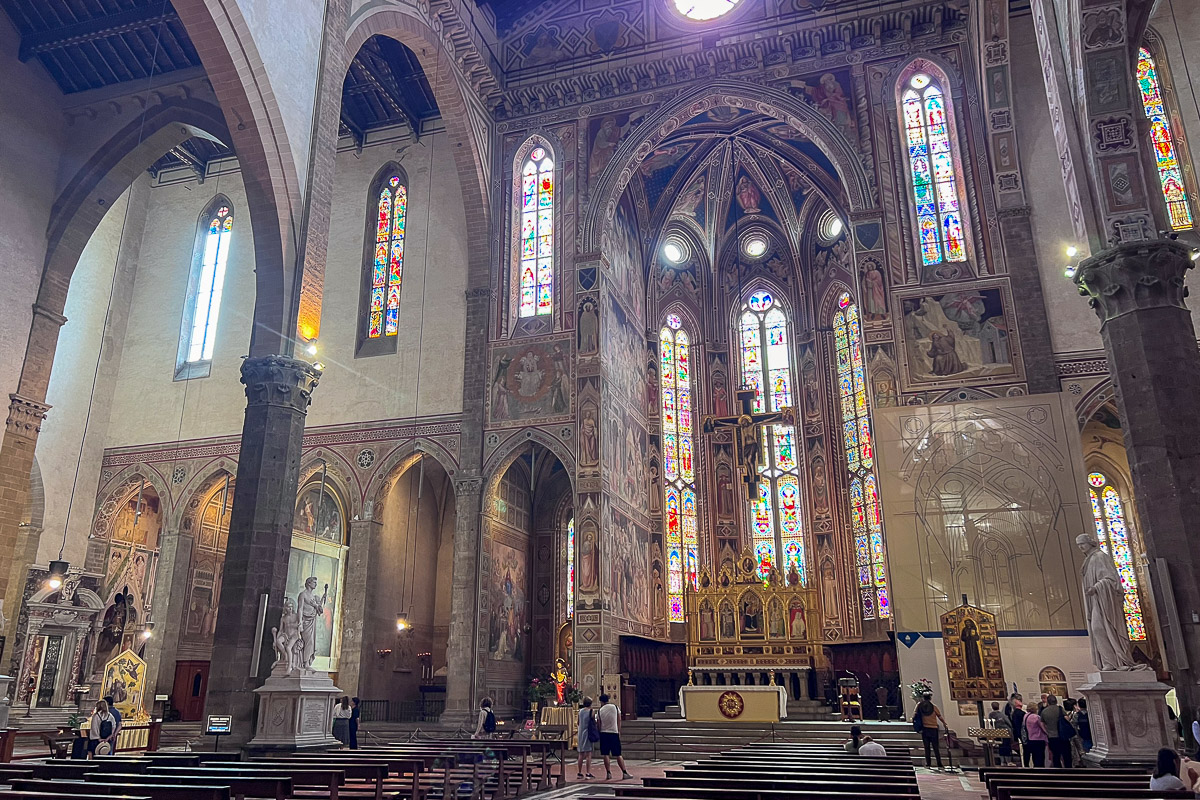
The spacious interior is decked with the familiar frescoes and ornate crucifix…
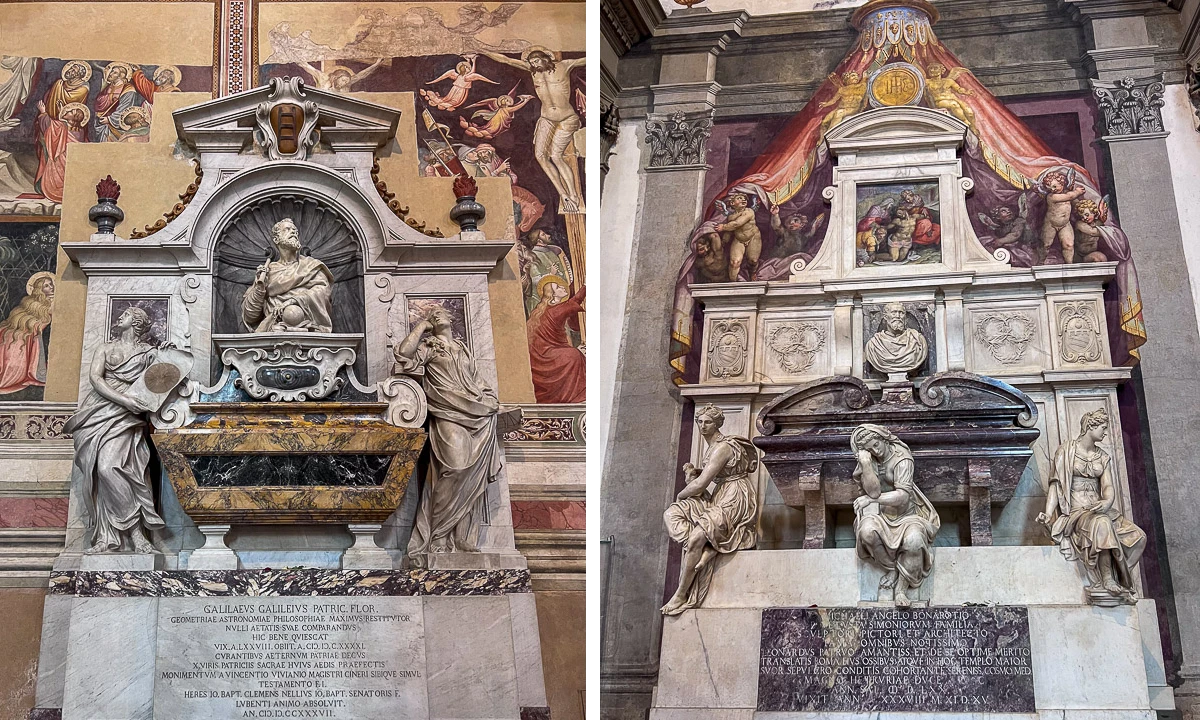
… but what make this church famous are the tombs that lie inside of it, like that of Galileo (below left) and Michelangelo (below right).
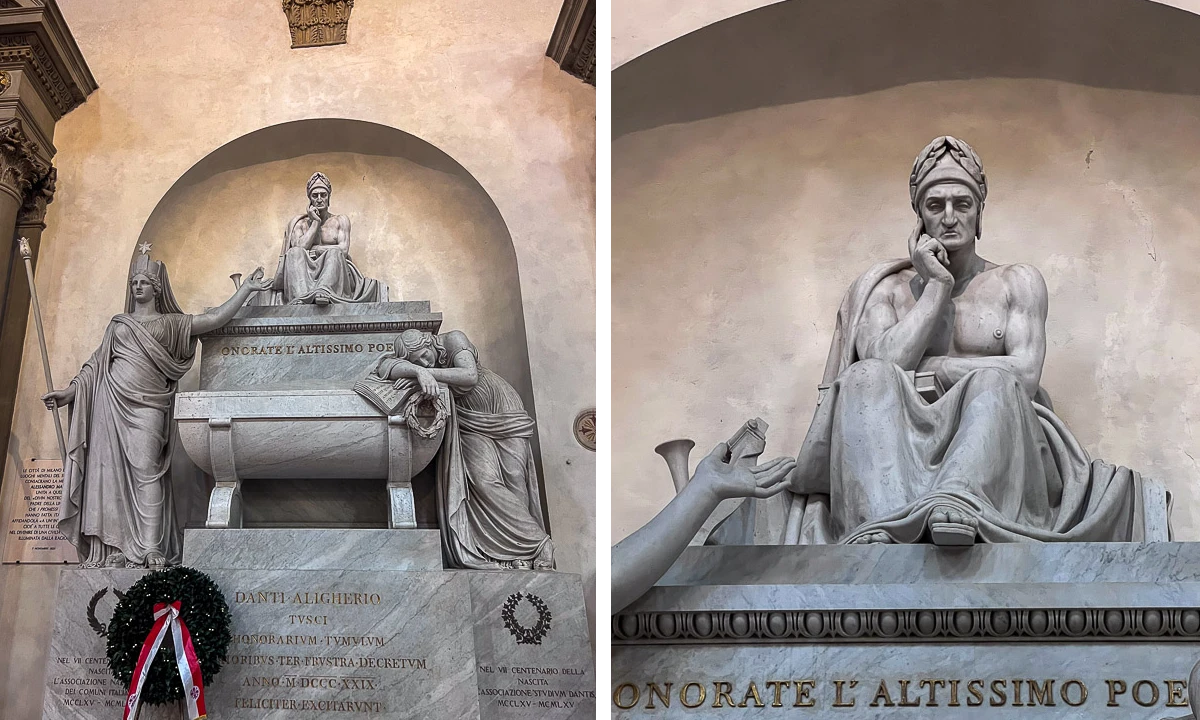
There’s another Dante here too, though this one is sitting on an empty tomb, leaning on The Divine Comedy. The poet remains buried in Ravenna where he died in exile.
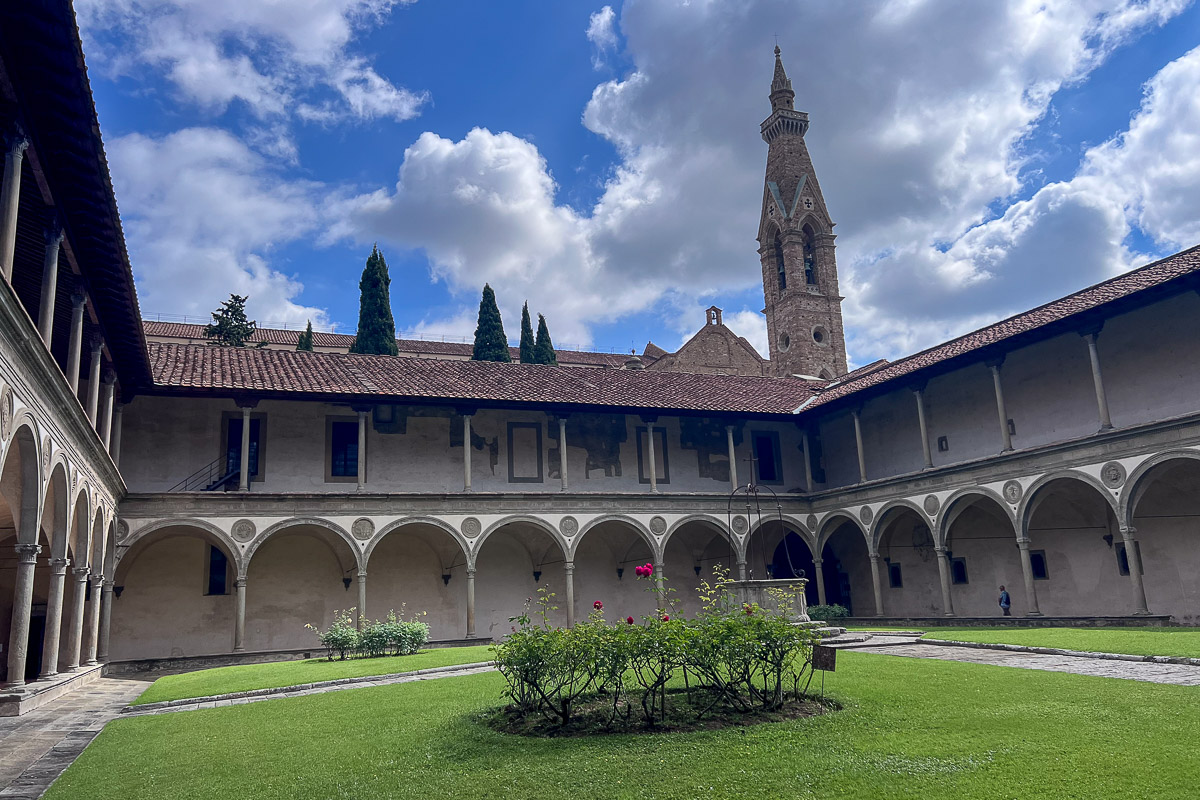
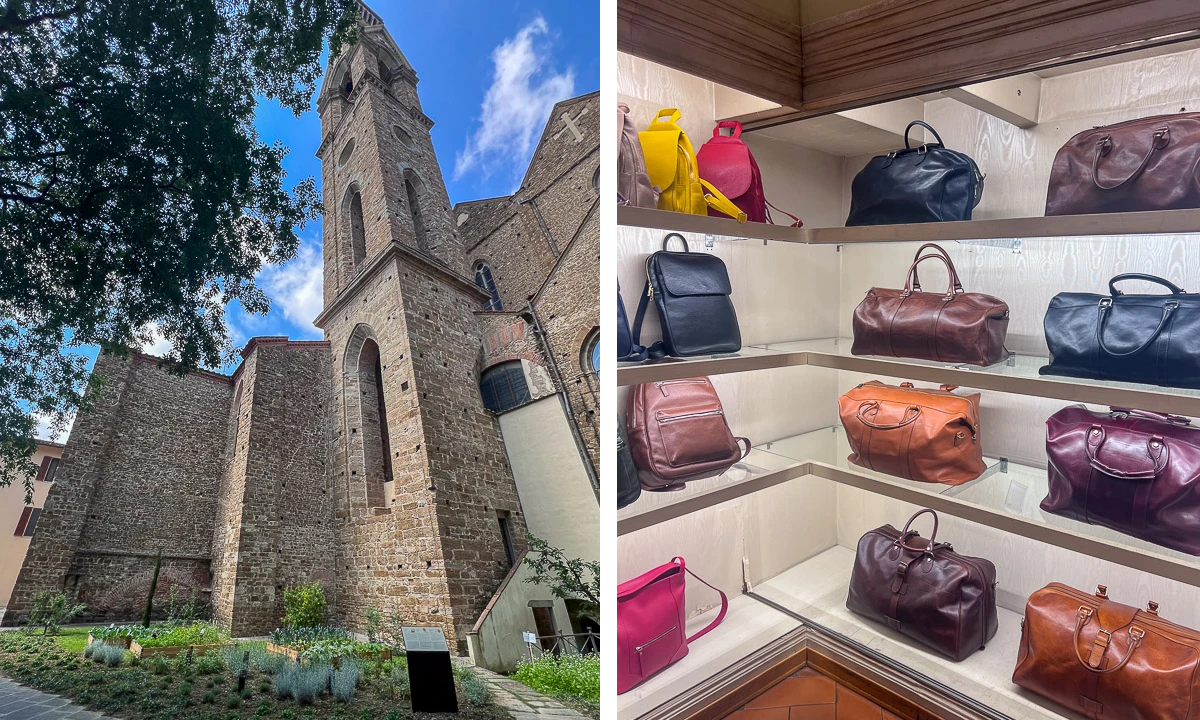
The complex is so vast, you’ll eventually end up outside for a moment of tranquility, first in the Cloister of the Dead (it once served as a burial ground) under the basilica’s bell tower…
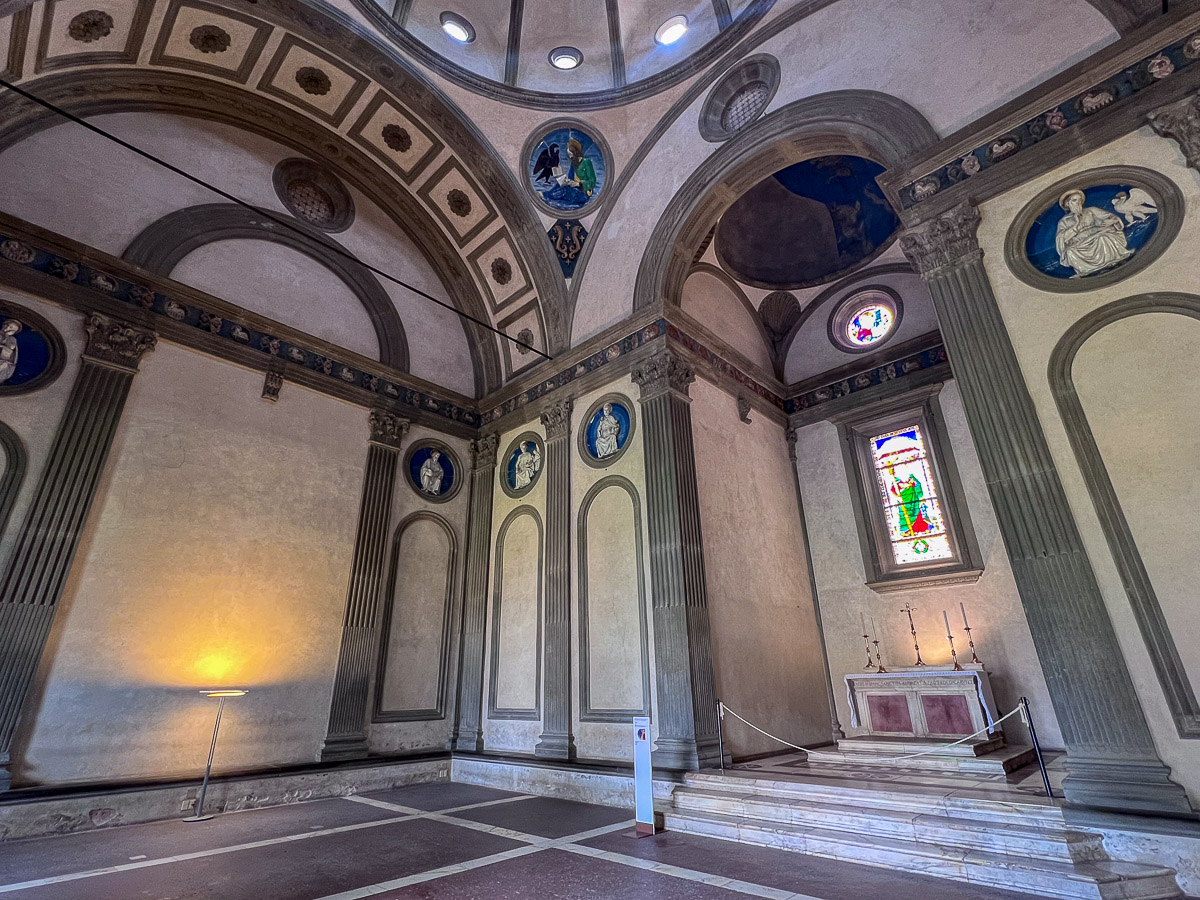
…and next into the Greater Cloister, designed by Brunelleschi (remember the architect of the Duomo?). It’s incredibly serene out here, and your eyes can rest on some flawless Renaissance architecture once more, from the arcaded courtyard to the perfectly proportioned Pazzi Chapel at one extremity.
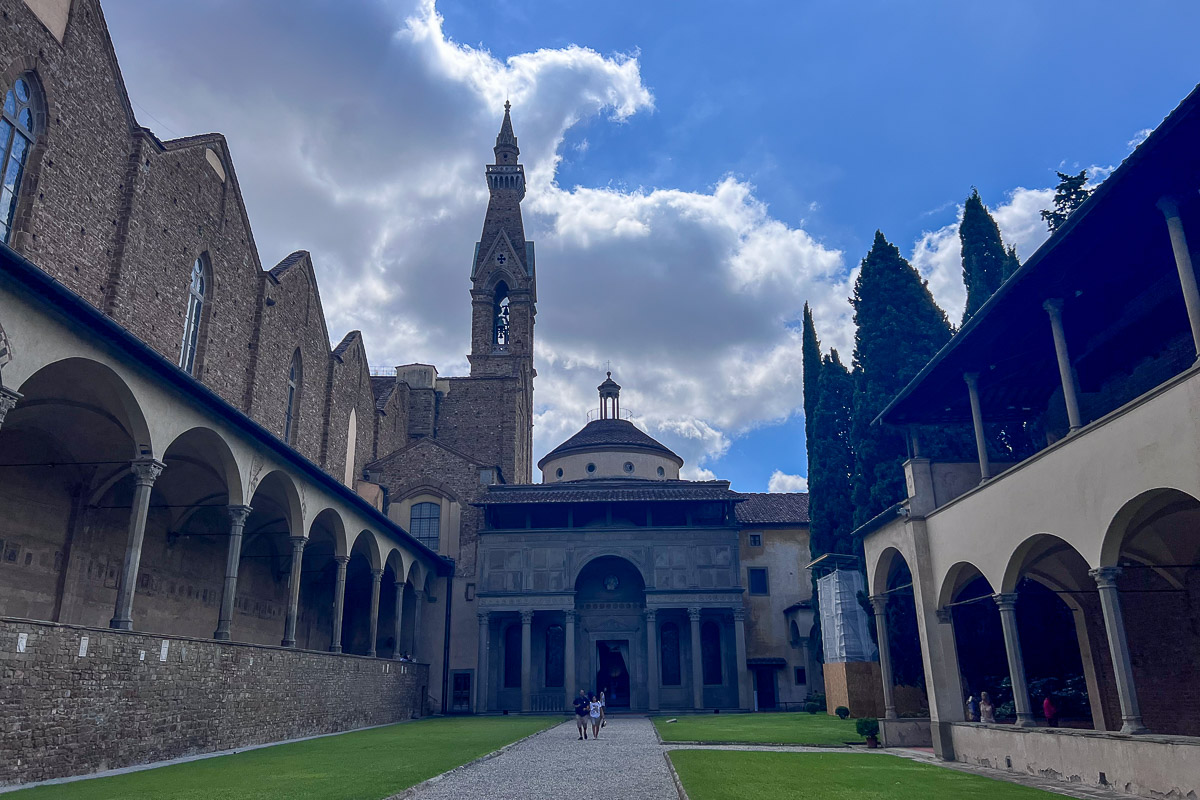
The domed chapel (also designed by Brunelleschi in 1429) is celebrated for its perfect geometric harmony, symmetry, and glazed terracotta medallions adorning the walls.
Hidden gem tip: when you walk out of the basilica, go towards the back of the church on Via di S. Giuseppe to find a discreet archway covered in dried flowers on the church’s grounds. Walk through it to find the entrance to the Scuola del Cuoio (leather school). People from all over the world come here to learn the traditional method of working with leather. As a visitor you can buy handcrafted leather goods while watching the artisans at work, or even partake in a short workshop yourself.
Lunch around Santa Croce
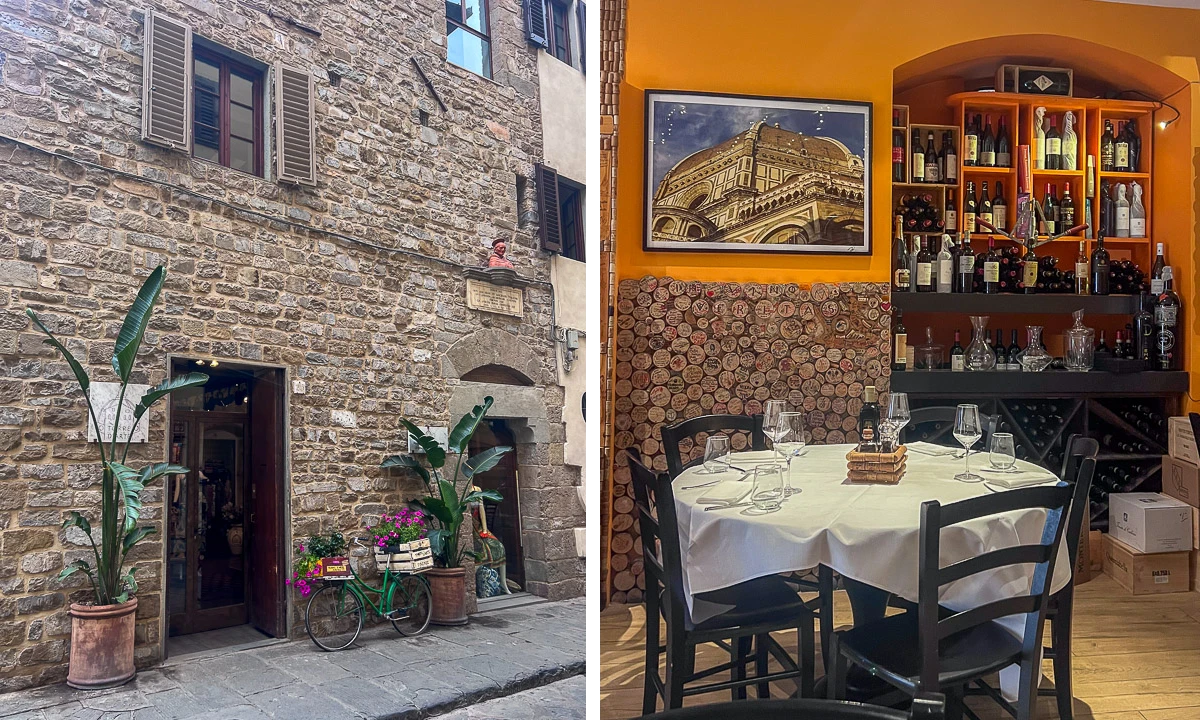
Santa Croce is a busy district and you’ll easily find a great Tuscan tavern, pizzeria or deli to break the day. For a cozy bistro near the river, there’s La Buchetta which serves amazing steaks and pasta.
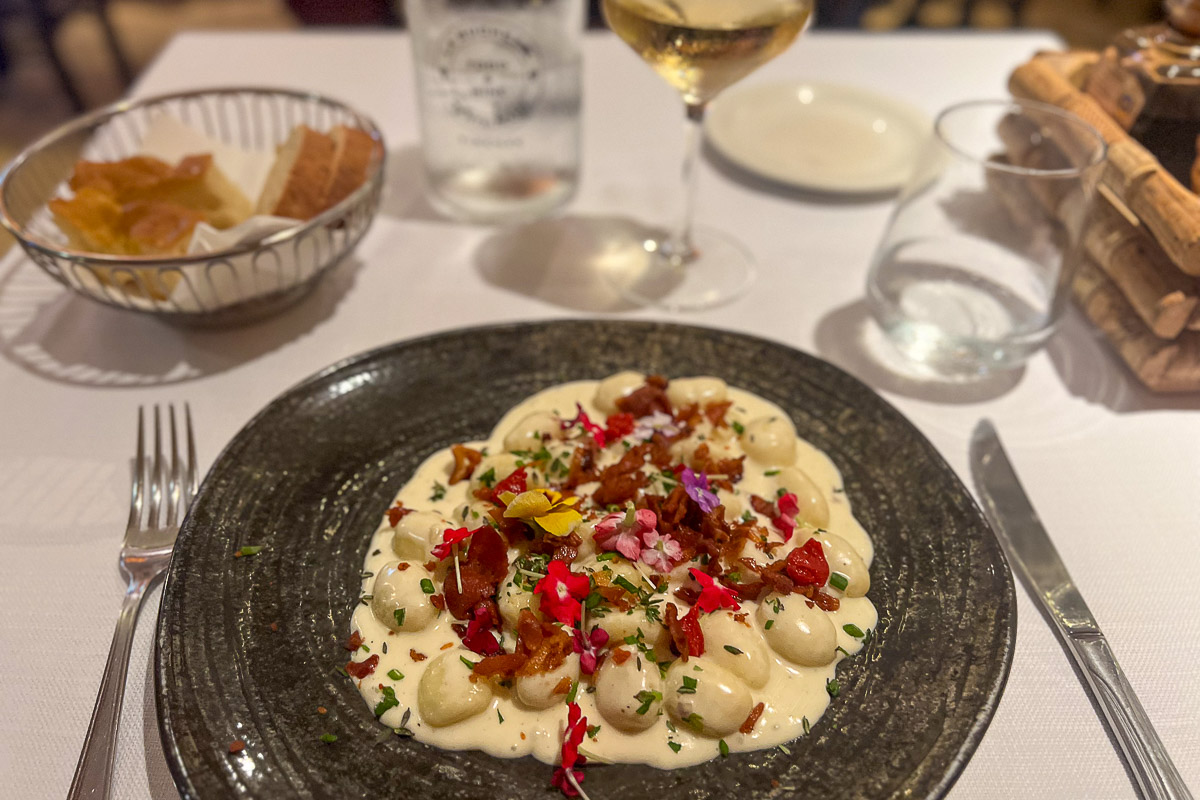
Don’t skip their “Angels & Demons Gnocchi” with creamy stracciatella cheese and crispy pork cheeks.
If you’re craving a relaxed lunch in a gorgeous and airy space, you’ll find that and more at Libreria Brac.
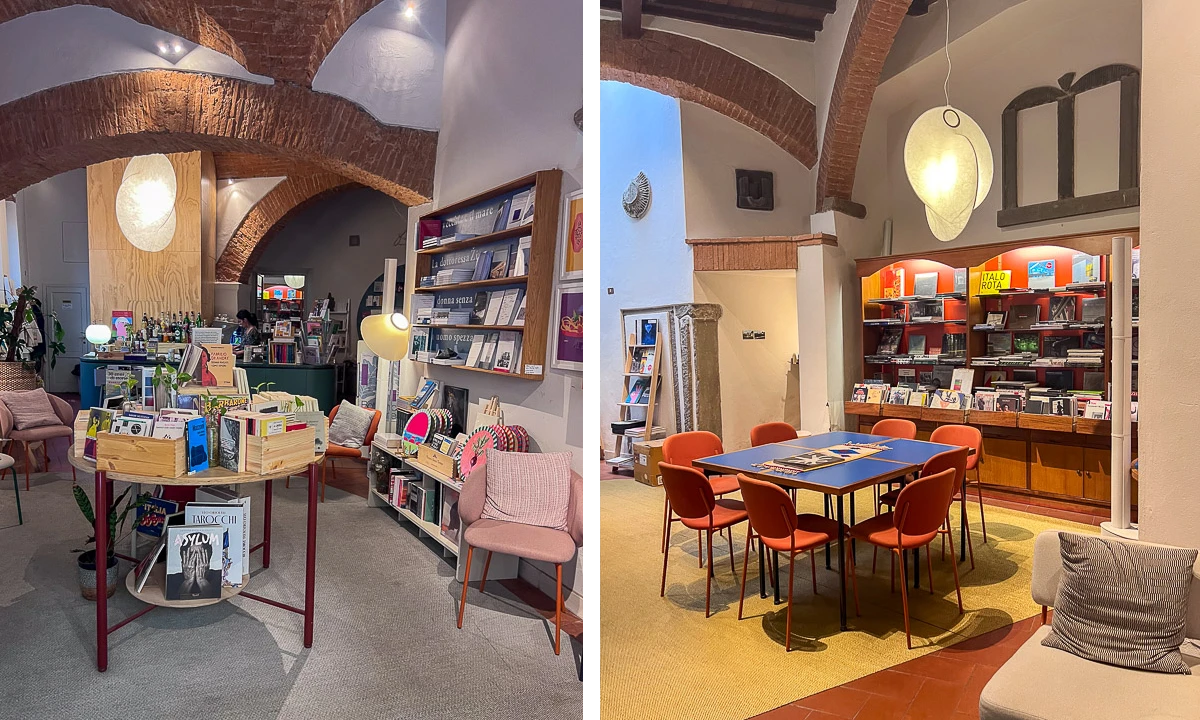
The art bookshop/gallery has a hidden inner courtyard with a vegetarian restaurant serving lunch and dinner daily.
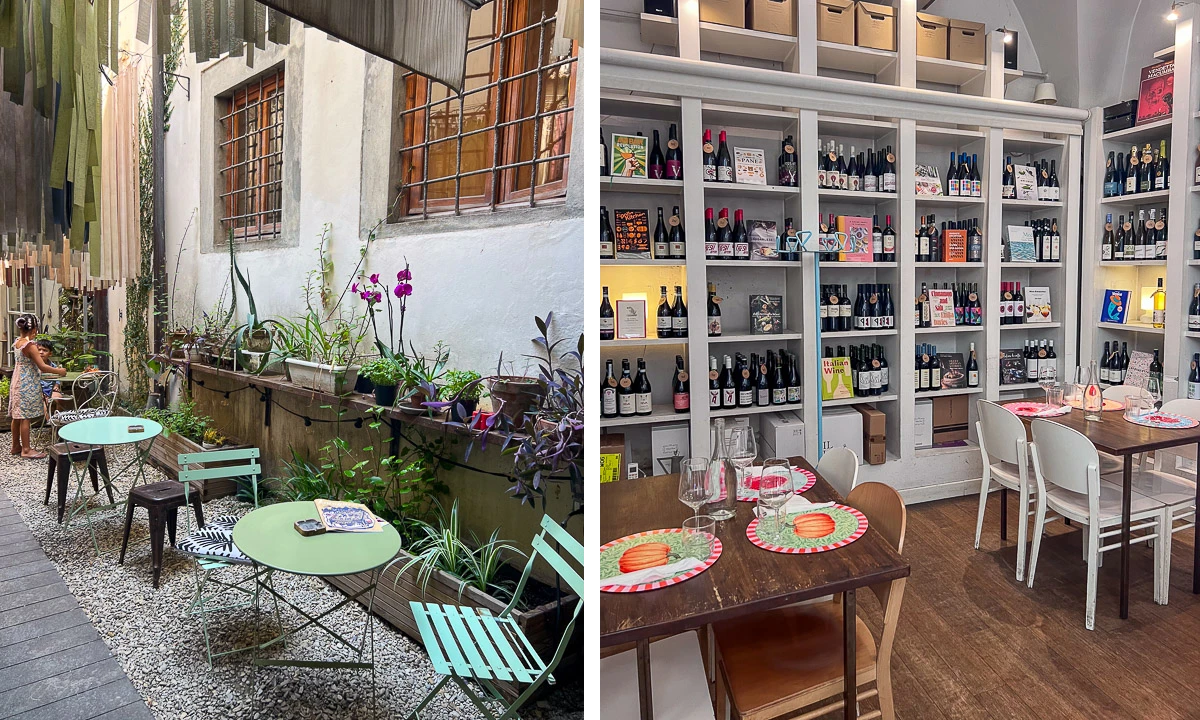
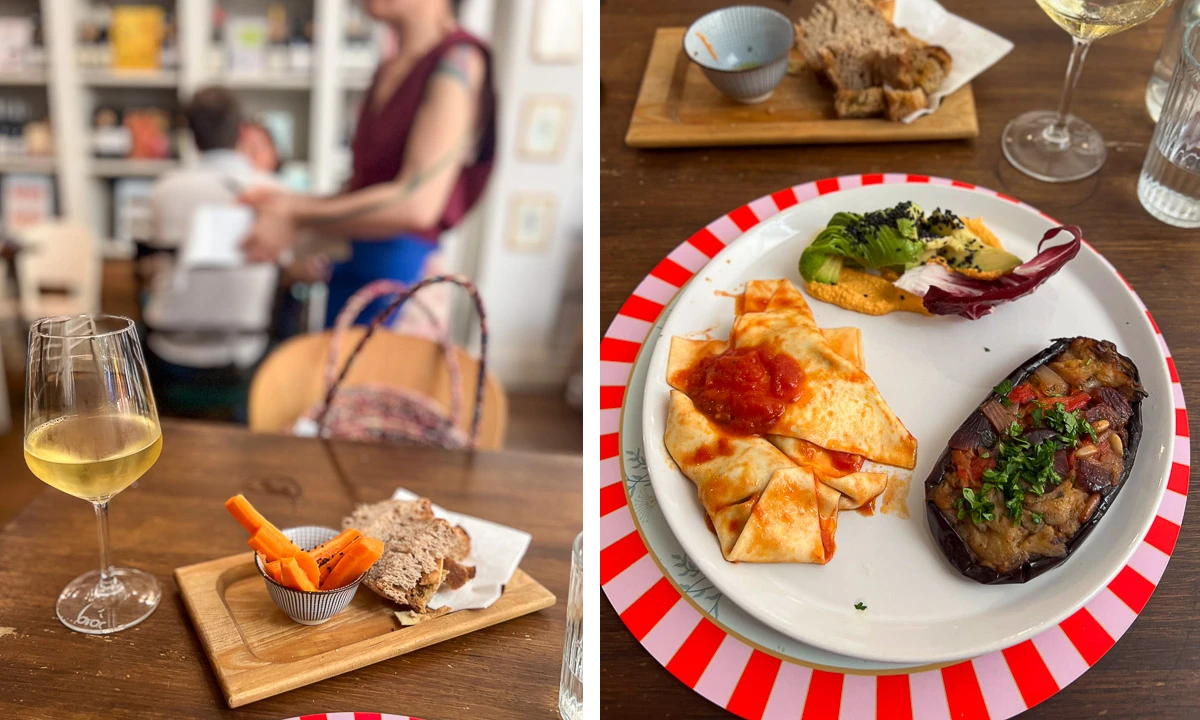
The lunch special is the way to go, which includes a pasta, a side, and a special. Everything was so good, and the atmosphere can’t be beat: the light, the flowers, the art and international books everywhere…. what a hidden gem!
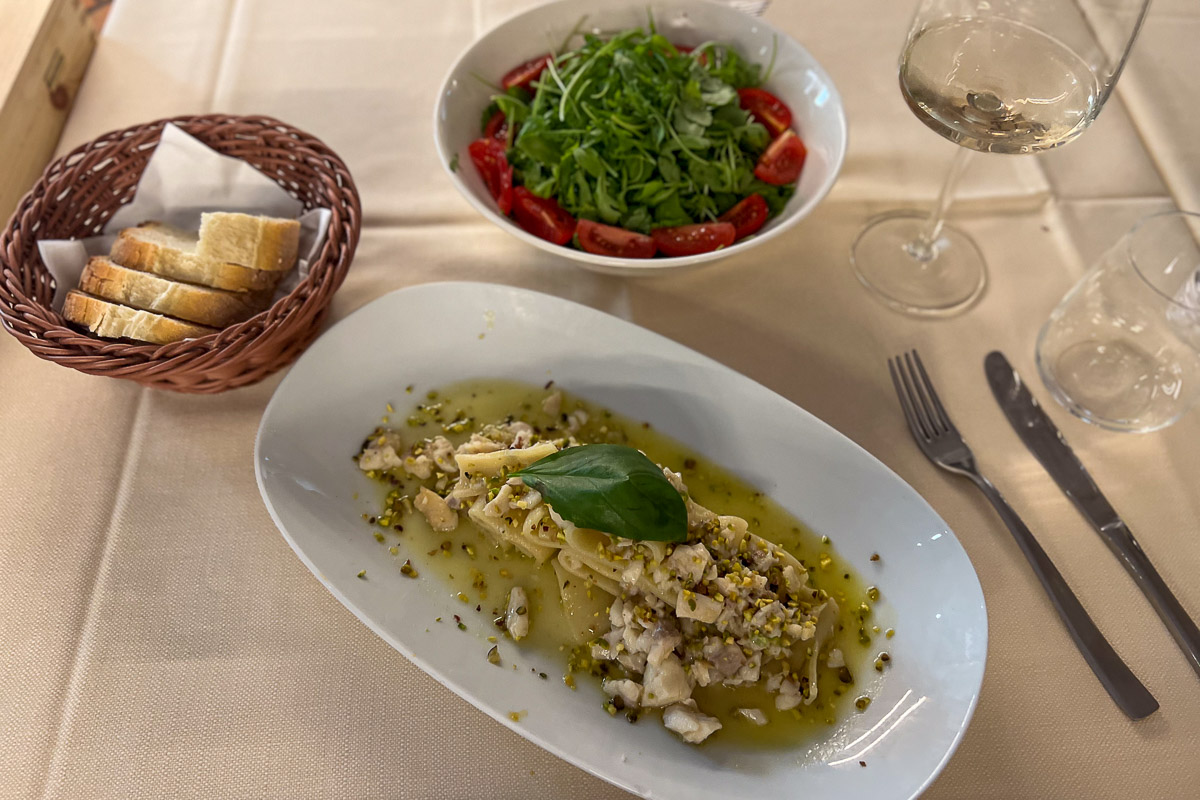
Feeling more chic? Step into Ristorante Tre Pepi where the calm ambiance, cool interior, and modern presentation of Tuscan classics will leave you rejuvenated.
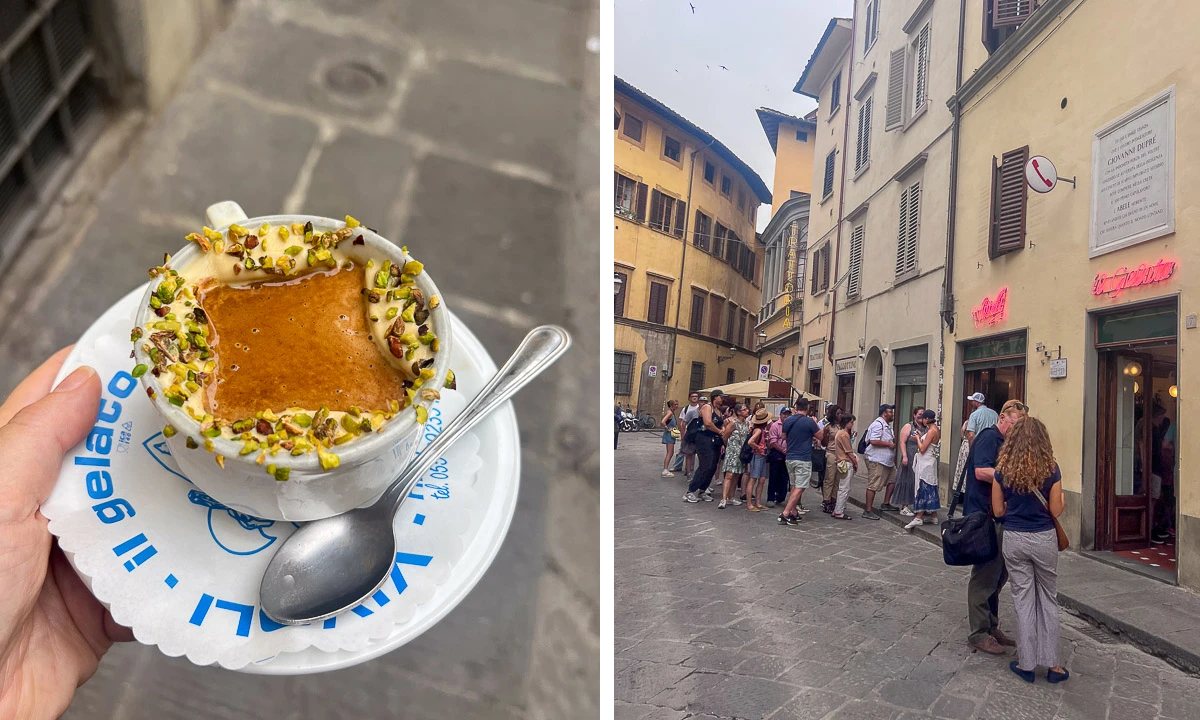
While you’re in the neighborhood, see if the line into Vivoli Gelateria is manageable. Florence’s oldest gelateria is famous for its ultra-creamy gelato and legendary affogato. Their espresso poured artistically over pistachio or vanilla ice cream is so photogenic the social media craze has made afternoon visits here nearly impossible. But the taste is truly worth it so…get your ice cream fix in the morning and you should be good?
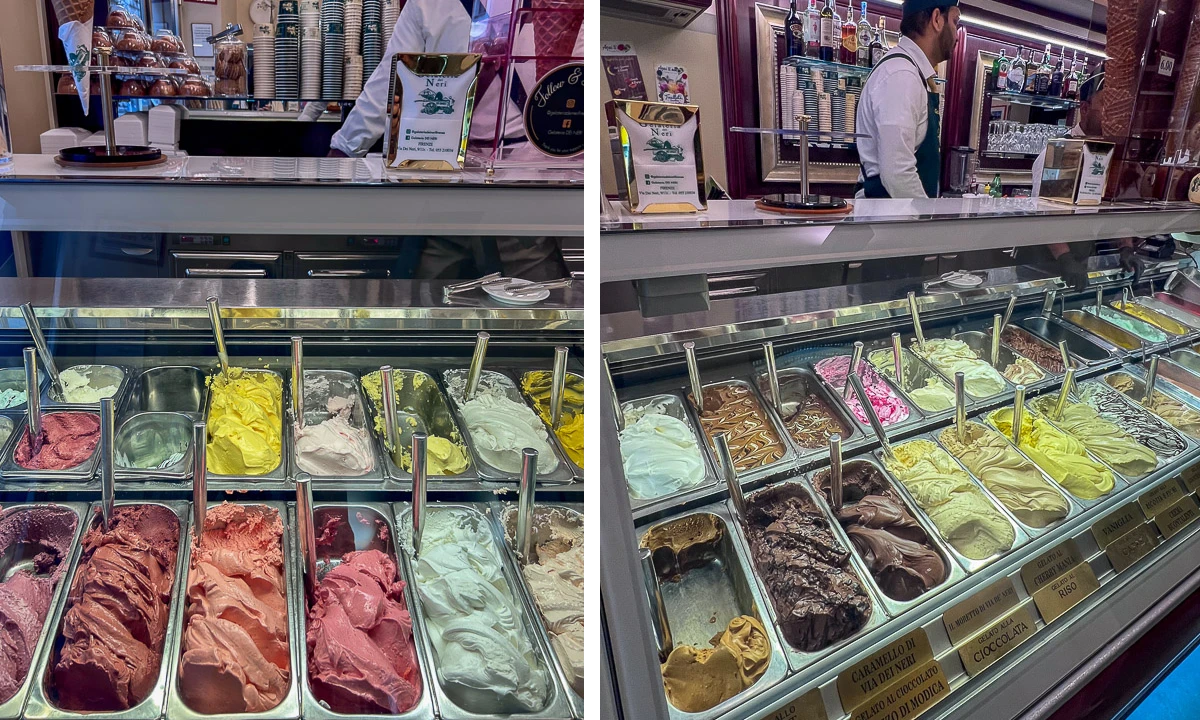
If the line is really too long, don’t despair, Gelateria dei Neri is an excellent plan b just a few blocks south.
Bargello Museum
You might have spotted the imposing fortress while wandering around town without knowing it held some of Italy’s finest Renaissance sculptures. The Bargello Museum makes for an impressive visit, not only for the art it contains but for the building itself.
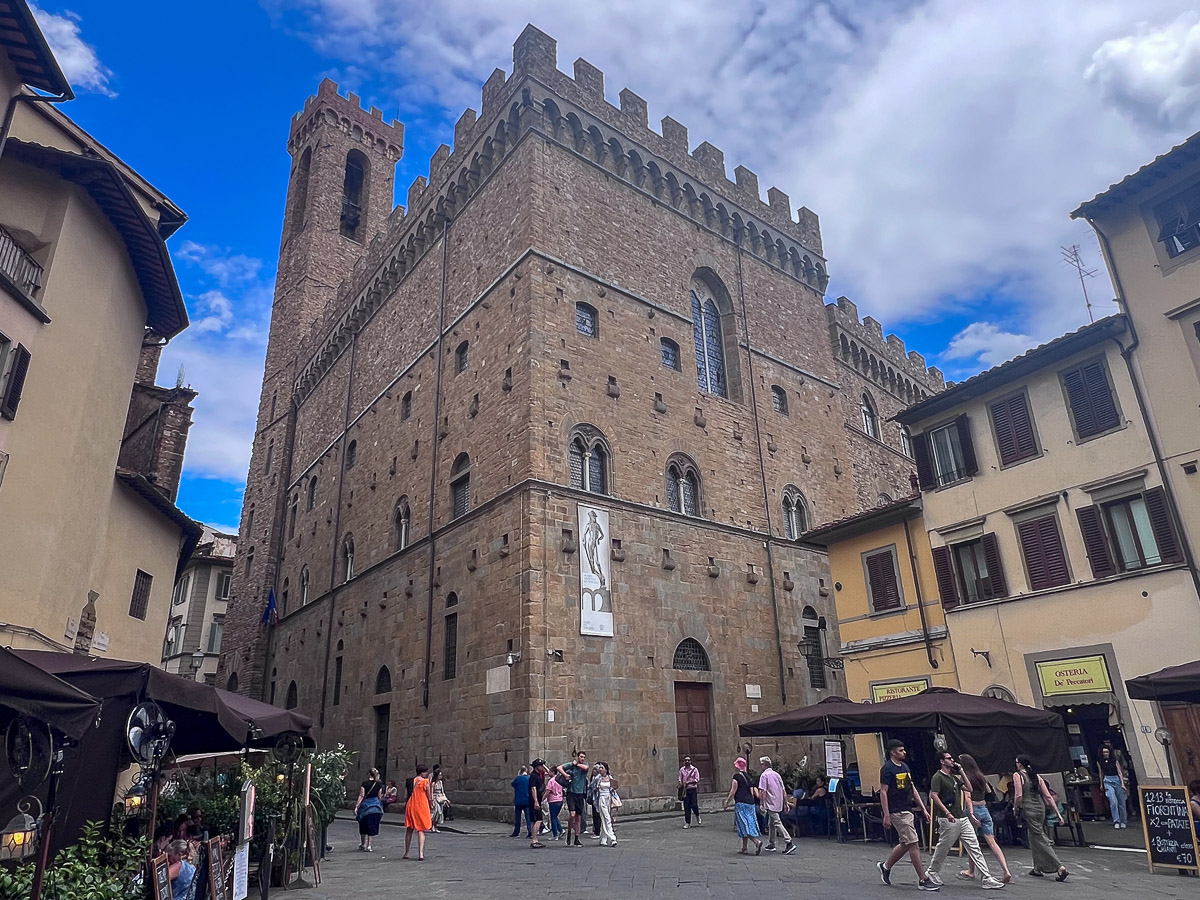
The huge 1255 palace later turned to barracks and prison before becoming Italy’s first national museum in 1865. Its size also makes it one of the least crowded museums in Florence.
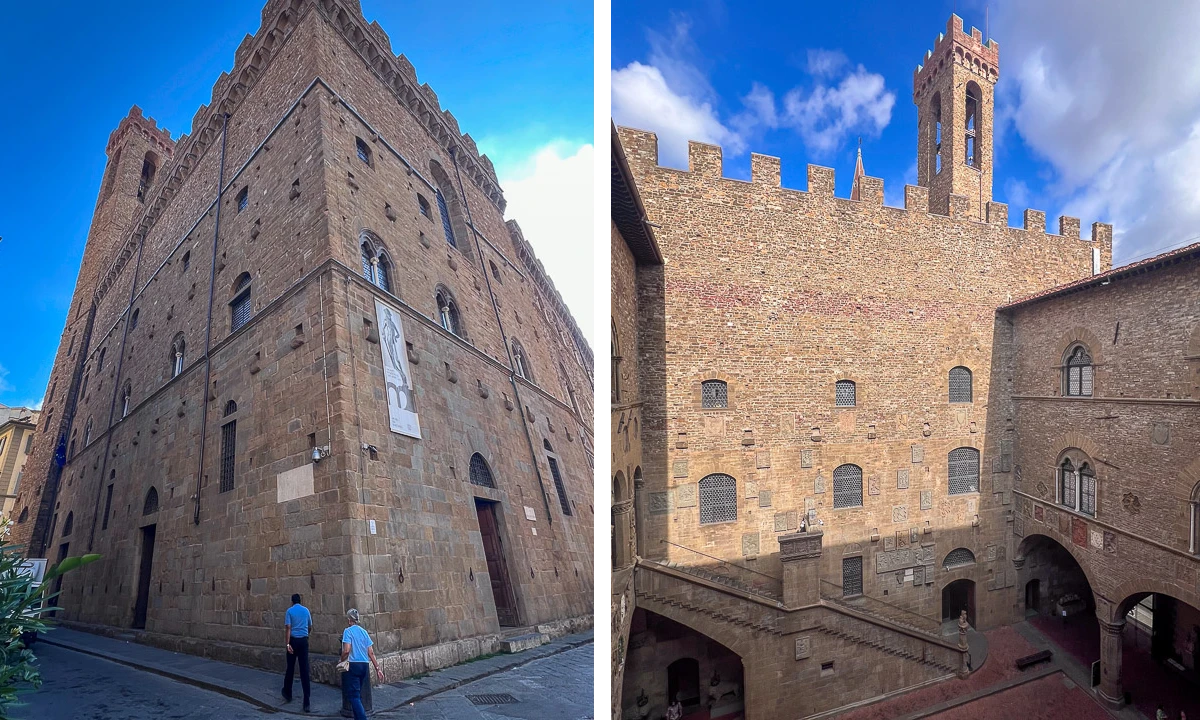
The architecture, and especially the beautiful courtyard, is the first masterpiece you’ll come across when entering.
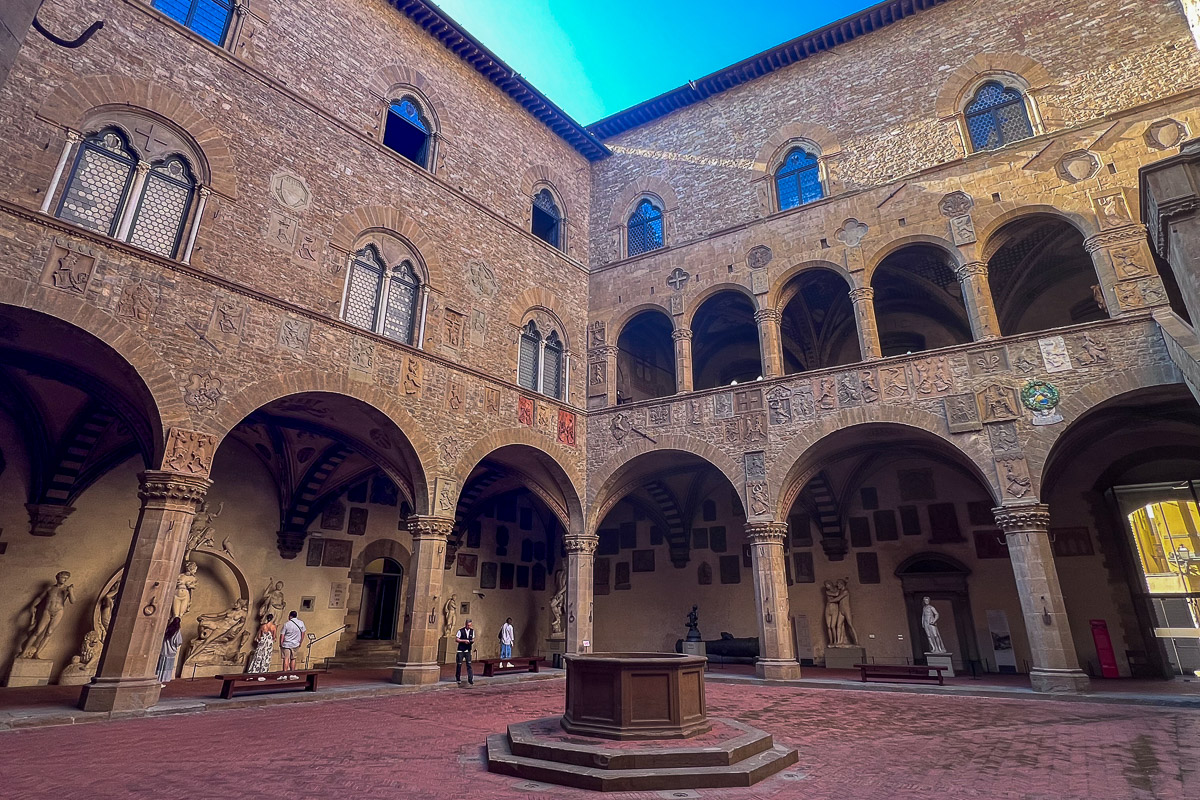
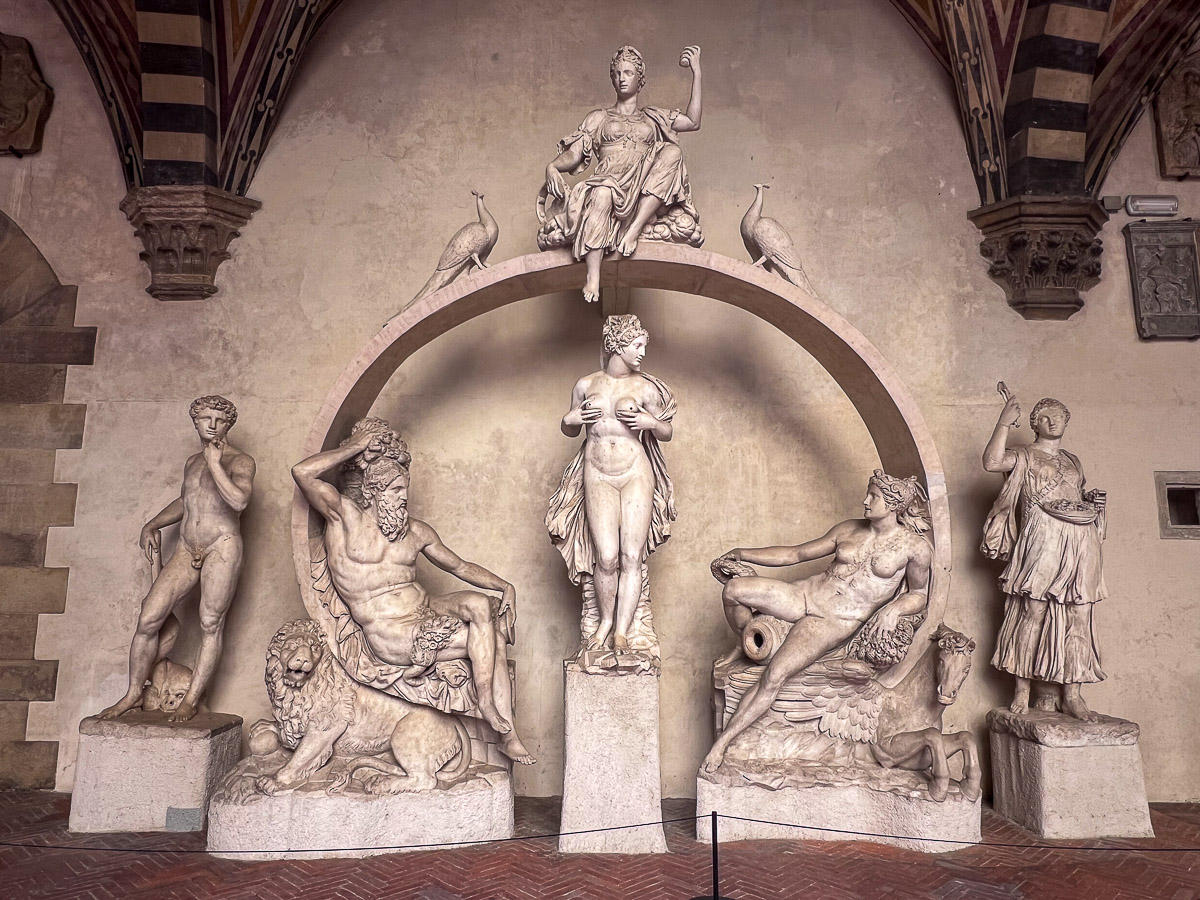
All around the courtyard are grand works of art, some never completed such as the Fountain of the Great Hall below.
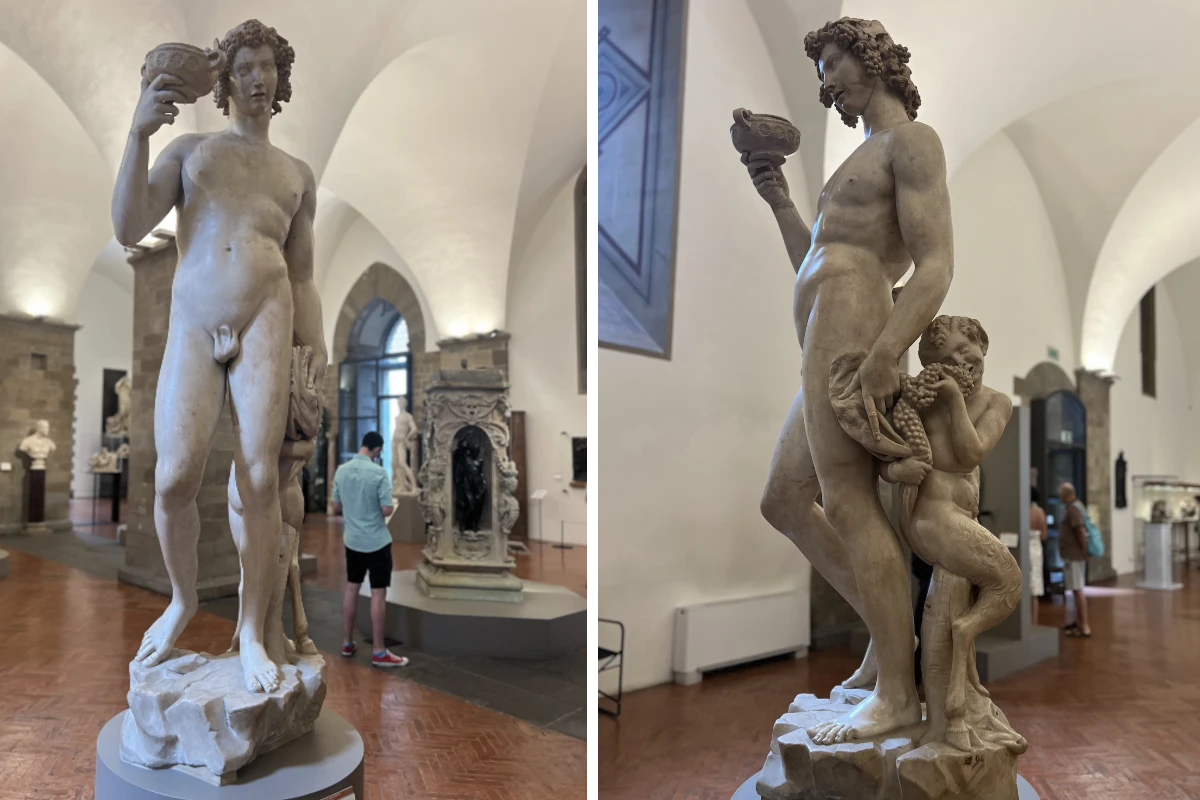
Just off the courtyard you’ll find one of the highlights of the museum in the Michelangelo Hall. One of Michelangelo’s earliest works, Bacchus, was created when he was just 21-year old! This drunken and sensual young Bacchus is a stark contrast to the other religious works in the space.
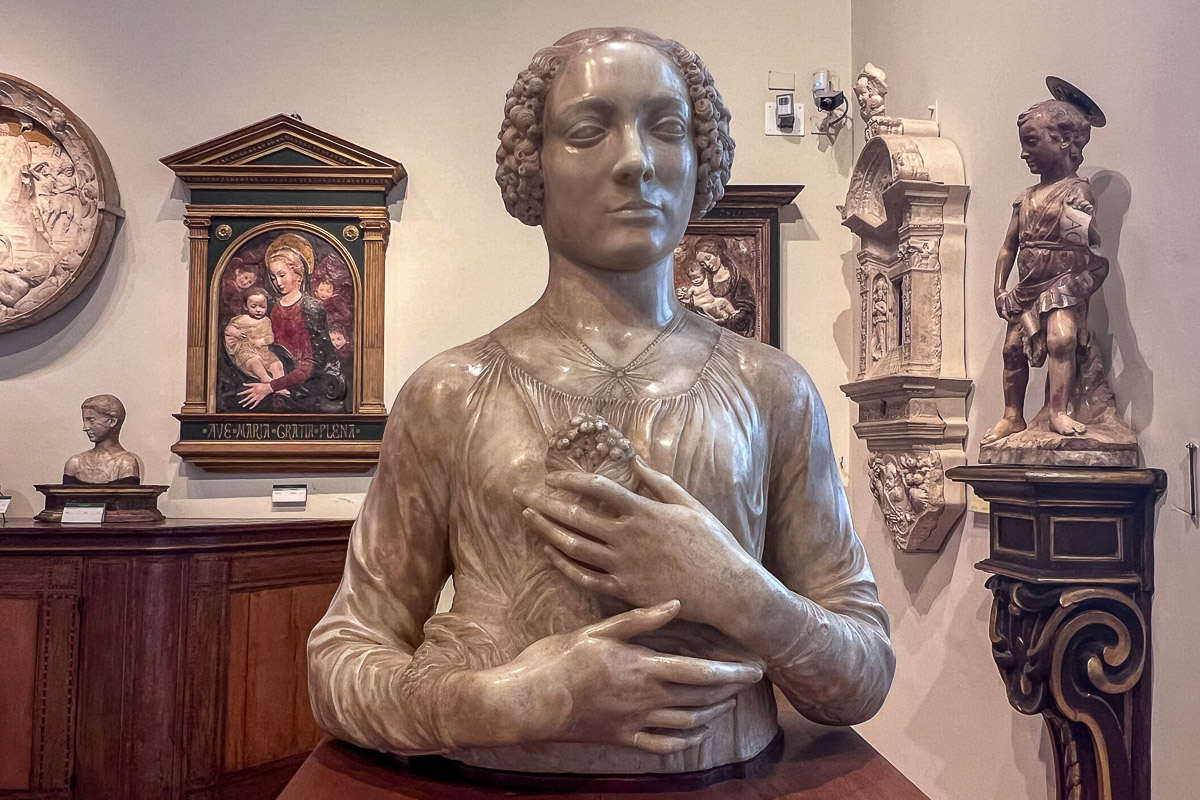
Climb the 14th-century staircase to the first floor for more treasures. The Woman with Flowers captivated me with her realistic hands, the ruffles in her dress, and her tightly curled hair – from one of the greatest sculptors and painters of the 15th century, Andrea Verrocchio.
Now for works of art you can actually buy, I found the prettiest pottery store just around the corner from the Bargello.
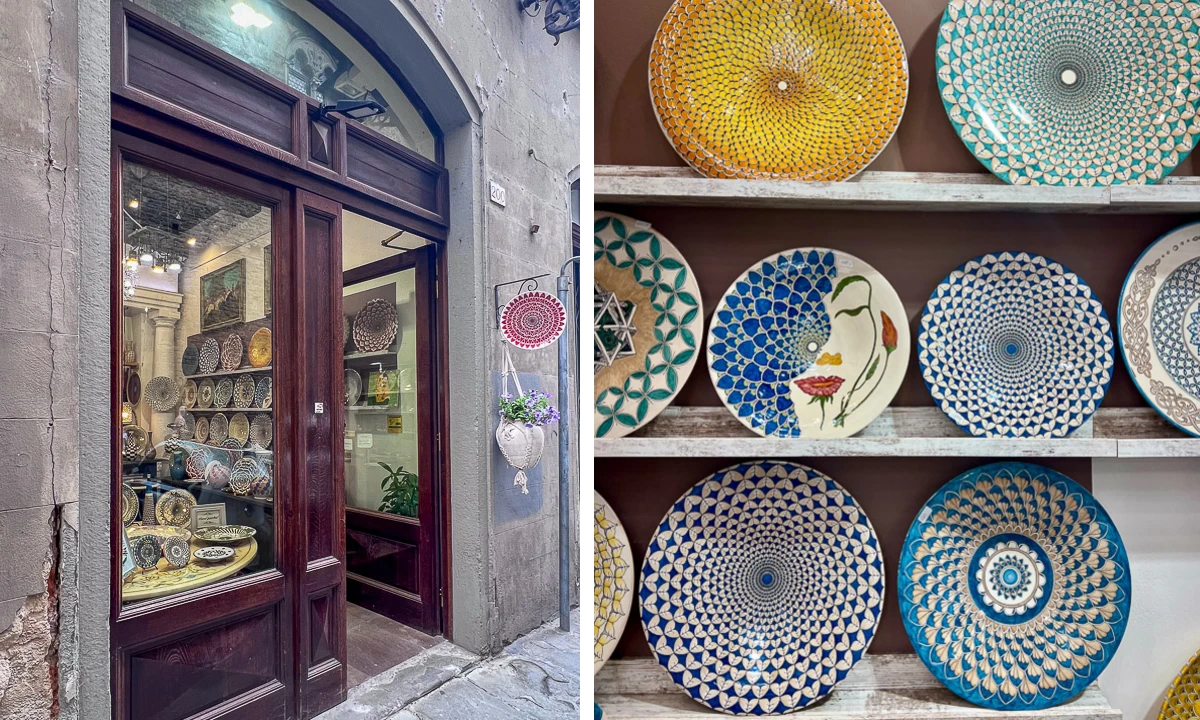
Stone 985° is run by a husband-wife duo, both ceramic artisans, who create stunning decorative plates, vases, and lamps right here in their shop.
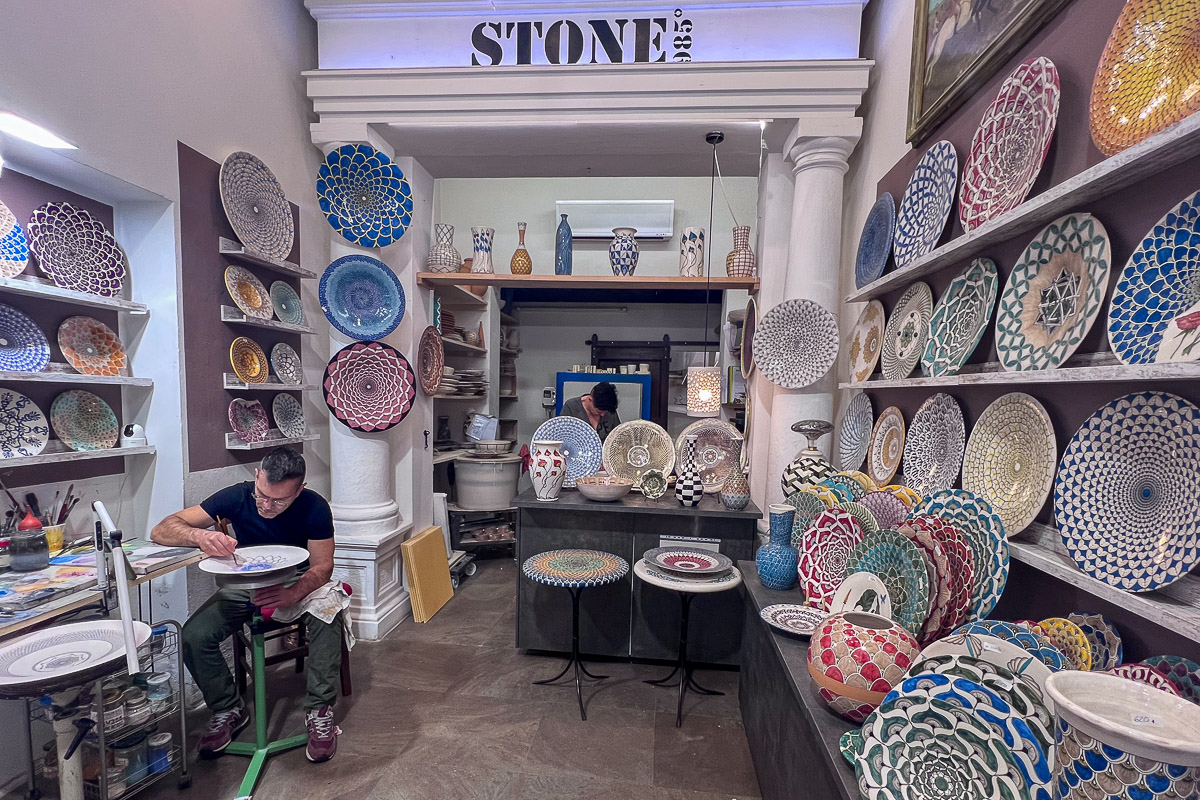
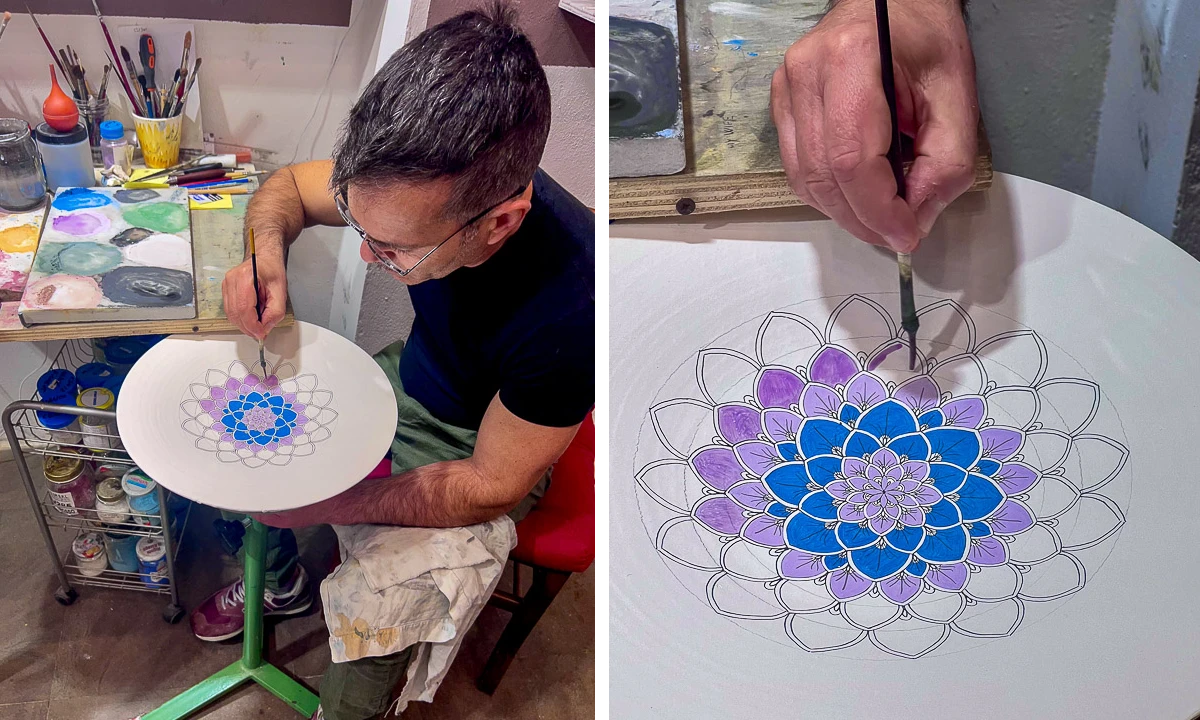
Using an ancient ceramic art form that originated in Italy during the Renaissance (called majolica), they hand-paint intricate designs with fine brushes which transform dramatically after being fired (at 985°C – hence the name). The result – gorgeous, colorful and refined decorations you’ll regret not bringing back home. I bought two which are hanging on my wall and make me smile every time I walk by…
Across the river to San Niccolò
Directly opposite Santa Croce is the historic neighborhood of San Niccolò. A mere 5-minute walk across the Ponte alle Grazie will bring you straight at the entrance of this small village and a quieter side of Florence.
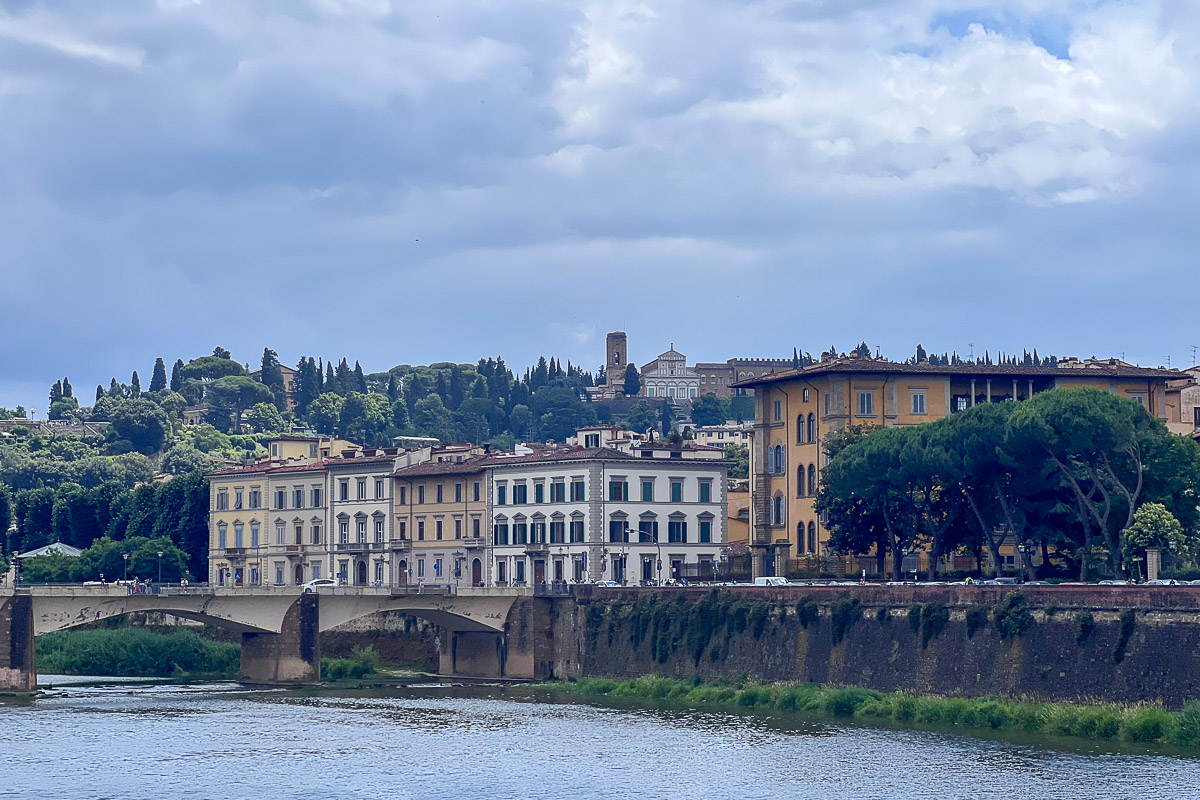
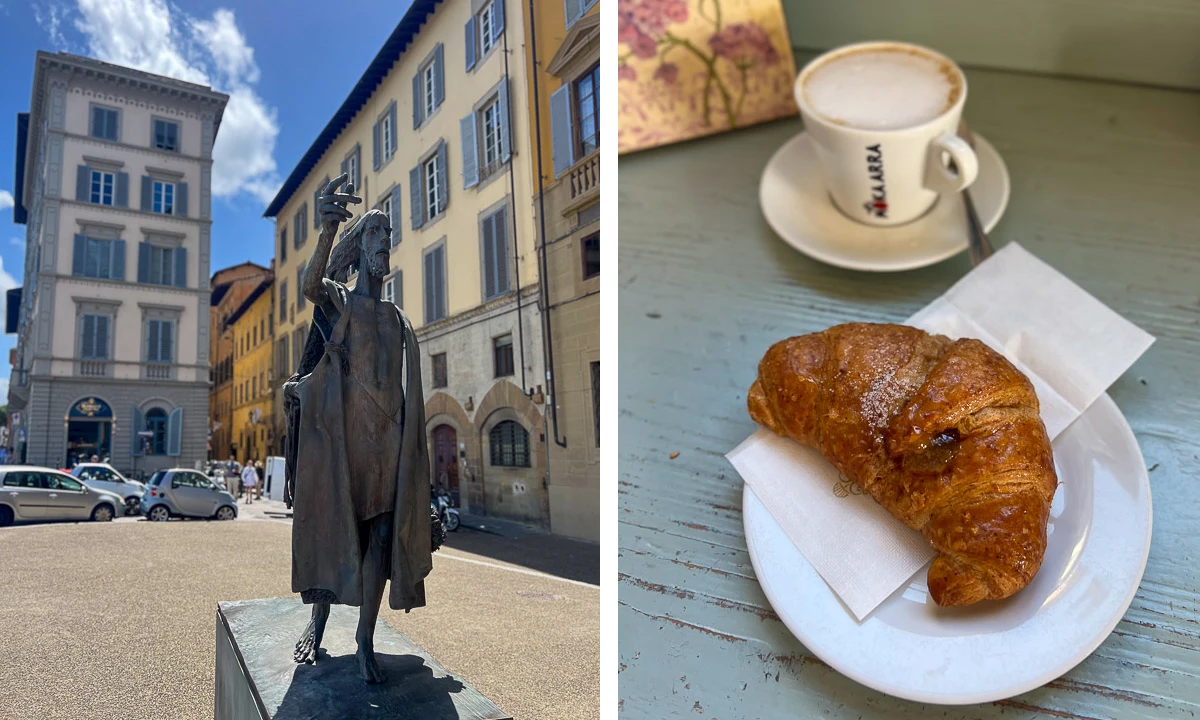
The stretch along the riverbank has laidback cafes and restaurants with many locals enjoying the sun and views from terraces. A quick stop at Madeleine for a sweet offered a different kind of croissant which I loved – “integrale – miele croissant” so essentially whole wheat and honey, yum!
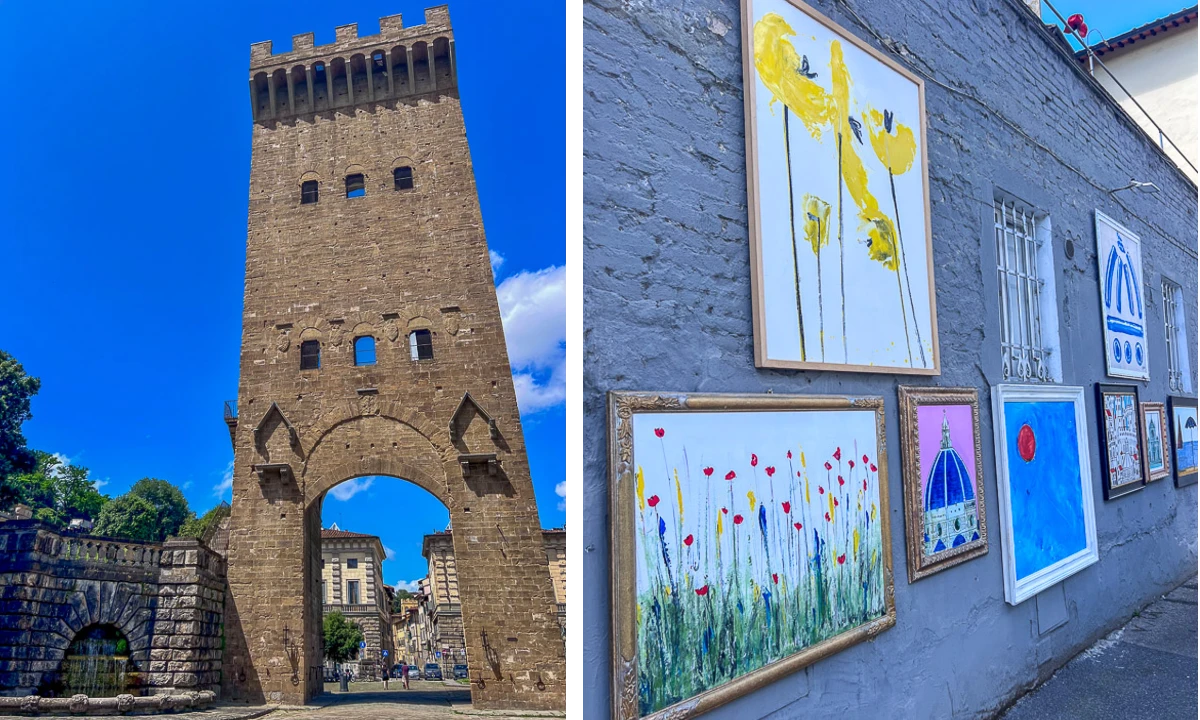
The Torre di San Niccolò dominates the skyline – all that remains of the old defensive walls of Florence from the 14th century. It sets the tone for the medieval feel of the area with high walls and artisan studios lining the streets.
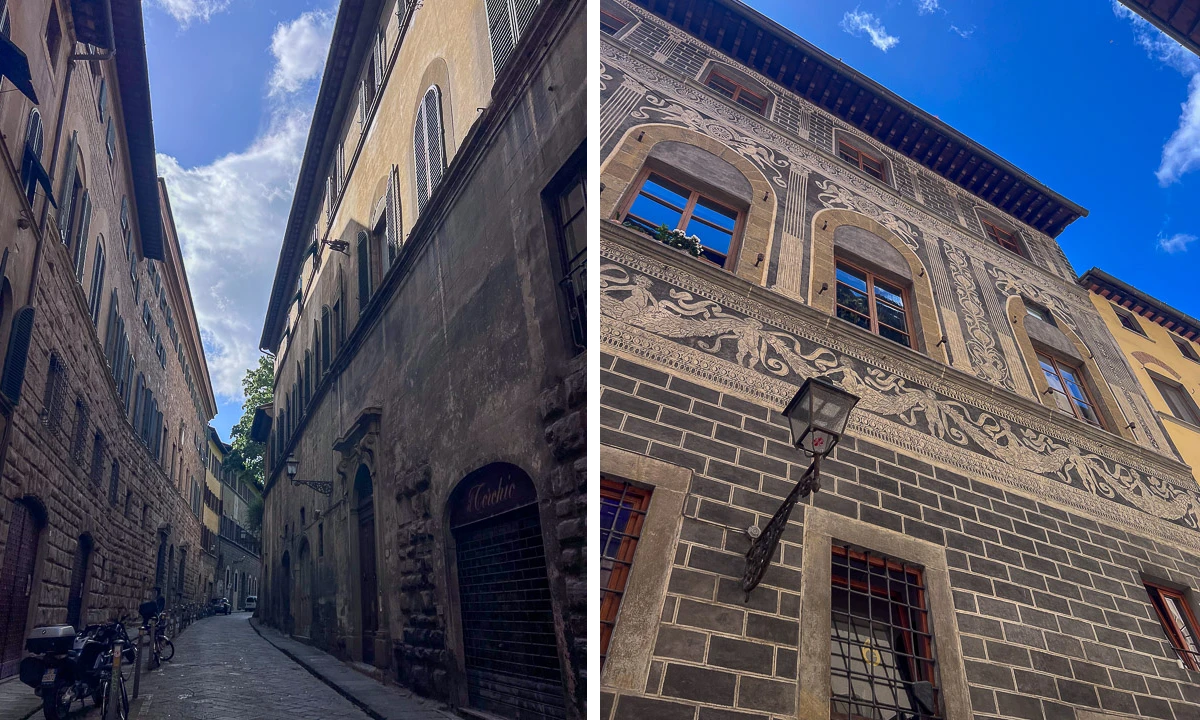
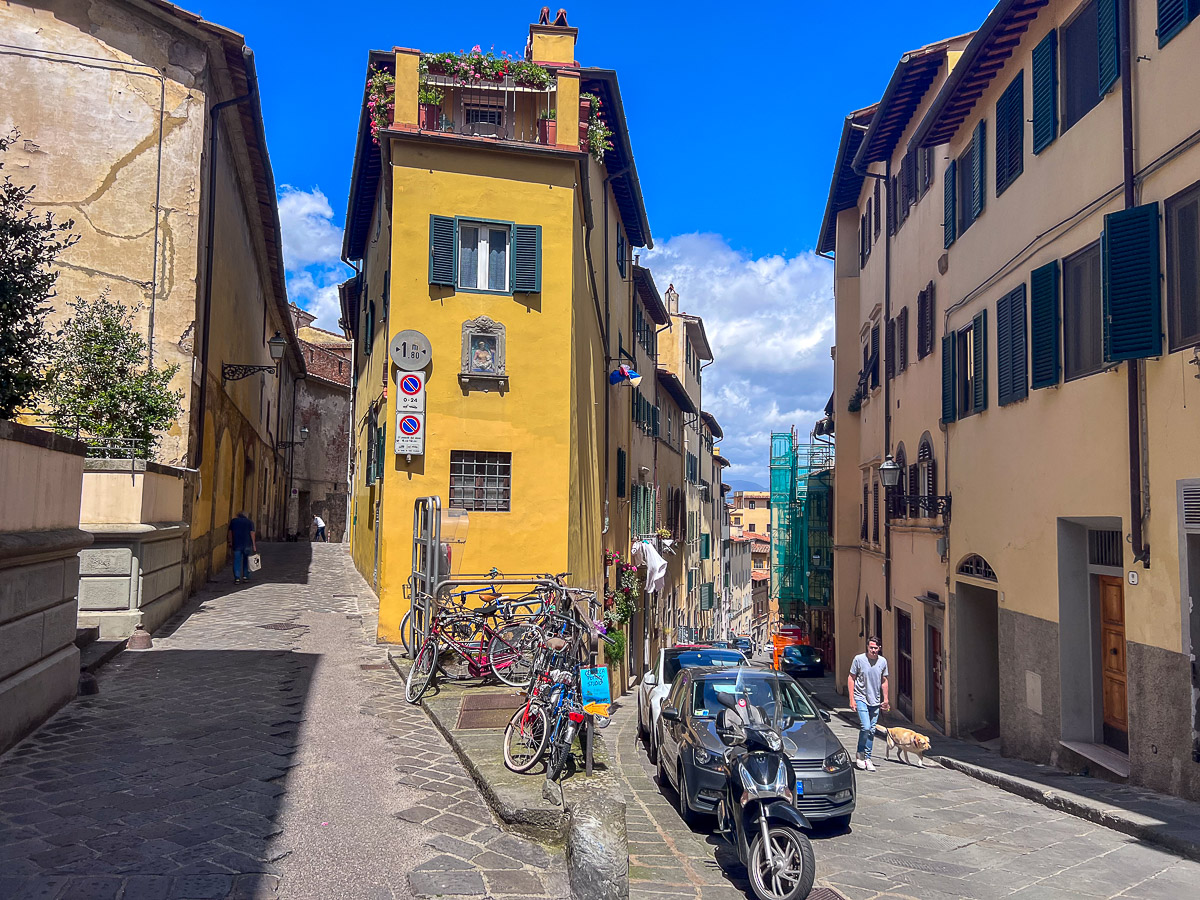
As you start climbing up and leaving the river behind, it’s almost like stepping into a time portal. Walk along Via di San Niccolò and get immersed in this magical atmosphere, elegant villas and traditional workshops appearing as they did for centuries.
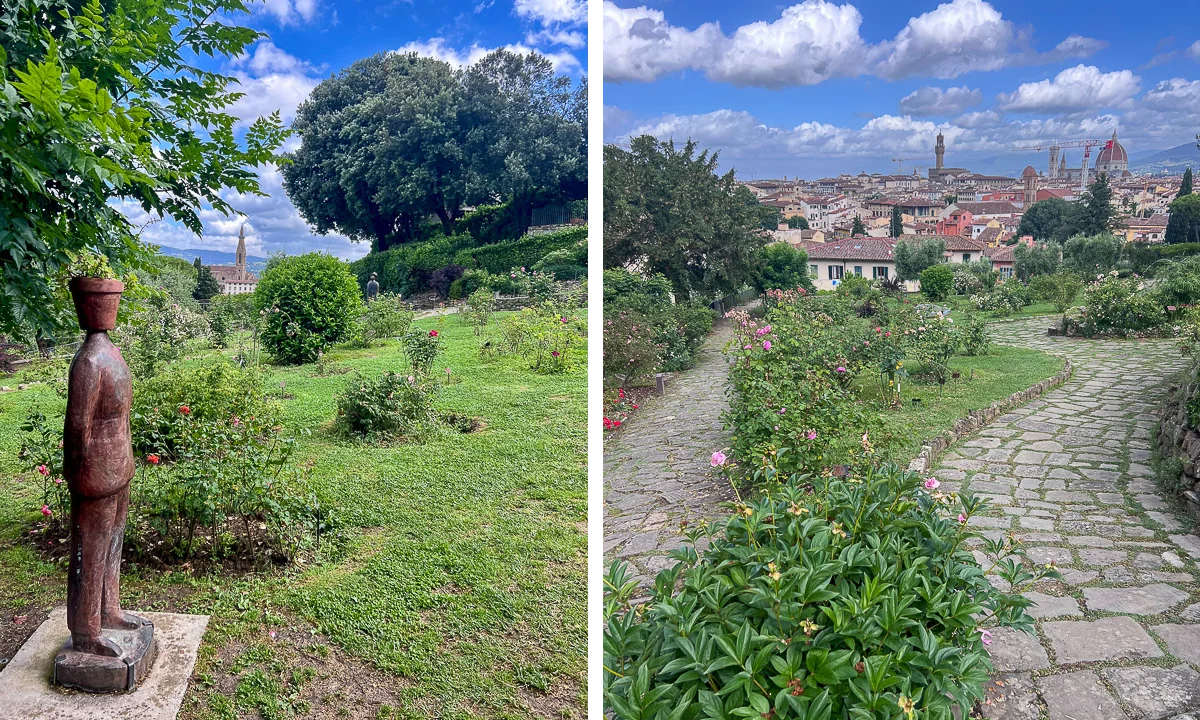
Few visitors know that hidden in the middle of San Niccolò lies a secret place – the Rose Garden. It’s a true oasis with over 350 species of roses (at its most enchanting in the spring), sculptures by the Belgian artist Jean-Michel Folon, and lovely views of Florence often all to yourself.
Piazzale Michelangelo
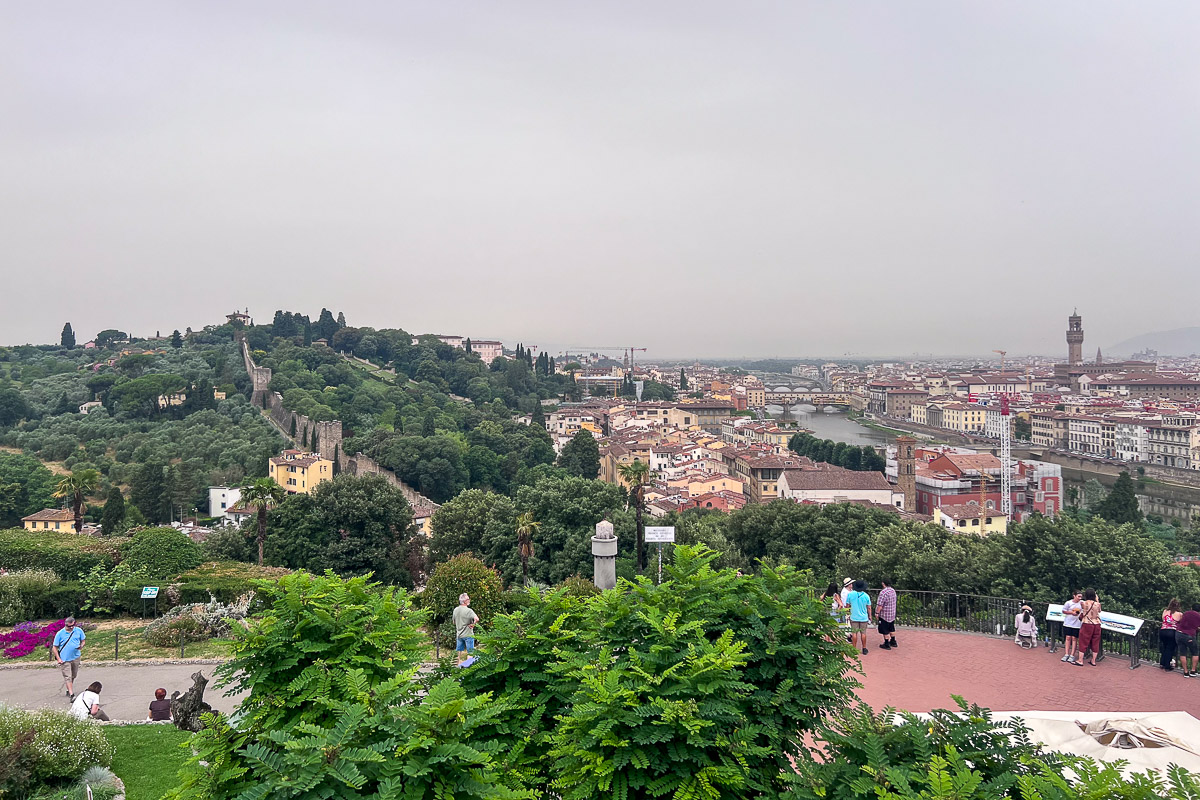
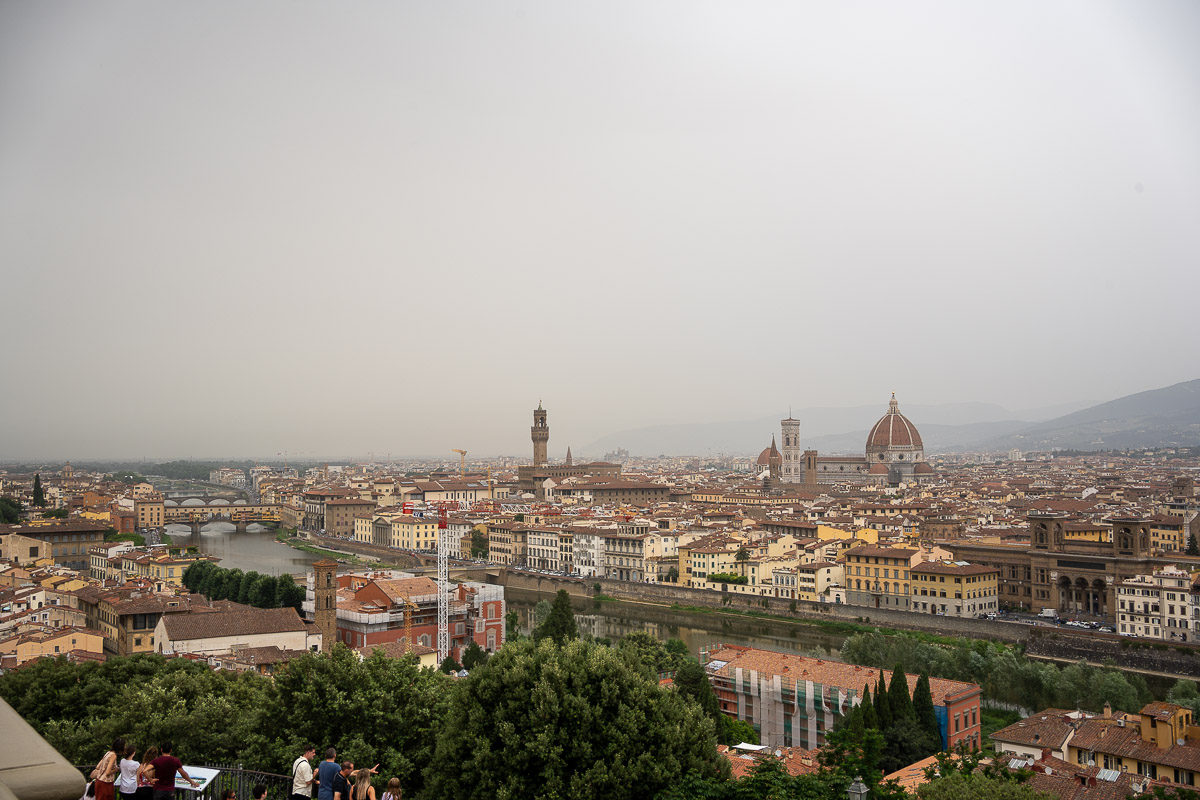
Keep going up through the garden and you will reach Piazzale Michelangelo and what many consider the finest viewpoint of Florence. The square has a few copies of Michelangelo’s statues but most gather by the balconies to take in the magnificent panorama.
San Miniato al Monte
For even more expansive views, stroll five more minutes up the street…
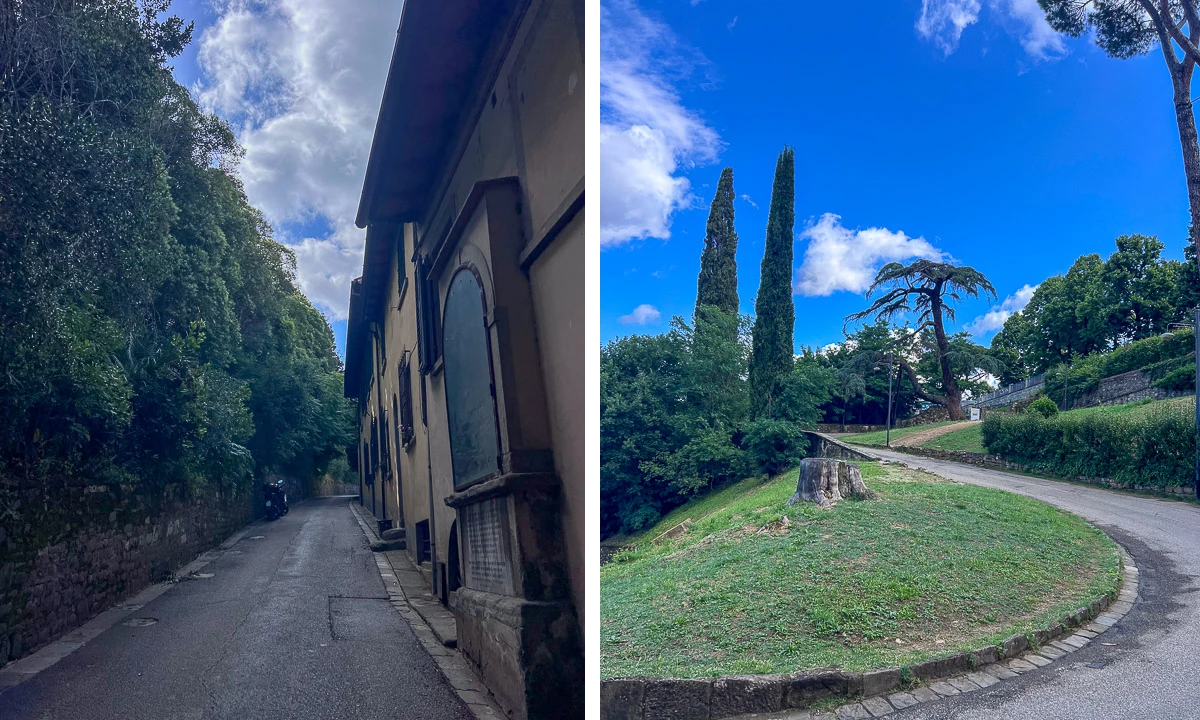
… to find the beautiful San Miniato al Monte church.
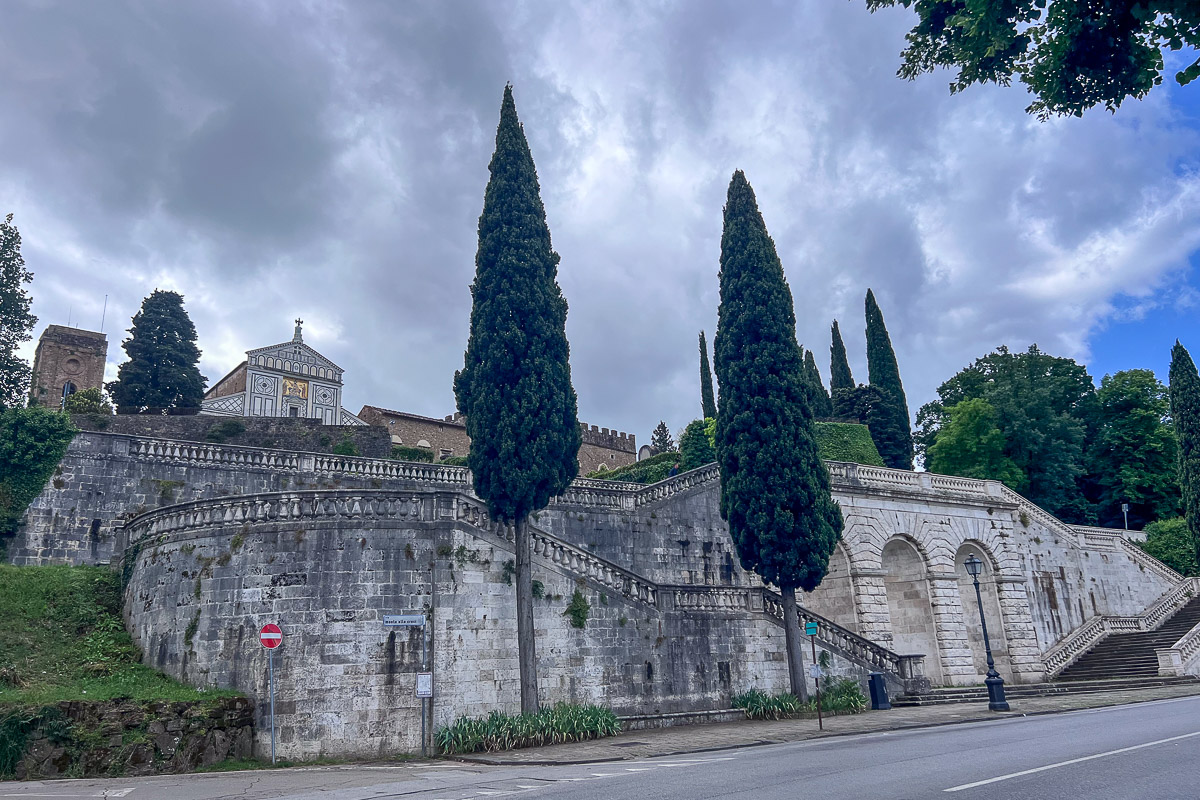
Part of an abbey that sits above the Piazzale Michelangelo, you’re now at one of the highest points in Florence with splendid views of the historic center and surrounding hills.
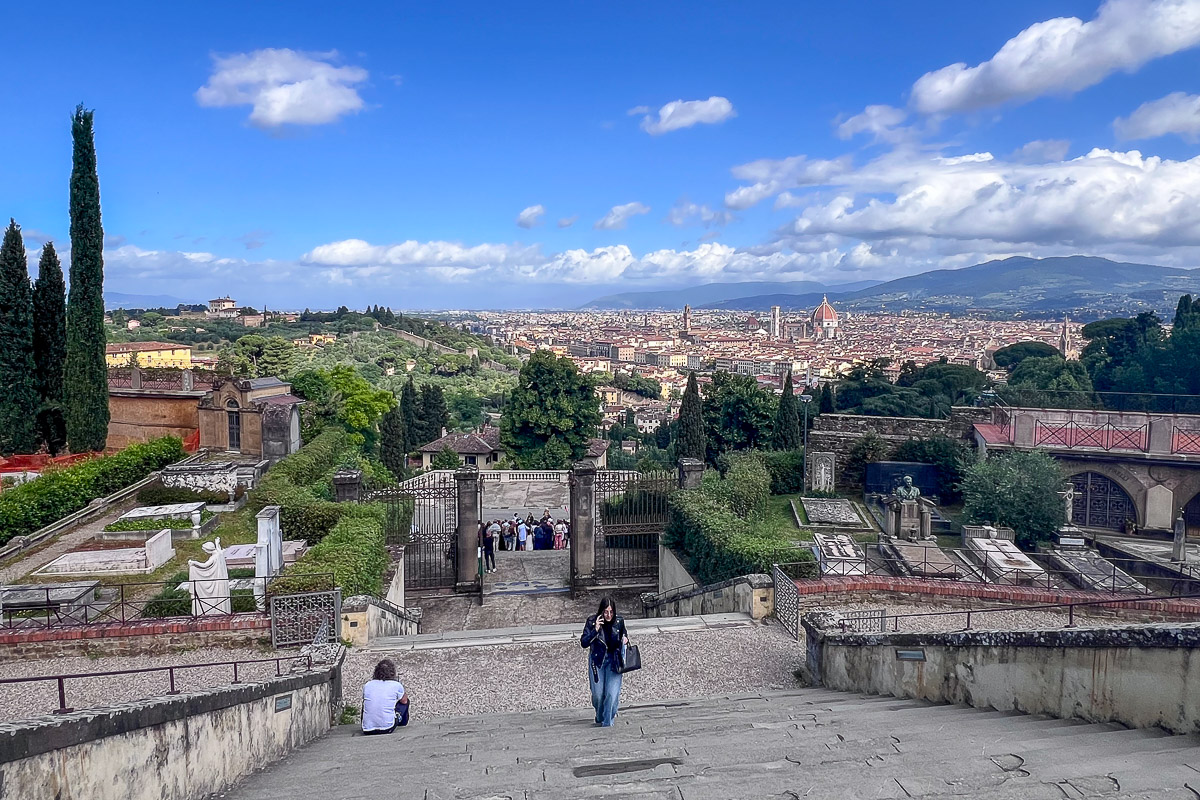
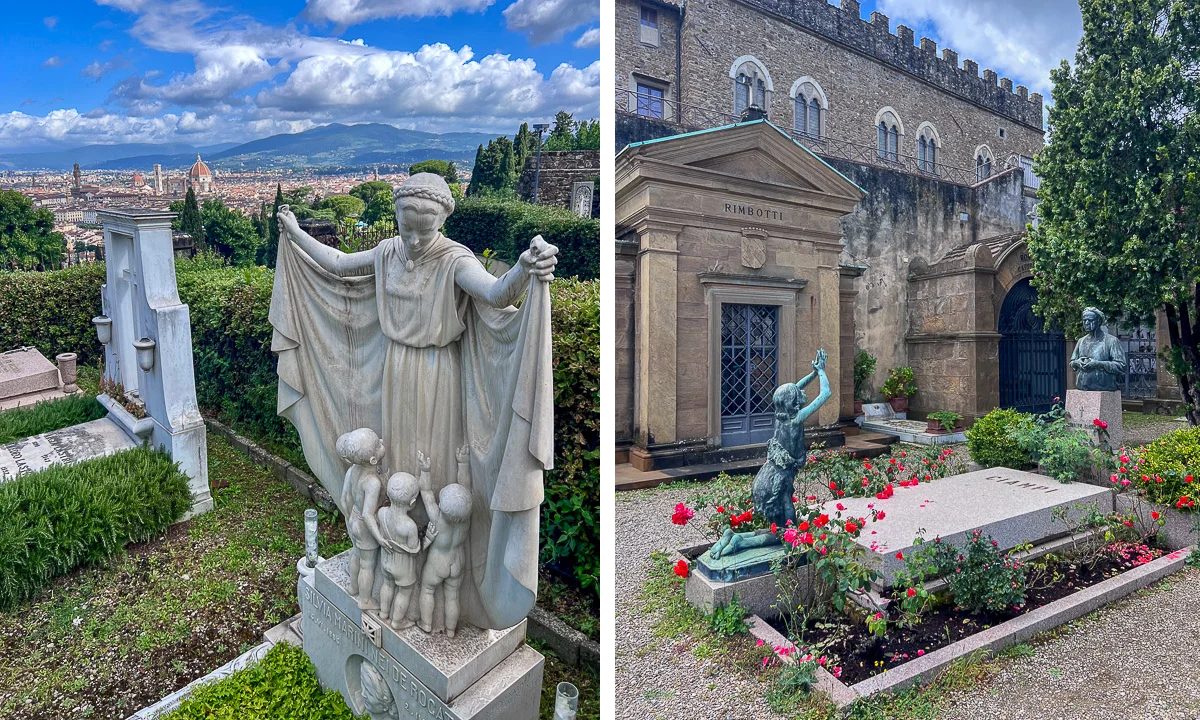
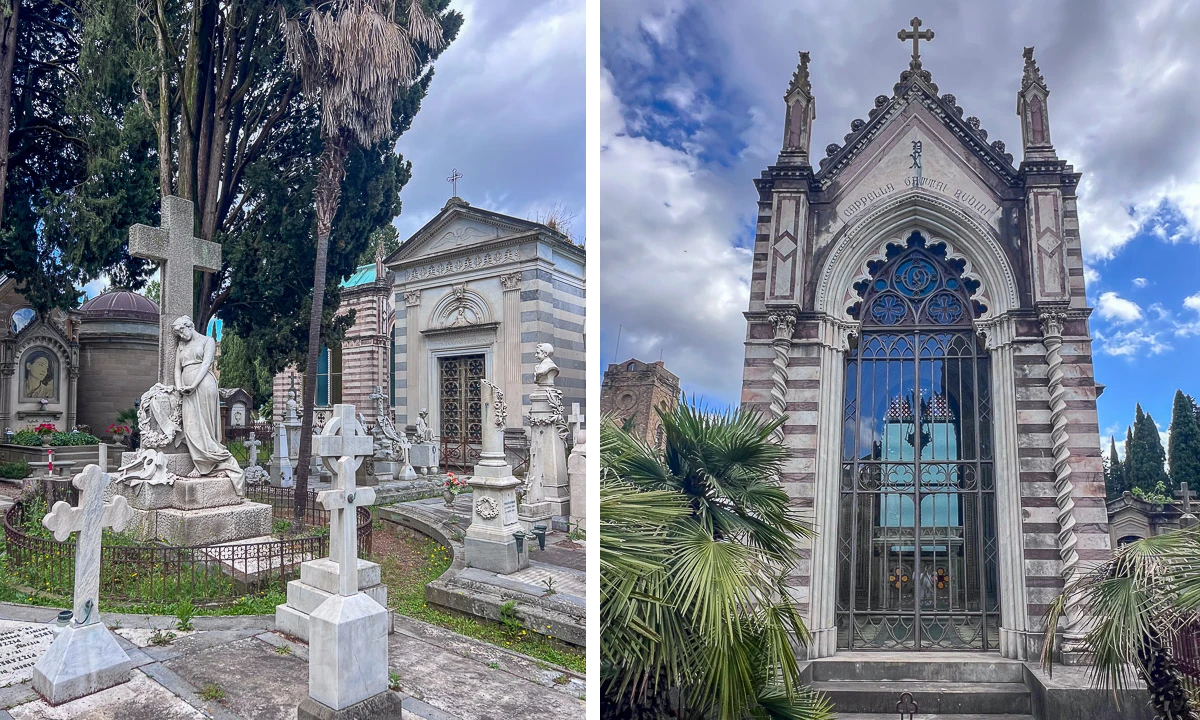
Break your climb by stopping to admire the beautiful tombstones in front of the church.
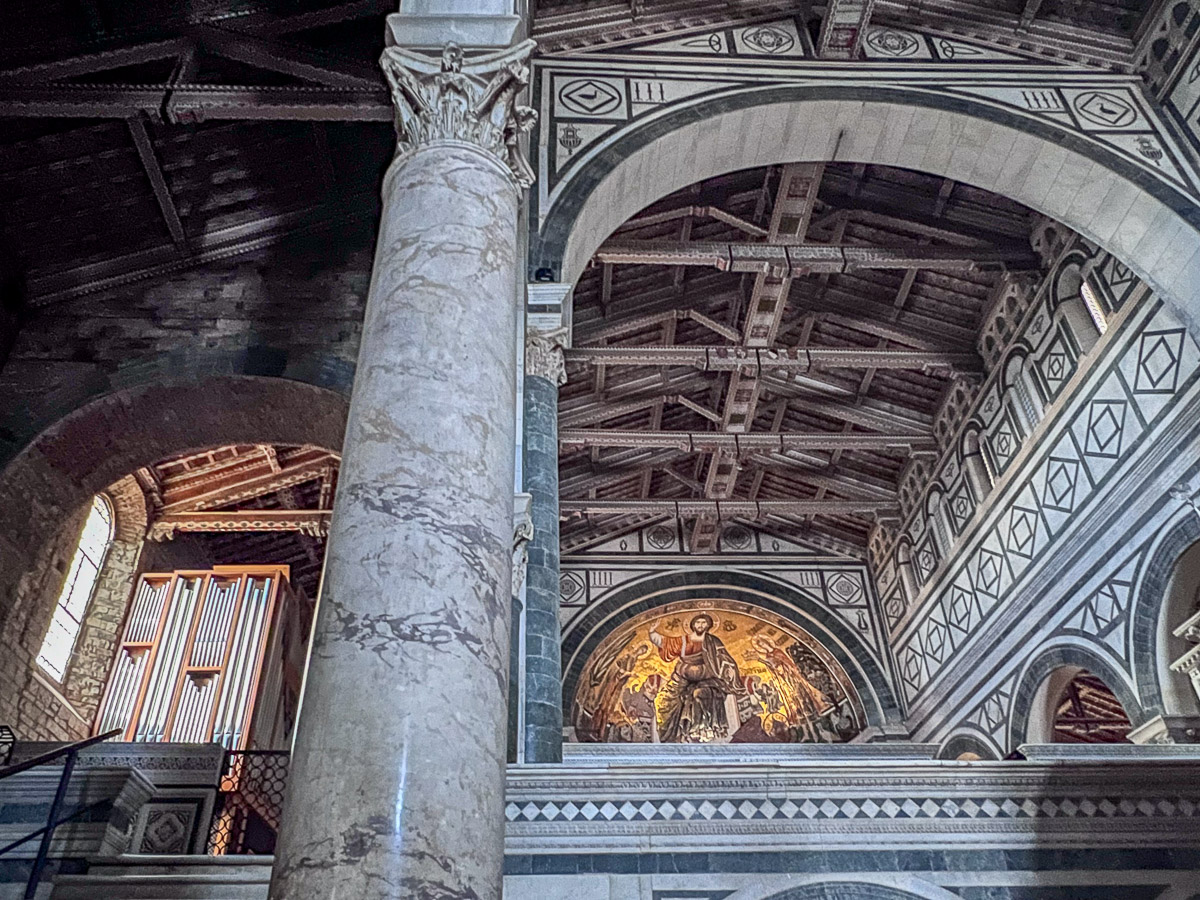
Gorgeous inside and out, San Miniato al Monte has been described as one of the finest Romanesque structures in Tuscany and one of the most scenic churches in Italy (and it’s nearly 1,000 years old!).
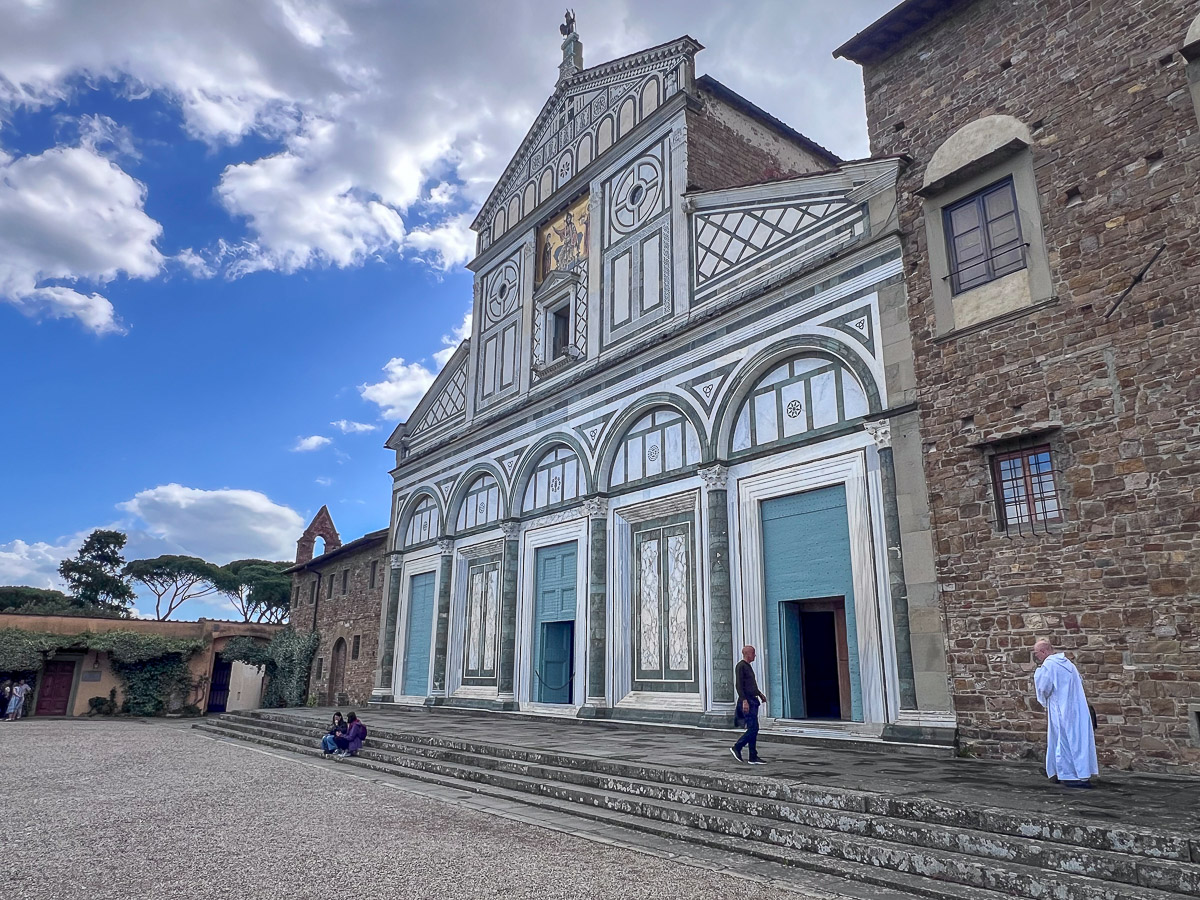
There’s marble everywhere and beautiful frescoes, of course.
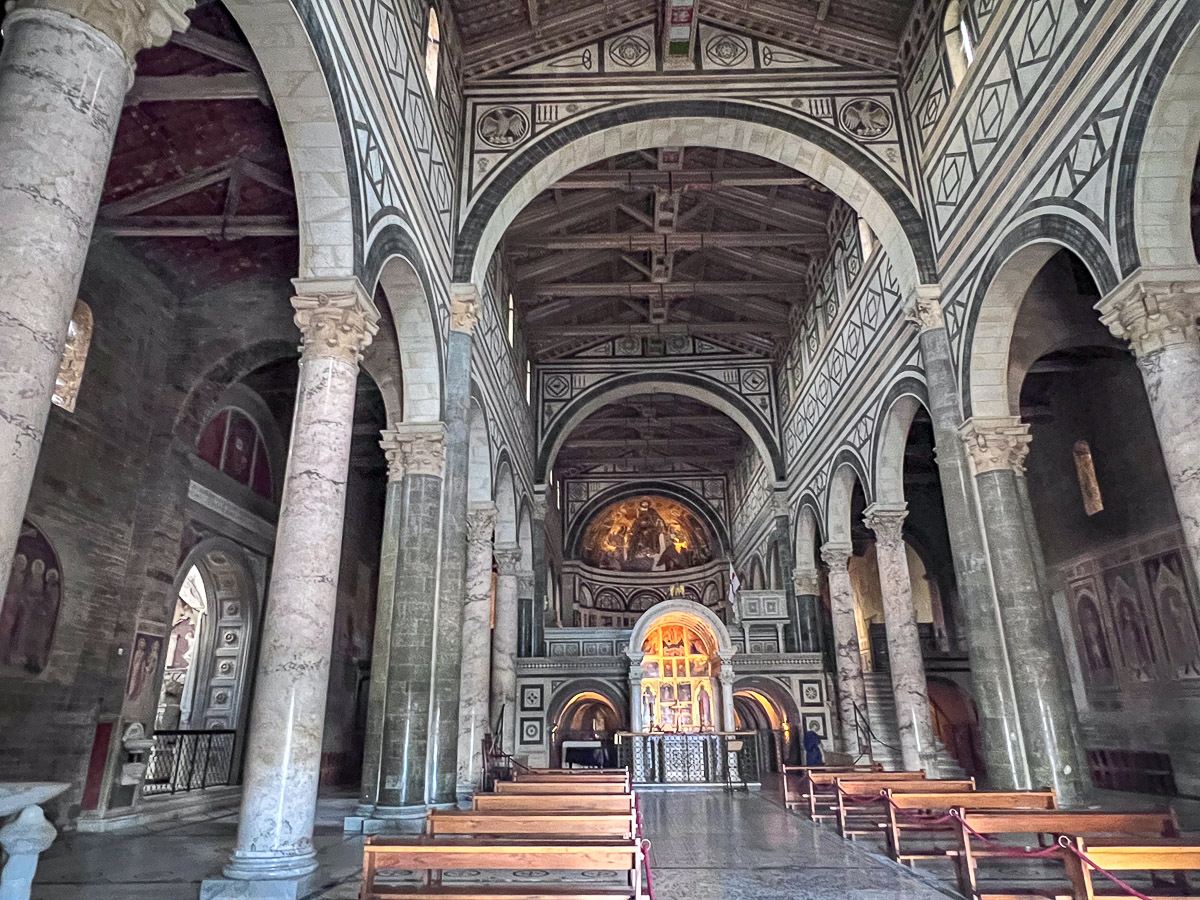
Unique to this church compared to all the ones you would have already seen in Florence is the Romanesque pulpit and impressive mosaic of Christ at the center.
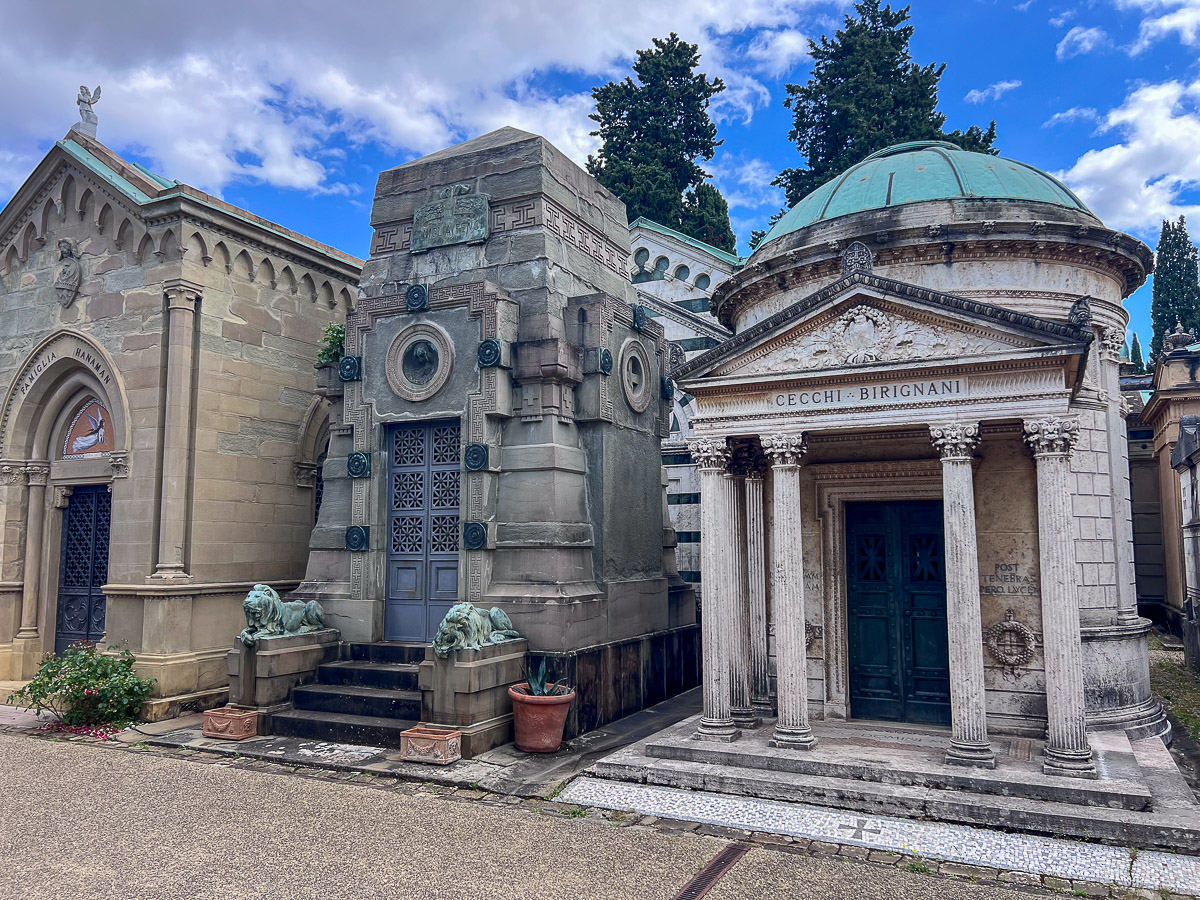
Don’t miss the cemetery behind the church with beautiful tombs of notable men, including Carlo Collodi, the author of Pinocchio.
Dinner in Santa Croce
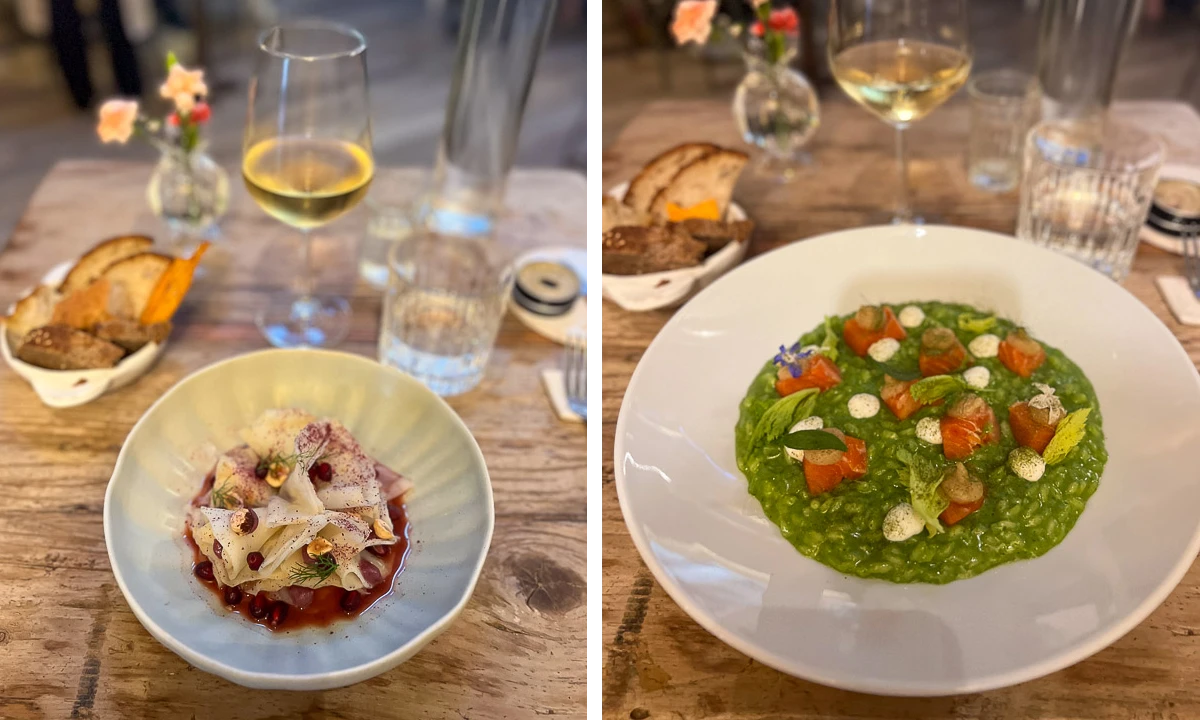
Spend the evening back in lively Sant’Ambrogio where just north of the market you’ll find Nugolo. The intimate and warm restaurant does farm-to-table with a modern touch and a sense of adventure. The open kitchen, abundant flowers and plants, and soft lighting make you feel like you’re in a friend’s lovely home, and you won’t want to leave.
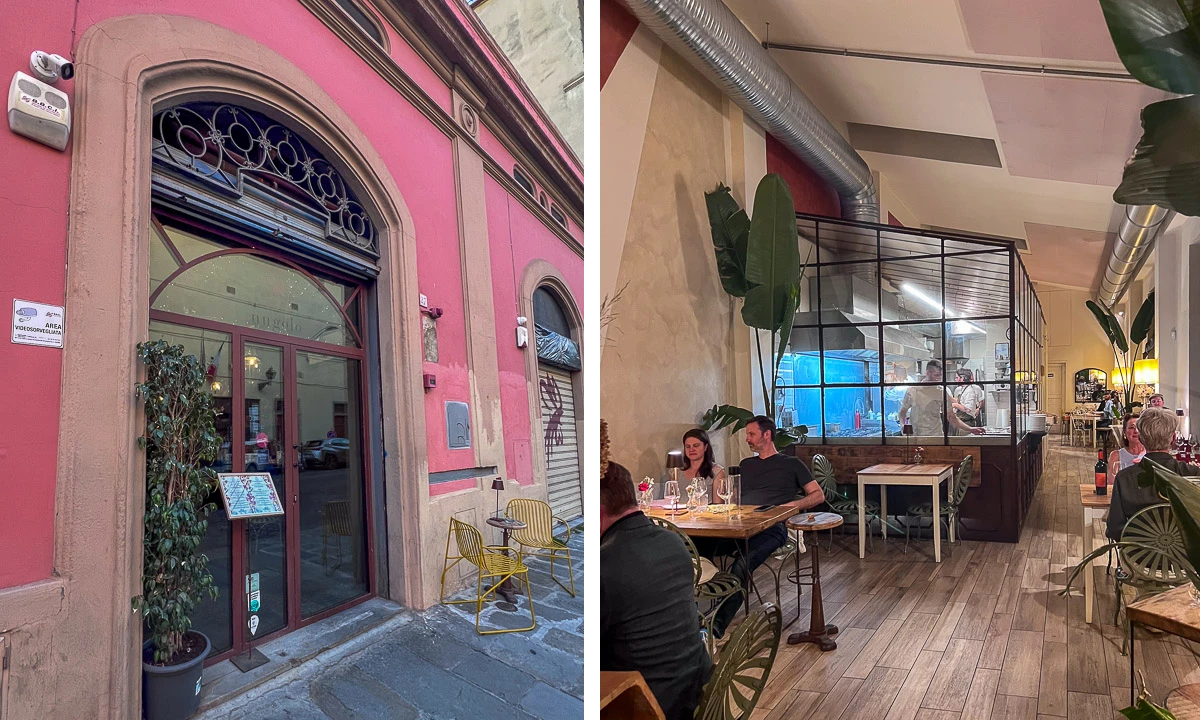
My starter of Carpaccio of celeriac, hazelnuts, pomegranate and red onion cream was followed by an equally innovative main dish of Celery leafs pesto risotto, salmon and goat milk yogurt I still dream about. Buonanotte!