Middle East Oman Travels

Between Desert and Wadis

January 16, 2016

As much fun and enlightening the cities are, if you’ve come all the way to Oman you should at least spend a day in one of the world’s largest sand deserts, which happens to be right here, a 3-4 hours drive from the capital. The huge, virtually uninhabited sea of sand that forms the Wahiba Sands (also called as the Sharqiya Sands) is a treat for the senses…as long as you avoid the blistering summer months and come accompanied by a guide since your 4WD driving skills might not be up to par with the towering sand dunes.

Wahiba Sands

The 6000 year old desert is home to the Bedu (or Bedouin), nomadic desert tribes who specialise in camel racing, and offers a glimpse into their fast disappearing traditional life.

Bedouin House - Wahiba Sands

You’ll be invited in for coffee and dates, the Bedouin hospitality being legendary.

Bedouin House - Wahiba Sands

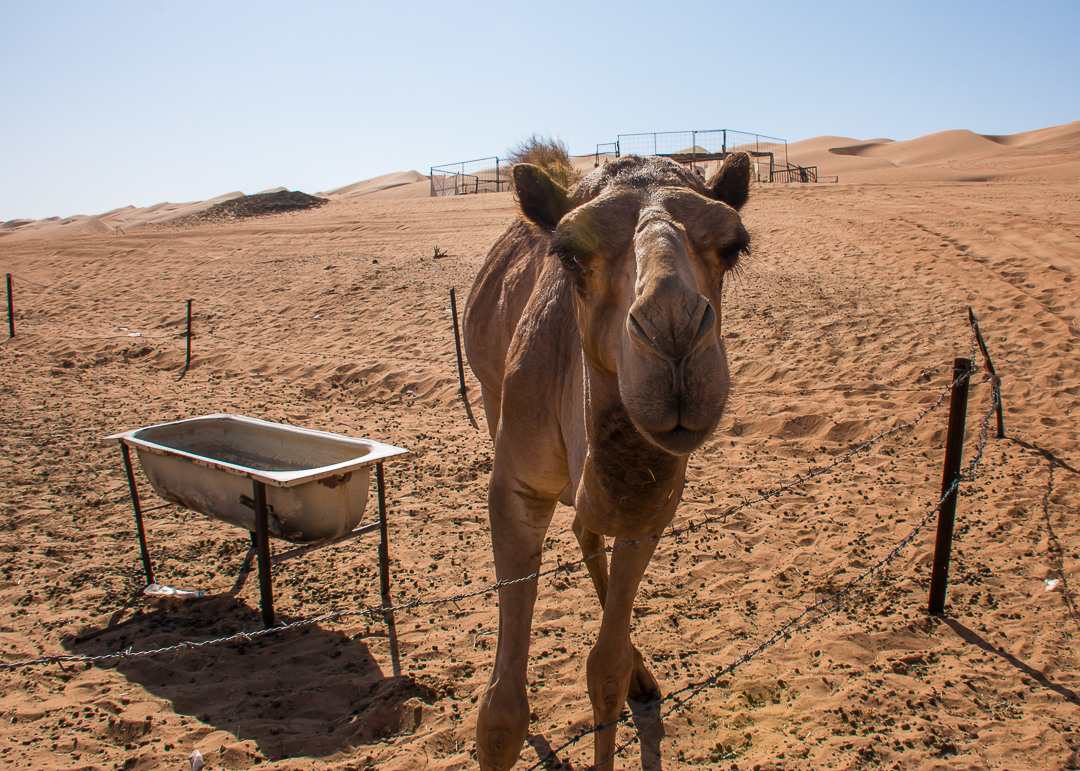
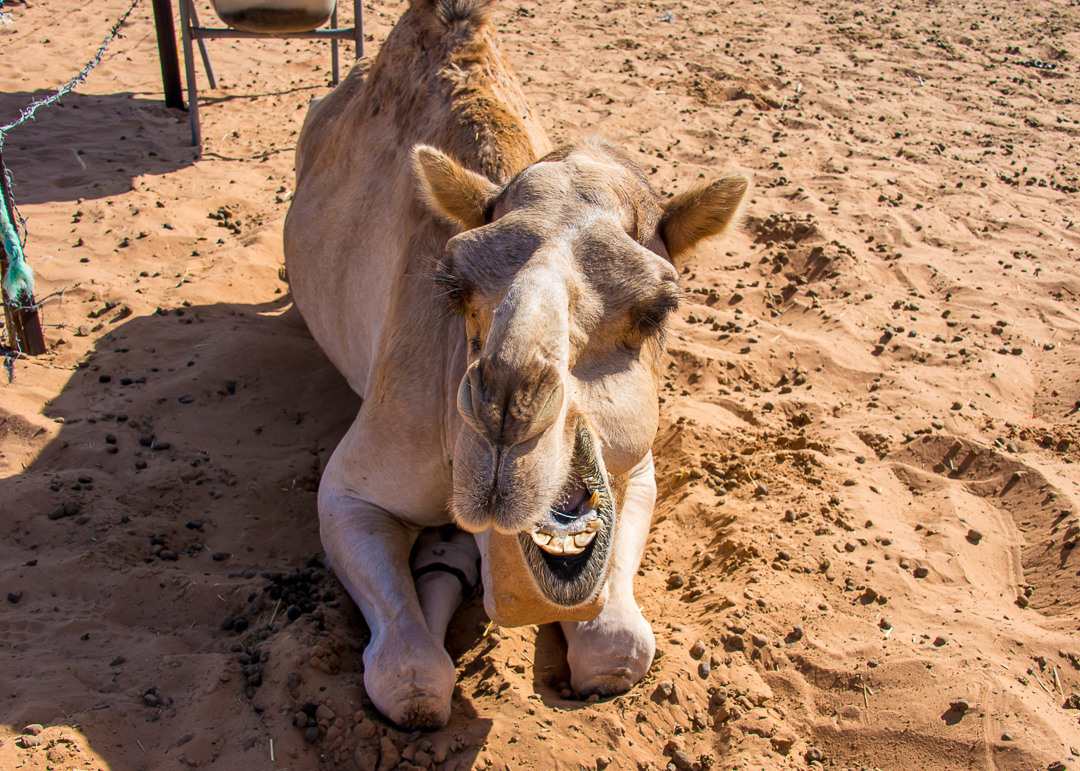
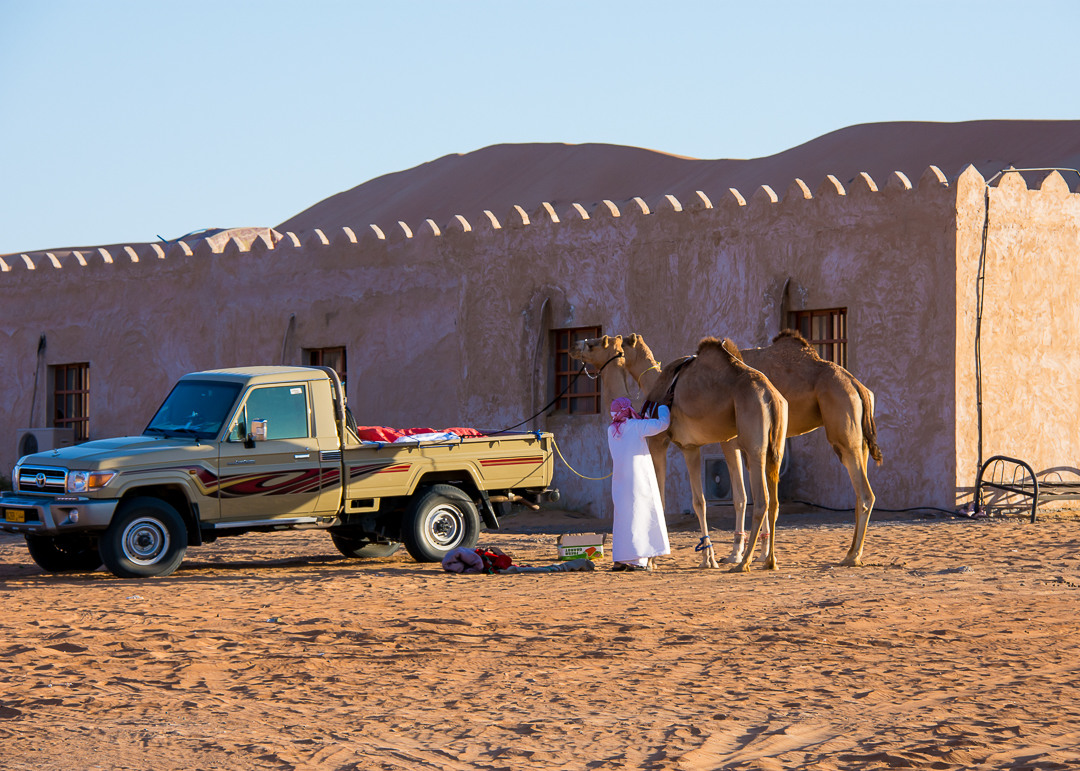
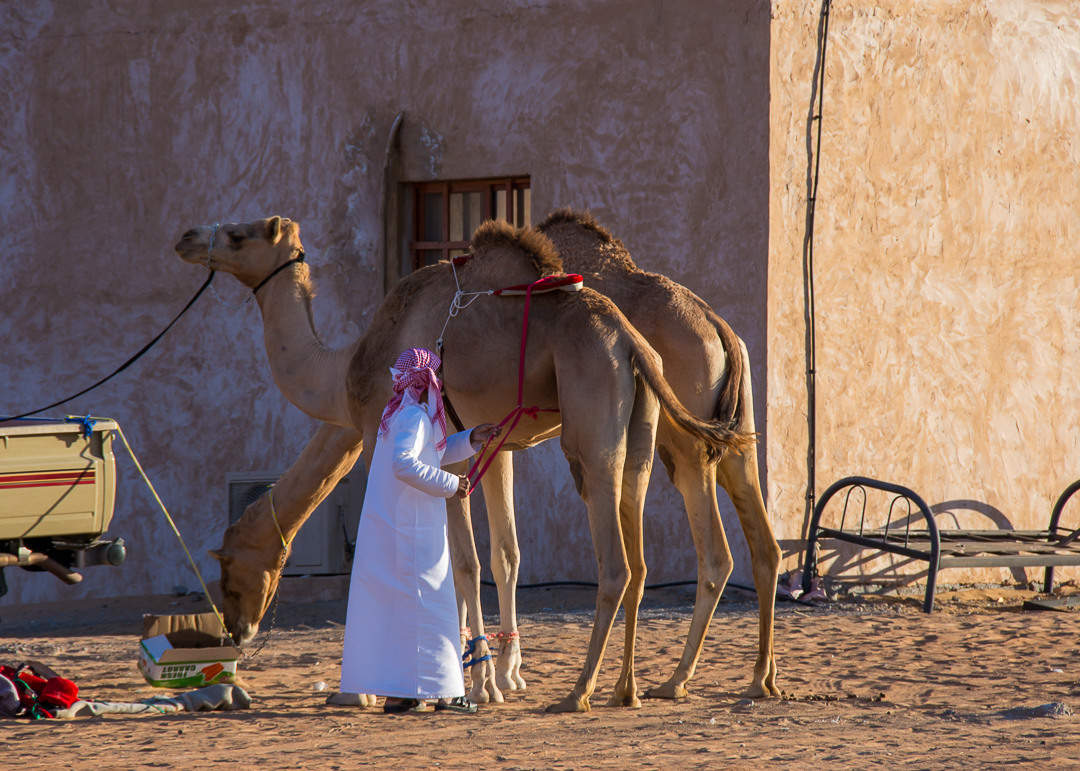
You’ll then meet with their livelihood outside…

Camel - Wahiba Sands

Camel - Wahiba Sands

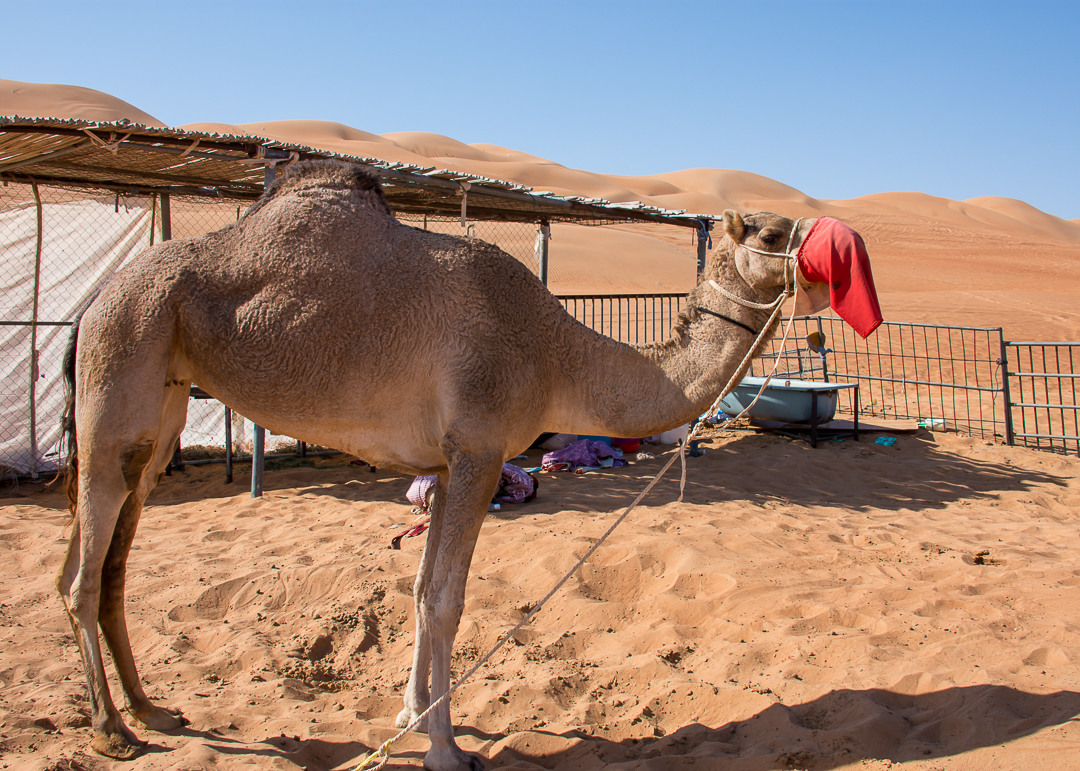
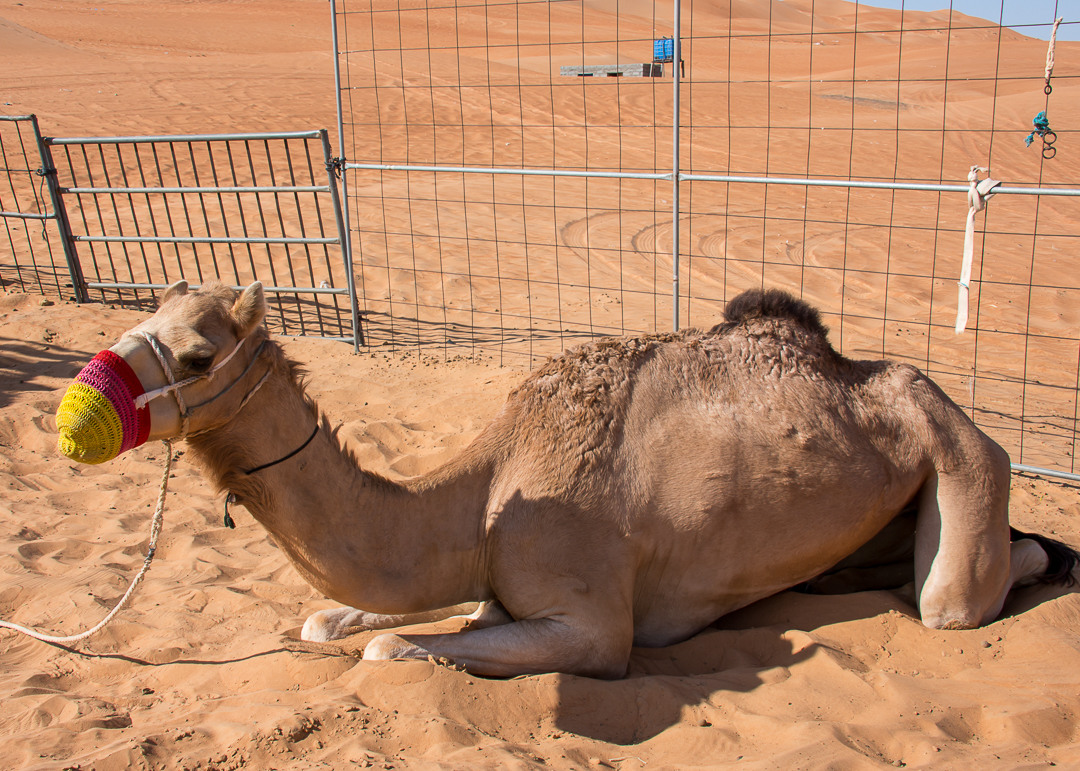
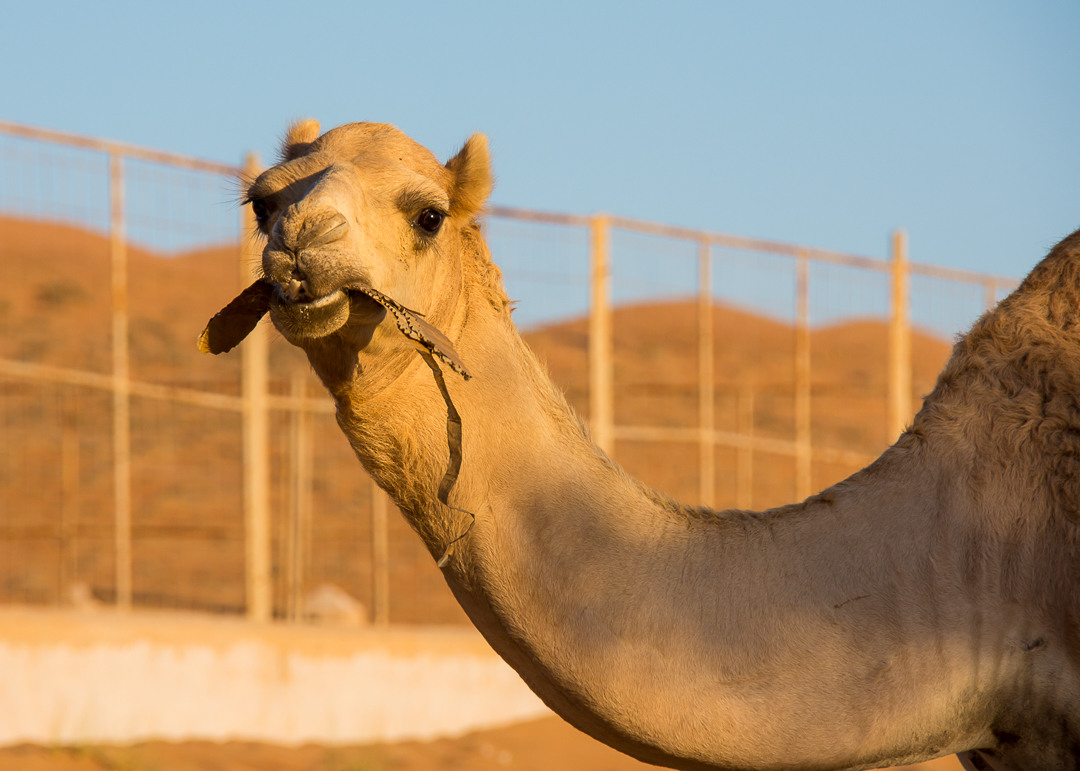
The racing camels are easily recognizable by the muzzle they wear, to prevent them from eating something they shouldn’t.

Racing Camel - Oman

Racing Camel - Oman

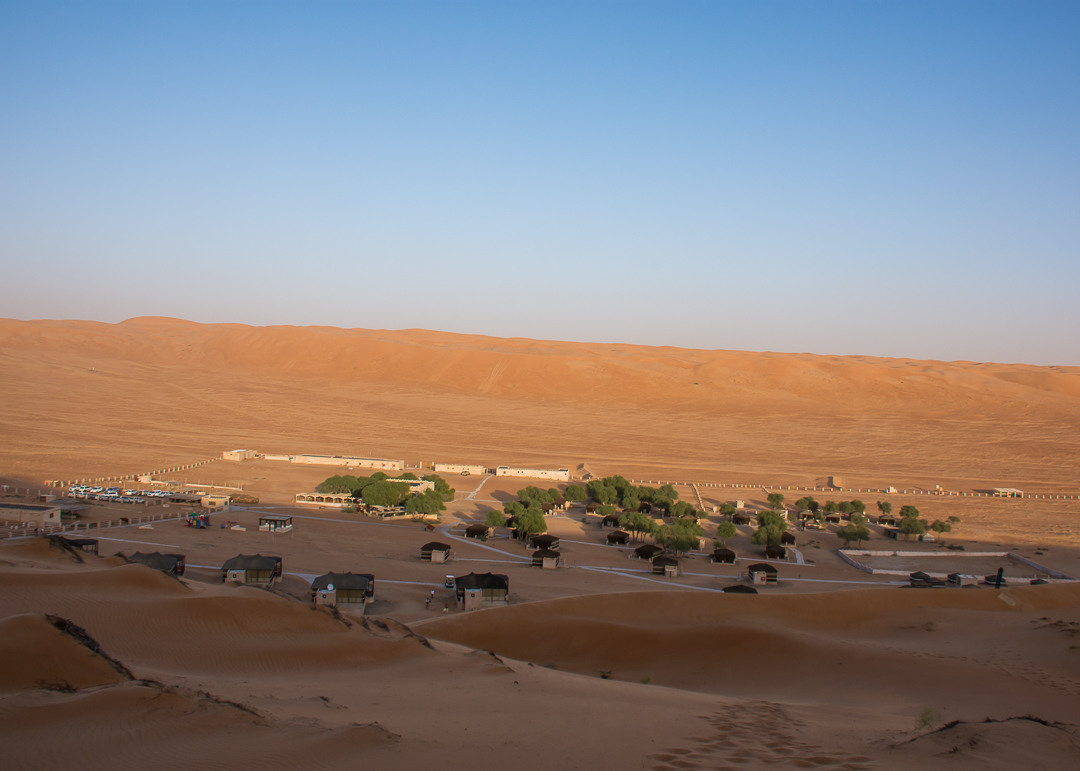
The best way to experience the desert is to stay the night at one of the few camps to truly appreciate the grandeur surrounding you, and I can guarantee it’ll be a night to remember as you fall asleep to the complete silence under the star-studded sky. There’s nothing quite like it.

1000 Nights Camp - Oman

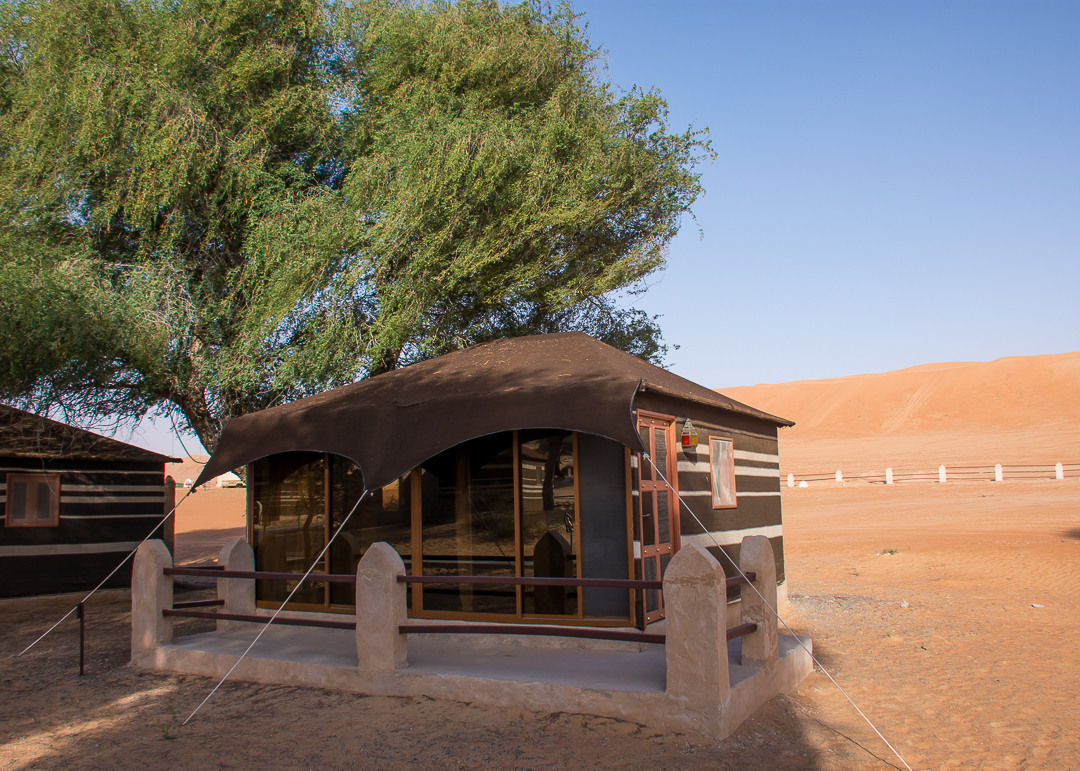
We stayed at 1000 Nights Camp and this was our ‘room’ for the night – we were ‘glamping’ to say the least!

1000 Nights Camp - Oman

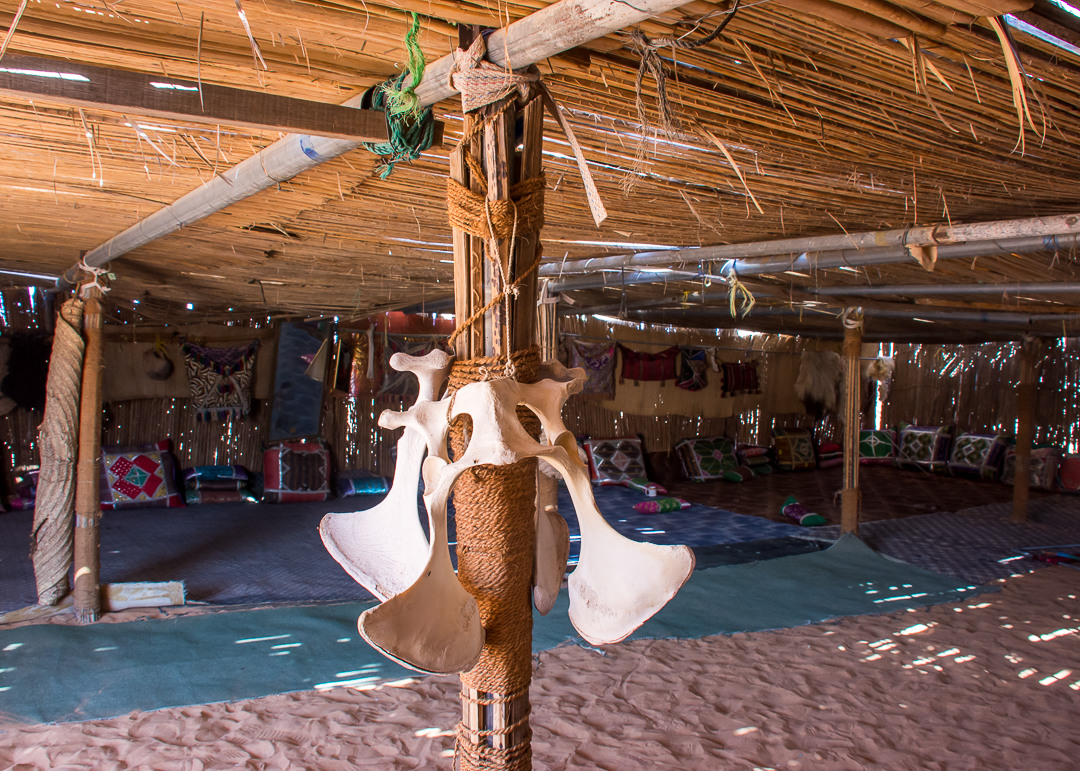
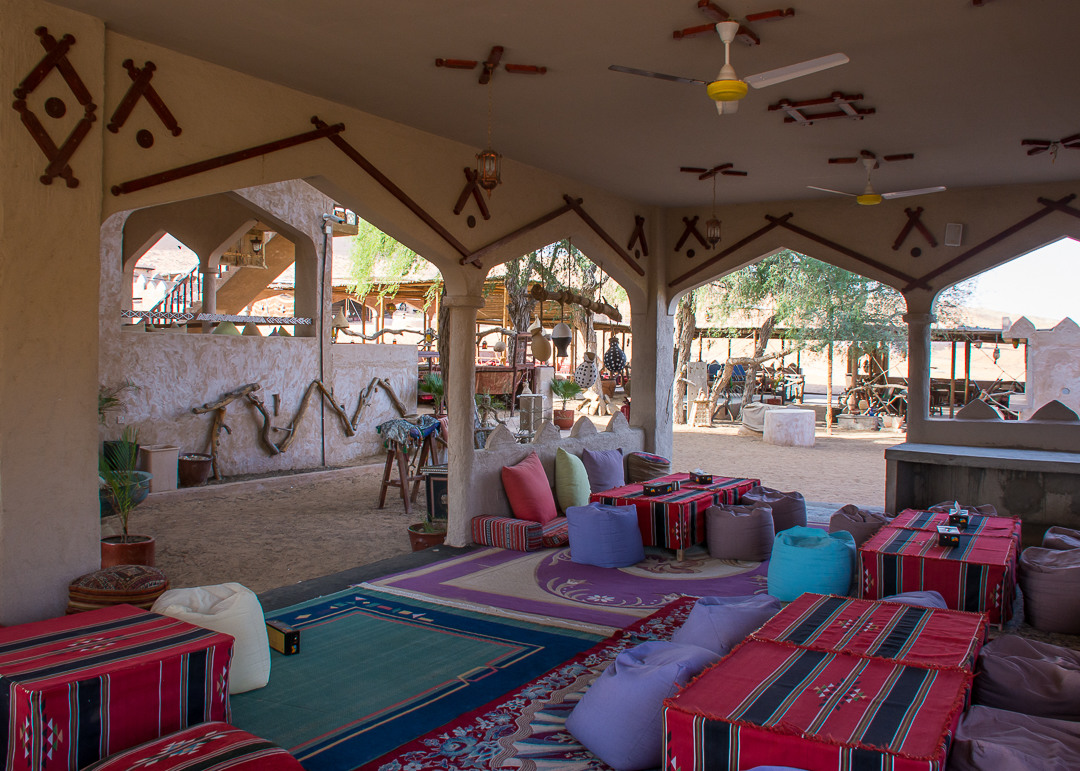
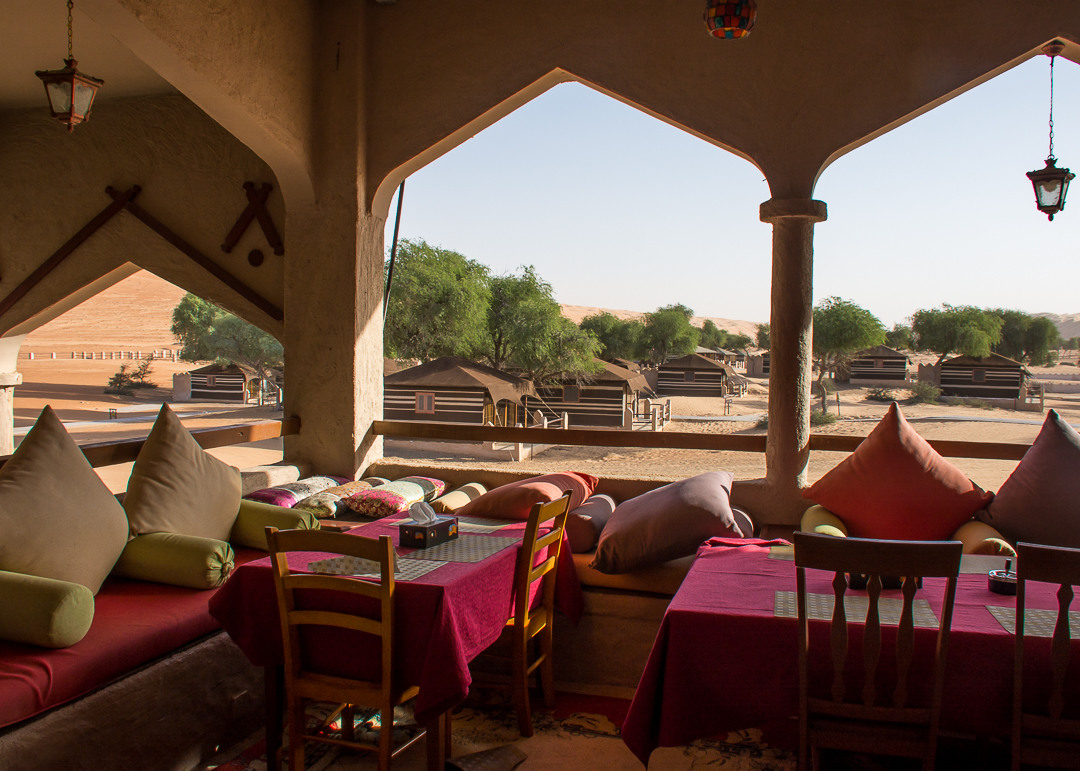
There’s plenty of communal places to just relax and escape the heat.

1000 Nights Camp - Oman

1000 Nights Camp - Oman

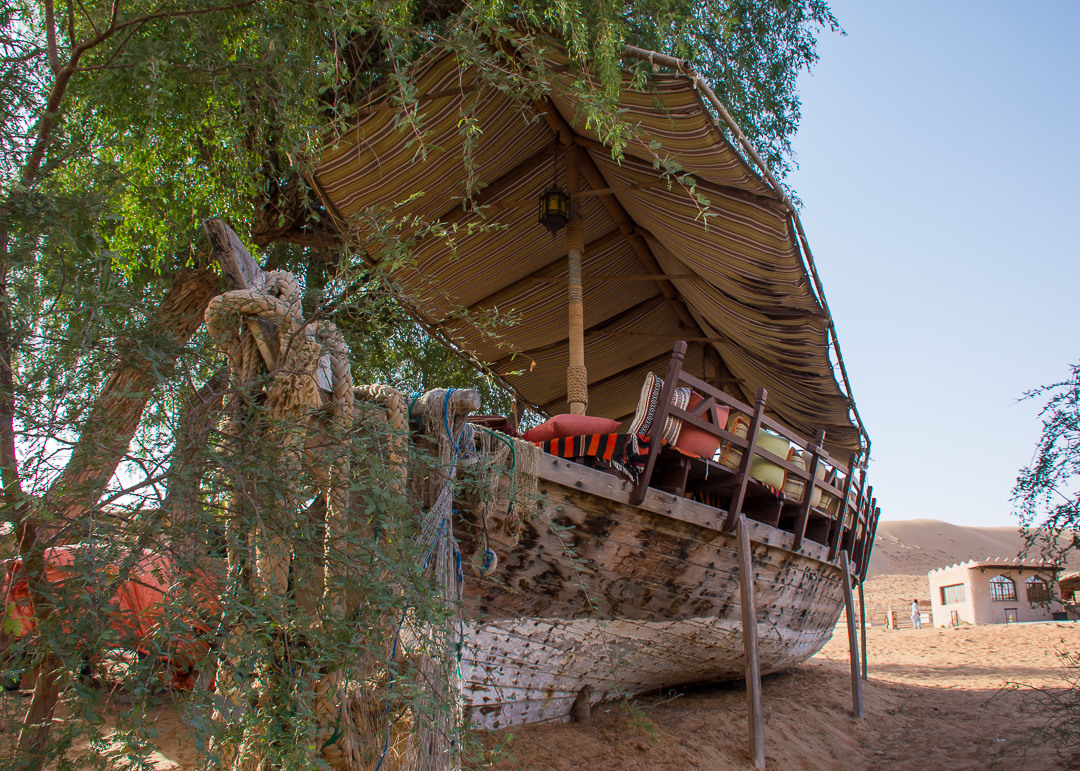
There’s even an abandoned boat turned into a bar and an adjoining pool for a very ‘un-bedouin’ setting though welcomed comfort.

1000 Nights Camp - Oman

While it is tempting to just sit back and enjoy the view, the Wahiba Sands are best enjoyed with a bit if adventure and there’s a ton of activities you can partake in such as dune bashing in a 4WD (tons of fun!), trekking, quad biking, sand boarding, or the ubiquitous camel ride…

Camel Ride - 1000 Nights Camp

Camel Ride - 1000 Nights Camp

This one really should have had a muzzle on…

Camel

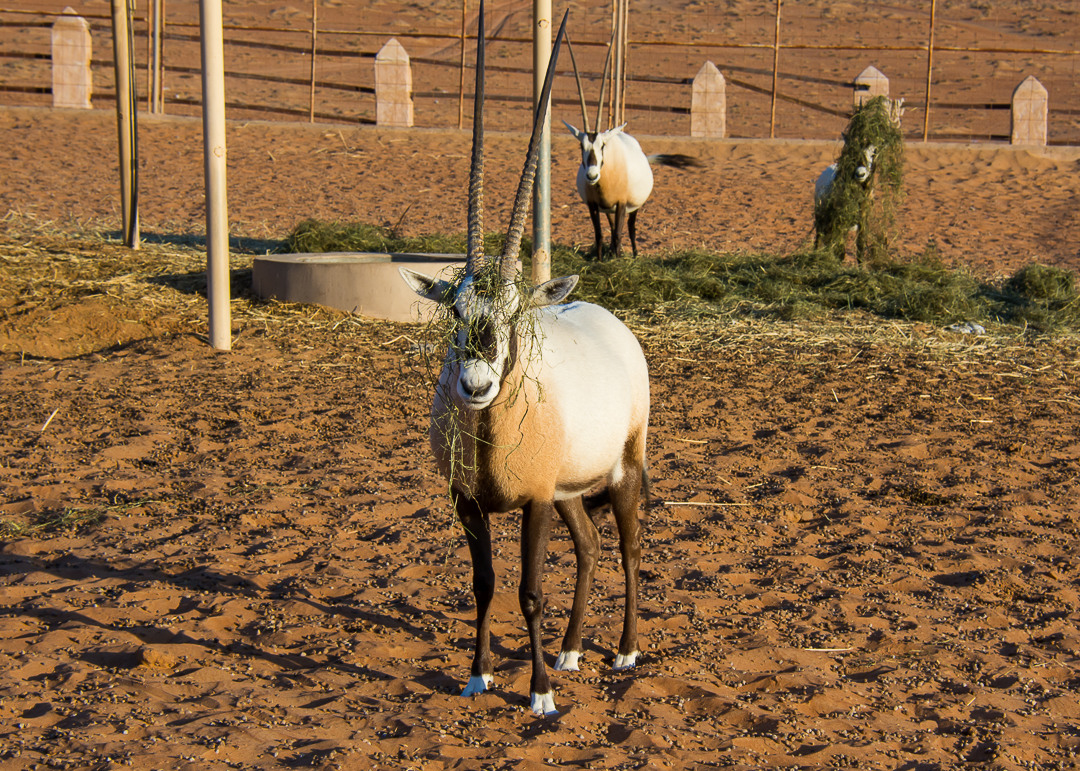
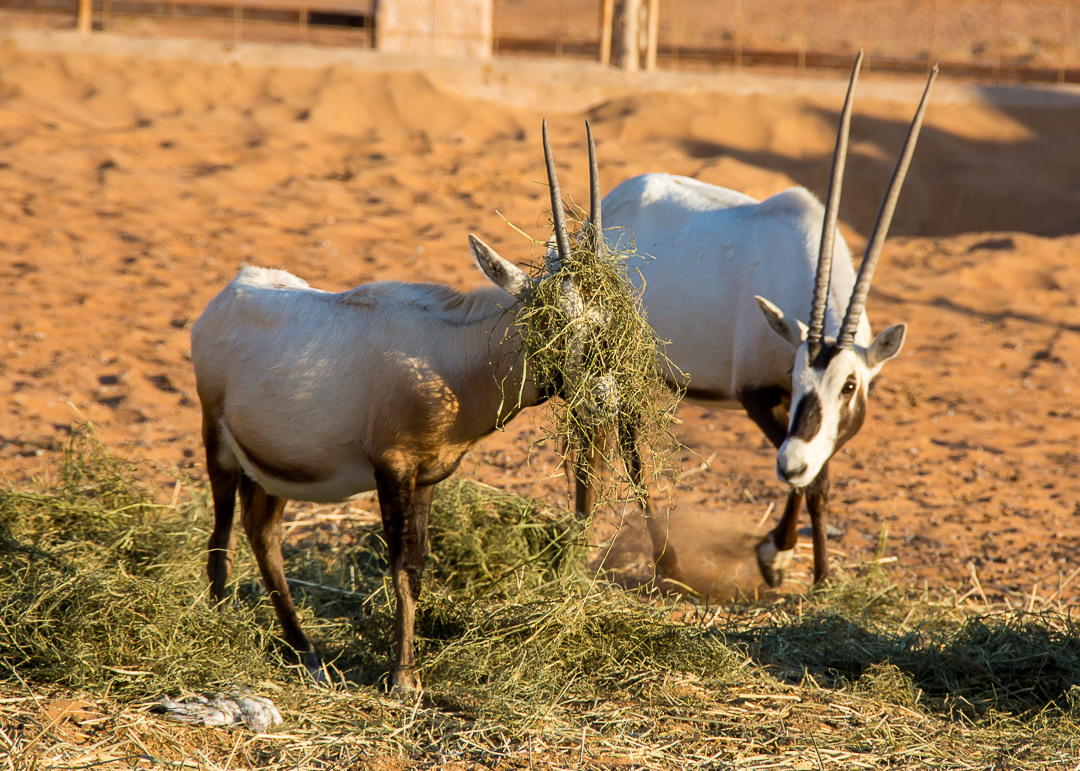
While camels are everywhere in these parts, the camp also care for a couple of Arabian White Oryx, an endangered antelope specie known to be at the origin of the unicorn legend. They were once extinct from the region but were carefully reintroduced back in the 1980s.

Arabian White Oryx

Arabian White Oryx

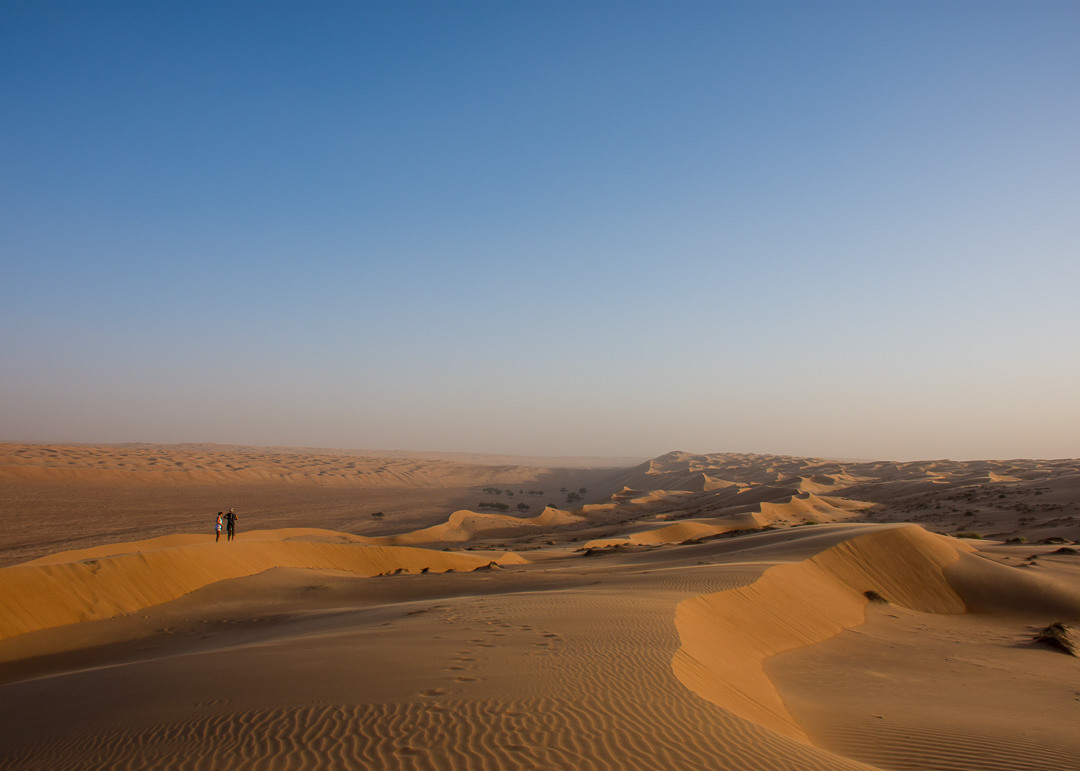
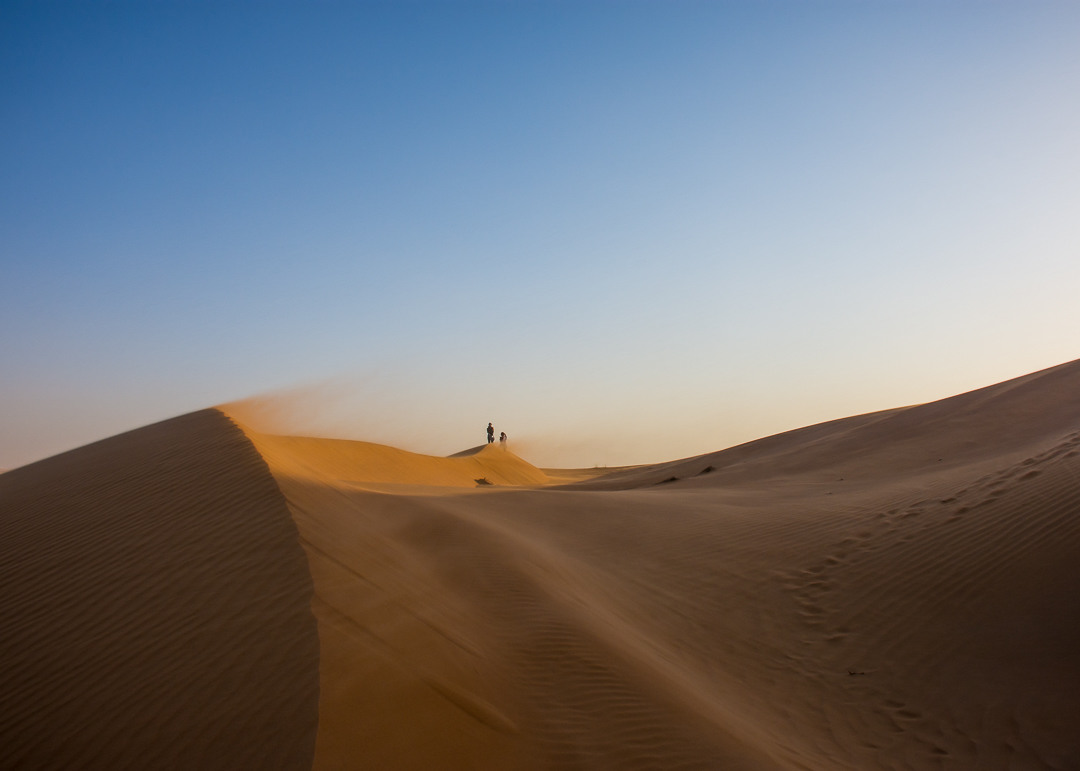
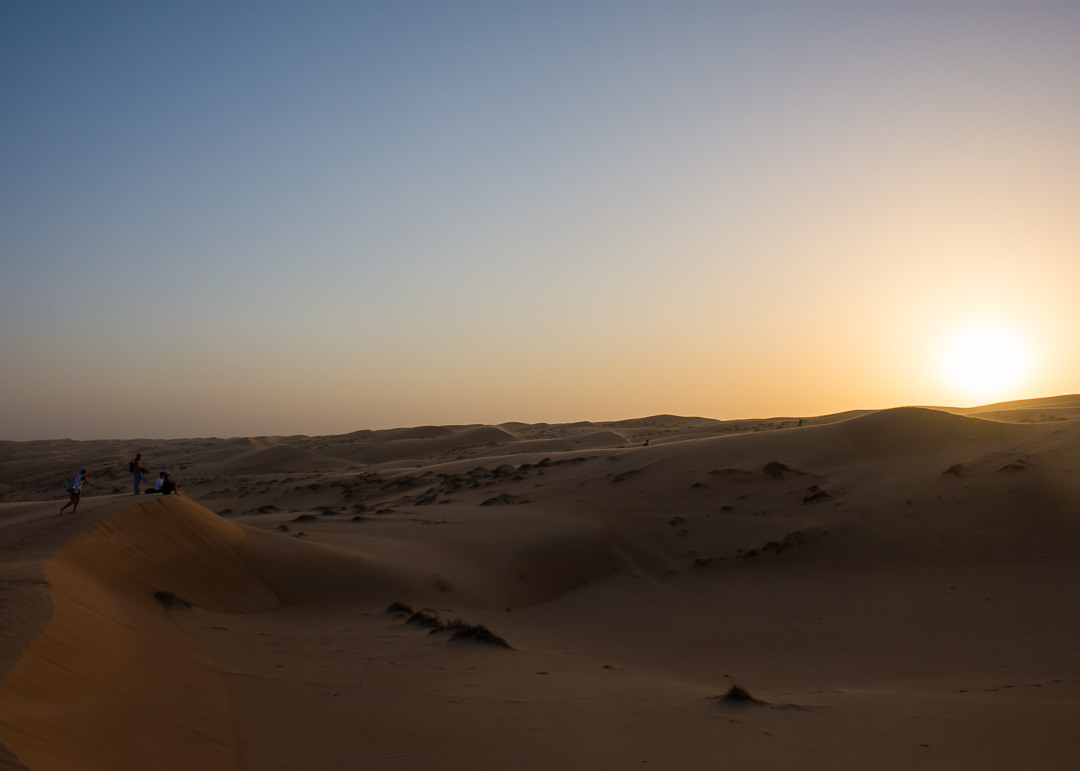
Whatever you’ve been busy doing you’ll want to stop once the sun is starting to go down as the spectacle on the dunes is beyond words… You’ll need a bit of time and stamina to climb up to the top of the dunes, some as high as 100m, the slippery soft sand acting against you at every step. The view over the wind-sculpted infinite landscape is hauntingly beautiful and harsh at the same time, strong winds blowing sand into your eyes and every single nooks and crannies on your person.

Wahiba Sands

Wahiba Sands

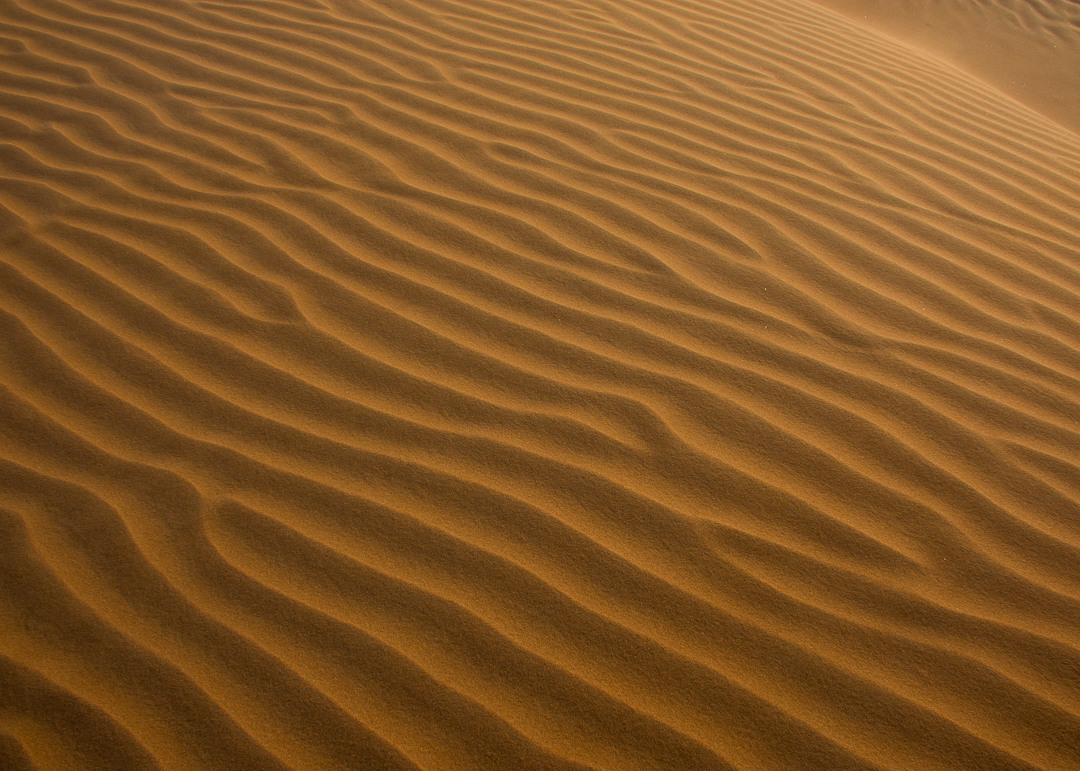
Nature’s work of art – undulating sand waves constantly moving, dusk turning everything the color of copper.

Wahiba Sands

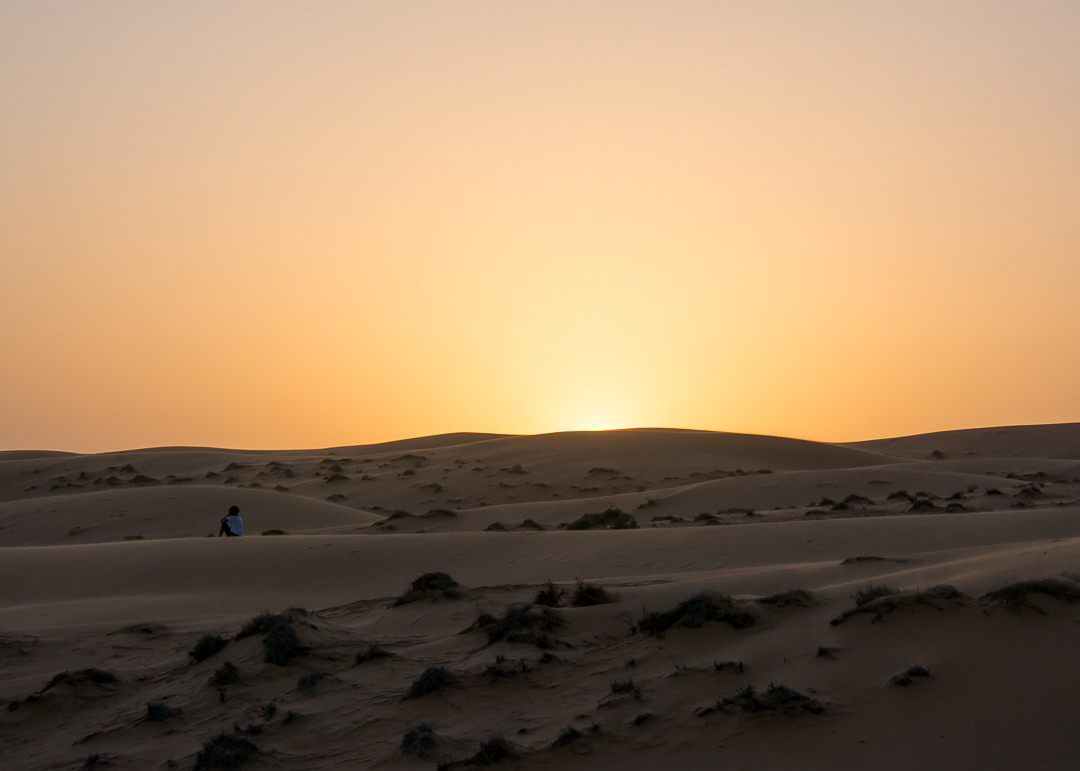
The real show lasts only a minute or two which you’ll savor for a long time afterwards.

Sunset on Wahiba Sands

Wahiba Sands

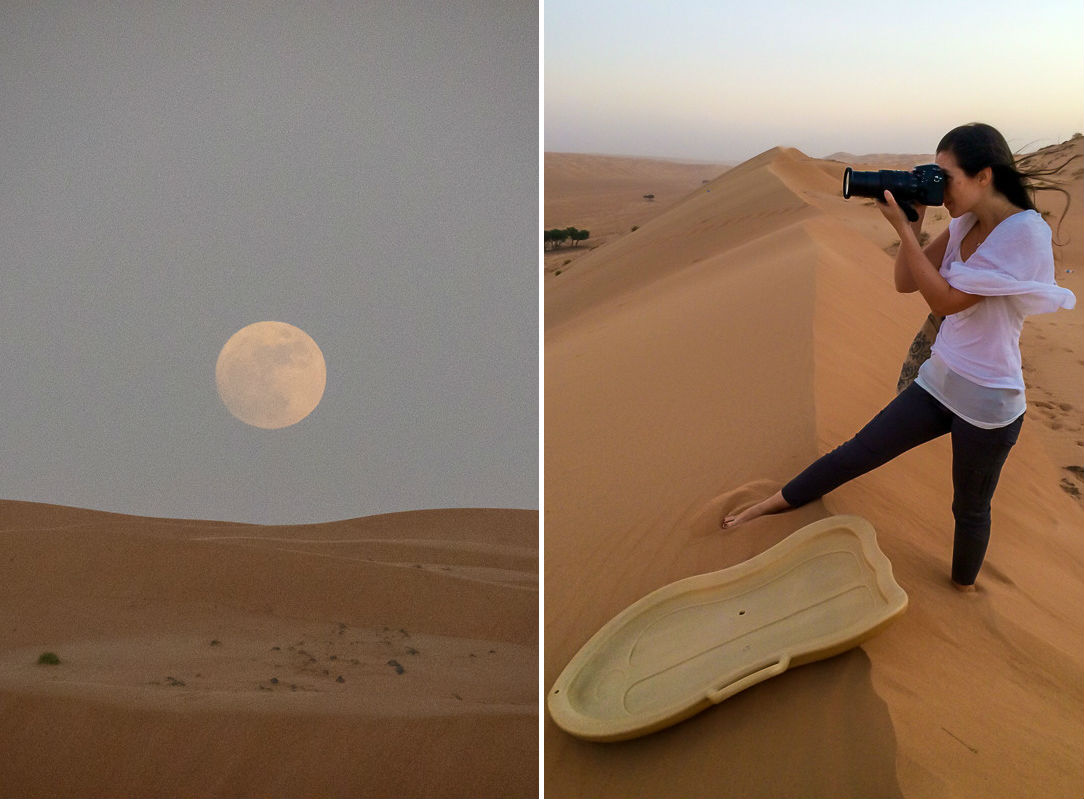
And almost simultaneously as the sun goes down the moon goes up, setting the mood for the evening and seeing us sliding down the dunes on our sand boards to get ready for a wonderful dinner and a sound night’s sleep.

Wahiba Sands

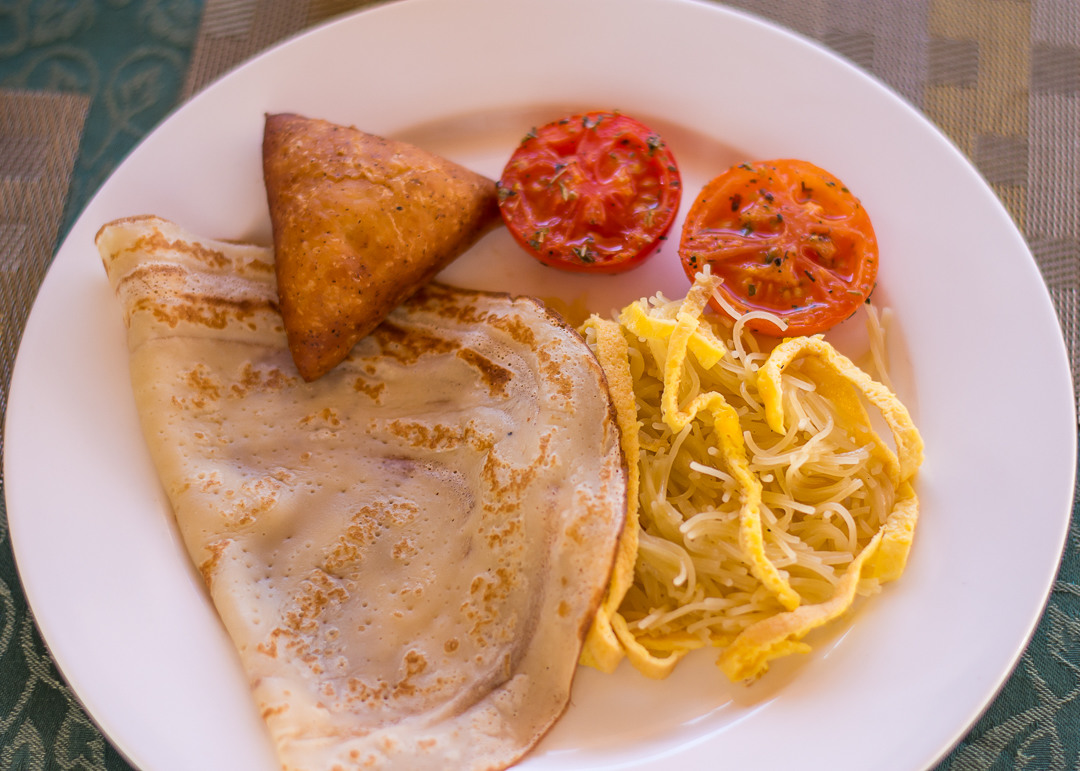
After an incredible night of sleeping in total darkness and silence, a savory Omani breakfast to kickstart the day is in order.

Omani Breakfast - 1000 Nights Camp

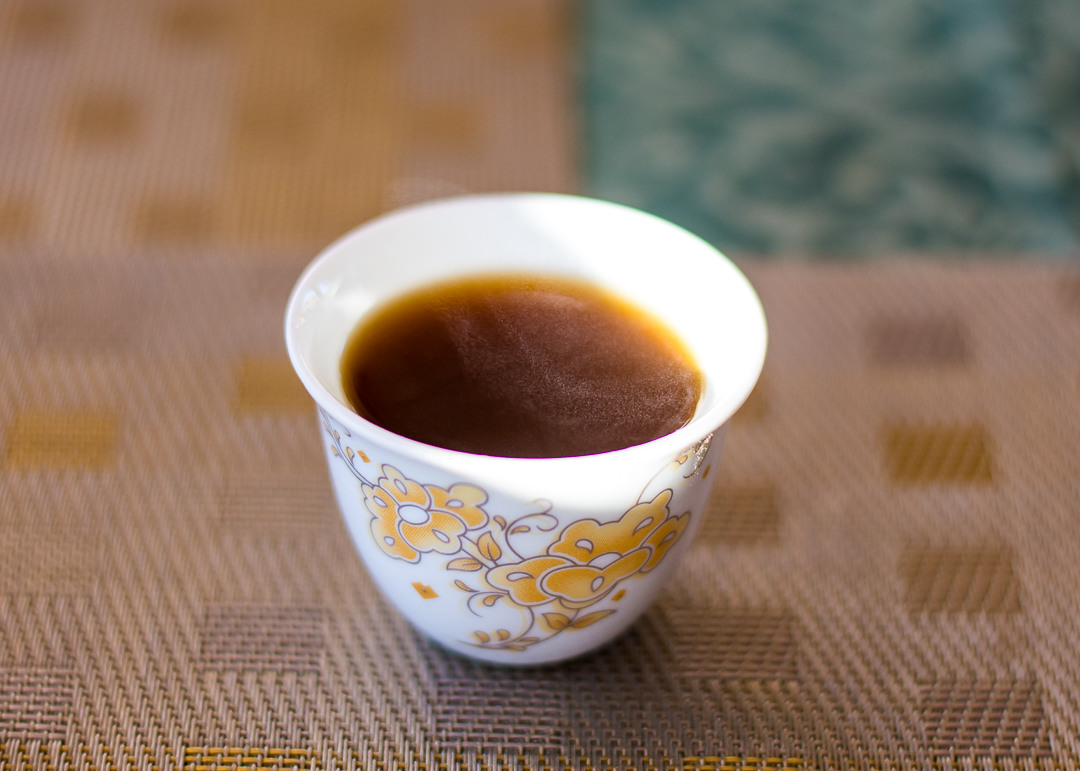
And nothing better to accompany it than a few little cups of karak tea, a sweet tea spiced with cardamom, clove, cinnamon, and ginger.

Karak Tea - Oman

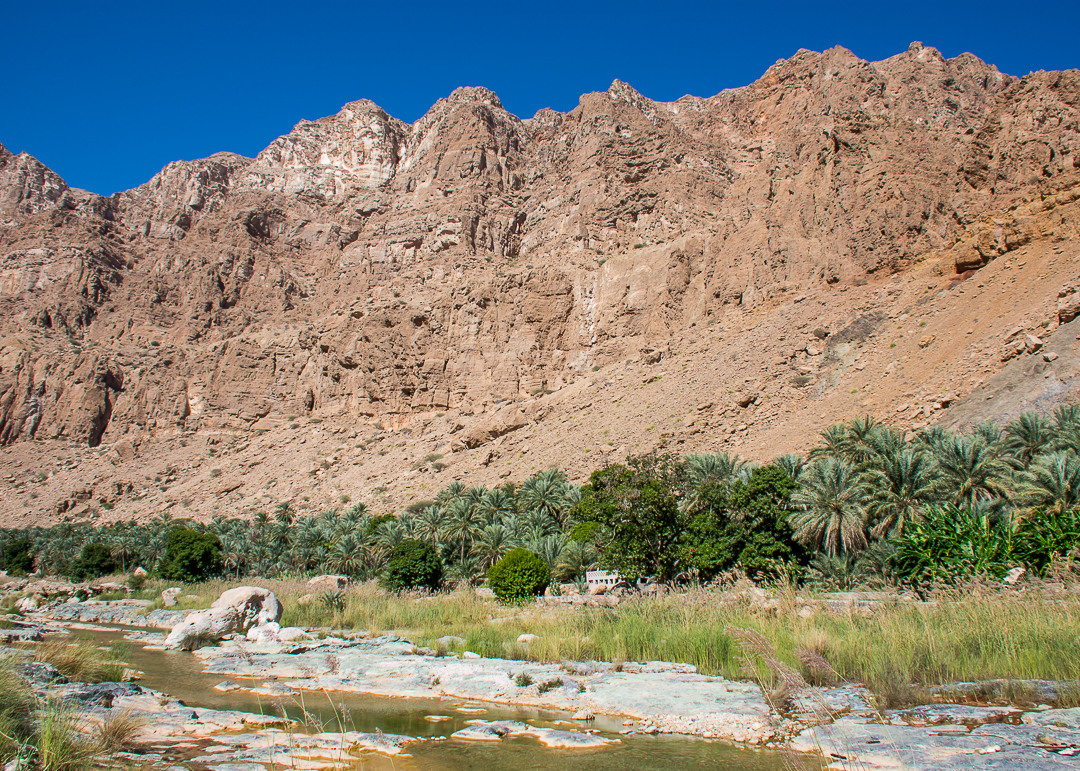
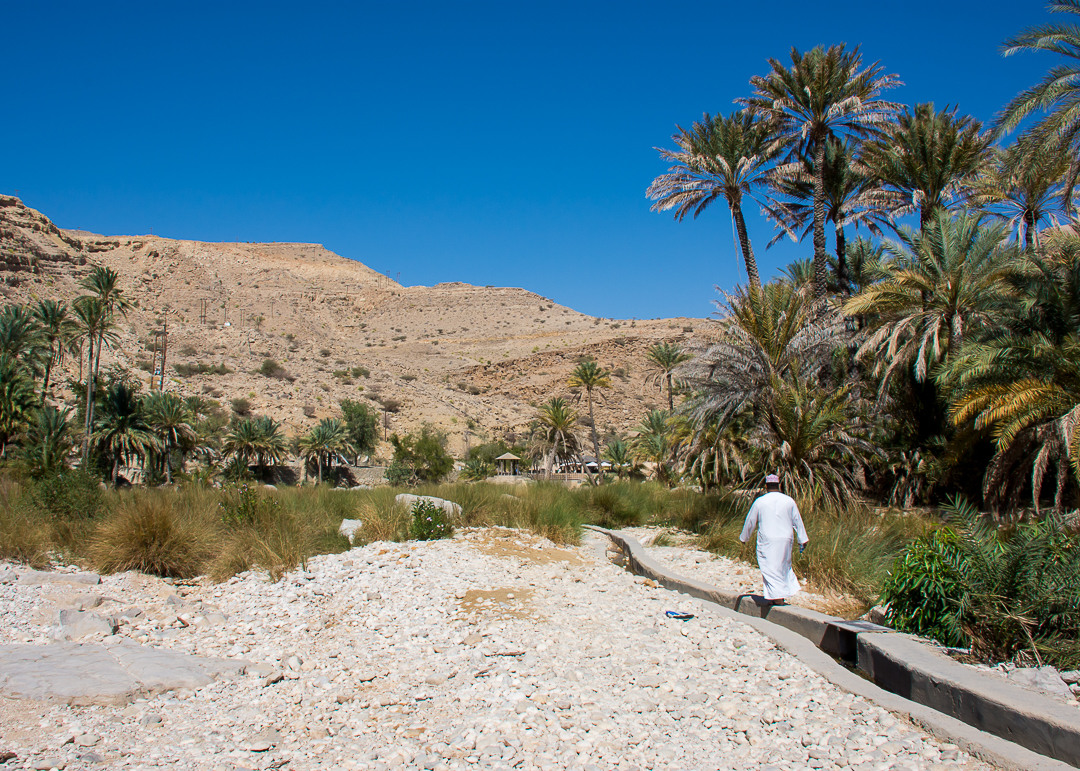
Leaving the desert behind and driving towards the coast, you’ll be meeting the mountains again and discovering that they’ve been hiding some of the most beautiful vistas the country has to offer in the form of Wadis. A wadi is essentially a valley which in season fills with water and constitute an oasis in the middle of the barren and dry mountains.

Wadi Tiwi
Wadi Tiwi

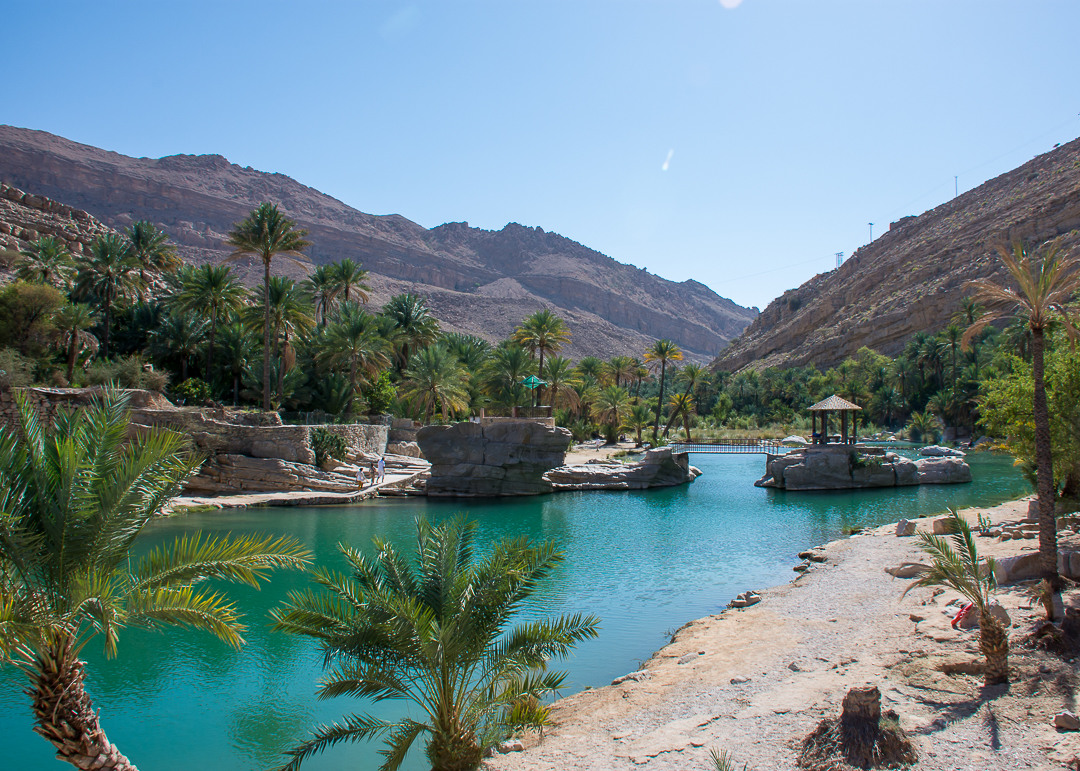
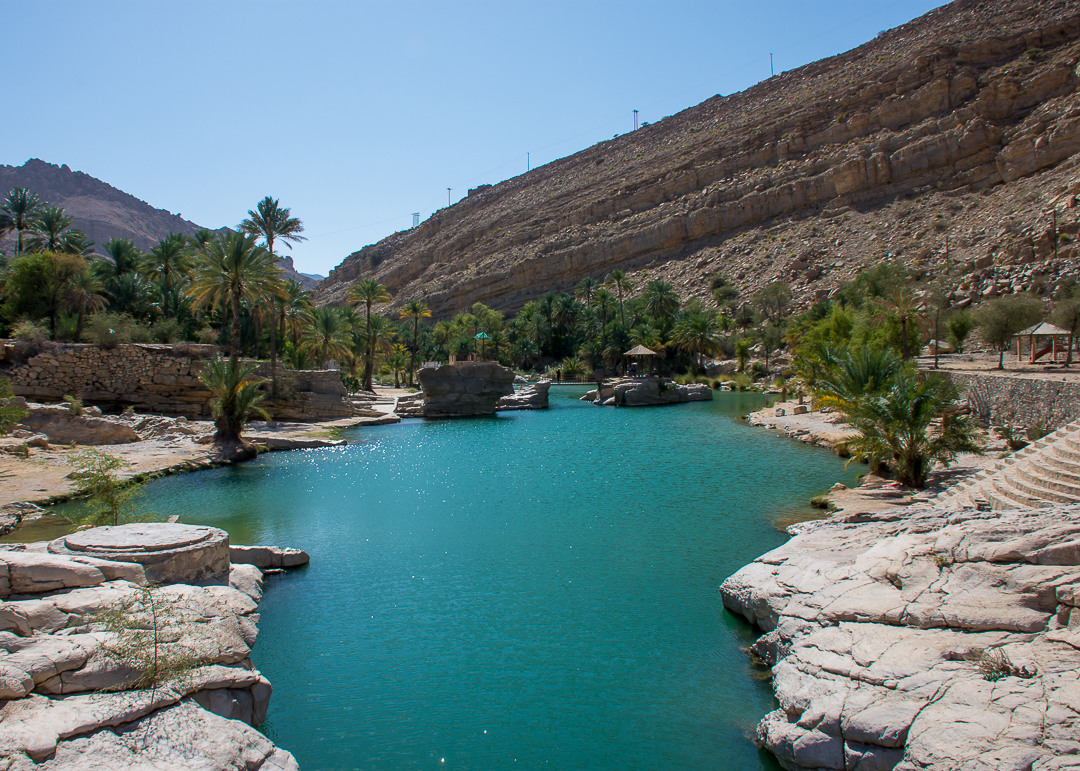
One of the wettest and most popular wadis is Wadi Bani Khalid.

Wadi Bani Khalid

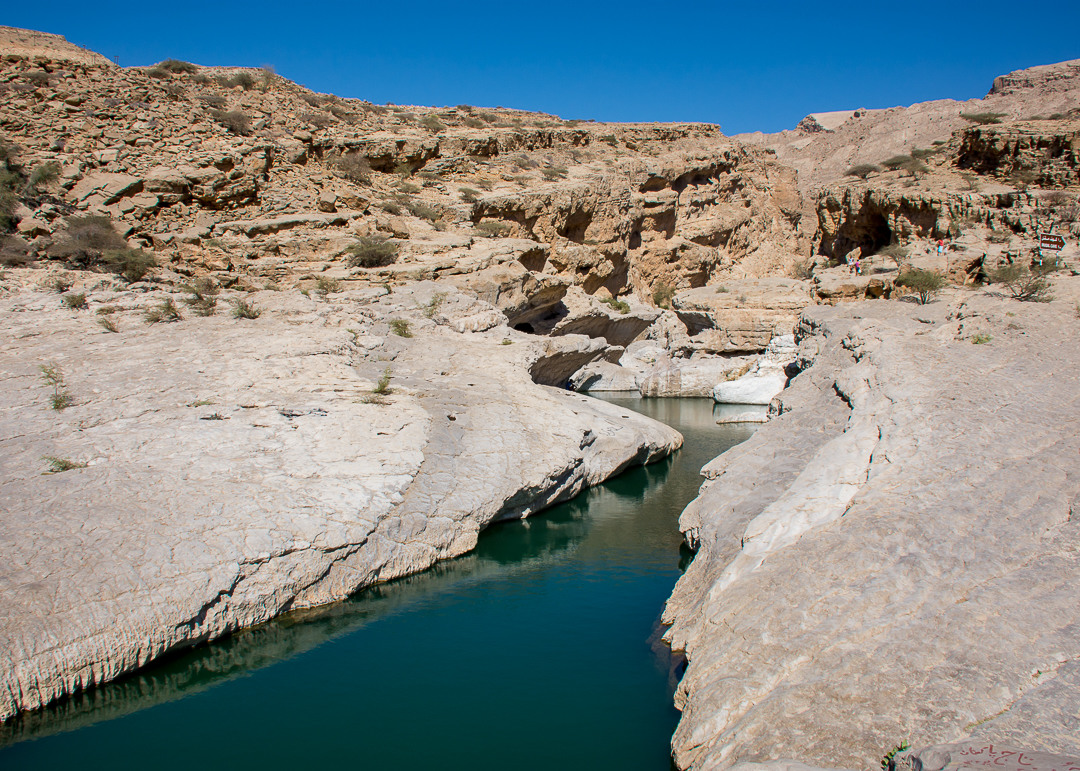
The natural pools are perfect for a dip and receive a constant stream of fresh water attracting groups of tourists and locals to their shore.

Wadi Bani Khalid

You’ll feel like you stumbled upon the postcard visual of a true oasis.

Wadi Bani Khalid

Wadi Bani Khalid

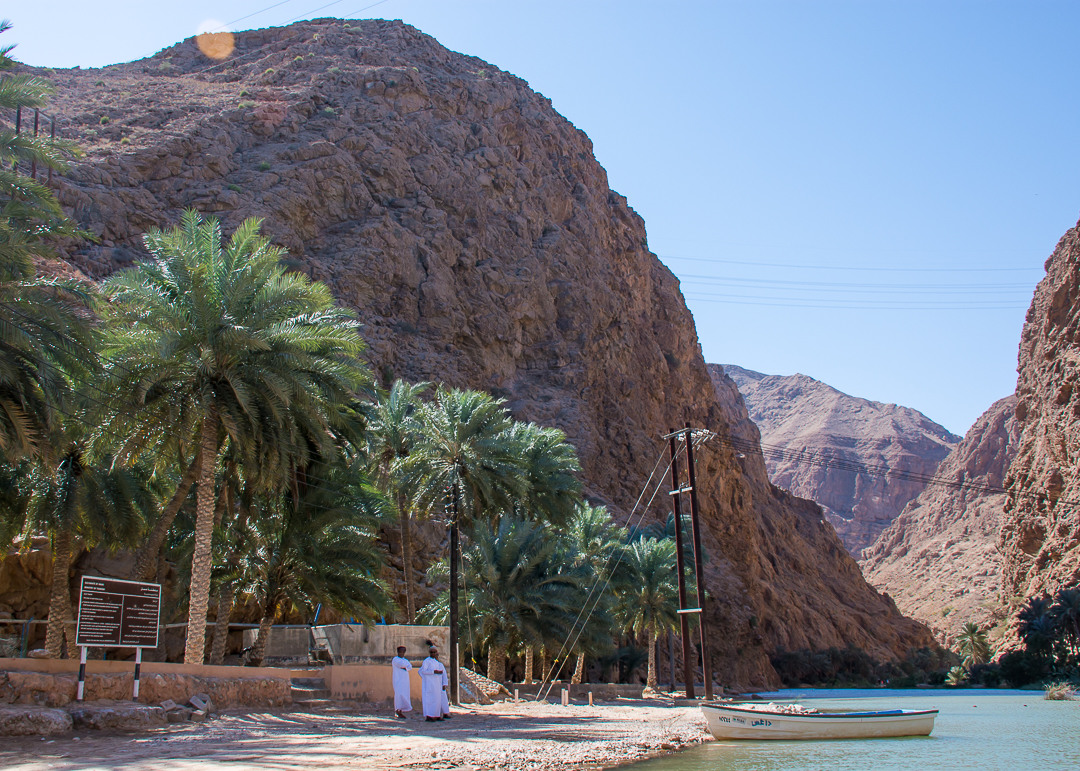
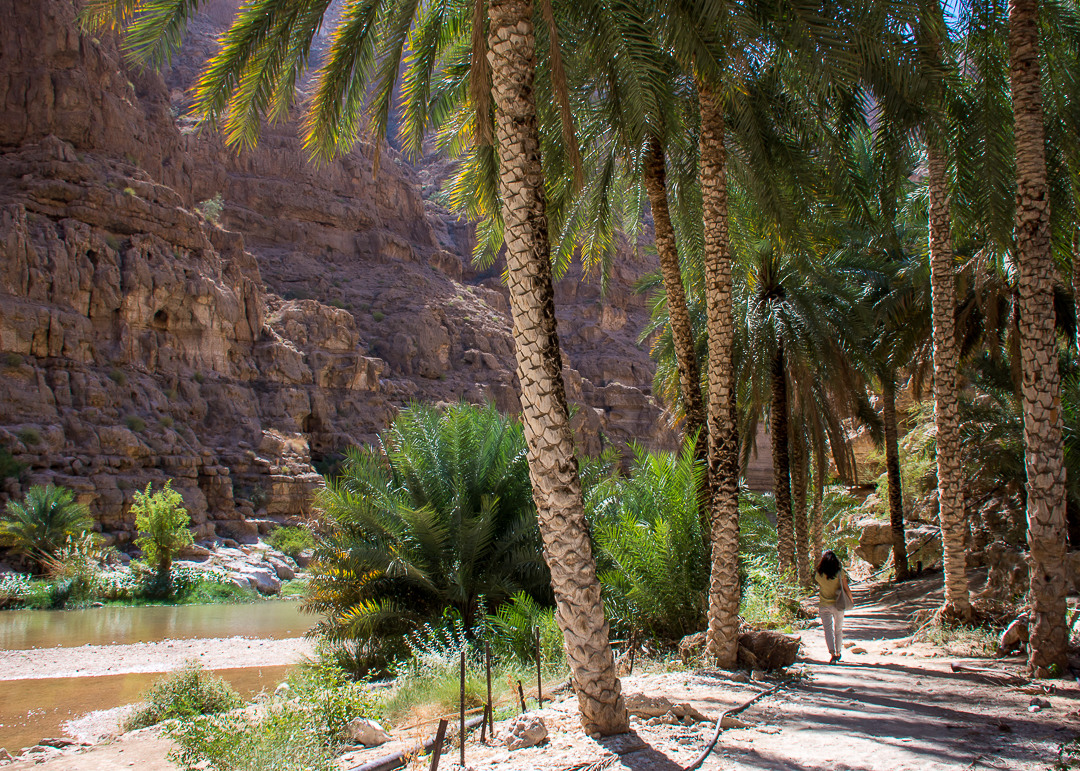
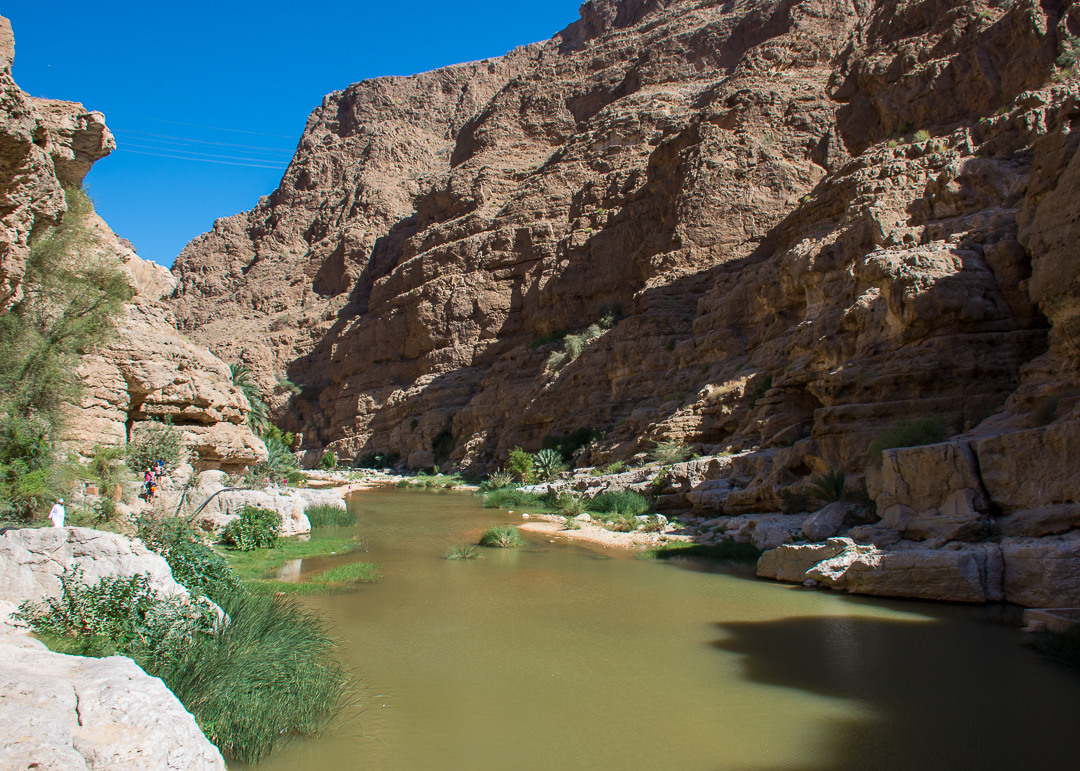
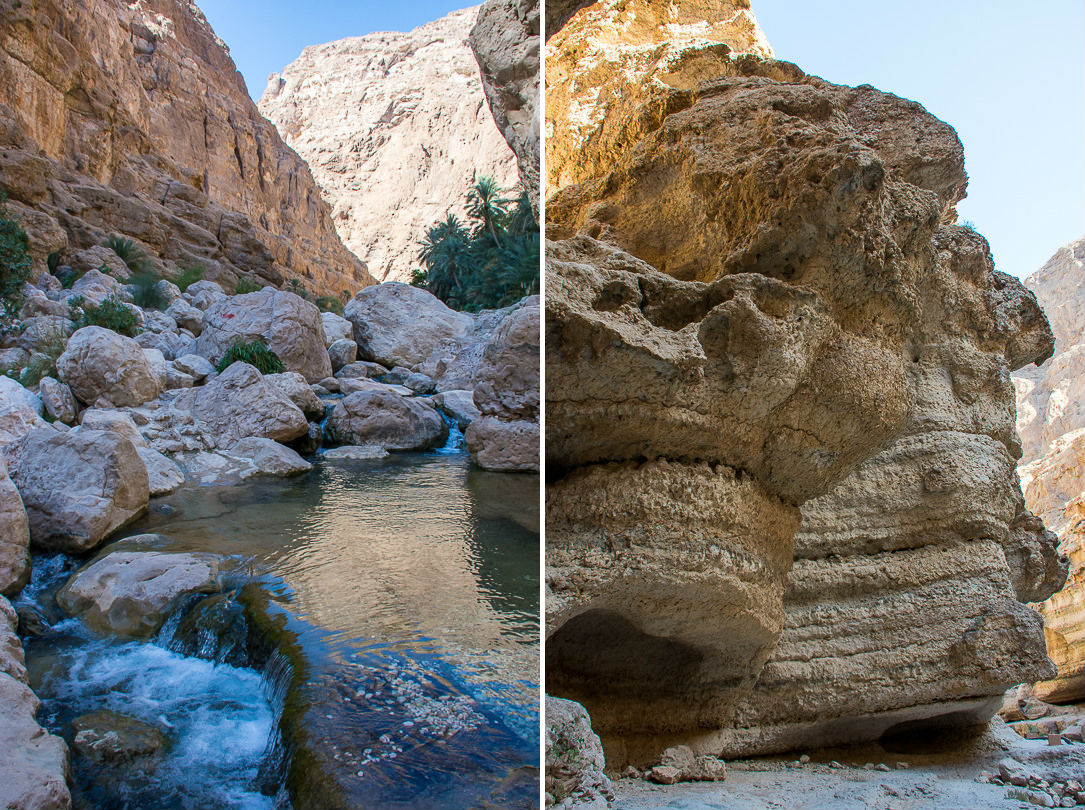
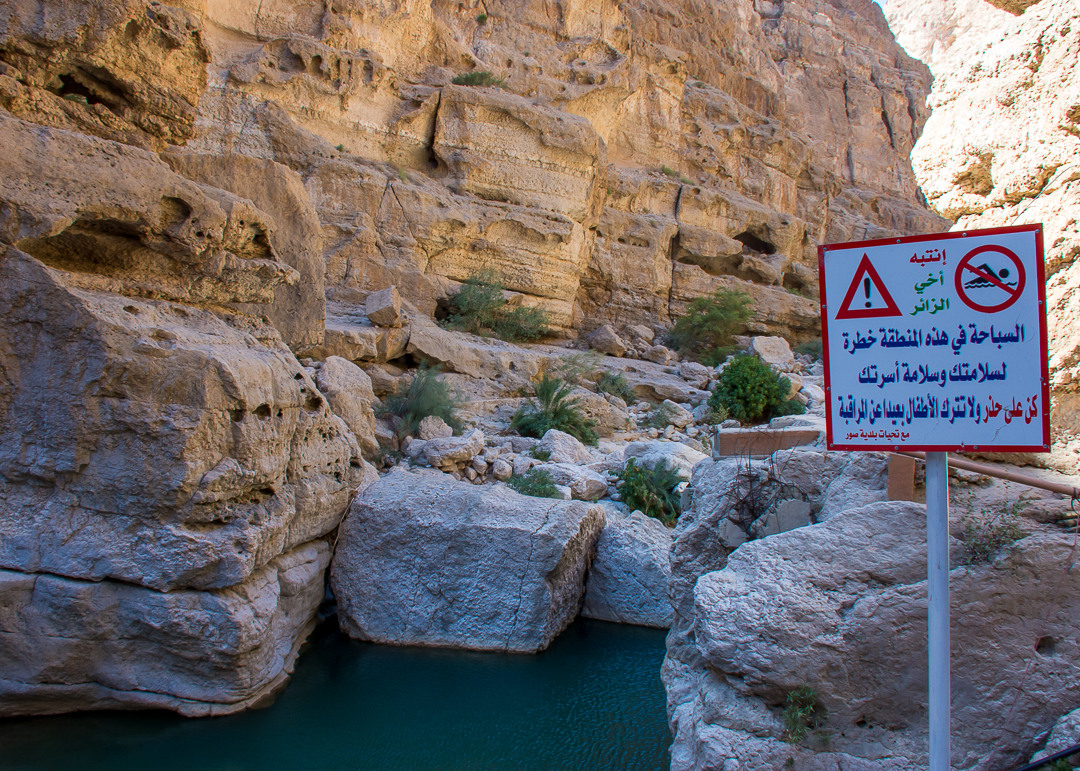
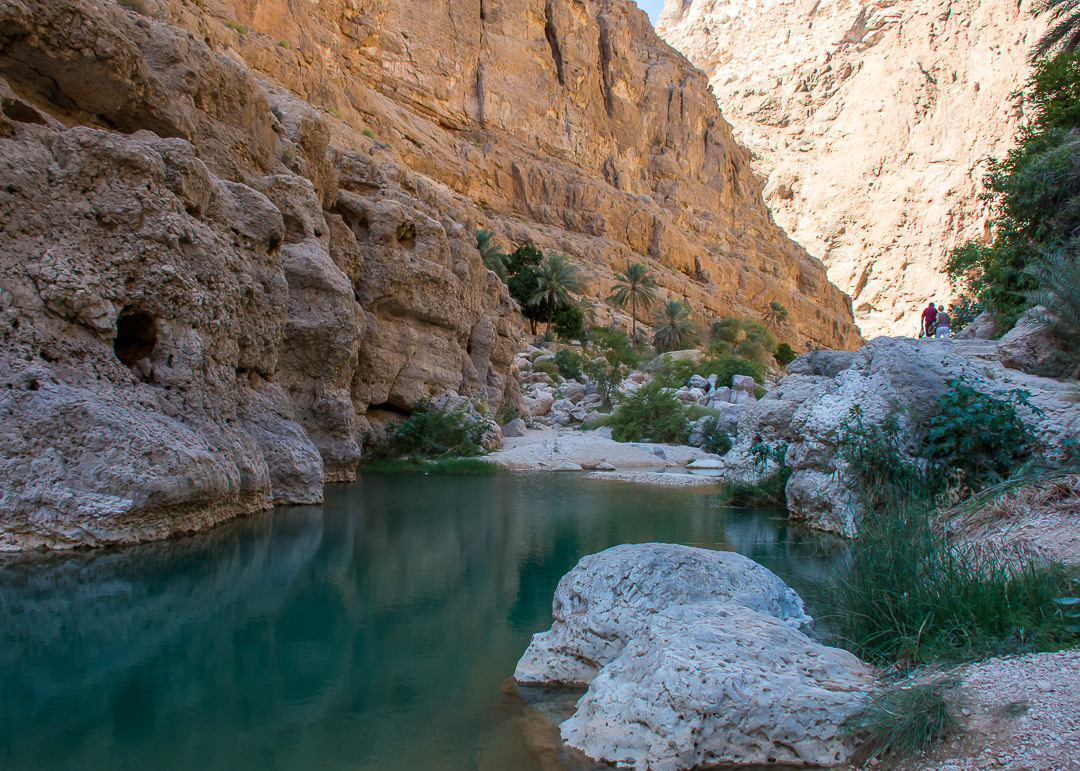
Another favorite wadi requires a bit more time to explore as you’ll need to take a very short boat ride to the start of the trail to reach the gorgeous Wadi Shab.

Wadi Shab

The 50-60 minutes walk into the wadi is beautiful, passing pools, waterfalls, and lush plantations.

Wadi Shab

Wadi Shab

Wadi Shab

Wadi Shab

Wadi Shab

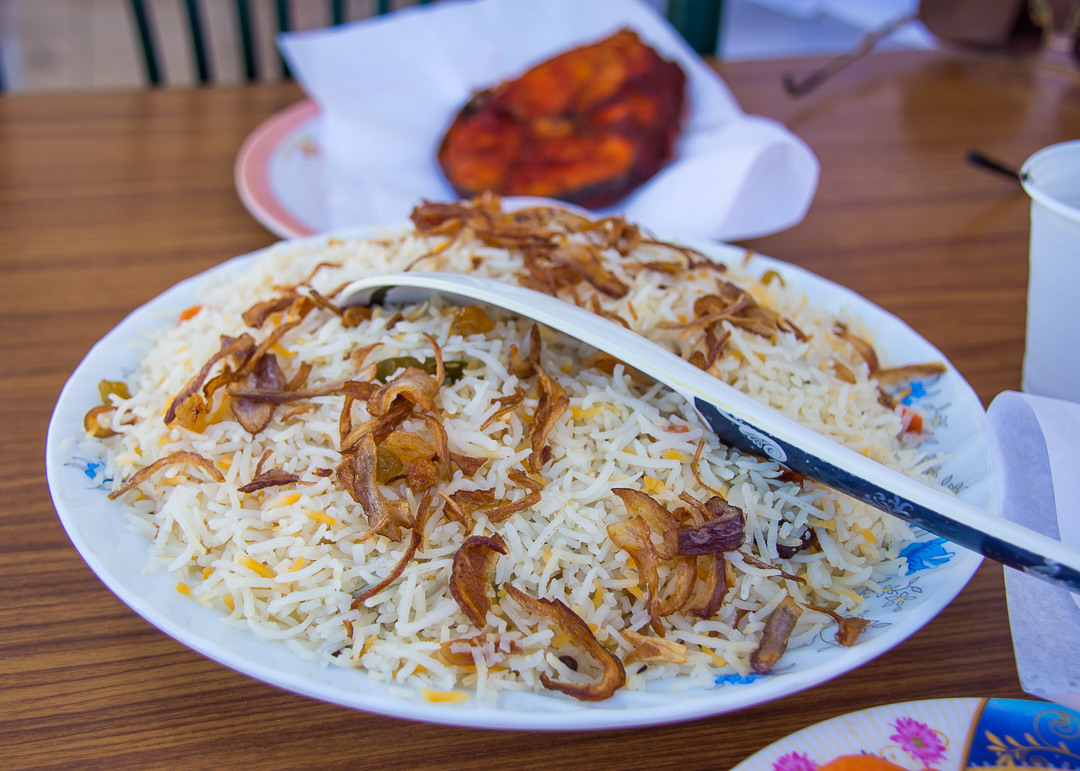
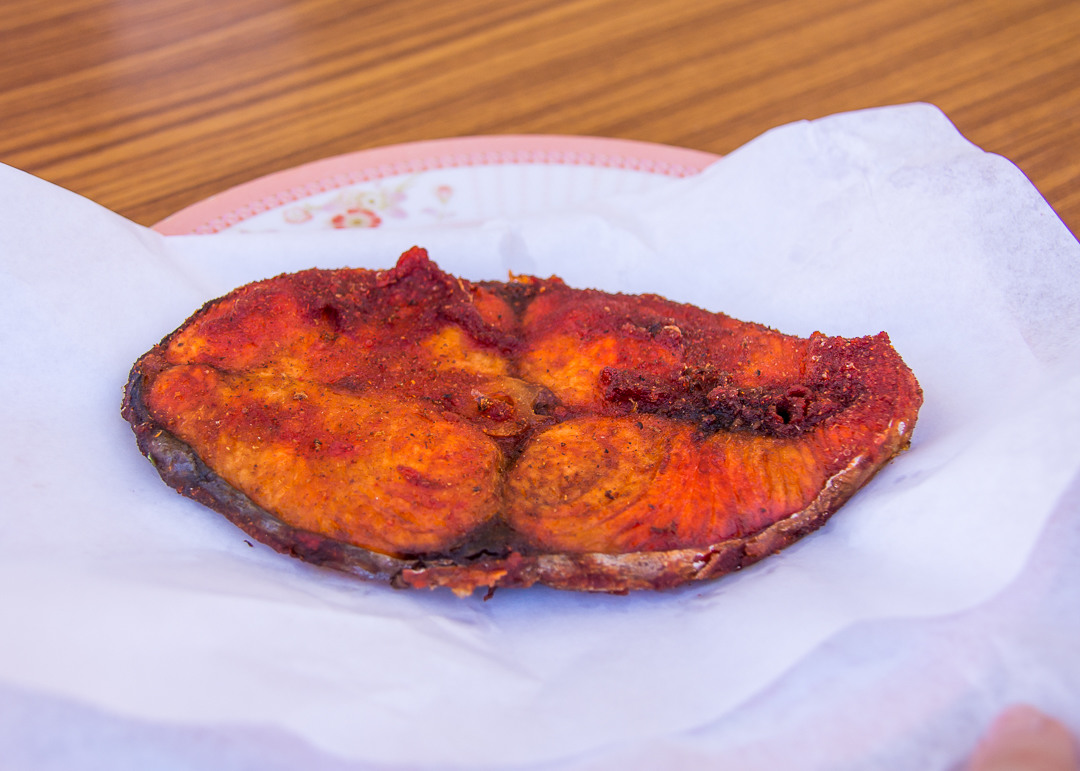
A cheap, filling and delicious lunch can be had back en route to the coast in pretty much every village you’ll cross, the mainstay of rice with fried onions and a seasoned grilled kingfish a solid choice.

Omani Rice

King Fish

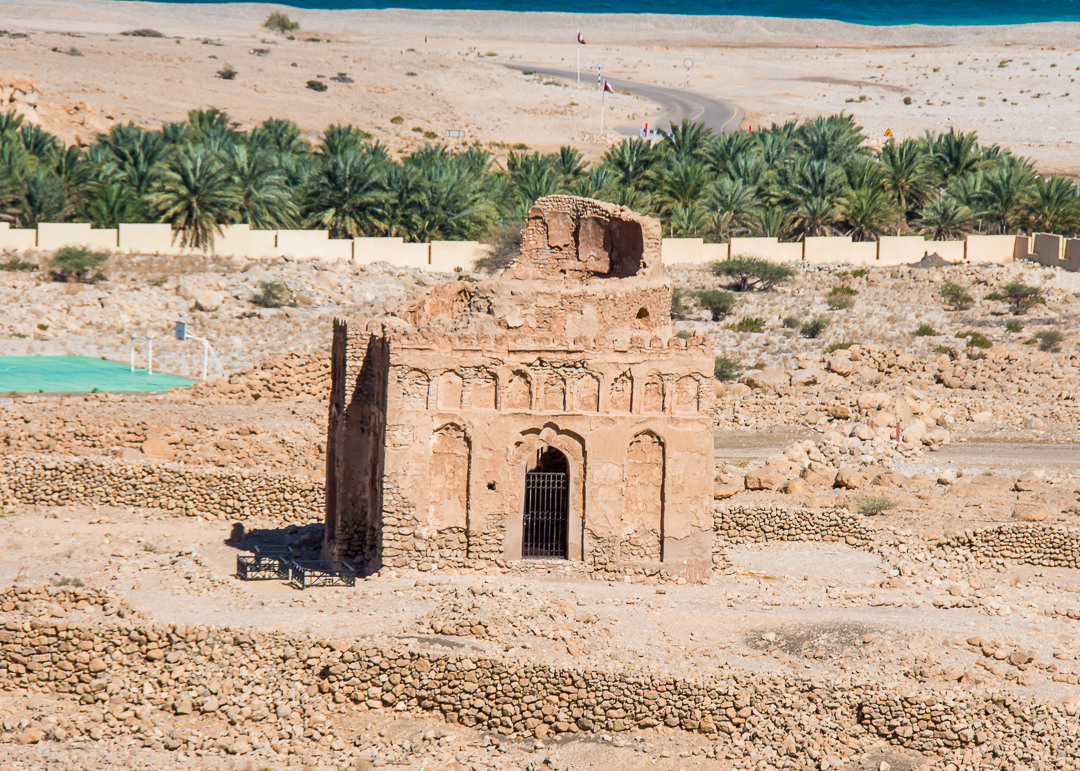
The nearby coast has a few sights of interests as you make your way back to Muscat, like the tomb of Bibi Miriam. It is the only standing remains of the once thriving port city of Qalhat which was destroyed by the Portuguese in the early 16th century.

Bibi Miriam's Tomb

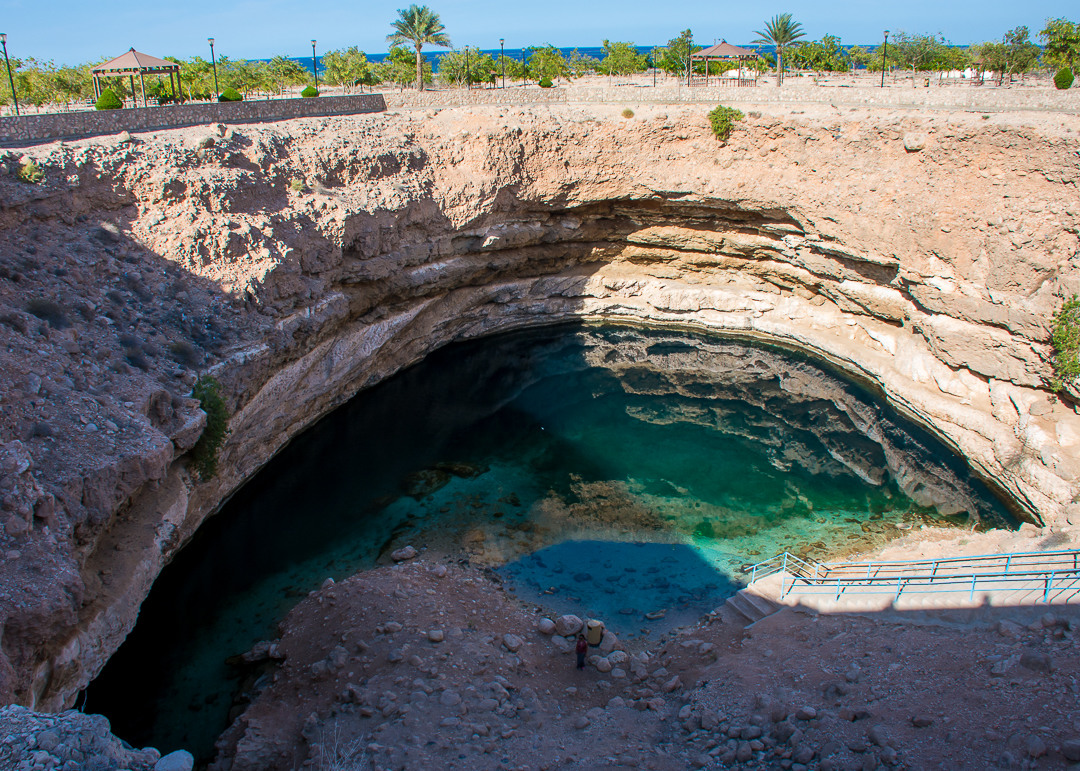
You can also stop nearby at the natural oddity that is the Bimah Sinkhole, formed by a collapse of a large cave chamber. Its deep blue-green crystal clear pool is definitely inviting…

Bimah Sinkhole

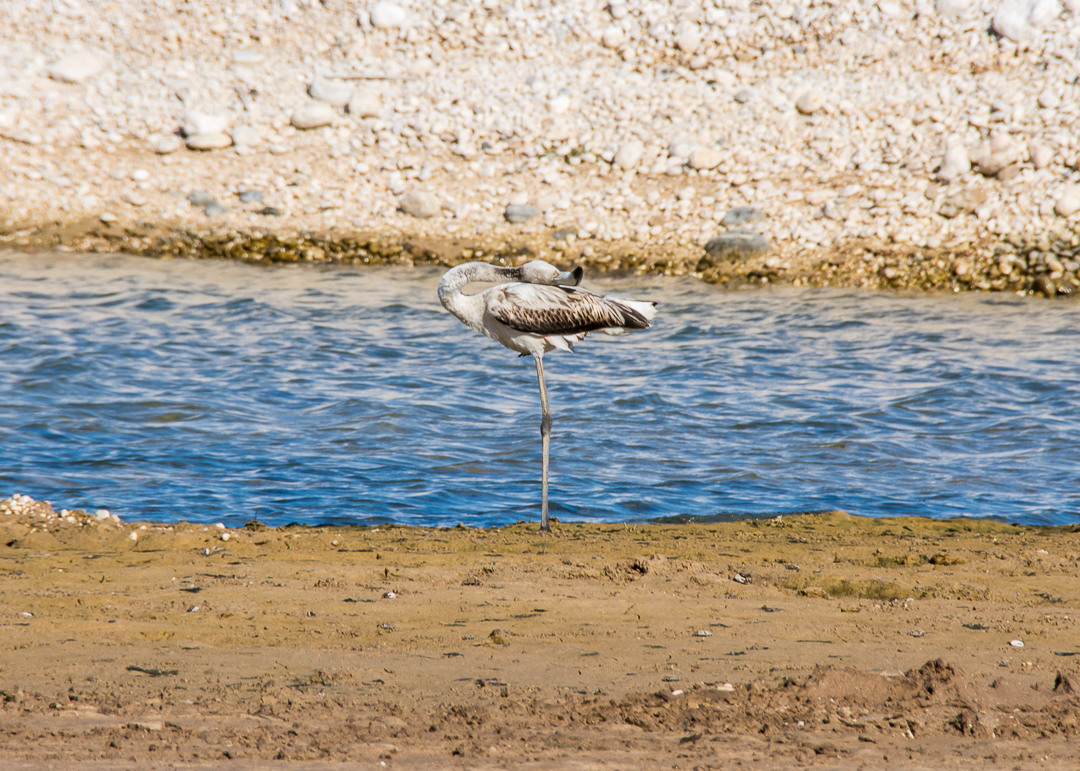
Flamingos are often spotted along the coast near water inlets, though no pink feathers here.

Flamingo

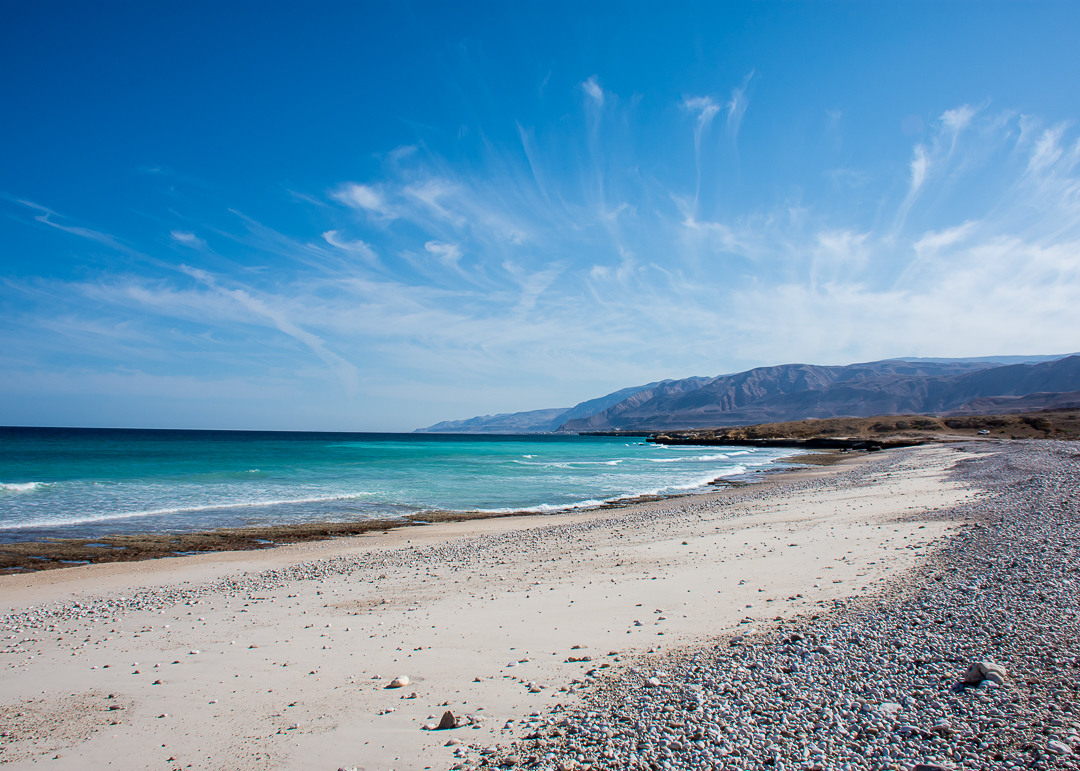
Last great stop before Muscat is at one of the beaches, especially Fins Beach (commonly called White Beach). It’s popular for camping and snorkeling and as you can see gives a pretty nice view of the coast, here looking south. We were the only ones there too and I regretted not having a tent to pitch. Imagine waking up to this panorama and sound of turquoise waves crashing and screaming your name for a morning dip…?? Next time!

Fins Beach


Middle East Oman Travels

Fortresses and Mountain Villages in Oman’s Interior

January 11, 2016

Leaving Muscat behind and driving towards the Hajar mountain range sees an exciting change in scenery and a much deeper dive into history. What has long been referred to as Oman’s Interior is a picturesque region steeped in tradition and reflective of the centuries of imam rulings who contested the Sultan’s authority in Muscat. It’s one of the most visited parts of Oman, partly due to its proximity to the capital but also to the presence of three of the country’s most famous forts, some splendidly verdant oasis, crumbling villages and mountain ranges rising up amidst all this.

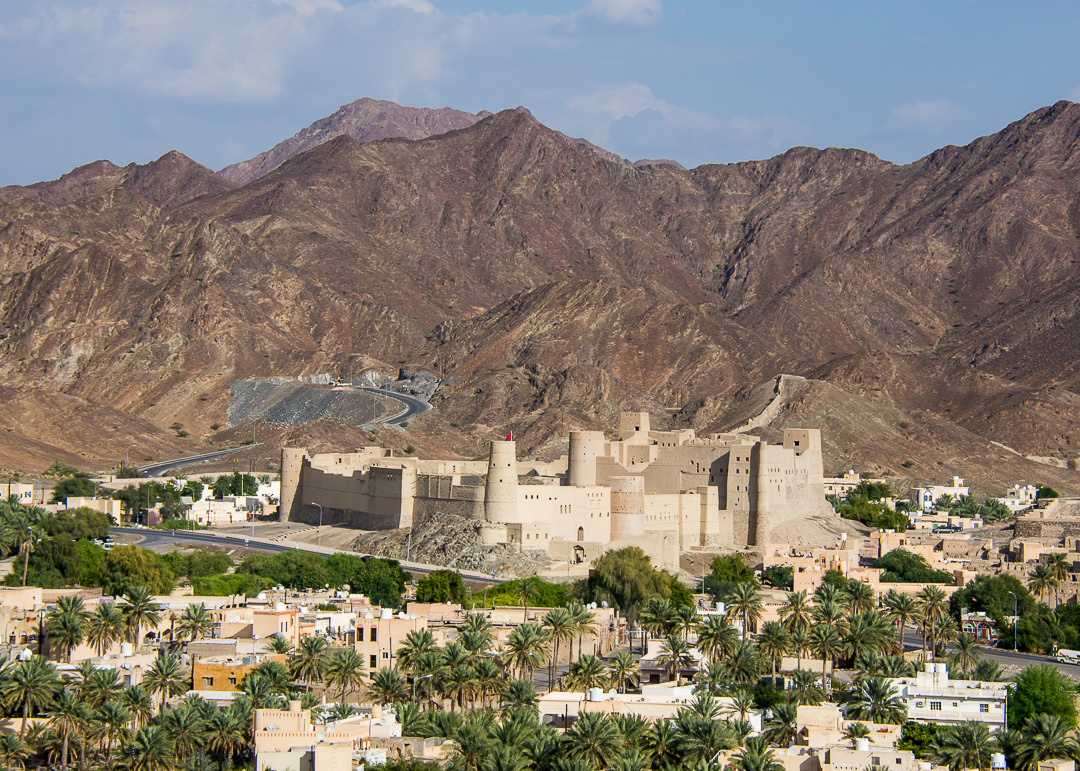
Bahla Fort – the biggest fortress in Oman.
Bahla Fort - Oman

The best launch pad to explore the region is Nizwa, one of the oldest cities in Oman and the long-time capital of the Interior. Famous for its handicrafts and silver, a stop at the souk is a must even if you don’t intend to buy anything.

Nizwa Souk

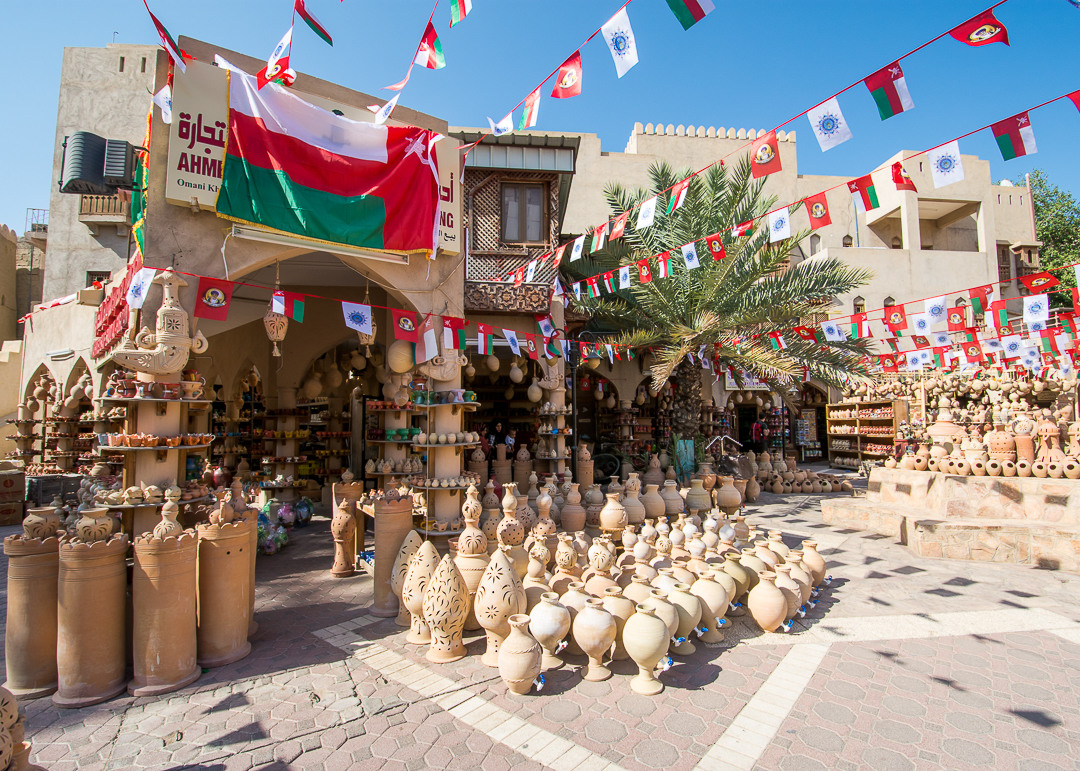
A cute little square stacked full of pottery is only the beginning of the browsing possibilities, shops all around offering heaps of dusty jewellery, battered old riffles and daggers, dates, perfume, amulets, etc

Nizwa Souk

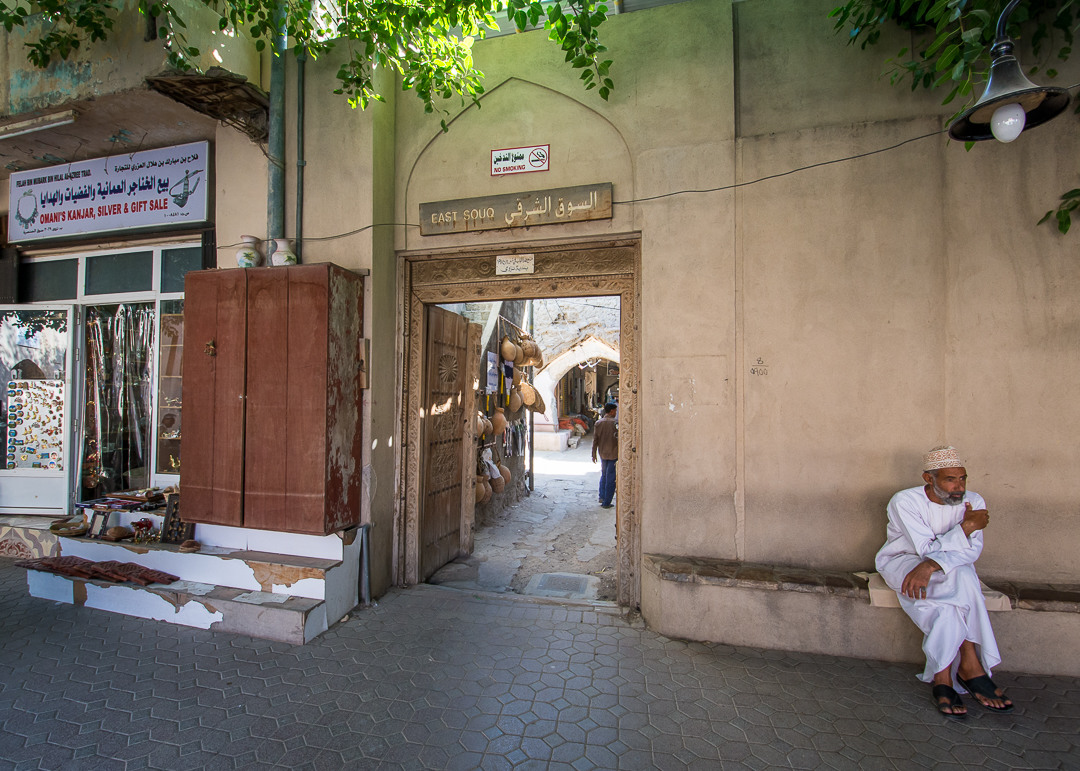
An older section of the souk, the East Souq, was definitely more up my alley…

Nizwa Souk

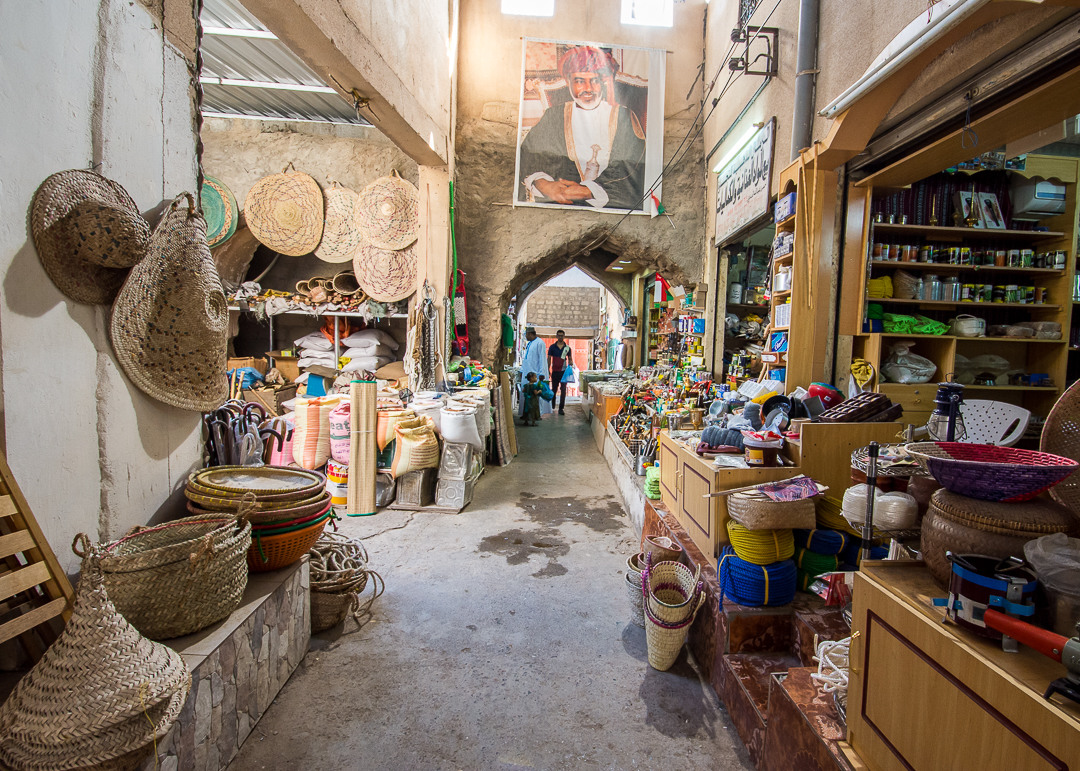
This is where you’ll find the spice shops next to what looks like the local equivalent of hardware stores along a short but very old alley, the heart of the traditional souk before they moved it to more modern digs next door.

Nizwa Souk

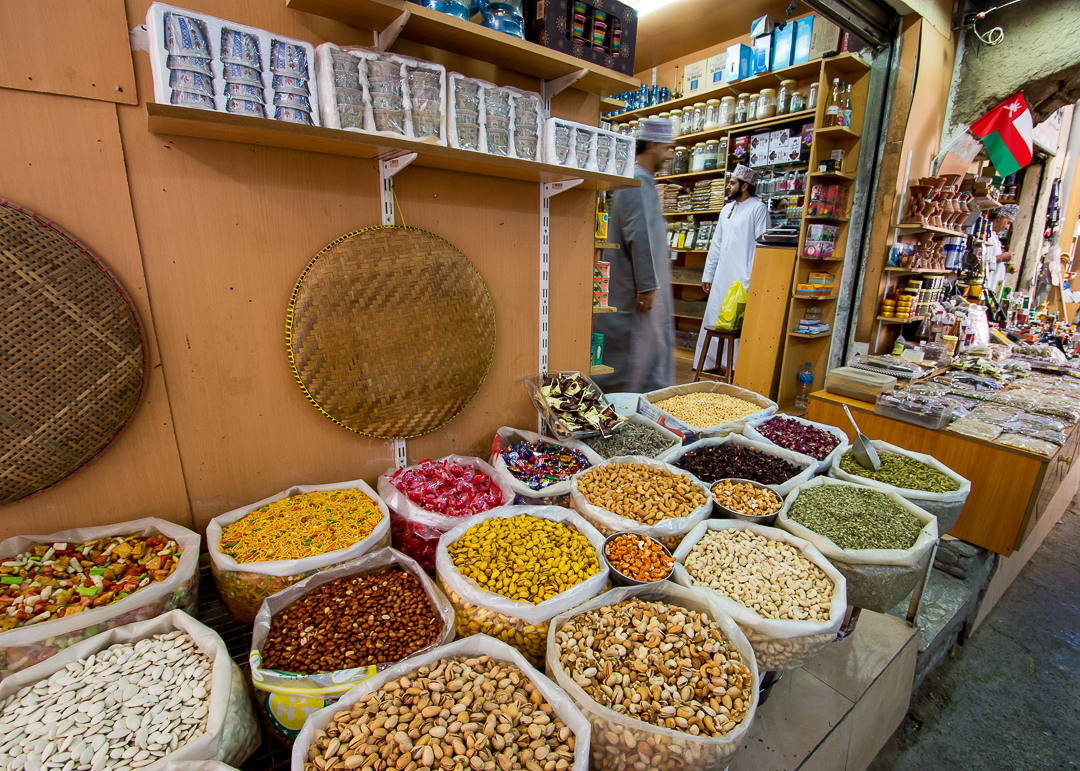
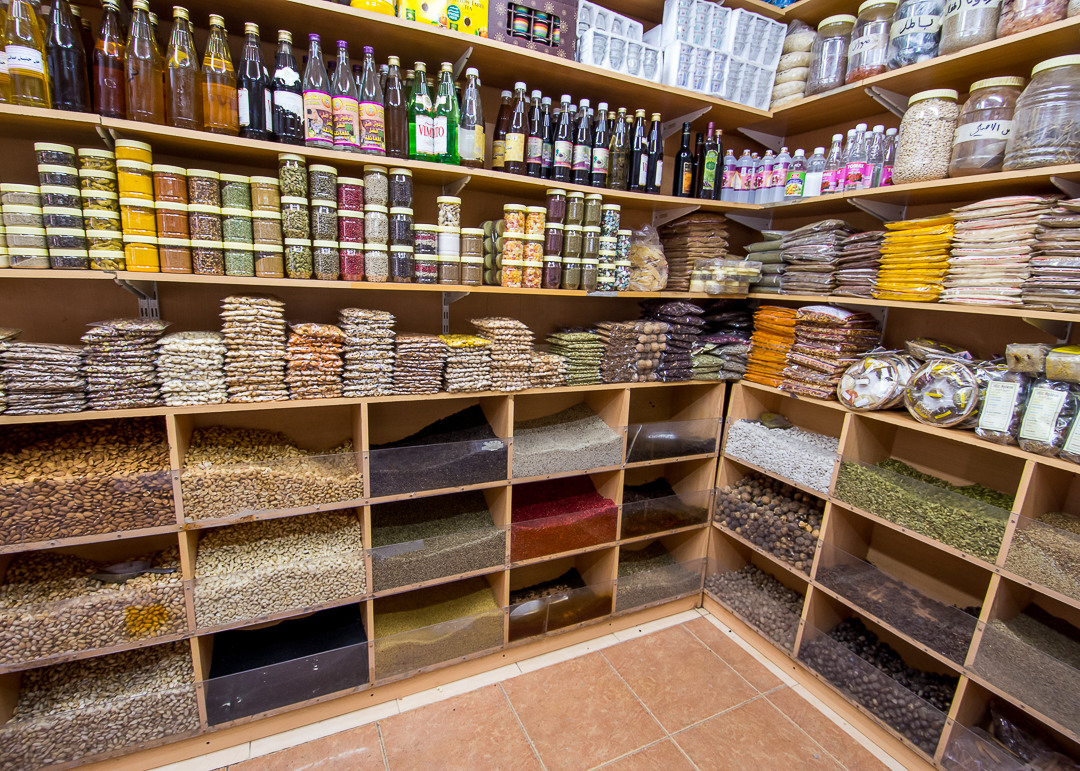
Bulk grains, nuts and spices fill the air with wondrous aromas and give the best picture of Oman’s main ingredients.

Nizwa Souk

Step inside for even more goodies: perfumes, teas, rose water, pre-packaged snacks, …

Nizwa Souk

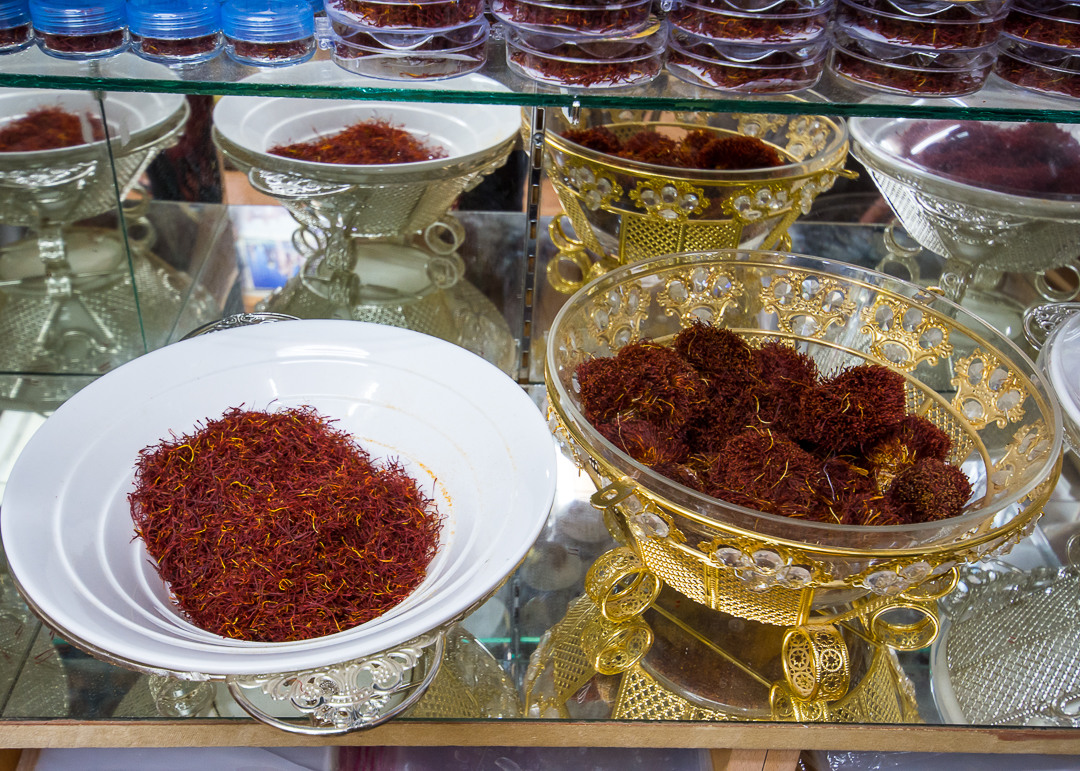
…and beautiful, top quality Iranian saffron.

Saffron in Nizwa Souk

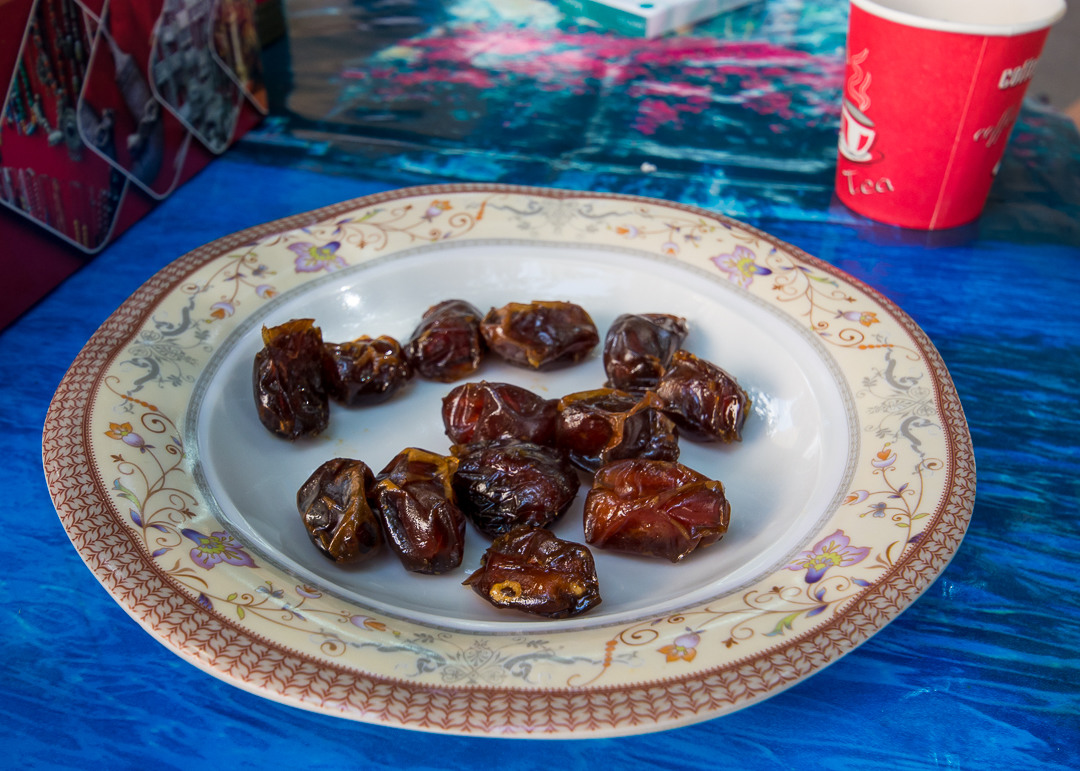
Time for a coffee break, a favorite pass time here which Omanis partake in many times a day. The strong, bitter coffee (kahwa) is flavored with cardamom and always served straight with dates to help counterbalance the bitterness.

Coffee & Dates

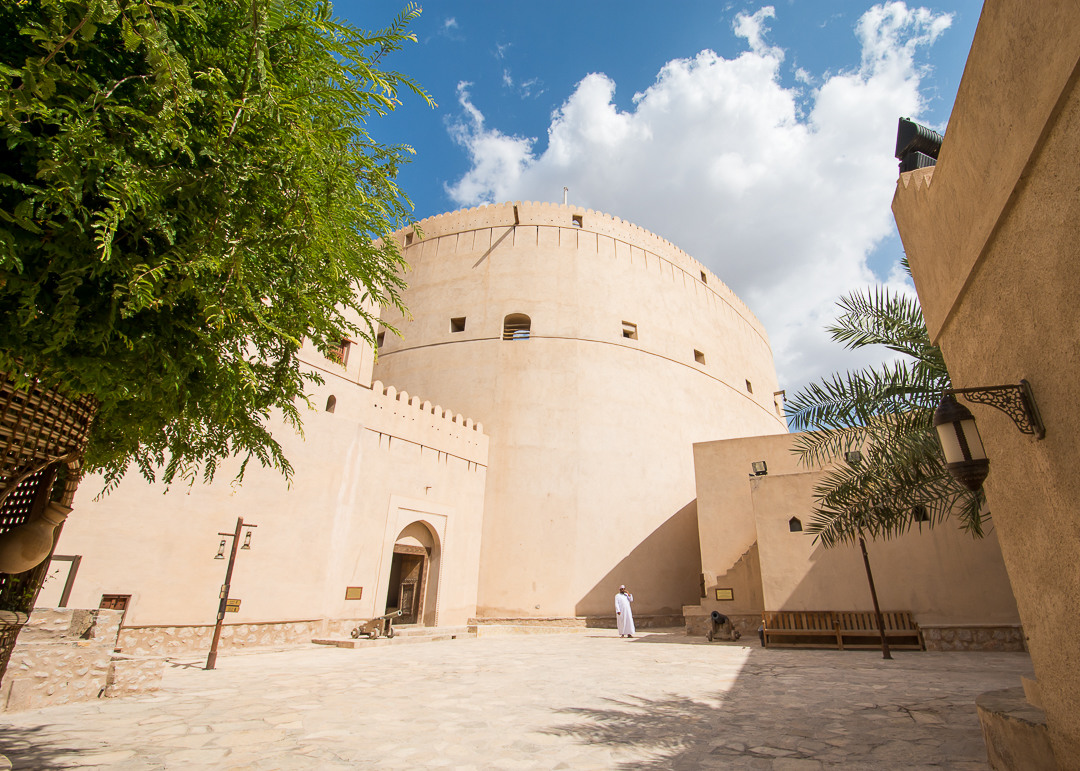
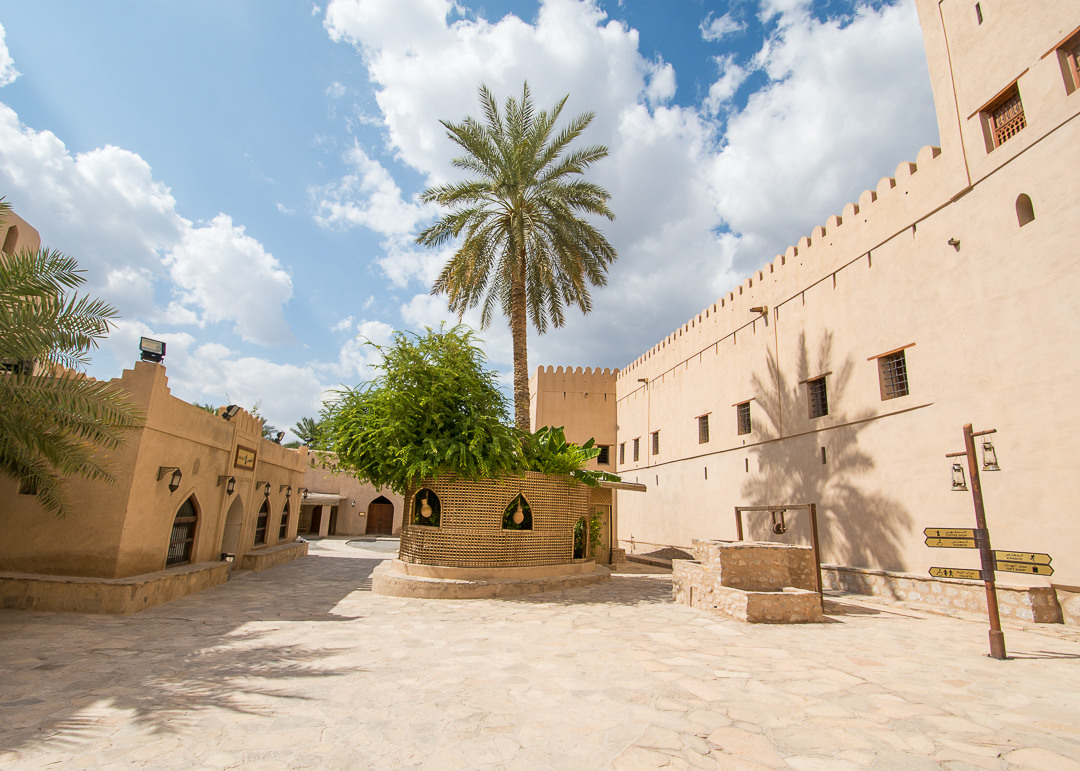
The main attraction in Nizwa is right next door, overshadowing the souk with its humongous walls – Nizwa Fort.

Nizwa Fort

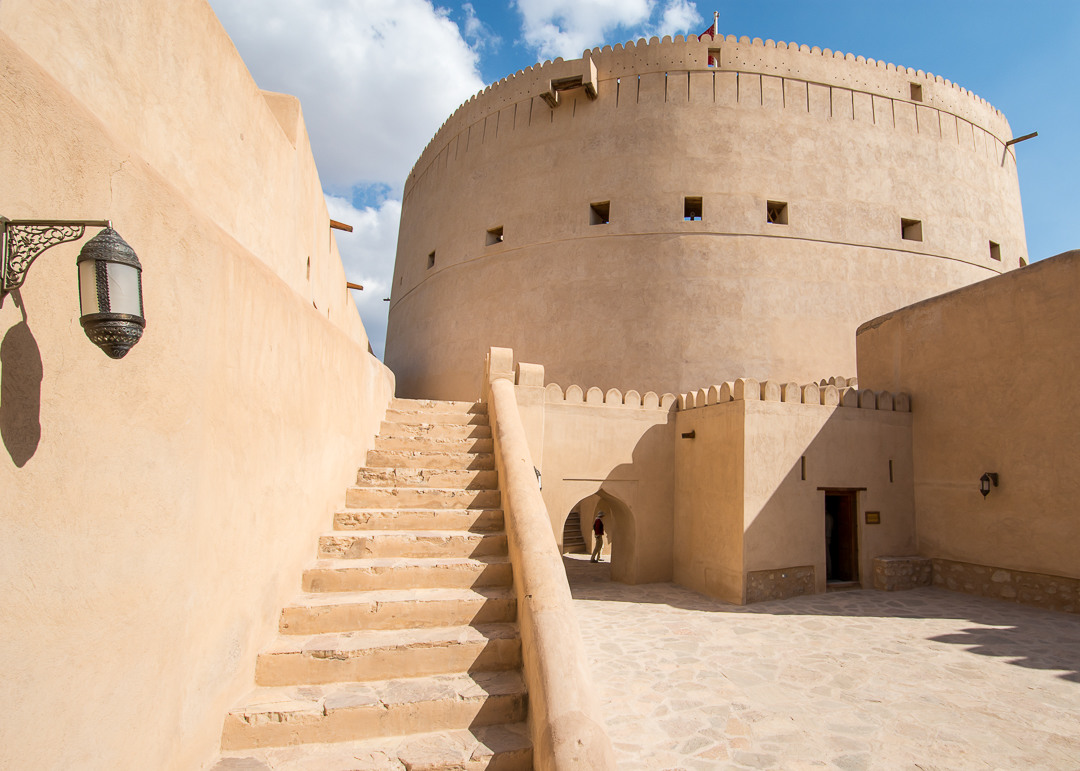
Dated from the 17th century, the fort was successful in defending the city against invaders and remains a really well-preserved landmark worth walking through.

Nizwa Fort

Its vast circular tower stands proudly above town and you should climb up the 30m to the top.

Nizwa Fort

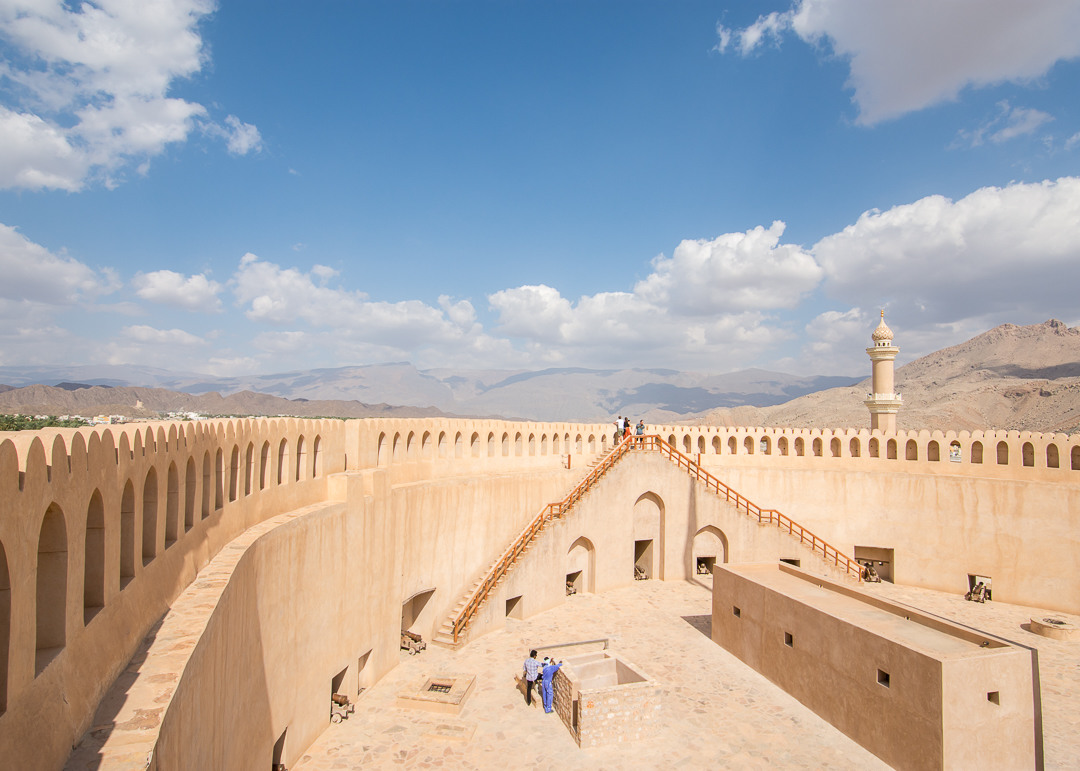
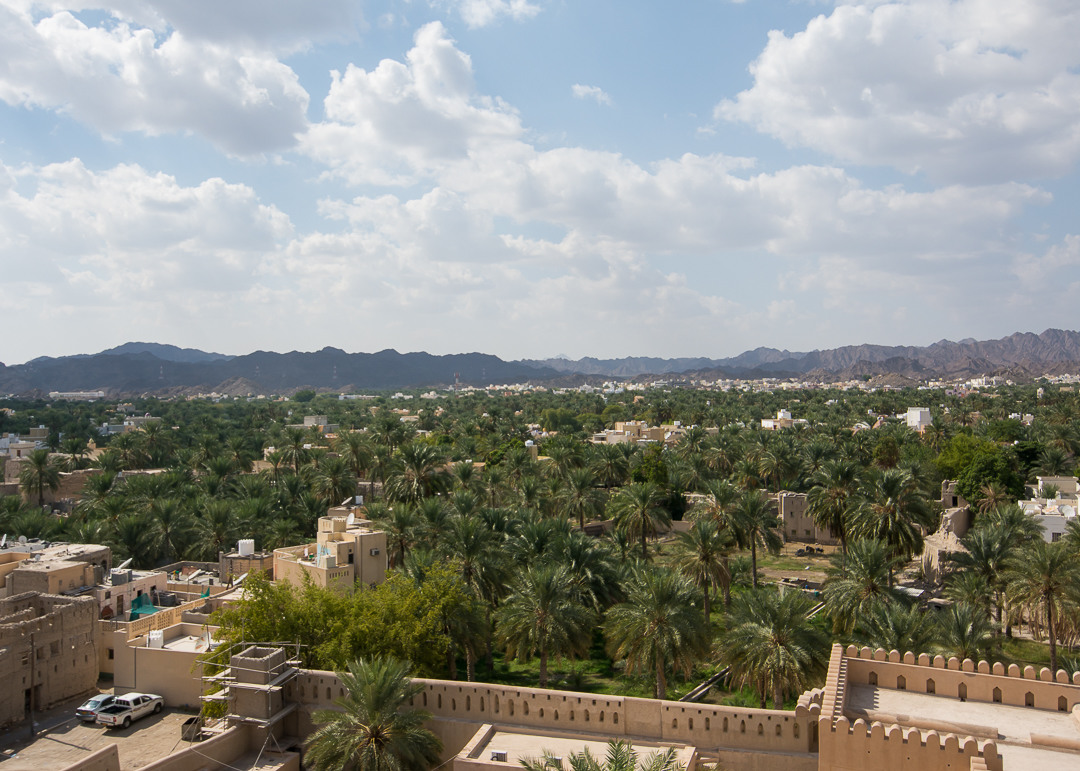
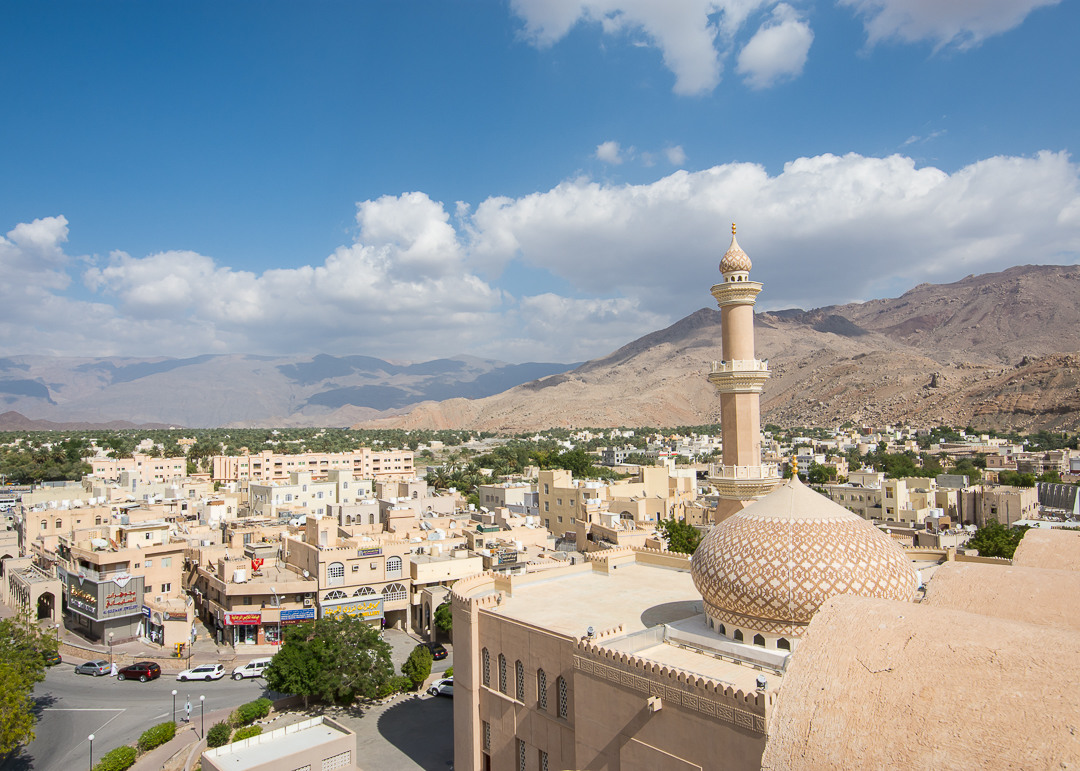
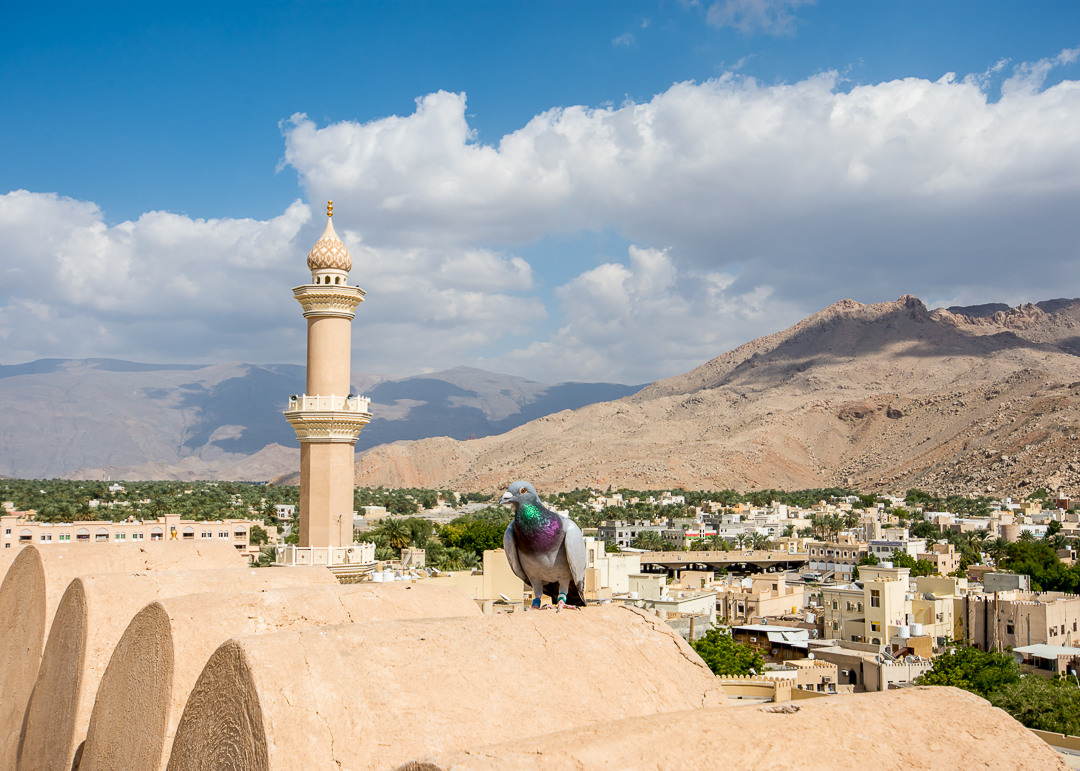
You will be rewarded with 360º views of Nizwa and the surrounding landscape from standing on the ramparts.

Nizwa Fort Tower

Nizwa Fort

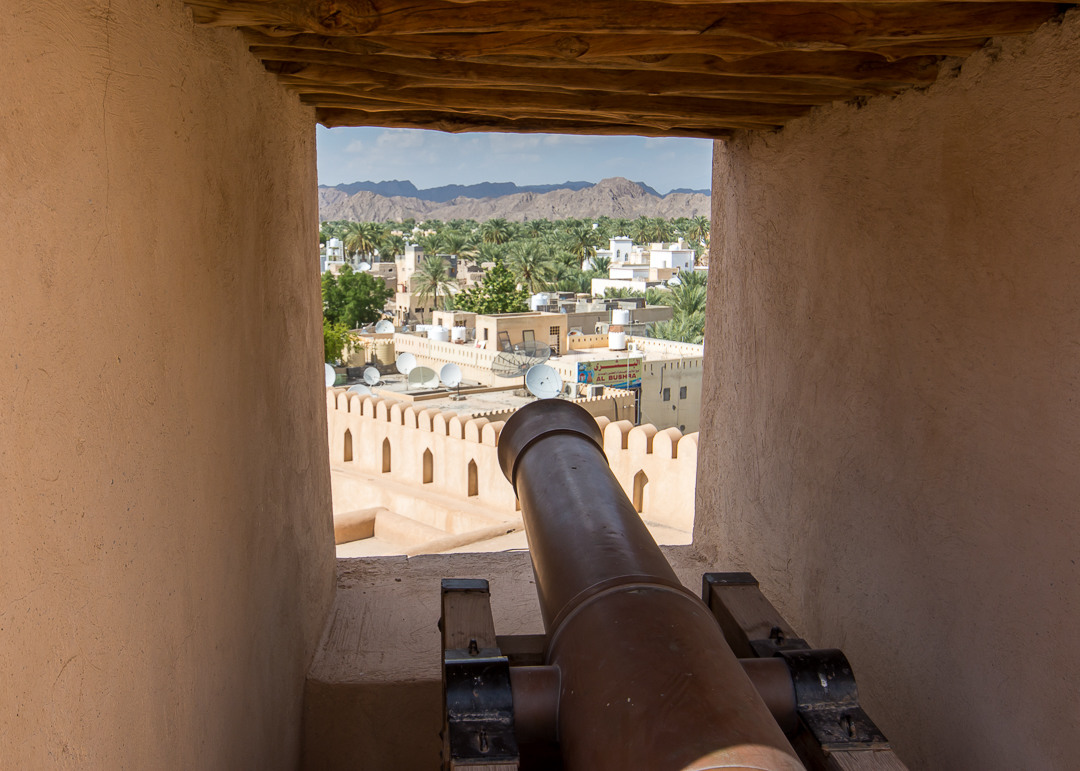
Nizwa Fort - View from the tower

Nizwa Mosque
Nizwa Fort

Nizwa Fort

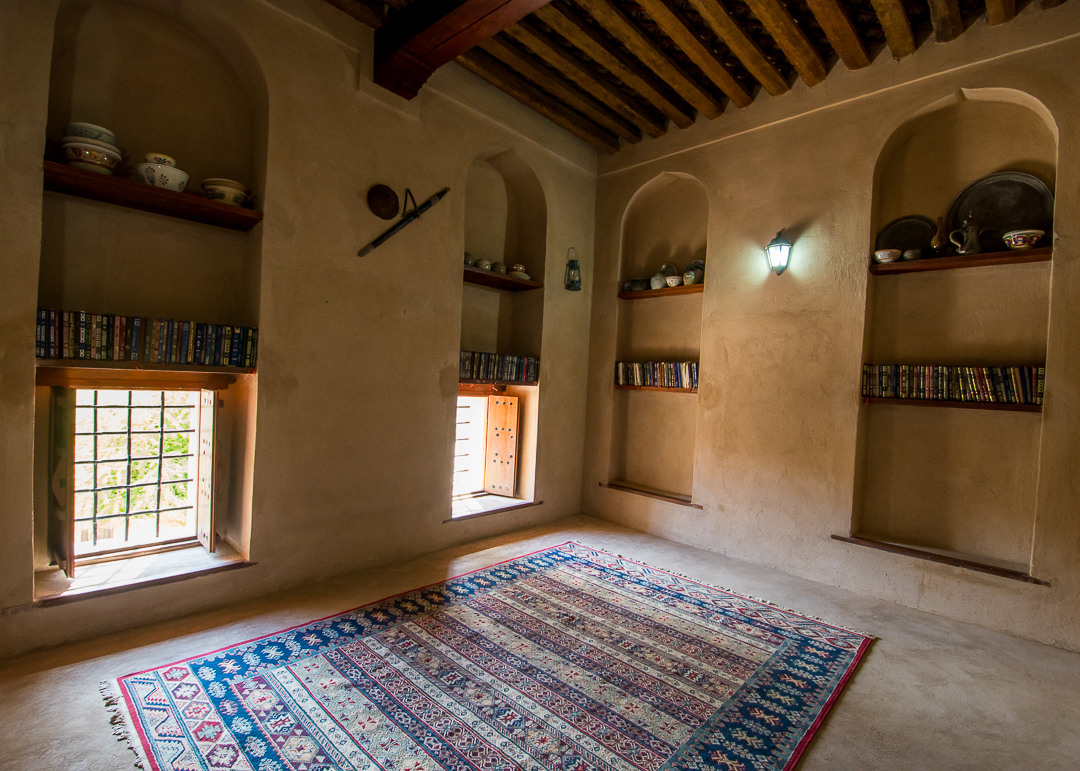
Back down, you can wander around and explore the labyrinth of rooms and hidden corners.

Nizwa Fort Inside

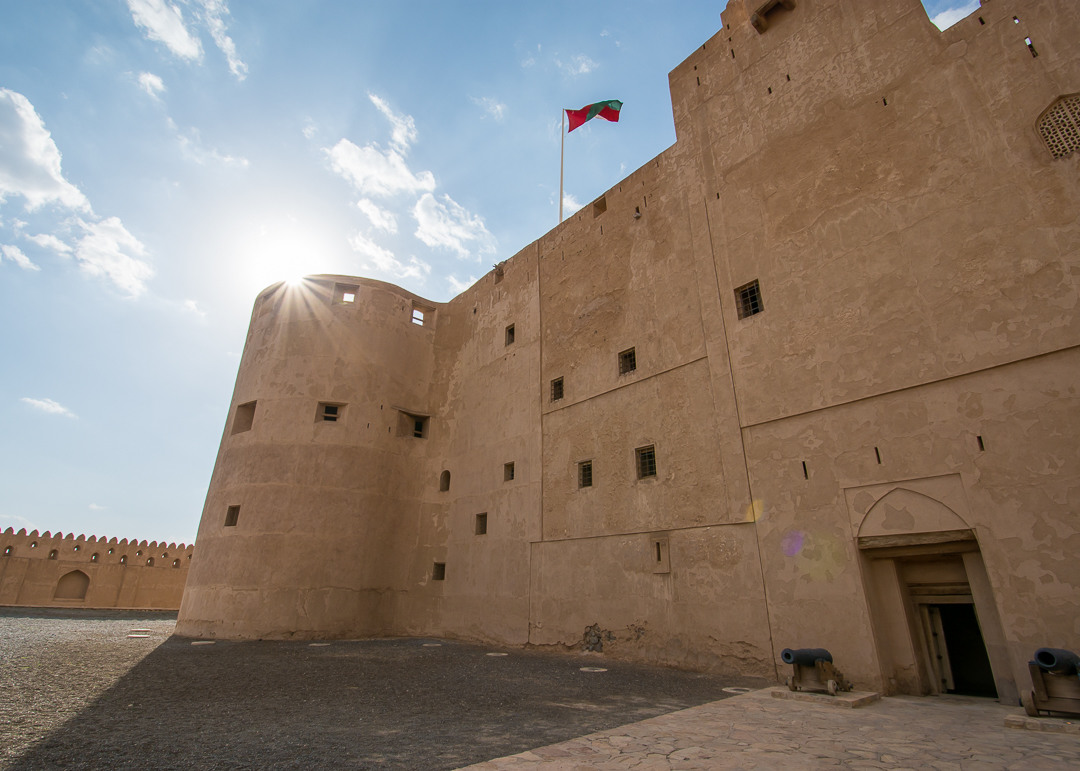
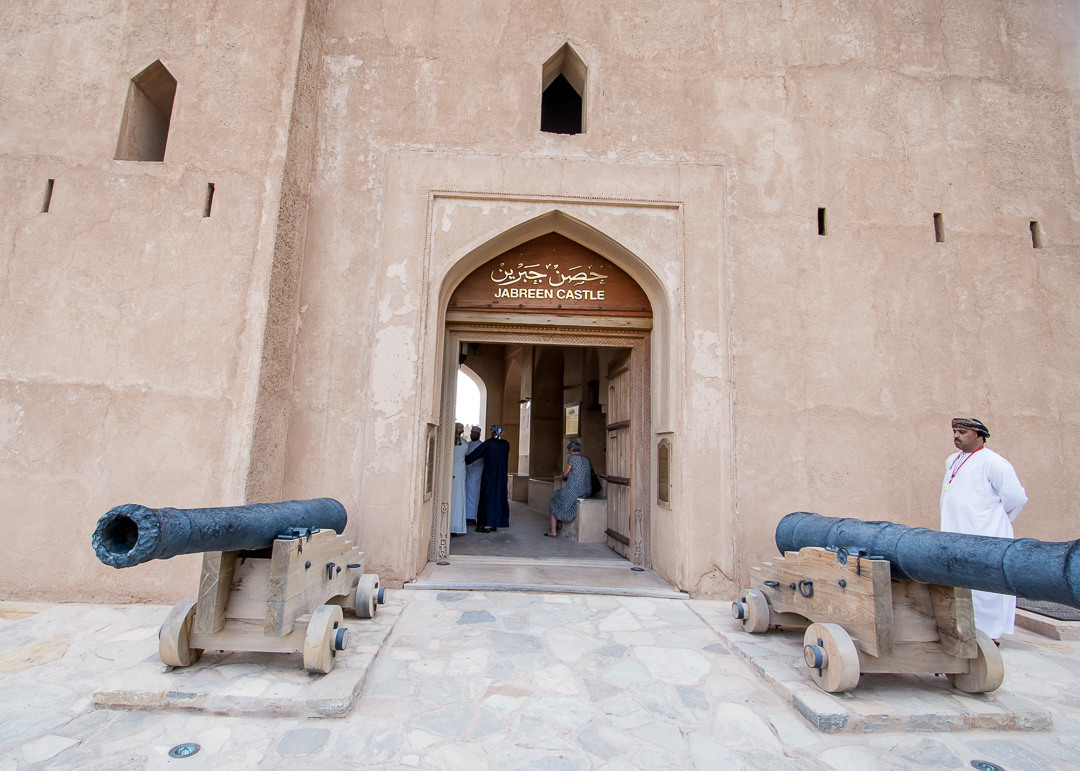
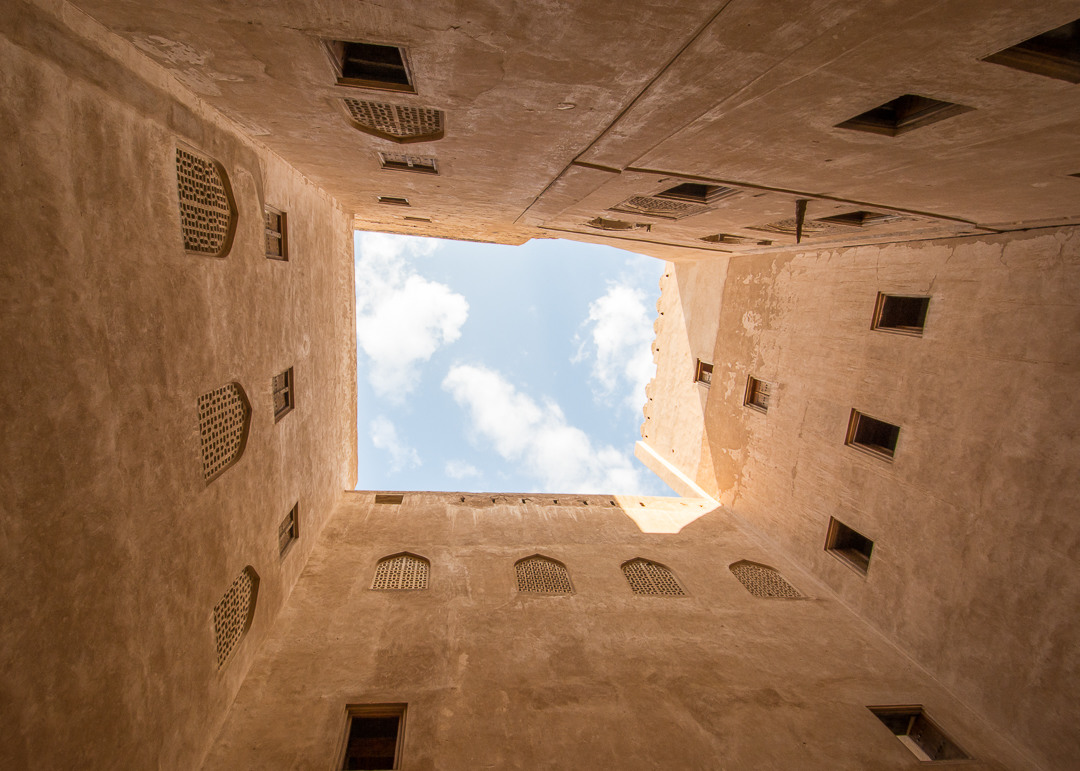
Moving on to the next fortress – Jabreen Castle – a bit further away, where an entirely different experience awaits. The finest of Oman’s castles was originally built during the late 17th century as a home for the Imam and his family, later becamoming a bastion during wartime and subsequently functioning as a retreat for scholars. 

Jabreen Castle

Jabreen Castle

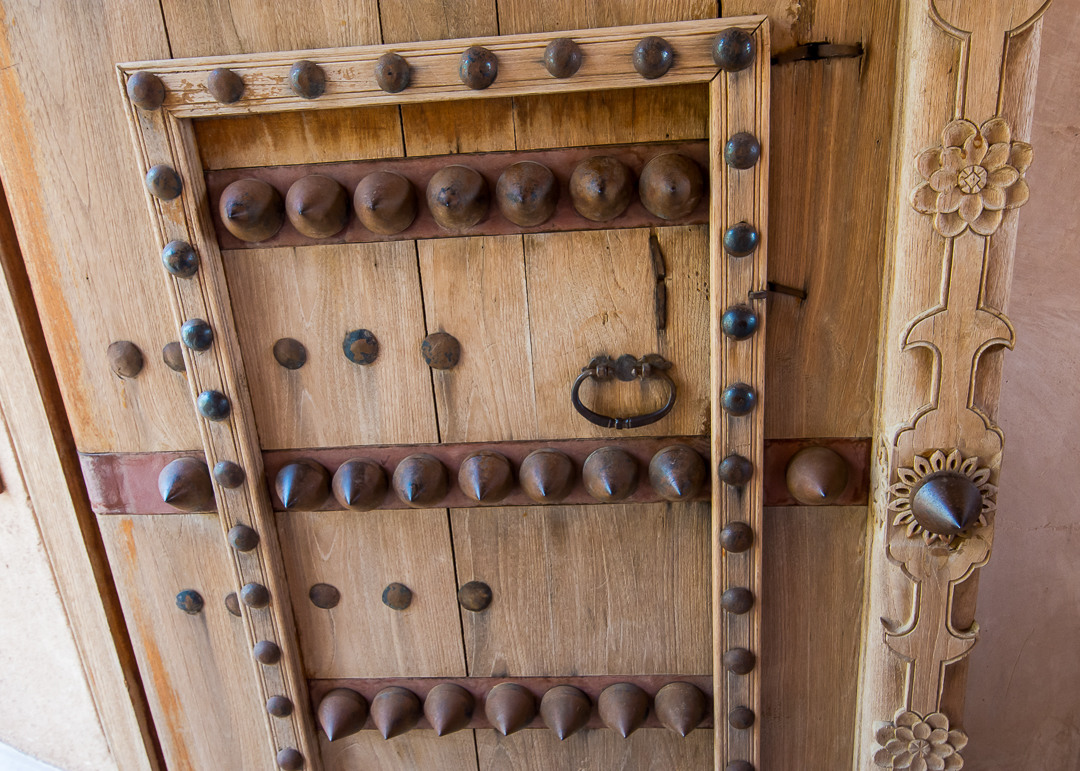
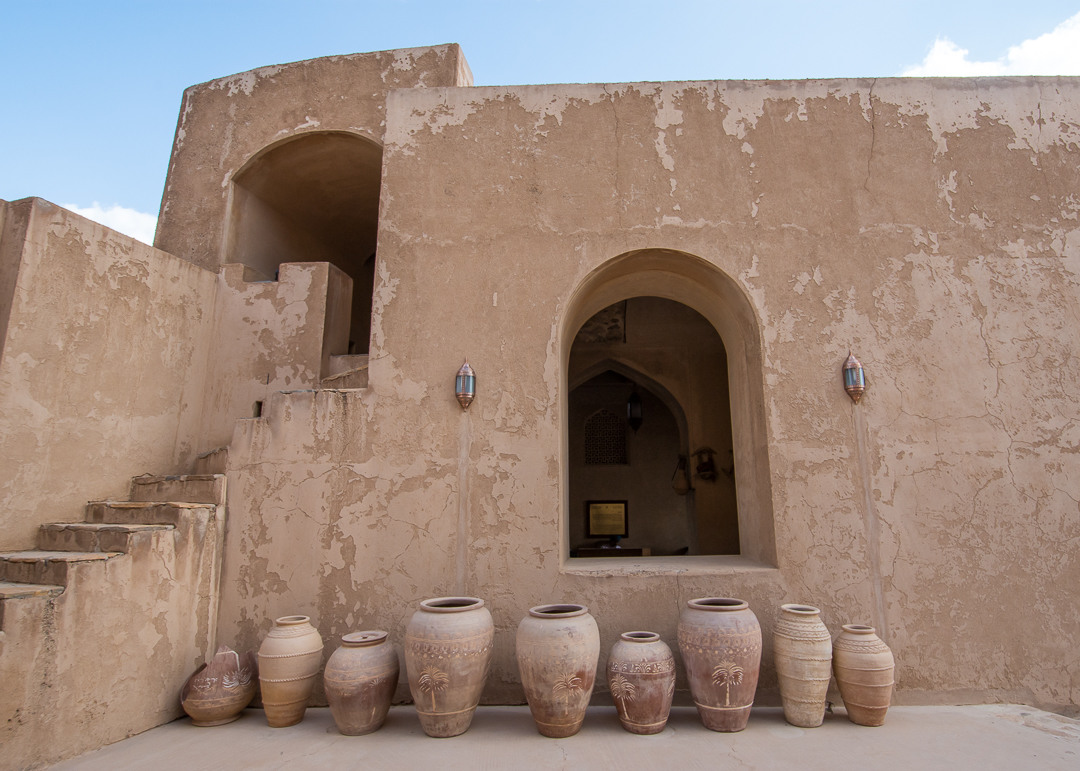
The impressive restoration work highlights the flourishes and craftsmanship the castle is known for.

Jabreen Castle Door

Jabreen Castle 3

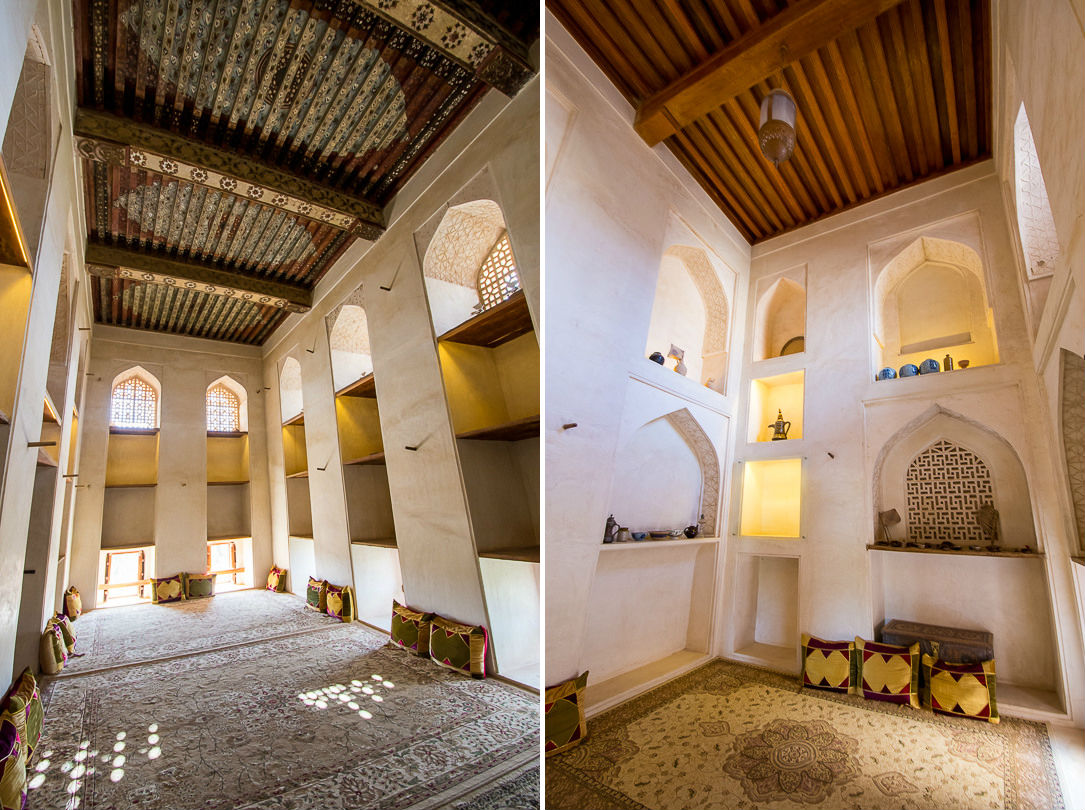
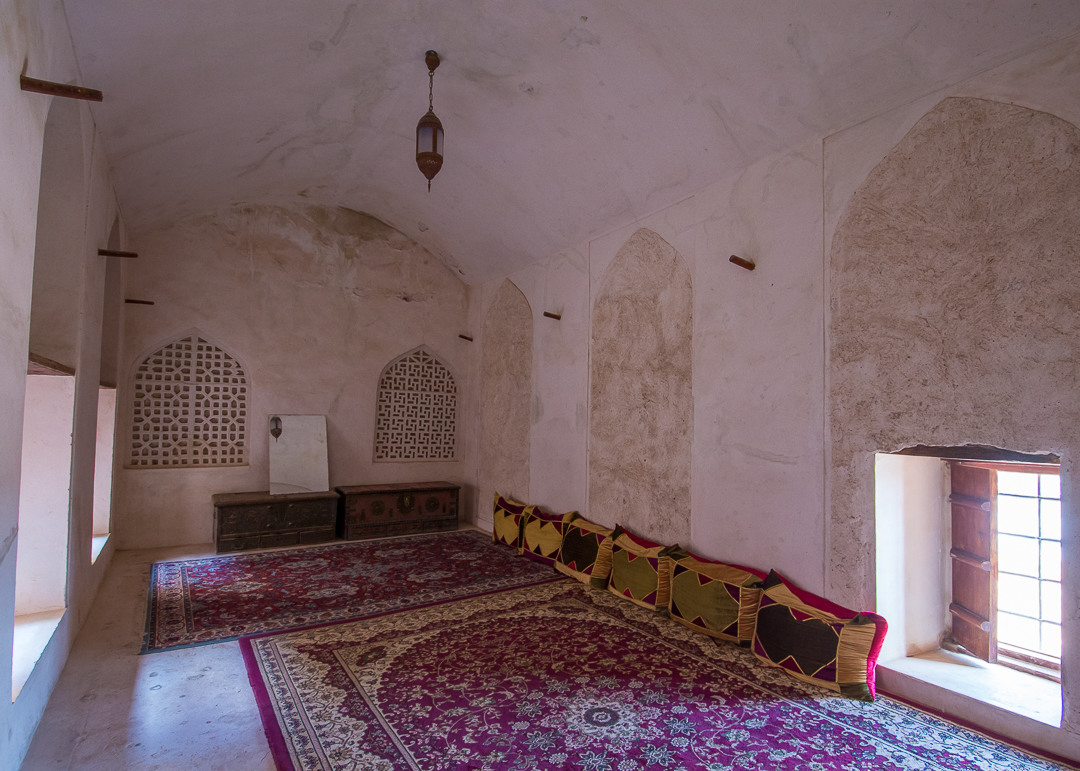
Wandering through the castle, you’ll go from one shadowed room to the next, marveling at the architectural details especially in the Hall of the Sun and Moon below on the left.

Jabreen Castle Rooms

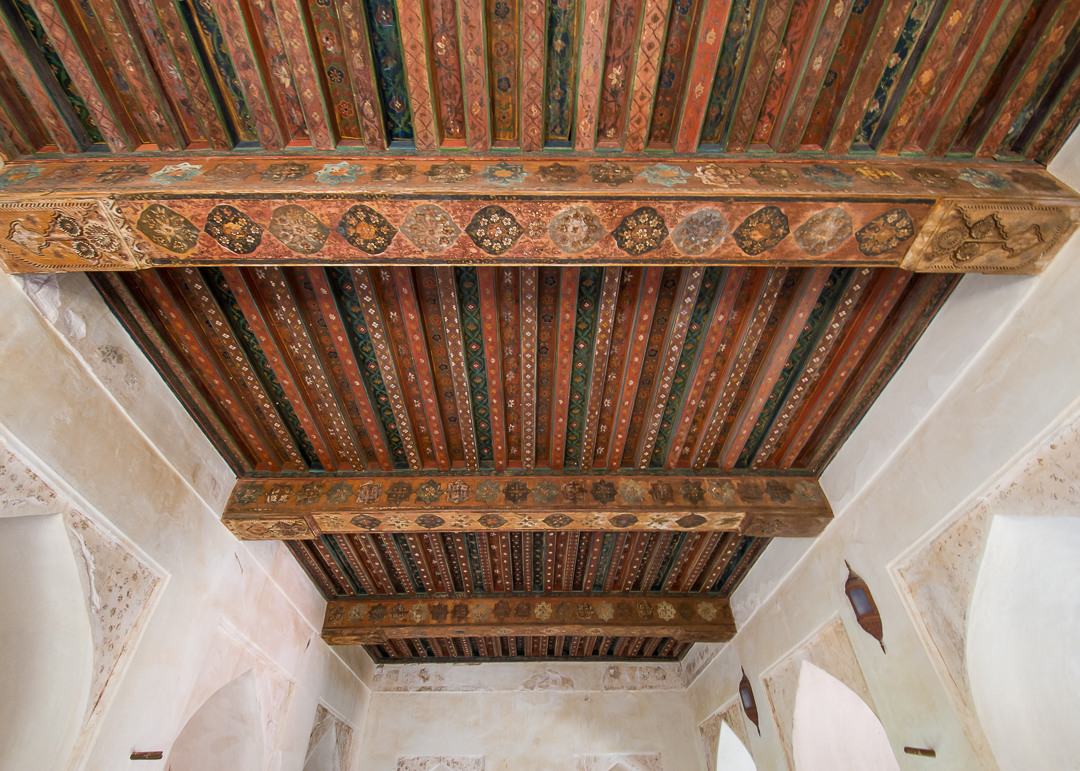
The famous painted ceilings with their carved wood beams are among the most beautiful in the country.

Jabreen Castle Ceiling

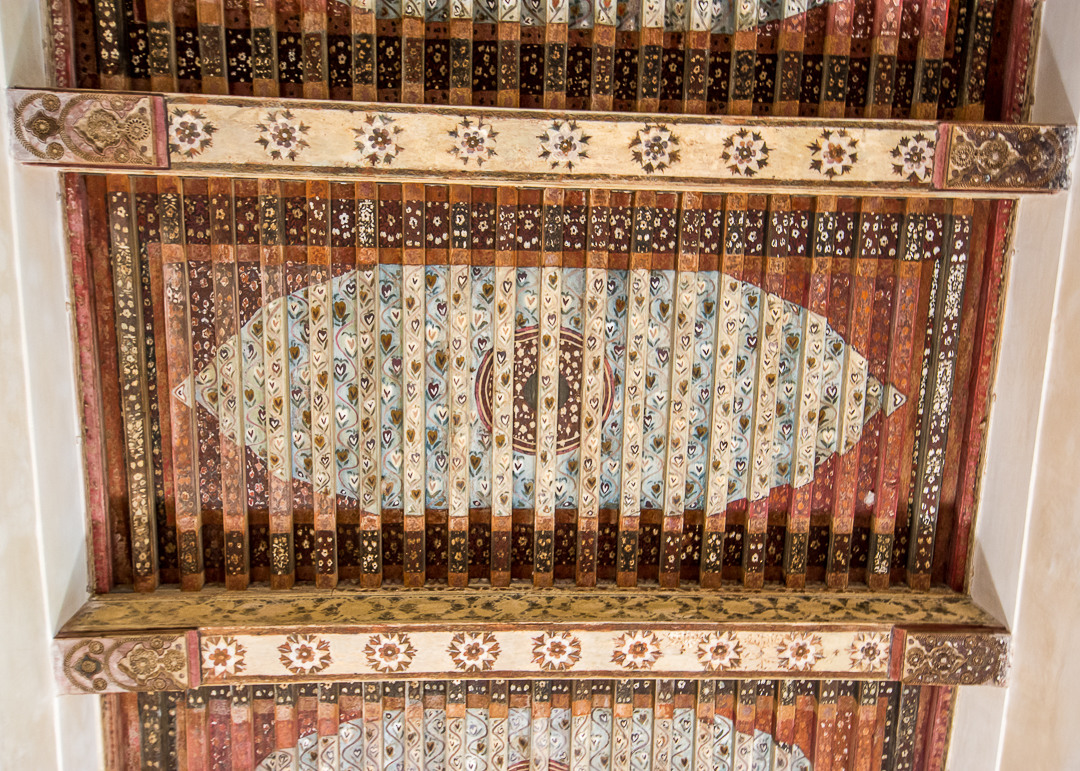
Painted in floral motifs, they seem to be attempting to rival the patterns of fine Persian carpets.

Jabreen Castle Ceiling

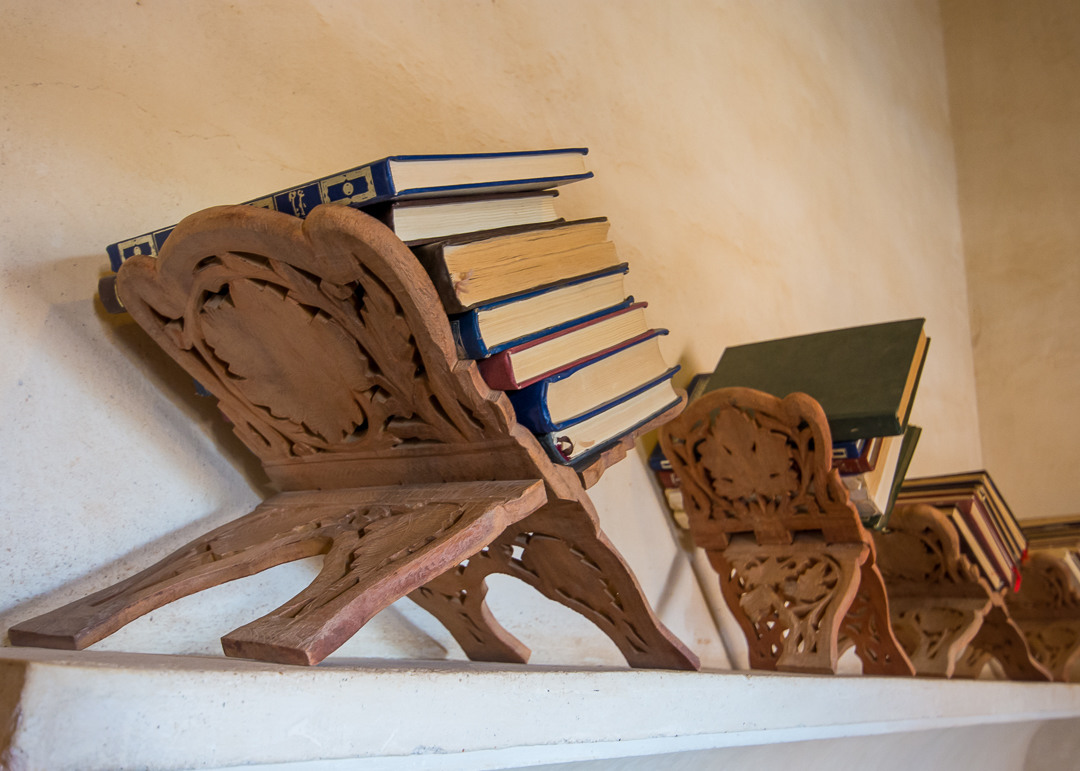
Stacks of books elegantly displayed remind the scholarly use of the premises.

Jabreen Castle Book Holders

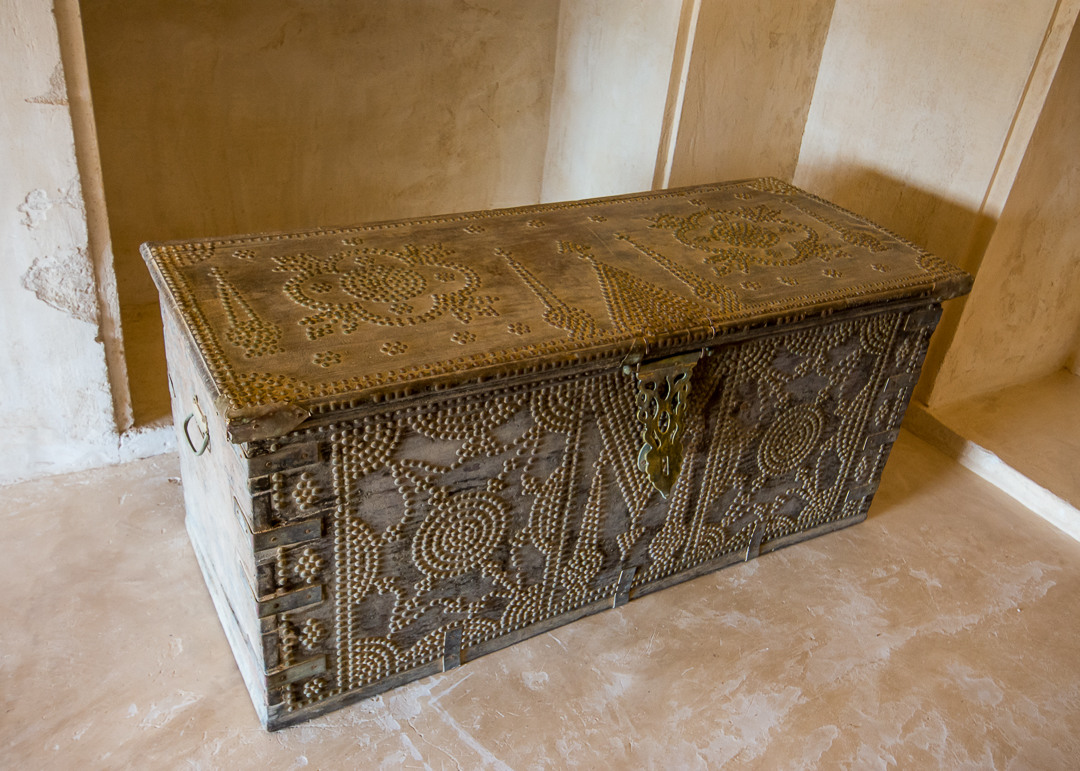
Jabreen Castle Chest

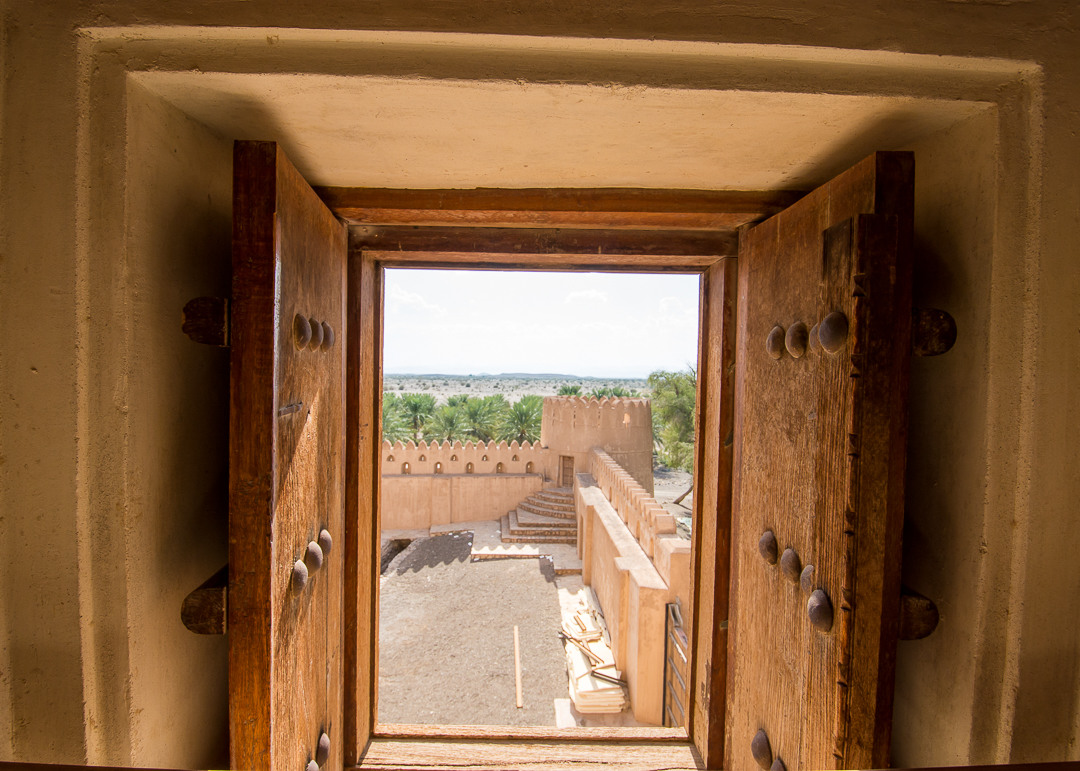
Taking a peak through a window, there’s a solid reminder of the military aspect of the castle in this northwest gunnery tower.

Jabreen Castle 8

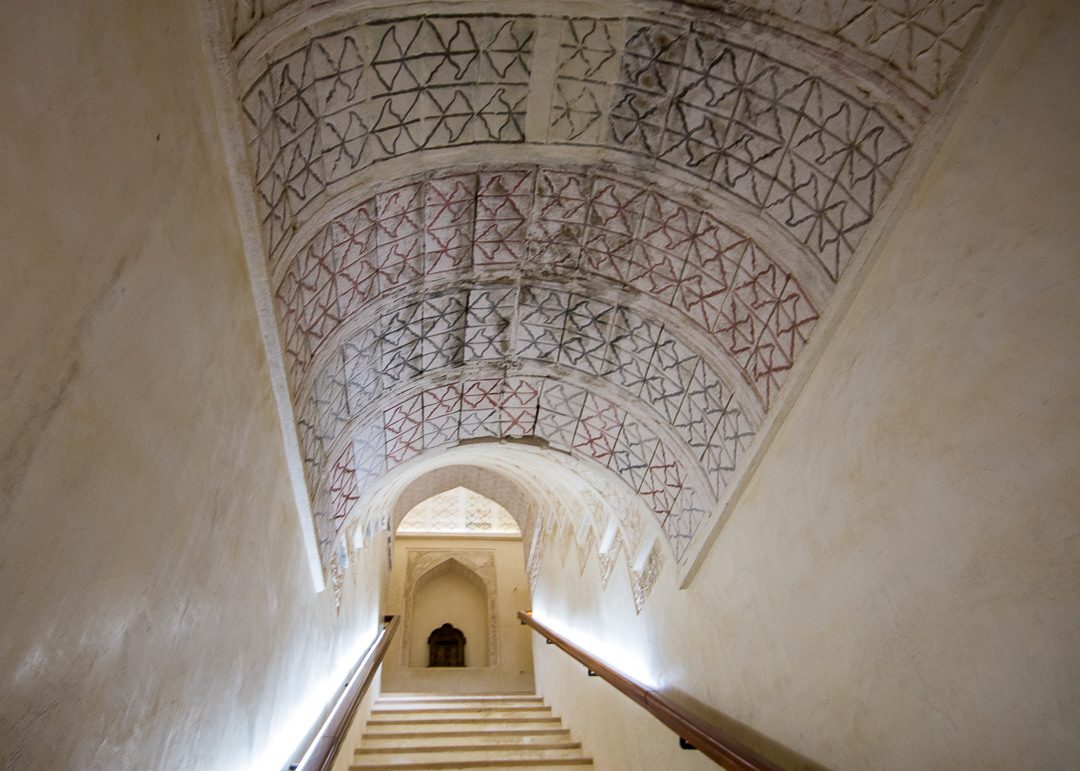
One of my favorite part though was this stairway leading up to the upper rooms with its series of vaulted arches, pale white and adorned with colorful carvings before ending in a sea of white like a heavenly canopy overhead.

Jabreen Castle

Jabreen Castle

There are two open courtyards, the one below allowing a little glimpse of the sky while being drenched in shade.

Jabreen Castle

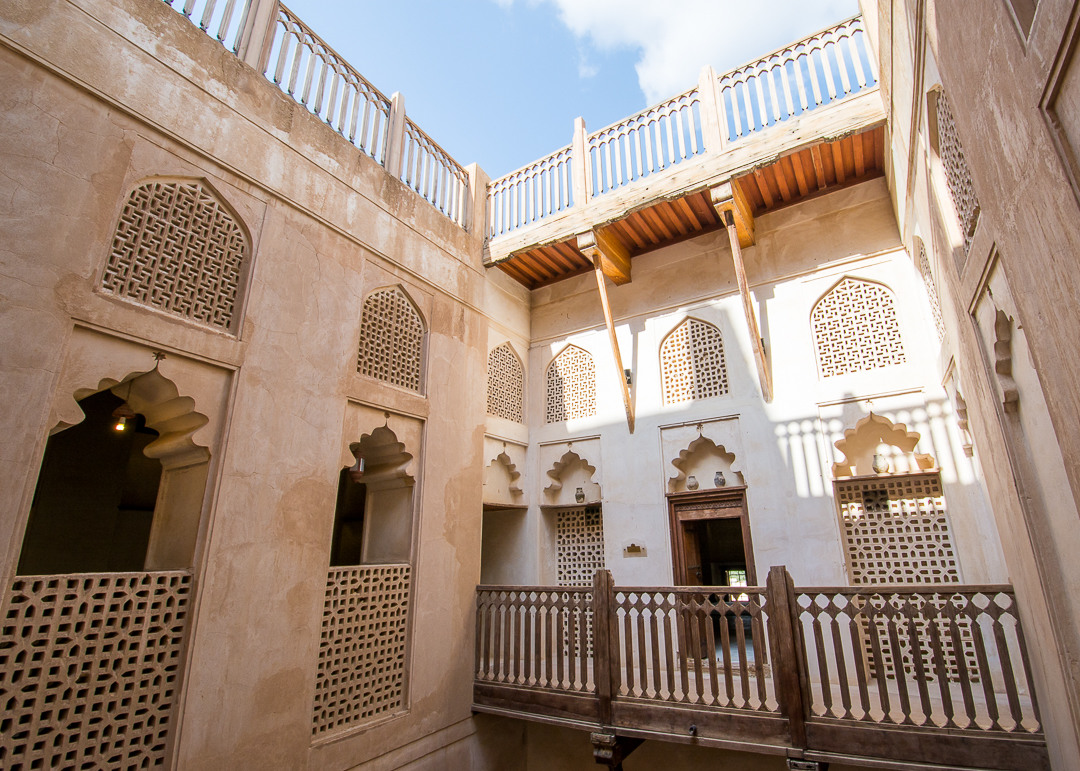
The other is graced by elegant balconies with carved wooden railings and beautiful arched windows.

Jabreen Castle

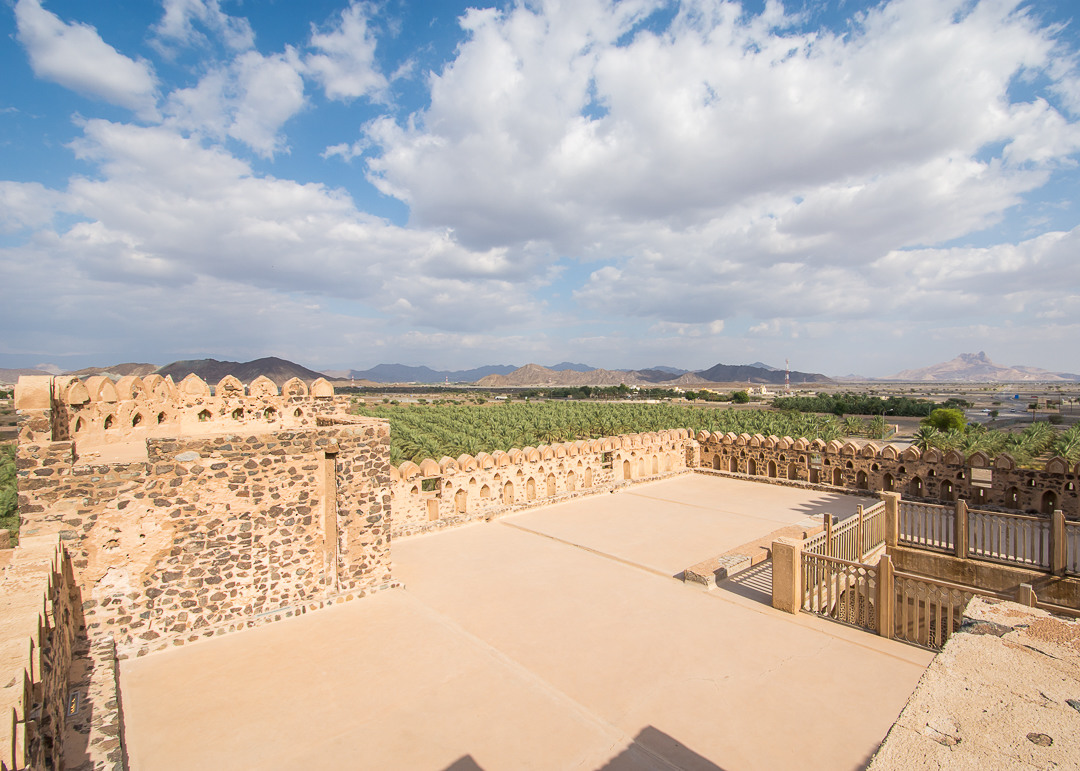
Make your way to the rooftop for a view over the serene rural surroundings. This is where you’ll also find one of the mosque and the Qu’ranic schoolroom.

Jabreen Castle Rooftop

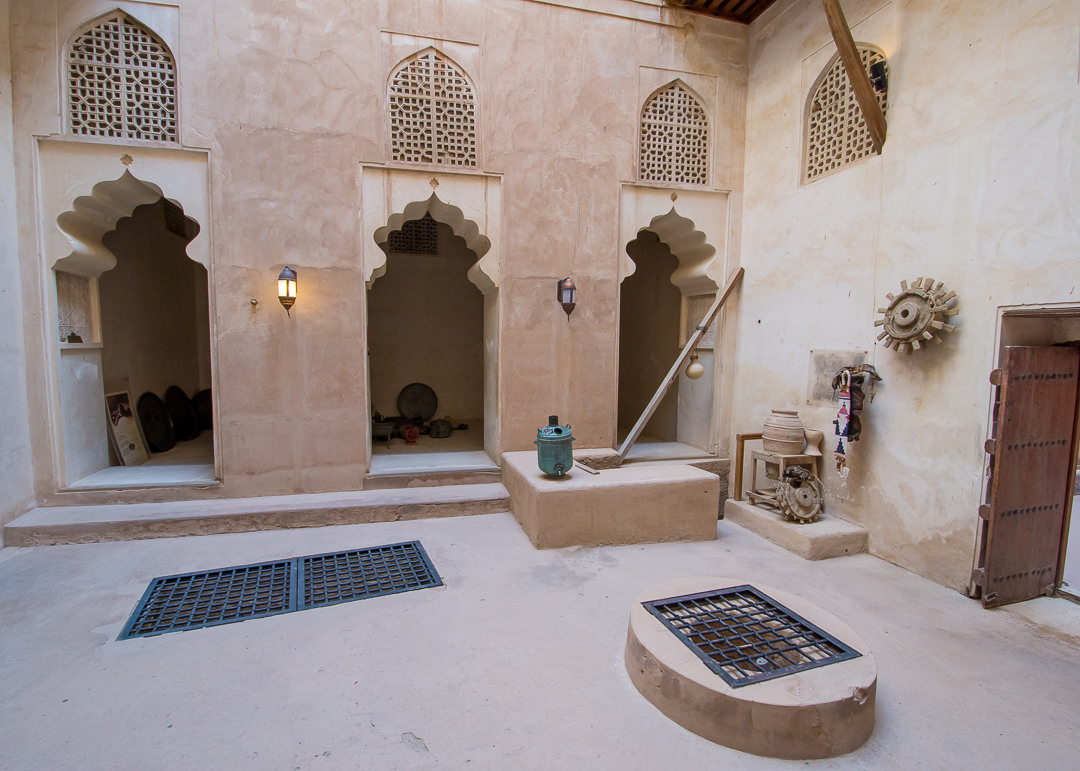
Back downstairs standing at the bottom of that beautiful courtyard is the castle’s kitchen and storage rooms.

Jabreen Castle

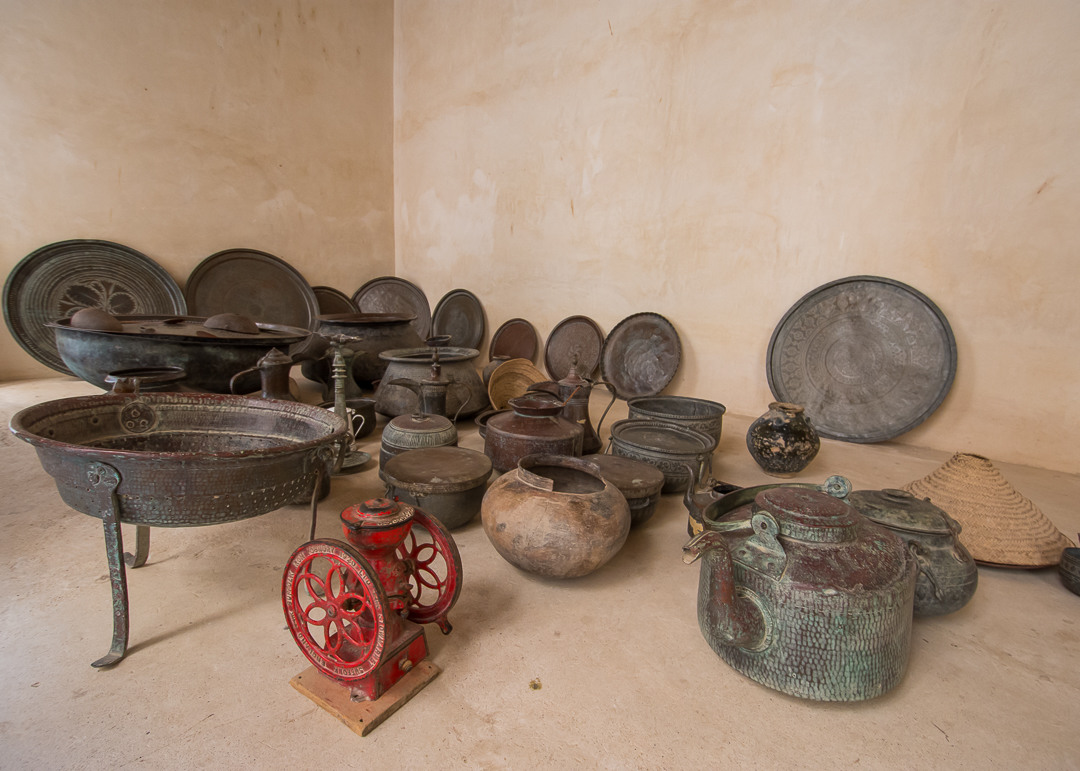
Some of the original kitchen equipment is on view.

Jabreen Castle - Kitchenware

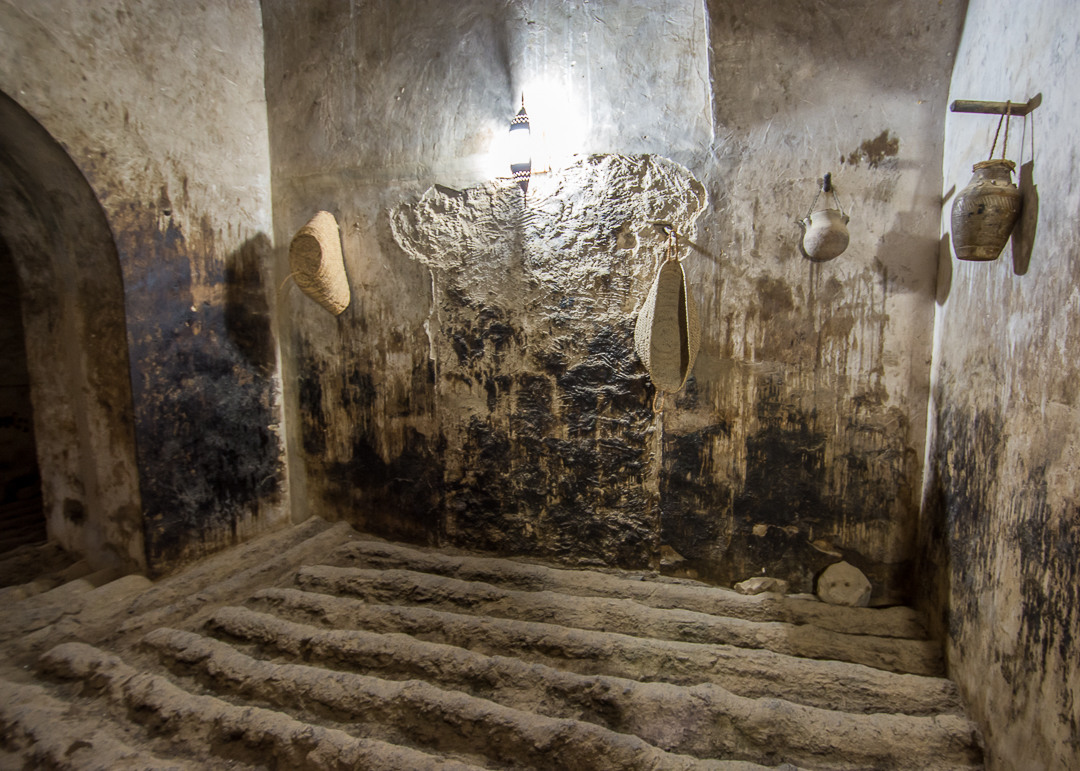
A narrow passage from the kitchen leads to a dark and very particular room used for storing dates. There’s still a sweet lingering smell in the air. The wavy floor was to allow the oil from the squeezed dates to flow through a pit where it was collected for kitchen use or defense mechanism (they would pour boiling date oil over their enemies…ouch!).

Jabreen Castle - Date storage room

Once back outside and taking a good look around, what catches your gaze besides the majestic forts are the mountains. Jebel Akhdar, the mountain range which translates as ‘green mountain’, is home to around 58 villages and communities surrounded by green terraces where grapes, peaches, figs, pomegranates, apricots, walnuts, lemons, almonds, apples and desert roses grow, a lot of it being sold at the souk in Nizwa. The climate in the jebel is unique and so are its villages of which you must visit a few to get a good idea of the life here. The government is slowly developing the area to allow for visitors to stay but for now, using Nizwa as a base and driving up the winding roads to the bigger villages is your best option.

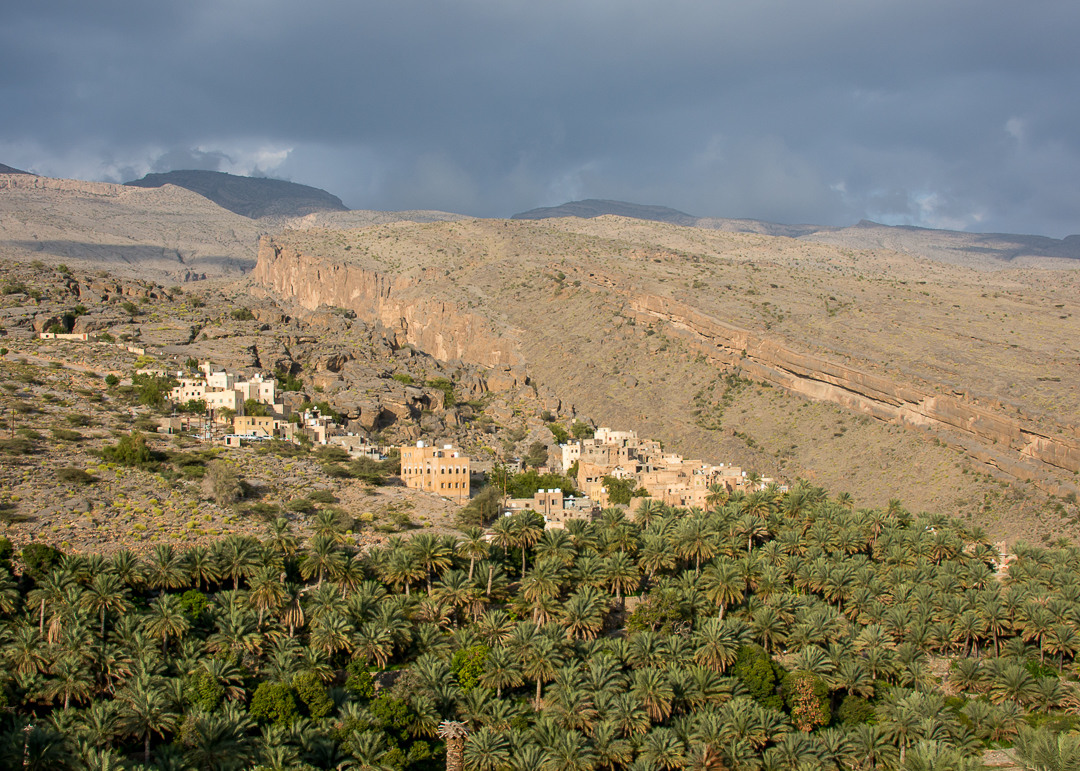
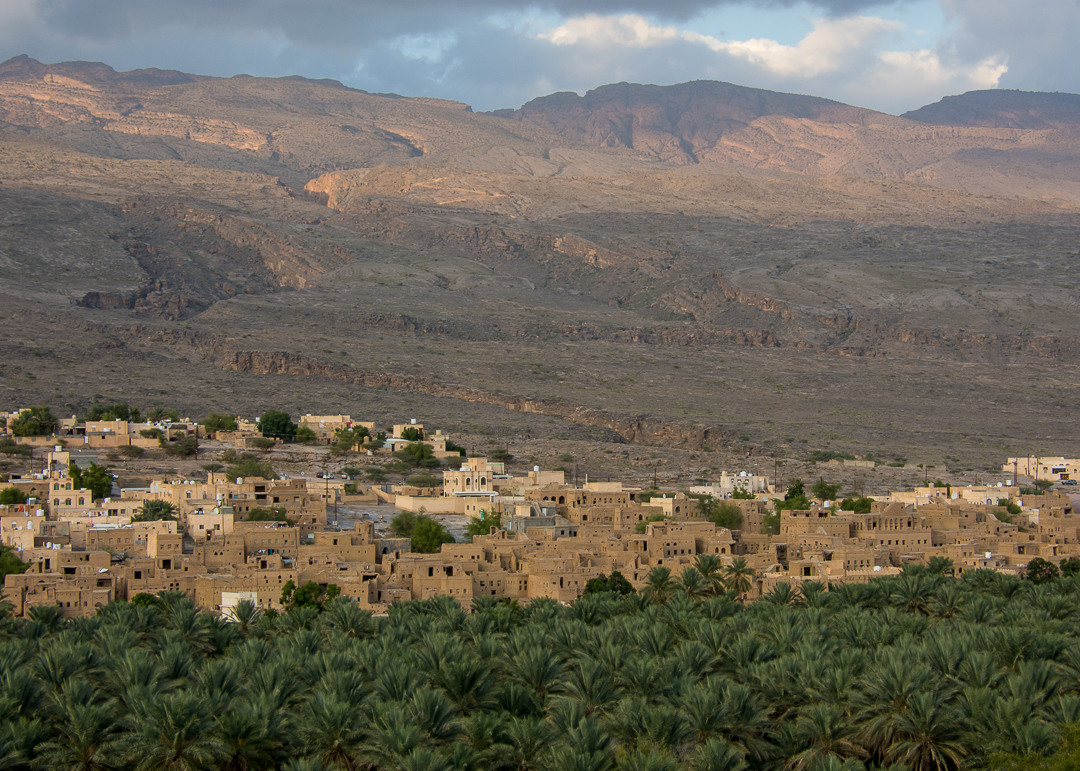
One of the most iconic village is Misfat Al Abriyeen (also called Misfah), a medieval village built into a rock face some 10km up the valley floor.

Misfat

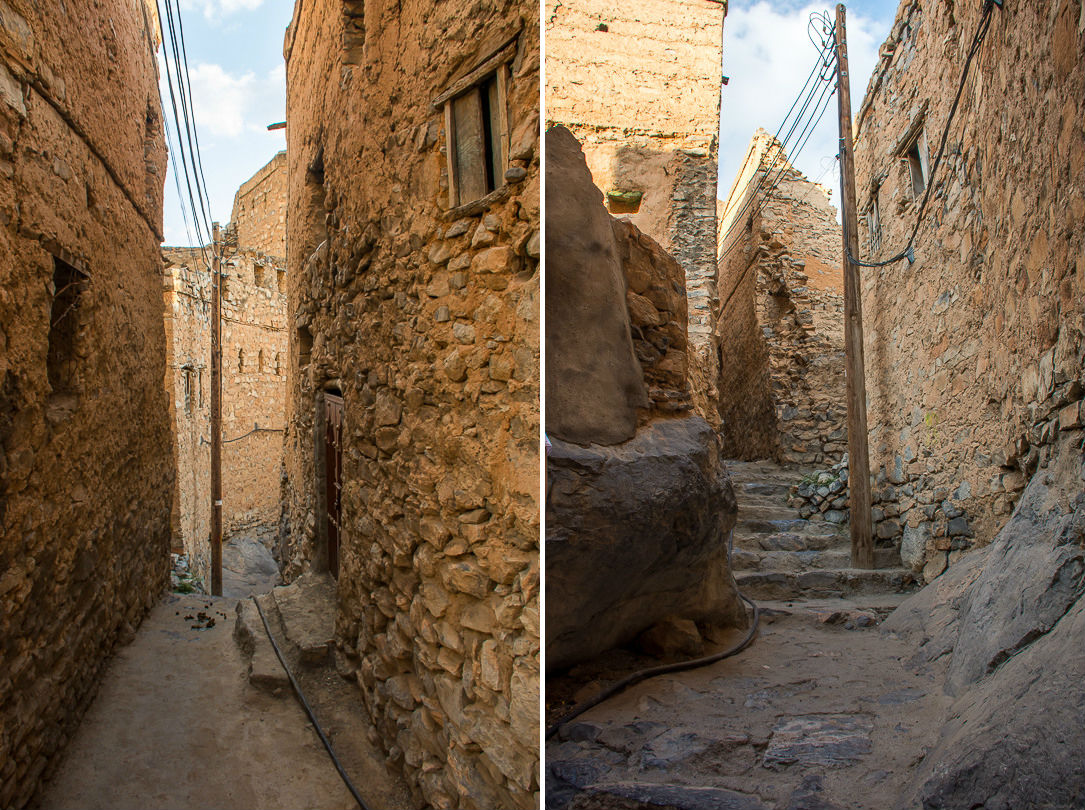
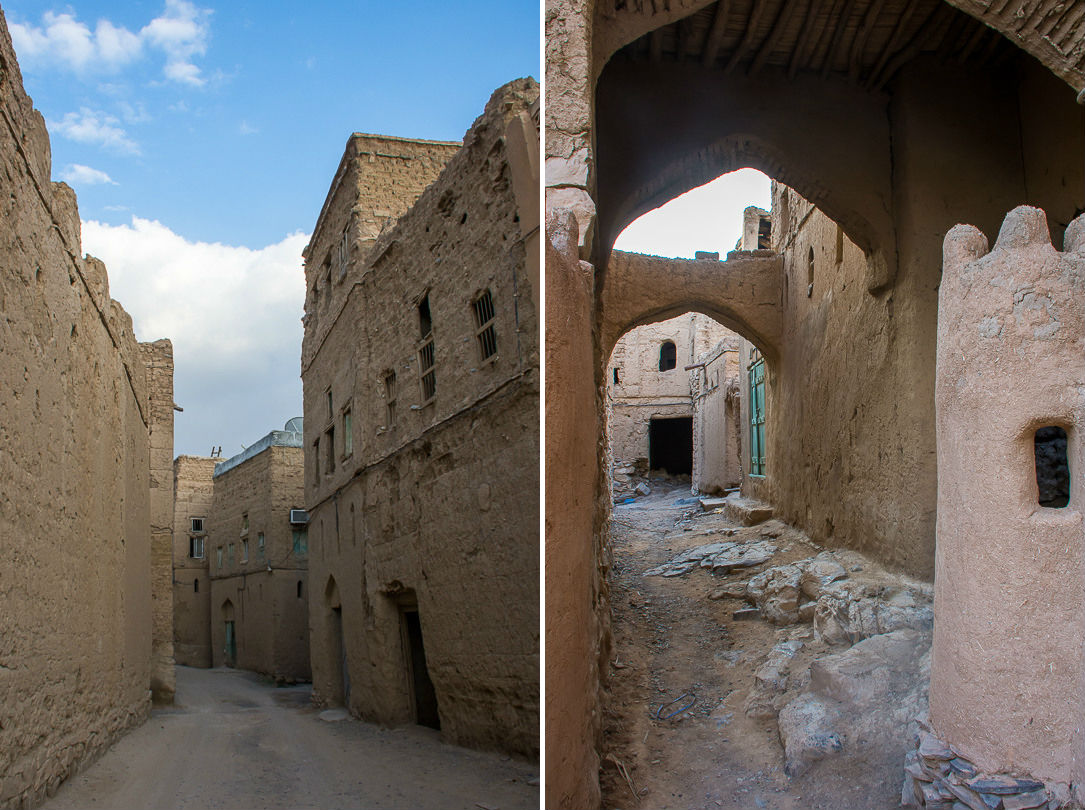
You’ll have to leave the car at the car park and you’ll see why when you start going down the crumbled narrow streets. The tall mud houses might seem in a desolate state but they’re inhabited for the most part and you’ll notice satellite dishes and other signs of modern life.

Streets of Misfat

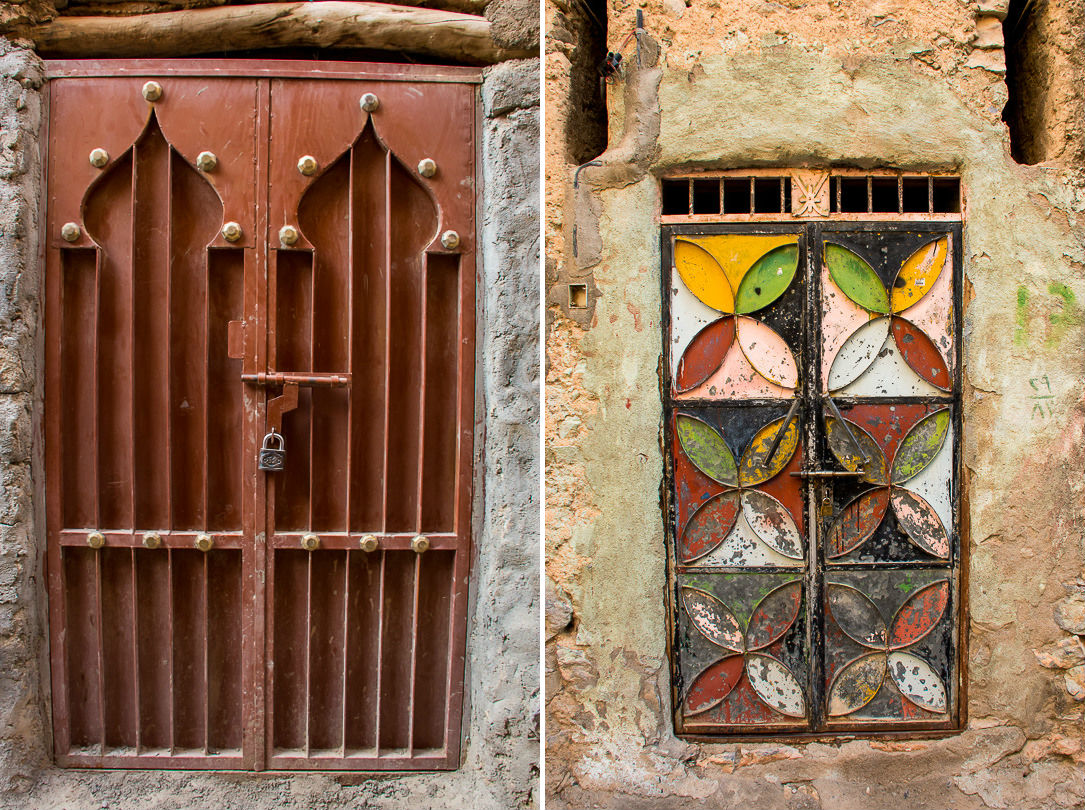
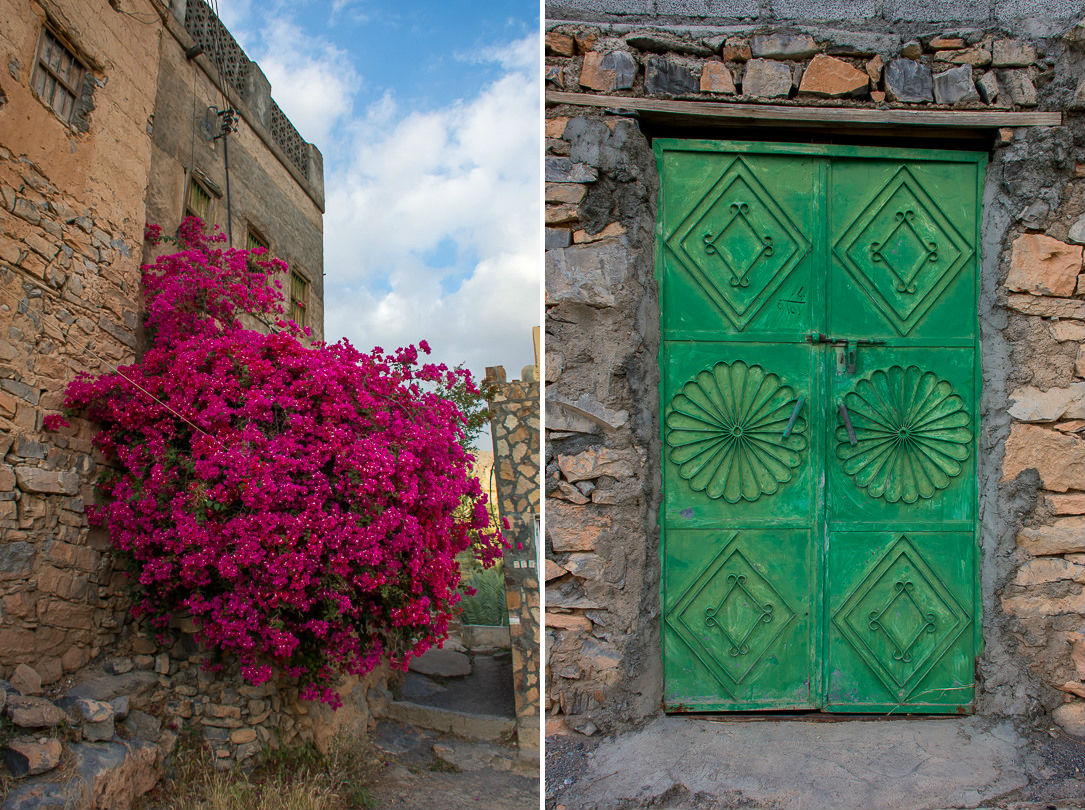
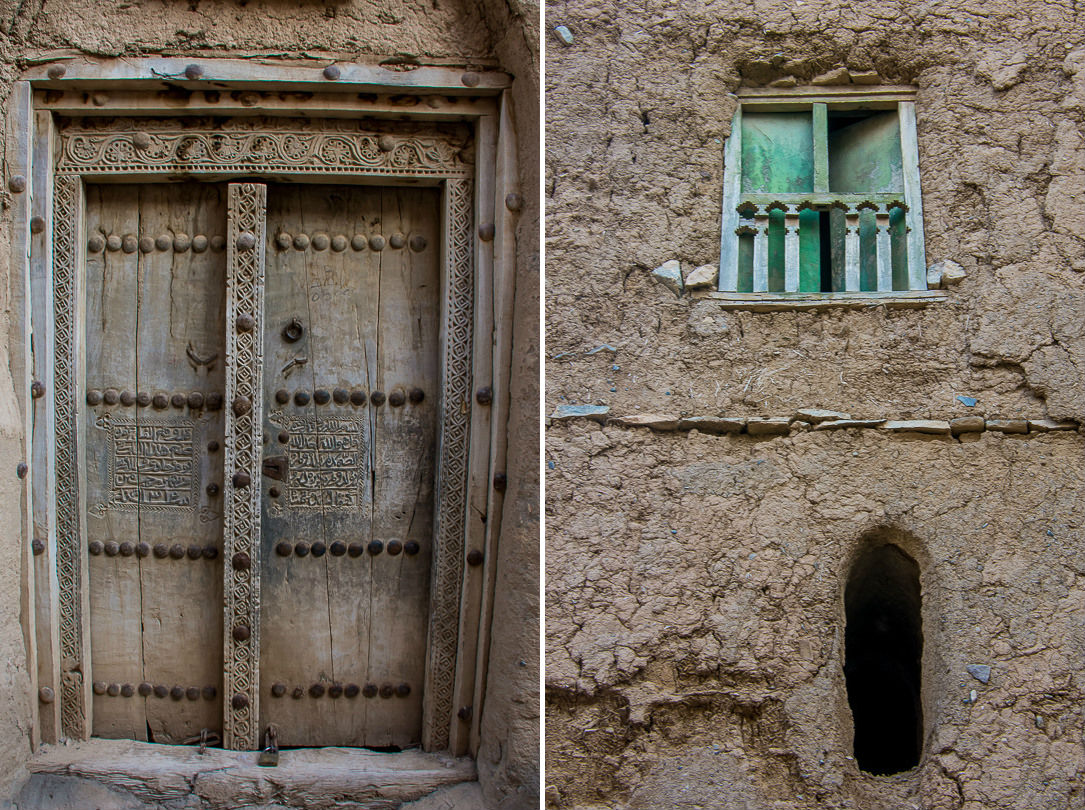
I loved taking pictures of the doors, all colorful and very distinct from each other, and by far the most aesthetic part of any house. Did you know that in Arabic architecture the door was often the most elaborately decorated feature of a building as it marks the transition from community space—city, town or village—to family space, the home? It is often the only form of artistic expression that the private life of the family projects to the outside world and provides a glimpse of the richness that lies behind the otherwise blank facade.

Misfat Doors

Misfat Doors

Misfat local

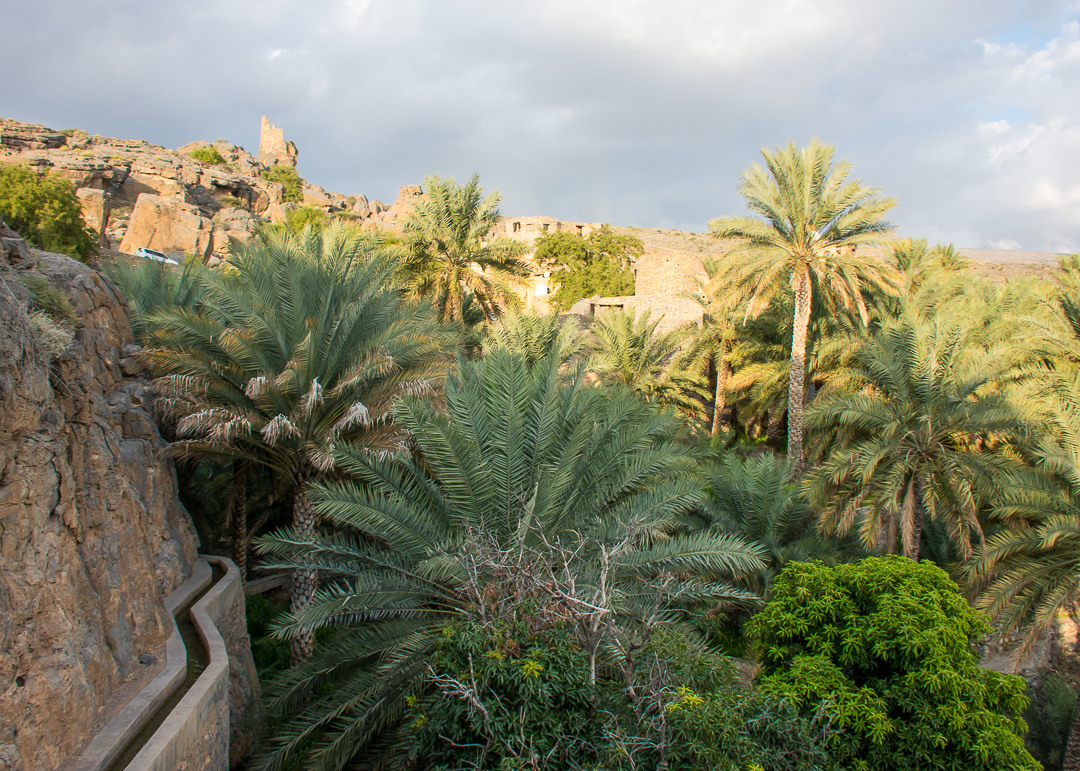
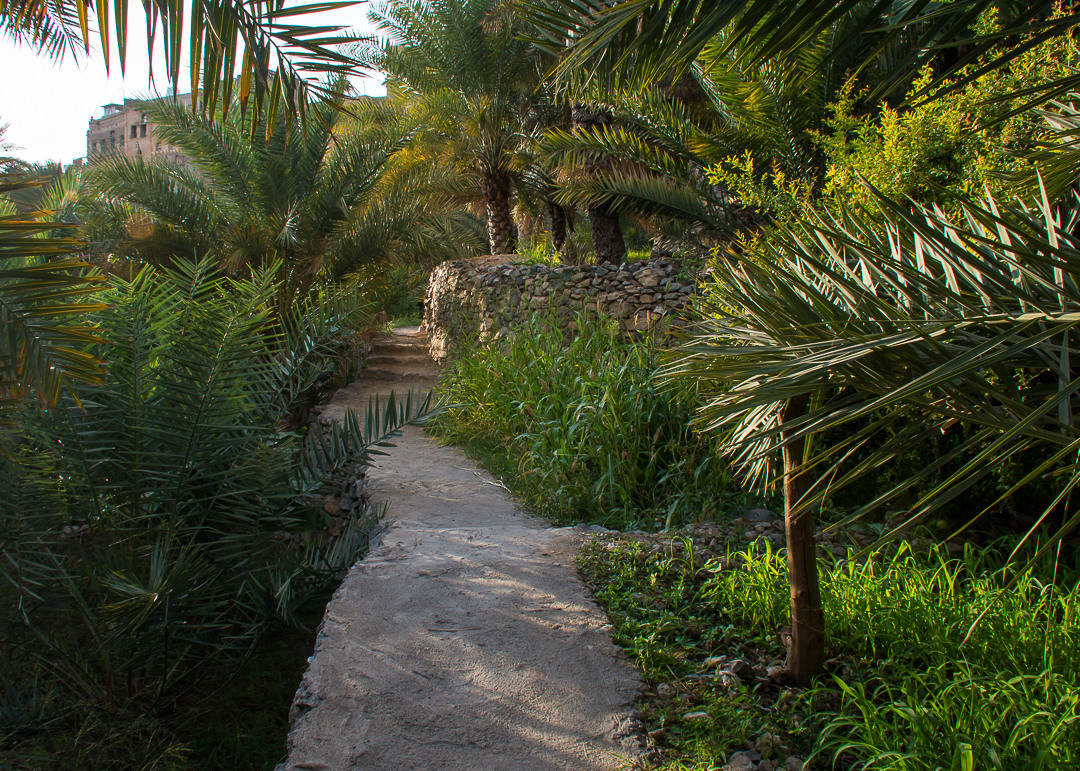
Making your way down you’ll soon emerge into a green open area, the lush date plantation below the village where the women come to wash their dishes and clothes in the water canals.

Misfat

Follow the path to peak at the fruiting trees and catch beautiful views over the valley.

Misfat

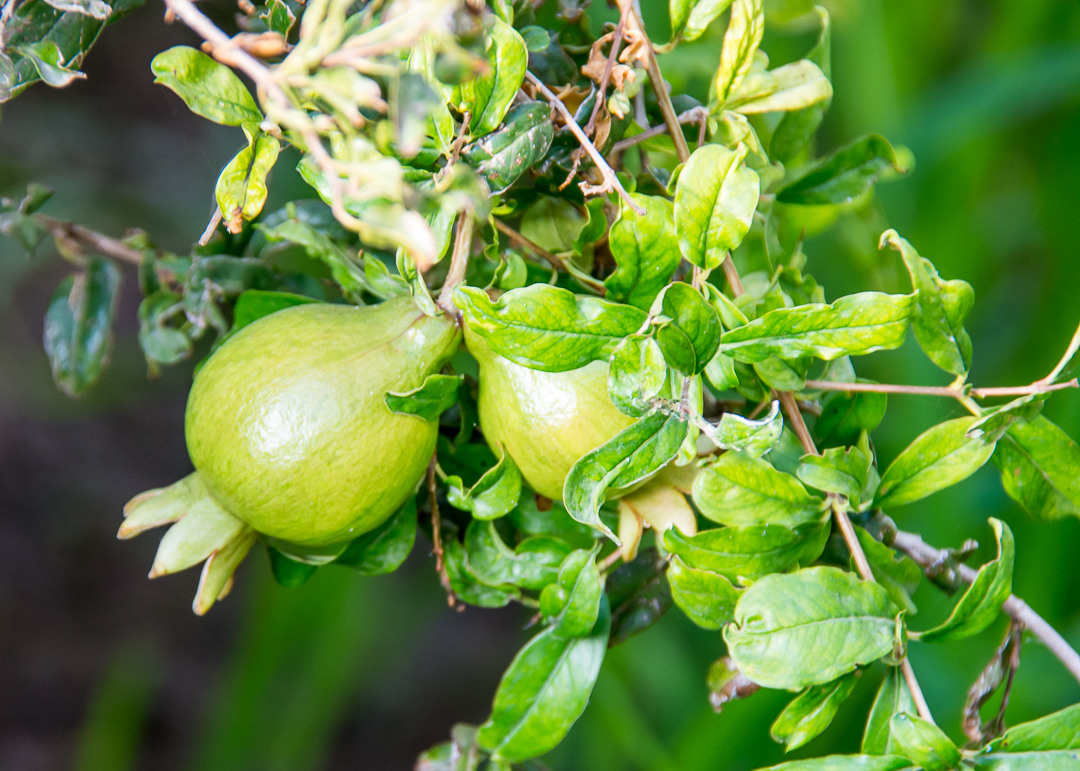
Pomegranates growing.
Pomegranate

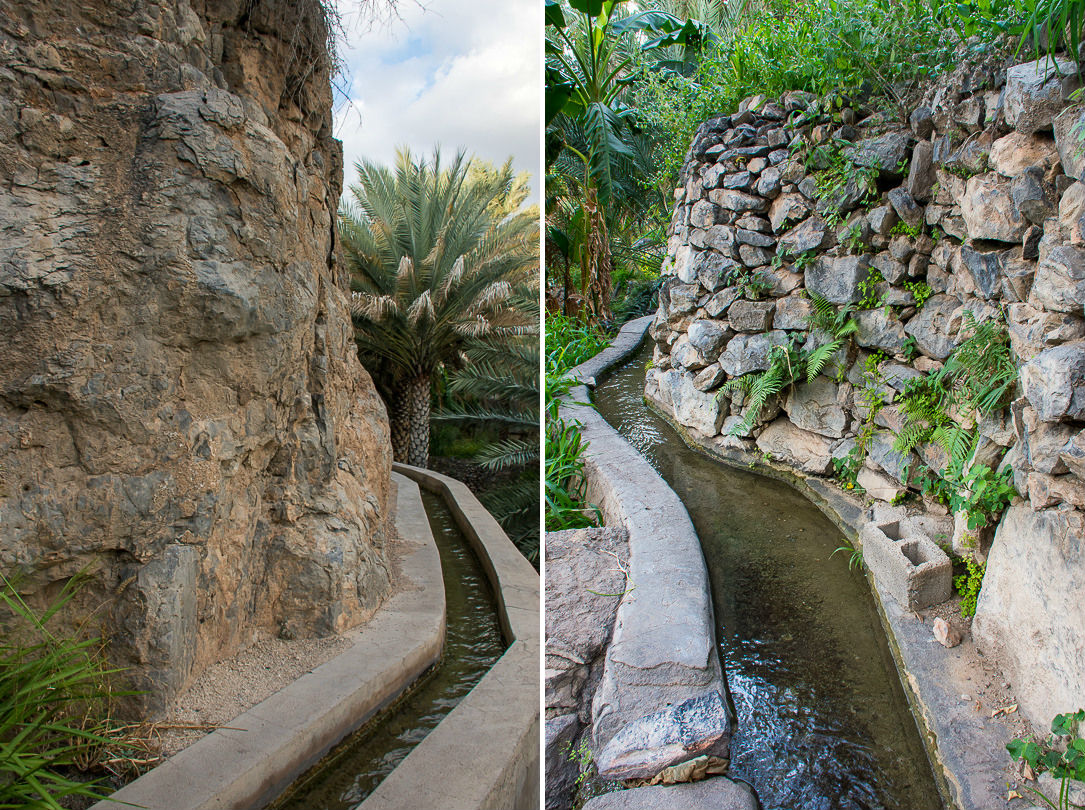
It’s a great spot to witness closely the working of the falaj system – an ancient water channel that leads from the source (usually an underground spring) to the fields for irrigation. In many villages it is still part of the essential way of life.

Misfat Falaj

A few kms down from Misfat lies one of Oman’s most attractive and traditional towns – Al Hamra.

Al Hamra

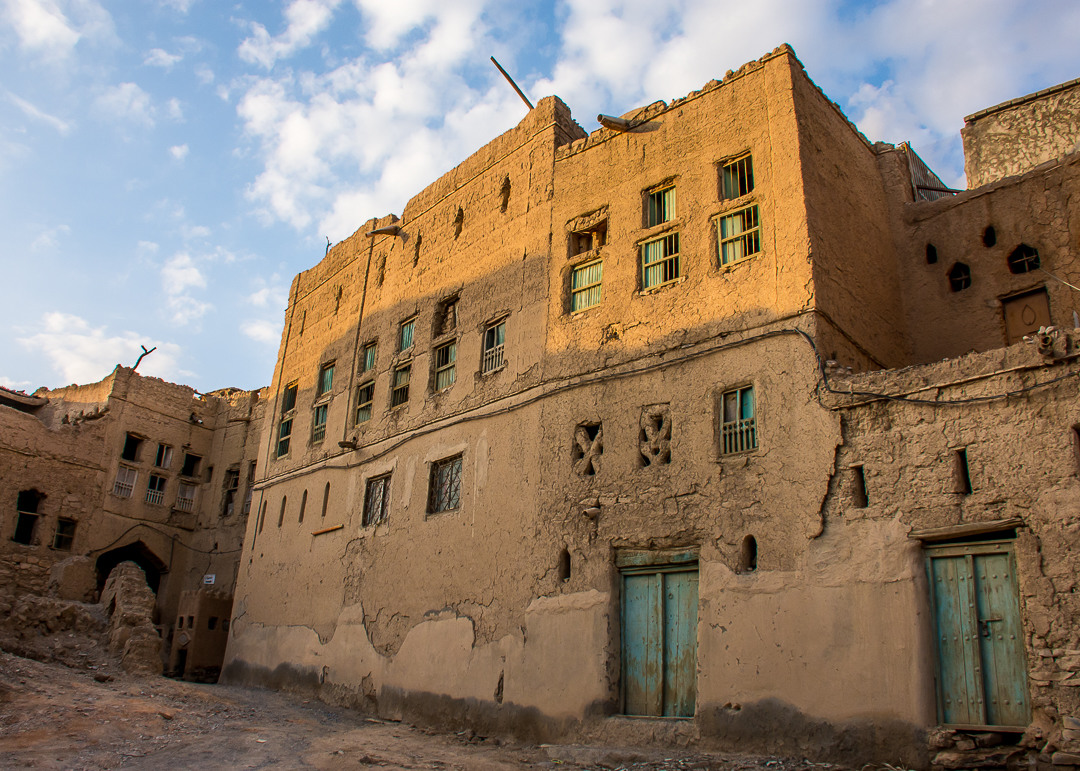
The old part of town closer to the date gardens has some of Oman’s most fascinating old mudbrick houses built in the Yemeni style, some still lived in.

Al Hamra

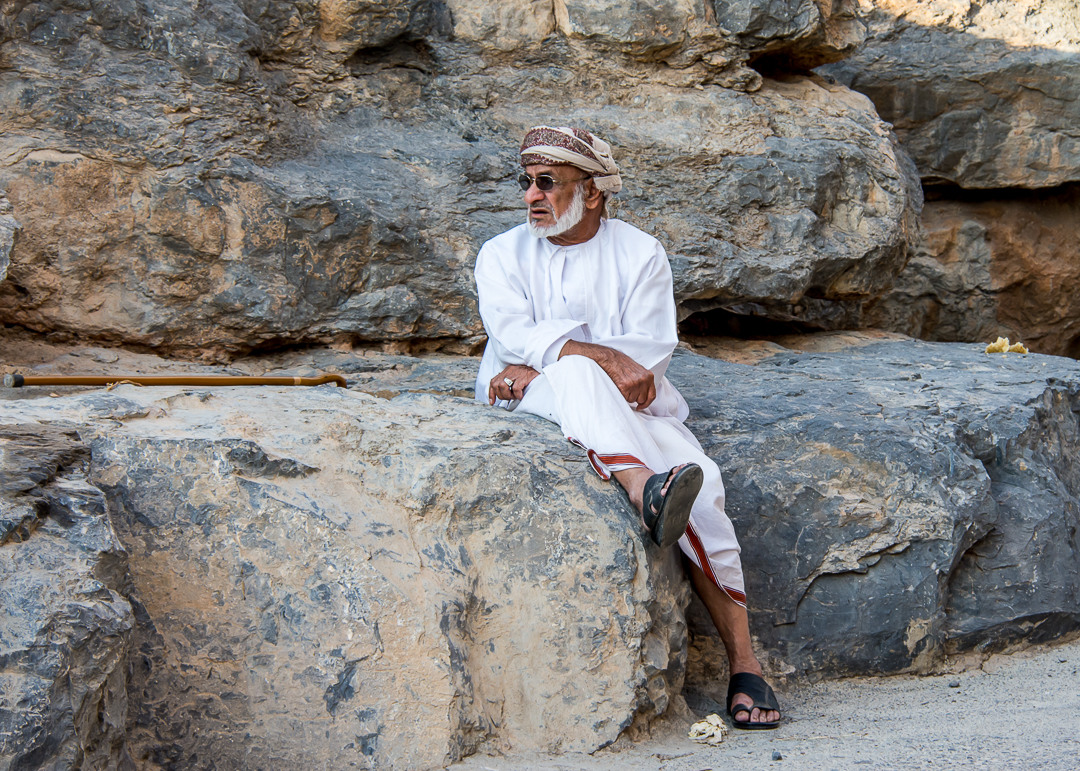
Soak in the eerie atmosphere by stepping into one of the numerous side alleys, feeling for a moment like you’ve stumbled upon the prettiest ghost town until a local old man appears out of nowhere, casually walking back home.

Al Hamra streets

Al Hamra details

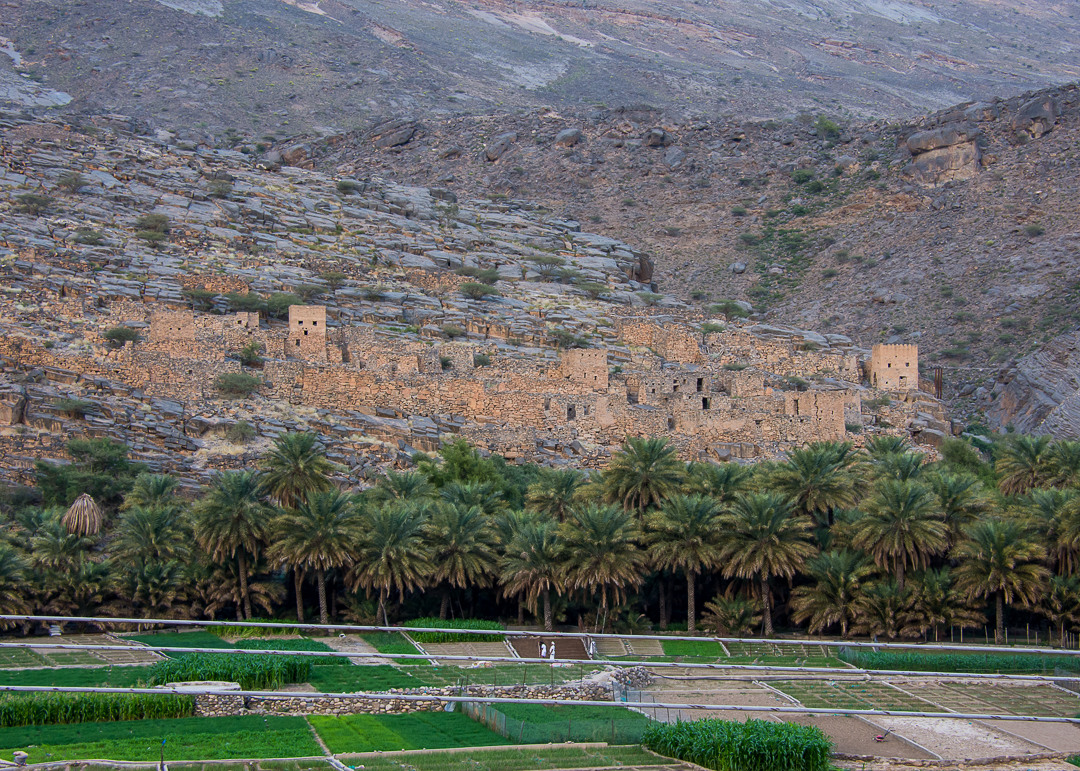
Last but not least we managed a quick stop in front of Wadi Ghul, a terrace farming village rendered especially vivid at dusk when the colour of the stone starts to come to life.

Wadi Ghul

Wadi Ghul

If you have time, the nearby mountains hide spectacular gorges and ravines and today a few tour companies are leading trekking trips to breathtaking heights, nearby Jebel Shams (the tallest mountain in Oman) standing tall at 3,048m above sea level.

Jebel Shams

Spend the night at one of Nizwa’s few hotels like the small Falaj Daris Hotel, a cute mid-range option set around two attractive courtyards with tropical trees, heated pools and a mountain backdrop.

Falaj Daris Hotel - Nizwa


Middle East Oman Travels

Muscat – The Middle East’s Hidden Treasure?

January 4, 2016

It would be a shame to let the string of unrests affecting the Middle East overshadow the entire region as there are so many beautiful and unique jewels to explore in total safety. While everyone is familiar with ritzy Dubai, few have ventured to its neighbor, the Sultanate of Oman, a rapidly-developing nation widely considered the Middle East’s best kept secret.

Any visit to Oman starts in its bustling capital, Muscat, which has been experiencing a booming modernization since 1970 when Sultan Qaboos came into power and started spending Oman’s oil wealth. While much of the city is unequivocally modern, the Sultan’s respect for tradition has steered the construction away from the excesses and high-rise heavy architecture of its neighbors, resulting in an attractive and uniform city with a strong Arabic identity.

Al Khuwair district in Muscat city center with the Grand Mosque in the background.
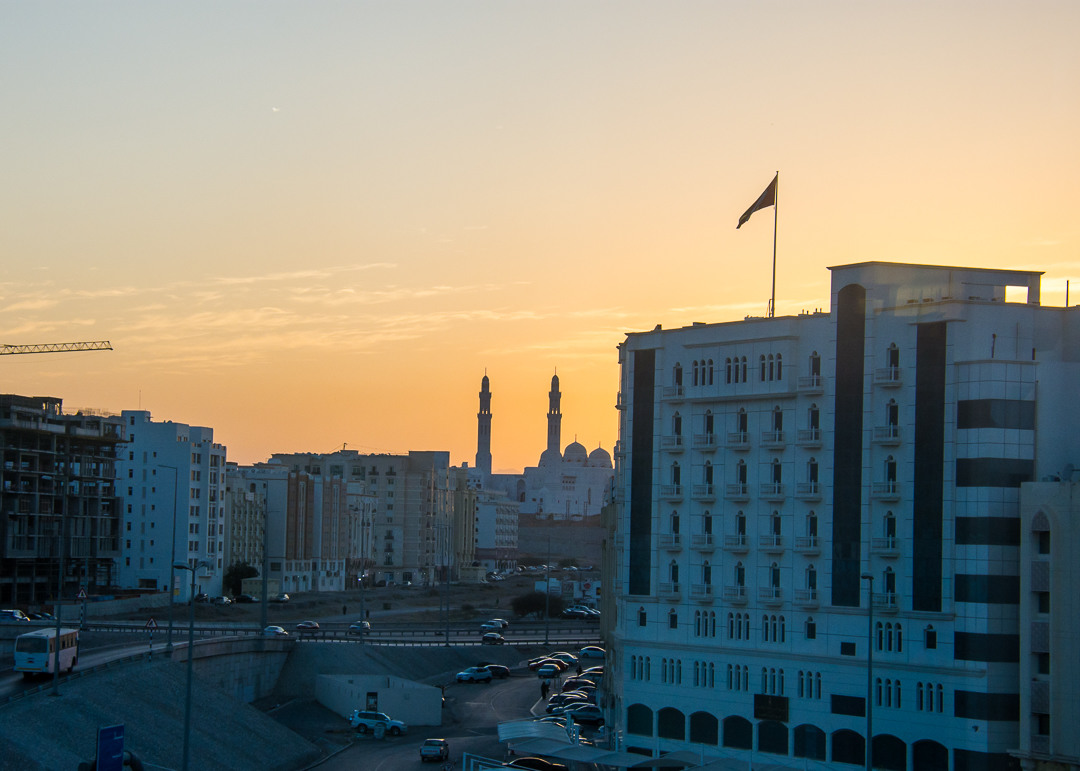
Muscat

Visitors to Oman get a rare chance to engage with the modern Arab world while still sensing its old ways and customs, that is if they get out of their hotel for a bit! Muscat, with its pretty coastline, warm temperatures year-round and up-market beach hotels has been mostly marketing itself as a high-end beach destination to wealthy European tourists, offering all the usual comforts for city slickers and luxury lovers.

Crowne Plaza Muscat
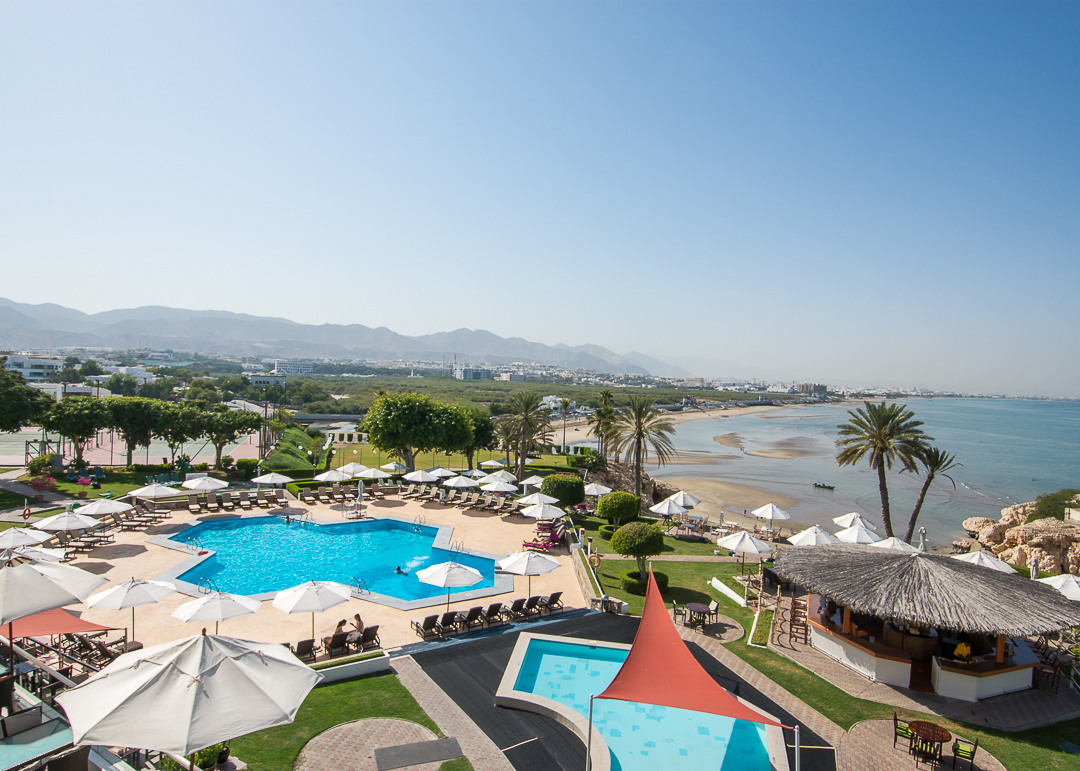
Muscat - Crowne Plaza

Muscat actually means ‘safe anchorage’, and the sea constitute a major part of the city today as it did thousands of years ago. The city’s beaches are public and you’ll find locals enjoying a dip, playing games, and of course fishing any day of the week.

Qurum beach
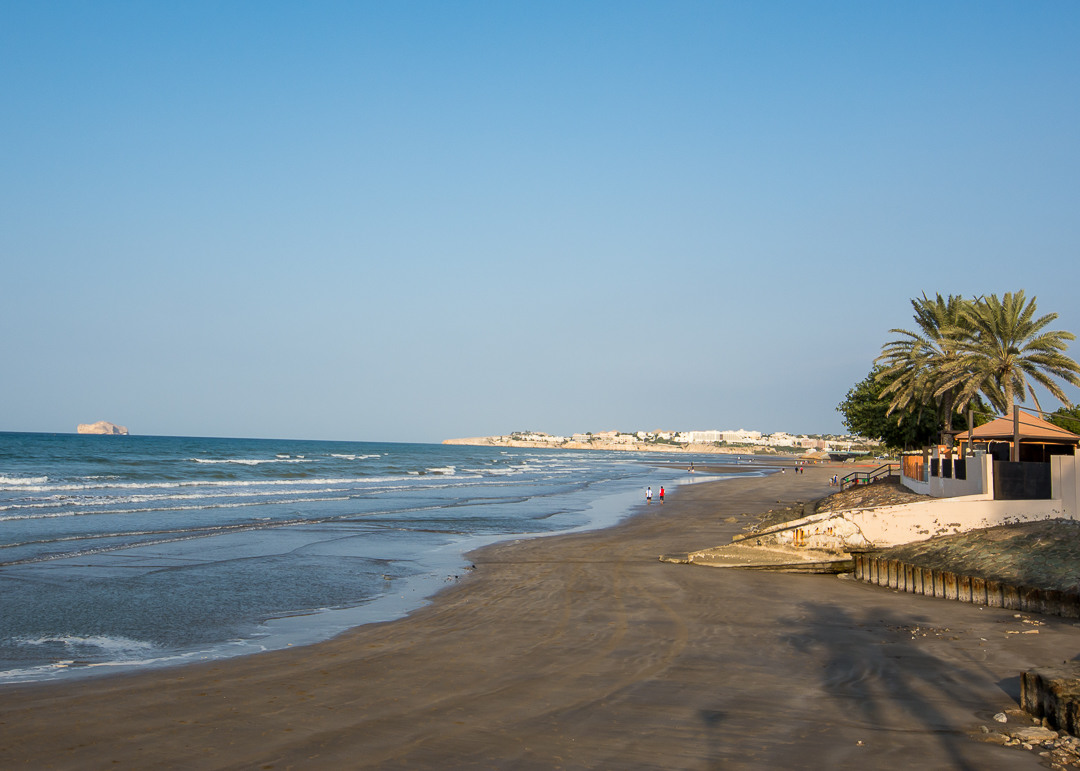
Qurum beach - Muscat

The long coastal stretch is home to some of the city’s most popular restaurants and cafes and there’s something for everyone from the western-style chains to local joints and fancier options in the hotels. As I’m particularly fond of Iranian cuisine and it’s somewhat hard to find in New York, I immediately opted for Shiraz in the Crowne Plaze Hotel which offered excellent food with splendid views of the coast.

Almost all my meals in Oman started with a complimentary plate of crudites, fresh mint, walnuts and cheese to be snacked on and/or added to your meal as garnish.
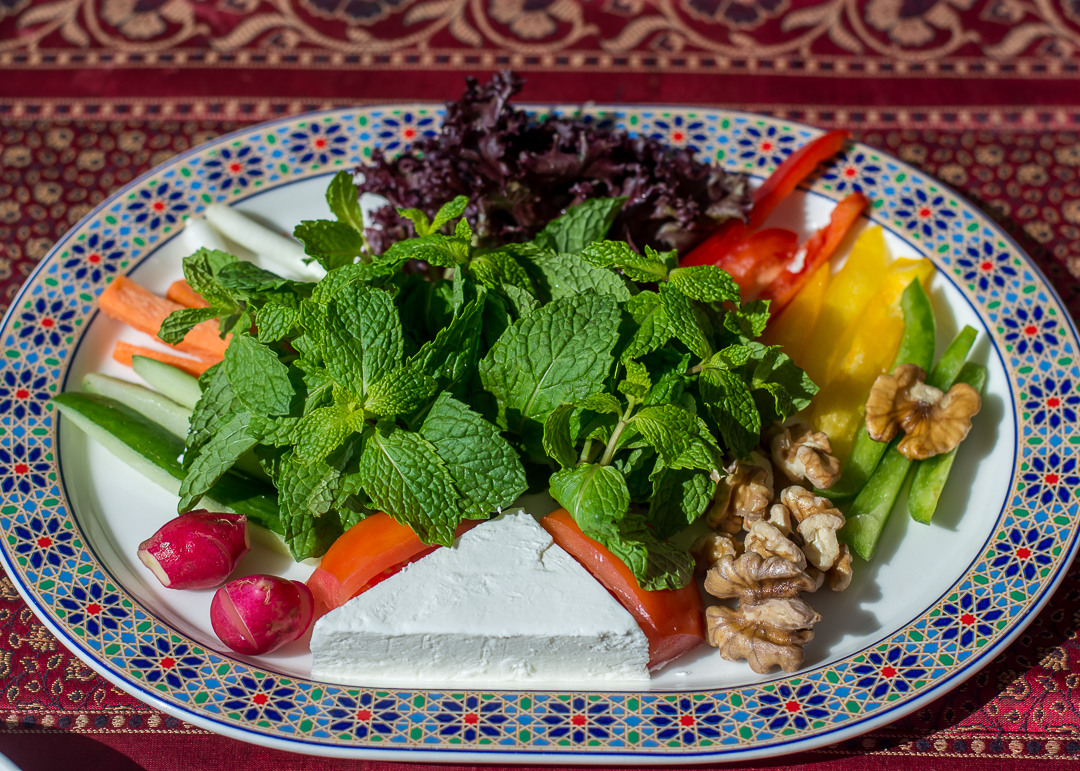
Omani snack plate

Salad anar kheyar: fresh pomegranate, cucumber, dry mint, cheese, pomegranate dressing
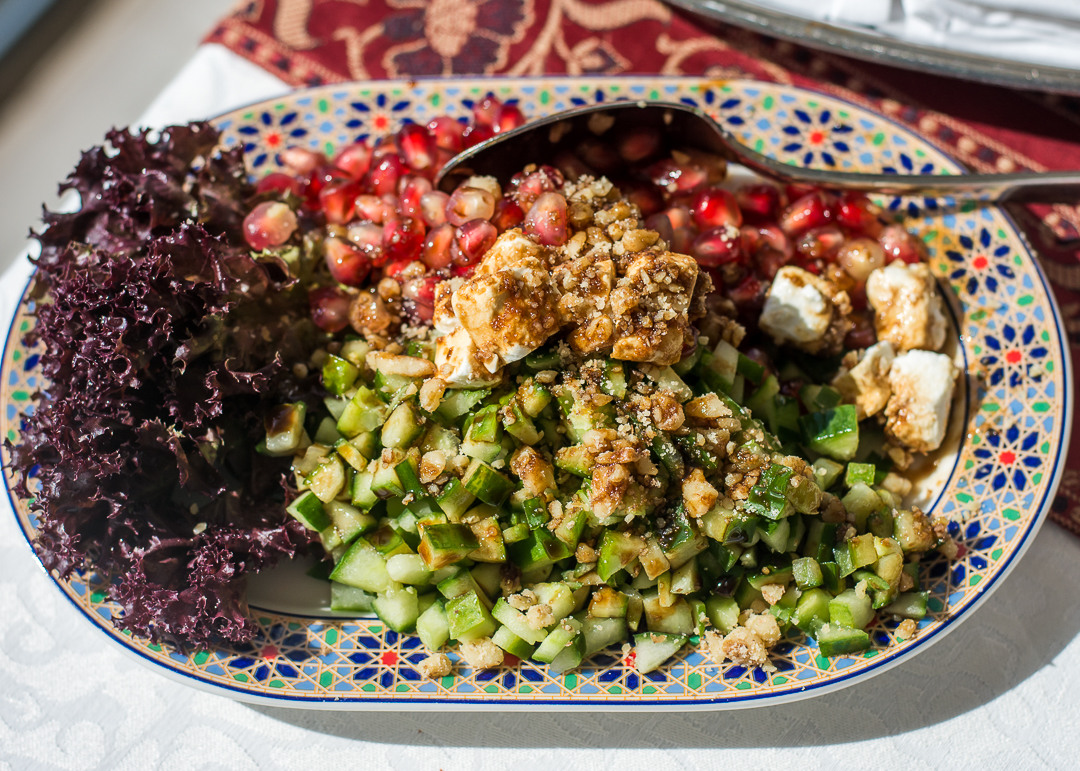
Salad anar kheyar

Chicken and beef kebabs, Iranian rice
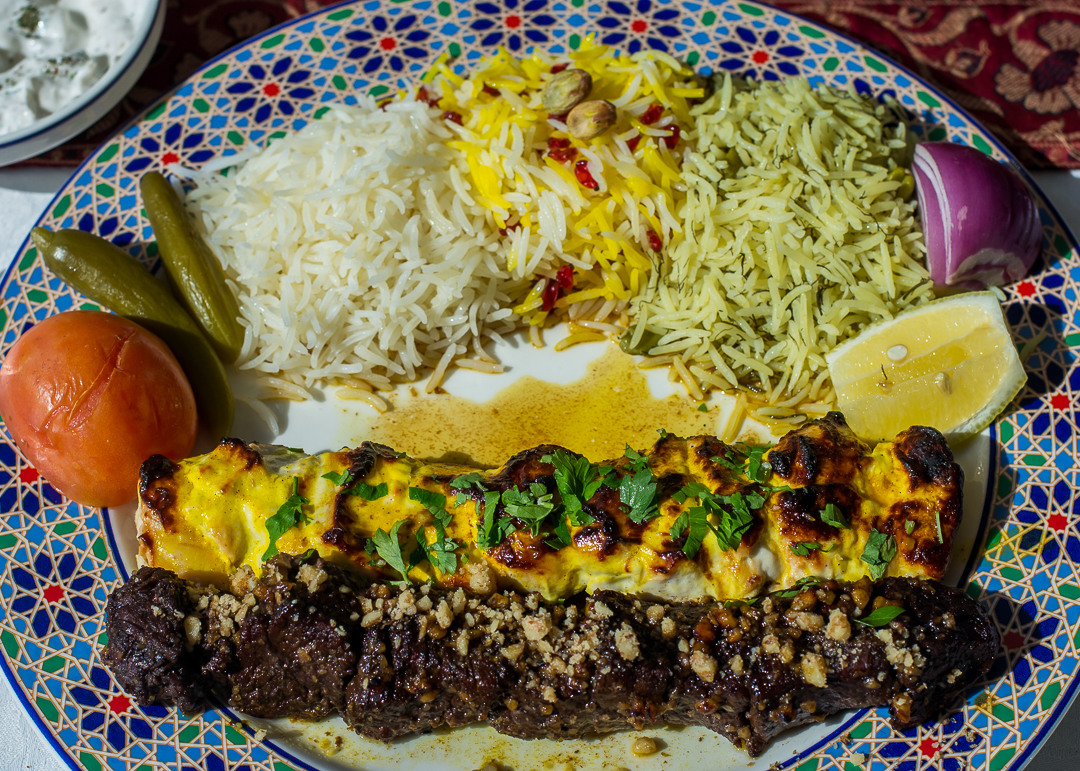
Chicken and beef kebabs

Faludeh: Persion rice noodle sorbet with fresh lime juice and saffron ice cream
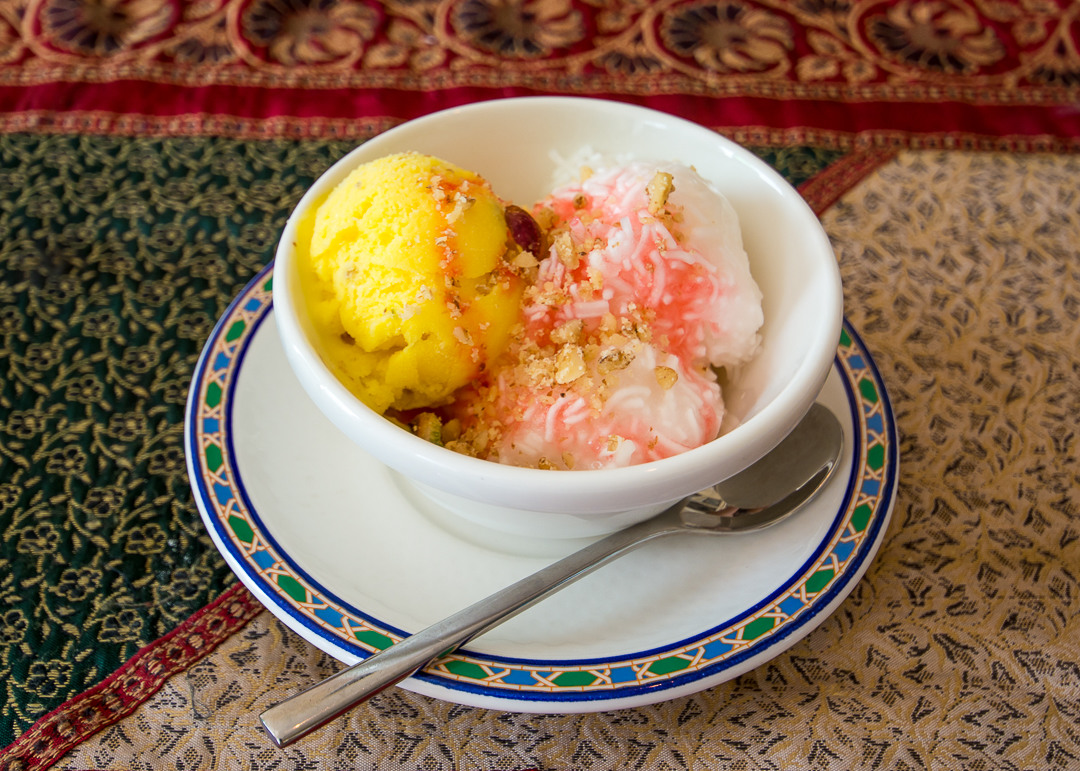
Faludeh

If there is one place you must absolutely visit in Muscat, it’s the Sultan Qaboos Grand Mosque, a glorious and magnificent gift from the Sultan to the nation to celebrate its 30 years of reign.
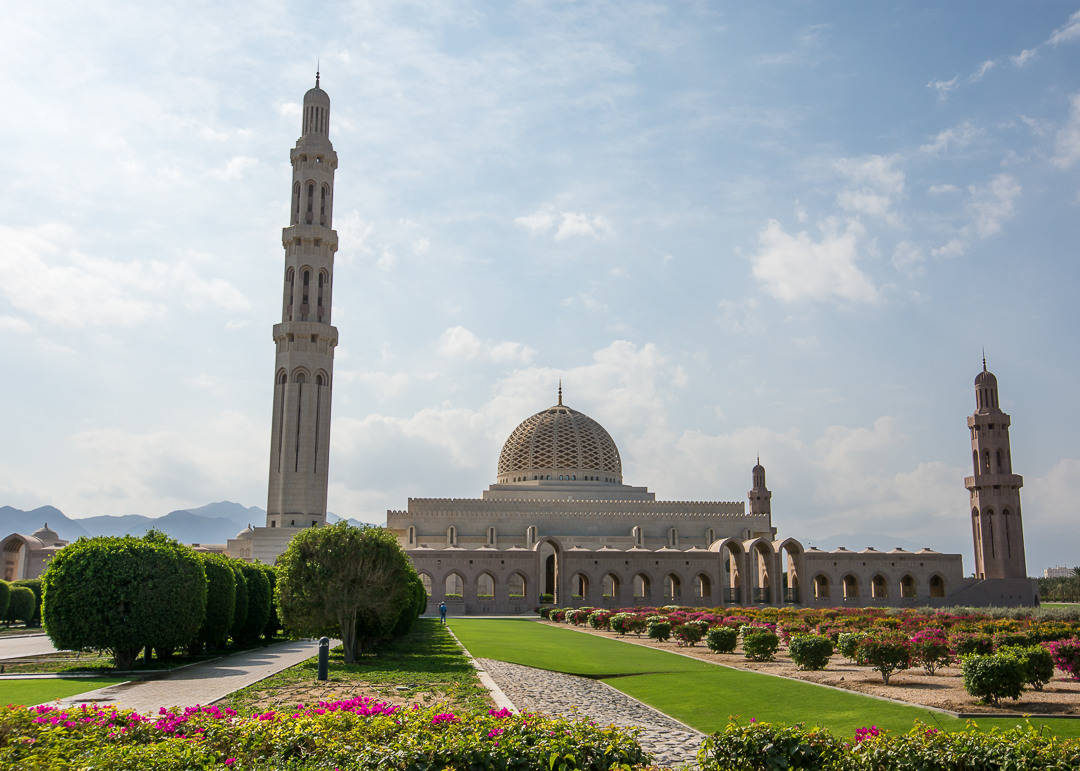
Sultan Qaboos Grand Mosque

Women must wear non revealing clothing and a head scarf to visit the mosque so I happily took my scarf out and asked a local to help me put it on, not an obvious task for beginners!
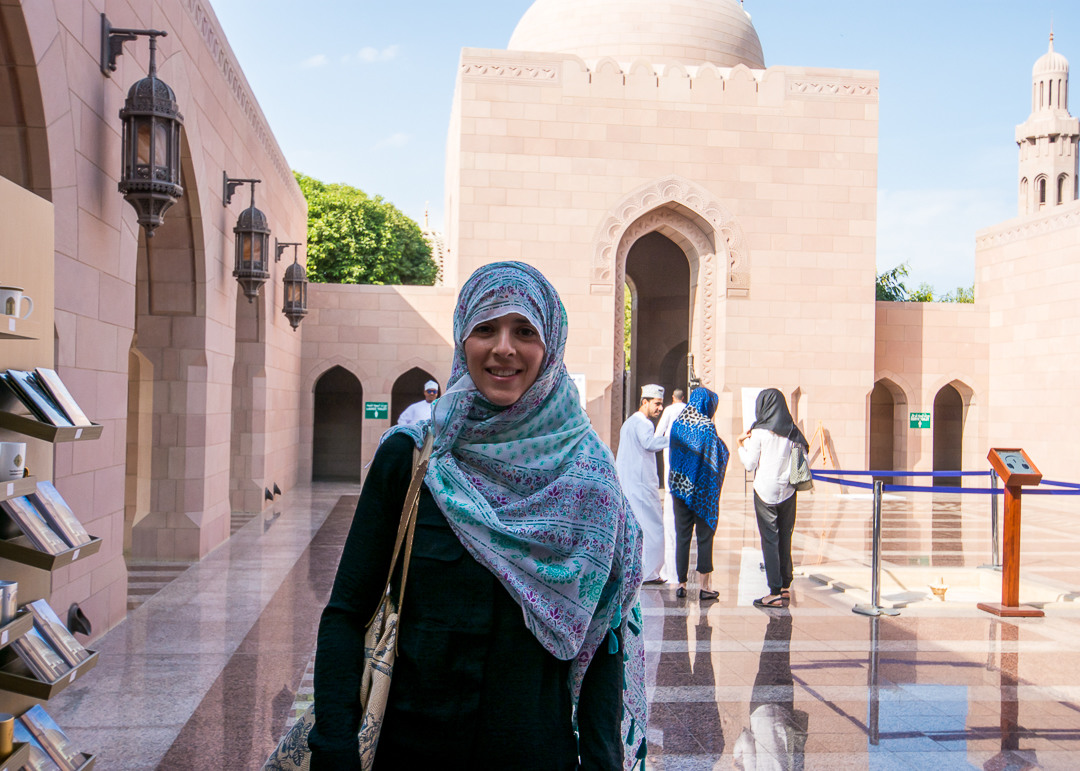
Sultan Qaboos Grand Mosque

My friend also rented the traditional black abaya for the visit and we headed up to the gigantic marble fortress, already feeling the heat of the mid-morning sun.
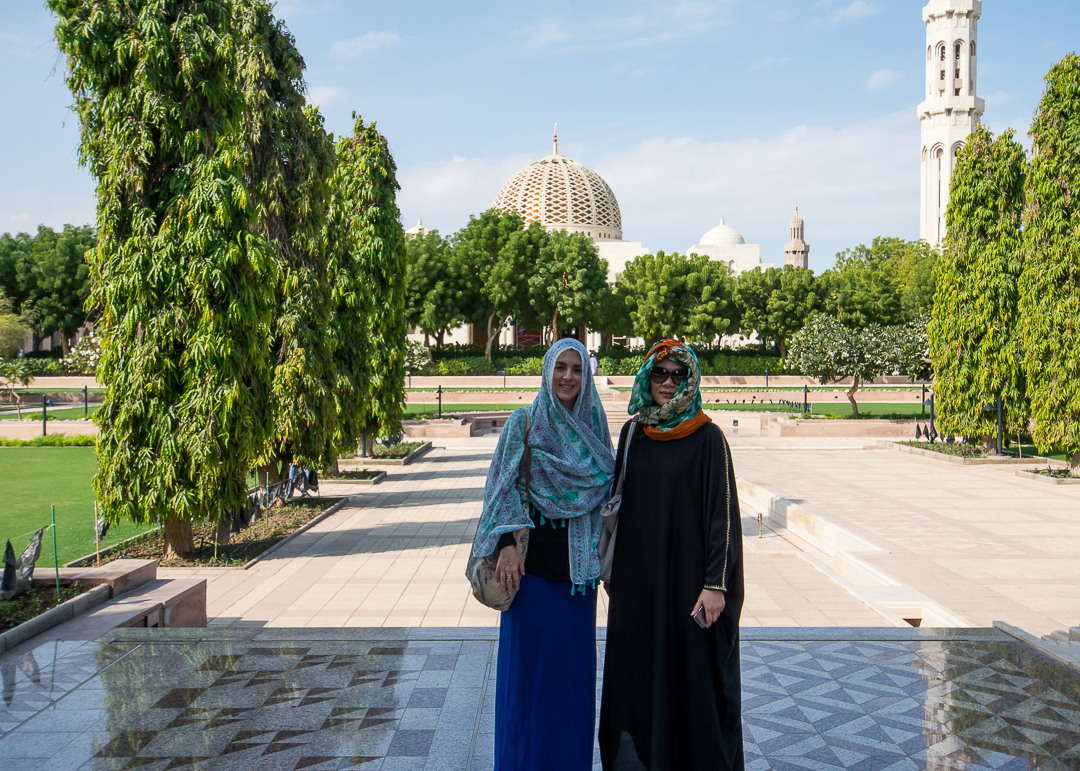
Sultan Qaboos Grand Mosque

The finest example of modern Islamic architecture in the city, the Mosque is quite imposing from the outside, a gleaming vision of white in an eerily quiet setting.
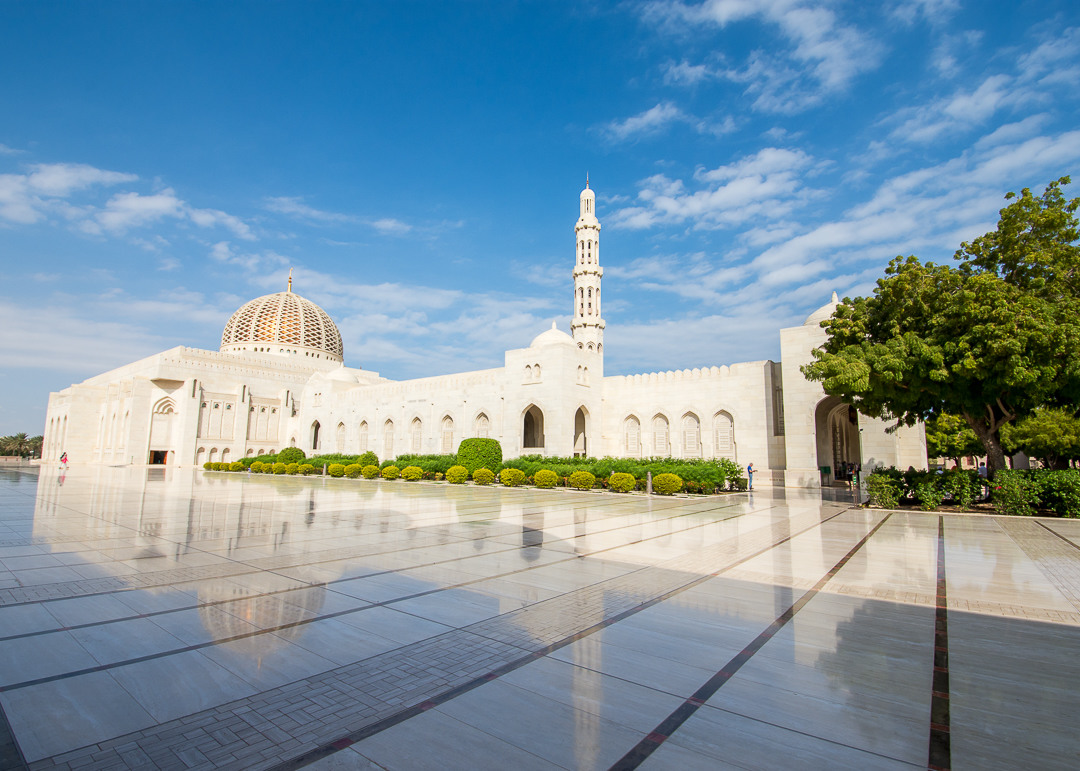
Sultan Qaboos Grand Mosque

Up to 20,000 worshipers can be accommodated inside and you can’t help but try and picture the scene during a major celebration which must be quite a sight.
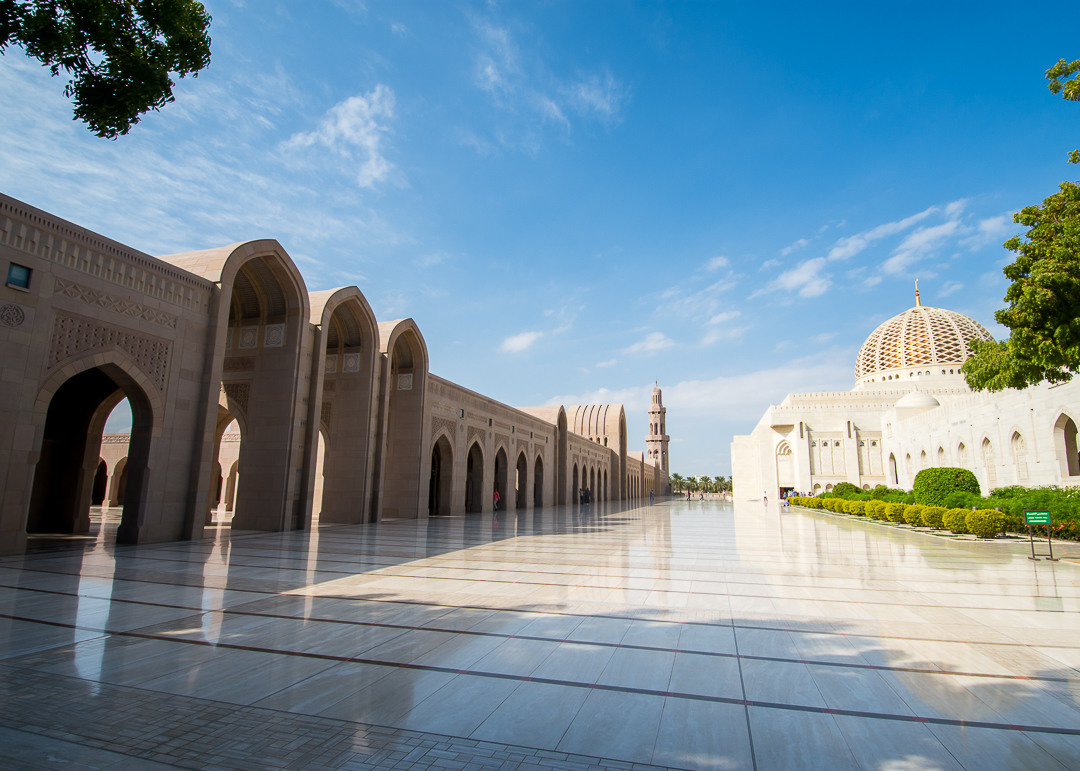
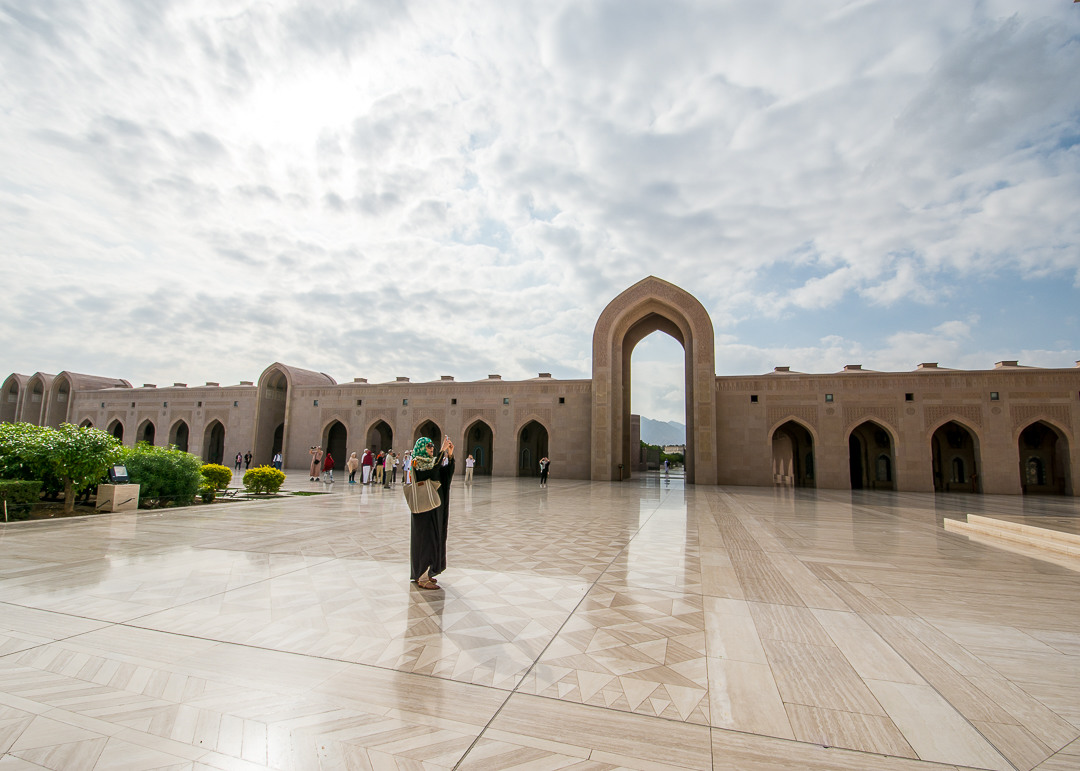
Sultan Qaboos Grand Mosque

Sultan Qaboos Grand Mosque

The ablution rooms await worshipers for the ritual cleaning before prayer.
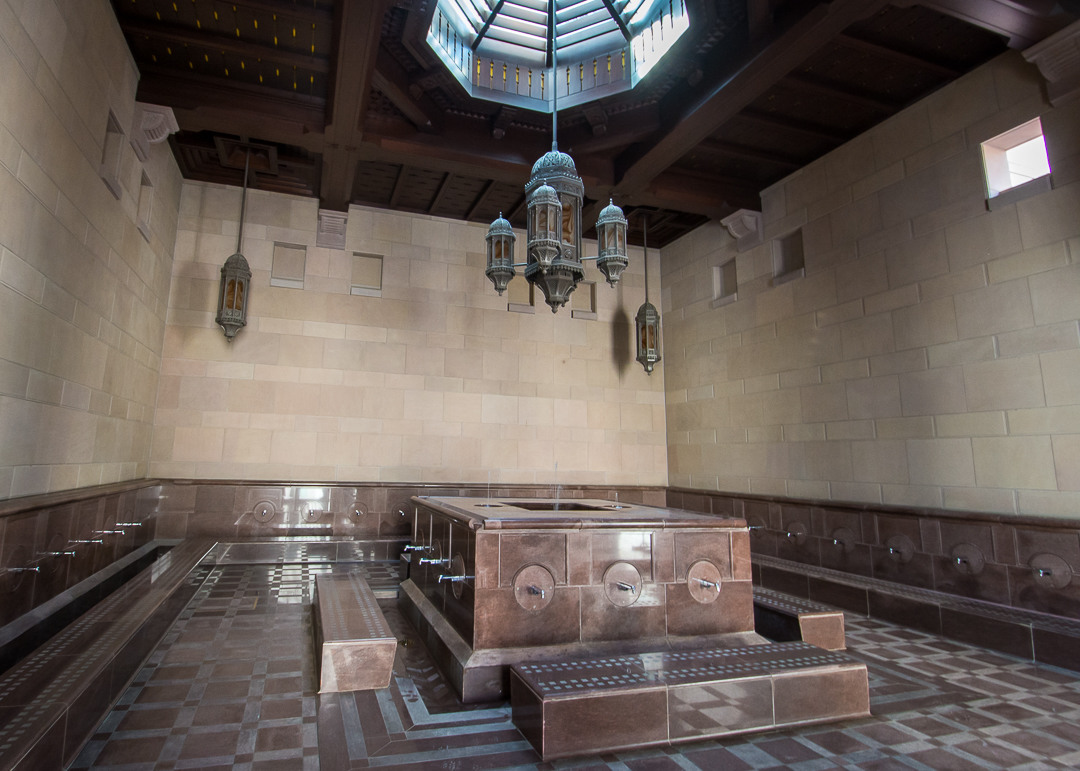
Sultan Qaboos Grand Mosque

Then straight ahead is the entrance to the mosque.
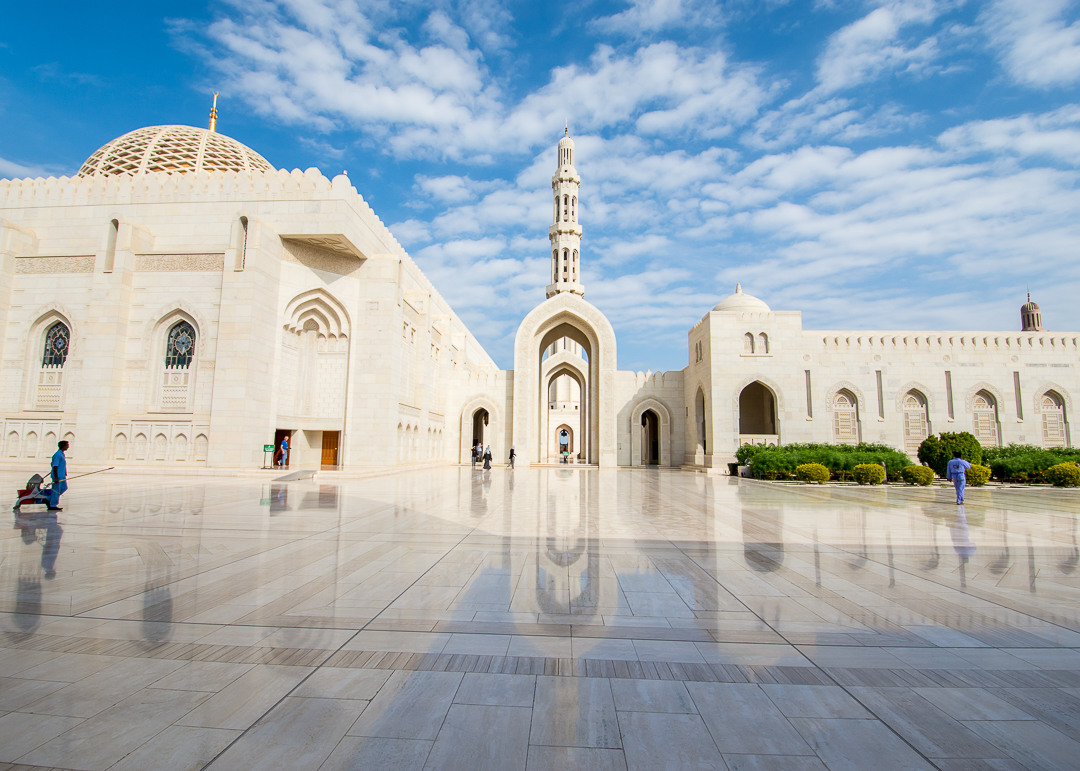
Sultan Qaboos Grand Mosque

The smaller building to the right contains the private musalla (prayer hall) for the women, able to hold up to 750.
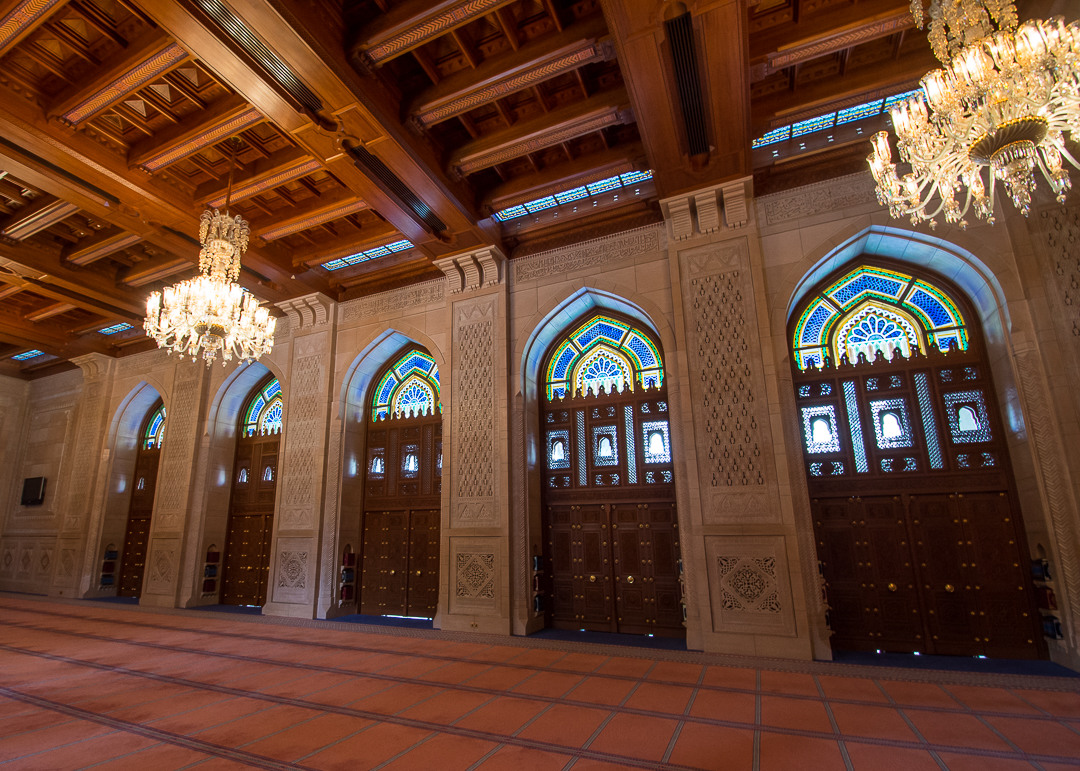
Sultan Qaboos Grand Mosque

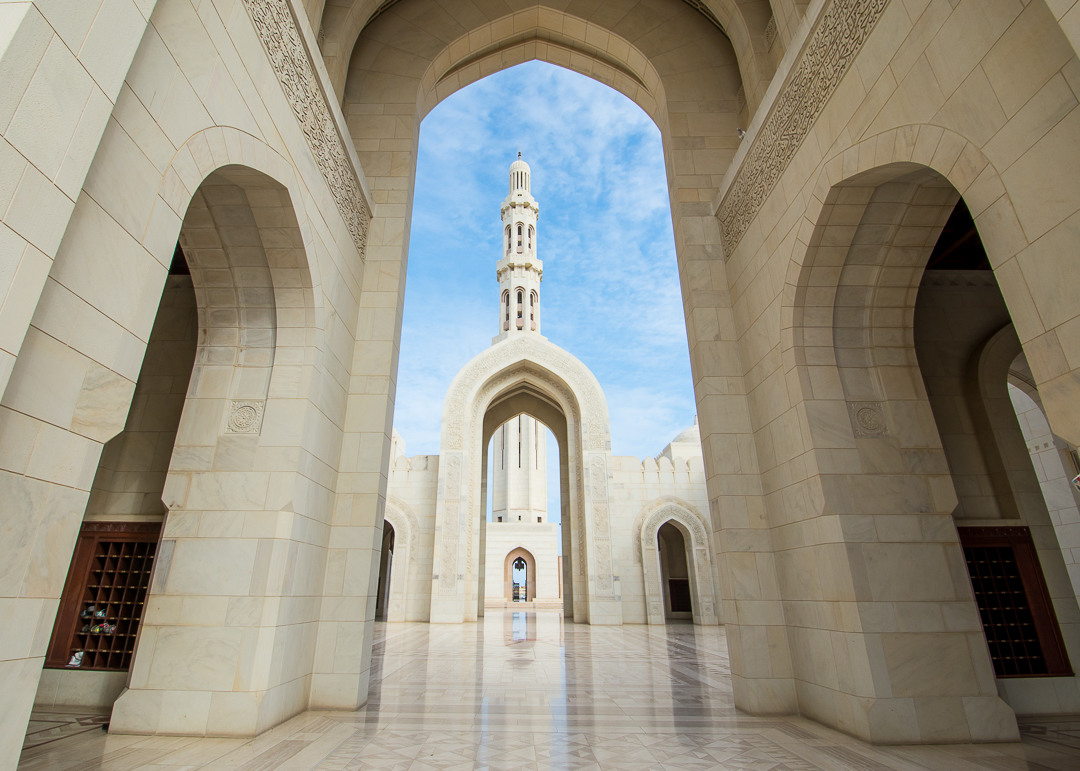
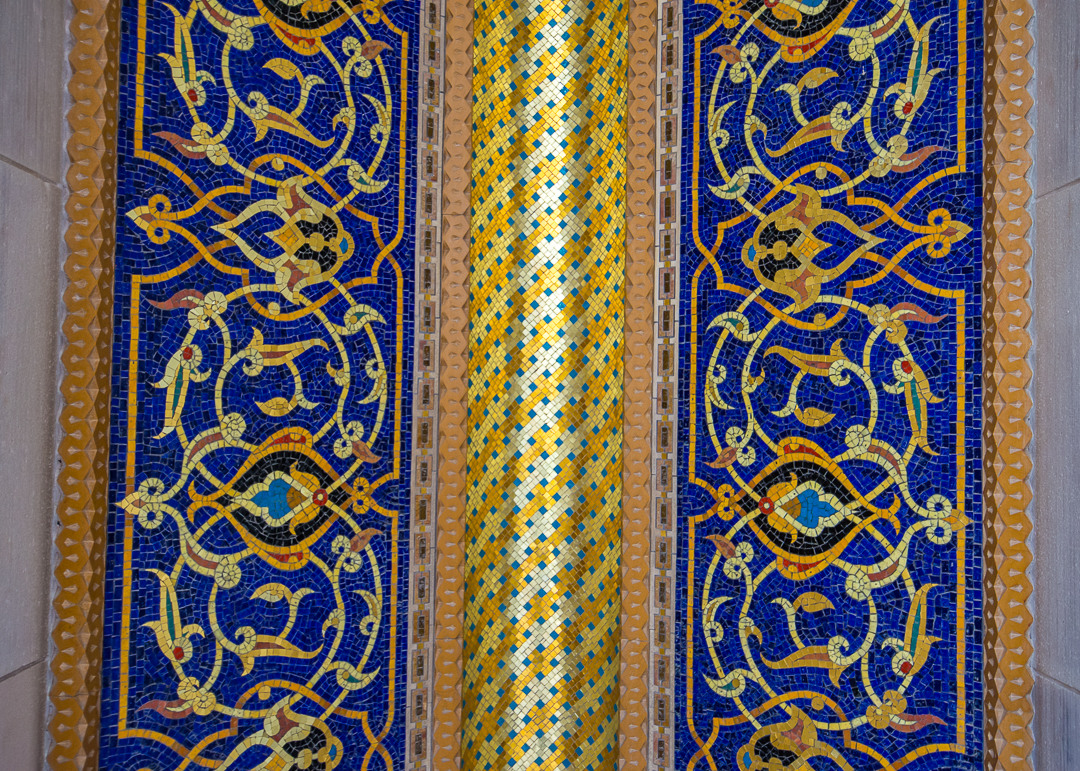
Back outside, every angle is as awe-inspiring as the next and close-ups show the incredible design and craftsmanship that went into its build.
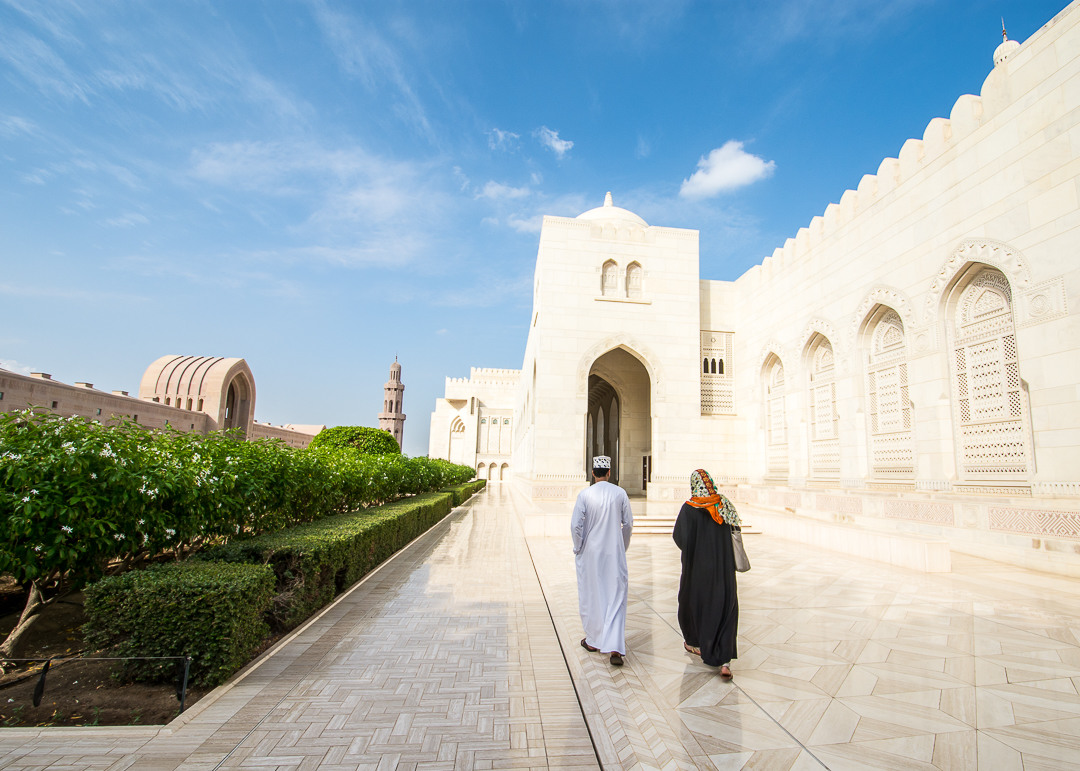
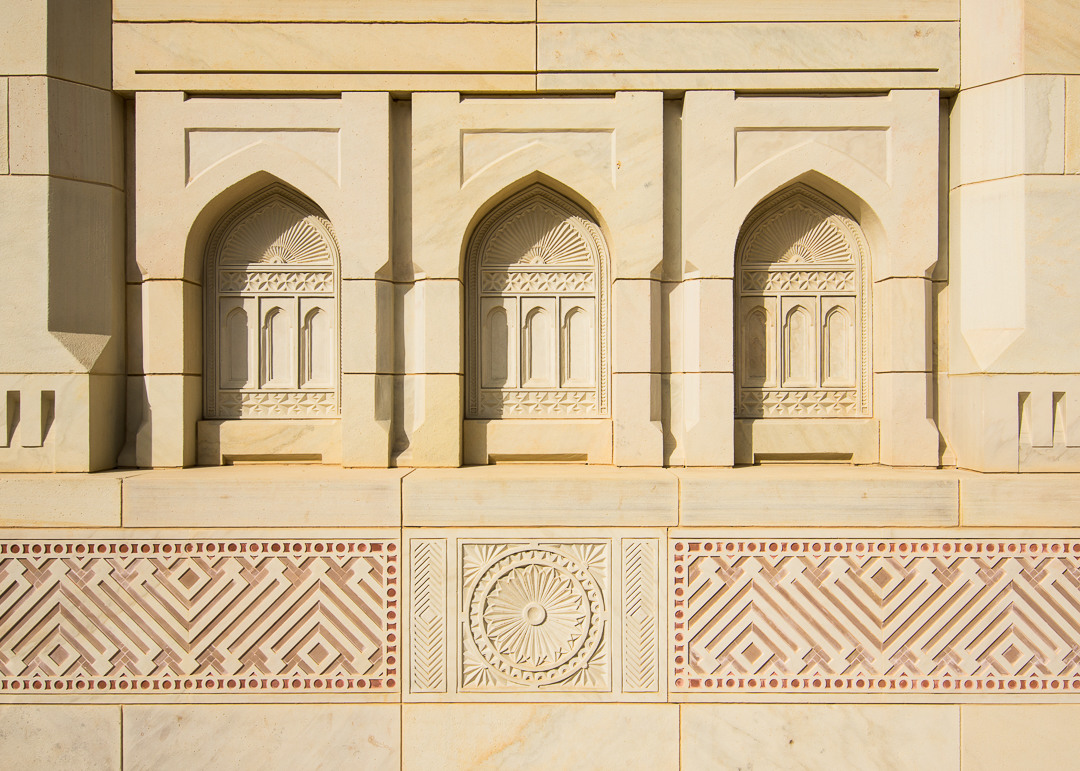
Sultan Qaboos Grand Mosque

Sultan Qaboos Grand Mosque

Made from marble, sandstone and wood, the entire mosque took 6 years to complete and opened in 2001. It’s worth venturing into the riwaqs (open-air arcades) and courtyards to experience the beauty and serenity of the place.
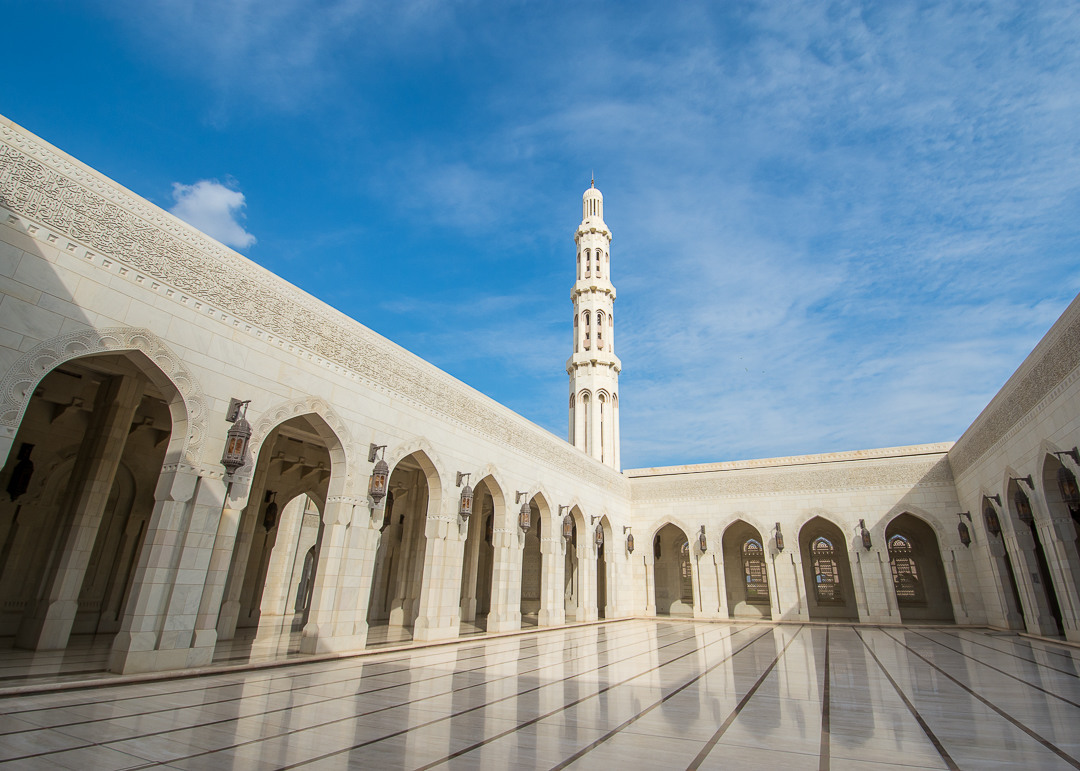
Sultan Qaboos Grand Mosque

Look up to see the top of the walls embellished with Qur’anic script.
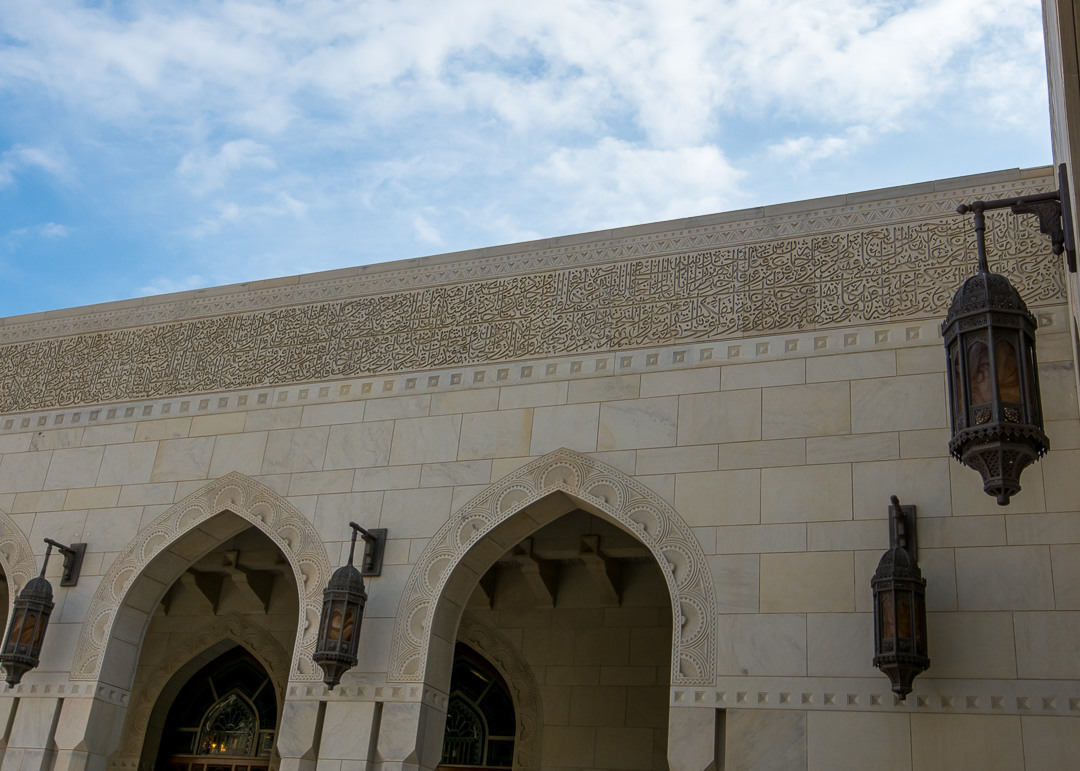
Sultan Qaboos Grand Mosque

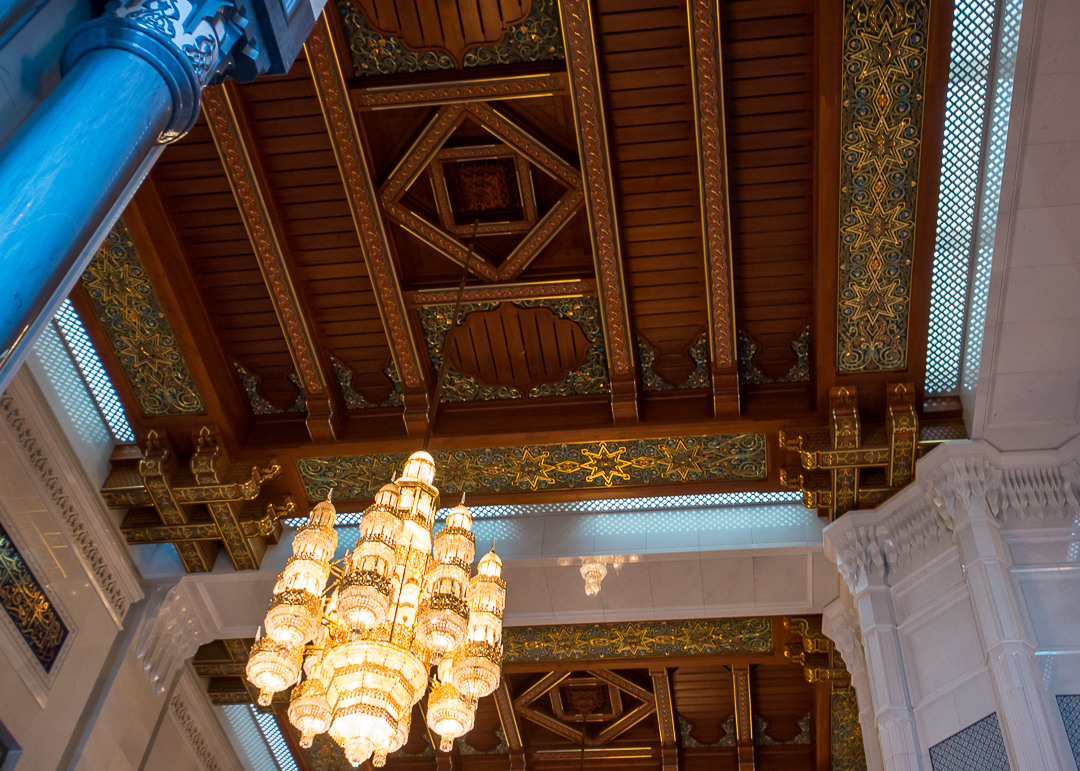
Even inside the many domes you’ll find work of art worth stretching your neck for.
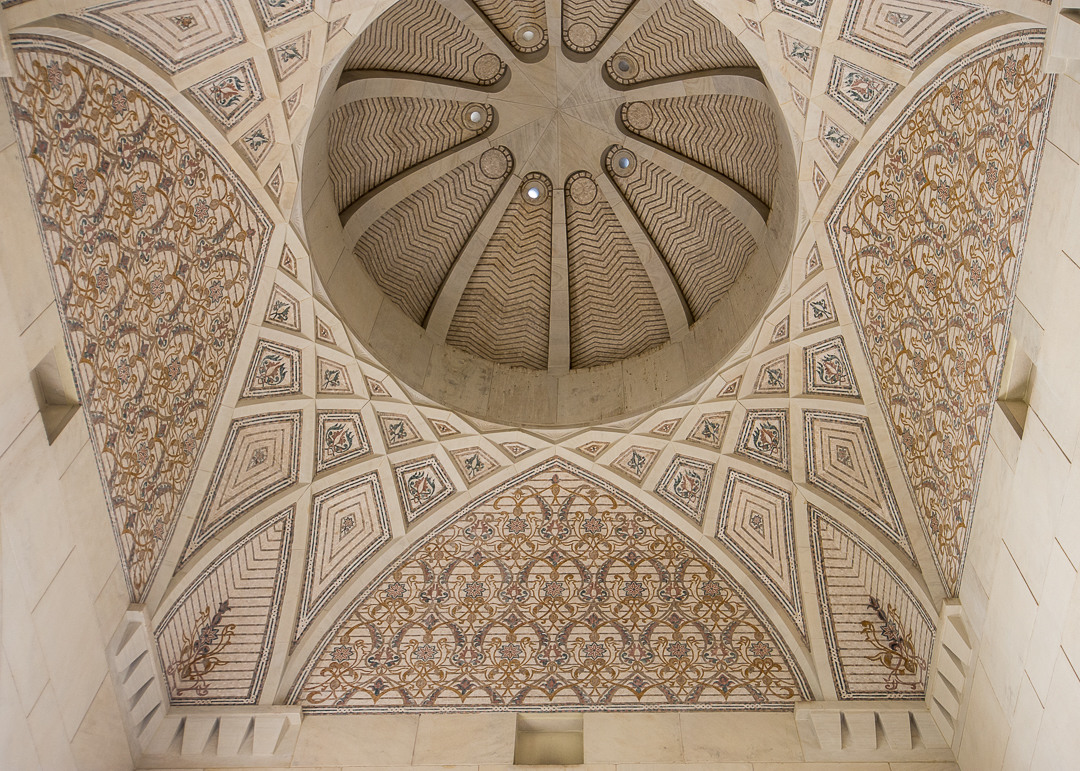
Sultan Qaboos Grand Mosque

Now through the main gate for the piece de resistance

Sultan Qaboos Grand Mosque

Sultan Qaboos Grand Mosque

Entering the main prayer hall, even the non-religious can’t help but being moved at the splendor all around and the sheer magnitude of it all.
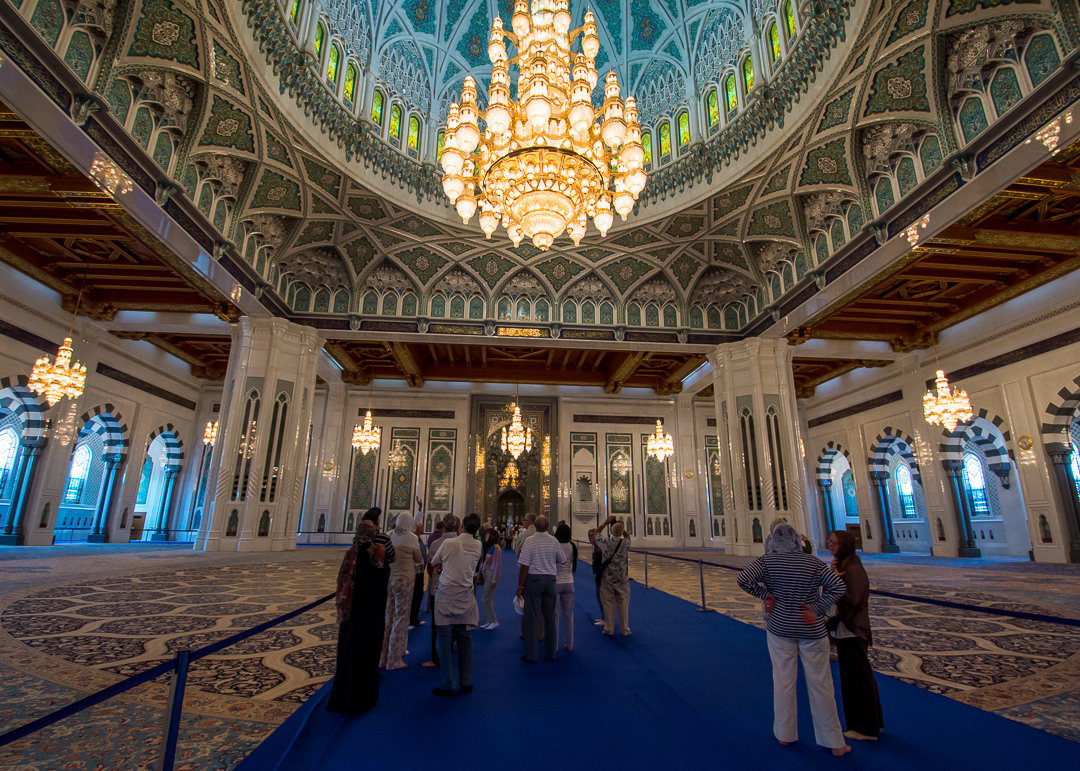
Sultan Qaboos Grand Mosque

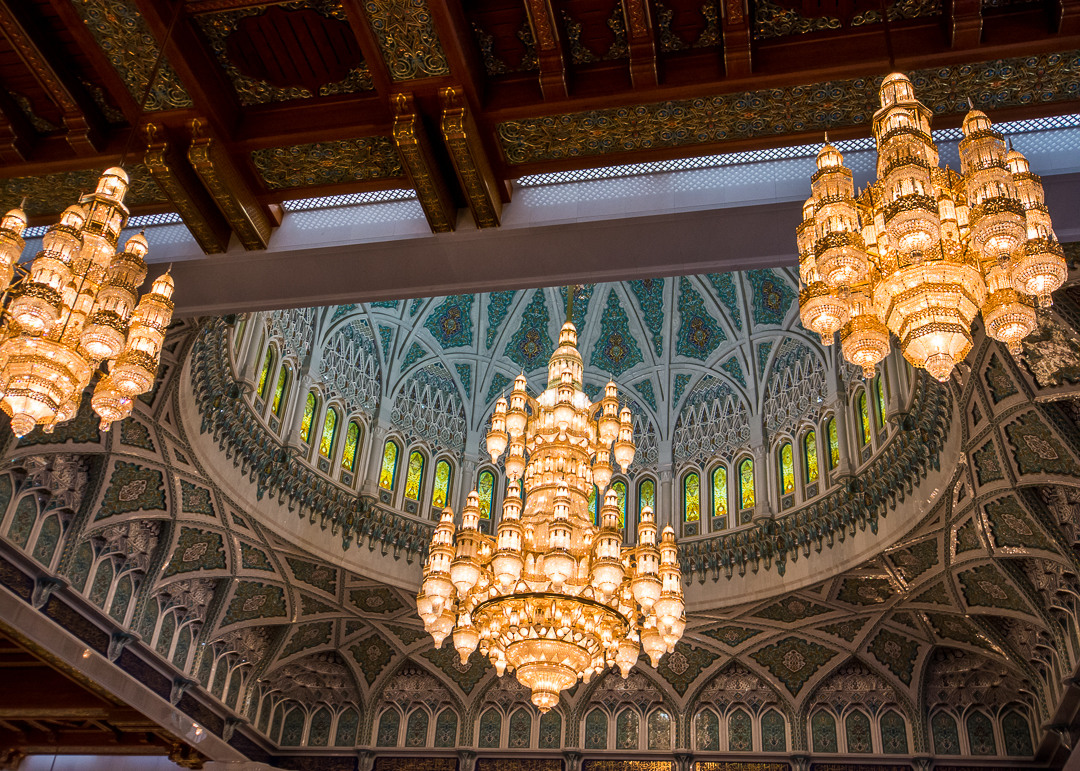
The 50m-high central dome is simply magnificent and the 8m-wide Swarovski crystal chandelier with its 1,122 lights is just breathtaking. I found myself suddenly wondering if Versailles had the same effect on me, though it seemed pointless to compare…different places, different eras but similar opulence!
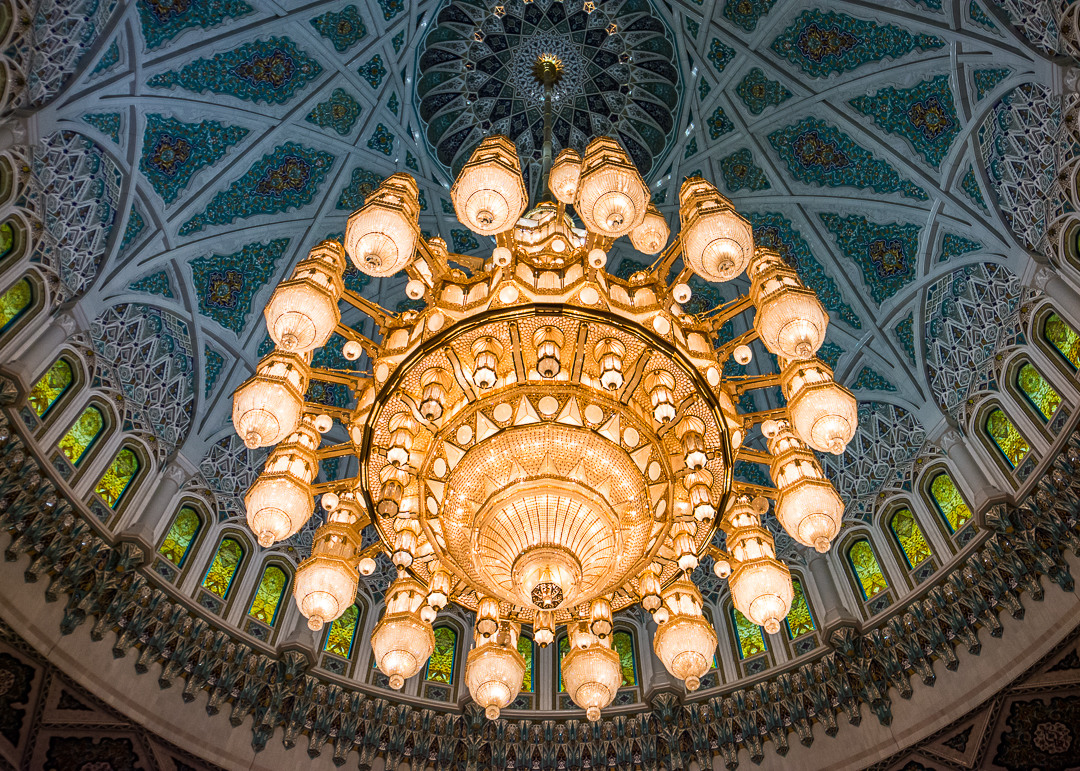
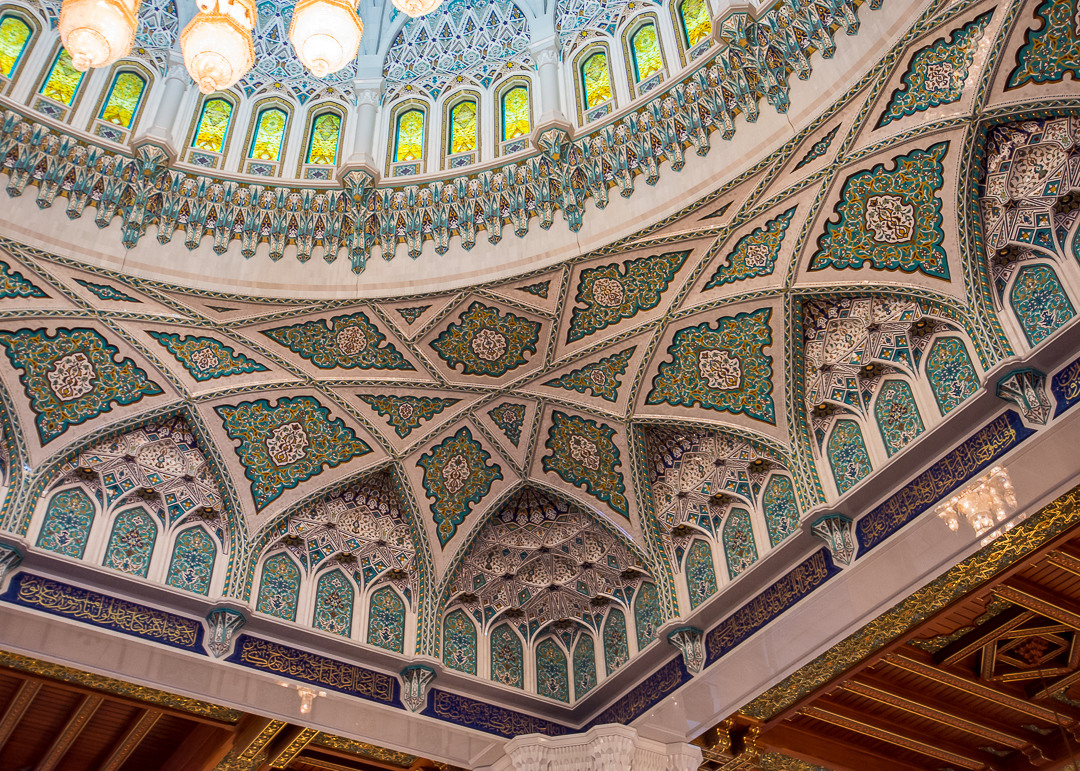
Sultan Qaboos Grand Mosque

Sultan Qaboos Grand Mosque

Sultan Qaboos Grand Mosque

The ceiling is also far from being the only show stopper – looking at your feet you’ll be admiring what was once the world’s largest rug (Abu Dhabi’s Grand Mosque now holds the title…it is competitive in this part of the world). The fine Persian carpet was made by 600 women in Iran over 4 years and measures 70m by 60m, weighing a hefty 21 tonnes.
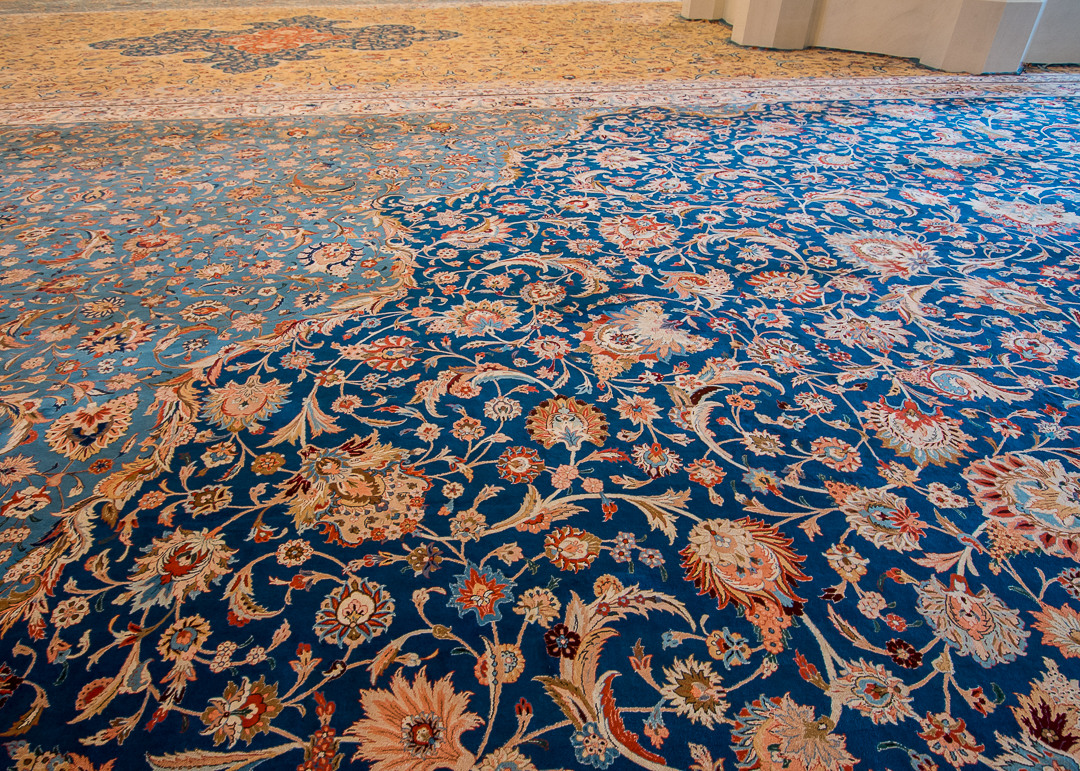
Sultan Qaboos Grand Mosque

The walls complete the stunning picture with exquisite carvings and paintings.
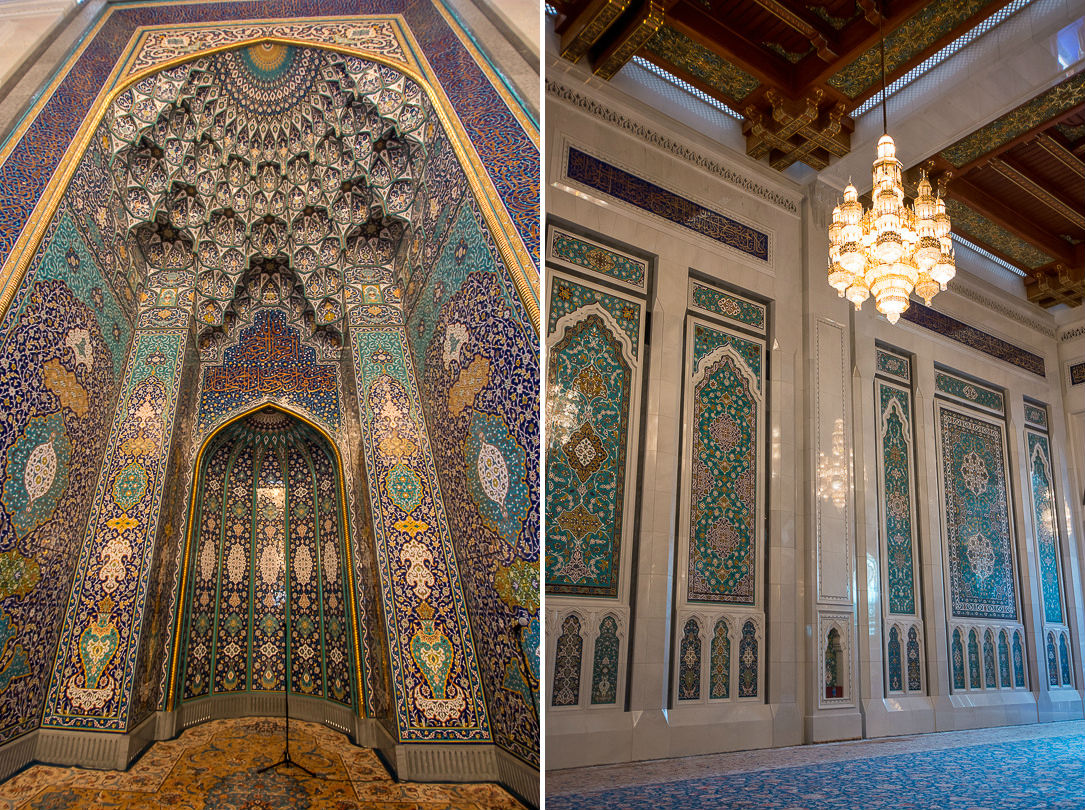
Mosque

Sultan Qaboos Grand Mosque

And of course the exit door merits a long look before you head out, if only to marvel at the level of the woodcraft.
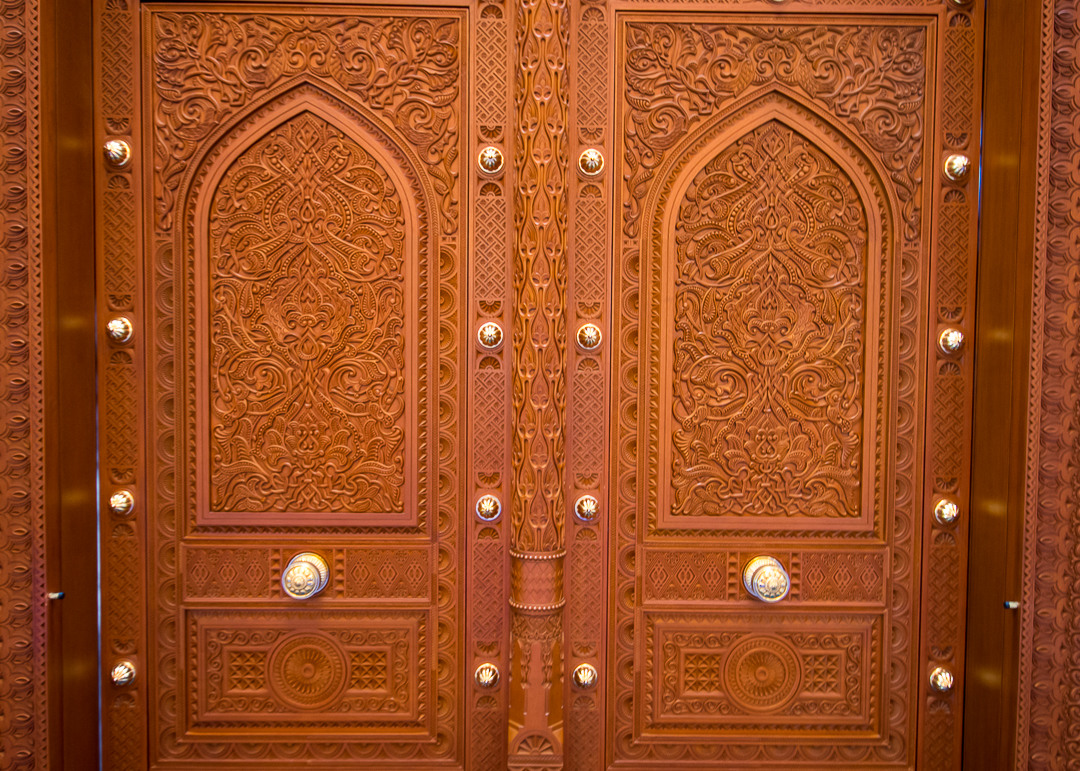
Sultan Qaboos Grand Mosque

Everything here shuts down for the midday break between 1pm and 4pm so it’s the perfect excuse for one of those really long lunches Omanis love to take. A really good one can be had at The Chedi Hotel, one of the first stylish resorts on this stretch of the Gulf.
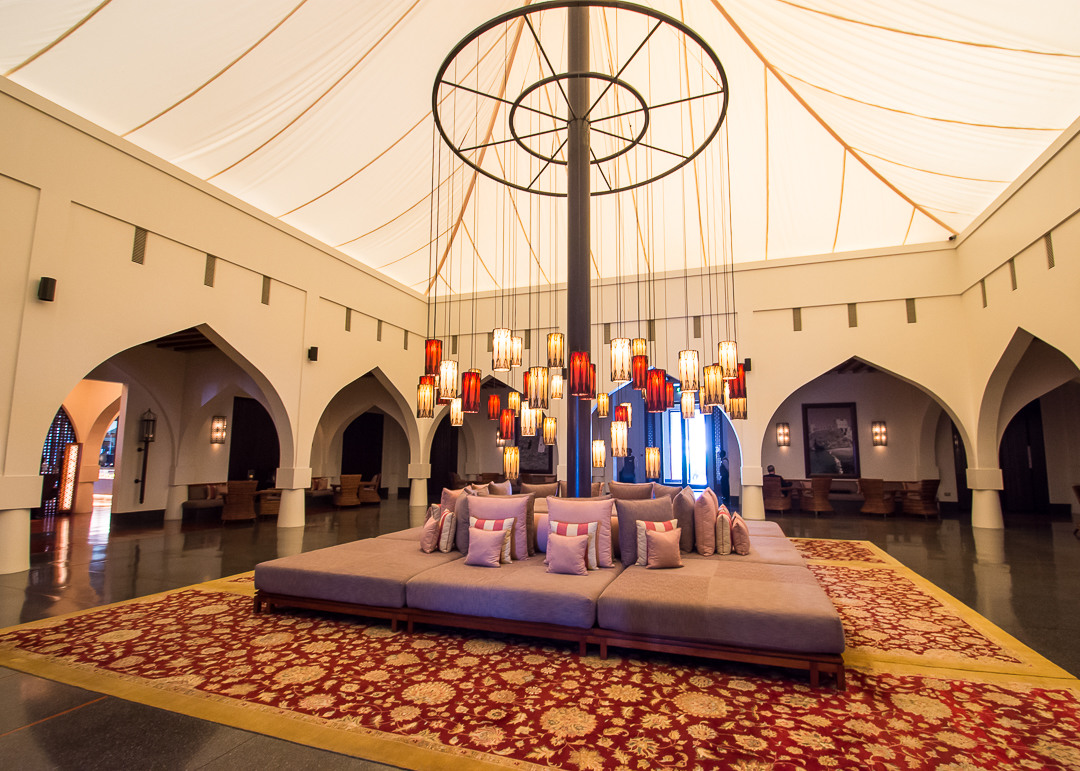
The Chedi Muscat

The chic restaurant’s terrace facing the sea is probably THE best setting for a leisurely alfresco lunch.
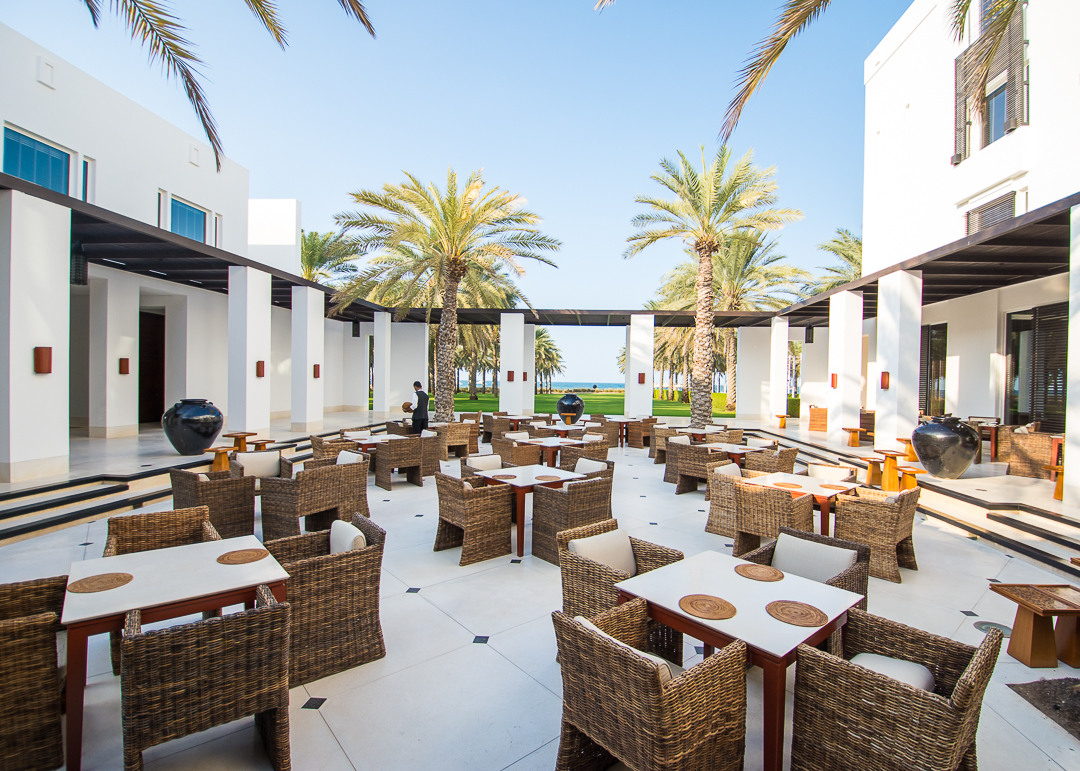
The Chedi Muscat

We indulged in a little mezze with a Halloumi & watermelon salad and a seafood soup – healthy, filling and most importantly scrumptious. No surprise it’s the most famous hotel in Muscat even after all these years.
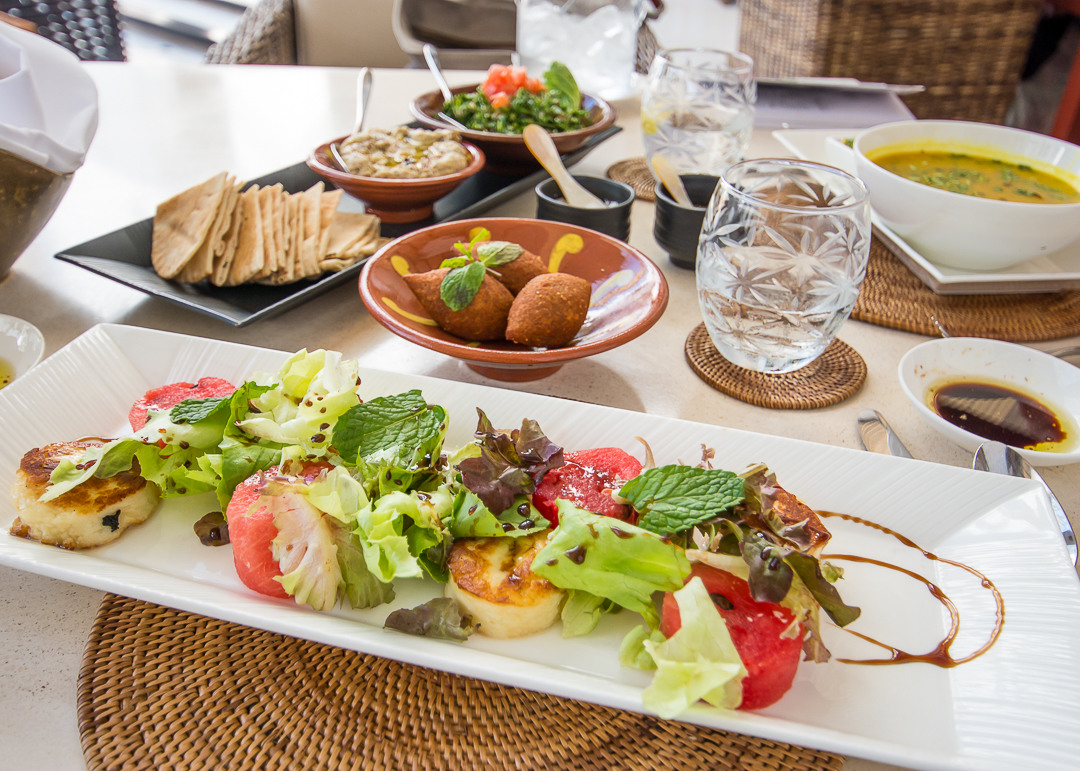
The Chedi Muscat

Leaving the city center behind and heading south along the coast will get you to one of Muscat’s most iconic views – the Muttrah harbour. The seafront crescent is lined with merchant houses, significant reminders of the city’s commercial past, and is where you’ll get the best atmosphere of old-time Oman and the city’s most interesting street life.
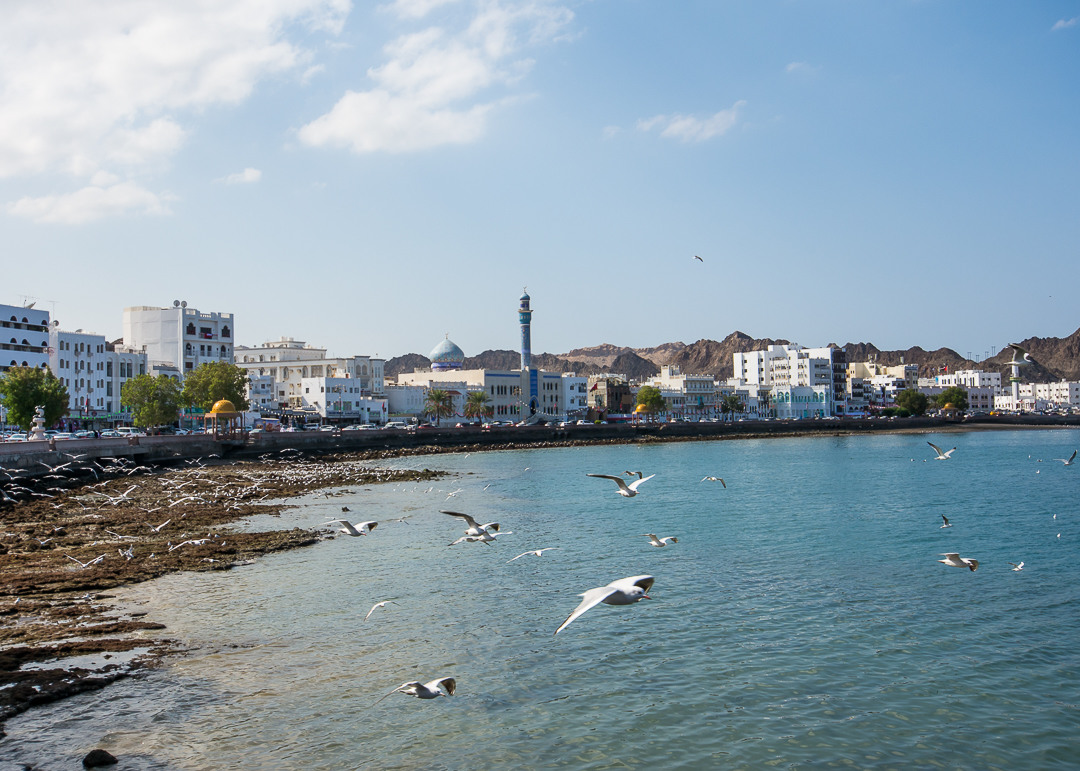
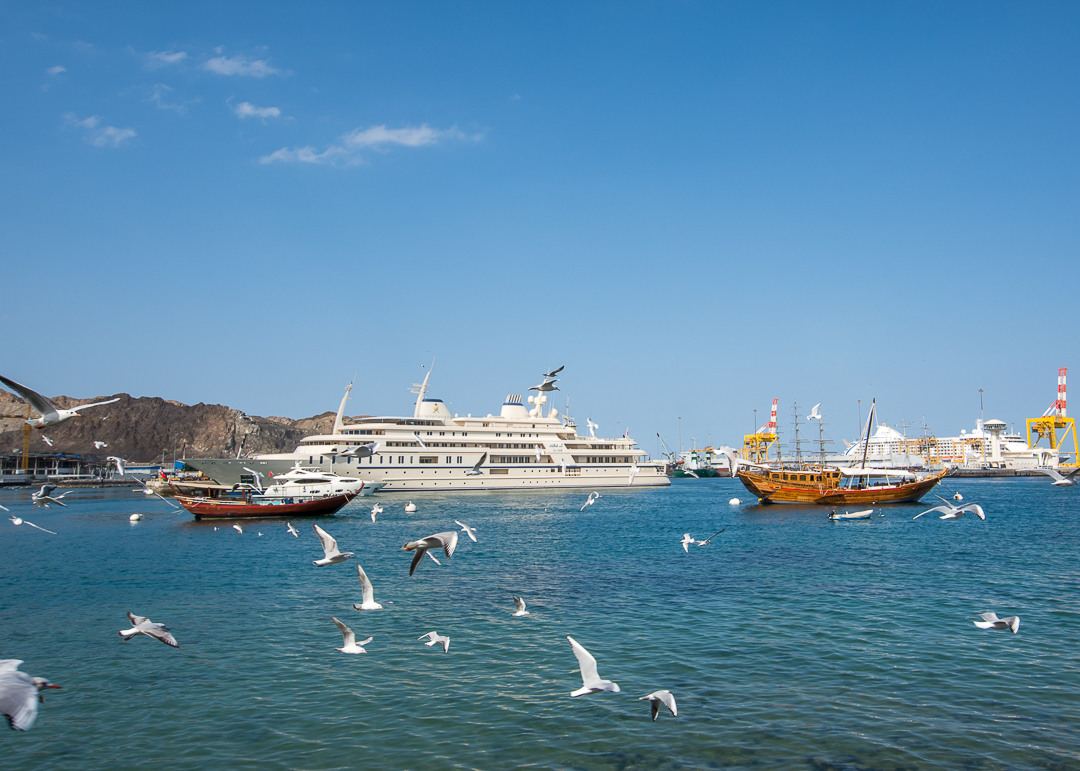
Muttrah Harbour

Muttrah Harbour

In the morning, the fish souk is brimming with activity as the daily catches start coming in.
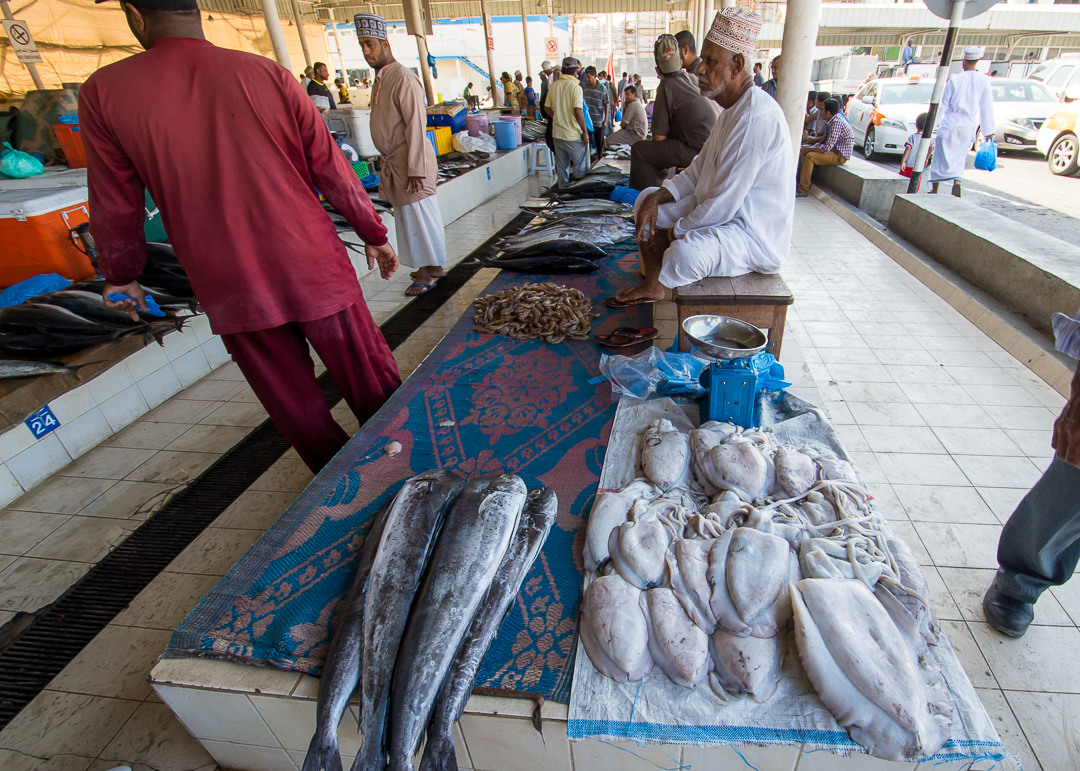
Fish souk

Fish souk

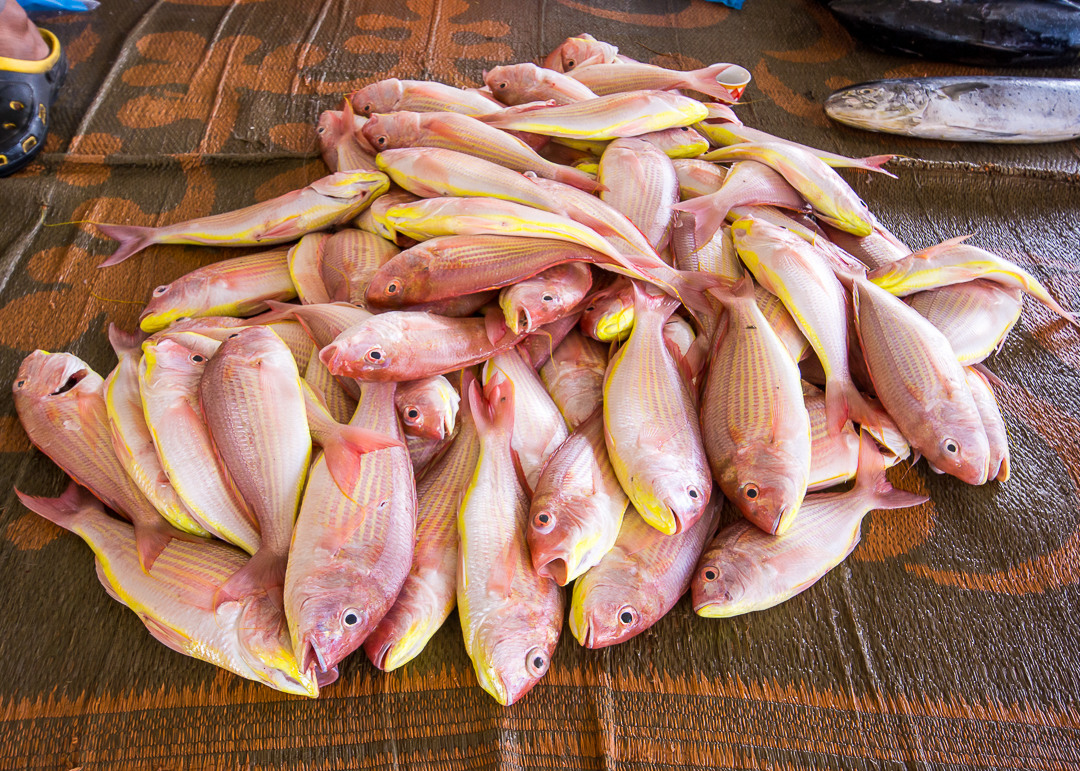
The variety is unlike what you’re used to, and small sharks are a common sight, featuring heavily on local restaurants’ menus.
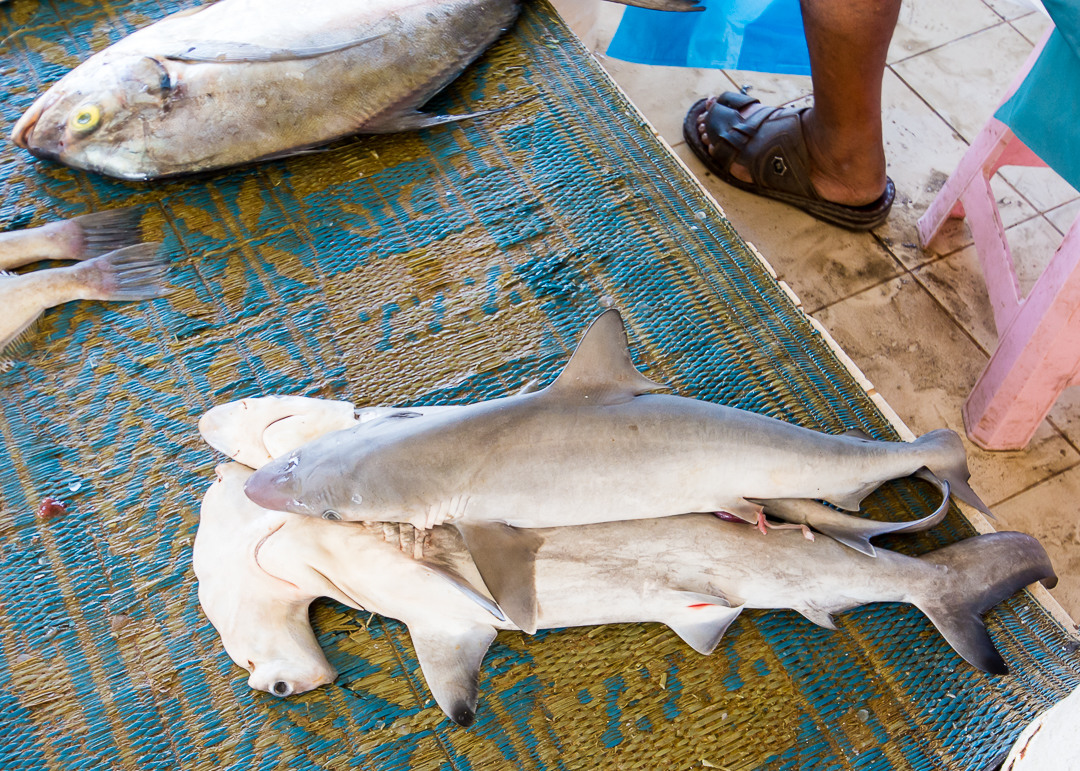
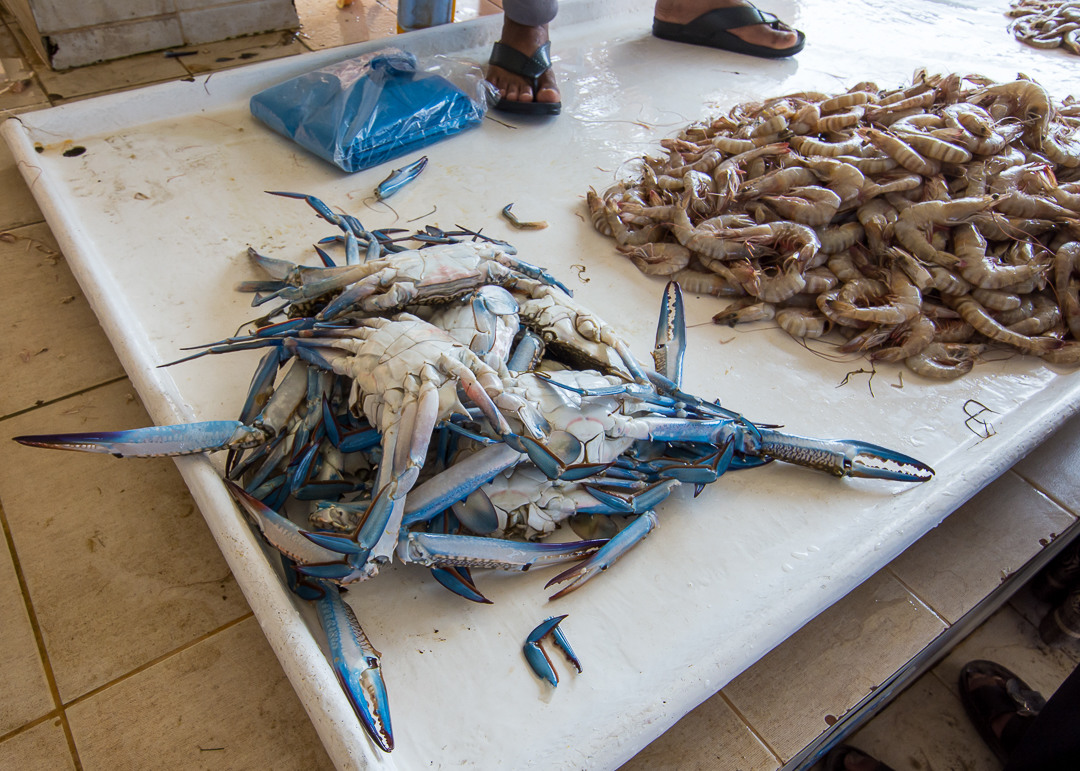
Fish souk

Fish souk

Nearby, the Muttrah Souk in the middle of the corniche is hard to miss and is by far the most popular attraction around.
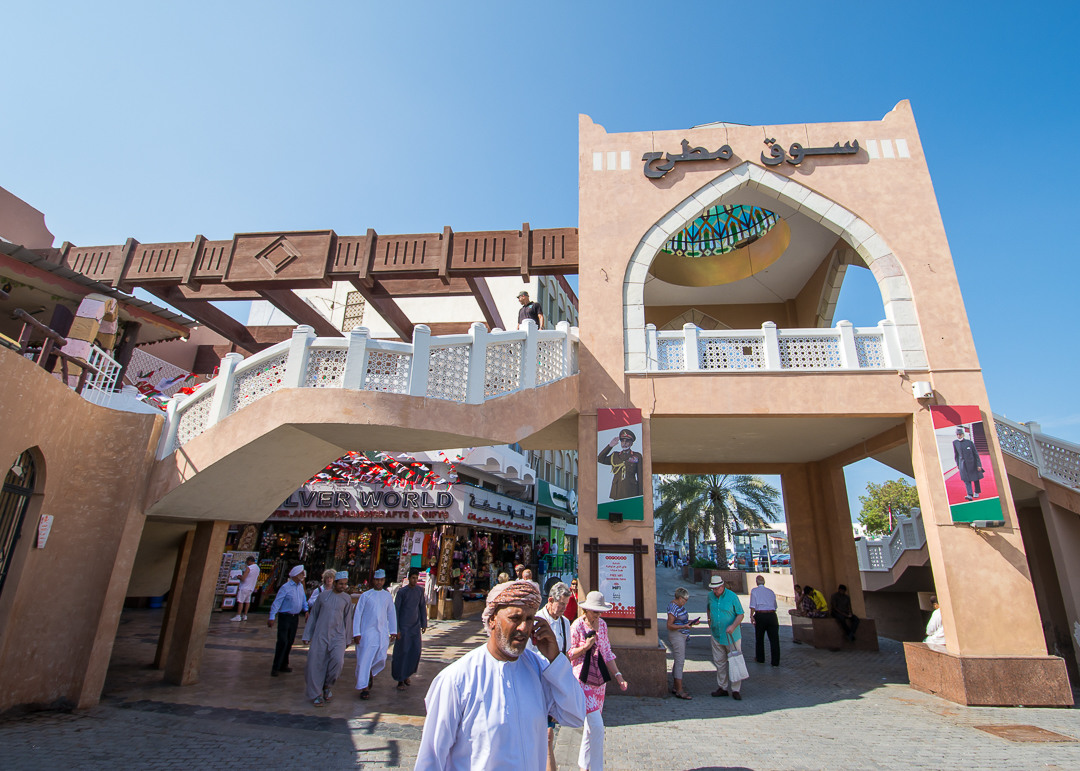
Muttrah souk

Navigating its winding alleys is the best way to soak in the multicultural side of Muscat with Omani, Indian, Pakistani, Zanzibari and Iranian shopkeepers mixing inside the labyrinth.
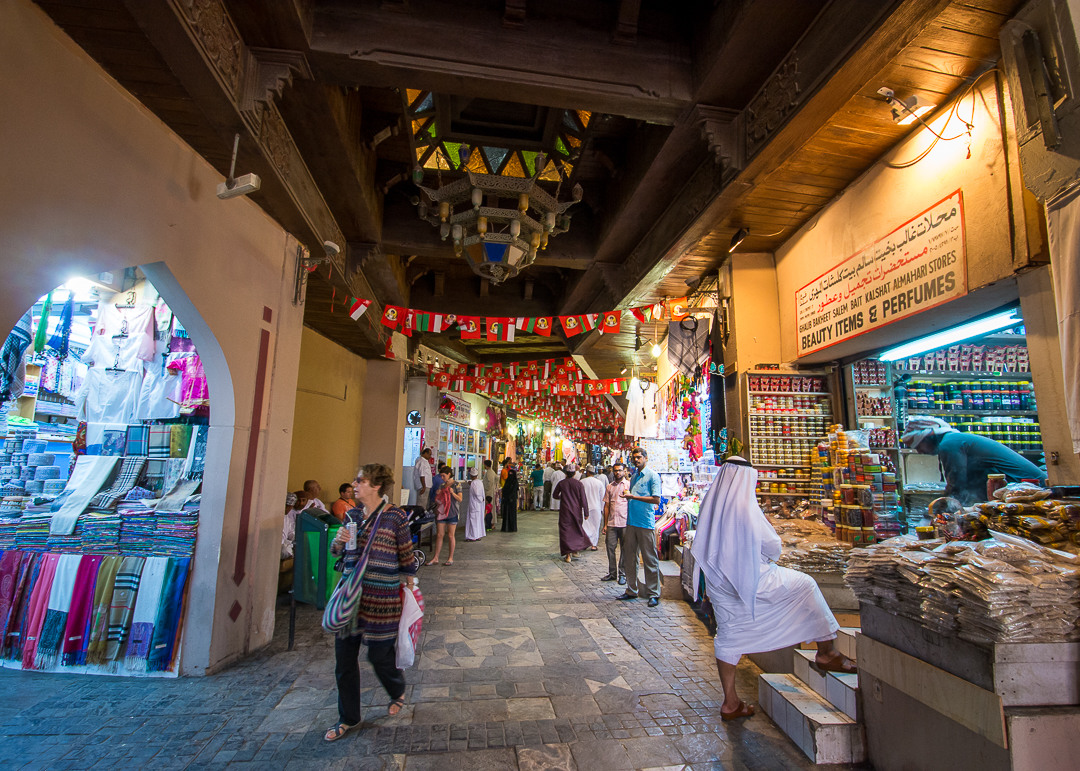
Muttrah souk

You’ll find plenty of pashminas, coffee pots, incense burners, Arabic coffee, dried limes, perfumes, antiques, gold, rugs, etc. for hours of shopping and haggling.
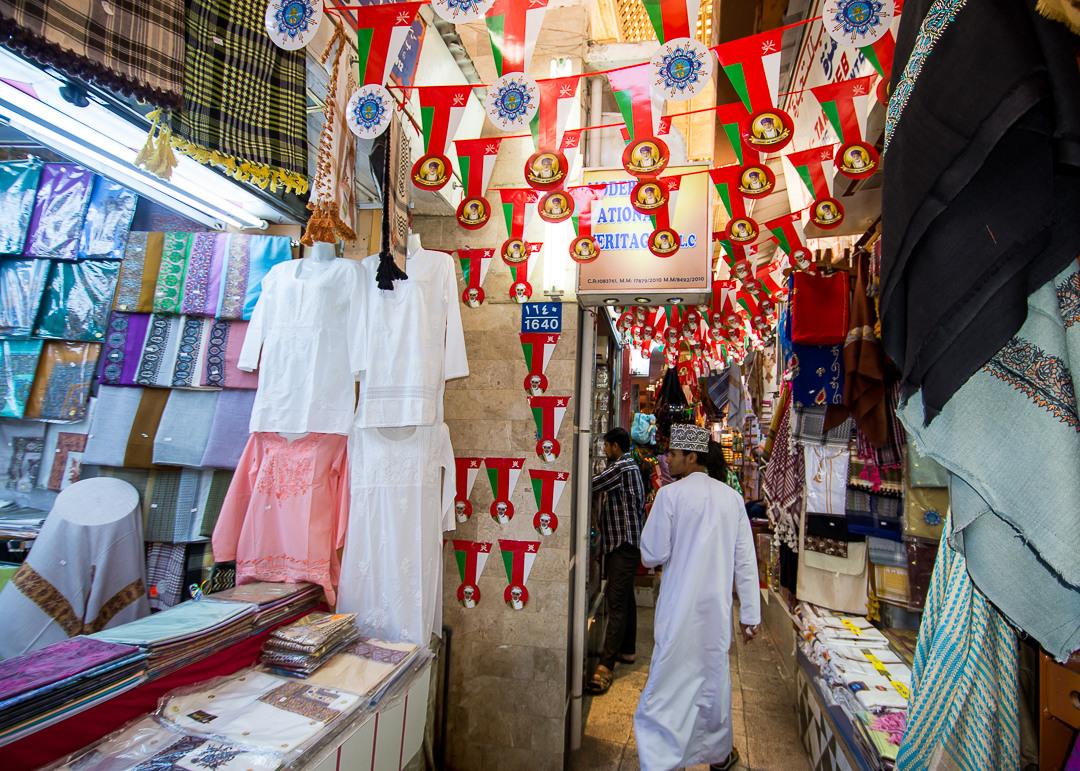
Muttrah souk

At the east end of the harbour, a giant model of an incense burner sits atop a cliff overlooking the sea. It is surrounded by Riyam Park, a green oasis with a funfair and plenty of space for picnicking, a favorite weekend activity in Oman.
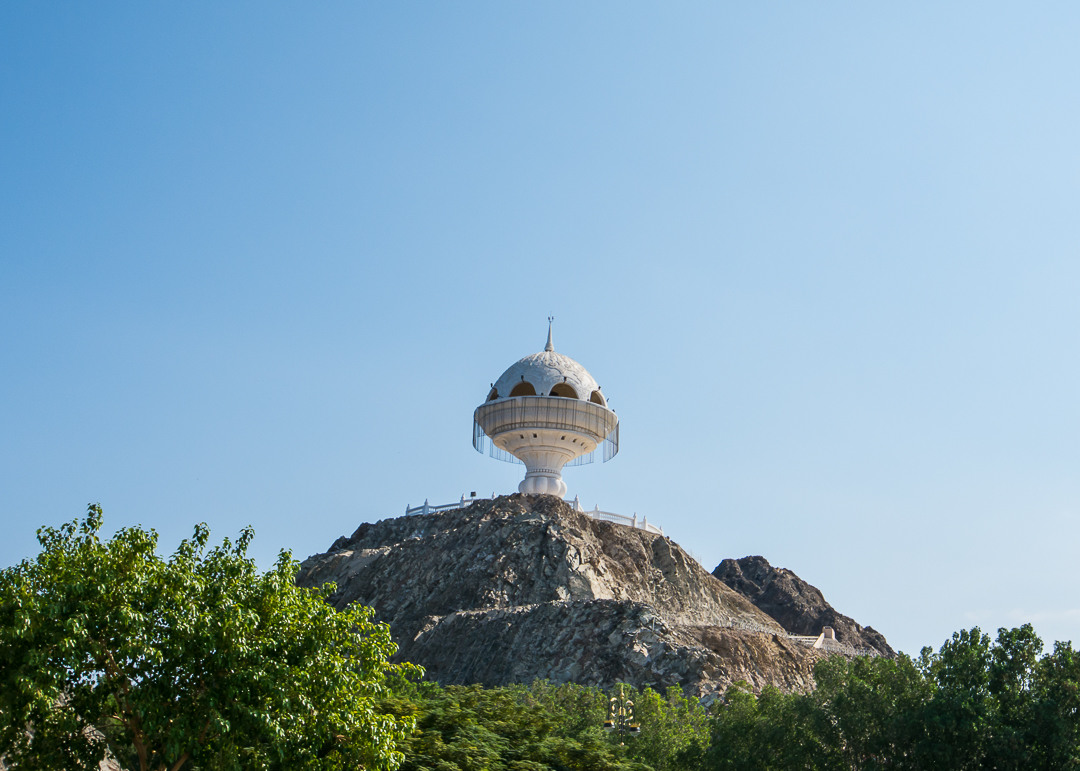
Muscat Incense Burner

Continue a little further south and you’ll soon get a very nice view of the original Old Town spread out between two old Portuguese forts. You can still see parts of the old wall and the three remaining gates as well as a good scattering of traditional Arabian buildings and mosques.
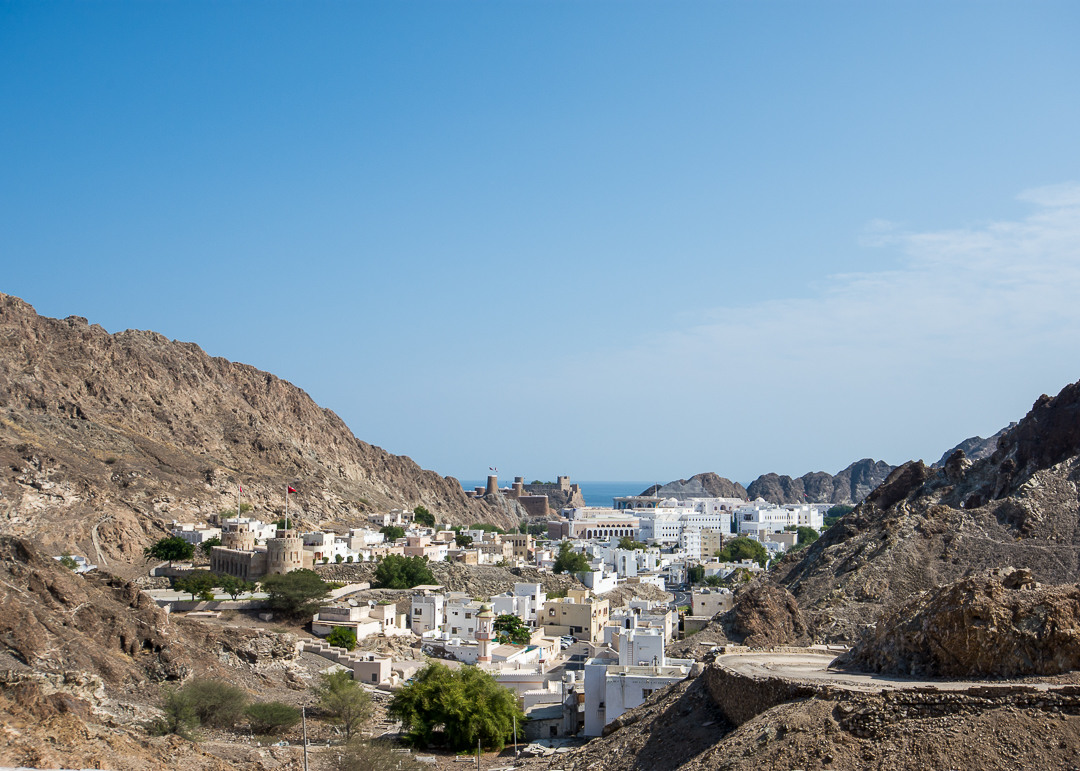
Muscat Old Town

The Bait Al Zubair museum is an enlightening stop with its excellent collection of jewelry, costumes, and Bronze Age household items in a traditional Omani townhouse.
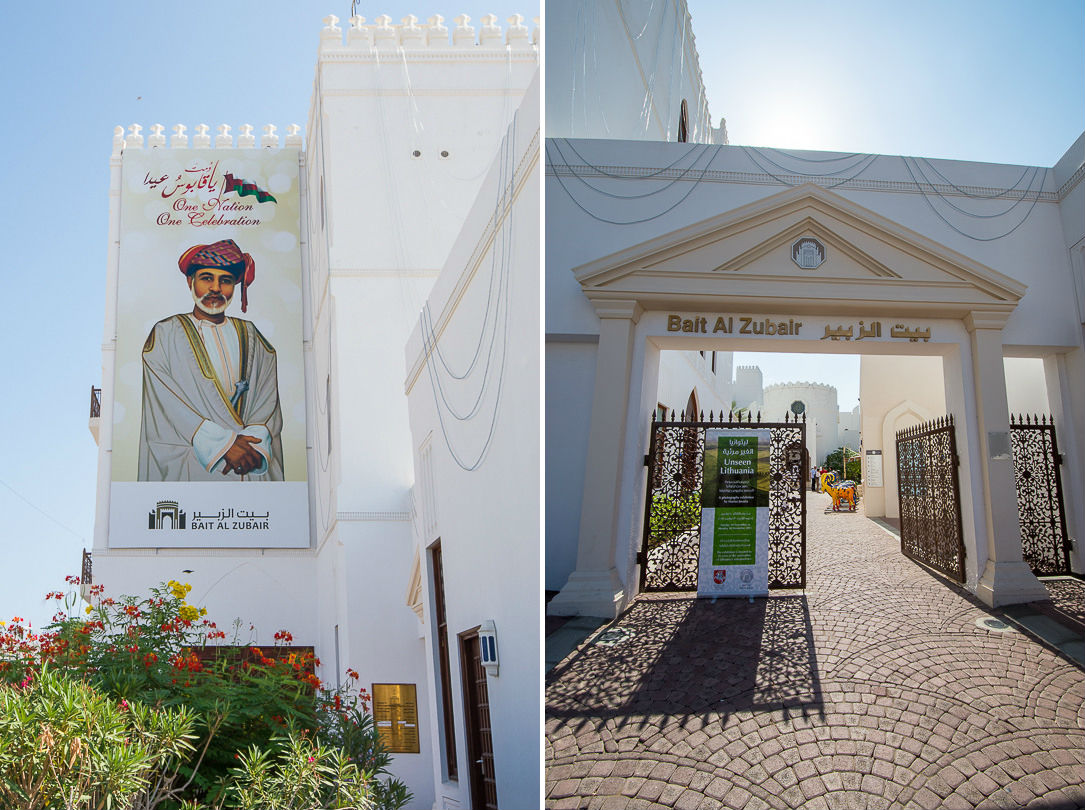
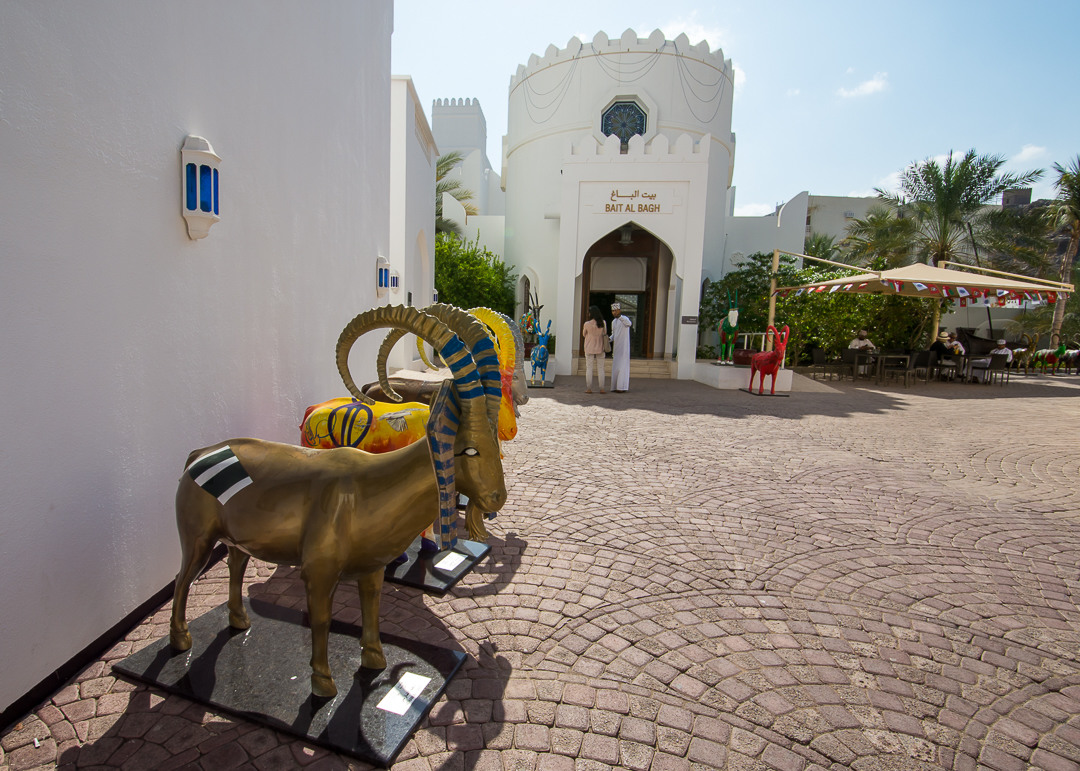
Bait Al Zubair

Bait Al Zubair

In the backyard outside you’ll find miniature reconstructions of traditional stone houses with a falaj (ancient irrigation system) and running water, a setup still widely seen throughout the country.
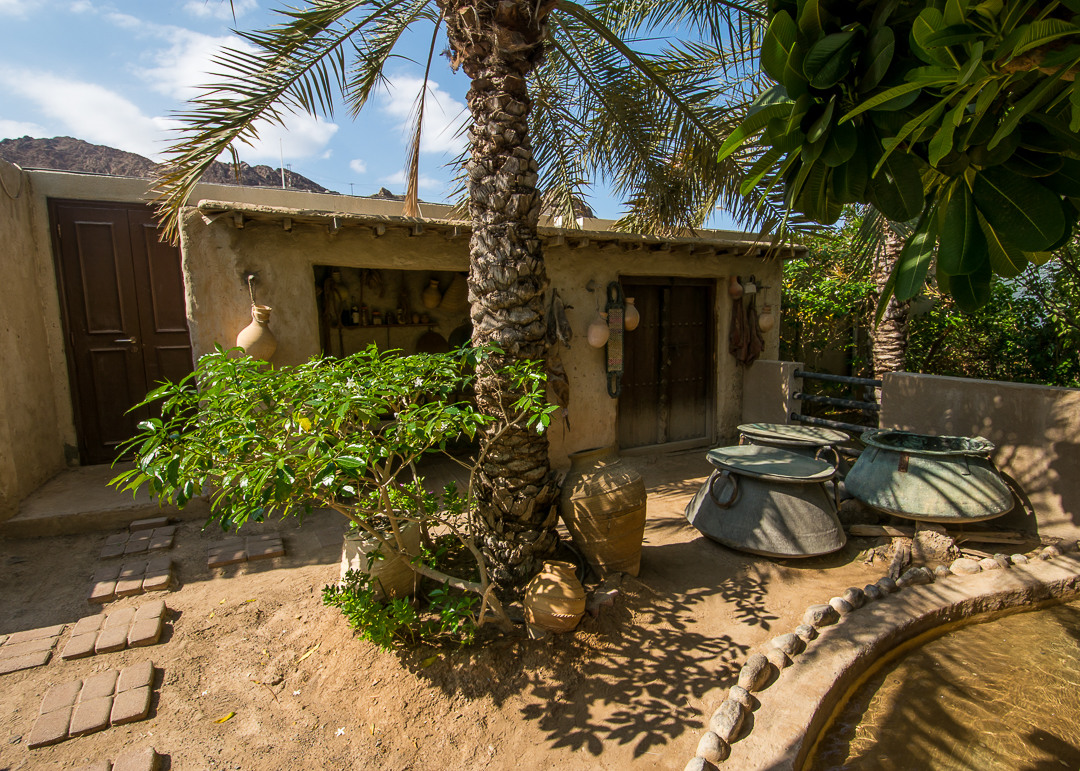
Bait Al Zubair

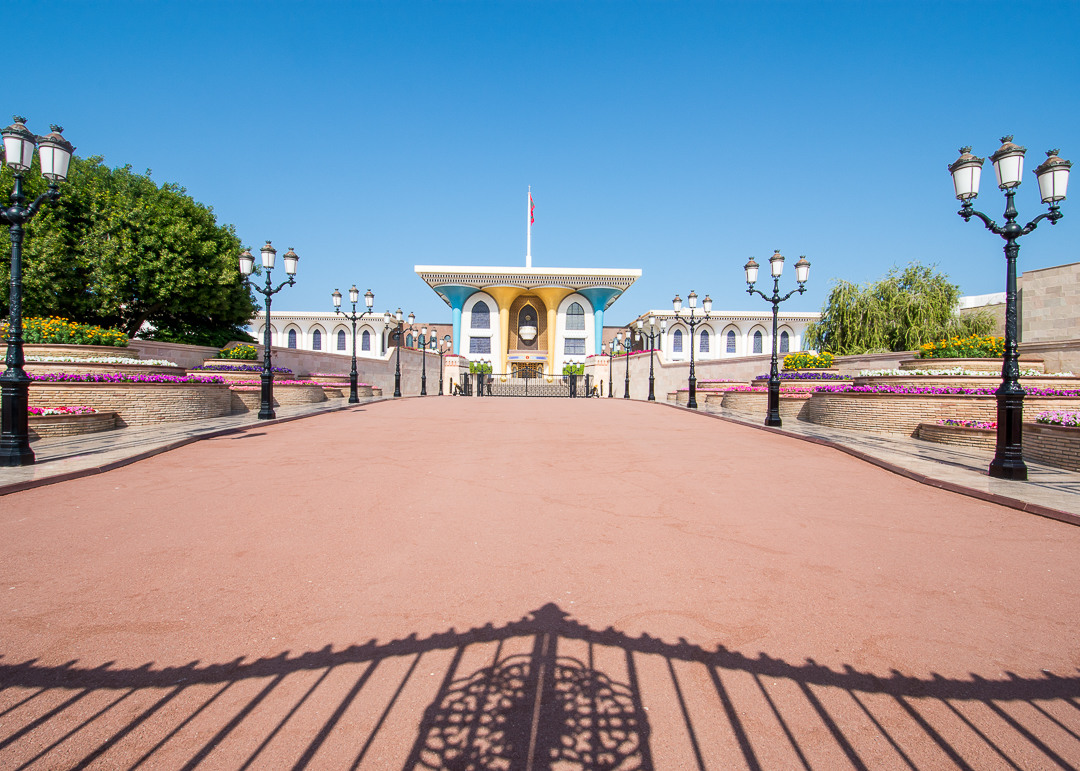
Next stop is Al Alam Palace, the Sultan’s residence and Oman’s most flamboyant example of contemporary Islamic design.
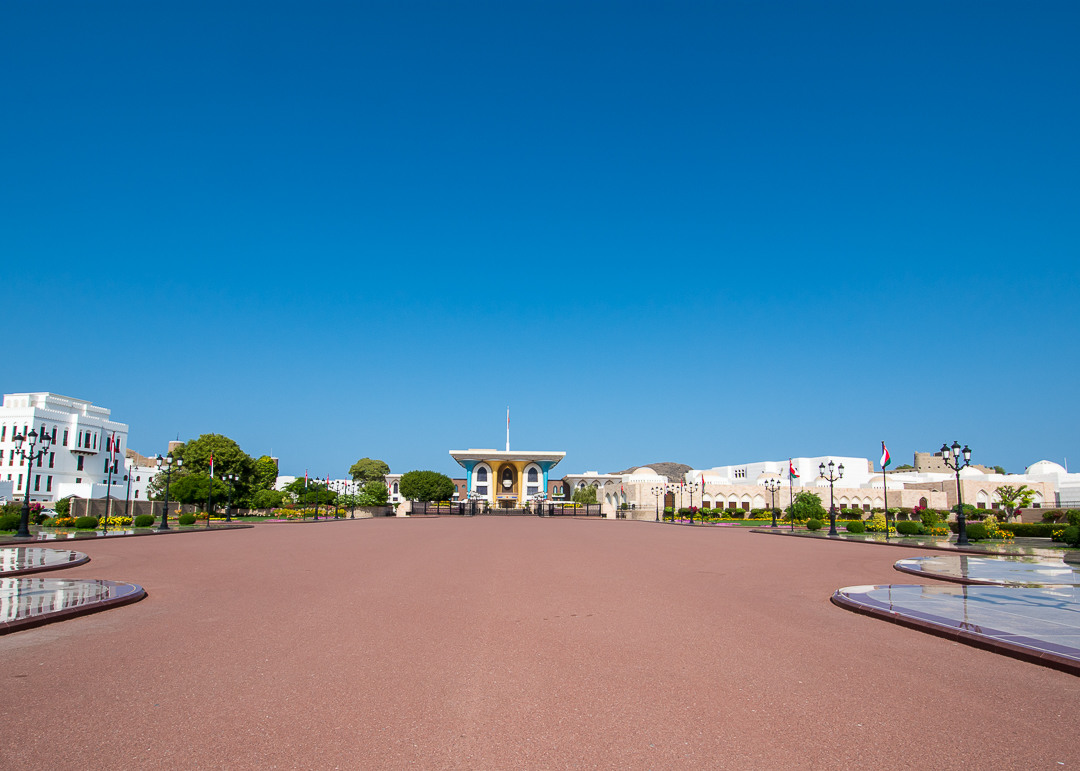
Al Alam Palace

The palace isn’t open to the public so the closest you’ll get is the first gate which still affords good views of the gold and blue pillars and the overall architectural style, interesting to say the least.
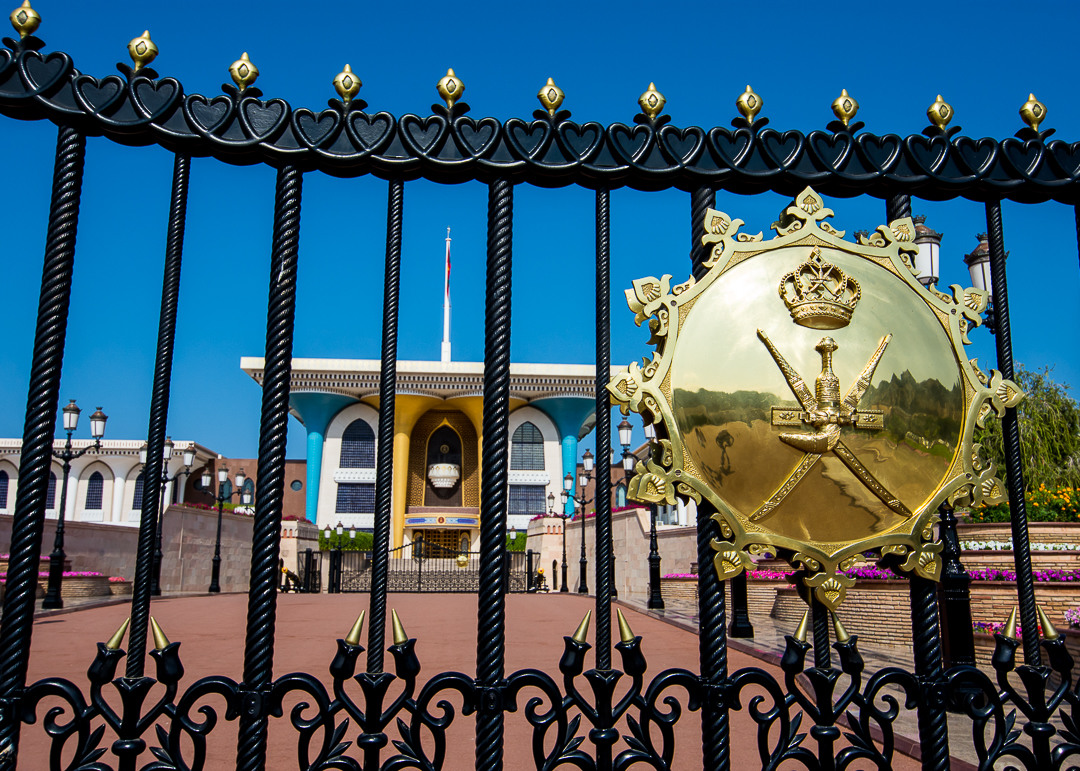
Al Alam Palace

Al Alam Palace

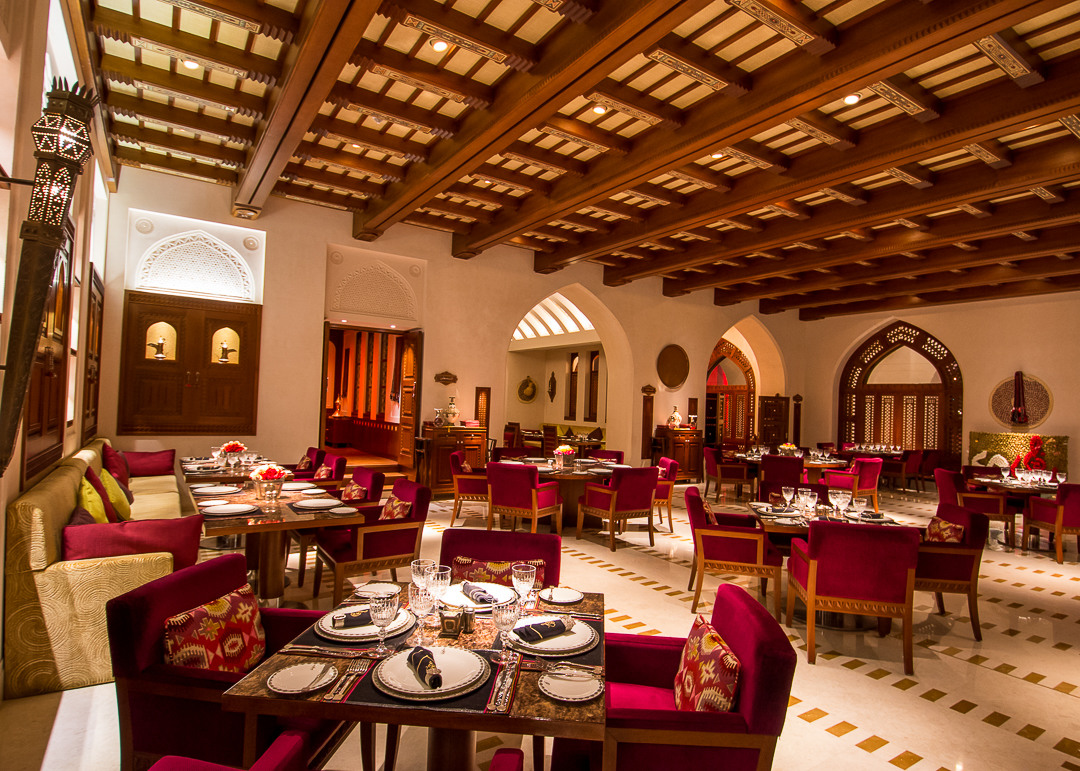
Back in the city center, if you wish to experience Oman’s finest restaurant, you only need to locate the impossible to miss Royal Opera House and make your way to the imposing wooden door of Al Angham.
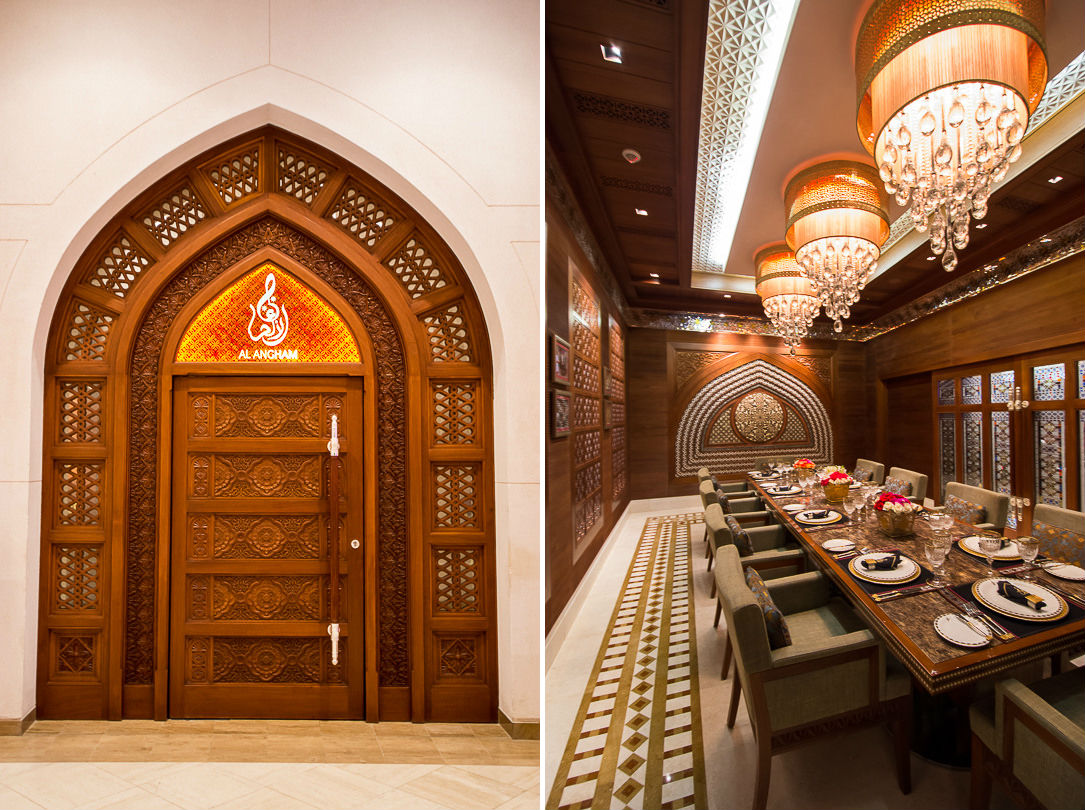
Al Angham

The inside is simply breathtaking (another ‘expense/gift’ from the Sultan) and the attention to details is such that it’s customary for your waiter to first give you a tour of the premises, highlighting the provenance and craftsmanship of everything from the carved ceiling…
Al Angham Muscat

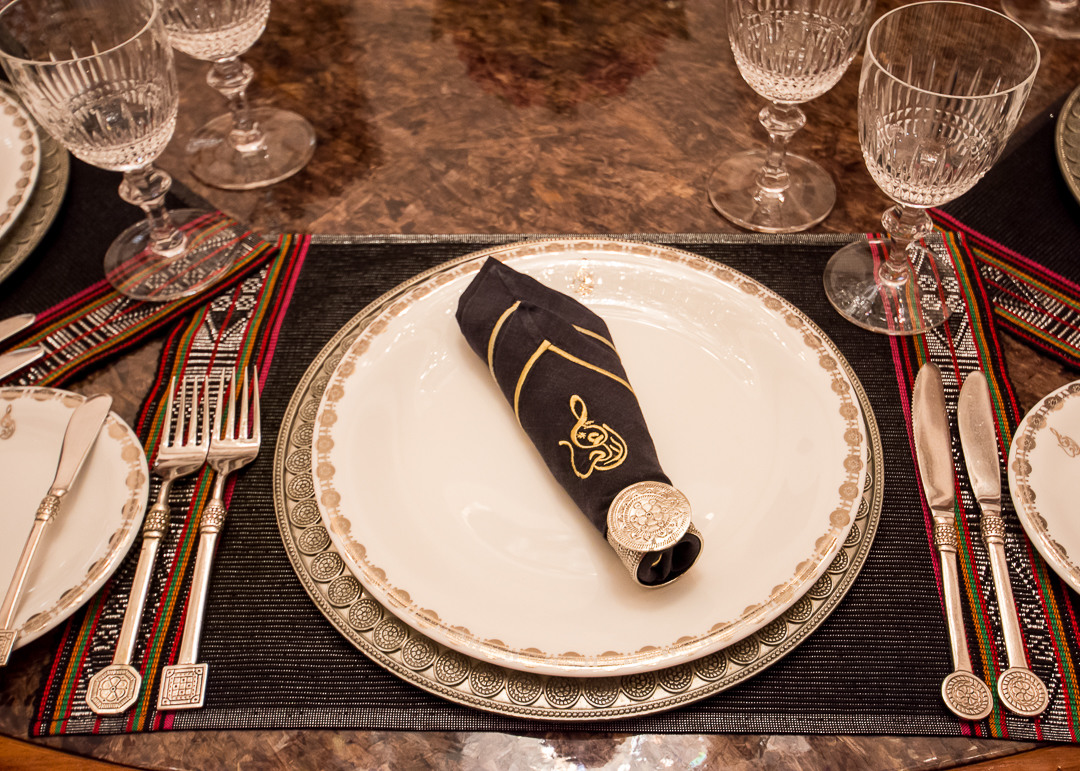
…to the napkin holders made of old silver rings.
Al Angham Muscat

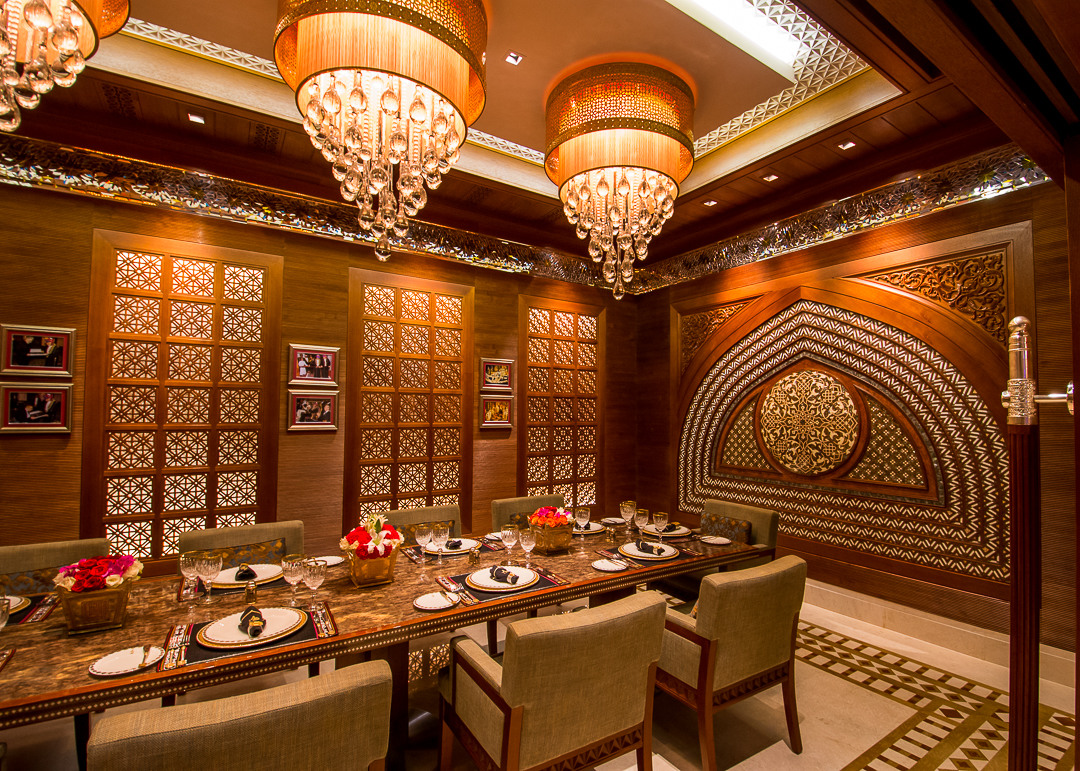
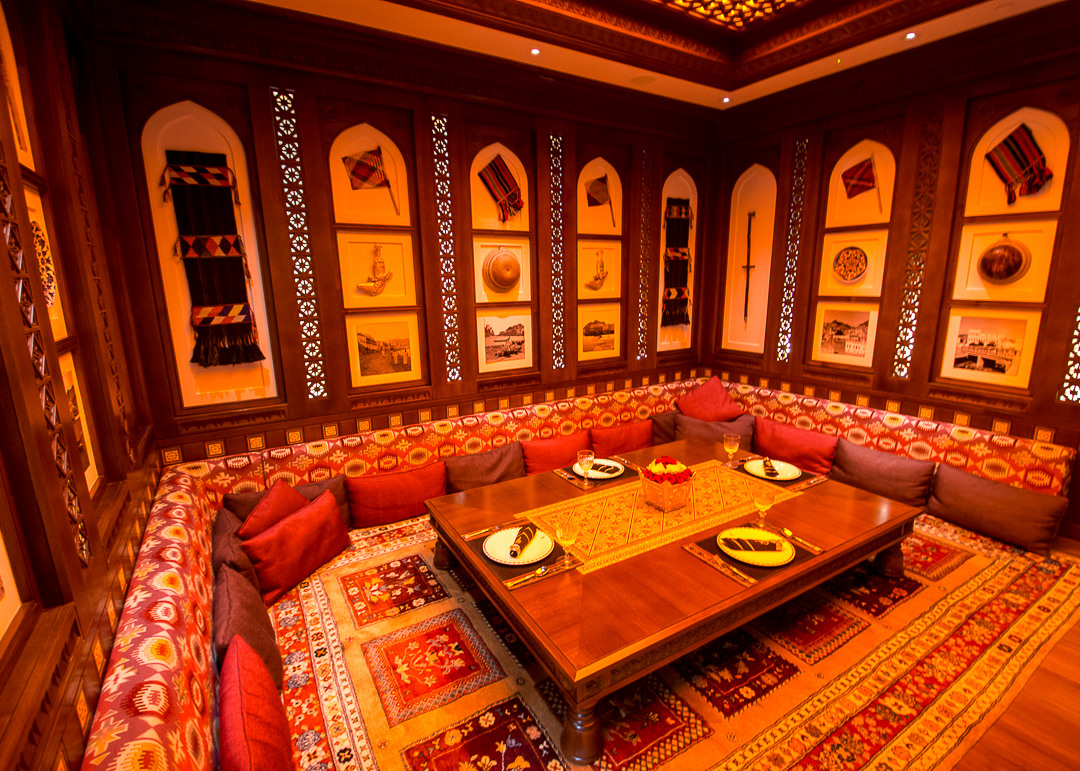
Private rooms are coveted by the highest dignitaries of the country and visiting royals and the money spent on the decor in this ‘mini palace’ is undisputedly insane.
Al Angham Muscat

Al Angham Muscat

The restaurant is an ode to Oman as everything is local, the waiters are all Omanis, and the menu focuses on traditional recipes albeit presented in a modern way. My appetizer consisted of a mini meat pie (meat masanef), dried baby shark salad and a samosa. Honestly I wasn’t wowed by any of them and though the presentation was really nice, it felt short on the taste.
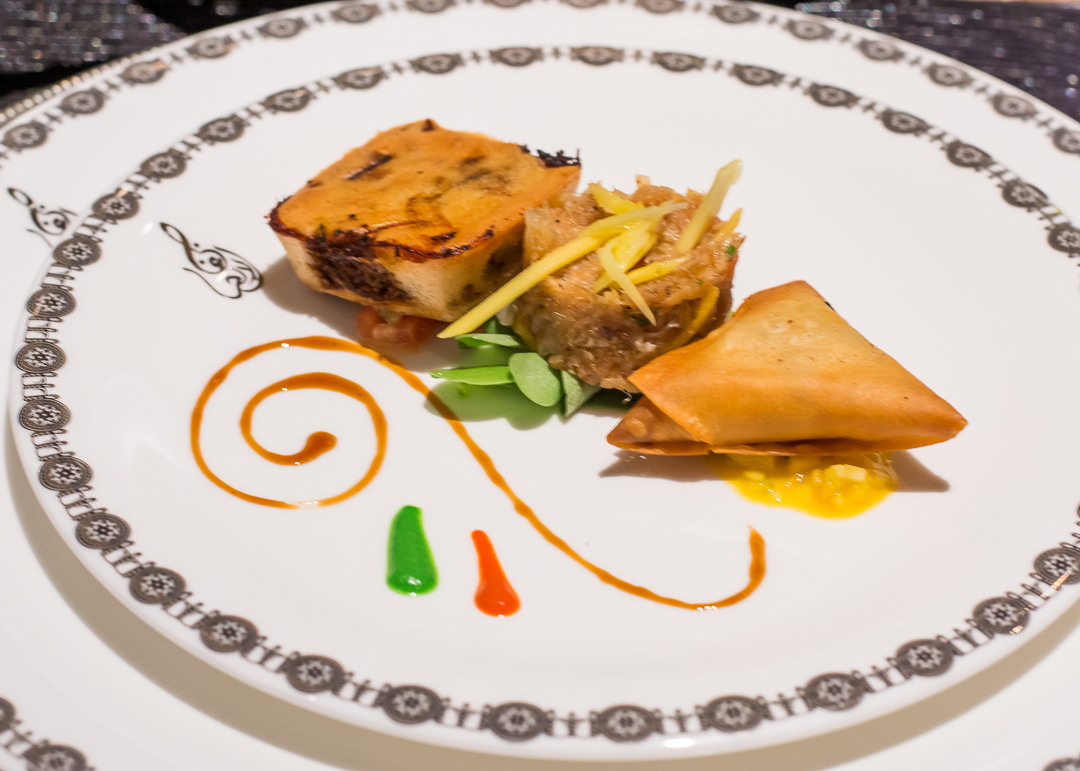
Al Angham Muscat

The main dish was another story though and one of the highlights of my meals in Oman. Omani Shuwa is a traditional dish of roasted lamb marinated with special spices and vinegar, covered with banana leaves and slow roasted overnight in an underground pit…insanely good! One of the best lamb dishes I’ve had in my life for sure.
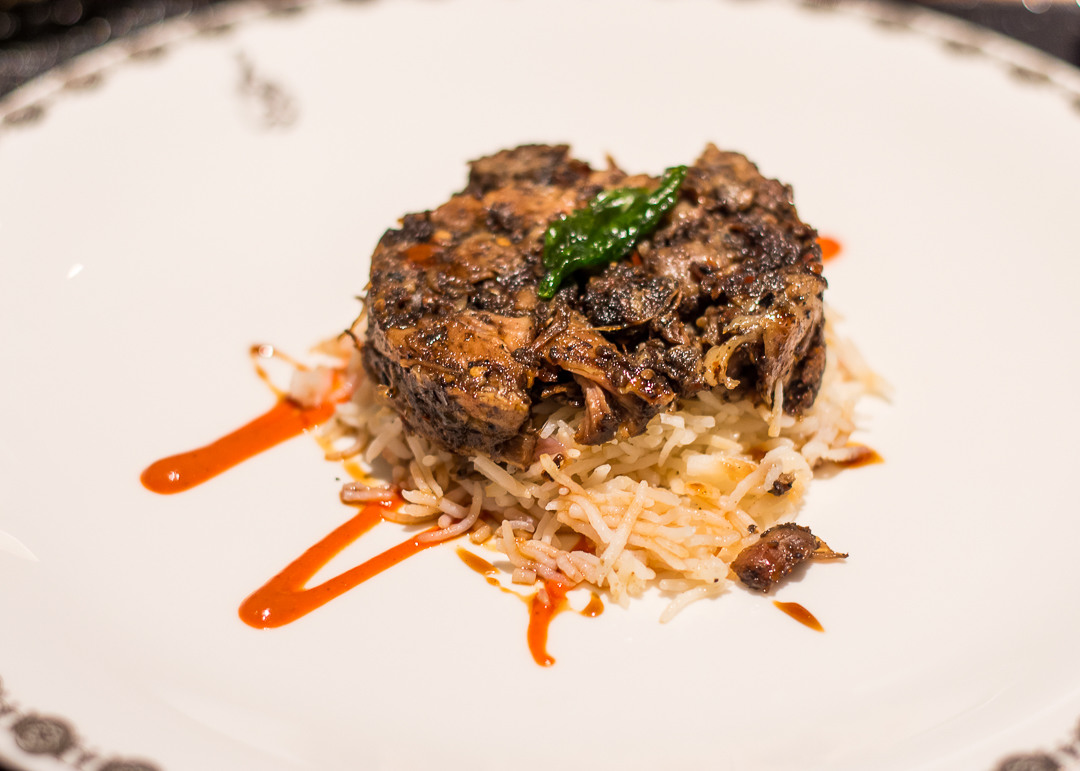
Al Angham Muscat

When exiting the restaurant, you’ll be greeted by the Royal Opera House light show which we could see every night from our hotel – it might have just been left from the Sultan’s 44th anniversary of reign prior to our visit, but a nice spectacle nonetheless.
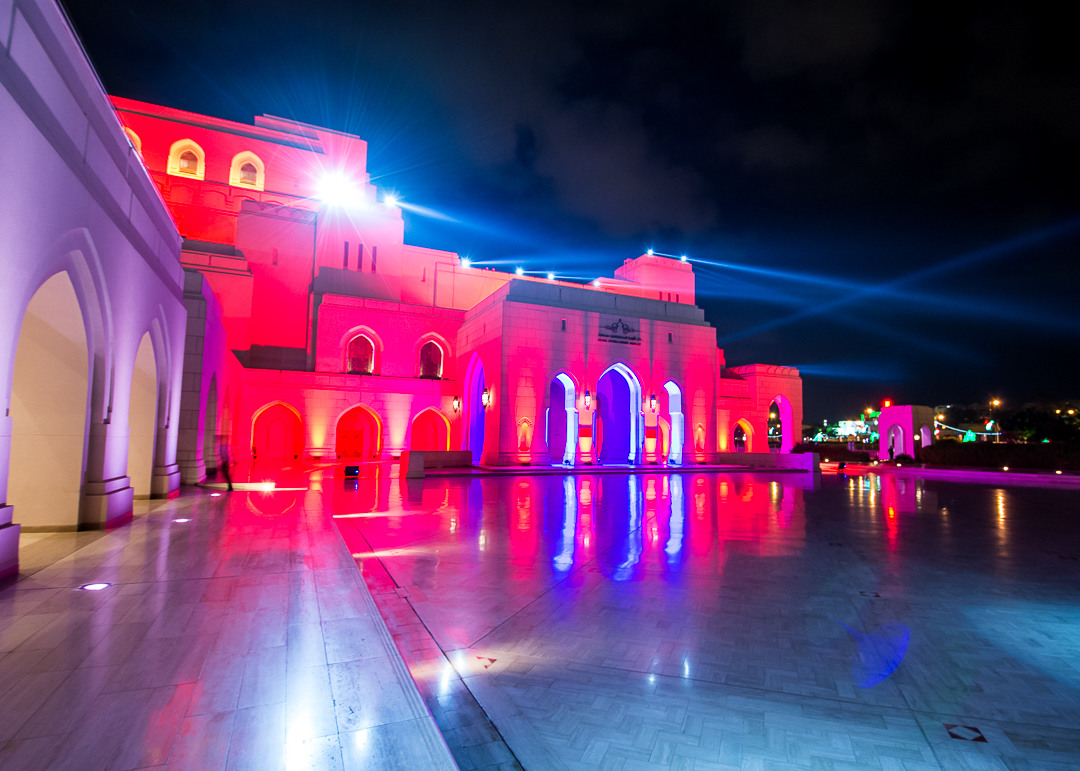
Royal Opera House Muscat

On a last note, while Al Angham is meant to be the jewel of Omani cuisine in Muscat, I was more impressed with the decor and level of service than with my food which was inconsistent despite that incredible lamb. My favorite meals were always the Persian ones whether eaten at upscale restaurants or hole in the wall places. My best recommendation for Muscat would therefore have to be Shabestan for its exceptional Persian cuisine near the Grand Hyatt hotel.
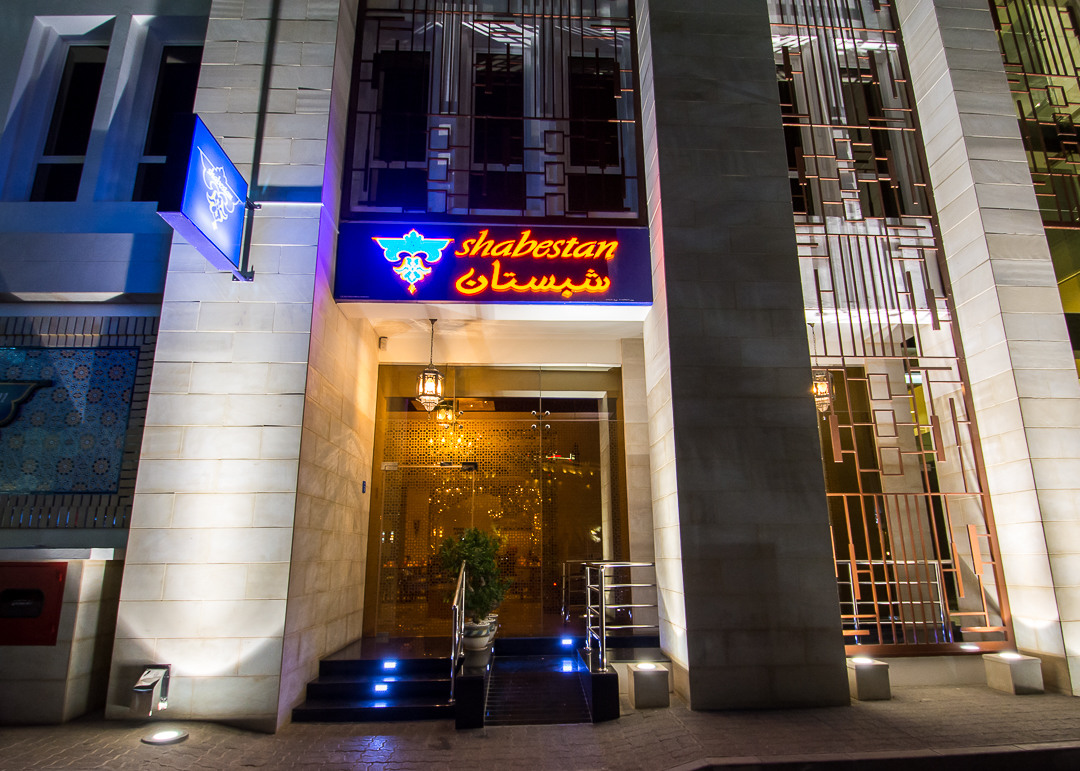
Shabestan Muscat

At first it’s all the same with the usual crudites platter and bowl of labneh…
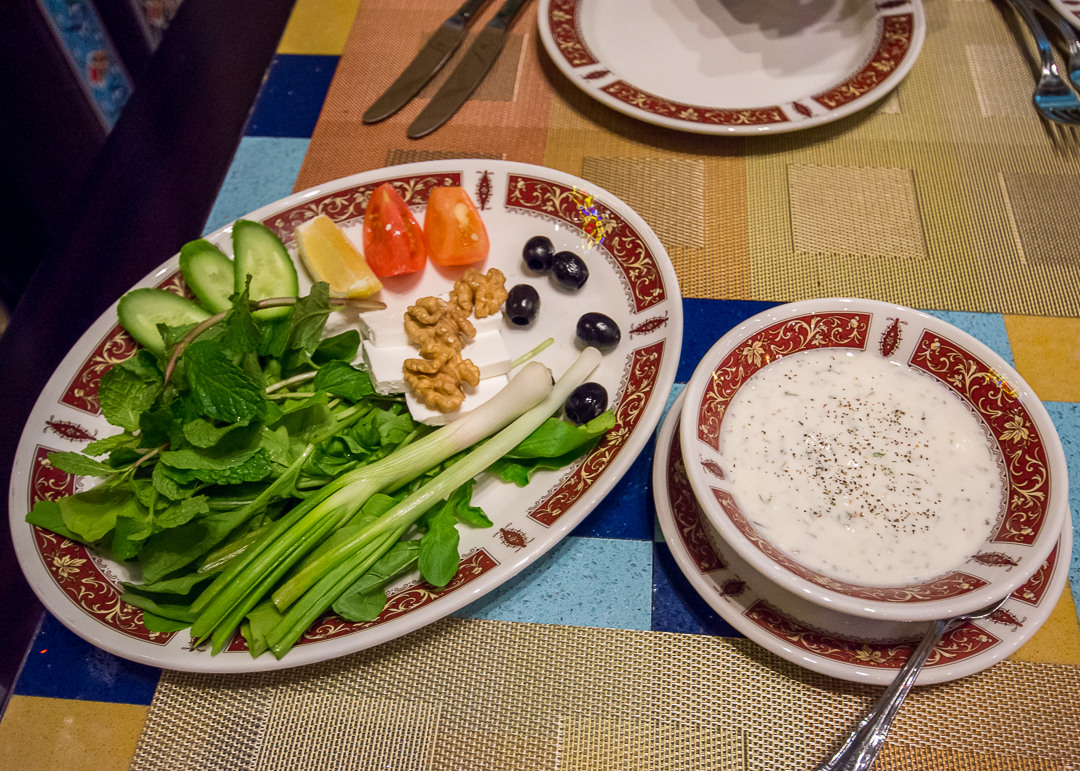
Shabestan Muscat

…but then they bring their freshly made barbari bread cooked right in the middle of the restaurant in an open oven and that’s when you know you’ve stumbled unto something special. The still warm flatbread is so soft and light it almost dissolves on the tongue and could be eaten straight, if it wasn’t for the myriad of dips and stews waiting to be scooped up.
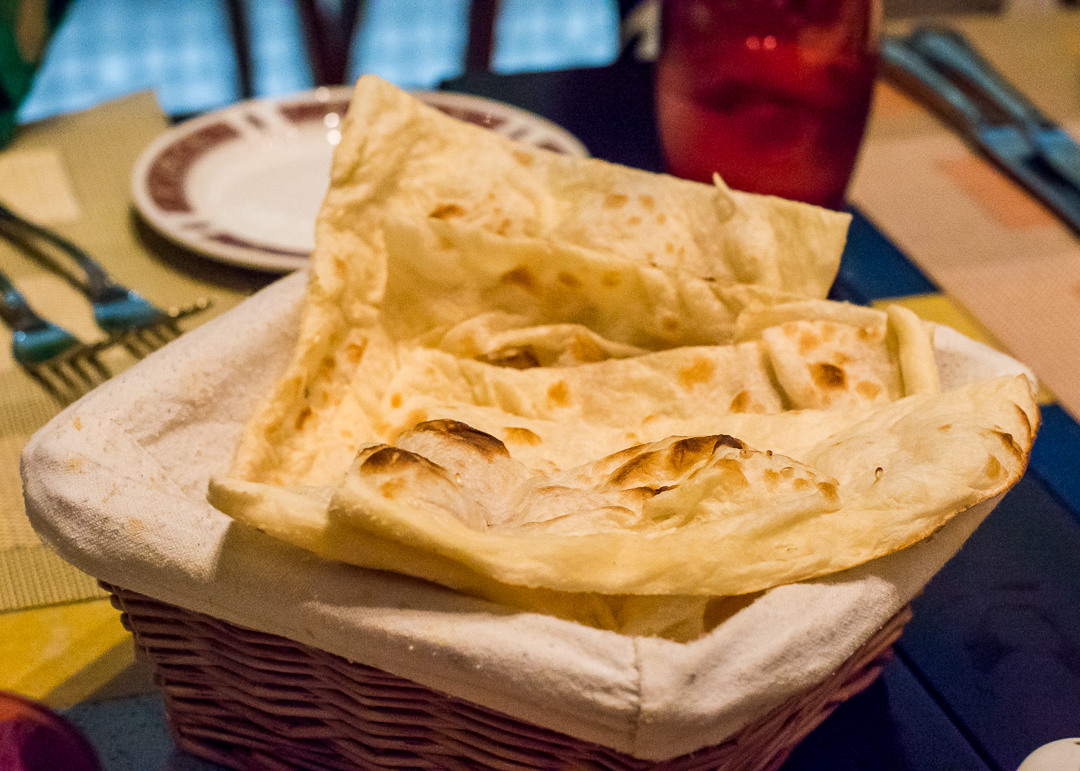
Shabestan Muscat

It might not look very appetizing, but the Zeytoon Parvardeh (purée of green olives mixed with pomegranate syrup, olive oil, walnuts, parlsey, garlic and coriander) was a knockout.
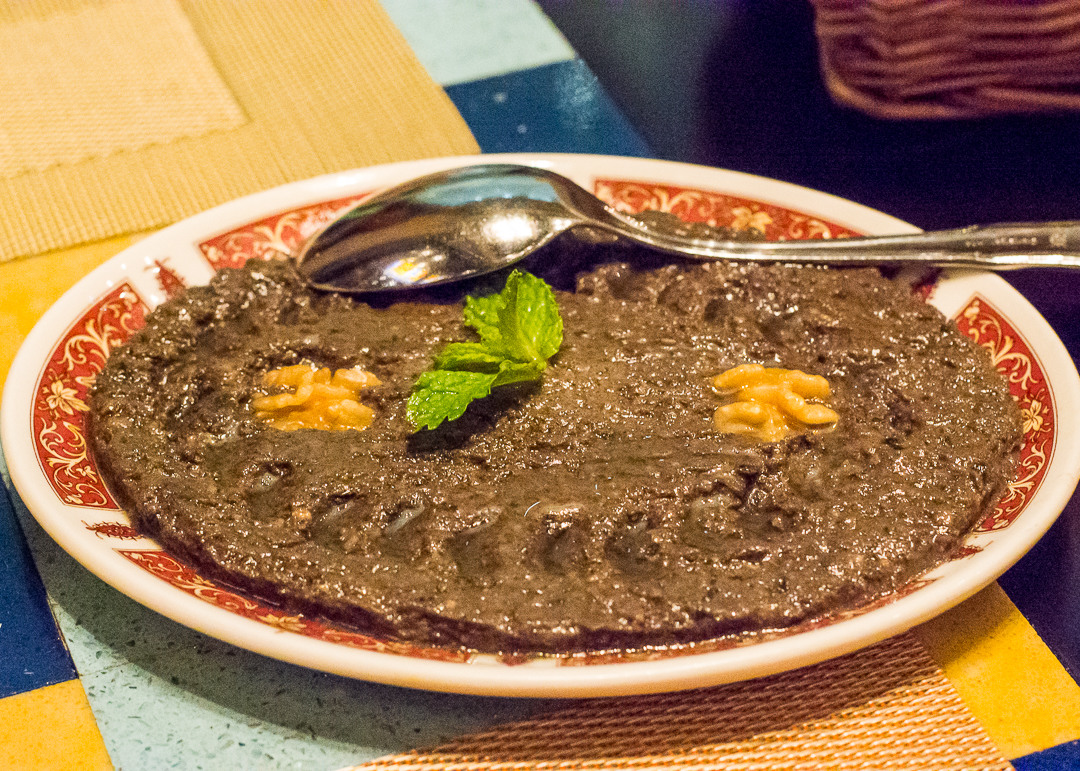
Shabestan Muscat

Same thing with my Khoreshet-E Ghormeh Sabzi, an Iranian spinach stew with vegetables, kidney beans and lamb.
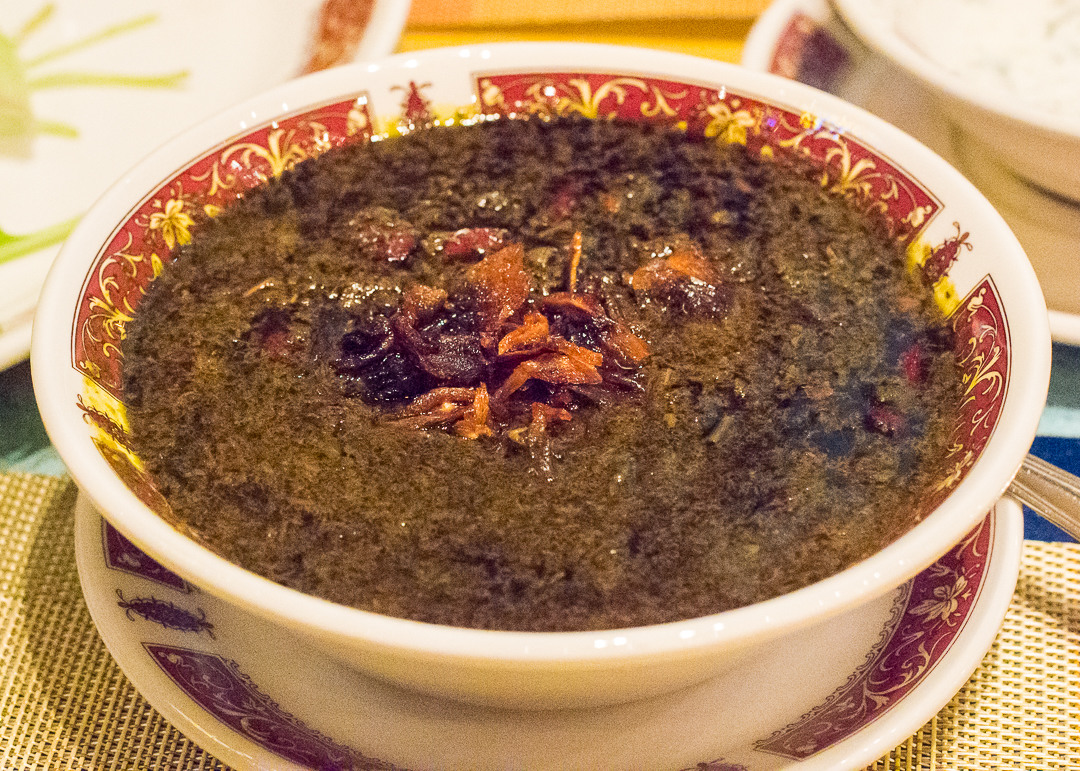
Shabestan Muscat

My friend got the Chelo Kabab-E Joojeh, a traditional kebab of charcoal grilled chicken cubes marinated with yogurt and saffron.
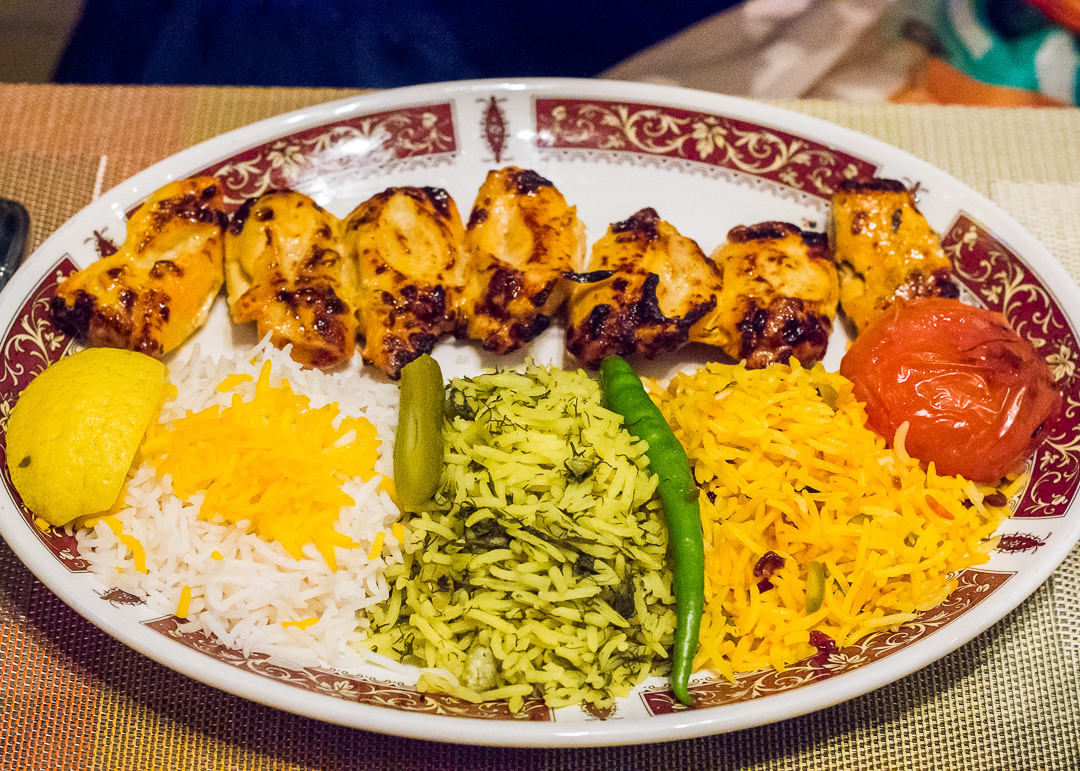
Shabestan Muscat

We were rolling at this point and happy as can be, our meal getting even better with the arrival of this whimsical saffron tea set. It all felt very ‘Grand Budapest Hotel’ for a moment.
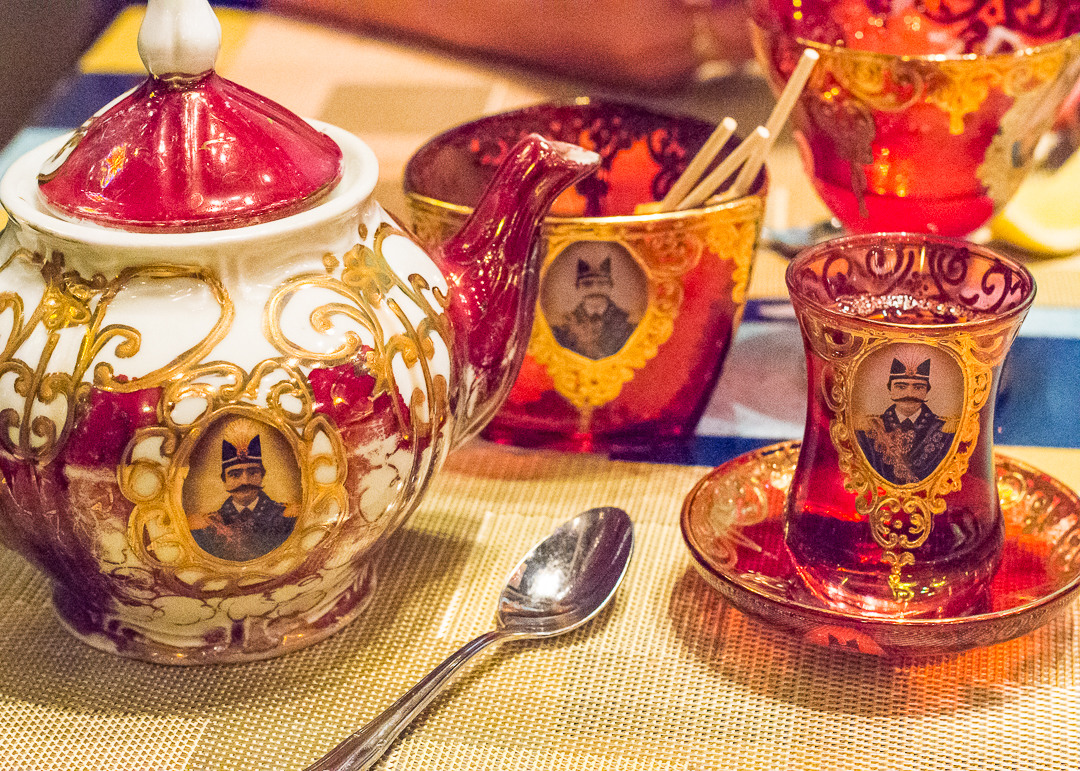
Shabestan Muscat

Despite the lack of appetite, we managed to finish it all off with yet another classic Faloodeh.
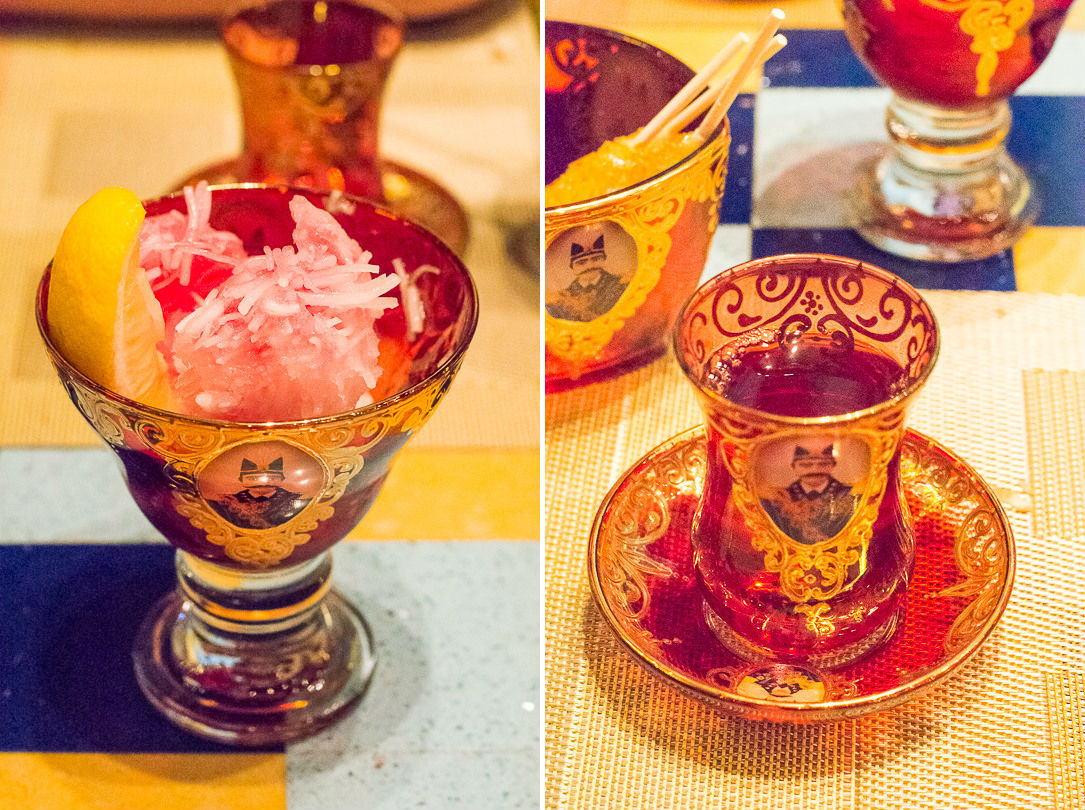
Shabestan

Enough of the cosmopolitan life, we were getting ready to leave the coast behind and explore Oman’s interior for the next week…stay tuned!

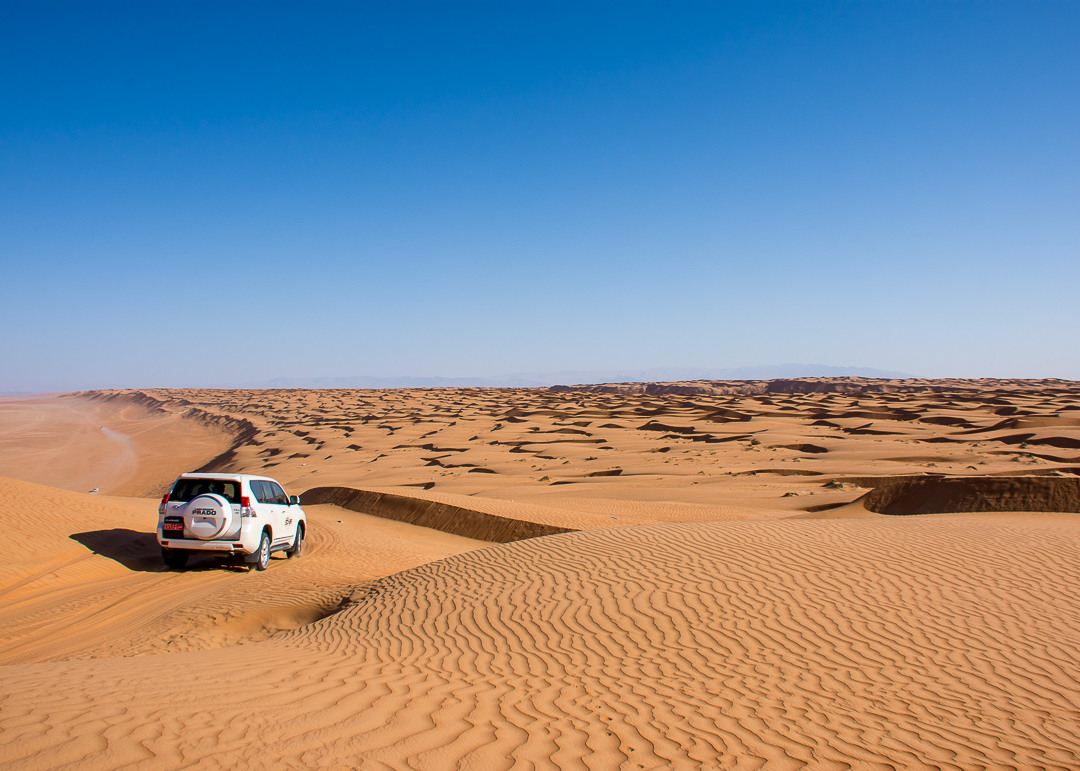
 

Breakfast / Brunch Recipes

Cheddar Cheese-Chive Waffles

December 29, 2015

Holidays are meant for lazy mornings, cozying up in bed and dreaming up big breakfasts you can casually eat in front of the TV. Like waffles. Waffles are perfect this time of year since you have time to slowly whip up the batter and the leftovers can be had for lunch and/or dinner as you’ll probably be too lazy to go out grocery shopping anyway.

Why not kick your plain old buttermilk waffles up a notch then and go the savory route instead? You’ll be surprised how versatile these can be and you’ll definitely be less bored when you get to your second or third meal. There are limitless possibilities here, but when going savory I have one magic word: Cheese! You can really be creative and try your favorite combinations of cheese and herbs, or if you want a foolproof dish then this cheddar and chives recipe is a guaranteed hit.
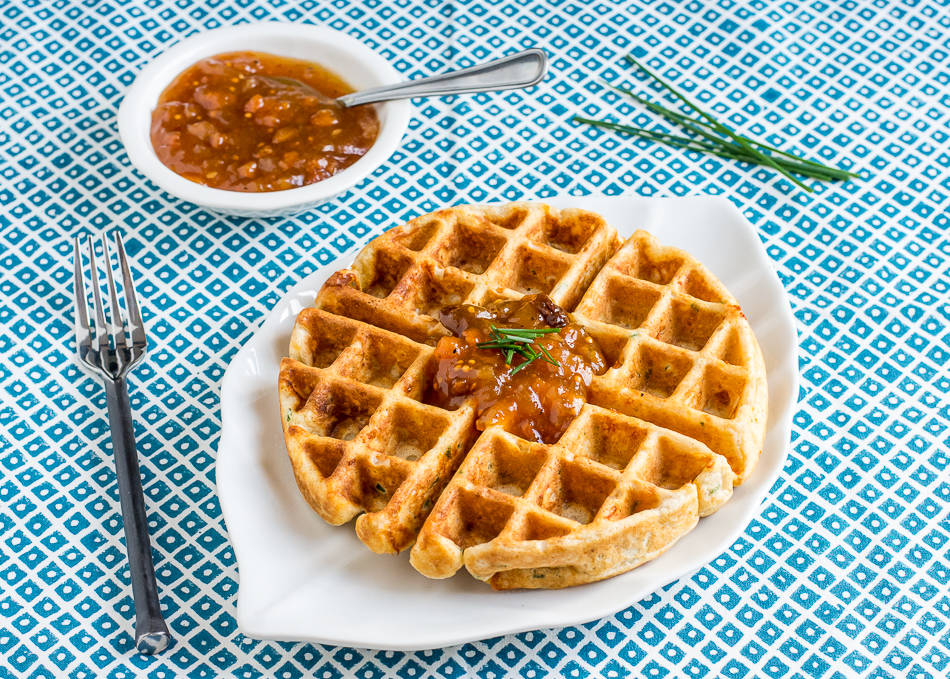
Cheddar Waffles

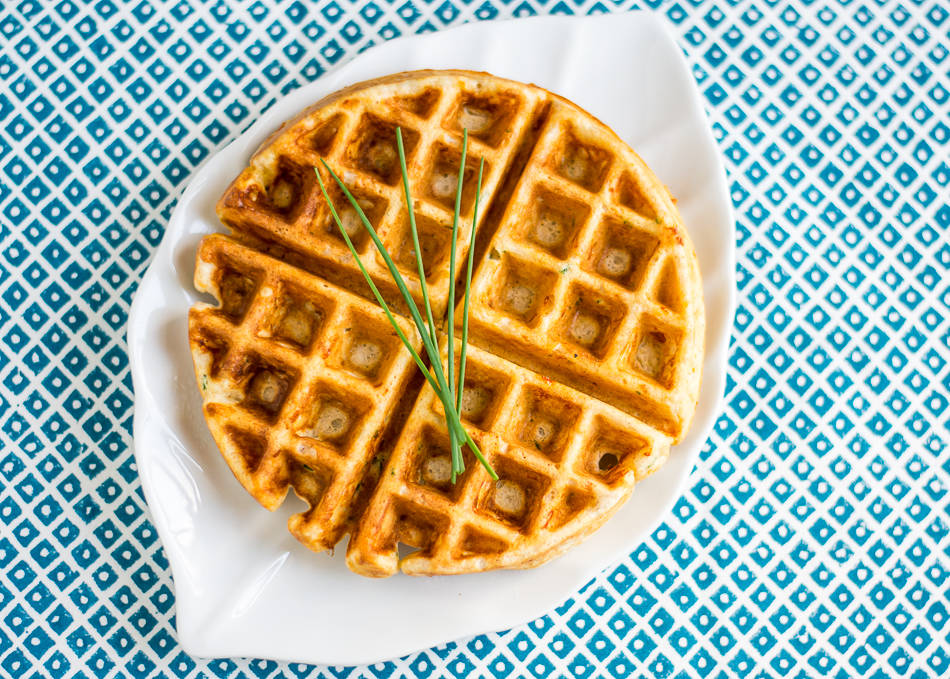
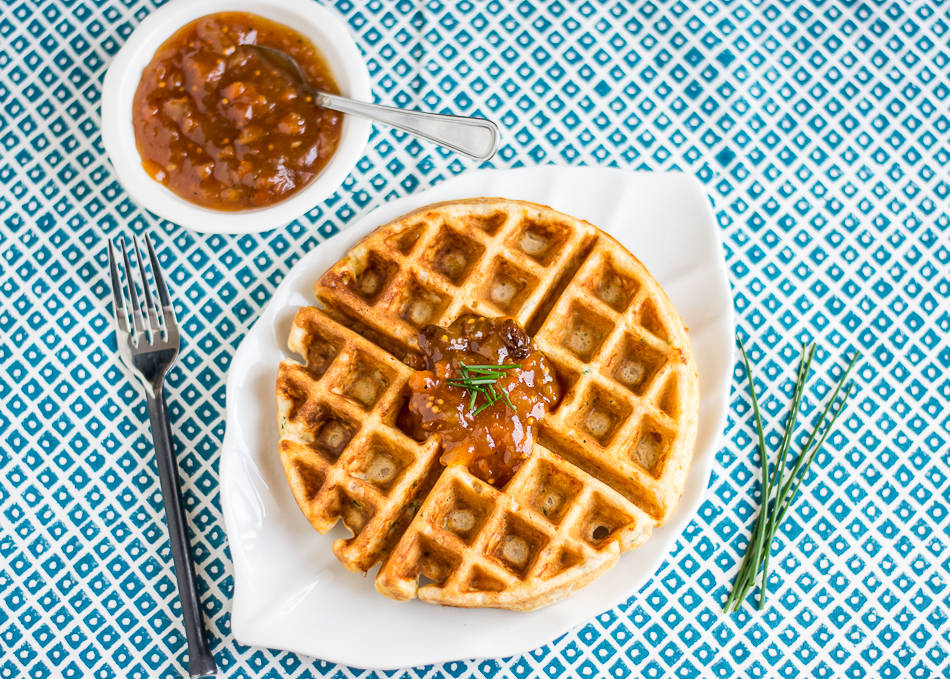
Filled with shredded sharp cheddar, chopped chives and whipped egg whites, they cook up to a delightful crispy edge and super fluffy center. They’re hearty enough on their own and their not-too-sweet taste lend itself to a myriad of toppings from the suggested fruit salsa and chutneys (which I can vouch for) to your favorite egg and bacon combo. You can even serve them as a side to fried chicken or use them as sandwich bread in a BLT! So versatile, they’ll become your go-to ‘breakfast-for-dinner’ staple and are every bit as good as their sweet counterparts, so put them in your rotation already!
Divider

Cheddar Cheese-Chive Waffles


Recipe from Pancakes & Waffles
Active time: 45 minutes
Total time: 45 minutes
Makes about 8 waffles

1½ cups unbleached all-purpose flour
½ cup rye flour
1 cup (4 oz) grated sharp Cheddar cheese
1/3 cup minced fresh chives
2 teaspoons baking powder
½ teaspoon baking soda
½ teaspoon freshly grated nutmeg
¼ teaspoon salt
2 large eggs, seperated
1½ cups buttermilk
½ cup milk
4 tablespoons (½ stick) unsalted butter, melted
Fruit salsa or chutney for topping

Divider

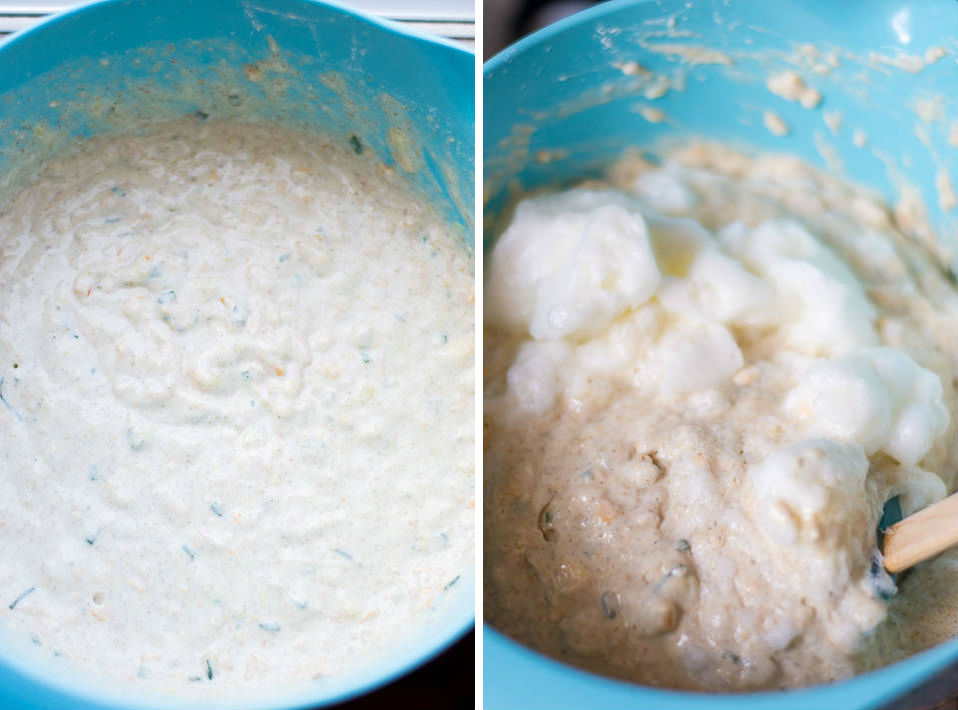
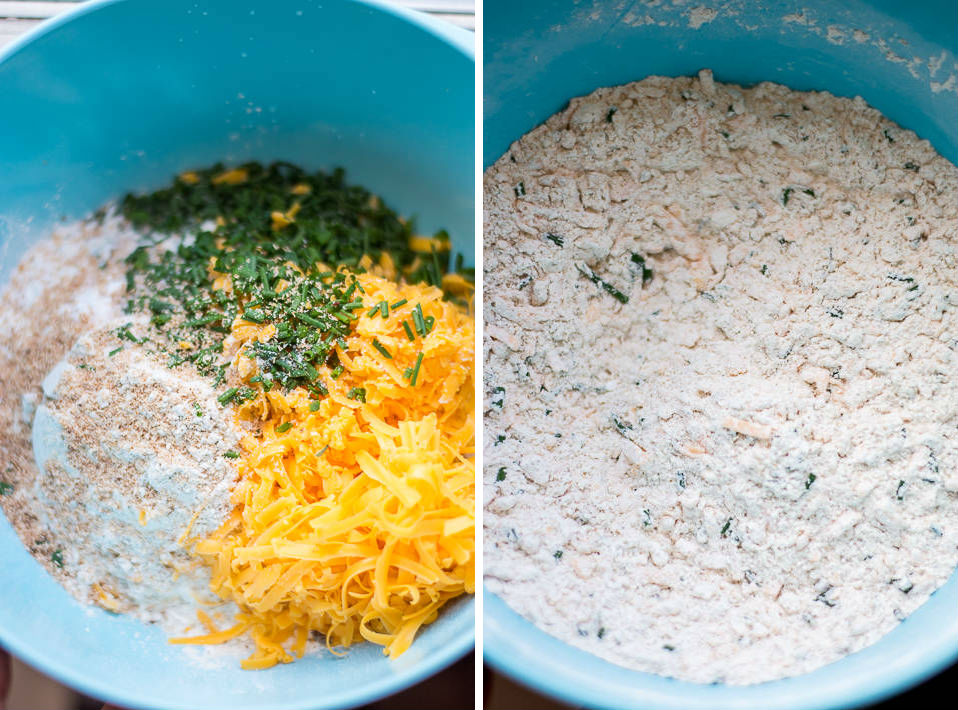
Preheat a waffle iron. In a bowl, whisk together the flours, cheese, chives, baking powder, baking soda, nutmeg, and salt.

Cheddar Waffles

In a small, deep bowl, beat the egg whites with an electric mixer until soft, glossy peaks form. In another bowl, beat or whisk together the egg yolks, buttermilk, milk, and butter. Add the buttermilk mixture to the dry ingredients and mix just until combined. Fold in the egg whites.

Cheddar Waffles

Spoon or pour about 1 cup batter onto the hot iron. Close the lid. Bake until the waffle is golden brown, about 4 minutes. Remove with a fork to a warm plate. Serve at once or keep warm on a baking sheet in a 200°F oven. Repeat with the remaining batter. Top each waffle with a spoonful of fruit salsa or chutney.

Cheddar Waffles

Cheddar Waffles

Cheddar Waffles

[print_link]

London Restaurants

Taberna do Mercado, London

December 23, 2015

I have no idea why to this day it’s still so hard to find authentic Portuguese food outside of Portugal (not that I mind visiting this beautiful country). So when I heard that nonetheless than Nuno Mendes, the acclaimed chef from hotspot Chiltern Firehouse and ex-Viajante, was opening a Portuguese tapas bar in London, I was definitely excited.

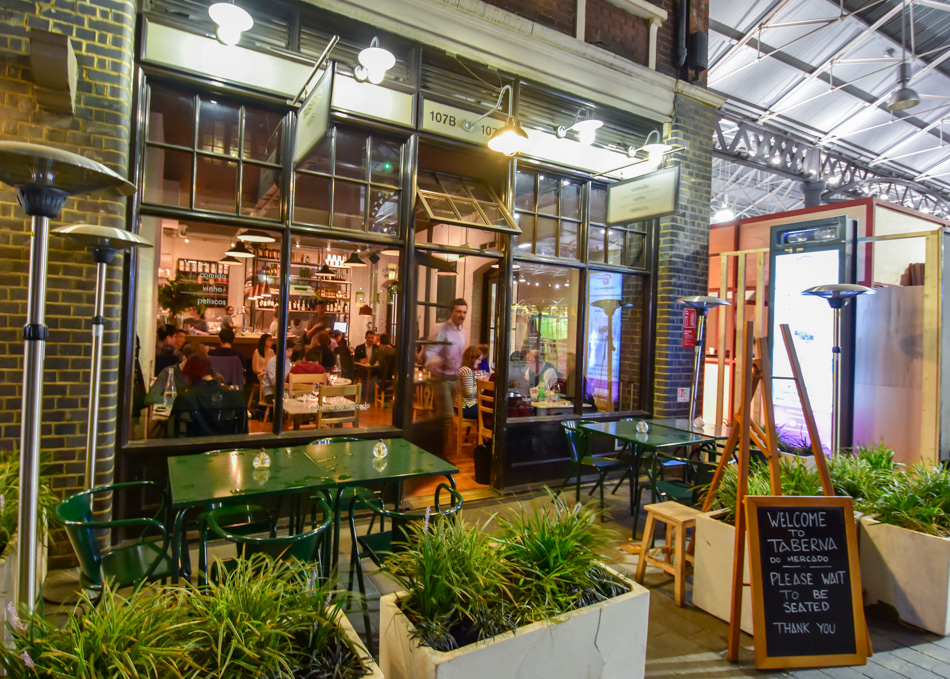
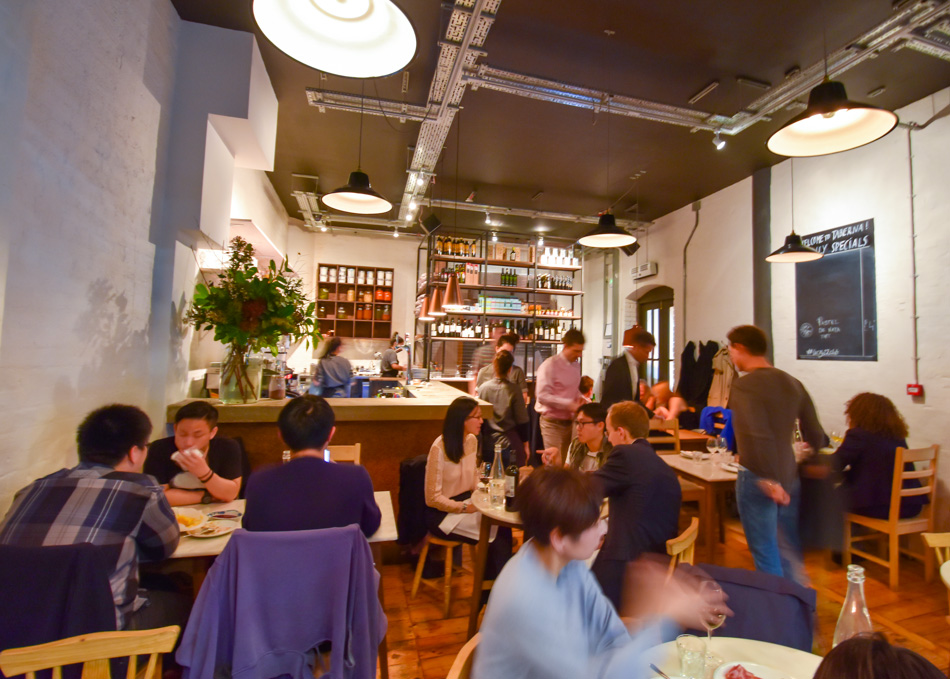
Inspired by his humble Lisbon roots, the small restaurant in the Old Spitalfields Market is an intriguing mix of casual dining with a hefty dose of adventurous eating, making Taberna do Mercado a definite novelty on the London food scene.

Taberna do Mercado 7

The great thing is that you won’t have to fight celebrities and long waiting lists to get in here and taste Nuno’s cooking in all its imaginative ways. He’s offering an authentic insight into his homeland’s little known cuisine, a first try for the majority, and adding his modern twist and presentation for an overall ‘weird-but-delightful’ meal.

Taberna do Mercado 6

The menu will seem a bit odd but the helpful and friendly staff will expertly guide you through the small plates, and even suggest an exquisite pairing from the exciting Portuguese wine list. It pays to be daring here and while not all dishes might please your palate (there are some more challenging ones), the quality is way up there and you’ll be thankful to finally discover that there’s way more than sardines and egg custard tarts on the Portuguese table.

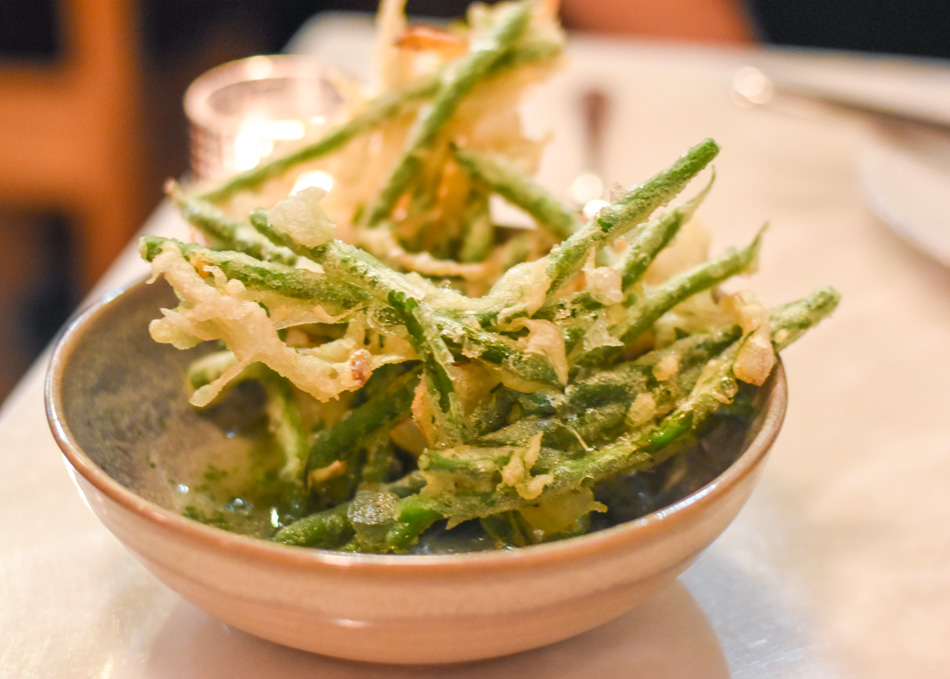
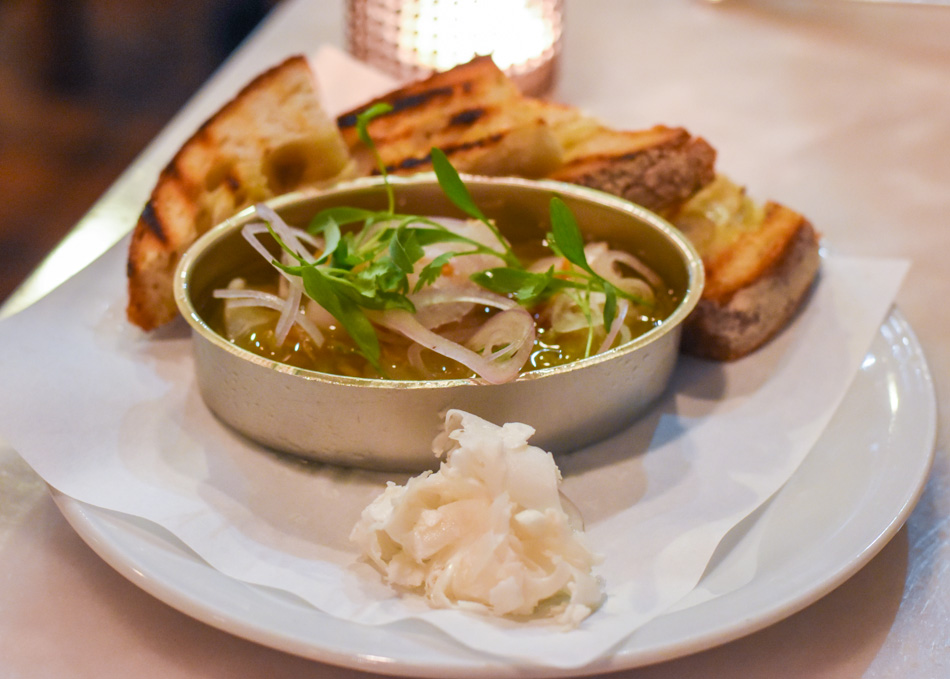
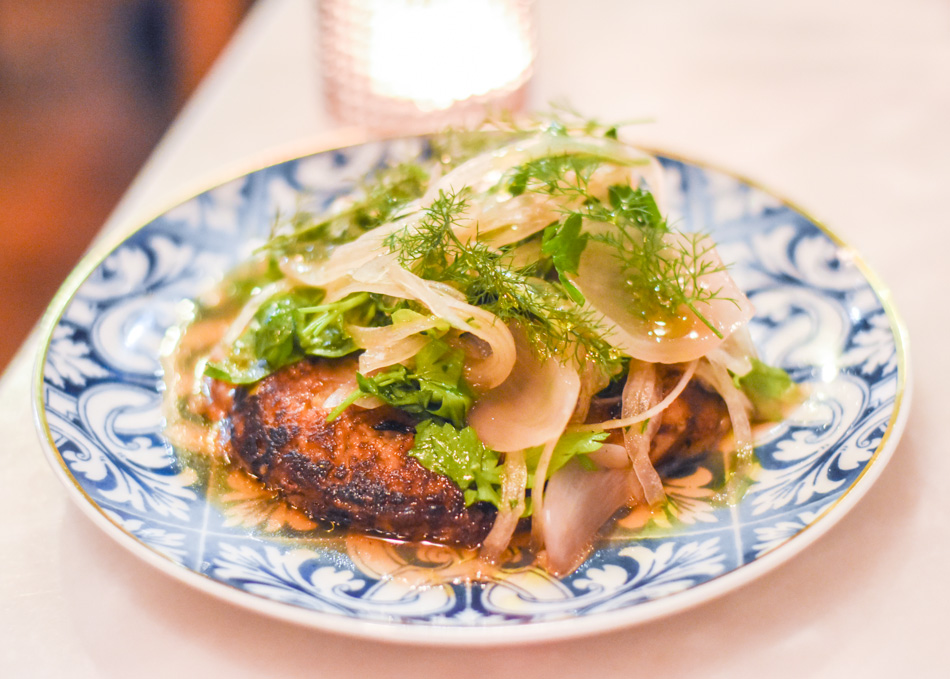
So go and be adventurous and if I may make a few suggestions: the runner-bean fritters are a wonderful beginning of meal snack, any of the tinned fish (made in-house) will be stellar especially when you get to soak up that gorgeous oil with the crusty sourdough, and the sandwiches though simple are not to be missed. Bon Appetit!

Runner bean fritters with clam and coriander juice
Taberna do Mercado

Monkfish cheeks with garlic and shallots
Taberna do Mercado 2

Sorrel bread pudding with Roscoff onion
Taberna do Mercado 3

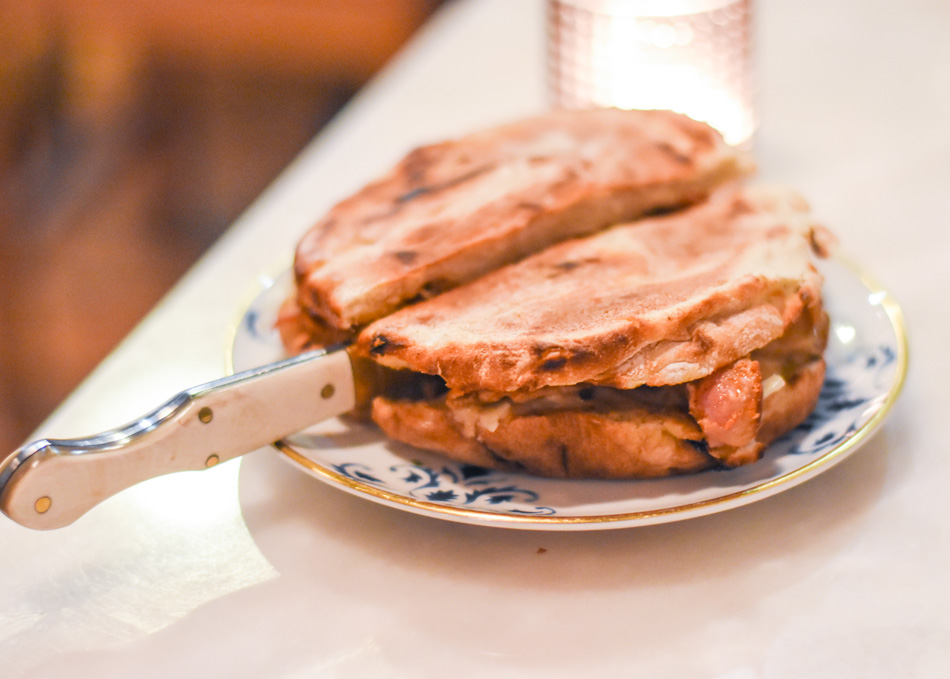
Pork bifana sandwich with yeast mayo and fennel
Taberna do Mercado 4

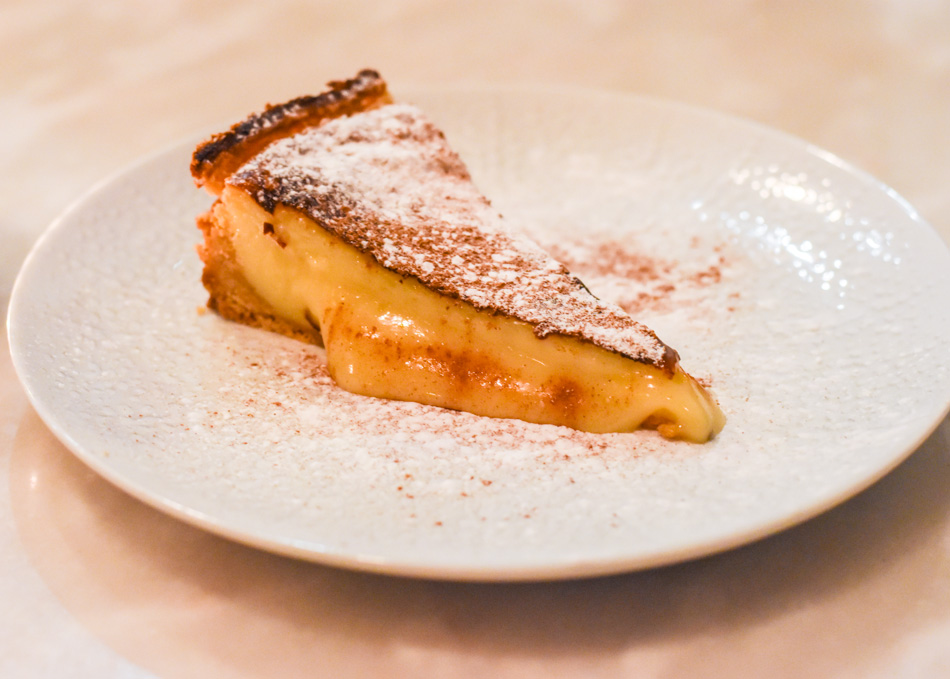
Pastel de nata
Taberna do Mercado 5

Taberna do Mercado
Old Spitalfields Market,
107B Commercial St,
London E1 6BG
T: 44 (0)207 375 0649
Map