New York Restaurants

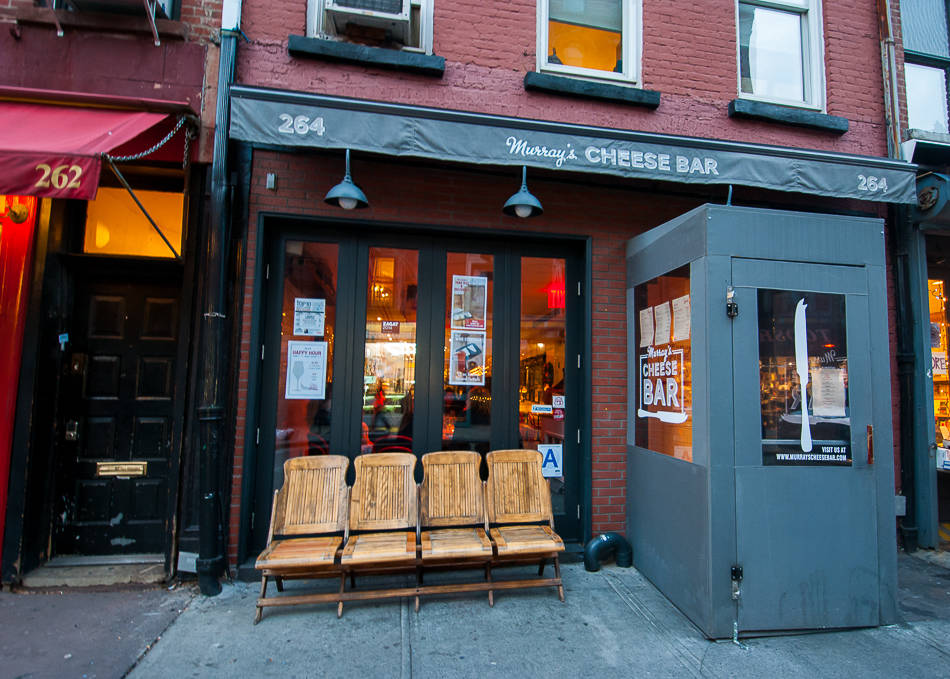
Murray’s Cheese Bar, New York

January 9, 2015

One week into the New Year and I know most of you are probably already on the verge of ditching that healthy resolution… Seriously, who can handle a cold green juice when it’s -12 outside?! I know I can’t and I’ve long succumbed to the myriads of NYC establishments filling the primal needs of people for fatty food this time of year. One in particular is perfectly suited to beat my January blues – Murray’s Cheese Bar.

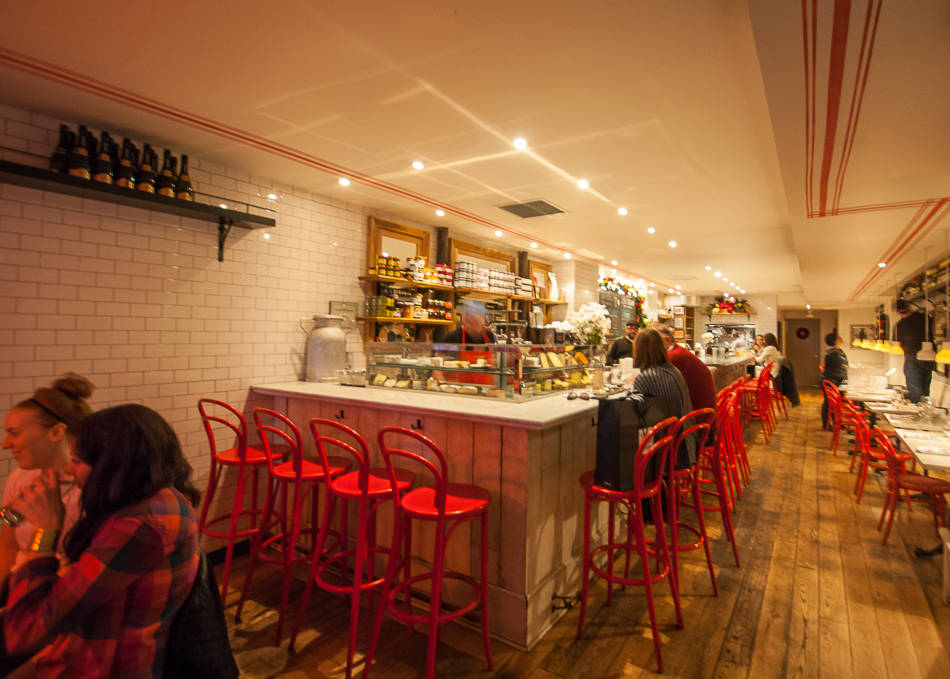
Three doors down from the legendary Murray’s Cheese shop on Bleecker Street, the standalone offshoot opened in 2012 as a sort of ‘homage to fromage’, a place where cheese aficionado like me can enjoy it in all its stinky forms and however we like it. This is no place of restraint so come here with an appetite, a severe dairy deficiency, and be prepared to get seriously cheesed out (if there was such a thing!).

The full menu offers as you would guess a wide range of cheesy dishes from gooey mac and cheese to fondue, seasonal salads and sandwiches, and a host of shareable snacks. While not everything gets high marks, it’s a fun place to eat with a great selection of wine and beer and with the right choices makes for a perfect cure for that blistery winter day.

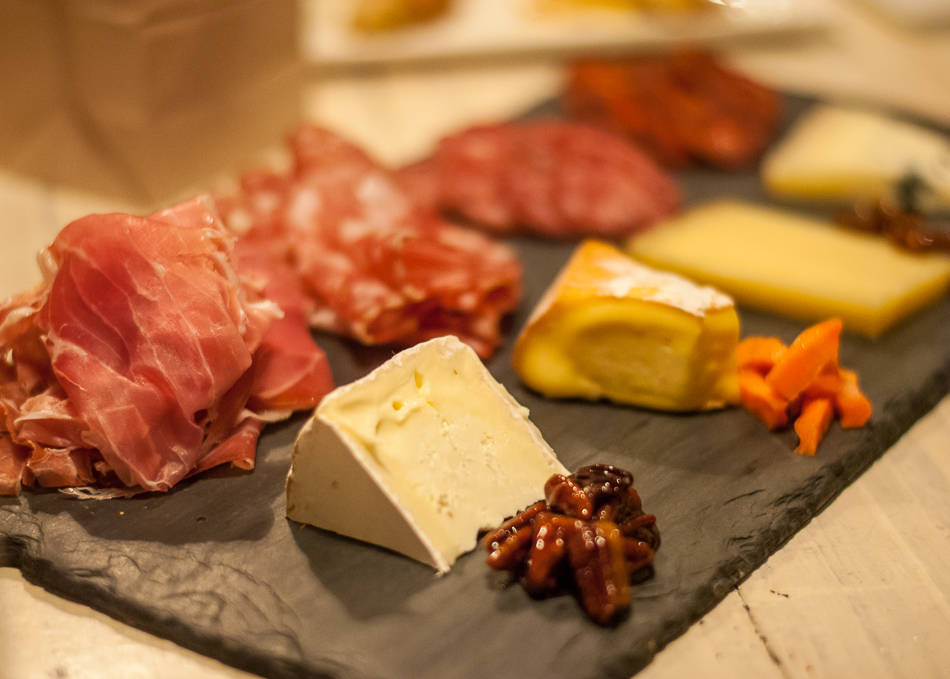
Being affiliated to the city’s best cheese shop though means one of the best ways to start your meal is with their cheese plate, a carefully selected assortments of Murray’s best cheeses straight from their caves, served with homemade accompaniments and cured meats.

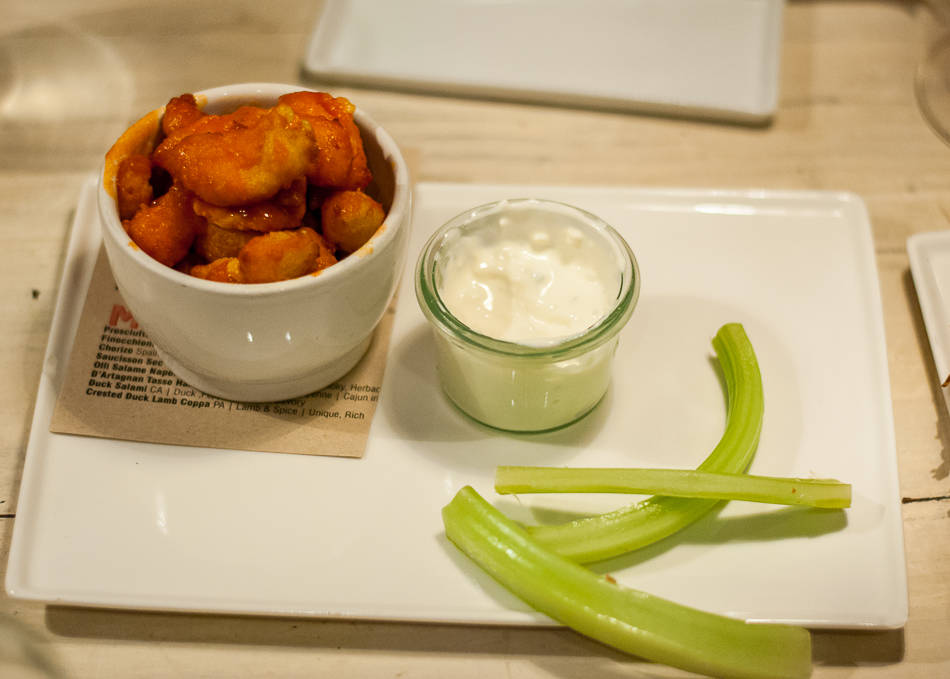
Another must-order item is their Buffalo cheese curds. If anyone is weirded out at the idea of dipping fried squeaky curds drenched in spicy sauce into a bowl of blue cheese dressing they clearly haven’t tried it….it’s that good! (not so much for your cholesterol though…)

Burrata with crispy artichokes & grilled bread

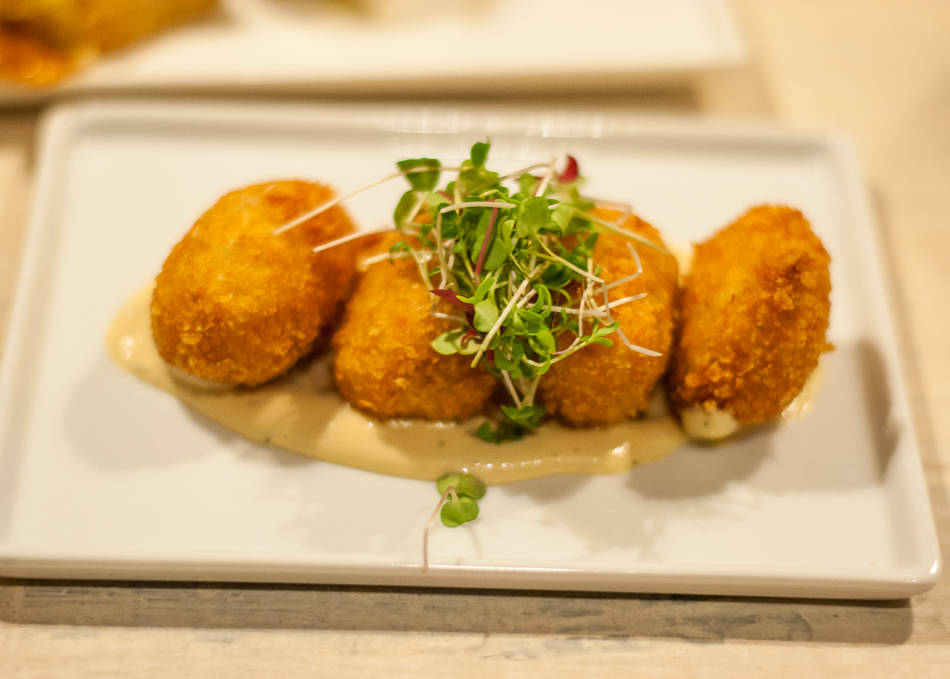
Croquettes of Gallego cheese, oyster mushrooms & dijonaise

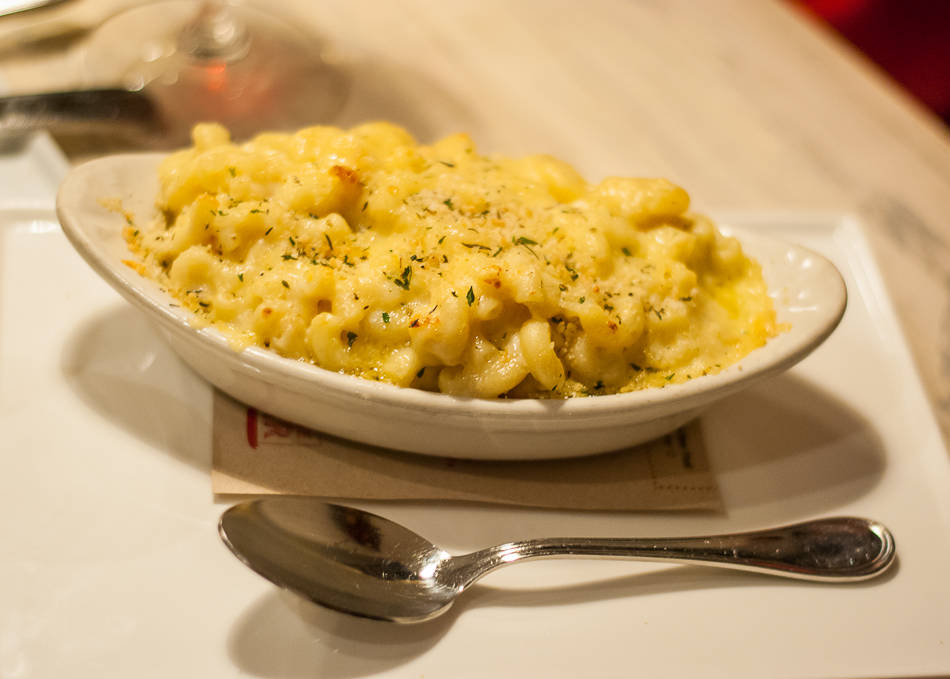
Mac & Cheese: Spring Brook Reading, Comté & Irish Cheddar topped with breadcrumbs

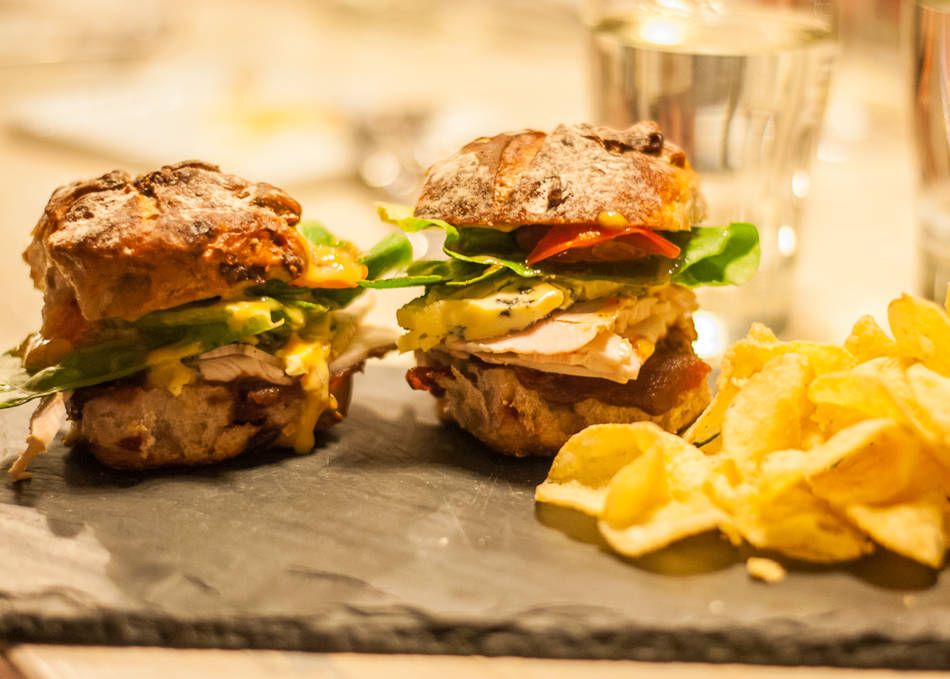
Turkey sandwich

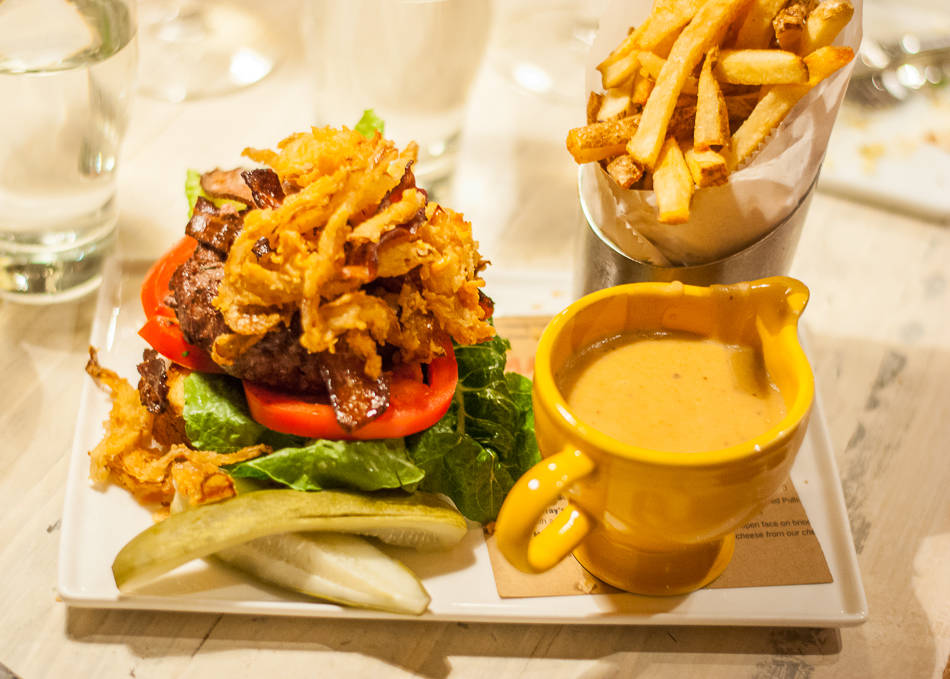
The Murray’s Burger is another highlight and fun dish to order as you pour the thick rarebit sauce, a mix of Cheddar, stout beer and Worcestershire, over the thick burger patty.

Murray’s Cheese Bar
264 Bleecker Street,
New York, NY 10014
T: (646) 476-8882
Map

Europe Italy Travels

Matera – The City of Stones

January 4, 2015

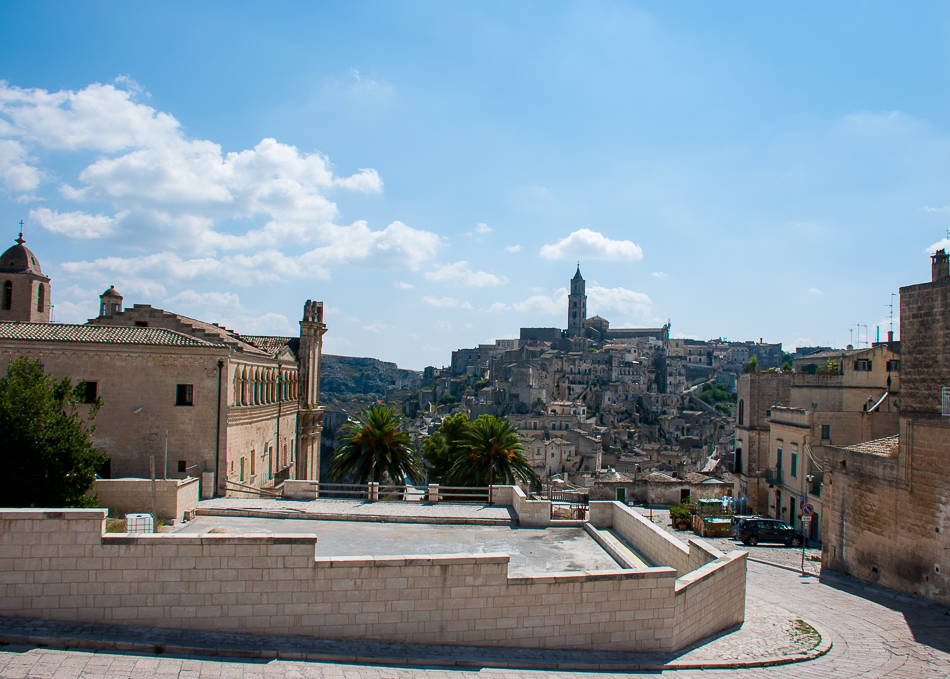
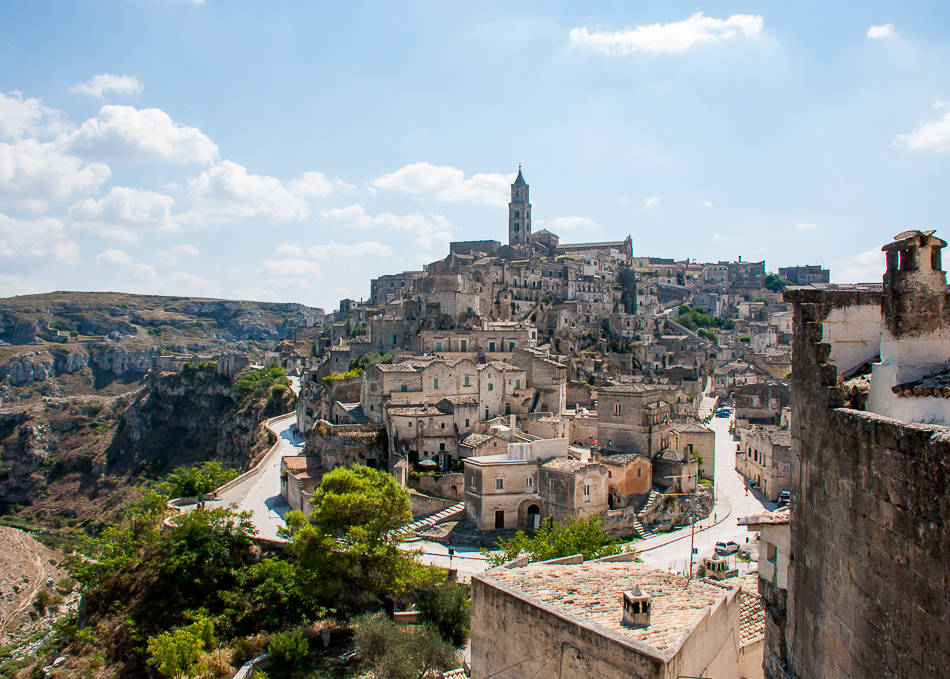
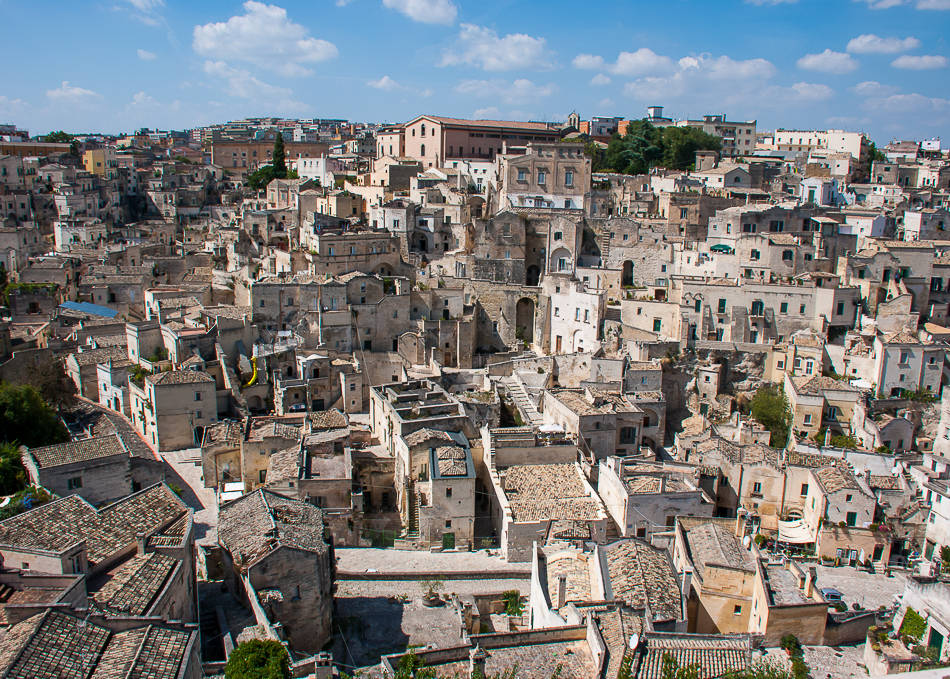
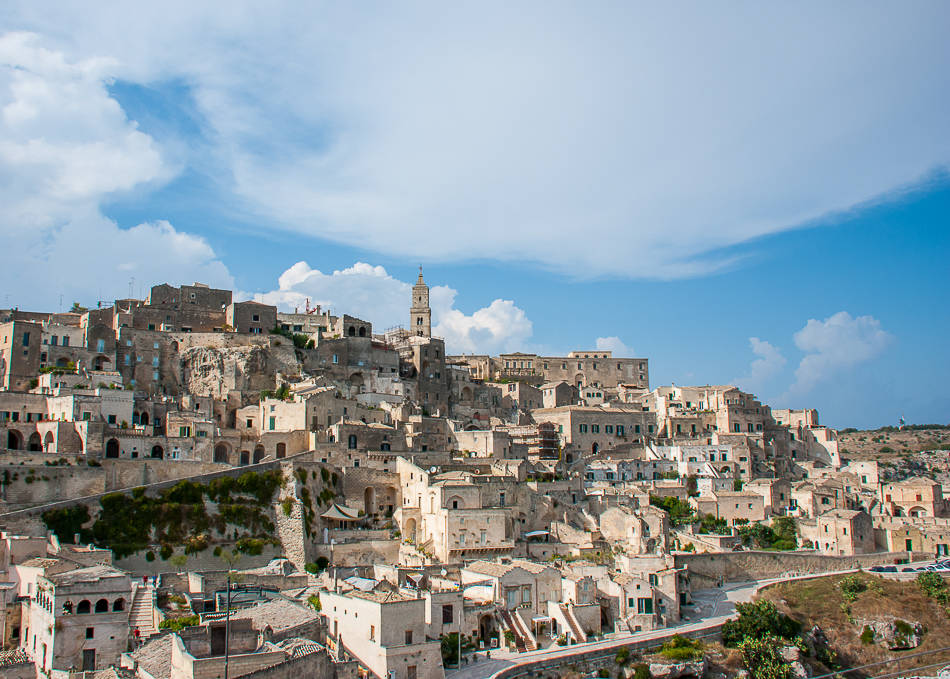
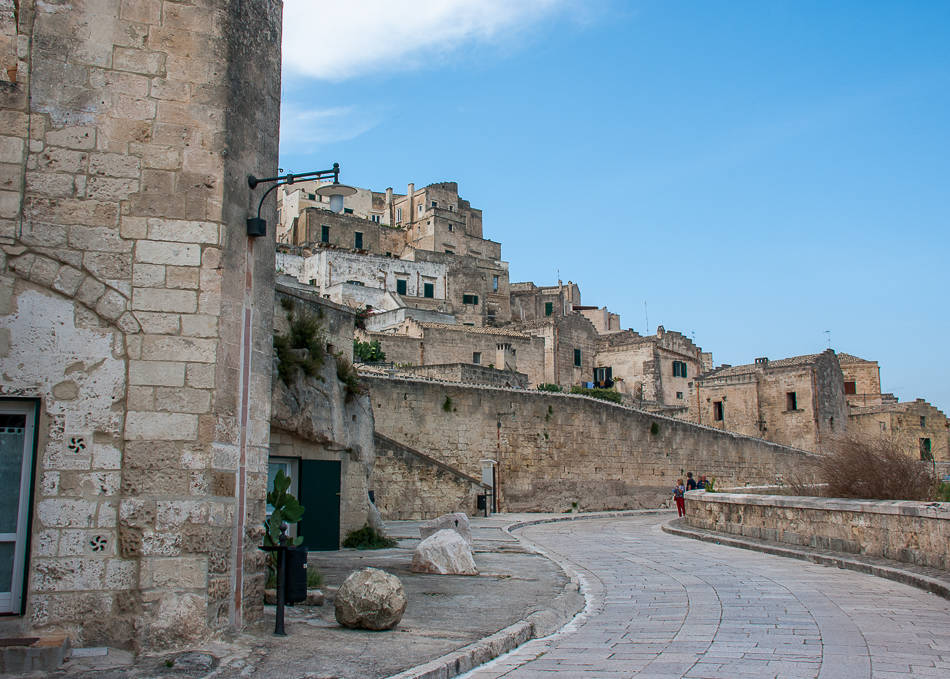
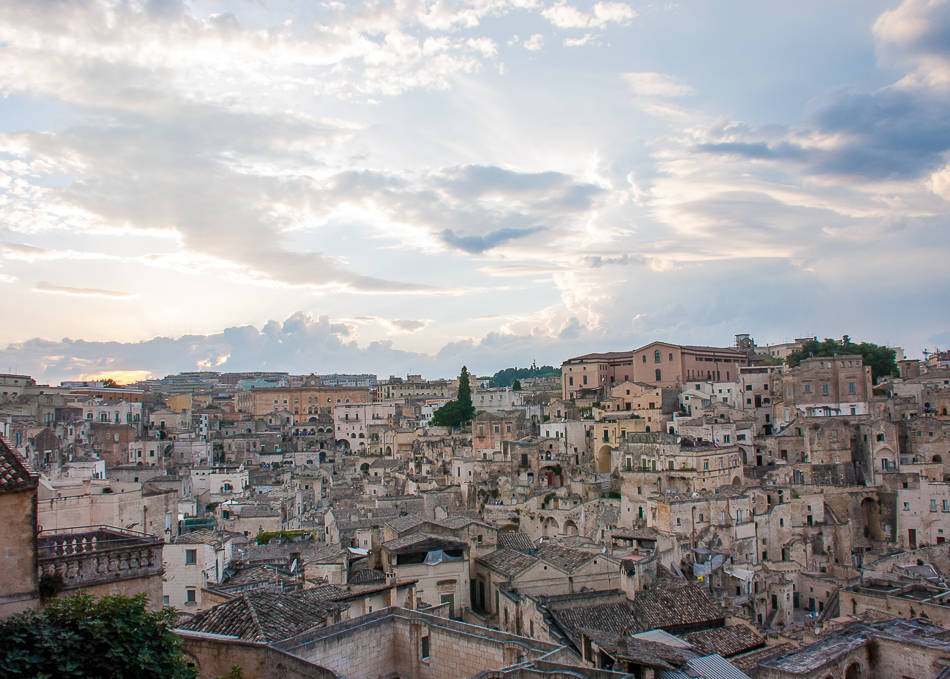
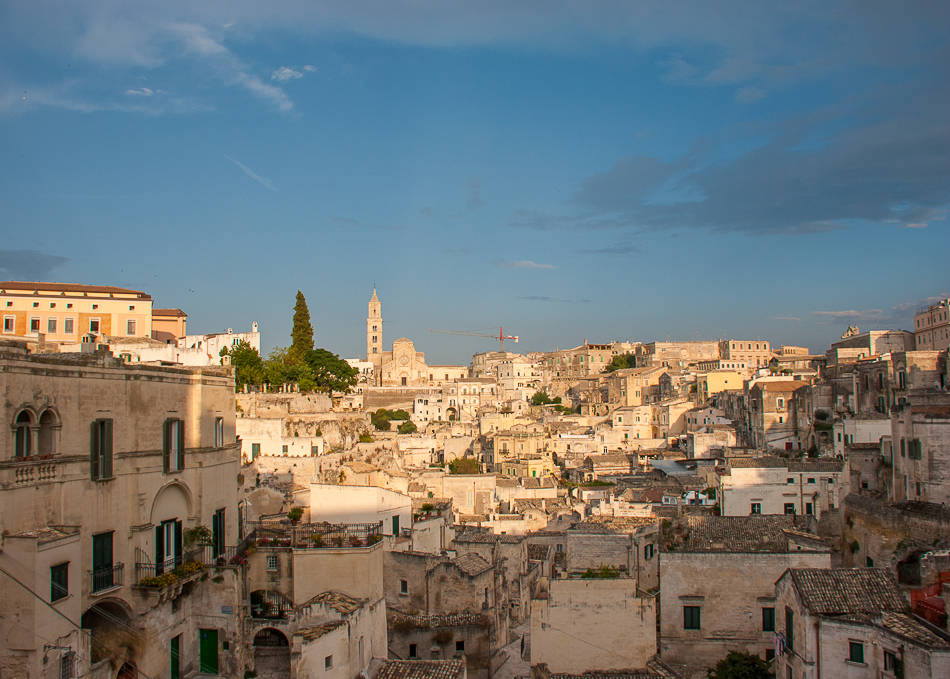
It’s hard to describe the first time you lay eyes on Matera which seems to magically appear as you take a turn in the road and are faced with this hauntingly beautiful sight.

The southern Italian town is one of the most interesting and unusual destinations in Italy though not the easiest place to reach which is why it has remained relatively unknown, especially to foreigners. It became in 1993 a UNESCO World Heritage Site so the number of visitors has been steadily increasing since but it still feels a bit like your own discovery as you wander its streets.

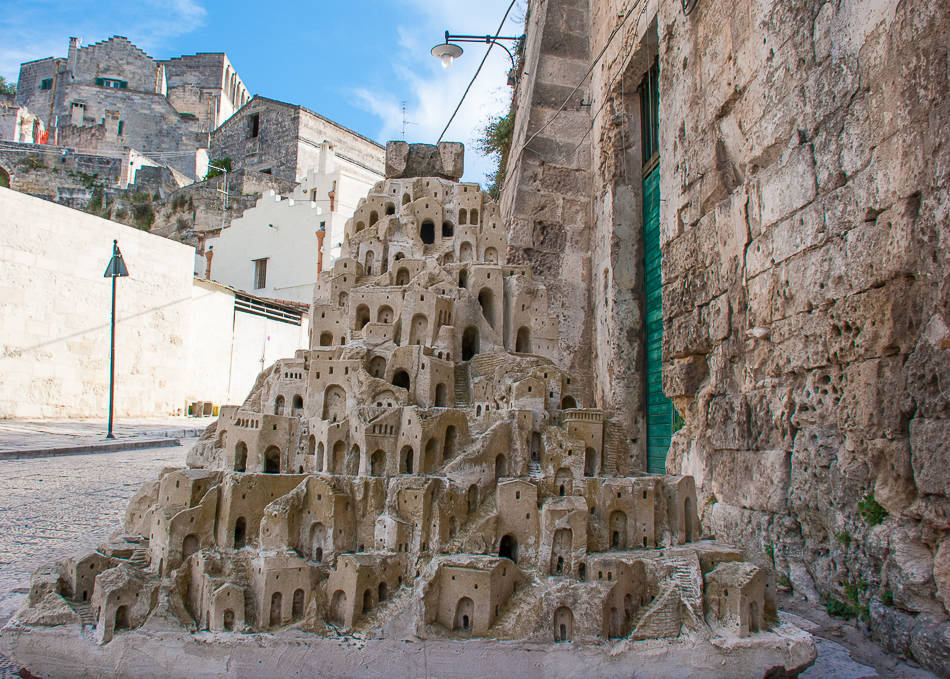
What makes Matera so special are the ‘Sassi’ (Italian for ‘stones’), the old districts made of rock-cut settlement, perfectly adapted to the setting, and having been continuously inhabited for over 2,000 years.

Today these underground caves are being turned into luxurious hotels, restaurants, shops, etc. as the city becomes more popular on the tourists trail though it wasn’t always like this…

Matera was once known as ‘the shame of Italy’ for its dismal poverty with hundreds of families living crowded in the cave houses in malaria-ridden conditions. In the 1950s it became a national scandal and the entire population of farmers and peasants was relocated by law to government housing on the plateau above, leaving the city like an empty shell.

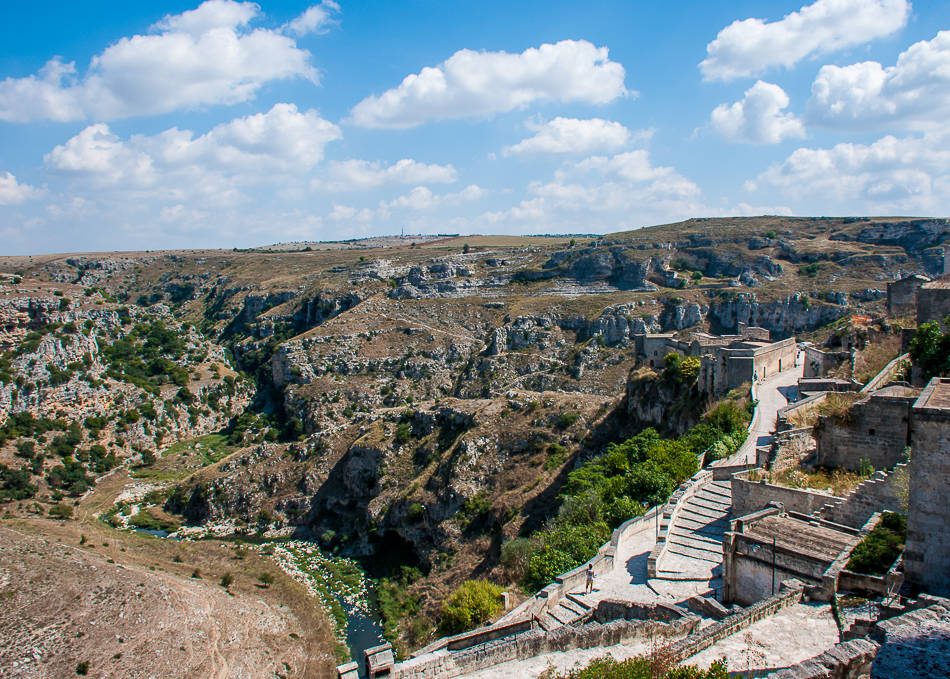
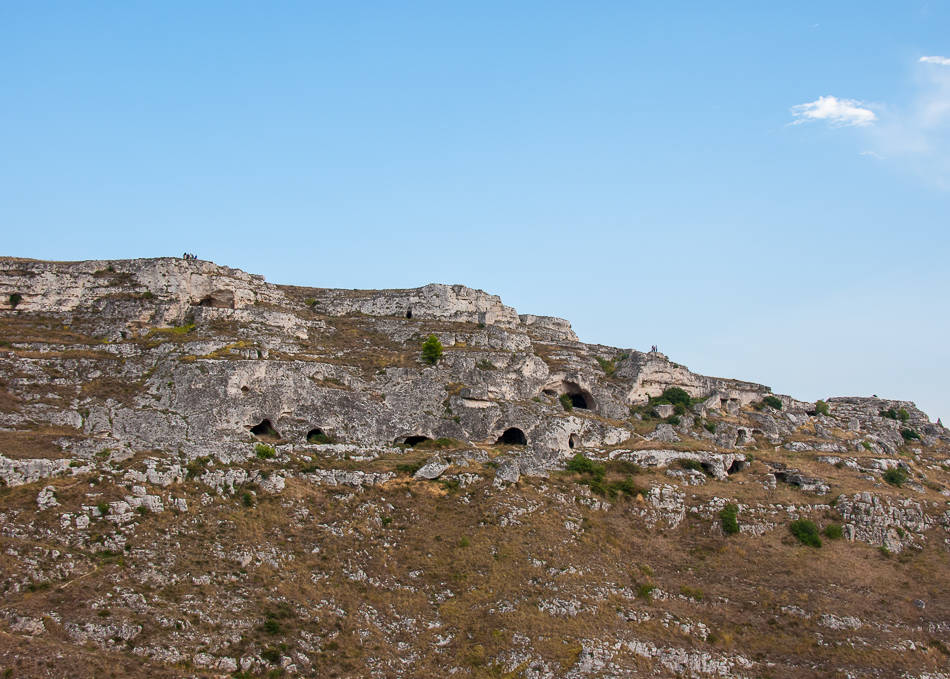
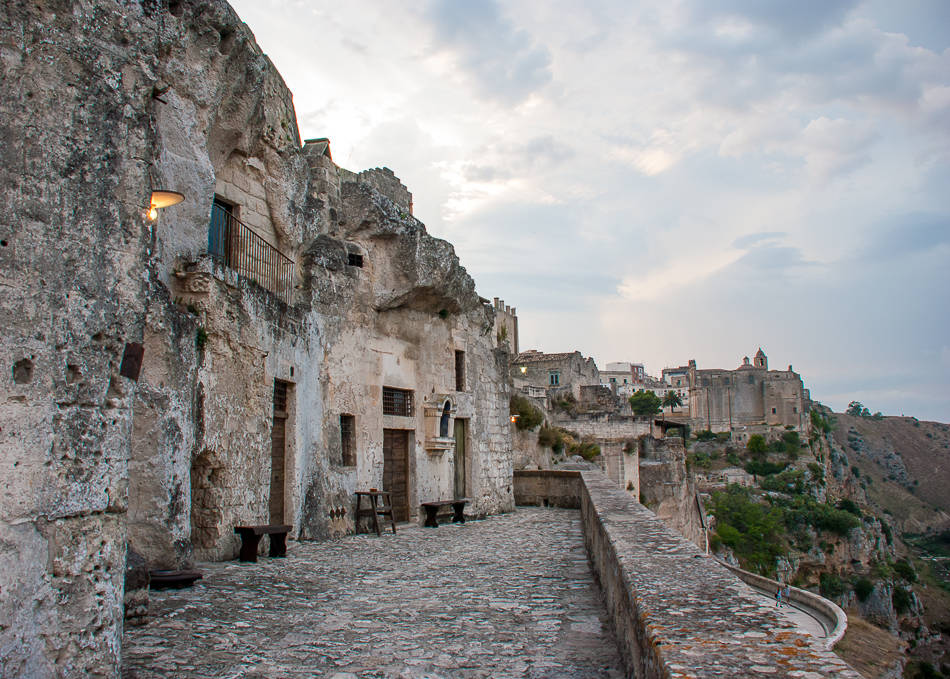
Some 1,500 caves hug the flanks of a steep ravine…

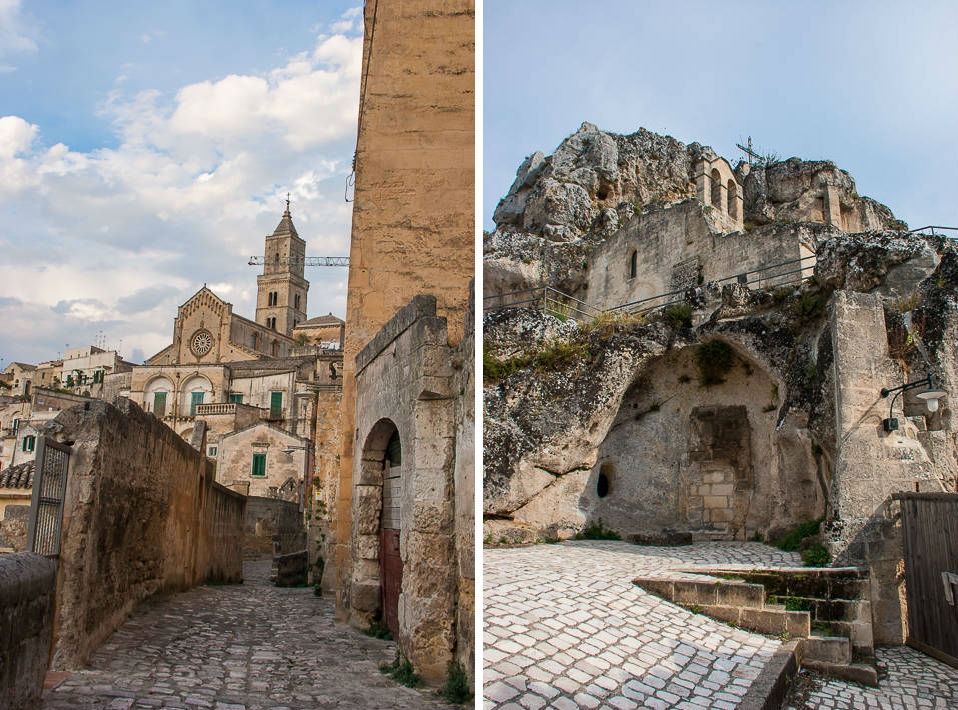
…and quite a few are located right across it, visible from Matera’s old center. A nice little hike on old paths previously used by shepherds is a wonderful way to visit them and spot the openings of old stone churches etched into the flanks.

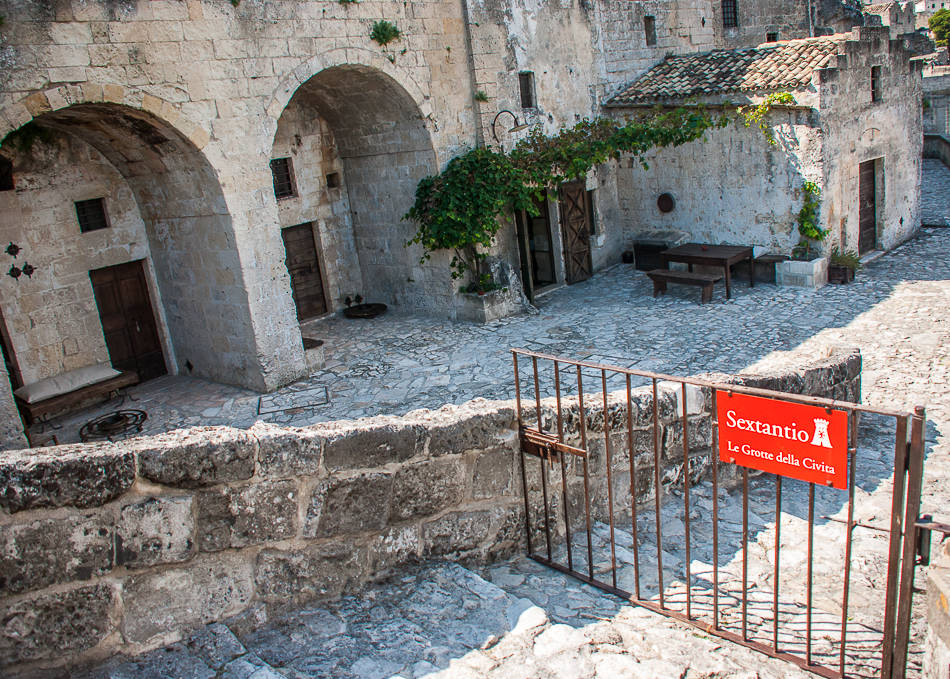
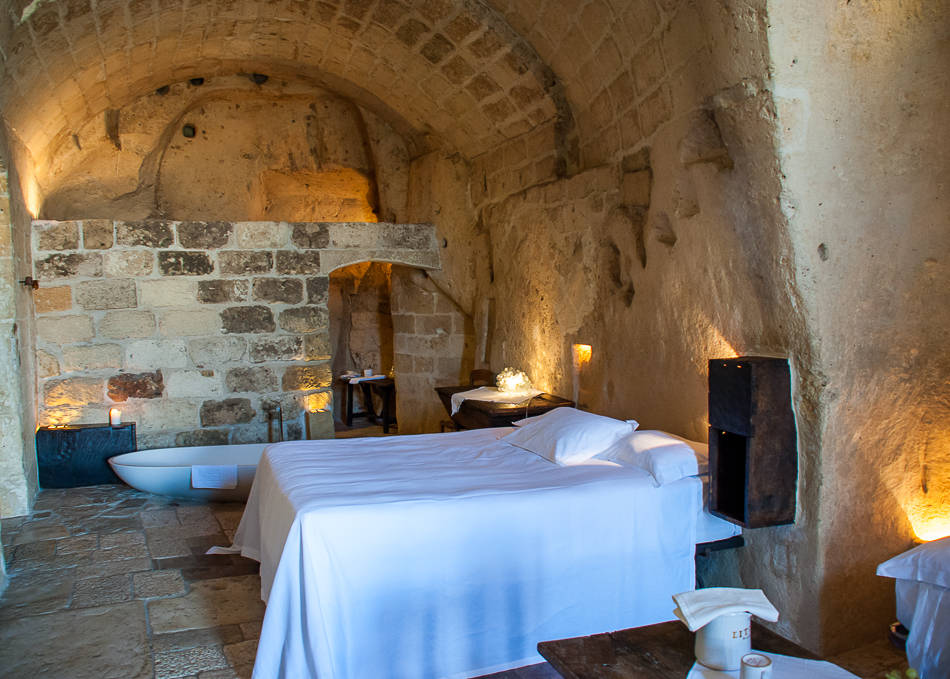
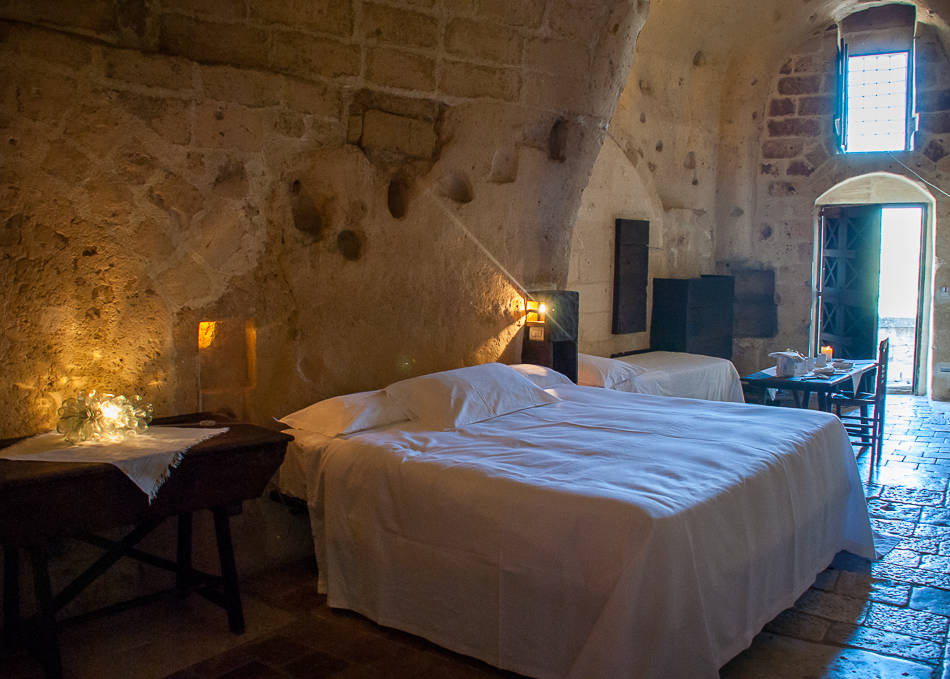
In an incredible story of rebirth, people have started moving back into the Sassi, restoring the stone caves and opening them as luxury hotels such as the incredible place we stayed at: Sextantio Le Grotte della Civita.

Staying in one of the Sassi’s cave hotels has become one of Europe’s most exotic experiences.

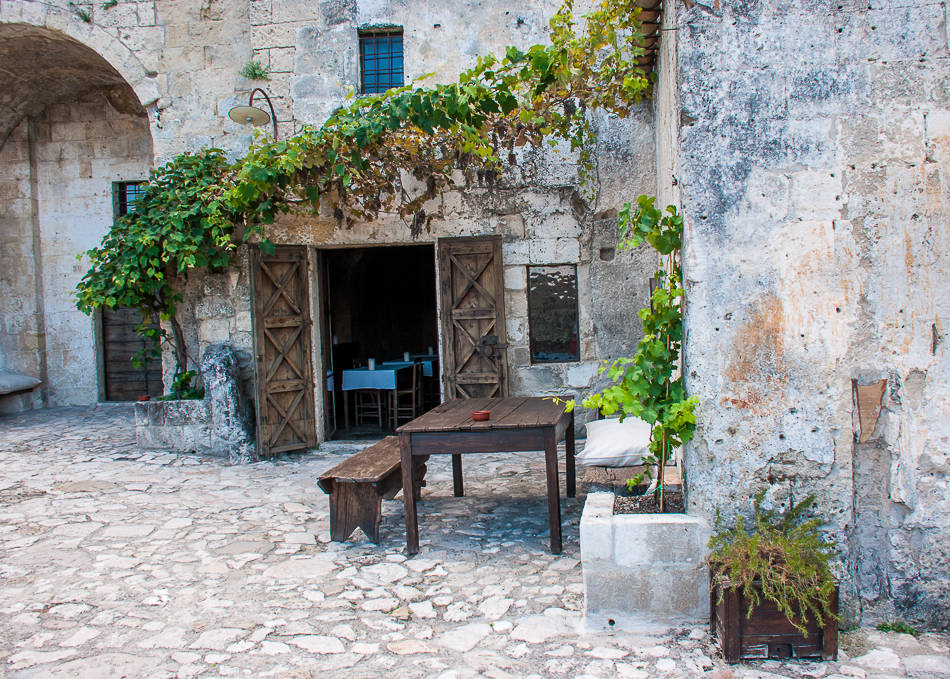
The site where Sextantio is was meticulously taken apart, renovated with wires and pipes, and reassembled with each stone returned to its original location for complete authenticity.

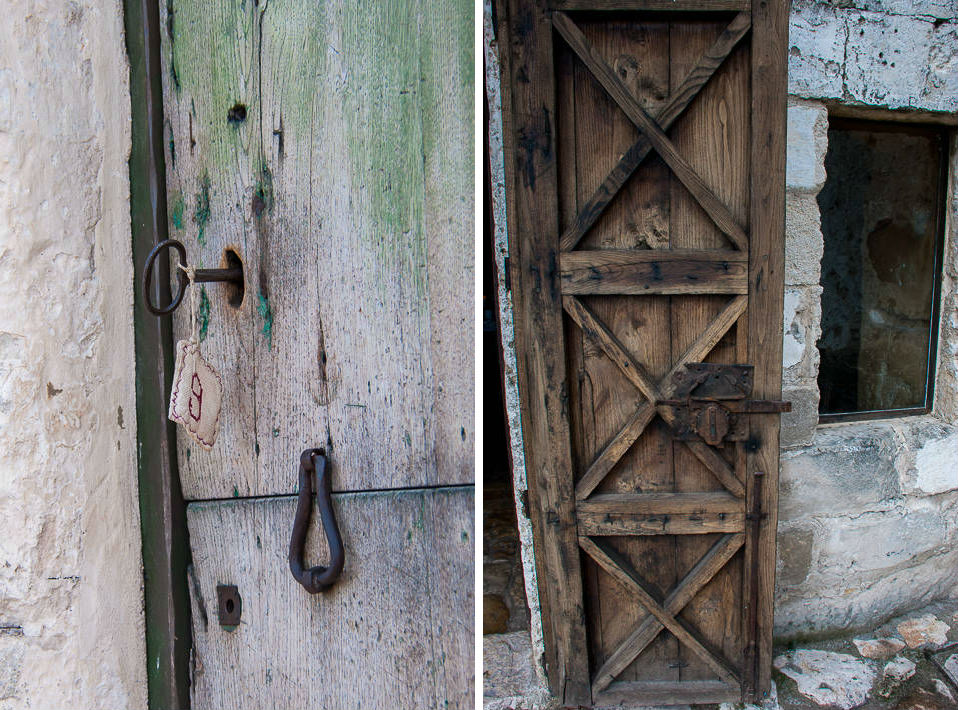
The heavy wooden portals found in the common areas and the bedrooms are testament to civilizations long gone, while also adding a great deal of character!

Where else can you sleep in a room that was first occupied thousands of years ago?

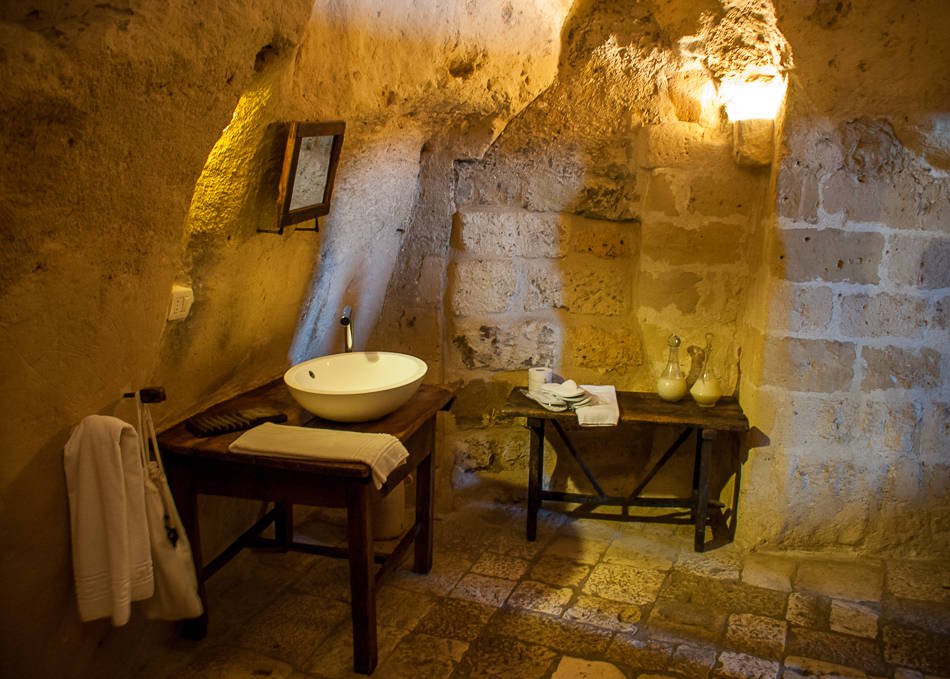
The hotel’s eighteen rooms are spacious and each is individualized according to its existing architectural frame with a few modern amenities added only where necessary (we did get wifi in the room…).

Luxurious touches abound but it’s still the basic beauty of the walls and arches that lingers, the overall result an architectural masterpiece that provided us with a truly once-in-a-lifetime experience.

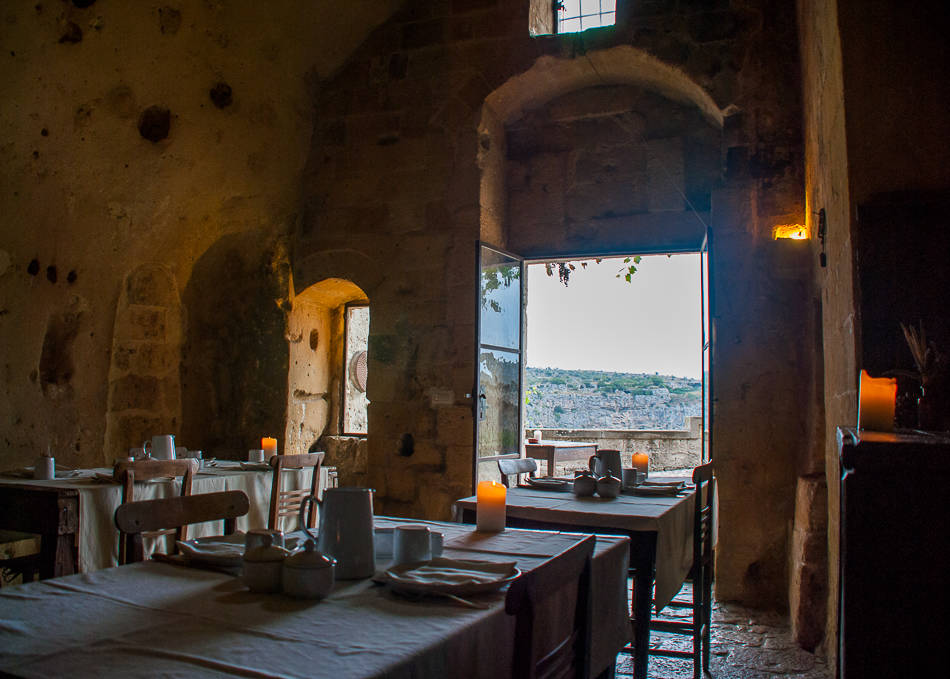
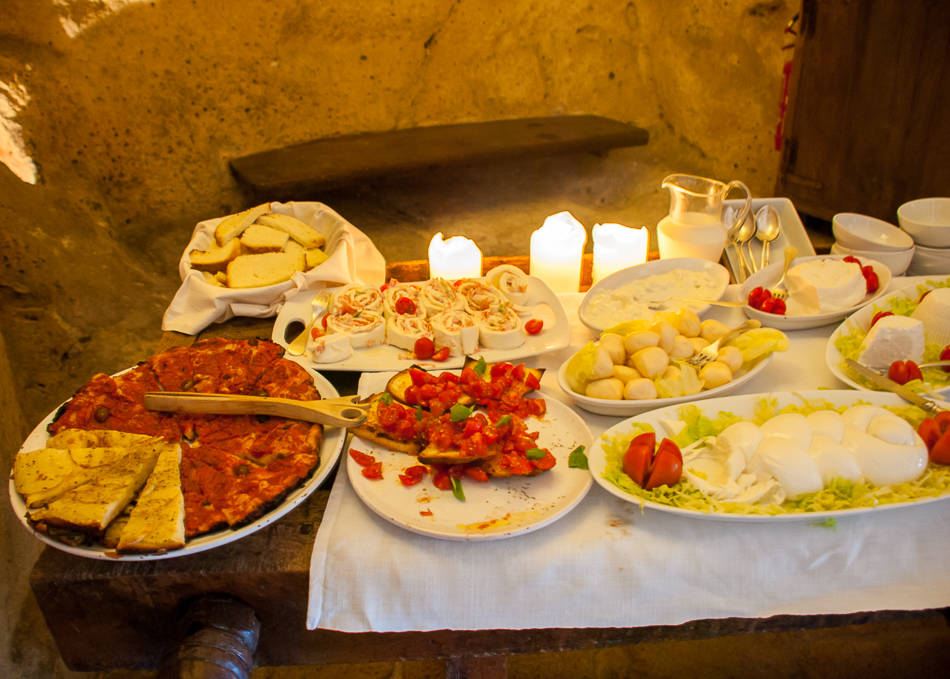
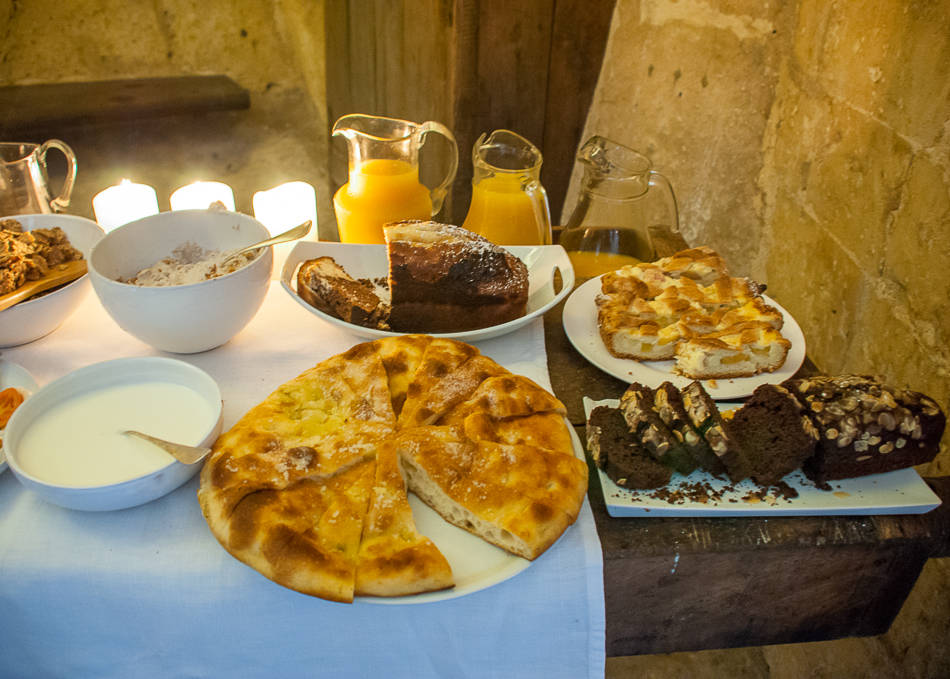
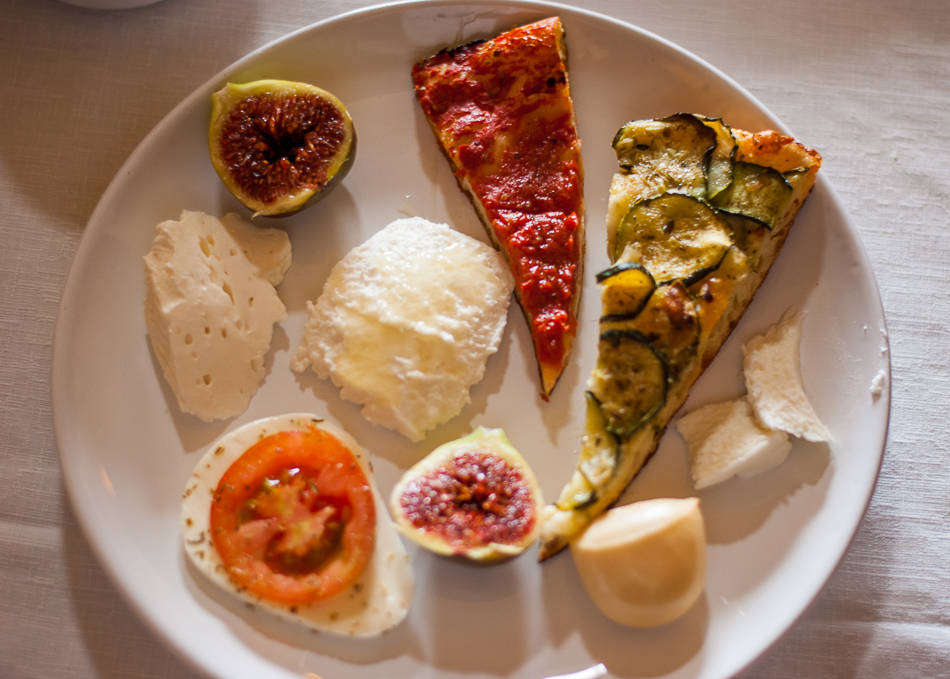
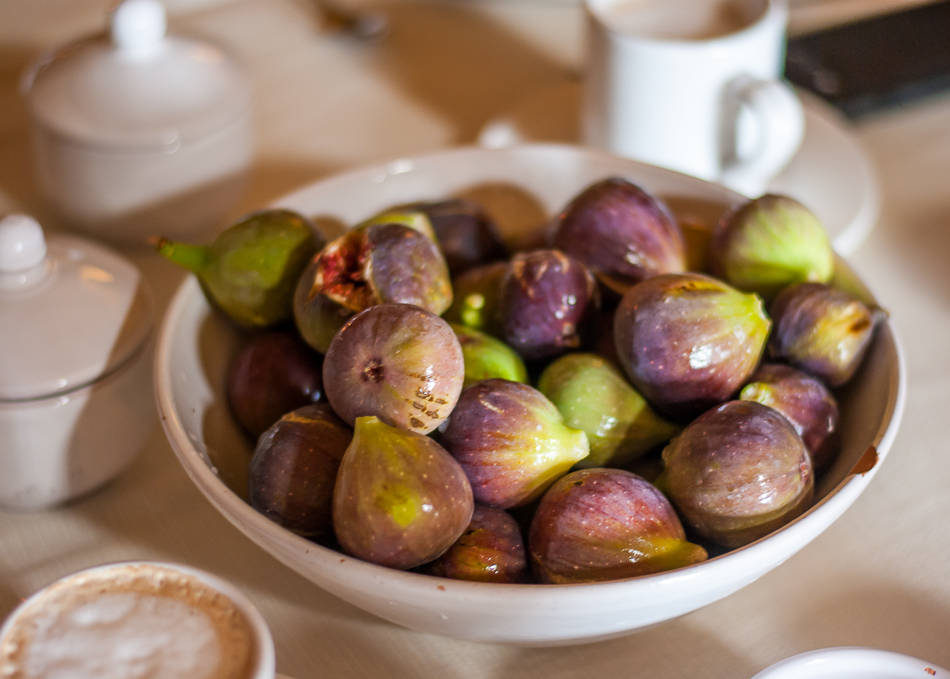
The marvelous breakfast is a spread of local produce and simple dishes fit for a king and is served in a dramatic former grotto-church on site.

Yes, I do like cheese…

No matter how gorgeous the setup at Sextantio is though, the city itself calls for a lot of exploring, best started from the main road that encircles the old town and gives a great view of Matera’s majestic setting.

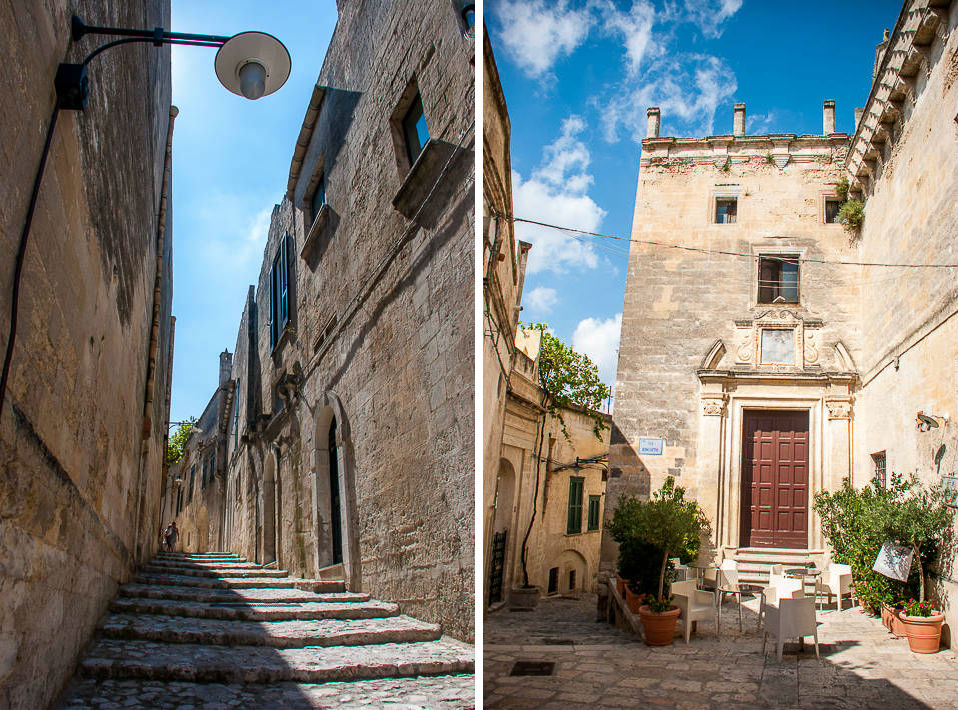
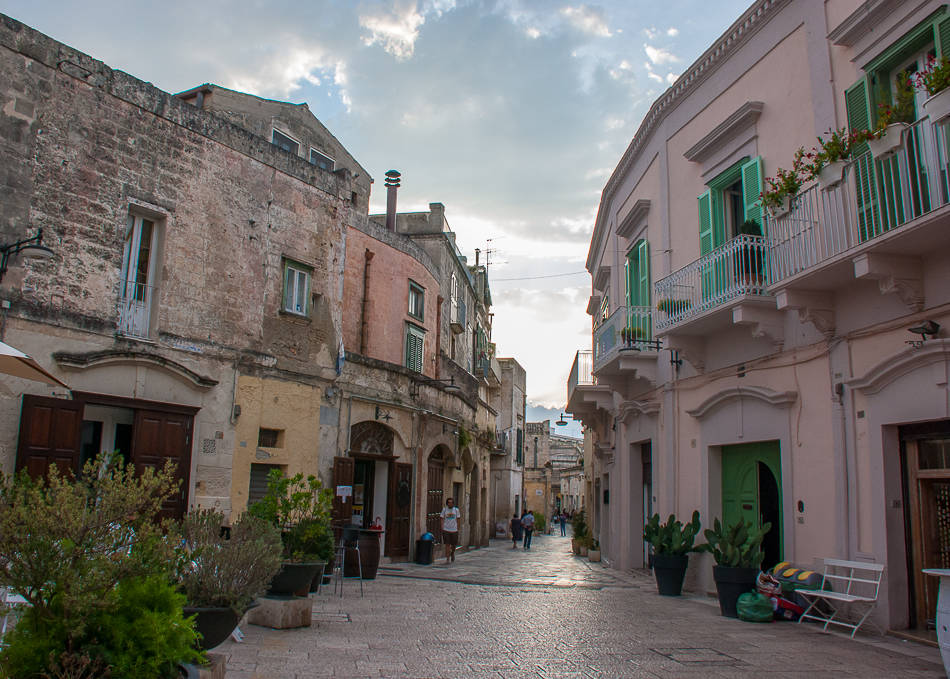
The town has always been an isolated, forgotten part of the region and it still feels like you’re amongst the first ones in the know as you wander the quasi deserted streets, venturing up and down (bring good shoes!) into narrow alleys filled with excitement.

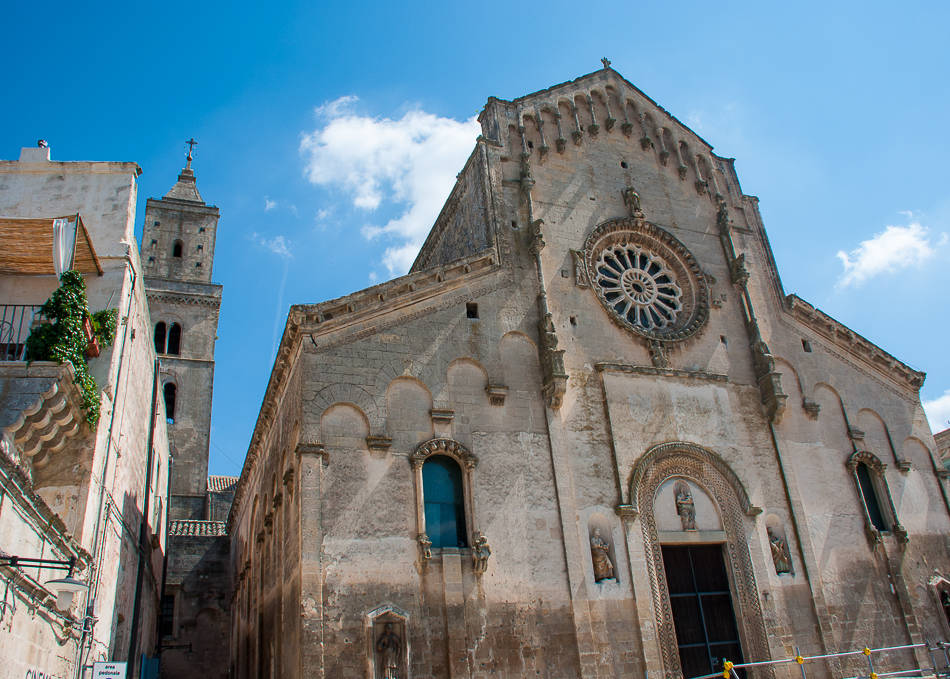
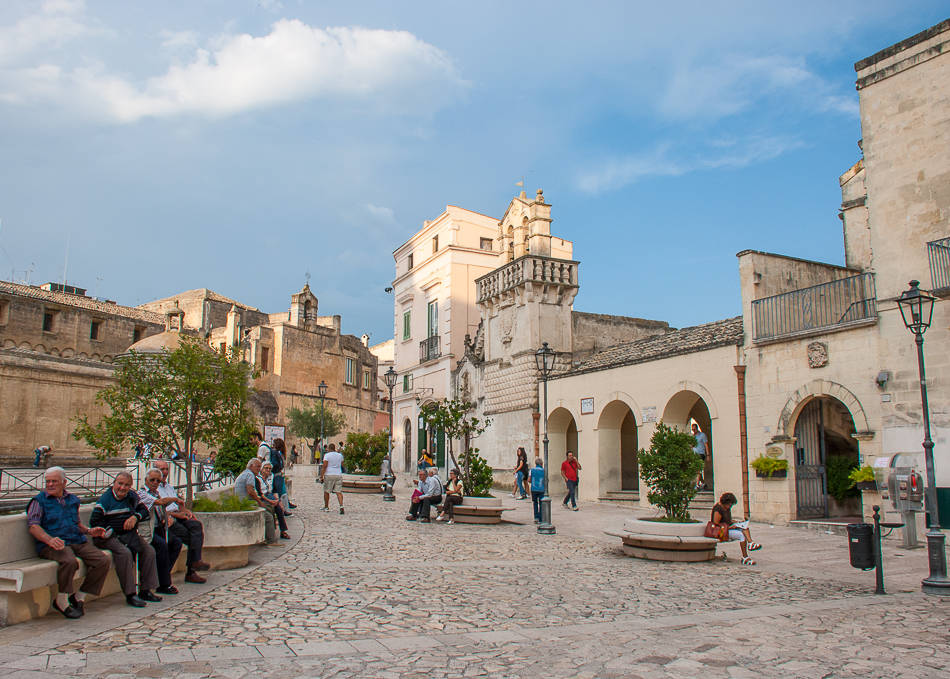
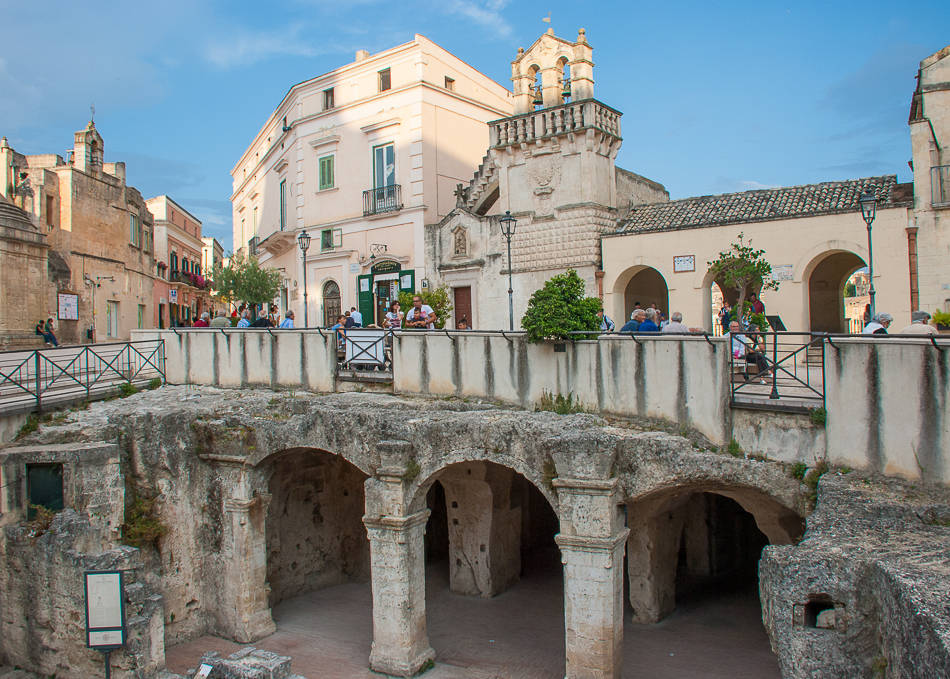
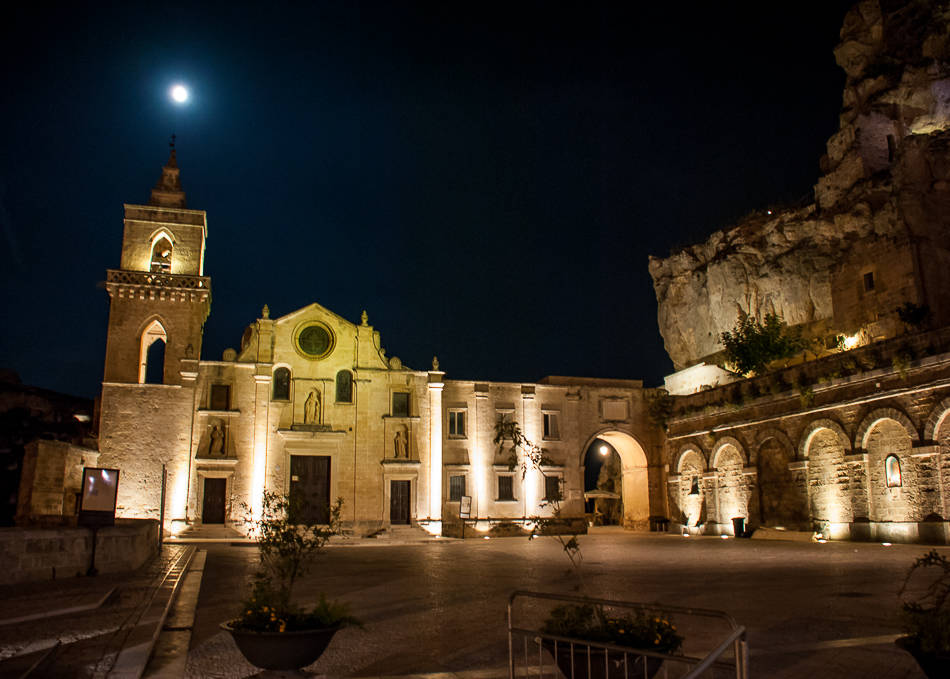
Tiny streets suddenly open up to wide plazas with cathedrals and splendid views.

Other paths will lead you straight to the Sassi and its churches built out of the rock, a truly amazing sight.

Craftsmanship is visible at every turn now that the population is moving back and restoring the houses with impeccable taste. You’ll be able to step in a few workshops and get your hands on real pieces of art or useful house additions made out of the local tufa stone.

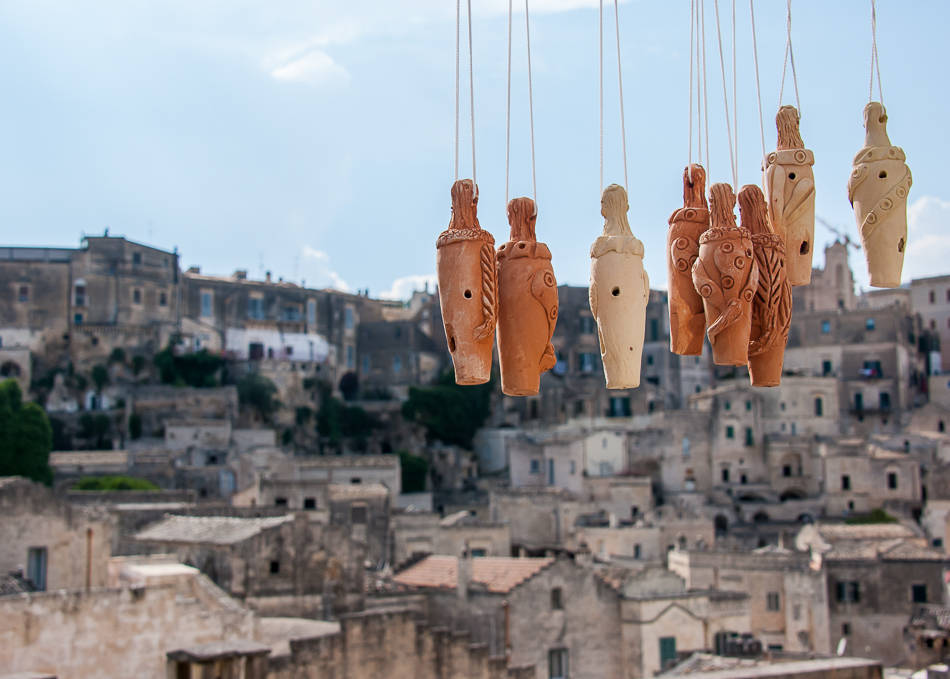
The characteristic souvenir to take home though is locally known as “cucù”, a whistle made out of terra cotta and usually in the form of a colourful rooster though a variety of shapes are available. It used to be a good luck charm that was given to the future bride and groom on engagement and said to keep evil spirits away.

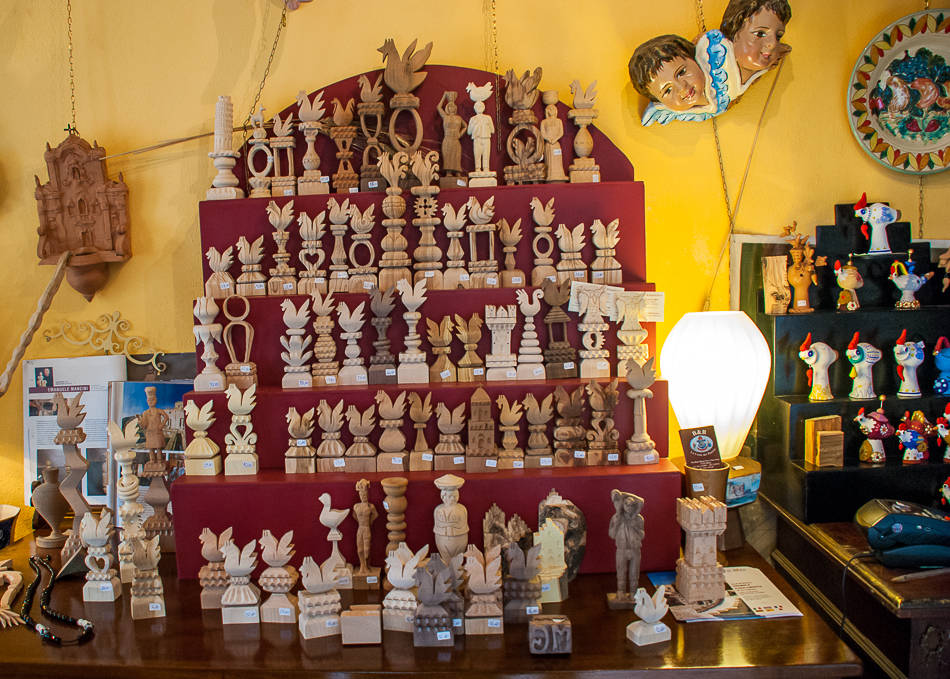
I found my perfect souvenir though in these wood-carved bread stamps which were once used to mark loaves baked in Matera’s communal ovens with the family’s initials.

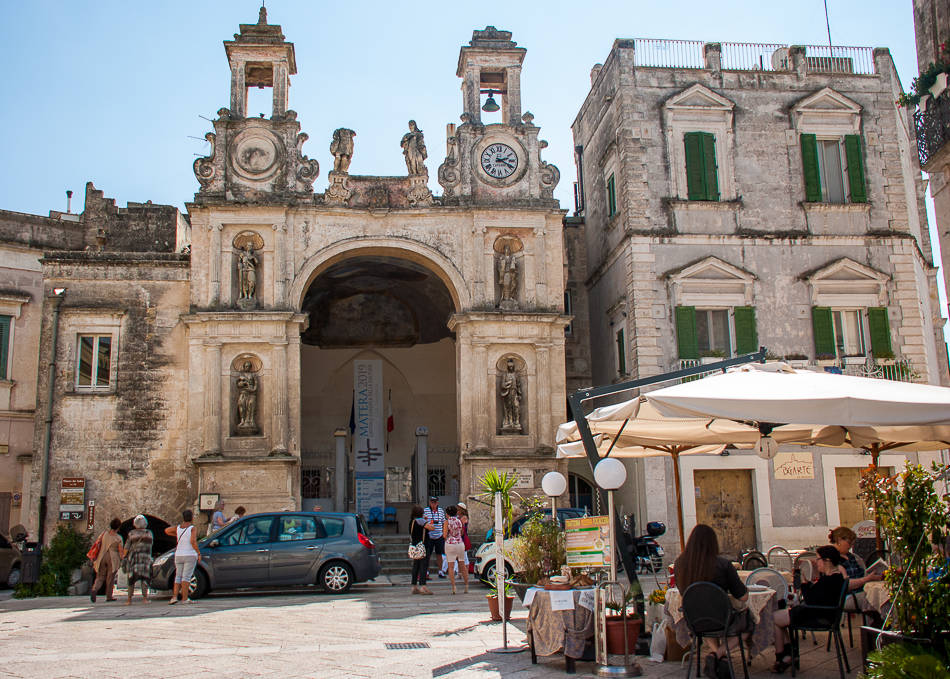
Piazza del Sedile, smack in the center, is an ideal place for an alfresco lunch and we enjoyed our light fare at Il Boccone del Musicista.

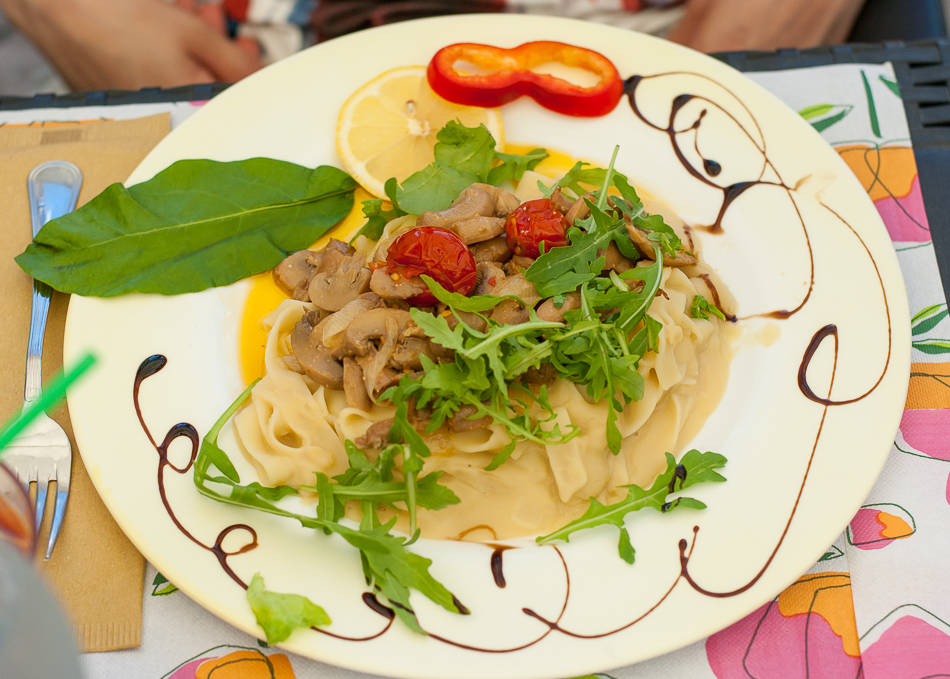
While you’re here you should try Mel Gibson´s Tagliatelle, a pasta dish the actor was really found of while filming The Passion of the Christ here in Matera.

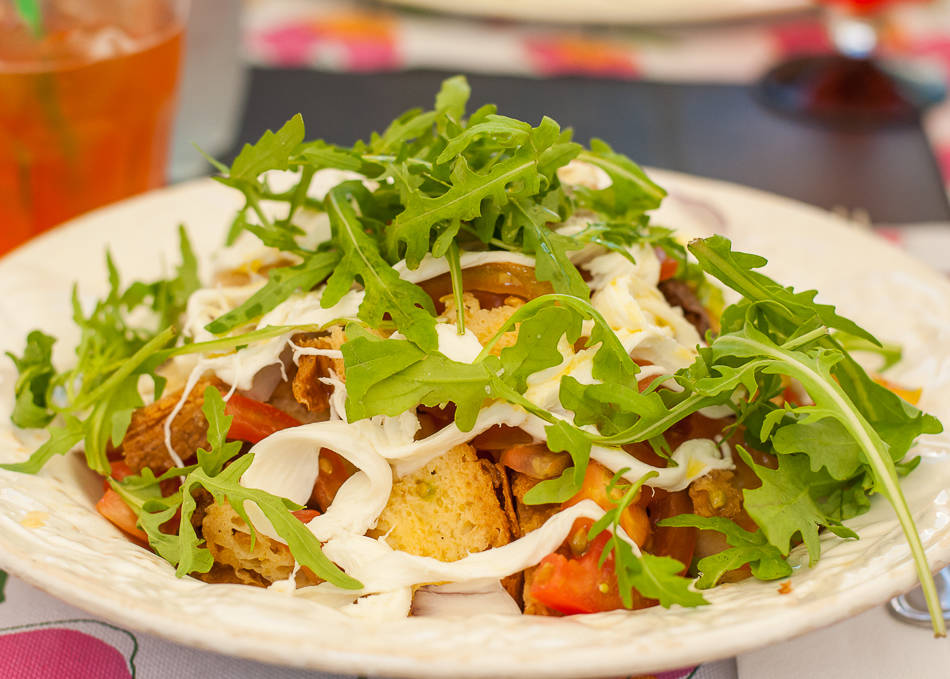
The Cialledda Fredda is a typical dish from Matera, a bread salad with cherry tomatoes, rocket, fresh mozzarella, oil and red onions.

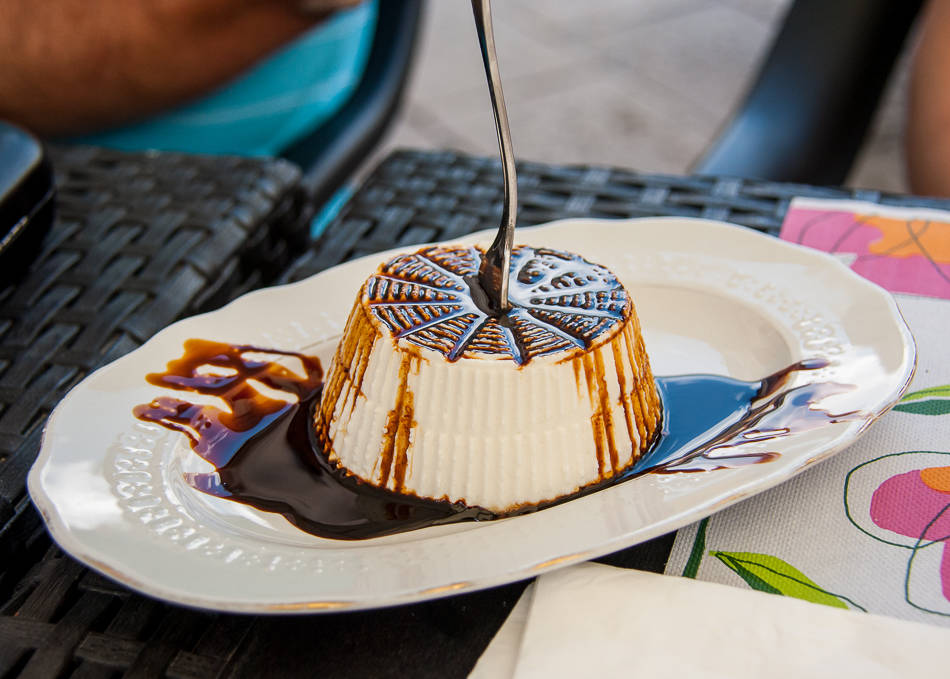
The ricotta flan with balsamic syrup was also a local delicacy and  a not-too-sweet way to end the meal before continuing on with our physical exploration of the town.

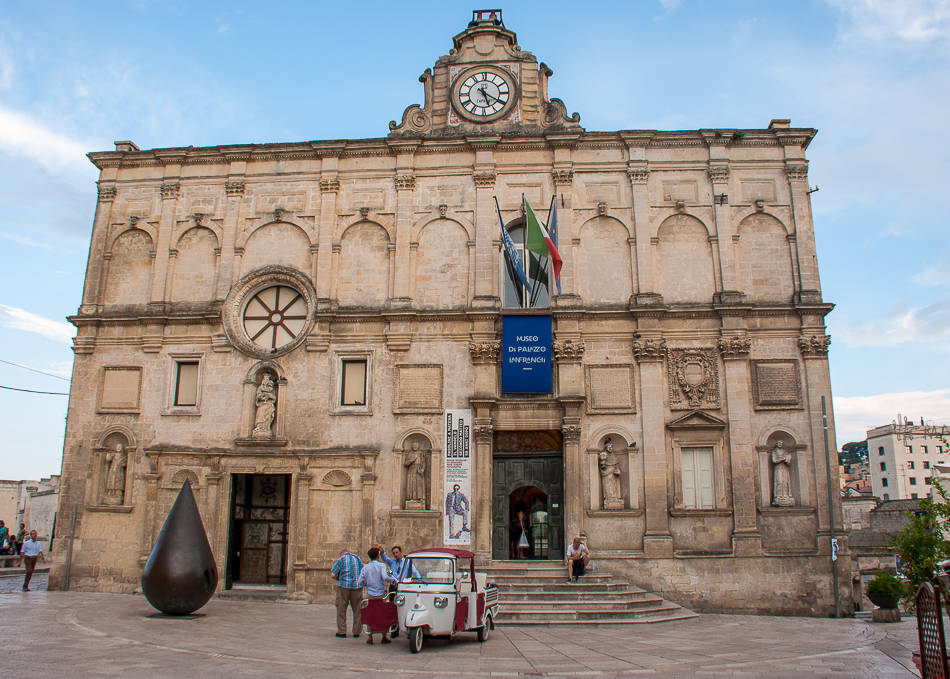
National Museum of Modern and Medieval Art of Basilicata

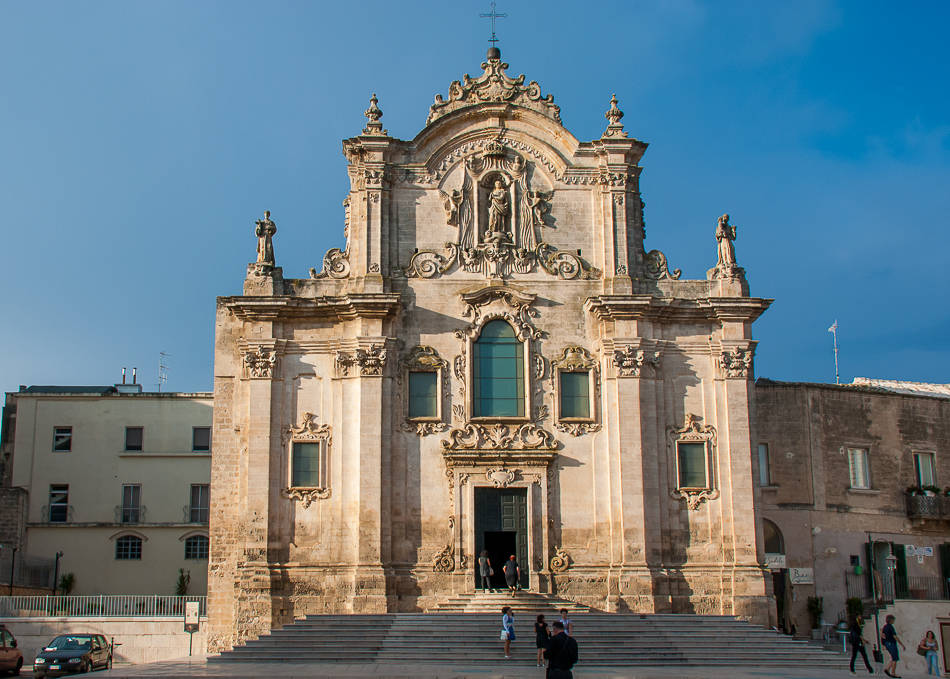
Church of Saint Francis of Assisi

Piazza San Francesco

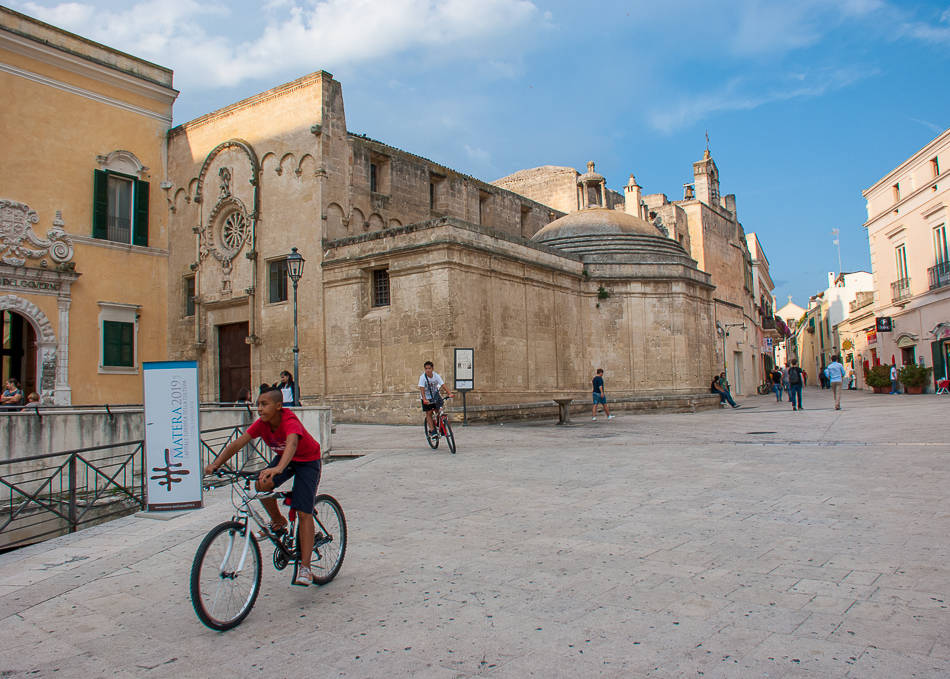
Saint Spirito Sassi

Via delle Beccherie

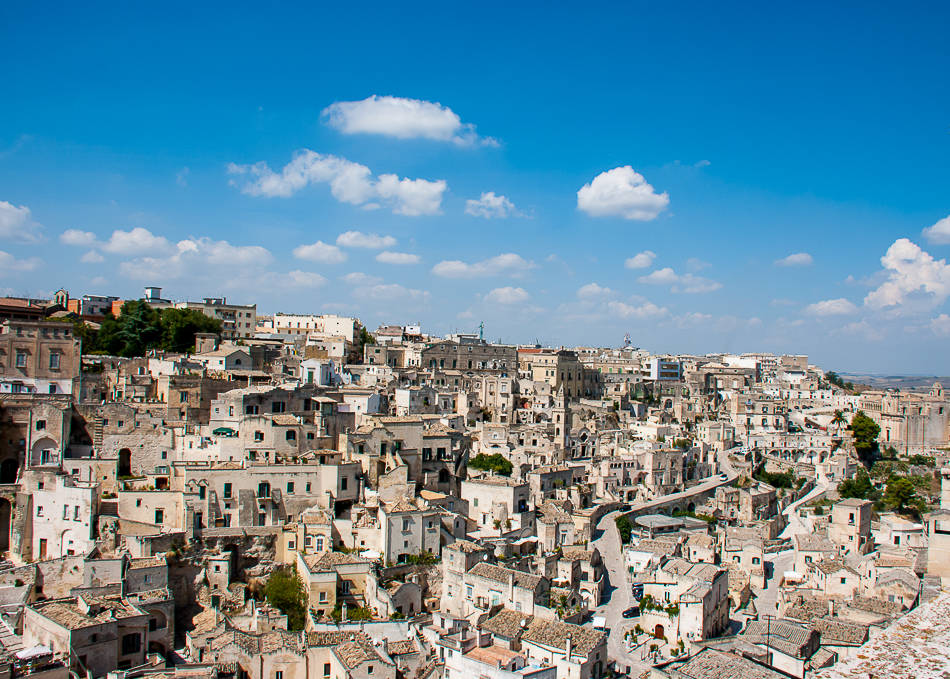
Every belvedere and viewpoint offers an arresting view of the houses piled on top of each other and it’s easy to see why Matera has been chosen to double for ancient Jerusalem in films.

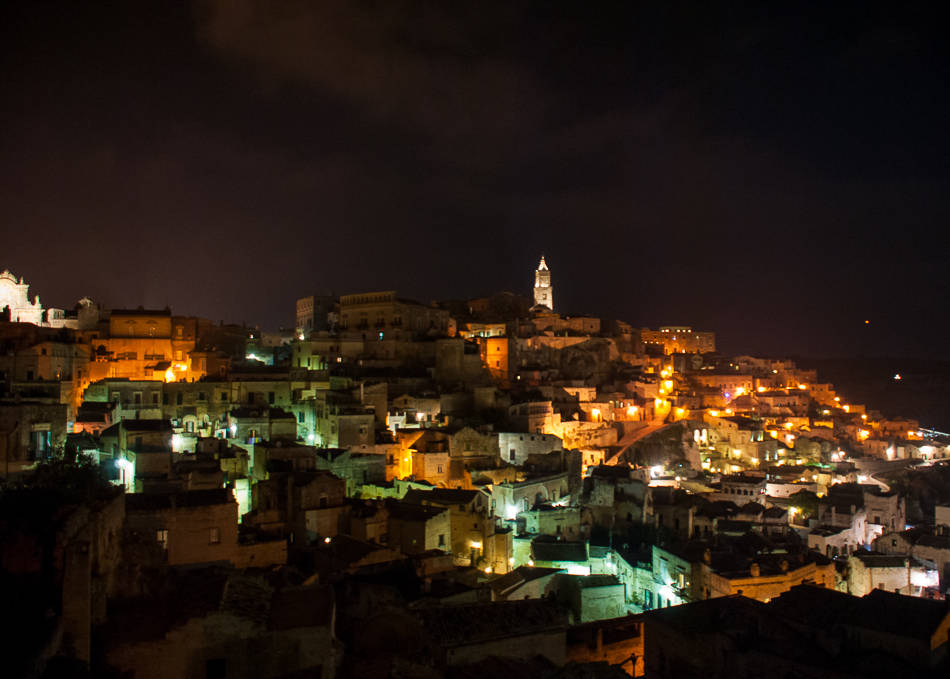
A walk at night reveals even more beauty as the historical buildings light up dramatically against the pitch black sky and surrounding ravine.

Matera is a rock-hewn marvel that should be on everyone’s hit list, although I’m glad it still escapes most people’s radar for now. I definitely plan on going back and somehow hope to find the same serenity and shocking beauty I just witnessed…


Europe Italy Travels

Seaside bliss on the Salento Peninsula

December 26, 2014

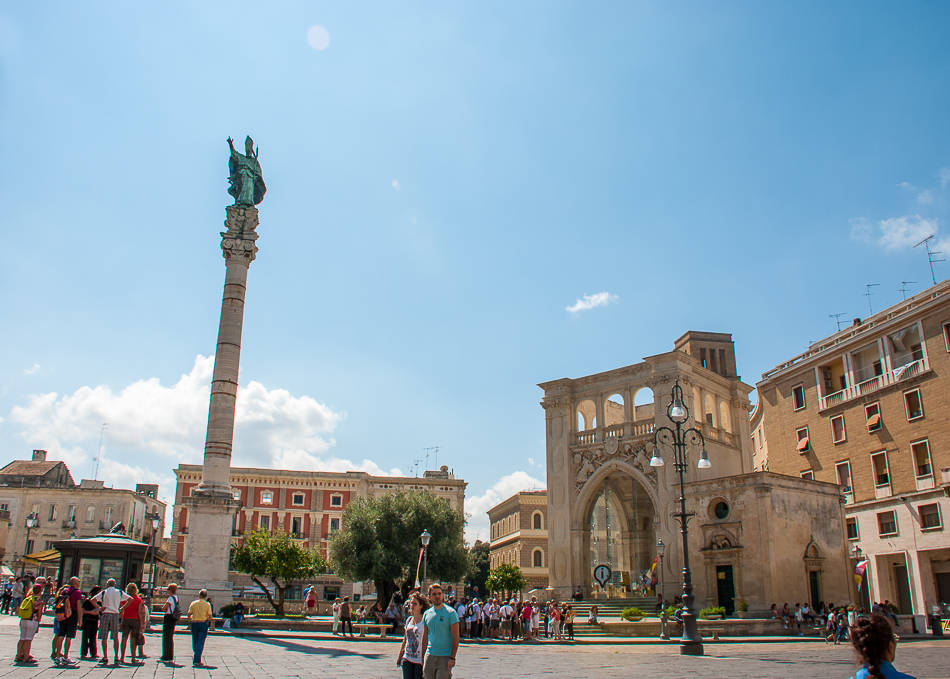
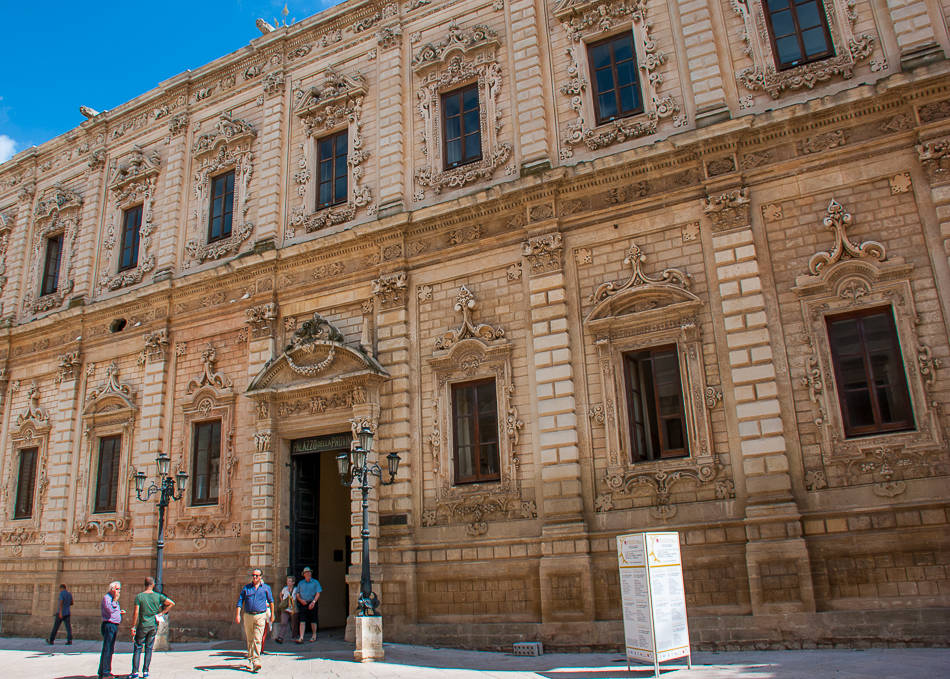
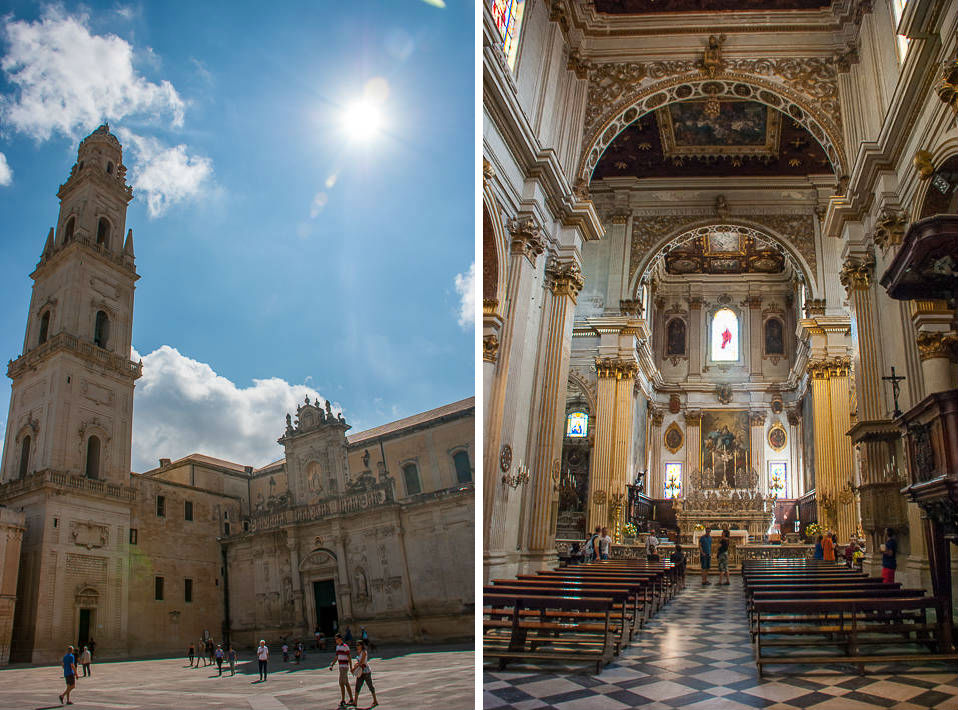
Picking up where we left off, the Salento peninsula begins where the Valle d’Itria ends and lays flat as a tongue of land lapping the Adriatic sea to the east and the Ionian to the west. Home to some of Italy’s loveliest towns, we started our exploration in the creamy baroque gem of Lecce.

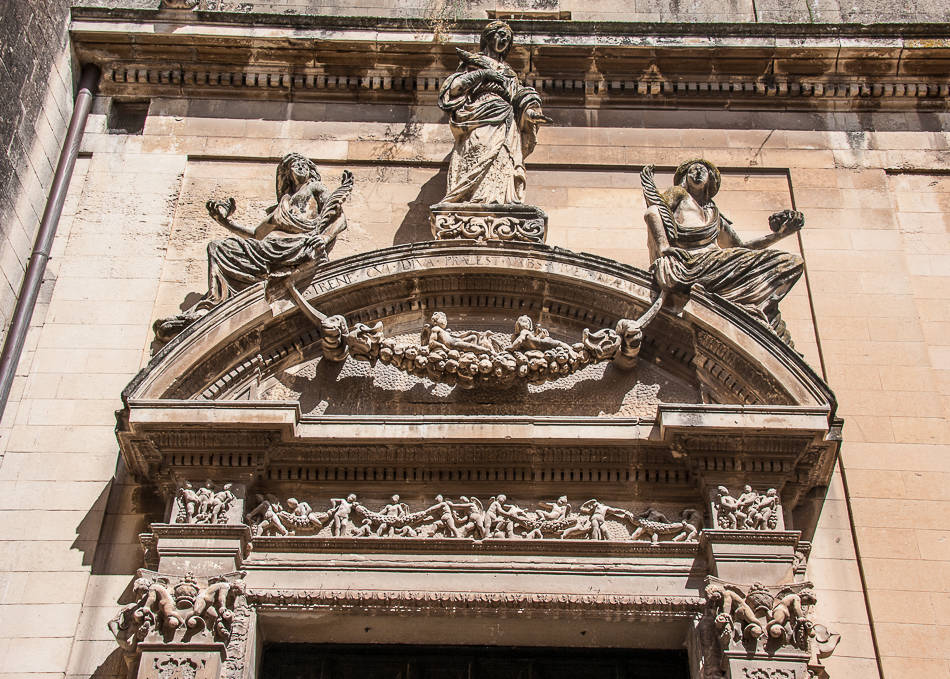
Referred to as the ‘Florence of the South’, Lecce was built largely in the 16th and 17th centuries and dazzles with its ornamental decadence.

Decorations are piled on every façade and door frame and at every corner you’ll find stunning examples of Baroque excess at its finest and dottiest.

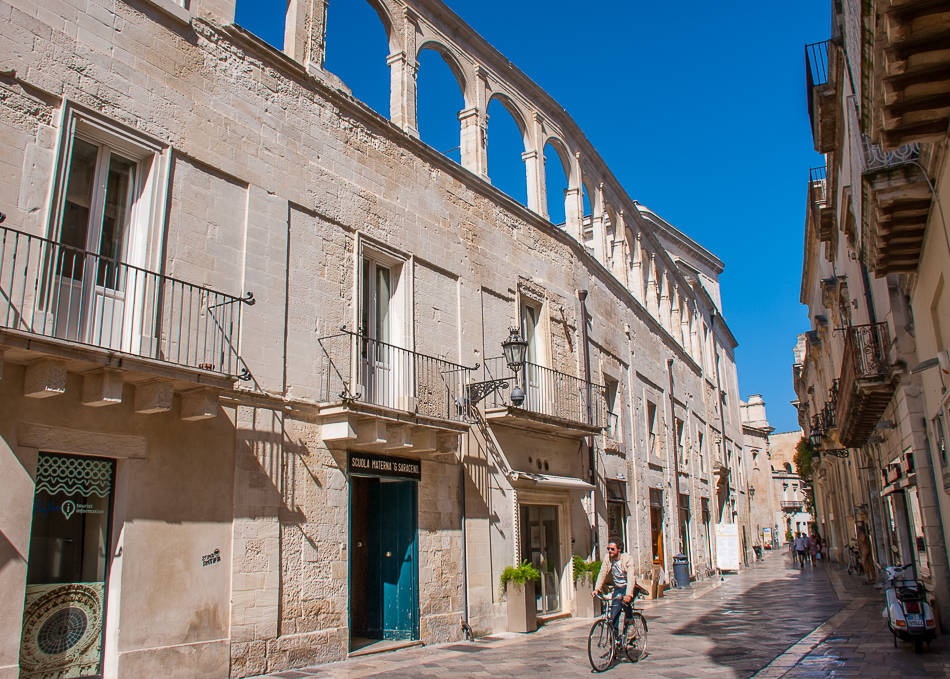
The narrow cobbled streets in the city’s historic core are just like they would have been 300 years ago.

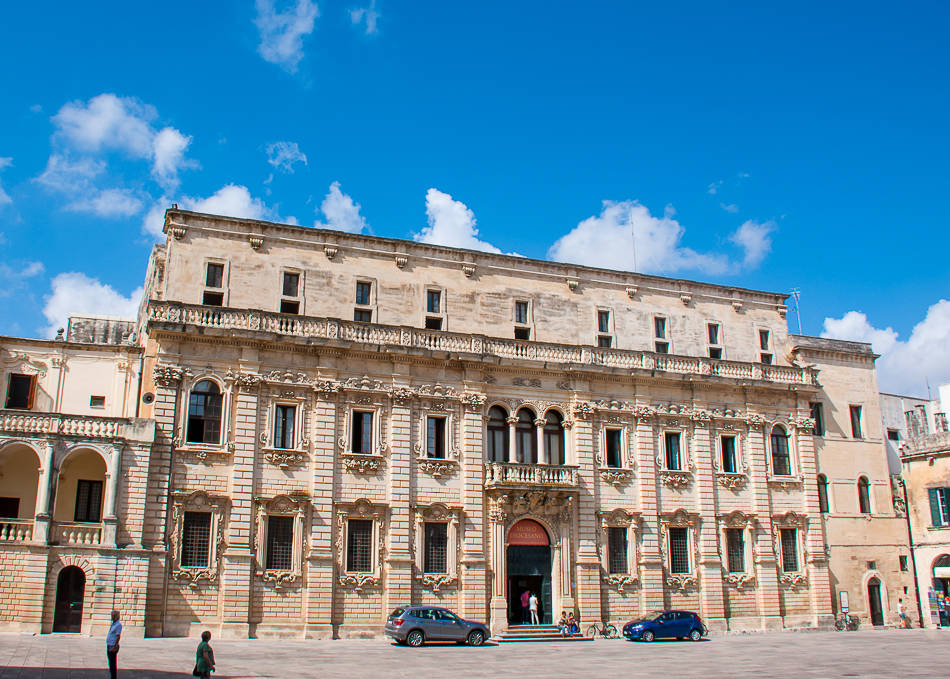
Via Libertini especially oozes Baroque extravagance like no other and ends in the stunning Piazza del Duomo.

Alongside a towering bell tower, the 17th-century cathedral is another highly chiseled edifice with a stunning interior, stained-glass windows aplenty, and a Greek marble altar decorated with lapis lazuli.

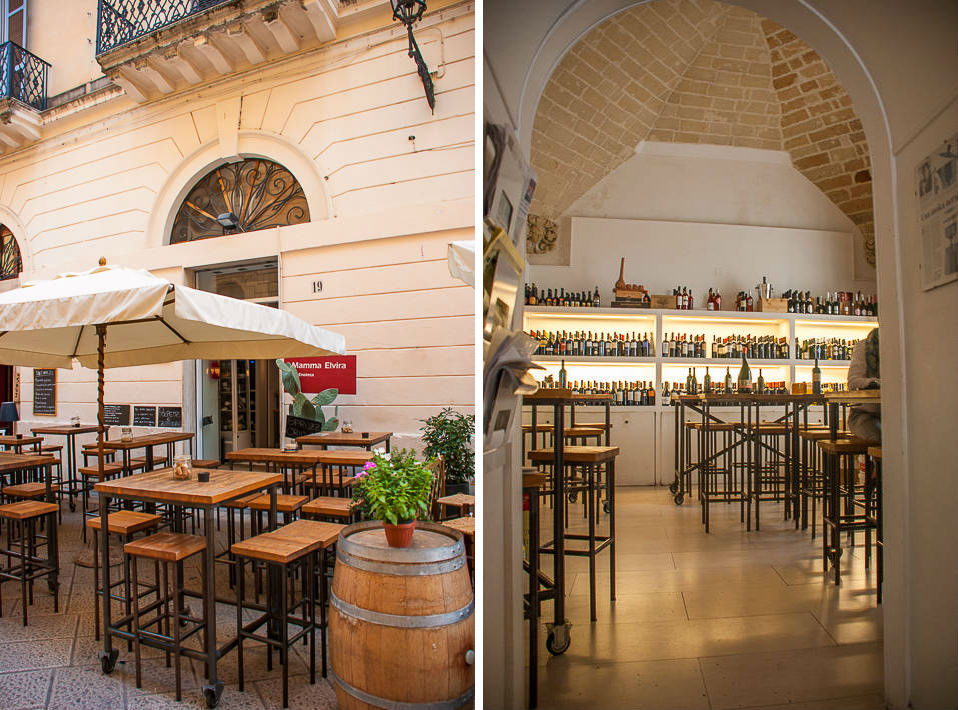
When it’s time to rest your weary feet, drop by Mamma Elvira, a charming wine bar and shop with the largest selection of wines from the region.

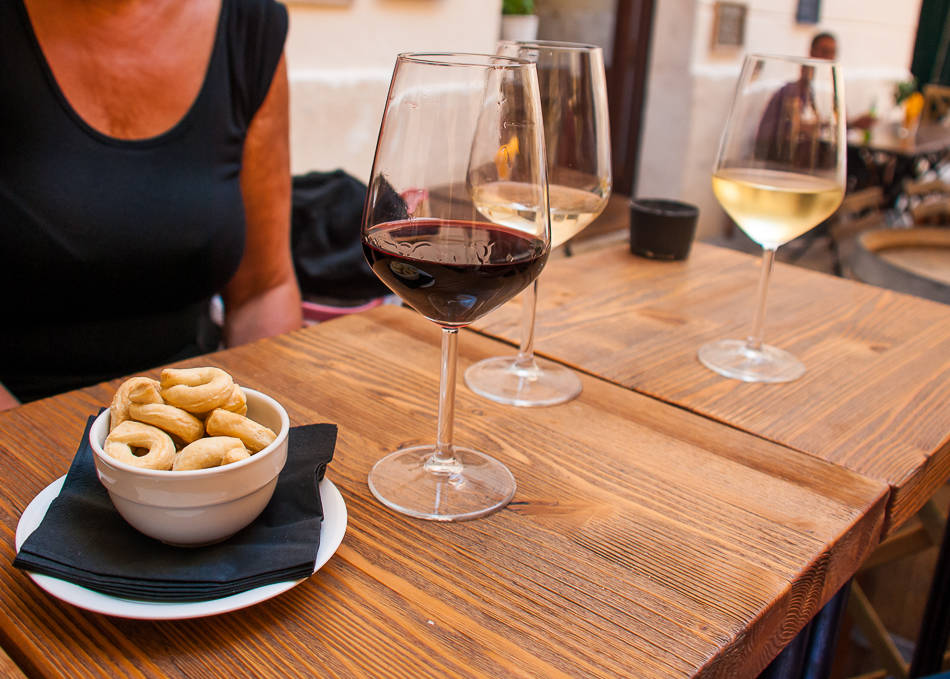
Opened a few years ago by an old colleague of mine, it’s an ideal place to enjoy a local aperitivo with quality local bites smack in the old city centre.

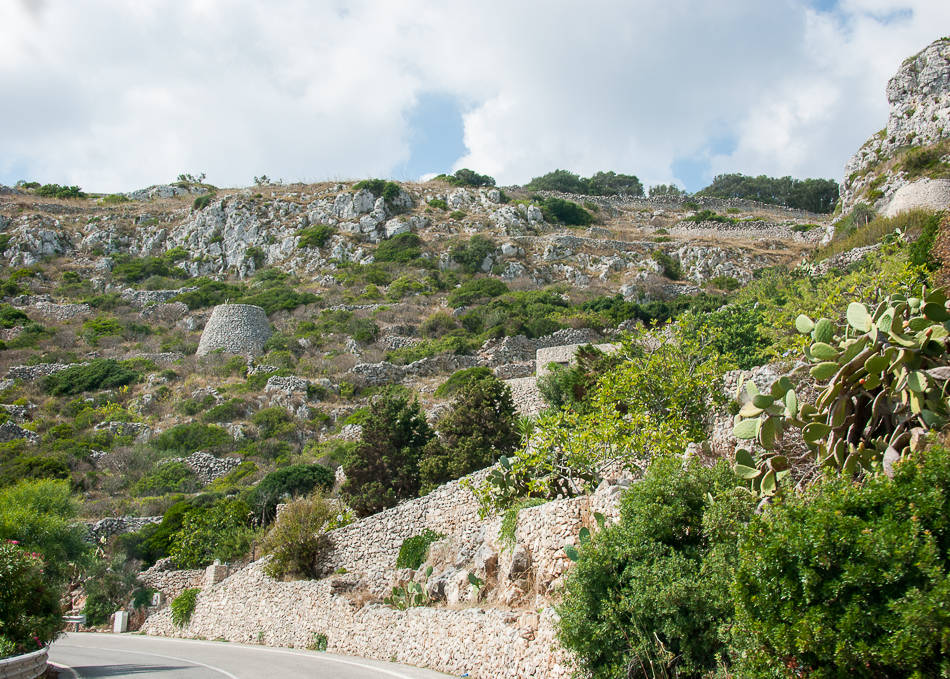
You are never too far from the sea in this part of Italy and from Lecce the best thing to do is head East to get onto the coastal road (follow signs to Linorea) and drive all around the peninsula with almost uninterrupted view of the sea on one side and rustic countryside on the other.

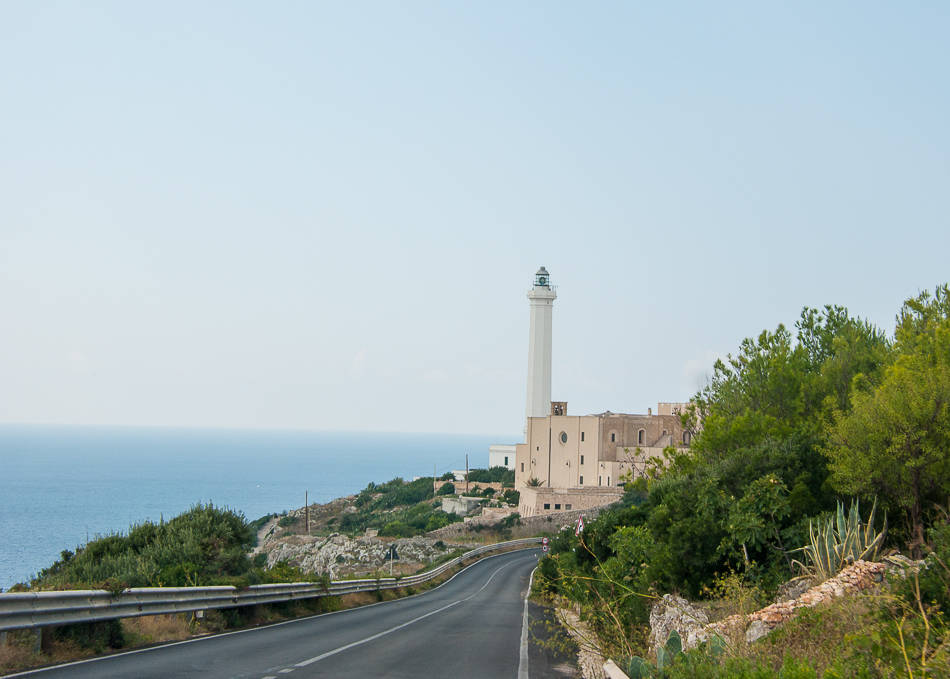
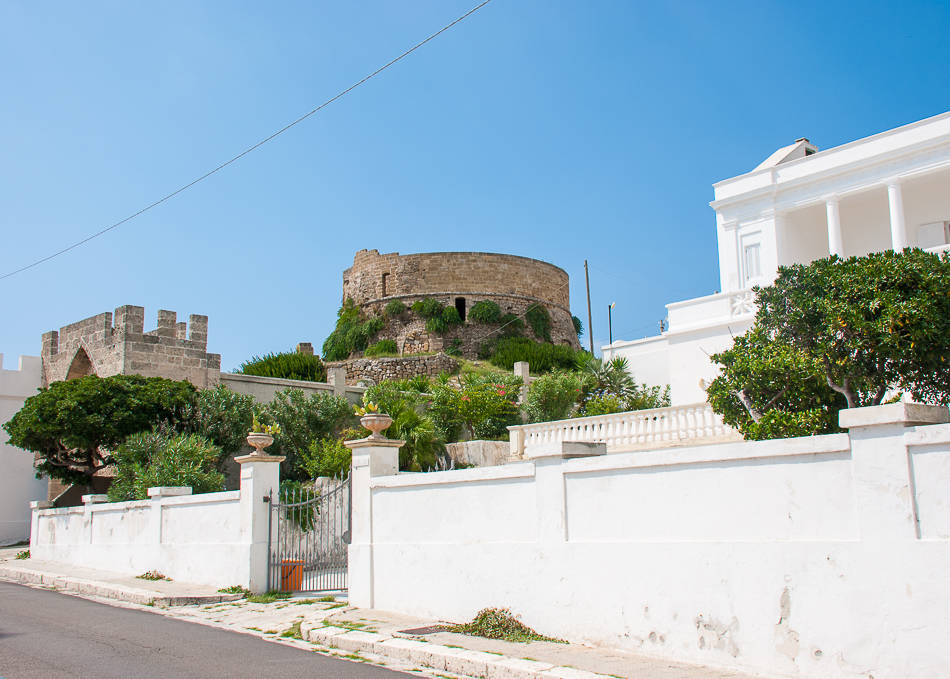
You’ll pass by ancient Roman towers once used to warn the villages of approaching armies and pirates, lighthouses, limestone cliffs,…

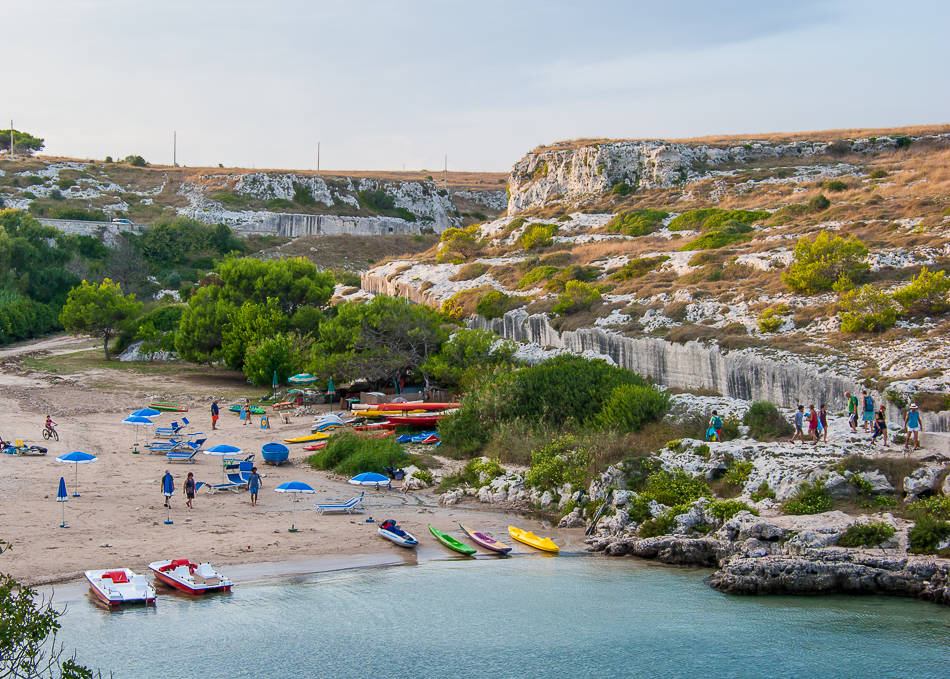
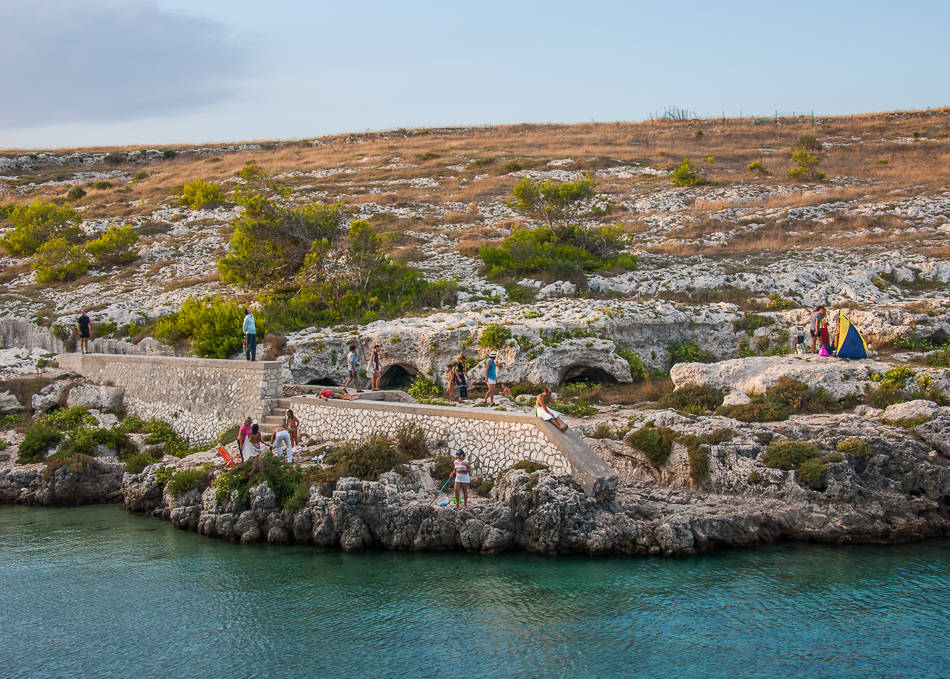
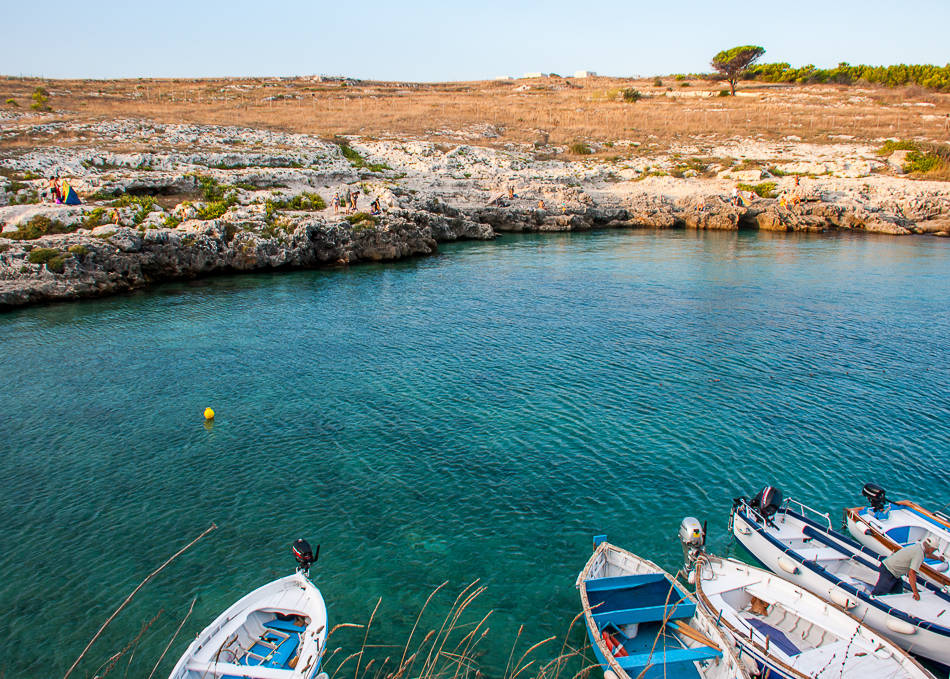
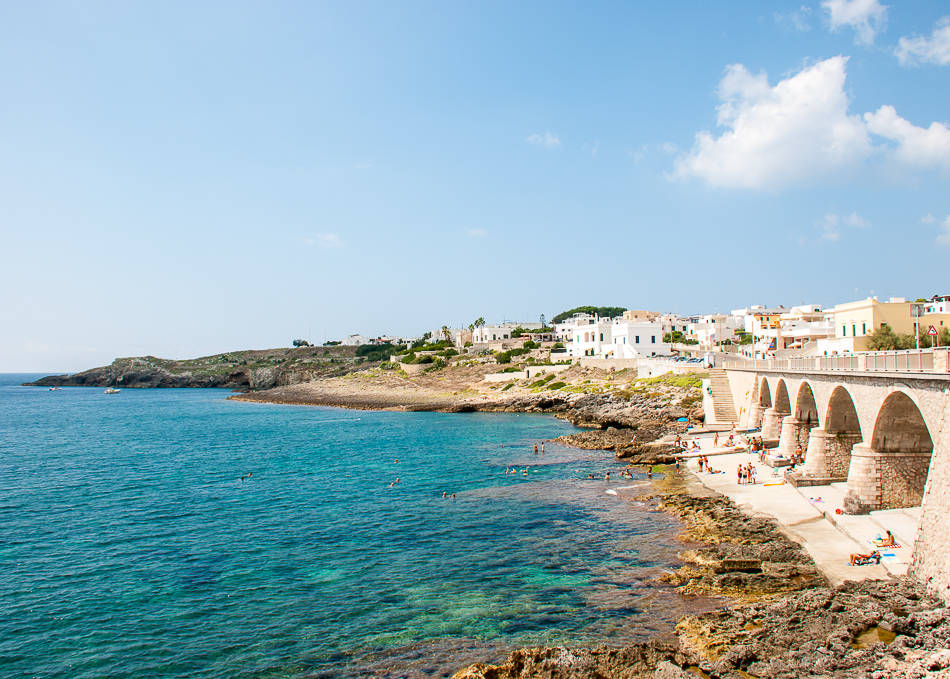
…and gorgeous turquoise inlets turned into local beaches.

As you drive further south, you can’t ignore the Salento’s strong historic ties with Greece, dating back thousands of years, visible through a myriad of villages you’ll be passing through.

One village in particular is worth making your way inland for a few km and establishing your base here for a few days – the quaint little Vignacastrisi. There’s not much info on the tiny place and it’s perfect this way as the unspoilt village is still stuck in time and ideally placed to explore the rest of the peninsula as opposed to staying in a busier resort town. It is also home to one of our favorite discoveries this side of the country – Palazzo Guglielmo.

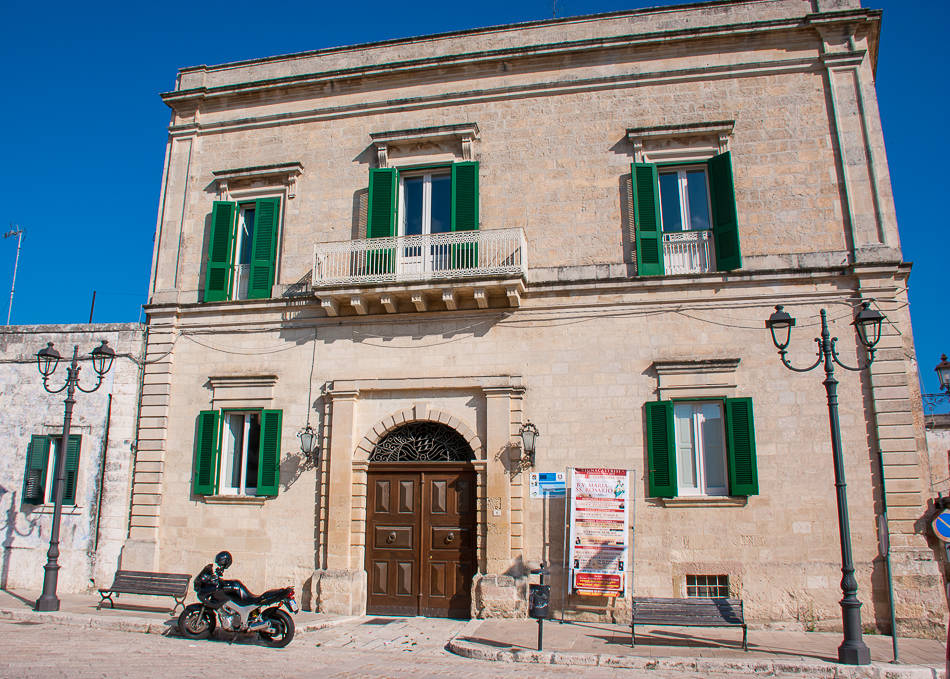
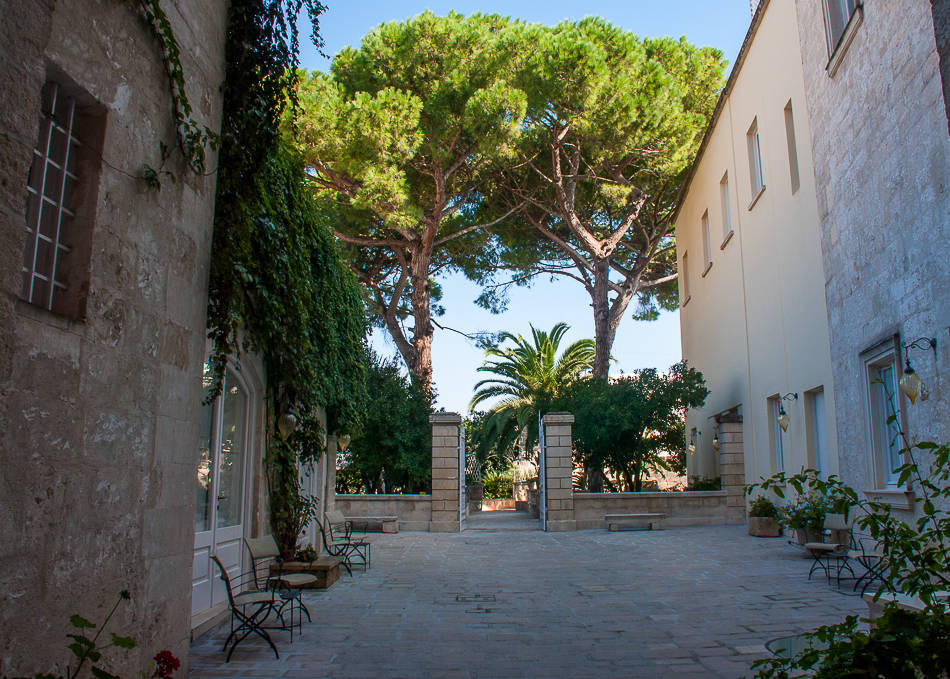
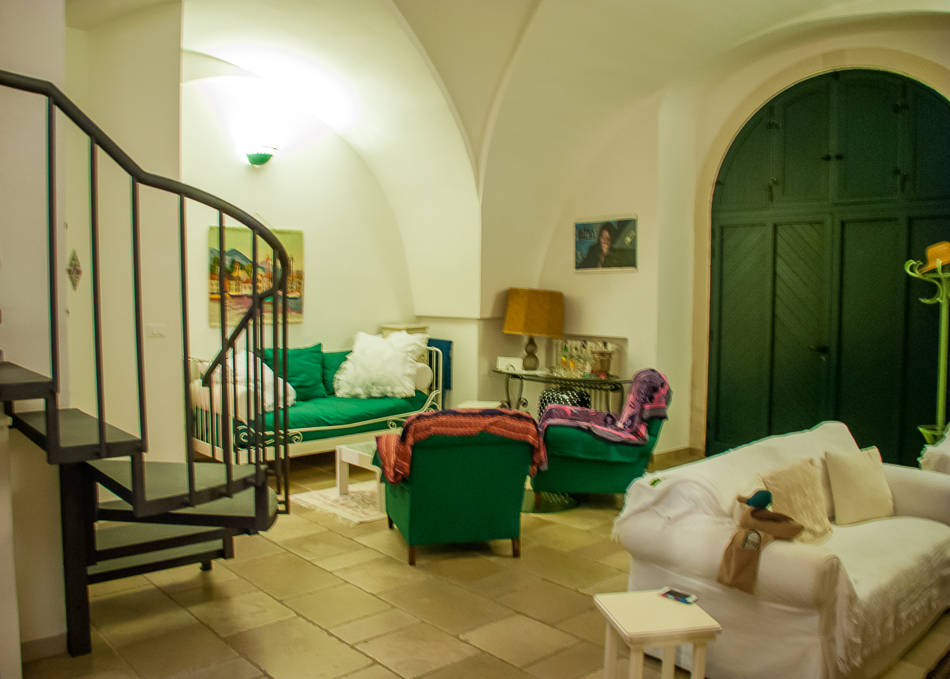
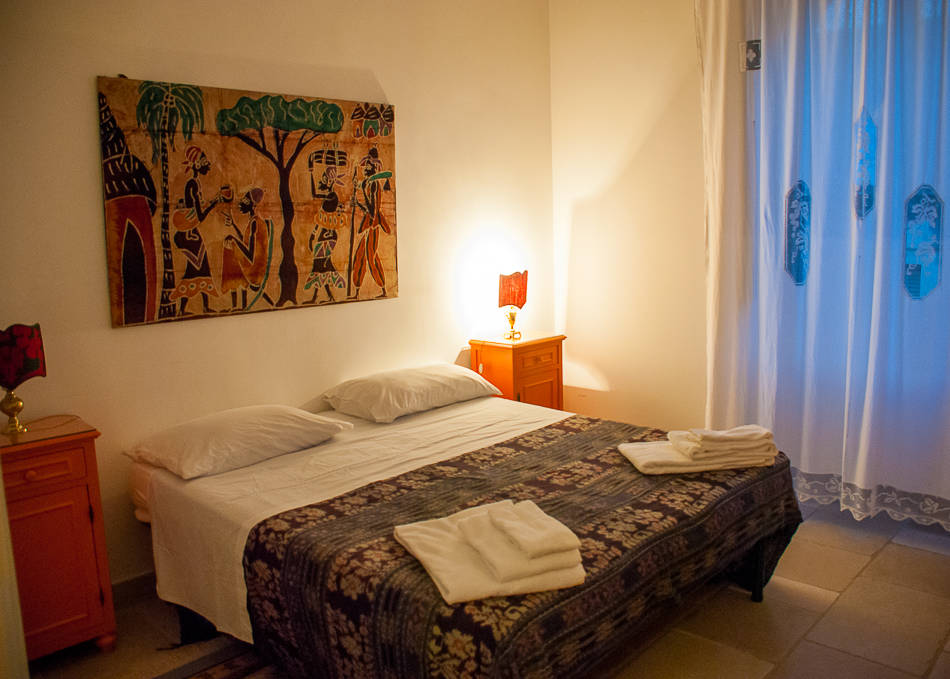
Facing the small town’s main piazza and housed in the former mayoral mansion, Palazzo Guglielmo is the best kept secret of the region, no kidding. Behind its huge doors hide a very special boutique hotel with six stylish rooms, two apartments and a wonderfully laid-back yet at the same time luxurious feel…

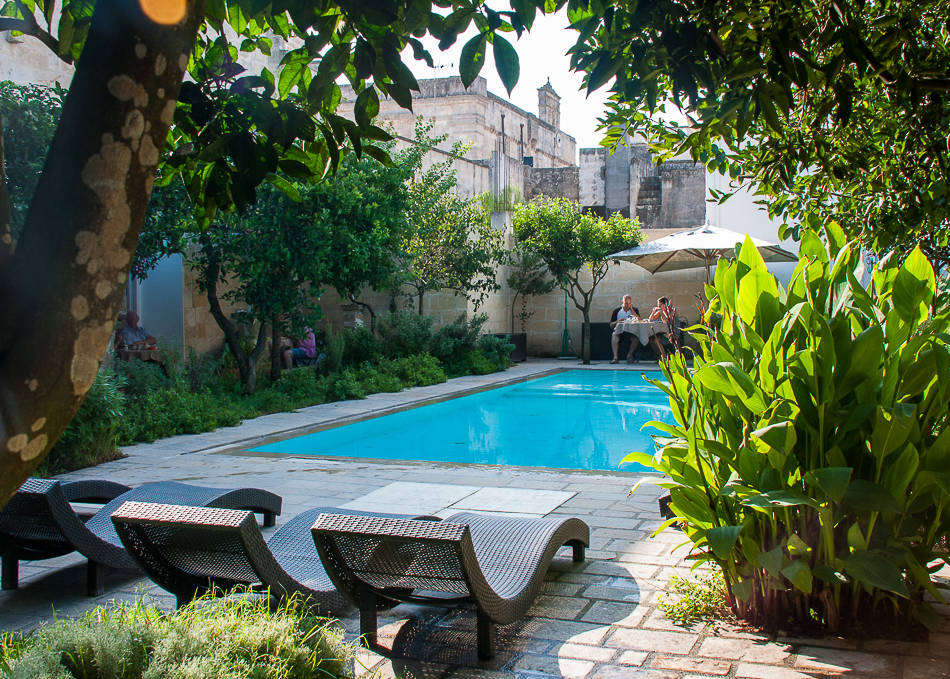
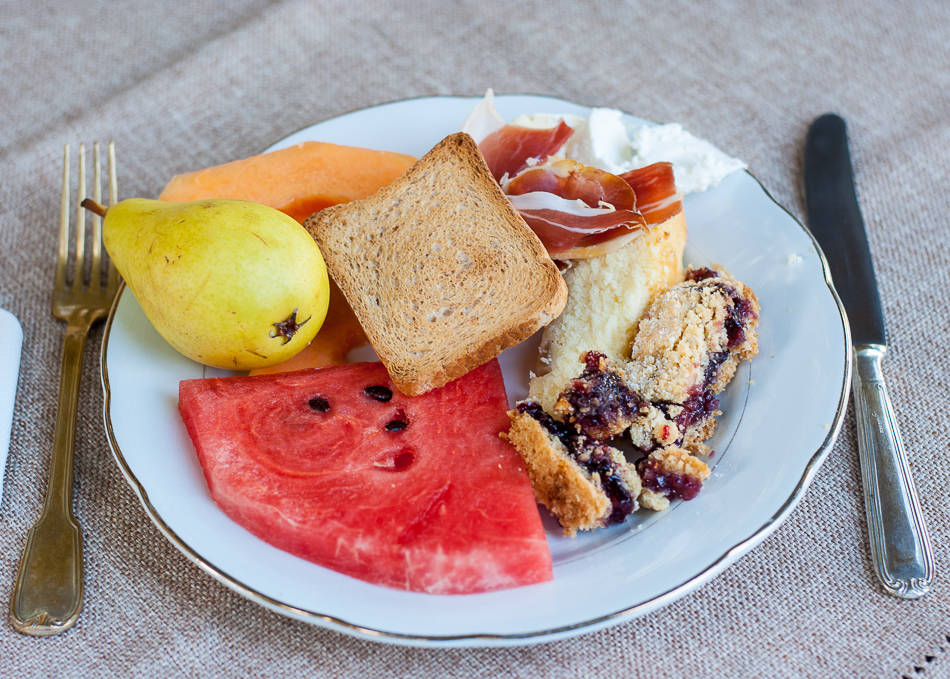
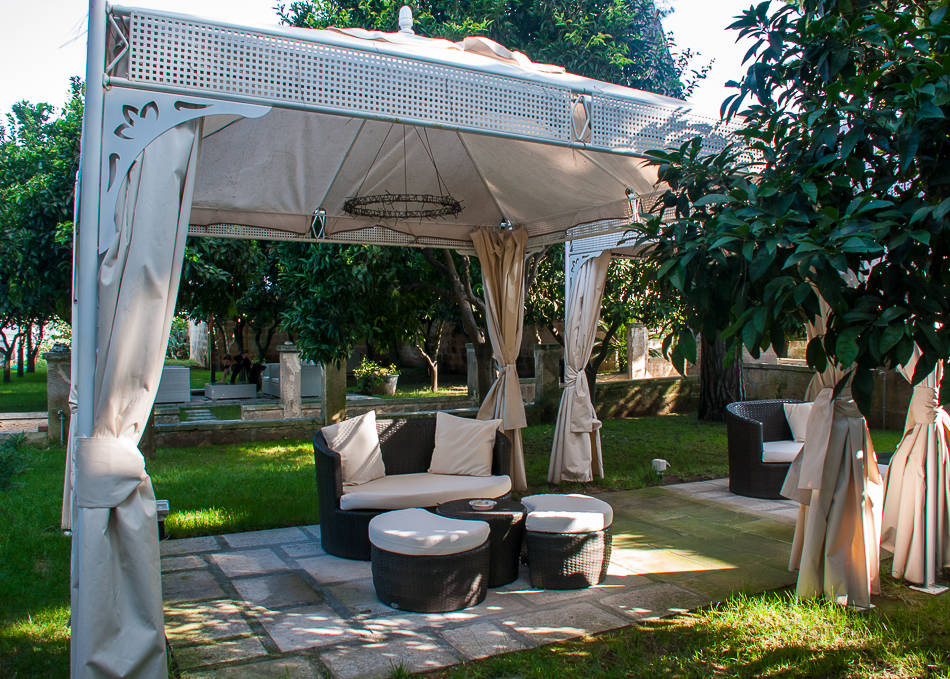
The pool is flanked by orange trees and other fragrant herbs and is the perfect setting for their lavish breakfast buffet.

Homemade cakes, fresh fruits, local ricotta and prosciutto fell right into my morning tastes…

The rest of the property is an enchanting secret garden with outdoor sofas, hammocks, and exclusive reading nooks with every details well thought of.

We stayed in Casa Marguerita, one of the two apartments, and never wanted to leave the place as it felt just like home, well even better!

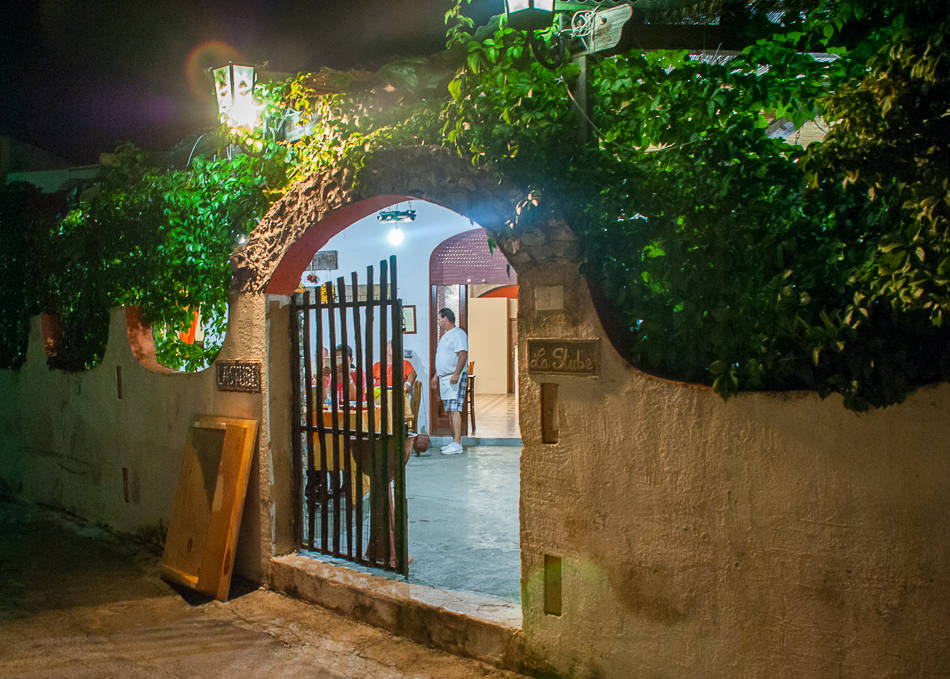
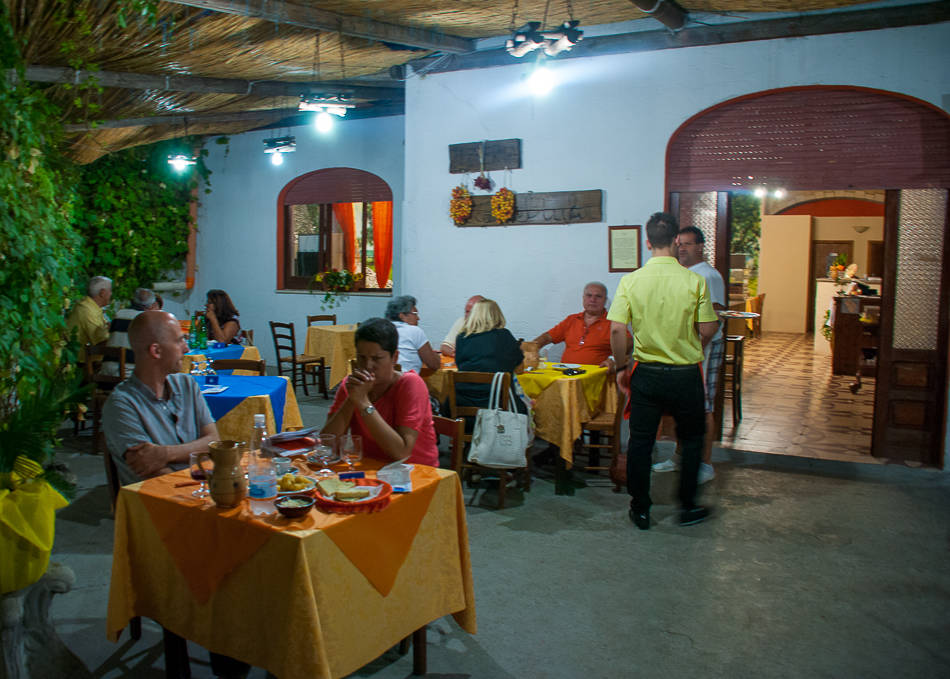
Such a tiny village only holds a handful of restaurants but quantity doesn’t matter here, especially when you have a place like La Stua Trattoria which enchanted us so much we had our only two dinners there.

The family-run trattoria and pizzeria is super casual with colorful flatware delivered in paper bags and house wine for less than $3 a glass and that’s the beauty of it…no fuss but some of the best food you can have in the area for your money.

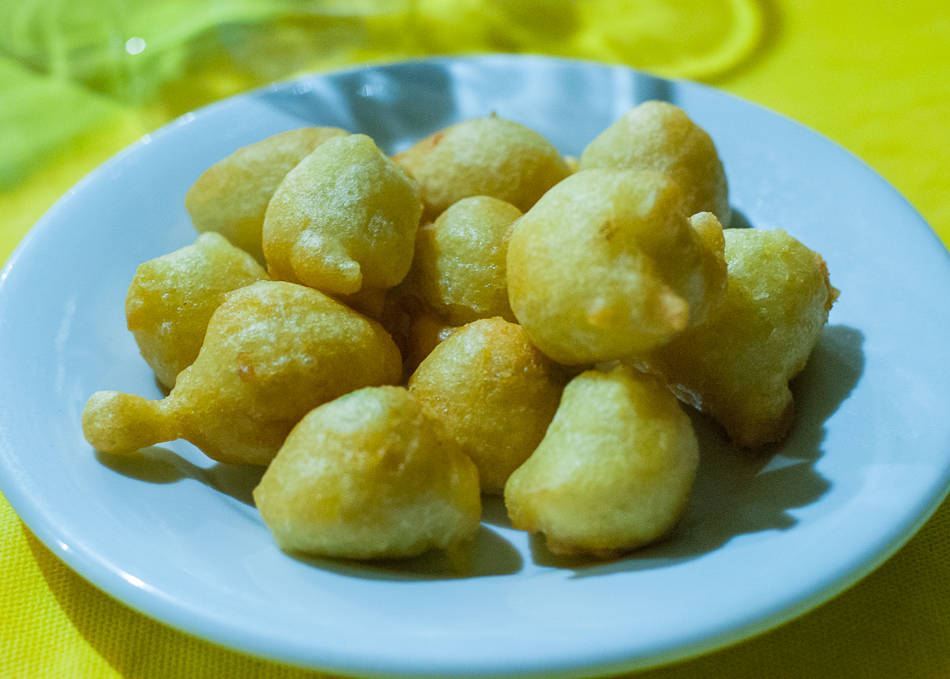
Fried bread balls arrive piping hot as a complimentary snack.

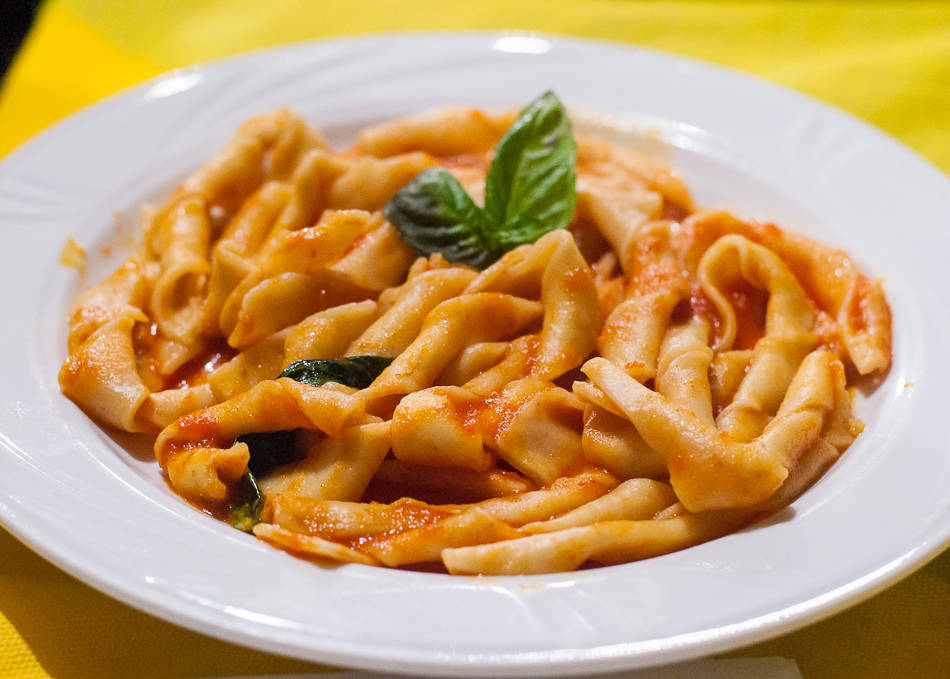
The homemade pasta is exquisite and a simple tomato sauce laced with fresh basil is all you need to appreciate it…

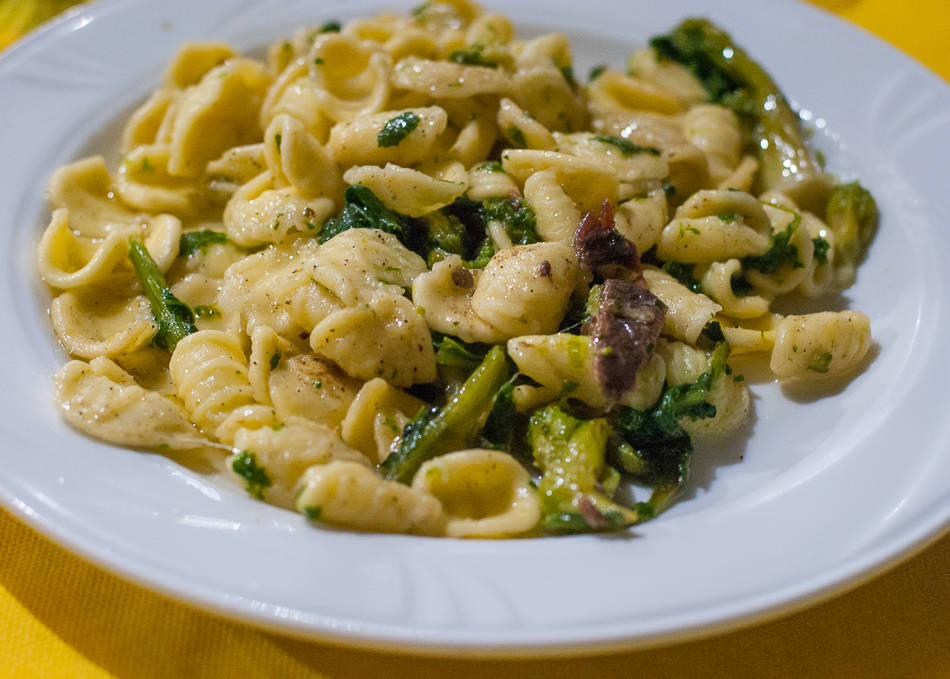
…though the resounding winner was by far the Pugliese specialty of orecchiette con cime di rapa (i.e. orecchiette pasta with rapini) – we still dream about it!

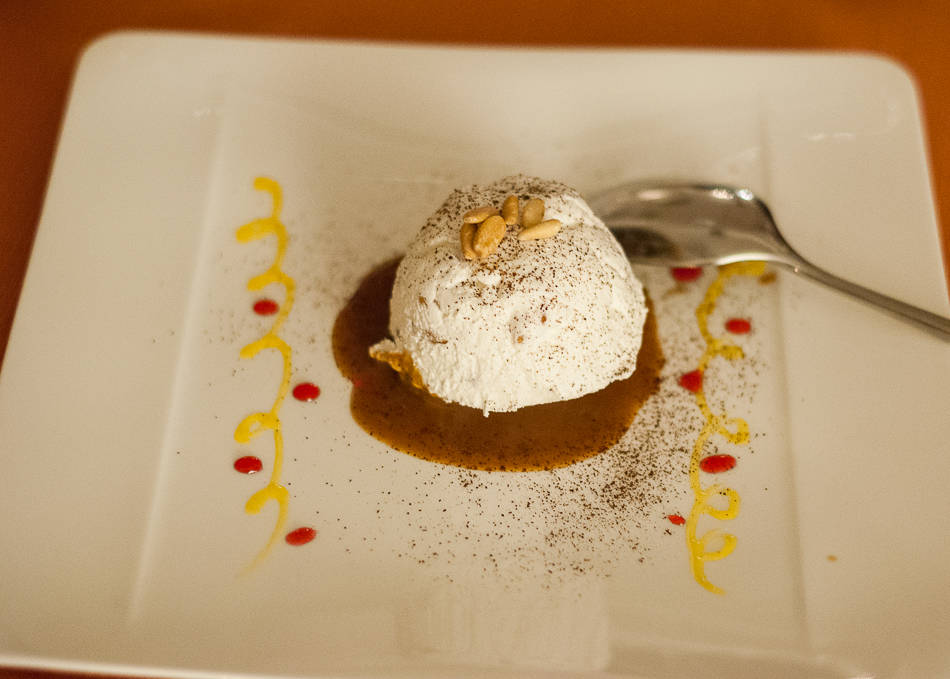
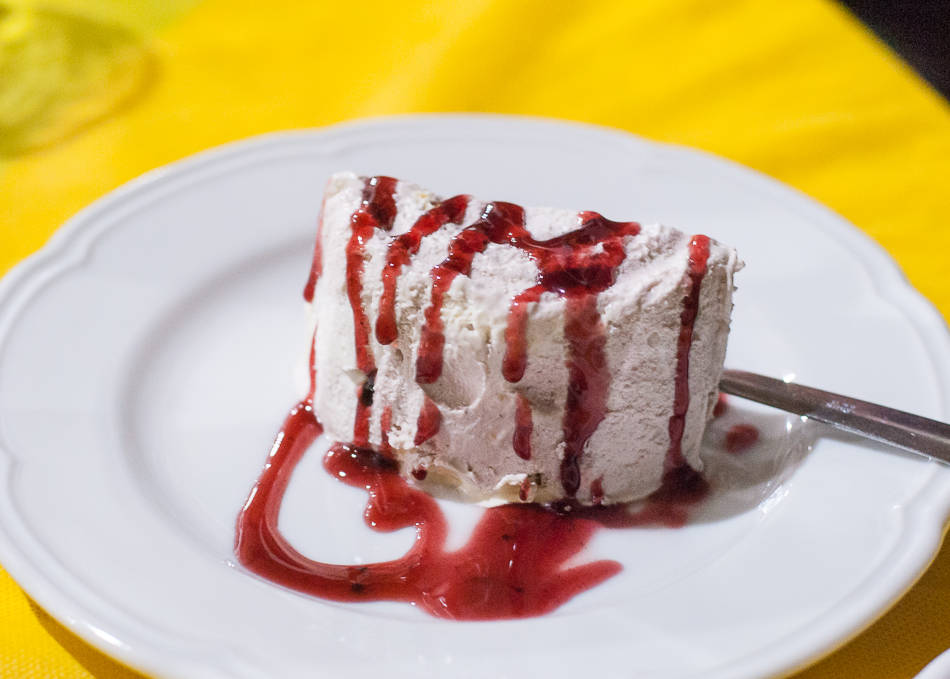
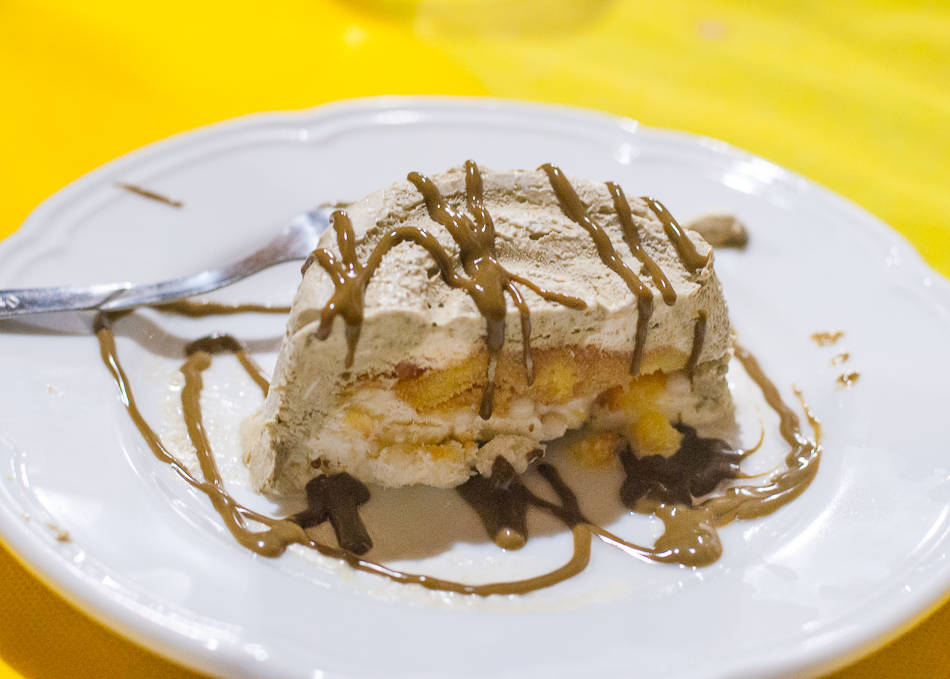
We also had great thin crust pizzas but were so engrossed in the orecchiette that I forgot to take out my camera…it happens! I was calmer by the time the dessert came though, and simple Semifreddo were a perfect sweet ending to this magical meal, which honestly cost us no more than $40 for 5 people including wine!

The proof that Vignacastrisi is so well placed to explore the region is that you’ll find no more than 5 minutes away the beautiful seaside village of Castro.

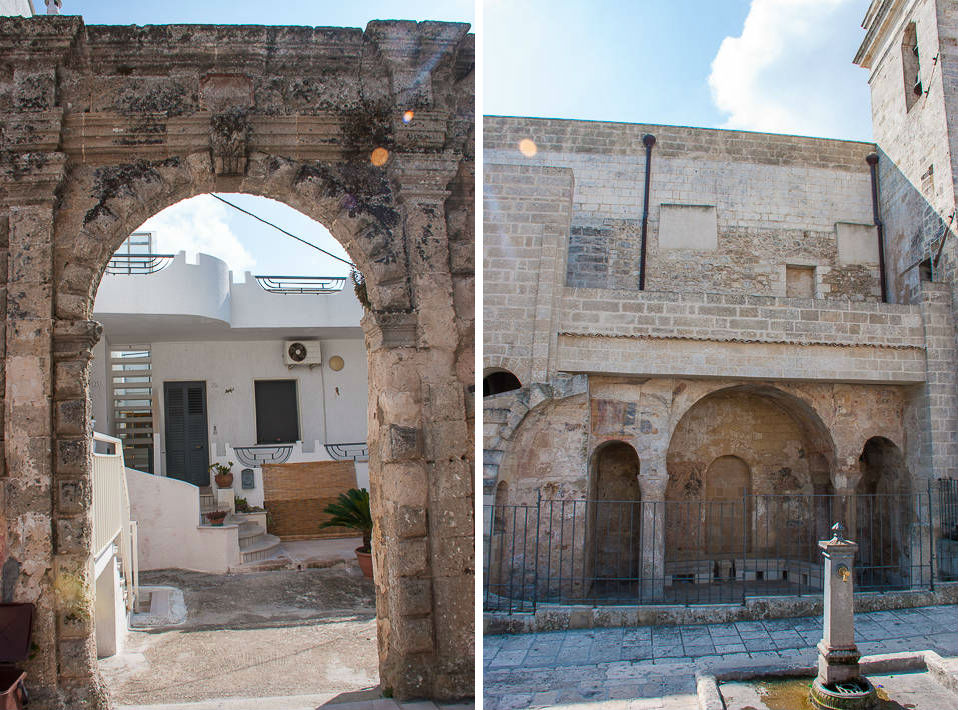
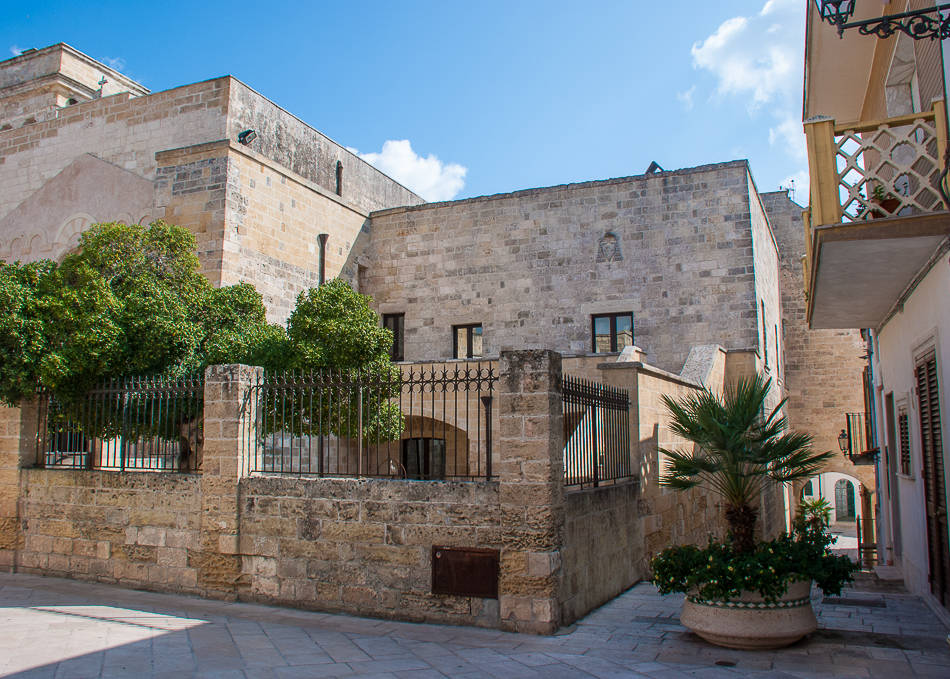
It’s a pleasant untouristy historical centre to explore with neat small streets and low houses made with the familiar light stone.

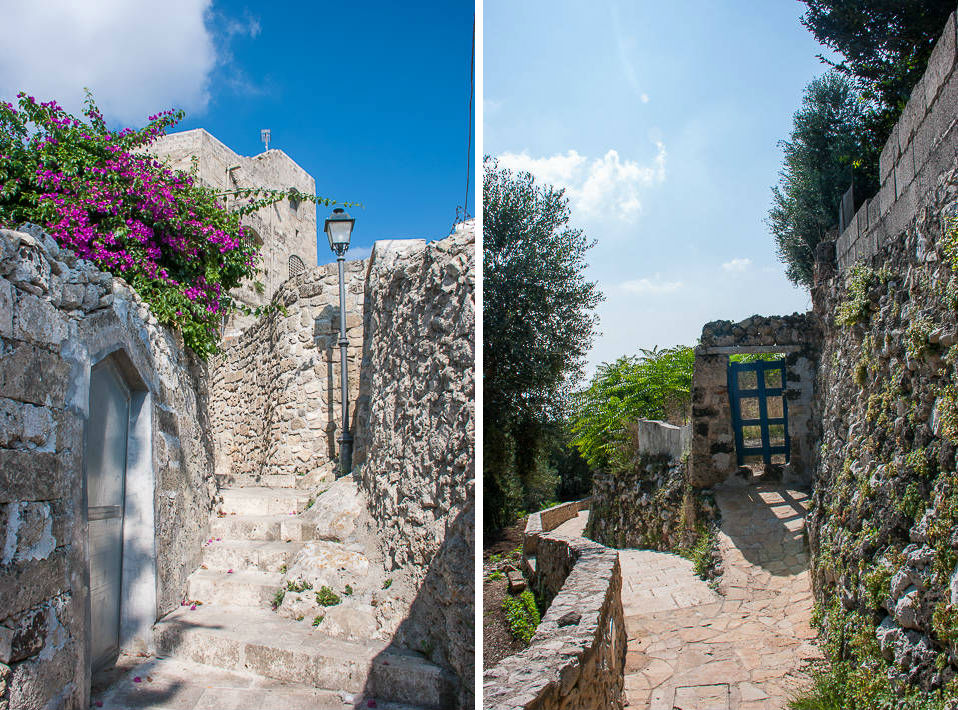
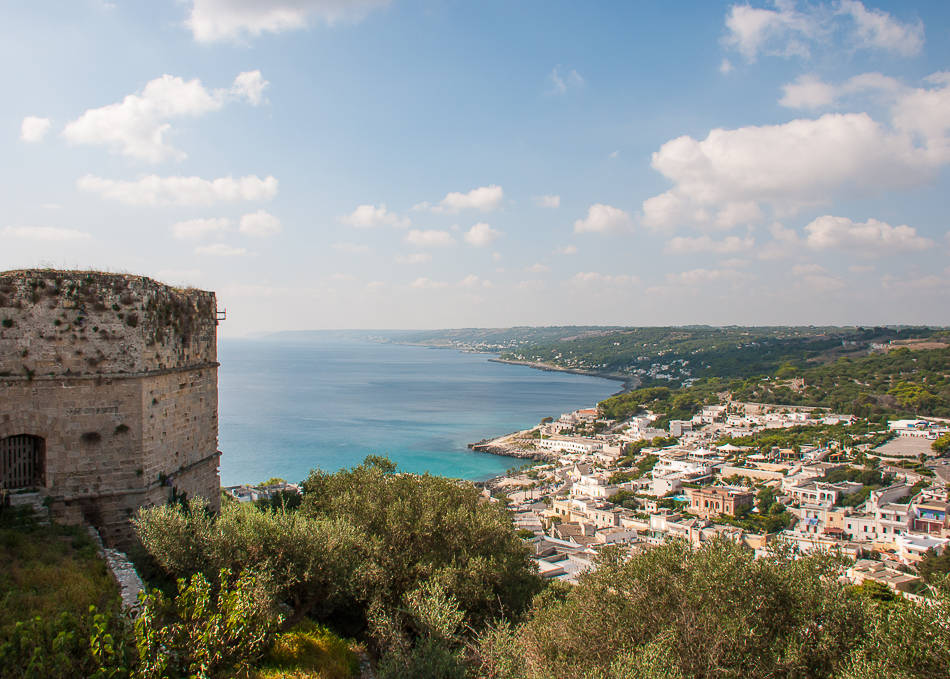
The main attraction though is the castle, an ancient fortress from which the village takes its name, and its prominent position at the top of a hill, overlooking the Adriatic sea. There’s a scenic path you can take around the castle’s massive walls which gives plenty of beautiful photo opportunities.

All paths and streets here end with a superb panoramic view of the turquoise sea which has made Castro a famous stop on that beautiful stretch of coastline.

Continuing our coastal drive heading west, the next must-see is the southern most tip of Puglia where the Adriatic and the Ionian seas meet and mingle at the luxurious Santa Maria di Leuca.

The popular resort town has been the quintessential holiday destination of wealthy Puglians for the last century.

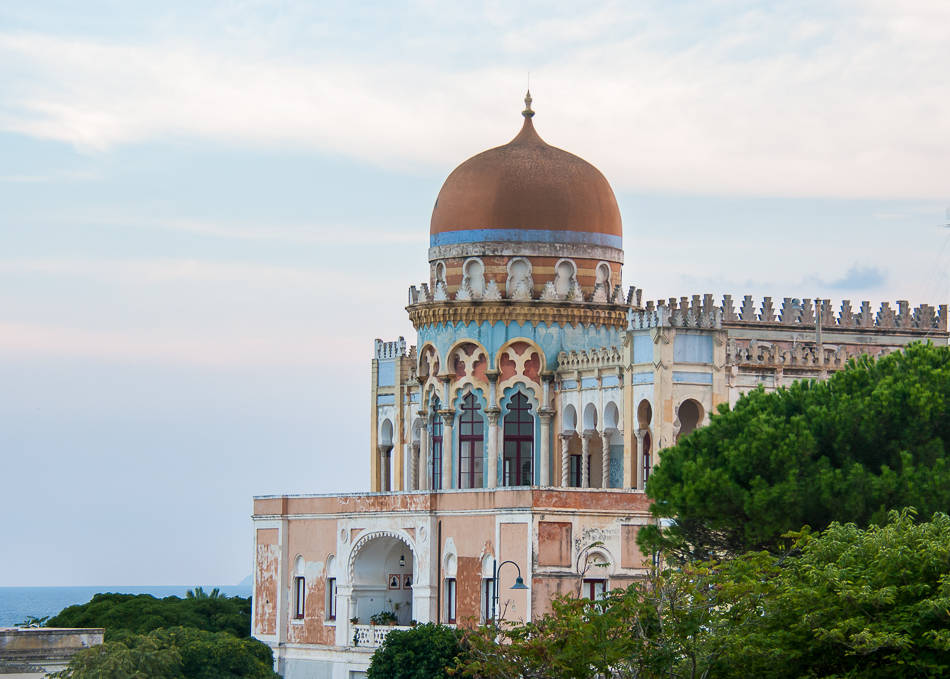
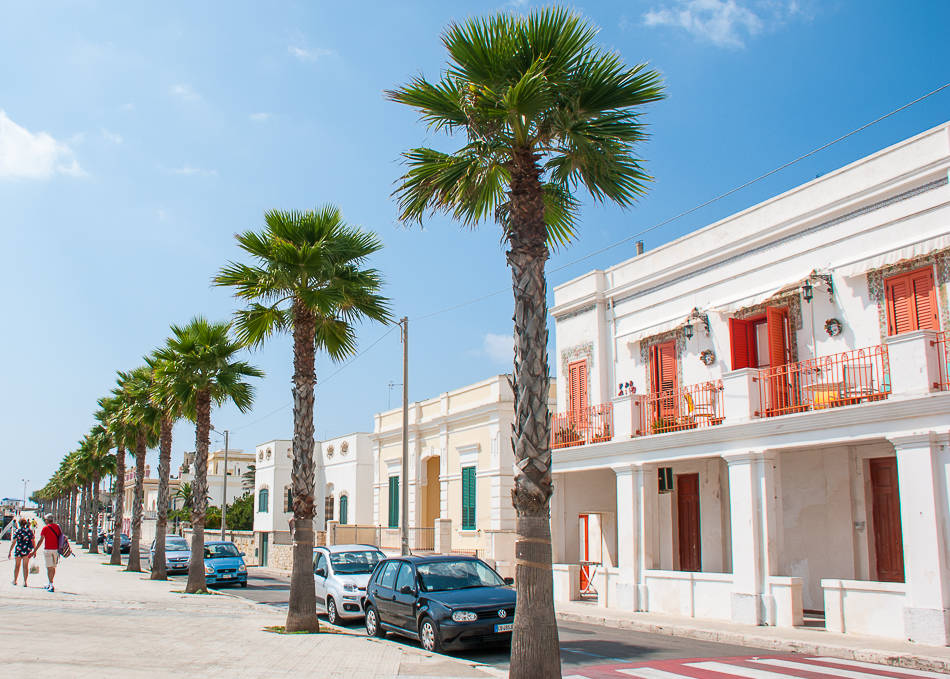
Art Nouveau villas line the seafront in a lavish showcase and every amenities you could ever need are available for a splendid Mediterranean vacation.

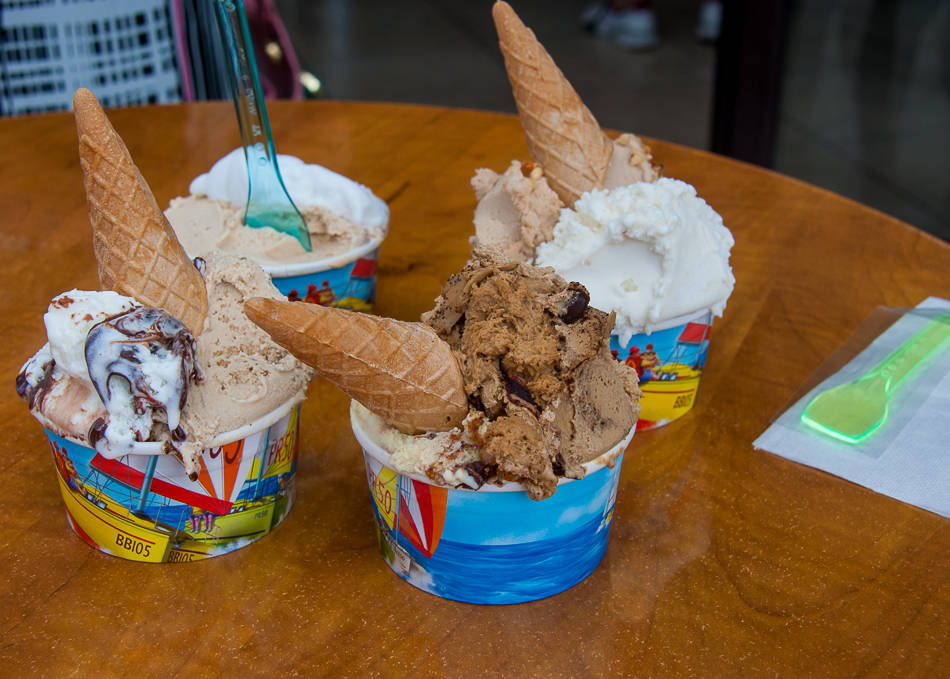
That means of course plenty of gelato for us and the ones at Martinucci by the harbour were a delight.

A tower lookout is accessible from the main seafront street as looking out to the sea is a favorite pastime here.

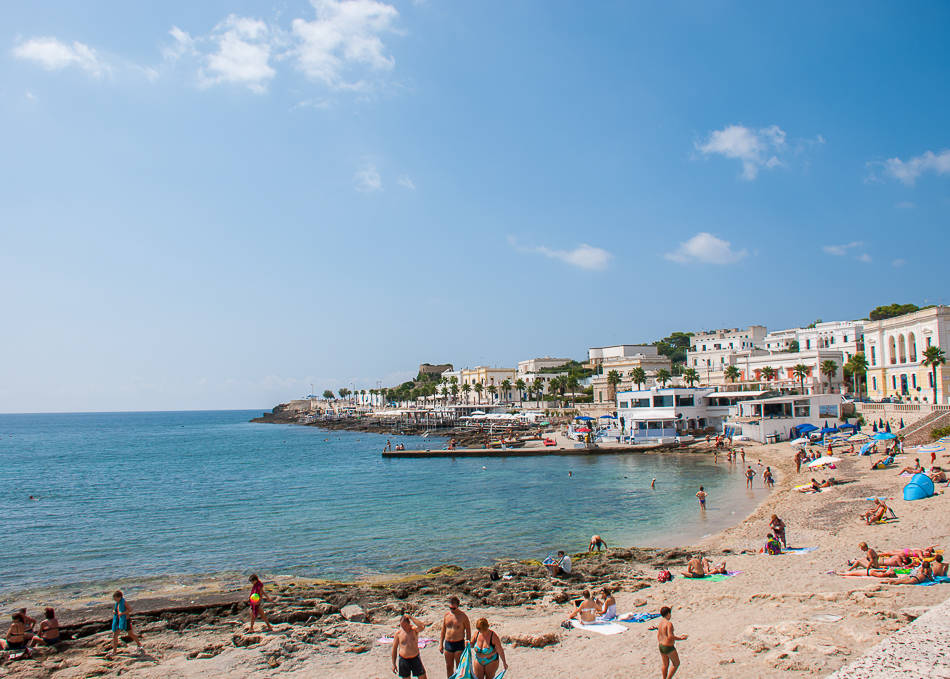
The town is all about the sea and there are plenty of sandy stretches, big and small, for everyone to take a dip in the refreshing waters.

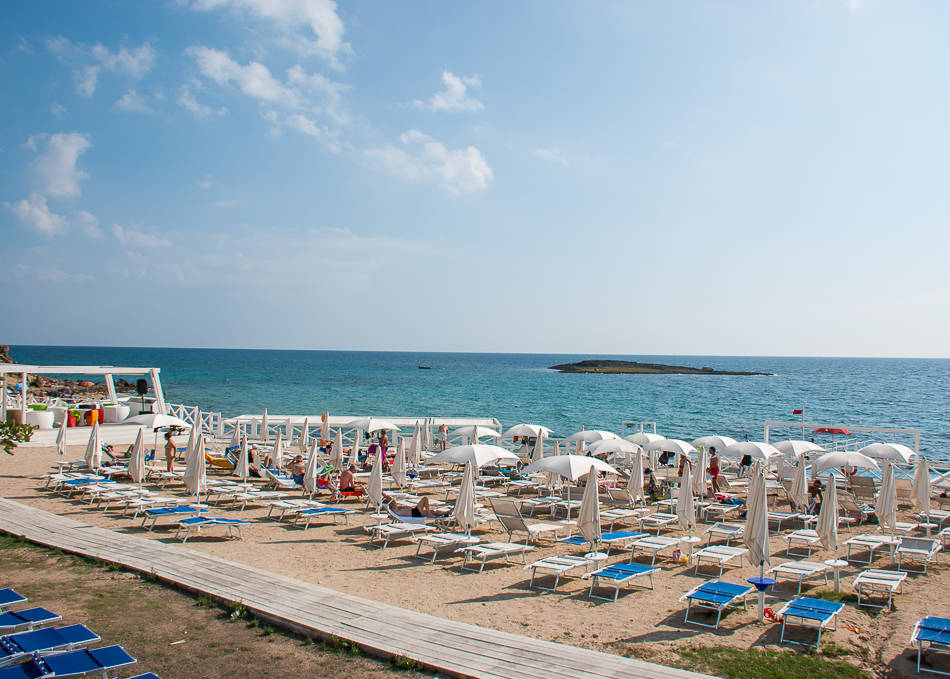
Santa Maria di Leuca also marks a change in the peninsula landscape which from here changes from the dramatic rocky coastline we’ve witnessed since the beginning to an almost continuous stretch of paradisaical golden sand beaches going up for miles and miles.

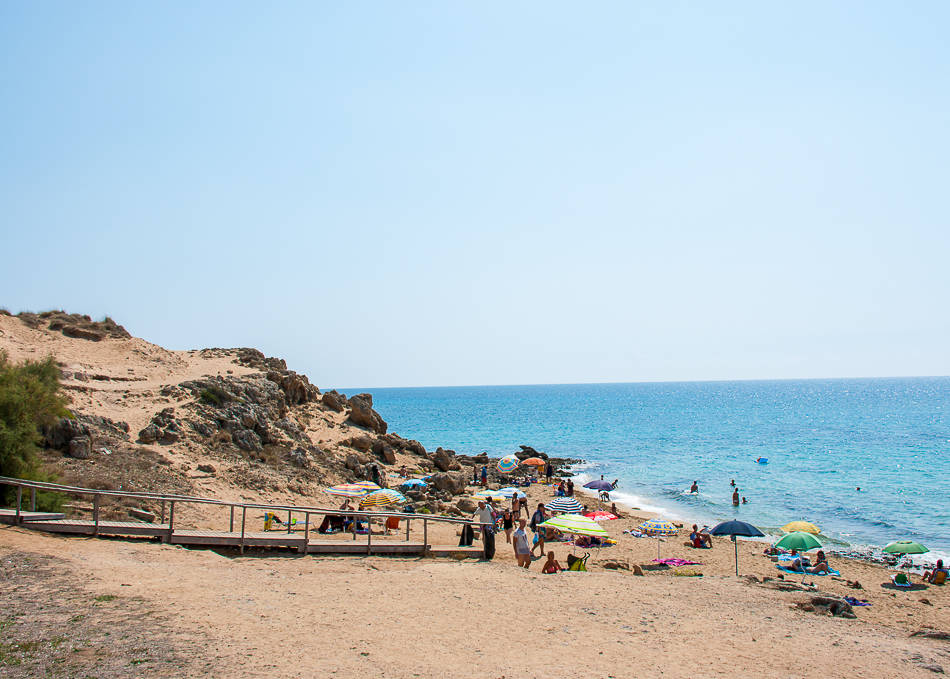
You can stop at any one of them for a nice little lunch break and a quick soak in the sun.

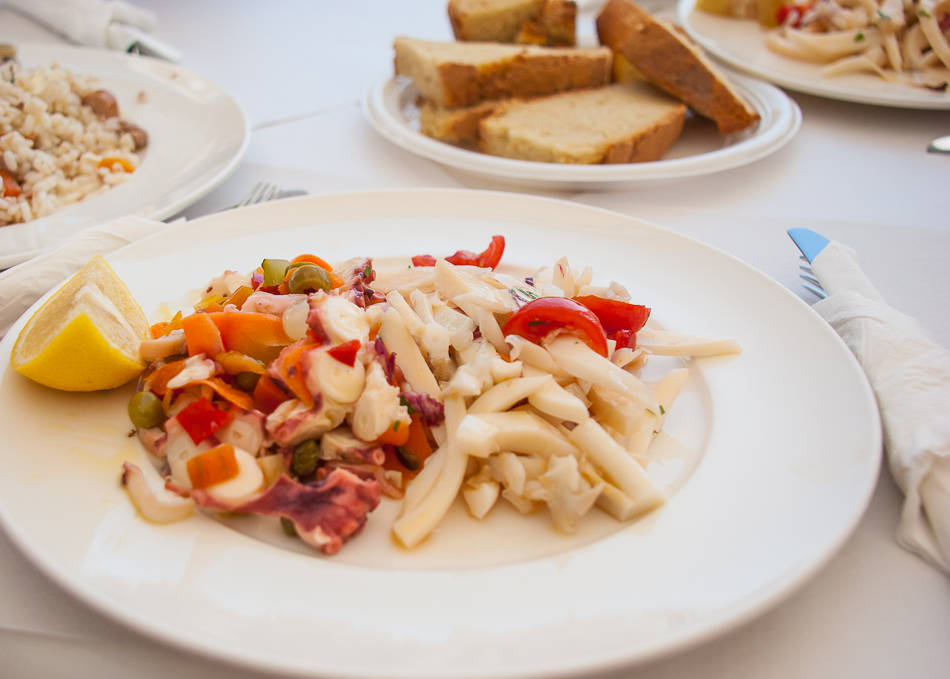
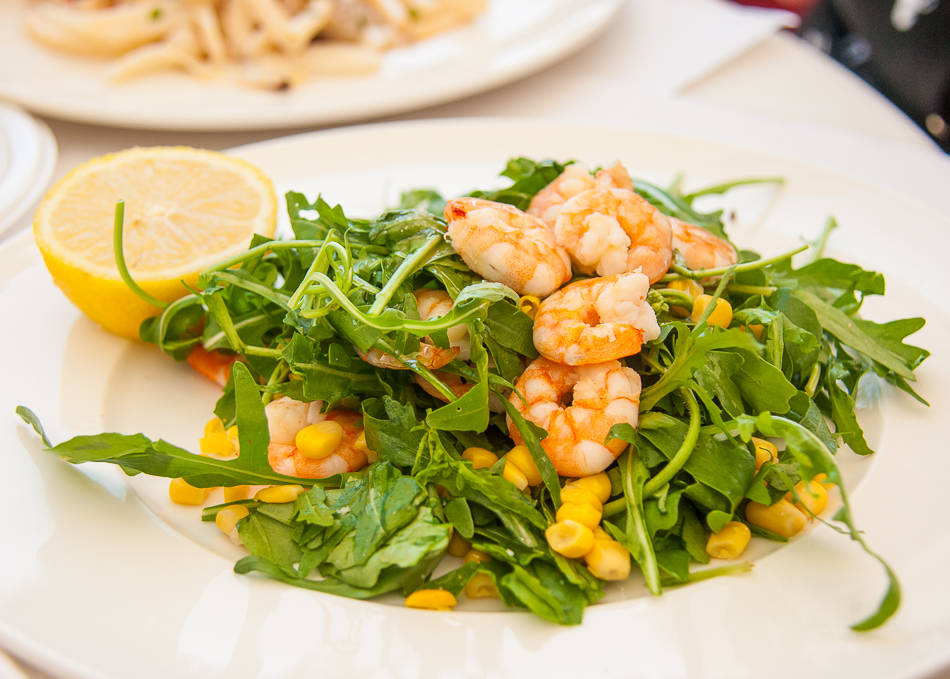
Fresh seafood is obviously the main offering, with calamari and shrimp salads being our top choices on this warm summer day.

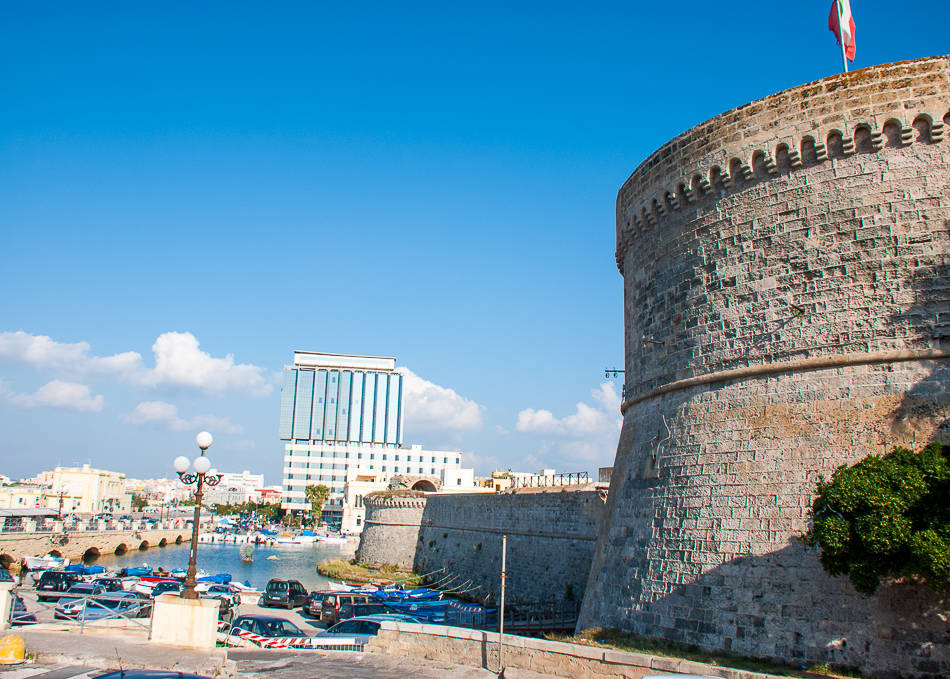
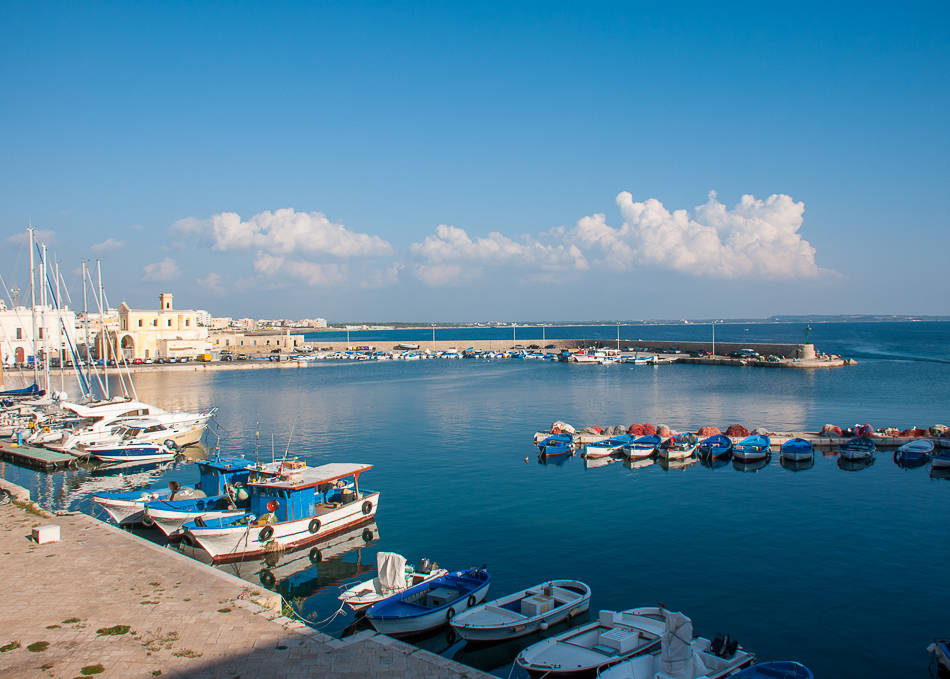
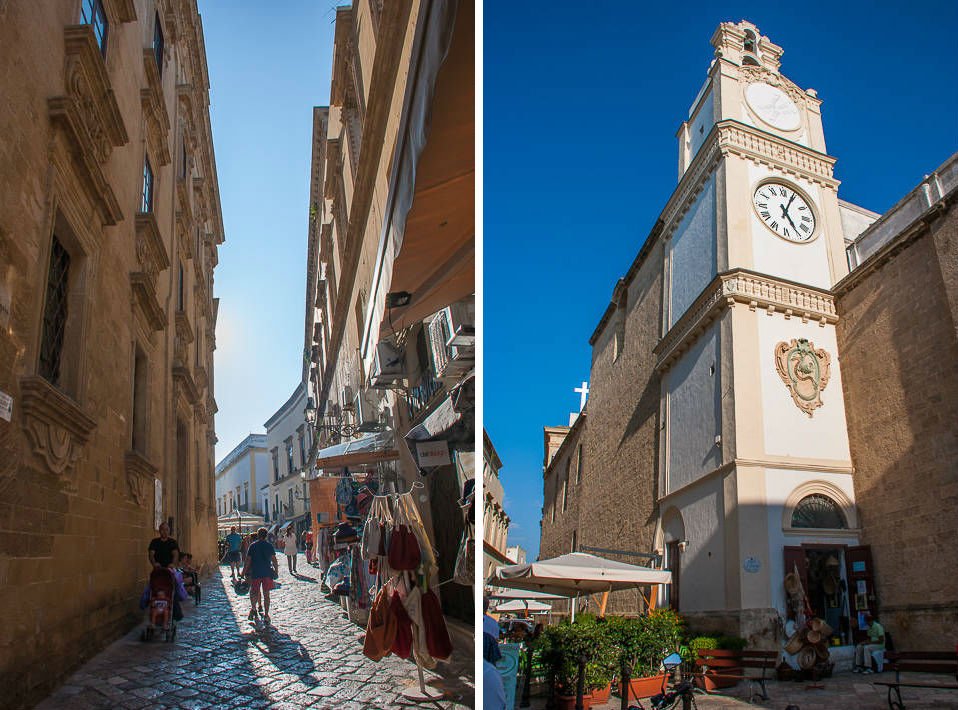
Our last stop on this coastal trip is in Gallipoli, a sea-front fortified gem. The historic fortress island town is connected to the mainland by a 17th century bridge and is almost completely surrounded by defensive walls.

The tiny island is easily walkable and is home to numerous impressive Baroque churches and gorgeous palaces that once belonged to the aristocracy.

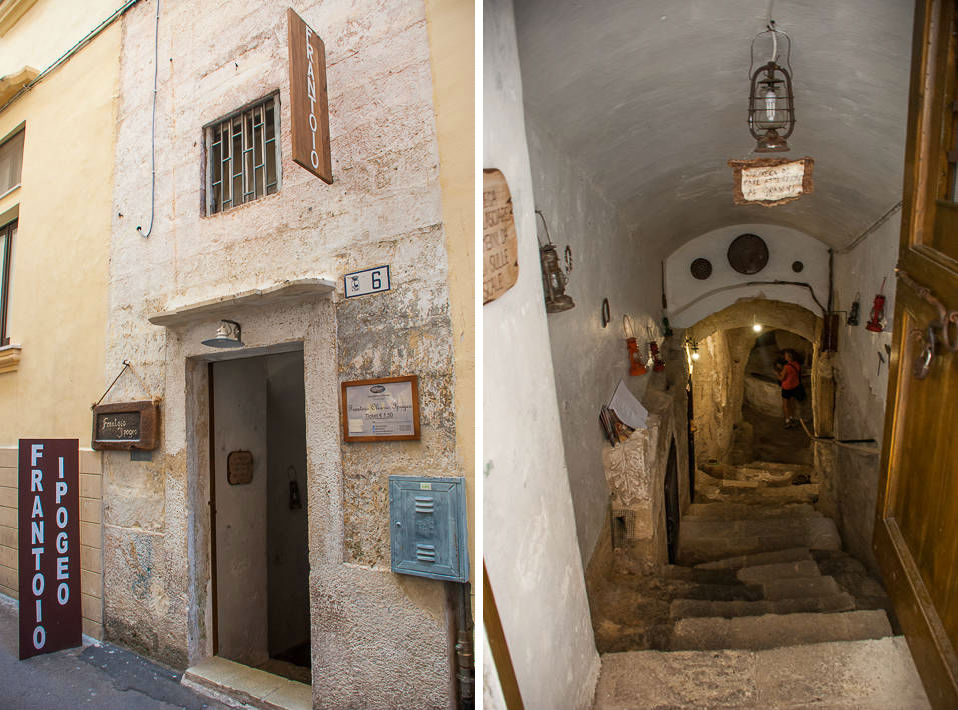
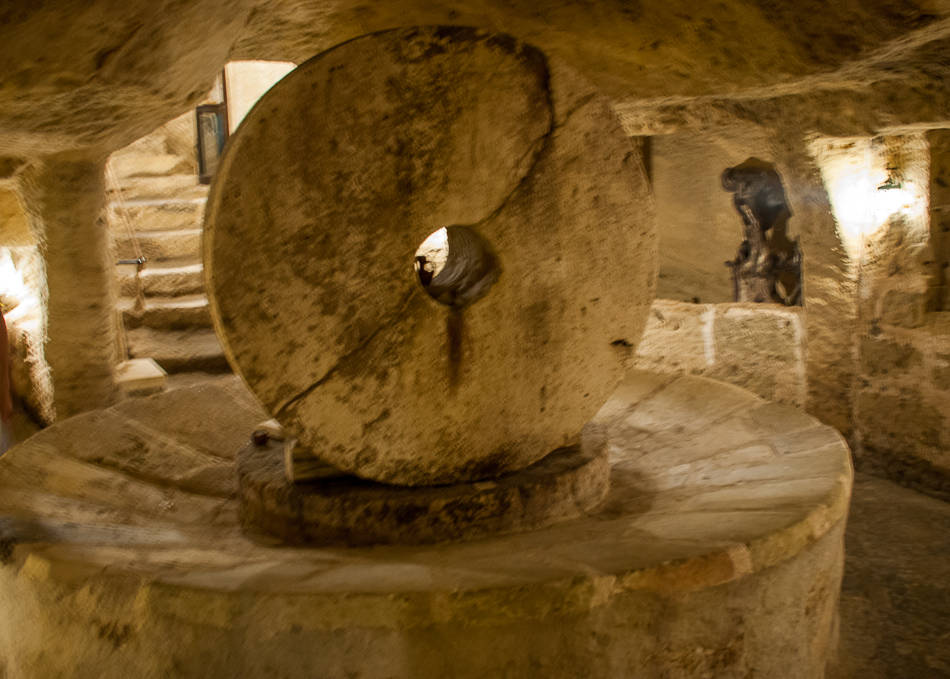
Make sure to visit one of the many olive oil presses buried in the rock below the streets. Gallipoli used to be a main producer of olive oil as lamp fuel before it became the culinary treasure it is today.

A little museum provides a fascinating insight into the history of the olive oil trade from centuries ago.

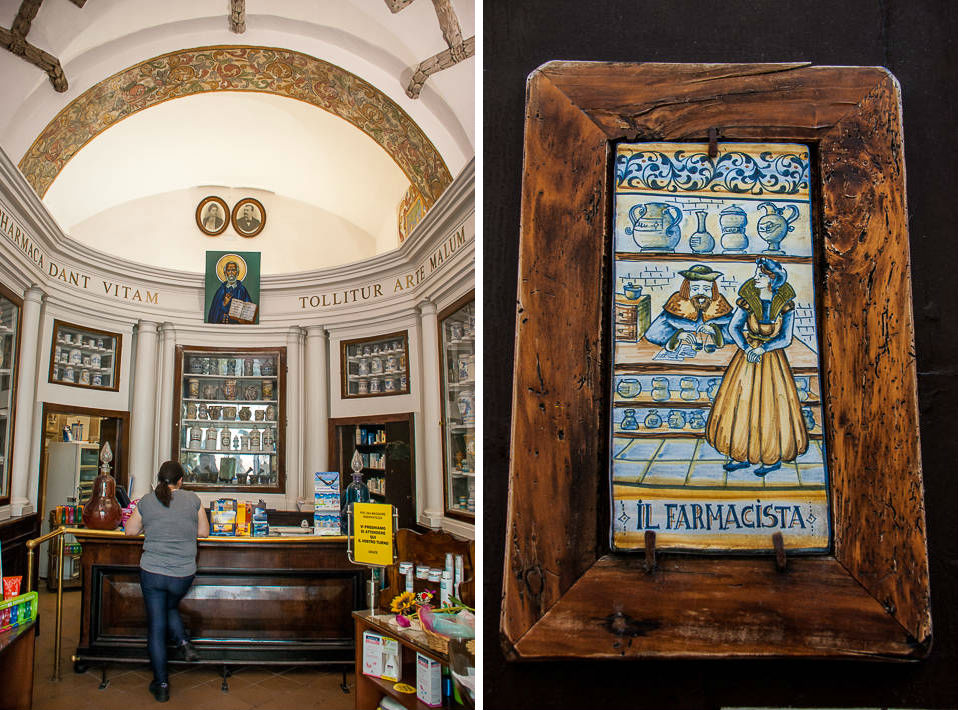
Another unique stop is to the Antica Farmacia Provenzano, one of the most ancient and refined pharmacies in all of Italy that has been in operation for more than 200 years.

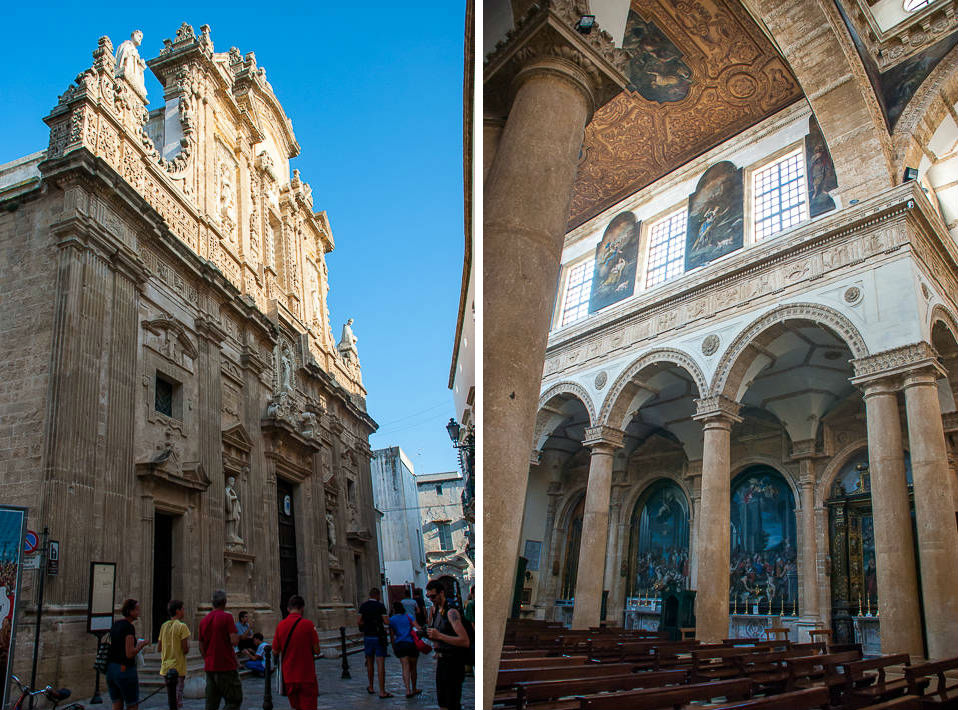
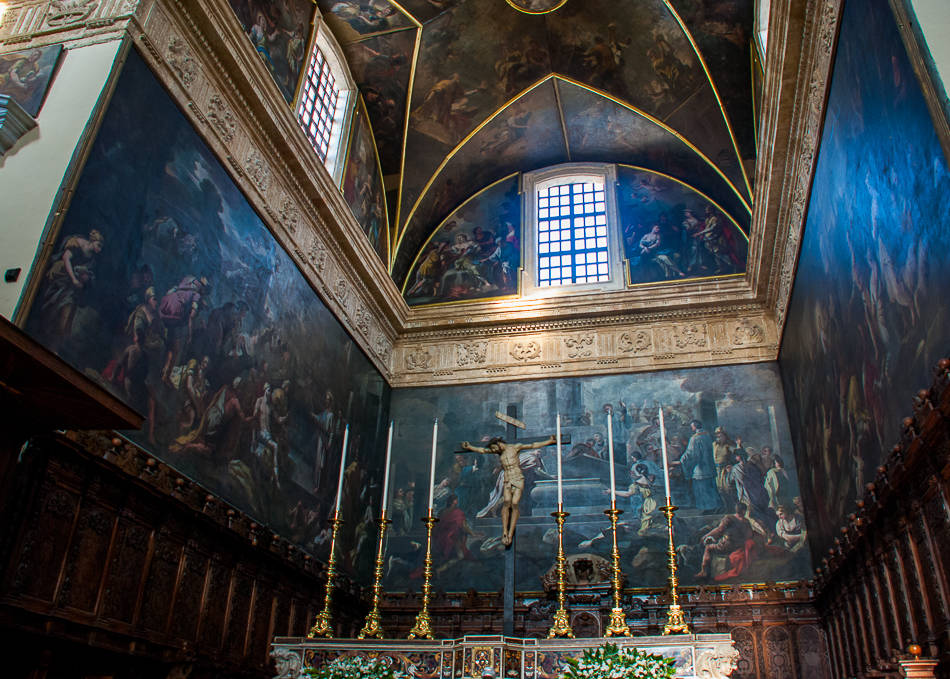
The Cathedral of Saint Agata is another fine example of baroque from Lecce with a stunning facade and interior.

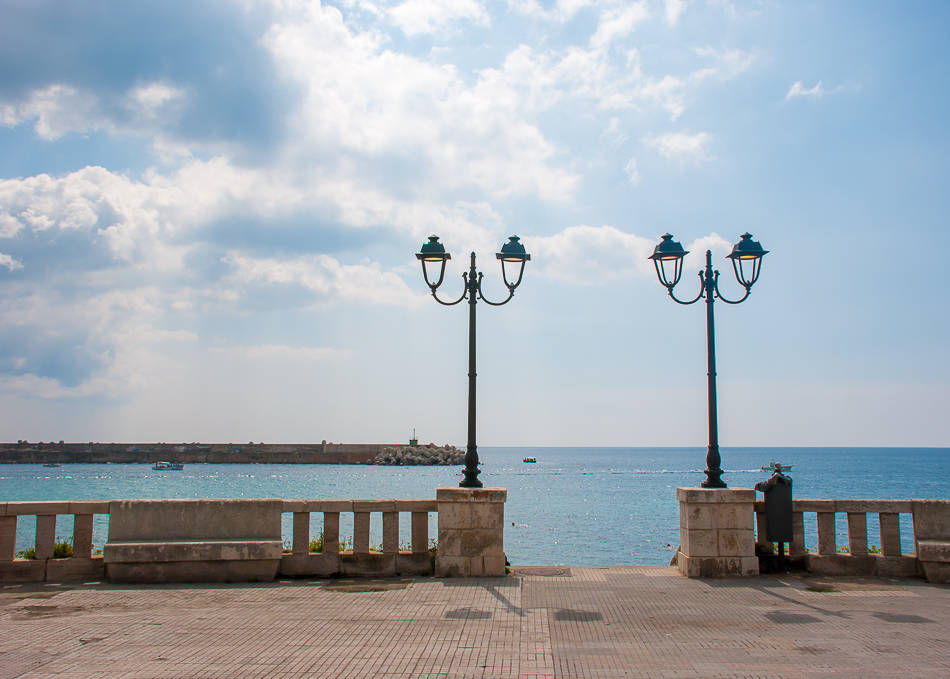
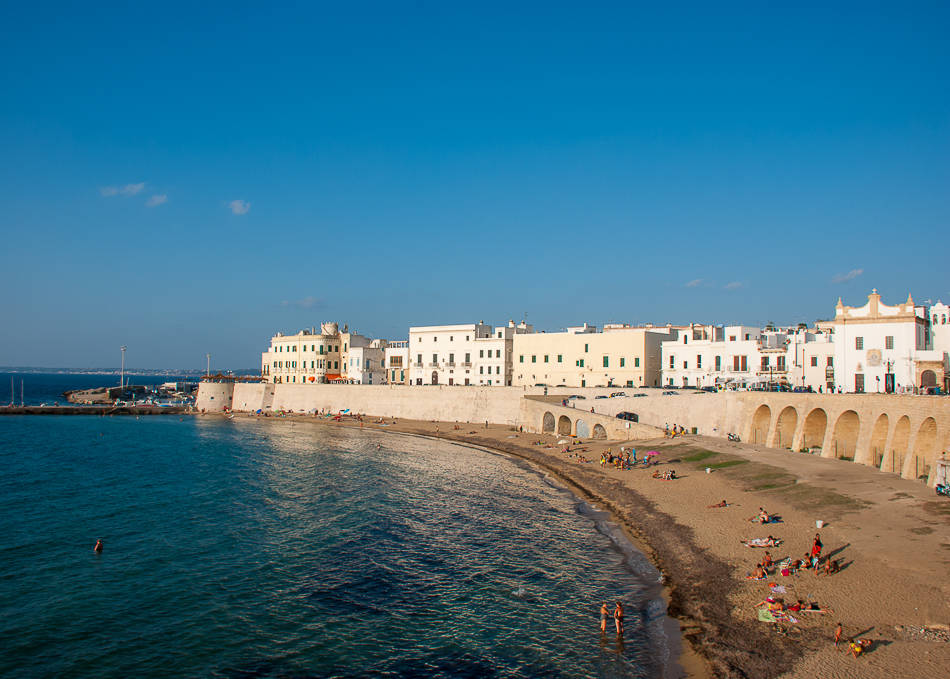
When you’re done navigating the maze of narrow streets, simply follow one to the sea-front promenade with its wonderful views and familiar sun bathers enjoying the day’s last sun rays. A quick tour of the island from outside is the perfect way at sundown to finish a visit to the Salento peninsula, perhaps ducking into one of the many seafront eateries for some amazing seafood before getting back on the road…


Appetizer Recipes

Onion Soup Gratinée

December 19, 2014

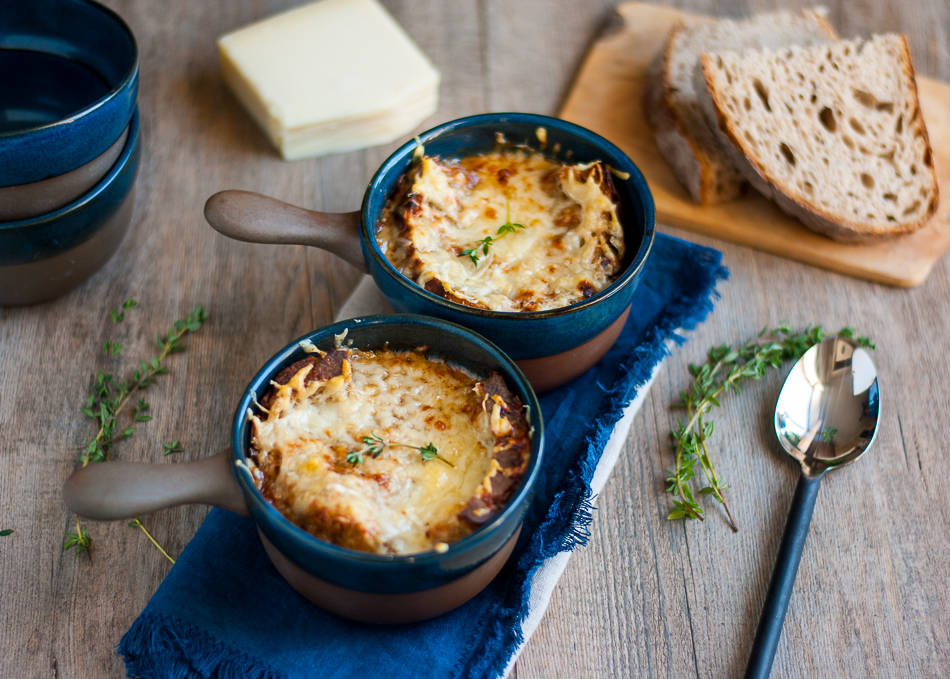
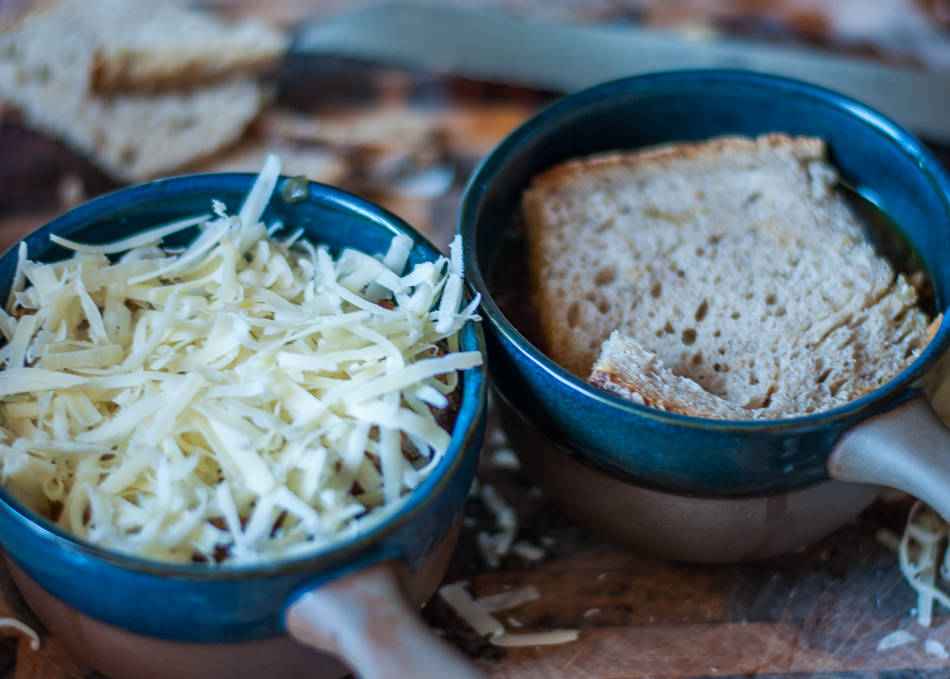
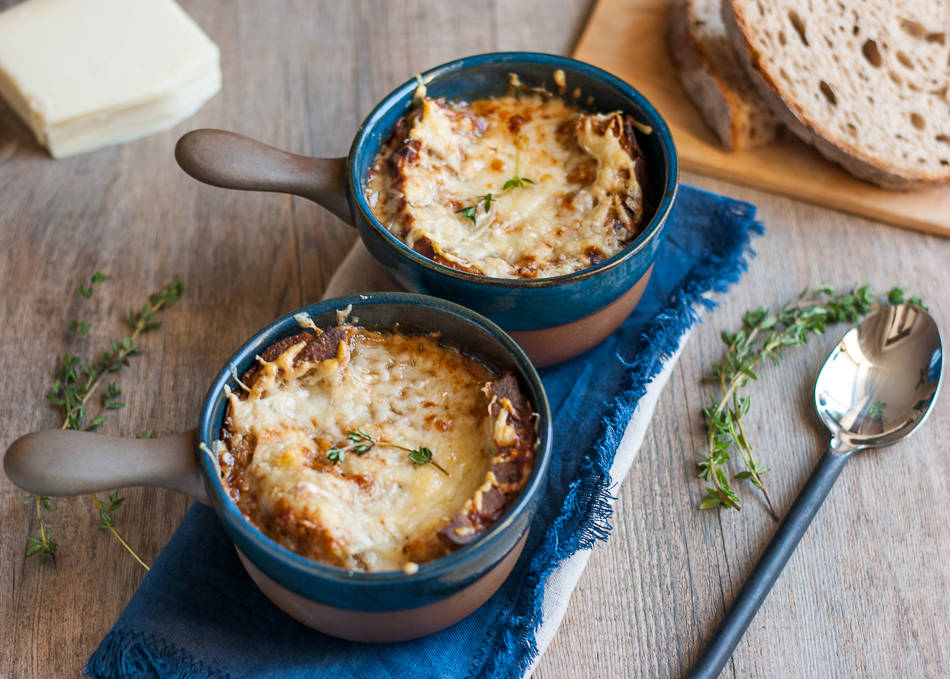
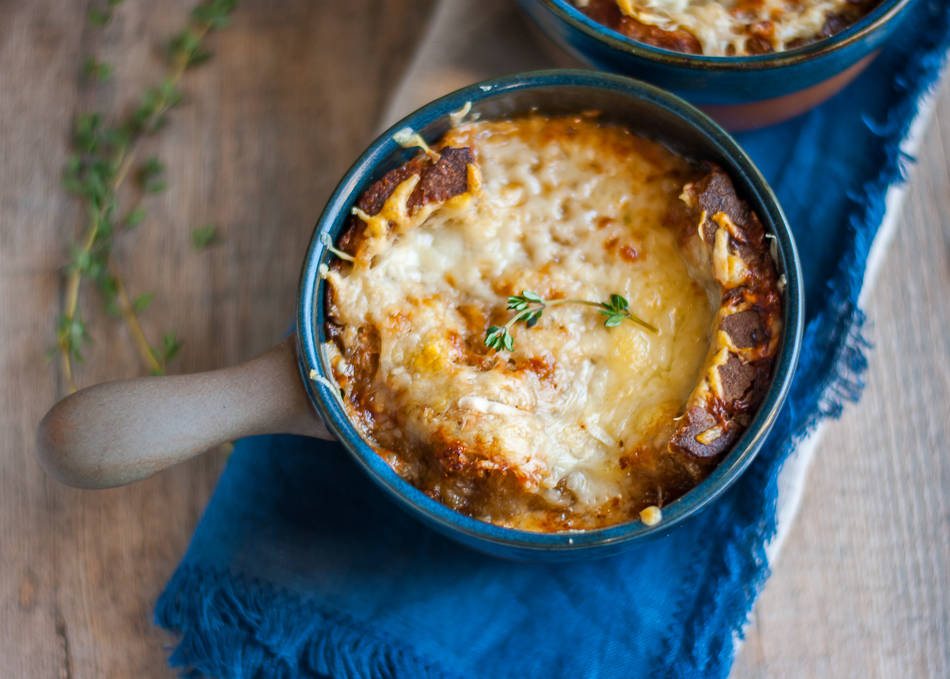
Hot and cheesy French onion soup is a wintertime classic and a foolproof cure for those chilly days. Few things are more comforting and the ingredients are so basic it’s one of those things you can usually whip up at a moment’s notice even with the barest of refrigerator. For me, one of the best parts is also the one chance in the year to eat out of my cute soup crocks which I really only take out for this soup…just wouldn’t taste the same without them!

The key with making a fine French onion soup is long, slow cooking to allow the flavors to really develop, so don’t be in a rush. Caramelizing the onions will bring out their natural sweetness and your house will be filled with a transcendent aroma as a reward for your patience. The traditional cheese for this soup is Gruyere but feel free to experiment with other melting kinds such as Swiss, cheddar, etc. Served with a classic red wine and a side salad this is one of winter’s best simple supper.

Divider

Onion Soup Gratinée


Recipe adapted from Cooking at Home with the Culinary Institute of America
Active time: 1h30 min
Total time: 2h45 min
Makes 6 servings

¼ cup olive oil or vegetable oil
4 yellow onions, thinly sliced
2 cloves garlic, minced
½ cup brandy
6 cups beef or chicken broth, heated
1 spice sachet, including 1 sprig fresh tarragon or ½ teaspoon dried
Salt and freshly ground pepper
Eight ¼-inch-thick slices French bread
1½ cup shredded Gruyère cheese, or as needed
8 cups boiling water, or as needed

Divider

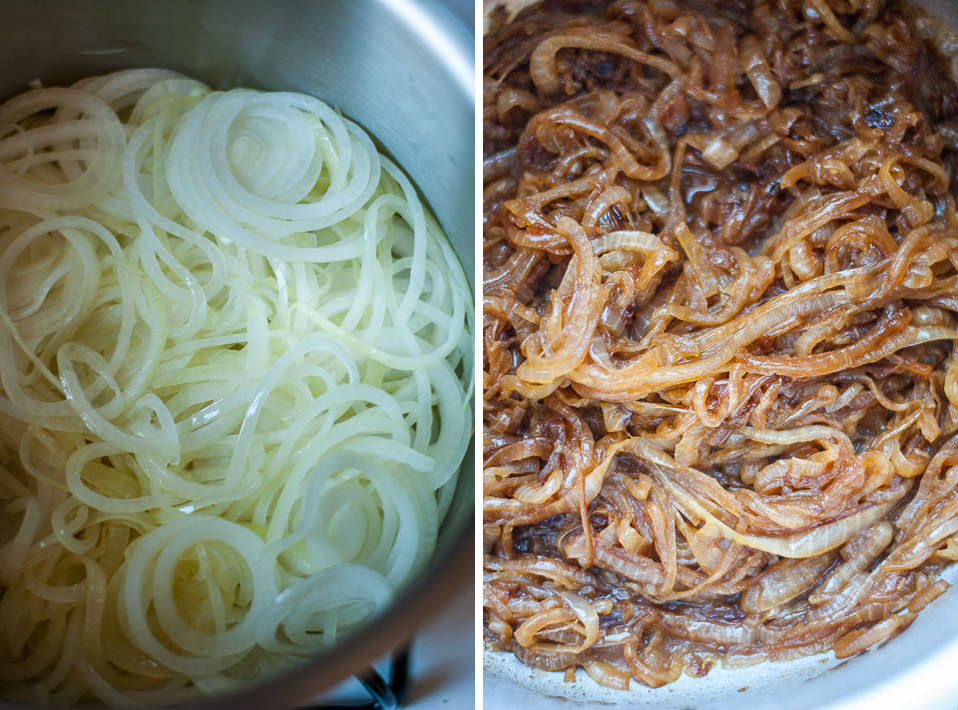
Heat the oil in a soup pot over medium-low heat. Add the onions and cook without stirring until they begin to brown on the bottom. Raise the heat to medium, stir, and continue to cook, stirring occasionally, until the onions are deeply caramelized, a dark golden brown, and very soft. The total cooking time will be 30-45 minutes. If the onions begin to scorch, add a few tablespoons of water.

Add the garlic and continue to cook for an additional minute. Add the brandy and stir to deglaze the pan, scraping up any browned bits from the pan bottom. Simmer until the liquid has nearly evaporated, 2-3 minutes.

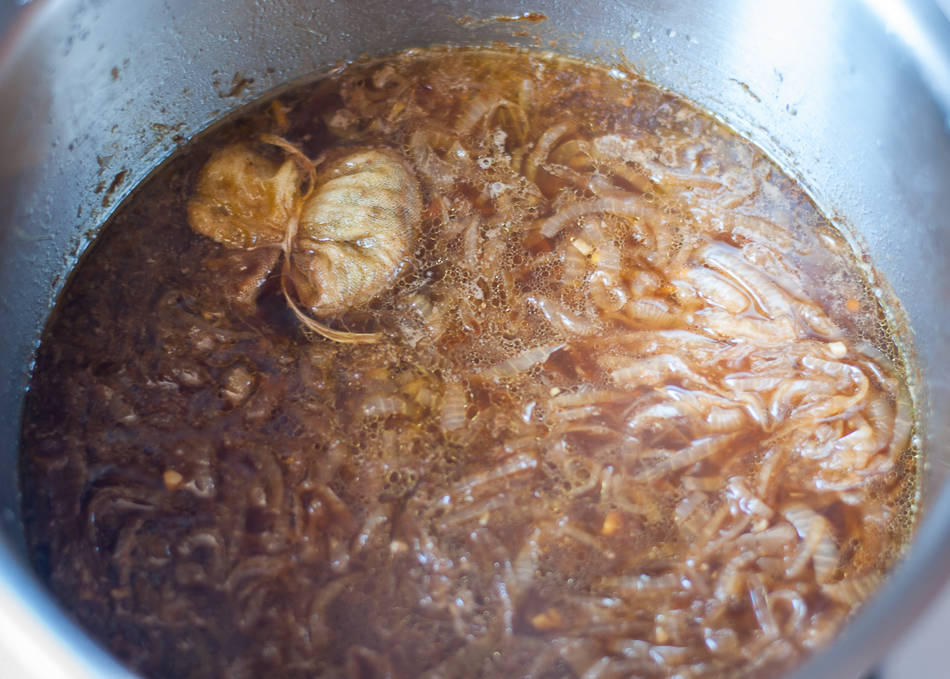
Add the broth and sachet. Bring to a simmer and cook, partially covered, for 45-60 minutes, skimming foam from the surface as needed. Remove and discard the sachet. Taste and season with salt and pepper.

At this point, the soup may be cooled in an ice bath and stored in the refrigerator to allow the flavors to develop.

When ready to serve the soup, preheat the oven to 350ºF.

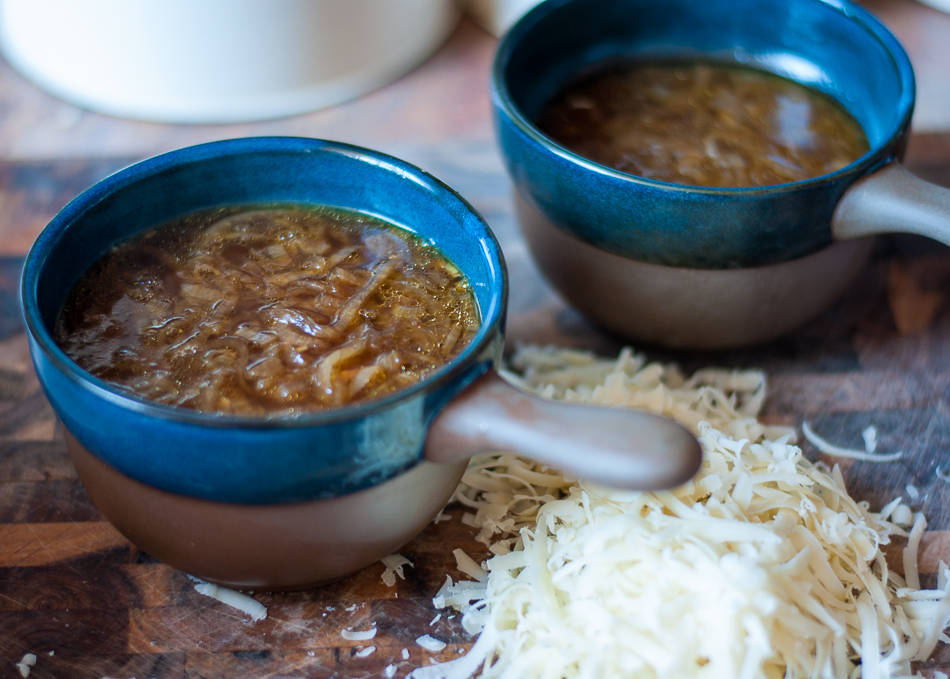
Ladle the soup into individual ovenproof soup crocks. Top each crock with a slice of bread and sprinkle with grated cheese, covering the bread completely and coming to the edges of the crocks.

Set the soup crocks in a large baking dish and add enough boiling water to the baking dish to reach two-thirds of the way up the sides of the crocks, making a water bath. Bake until the soup is thoroughly heated, if needed, and the cheese is lightly browned, 10-15 minutes.

Serve at once.

[print_link]

Europe Italy Travels

Discovering ‘trulli land’

December 12, 2014

Whether you fly or drive to get into Puglia, the one sight you’re most likely to notice besides the multitude of twisted olive trees filling the landscape is the iconic trullo. The unique conical constructions have become an emblem of Puglia and some of the most popular tourist attractions in southeast Italy.
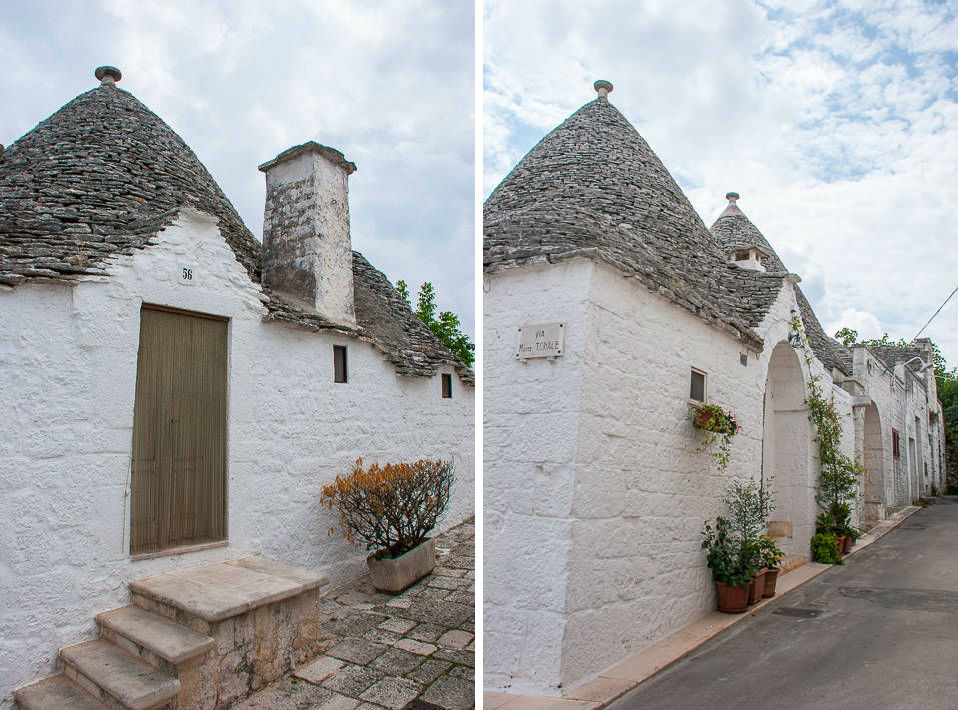
These fascinating buildings are scattered throughout the region though nowhere are they as spectacularly laid out as in Alberobello. The quaint town was designated a Unesco World Heritage Site for its wonderfully unique cluster of trulli houses, making you feel as if you’ve just stumbled upon a Hobbit village.
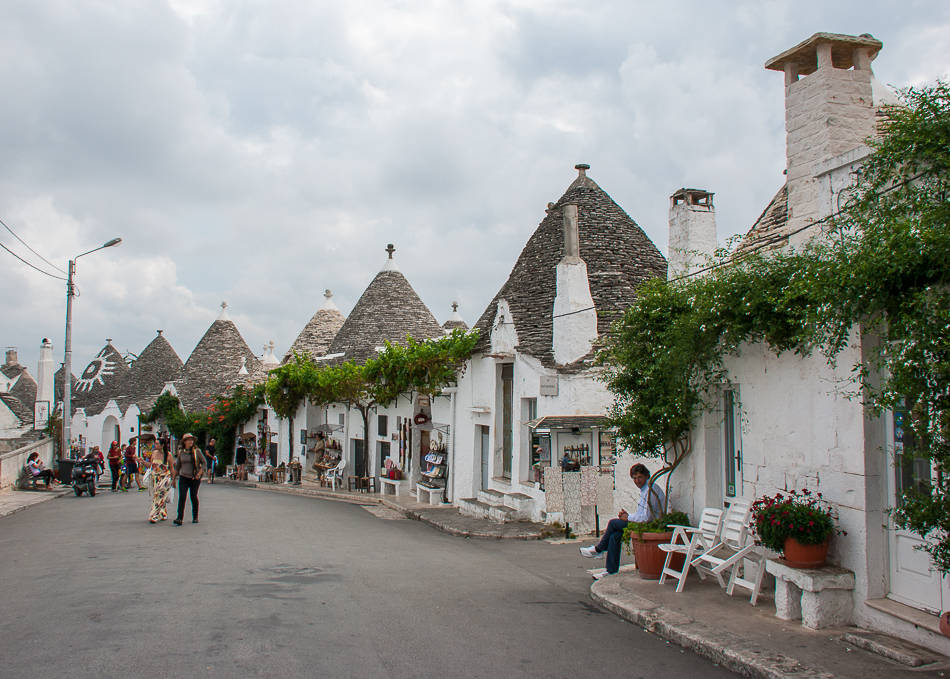
Facing the modern town centre, Rione Monti is the most picturesque district of the town from both afar and close up where a majority of the 1,000+ trulli can be seen.
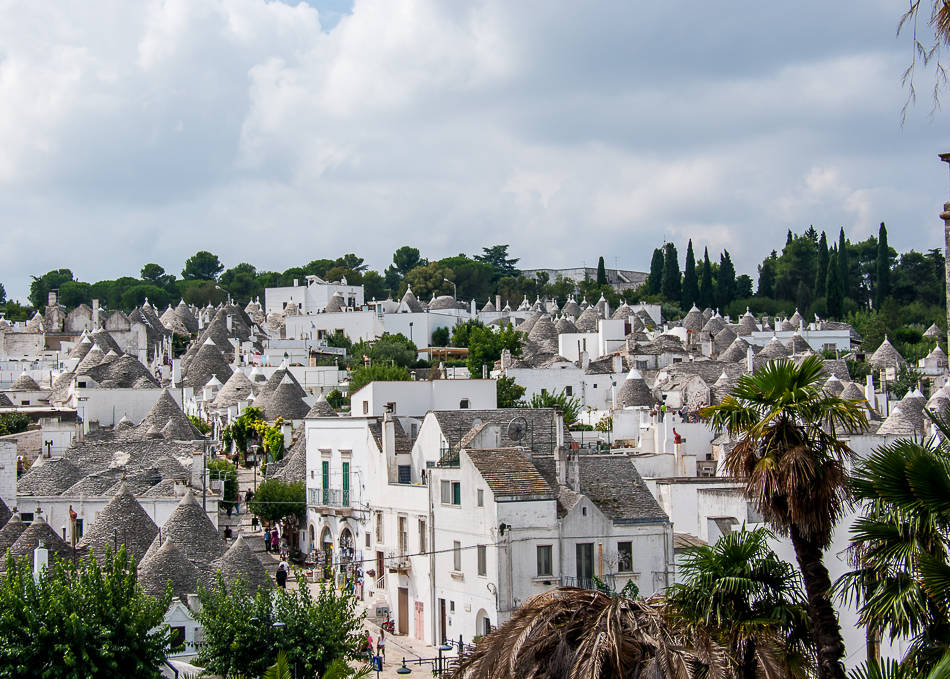
Of course, it’s also very touristy and has given this part of town many references to Disneyland though you’ll still find wandering around the narrow lanes sloping upwards to be rather enchanting.
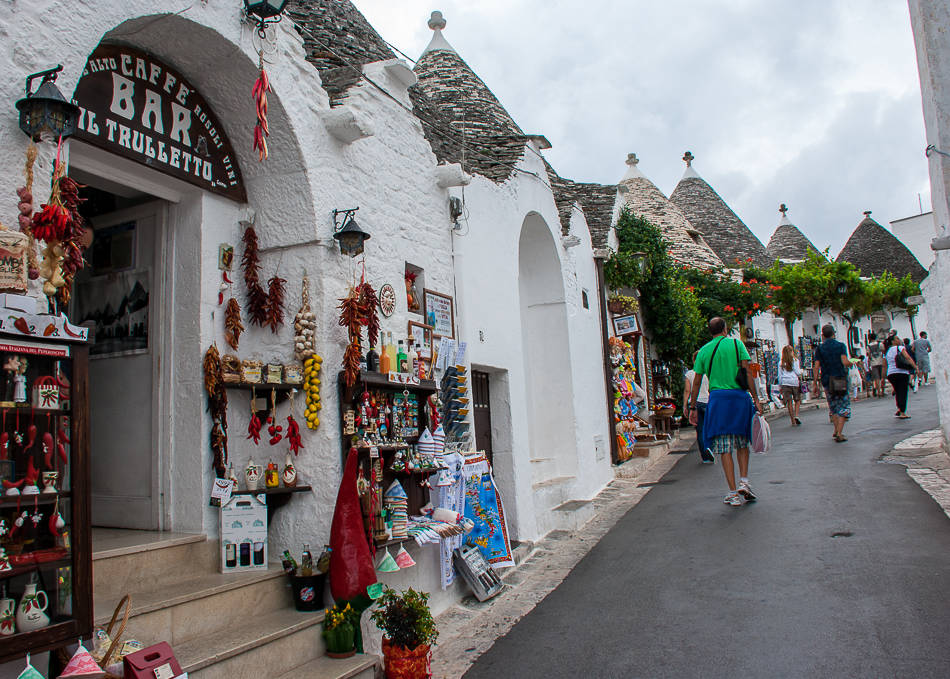
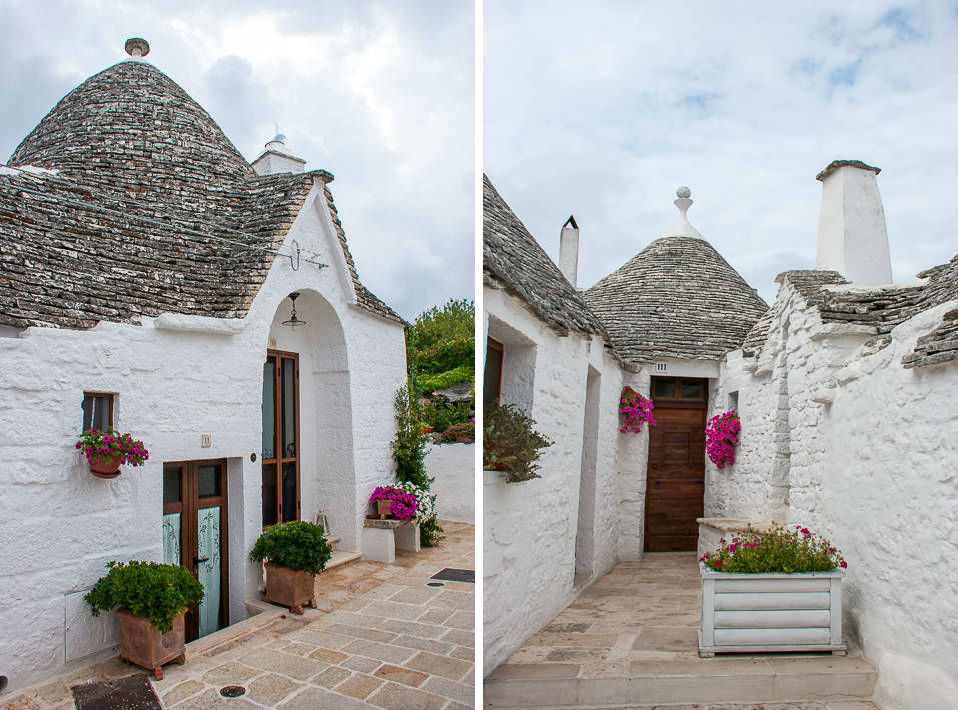
Take an empty side street to have a closer look at these exceptional houses, a building technique that has survived since prehistoric times. While each trullo here is of a different shape and size, they all share the same white walls and grey cone-shaped roofs.
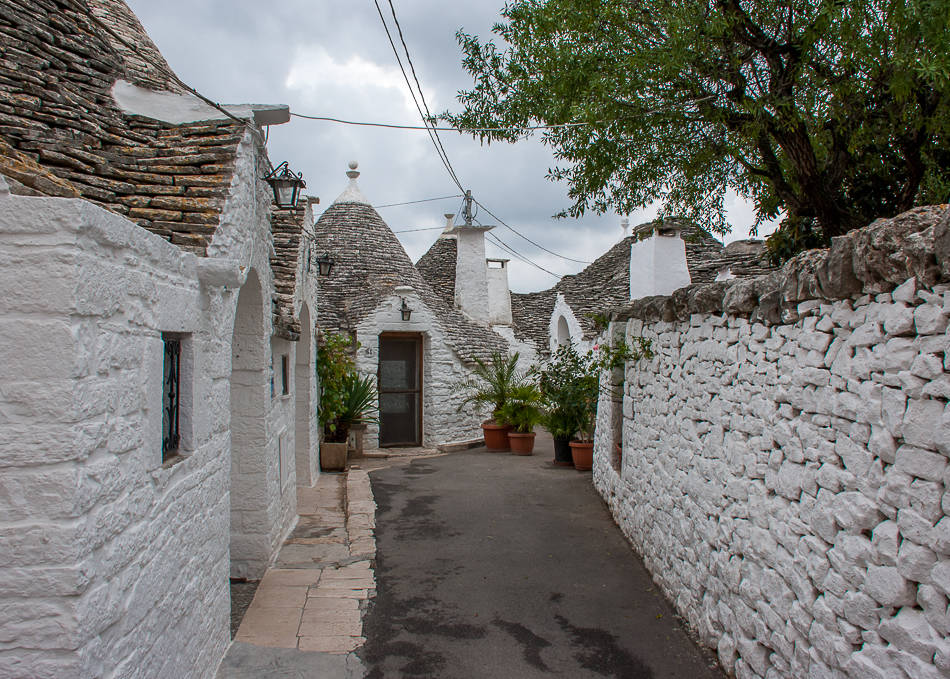
Many are still lived in, creating a warm and authentic atmosphere, and quite a few have been turned into guest houses so you get the chance to experience life in a trullo.
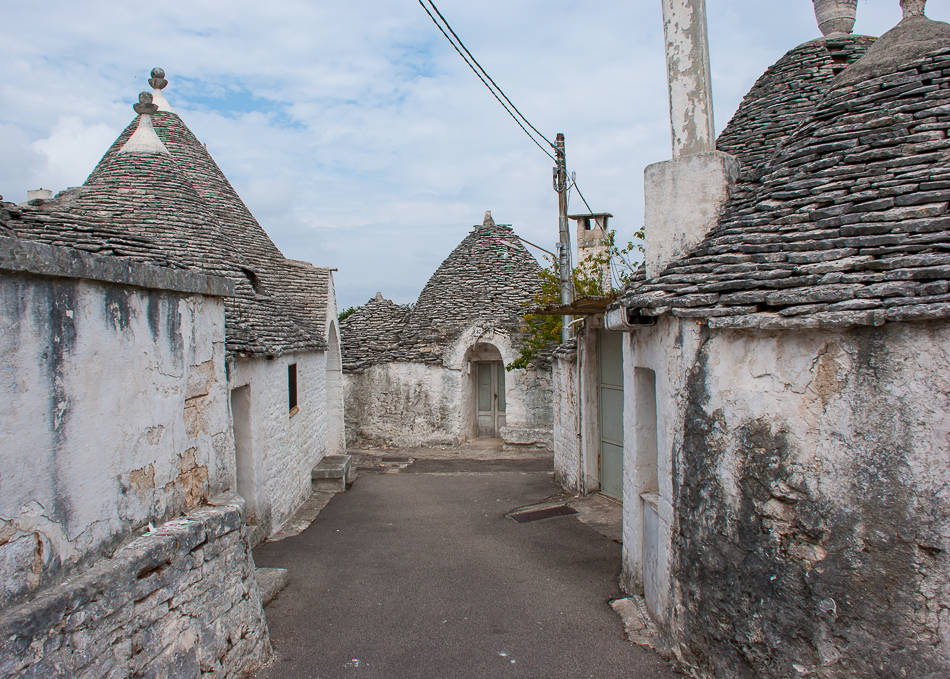
Others are not so well kept though are a testament to the strength of the constructions, some dating back to the 16th century.
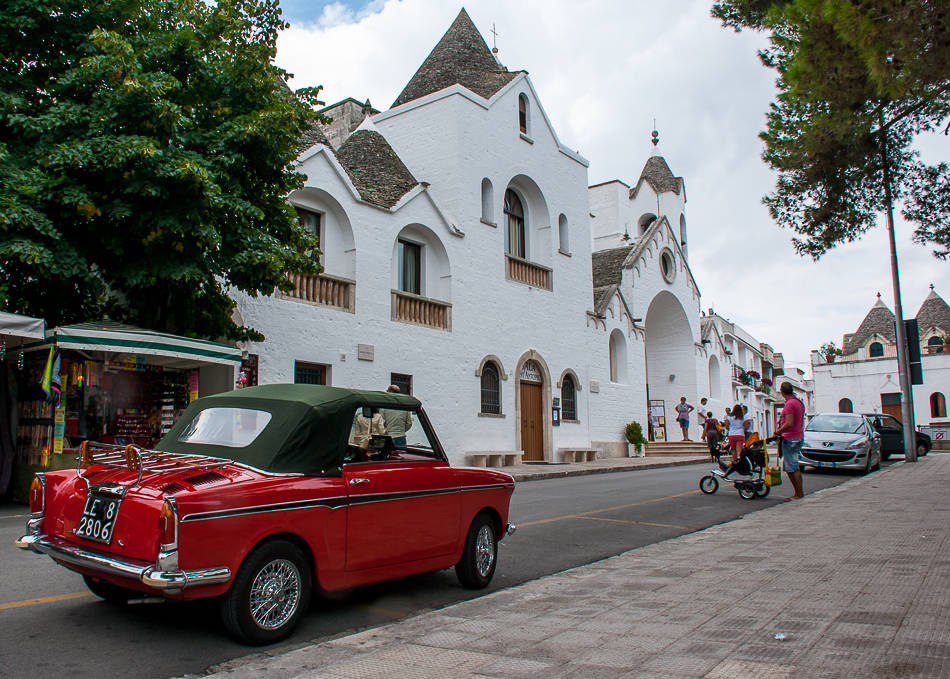
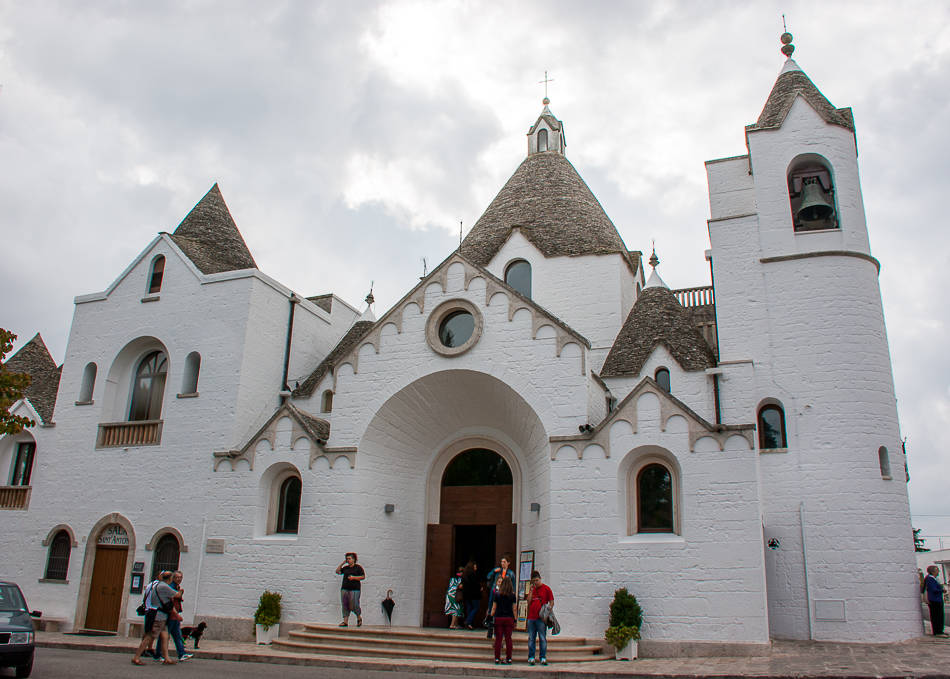
The trullo shaped church of Saint Anthony.
I have to say the roofs were probably my favorite thing to photograph, an aesthetic not often found in such quantity!
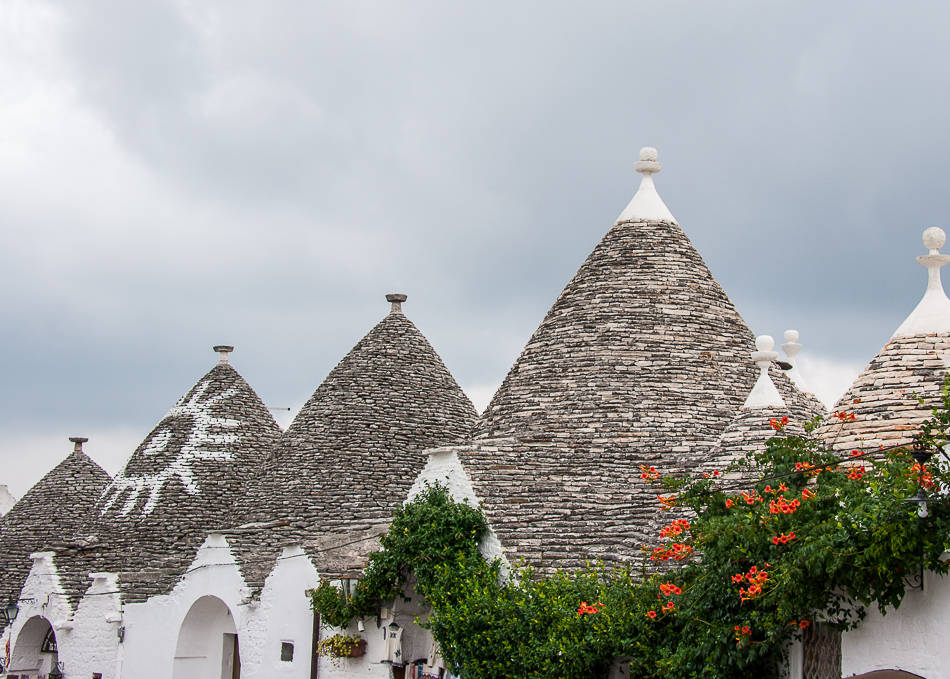
Many of the roofs have white symbols painted on them, usually Christian or astronomical symbols for luck.
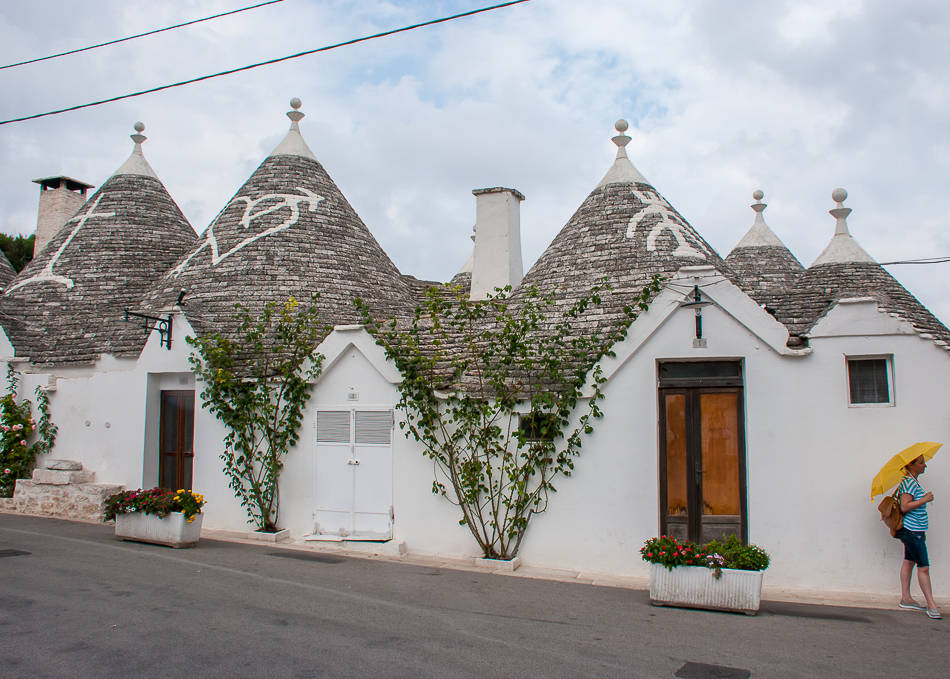
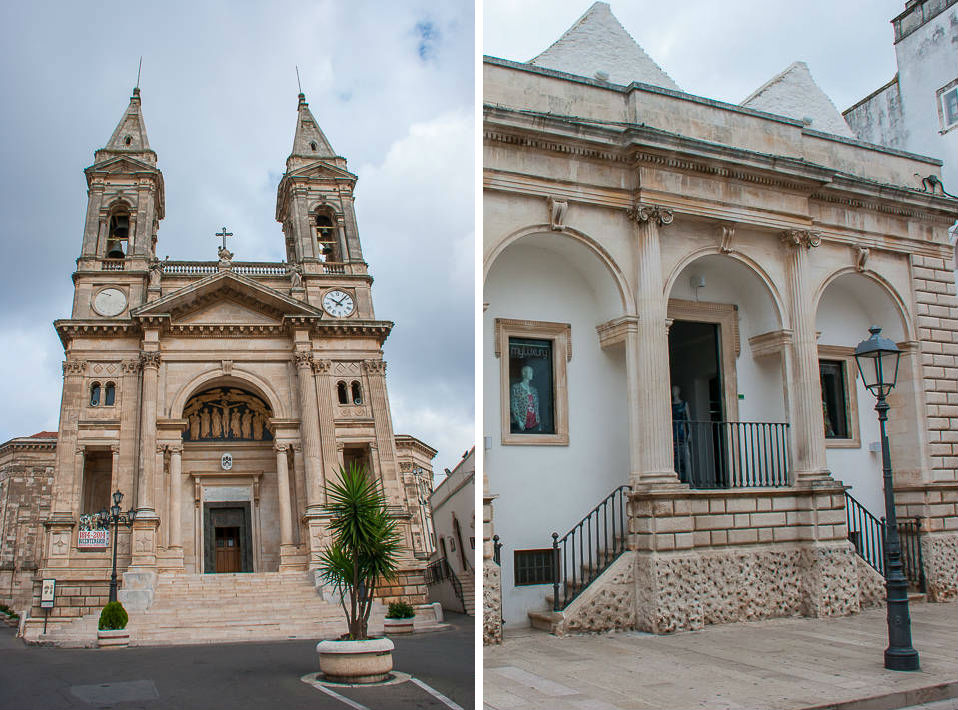
The modern side of Alberobello is also worth a stroll with some beautifully preserved buildings and a few surprising trulli popping up in random places.
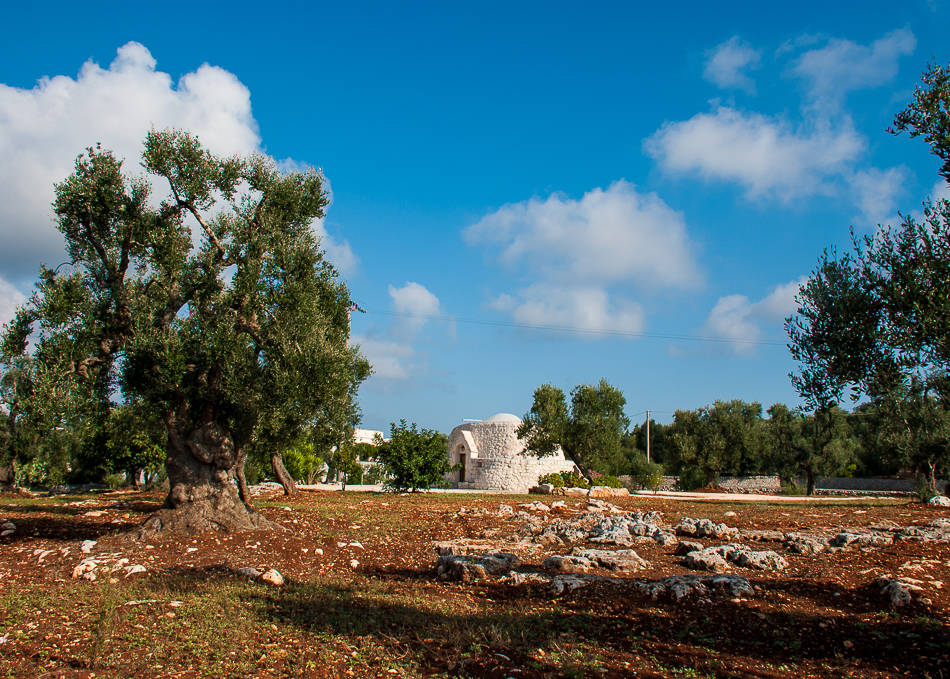
Back on the road, there are still plenty of trulli to look at, sometimes in their most basic form being currently used as shed among the olive groves.
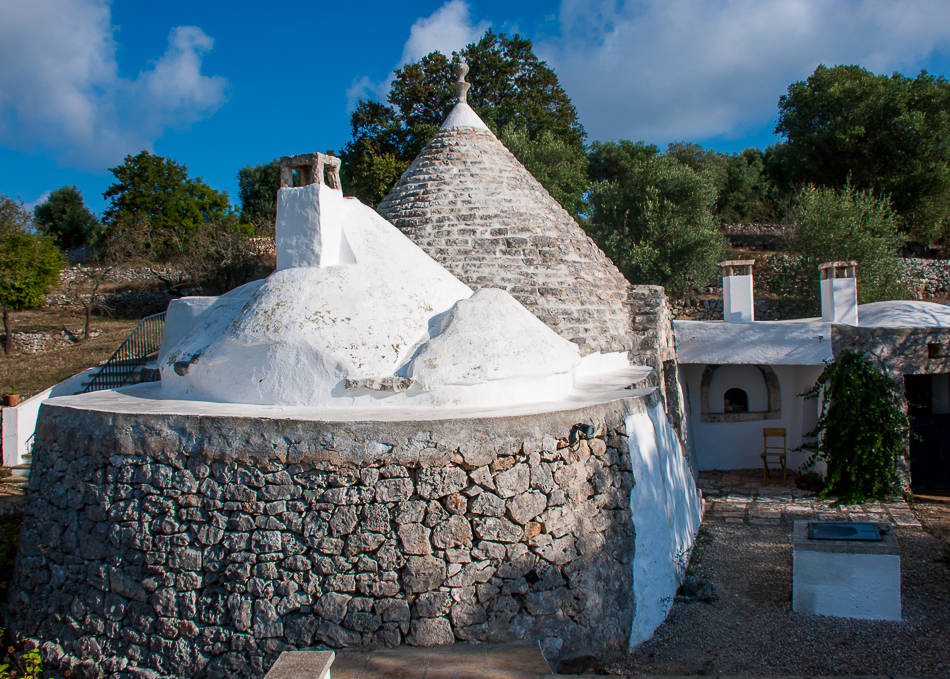
Others have been restored with great taste and we couldn’t pass on the opportunity to live in one for a few days…
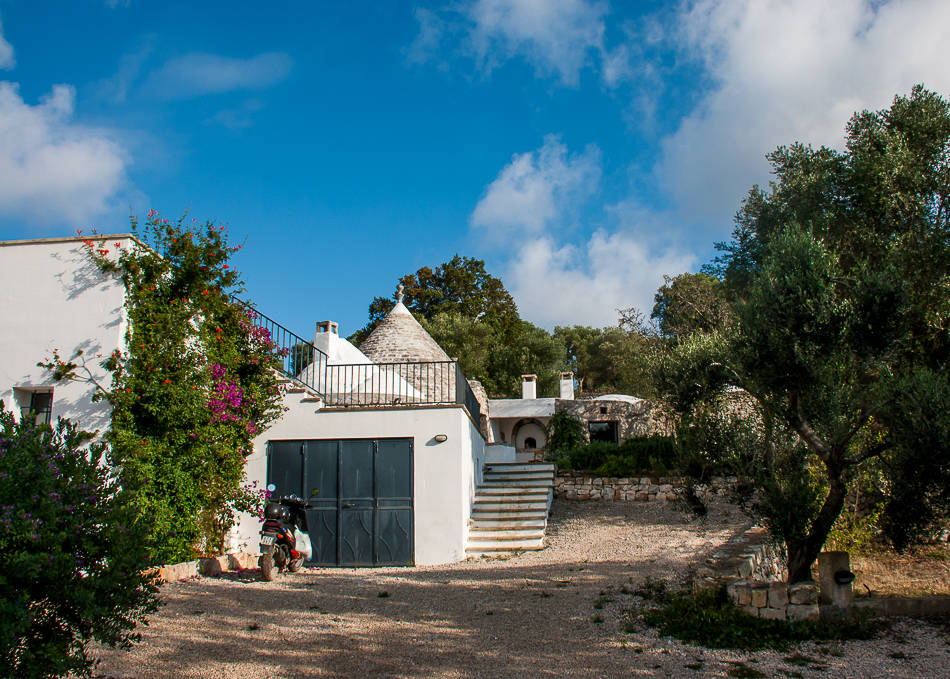
I found this gorgeous 3 bedrooms trullo on AirBnB with huge garden and outdoor pool, definitely restored with a few extra amenities!
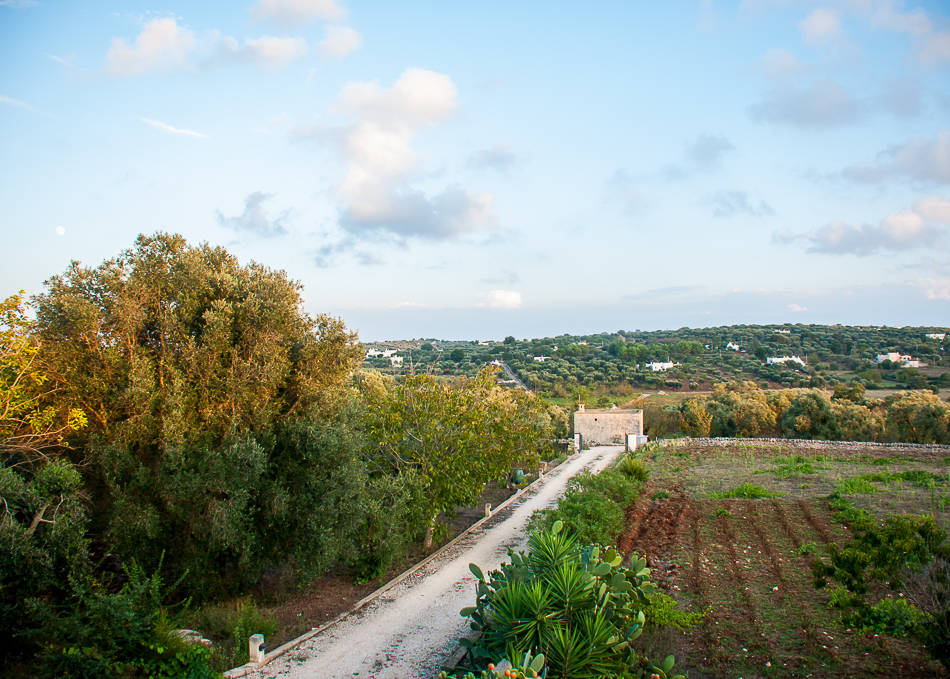
The view from the roof let us take in the valley with scattered trulli, olive groves and farmhouses.
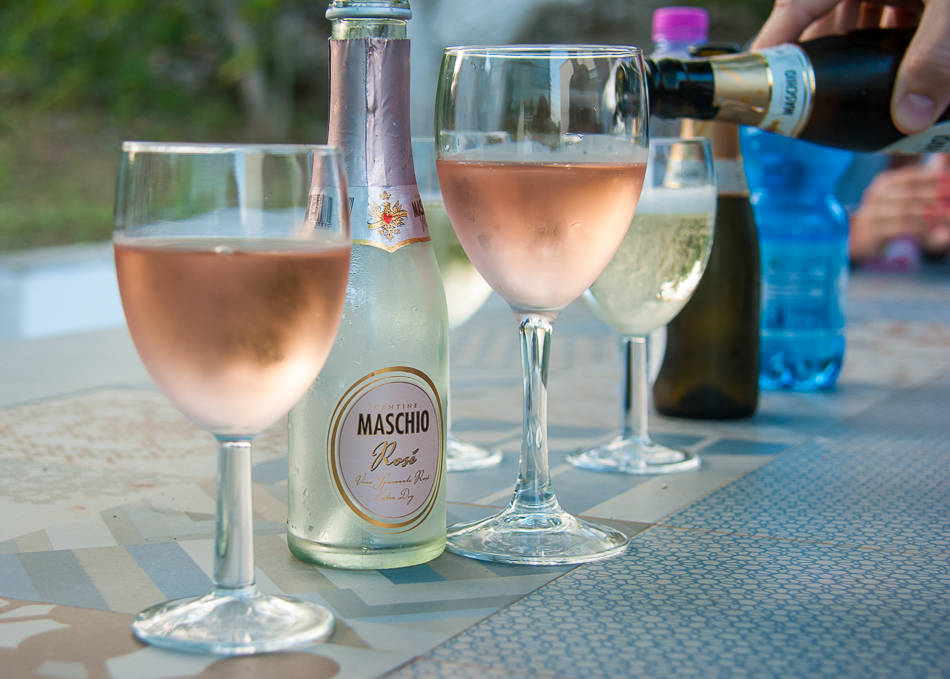
Apéritif by the pool with some local spumante.
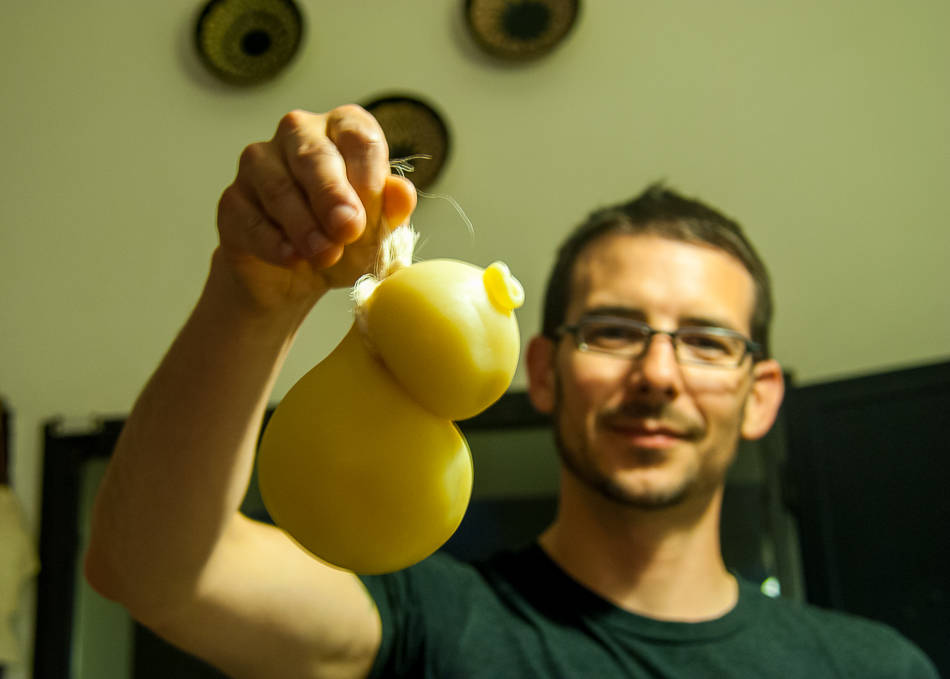
And let’s not forget the Caciocavallo, a traditional, stretched curd cheese available everywhere in the region (and scrumptious on its own or topping just about anything…).
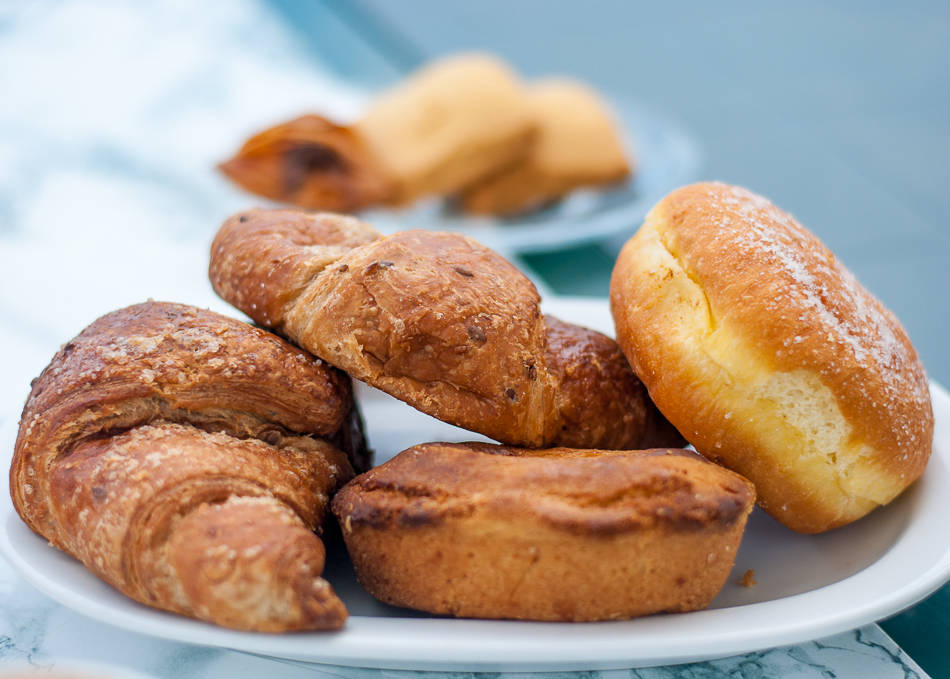
Typical mornings here start with a good cappuccino and a selection of pastries, usually filled with chocolate, jam or lemon cream.
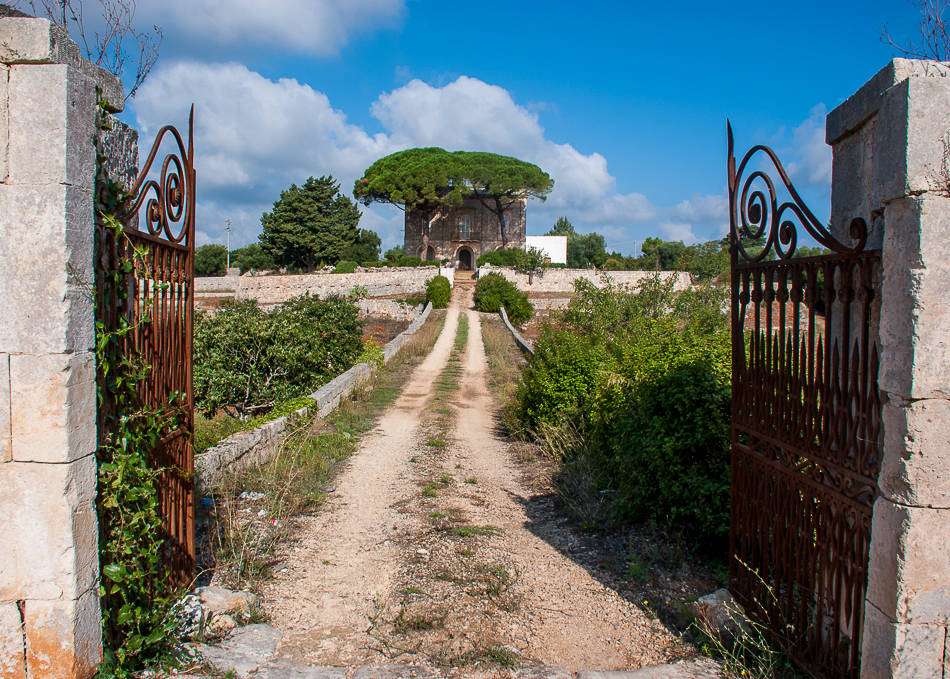
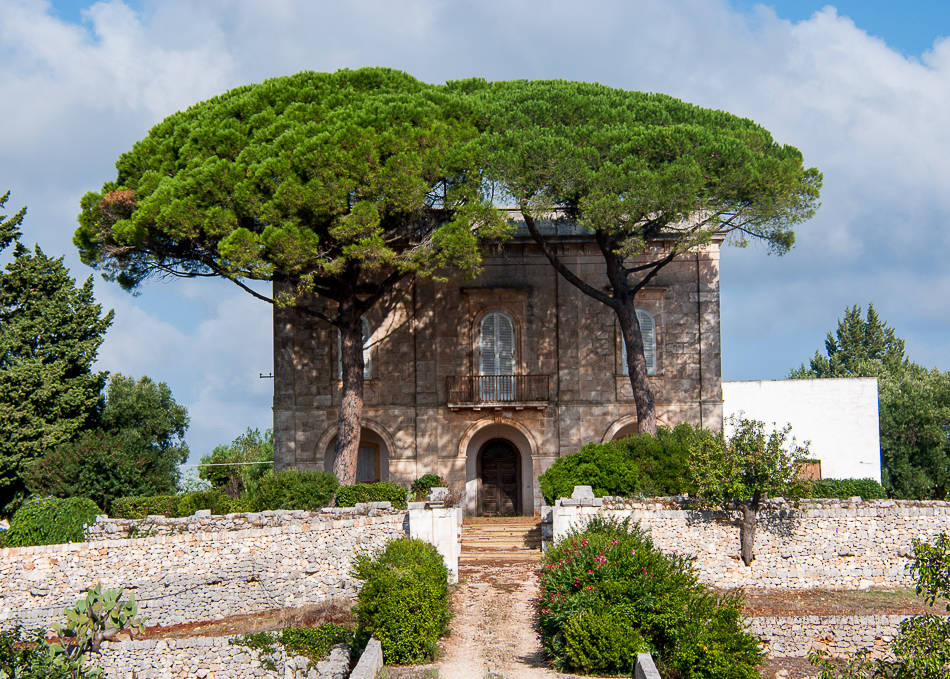
Regardless of where you based yourself in the Valle d’Itria, the surrounding country roads will be filled with stunning discoveries all worth making a stop on the side to admire either a gorgeous villa or postcard perfect landscape.
There are quite a few historic towns around that make for a wonderful half-day of wandering and eating, and one you mustn’t miss is Locorotondo. It has been named one of the most beautiful villages of Italy and its calm and easily walkable centre makes for a memorable afternoon.

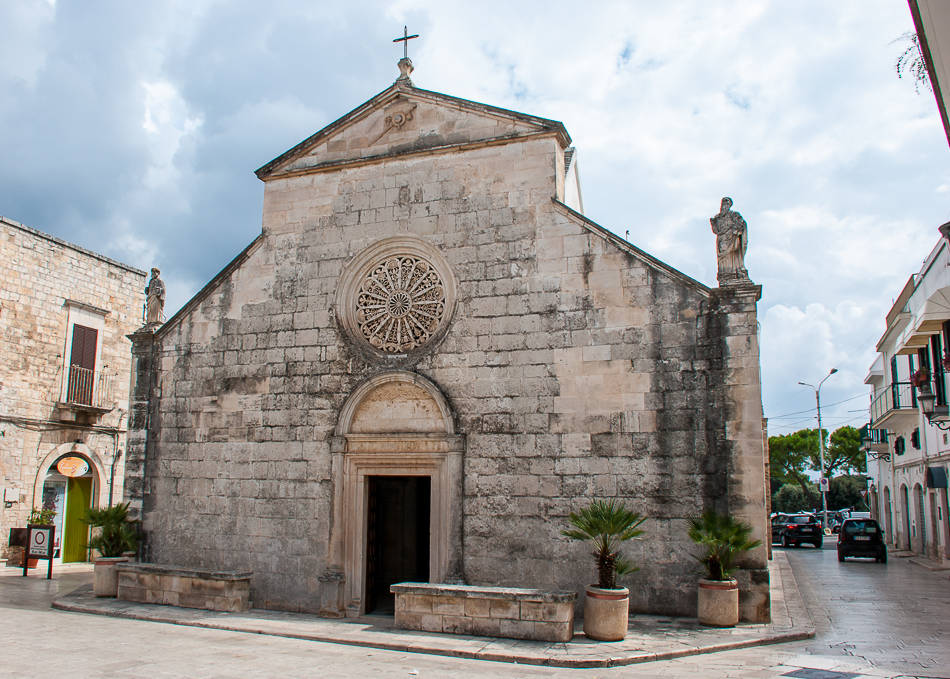
Church of the Madonna della Greca, the oldest church in Locorotondo
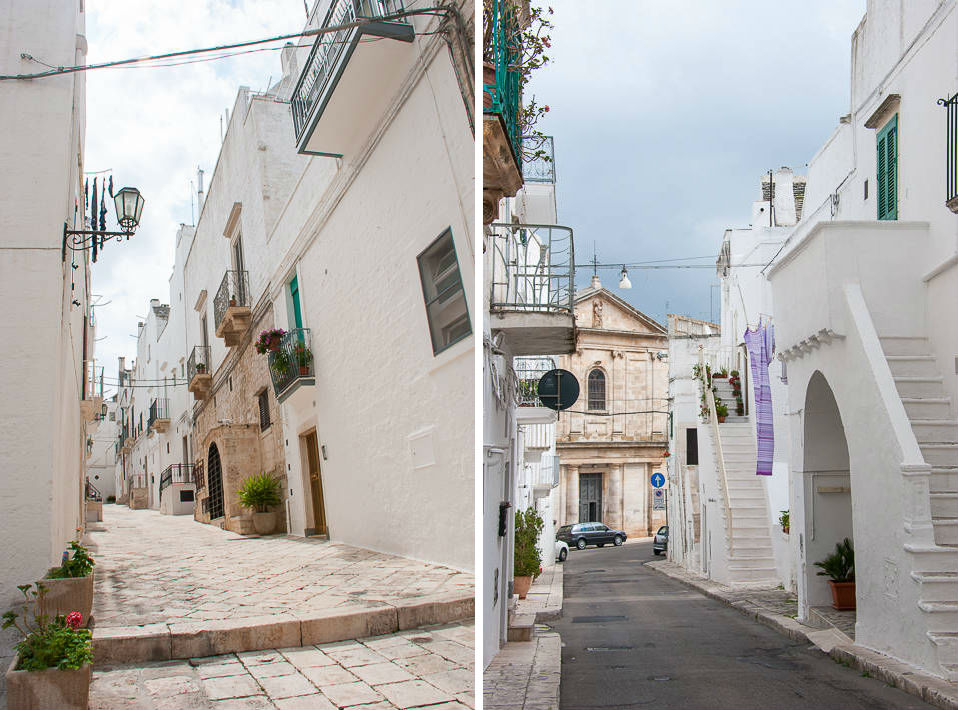
Even though it’s just 8km down the road from Alberobello, there are no trulli here but plenty of cummerse, narrow rectangular town houses with pointed roofs. The quiet pedestrian historical centre oozes charm with its shimmering white walls and the occasional burst of color from red geraniums hanging down the wrought iron balconies.
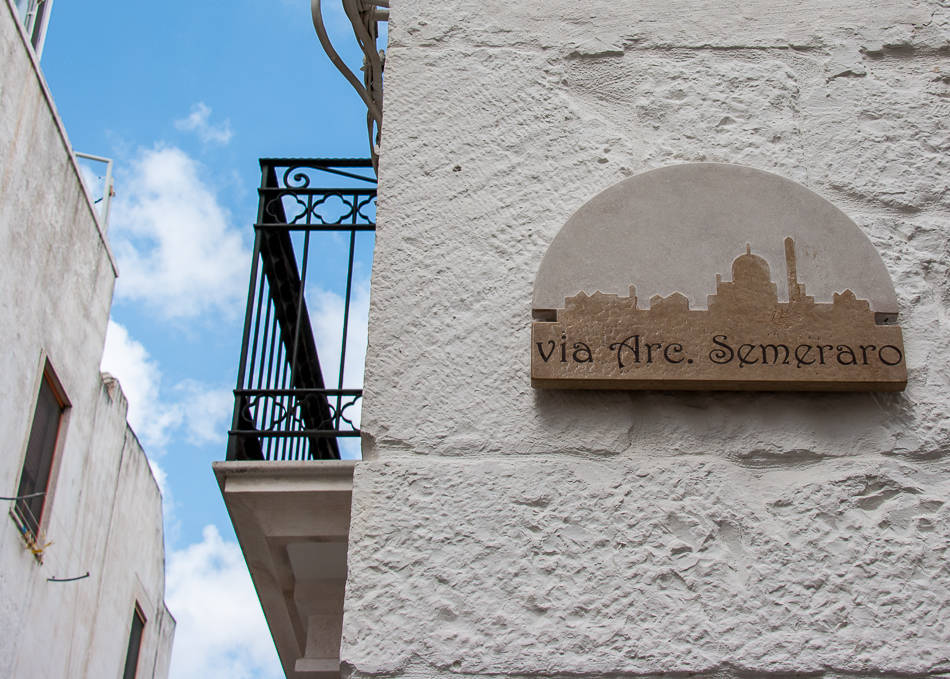
Even the street signs are extraordinarily beautiful.
Another reason alone to visit Locorotondo is to eat at Bina, a stunning restaurant serving Pugliese cuisine with a modern touch.
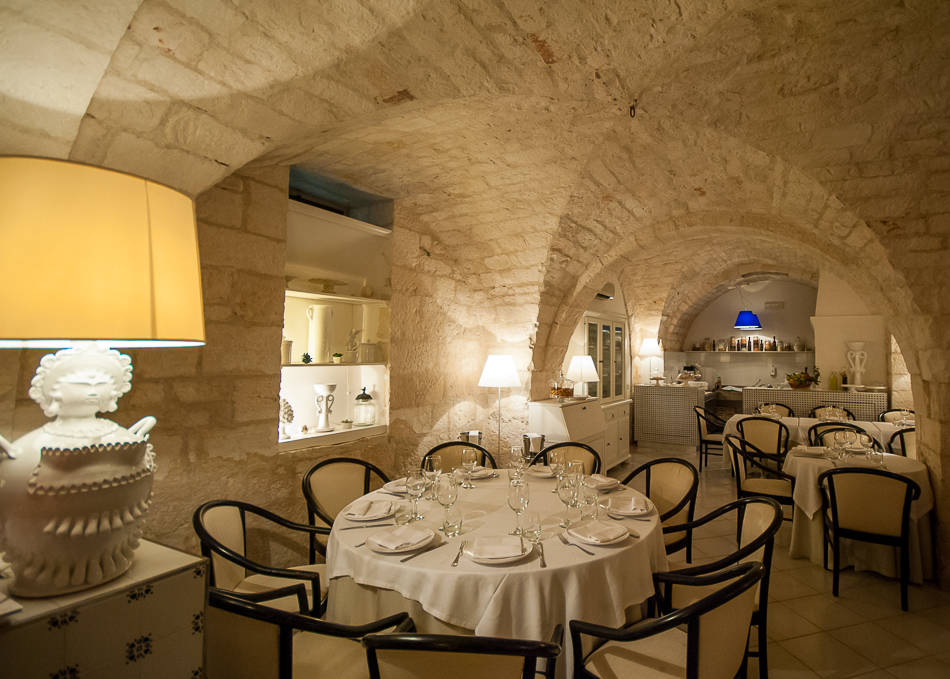
The all-white interior is refined and welcoming with a wealth of personal touches such as local ceramics and vintage books making you feel like you’re eating in the house of a very stylish friend.
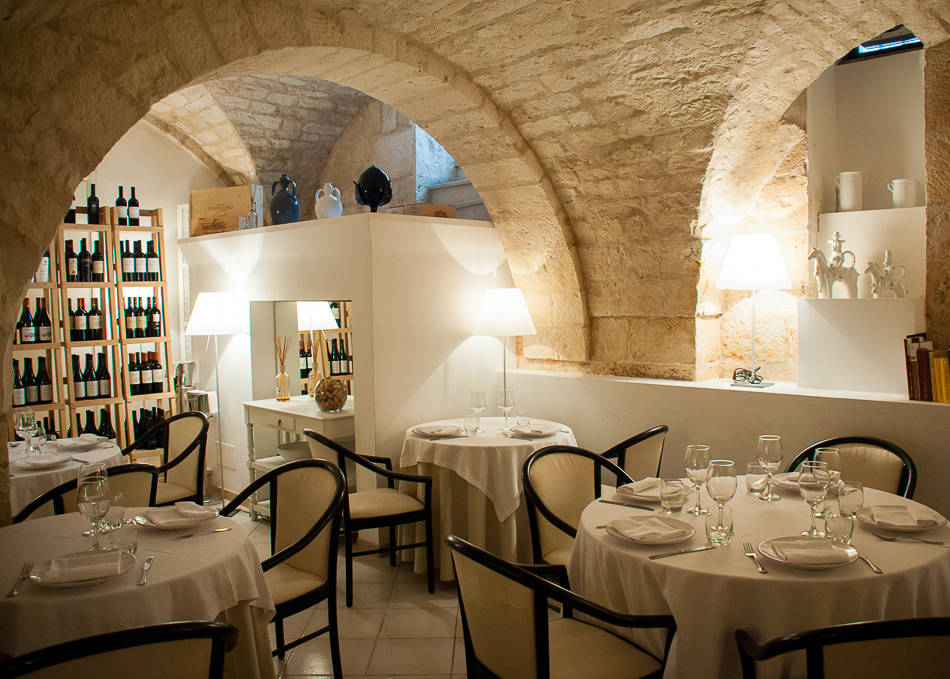
Locorotondo being at the heart of the Puglian wine region, it’s the perfect excuse to settle down for a few hours and sample some fine local bottles such as a good Negroamaro, accompanied by even finer cuisine.
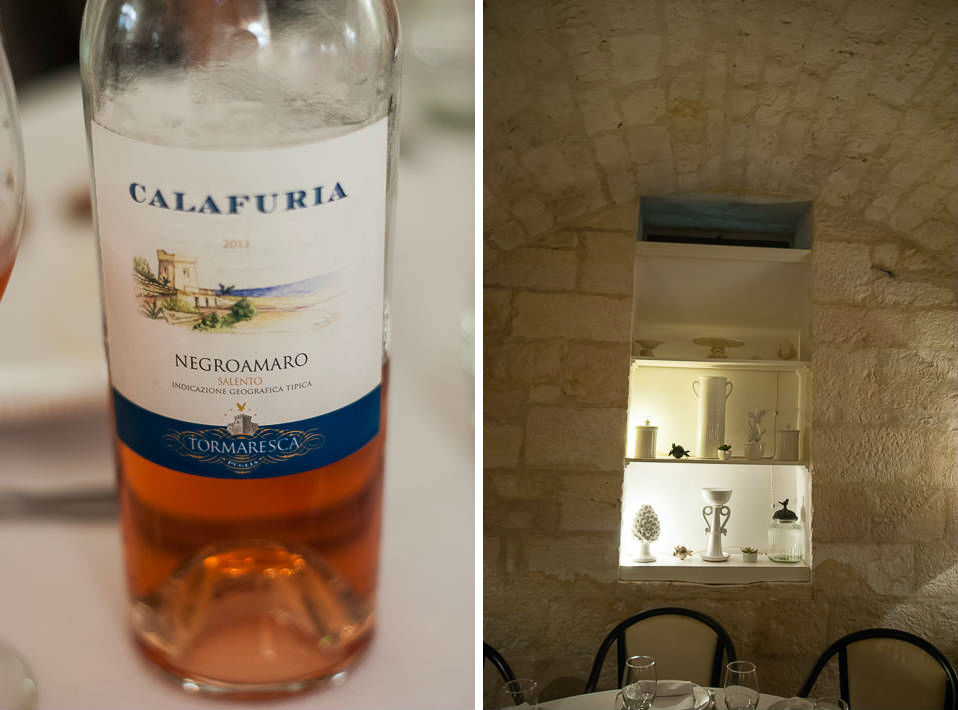
It’s true that it’s difficult to eat badly in Puglia though Bina is a cut above and we were wowed by everything from the freshness of the local ingredients to the lightness of touch which seemed to permeate the entire meal, leaving us perfectly satisfied and not at all stuffy.

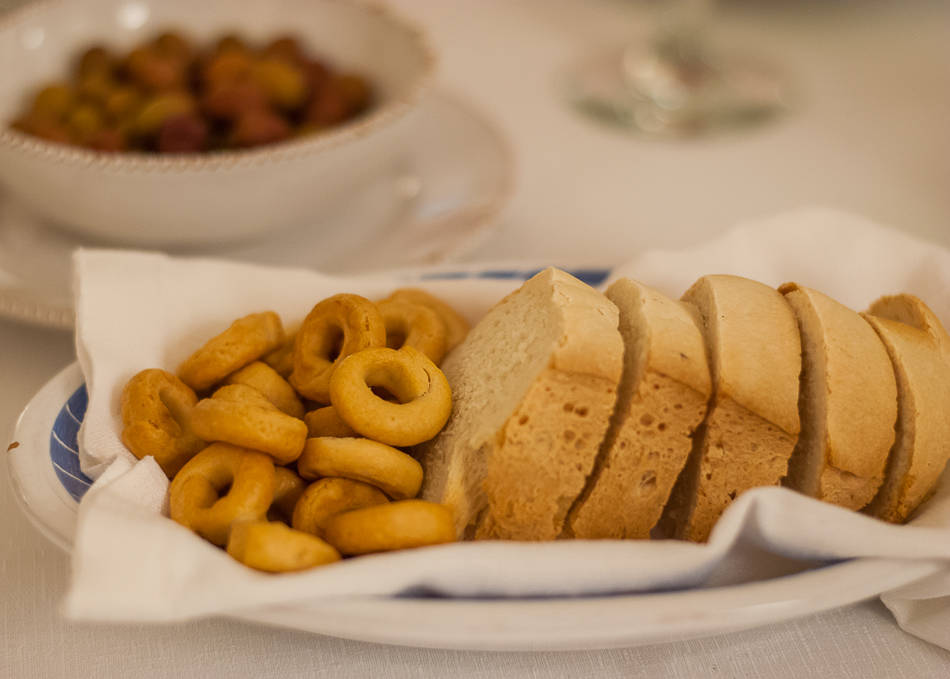
Homemade bread & taralli
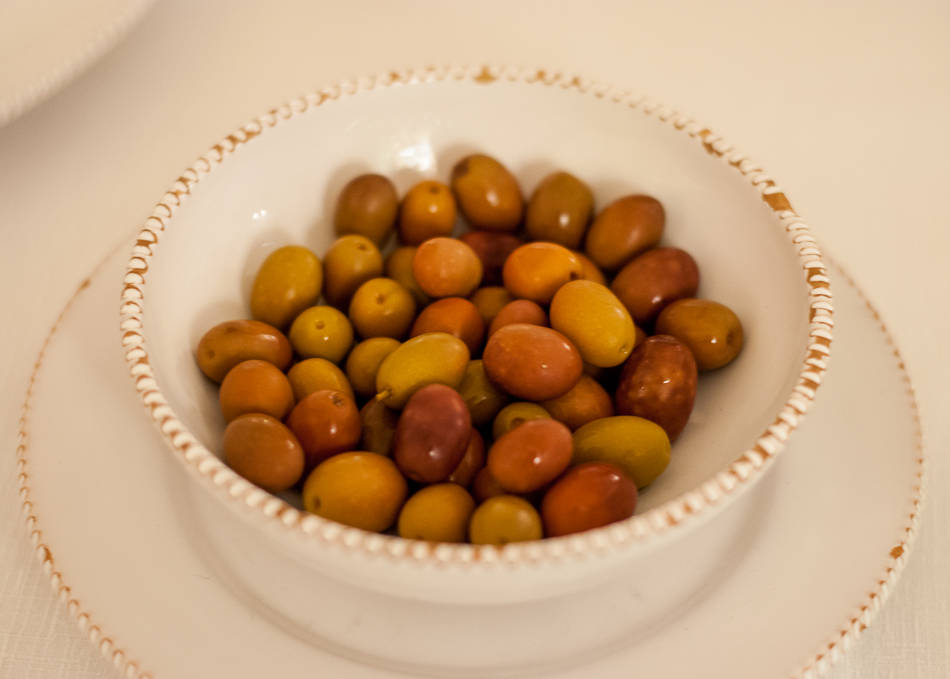
Local olives
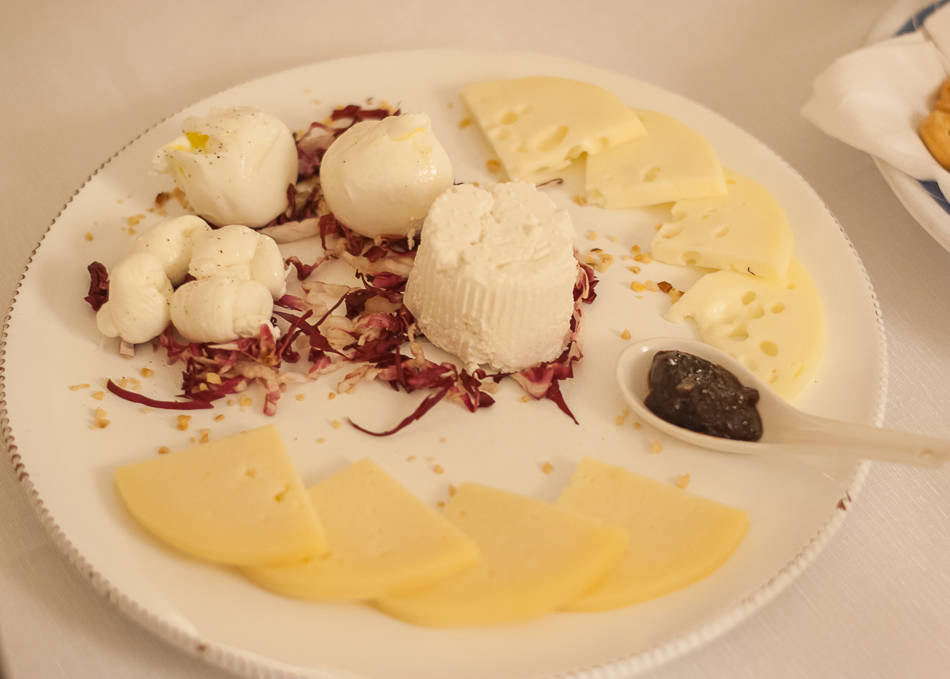
Local cheese plate (caciocavallo podolico, pecorino canestrato, burratina, ricottina)
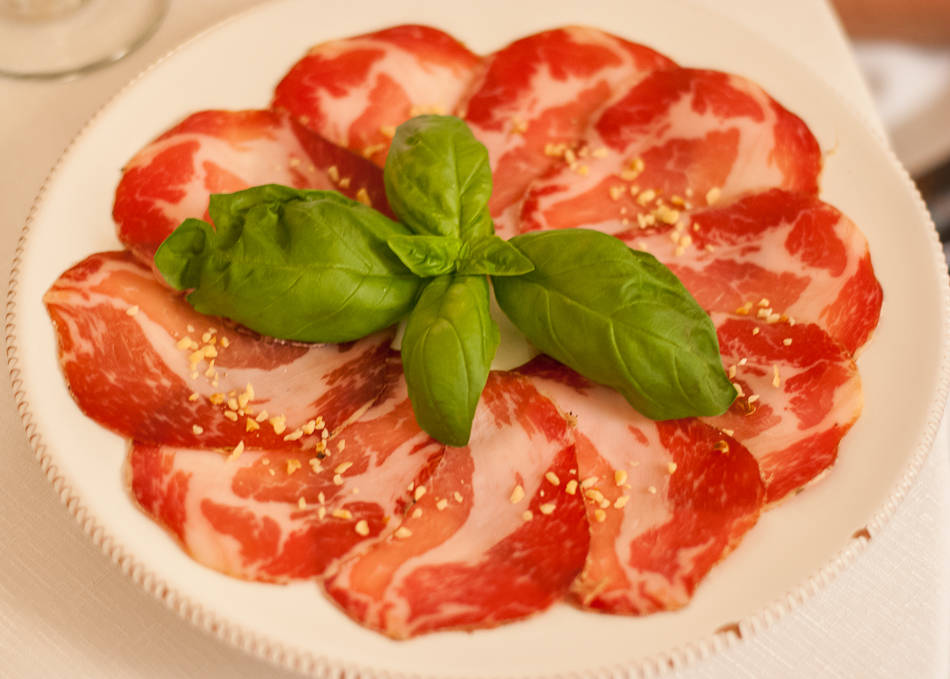
Homemade capocollo
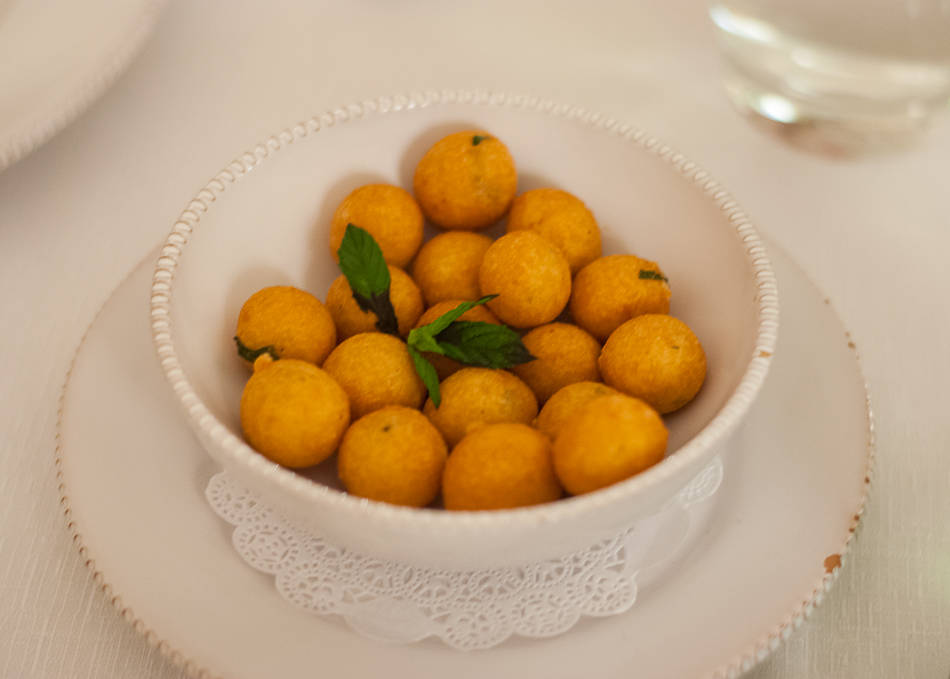
Fried bread with cheese balls
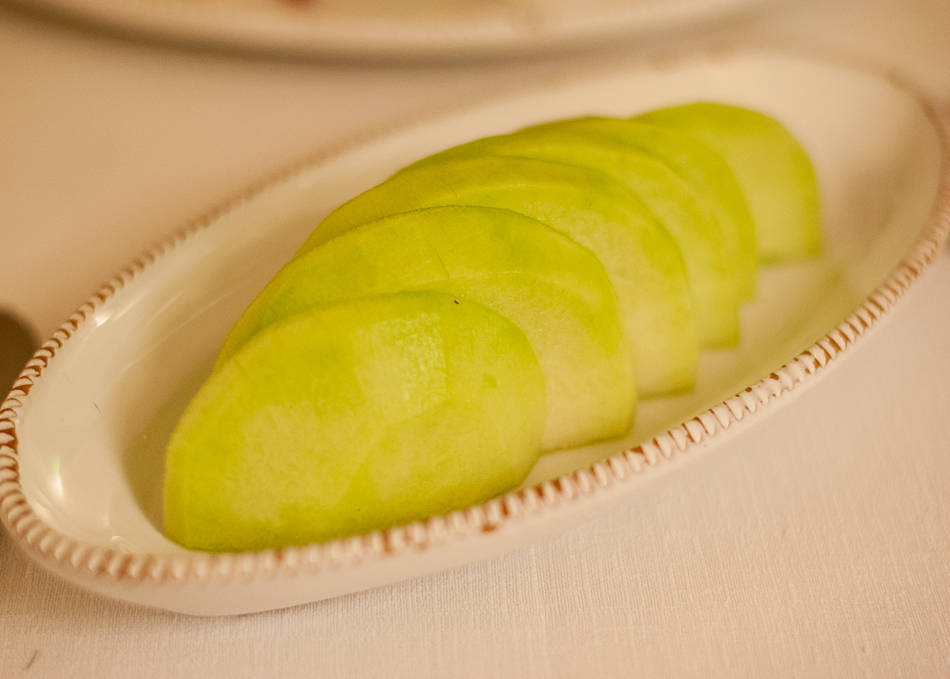
Local cucumber to aid digestion between courses
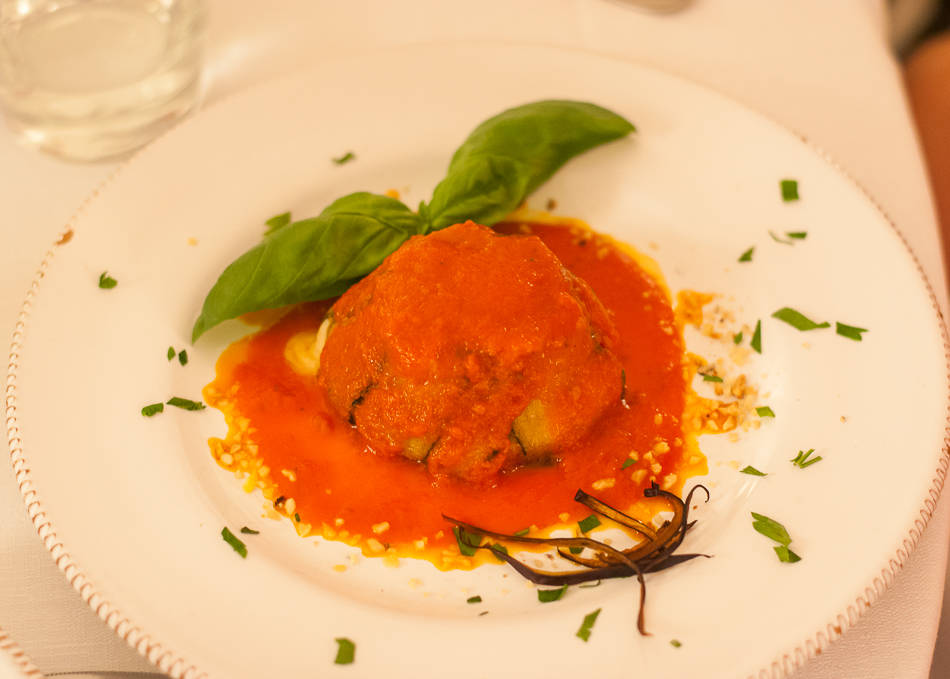
Small Vegetarian Courgette Millefogie with smoked provola on a coulis of tomatoes flavored with basil
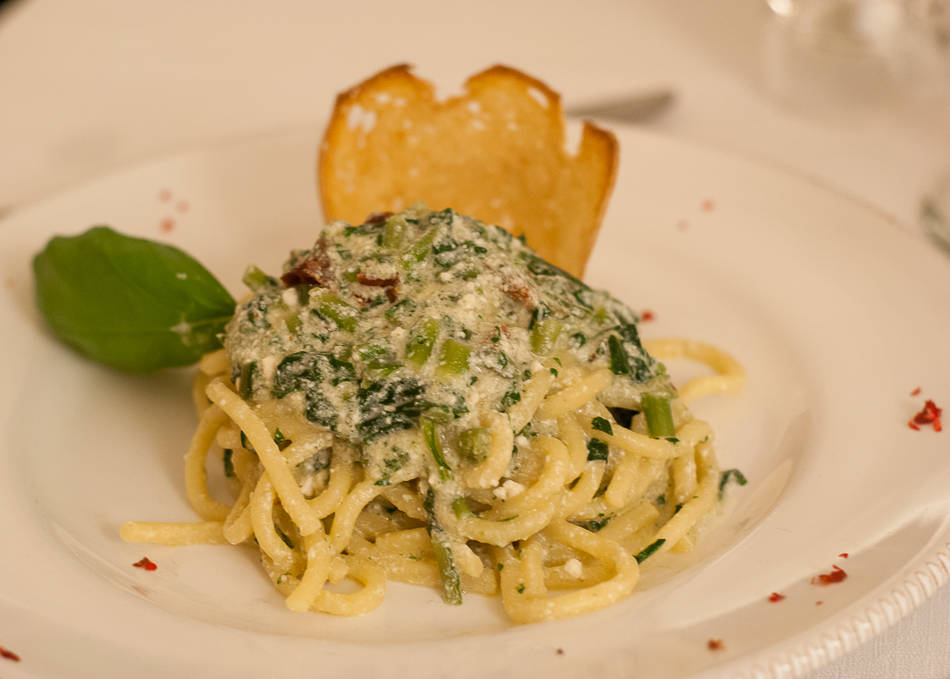
Handmade Egg Spaghetti with a cream of cow milk’s ricotta, strips of sun-dried tomatoes and wild chicory
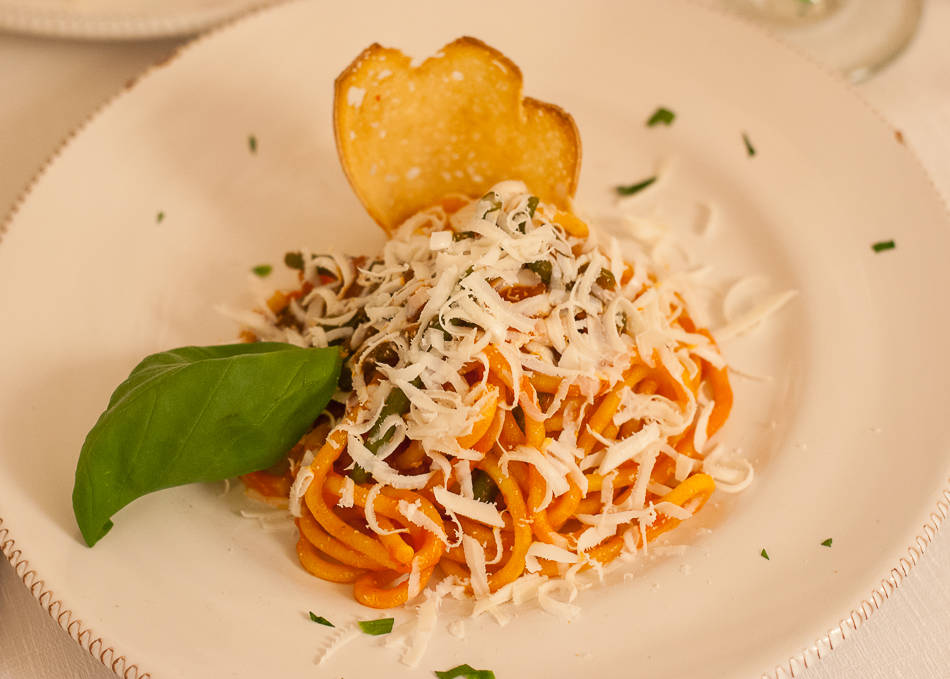
Homemade Spaghetti with string beans, pendulo tomatoes and cacioricotta from Valle D’Itria
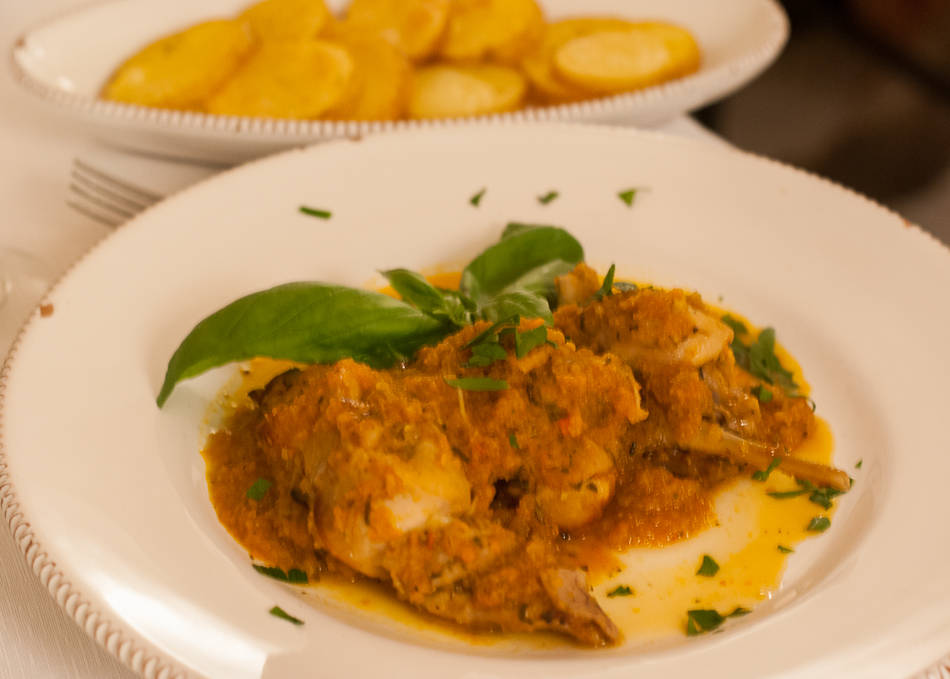
Free-range Rabbit flavoured with herbs and potatoes with rosemary
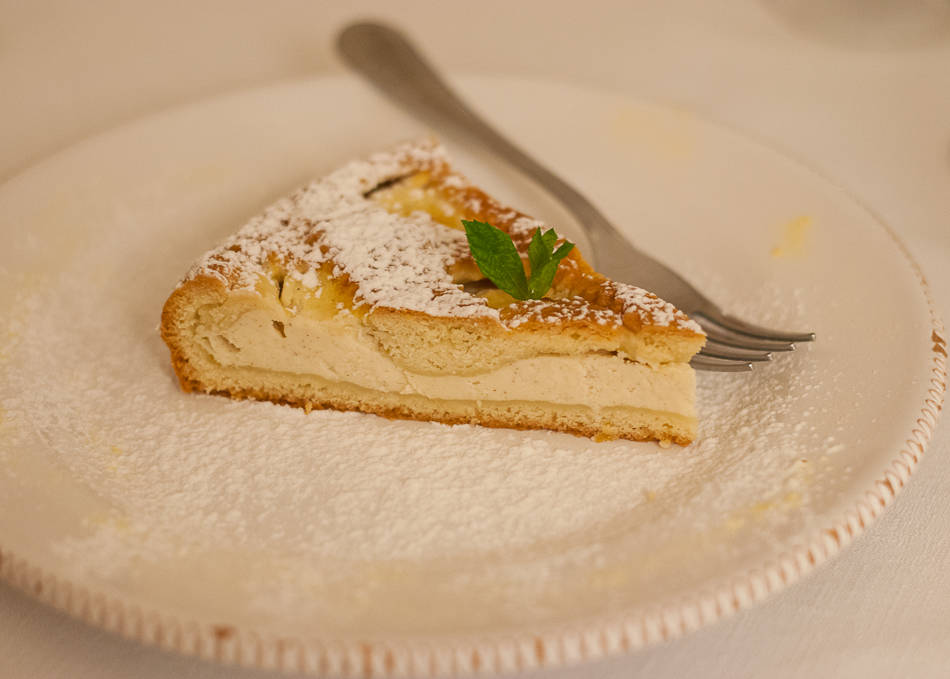
Ricotta Tart
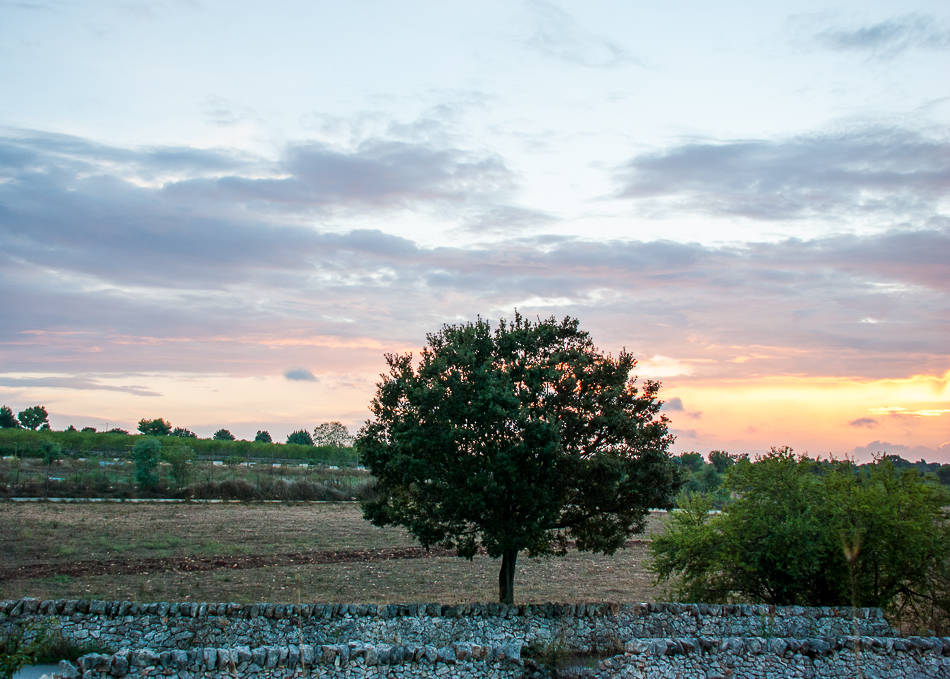
Besides staying in a trullo, the other tempting option in the region for those who can afford it is to stay in one of the many Masseria (fortified farmhouses) in the countryside. Although they sound rustic, the farmhouses in these parts are some of the most elegant I’ve seen and resemble more a fancy country estate.
16th-century Masseria Torre Maizza is a luxurious accommodation near Fasano and one of the most sought-after on this stretch of Puglian coast. Centred on a white-washed watchtower, it rises out of fragrant gardens which provide a lot of the ingredients to the main restaurant, Le Palme. Although not spending the night here, we could enjoy a luxurious dinner set in the ancient stables…
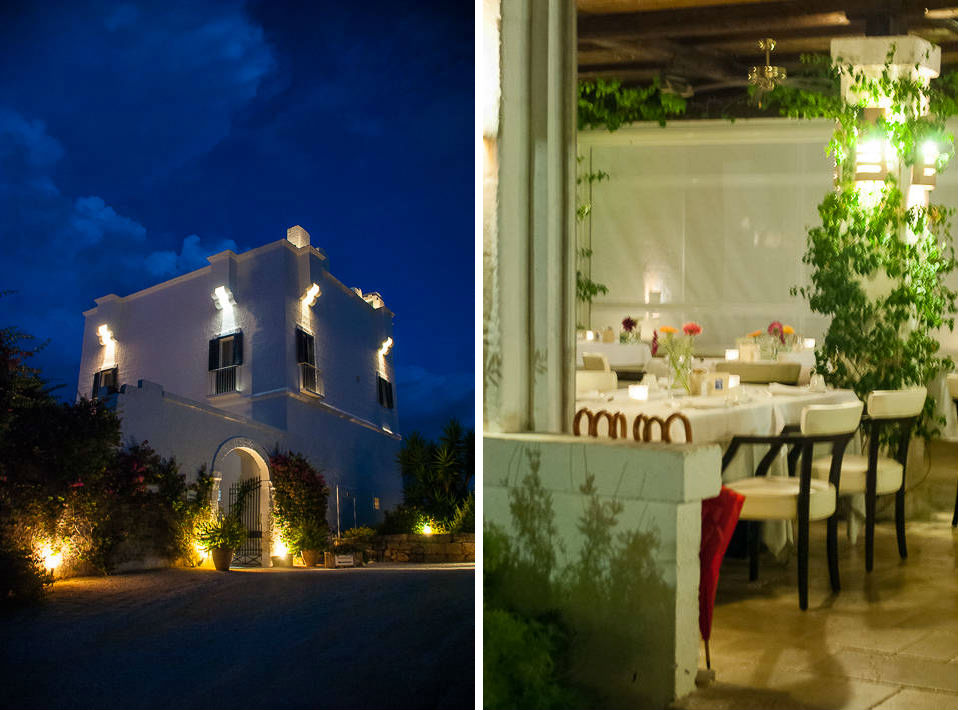
The cuisine is Pugliese with Asian influences and the restaurant proudly operates a ‘mile zero’ policy, in which regional producers provide all the ingredients. Although not as delicious or memorable as Bina (in Locorotondo), the food was elegant and well-prepared. I just feel it’s not really worth splurging in a 5 star restaurant when the region prides itself on ‘poor & peasant food’ and does brilliantly at it!

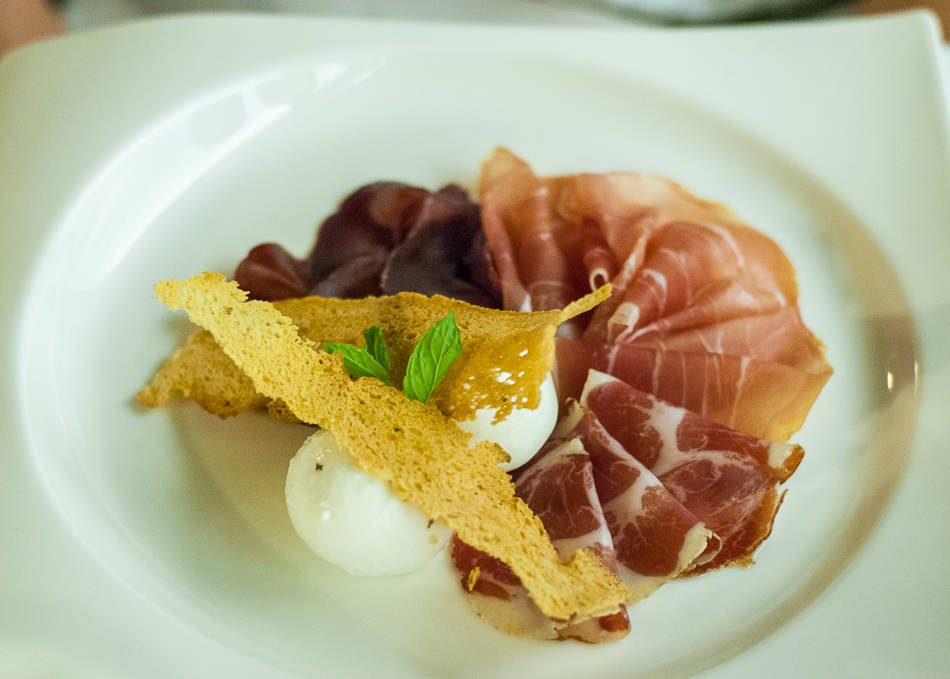
Apulian salami selection and buffalo mozzarella cheese
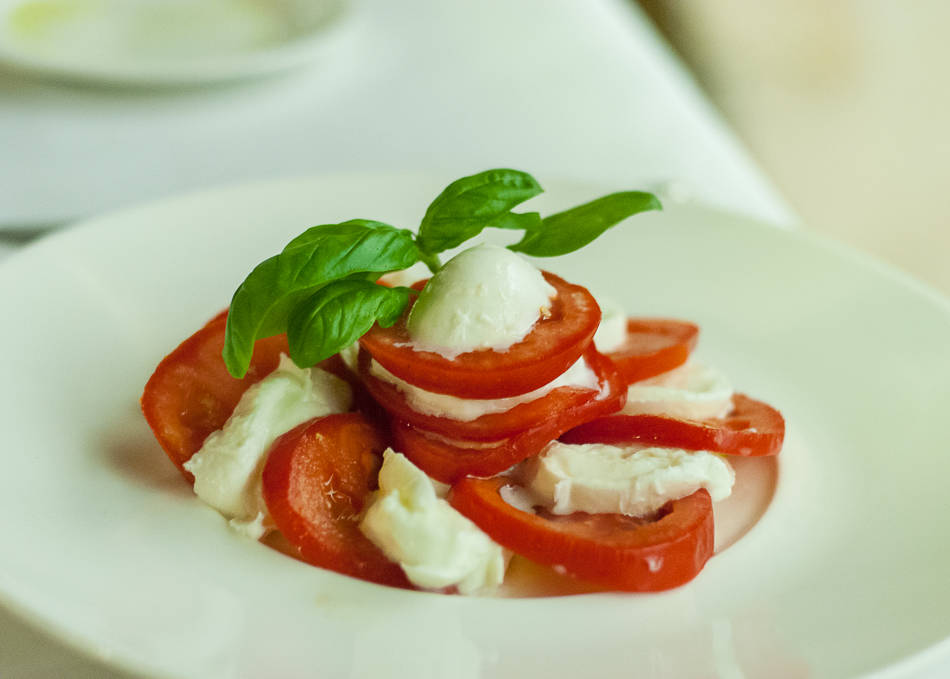
Caprese salad
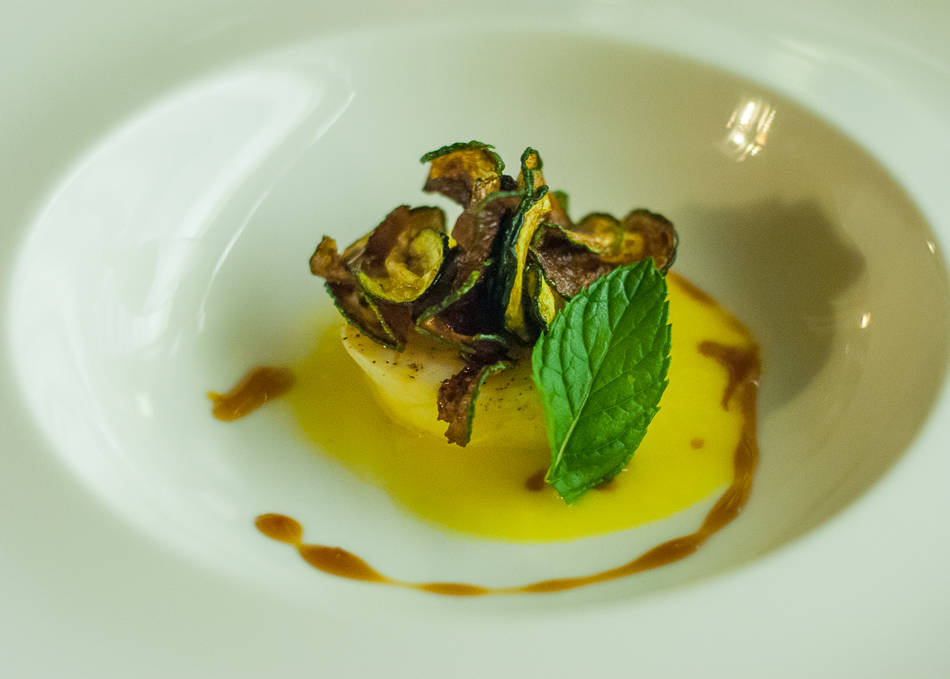
Courgettes millefeuille on caciocavallo cheese fondue and chips
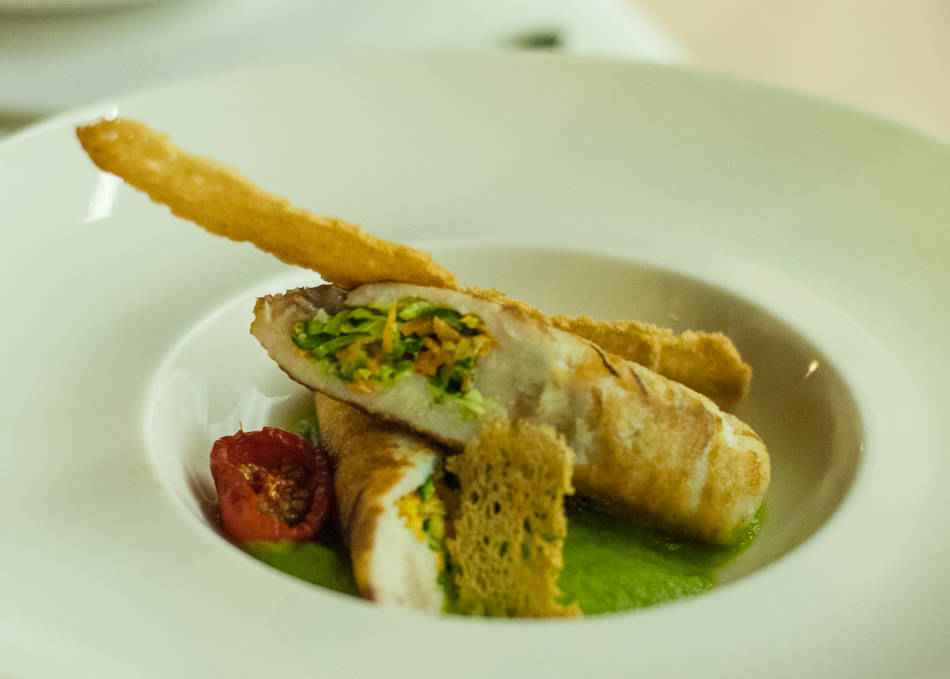
Gilthead roulade with crispy vegetables on courgettes and mint sauce with herbs croutons
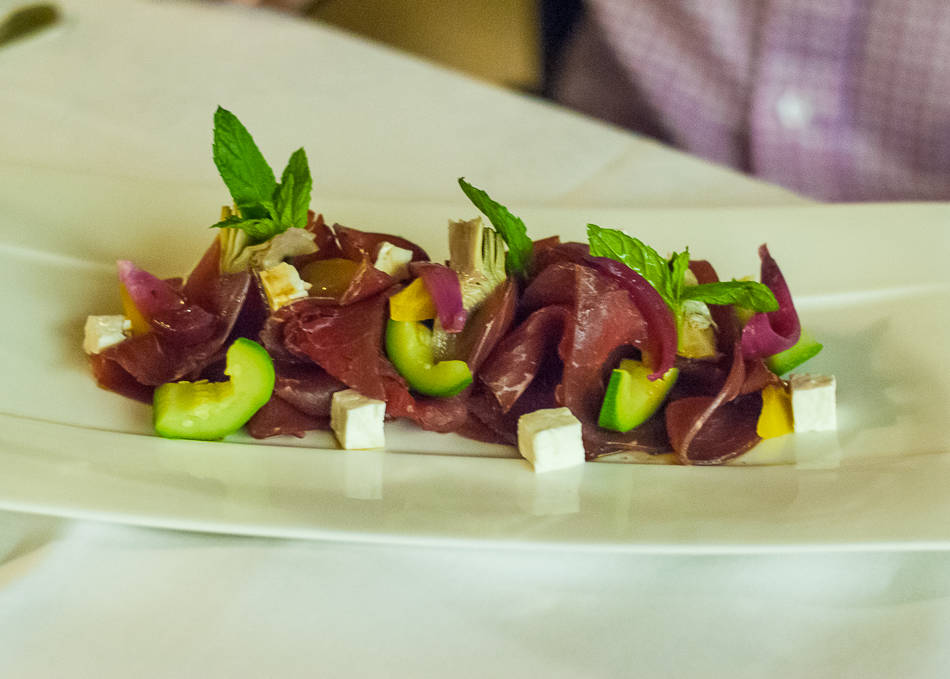
Smoked beef carpaccio with vegetables, “primo sale” morsels and balsamic vinegar
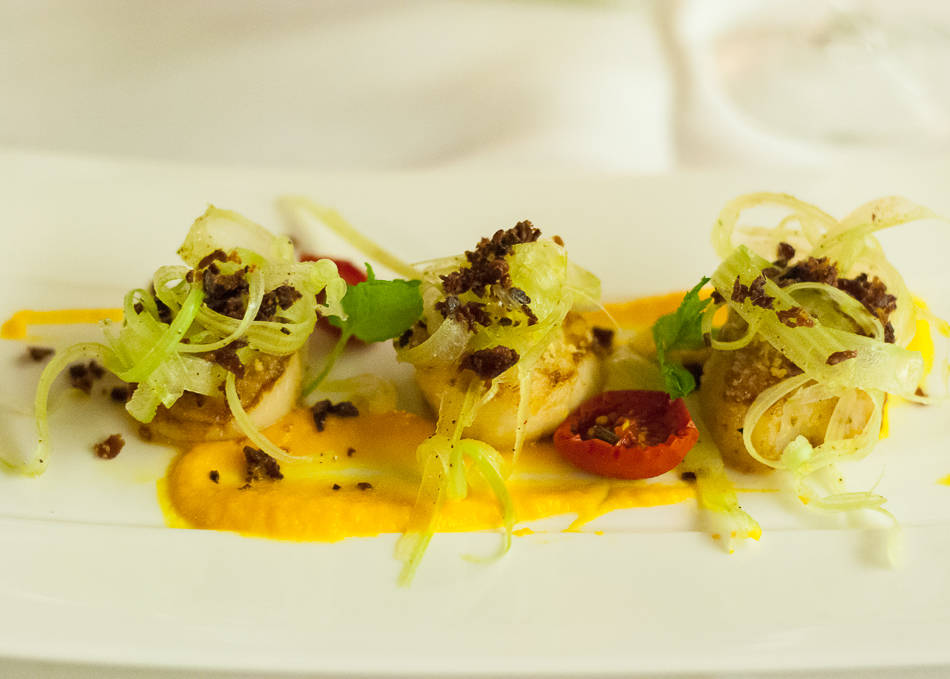
Scallops in “taralli” crust with chicory hearts and bacon salad on ginger flavoured carrots coulis
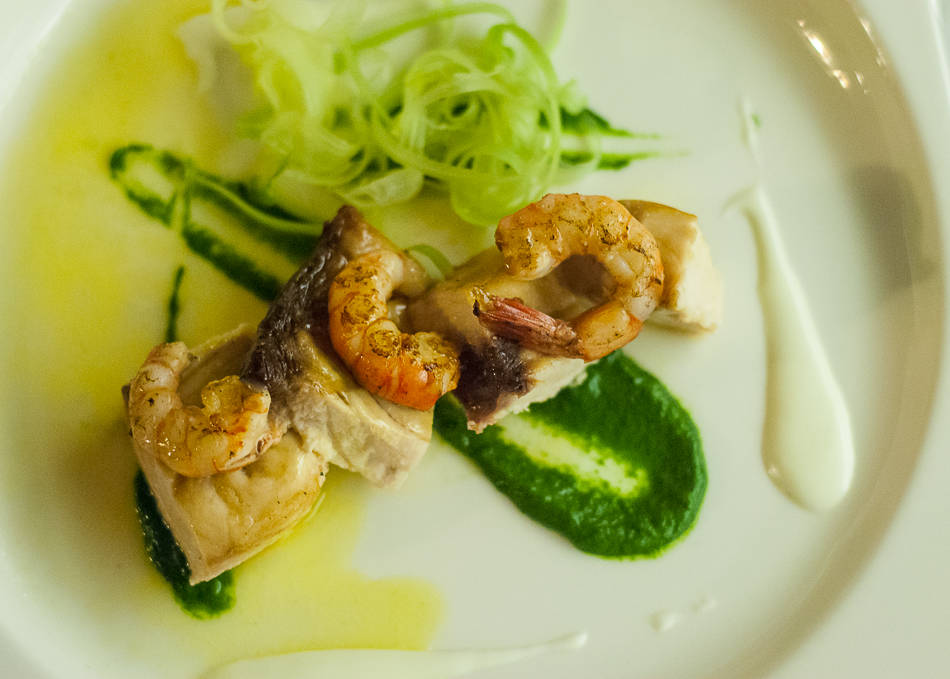
Swordfish dice and tarragon marinated prawns with chicory hearts salad on spinach and buffalo mozzarella cheese sauce
Our last meal before leaving the valley had to be in the white city of Ostuni at the end of the trulli region. Unmissable from its location atop a hill, the chic town has excellent restaurants and pearly white streets perfect for an evening stroll.

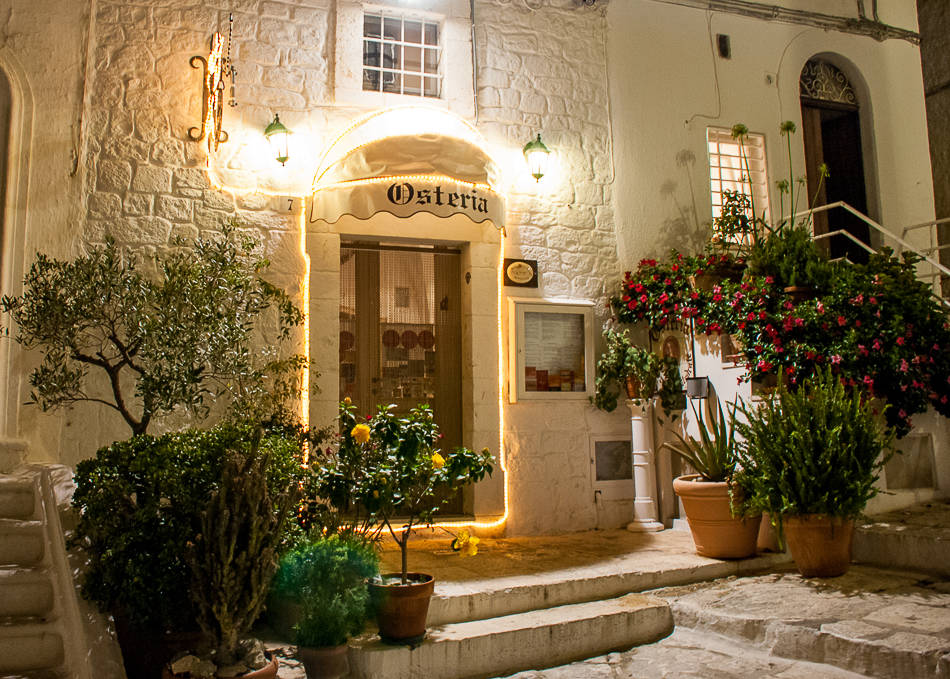
Opposite the magnificent cathedral is where you can find Osteria Piazetta Cattedrale, a gem of a restaurant serving creative takes on Puglian cuisine in an elegant home setting.
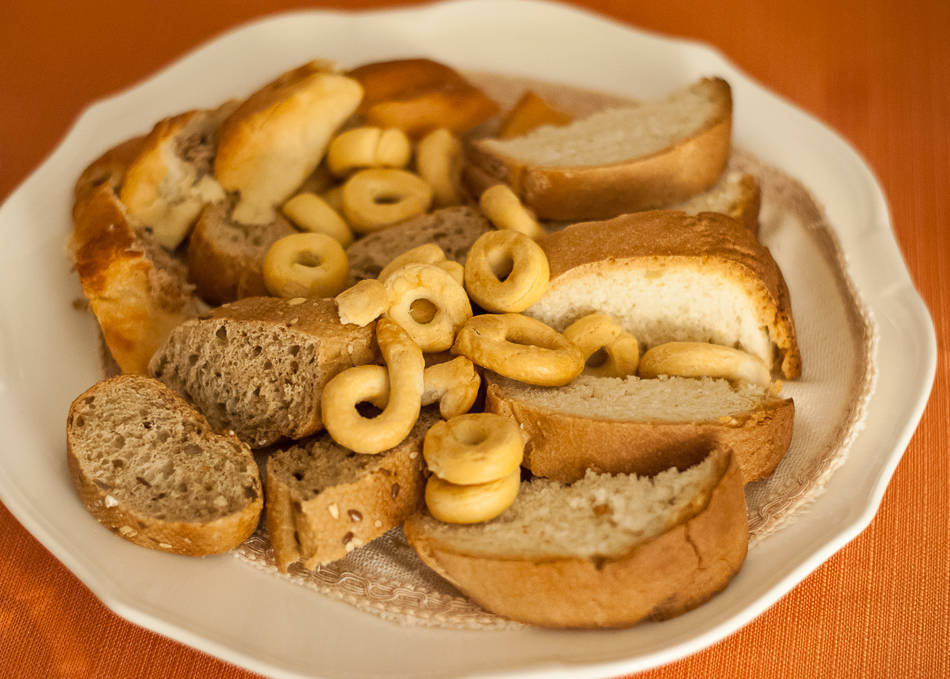
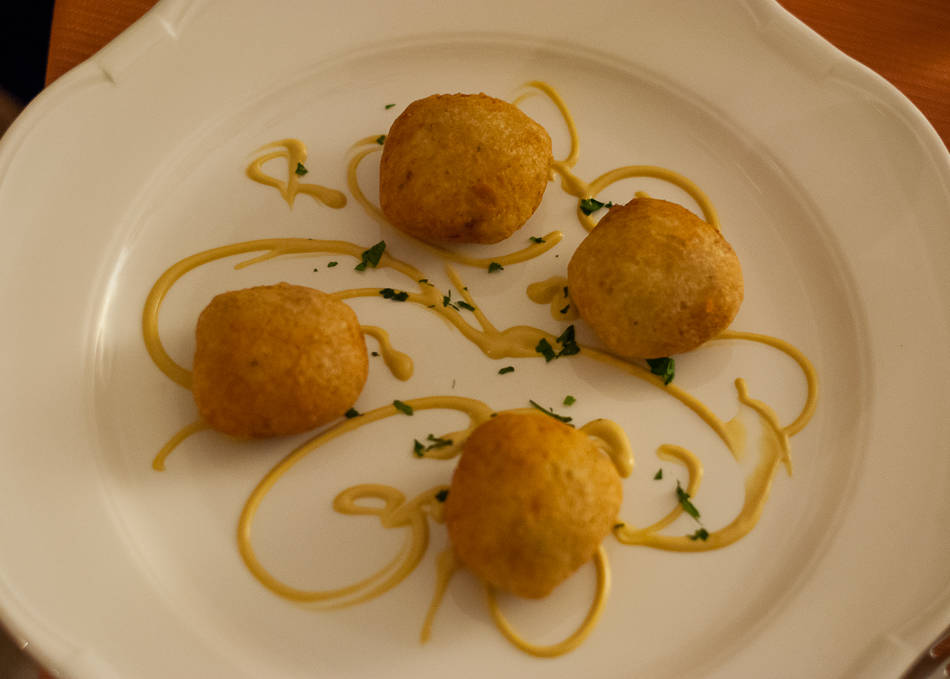
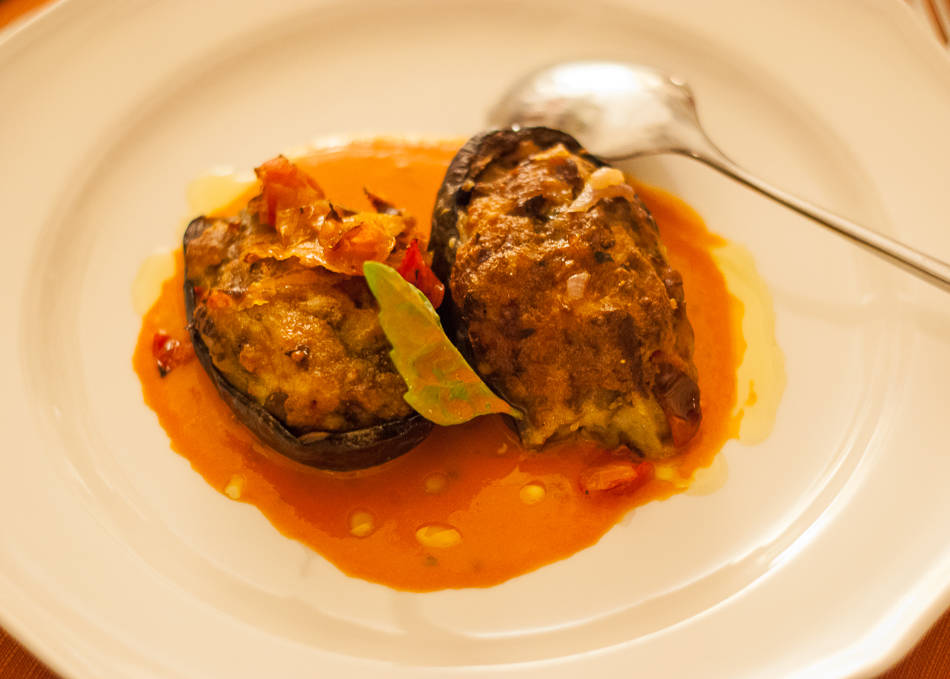
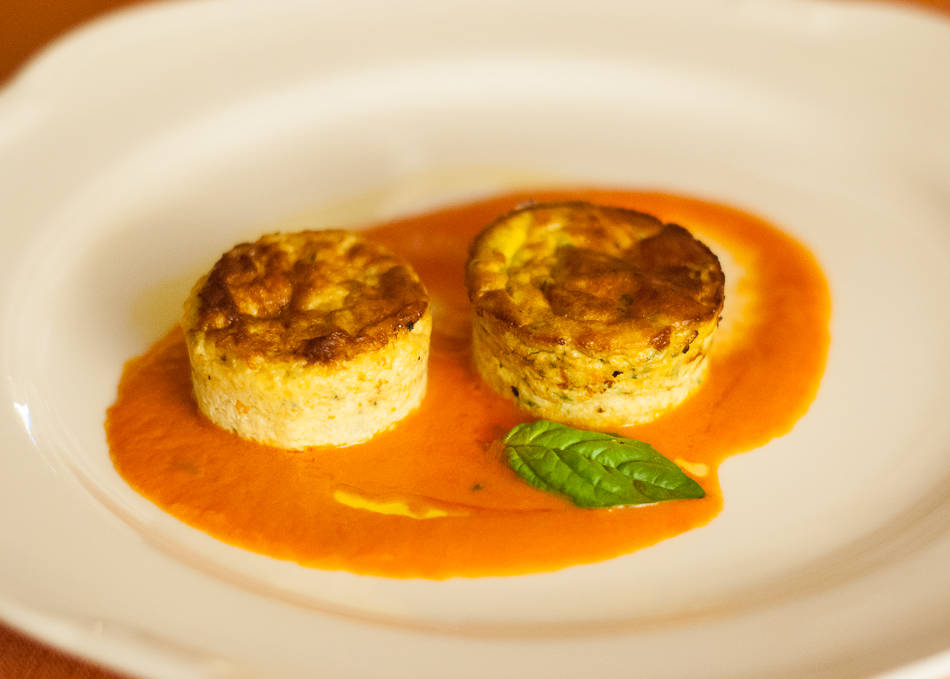
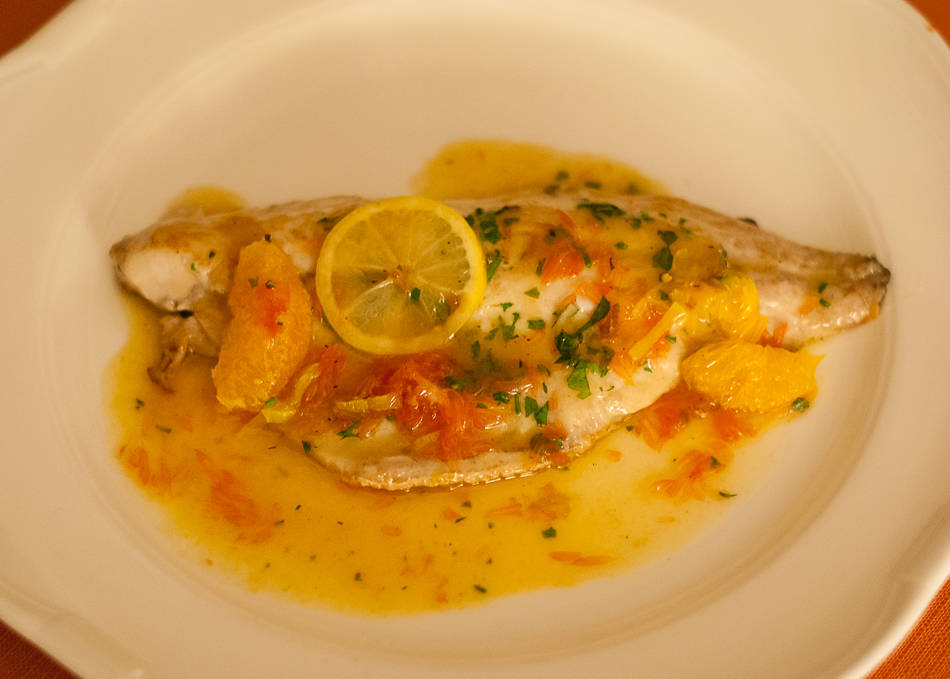
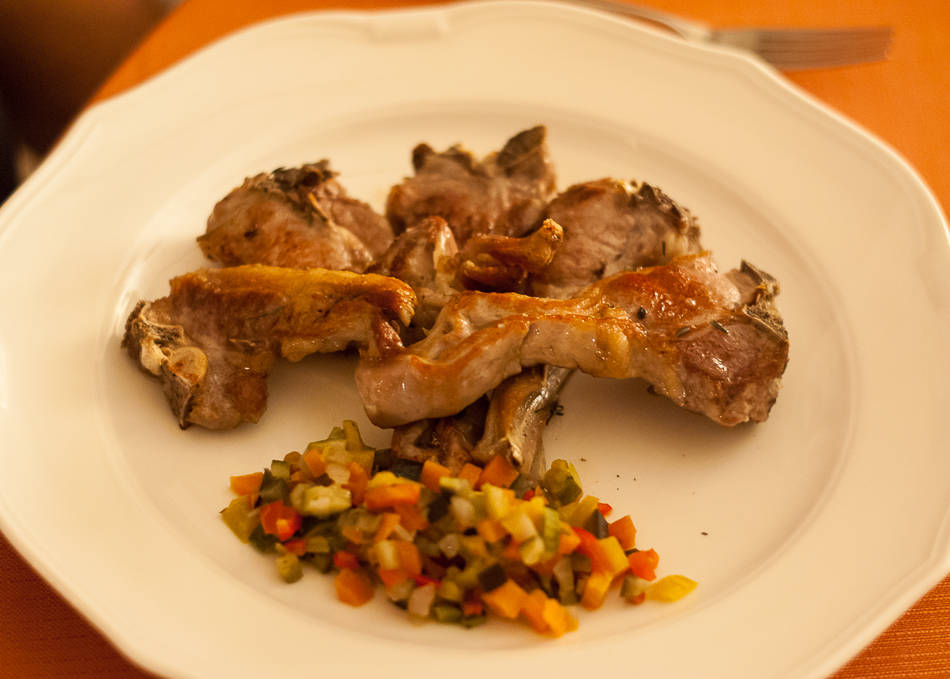
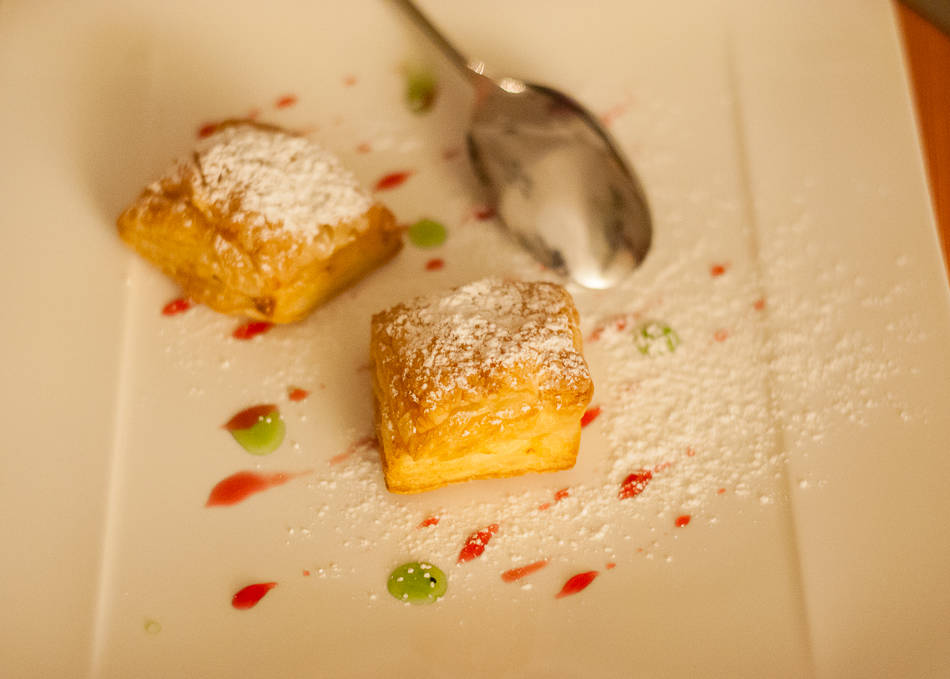
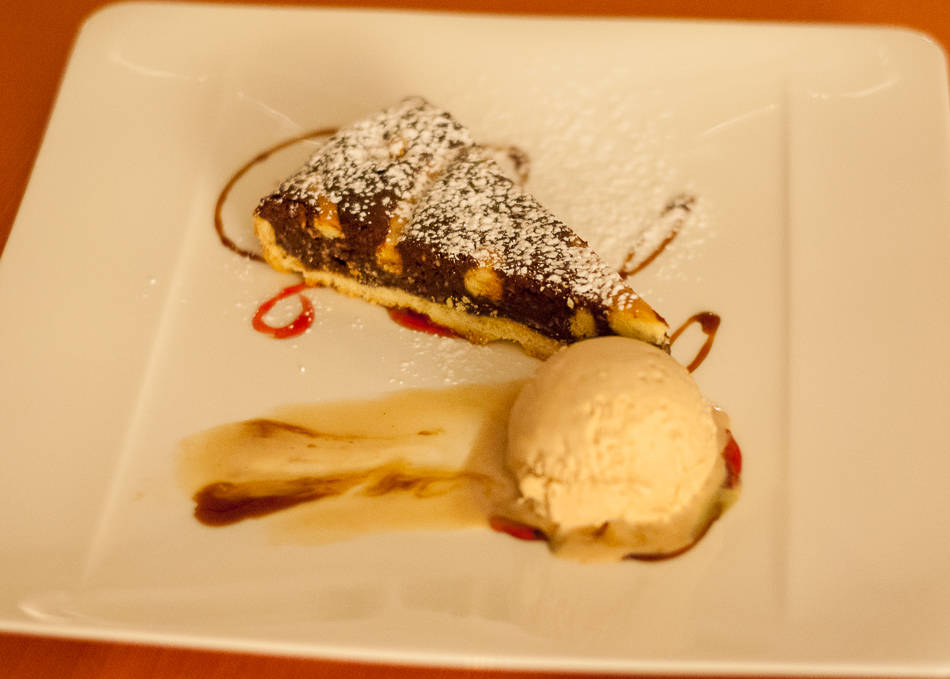
Bread service White fish croquettes with thyme and spicy sauce Osteria Piazzetta Cattedrale - Polpetta Stuffed eggplants Zucchini and pumpkin flan with fresh tomato and cream sauce Fish of the day Grilled lamb chops with caponata Warm sfogliatine with vanilla custard Warm grandmother’s cake with hazelnut ice cream Semifreddo with pine nuts on a coffee and whiskey sauce