Africa Togo Travels

Tamberma Valley & the north of Togo: alluring architecture and old traditions

January 4, 2014

The north of Togo is often overlooked by tourists so those lucky enough to venture out there will find an unspoiled region ripe for discoveries…and no foreigners around.

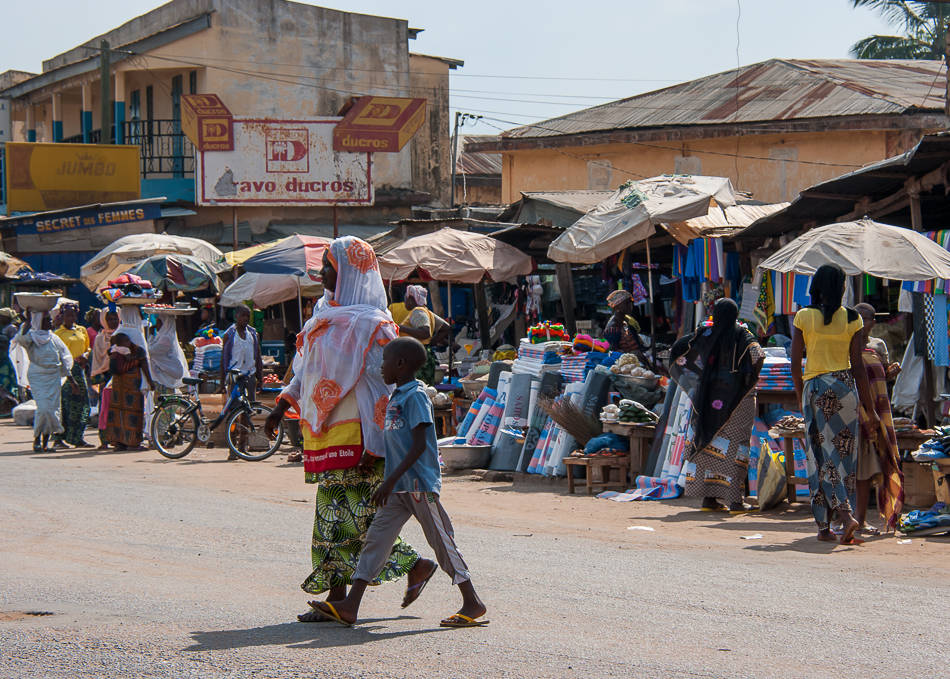
Sokodé, the second largest city in Togo about 340km north of Lomé, is dominated by Islam and is the city with the highest proportion of Muslims in the country (70%).
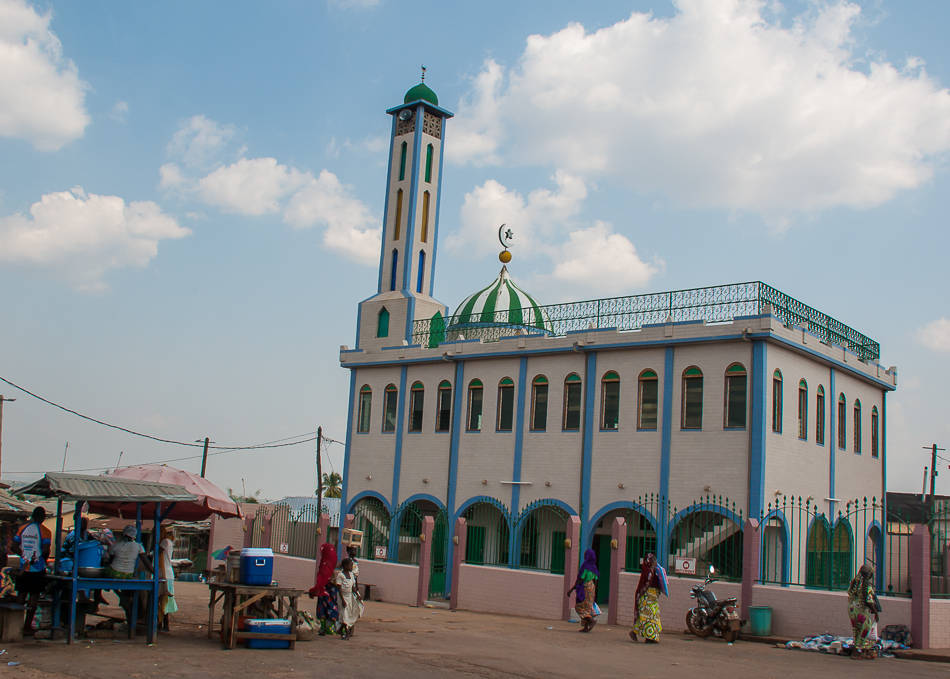
It’s a bit of a sleepy town except on market days where everyone congregate in the city center.
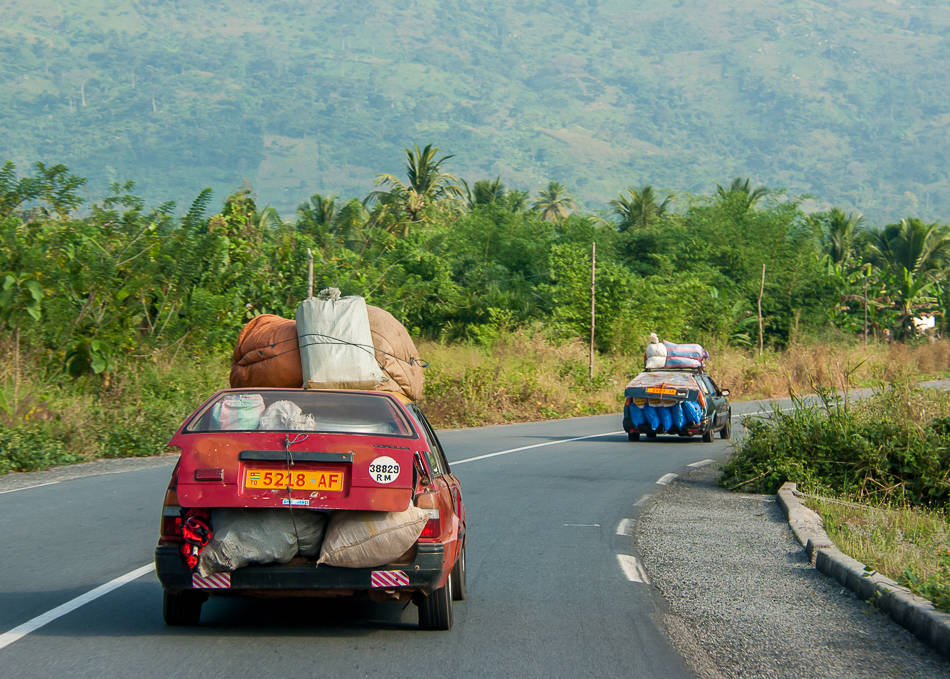
Continuing our road north bordering a new mountain range, one can’t help but notice the few cars on the roads which are all filled to the brim transporting merchandise.
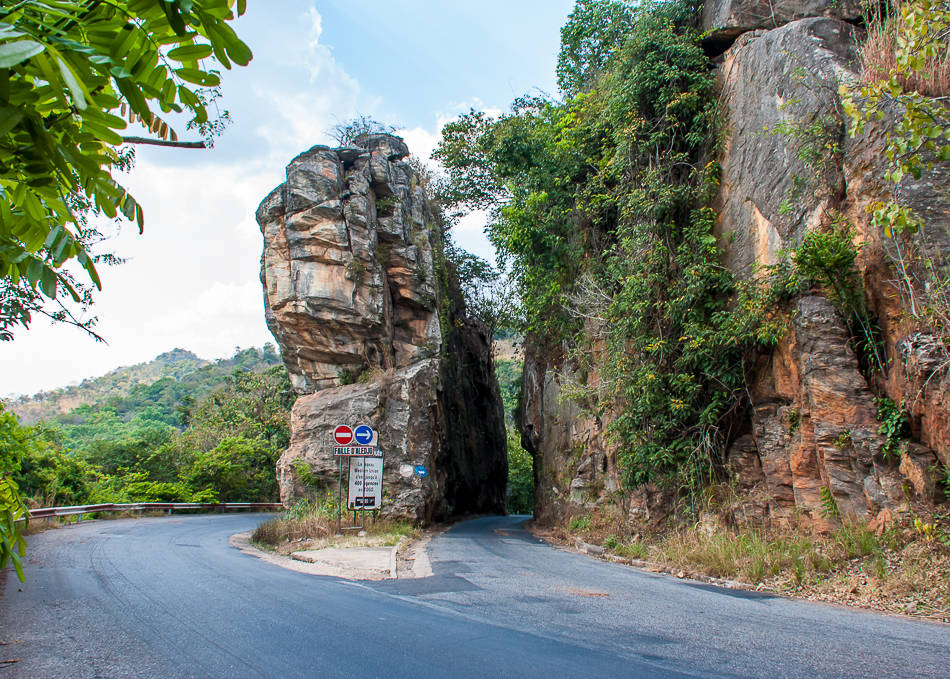
Now passing through the Faille d’Aledjo where Togolese workforce carved a route through a voluminous rock to facilitate passage on the main commercial road.
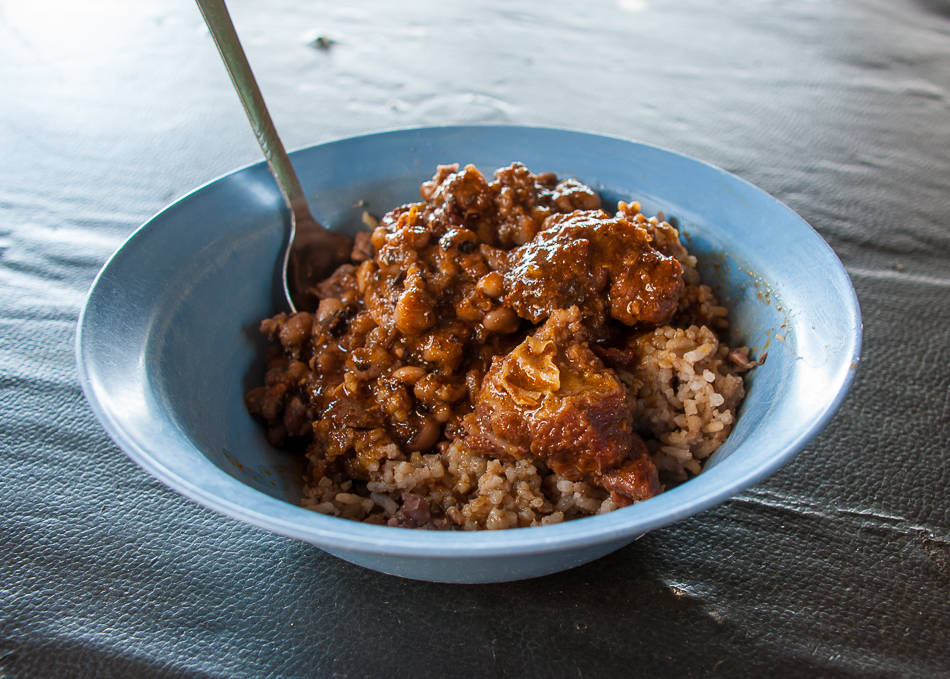
Street food and chop bars are very similar to what I had in Ghana though Togo being a French colony, everything somehow tasted better… 🙂
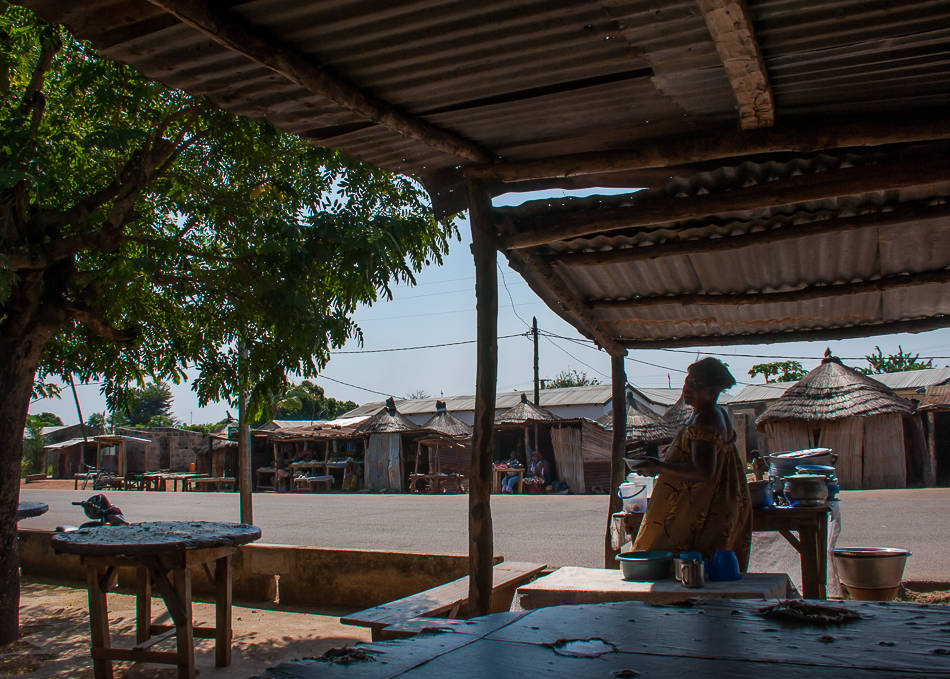
…especially this simple dish of rice and beans which blew me away.
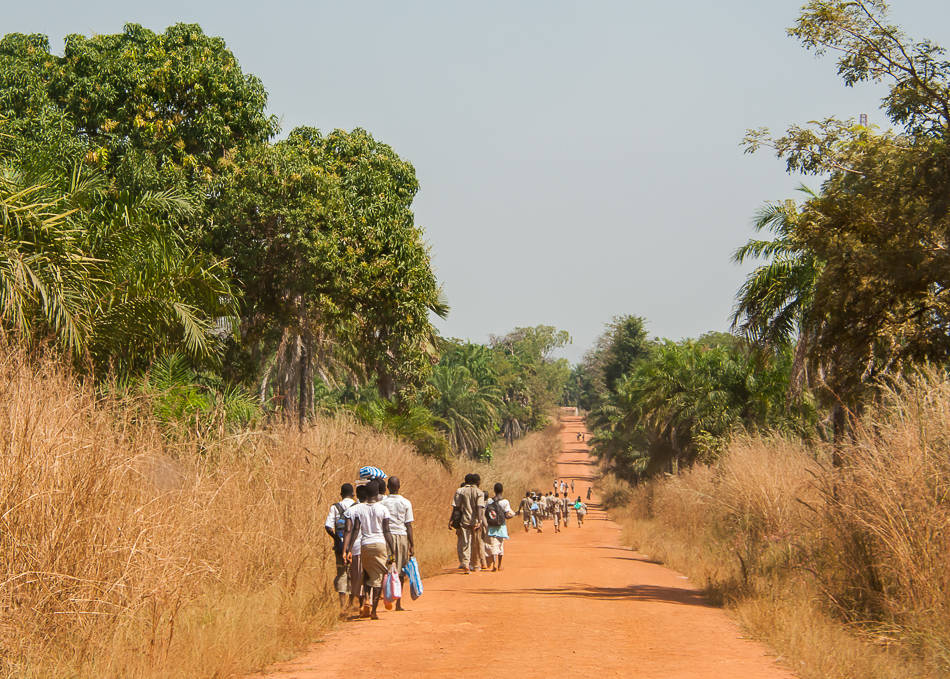
Taking a dirt road towards the small town of Sarakawa, a familiar sight of students walking back home for their lunch break appeared.
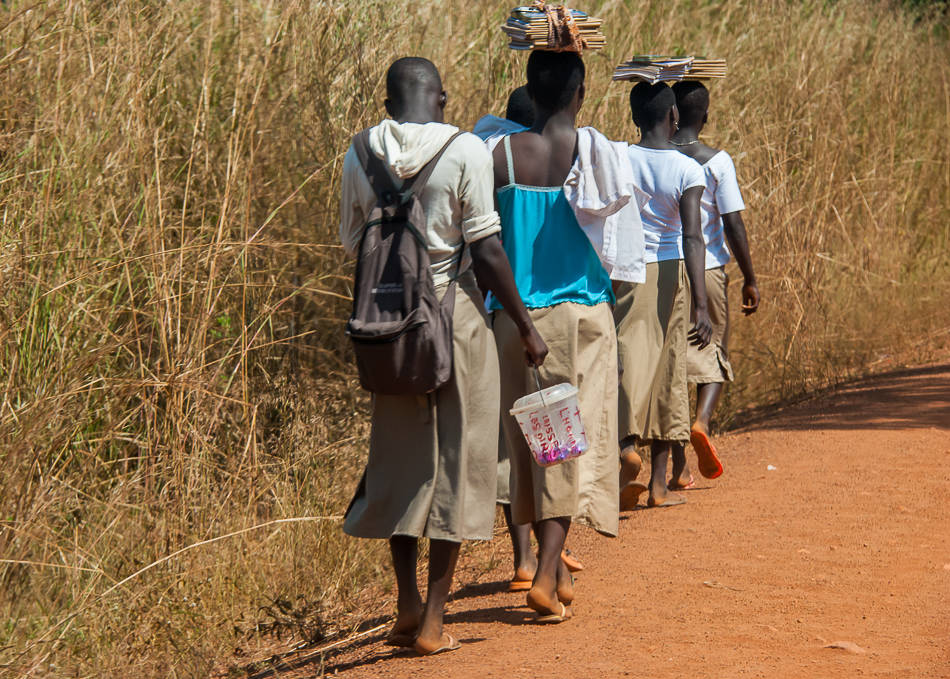
With barely any backpacks available (a luxury here), most carry their books and other materials on their head which I find so gracious.
You could hardly tell that a few hundred meters away lies the only park in Togo with any animals left. A sad story to hear that Togo was once full of wildlife but the political unrest of the 90’s and early 2000’s has seen most animals killed by the local population. 🙁  The Sarakawa Reserve belonged to the President and therefore was the only one untouched.
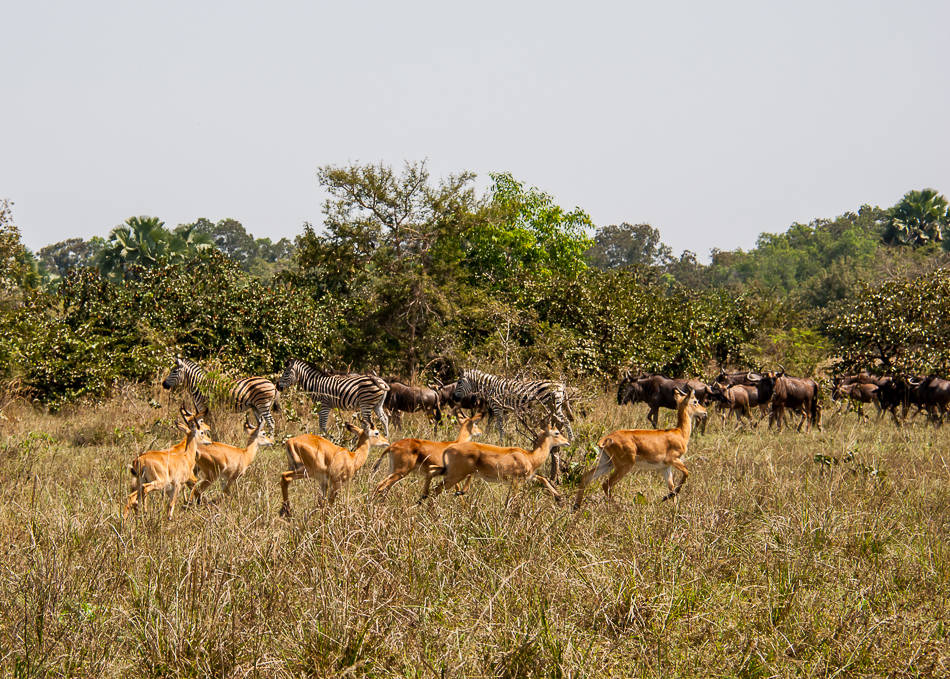
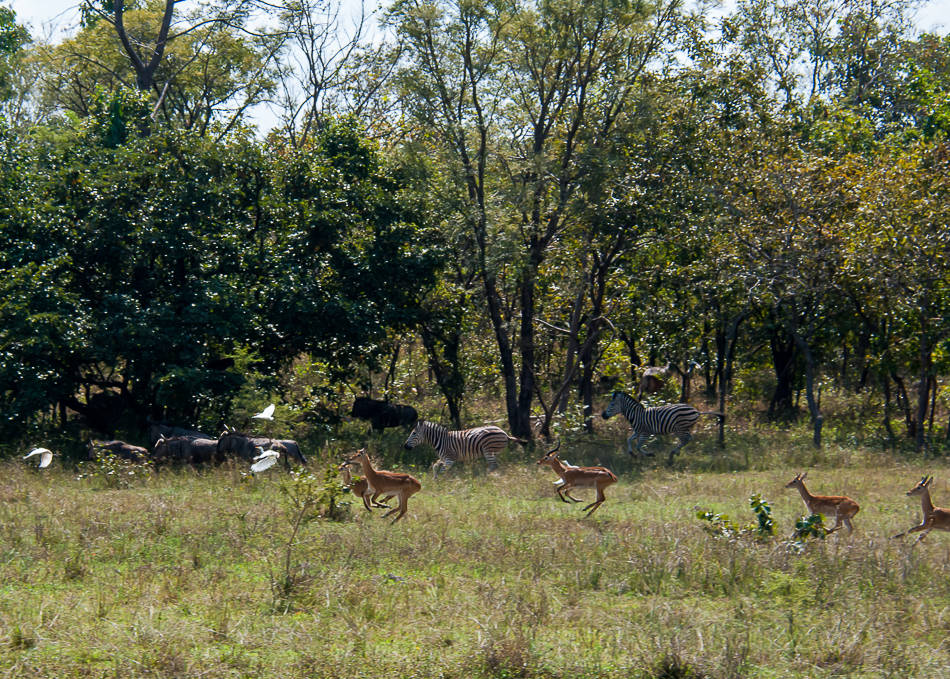
There was no one there when I visited and I had the park all to myself. Sure, it’s quite small and frankly nothing compared with Mole in Ghana, but I got quite a few good sightings. The park was created to entertain the President so a lot of the animals here are not indigenous to the region (i.e. they flew in the zebras and gnus from South Africa). Not the most authentic experience but definitely a great way to spend a morning.
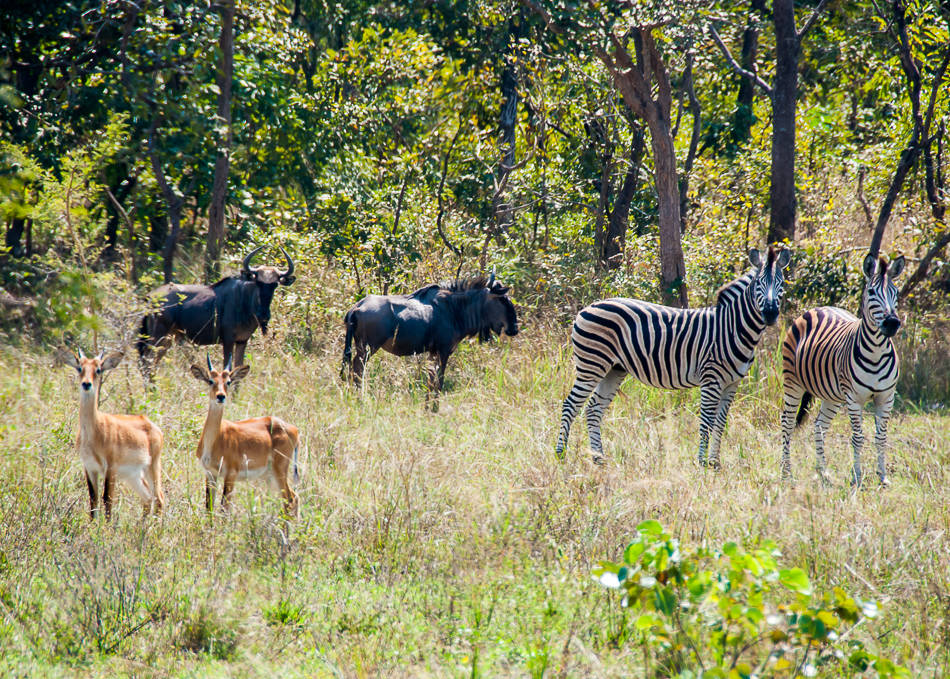
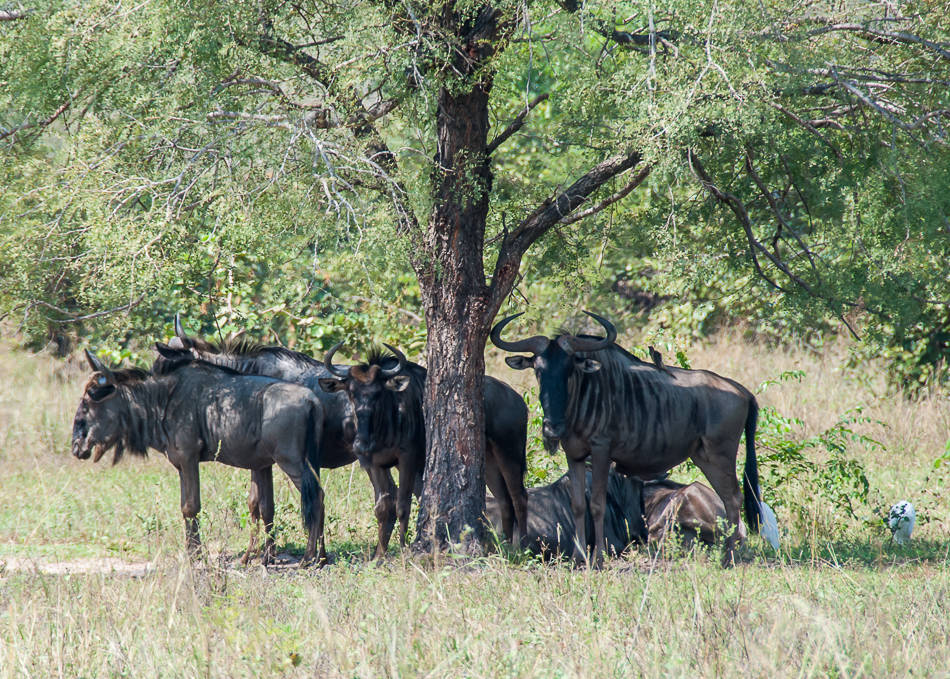
It was the first time I ever laid eyes on gnus (also called wildebeest), usually found in Southern Africa.

A trio of zebras was hanging out nearby, clearly very attached as they never left each others side.


Insanely beautiful…no wonder their attractive pattern has taken over the fashion world.

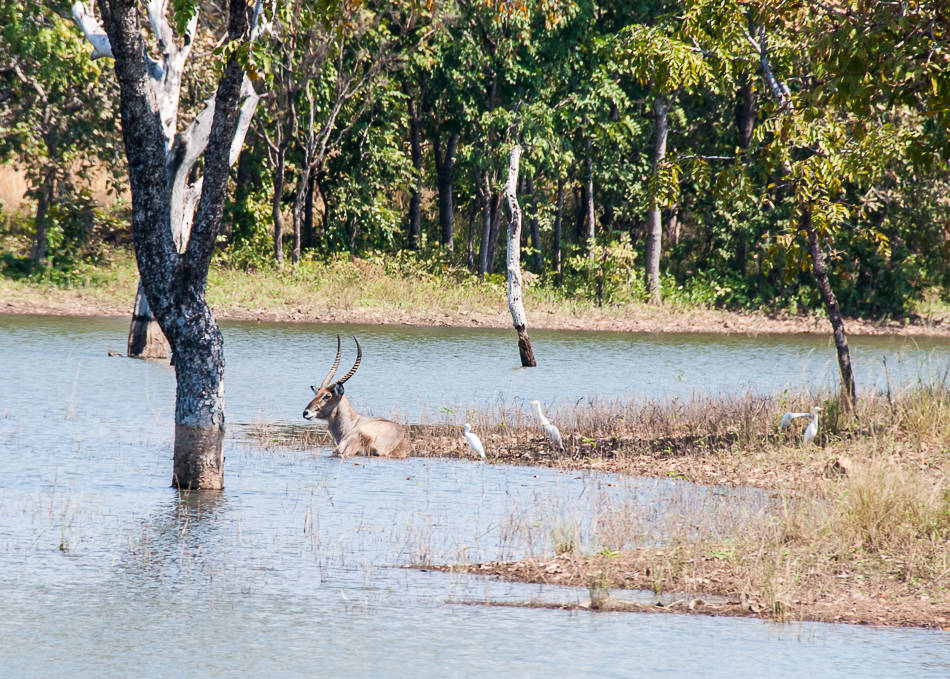
A waterbuck freshens up in the reservoir.
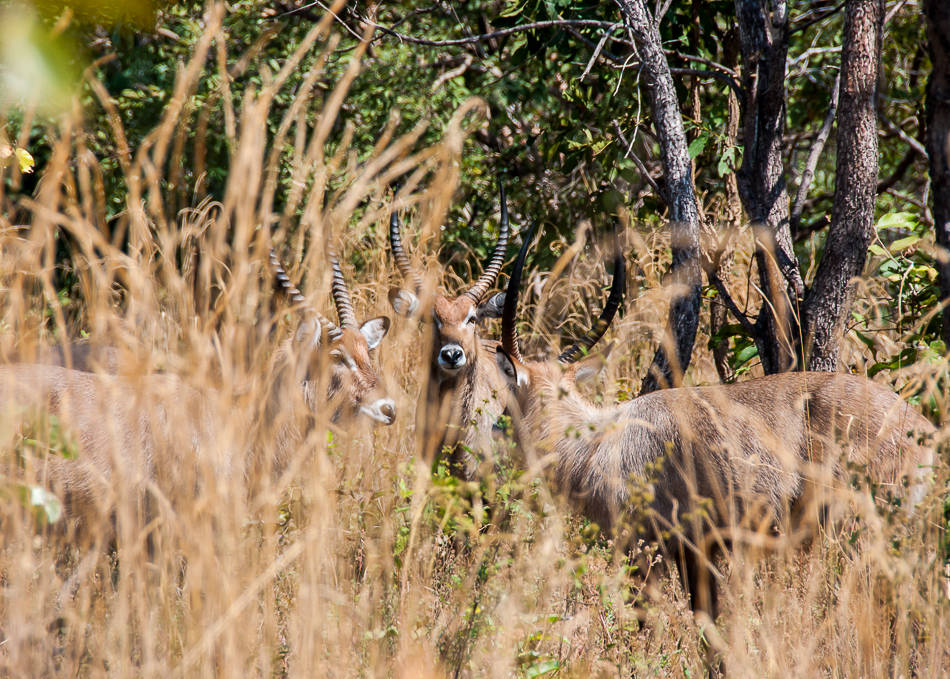
Others were more shy and hiding in the bushes.
OK, it wasn’t up to the scale of the great migration but seeing them all flee (no idea from what) was a grand sight.
Special areas were wired and contained other exotic species such as ostrich. I’ve always been fascinated by the world’s fastest two-legged animal and its prehistoric-looking feet.
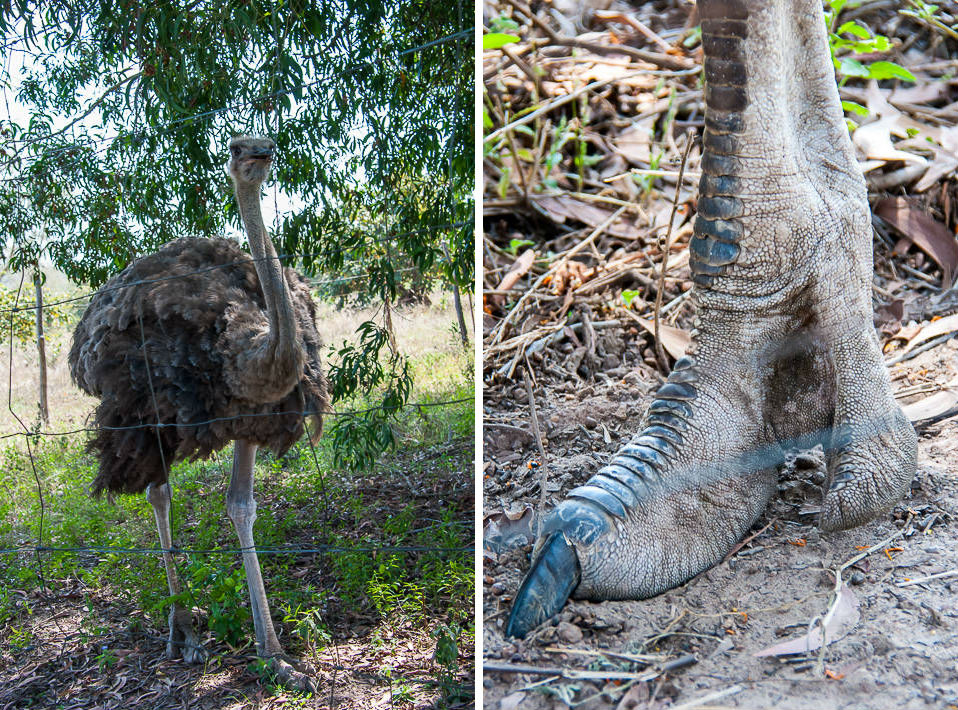
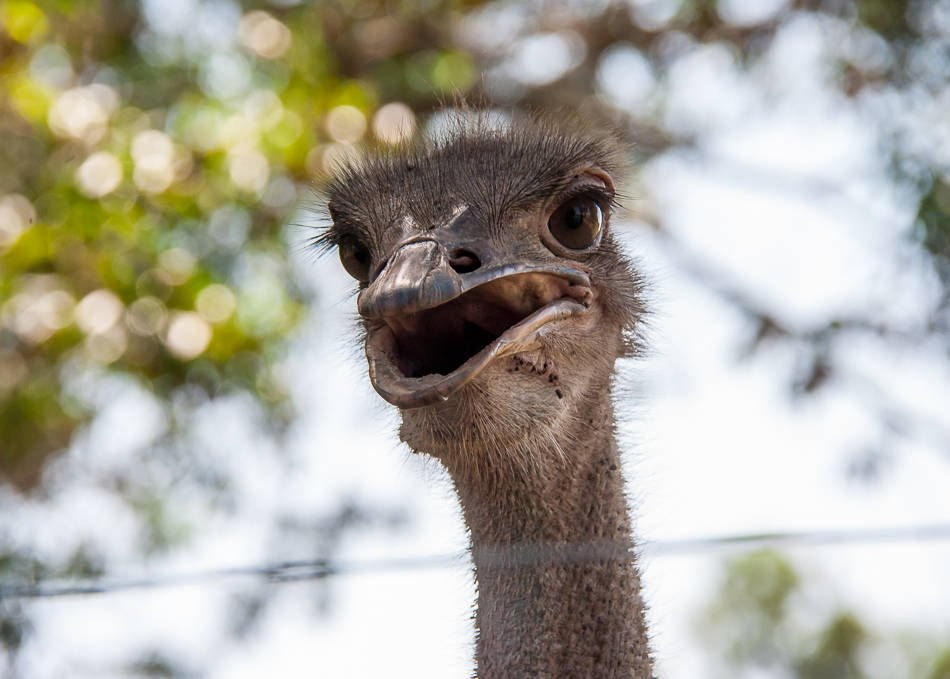
She seemed as surprised to see me!
Her neighbors were a couple of big turtles mainly there for conservation.

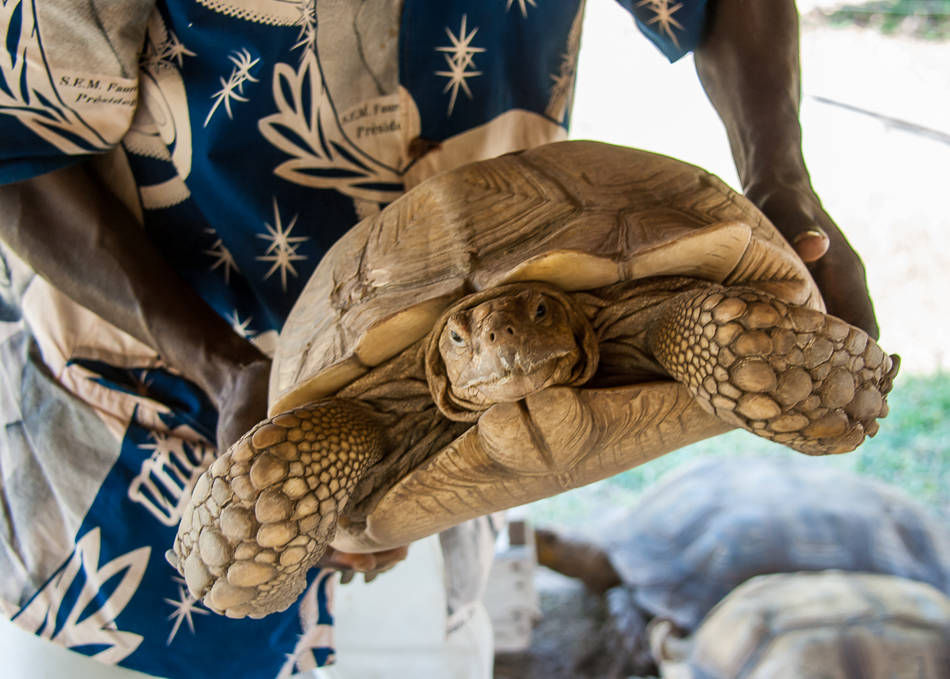
They’re being kept safe and well fed with a vegetarian diet of delicious pumpkin and other local crops.

Near the reserve stands a peculiar monument to the old President of Togo, Gnassingbé Eyadéma.
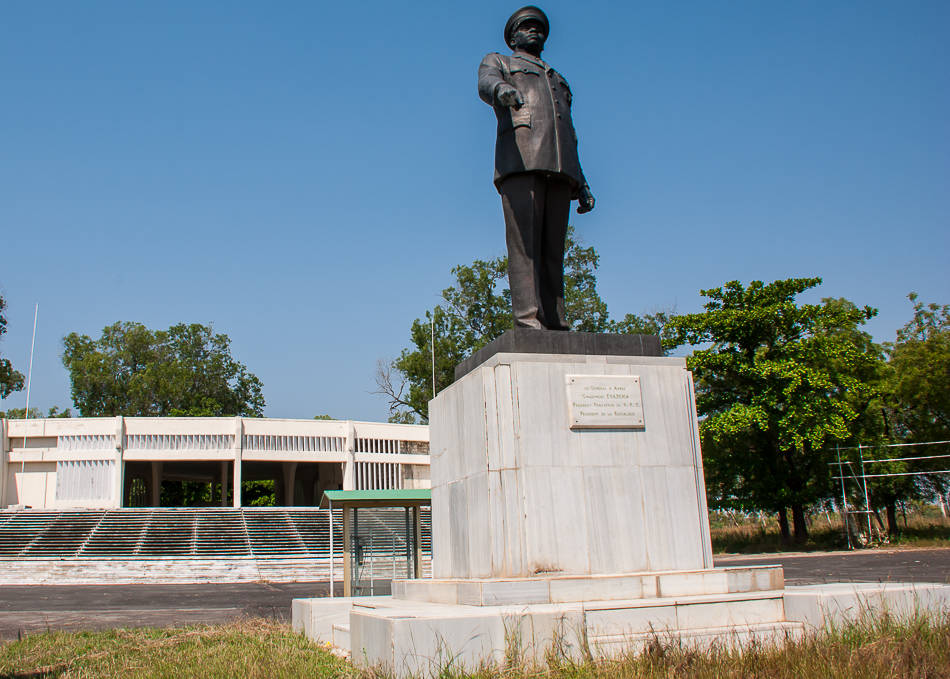
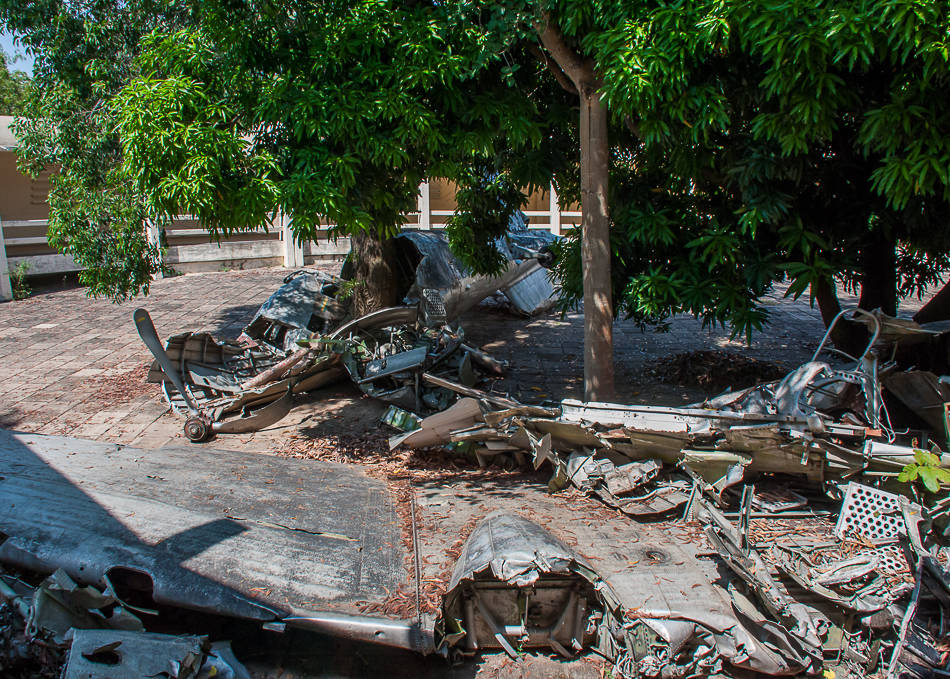
On 24 January 1974, a Togo Air Force C-47 carrying several notable political figures, including the president, crashed near Sarakawa. Rumors are that the French sabotaged it after the President refused to collaborate over the use of a phosphate mine…

The president survived but the French pilot and three other passengers died.  Following the incident, a monument was established by the Togolese government near the crash site.
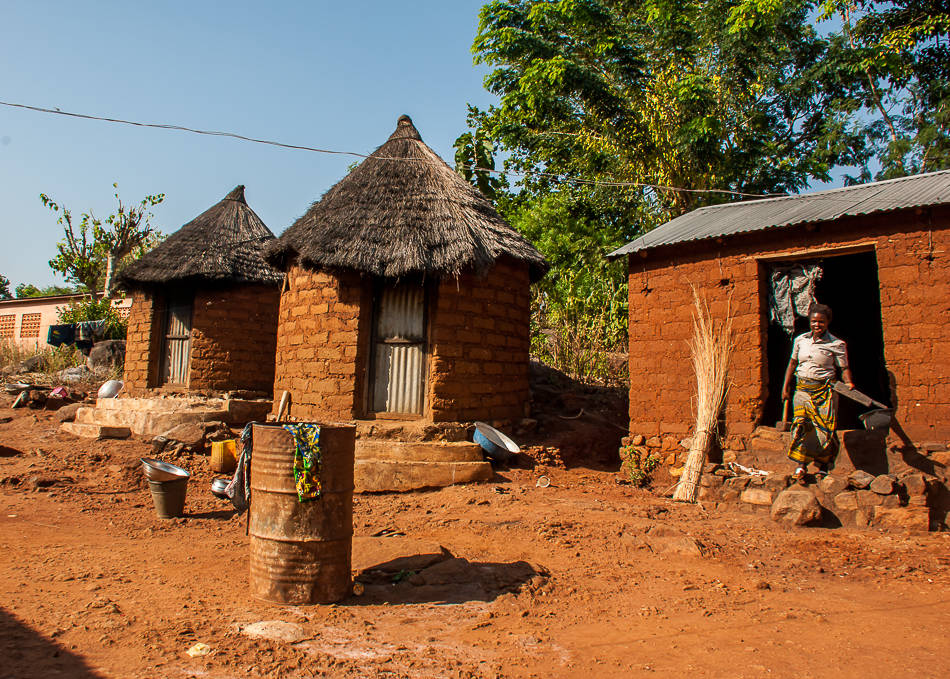
Moving on to the little town of Pya where a small community still practice traditional ironwork and pottery.
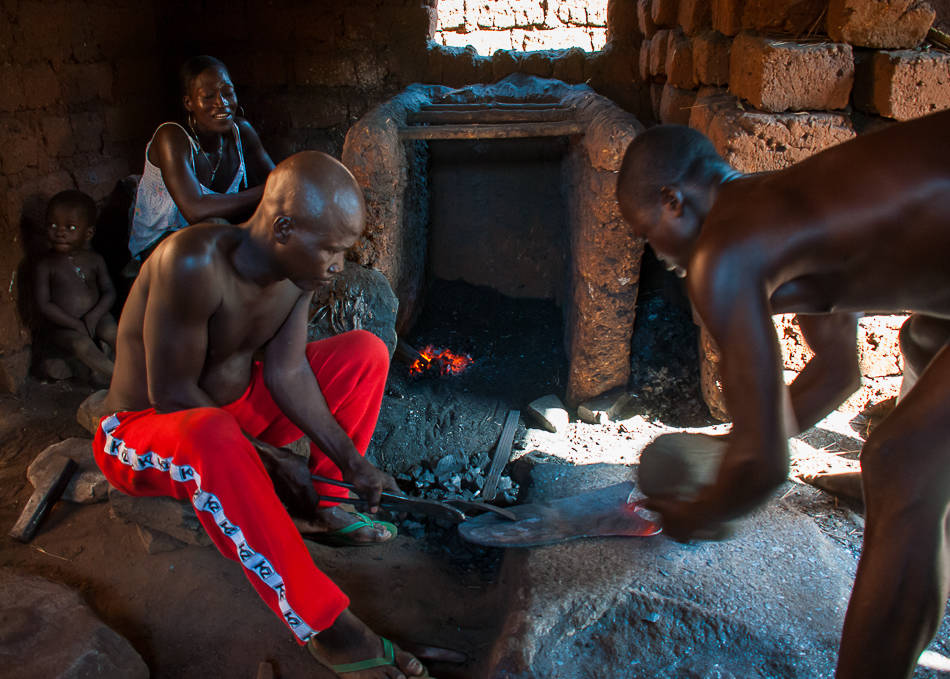
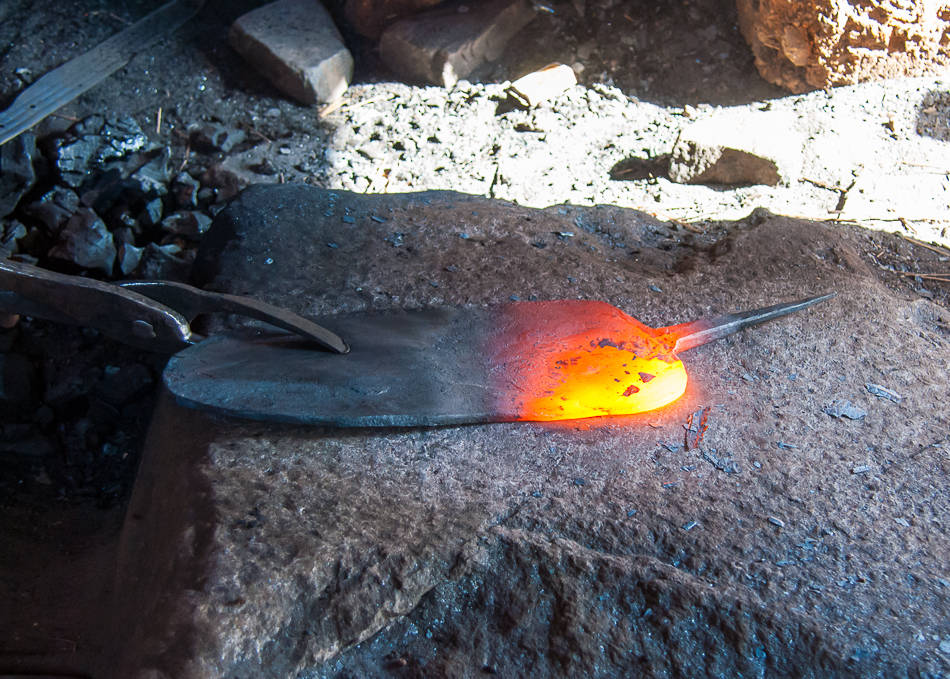
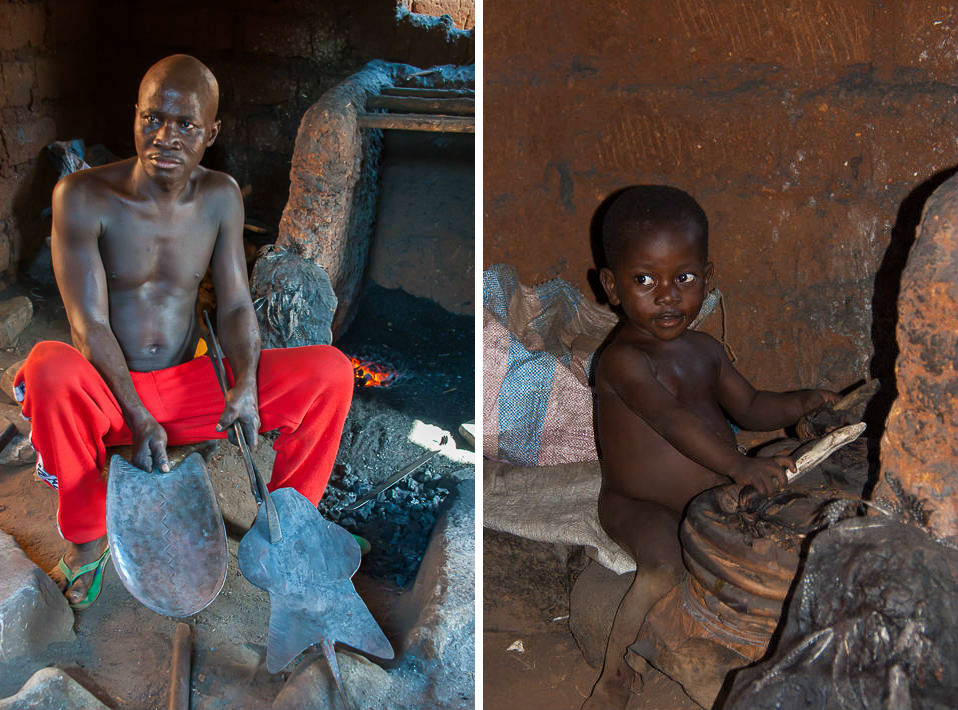
It’s pretty hot in here as the village chief/master blacksmith and his assistant work a metal piece over hot coals. After heating up the metal, the piece is hammered with a big rock repetitively, slowly bending the metal in the desired shape, reheating the piece constantly in between – a very tiring job!
Fer 1

The metal comes from old rail tracks far away and will end up as a gardening tool, knife/machete, or weapon such as arrows.
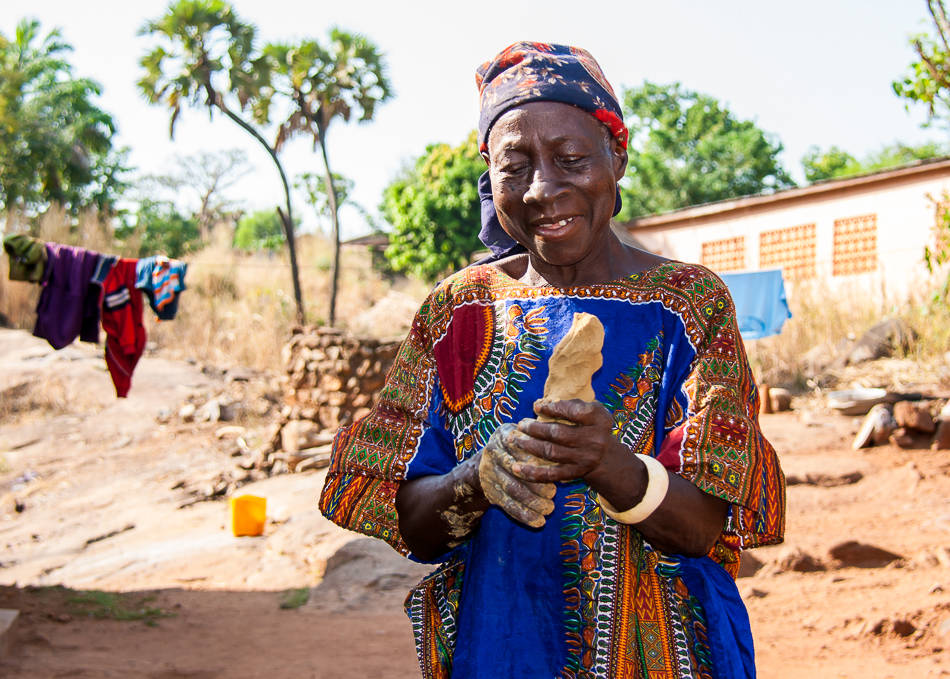
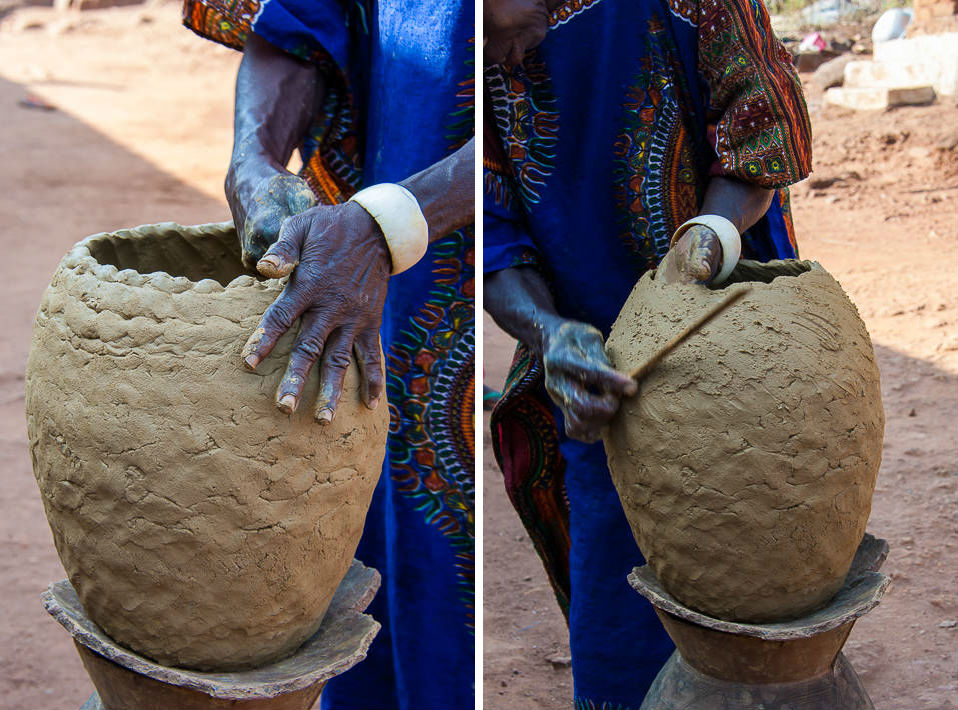
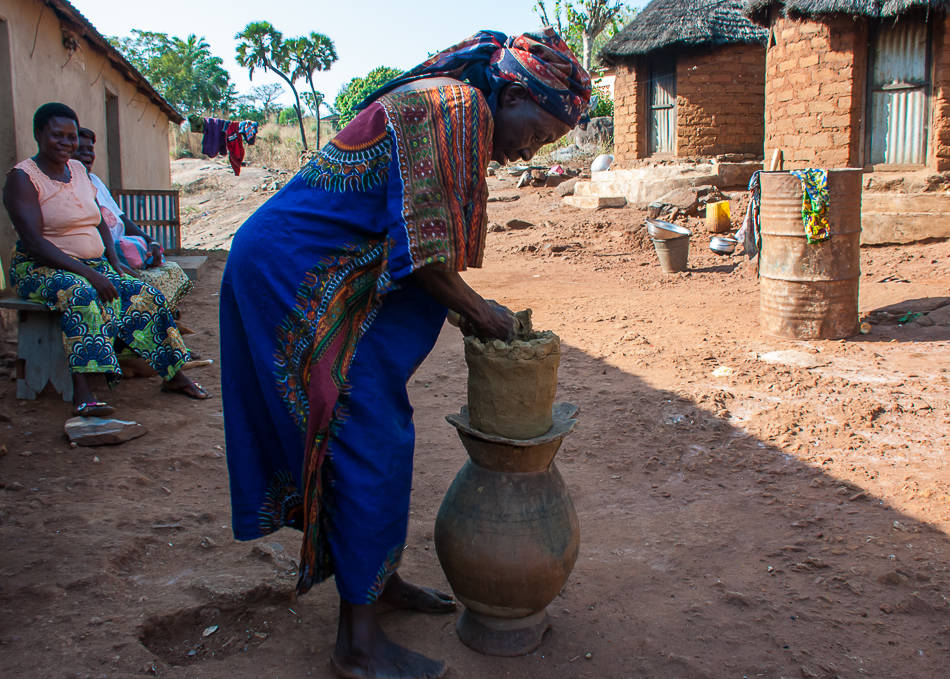
In the courtyard, a potter is at work starting a traditional urn with clay.

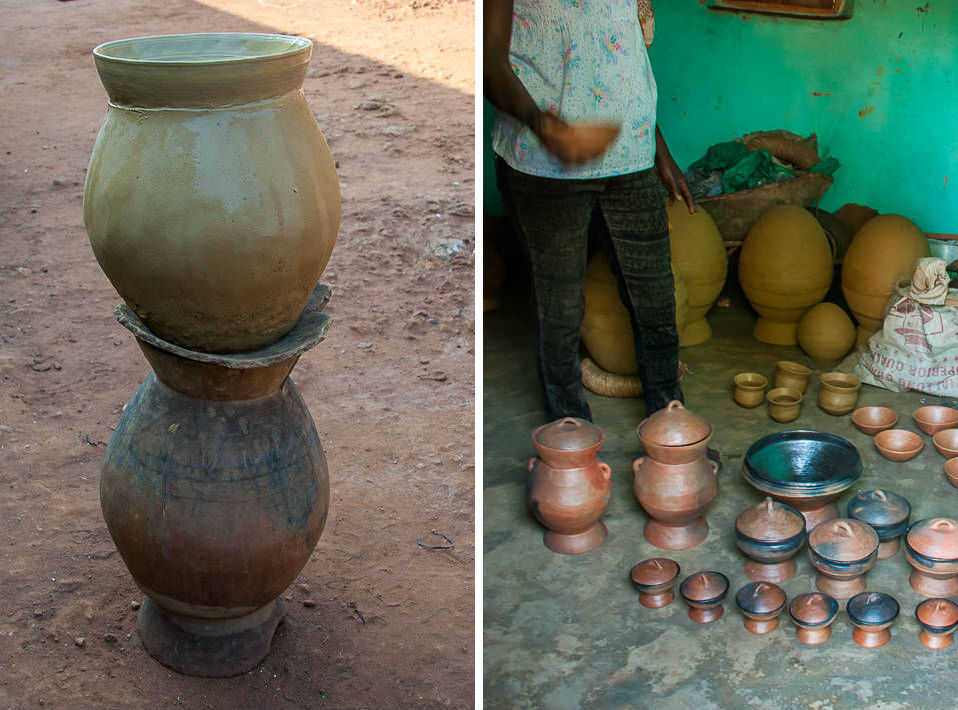
The finished urn will be left to dry for three days before being turned upside down to finalize the bottom which will also be dried for three days. Afterwards, the urn will be baked slowly to harden it and make ready for selling it at the market or using it in the house as a water container or for storing food.
Back in the car, we finally head to the real reason we came all the way to the north of Togo – the alluring Tamberma Valley.
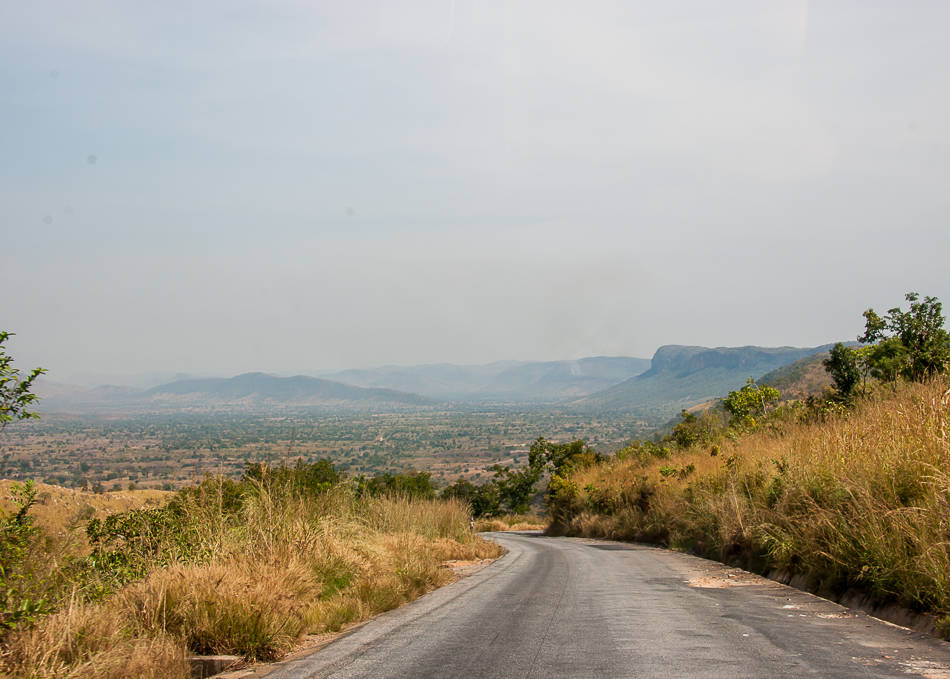
Declared a UNESCO World Heritage Site, this amazing valley is home to a unique collection of fortified villages with houses like mini fortresses.
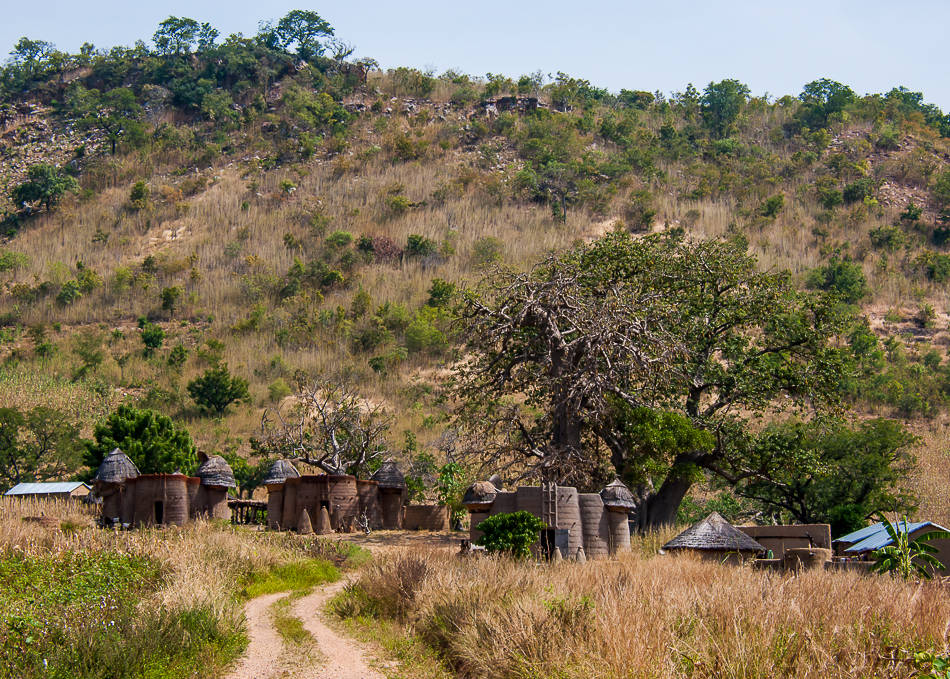
These villages were built in the 17th century by people fleeing the slave trade in Benin and remained isolated until very recently. The local Batammariba people are skilled builders and have put together these castle-like structures using only clay, wood and straw, and no tools. The look they created was to help ward off invasions by neighboring tribes and served as a scaring tactic.
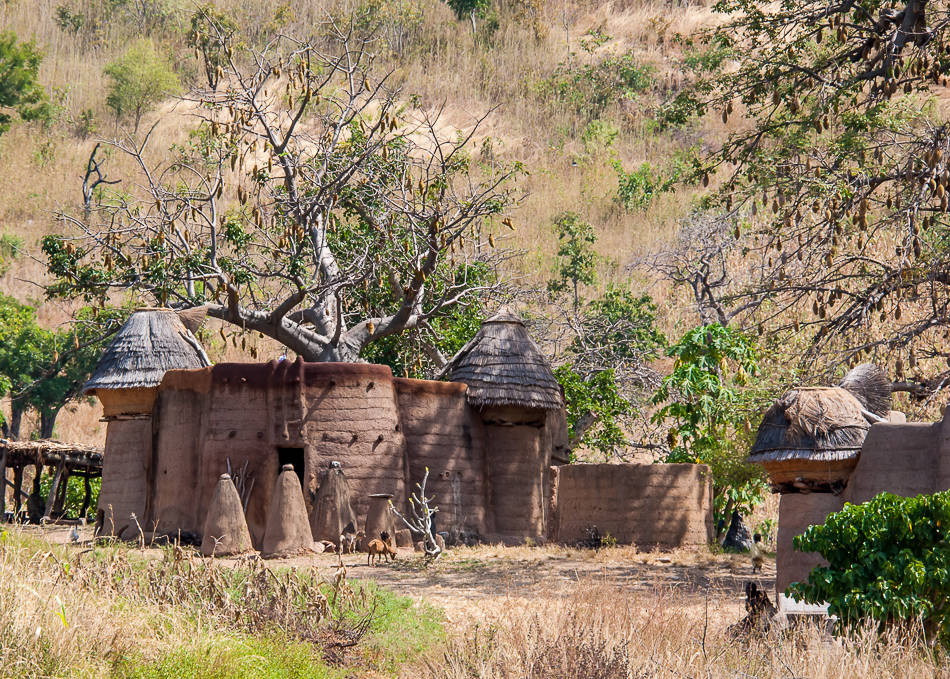
A typical house is called a Tata and consists of a series of towers connected by a thick wall with a single entry point meant to trap an enemy should the house be invaded. A hole in the ceiling of the first chamber would allow the house occupants on the roof to shower the enemy with arrows from above. Note also the huge fetish at the entrance of every Tata, used to ward off evil and bad spirits by receiving regular sacrifices (most often chickens).
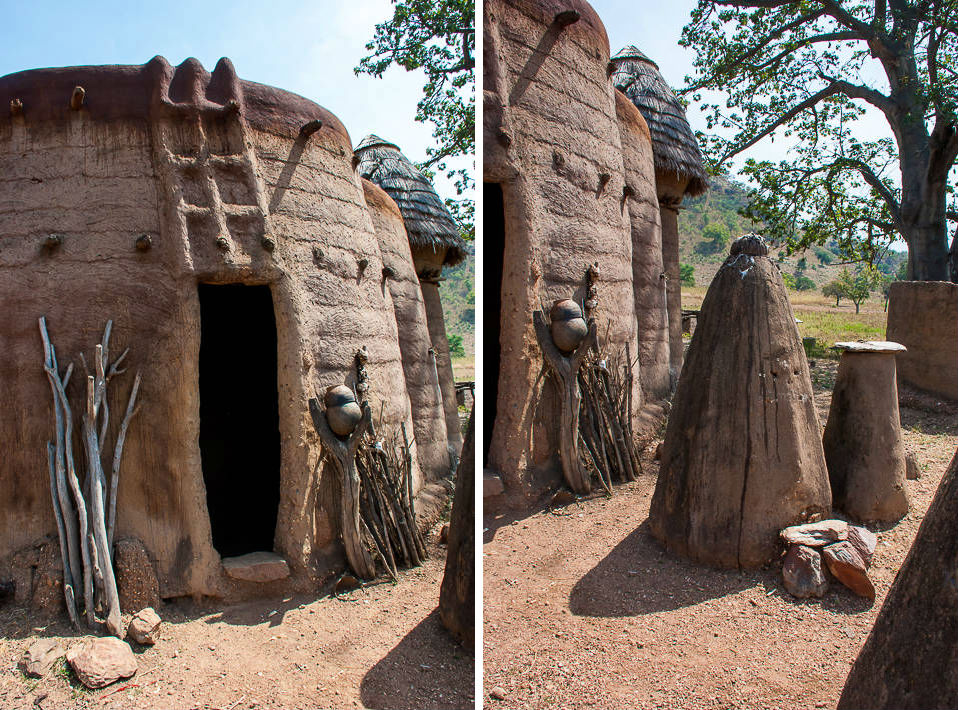
The only functional room on the ground floor, the kitchen, is also the point of access to the rest of the house which is on the upper floor/rooftop.
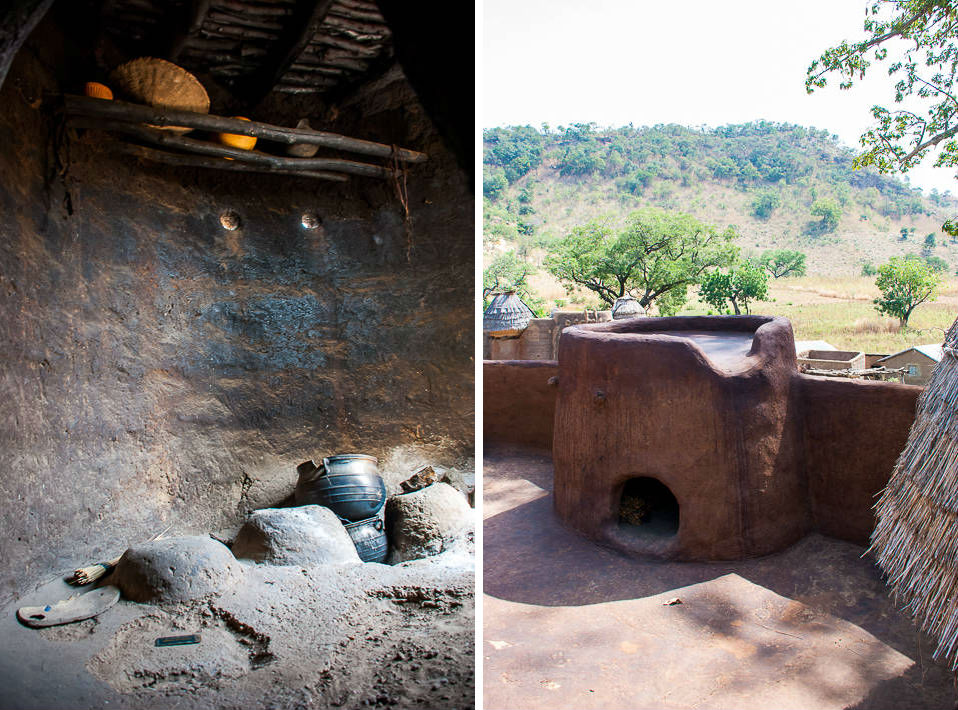
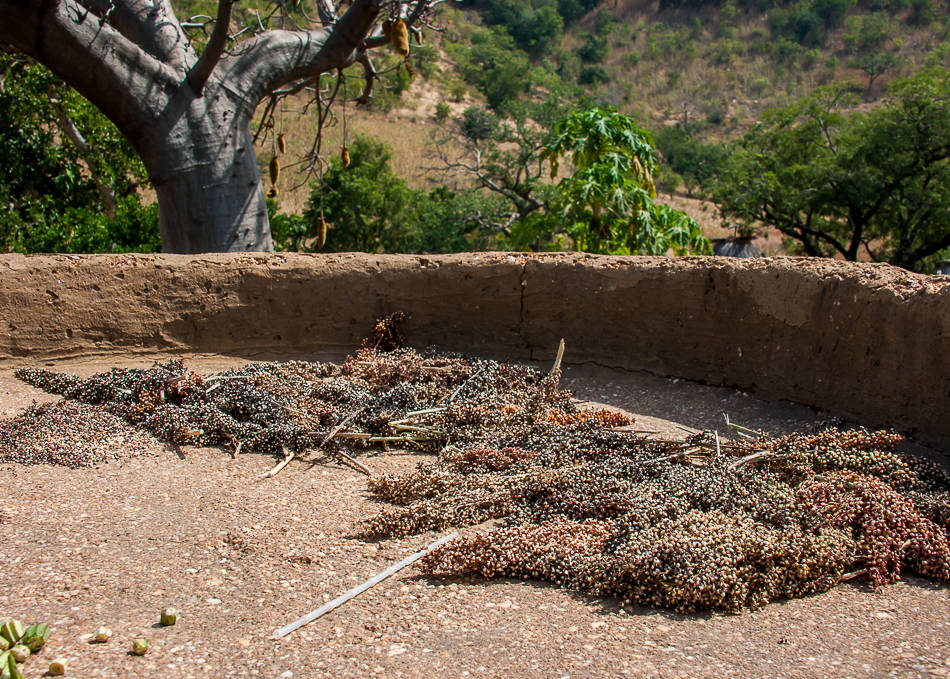
Life here revolves around an elevated terrace where all the house chores are conducted such as drying the millet and corn…
…storing the millet and corn in conical containers on top of the towers…
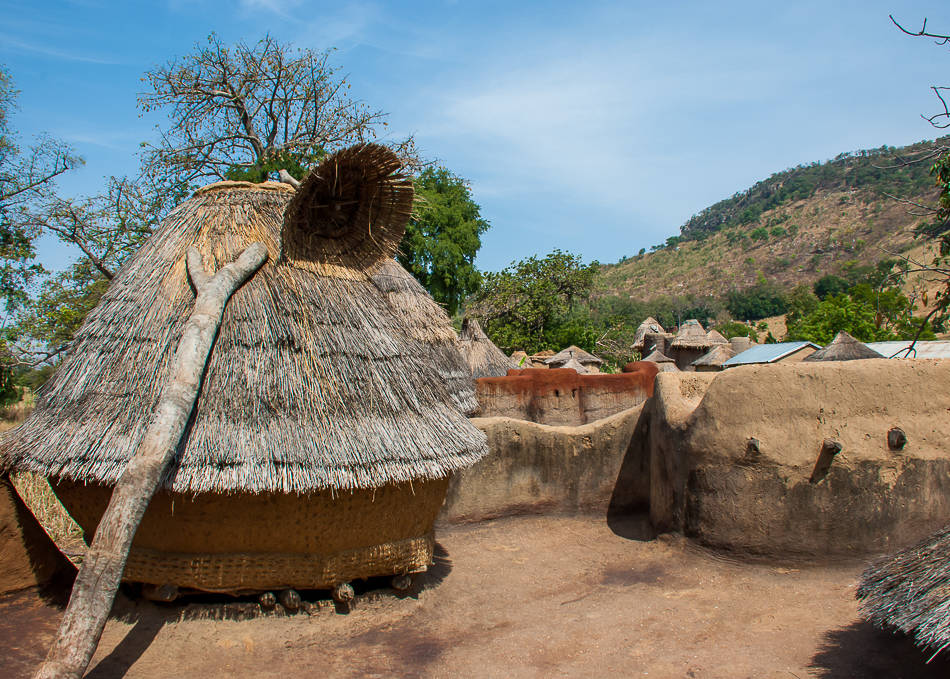
…sleeping, and basically spending most of their leisure time.
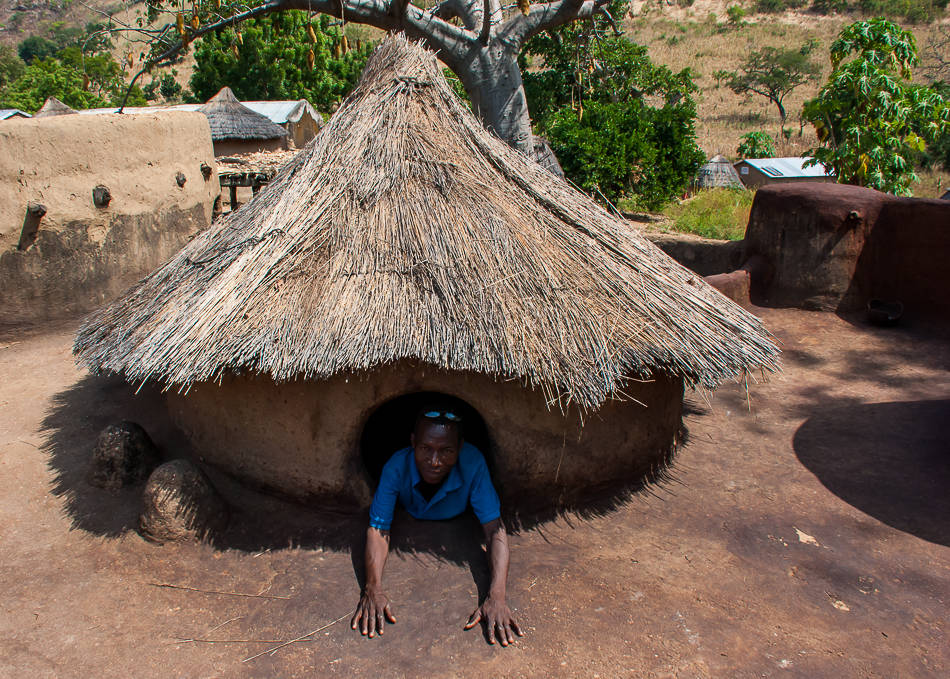
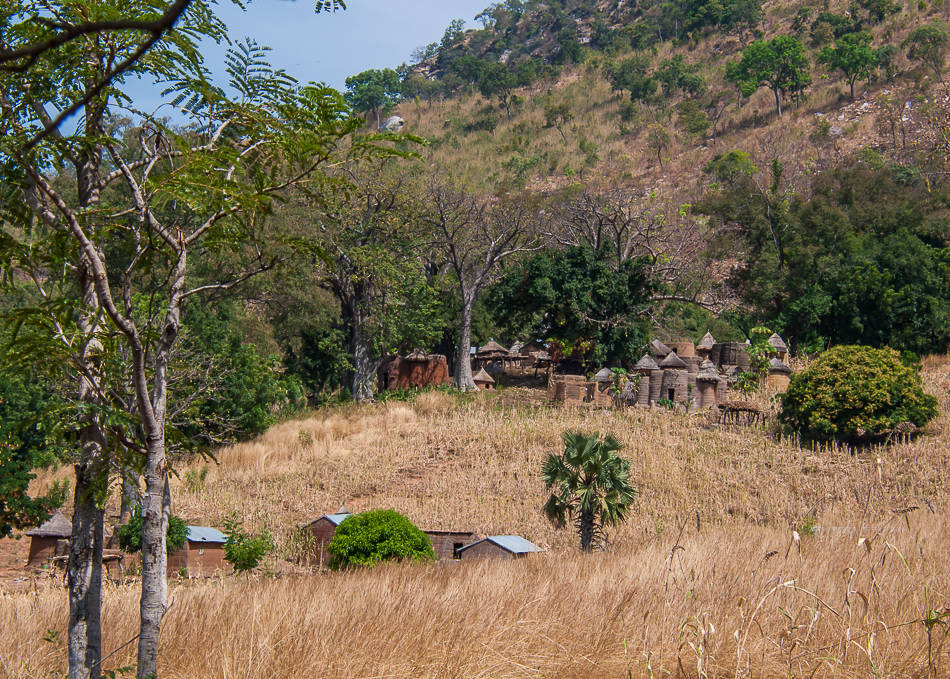
A village will have a handful of houses, all belonging to the chief’s many wives.
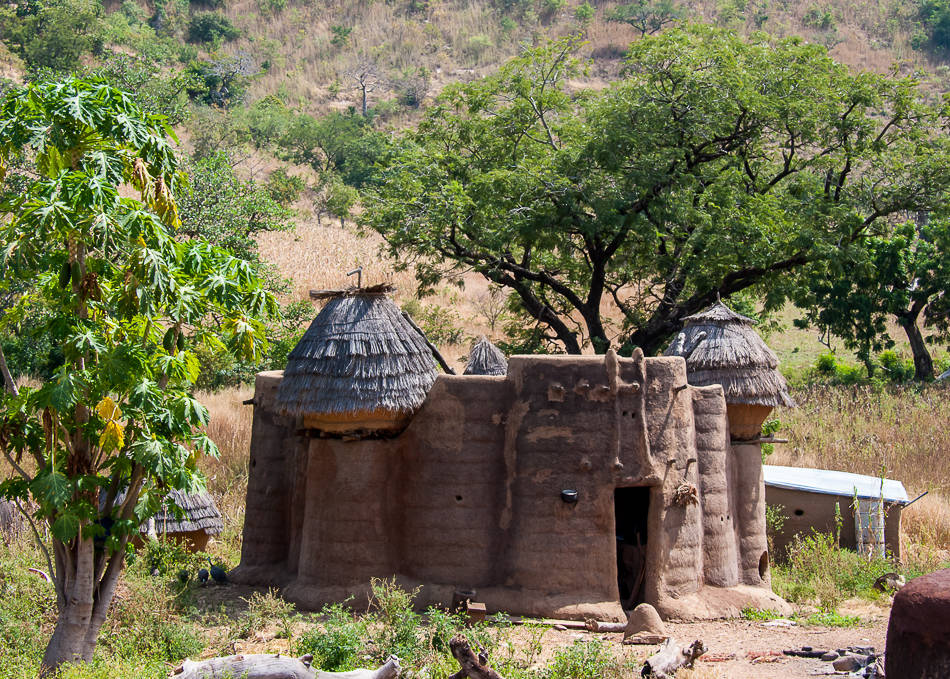
Spread out all over the valley, the constructions create a surreal place and easily an highlight of any visit to Togo.
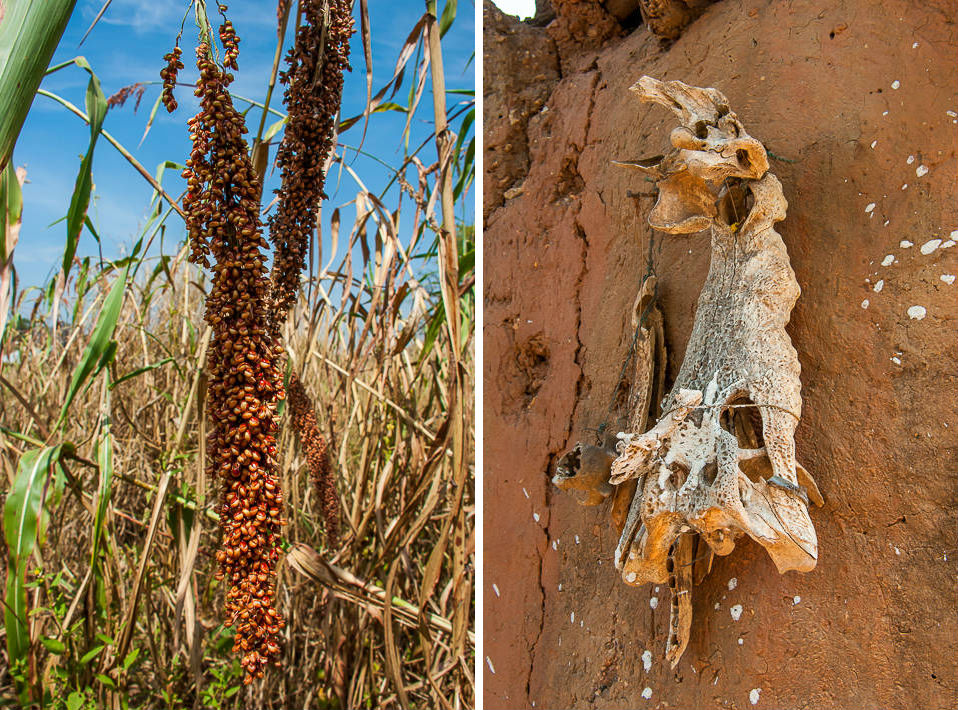
Millet grows profusely between the villages and you notice how every Tata proudly displays skulls and other fetishes right outside their door such as this crocodile skull.
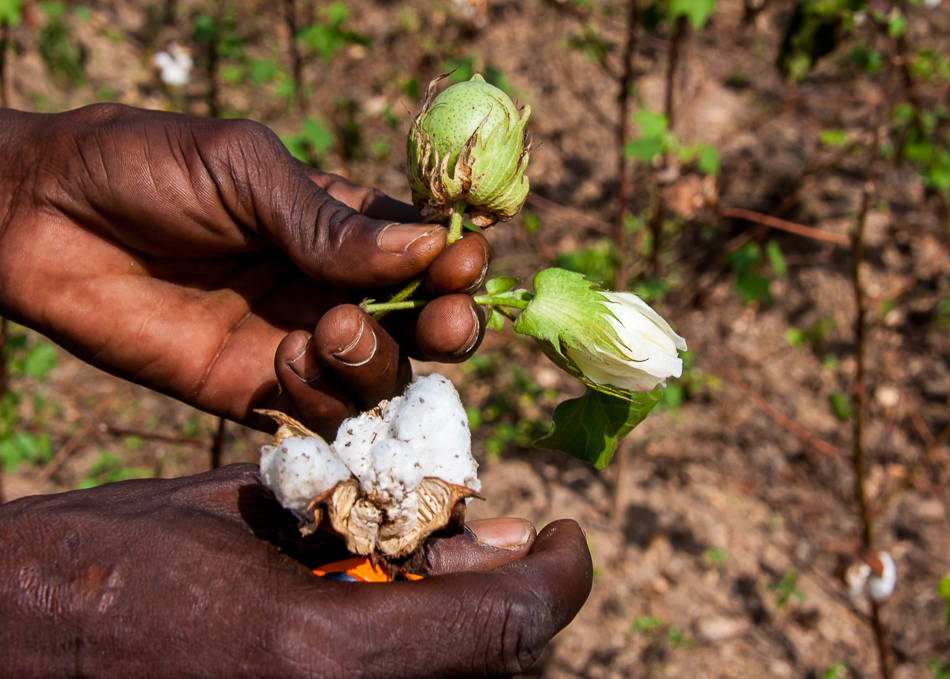
The Batammariba people also grow cotton and fields can be seen all around.
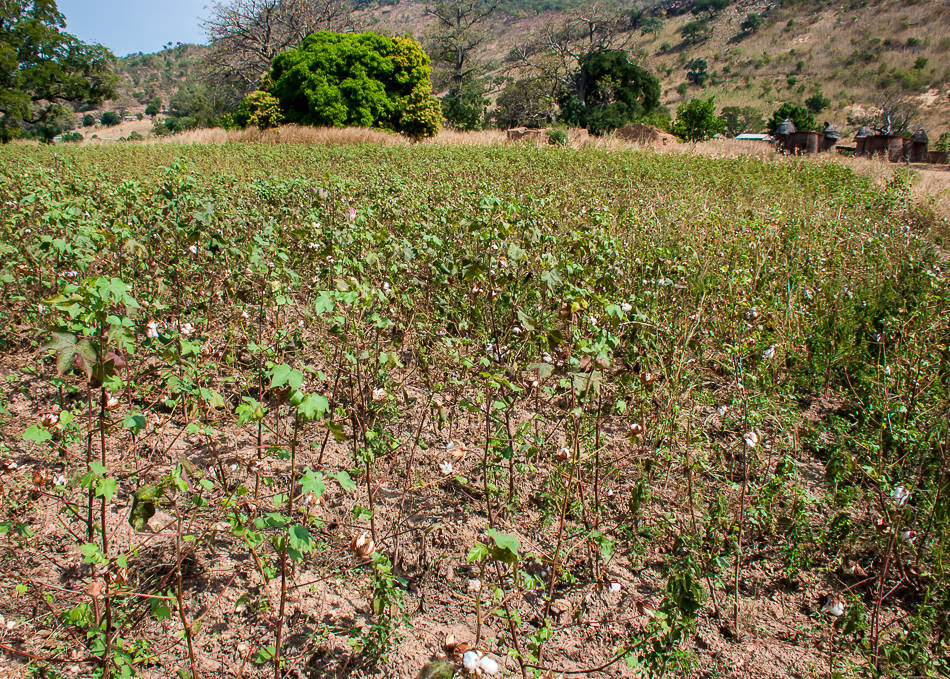
Here showing the stages of a cotton flower.
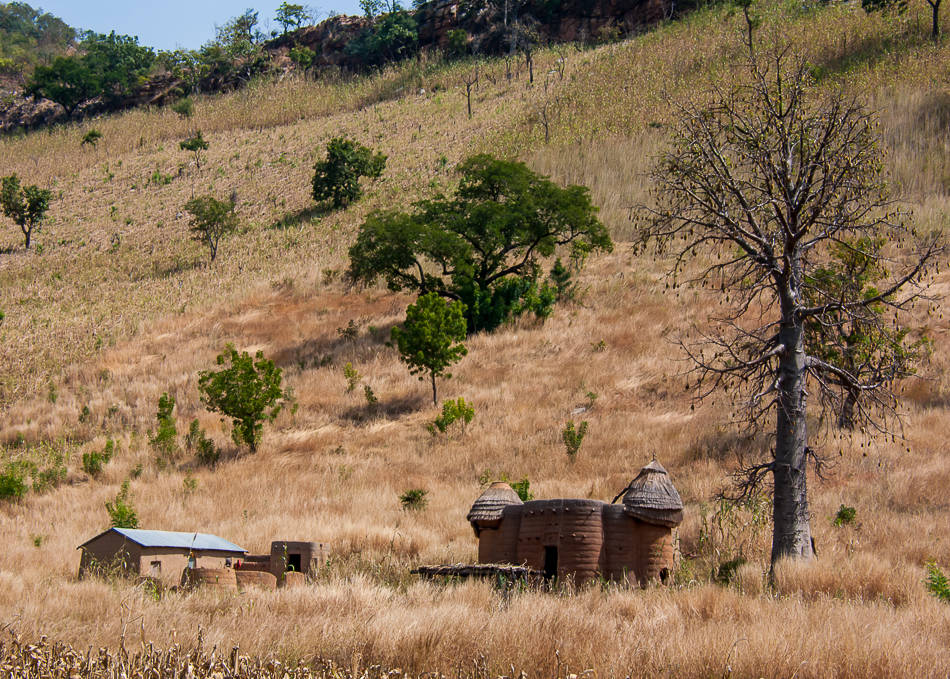
Before they started building the houses though, the locals would live inside giant Baobab trees to hide from enemies.
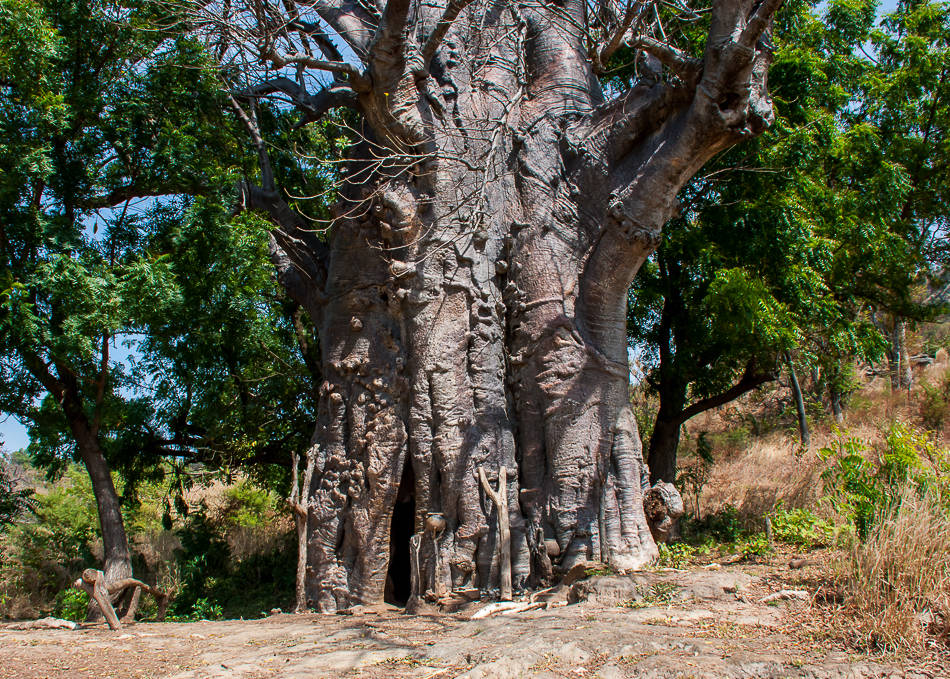
I squeezed in to look at the tight quarters, definitely not the ideal setup!
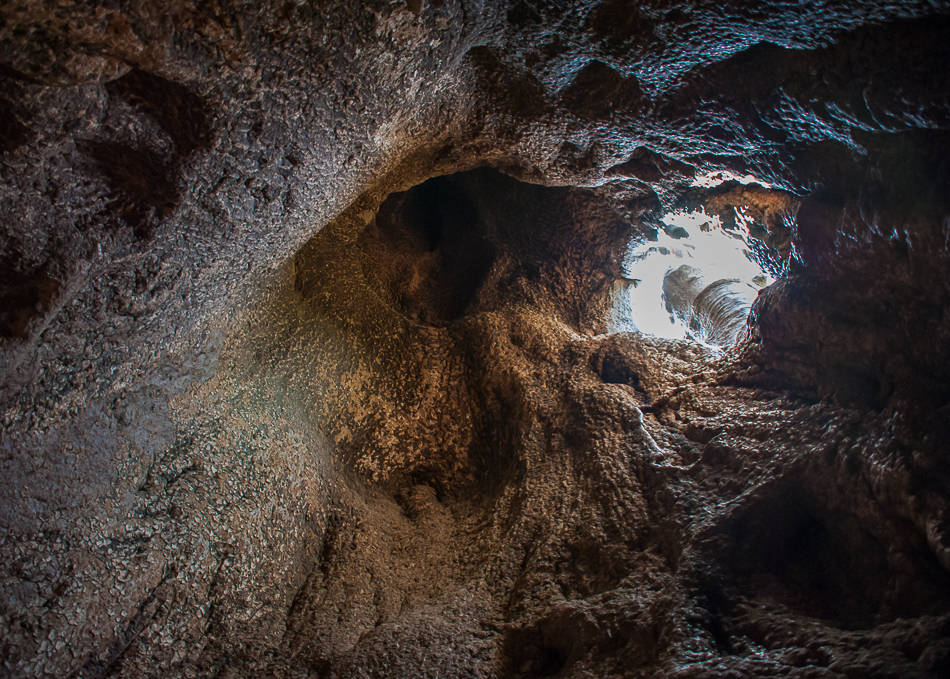
Spending some time with the local tribes is a great way to learn about their traditions and daily activities.
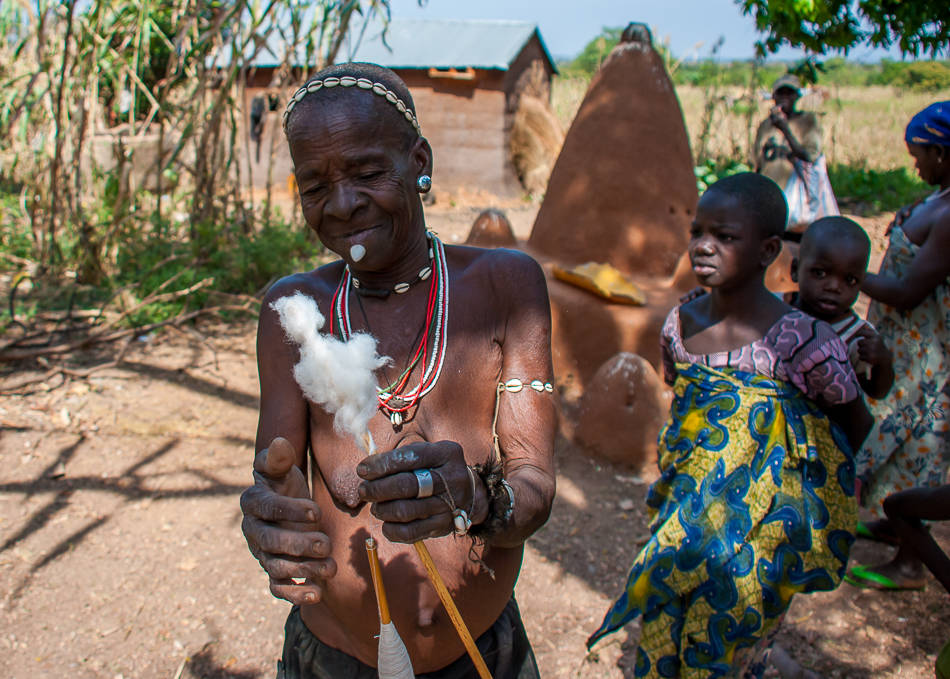
Some of the older women can be seen with a tooth of a wild boar inserted into their chin.
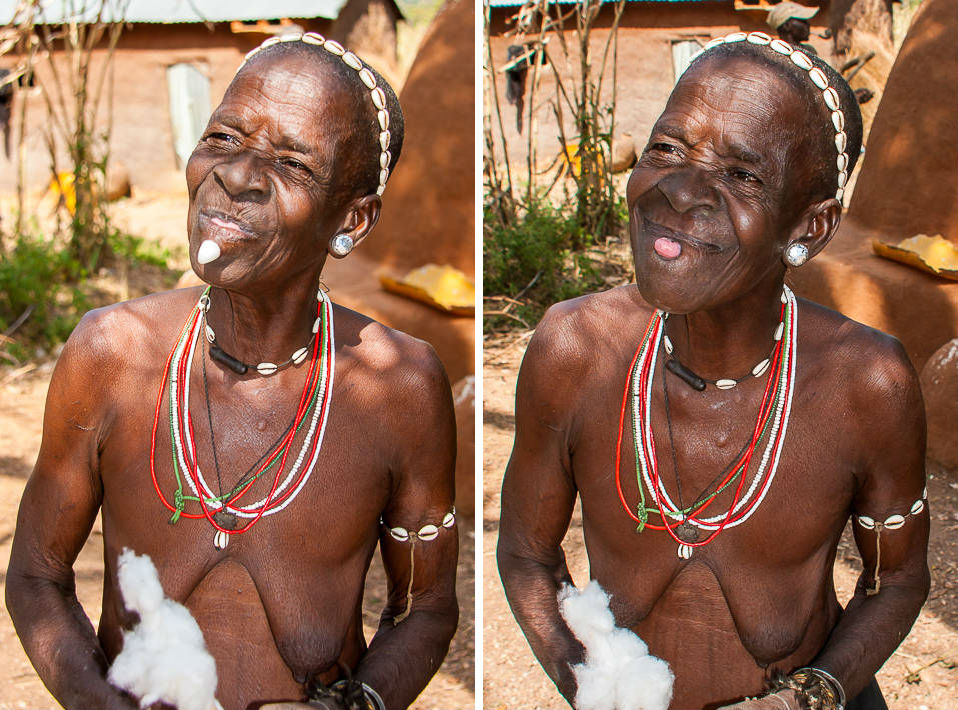
Old woman

I was also able to witness some traditional dancing and celebration.
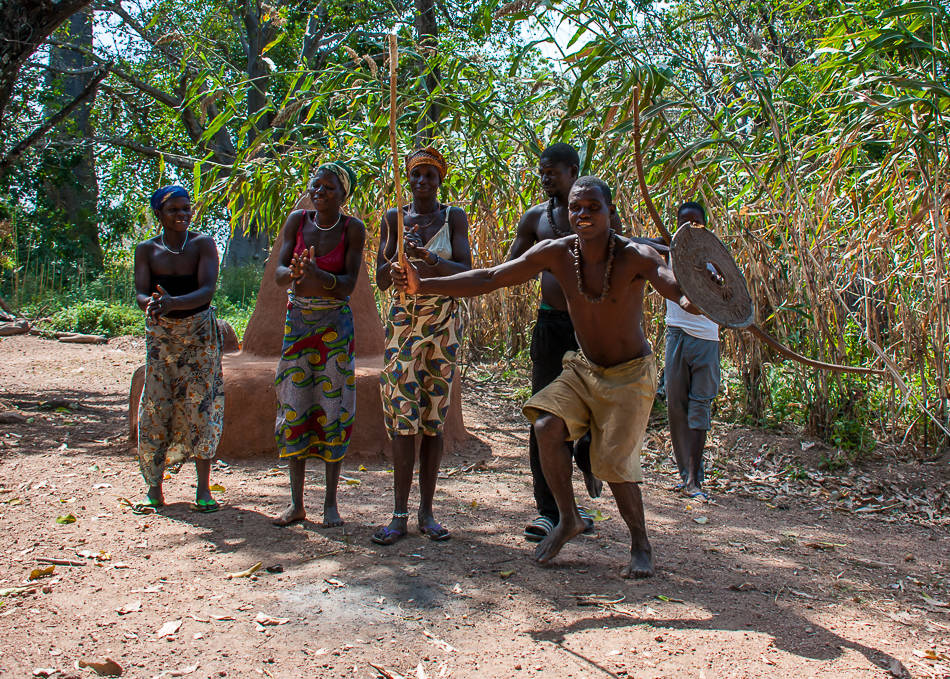
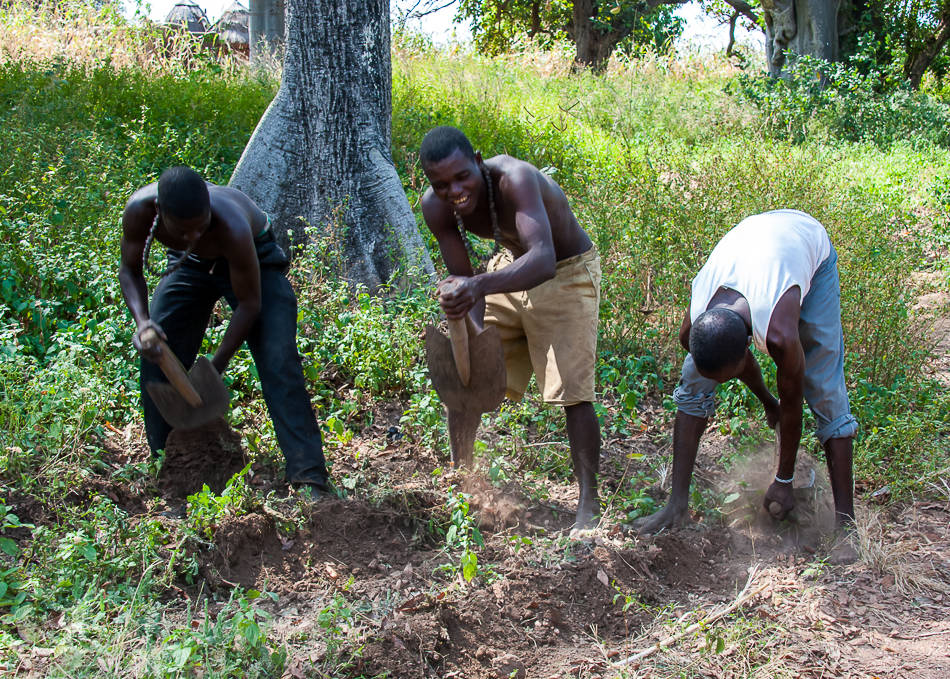
Working the earth for farming is done rhythmically while singing a very catchy tune.
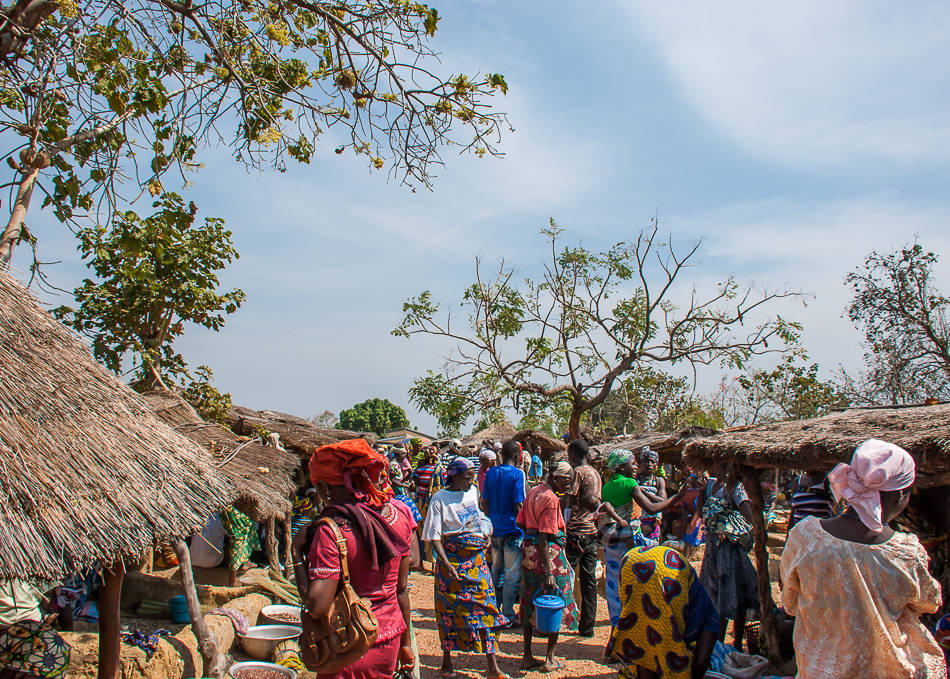
Market day in the valley happens every Wednesday in Nadoba and is a must-see if you happen to be there then (like I was!).
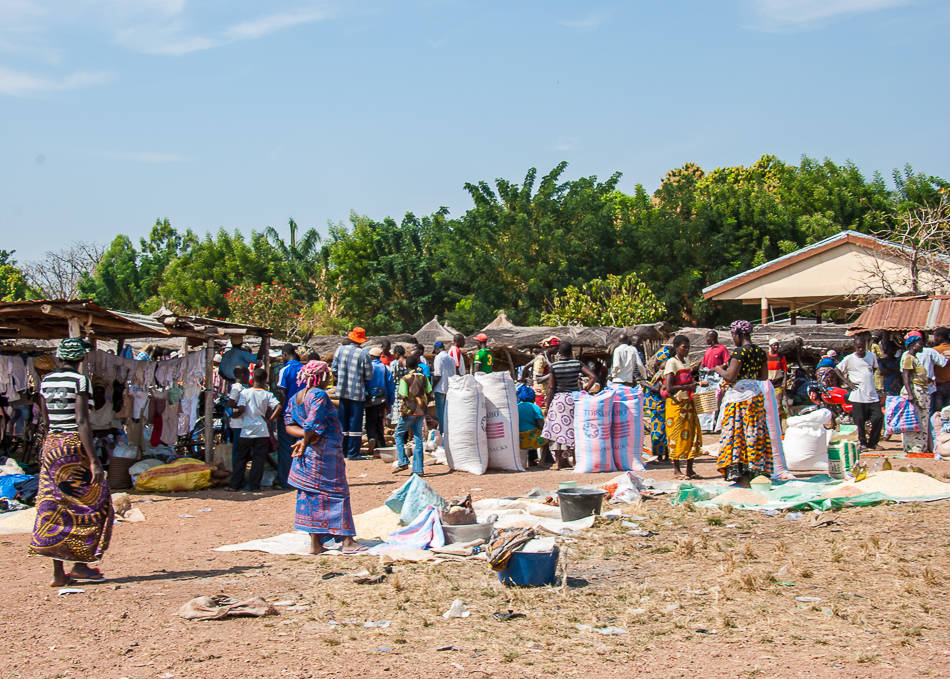
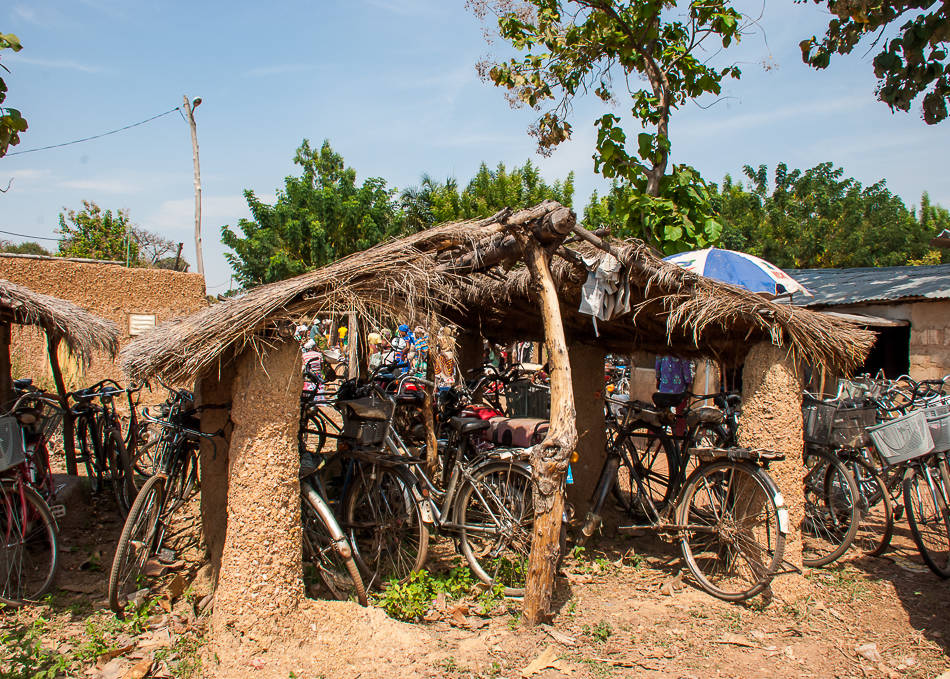
Everyone comes from all over either walking or biking.

Parking lot for bikes
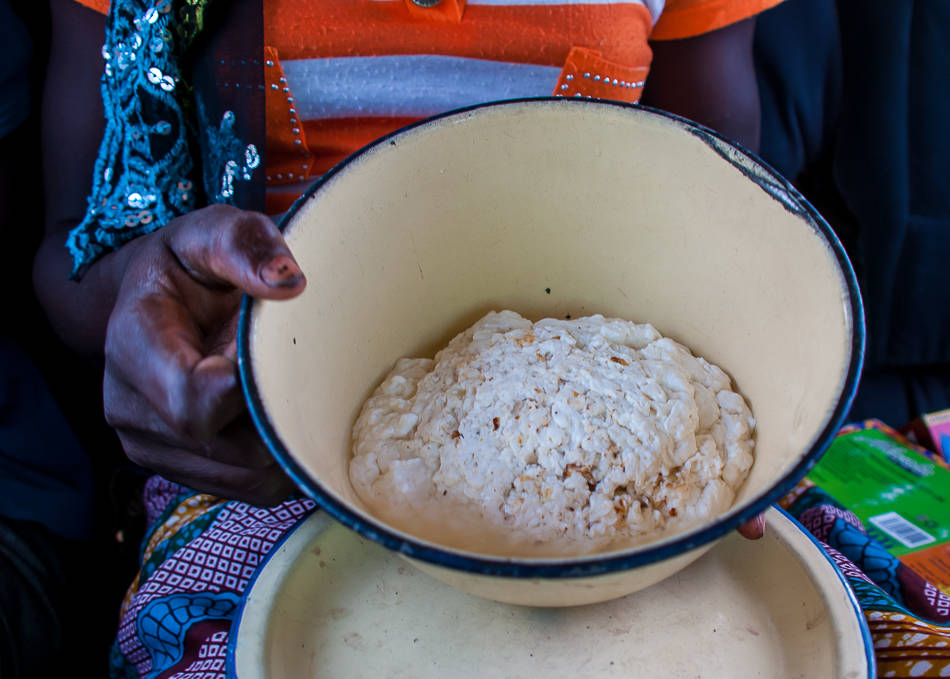
Some come to sell what they’ve made at home such as fresh cheese.
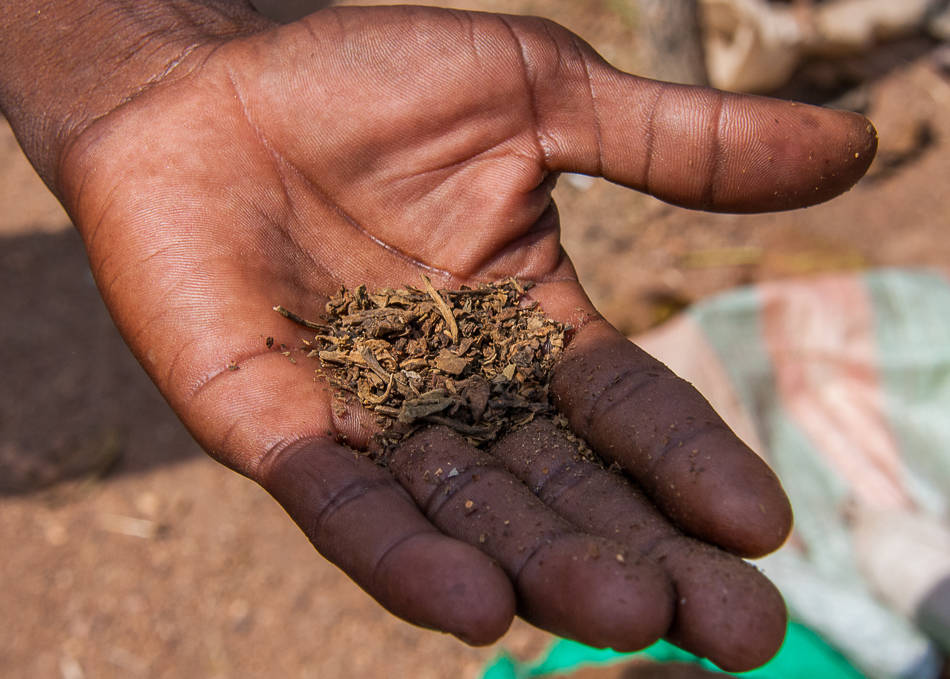
Tobacco is widely available as practically everyone smokes here. While a lot buy cigarettes, it’s still really common and traditional to smoke with a pipe hence all the tobacco sold by the weight here.
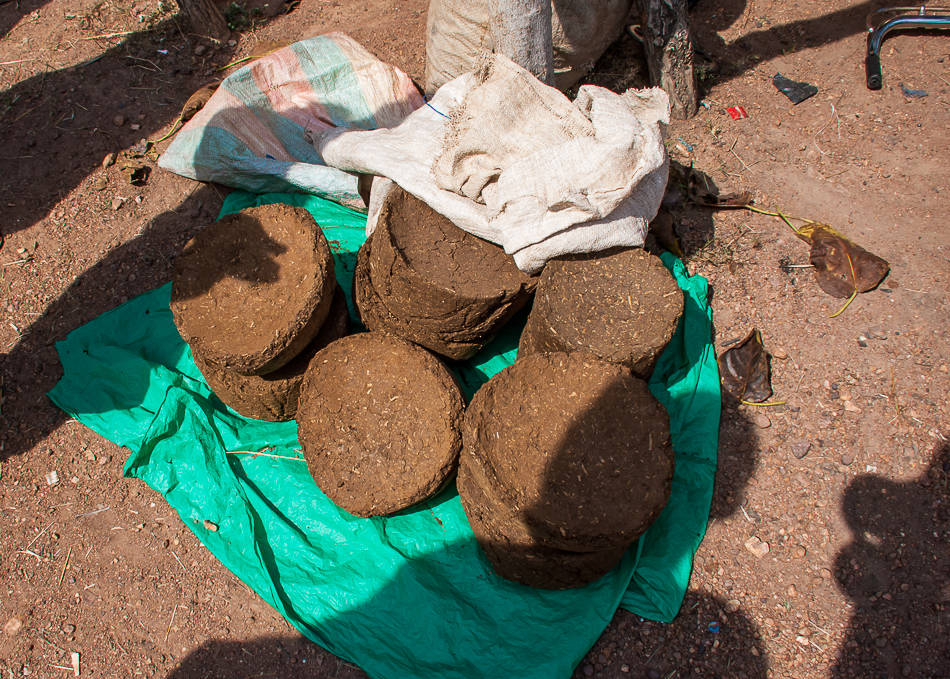
Tobacco
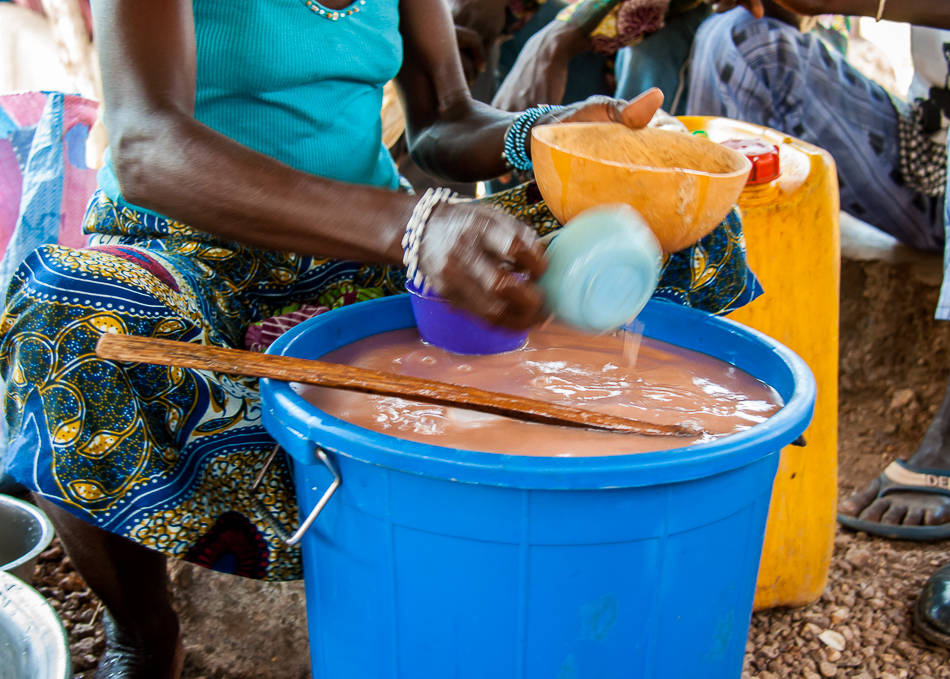
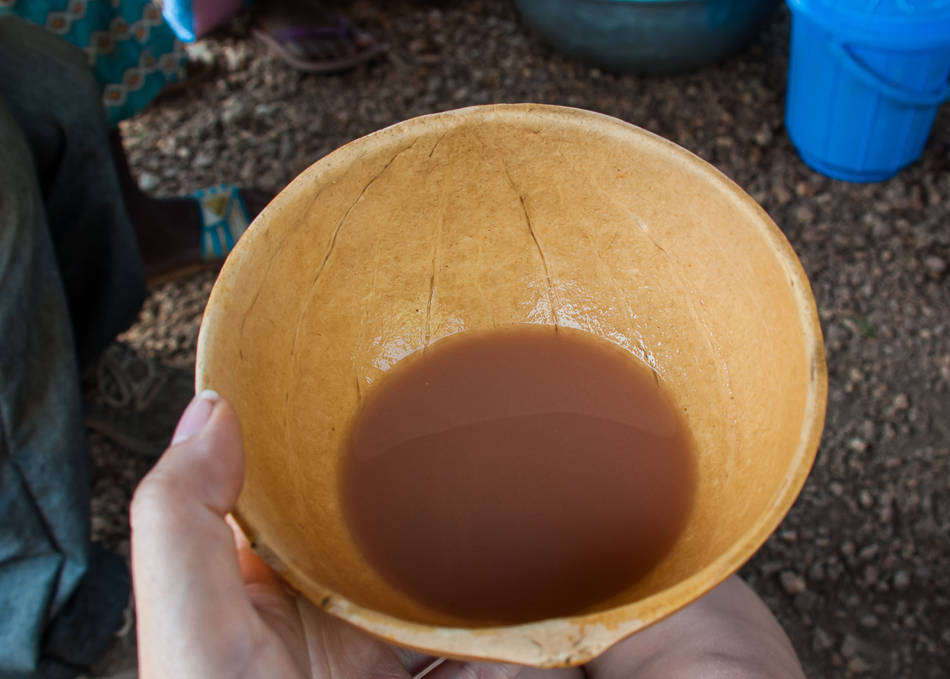
The main reason though everybody shows up here is to sit and socialize at one of the numerous ‘bar’ to sample the latest brew. The brew of choice here is fresh beer made out of millet where millet and water is fermented over heat for a couple of days then stored for another couple of days in order to get the fermentation going. Most bars will have different strength of beer to taste.
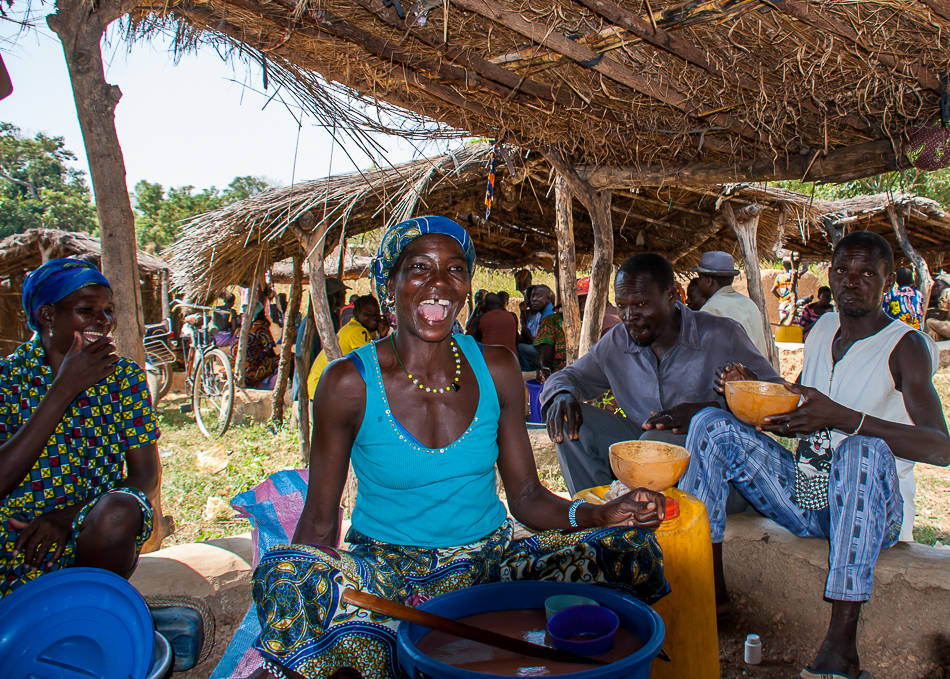
Drinking buddies…
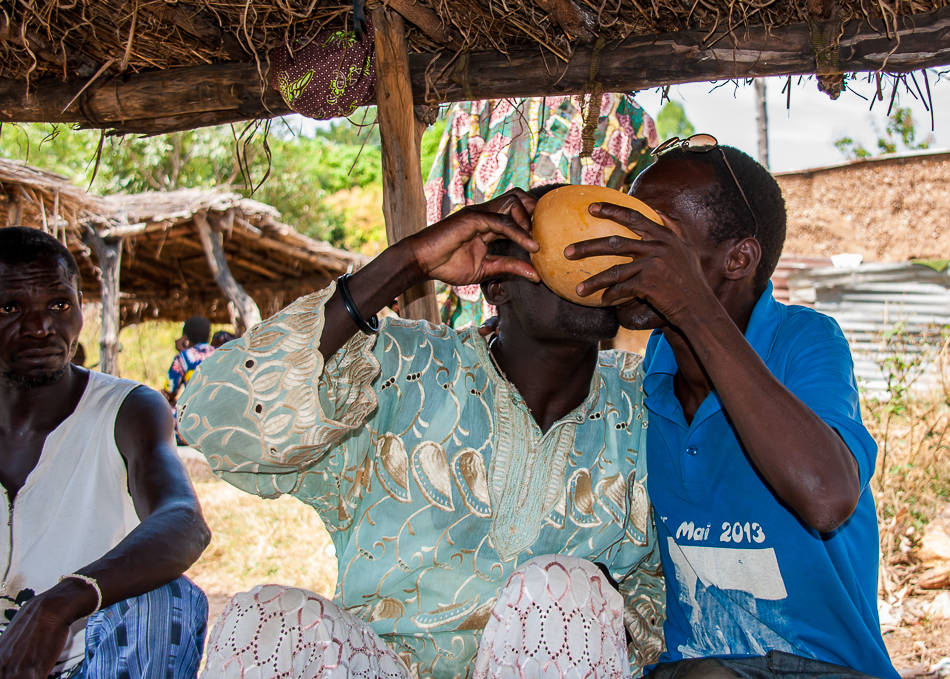
I quite liked drinking my beer out of these calabash bowls, makes you drink more though…and it’s only 11am!
The market will be going on all day, selling mainly food, lots of beer, and second-hand clothing for the locals.
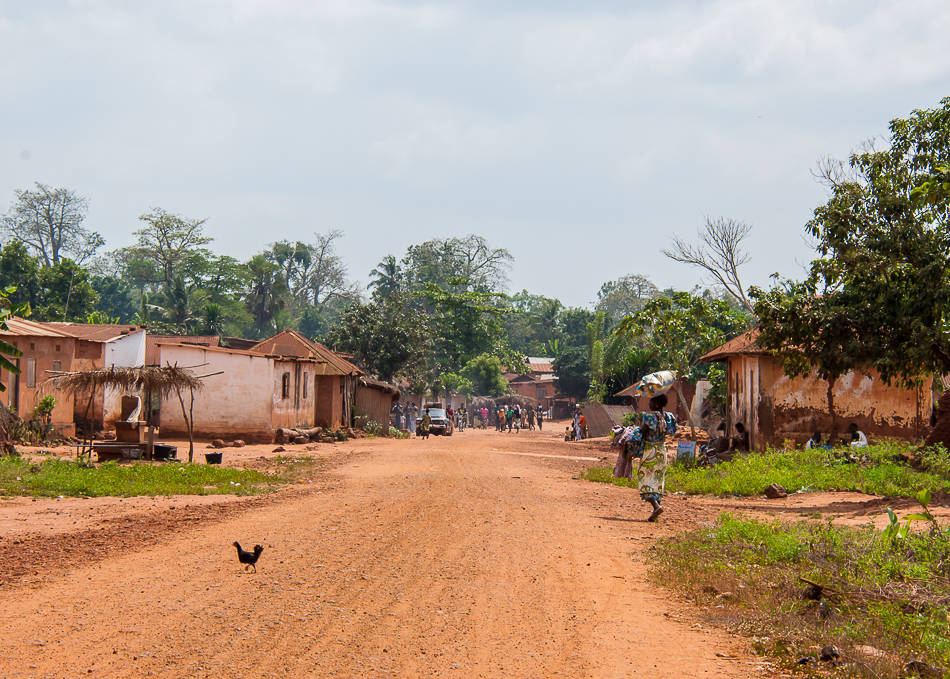
This is where I ended my stay in Togo, as only a few meters walk from the market stood the border to cross into Benin… TBC
Africa Togo Travels

Rural African Village Life in Davedi, Togo

December 28, 2013

Living like a local will always be the best way to discover a destination and I had one of the most engaging visit in the village of Davedi in Togo. I got to experience real rural African village life and feel part of the population for a day with their new ecotourism project.

They recently finished construction of their Pineapple Village Lodge, a modest accommodation where you can spend the night and live like the locals (i.e. if you don’t mind the heat and the random visiting insects and animals…).

Isaac and Valentin are both from the village and incredible guides to introduce you to their daily lives and large families.

The small village lies about 60 km north of the capital Lome and survives on pineapple farming and the production of palm wine and local gin.

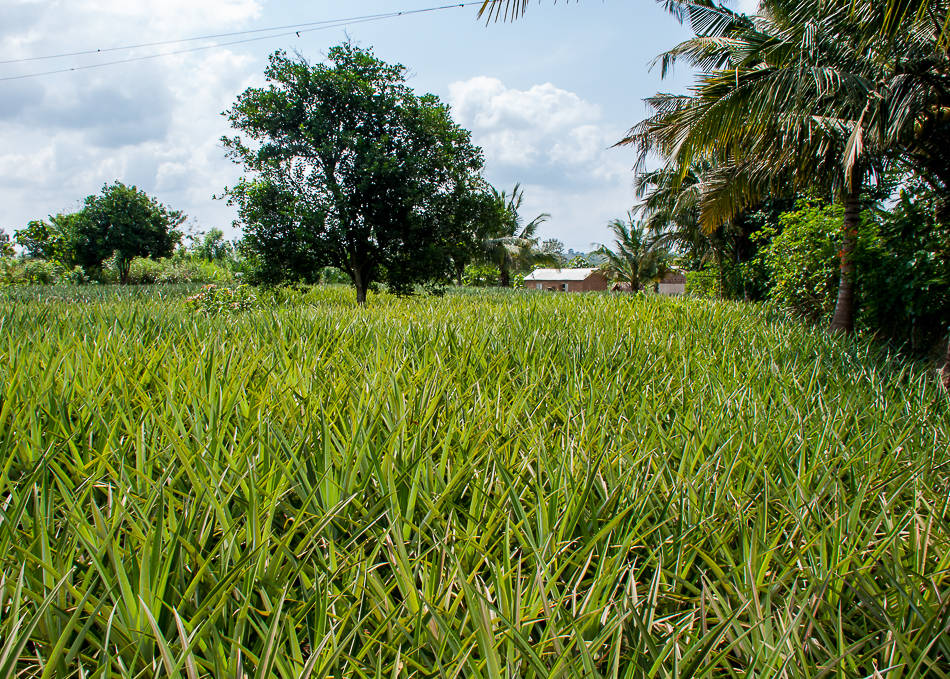
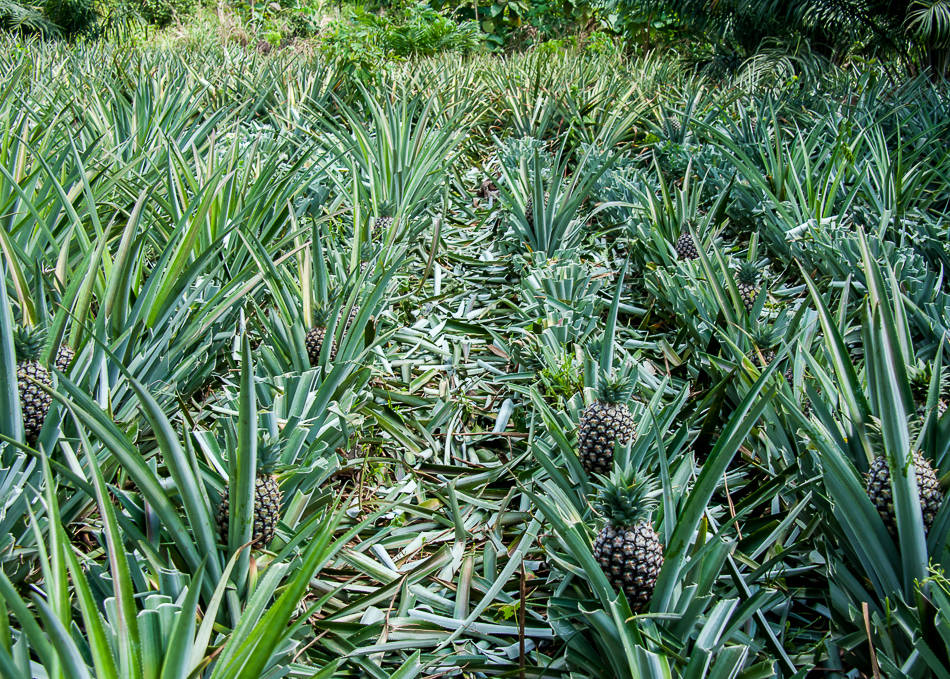
Pineapple farms abound in various stages of growth.

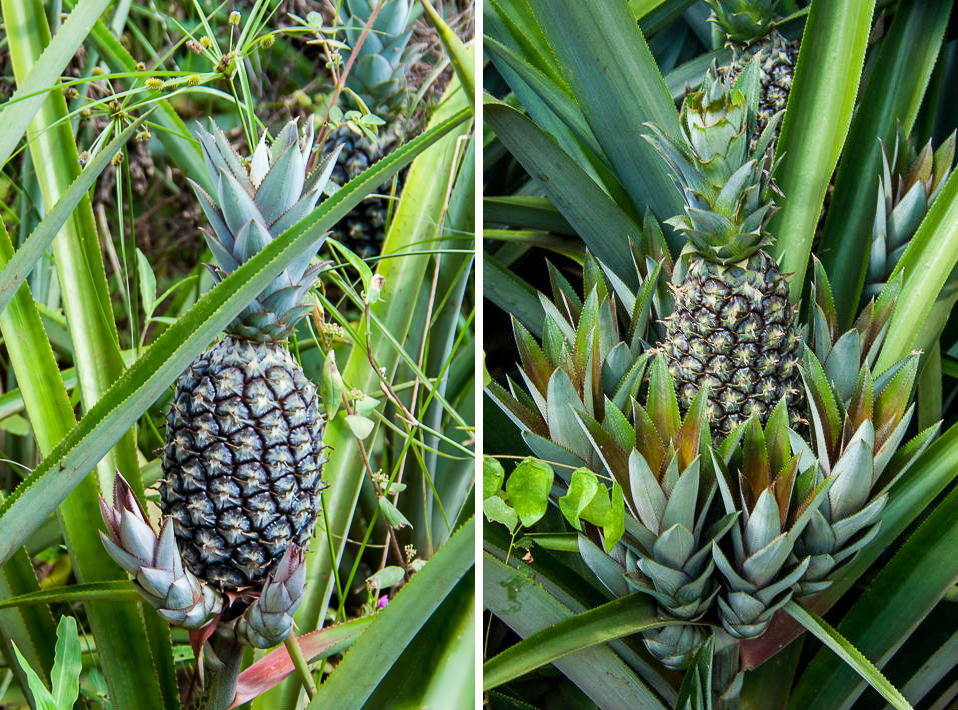
Two kinds of pineapple are grown here: the white pineapple (left)  which is rounder and milder and the black pineapple (right) with a skinnier frame and sweeter flesh.

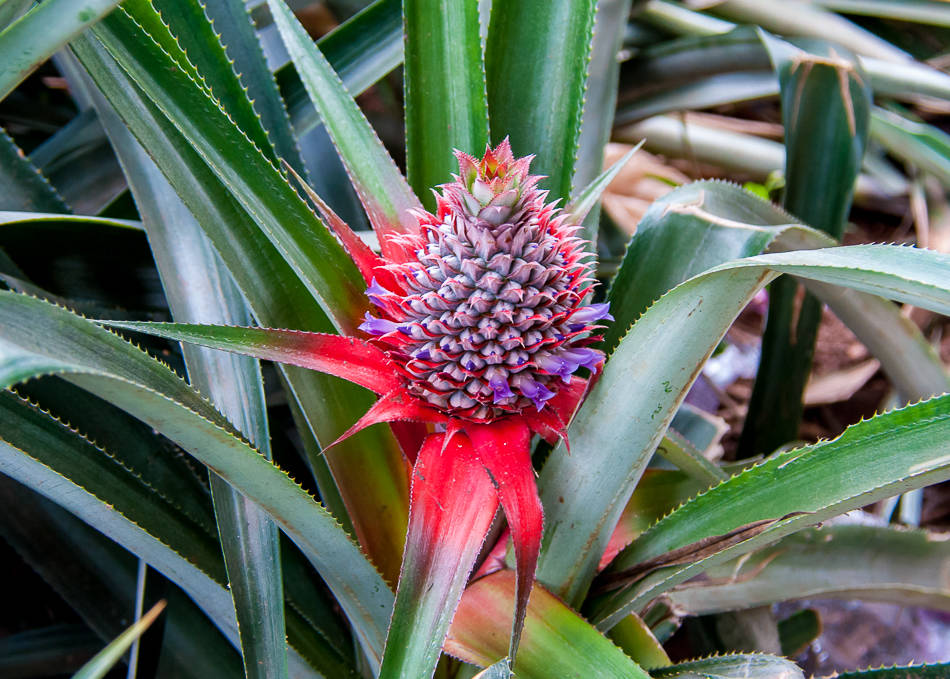
Baby pineapples are easily spotted with their bright pink leaves and purple flowers.

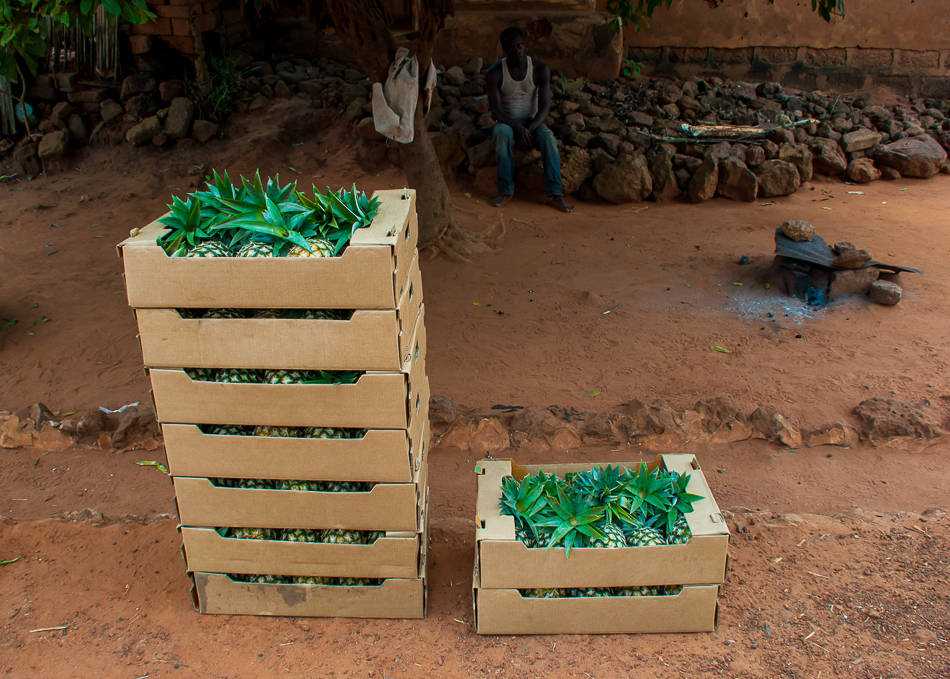
Mature pineapples are packed and sold on the street or sent to other villages and towns.

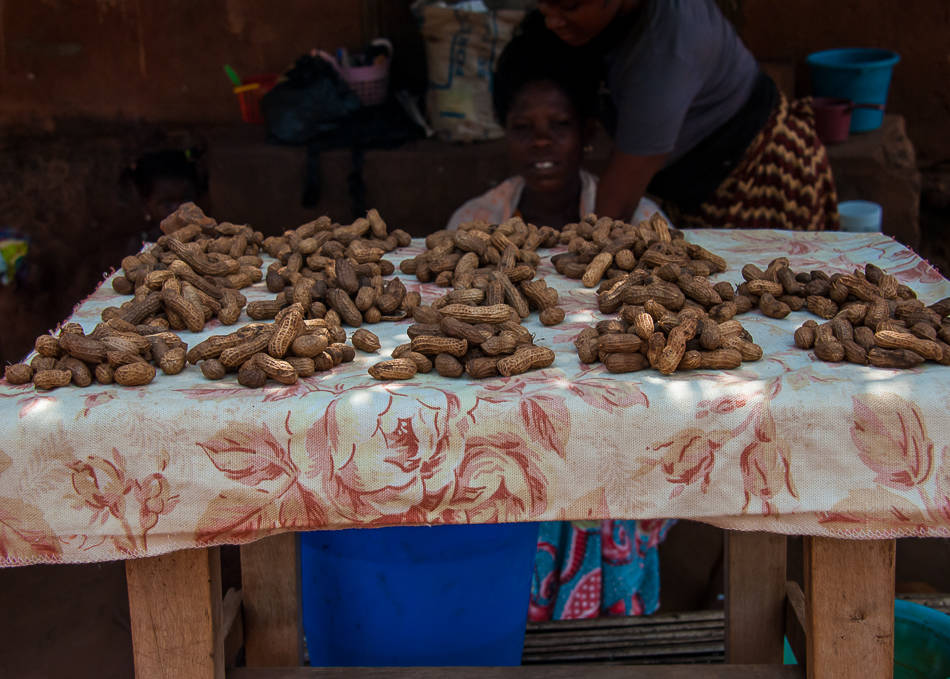
Women sell snacks such as peanuts and groceries on the main road.

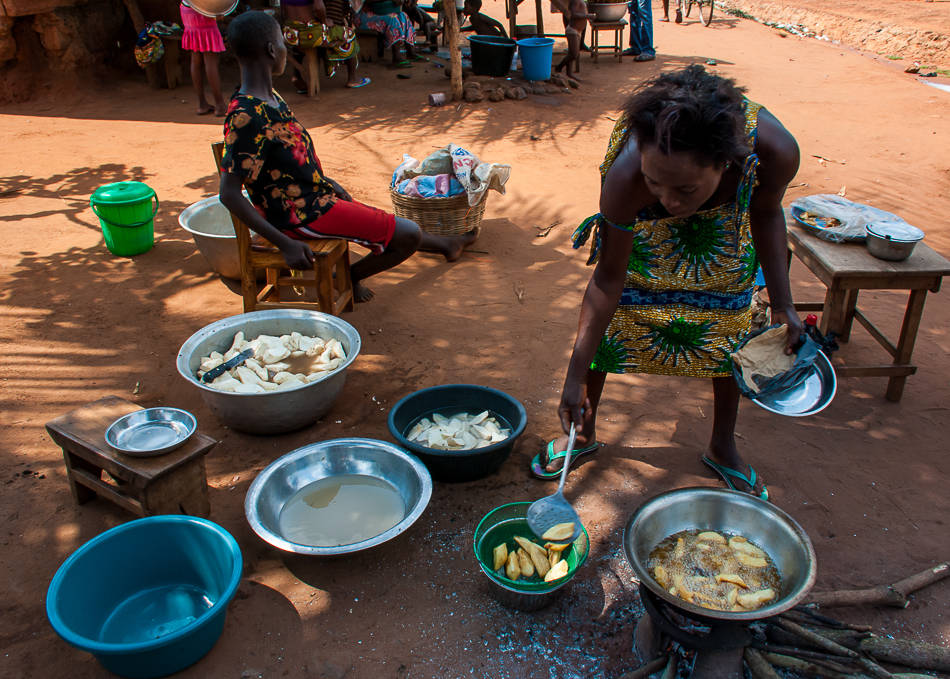
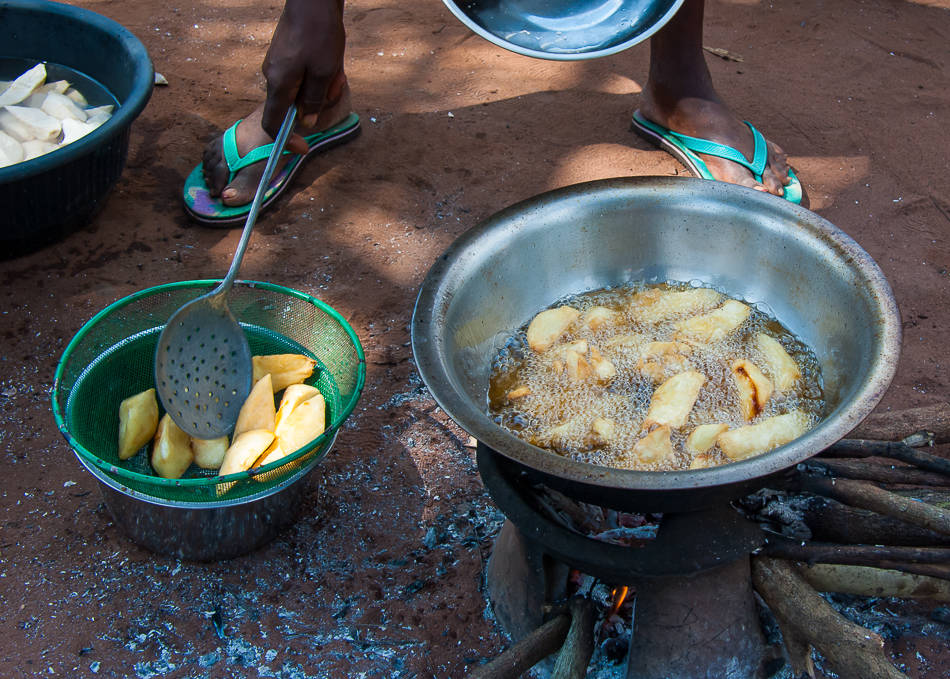
Yams are a big staple of Togolese cuisine and I got quite fond of fried yams.

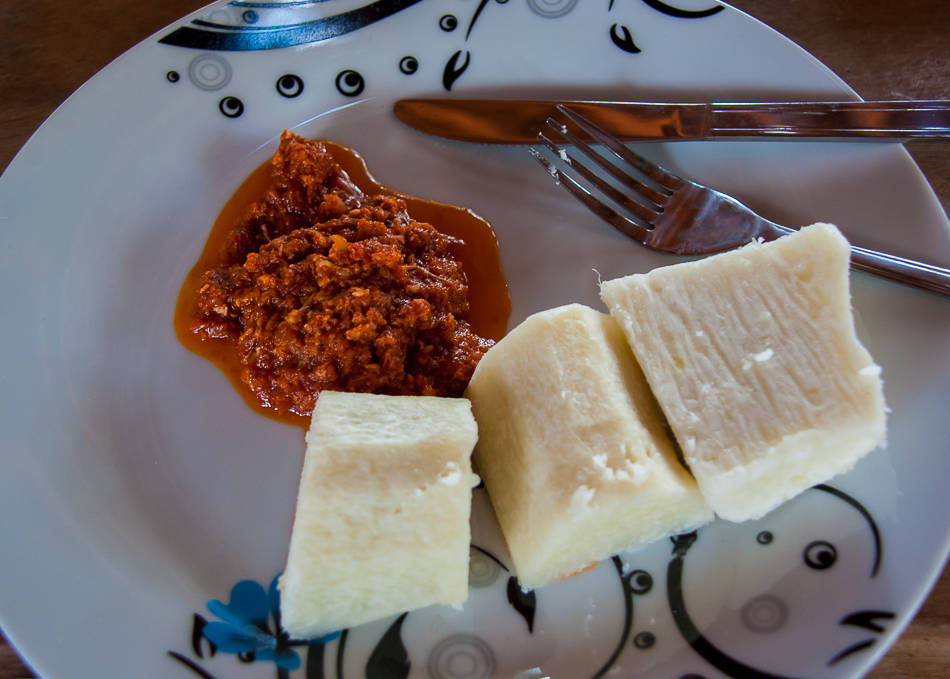
Boiled yams are often the main component of a meal here, served with a vegetable stew or sauce (here tomato and eggs).

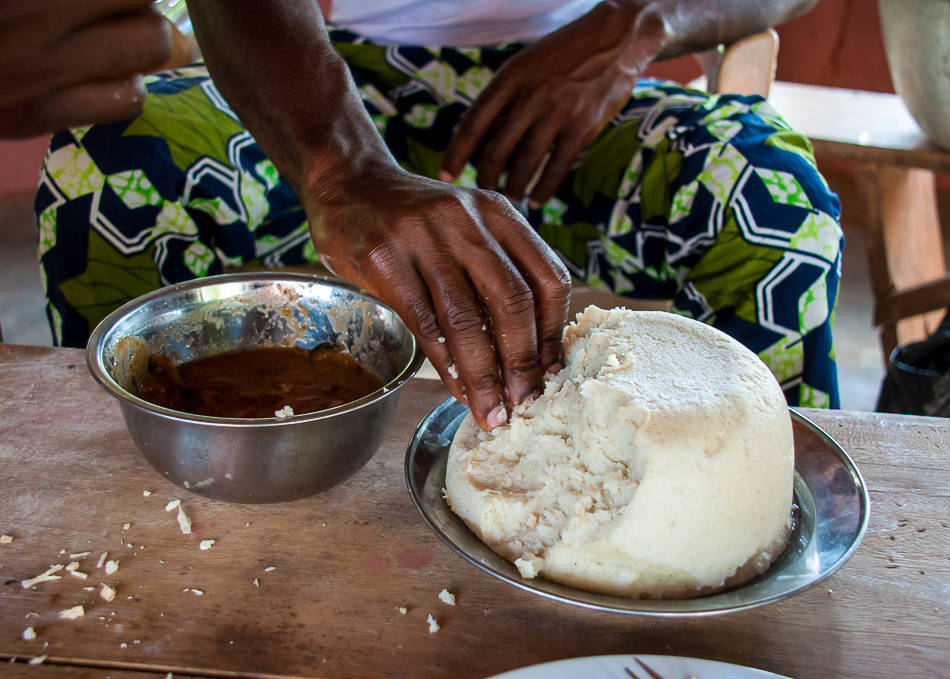
Another main staple is banku, the fermented corn dough that I first encountered in Ghana.

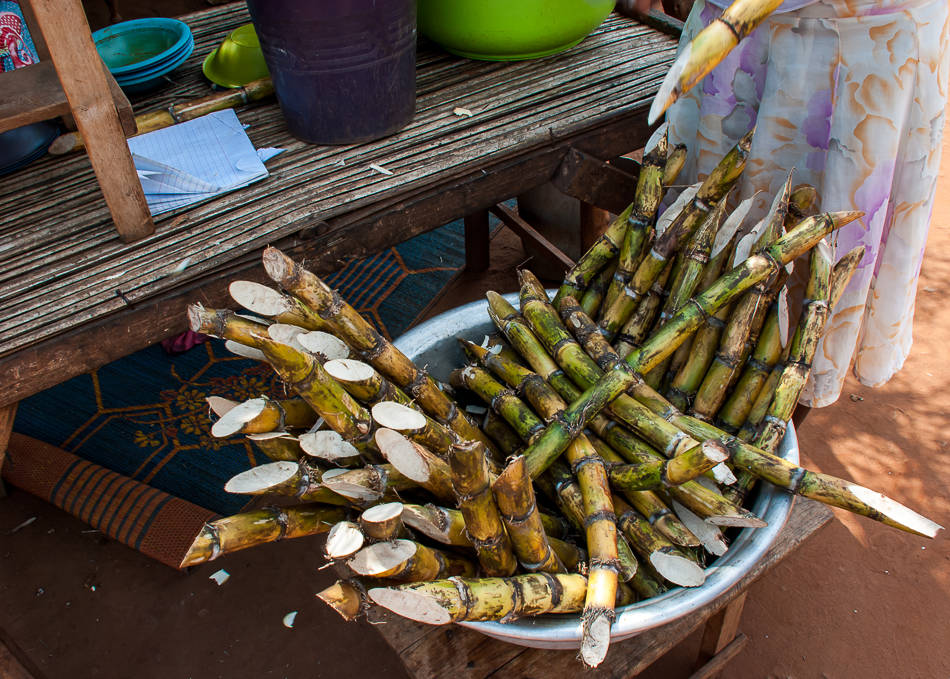
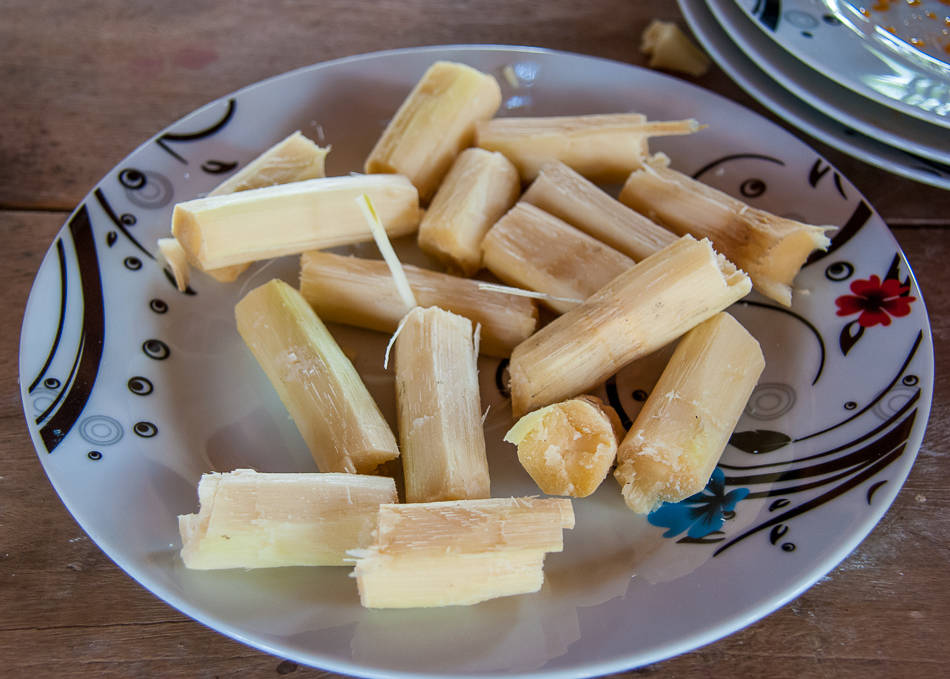
Sugarcane is widely available, cheap, and makes for a very pleasant midday snack when the heat is just too much.

Once ridden of their though exterior, the sugarcane sticks are chewed on, releasing a lot of sweet juice before you spit out the leftover stringy bits – highly addictive.

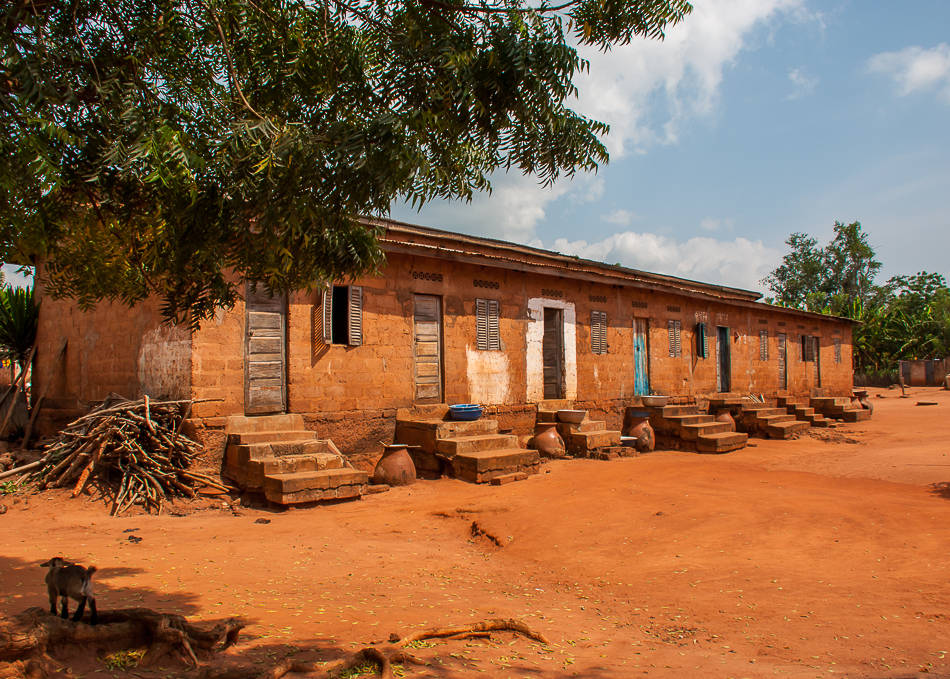
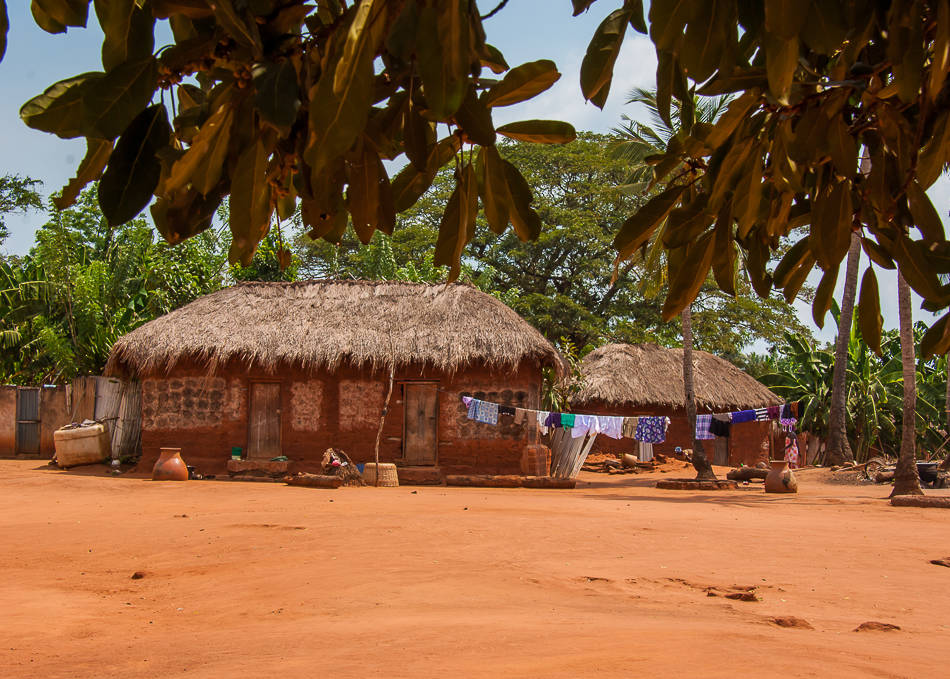
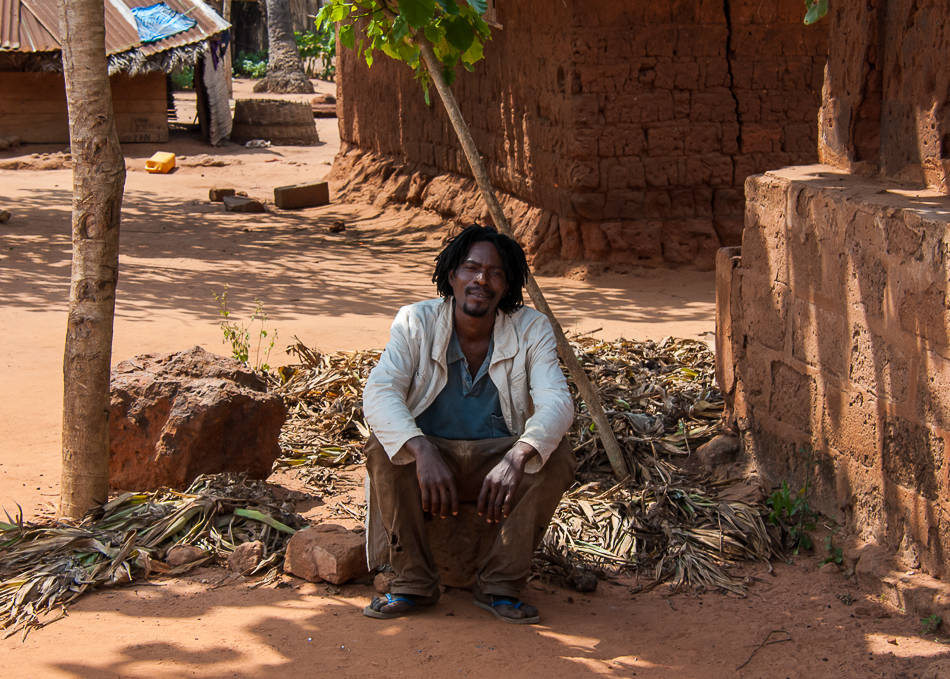
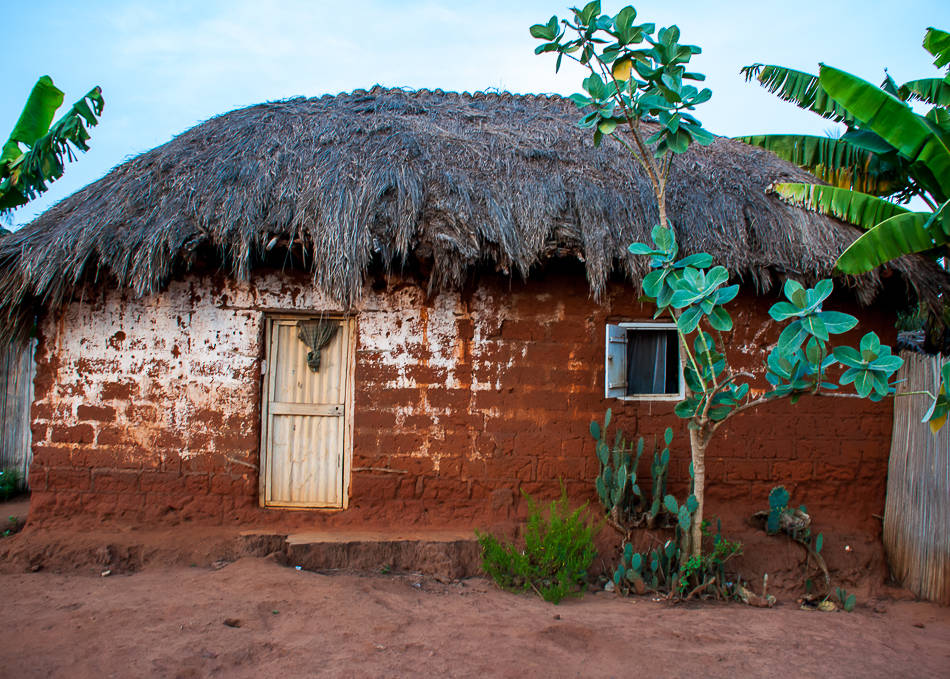
A walk around the village reveals multiple compounds i.e. groups of houses built together. In Western Africa, polygamy is still very much alive and below is where Valentin lives along with his father’s four wives and many kids.

Extended family such as aunts and cousins live right next door and the whole family shares meals and chores in the common courtyard.

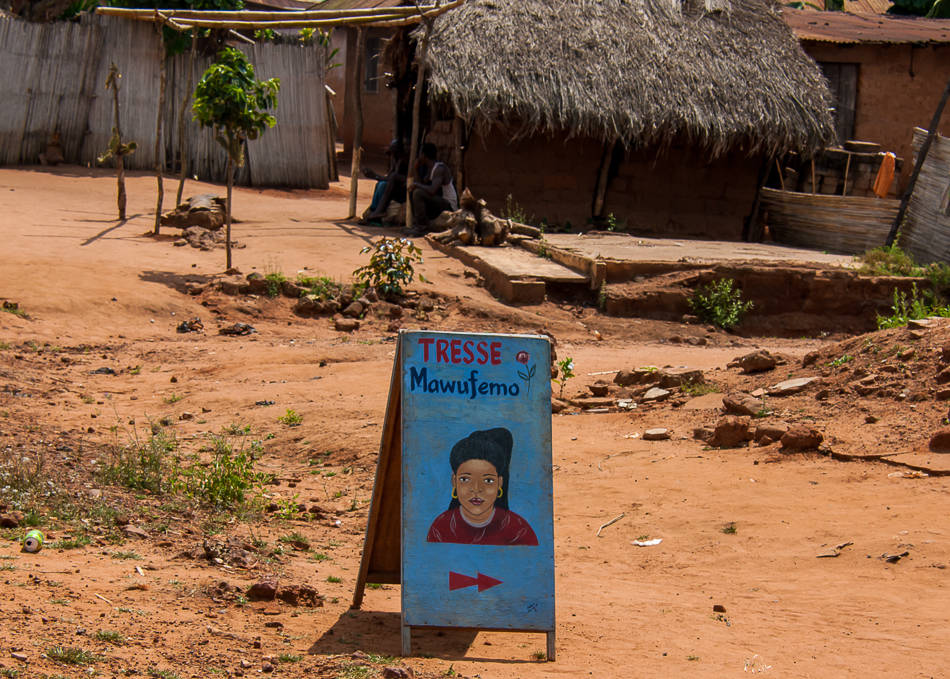
Despite its diminutive size, the village still provides the basic services such as a primary school and the ubiquitous hair salon.

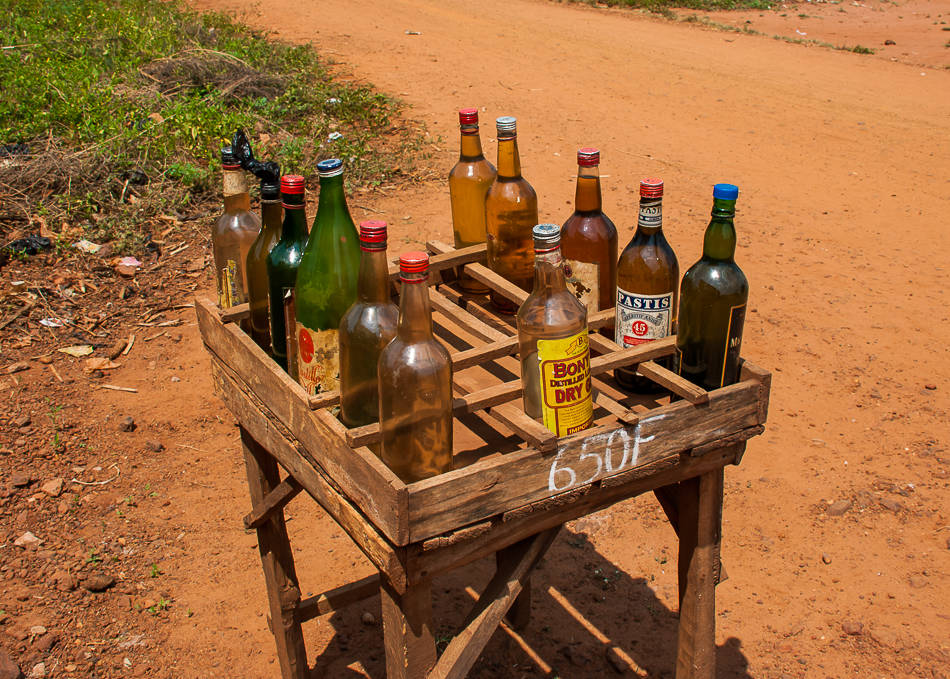
The local gas station

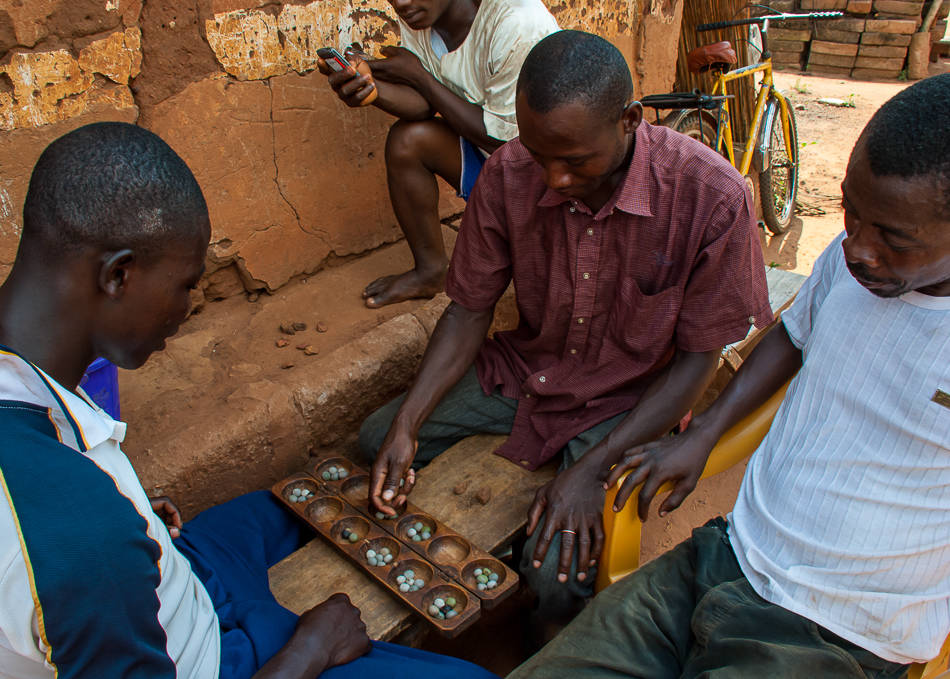
Locals playing a game of mancala – it is Saturday and they will play for hours…

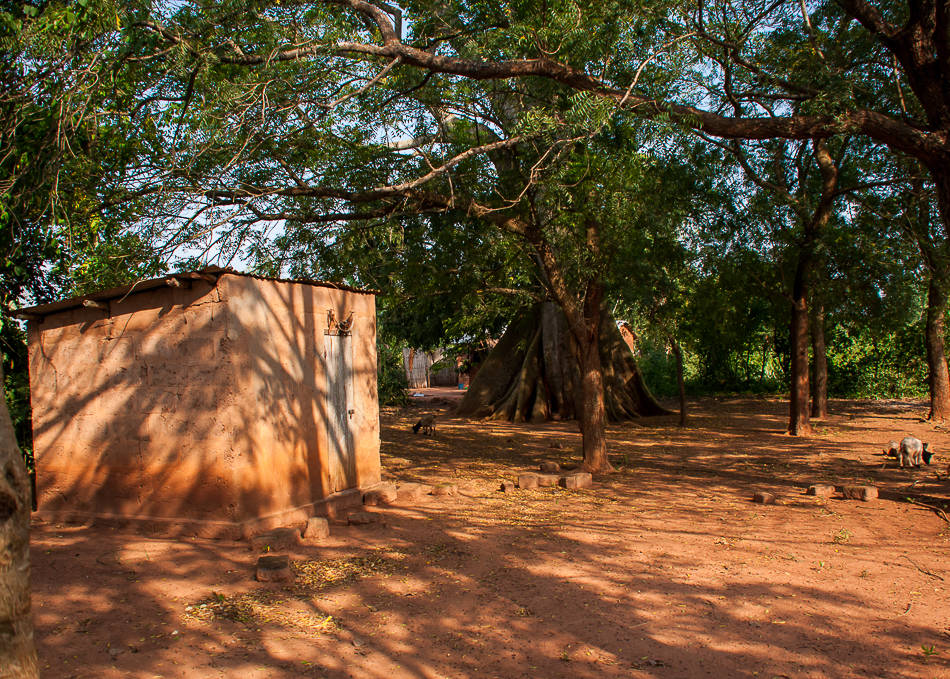
Voodoo is widely practiced in Togo and every village has its fetish priest, house, and often tree (seen in the background) for ceremonies and also for locals to come and consult.

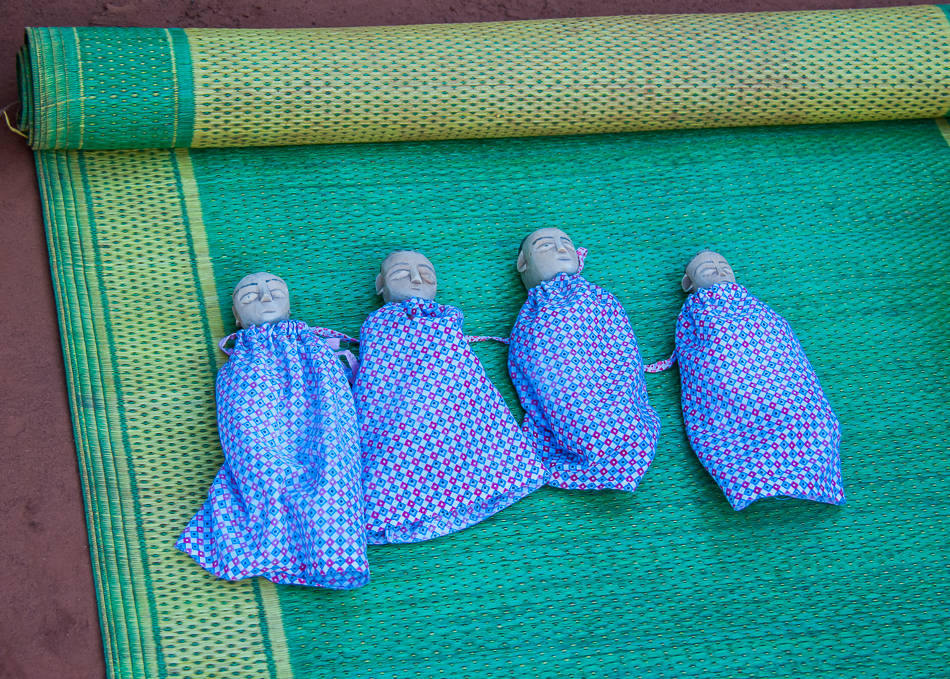
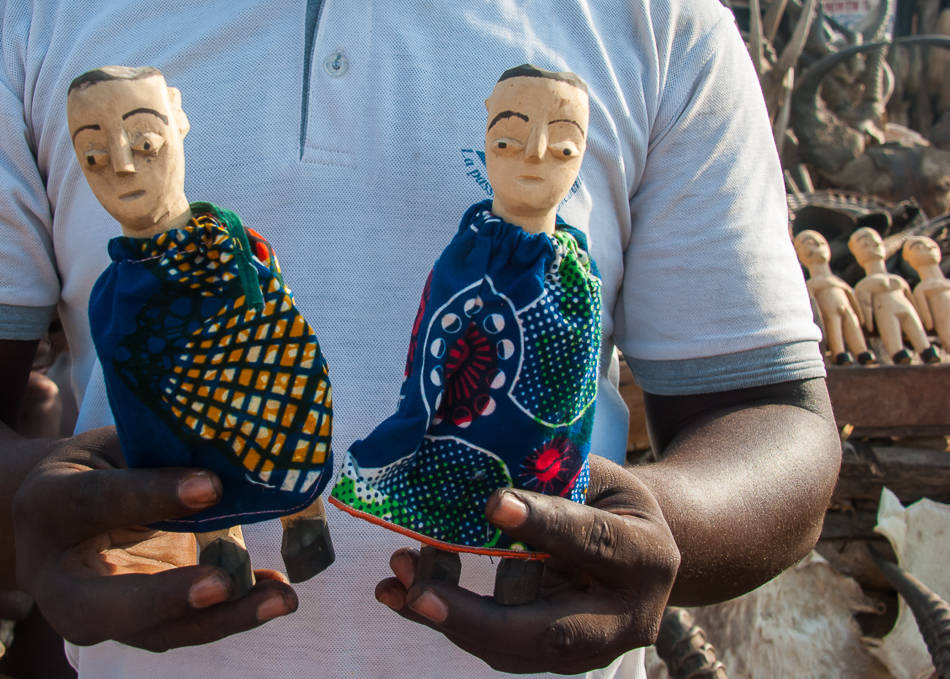
All over Western Africa, the birth of twins is rare and considered sacred – they are seen as gods. When a twin dies, the fetish priest will produce a fetish twin doll for the mother who’ll take care of it (i.e. feed, bathe, dress, etc.) all her life and pass it on to her children for generations to come.

Cactus are often used as a deterrent to people who’d want to venture a little too close to the house…

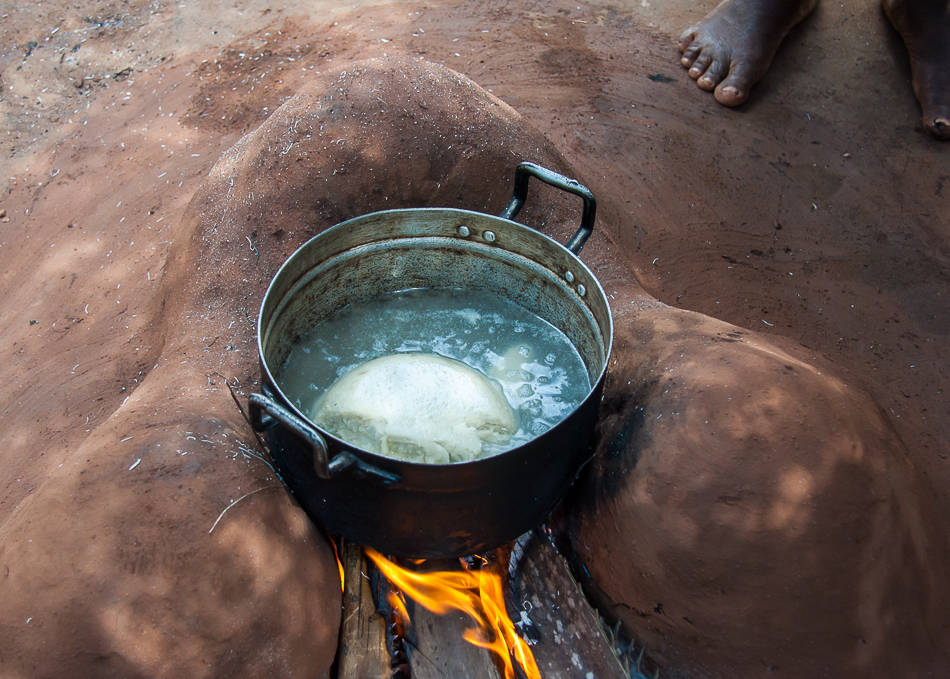
As there is no way of preserving food, here you see leftover banku being boiled to be served again.

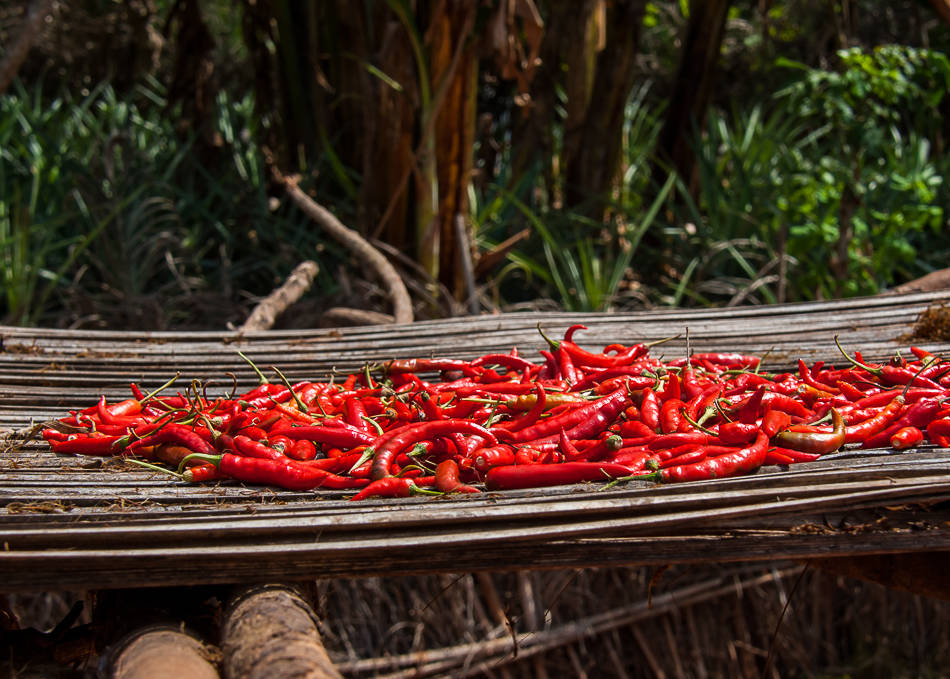
Peppers are used in every dish and are usually dried before being crushed and added to sauces and stews.

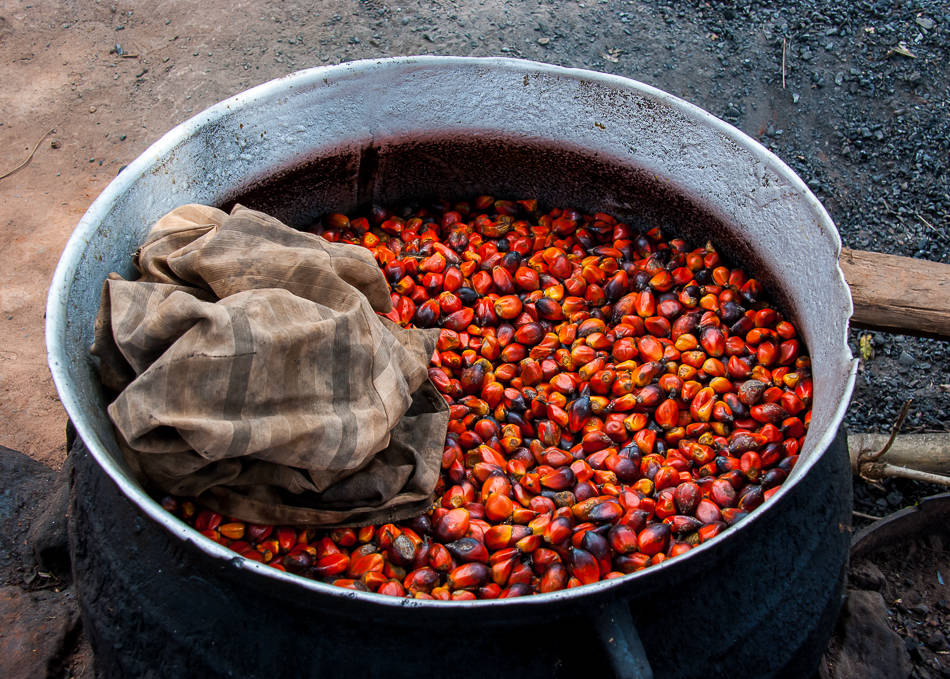
The red palm fruit is harvested to produce red palm oil, another staple of Western African cuisine.

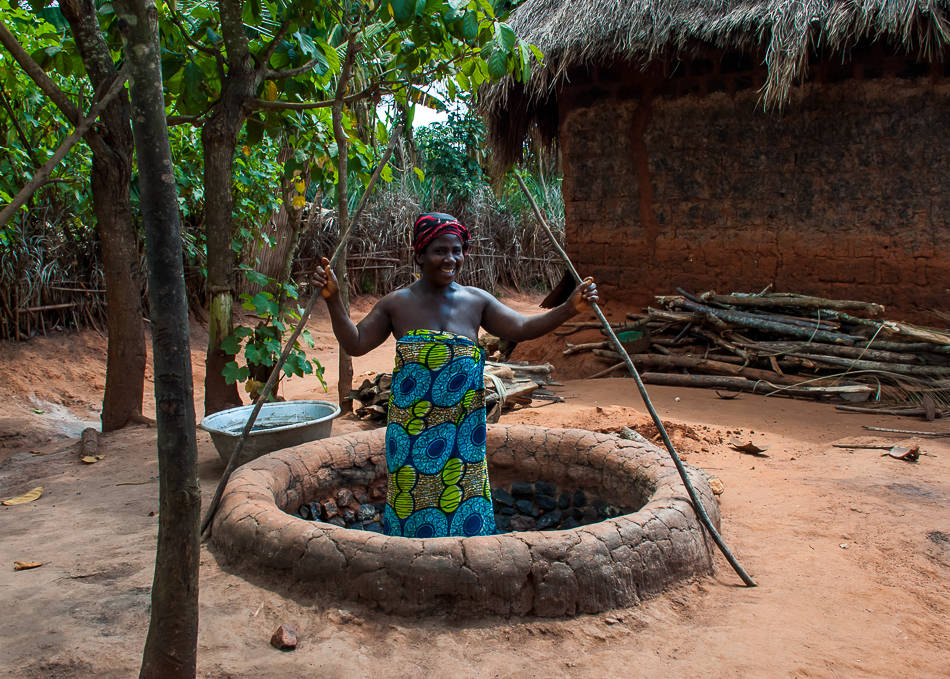
The fruits are crushed using a traditional technique of stamping with the feet, similar to the way they used to make wine back in the day. Virgin red palm oil has recently earned a healthy reputation and is being praised by nutritionists worldwide.

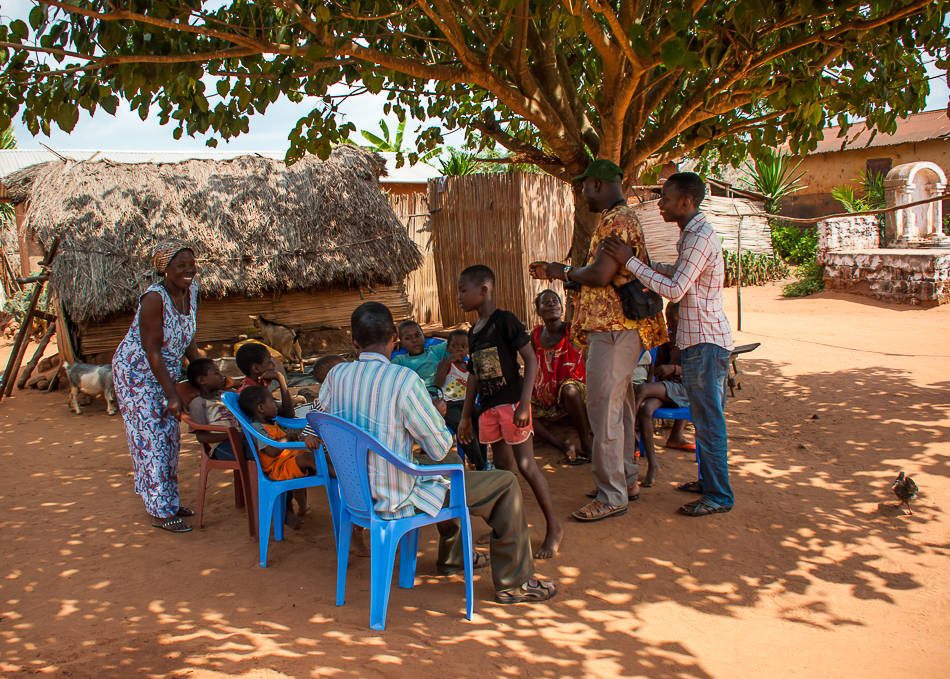
Village meetings or informal gatherings always happen underneath a big tree to avoid the harsh sun rays.

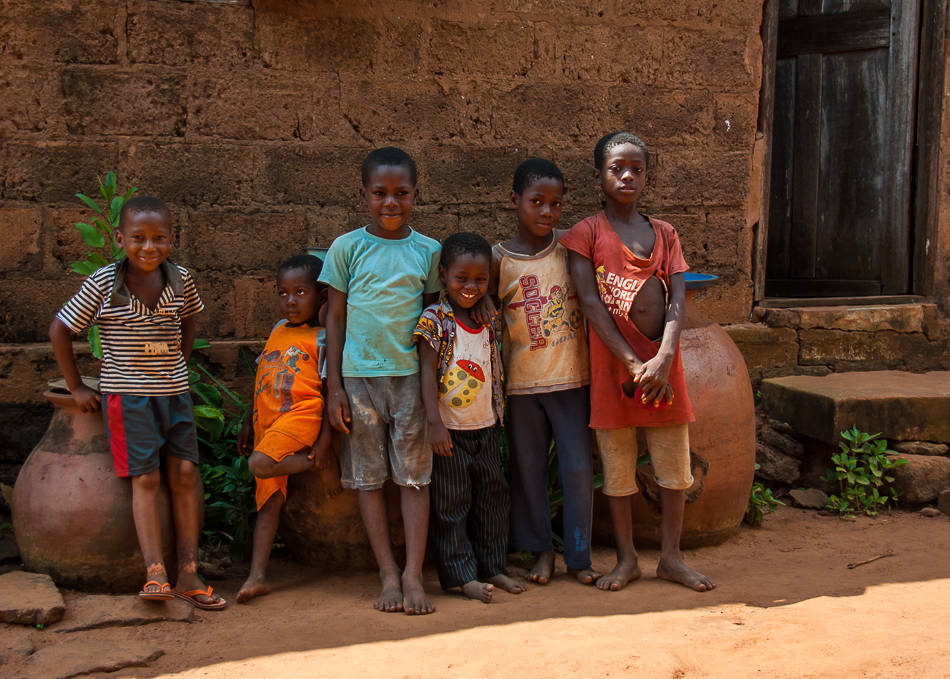
Village kids

An elder watching the meeting from her doorstep

Women’s attires are always beautiful, made of the local and very colorful wax-print fabric.

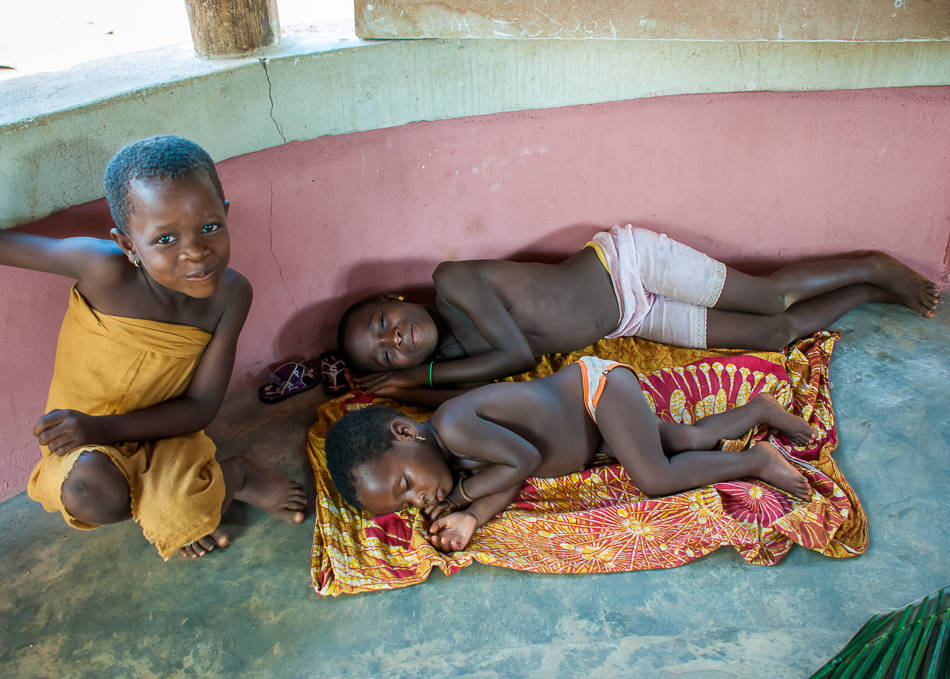
So cute I almost wish I could have packed him in my bags…

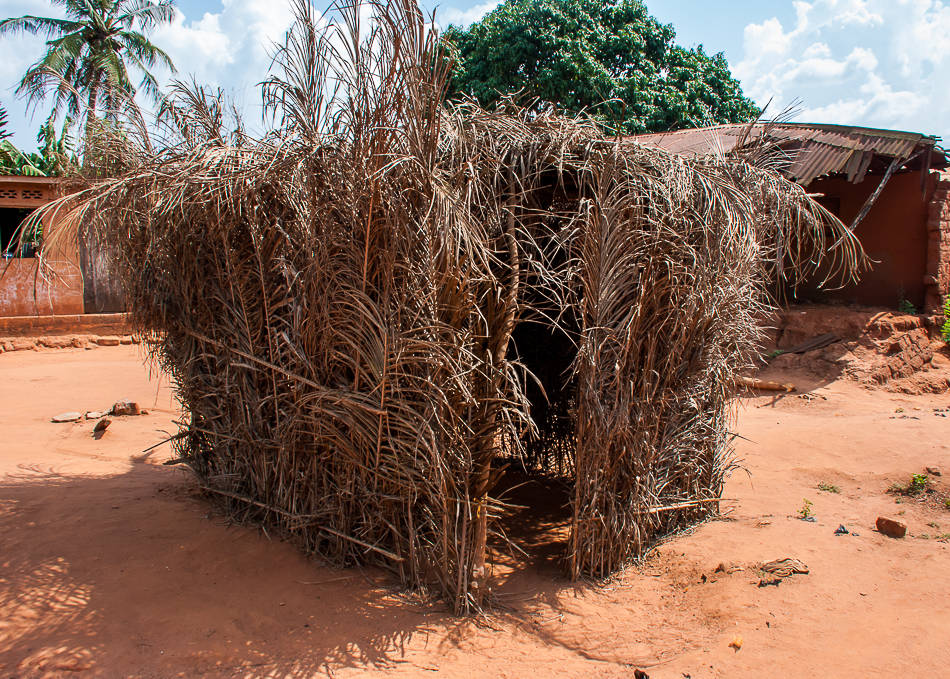
Kids build these temporary playhouses for Christmas time, a tradition that goes way back.

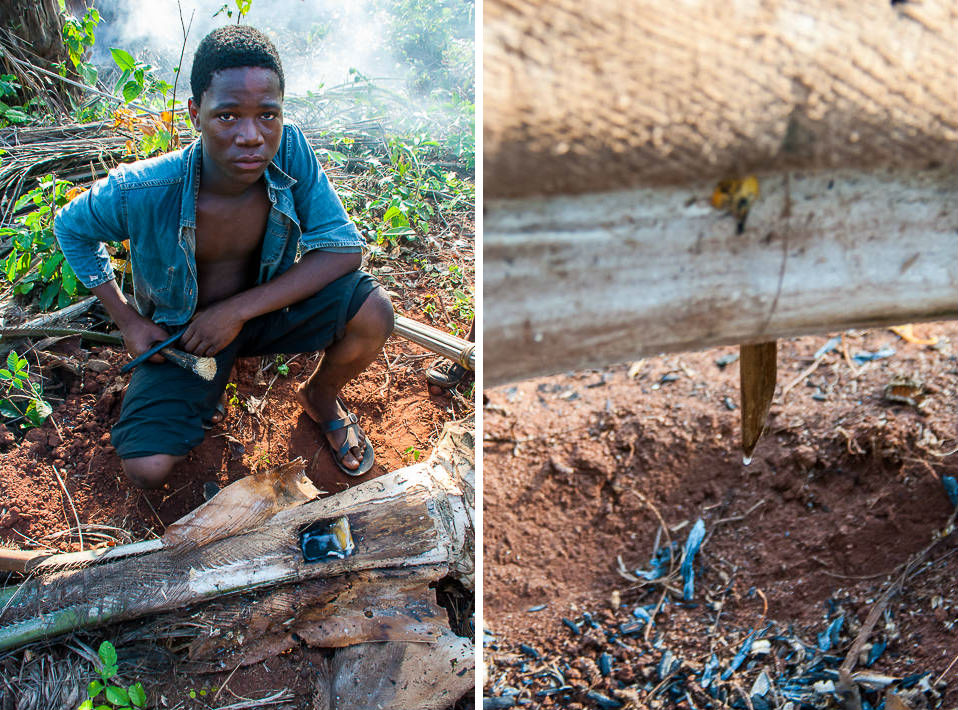
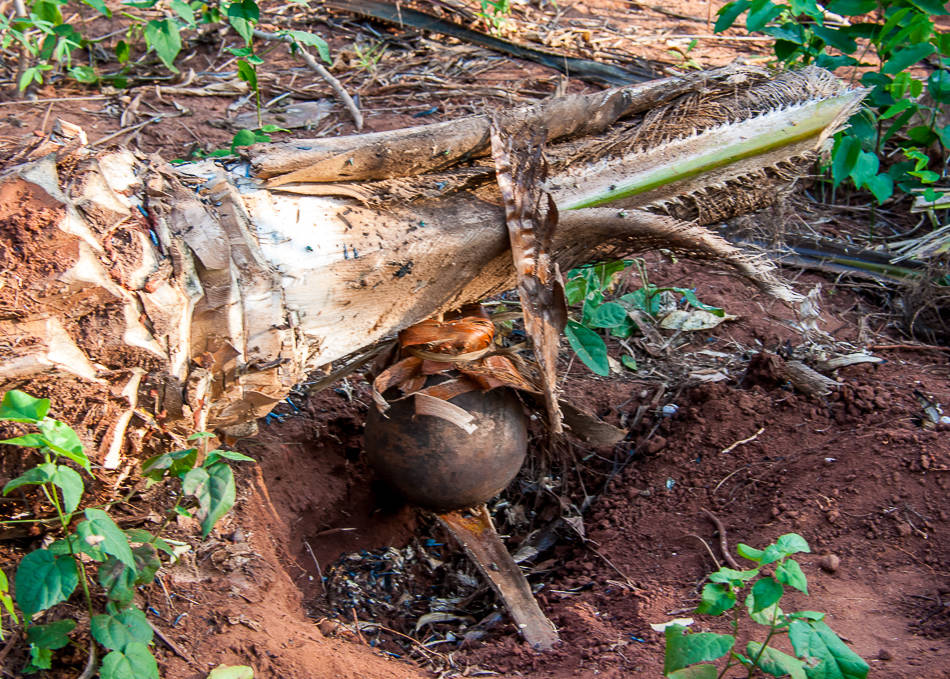
One of the main sources of income in the village is the production of palm wine, an important alcoholic beverage in West Africa produced from sugary palm saps.

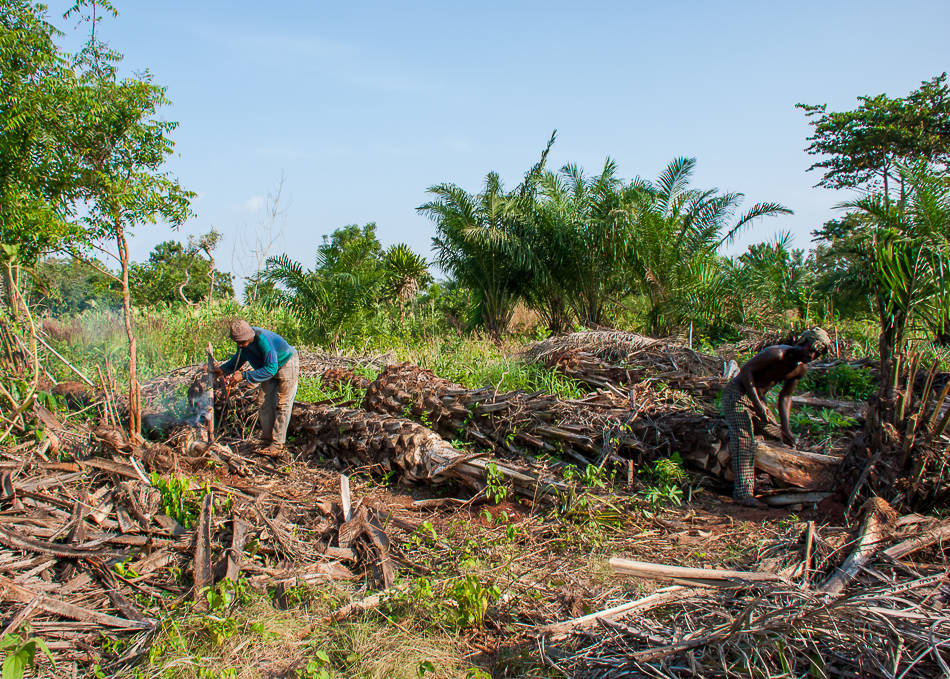
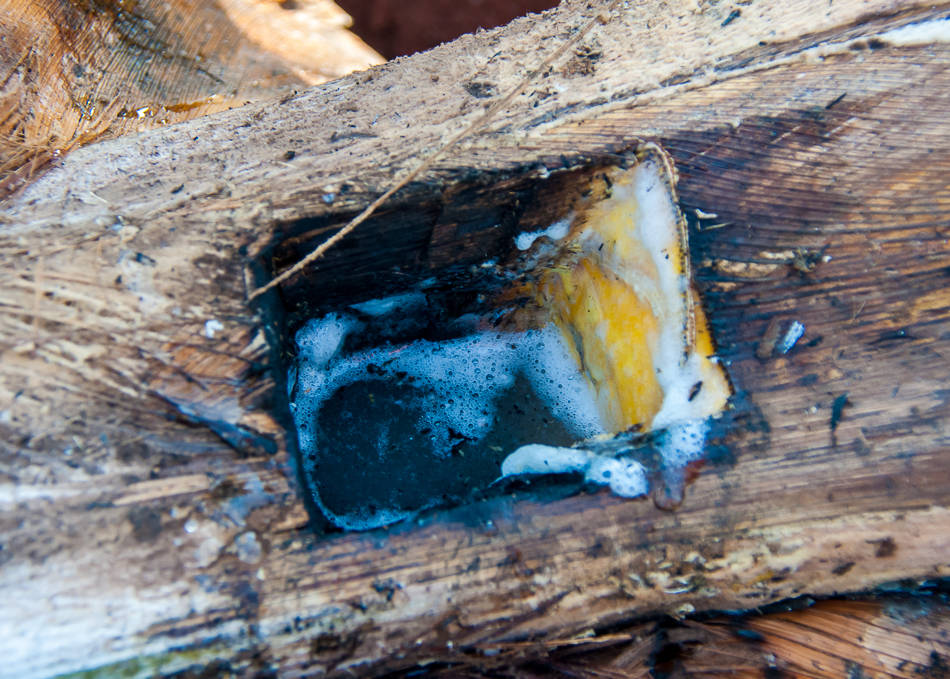
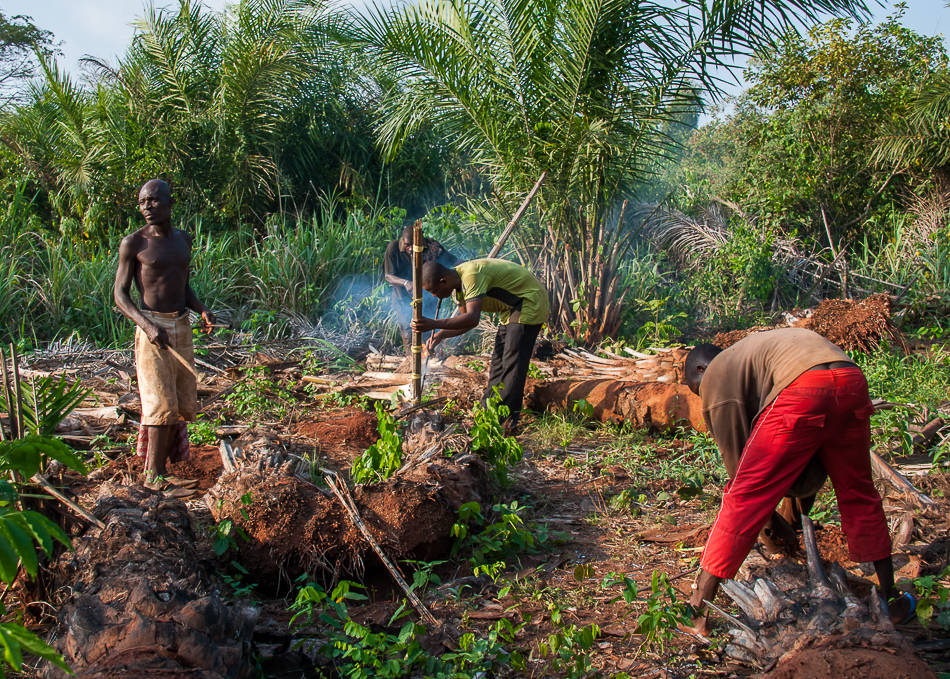
The sap is collected by cutting off a hole in the trunk of the felled palm tree and letting the juice drip underneath into a gourd. Tapping palm trees is a skilled art as the tapper needs to know the exact spot to make the incision as well as the ideal depth.

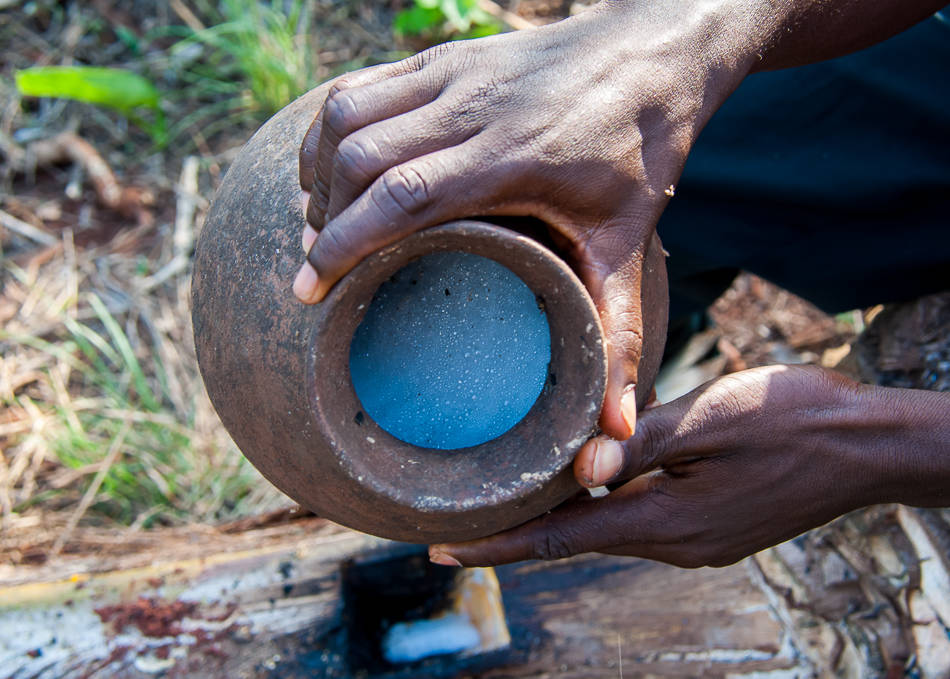
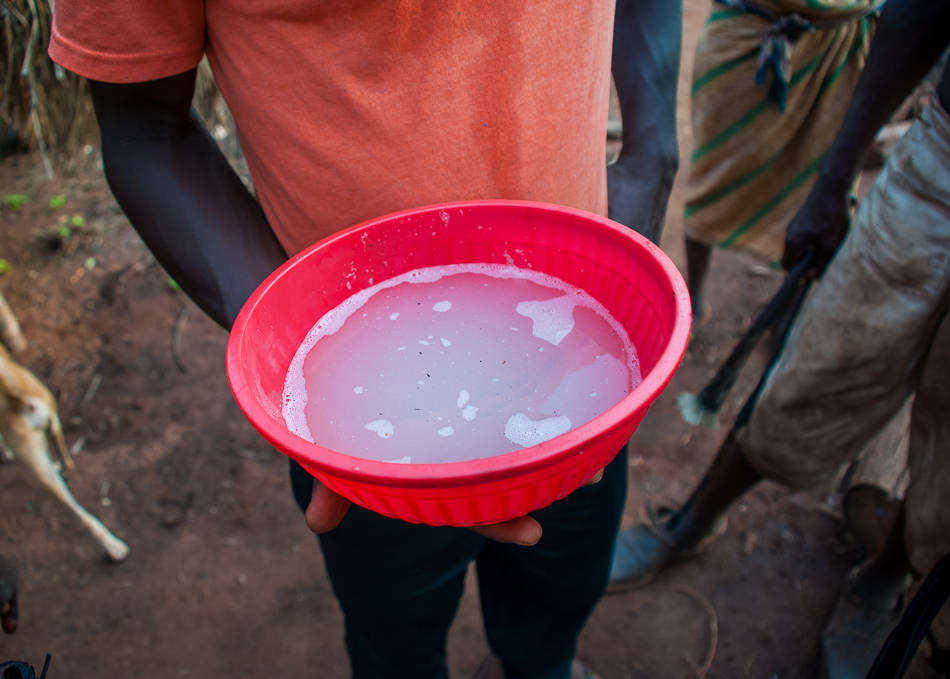
The white liquid that initially collect tends to be very sweet and non-alcoholic before it is fermented. Very soon, the fermentation begins and creates a lot of bubbling and foaming from the gourd, producing alcohol.

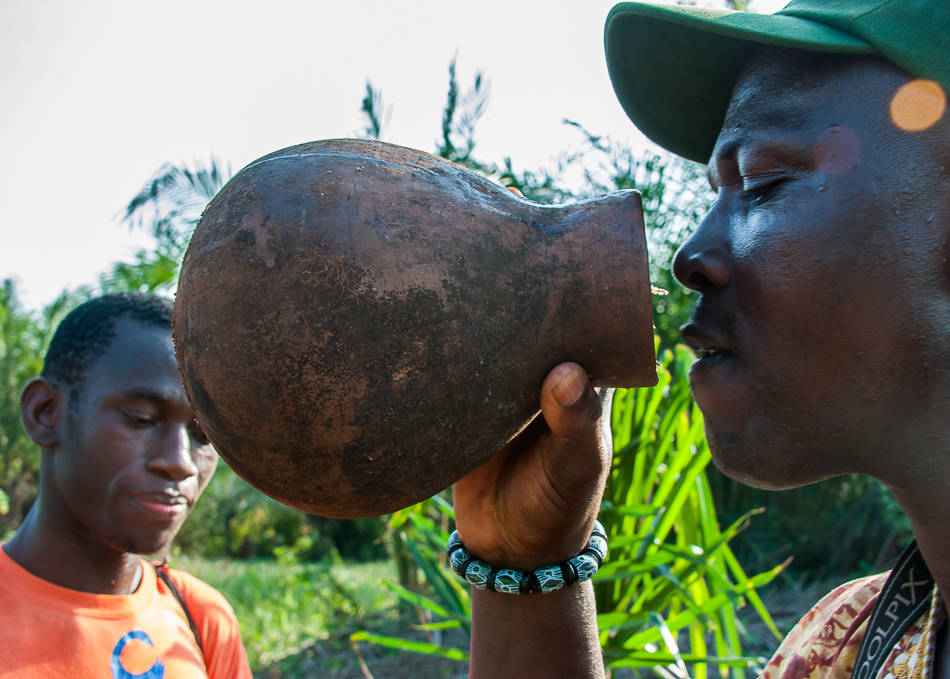
Tasting is encouraged (!) and the still warm juice is a delight to quench your thirst when working in the field.

Sap from a tree will flow for about 2-3 weeks and wine tappers work daily to encourage the flow and ensure the quality of the sap – a back-breaking and very sweaty job.

They break the day with a little singing and dancing (unless it was just to show me off! ;-)) Click on the video for a little taste:

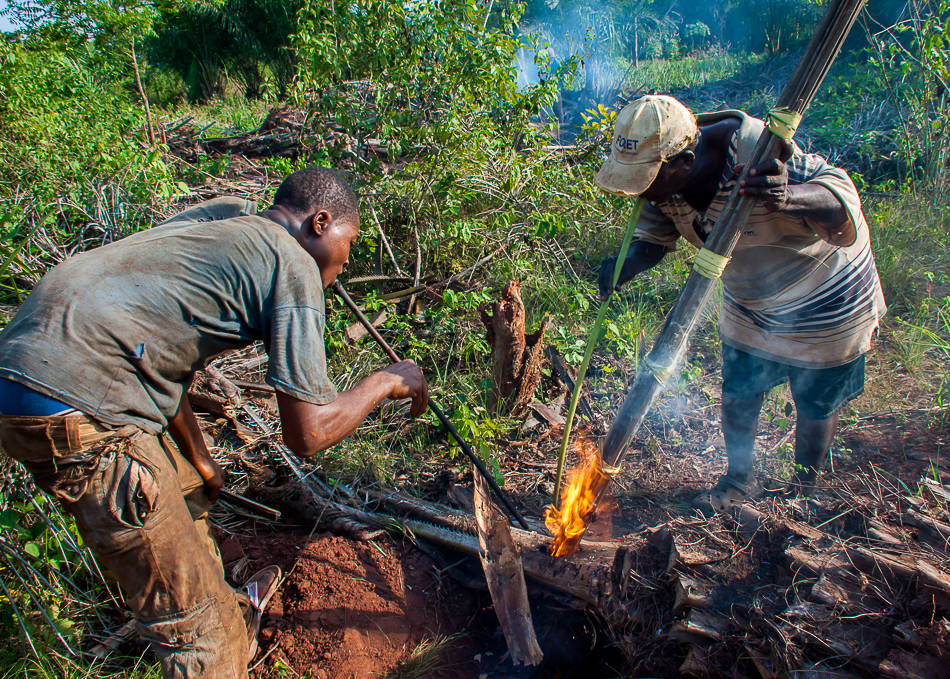
After scraping the hole with a knife or machete, a fire is lit and blown into the hole to facilitate the collection of sap. It also gives a pleasant smokey taste to the resulting palm wine.

Drunk fresh, palm wine contains most of its sugar and tastes really sweet…in a good way.

Fermentation starts soon after the sap is collected and within an hour or two becomes reasonably high in alcohol (up to 4%) which makes palm wine’ shelf life extremely short. It needs to be consumed within 24 hours or it will start turning into vinegar.

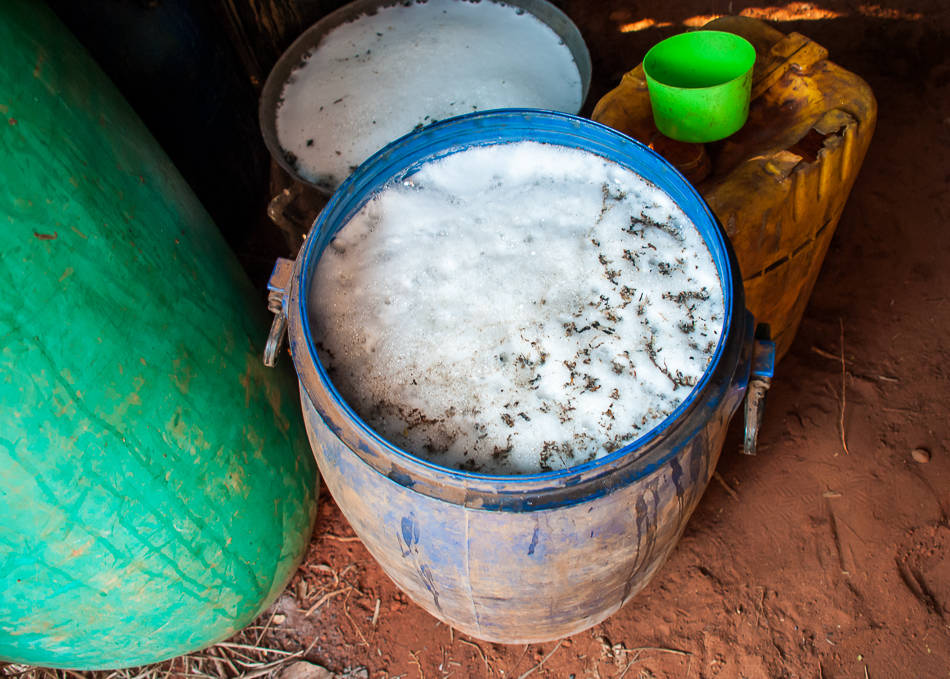
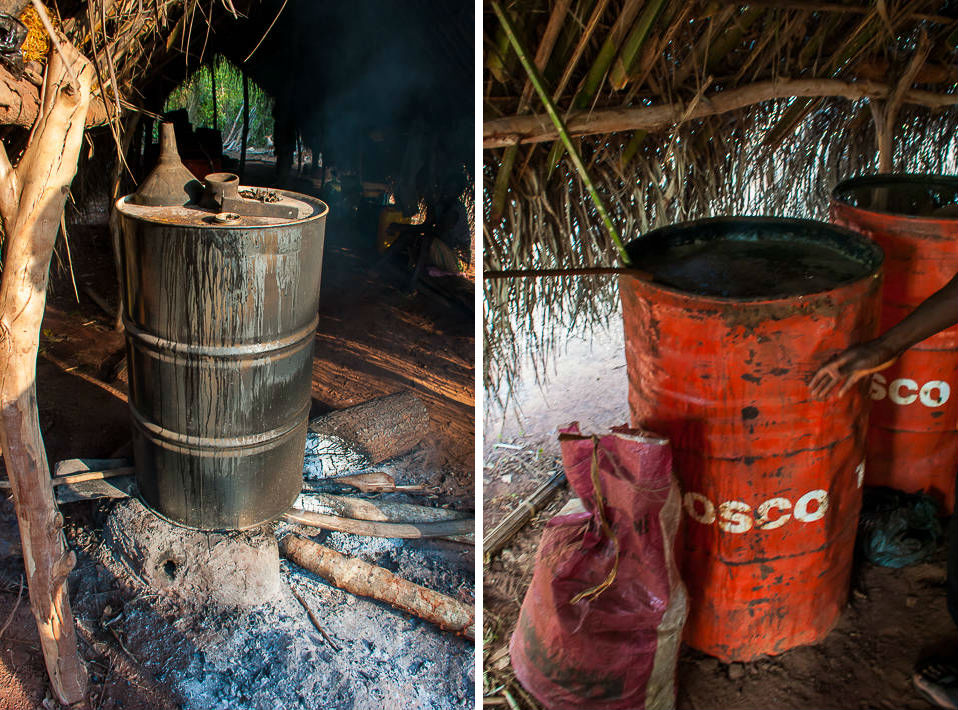
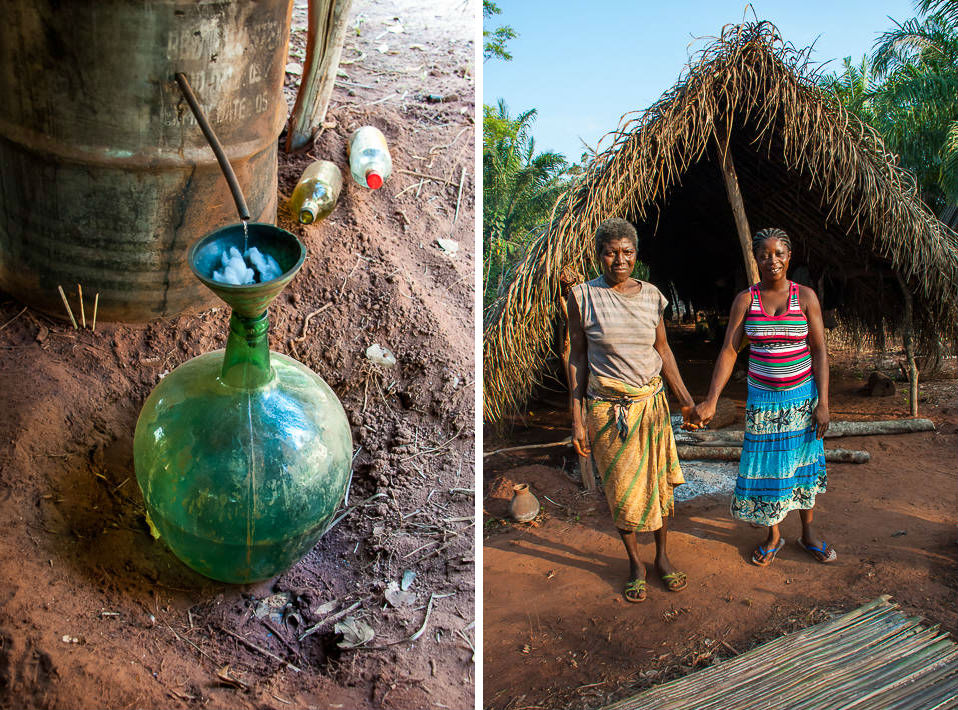
Leftover palm wine can also be distilled to create a stronger drink – the local akpeteshie. First fermented in large barrels, it is then boiled to pass the resulting vapor through a copper pipe within cooling barrels…

… where it condenses and drips into sieved jars, then undergoing a second stage of fermentation.

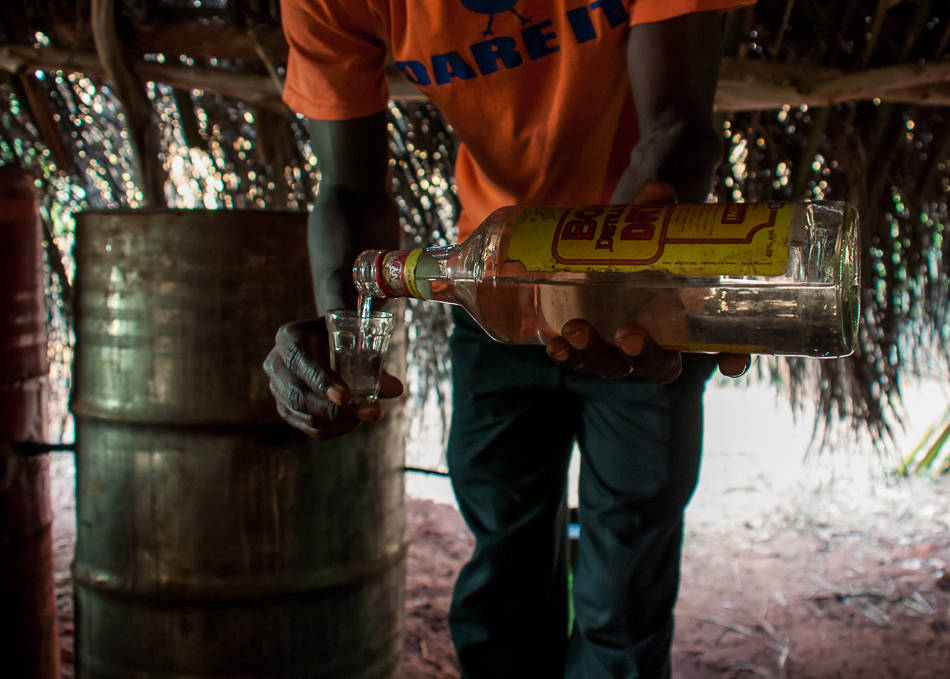
The resulting spirit is between 40% and 50% and we got to enjoy it with the tappers coming back from the fields at the end of a long day…cheers!


Africa Togo Travels

Voodoo and Markets in Togo’s capital

December 23, 2013

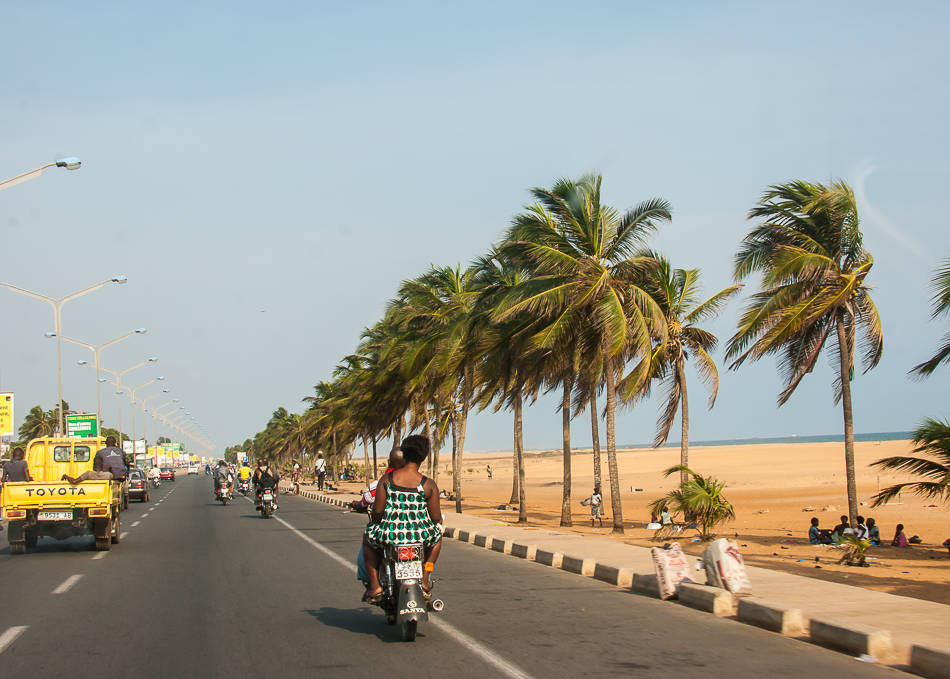
The capital of Togo, Lomé, has a unique charm and casualness that sets it apart from other West African capitals. After months of the horrendous traffic in Accra and the generally poor road conditions in Ghana it was a relief to drive serenely amidst the motos which make up most of the transport in Togo. The main road is a lovely palm-fringed boulevard which runs directly from Ghana to Benin on the 56km coastline of the tiny country.

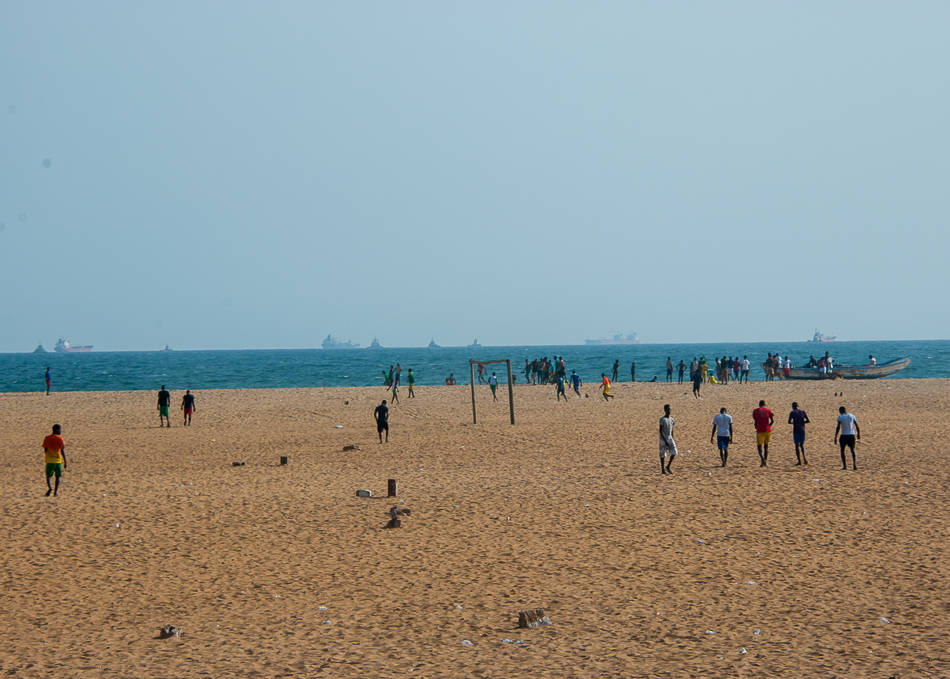
Once known as ‘the pearl of West Africa’ for its attractive beaches, colorful markets and friendly people, Togo is now notorious for the riots and human rights abuses that occurred here in the 1990’s, and again in 2005 when the current president seized power after his despotic father’s death. Things are looking up now though and it’s a great time to visit and discover the country’s hidden gems.

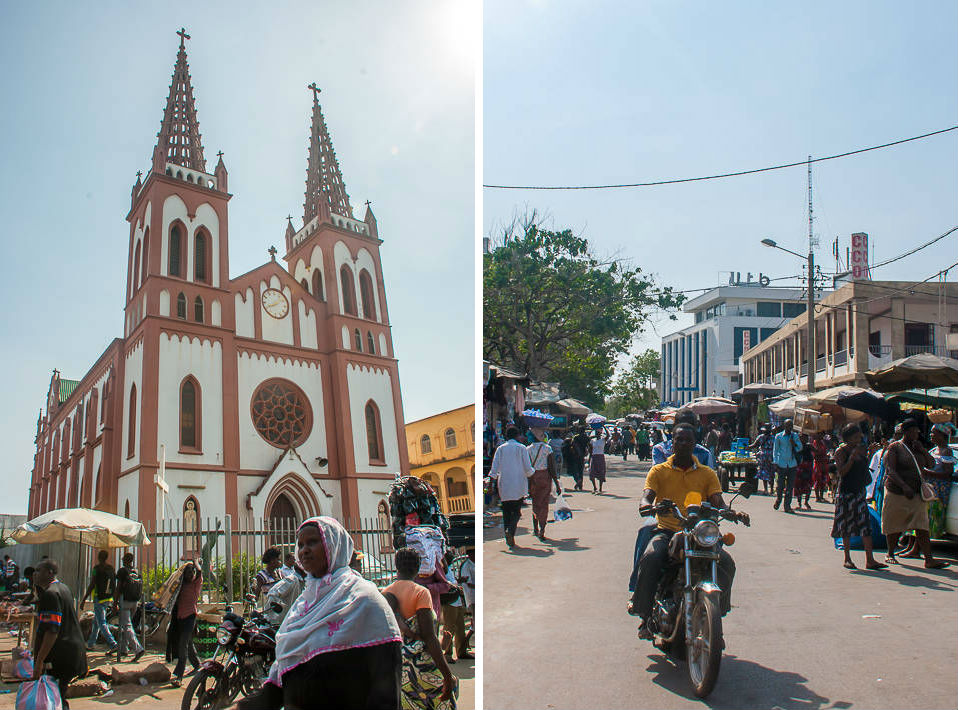
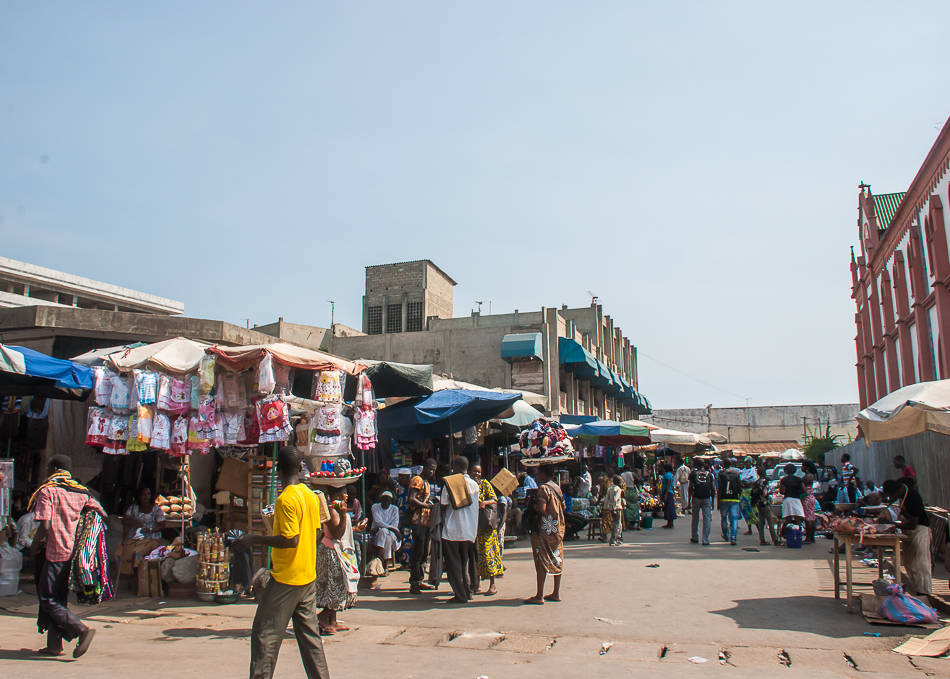
Lomé’s biggest attractions are its markets. The Grand Market is locally called Mama Benz which is the affectionate name given to the big, older women managing the stalls and setting the prices. Thanks to their business acumen, they have amassed a great deal of wealth and are known to all have a chauffeured Mercedes Benz , hence the name!

The market spills over a large number of streets downtown and sells everything from peppers, dried fish, shoes, combs, traditional medicinal remedies and is especially famous for wax-print fabrics which characterize the cultural identity of West African fashion today.

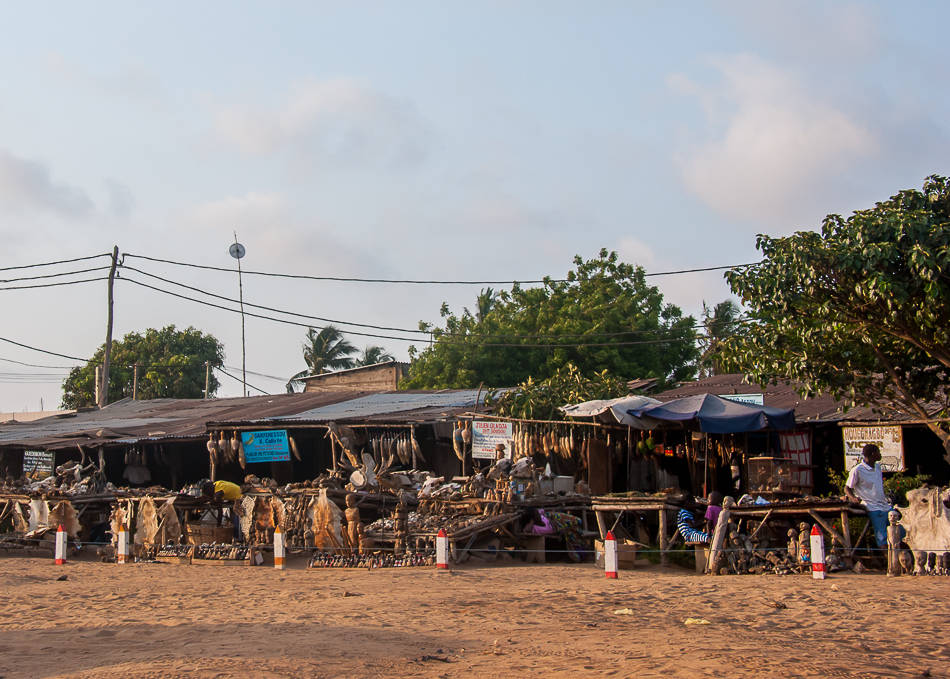
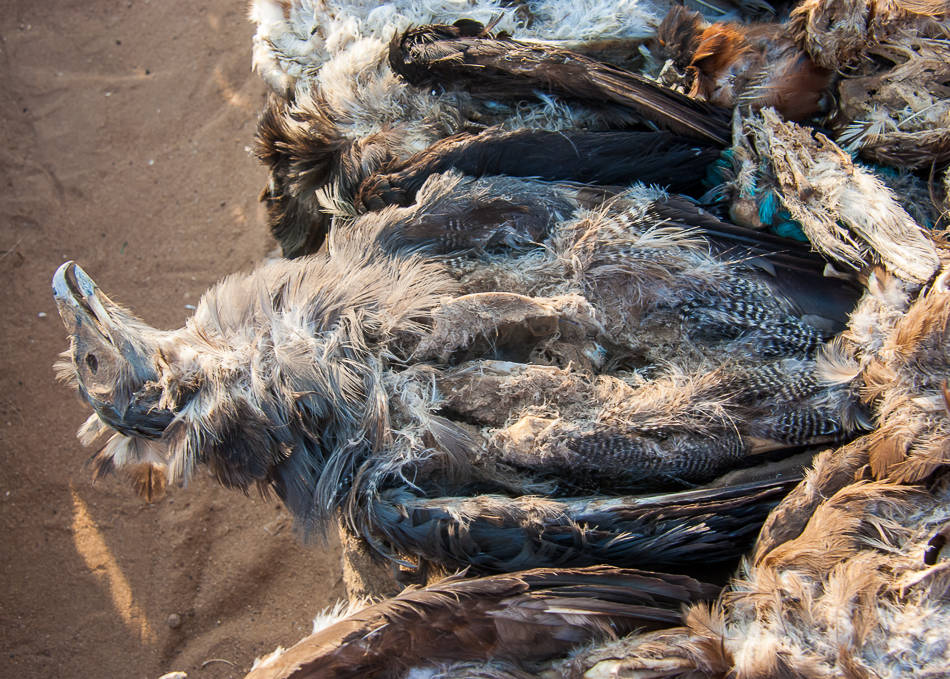
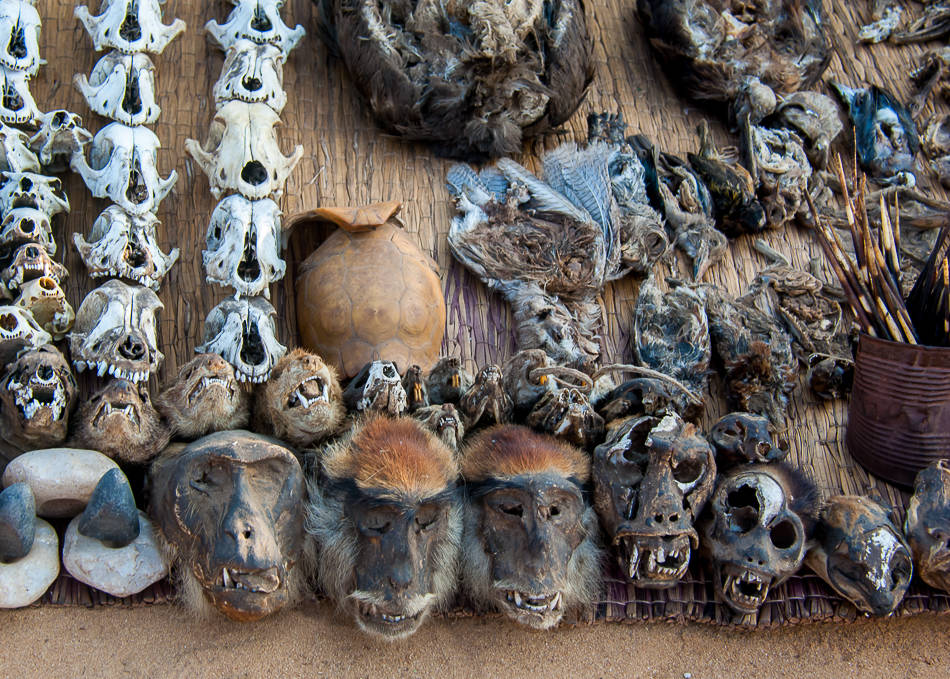
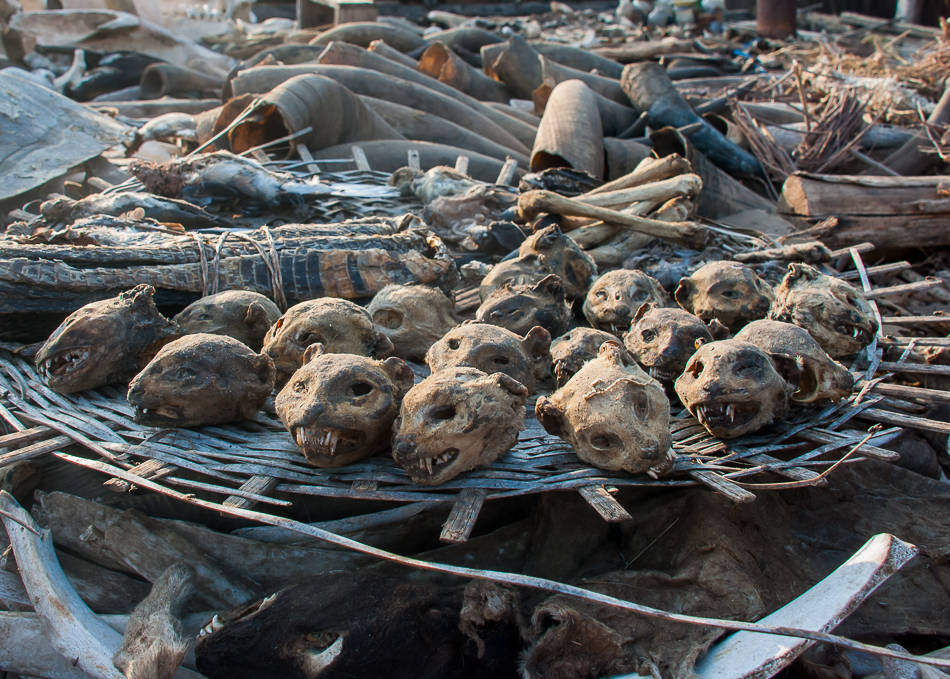
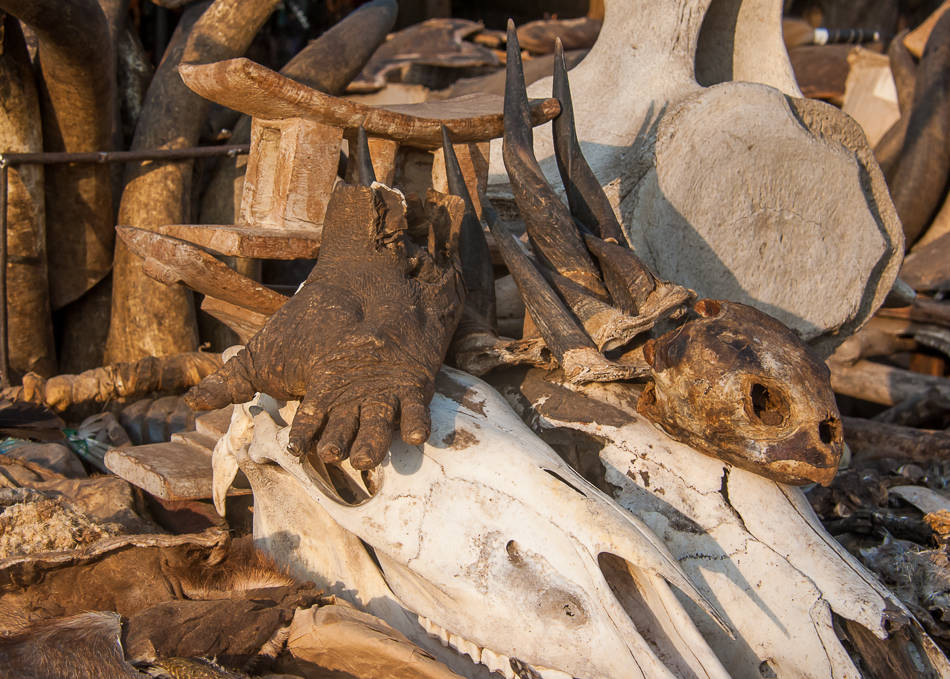
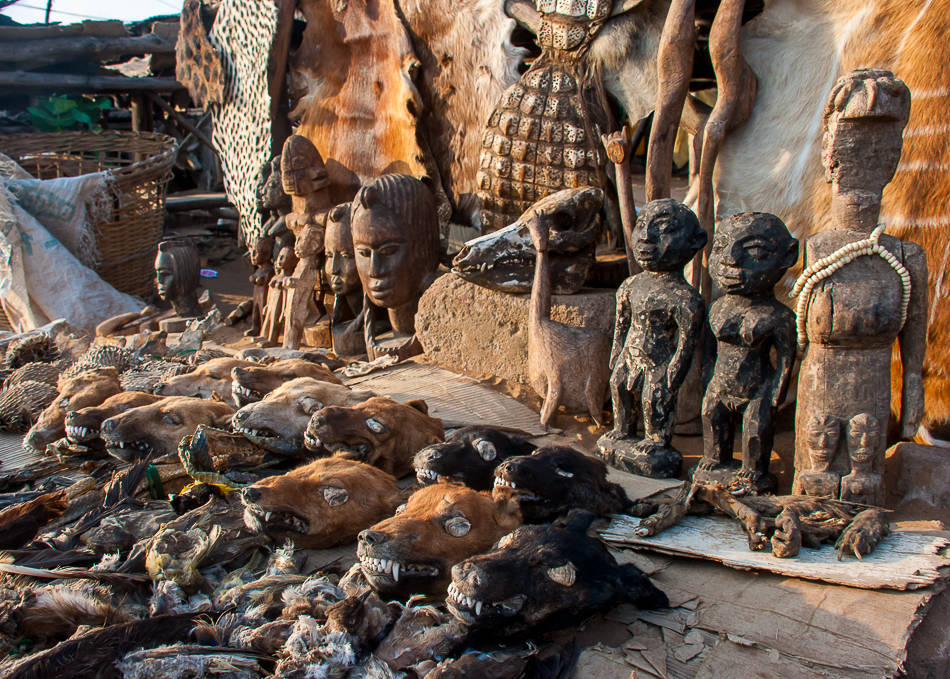
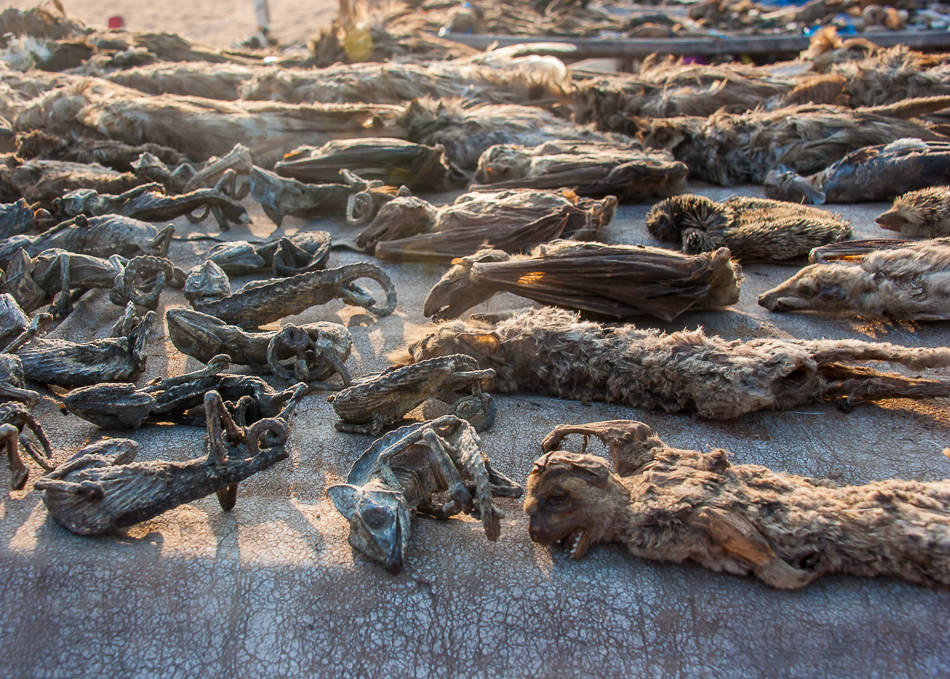
The market you won’t want to miss though is the Akodessewa Fetish Market, the largest Voodoo market in all of Africa. While many think of Haiti as Voodoo’s biggest stronghold, the religion originated in West Africa and is very much alive and thriving here!

Locals come here to seek treatment for everything from the flu or infertility to removing the blackest of curses and Voodoo priests are available to bless and create fetishes and medicines. It can be a bit of a harsh place for tourists if you’re not used to the idea of animal sacrifice as part of worship, but for locals who practice the religion, these are necessities so one must keep an open mind.

Lome - Togo

Twin fetish dolls
Lome - Togo

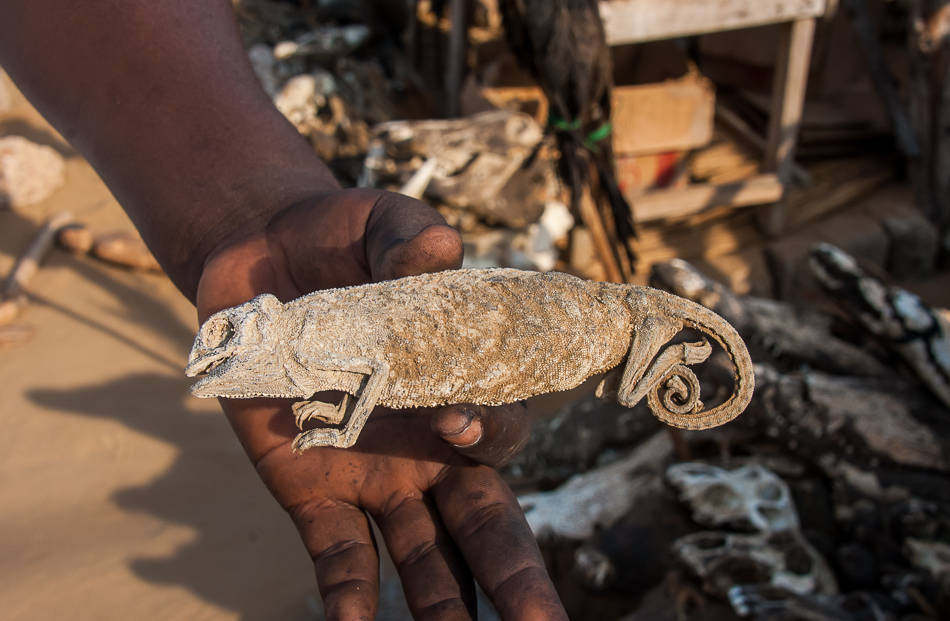
Chameleon
Lome - Togo

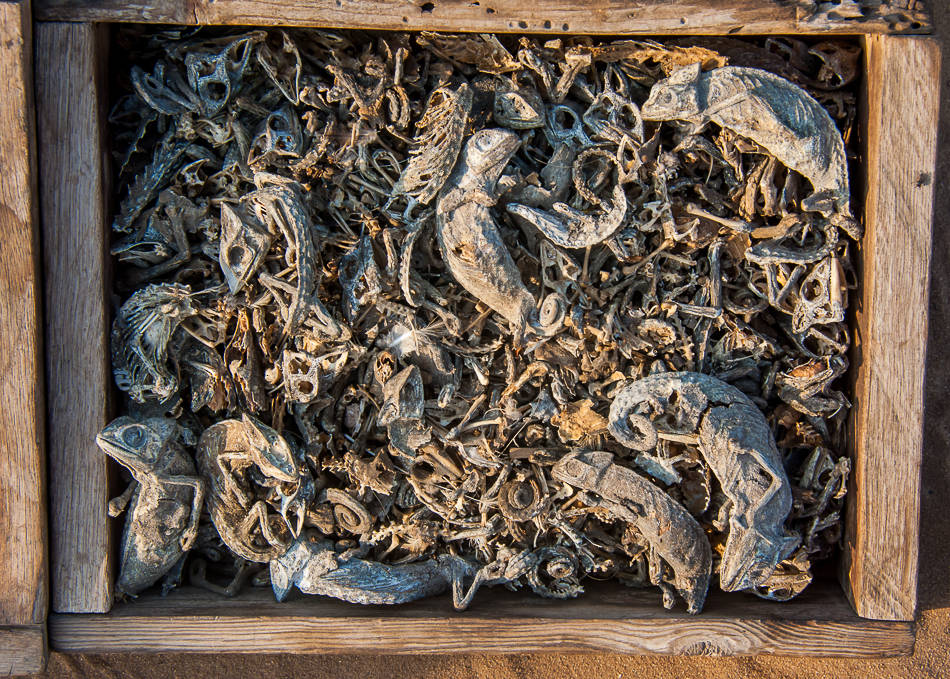
Box of chameleons
Lome - Togo

Lome - Togo

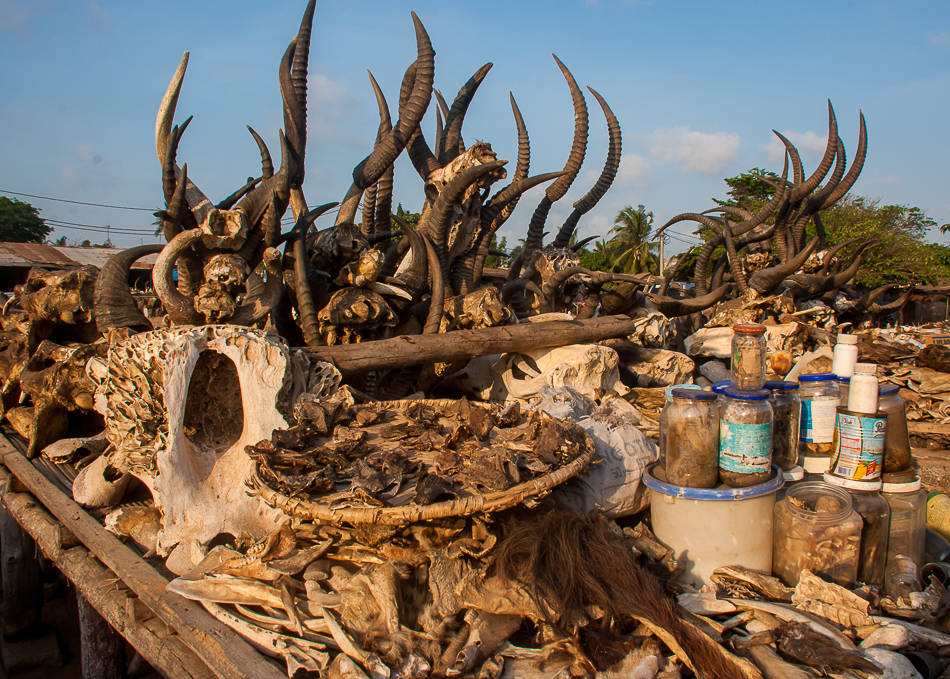
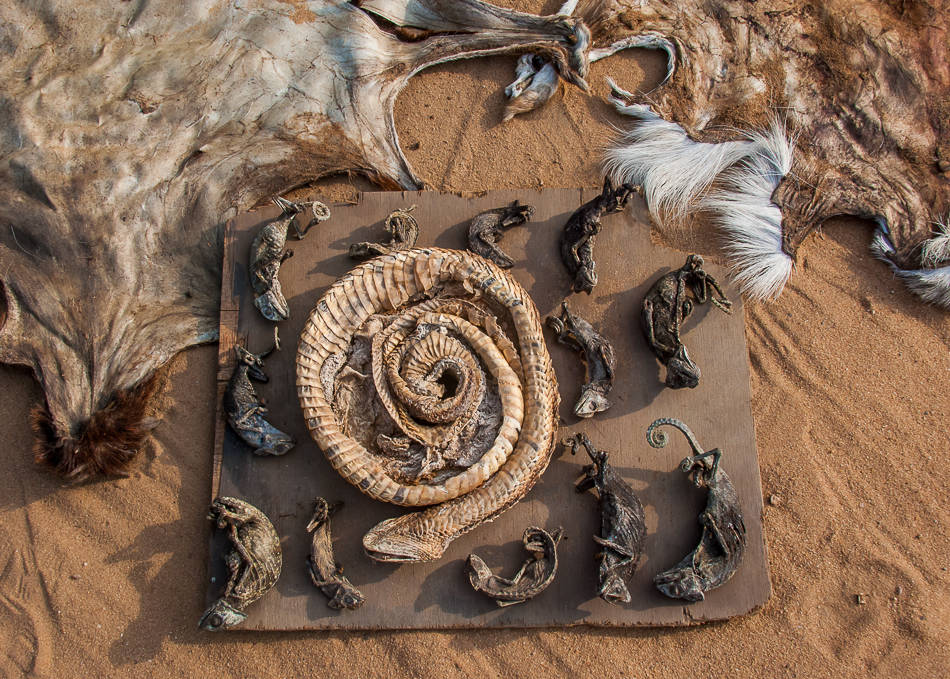
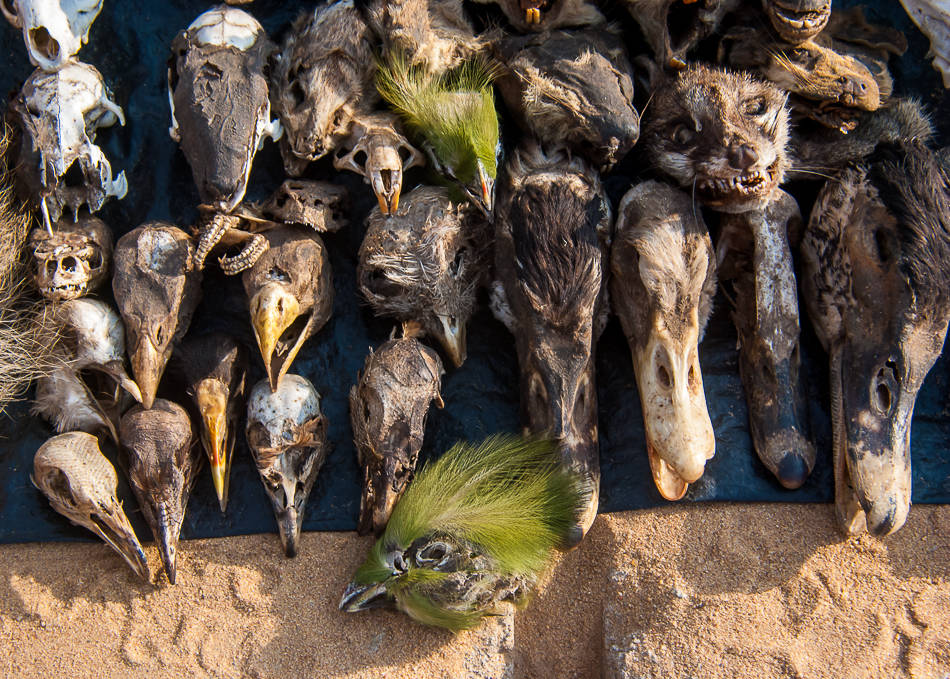
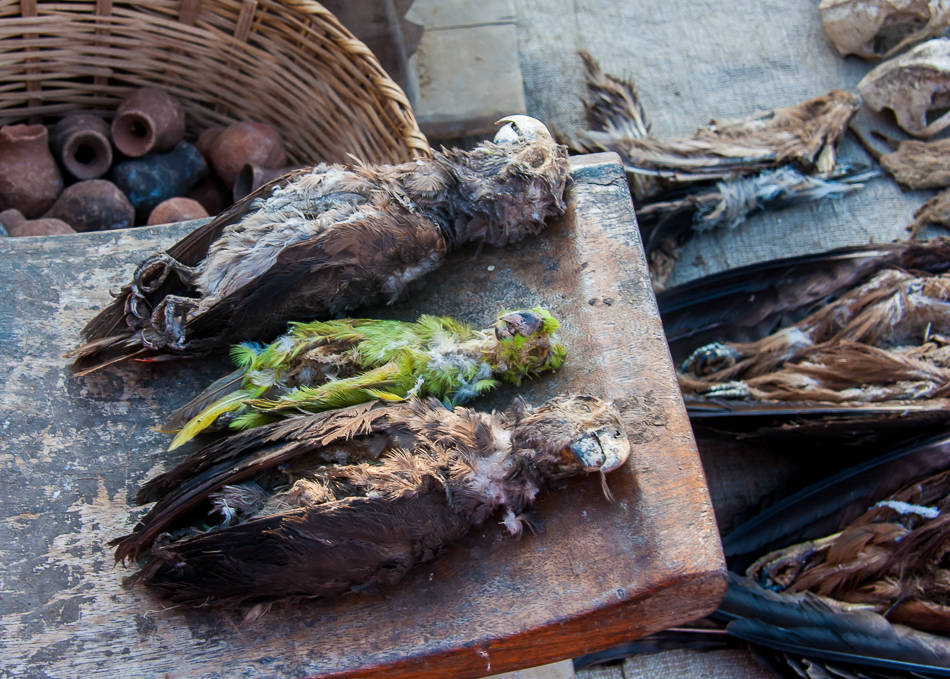
You can literally find any kind of creature in various stages of decay and stacked up in the most macabre display you’ve likely seen in your life.

Lome - Togo

Lome - Togo

Lome - Togo

Lome - Togo

Lome - Togo

Lome - Togo

Lome - Togo

Lome - Togo

Lome - Togo

Lome - Togo

Lome - Togo

Lome - Togo

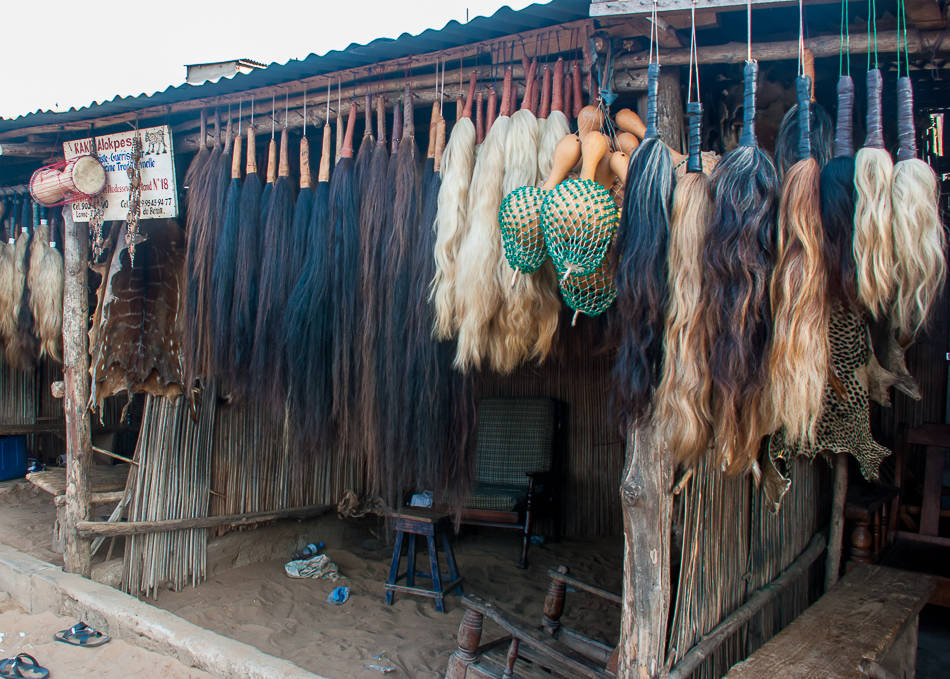
Horse hair are used in traditional ritual dances.

Lome - Togo

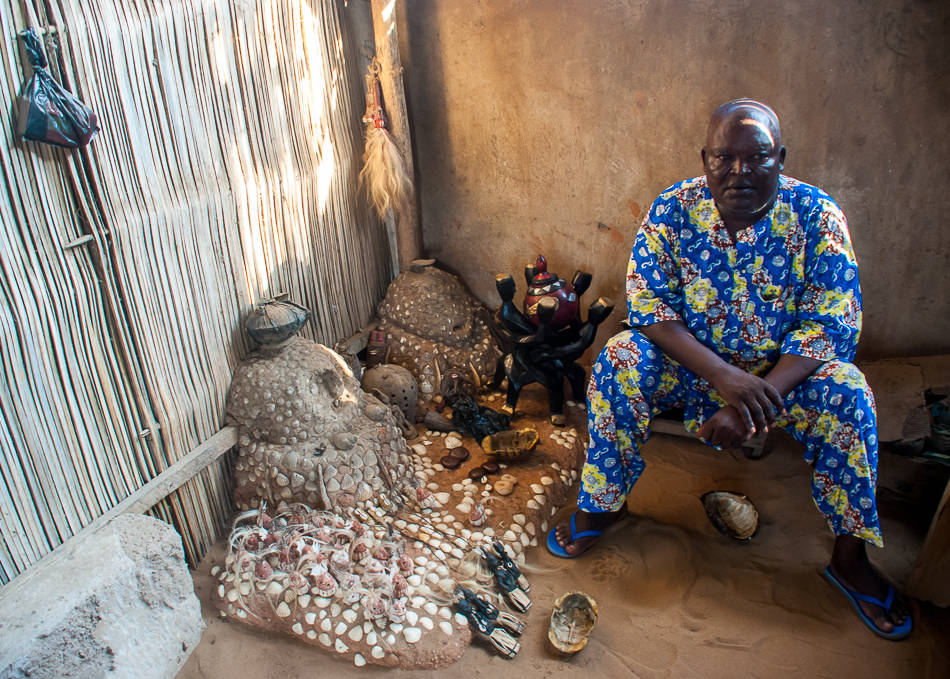
Behind the stacks of carcasses are the Voodoo priests’ ‘offices’ where I ventured to get a little reading…why not!

Lome - Togo

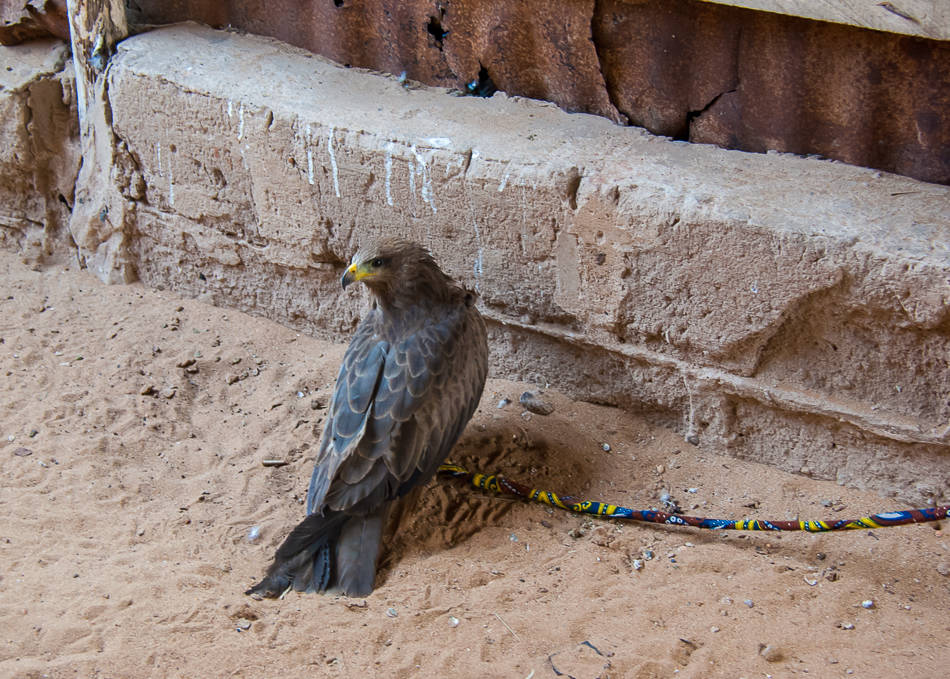
Hawk in the Voodoo priest’s office
Lome - Togo

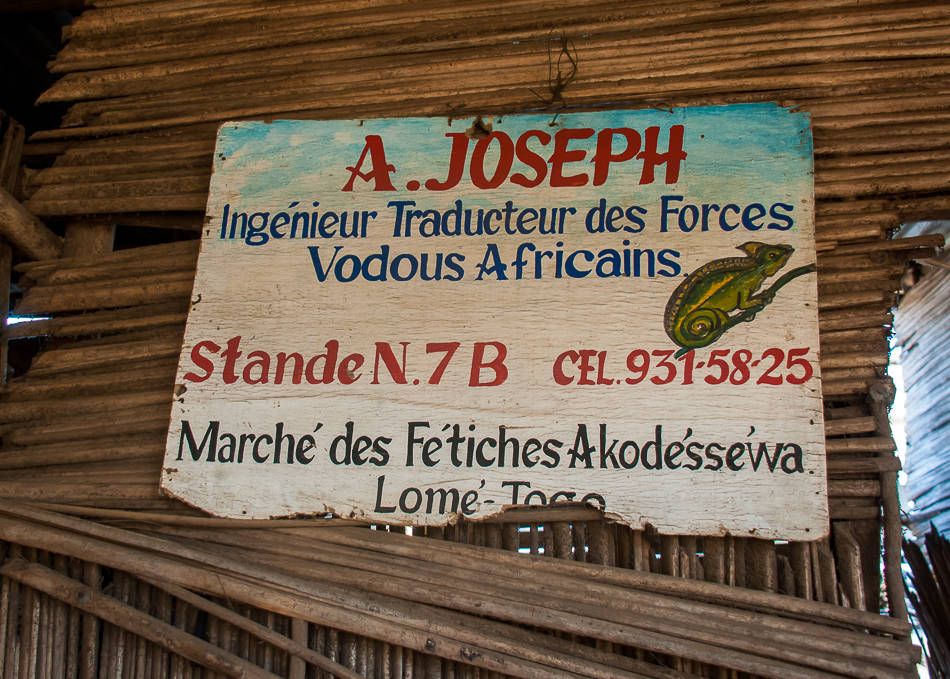
And the visit concludes with Joseph whose job title translates into : Engineer Translator of African Voodoo Forces. He acts as medicine man and advises on which spell is necessary and what animal part is needed to carry it out. He can even predict your future…as well as the price of your visit!

Lome - Togo

An enlightening tour to say the least and an almost incomprehensible world to most tourists. Despite some of the pictures being quite creepy, remember that Voodoo as practiced here is the white magic and used for good, for someone’s benefits and never to cast any bad spell…


Africa Ghana Travels

Waterfalls and lush green hills in the Volta Region

December 17, 2013

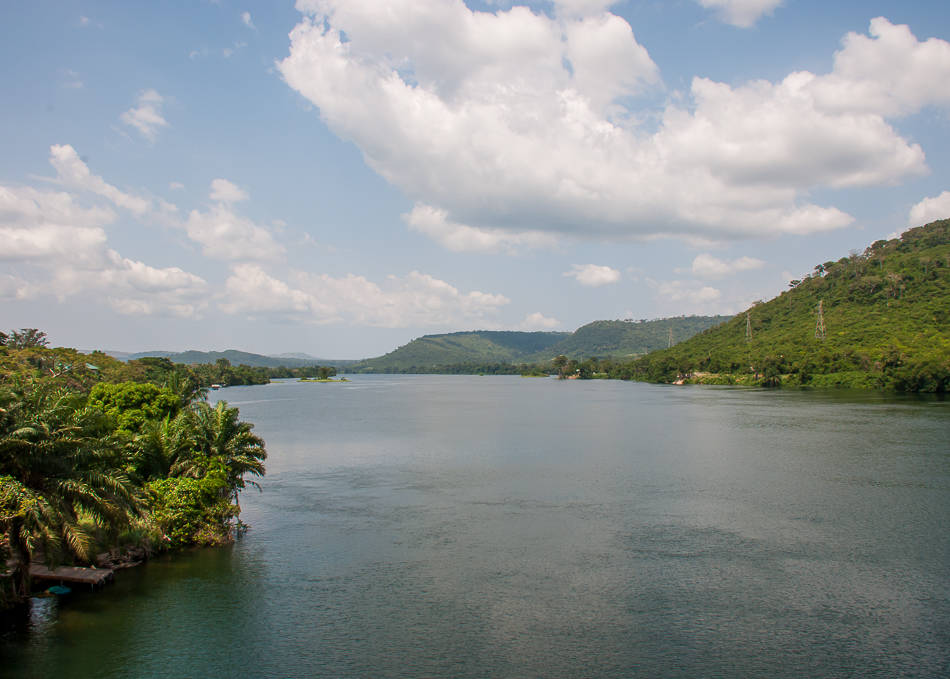
The most easterly region of Ghana, bordering on Togo, the Volta Region is often cited as the most beautiful in all of the country, and I do agree. The lush green hills and valleys, flowing rivers and waterfalls make for an incredibly scenic landscape. The region is dominated by the Volta River and Lake Volta which is the largest man-made lake in the world with a surface area of about 8,502 km².

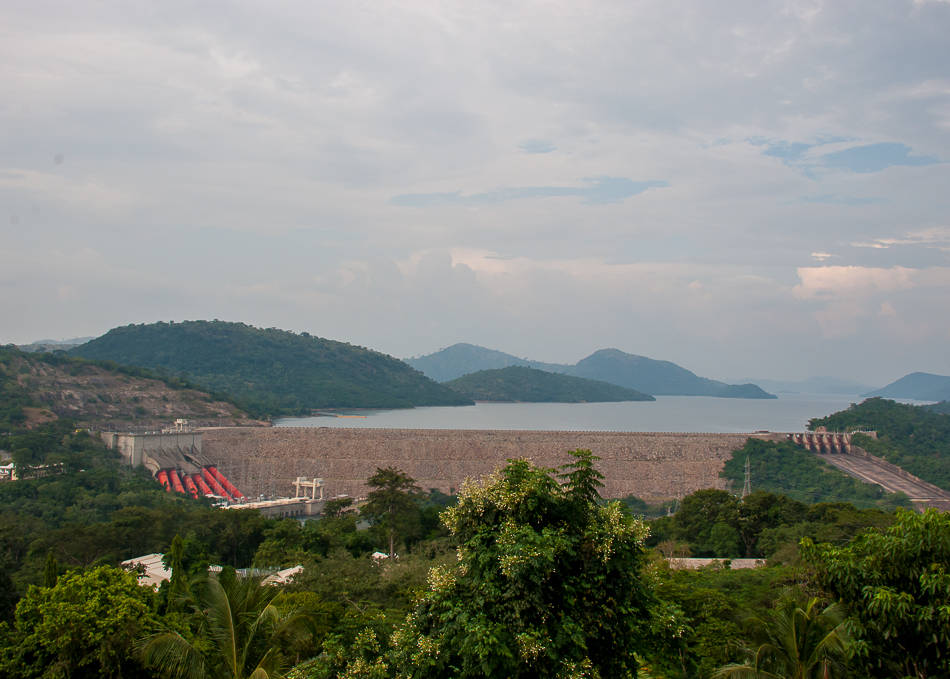
View of the Akosombo Dam which splits Lake Volta and provides electricity for the whole nation as well as a few neighboring countries.

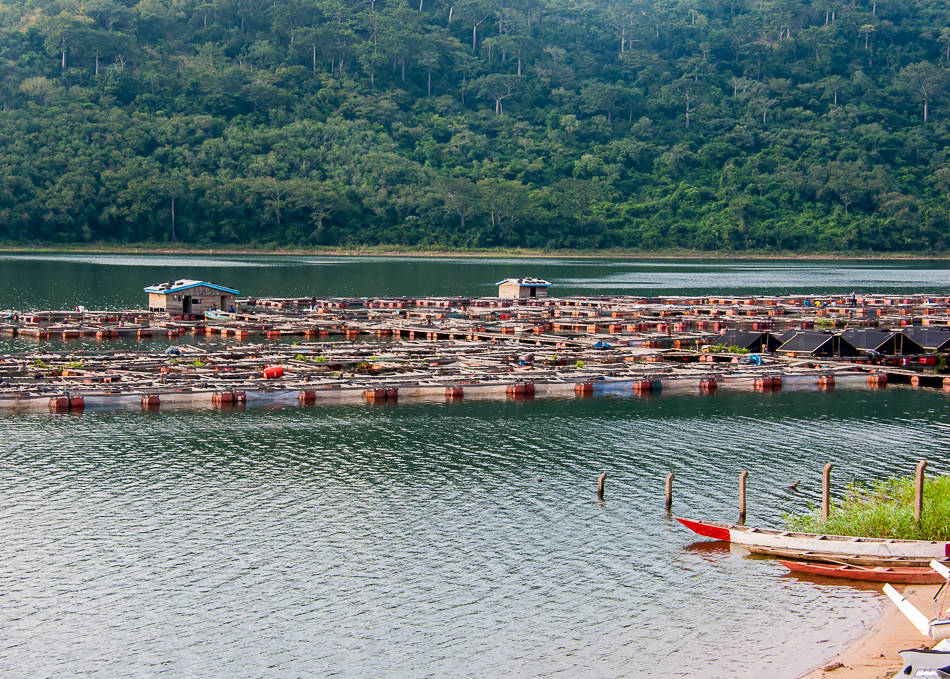
Fishing is obviously a huge activity in the region and you can witness many Tilapia Farms along the Volta River.

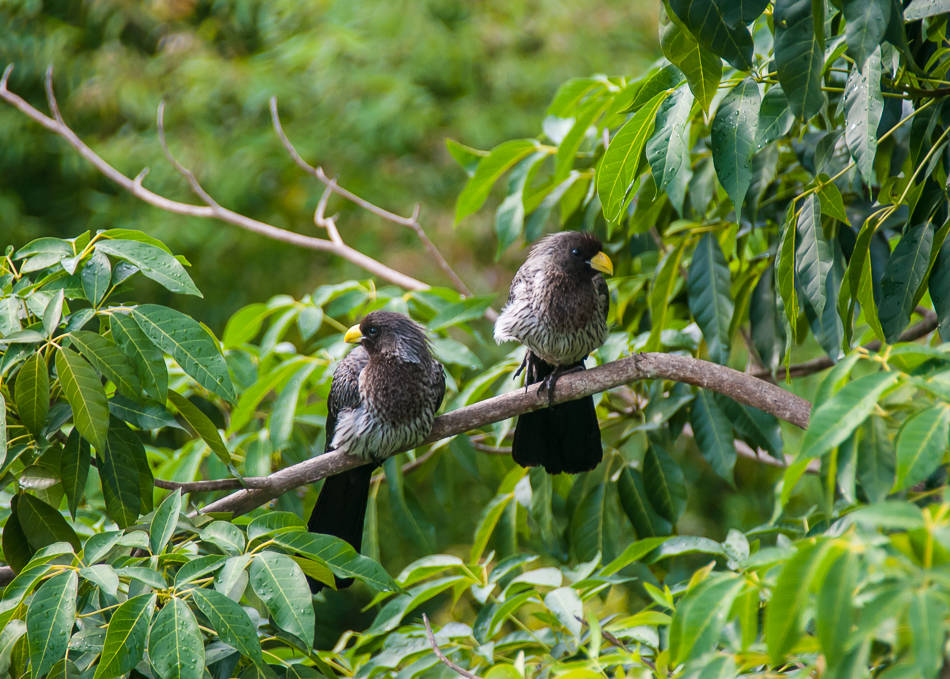
The dense green hills are a breeding ground for all kinds of migratory birds.

About 8 km south of the lake is the best place to enjoy the Volta River and all its water activities in the small town of Atimpoku on the west bank of the river.

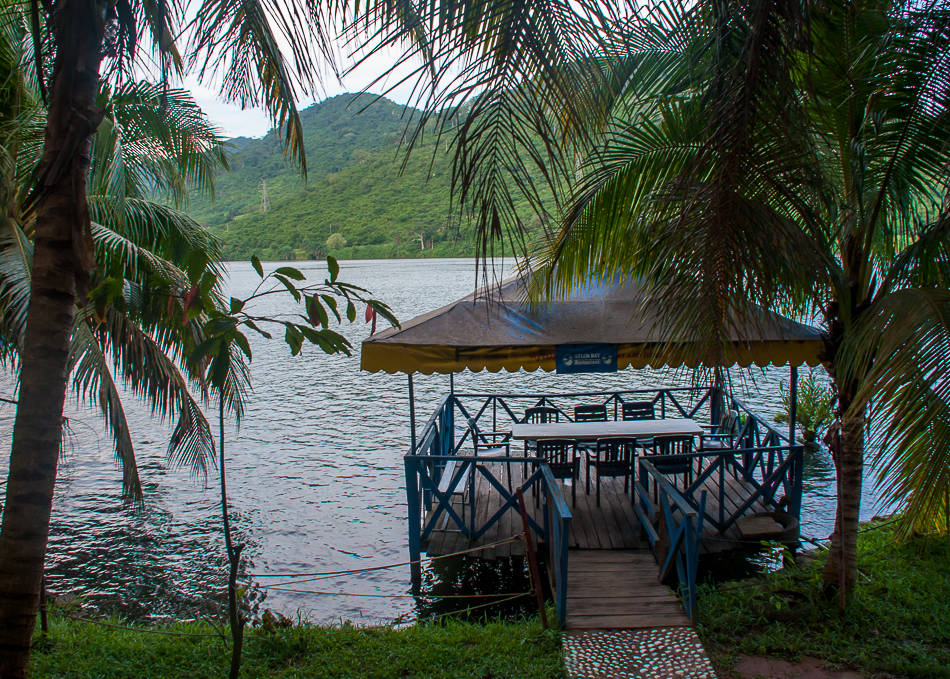
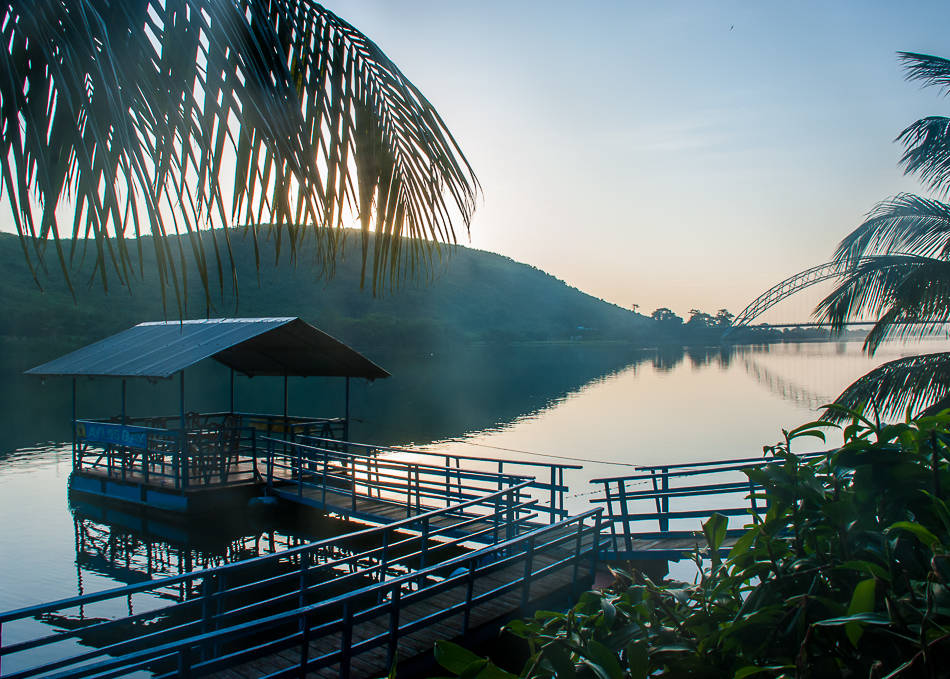
Aylos Bay, a quiet hotel set in wooden riverfront gardens, offers easy access to the water with boats available for rent and floating pontoons for eating right on the river.

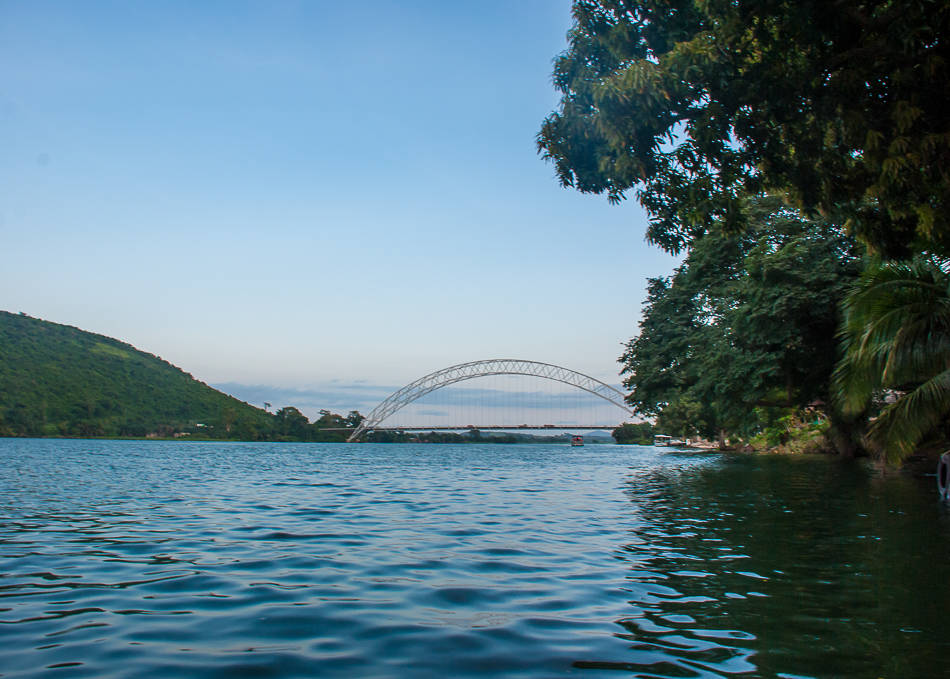
The waterfront bungalows are especially worth it with your own private balcony overlooking the river and bridge in the distance.

Aylos Bay’s location is also ideal for a break before visiting the rest of the Volta region as it sits right near the junction of the main Accra-Ho road which leads to the area’s main attractions.

View of Adomi Bridge from a paddle boat at Aylos Bay

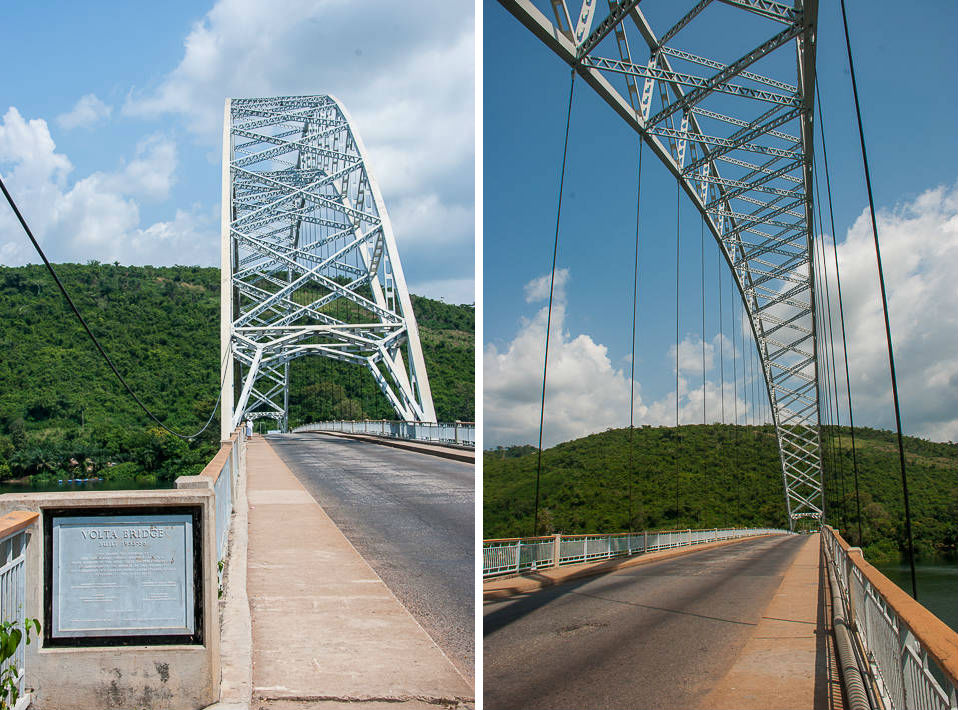
Crossing the Volta River on the Adomi Bridge

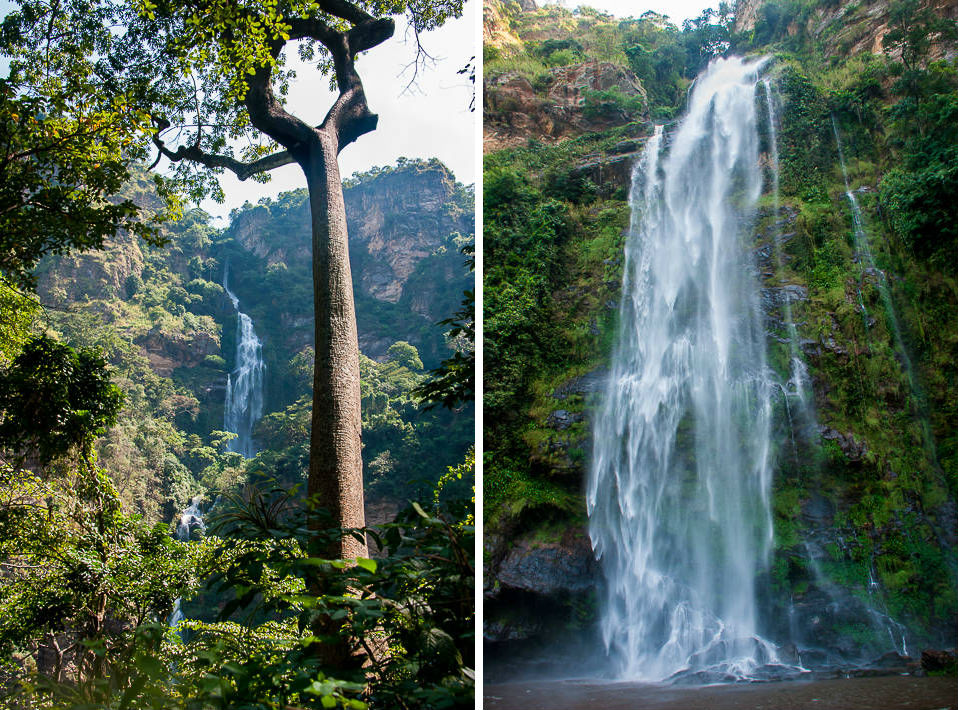
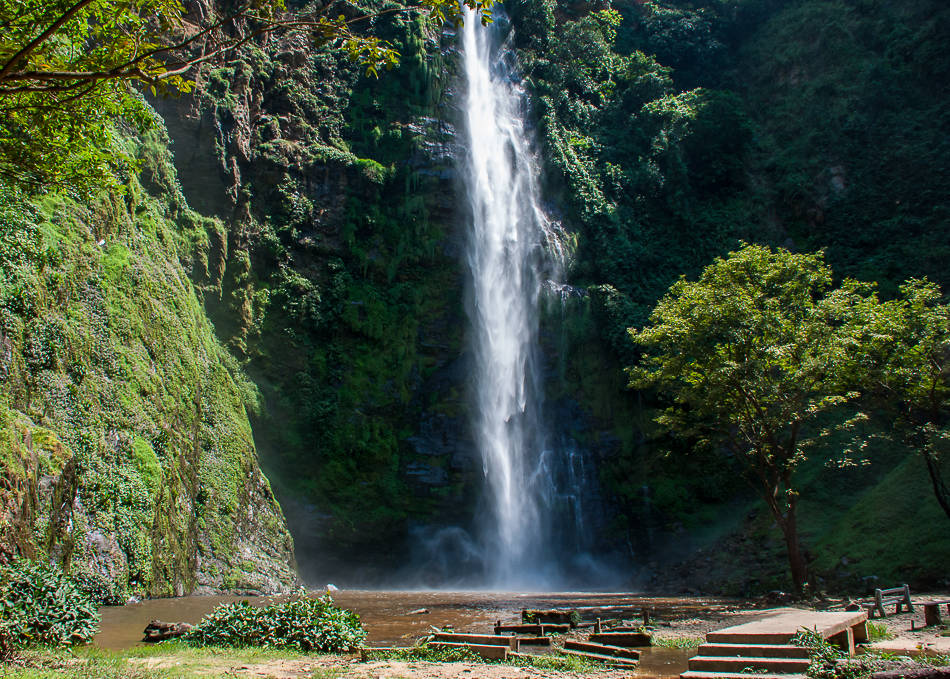
A few hours drive later and you’re in the region’s most popular tourist destination: the village of Wli and its stunning waterfalls near the Togo border, the highest in West Africa.

I stayed at the German-owned Waterfall Lodge, a super laid-back lodge with a superb location…

…as you can literally see the waterfalls from the garden, high up in the mountain range.

Close-up on the upper waterfalls

It’s only about 500m from the lodge to the tourist centre and the walk through the village is as attractive as seeing the waterfalls themselves.

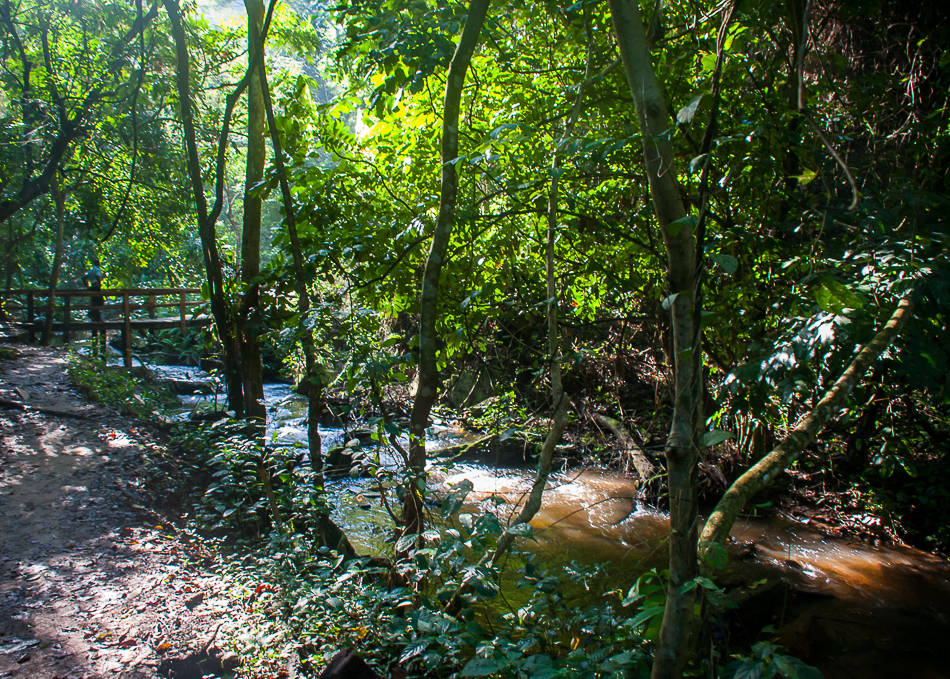
Once you’ve paid your dues at the tourist centre, you enter the Wildlife Sanctuary and start your walk to reach the waterfalls through a thick forest, crossing the river a total of 9 times using foot bridges. There are actually two waterfalls to see, the lower ones being quite easy to reach after about 45 minutes of leisure walk on flat terrain, and the upper ones requiring a steep and sometimes arduous 2-hour ascent up the mountain.

I went to the Upper Falls first (better done early morning before the sun hits you!) and really welcomed the decidedly colder air up there and fresh mist from the falls.

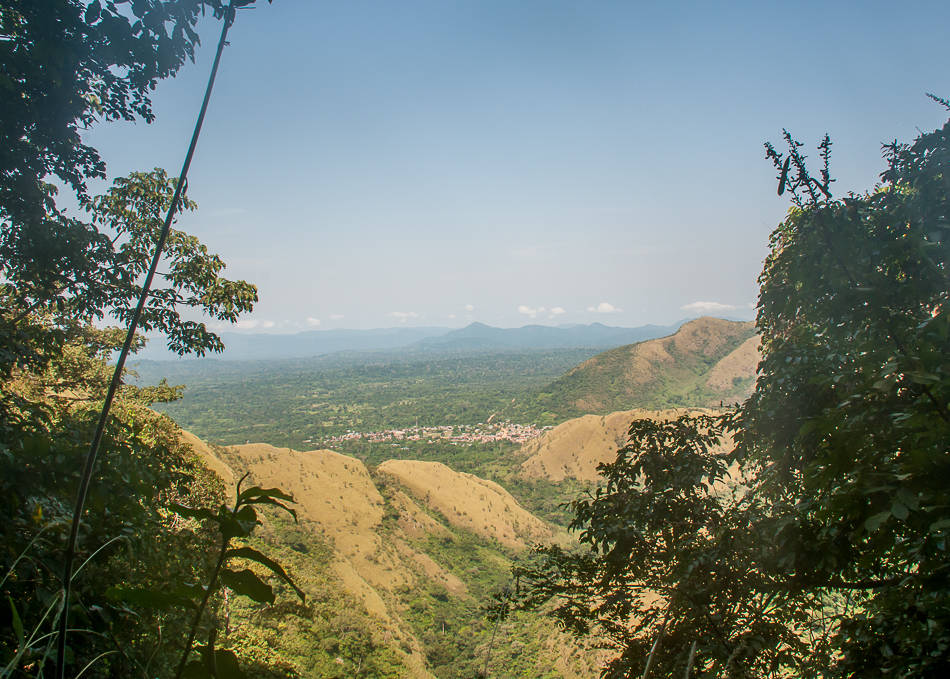
The hike down, when not holding on branches to negotiate the steep and slippery slopes, affords great views of the valley.

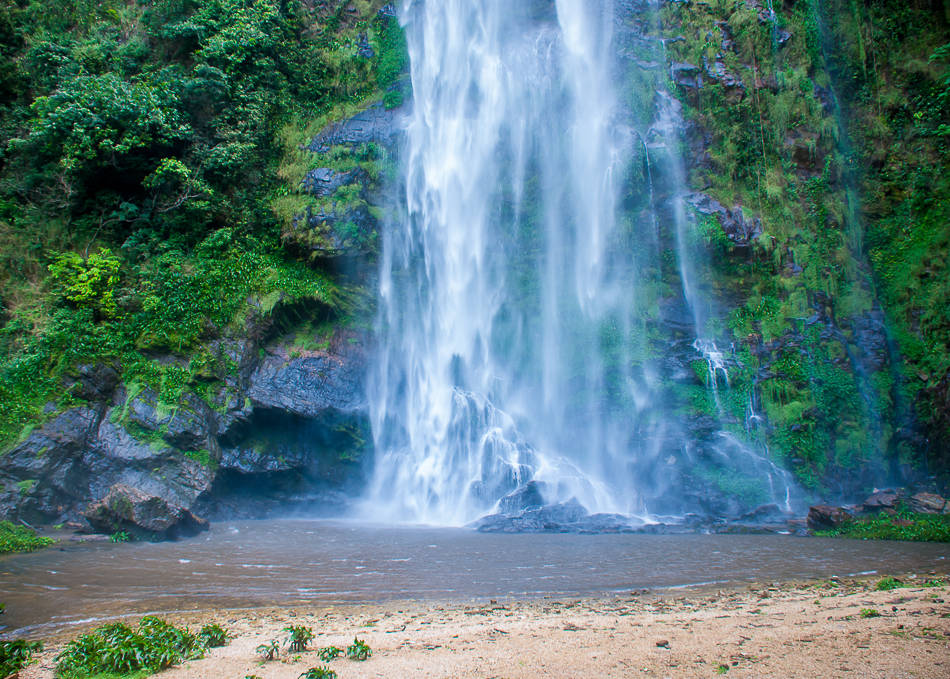
The Lower Falls are a lot more visited due to their ease of access and you’ll most surely have company. There’s a large and shallow pool at the bottom where you can freshen up and more facilities such as benches and snack vendors as you’ll want to linger for a bit.

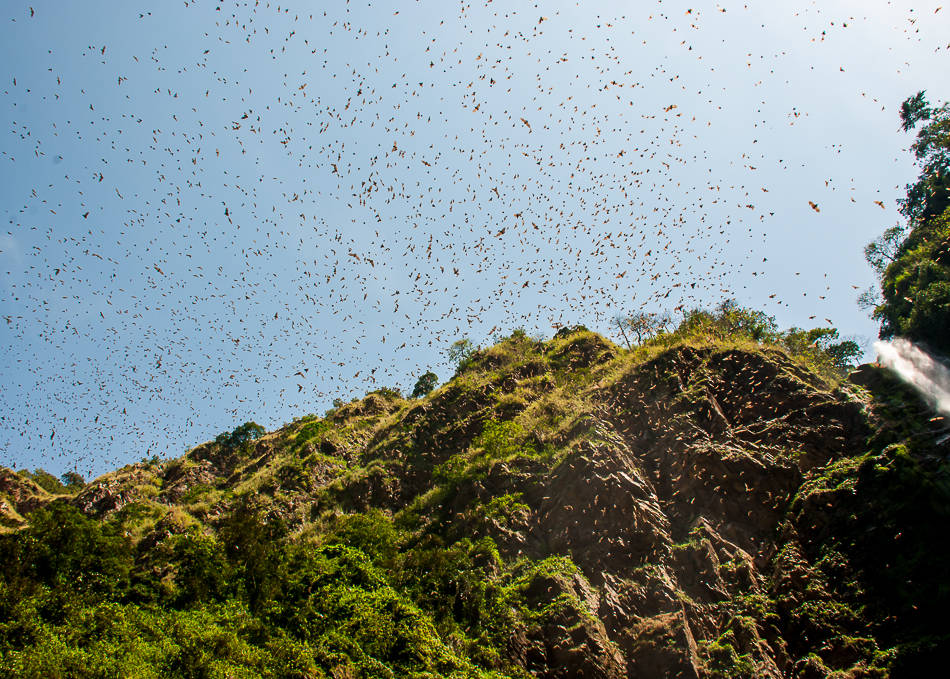
You’re likely to have a surprising shock when you see the sky above your head turn dark for a moment – the huge bat colony settled by the falls taking flight.

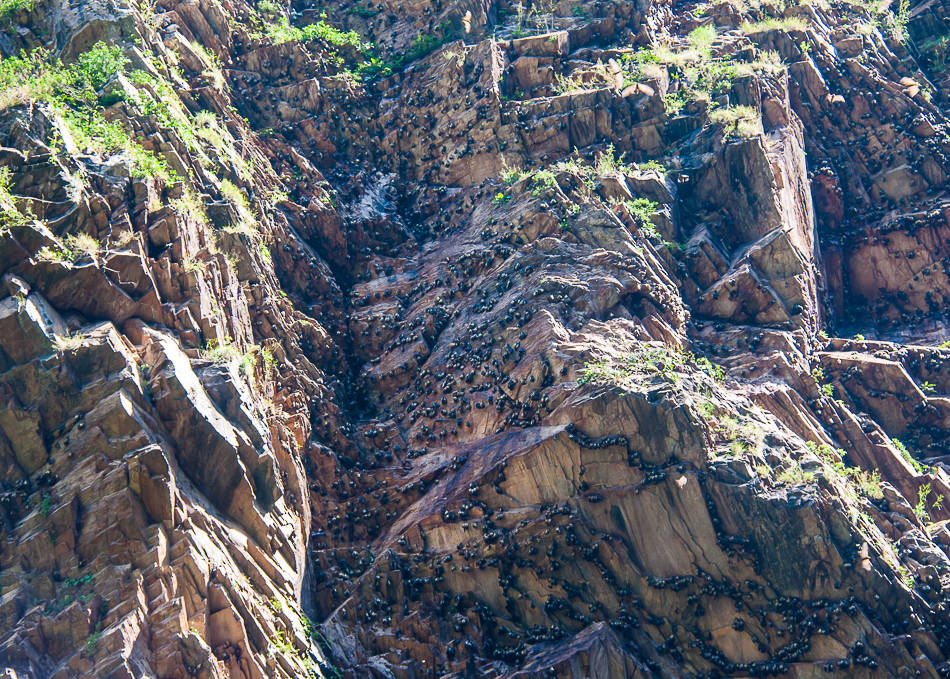
A very memorable sight and you’ll have a hard time taking your eyes off these hundreds of straw-colored creatures hanging on the tall cliffs next to the falls, the sound of their chirping echoing all around.

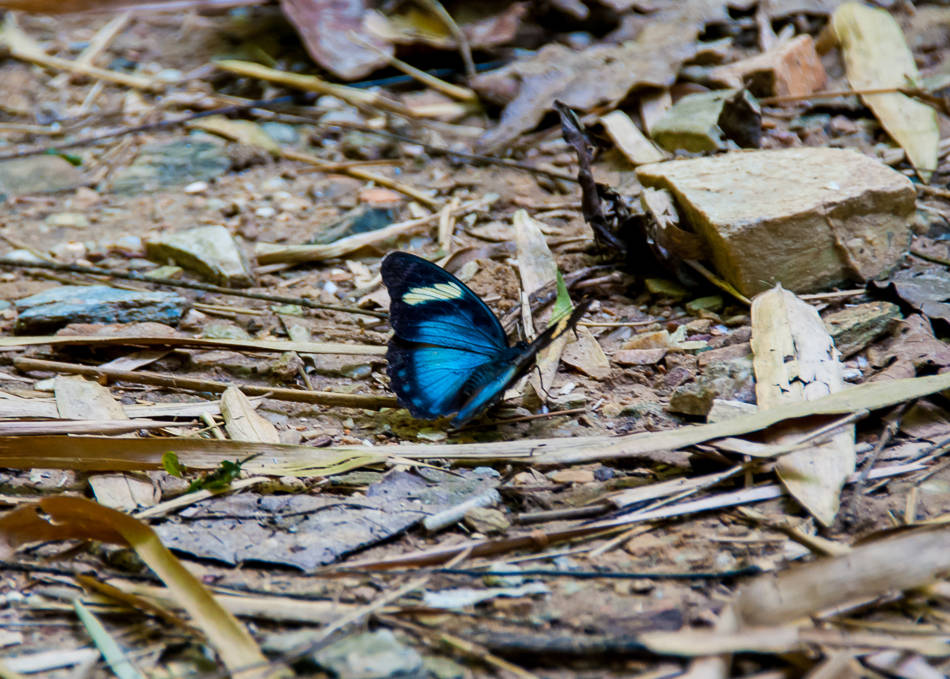
Once your head is back at a normal level is when you’ll also start noticing all the colorful butterflies…definitely a nature lover’s top destination!

Africa Ghana Travels

Nzulezo – a village on stilts

December 14, 2013

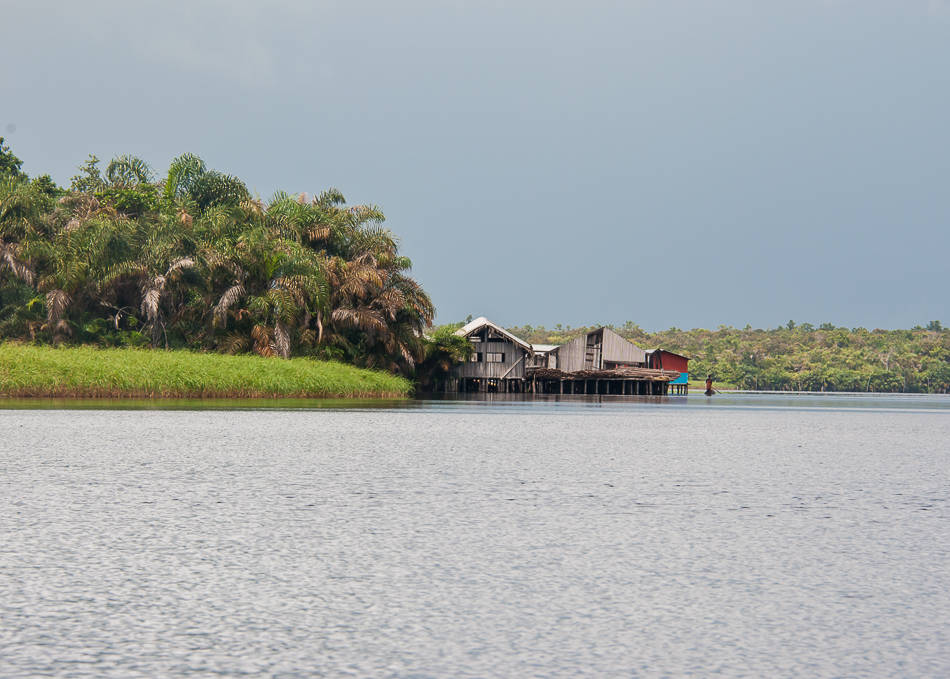
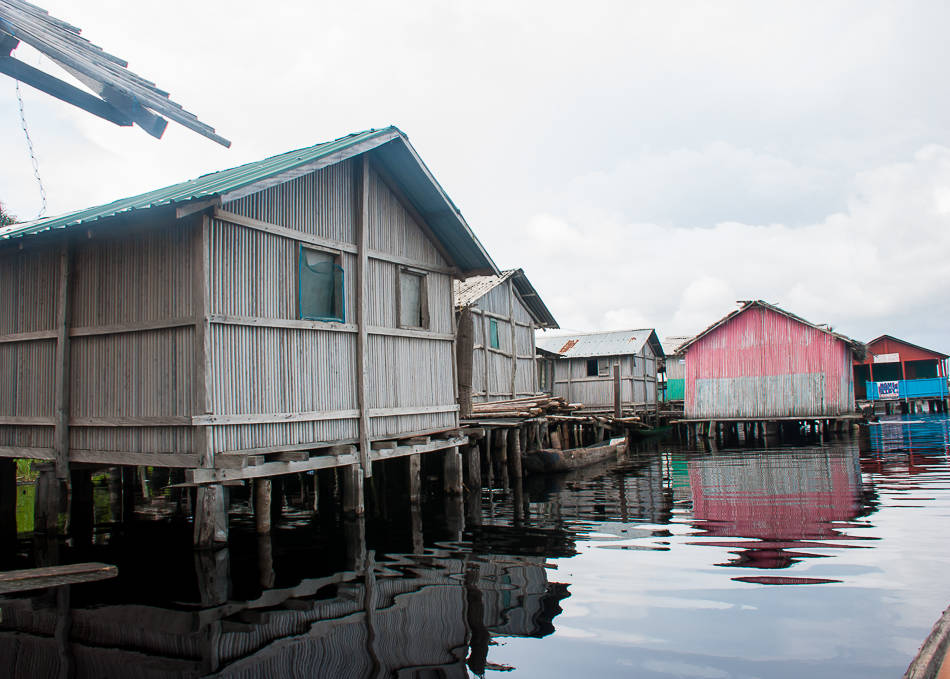
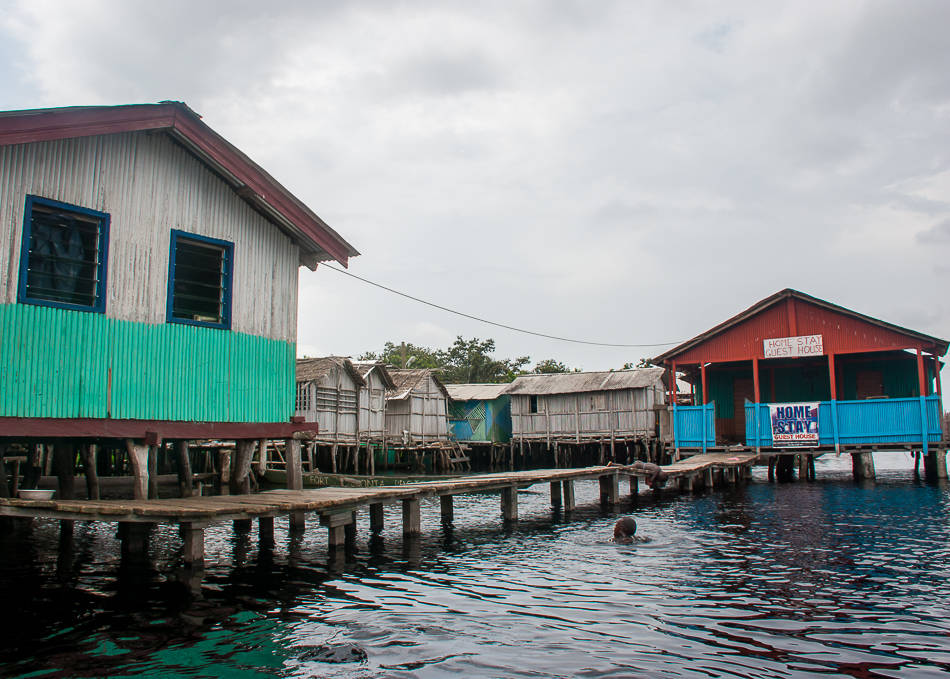
Those seeking the unique and singular in their travel experiences would do well to add a visit to Nzulezo to their exploration of Ghana’s stunning West Coast. The village, built entirely on stilts suspended above the Amansuri Lake, is said to have been created over 400 years ago by refugees from Mali who were led there by a Snail God.

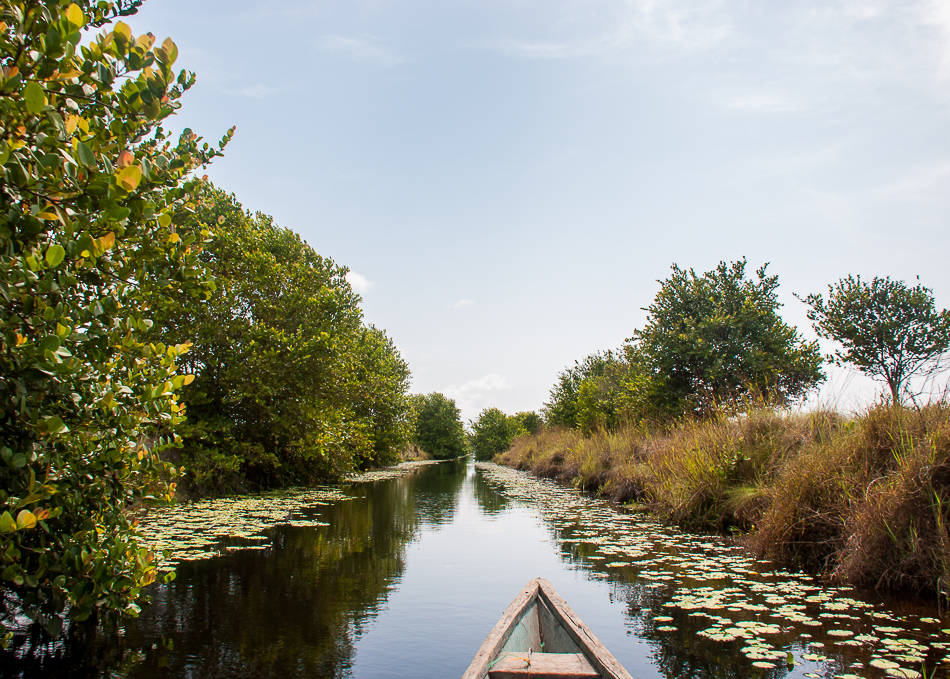
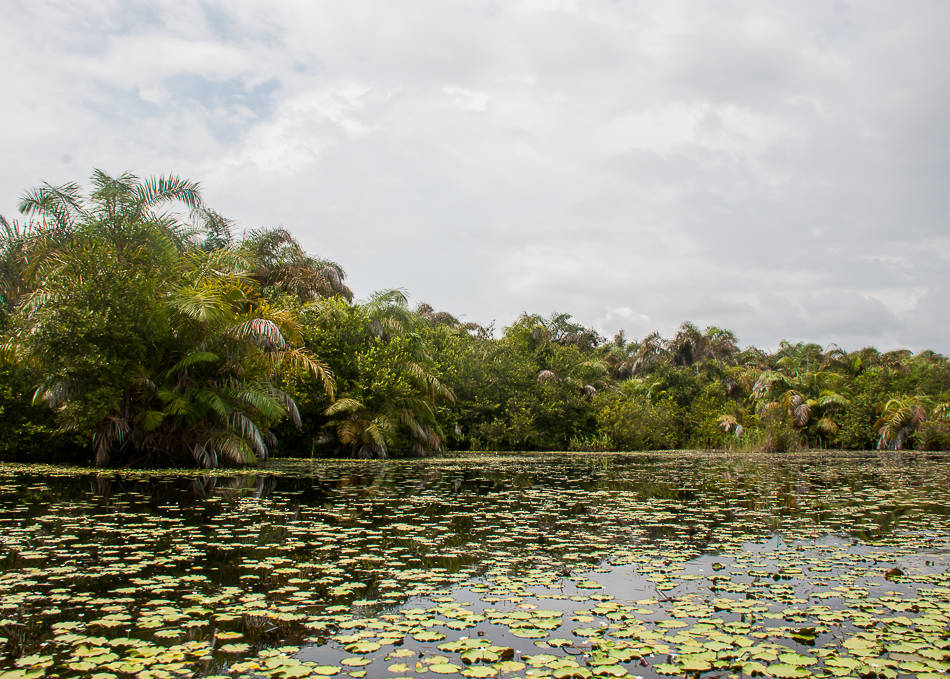
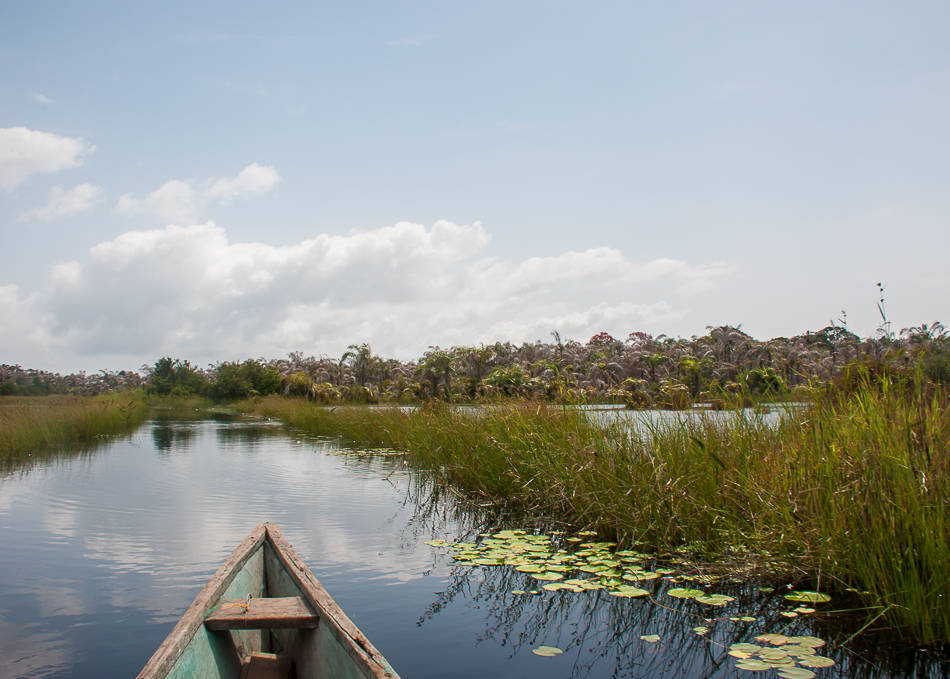
The journey to get there is almost more memorable then the village itself as it involves a one-hour dugout canoe ride through the Amansuri wetland, the largest stand of intact swamp forest in Ghana.

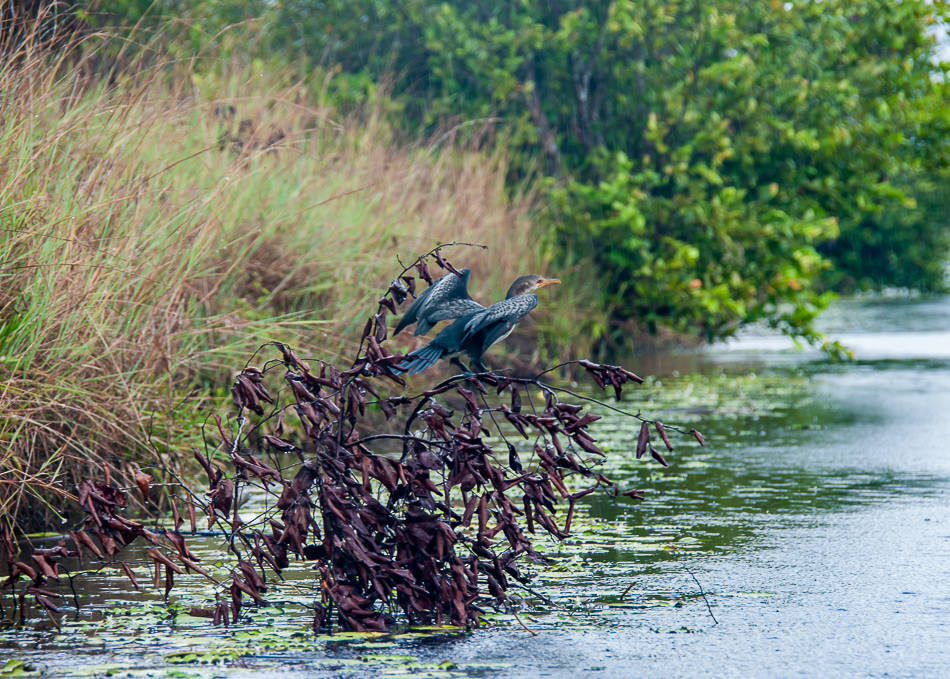
It is home to a variety of animals like monkeys, crocodiles, marine turtles and birds, the latter the easiest to spot obviously.

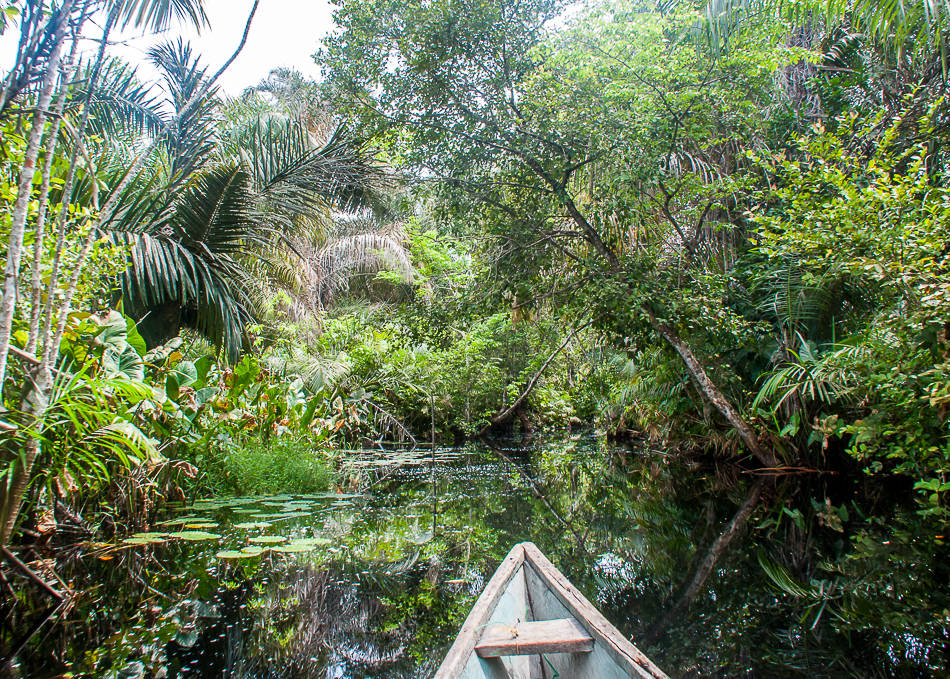
Since all the paddling is handled by a guide from the Ghana Wildlife Society, you’re free to just sit back and relax, and enjoy the serene ride through areas of marsh and lily-covered pools…

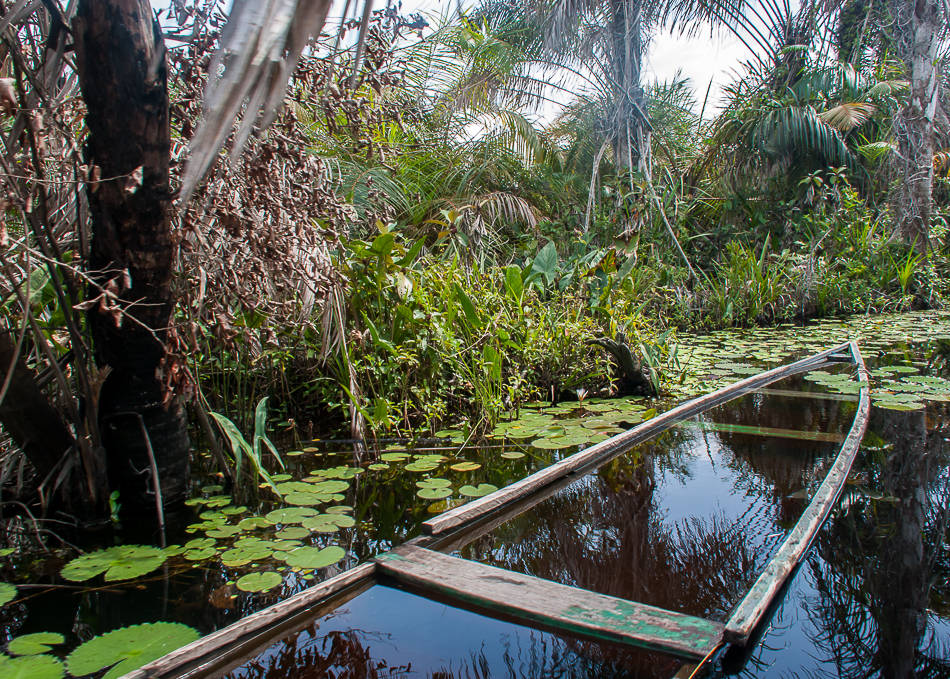
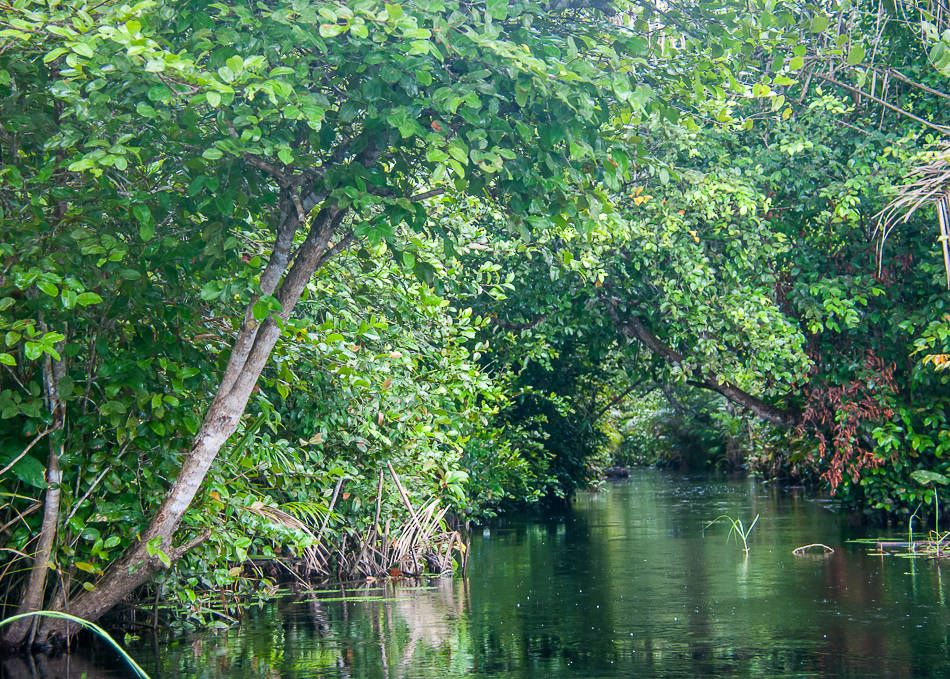
…as well as through lush jungle.

The river eventually opens out to the dark water of the Amansuri Lake which you have to cross to arrive at the small elevated village.

The slowly declining population is now at roughly 400 though it seems much less when you visit in the middle of the day since most inhabitants have gone out to work, leaving only the kids and a few women behind.

Surprisingly, the villagers are predominantly farmers and brewers of the local dry gin and not fishermen as most would think. While the men go farming, often a 3-hour daily trip from the village, the women sell the gin and farm produces in other towns.

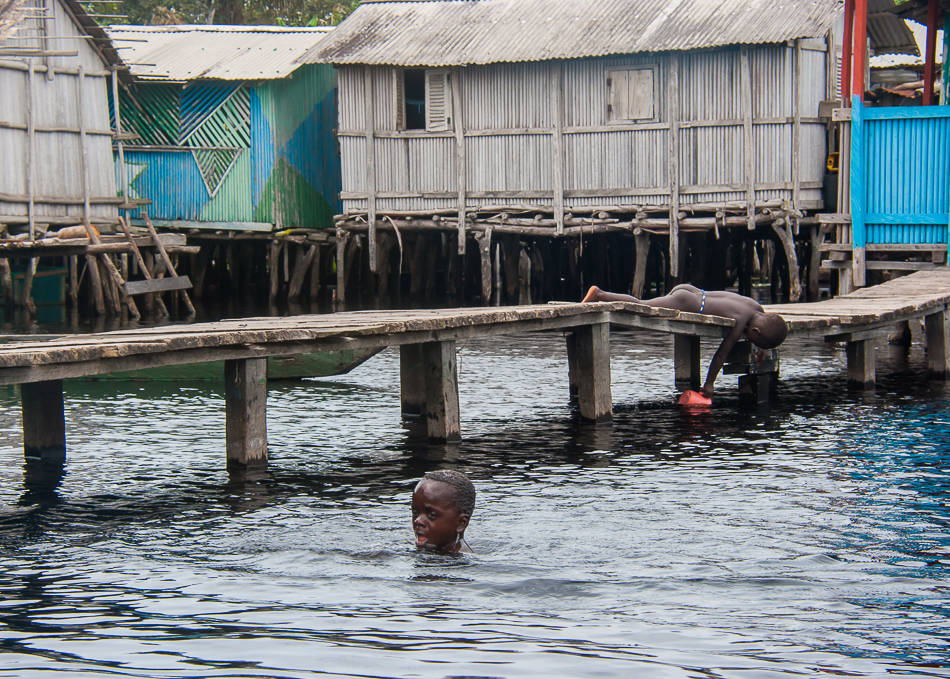
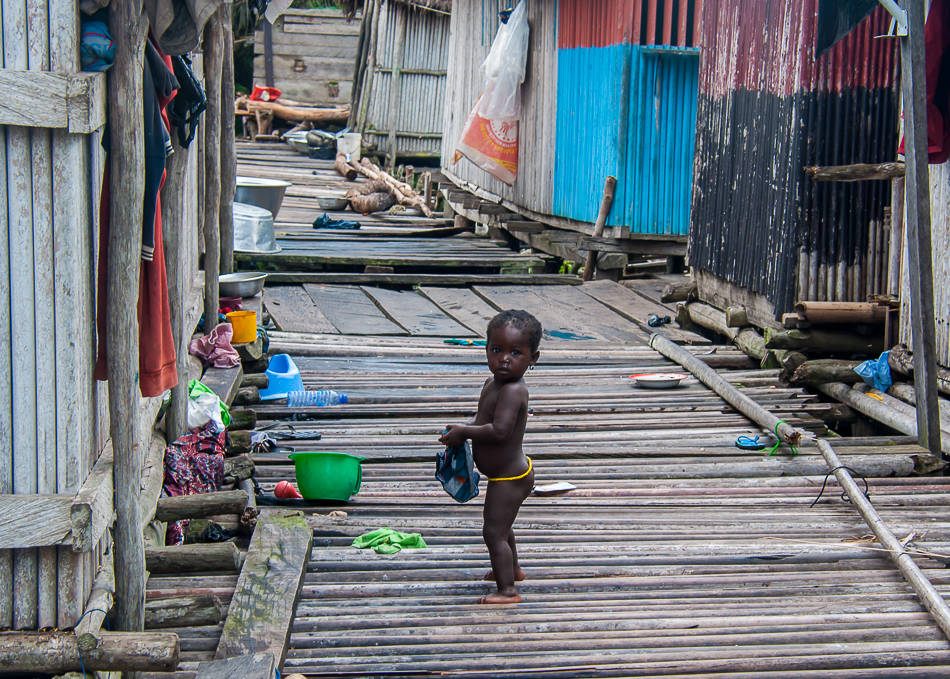
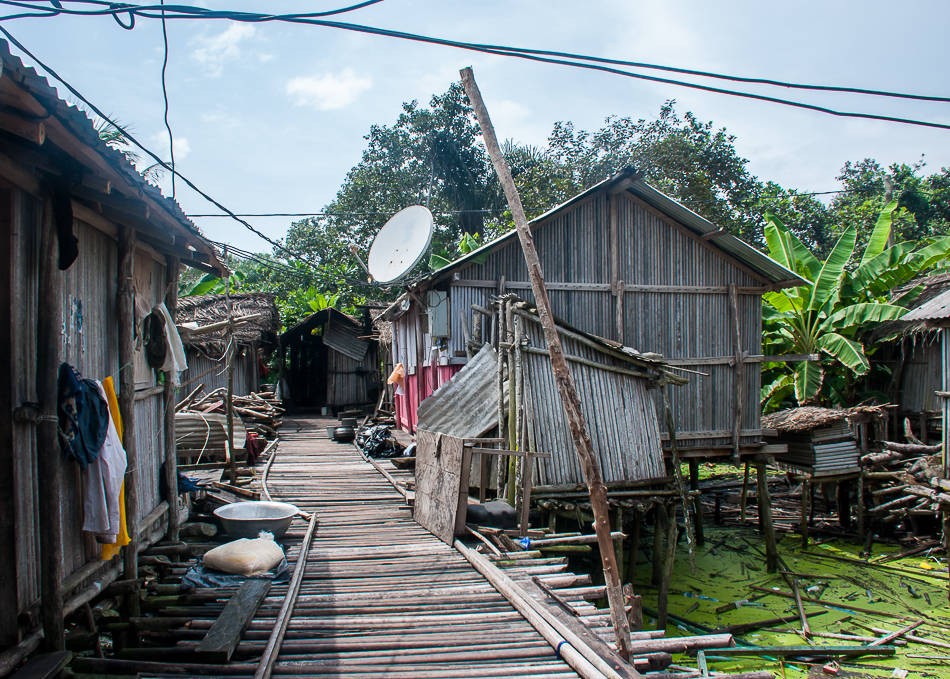
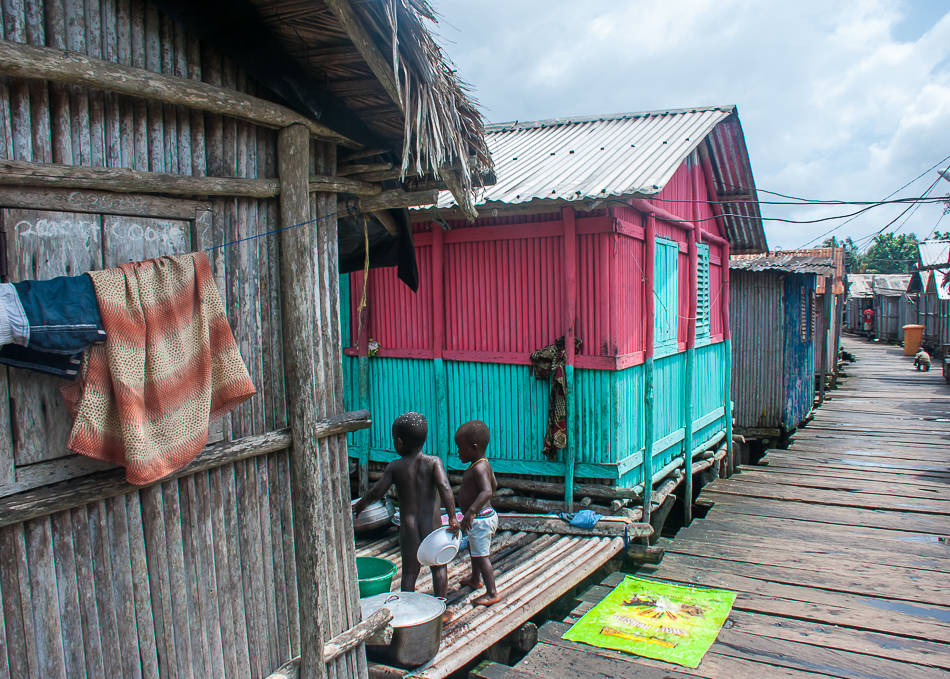
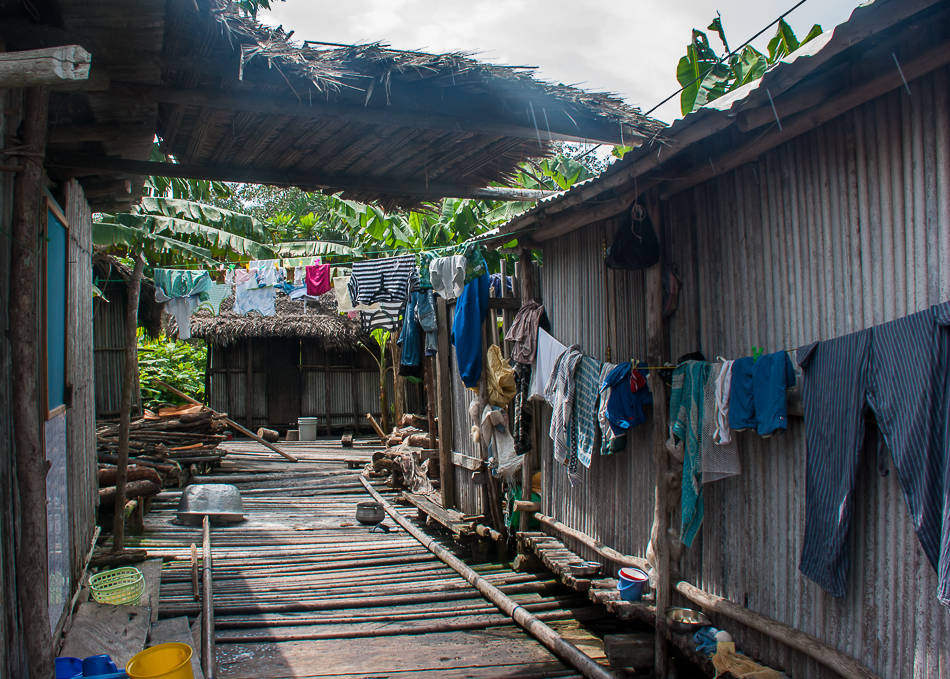
The houses and walkways are made out of wood and raffia and separated so that a fire wouldn’t be able to spread (earlier versions of the village had burned down quite rapidly).

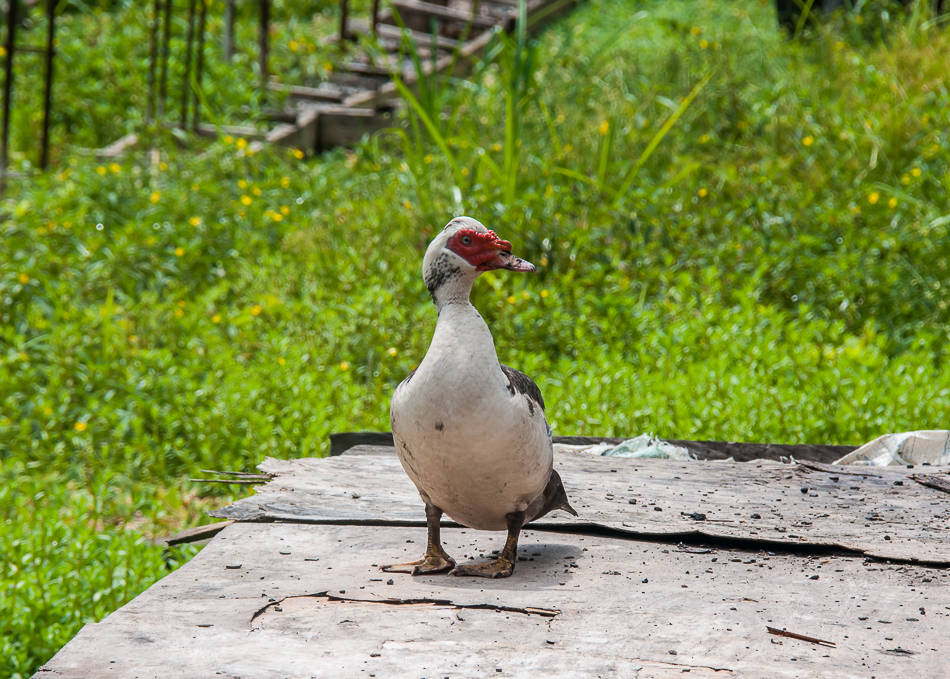
Ducks and chicken freely roam around as they would in any other villages.

There’s one main walkway running along the village with about two dozen houses on either side.

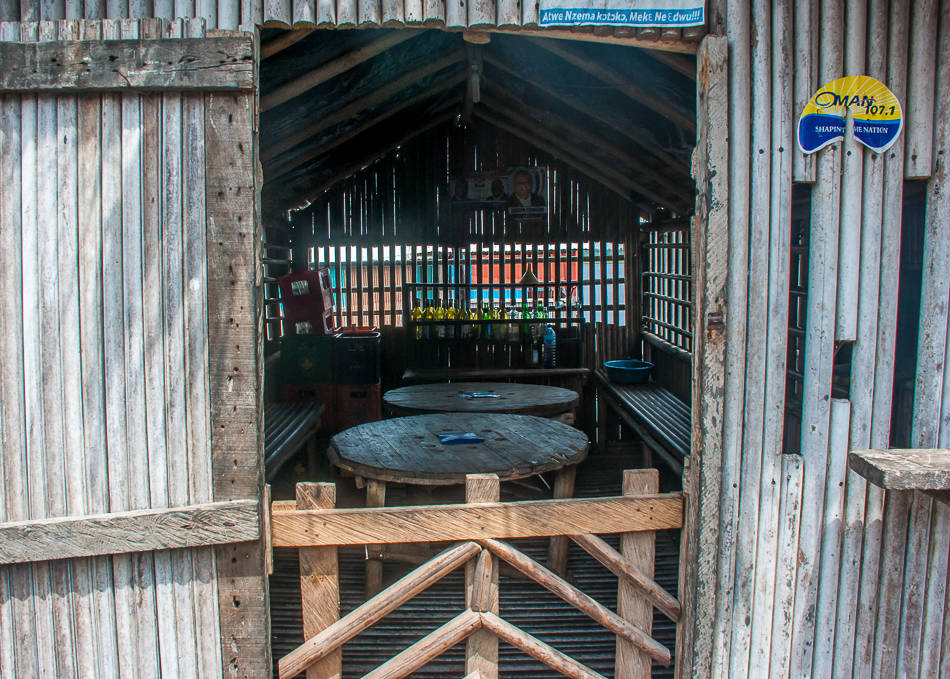
Two small guest houses can host you if you wish to spend the night and there are a few informal drinking and eating spots.

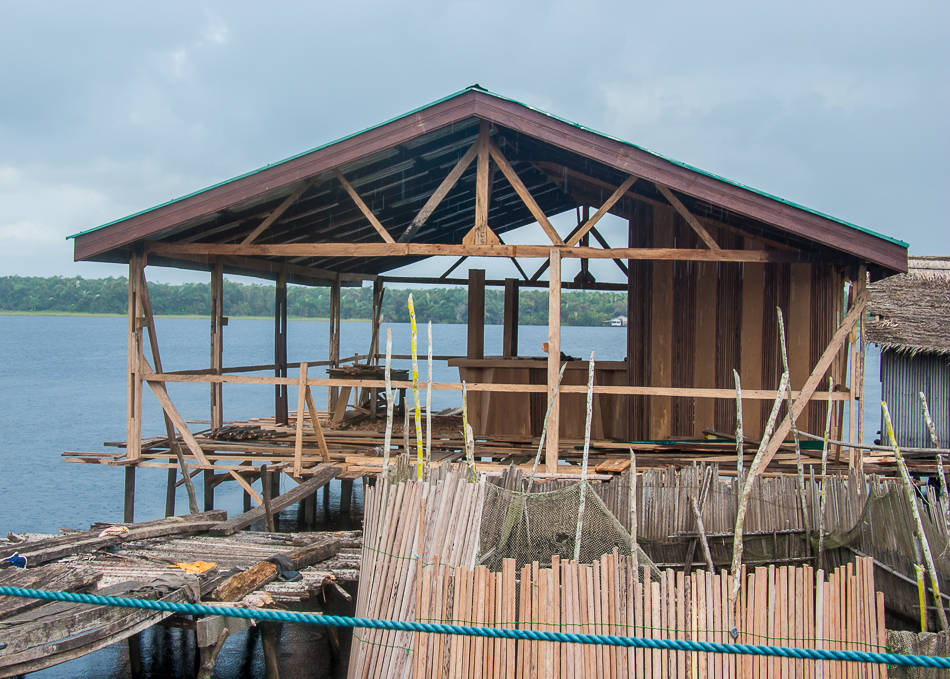
A restaurant is under construction which clearly demonstrates the importance of tourism in the village economy.

Life here is after all quite similar to what you would see in other villages – women pounding fufu, doing laundry, sewing, etc. except that it all happens over water.

There’s even a church and a primary school and children have their boats to commute to other villages or towns to access Junior High later on. Only thing missing is a healthcare facility which they’ve been asking for. In the meantime they must make the trip out to the nearest town to receive any kind of medical care.

The ride back
Canoe Ride 3

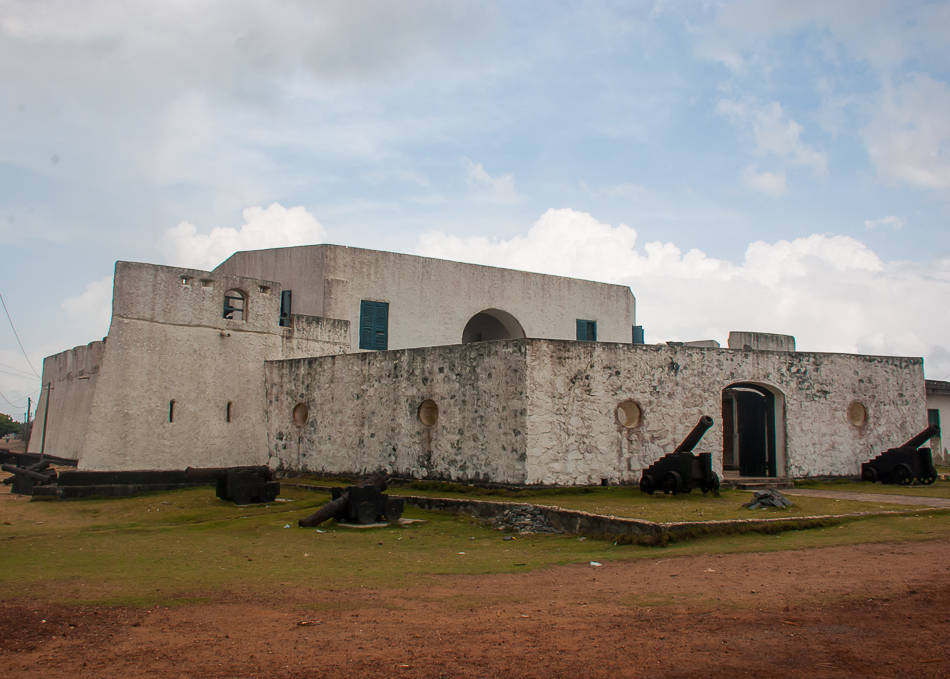
Once off the canoe you find yourself in the seaside village of Beyin where, along with an attractive sandy beach, you can visit Fort Apollonia, the last fort to be founded by the British along the Gold Coast (year 1770).

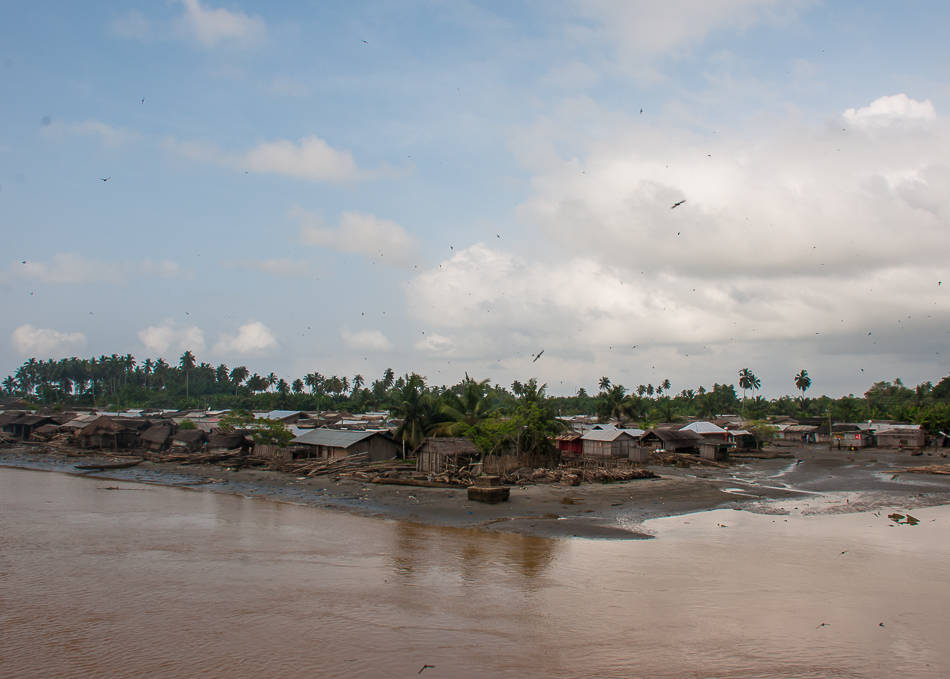
Driving east, you’ll first go through Ghana’s big gas project and witness tons of cranes and pipelines being built by Chinese before finally reaching the coast, its rainforests and fishing villages.

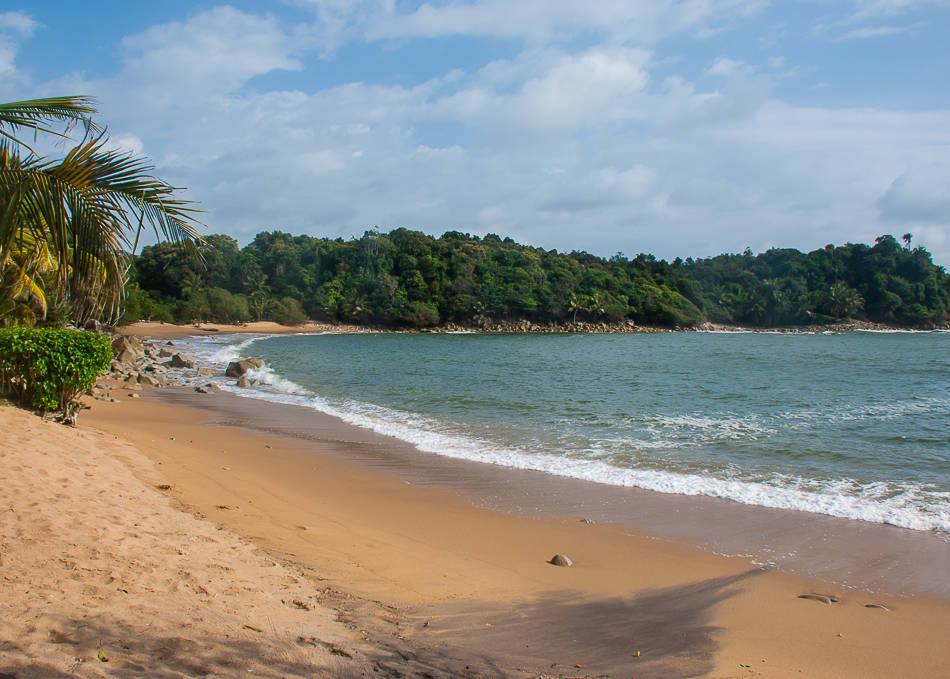
A great place to settle down for the night on the coast is at Lou Moon Lodge near the town of Axim, definitely one of the best private beaches in the area with its own tranquil bay.

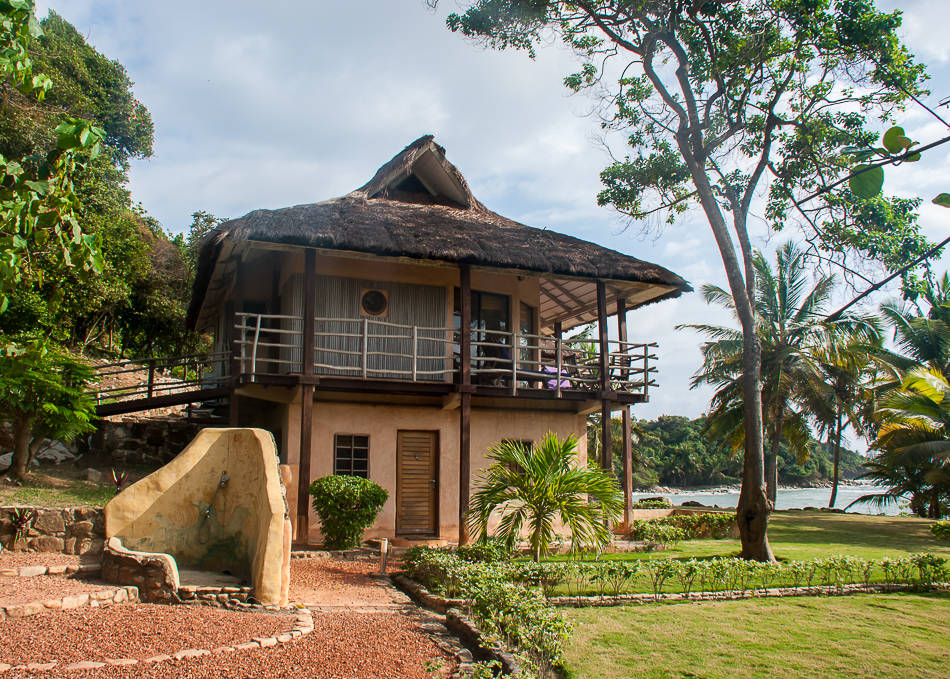
The resort, upscale by African standards, is the best I’ve seen in Ghana and closer to the comfort you’d find in more developed destinations (I could have pictured myself in the posh Caribbeans).

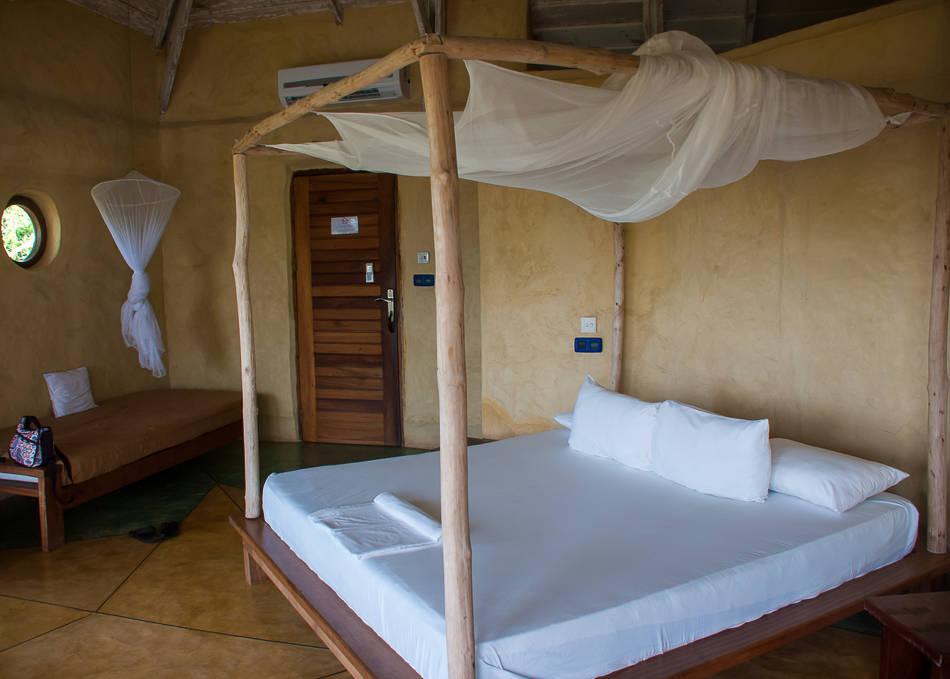
The beautiful and modern buildings have managed to exude an air of luxury and offering all the modern-day comforts while still using natural materials. Our large Bay View room was the most comfortable I’ve had in months.

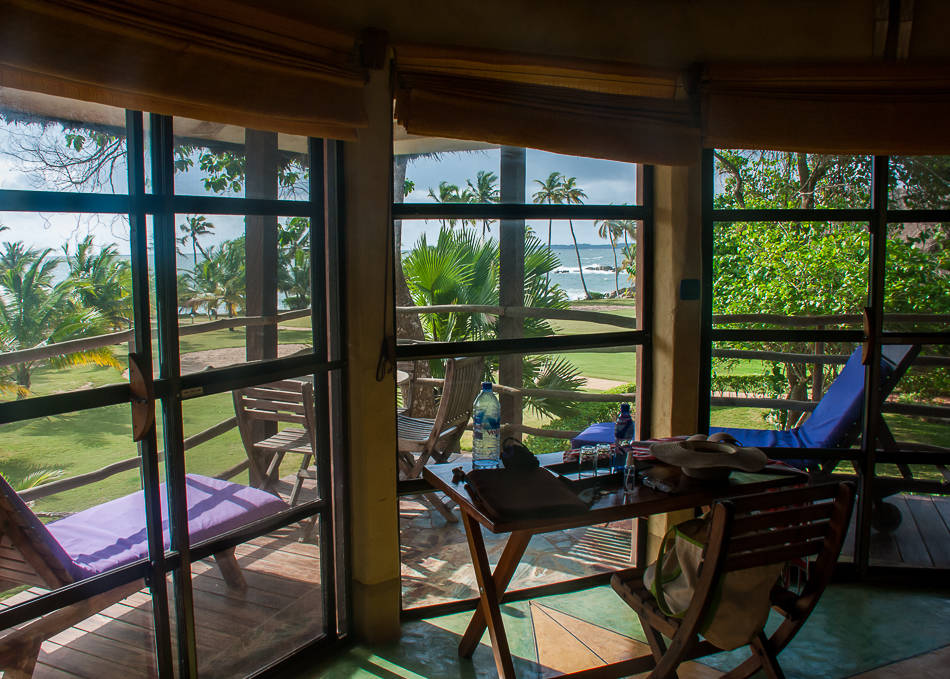
The view from the room and the wraparound balcony was simply gorgeous.

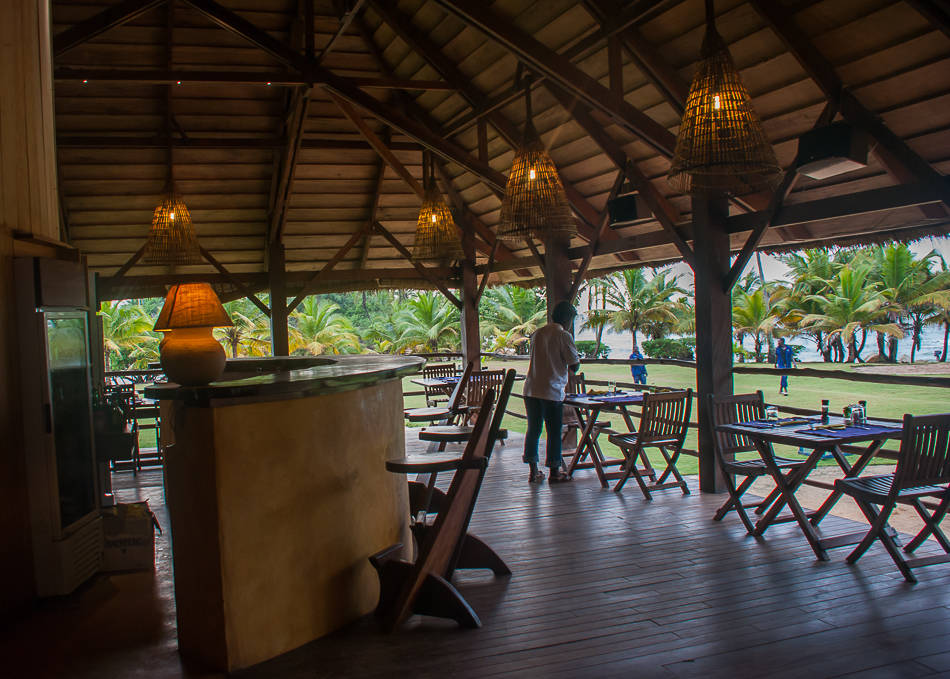
The large loft-like bar & restaurant offers a daily-changing menu of French fusion dishes and hands down the best ‘non-street’ food I’ve had in Ghana.

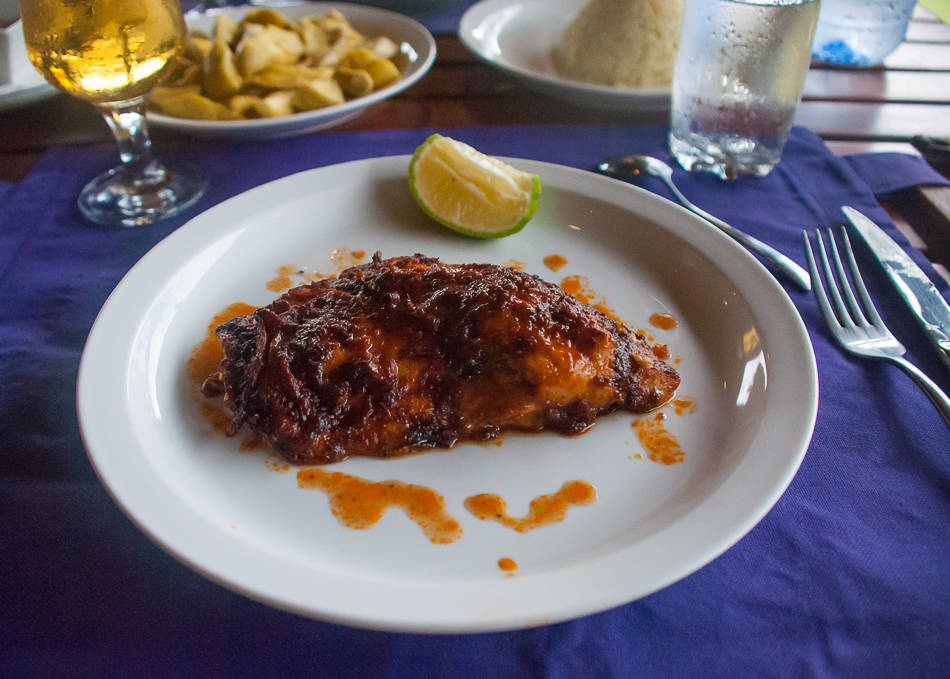
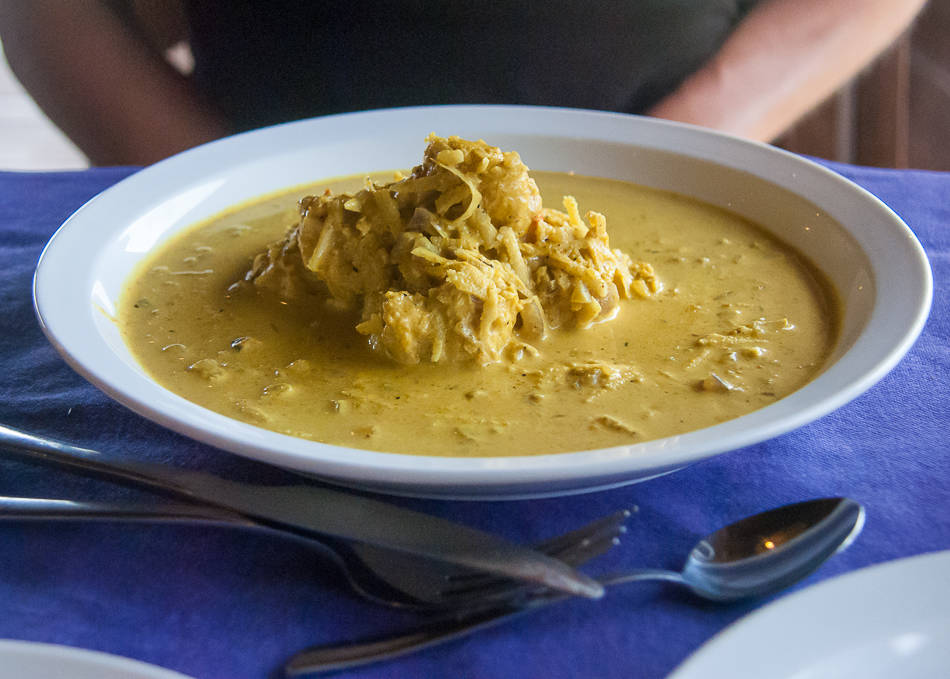
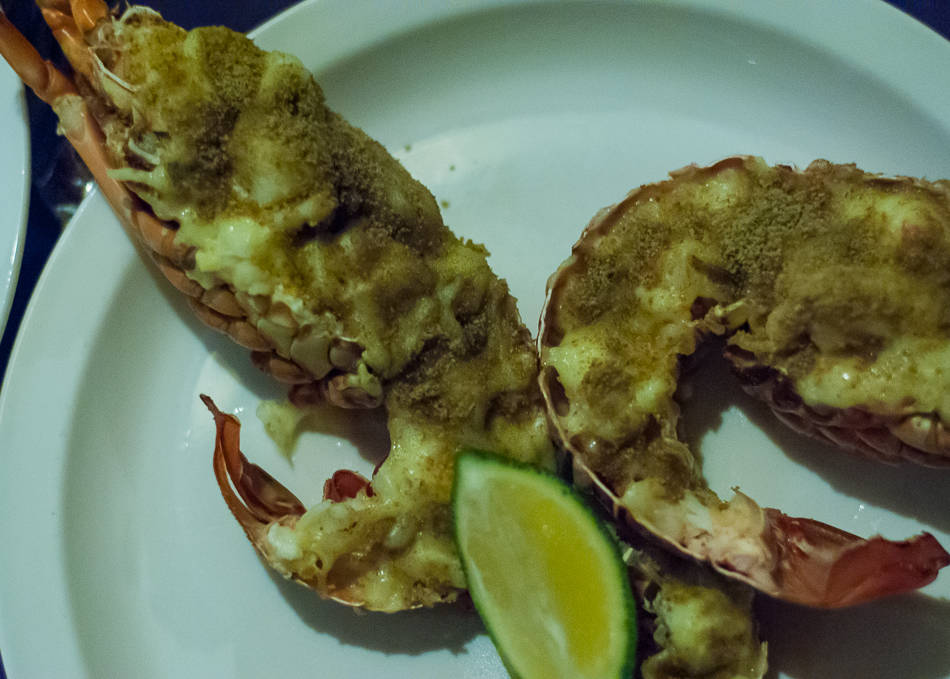
Being on the coast, the fish and seafood was the star and never disappointed.

Barracuda in a rich, sweet-chili sauce

Lobster curry (to die for)

Lobster Thermidor

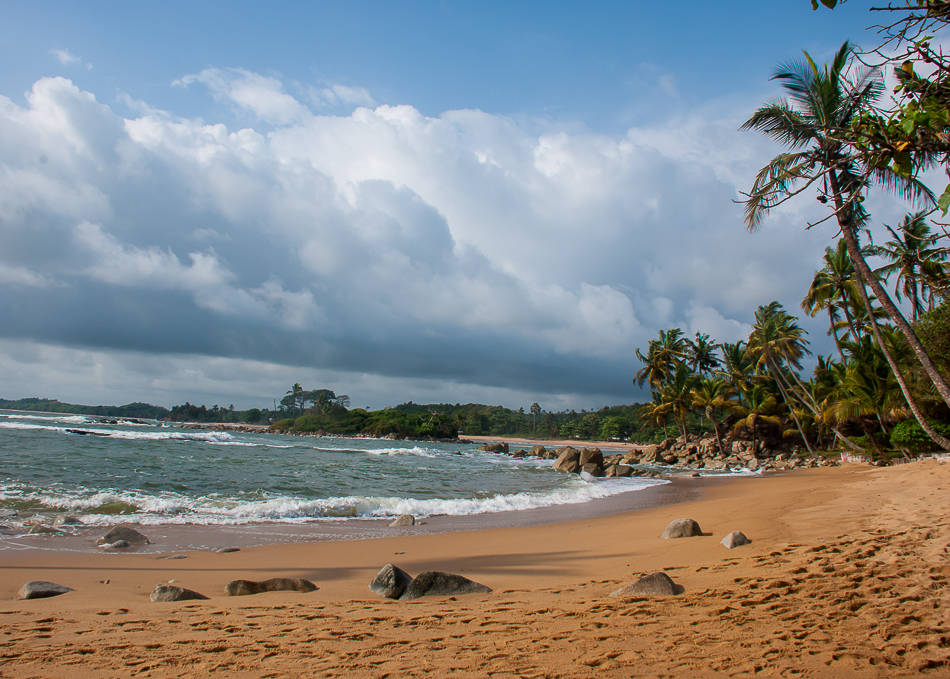
It’s clearly a  place to just sit back and relax and sometimes it’s nice to do just that. The food and the setting are so spectacular you’ll have a hard time leaving the premises and with two beaches to chose from (tranquil bay on the left, wavy and rocky beach on the right) why would you?

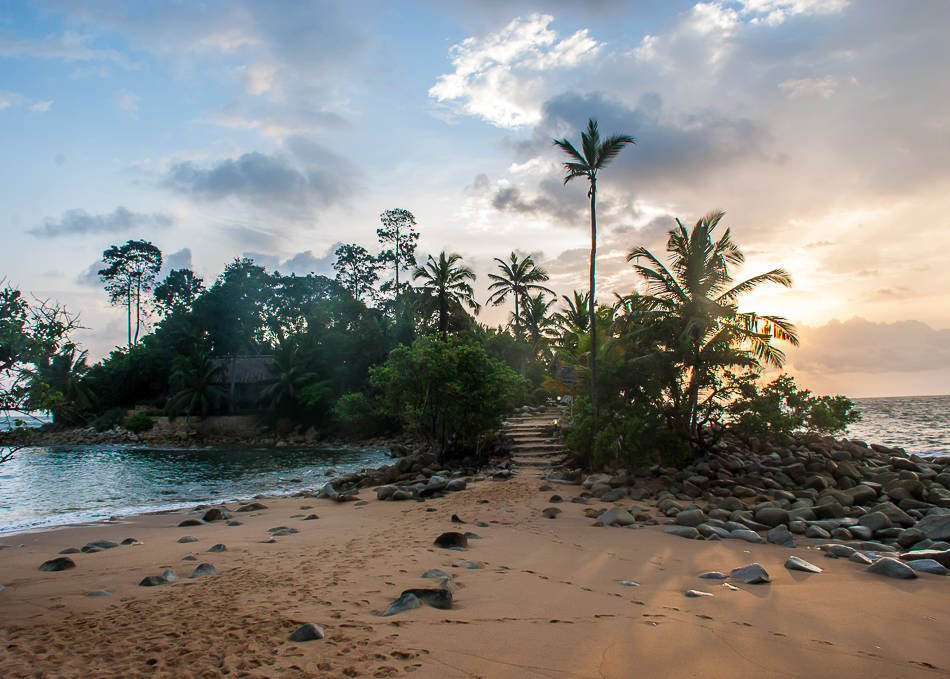
If you want to make it even more spectacular, note that the lodge also has a private island (well more of an isthmus during the dry season) with two luxury chalets to rent out, both with glass walls so you wake up looking at the ocean…pas mal!

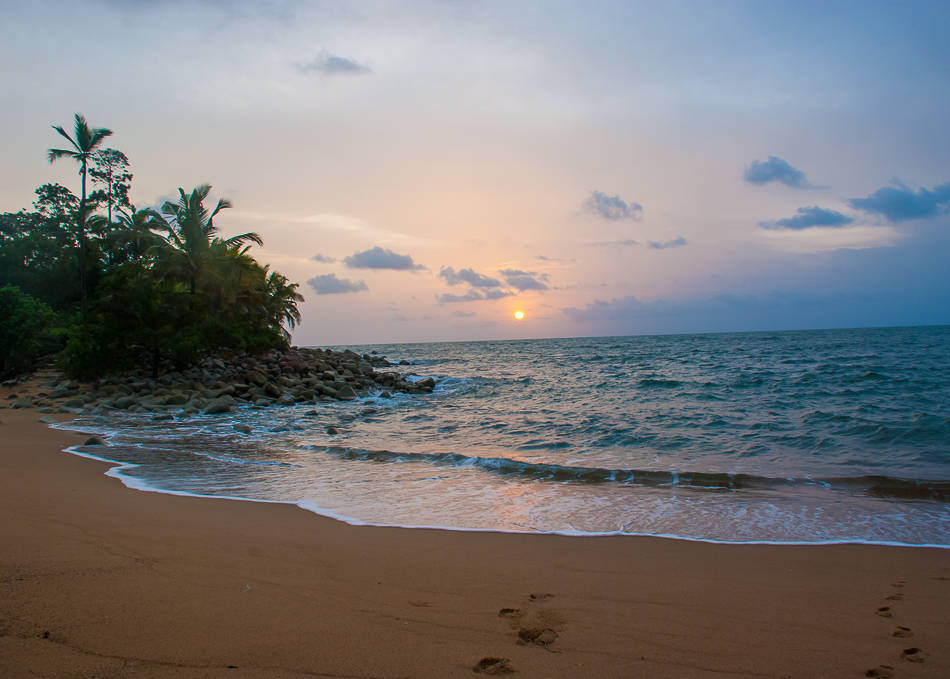
And of course the sunsets…