Main course Recipes

Chicken with walnuts and pomegranates (Fesenjan)

March 20, 2025

While it may officially be the start of spring today, it’s still very much stew weather in the Northeast and I’m not complaining. Pots simmering slowly on the stove for hours provide me with the extra warmth and enveloping aroma I’m craving. It’s also Nowruz today (Persian New Year) with millions all over the world feasting on deliciously fragrant dishes that have always been among my favorites.

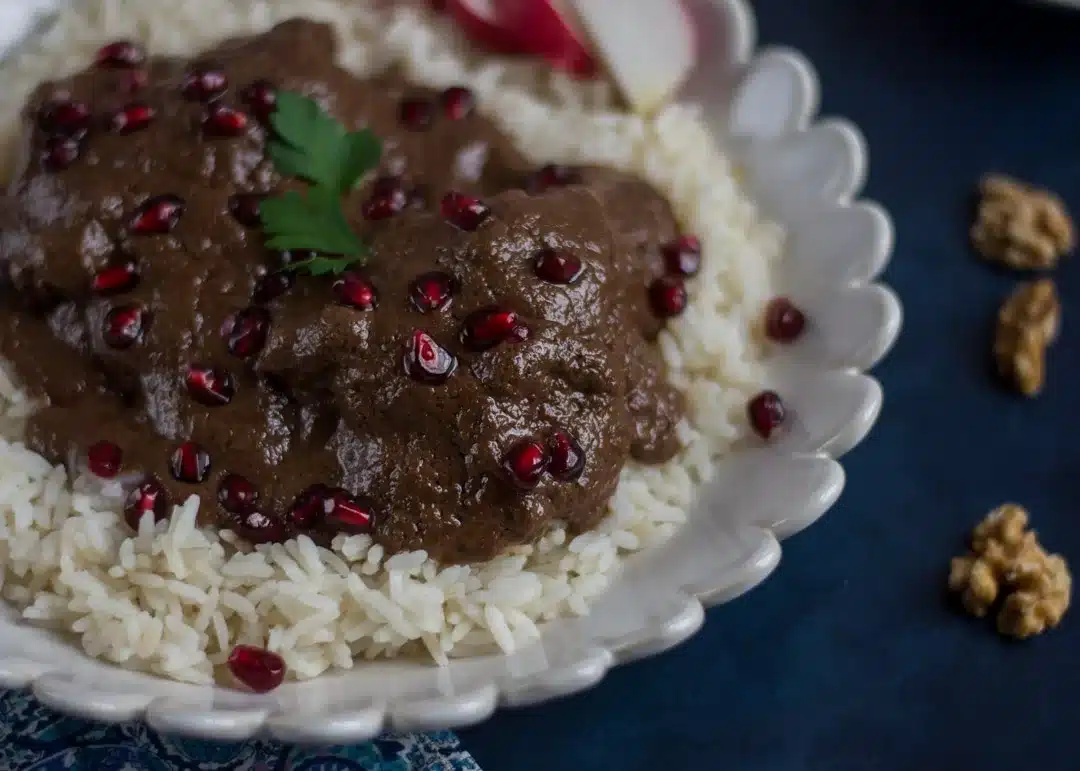
In honor of this spring celebration, I decided to make Fesenjan from my trusty Persian cookbook The Saffron Tales. This traditional Persian stew has always been a highlight for me, with tender chicken slow-cooked in a pomegranate and walnut sauce.
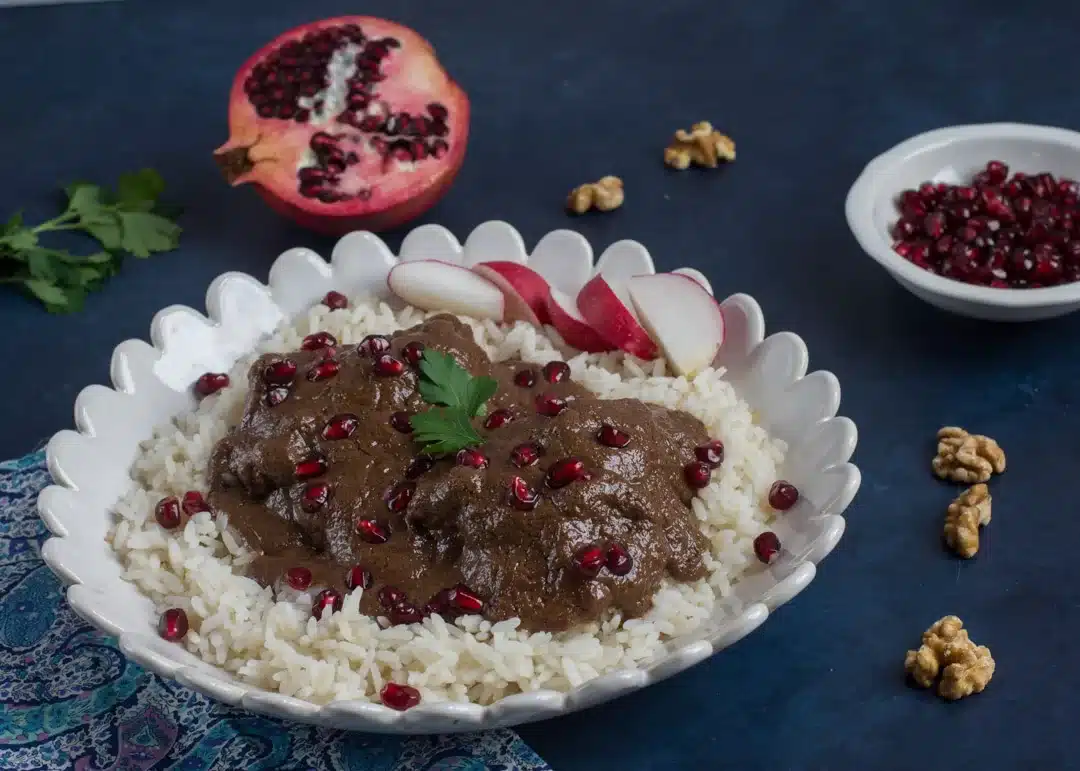
Fesenjan is often made for special occasions but it is in fact really simple to put together and only requires a few ingredients. The star of the show is no doubt the large amount of walnuts (the fresher the better) which form the base of the rich sauce. If like me you’re trying to increase your intake of this super healthy nut this is the recipe for you! To get started, simply grind 2.5 cups of walnuts to a paste-like consistency in a food processor.
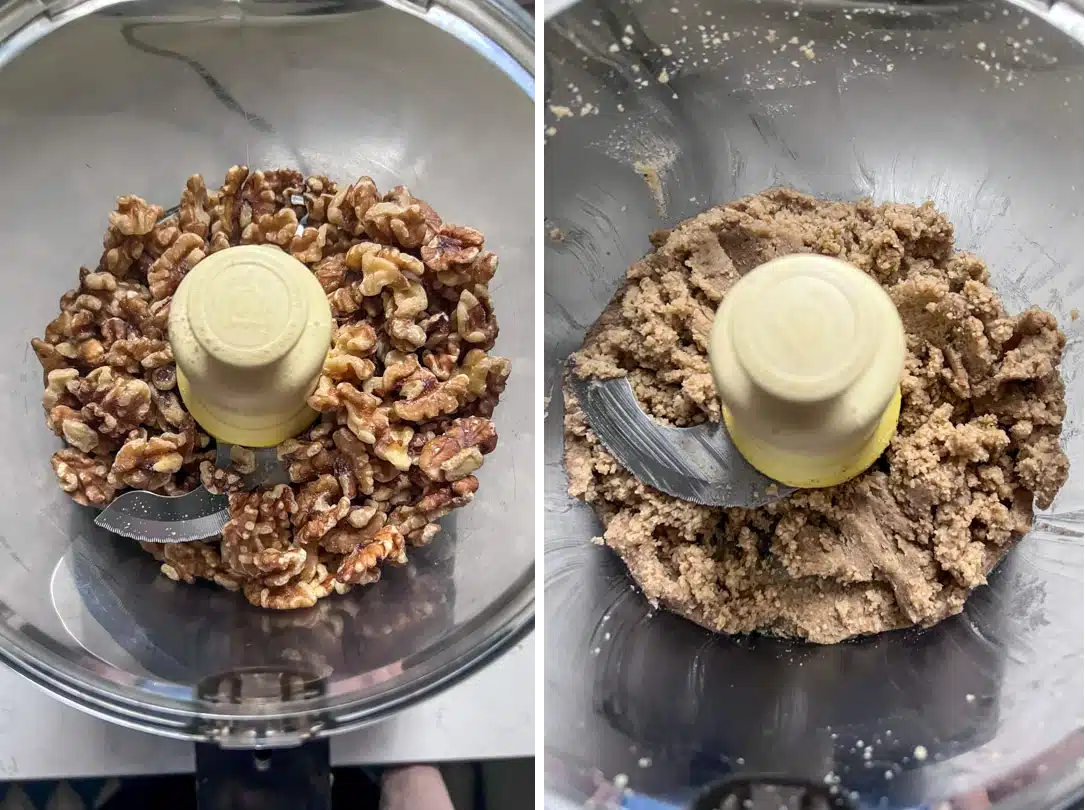
Walnuts

Now the slow cooking begins: place the walnut paste in a large casserole, add water (4 cups) and simmer for about an hour, stirring occasionally, before adding one more cup of water and letting it simmer for another hour. As you progress you’ll notice the smell becoming increasingly pleasing, a real nutty aroma, and the color of your mixture darkening. The sauce should get pretty thick and after the two hours you’ll add the other star ingredient – pomegranate molasses – and a few other savory & sweet supporters (tomato paste, cinnamon, sugar). You can already tell (and smell) this is an intensely flavorful stew.
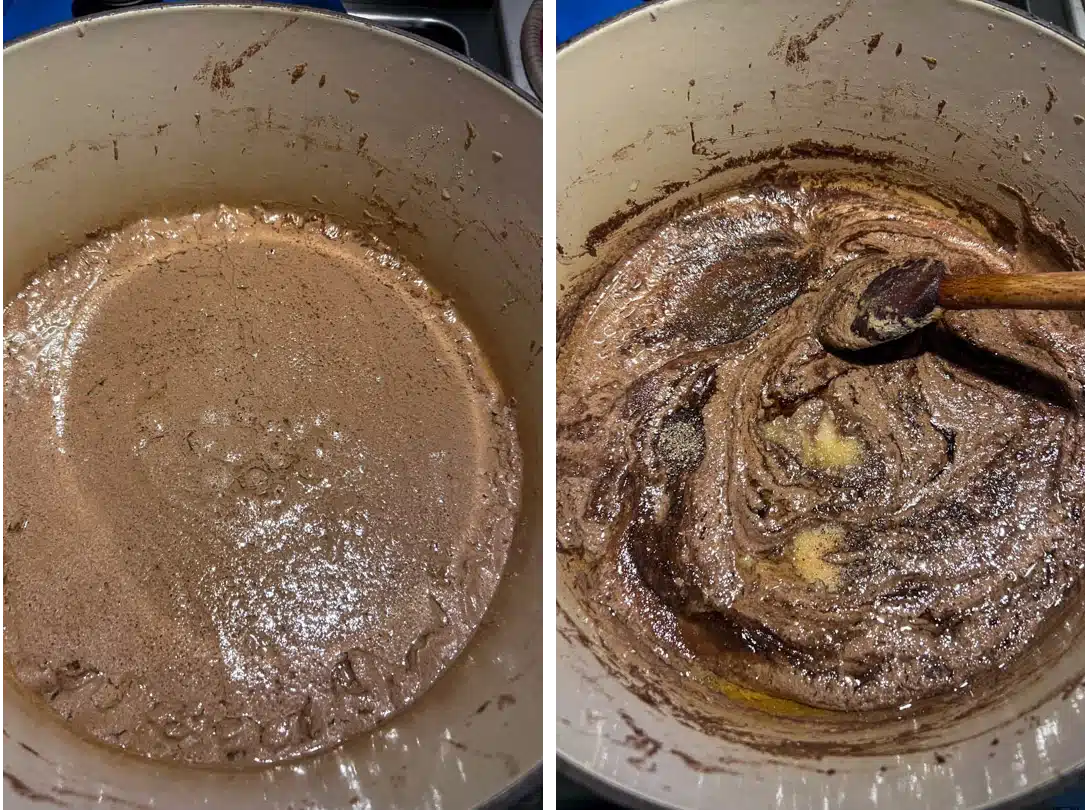
Walnut sauce for fesenjoon

Time to add the chicken thighs and continue to cook slowly, covered, for about 45 minutes. The chicken will be fall-of-the-bone tender by then and the walnut sauce a chocolatey color. You can adjust the sauce to your taste at this point, adding more pomegranate molasses for extra tang or more sugar if you like it sweeter.
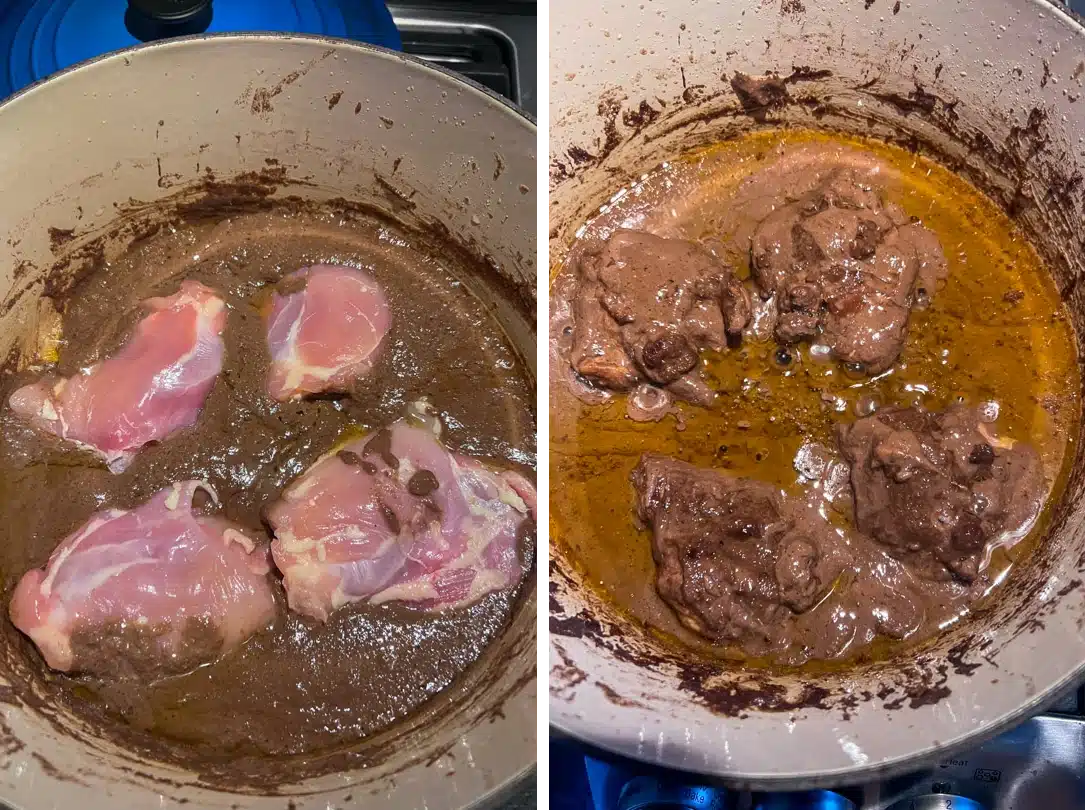
Making Fesenjoon

Serve over white rice to soak up all that delicious sauce and a side salad to cut through the richness. Raw radishes are also a traditional accompaniment. Lastly, sprinkle some pomegranate seeds on top which will not only taste refreshing and add some crunchy texture, they’ll also do much to add some color to all that brown on your plate!
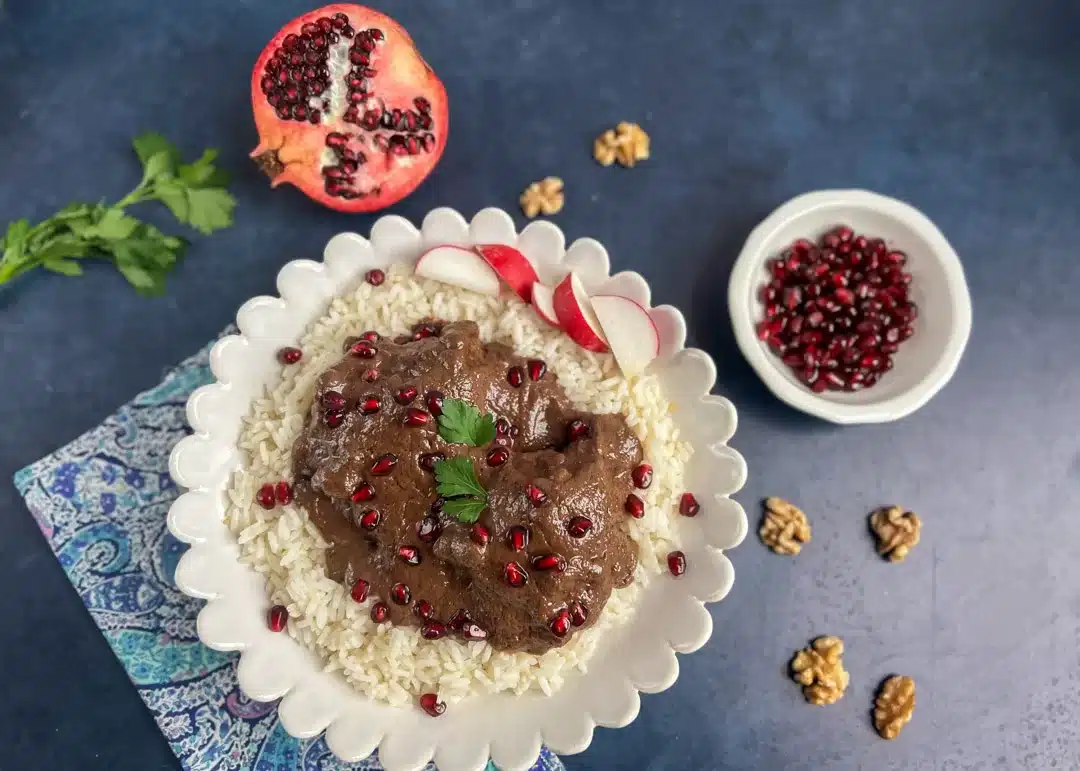
Chicken with walnuts and pomegranates

A sumptuous dish it really is and so intensely flavored you’ll see a little goes a long way. All those walnuts are quite filling so it’s a great meal to stretch over a few days with minimal prep.
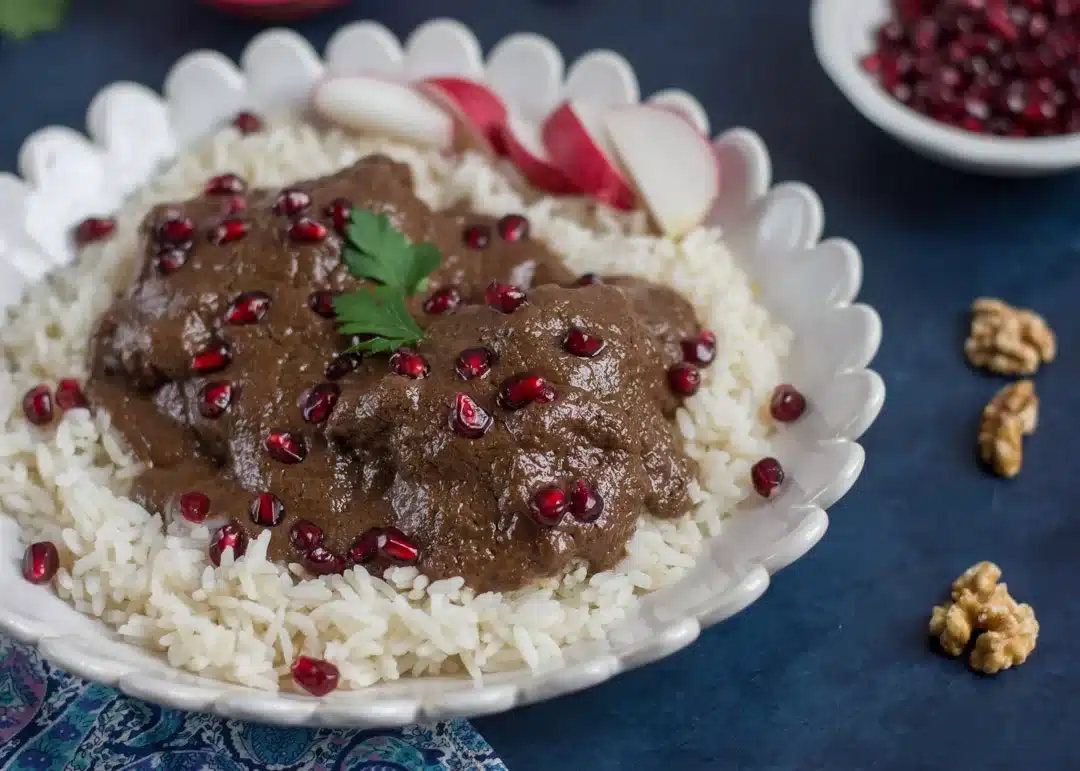
Chicken with walnuts and pomegranates

Happy Spring!

Chicken with walnuts and pomegranates

Preparation
1. In a food processor, grind the walnuts until they are extremely fine and have the consistency of a smooth paste. Place the ground nuts in a large casserole pot with 4 cups of water and mix well. Bring to the boil and cook on a high heat for 5 minutes, then reduce the heat. Simmer for 1 hour, partially covered, stirring occasionally to stop the walnuts from sticking.

2. Add the remaining cup of water, give the sauce a good stir, then stick the lid back on and leave to simmer for another hour. If the sauce starts looking dry, add some more cold water. You are aiming for a thick, porridge-like consistency.

3. The sauce should now have thickened and darkened in color. Add the pomegranate molasses, tomato puree, cinnamon, sugar, salt and pepper, and golpar (if using) and stir well. Add the chicken pieces, place the lid on the pot, and continue to cook over a low heat for 45 minutes, until the chicken is cooked and the sauce is a glossy, dark chocolate color.

4. Taste the sauce for seasoning and adjust to your preference: to make it a bit sweeter add more sugar, or pomegranate molasses to make it sourer. Cook for a final 10 minutes with the lid off so the sauce thickens around the meat. Sprinkle with a handful of pomegranate seeds before serving.
Ingredients
2 1/2 cups walnuts (the fresher the better)
5 cups cold water
6 tablespoons pomegranate molasses
1 tablespoon tomato puree
1/4 teaspoon cinnamon
2 tablespoons sugar
2 teaspoons sea salt
1 teaspoon black pepper
1/4 teaspoon golpar (optional)
1 3/4 lb chicken thighs, bone-in, skinless
A handful of pomegranate seeds, to garnish
No reviews yet
Rating:
Post Review

Asia South Korea Travels

A visit to South Korea’s DMZ

March 14, 2025

One of the most popular day trips from Seoul is to join a tour to the Demilitarized Zone (DMZ) that separates North and South Korea. Anyone with a bit of historical curiosity and penchant for the weird should sign up for this unusual experience which you won’t find anywhere else on earth. Bonus is, most tours will make a stop at one of the beautiful natural sights on the way. I imagine it is to put us in a calm and serene mood before reaching our peculiar destination?

Scenic lakeside stroll

Our tour’s first stop introduced us to beautiful Majang Lake.

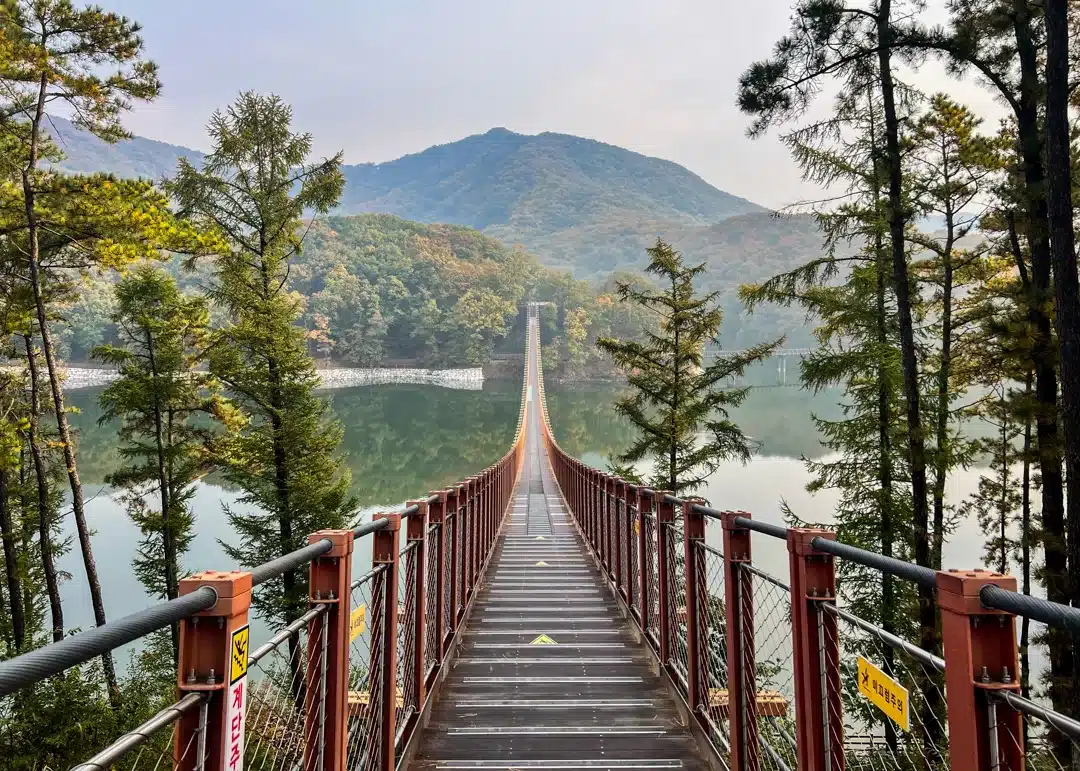
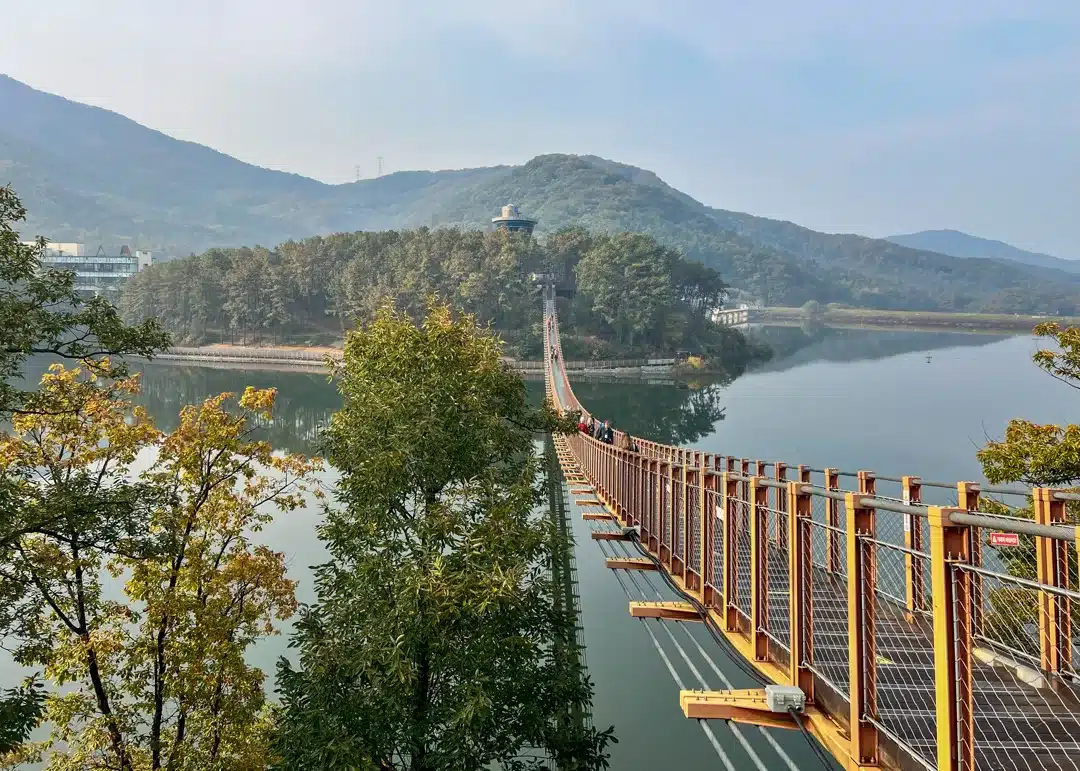
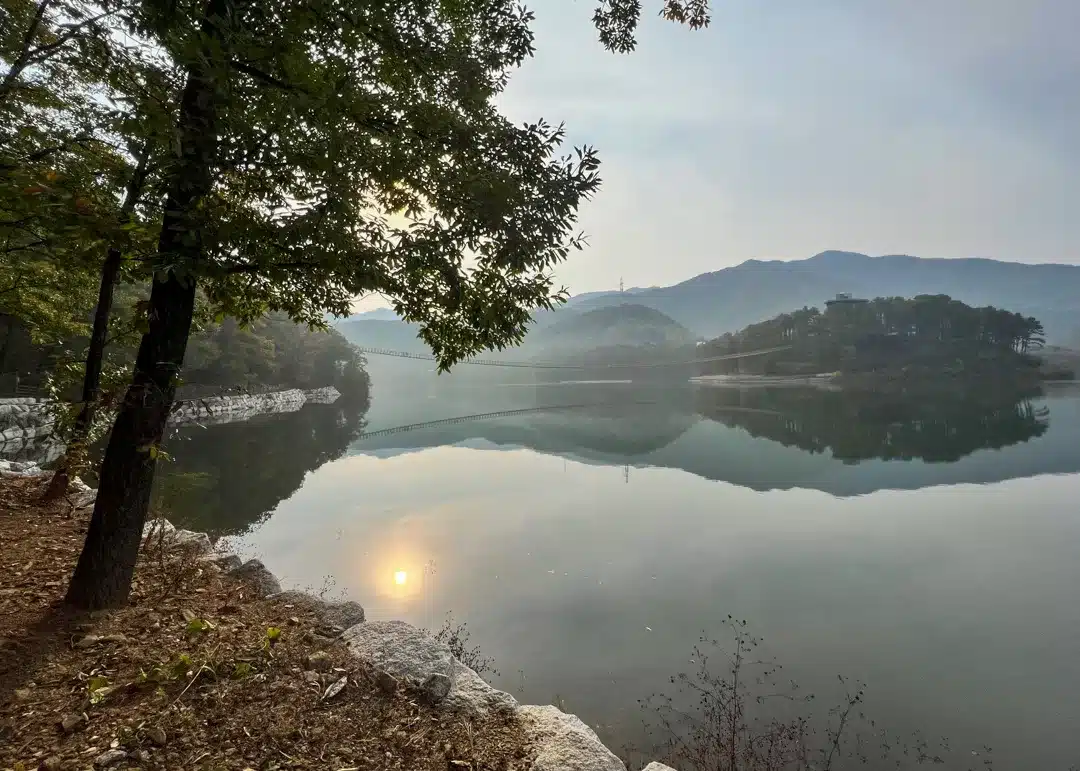
Its main attraction is the scenic red suspension bridge that spans the lake.

Majang Reservoir Suspension Bridge

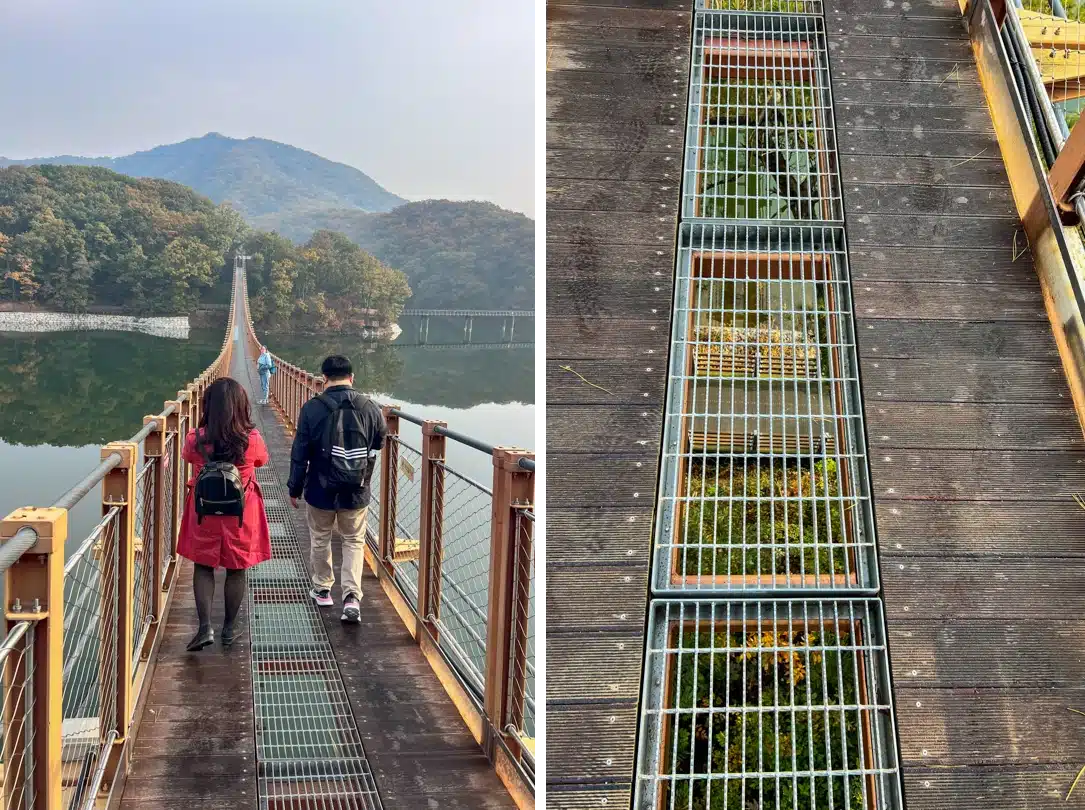
Walk across the 220 meters until the other side for gorgeous vistas, looking down at your feet occasionally for a thrilling view below.

Majang Reservoir Suspension Bridge

You’ll be surprised to hear this bridge and tranquil scene was once a fierce battlefield during the Korean War as a defense line against the Chinese allied army…

Majang Reservoir Suspension Bridge

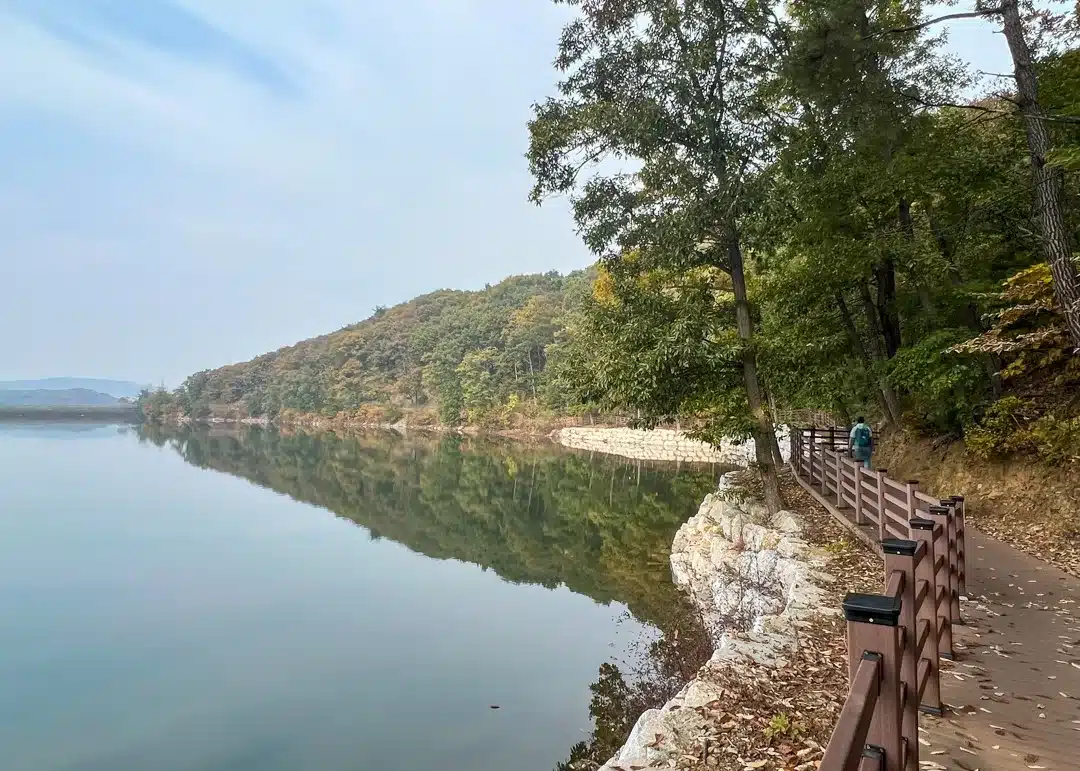
A lakeside trail hugs the lush greenery all around and gives you more time to enjoy this enchanting landscape.

Walk around Majang Reservoir
Majang Reservoir South Korea

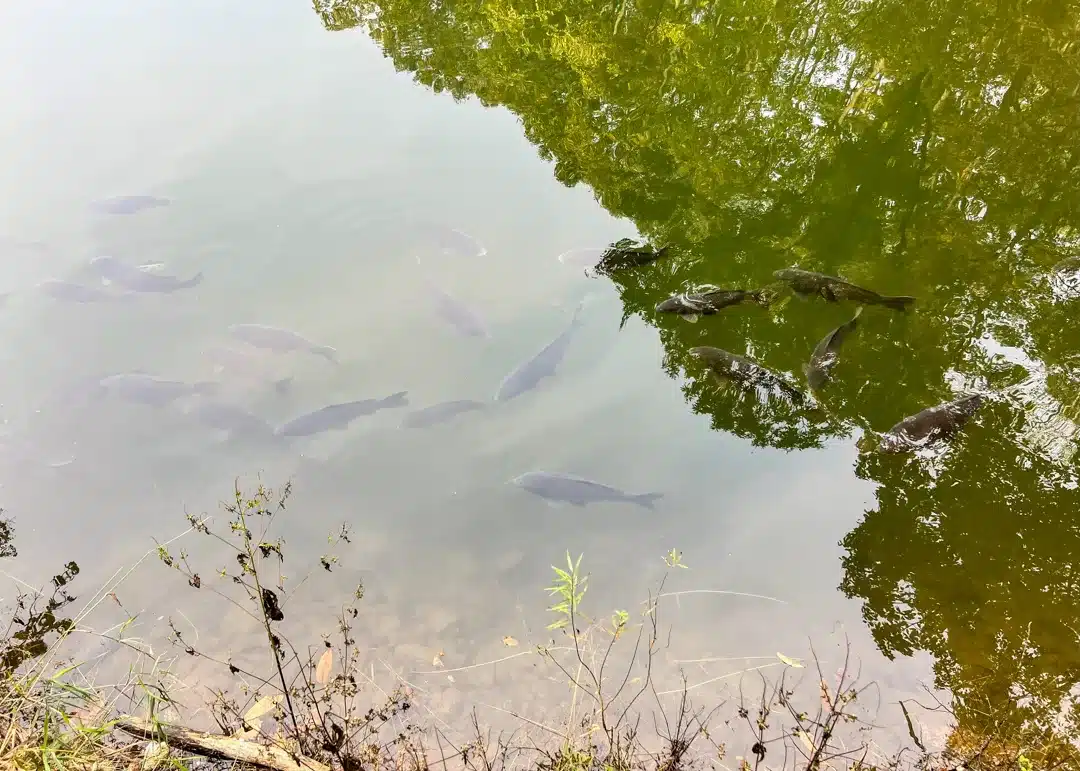
Reflections in the water hide large groups of fish hanging by the shore.

Imjingak – An offbeat memorial park

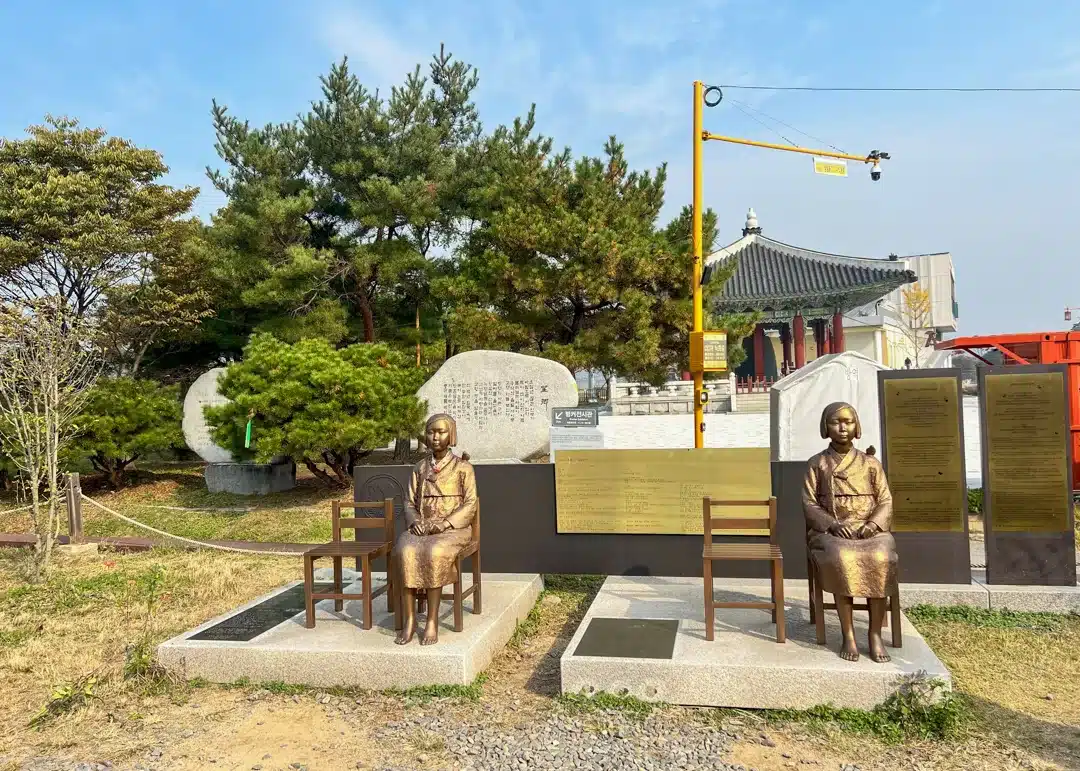
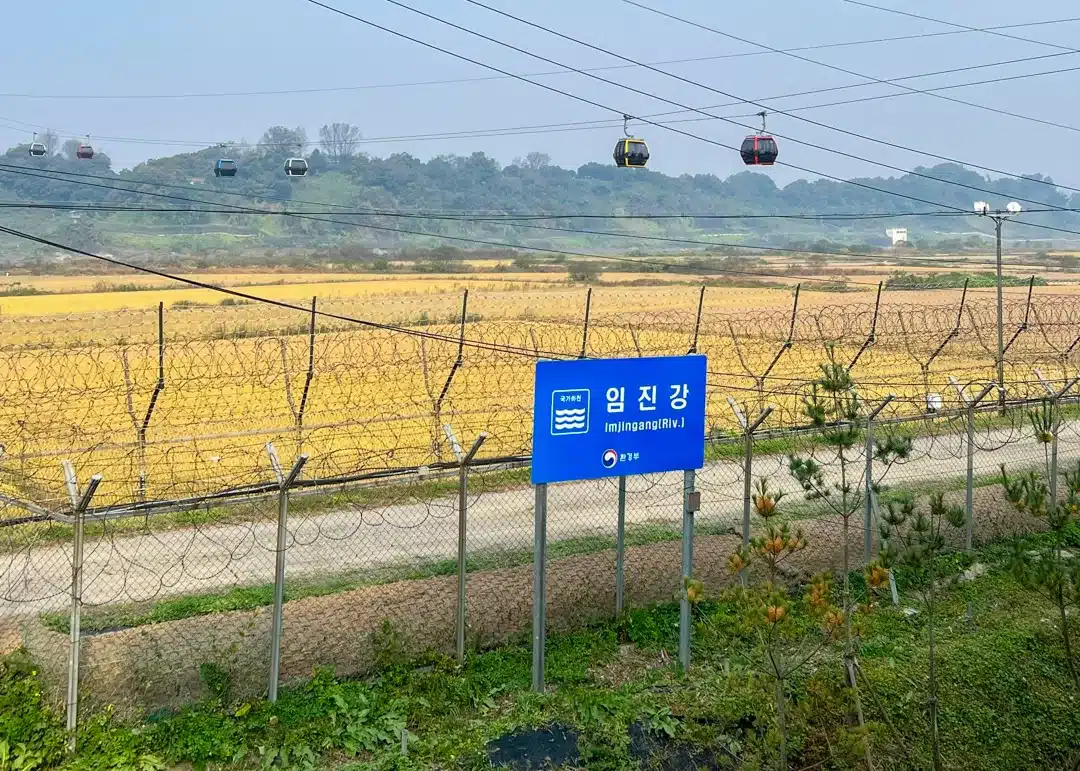
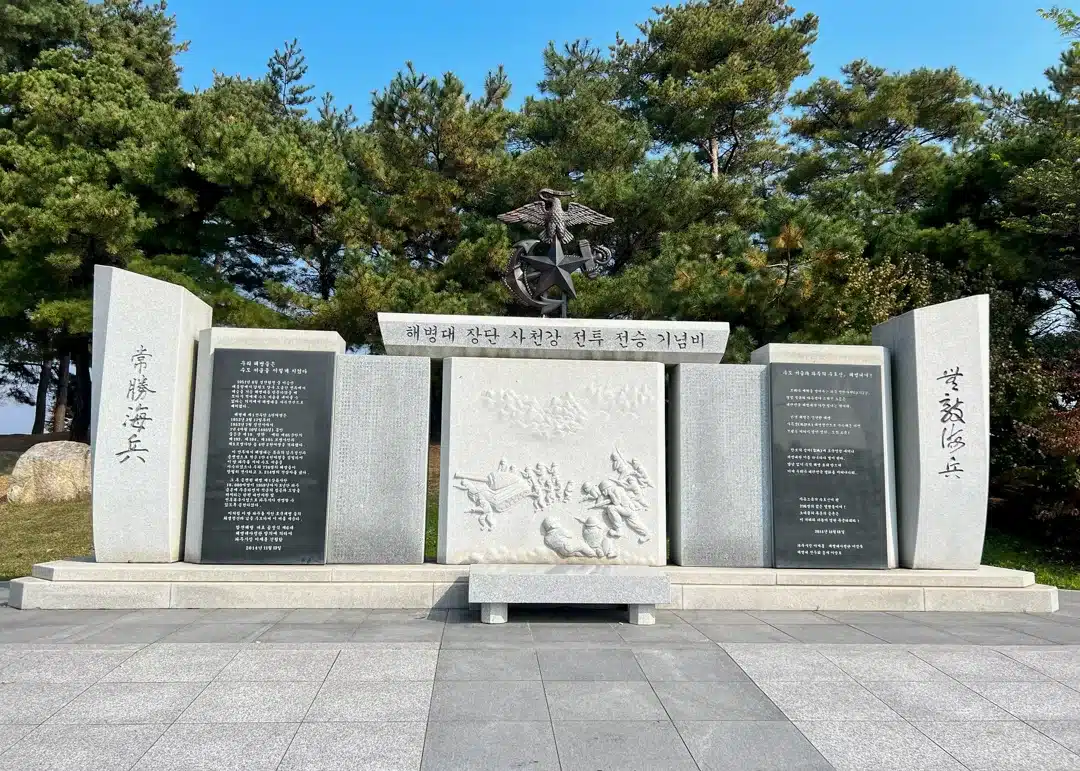
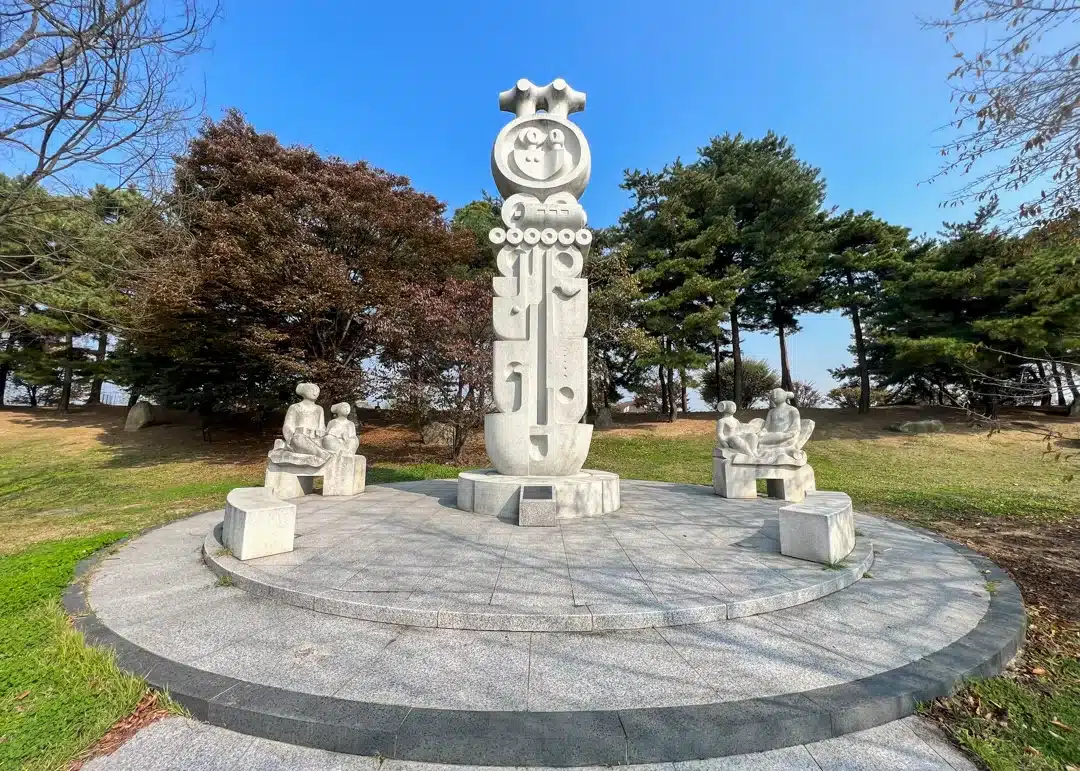
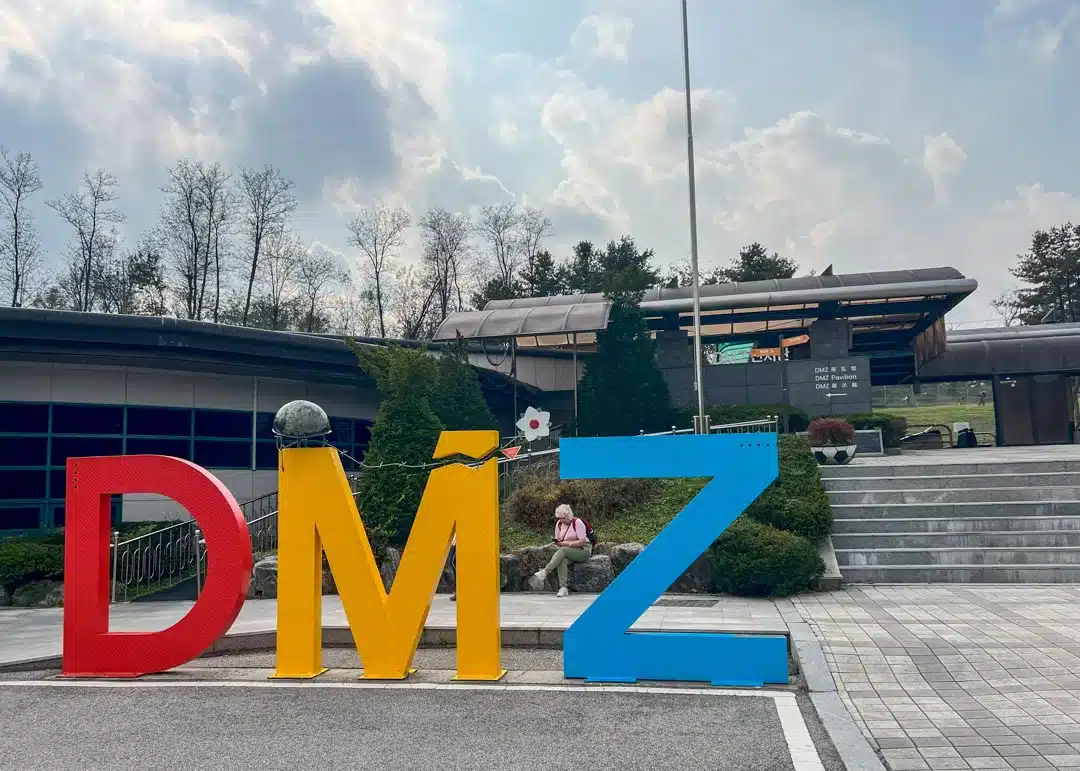
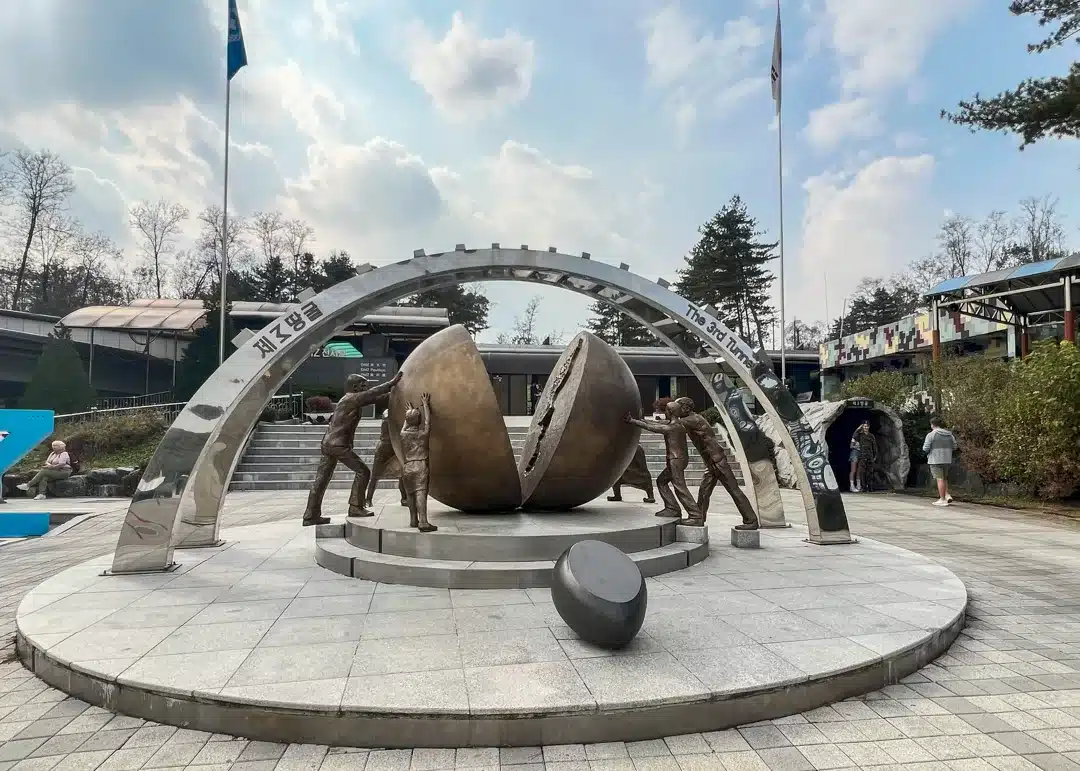
Leaving the calming Majang Lake behind, the second stop on the DMZ tour is at the sprawling Imjingak, a park with various monuments dedicated to the 10 million South Koreans separated from their families when the peninsula was divided.

DMZ Cultural Center

It is no ordinary park when one suddenly notices the heavily mined and guarded 4km-wide buffer known as the Demilitarized Zone that slashes the peninsula across 240km, separating North and South Korea. The electric fences, armies in full battle readiness, and No Photos signs only add to the unease you feel when staring at this strange and divided piece of land. Adding to the weird factor, you can ride the “Peace Gondola” over and back for a bird’s eye view…

Peace Gondola at the DMZ

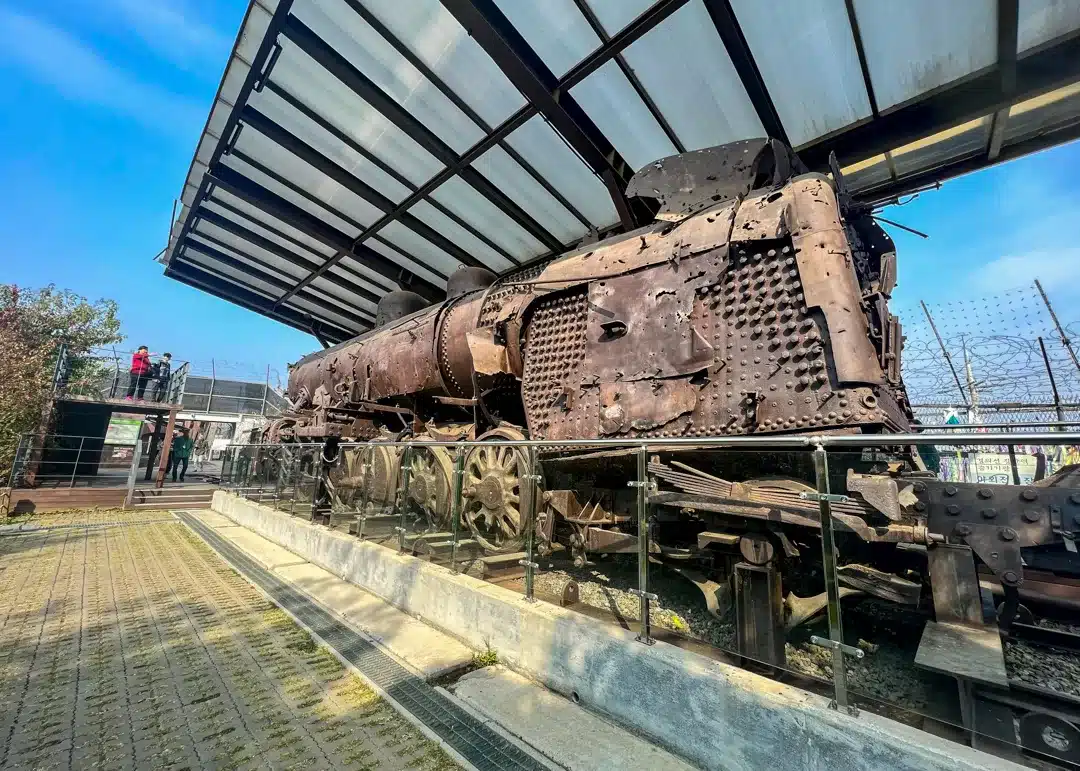
A steam train bombed and derailed during the war called “The Last Train Out” has been preserved as evidence of the painful history. The 1,020 bullet holes and bent wheels are a testament to the brutality at the time.

Last train out - DMZ

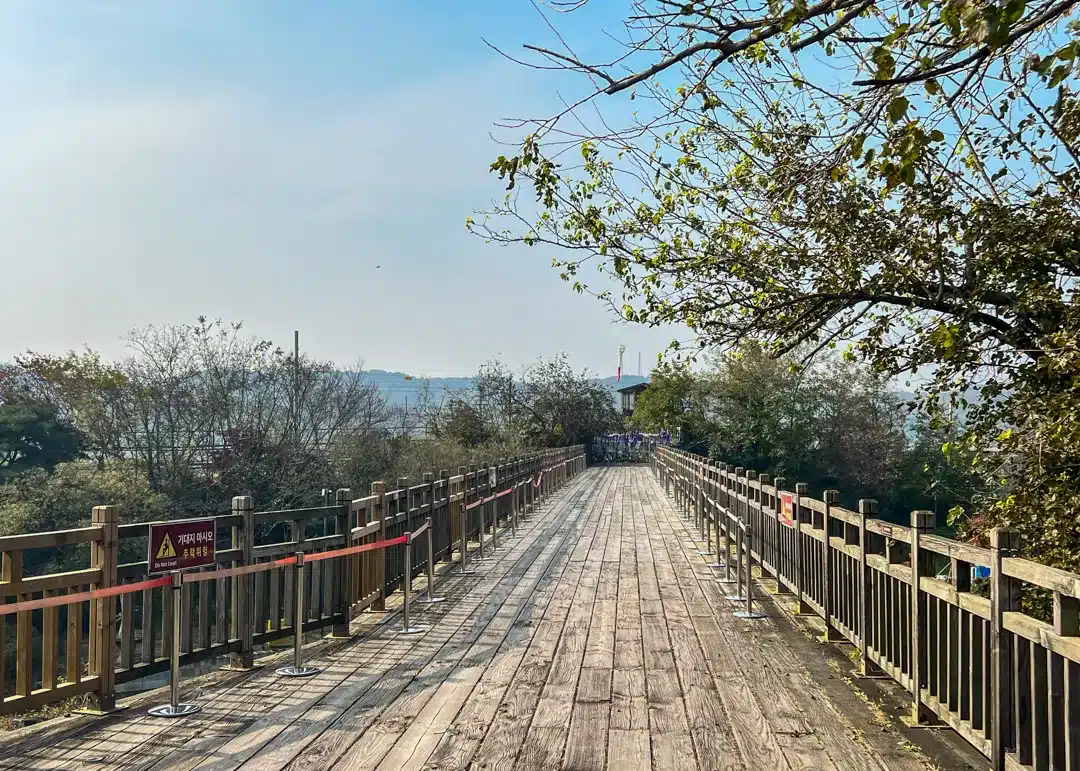
The nearby Freedom Bridge connecting the North and South is where some 13,000 POWs were exchanged in 1953 (and remains off limit, obviously).

Freedom Bridge at DMZ

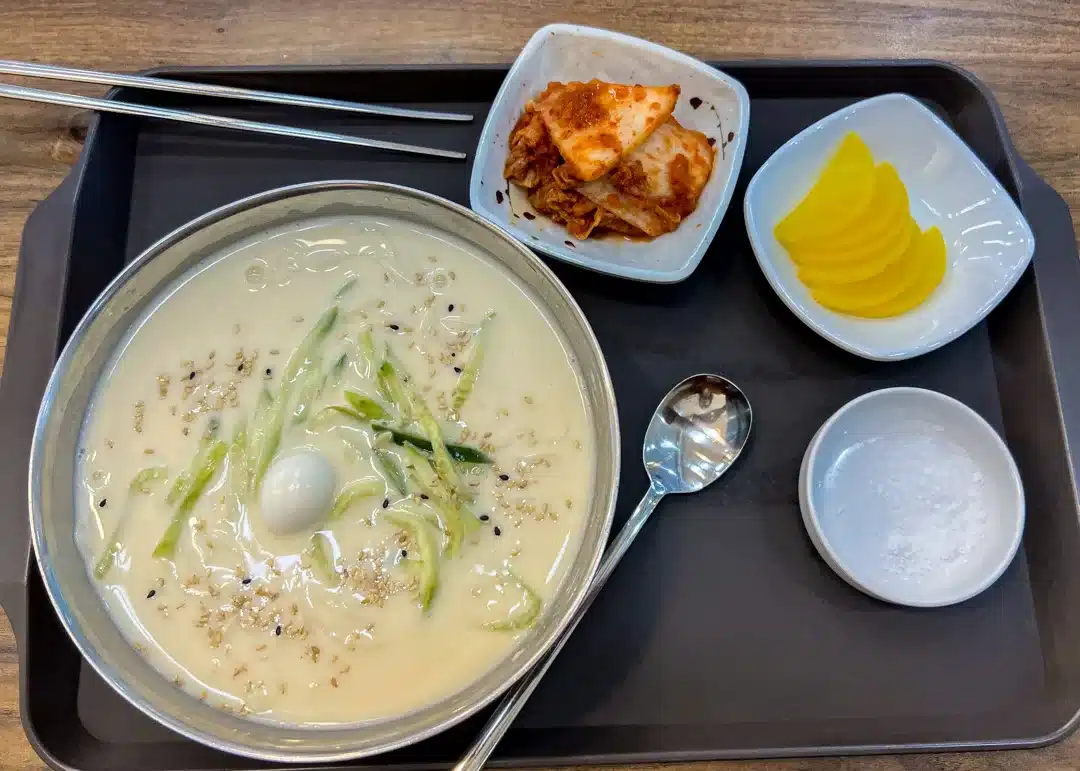
There is a visitor center with facilities and a few restaurants where your tour will stop for lunch. You might be tempted to drown your sorrows in a burger at this point (!) but I opted for a local cold bean soup with noodles and cucumbers, a dish as unfamiliar as my surroundings. Never had cold soy milk broth before… Surely this would have been more welcome on a hot summer day, but the kimchi was delish.

With a bit of free time post-lunch, you can explore more of the grounds which contain other memorials…

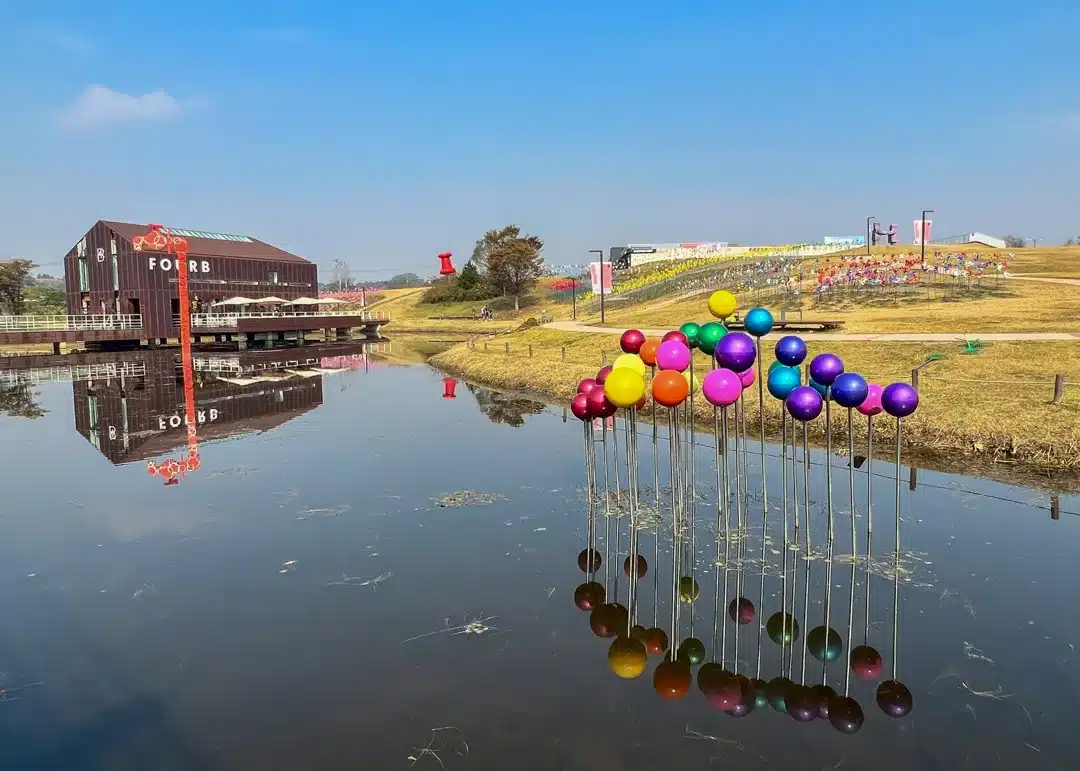
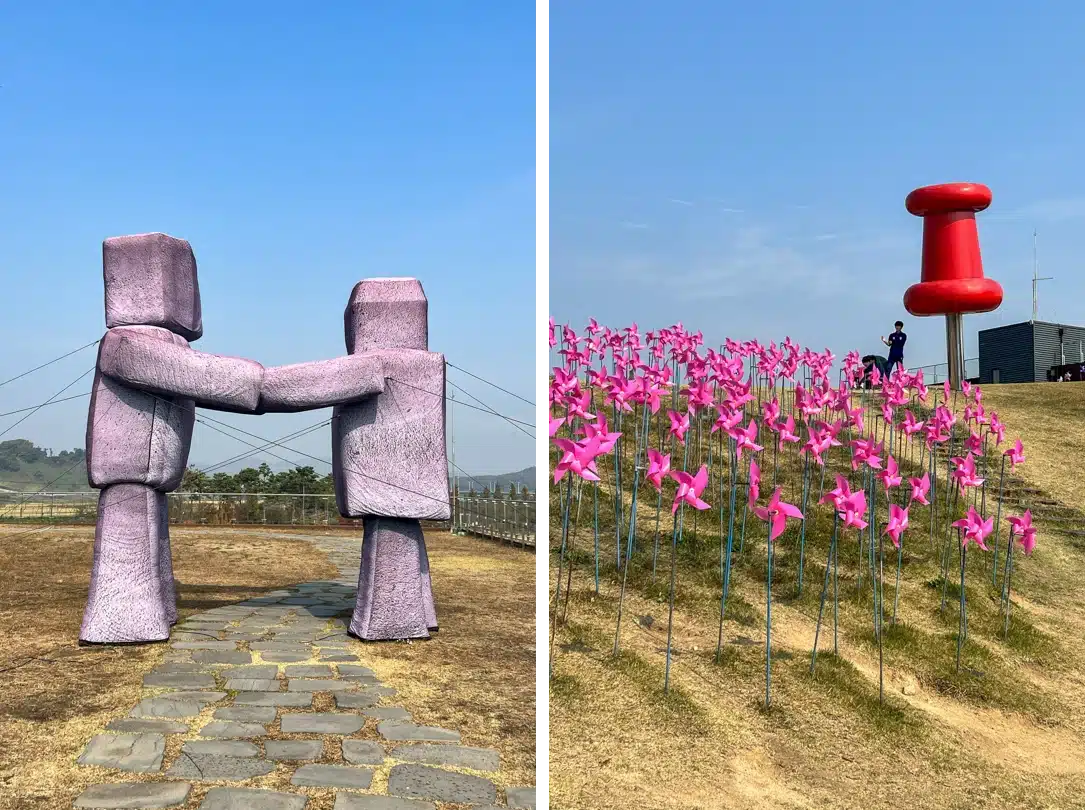
…and a sculpture park? Yes, giant, brightly colored works of art are spread across a hilly section of the park, displaying cheerful and hopeful messages.

Sculpture Park DMZ
Sculpture Park DMZ
Sculpture Park DMZ

Unification Bridge

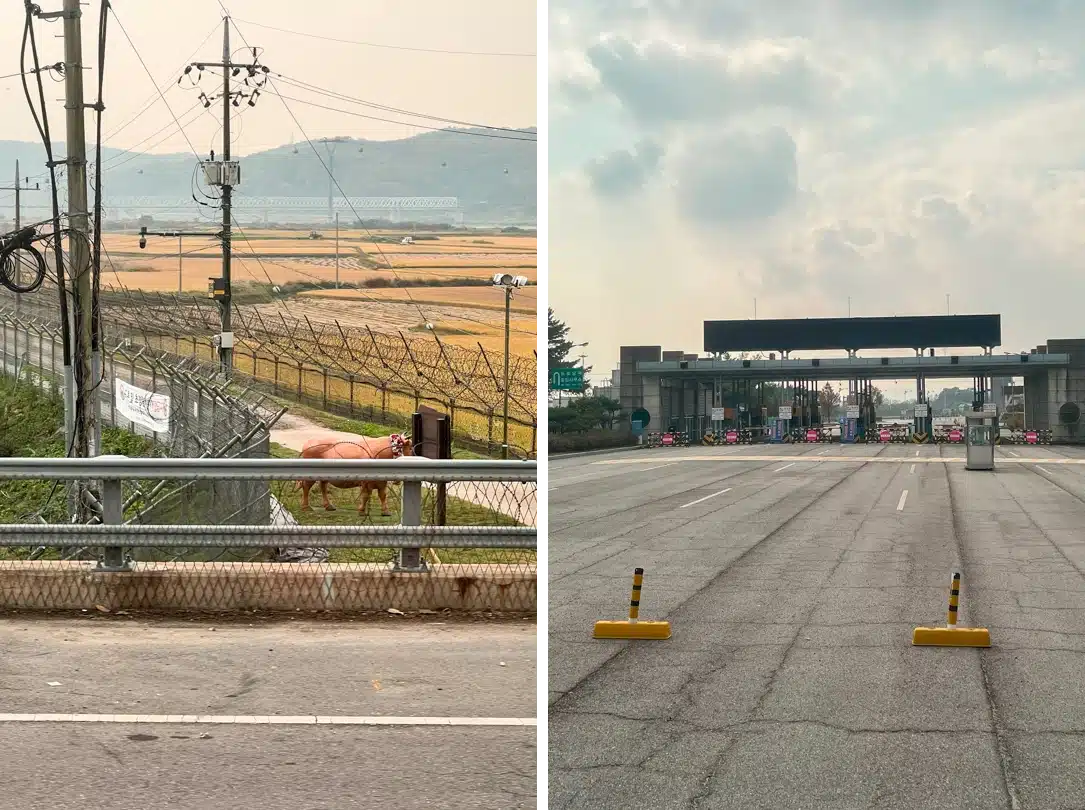
Back on the tour, you need to get your passport ready for ID verification as you cross the Unification Bridge to enter the Civilian Control Line. Interesting fact: you’ll see a life-sized plastic cow at the beginning of the bridge which is also called the “cow bridge”. Hyundai’s founder was originally from North Korea and succeeded in escaping by selling one of his father’s cows that he stole. He later returned in 1988, crossing on this bridge, with a convoy of 1,001 cows to repay his debt to his father…

Crossing over

3rd infiltration tunnel

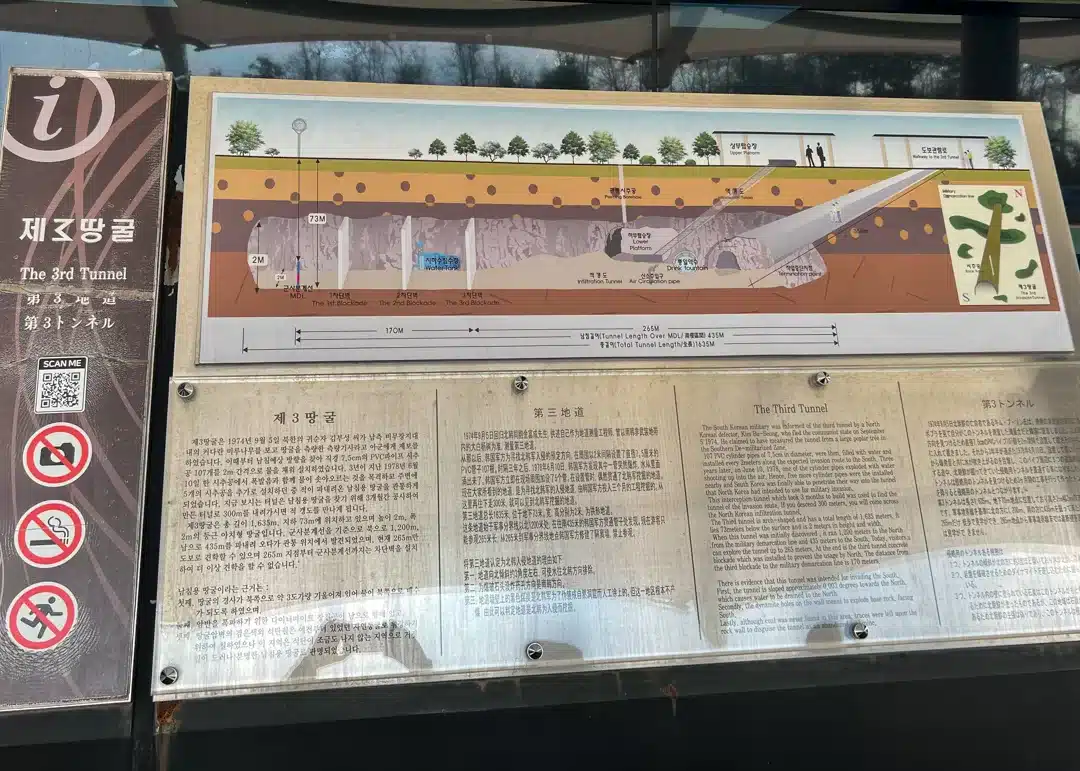
Four tunnels dug by North Korea for infiltration purposes have been found as of today running under the DMZ.

The Third Tunnel DMZ

You can visit the 3rd one if you can handle a very claustrophobic and long walk down this 73m deep and 265m long tunnel. You’ll be given a hard hat and even with that I bumped my head a few times, so low was the ceiling. No cameras (or any belongings beside water) were allowed so you’ll have to try and picture what it was like…an interesting and physical walk!

The Third Tunnel DMZ

Looking over North Korea

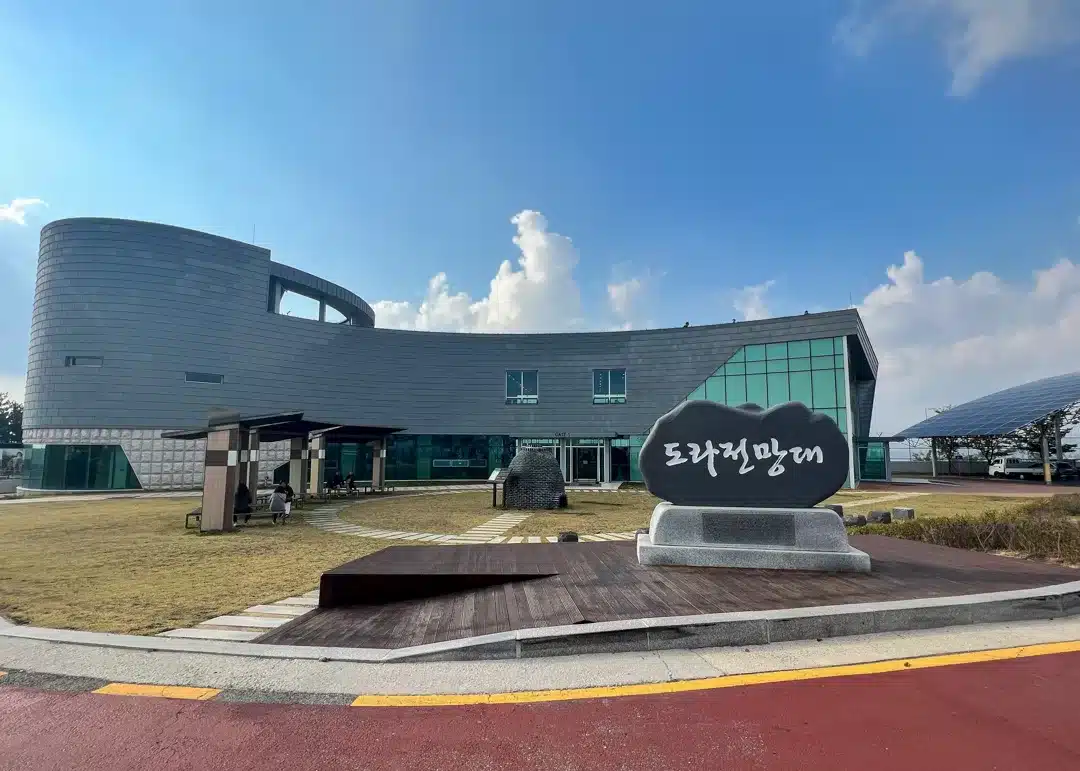
The final stop is the Dora Observatory.

Dora Observatory DMZ

The rooftop terrace is lined with binoculars, giving you a voyeuristic glimpse into the Democratic People’s Republic of Korea (aka North Korea). Within eyesight is the Propaganda Village, technically in the DMZ but on the North Korea side. It’s called this way by South Korea because virtually all the buildings are believed to be empty or just facades with the primary feature the North Korean flag perched on a 160m high-tower.

Dora Observatory DMZ

On a clear day you may also discern the city of Kaesong and distant little moving dots, people working the farms and walking in the villages.

Dora Observatory DMZ

Then it’s back to Seoul. After visiting such a sinister and surreal place you’ll surely have many more questions but you’ll be glad to have gotten this rare insight into the history and ongoing reality of the Korean Peninsula’s division.

Edible Obsessions

A day in Western Seoul: Nature walks in the city

March 5, 2025

Most visitors passing through Seoul for a few days won’t venture outside of the historical center. There’s already so much to see and do there between the giant palaces, markets spanning multiple city blocks, eclectic museums and all the restaurants, so why bother? I get it, but if you have just one extra day, follow my lead and leave the traditional sights behind to experience modern-day Seoul and mingle with the locals, I promise you won’t regret it.

Seoul isn’t that different from other big cities around the world when looking for a non-touristy city outing, one that will inspire and reveal little facets of the locals – go where nature and creativity collide. It’s in metropolis jammed with high-rises that you find the loveliest of green spaces from where to observe the subtle nuances of everyday life and Seoul is no exception. While Namsan Park is great for a hike with a view, head west for a day towards the student district of Hongdae to experience the delight that is the Gyeongui Line Forest Park.

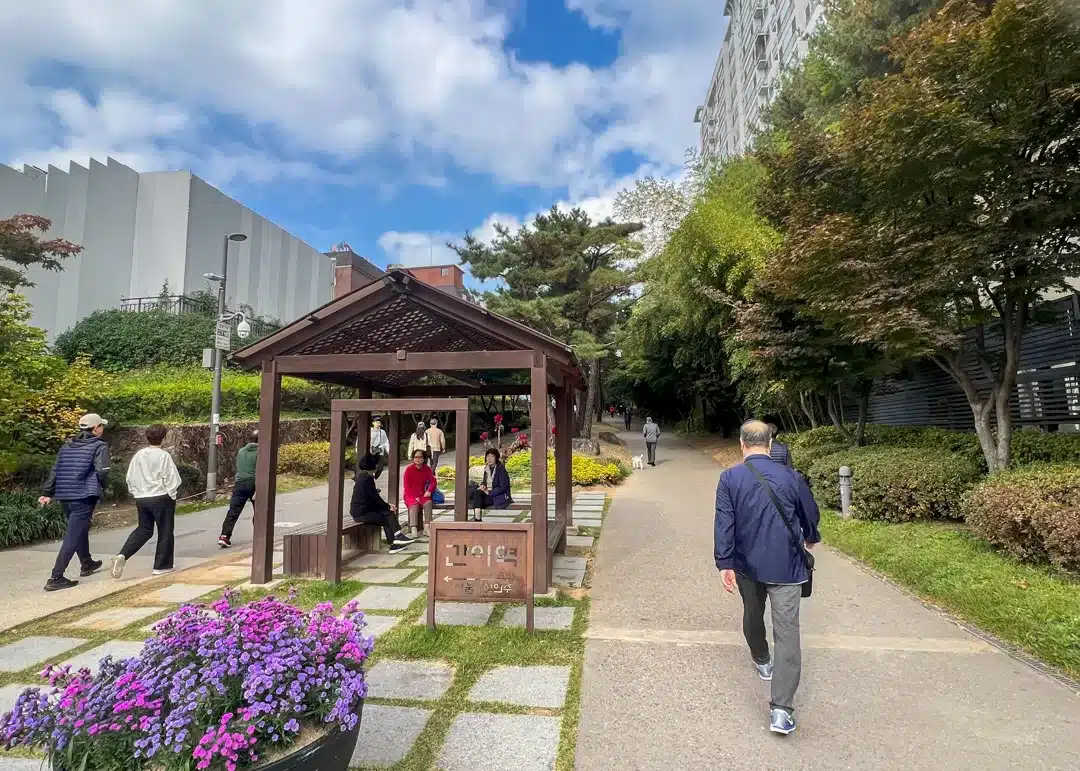
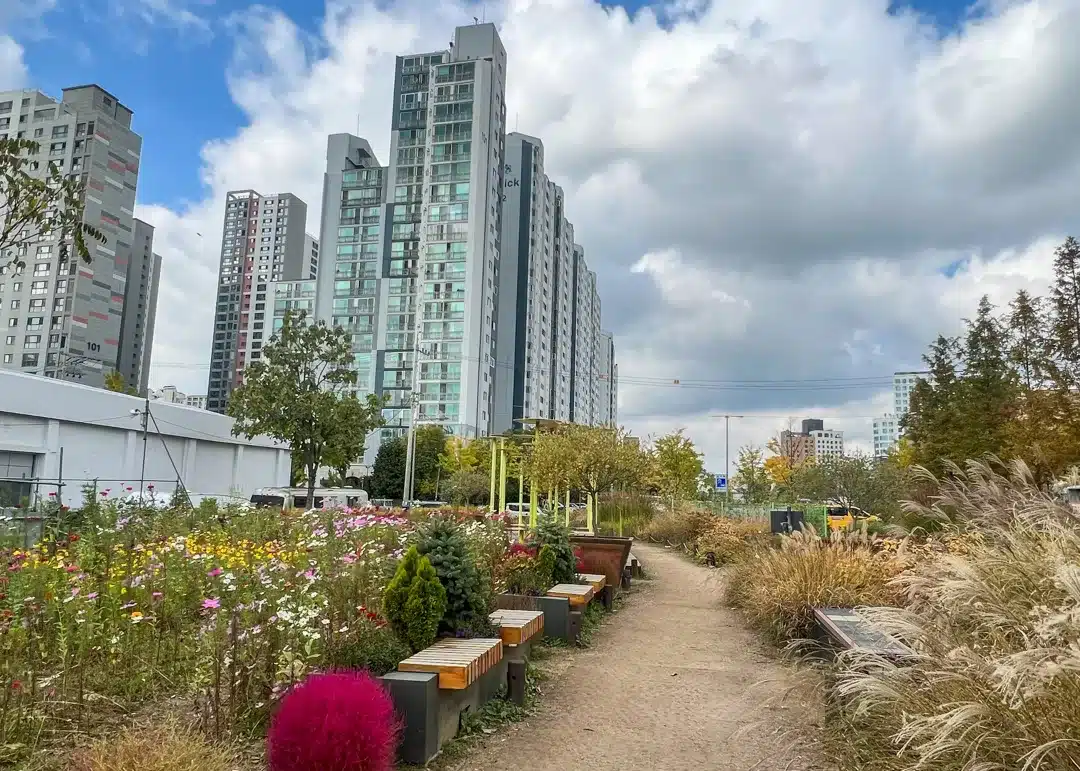
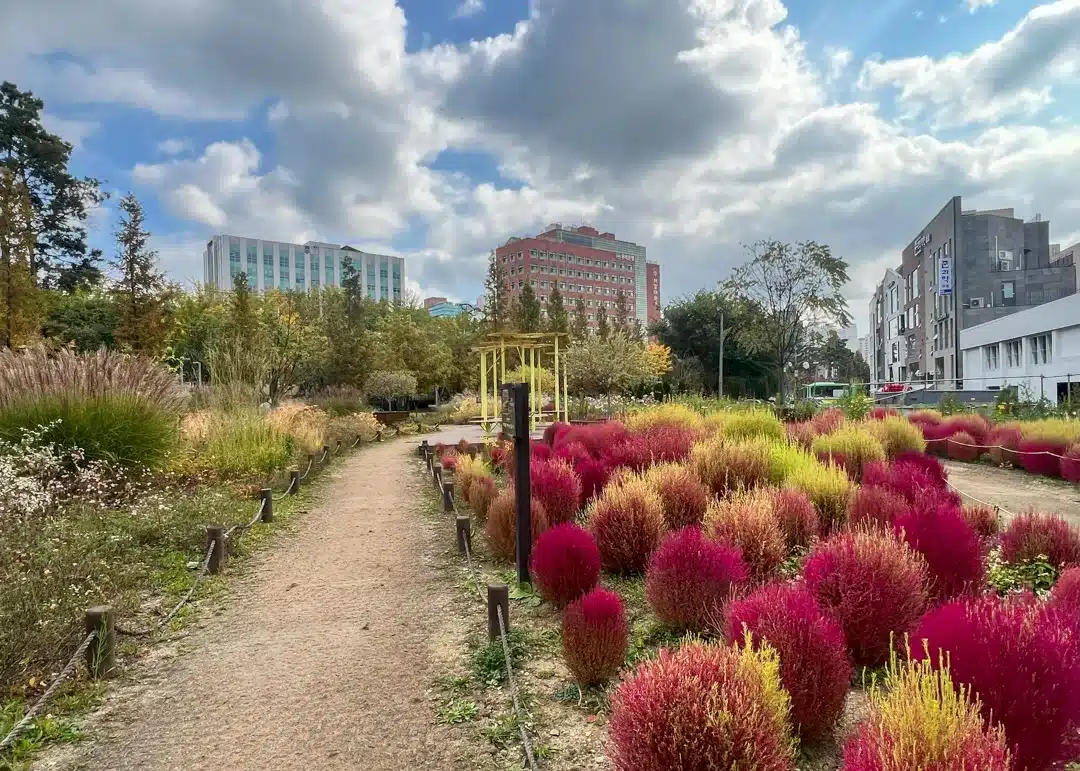
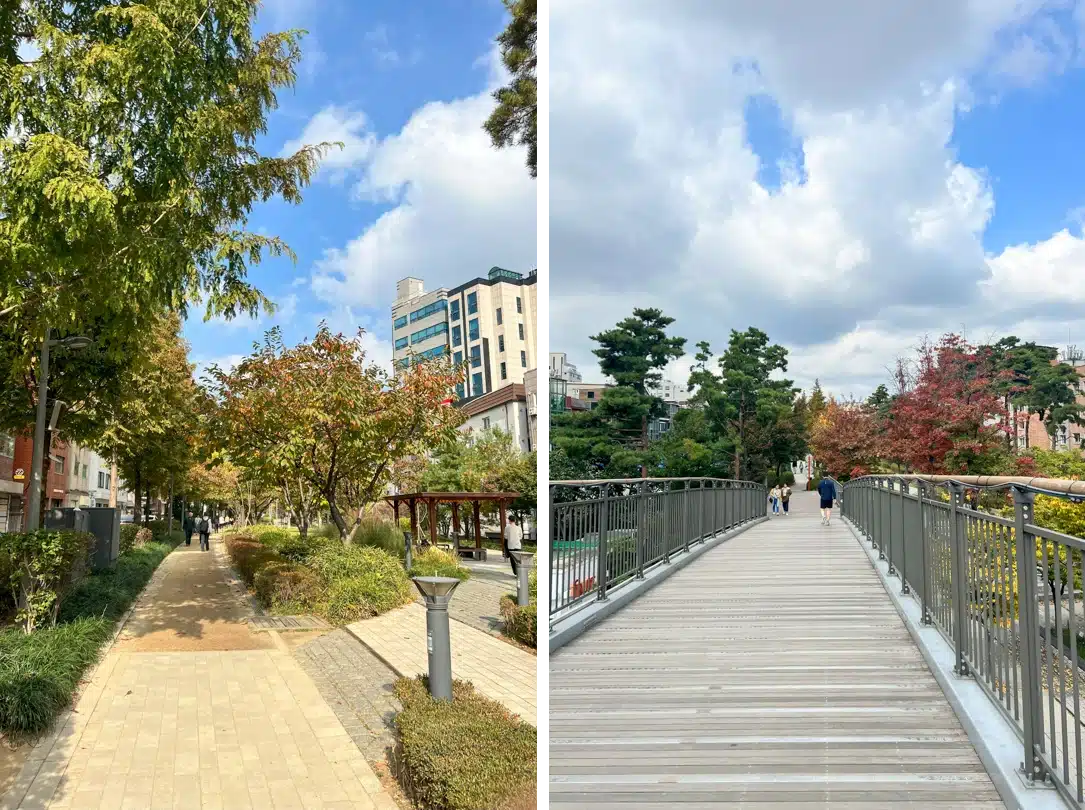
Gyeongui Line Forest Park - Seoul

This 6.3 km (4 miles) park was created when the Gyeongui railway line went partially underground. The defunct train tracks were covered and a beautiful park was established all around them as part of an urban regeneration project.

Gyeongui Line Forest Park - Seoul

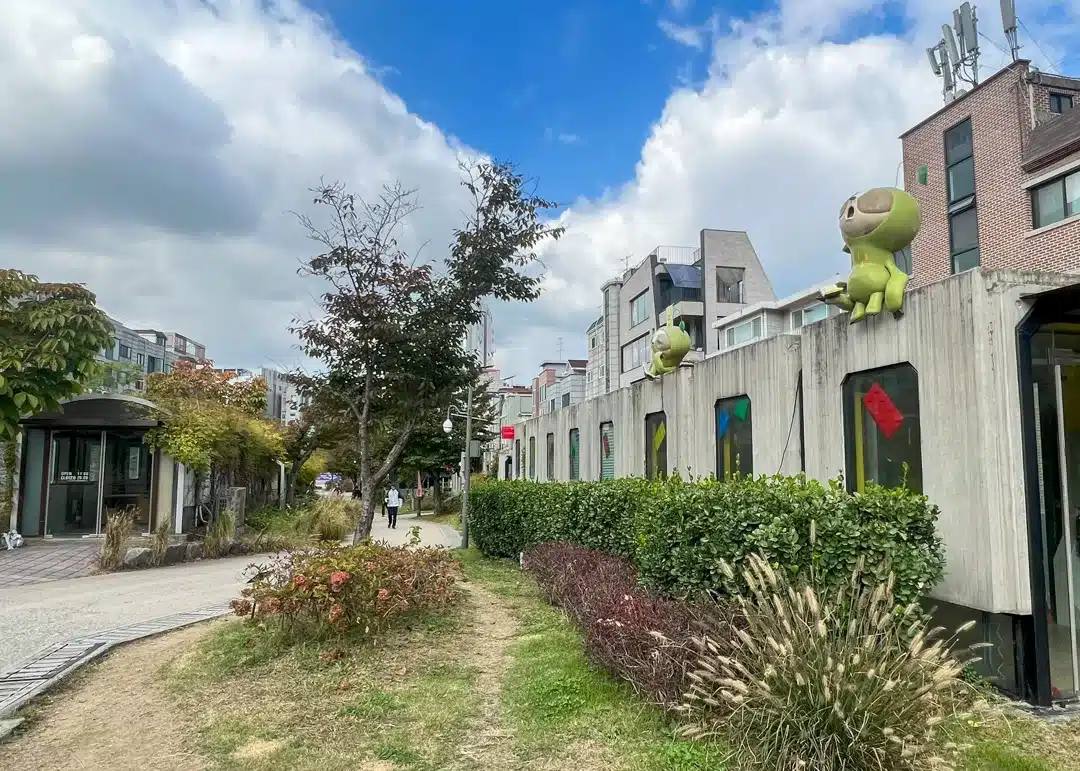
It takes about two and a half hours to walk the length of the park but you’ll want to make many stops so plan for half a day. It’s a unique and popular green space for locals to take walks and for tourists to mix with locals and experience a bit of Seoul’s history and urban culture.

Gyeongui Line Forest Park - Seoul

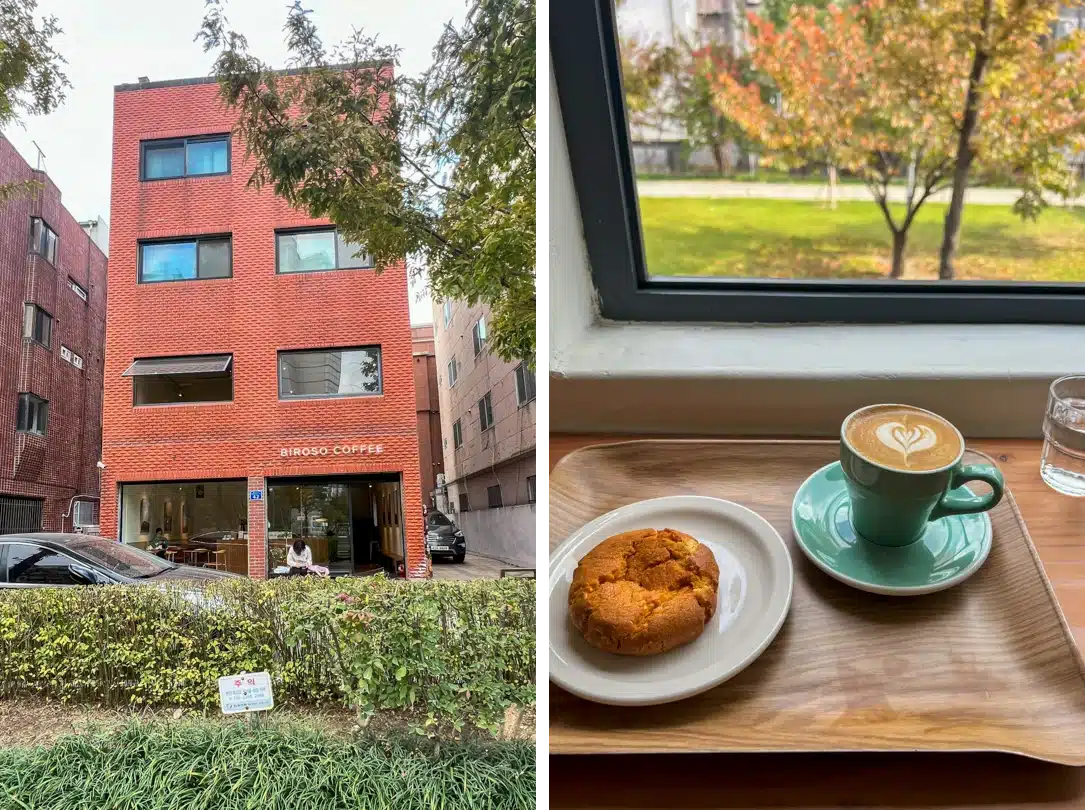
You’ll pass through trendy neighborhoods and will never be far from a hip cafe to slow down your pace without leaving the park. Look for the red brick walls of Biroso Coffee right by the park’s edge for an amazing cup and a sweet pastry. Bonus is the view from their second floor window counter where you won’t be missing any of the action.

Biroso Coffee Seoul

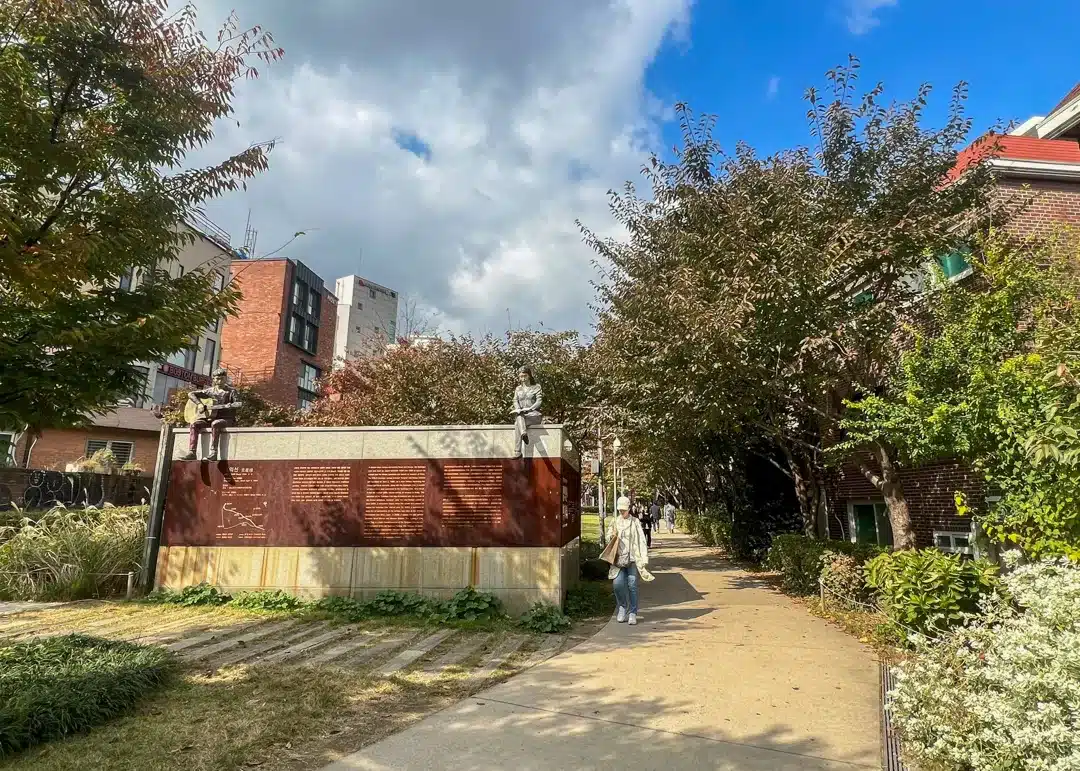
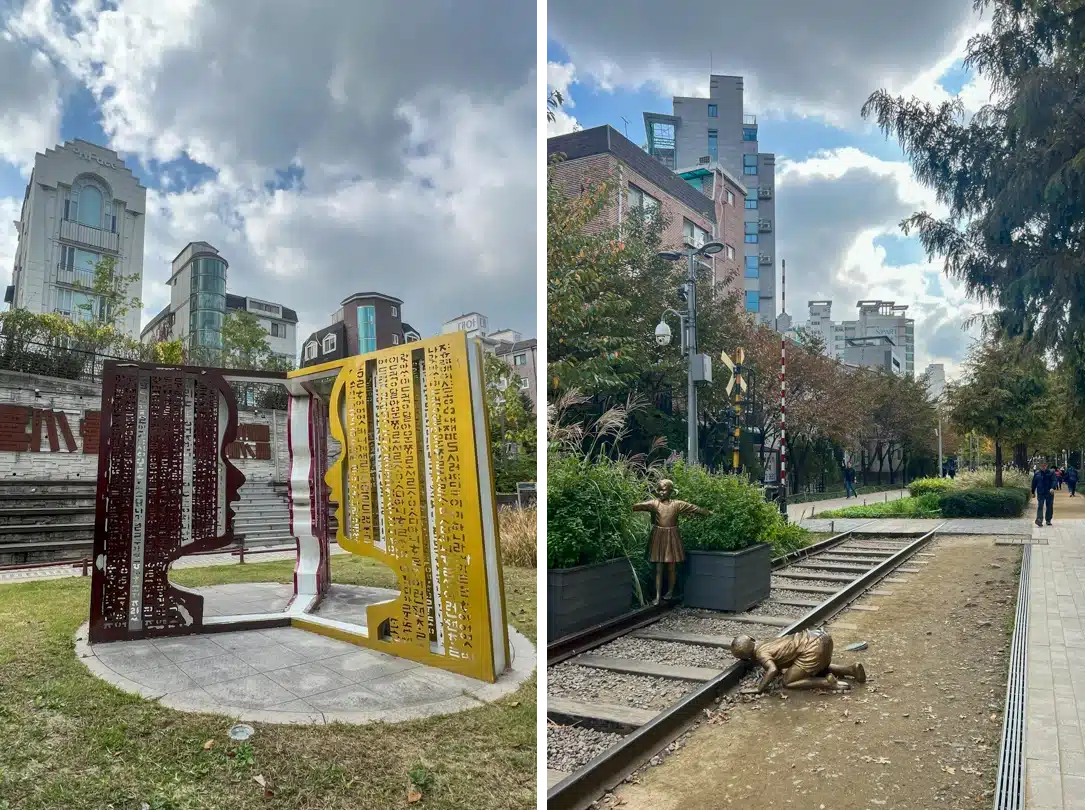
There are clear sections along the walk, some with open lawns for rest and relaxation, others with sculptures or interactive features reflecting the artsy area you’re passing through.

Gyeongui Line Forest Park - Seoul

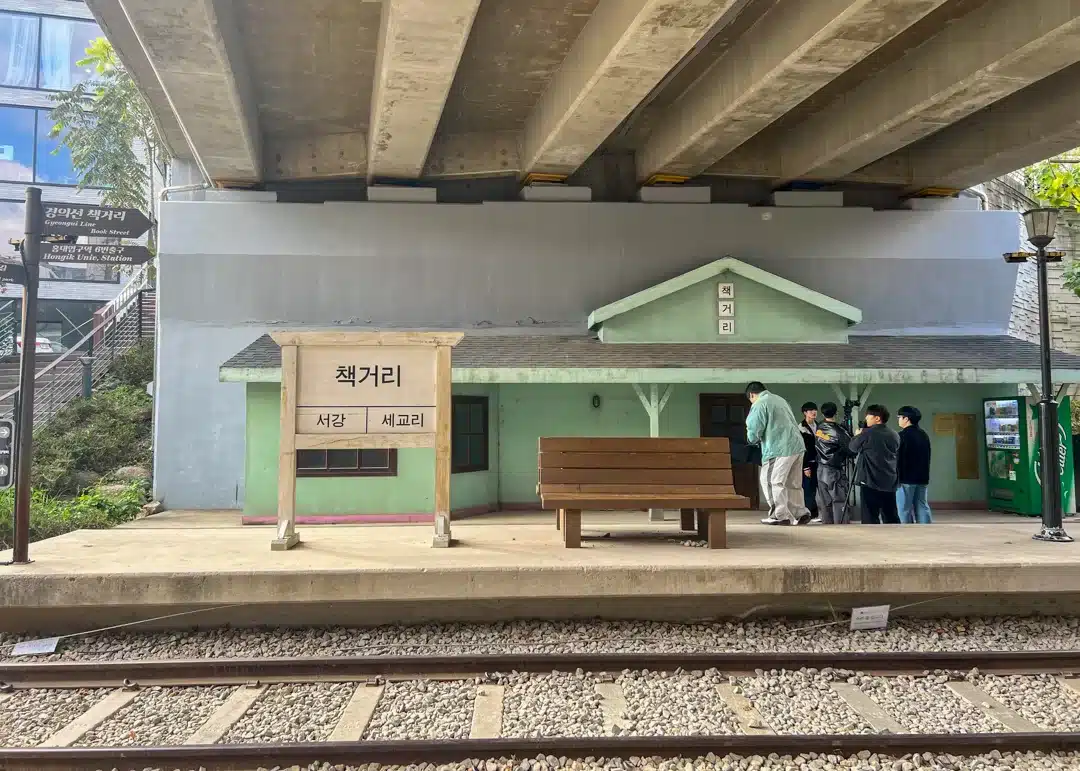
Recreated rails, old stations and even old train cars let people reminisce about the old days. The line was originally built by the Japanese between 1904 and 1906 to secure control over the Korean peninsula and launch an invasion of China. It continued to operate after the division of South and North Korea in 1945 but was later abandoned in the early 1950s after the Korean war.

Gyeongui Line Forest Park - Seoul

Train-carriage-like bookshops await in the area known as Gyeongui Line Book Street.

Gyeongui Line Forest Park - Seoul

Original sculptures make you pause and invite contemplation.

Gyeongui Line Forest Park - Seoul

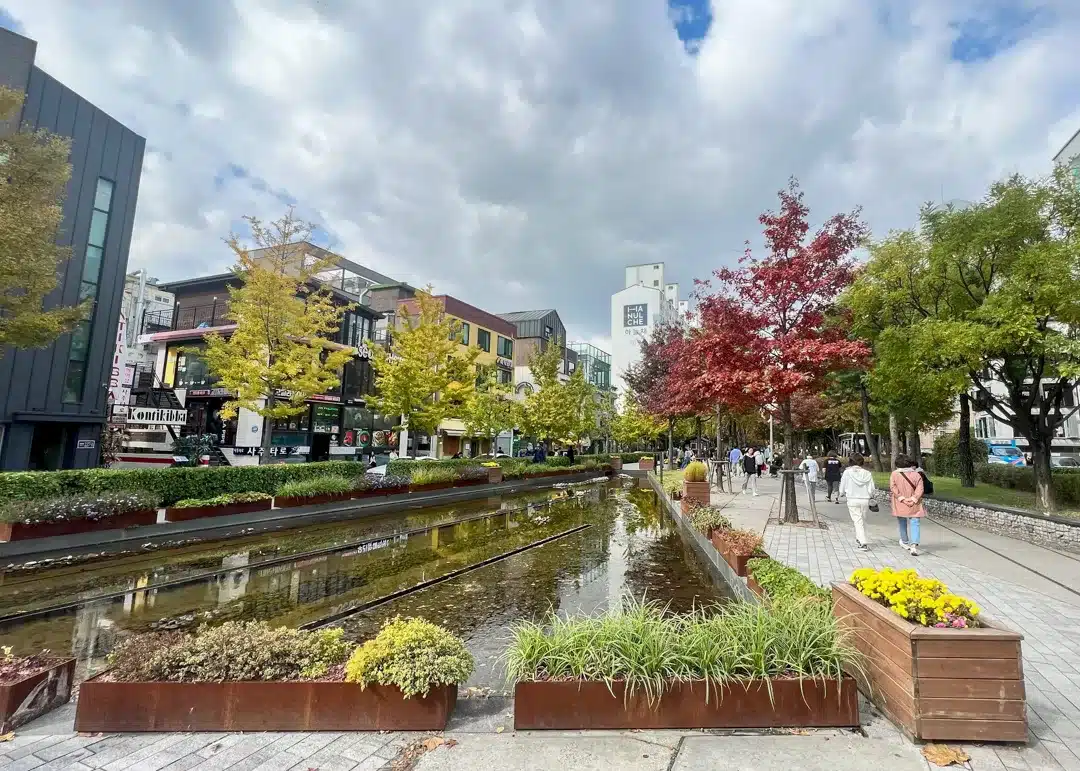
The park’s Yeonnam-dong section (next to Hongik University Station Exit 3) is nicknamed Yeontral Park because of its atmosphere resembling that of New York’s Central Park. Gingko trees line the old railway line for a kilometer (beautiful in the fall) and the many grassy fields and ponds are perfect for an impromptu rest.

Gyeongui Line Forest Park - Seoul

Student-filled Hongdae

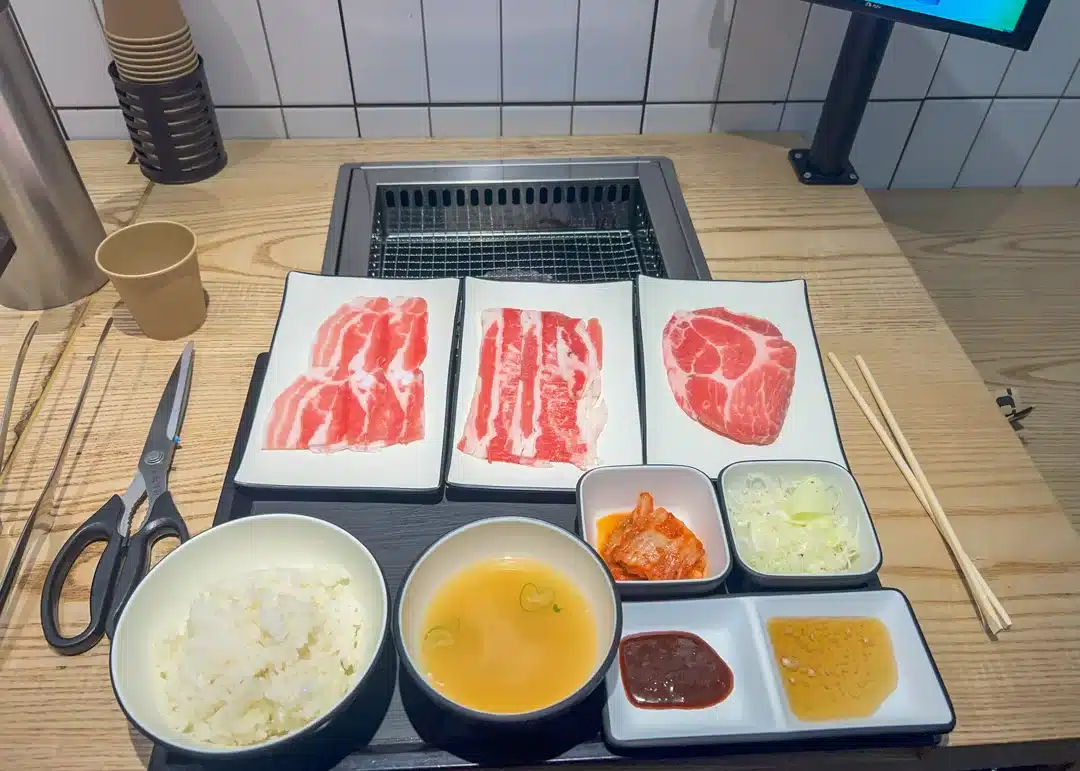
With many restaurants and shops around, it’s the perfect place to leave the park for a bite to eat. If you have yet to eat Korean BBQ, Hongojib is a place famous for trying BBQ solo, an experience usually reserved for big groups. Solo dining is becoming increasingly popular in Korea and Hongojib’s setup is brilliant. You sit at an individual “cubicle” and order everything from a tablet in front of you.

BBQ spot near Gyeongui Line Forest Park - Seoul

Your chosen cuts of meat arrive and an attendant light the grill for you while giving you a few basic instructions – a novel experience to say the least and quite enjoyable!

BBQ

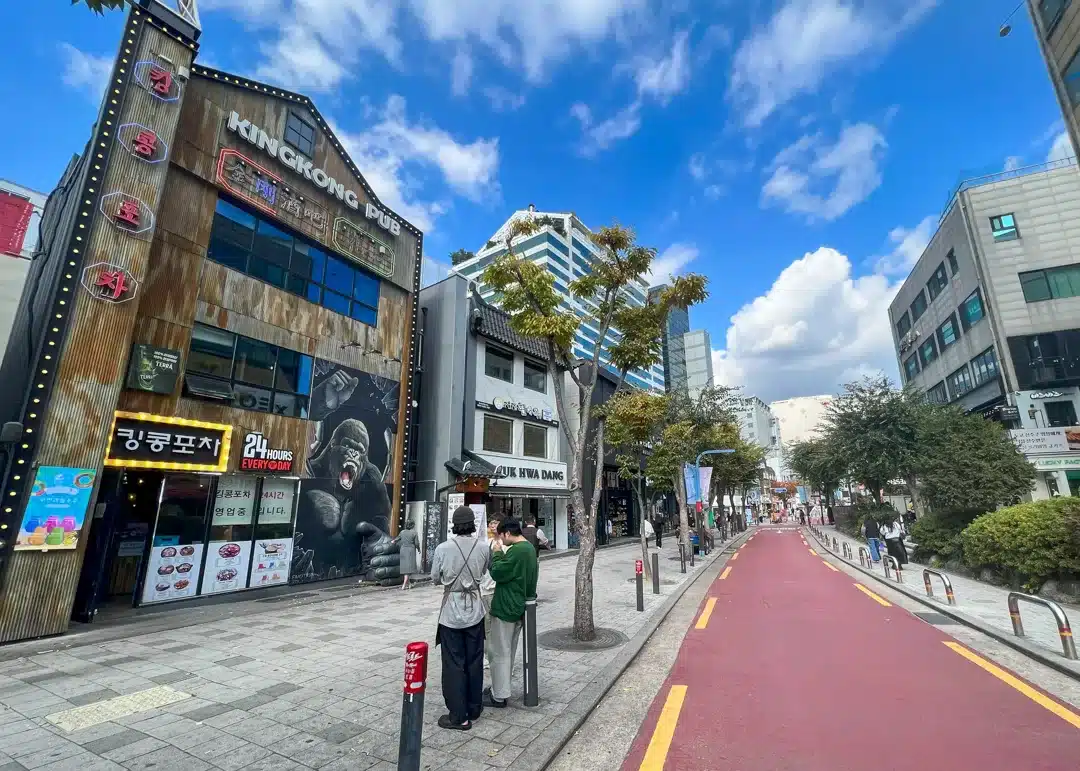
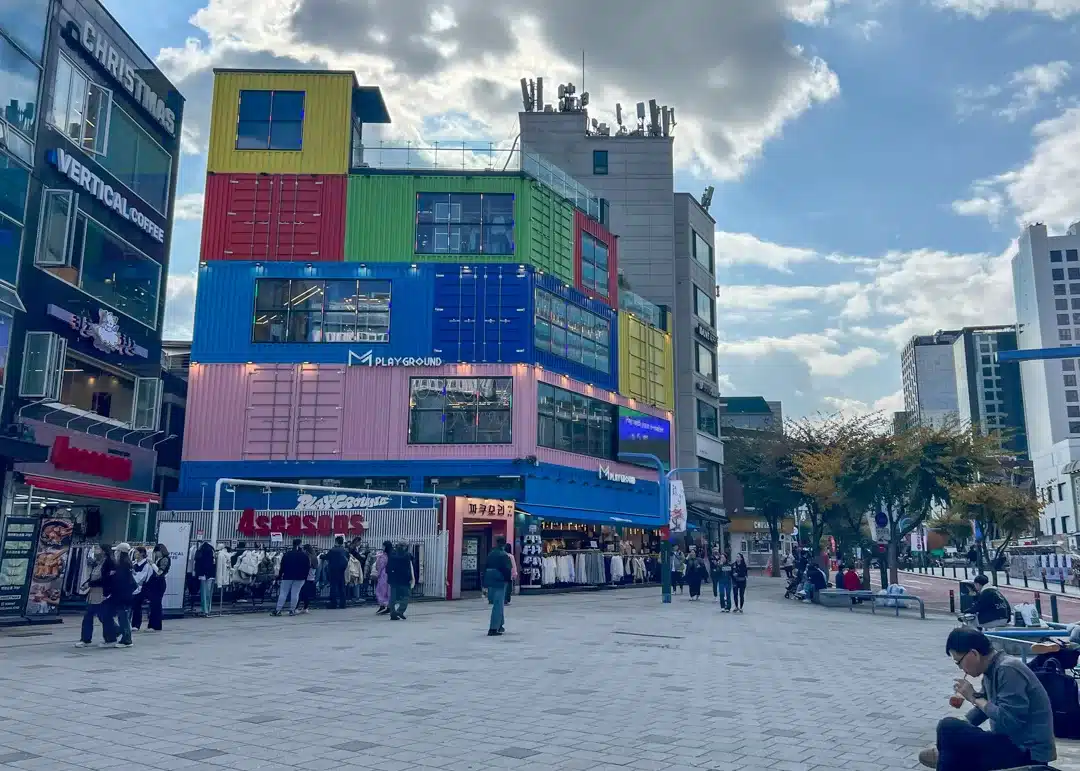
You’re now in Hongdae, the university neighborhood so of course it’s buzzing and there’s plenty of entertainment to be had. It’s especially known for its shopping and unsurprisingly its bar scene so you might want to linger the rest of the day here.

Elevated city park in Seoul’s center – Seoullo 7017

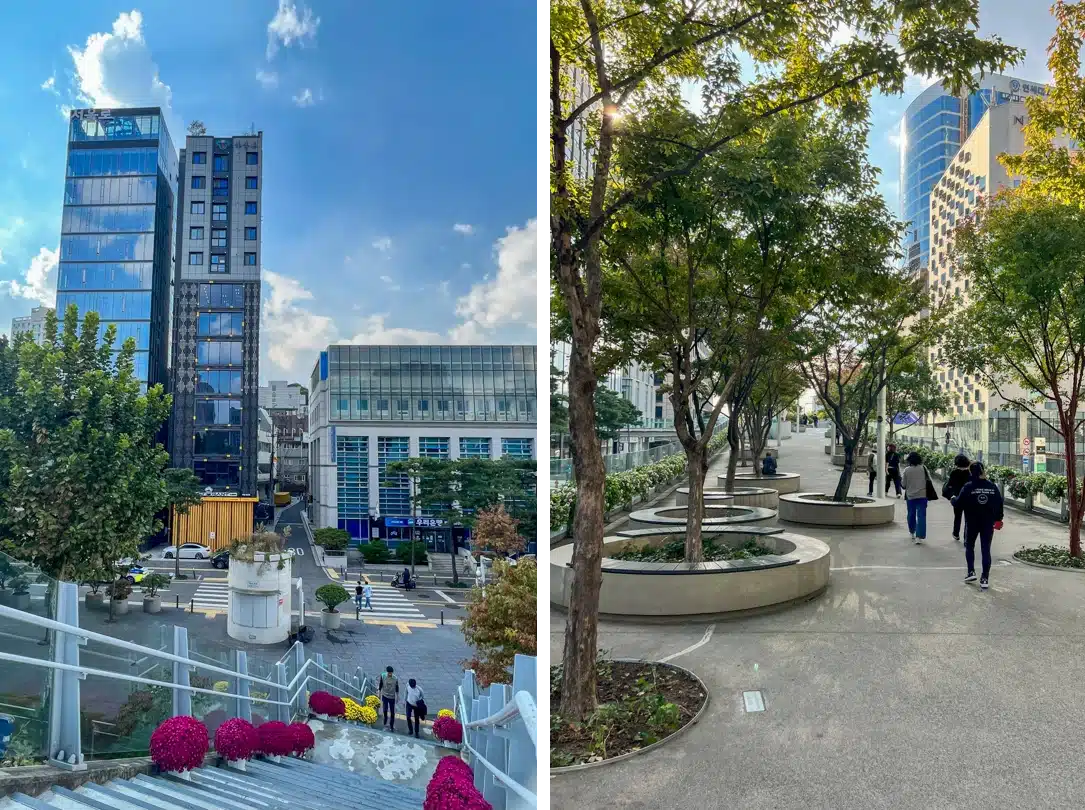
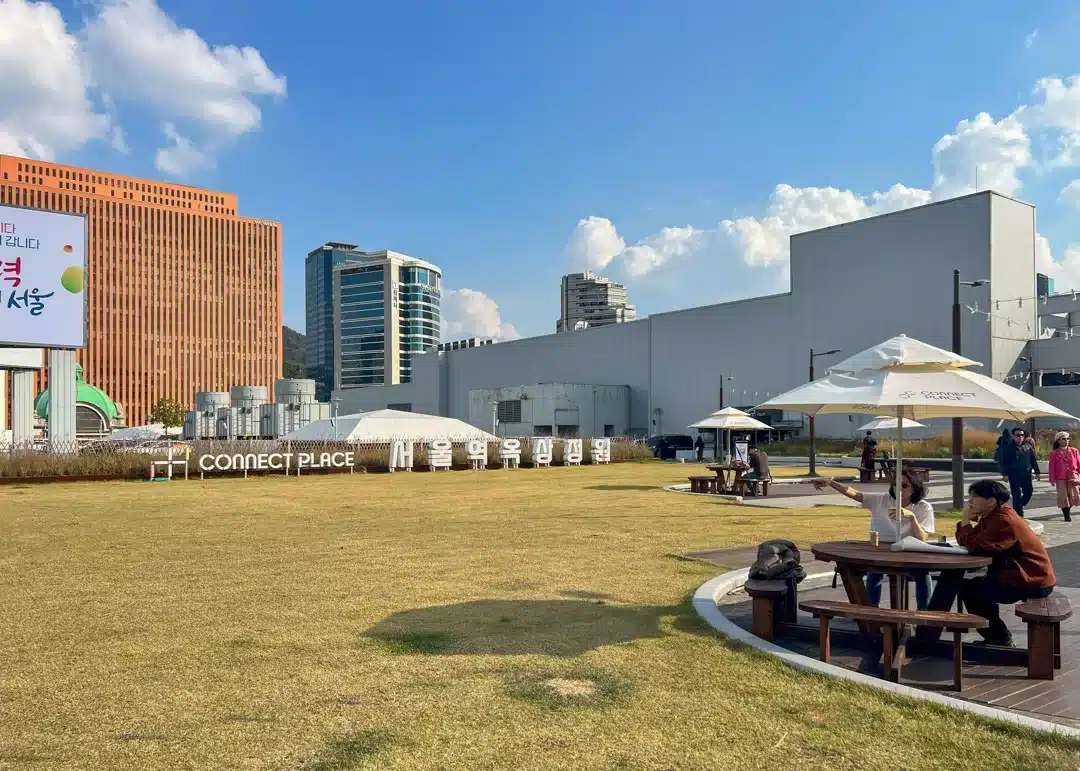
If you still have some spring in your step though and didn’t get enough with your lovely morning walk out west, why not explore the other very cool green space closer to downtown? Seoullo 7017 can be found smack in the city center in the form of an overpass-turned-park. See the theme here? It can be entered from various points with the most obvious one at Seoul Station.

Seoullo 7017

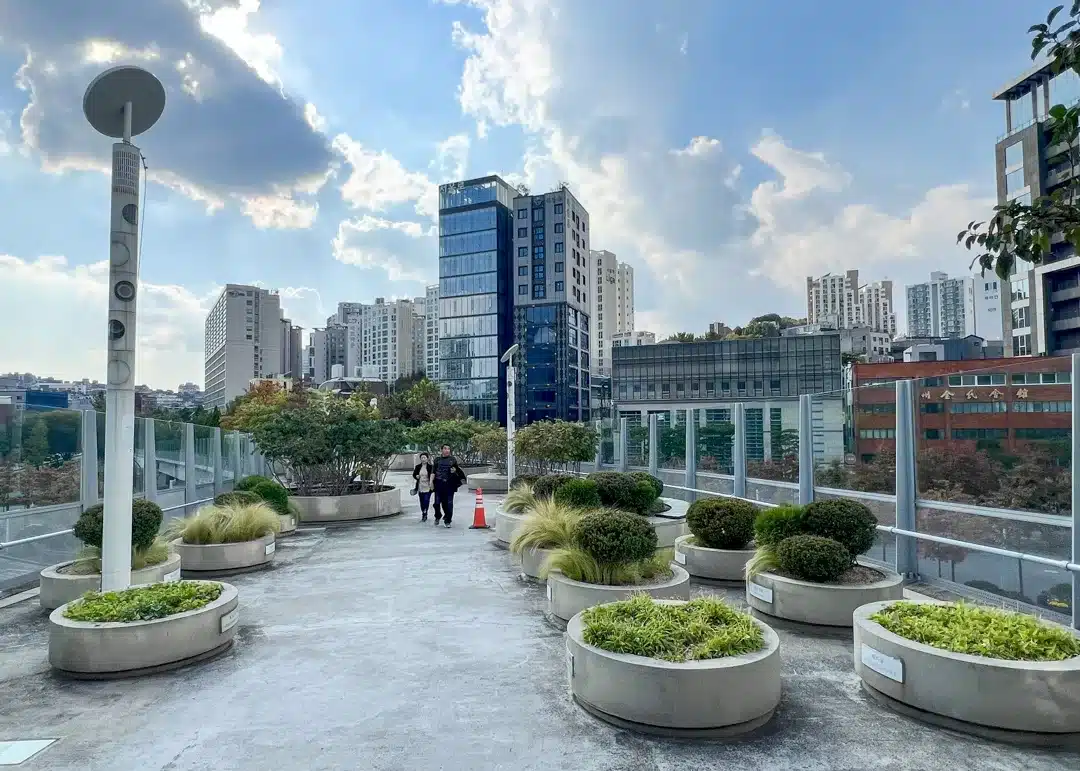
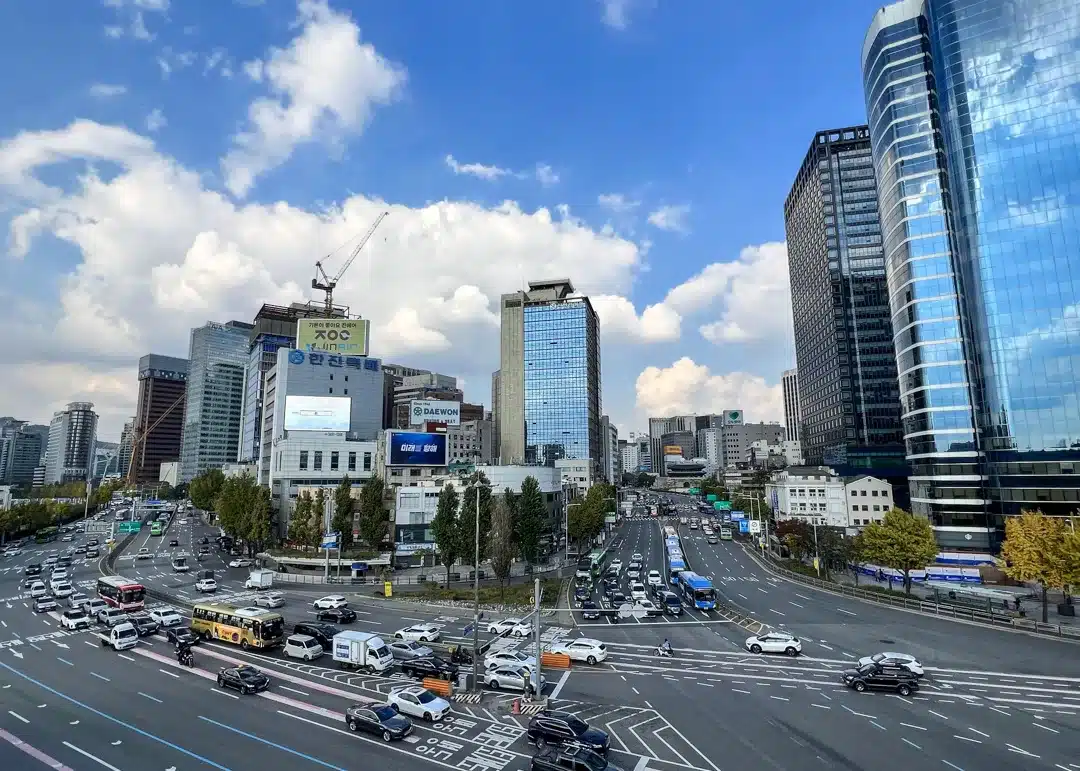
Based on the High Line in New York, the overpass was turned into a sort of elevated botanical garden in 2017 when it was deemed unfit for automobiles. Over 24,000 labelled plants, flowers and trees are grown here which brings a special interest as you walk above some of the city’s busiest intersections.

Seoullo 7017
Seoullo 7017

The overpass cleverly branches off over rooftops with a handful of cafes, galleries and open spaces where there are sometimes concerts and art exhibitions.

You can end this wonderful day just as you started it, in “urban nature” with a drink surrounded by greenery and a unique view of Seoul and its residents – totally worth skipping a palace or two!

Seoullo 7017
Asia South Korea Travels

A day in Seoul’s glitzy Gangnam

March 2, 2025

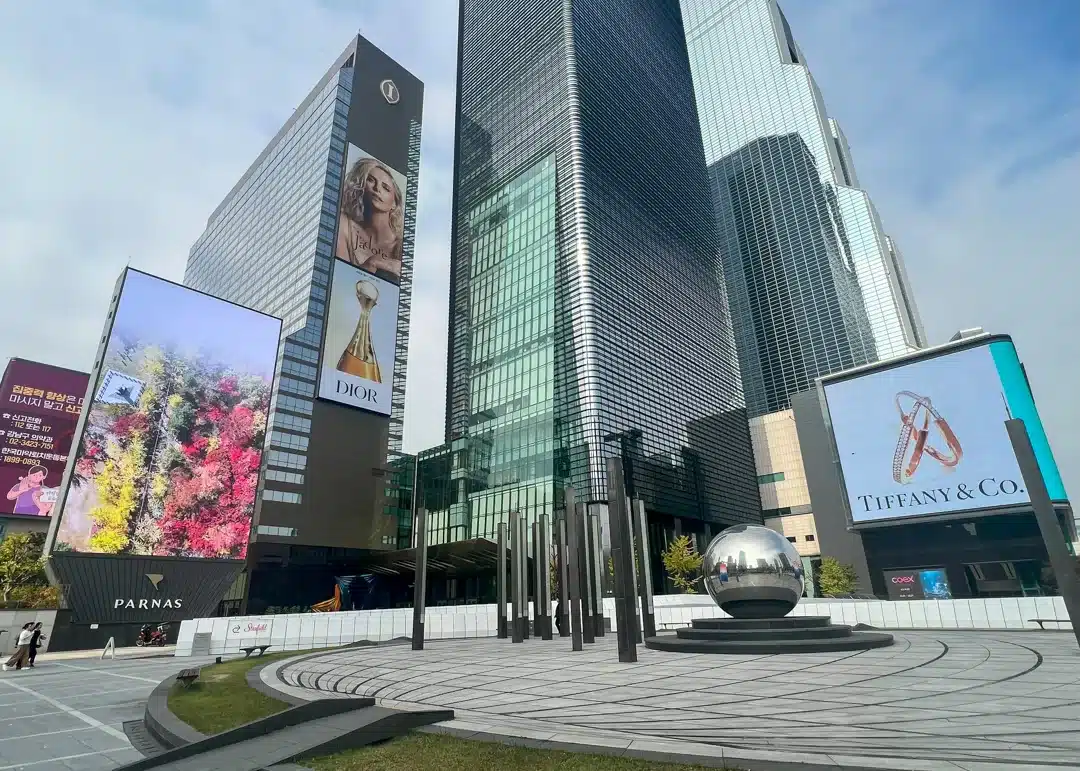
Home to luxury high-rises, upscale boutiques and a lively nightlife, Gangnam is where you go to have fun… and spend money! The neighborhood hugs the south side of the Han River (Gangnam literally means “South of the River”) and welcomes you with dazzling lights and luxury labels everywhere you look. Get off at Samseong (World Trade Center Seoul) subway stop which will put you right in front of COEX Mall – one of the largest underground shopping malls in Asia.

Seoul K-Pop Square

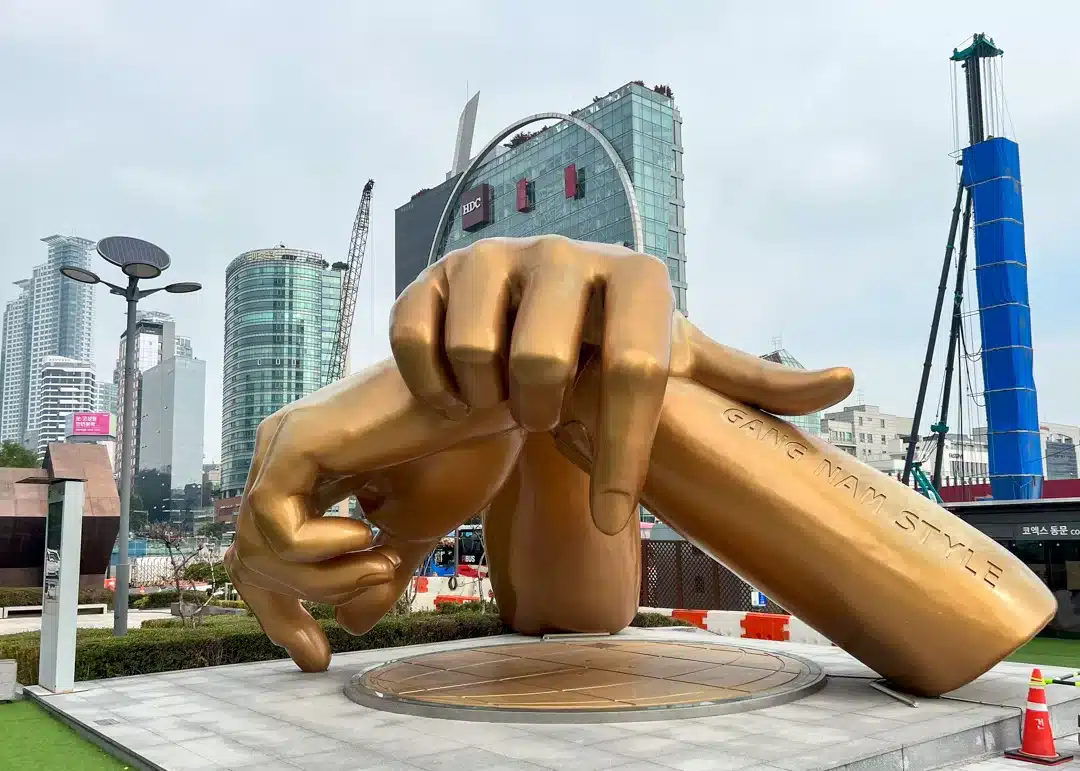
Make an obligatory stop at the “Gangnam Style” statue, an homage to the song by PSY that made the neighborhood famous all over the world. You only need to stick around for a few minutes to witness a line forming of tourists wanting their picture taken while performing the song’s classic dance moves beneath the statue.

Statue of Gangnam Style - Seoul

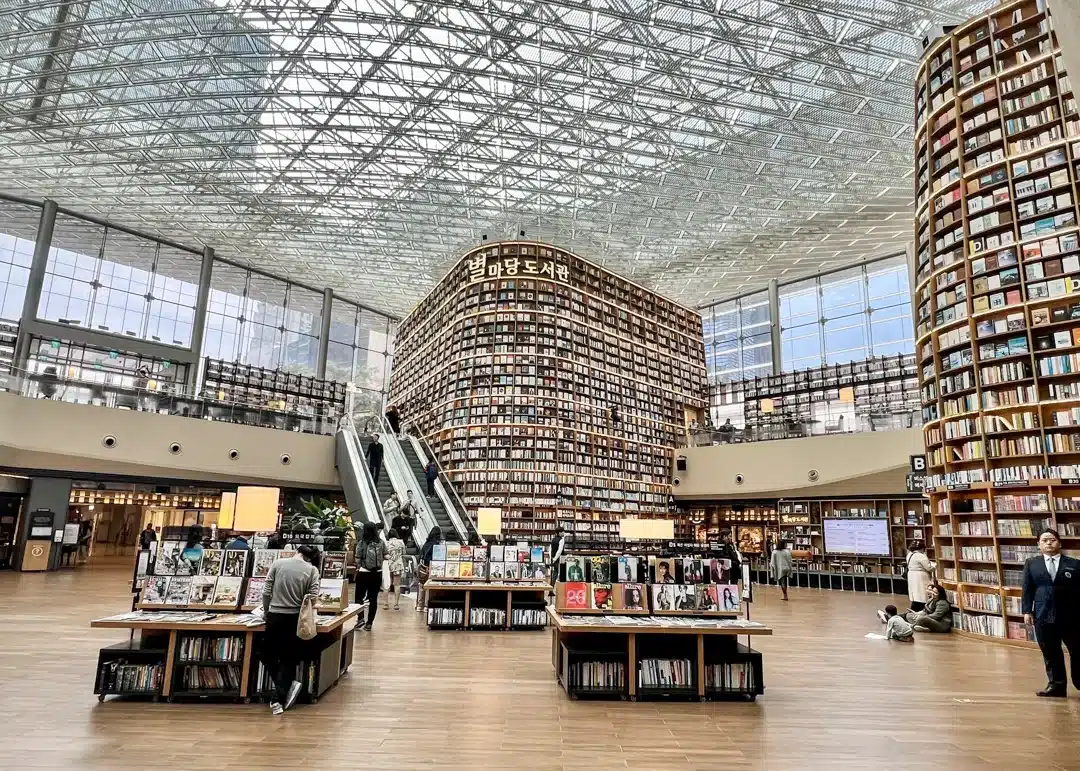
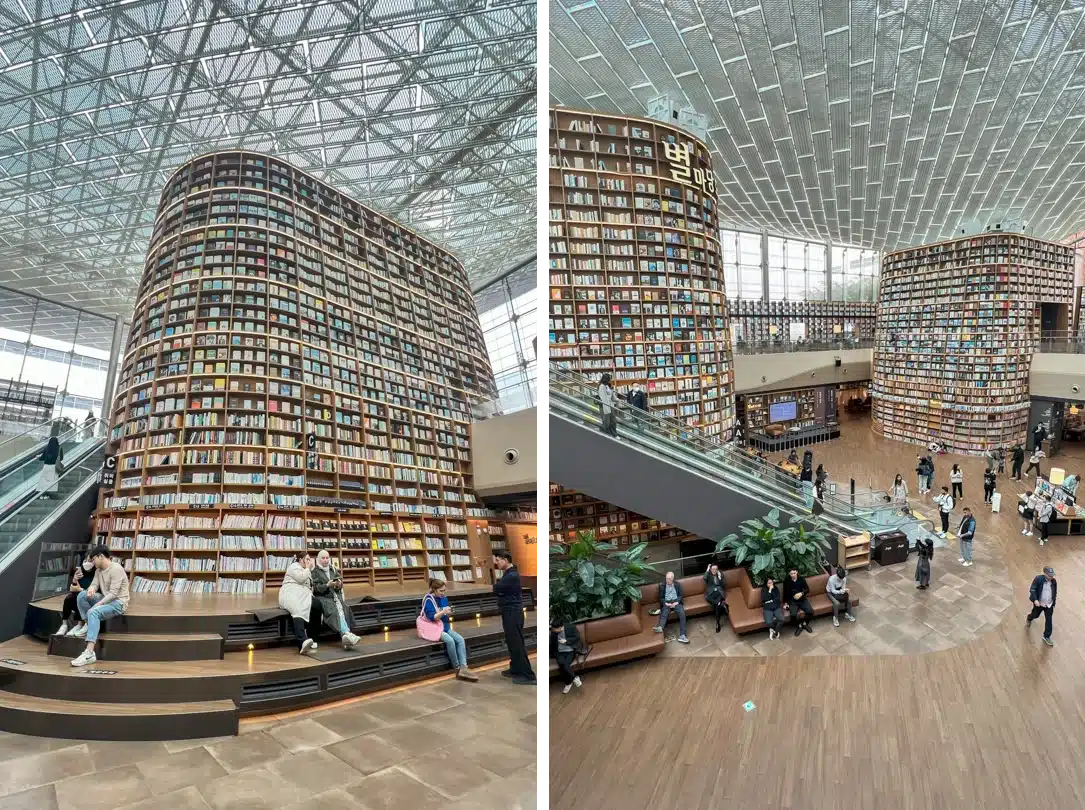
For me though the star of the mall was undoubtedly the Starfield Library.

Seoul Starfield Library

It’s truly a visual masterpiece with towering bookshelves reaching up to 13 meters high and cleverly designed nooks for reading or simply admiring the stunning architecture. It’s open to everyone and so inviting you’ll want to pick up one of the 50,000 books or magazines and soak in the atmosphere of this book lovers’ paradise.

Seoul Starfield Library

Elevated shopping

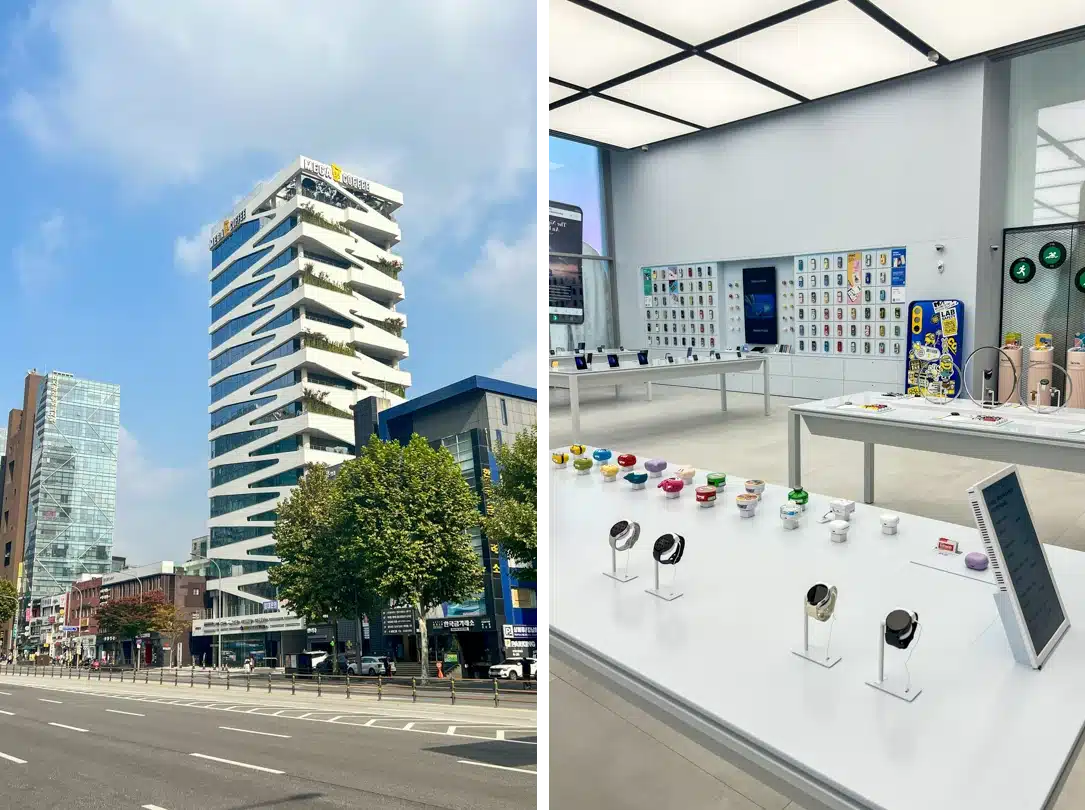
Head west to reach Gangnam-daero (road), Gangnam’s main boulevard and most popular shopping and dining area. Quite a few big brands have their flagship stores here. You’ll inevitably get an introduction to Korean pop culture by visiting Kakao Friends and other character-based souvenir stores. Make a point to pop into Samsung and go up the many levels of their immersive store to discover and play with their latest electronics.

Gangnam commercial road - Seoul

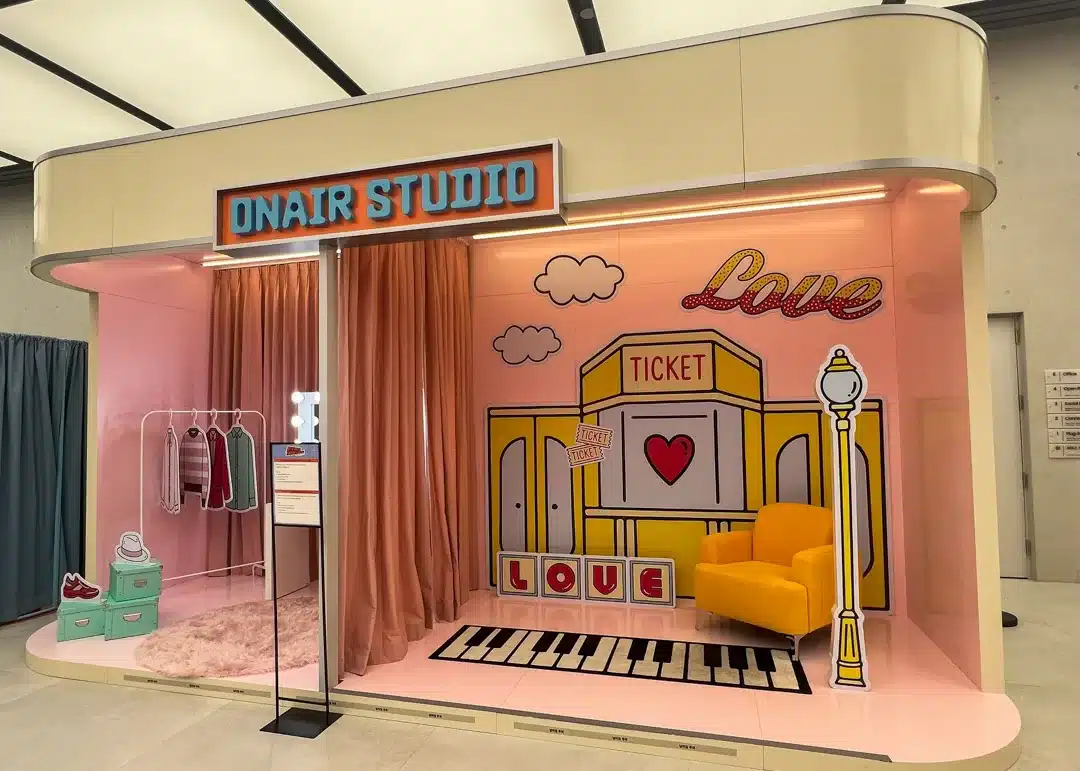
There’s even a trendy cafe with special drinks and a themed photo studio for all your selfie needs…

Samsung Gangnam Store

Once you’ve done a few of the big stores, step out of the loud main street and into the trendy and quieter Garosu-gil area. Meaning “tree-lined street”, here you can peacefully stroll under gingko trees and browse boutique shops, cafes and galleries minus the buzzing traffic of downtown Gangnam.

Seoul Garogusil

Fine dining

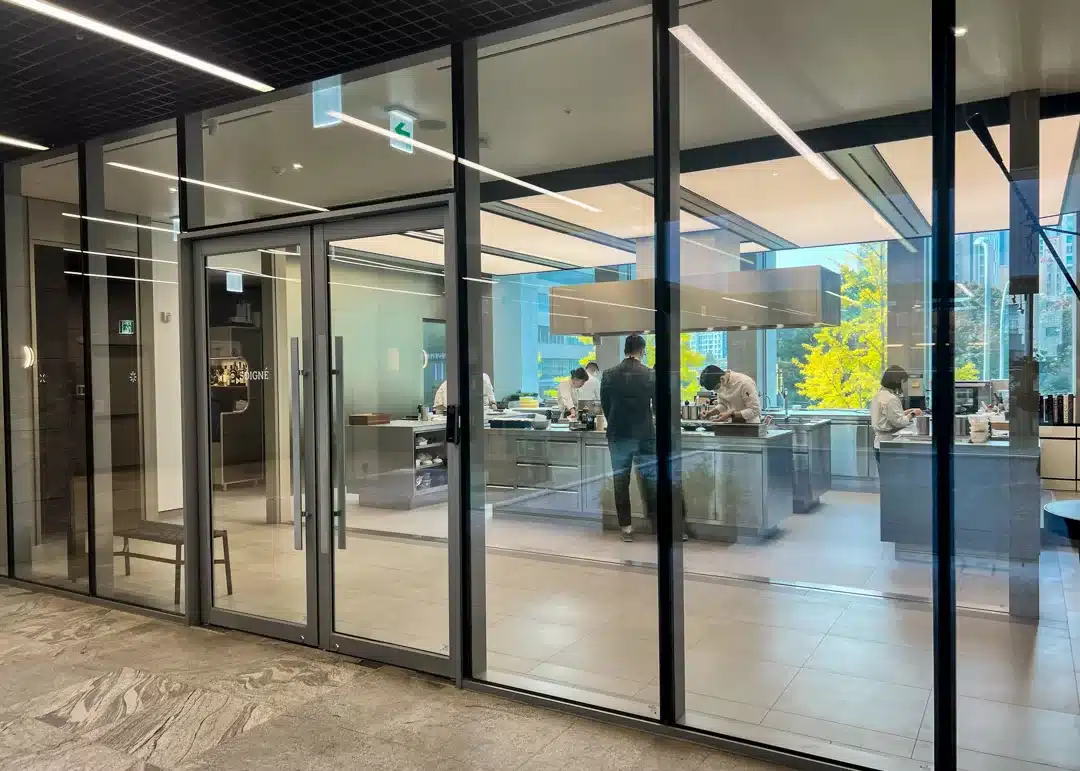
The area is also home to several high-end and celebrated restaurants (there are a few Michelin-starred establishments within a few blocks radius) and I chose to break my day with a leisurely lunch at Soigné (2 Michelin stars).

Soigné Seoul

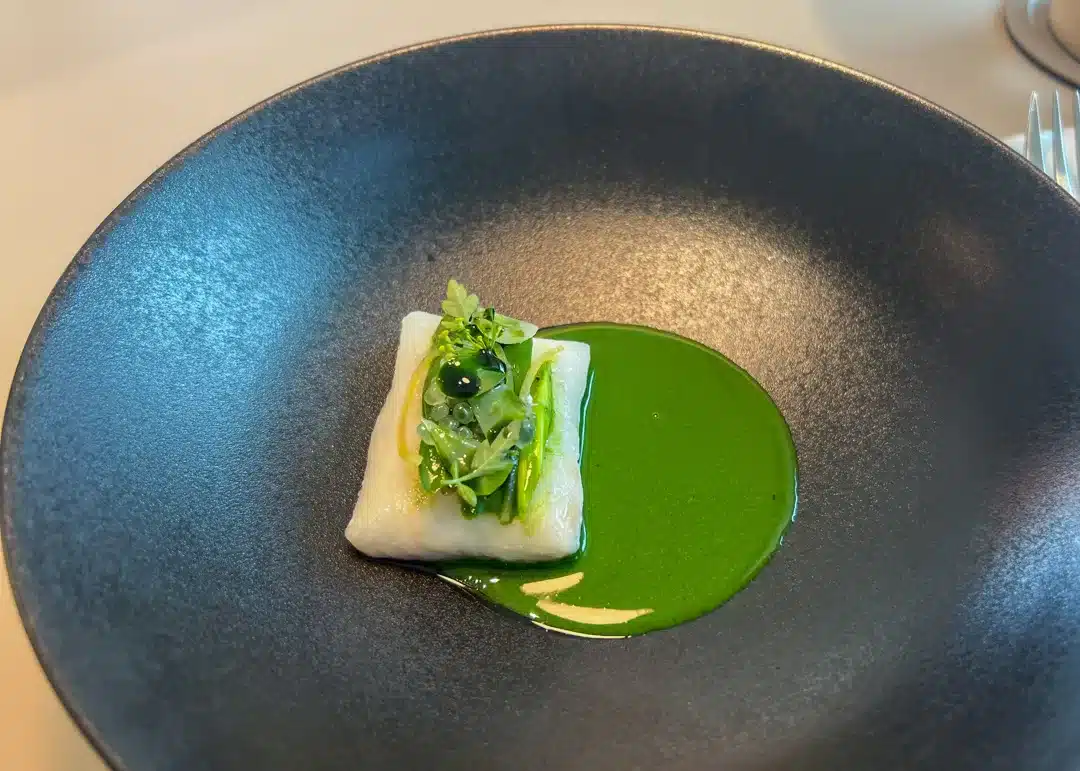
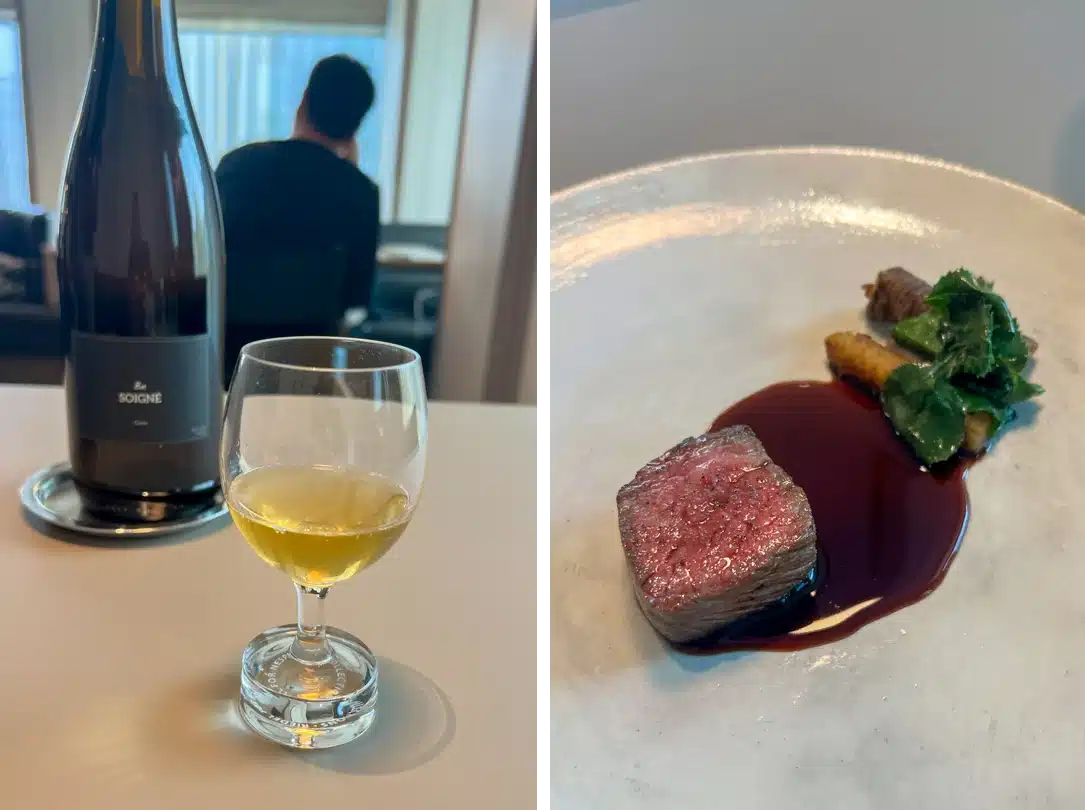
What a delightful lunch it was – a tasting menu of contemporary Korean cuisine with western techniques and thoughtful wine pairing. The service was impeccable and the small dining room very relaxed despite the fine dining pedigree. I also enjoyed the fixed iPad displaying the menu and additional details about the wine pairings, very clever.

Soigné Seoul
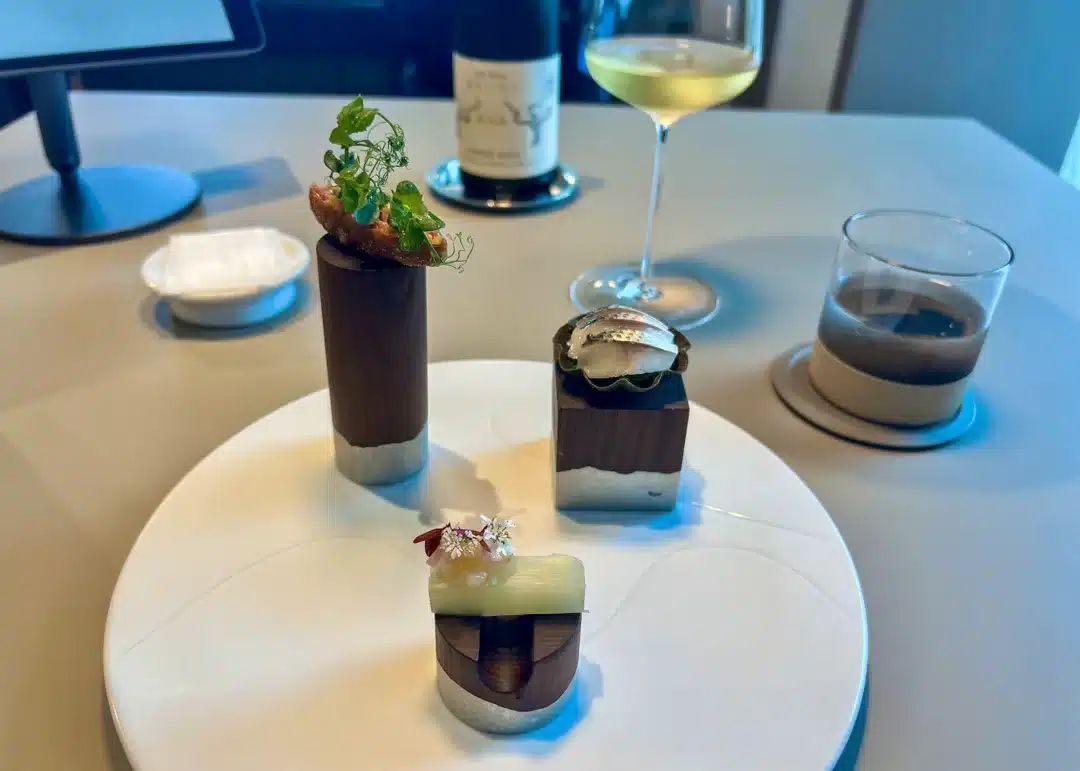
Amuses-bouche of “Asparagus & Sweet shrimp”, “Seasonal seafood tart”, and “Beef & Garlic”
Soigné Seoul
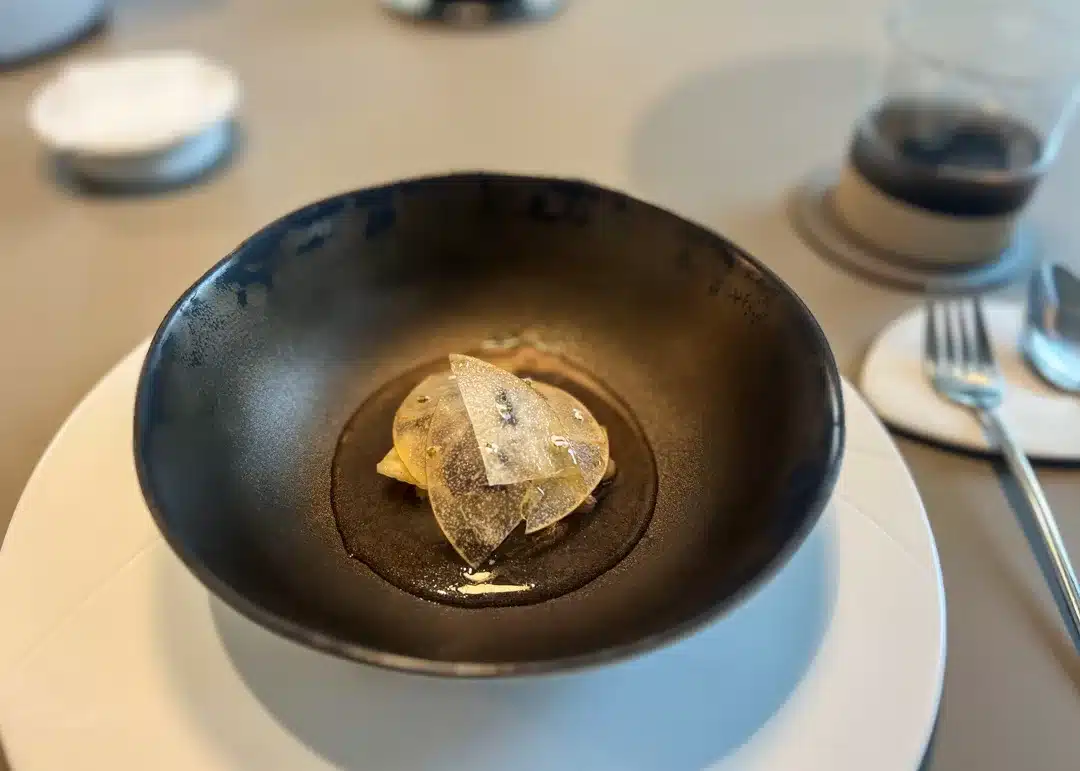
Squid & “Got”
Soigné Seoul
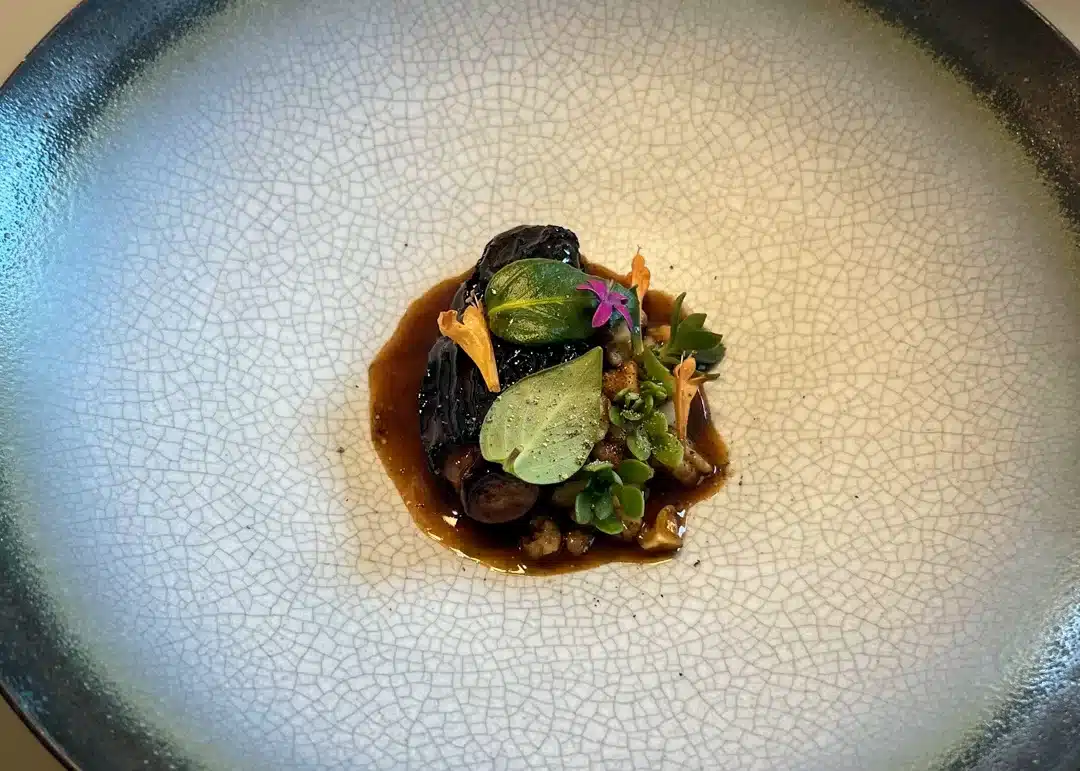
Morel Mushroom
Soigné Seoul
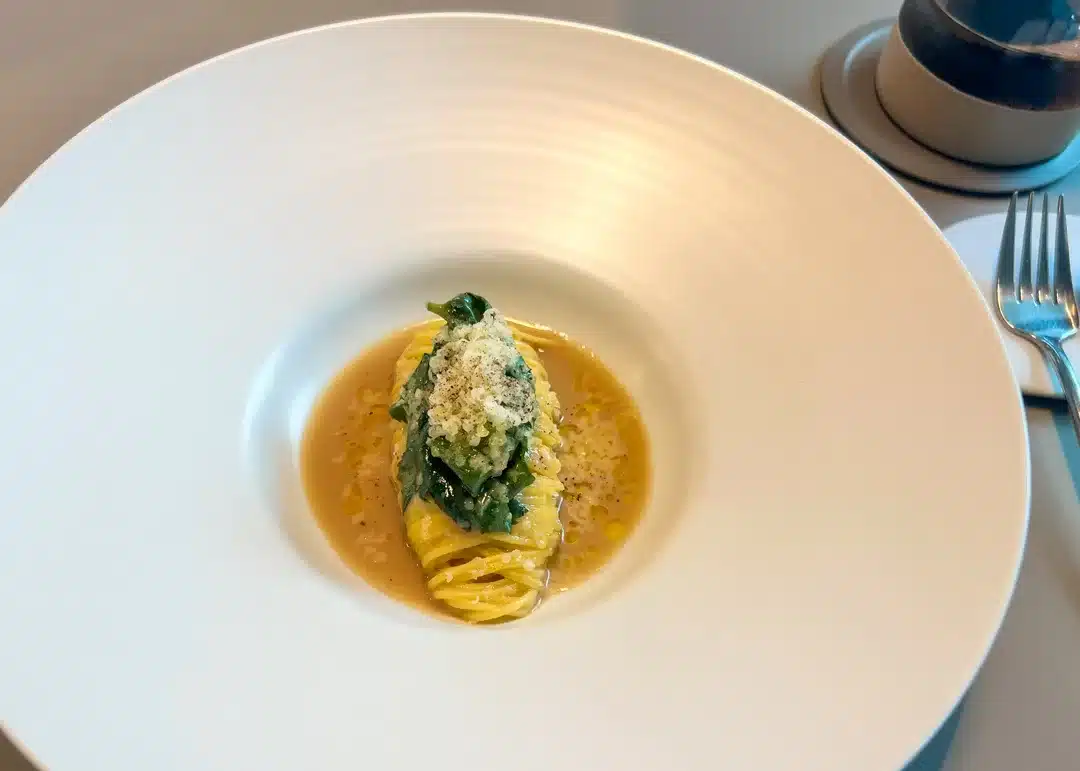
Namul Tajarin
Soigné Seoul
Minari & White fish
Soigné Seoul
Hanwoo Beef
Soigné Seoul
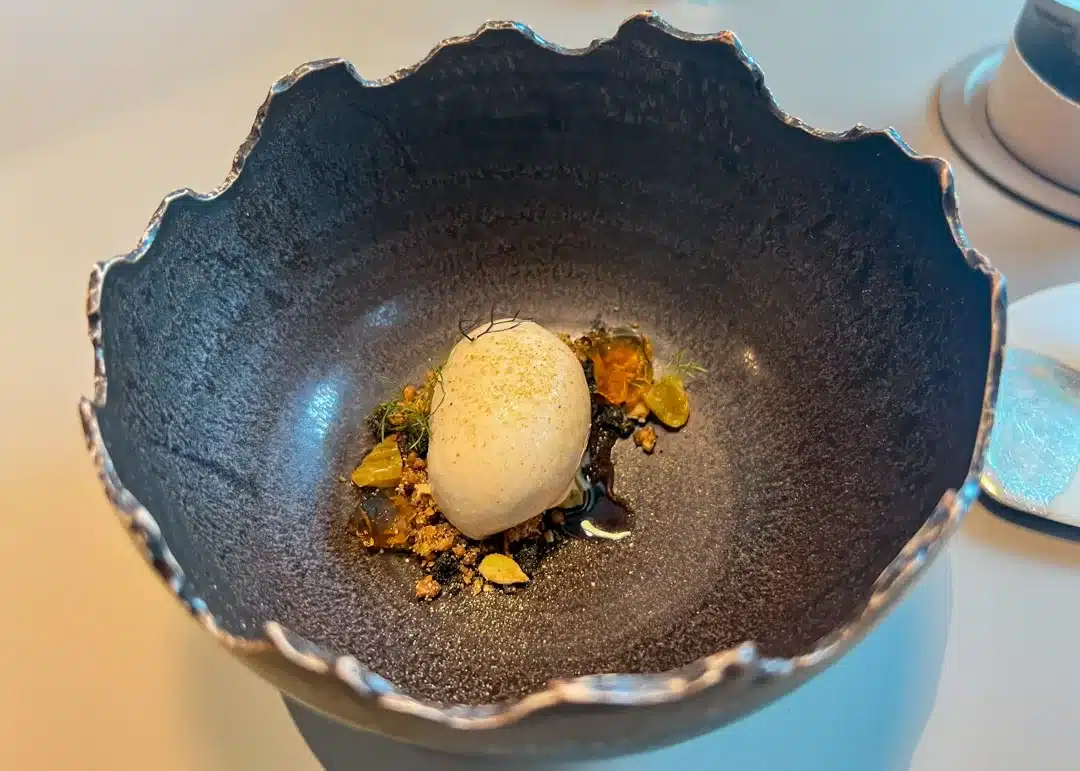
Buckwheat & Onion (dessert). Not shown: petits fours with my end of meal coffee…

More glam in Apgujeong

Walk off the multi-course meal through the “Beverly Hills” of Seoul – Apgujeong, a glitzy pocket of Gangnam.

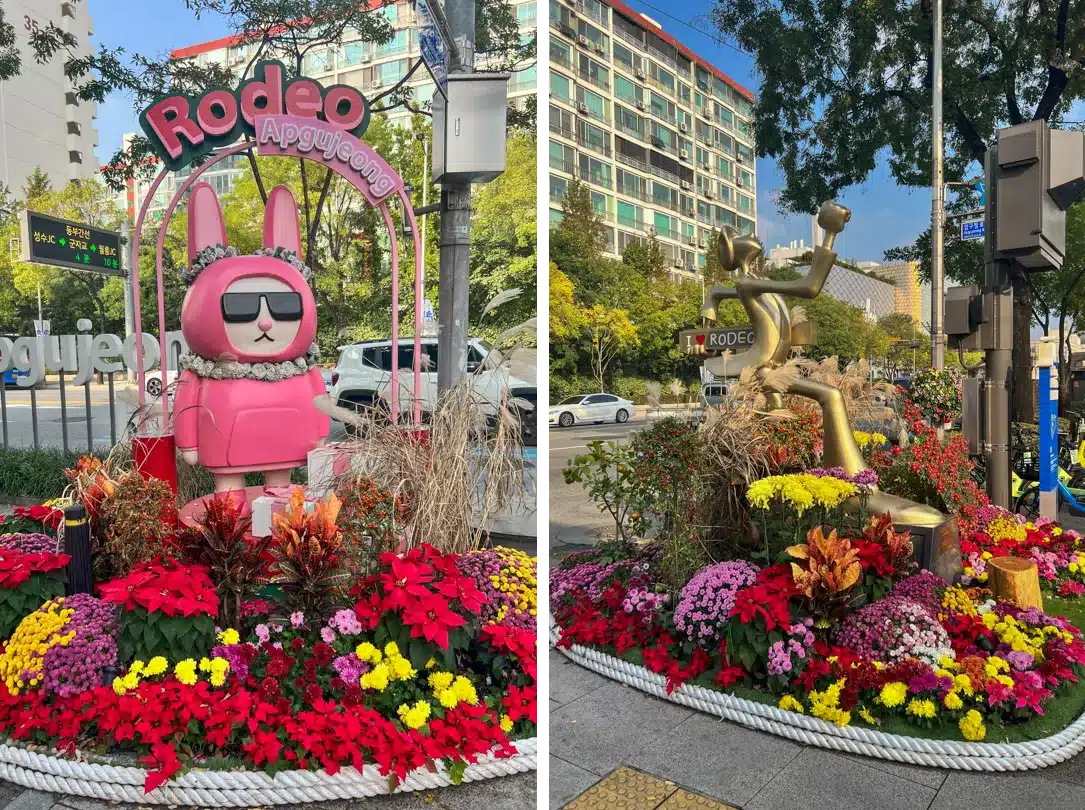
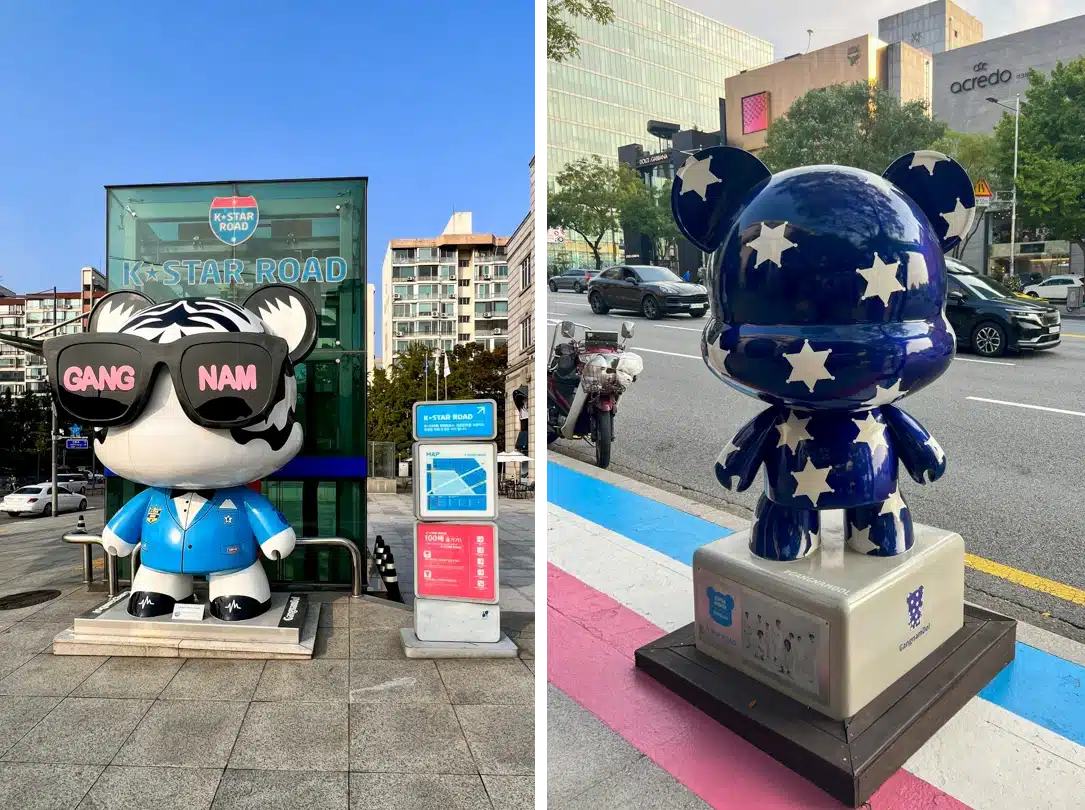
The center of Seoul’s fashion world, Rodeo Street with its luxury stores also crosses with the famous K-Star Road. Try to locate all 17 toy statues representing popular K-pop groups while popping in and out of high-end boutiques.

Gangnam statues Seoul

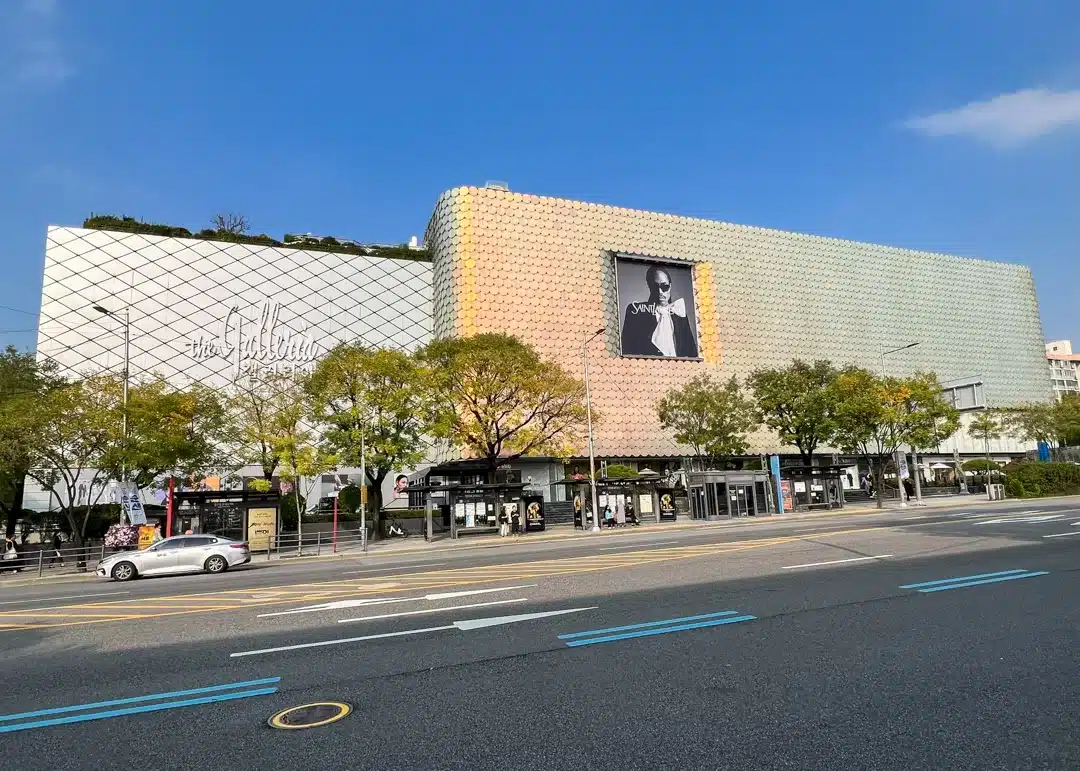
Even if you don’t intend to throw a few thousands out for a piece of clothing or jewelry, step inside Seoul’s most prestigious department store Galleria for some eye candy and just to be dazzled.

Galleria Department Store - Seoul

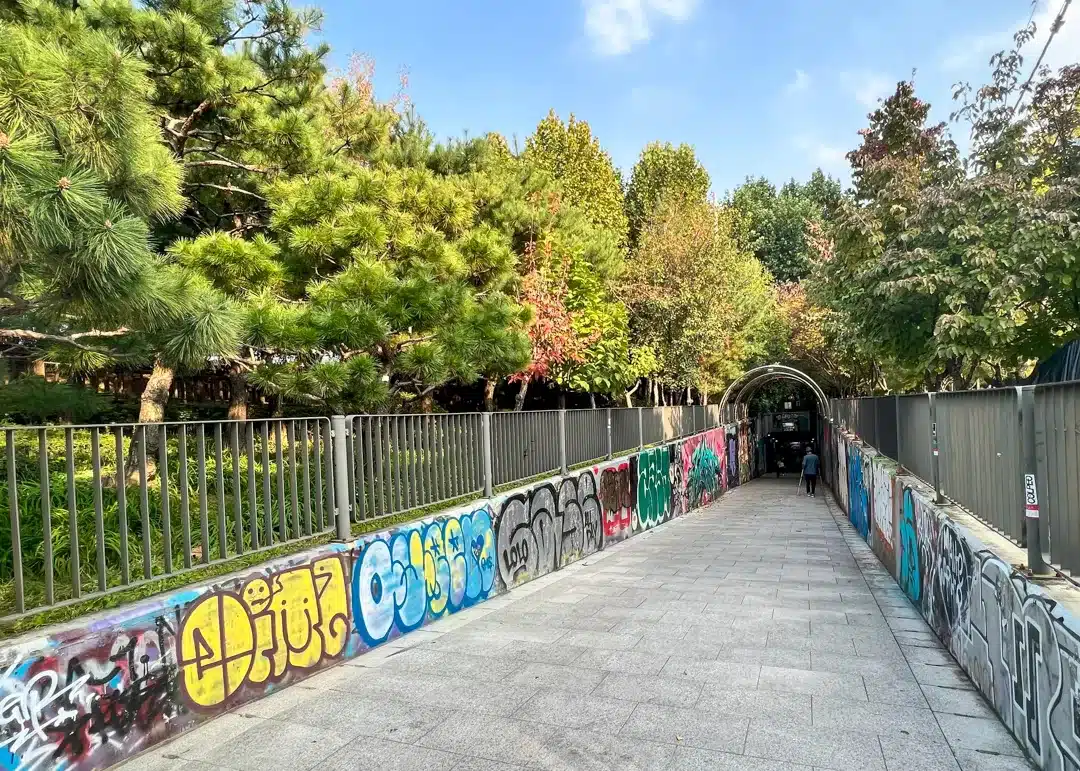
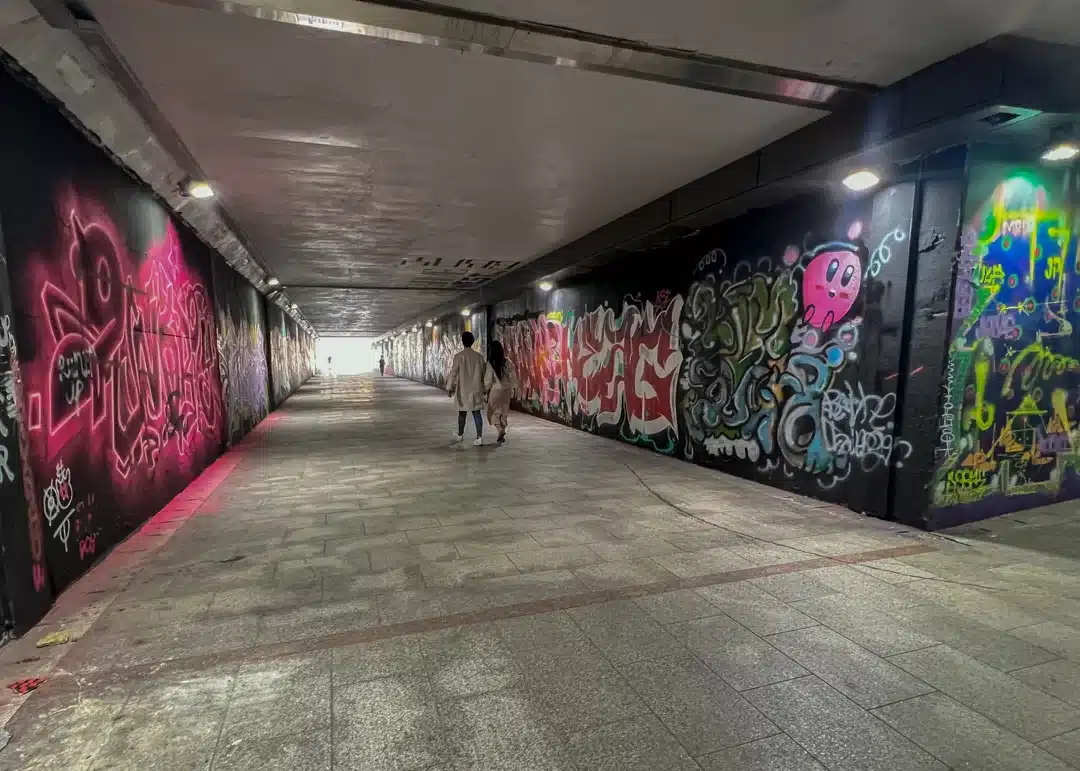
When you’ve had your fill of retail experiences, walk just a few blocks north of the Galleria towards the river for an artful surprise found in… a nondescript pedestrian tunnel!

Apgujeong Graffiti Tunnel

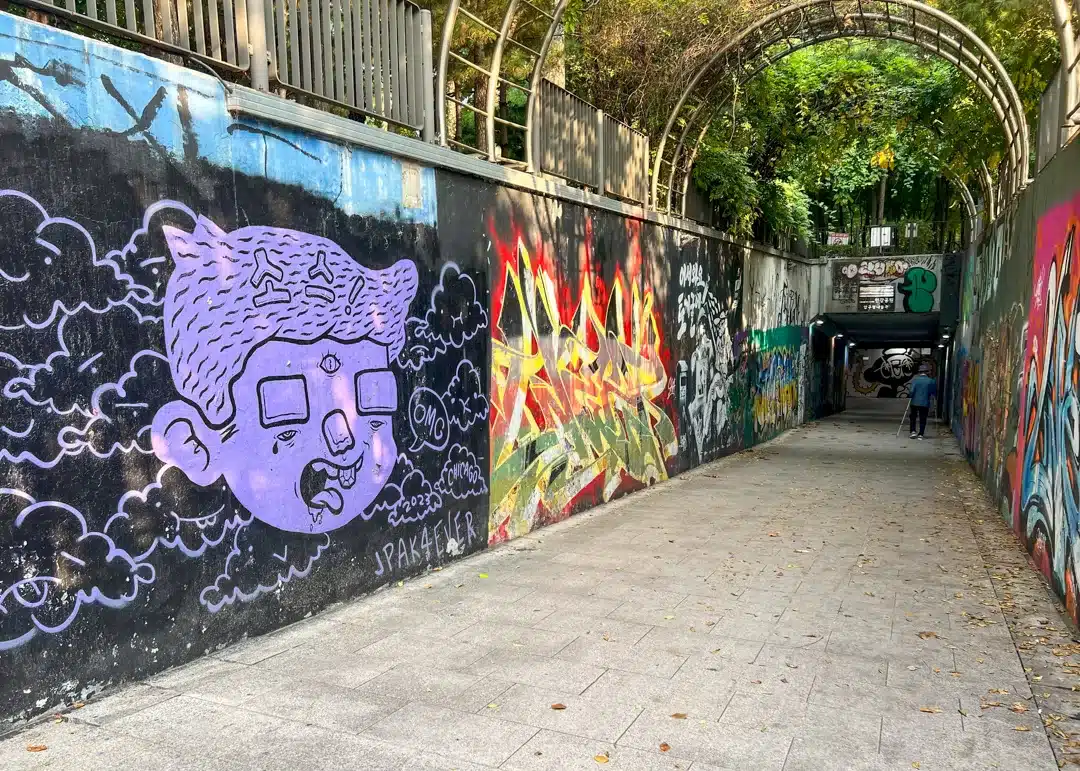
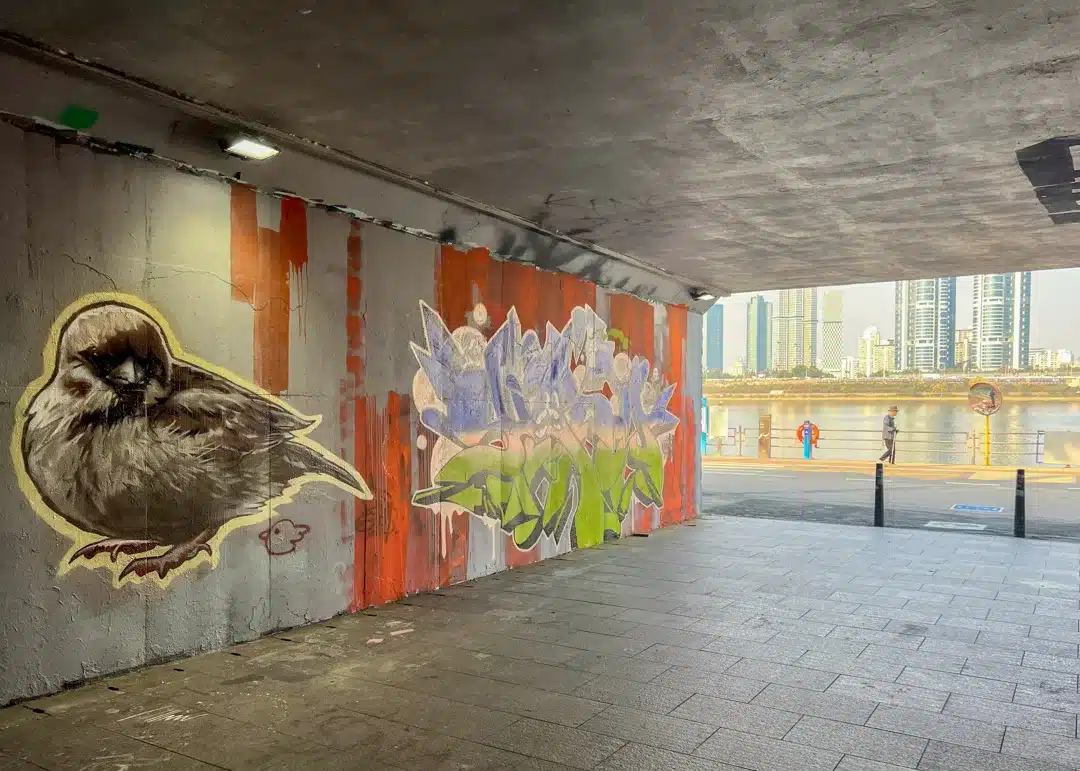
The Apgujeong Graffiti Tunnel is one of the few places in Korea where young street artists are authorized by the local government to draw graffiti.

Apgujeong Graffiti Tunnel

You can spot a myriad of vibrant art forms along the tunnel which allows pedestrians to safely pass beneath the busy highway to reach the Han River.

Apgujeong Graffiti Tunnel

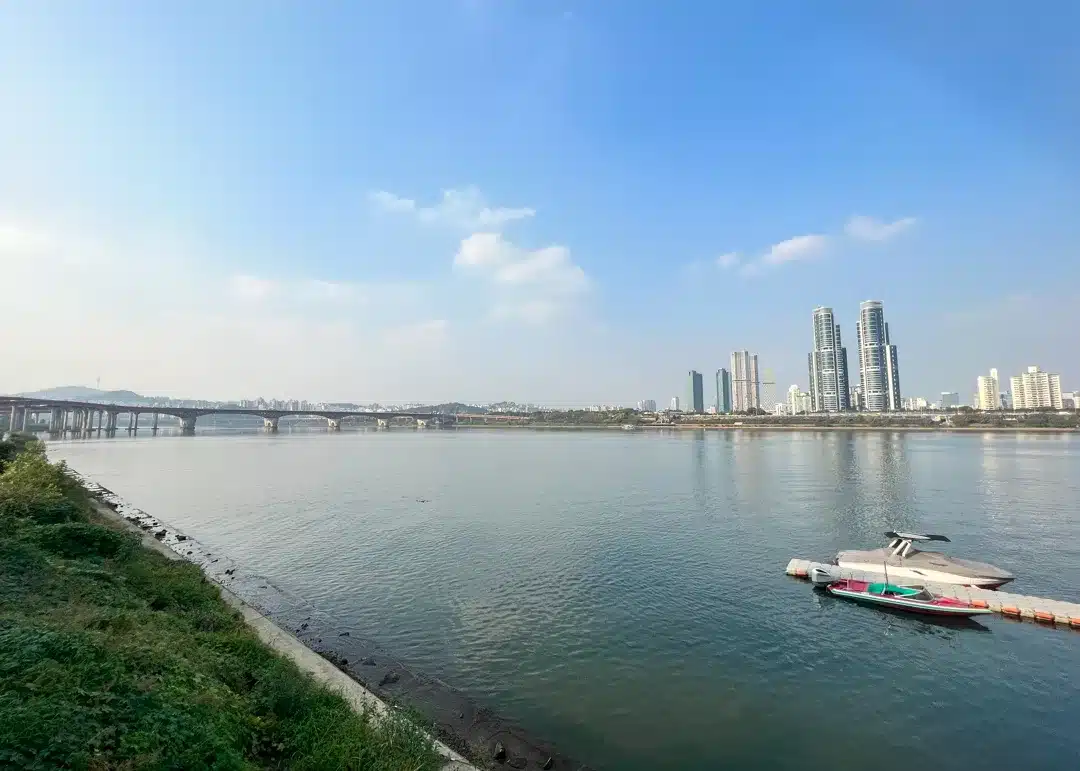
At the end of it, the Han River and a clear view of the Seoul you’ve been exploring for the past few days. You can follow the trail along the river for a bit and keep on admiring the views from different riverside parks, or go back to Gangnam for a night of feasting and drinking!

Asia South Korea Travels

A day in Seoul’s vibrant Itaewon and leafy Namsan park

February 27, 2025

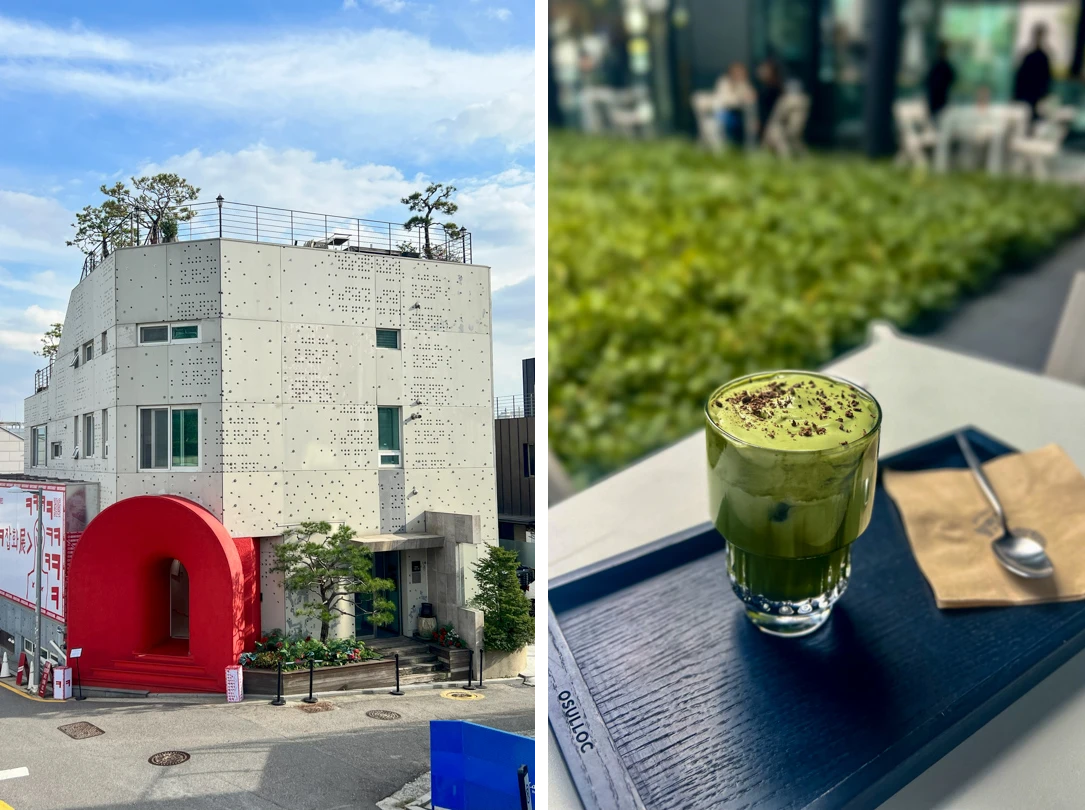
This is probably my favorite day itinerary in Seoul as it packs in modern art, city life, traditional culture, and a hike in nature all in a wonderful (albeit long!) day. Start in the leafy neighborhood of Itaewon with a superlative green tea at Osulloc Tea House. This branch of the Jeju-based tea grower and producer is as artsy and rejuvenating as the area surrounding it.

Plan at least an hour just to wander around the commercial Itaewon-ro artery and venturing up any tempting side streets that hug the side of Namsan mountain in the back. You’ll stumble upon cool clothing and design shops (don’t miss the Yongsan Art & Craft Center), unique architecture, international eateries and the highest concentration of coffee shops I’ve seen in Seoul.

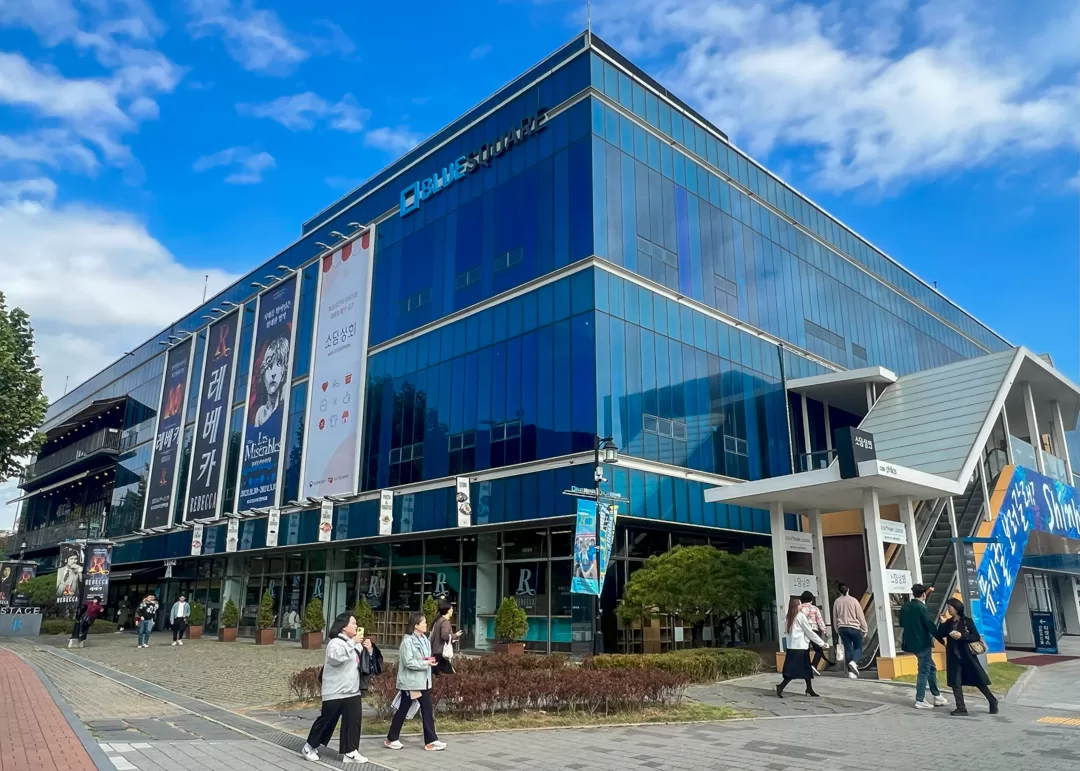
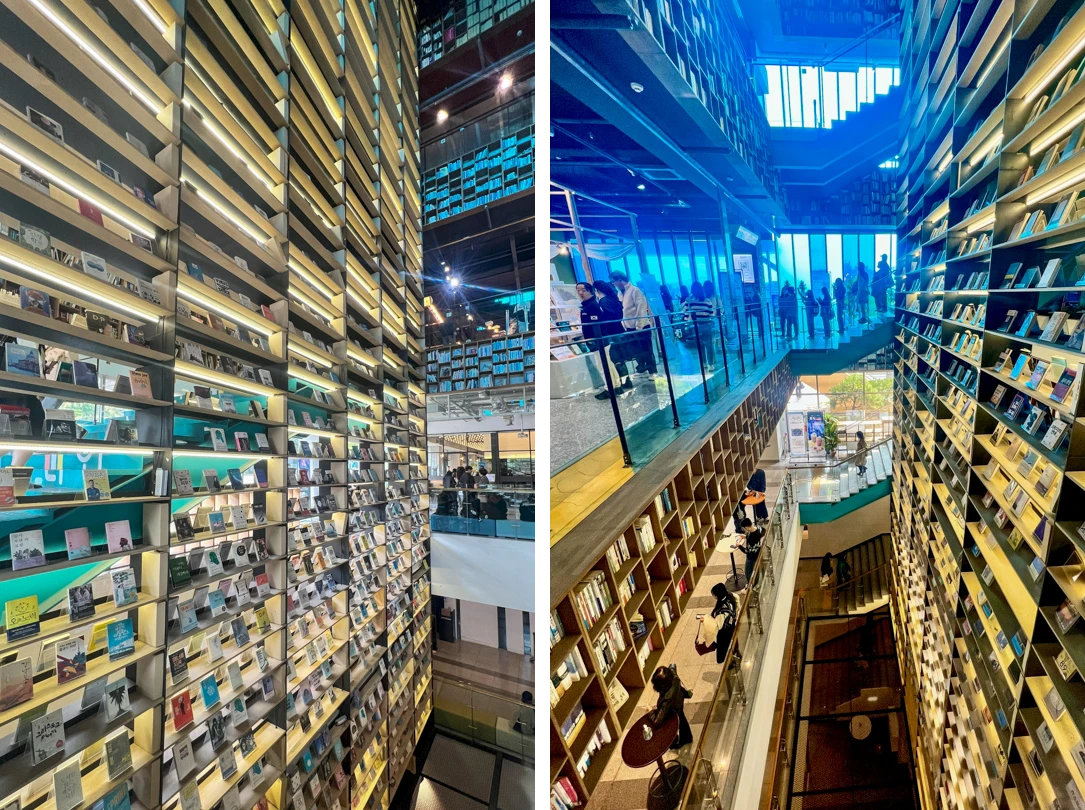
Stop by the Blue Square, if not to catch a performance at least to take a look at Book Park, its cafe/gallery/bookstore…

…two story filled with books stacked on never-ending shelves makes for a pretty special sight especially for any bibliophile.

Mixing traditional and contemporary art at the Leeum Museum

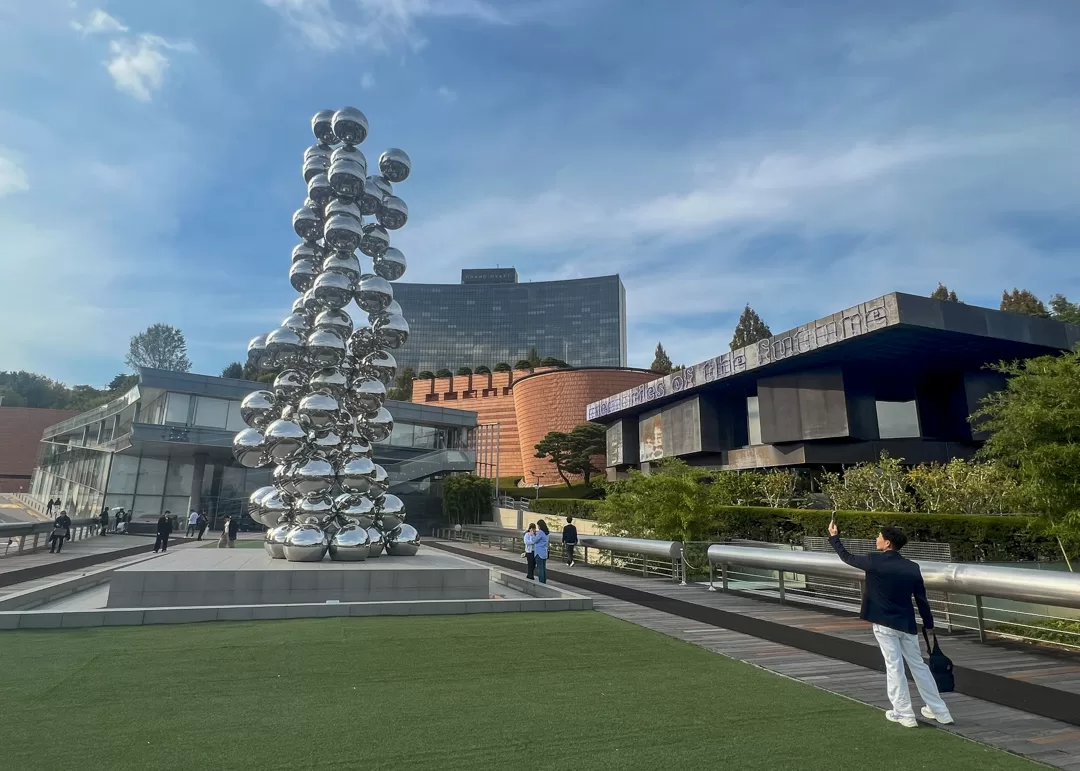
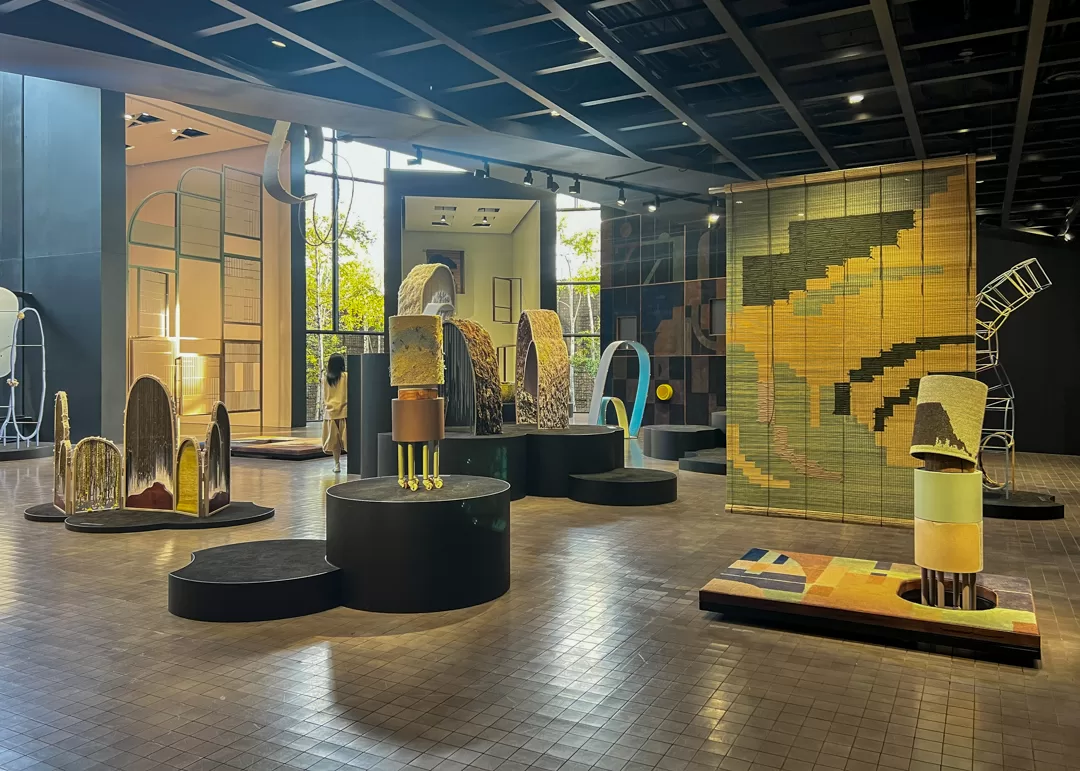
Another visual marvel awaits a few blocks away at the Leeum Museum of Art, one of Korea’s leading private museums. Spend time on the art terrace admiring the monumental steel sculpture by Anish Kapoor and the three main buildings designed by star architects to distinguish between the traditional and contemporary collections.
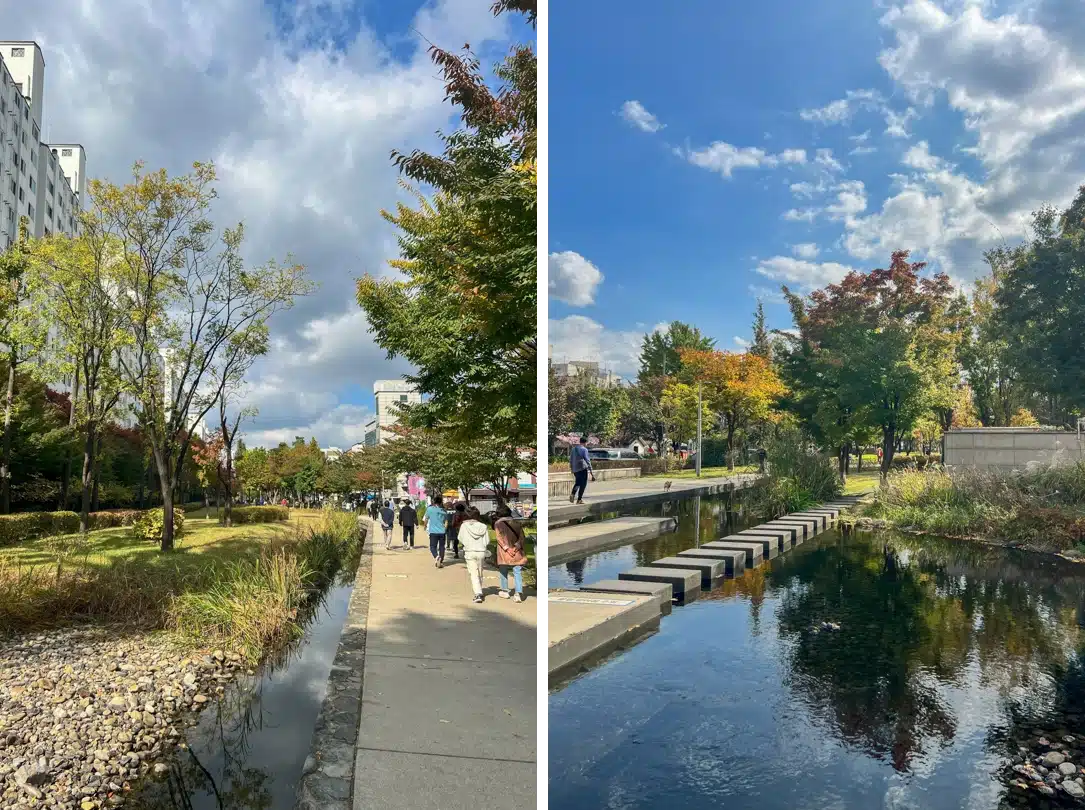
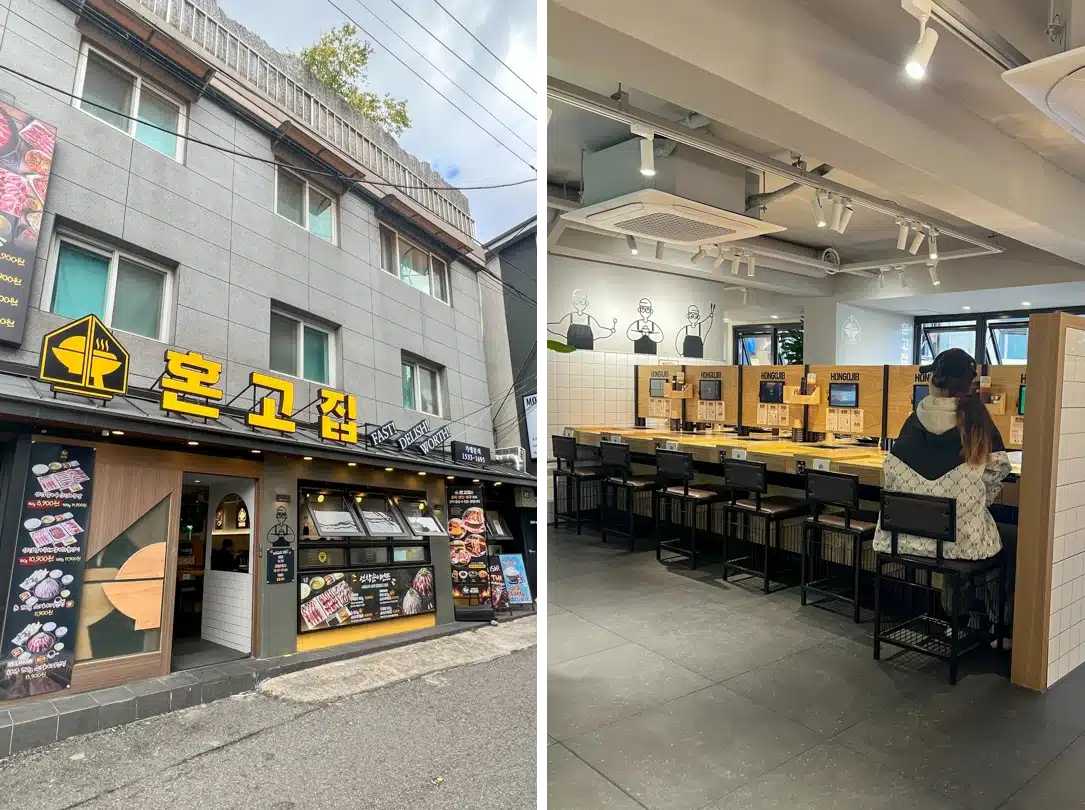
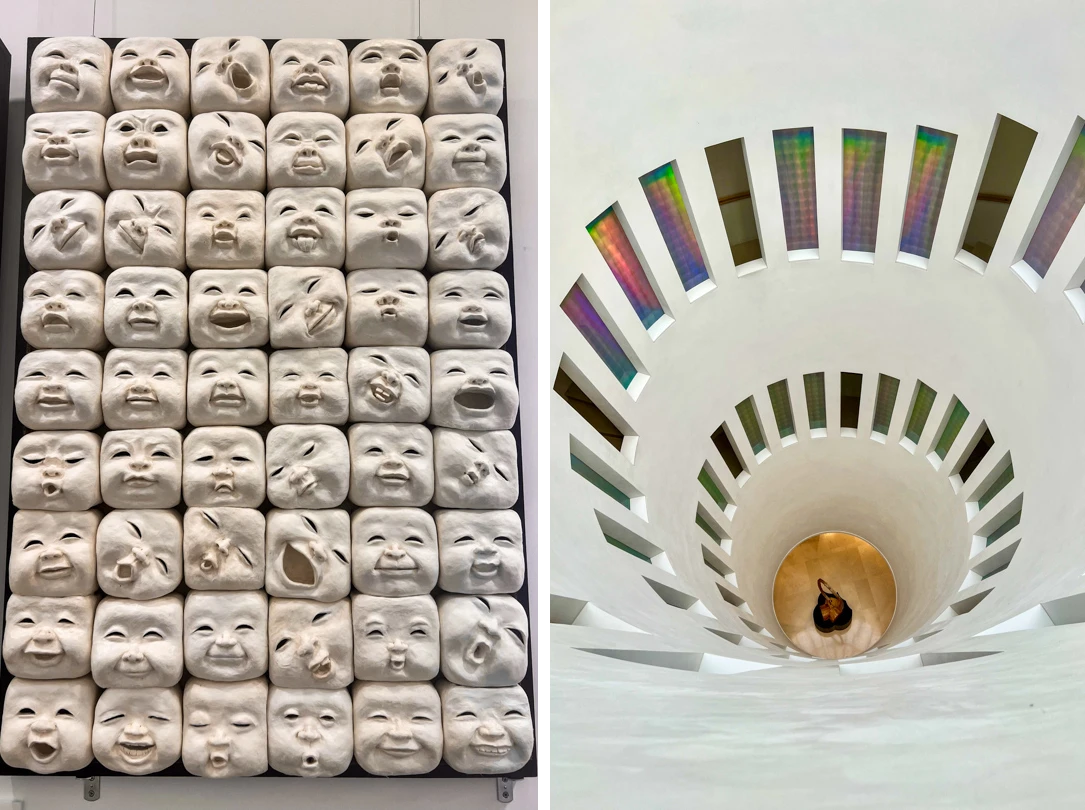
Beautifully laid out, it’s a joy to walk across all three distinct sections, admiring as much the art on display as the buildings themselves.

The big draw is M2, the contemporary wing made of rusted stainless-steel by Jean Nouvel. It showcases early and mid-century paintings, sculptures, and contemporary installations by esteemed Korean and international artists.

Immersive village tour

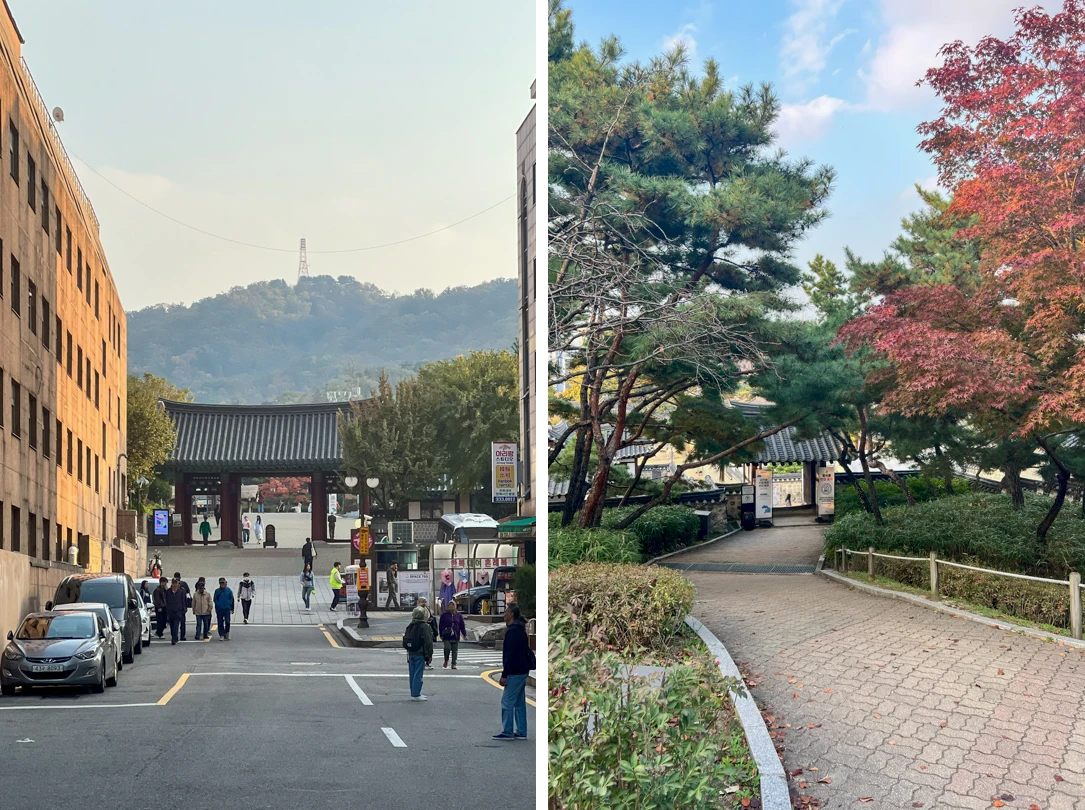
A quick subway ride will transport you to the other side of Namsan Mountain (you’ll get your exercise soon enough) and at the door of Namsangol Hanok Village.

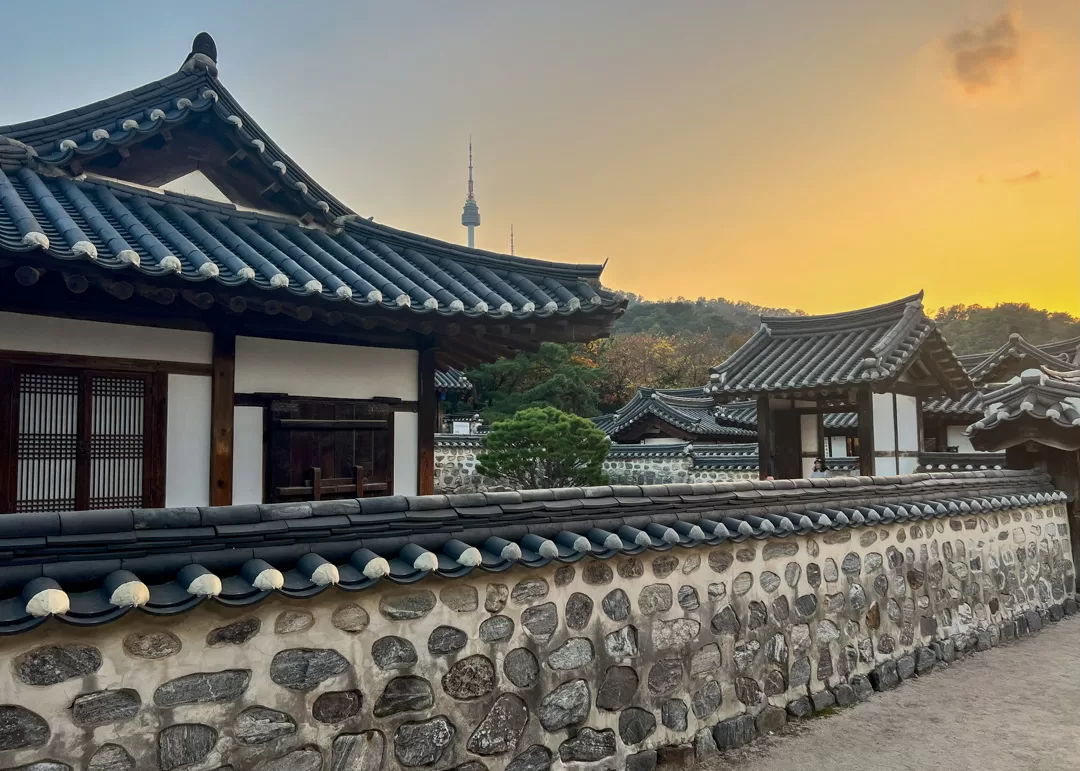
Namsangol Hanok Village

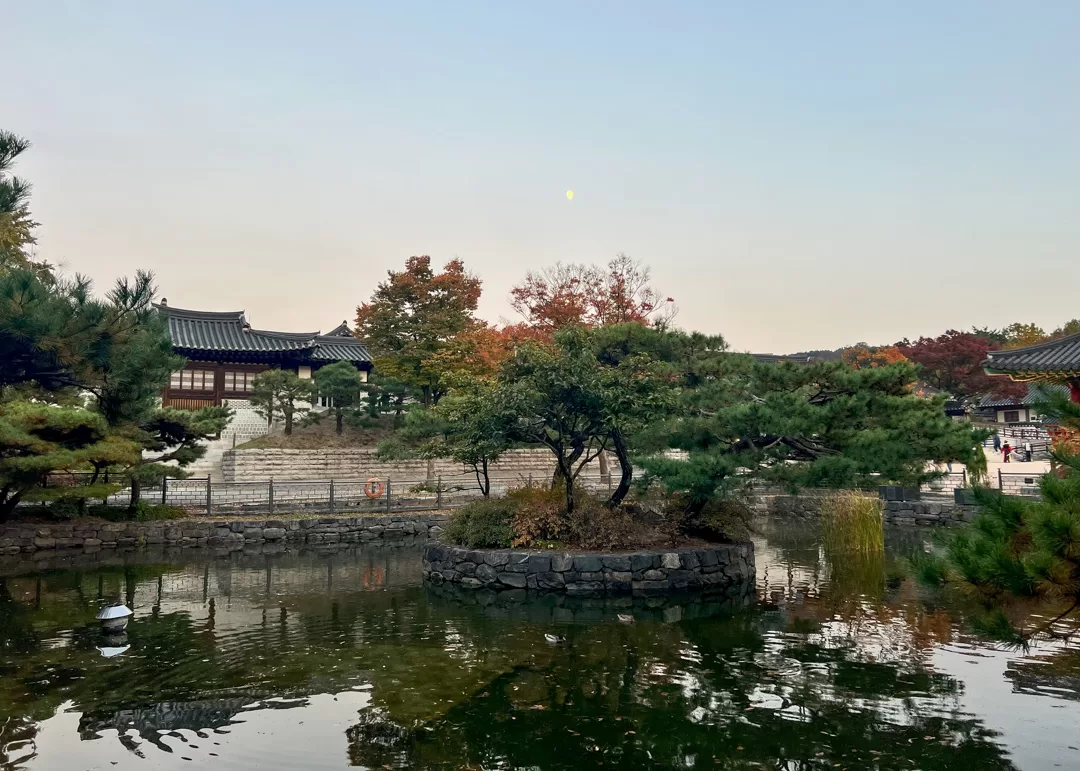
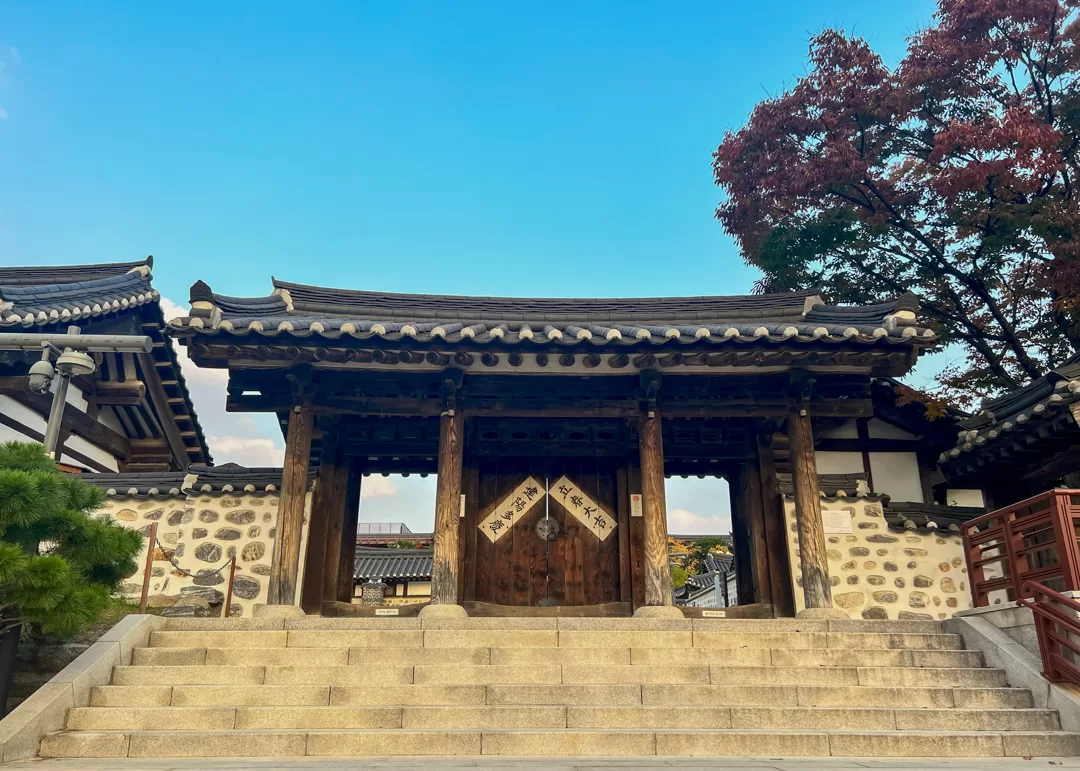
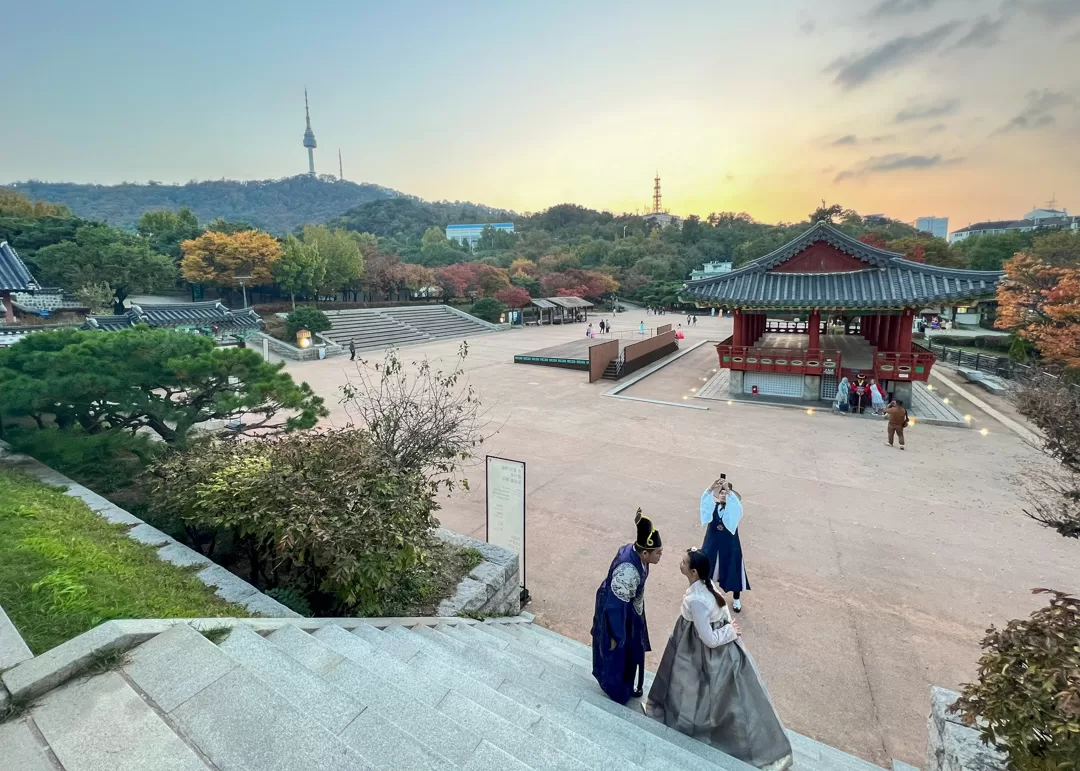
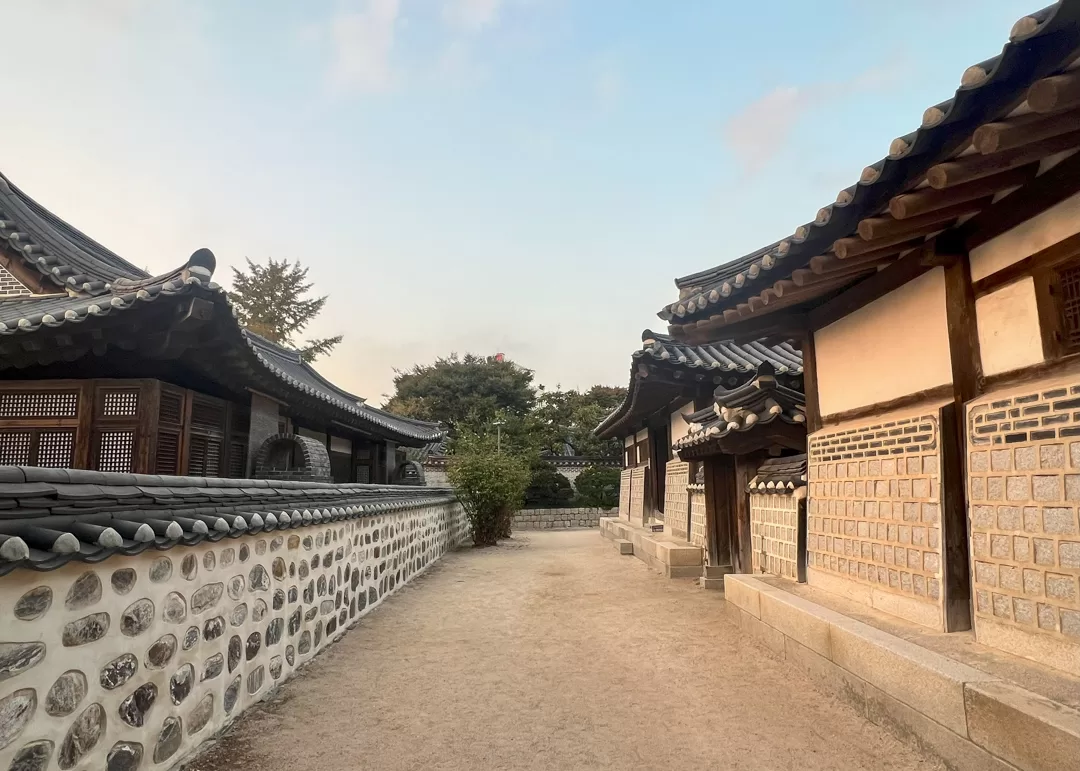
Located in a park at the foot of the mountain, this recreated village of historical Korean buildings provided the perfect backdrop for a peaceful afternoon walk.

Namsangol Hanok Village

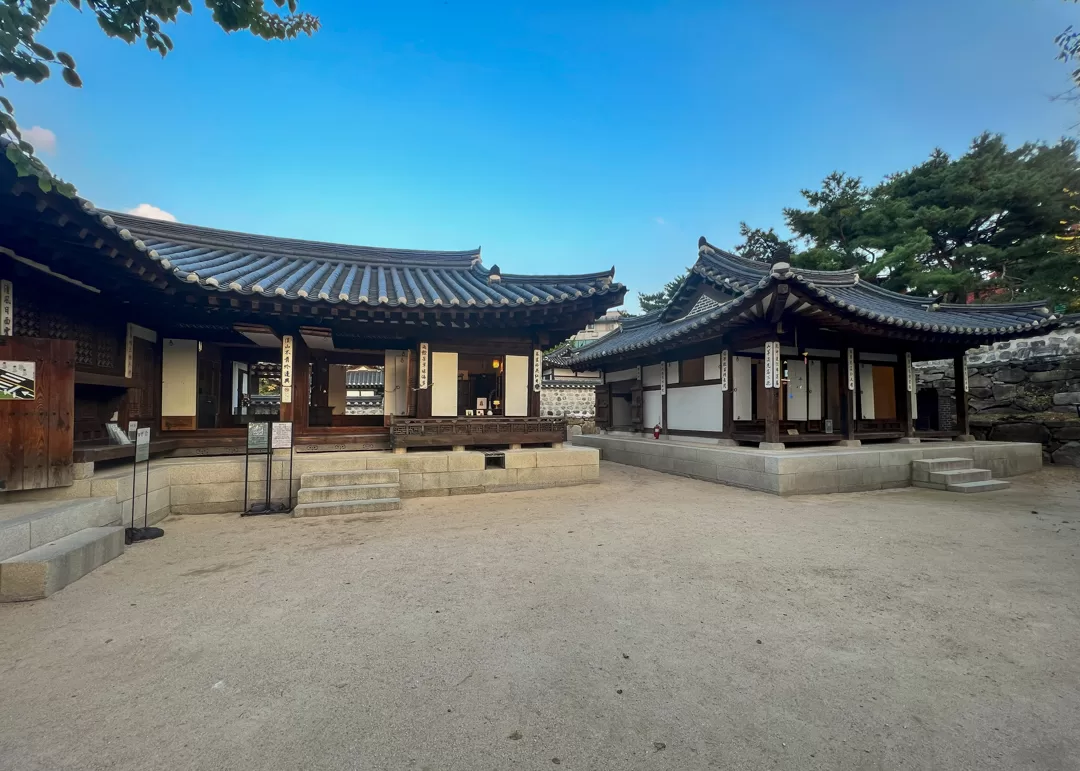
Follow the lush paths curving around ponds and clusters of buildings and sneak into courtyards for the real immersion of the village. Contrary to the private nature of Bukchon Village which is still occupied, here you can freely roam around five different traditional houses which have been relocated here from different parts of Seoul.
Namsangol Hanok Village

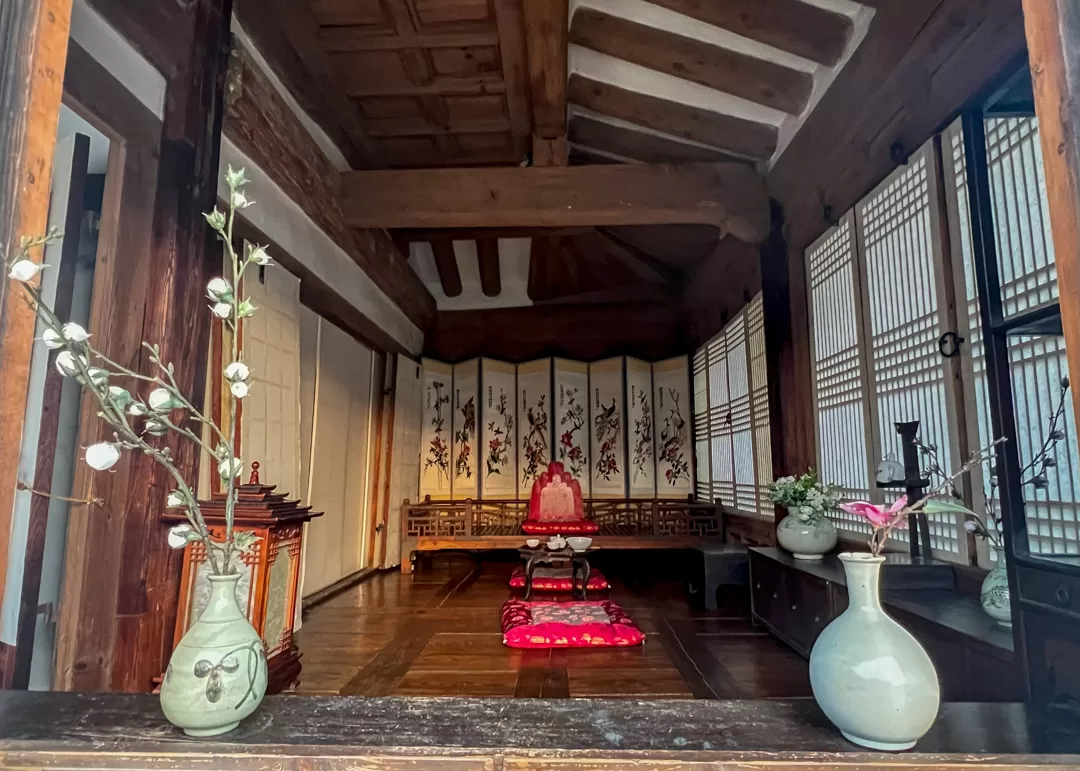
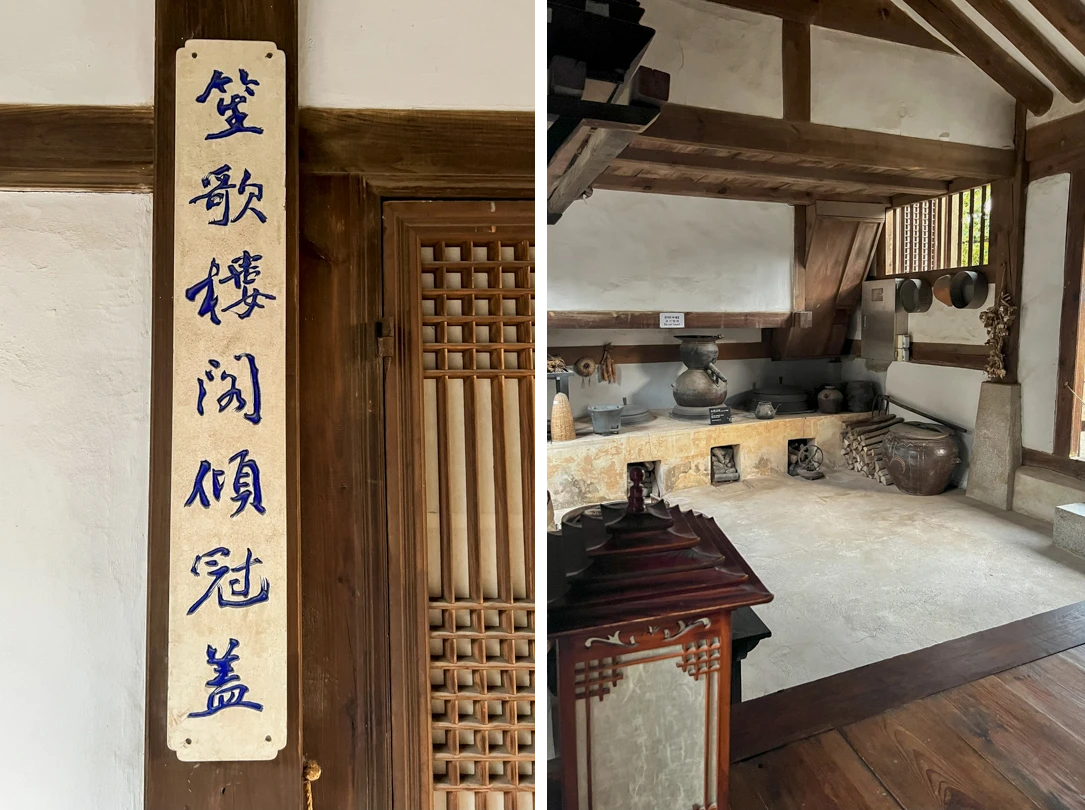
All the little details have been included to give you a sense of how the upper class lived in the Joseon Dynasty, from home decor to practical tools and original furniture.

Namsangol Hanok Village

The village is refreshingly crowd-free and you’ll see locals just taking their daily walk since it’s free entry – what a lovely place to decompress!

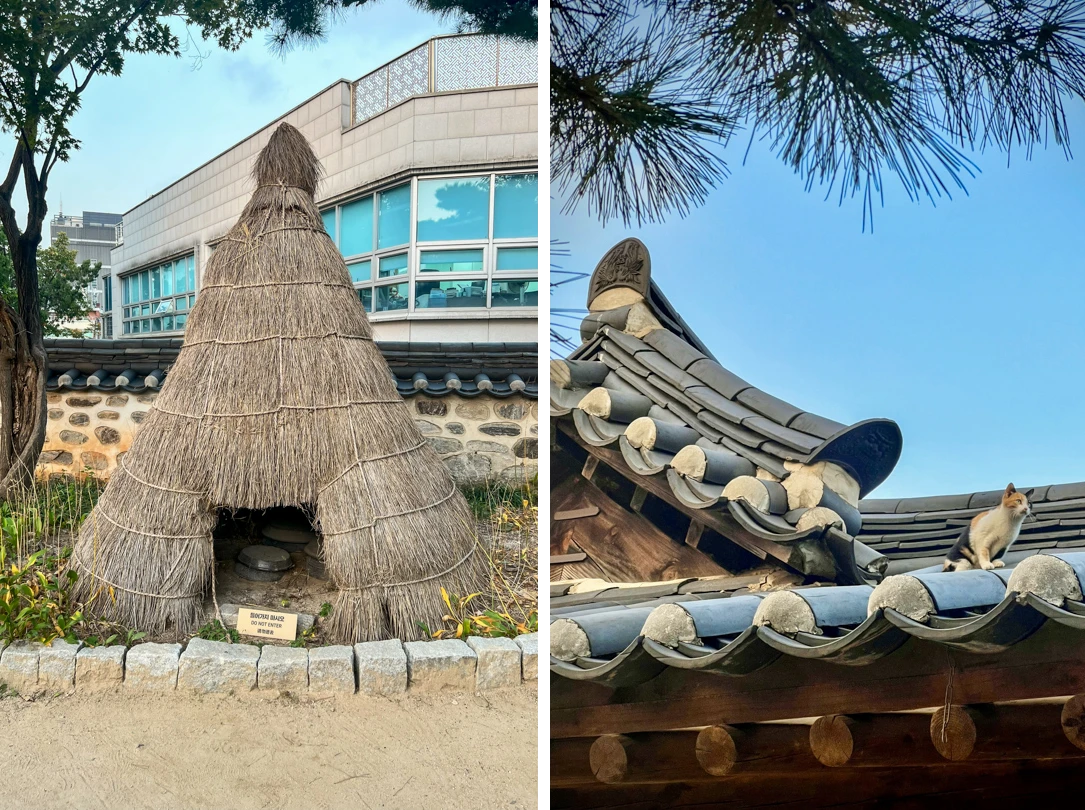
Native plants and trees add to the authenticity of the place and water channels have also been carved out following the way people used to access water back in the days.

Backyards (or the likes of) held small gardens and most importantly large numbers of pots holding precious kimchi…

Namsangol Hanok Village

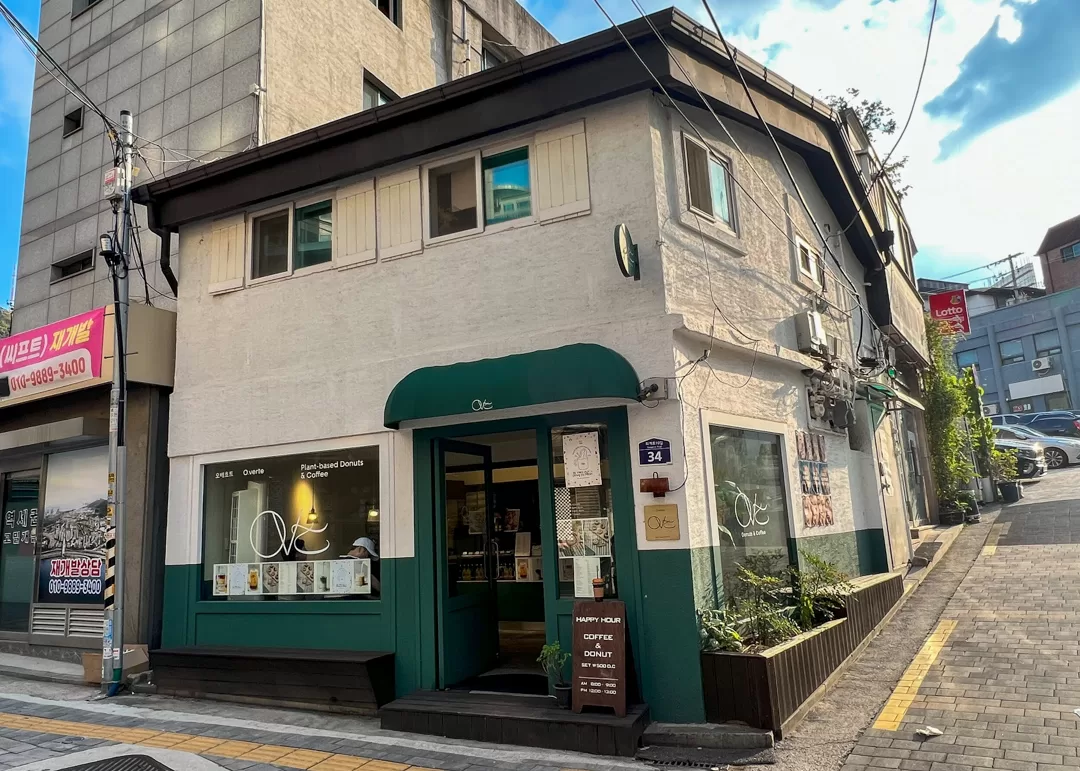
Time to get your glucose levels up as this was just the warm up before the day’s real exercise. For a late afternoon snack within a short distance you could do worst than pop into the vegan donut shop Overte.

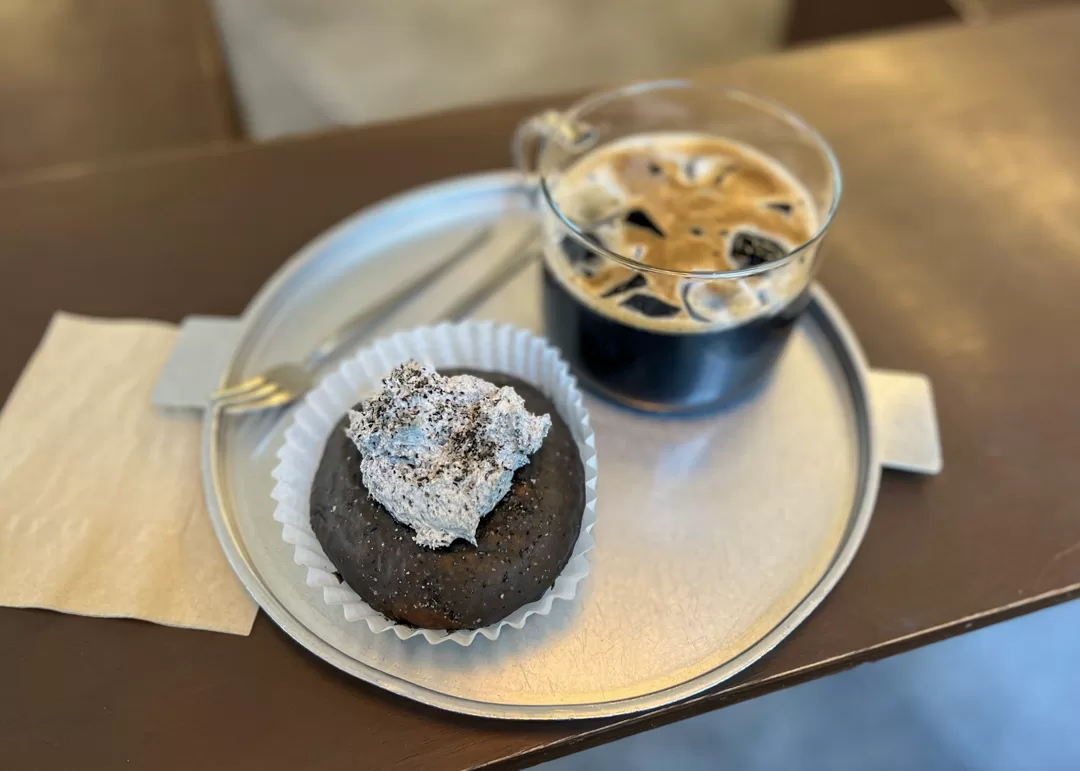
A strong coffee paired with a black sesame cream donut was just what I needed.

A hike to Seoul’s best views

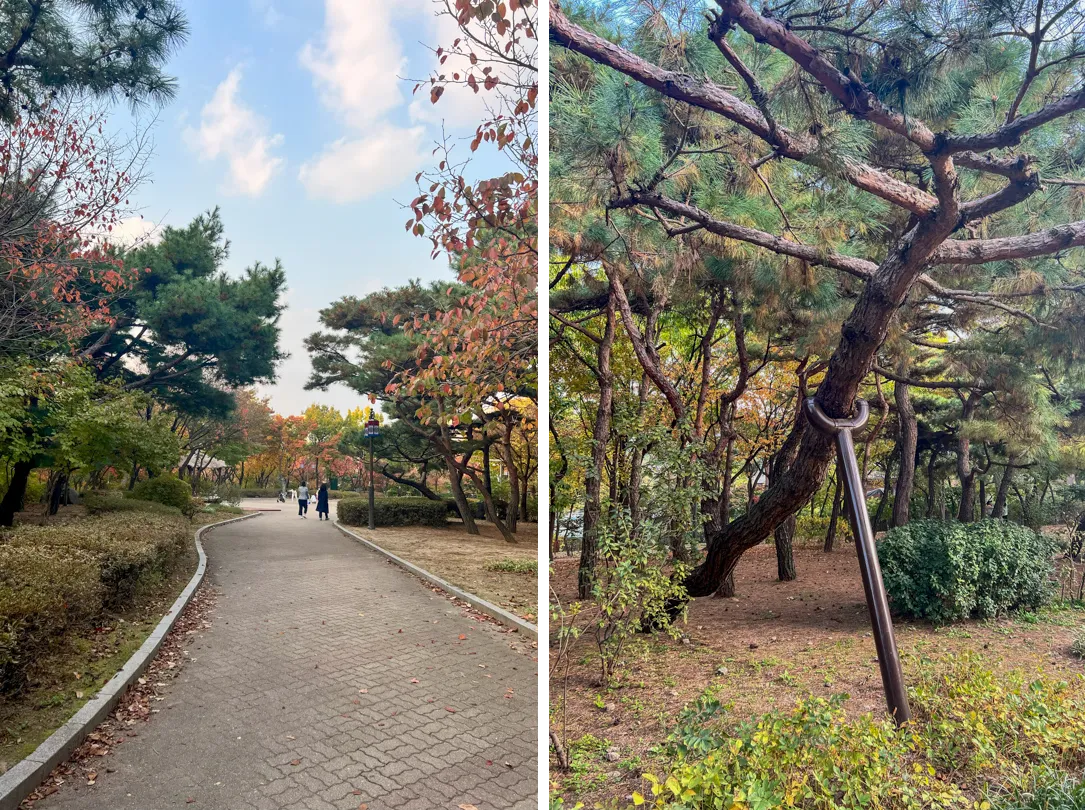
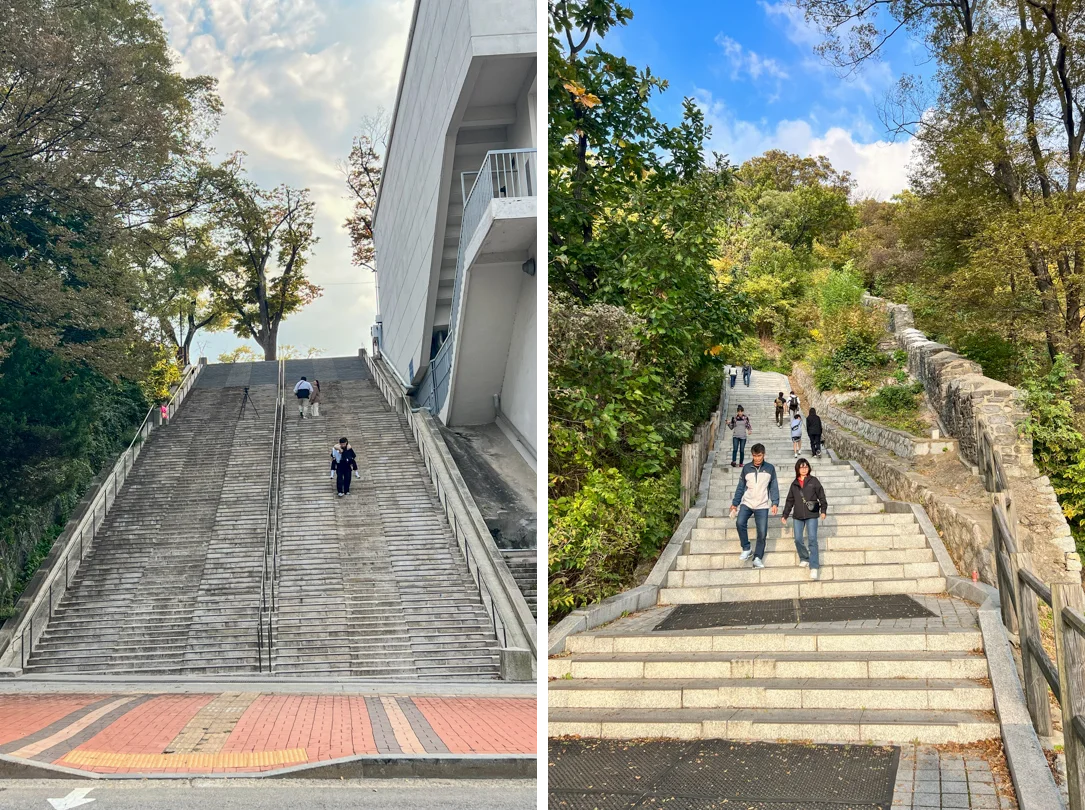
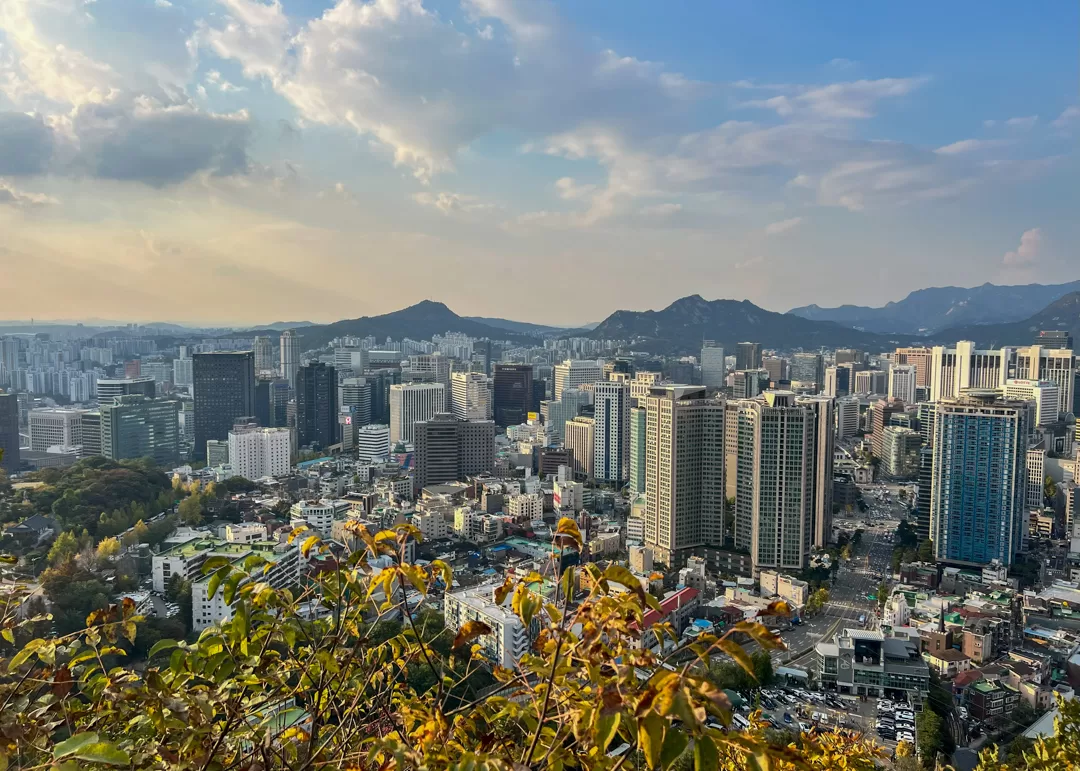
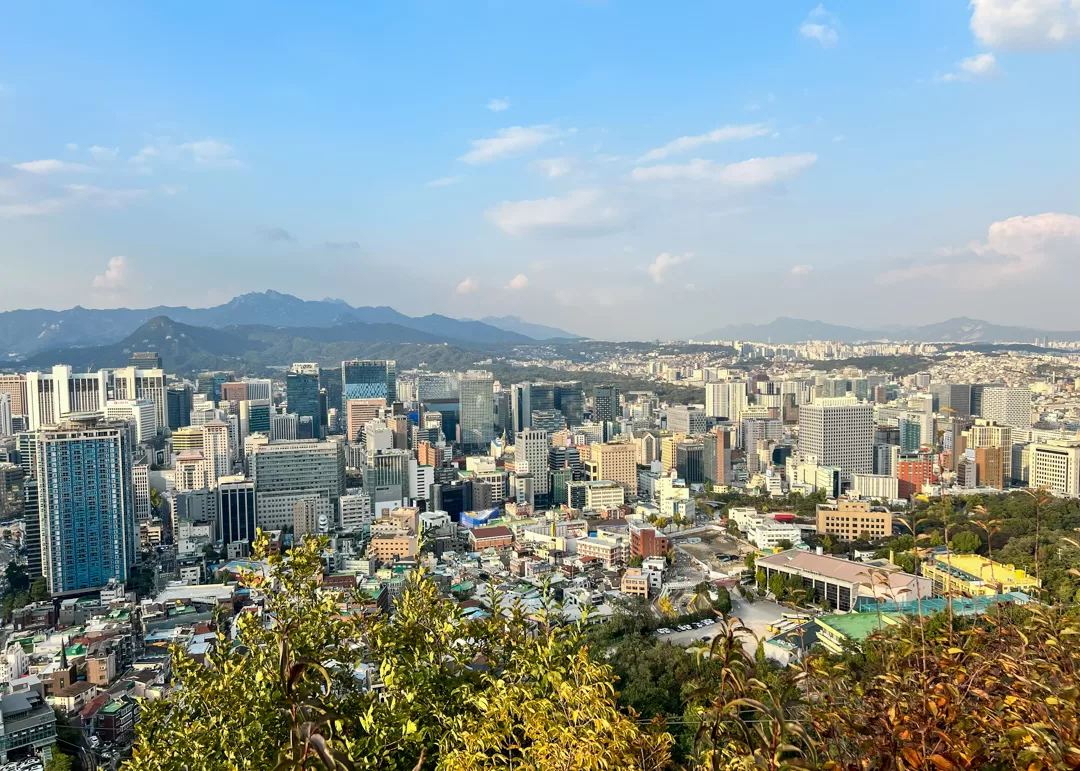
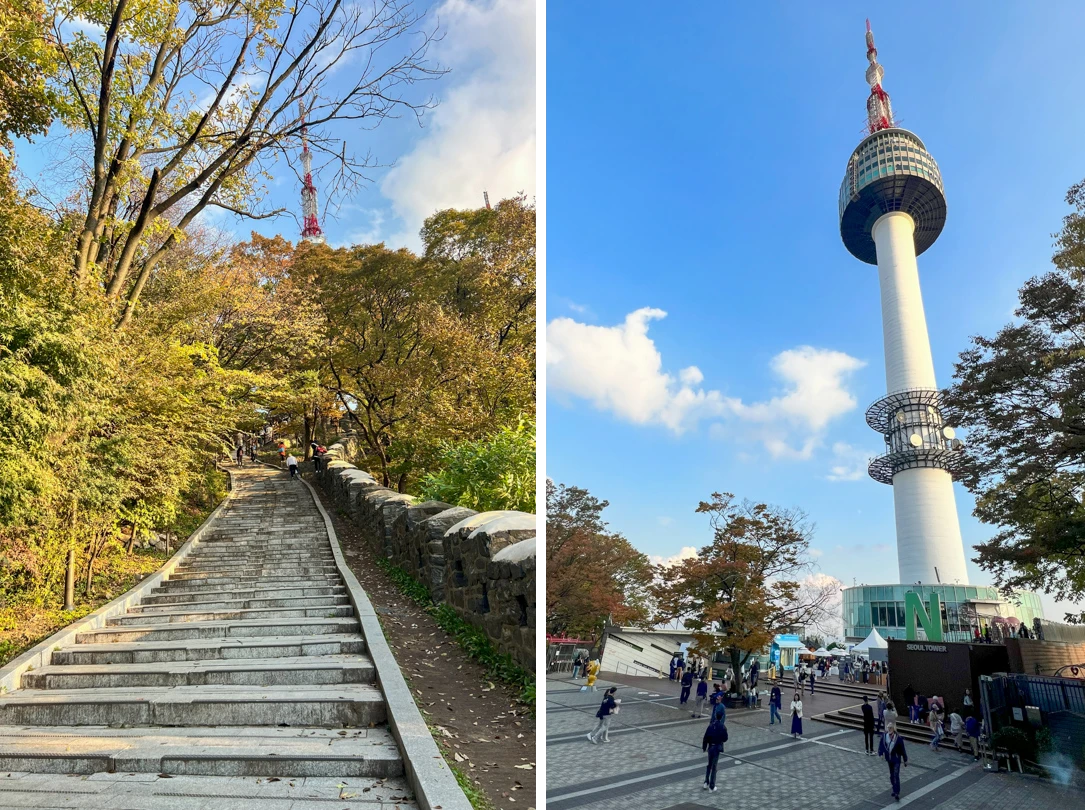
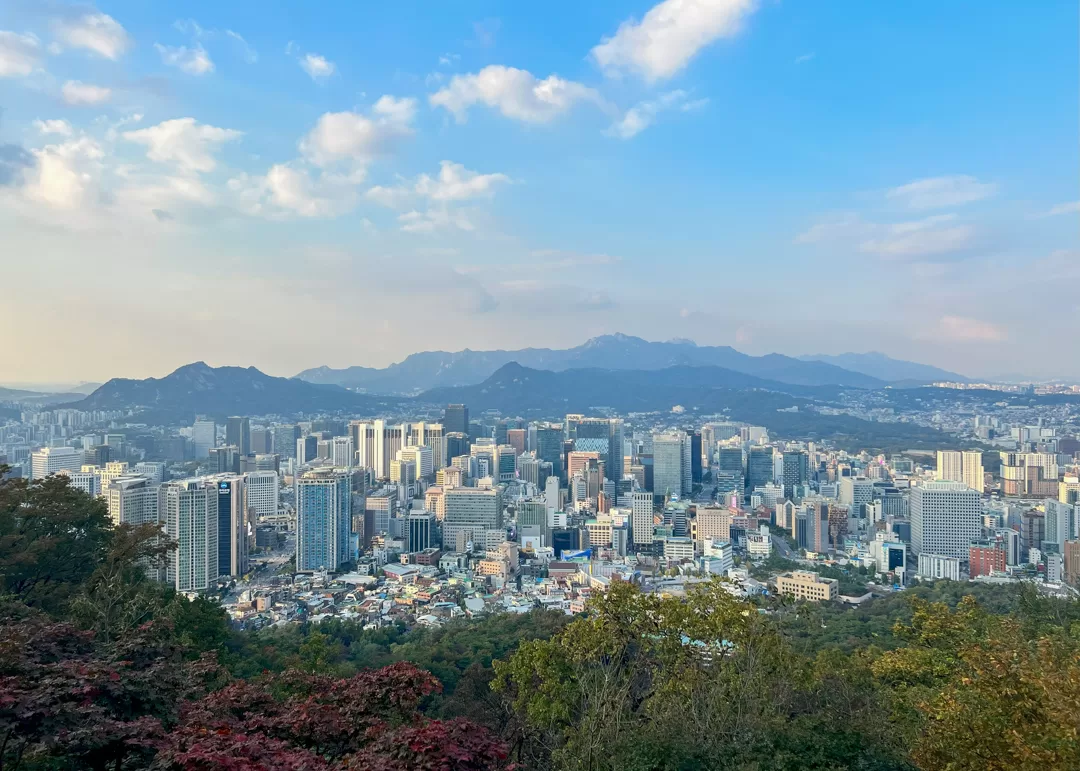
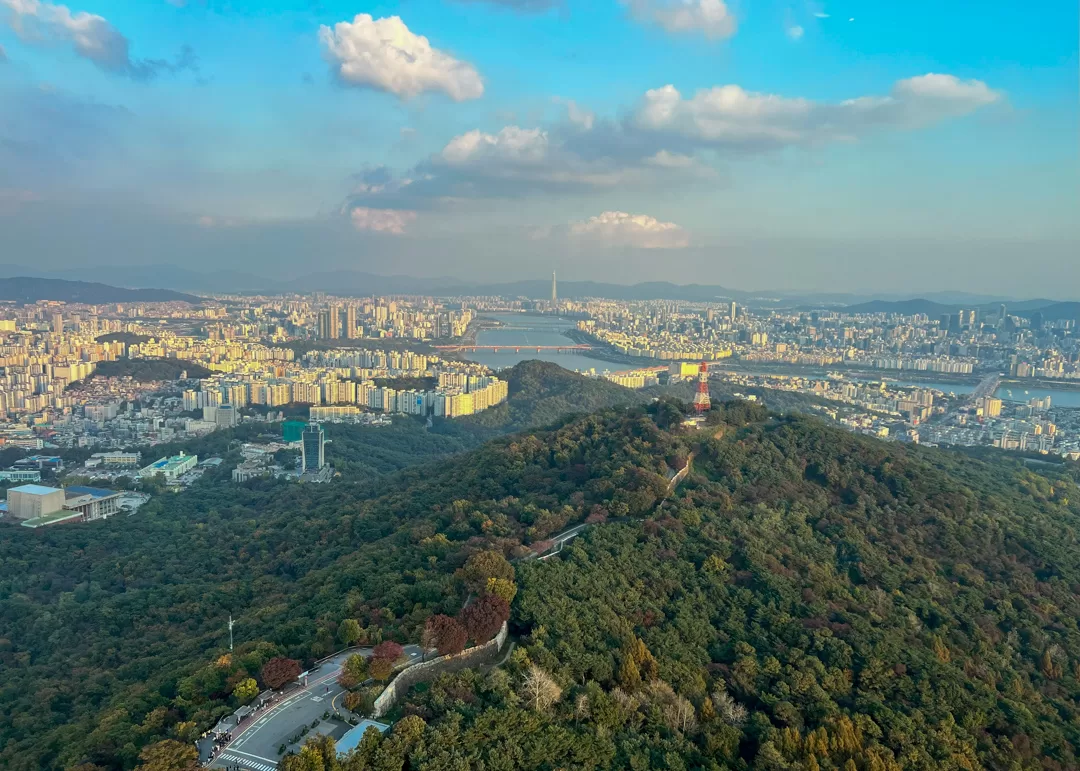
Namsan Park is the largest park in Seoul and popular for hiking, the N Seoul Tower, and panoramic views of downtown Seoul. There is a cable car that can bring you to the top in a few minutes but the walk up is lovely and fairly easy. Try to go towards the end of the day to catch the sunset from the tower at the top. Just walk towards the park and you’ll see steps leading up near the cable car station (the ones I took were in the parking lot of the Seoul Education Research & Information Institute).

The pedestrian path and stairs wind through greenery and offer views of the city as you start climbing up.

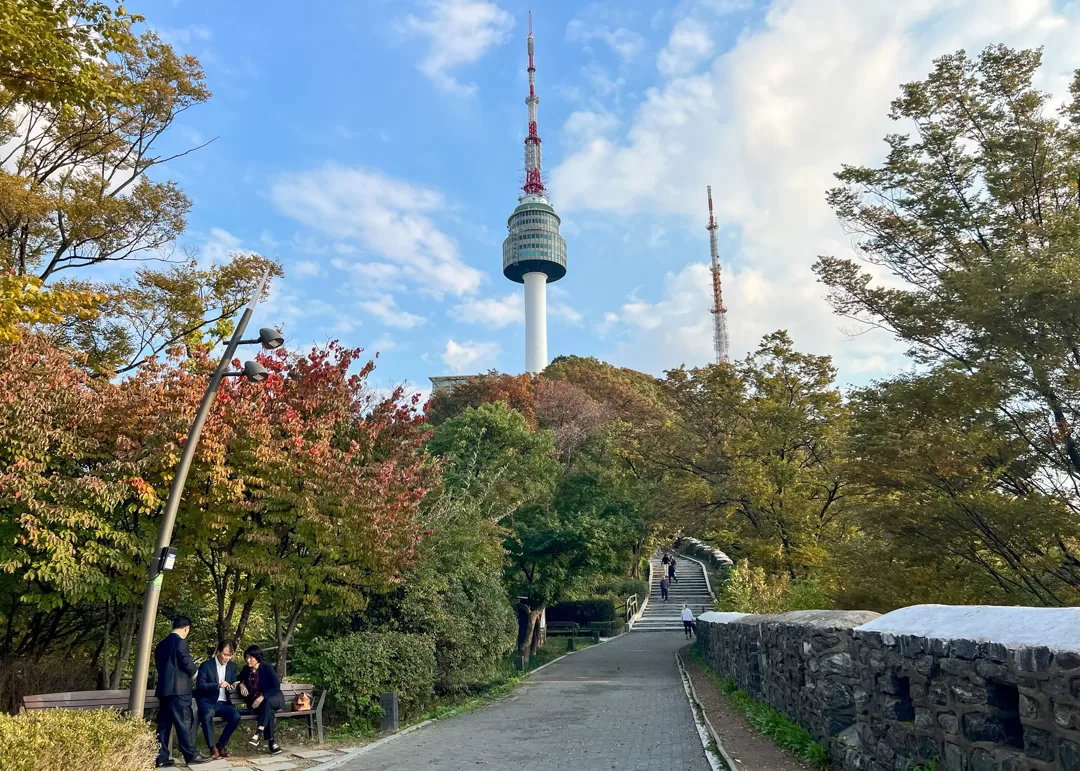
Soon you’ll have your goal right in front of you: the iconic N Seoul Tower.

Trail to Seoul Tower

You’ll finally reach the summit after about 30 minutes or so of walking and now stand in the geological center of Seoul.

The peak of Namsan is at 262 meters (860 feet) and you’ll get some pretty good views of the city from the wide terrace.

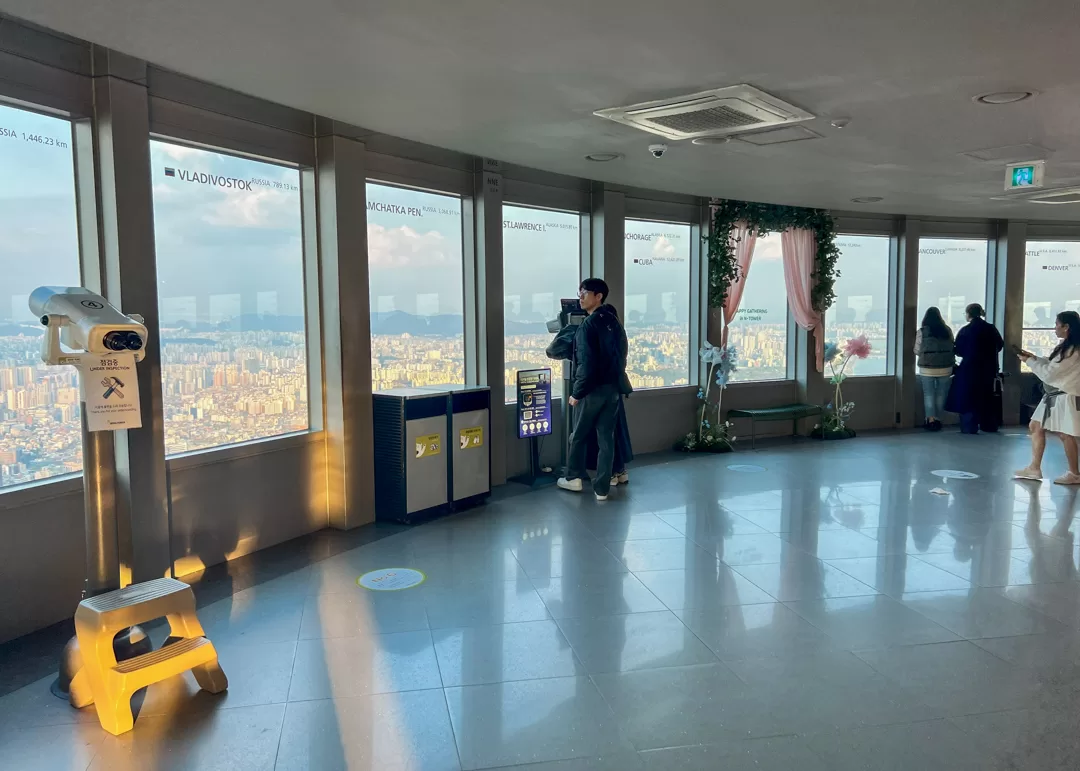
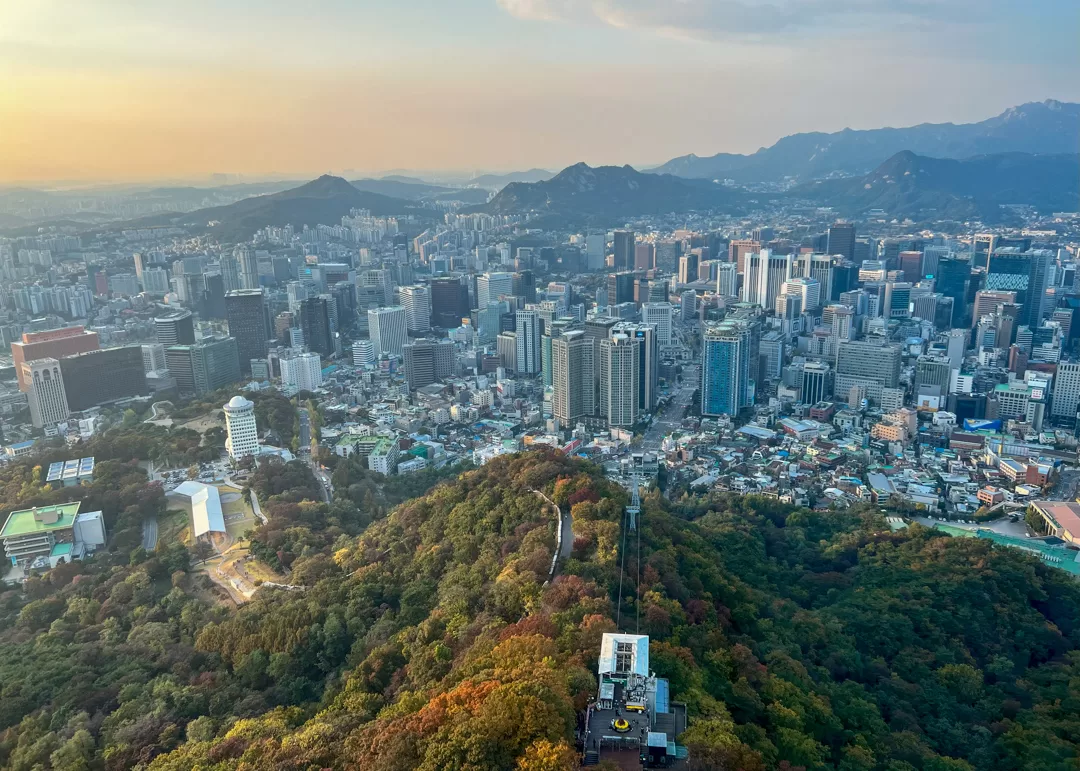
Go up in the tower though to gain an extra 237 meters (777 feet) in altitude and 360 views from the observation deck.

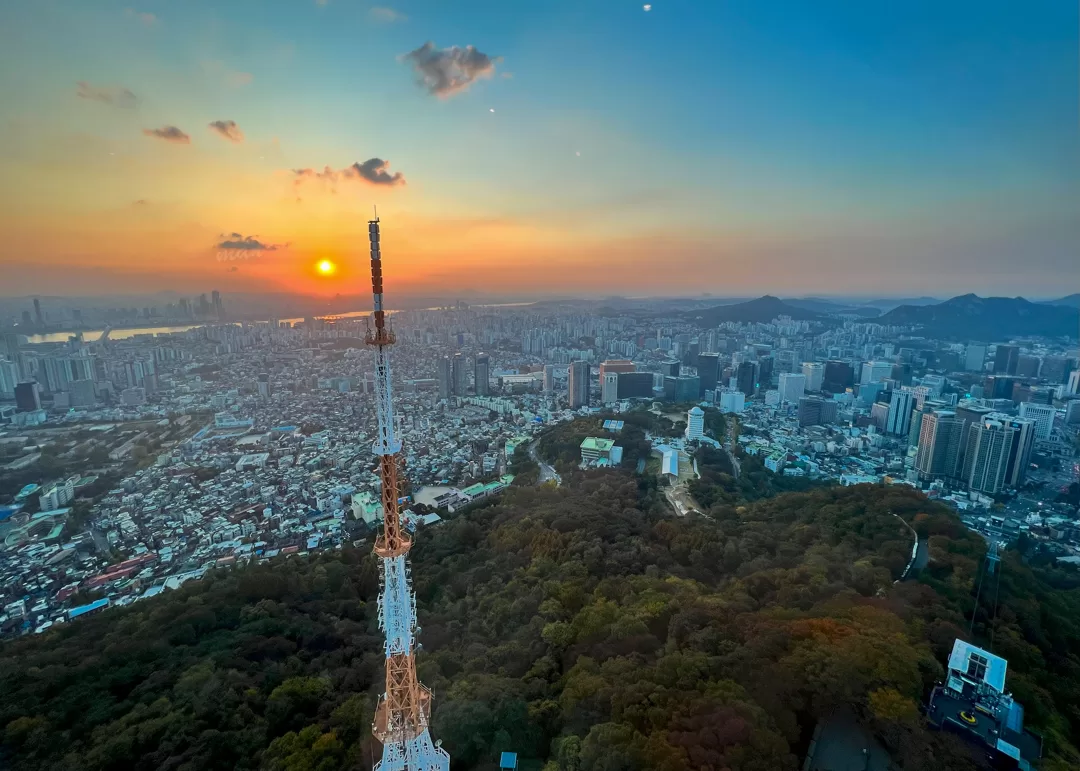
Try to time your visit with the sunset if you can for a spectacular panorama. There are a few restaurants (including one in the tower) and food stalls at the summit to kill time and watch dusk fall over the metropolis.

Once you’ve seen the city lights turn Seoul into a sea of twinkling stars, you can walk back down or take the cable car down and a short walk to the nearest subway station.