
Siena is your quintessential Tuscan dream: a walled medieval town spread across verdant hills that has largely remained frozen in time. It’s a perfect weekend break from Florence, a little over an hour away, and truly deserves a full two days to make the most of all there is to do here.
A short 10-min walk from the train station brings you to Porta Camollia and your way into the historic centre of Siena.
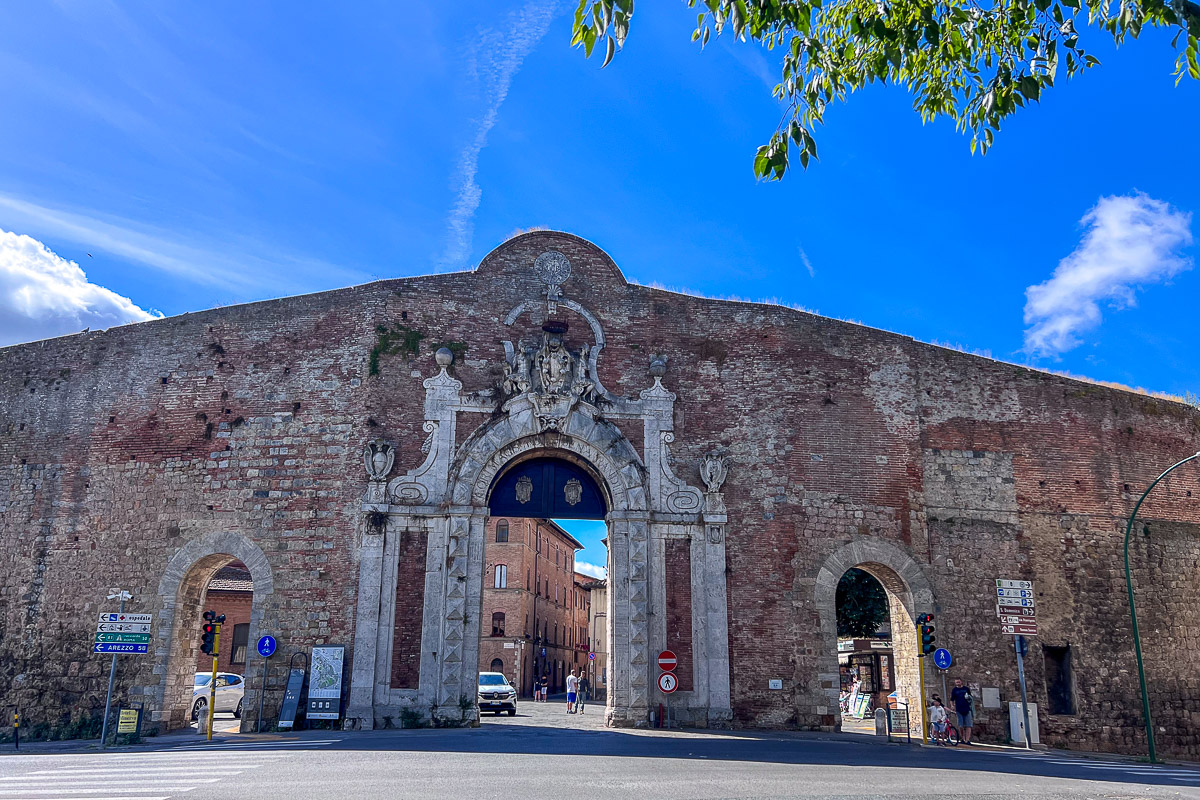
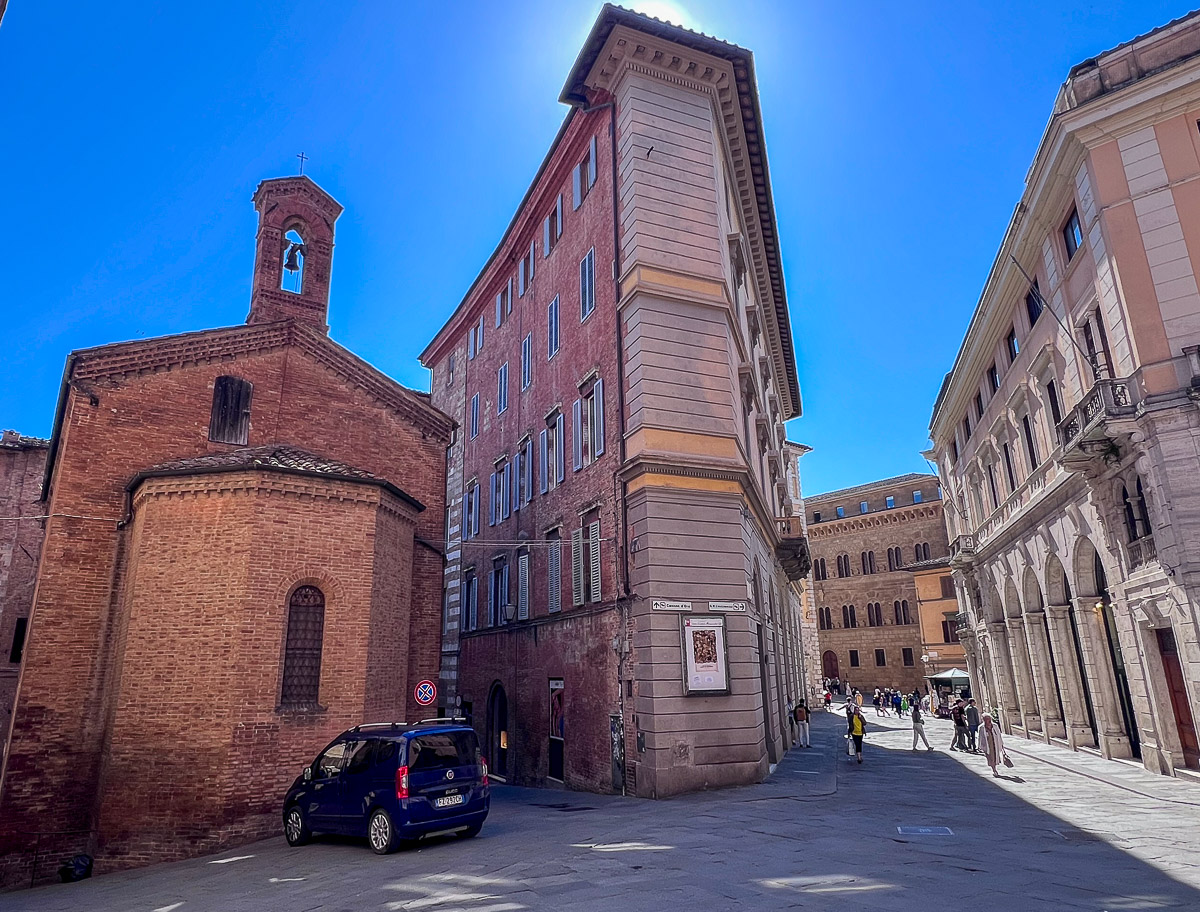
The warm, reddish-brown hue (sienna) of the elegant buildings casts a welcoming glow as you make your way straight through town.
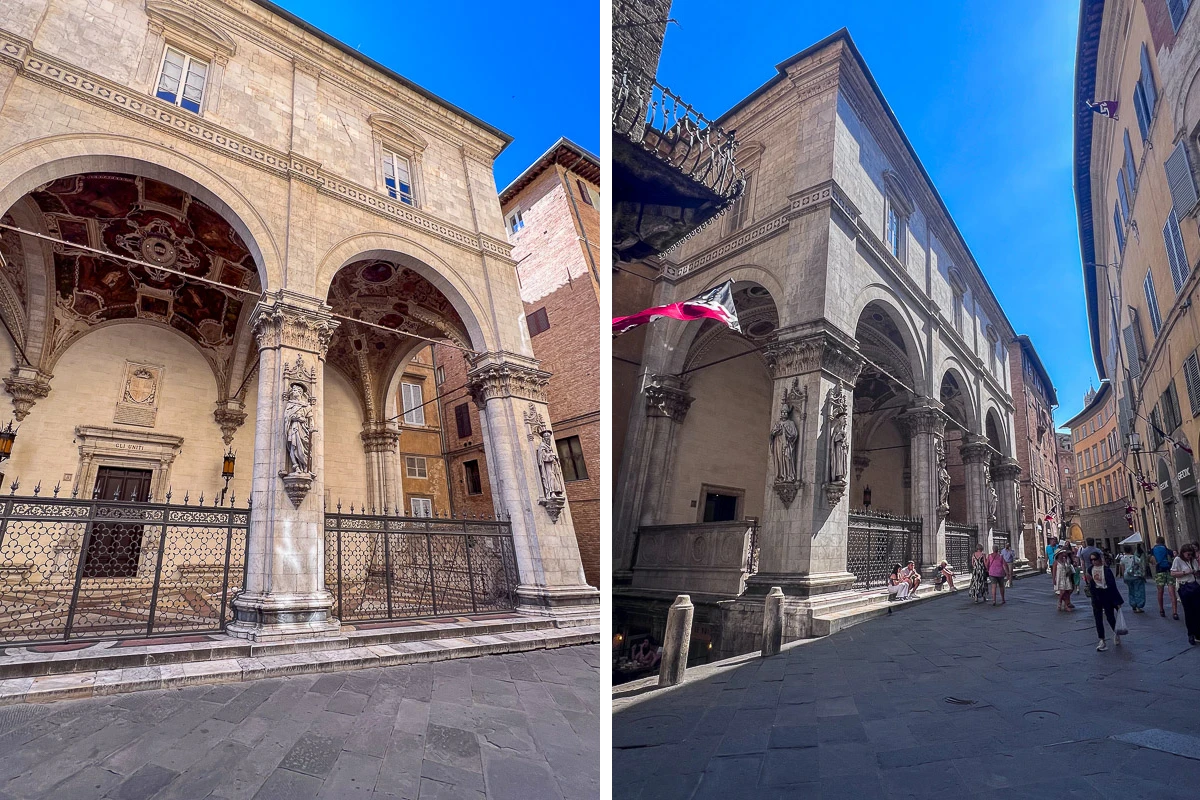
Notice the historic Loggias for which Siena is famous for – open-air arcades that served as a meeting place and court for merchants. They signal you’re getting close to the heart of the town, with buildings reflecting the prosperity Siena experienced in the Middle Ages.
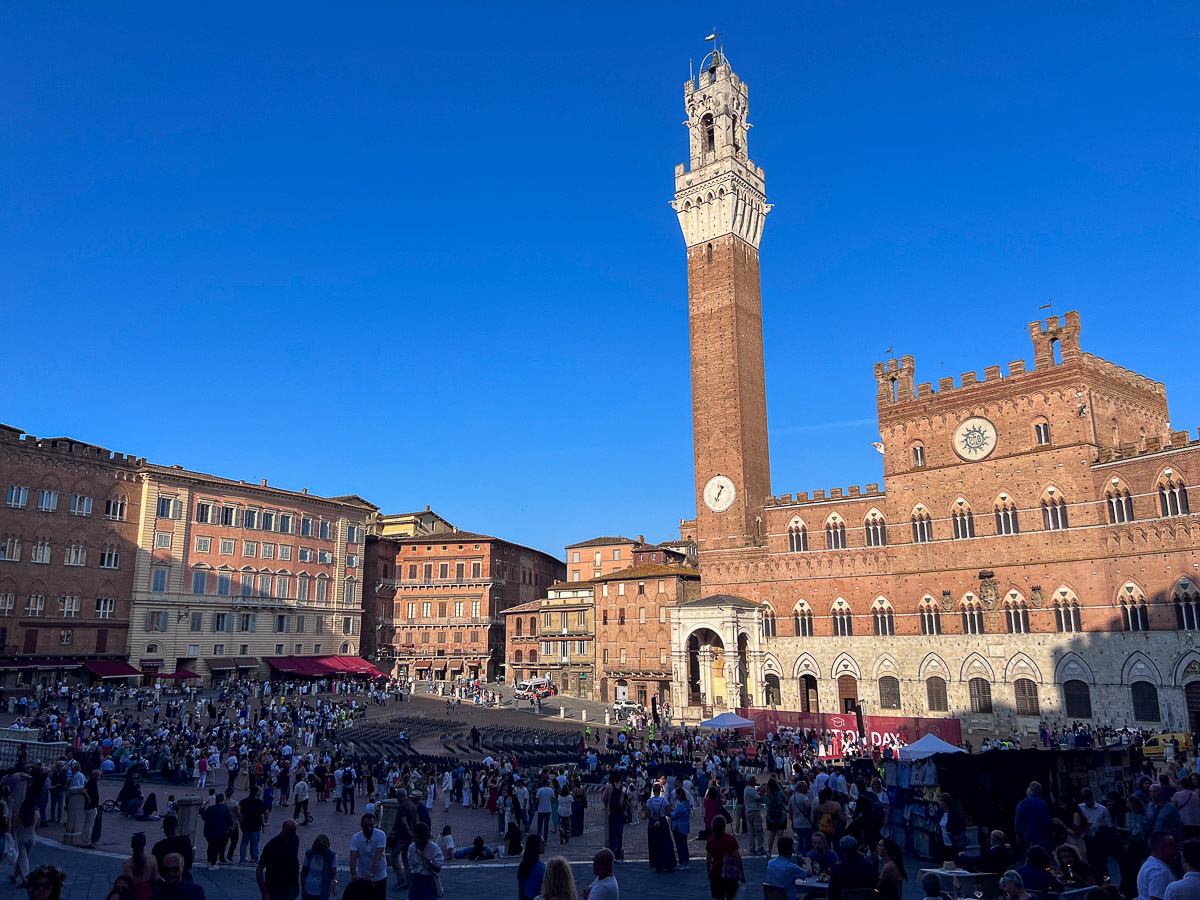
Piazza del Campo
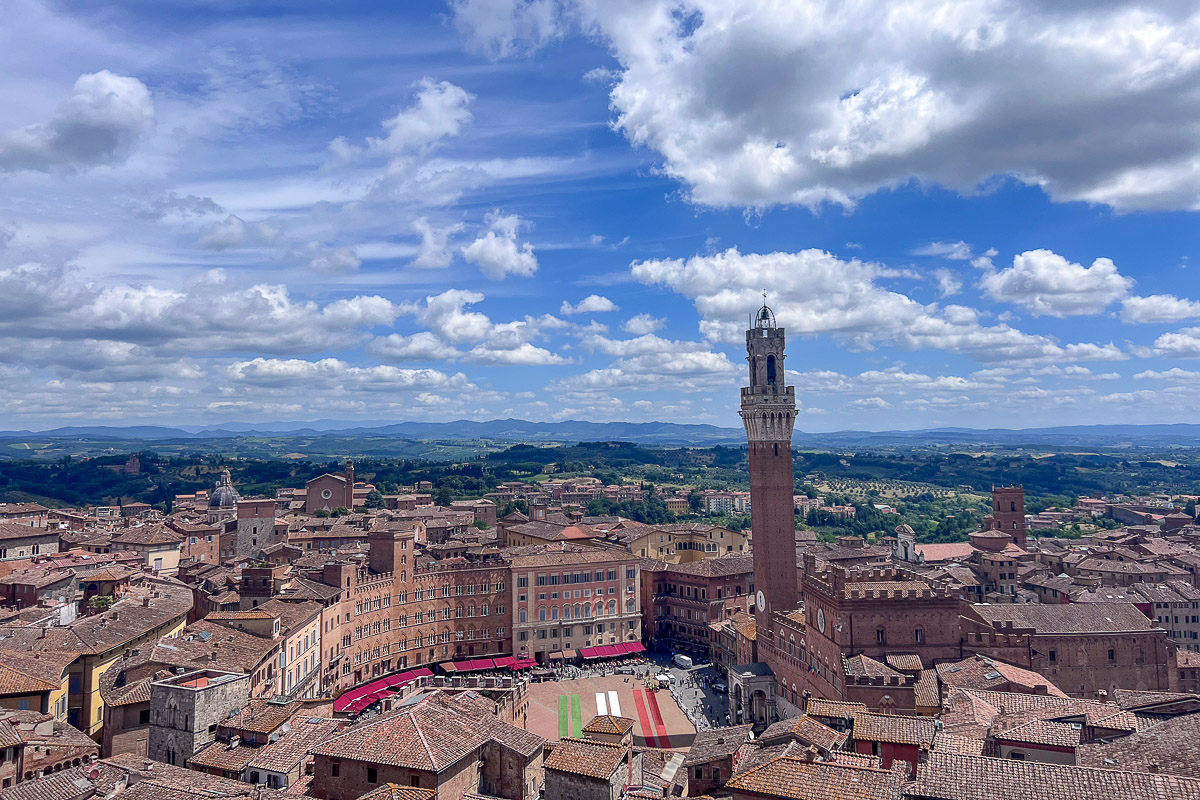
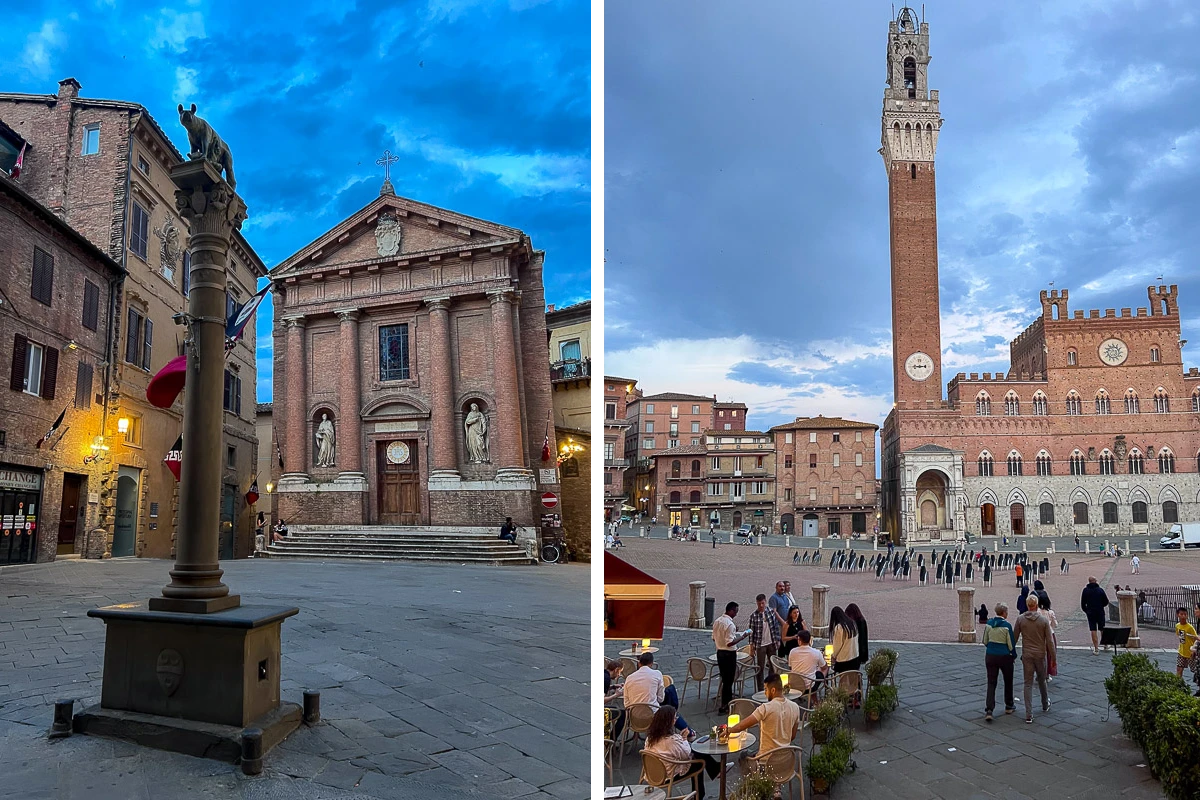
And then, a short flight of stairs will bring you down to Siena’s historic core – Piazza del Campo. The shell-shaped piazza is one of the most stunning in all of Tuscany and the centre of community life here. You’ll rarely find it empty and will surely stumble upon a celebration or one of their numerous traditional events. The unmissable Torre del Mangia, Italy’s second tallest bell tower, stands guard over the piazza and will be your beacon back to the center wherever you go.
If you can brave the summer heat, the town’s most celebrated event is the Palio – a wild horse race pitting the town’s districts against each other every year on July 2 and August 16 since 1633. I can only imagine the thrill of watching bareback horses sprinting along the sharply curved piazza with the whole town at the edge of their seats.
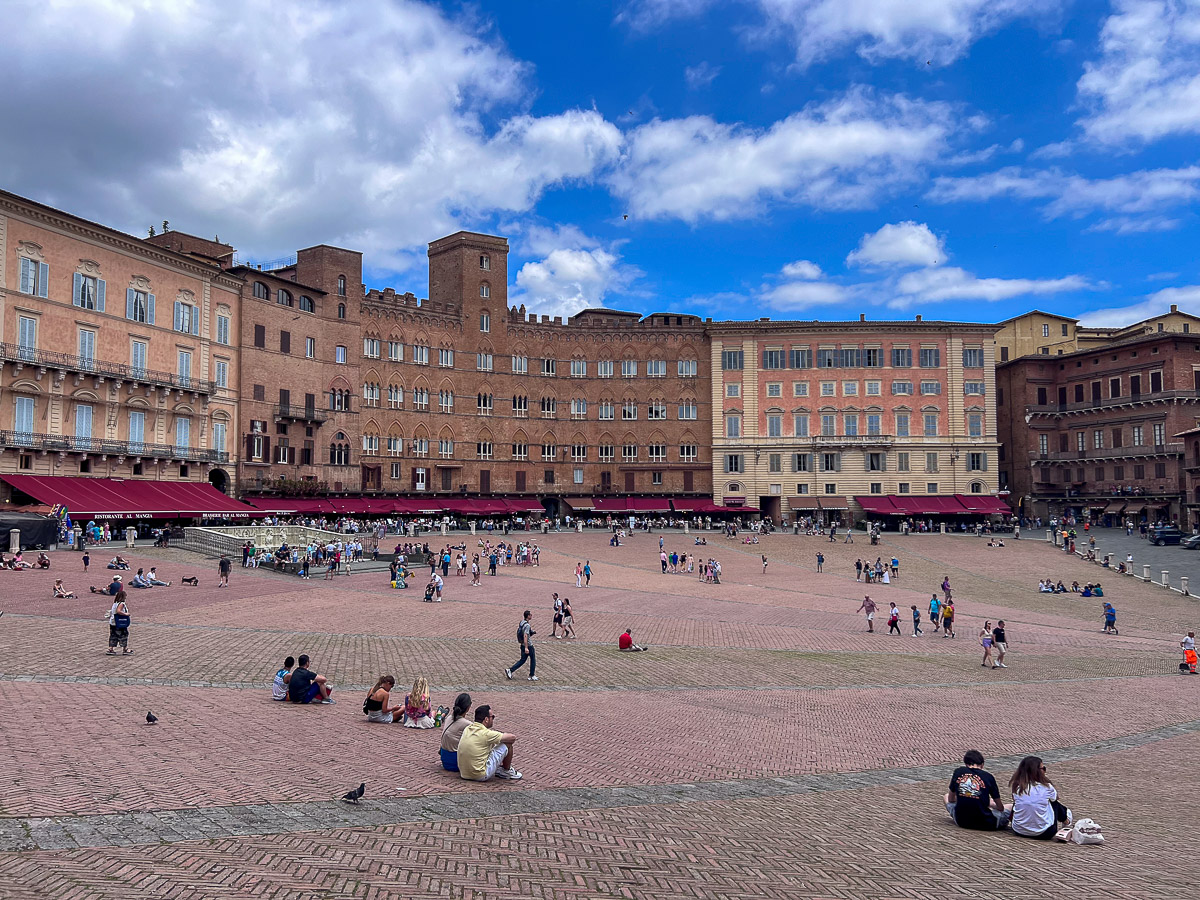
I saw a different kind of horsepower instead during my visit with the Mille Miglia classic car rally.
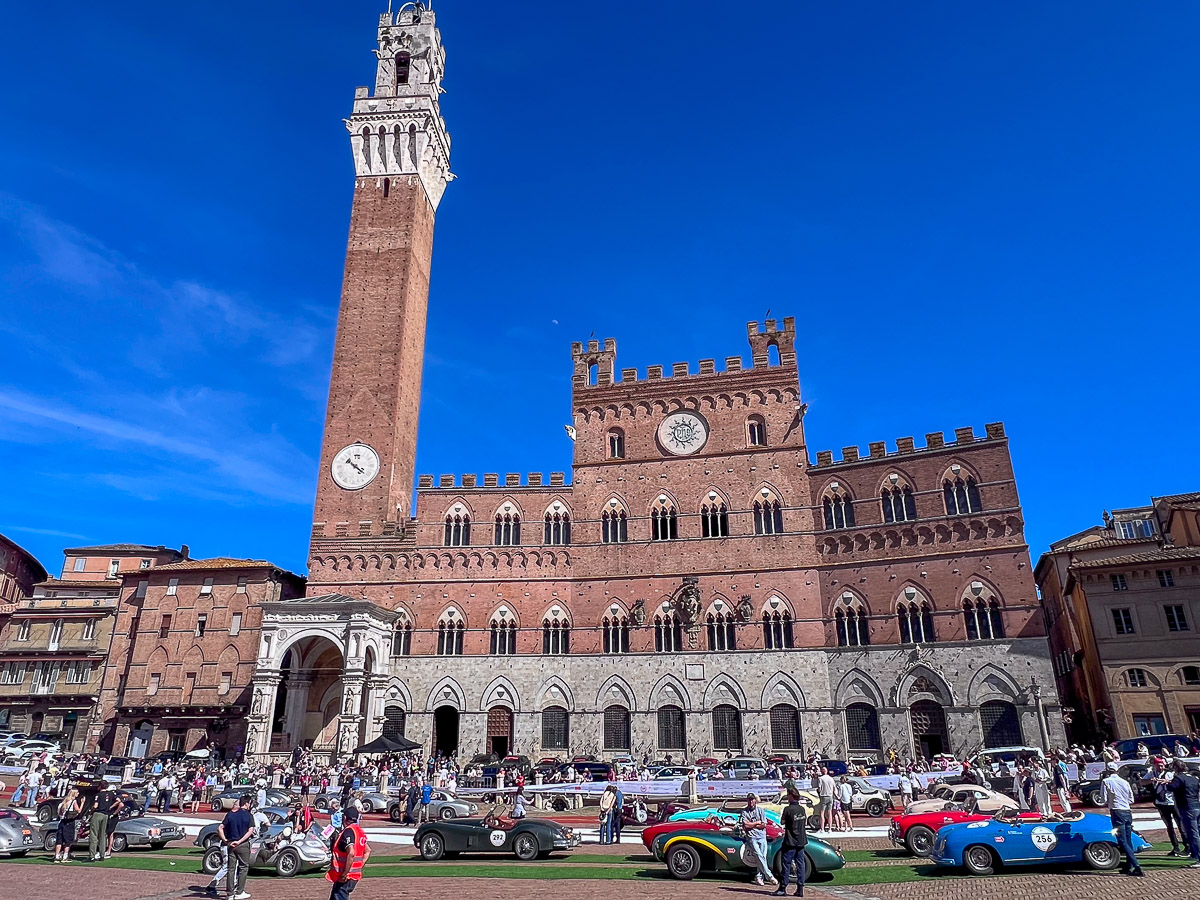
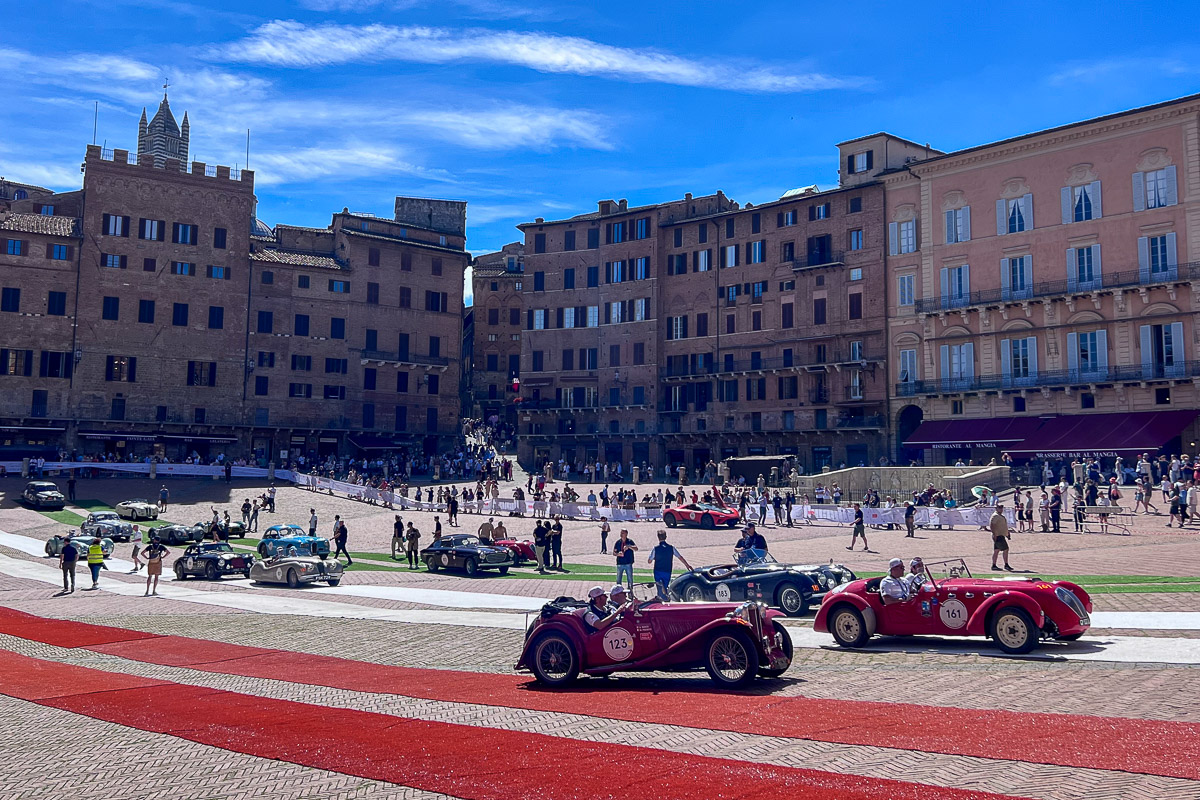
Hundreds of vintage and historic cars passing through Tuscany make their grand stop in the iconic piazza before parading through the narrow streets of Siena and out back into the countryside.
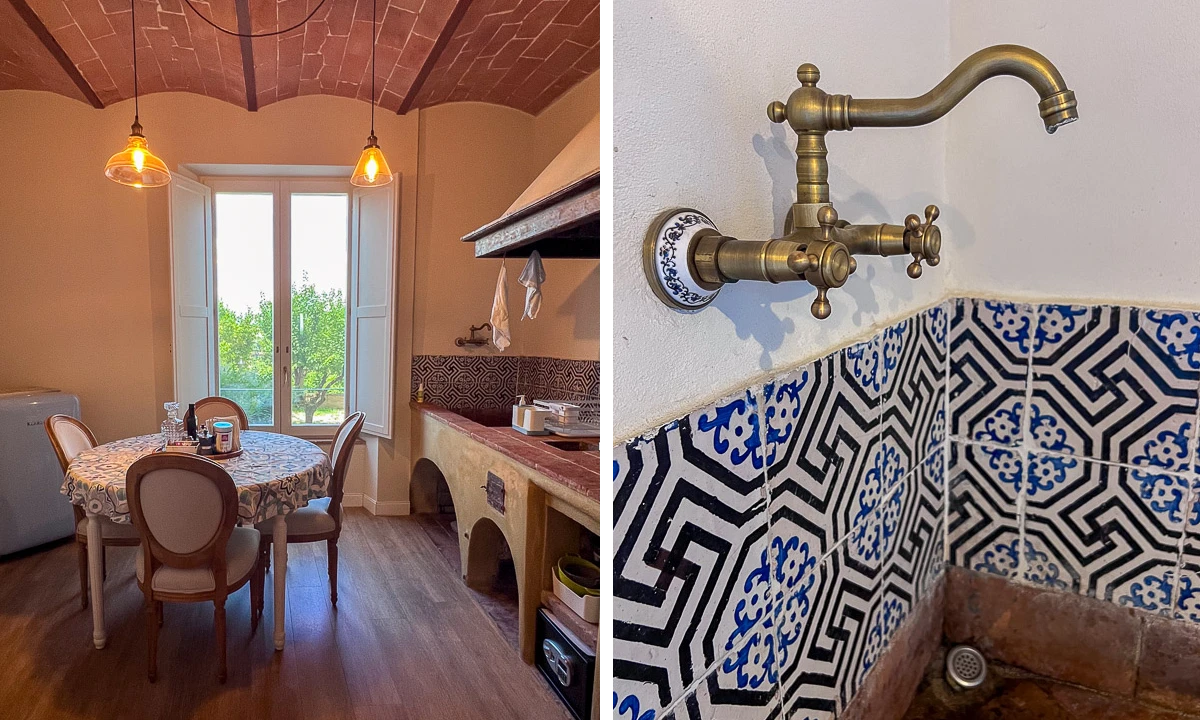
Check in to your hotel and drop your bags to explore more freely. The adorable Il Giardino di Pantaneto, a charming historic B&B, makes for a great homebase.
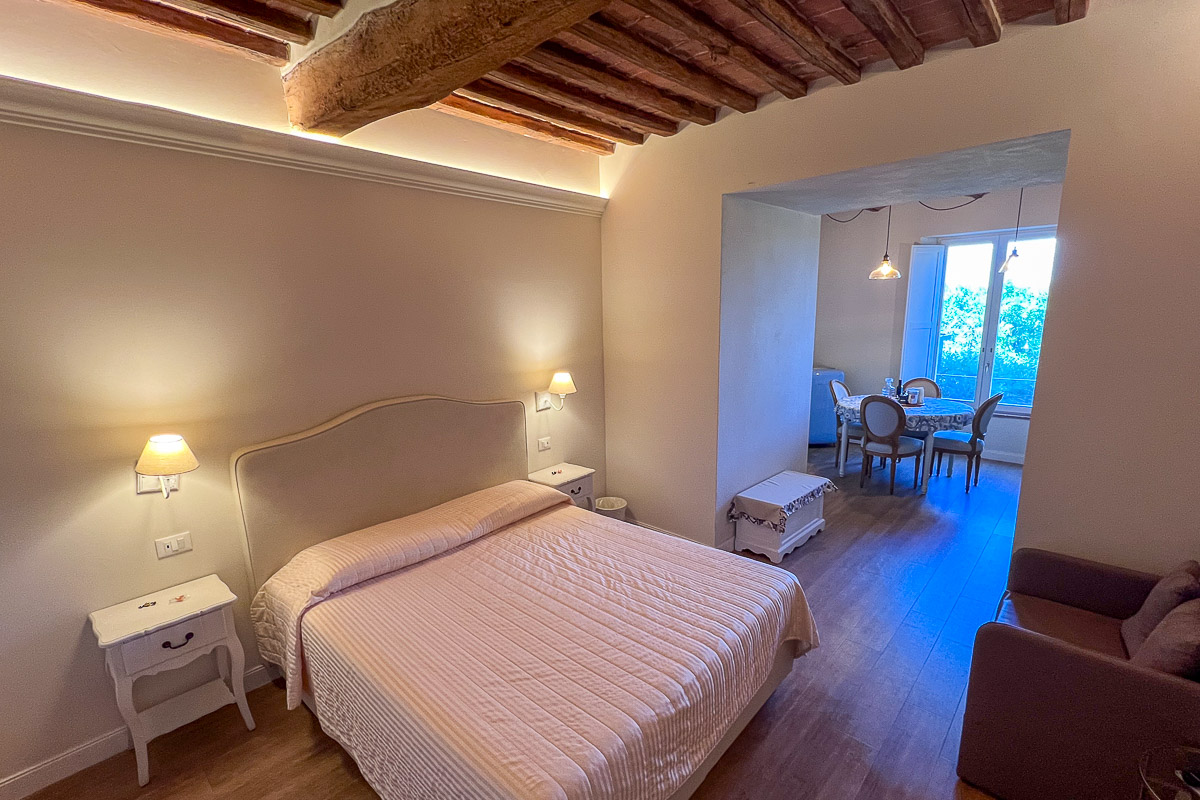
You’ll love how close it is to everything yet a look out to the lush garden at the back and you’ll think you’re in a Tuscan villa.
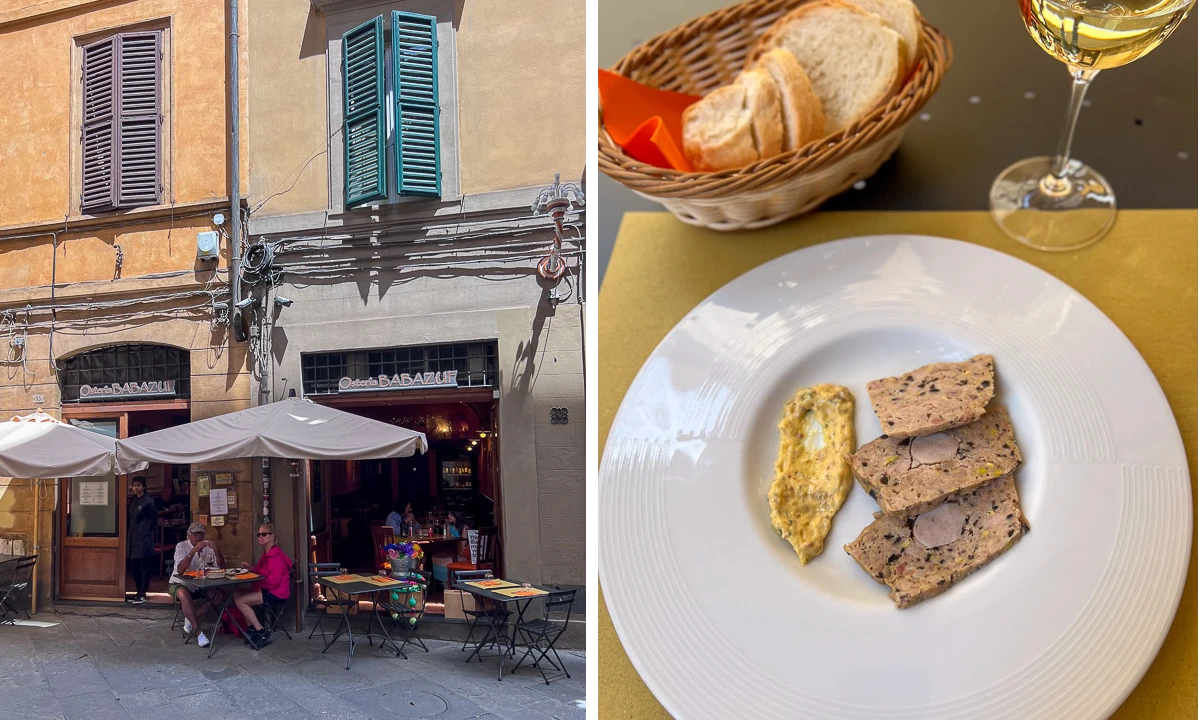
Pop next door for lunch into Osteria Babazuf, a small and friendly trattoria with a traditional menu of rabbit terrine…
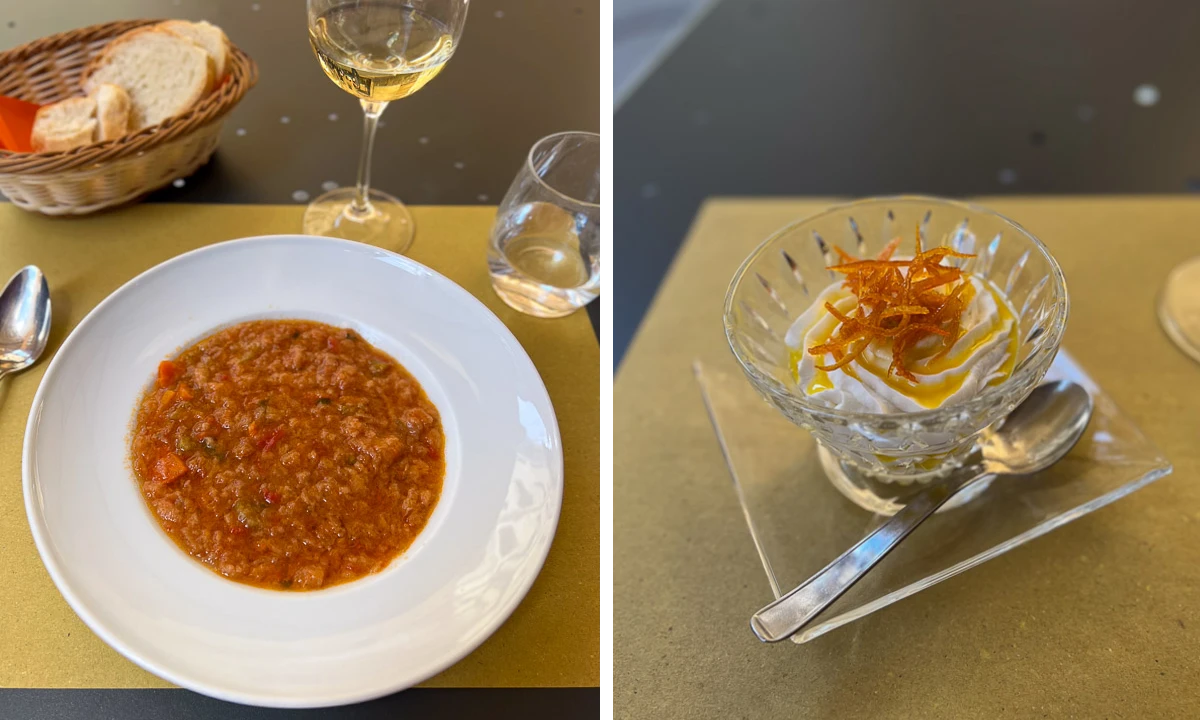
… and my first pappa al pomodoro – a thick Tuscan peasant soup made by simmering ripe tomatoes and stale bread with garlic, olive oil, and fresh basil. Delicious! The cucina povera (peasant-style cuisine) is central to Siena and this part of Tuscany and many popular dishes are vegetarian-friendly.
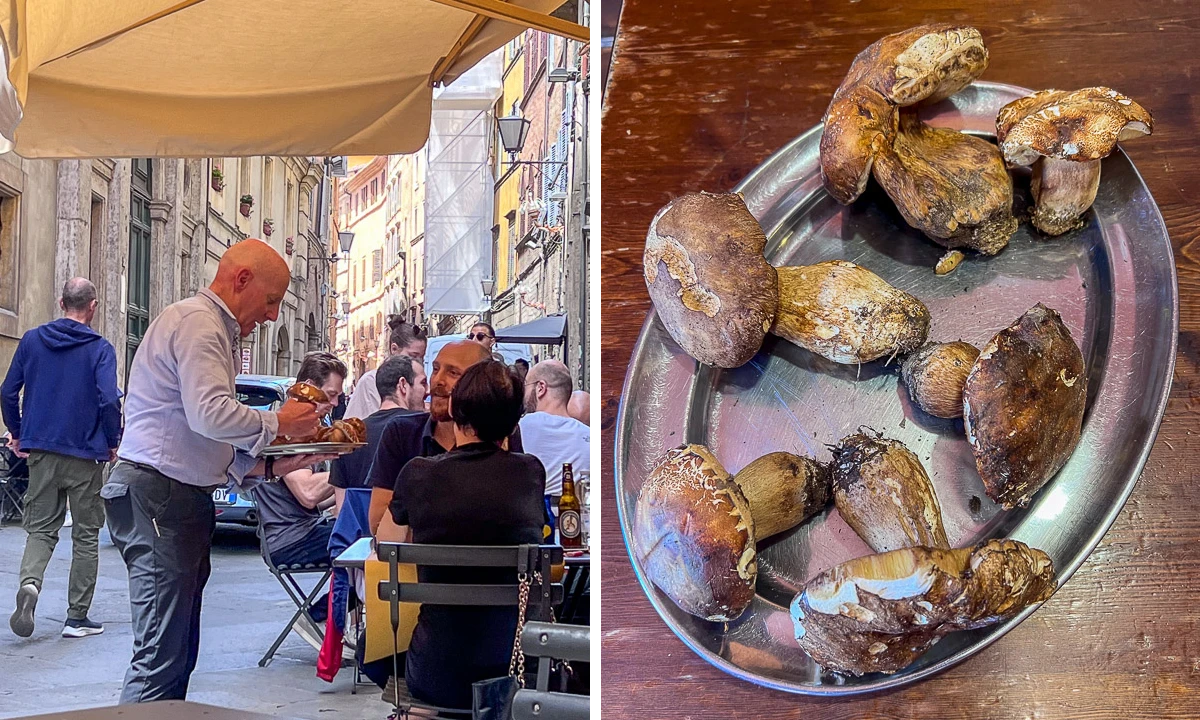
Local ingredients are cherished and you might catch the owner presenting foraged porcinis to patrons like jewelry on a silver platter.
Siena’s Duomo – the one not to miss
After the ones in Florence and Pisa, I thought I had seen enough Duomo but oh my, this one came out on top. It’s mostly because for once, the interiors managed to meet, and even exceed, the very ornate exterior. I’m sure you’ll agree. There are multiple visits you can do here and I recommend you do them all: the cathedral itself, the baptistery, the museum, the Piccolomini Library, the crypt, and the special “Porta del Cielo” guided tour of the upper reaches. They can all be done subsequently in half a day or less and will give you the most spectacular impression of this gothic marvel.
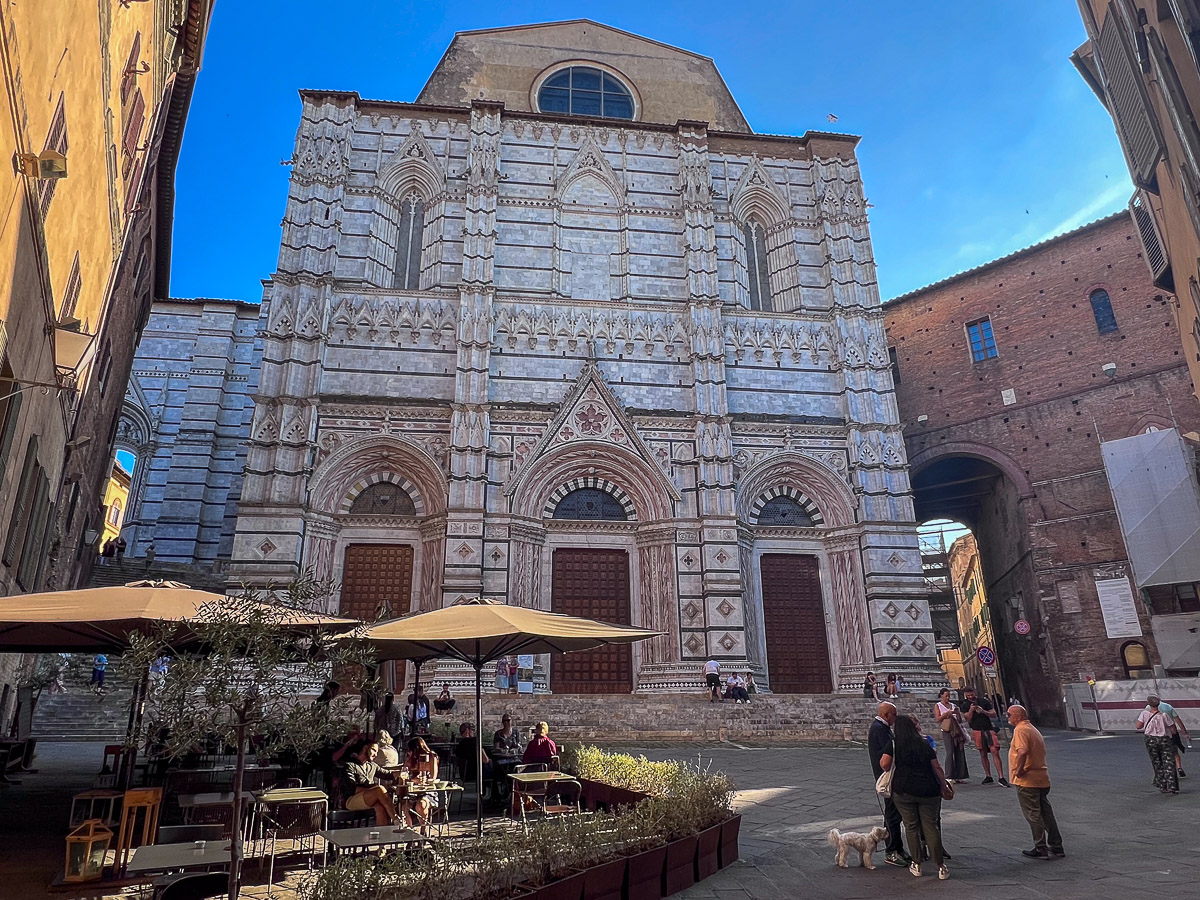
My meanderings around the Piazza del Campo actually brought me to the back of the cathedral first which is already pretty impressive. You’re looking at the façade of the Baptistery where I started my visit, then you have the museum entrance next door (which I always like to see before the cathedral), and the adjoining crypt – all in one go.
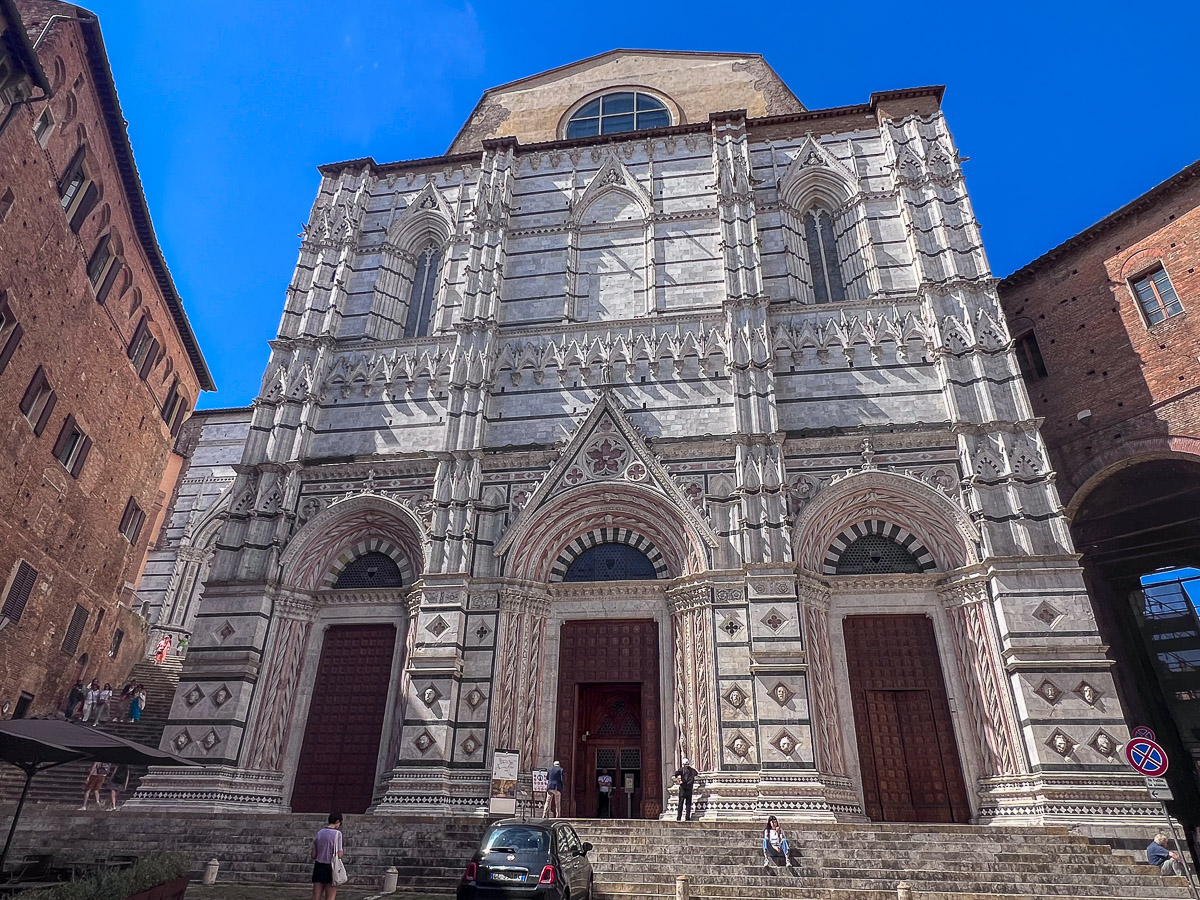
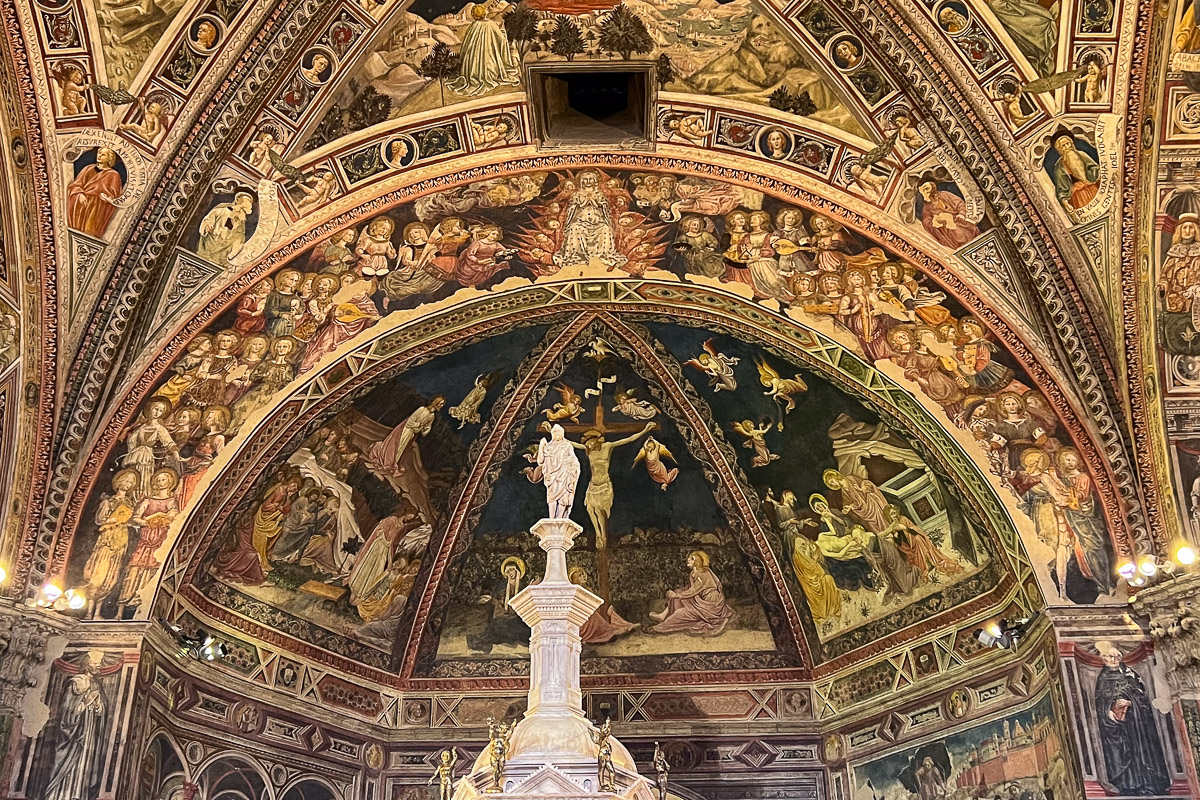
The Baptistery is covered inside with beautiful frescoes, very well preserved, and is rectangular instead of the usual octagonal shape. You’ll only need about 5-10 minutes here just to stare all around at the stunning room and the hexagonal baptismal font (sacred basin that holds the water) by Donatello made in marble and bronze.
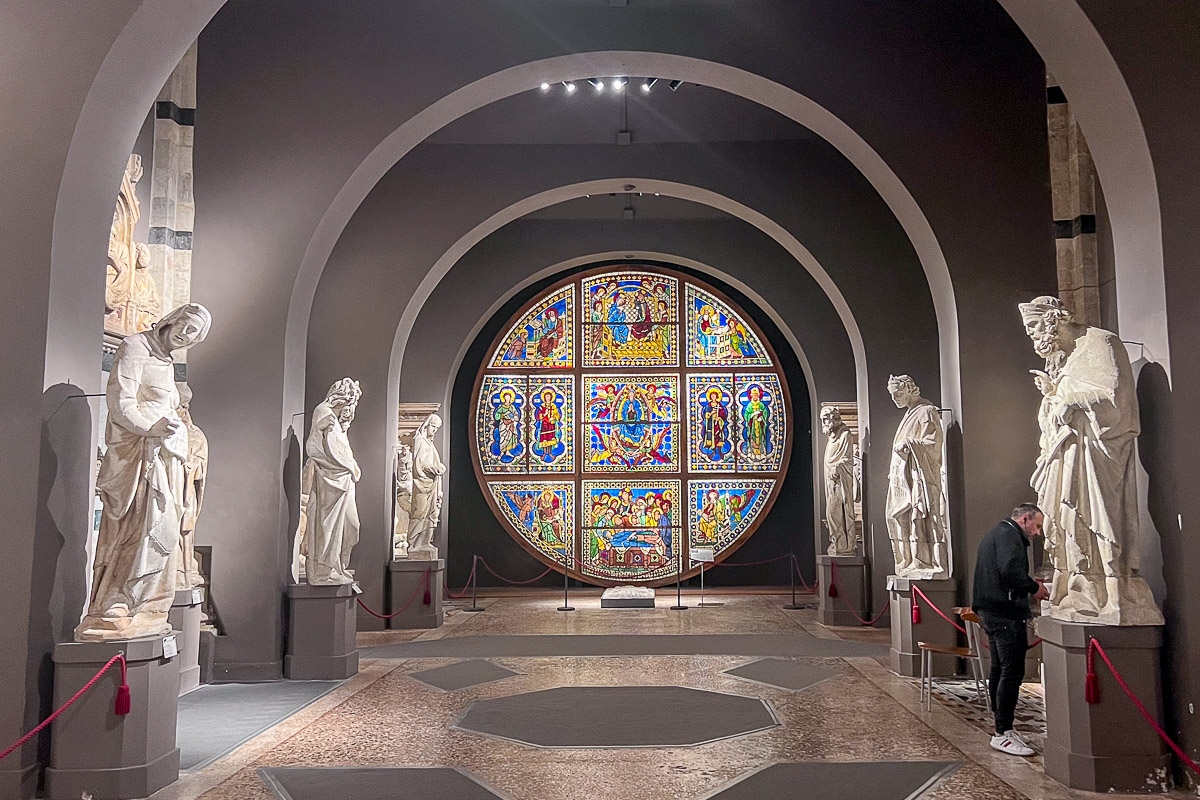
The museum, also called Museo dell’Opera, contains a lot of the original works of art that were made for the cathedral, including the stained-glass Rose Window and sculptures by Pisano and Donatello.
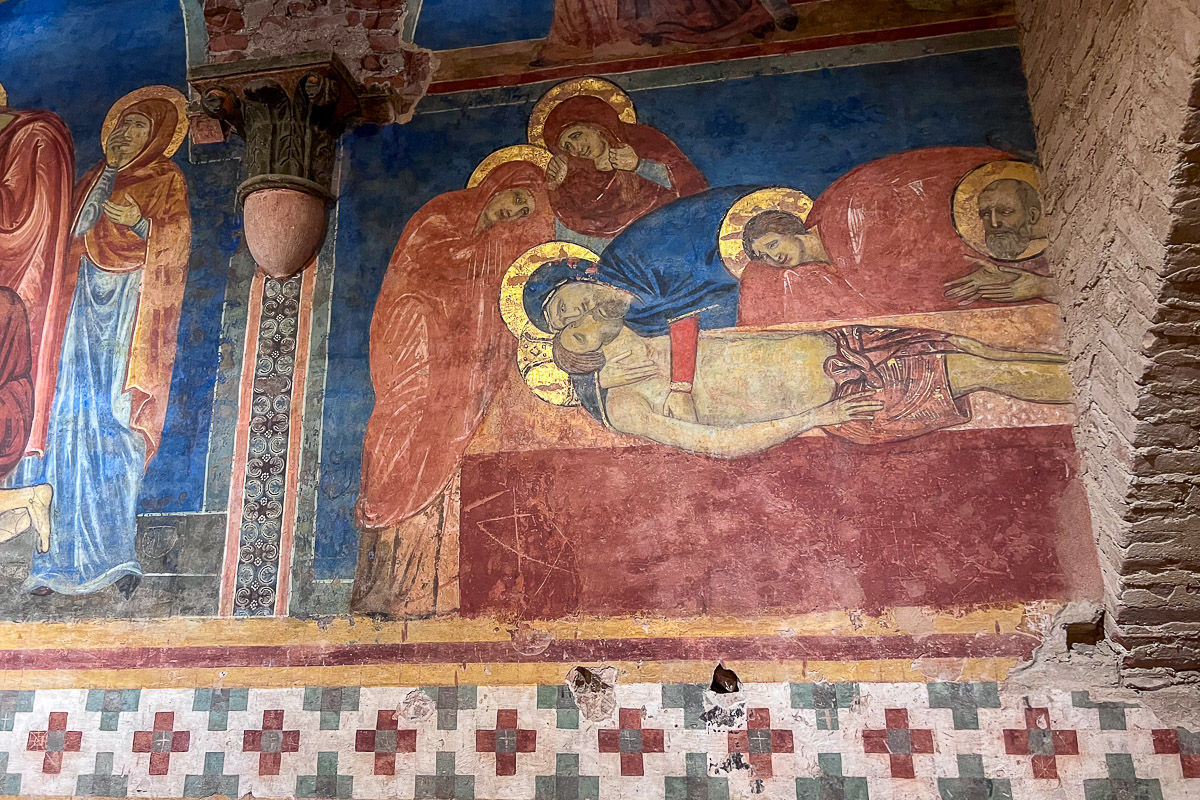
The small crypt was discovered in 1999 and only used for storage. You’ll also only need here about 5-10 minutes to see the walls painted with colorful frescoes telling stories from the Old and New Testaments.
Exit the crypt and walk up the stairs to the left of the cathedral all the way to the top and through the marble gothic gate.
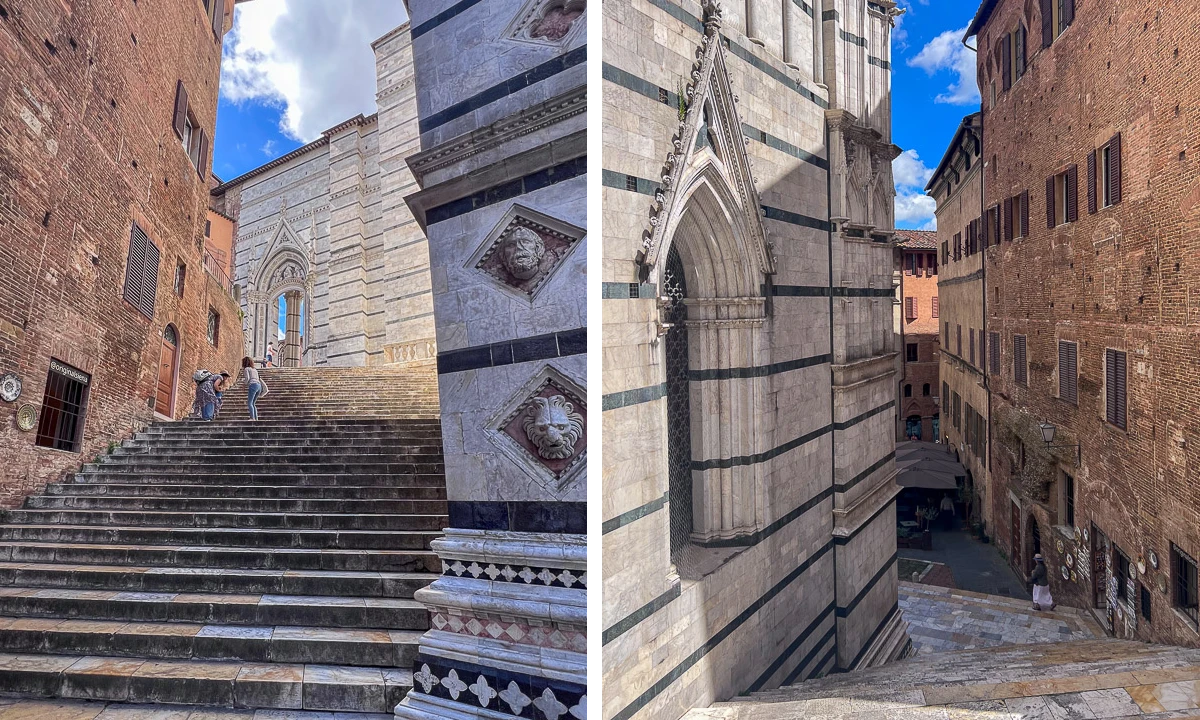
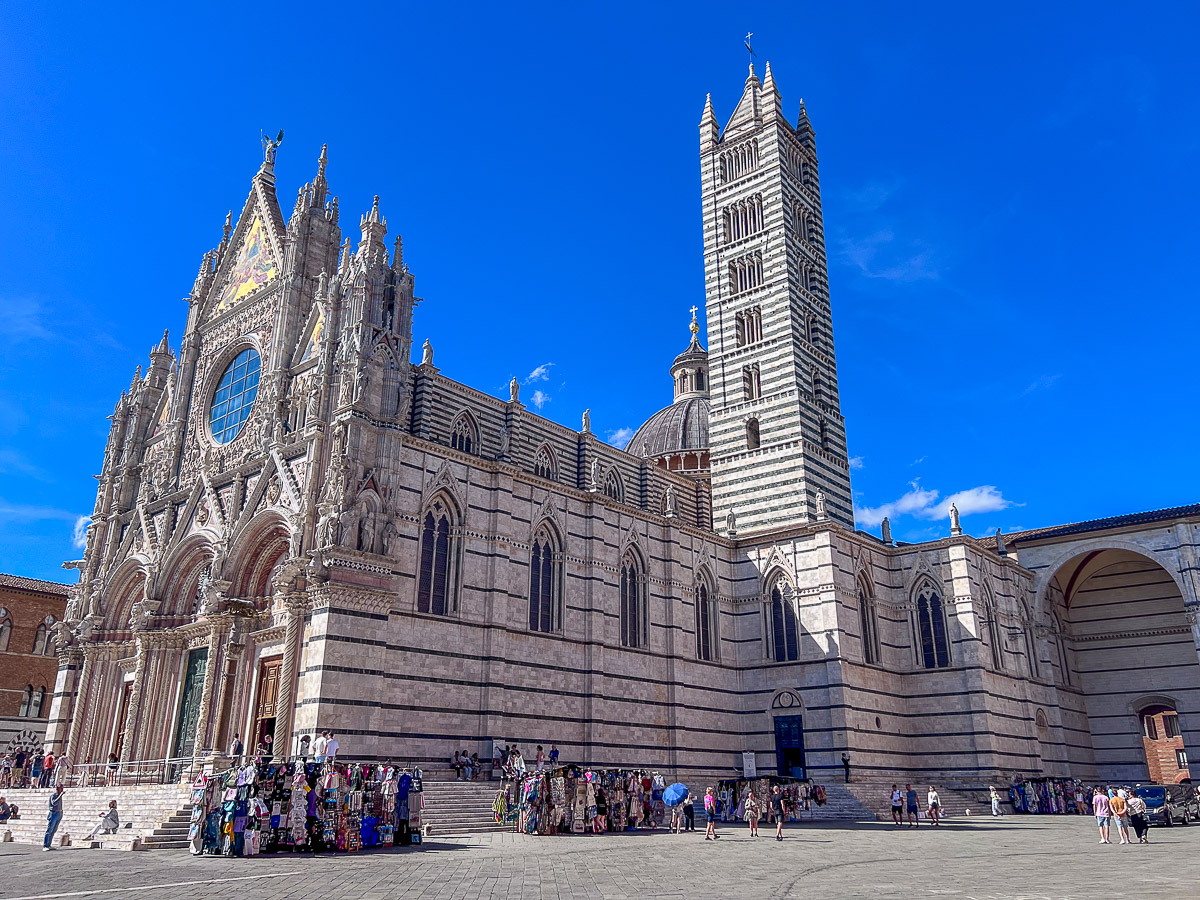
You’ll emerge on Piazza del Duomo and will no doubt be dazzled by the striking black and white stripes covering the exterior walls and bell tower – tres chic.
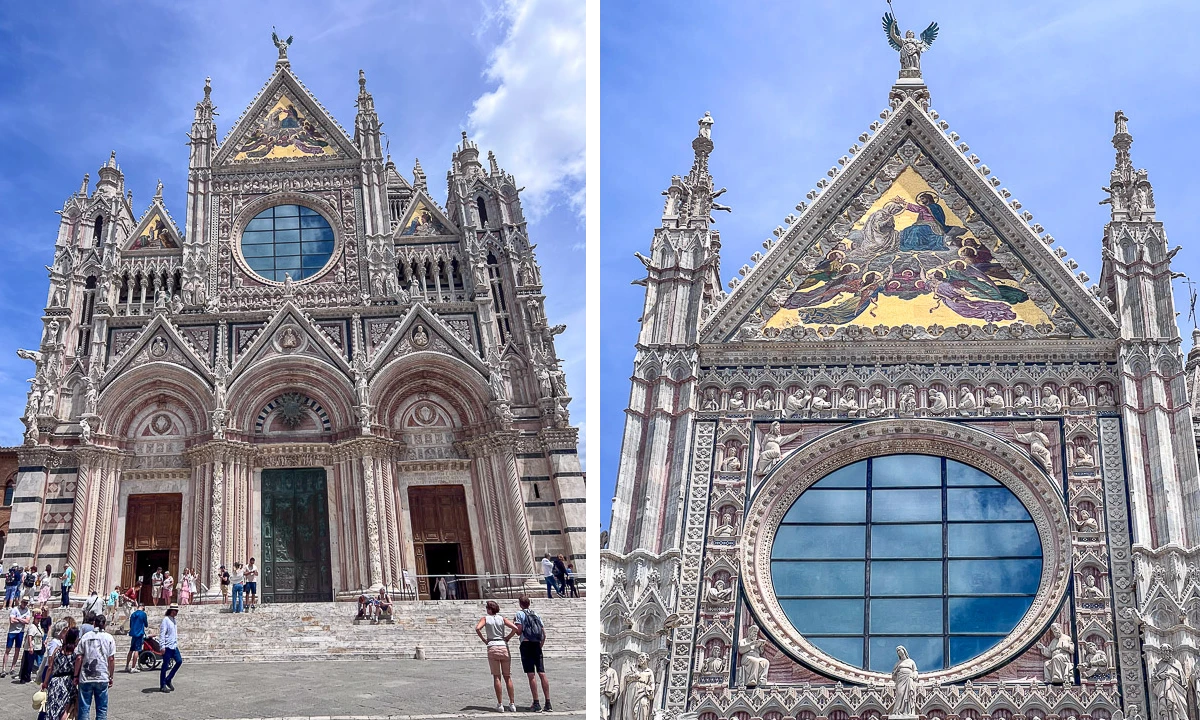
The façade is no less arresting in its Romanesque-Gothic glory with marble statues and brilliant golden glass mosaics that seem to sparkle in the sun.
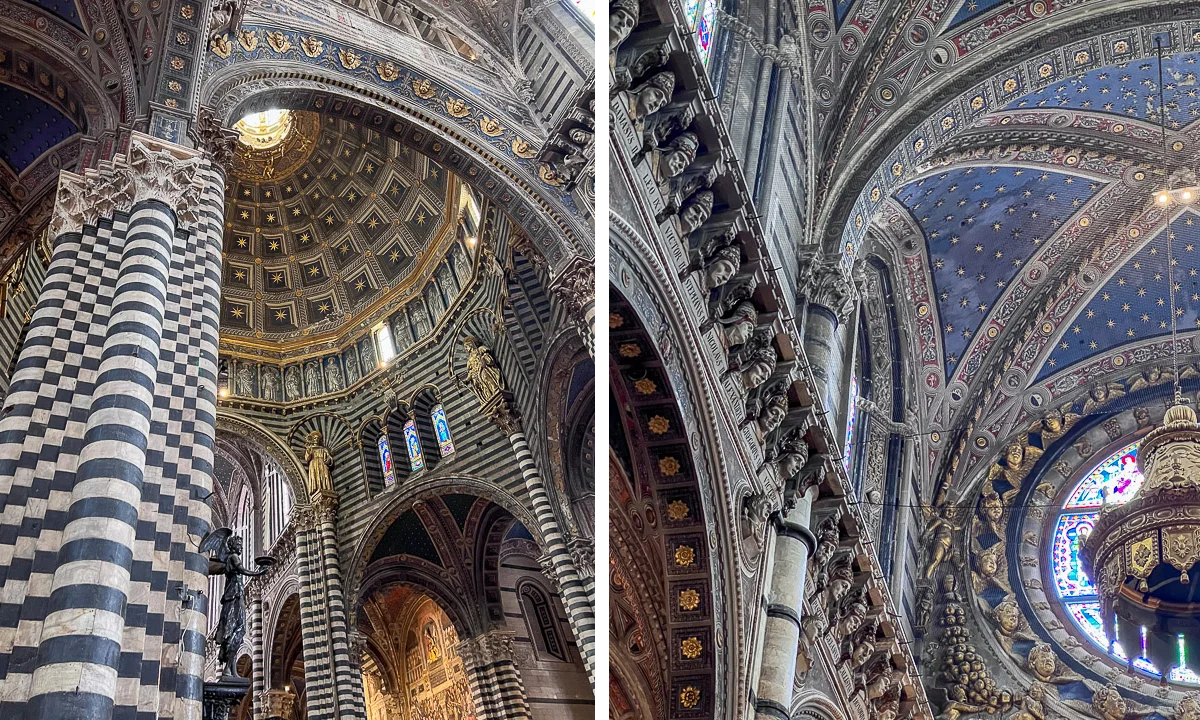
Step inside for more awe as there’s practically not an inch of this place that isn’t an artistic treasure. What a contrast to the rather somber Duomo in Florence.
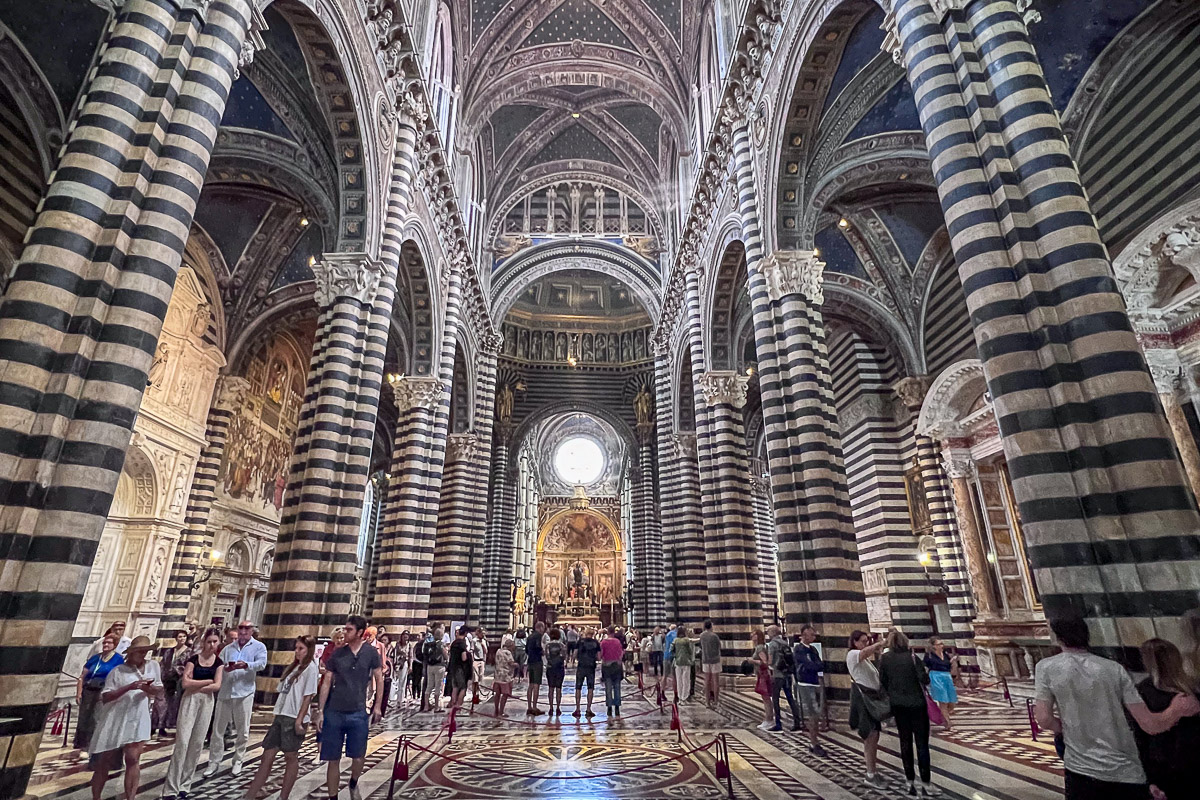
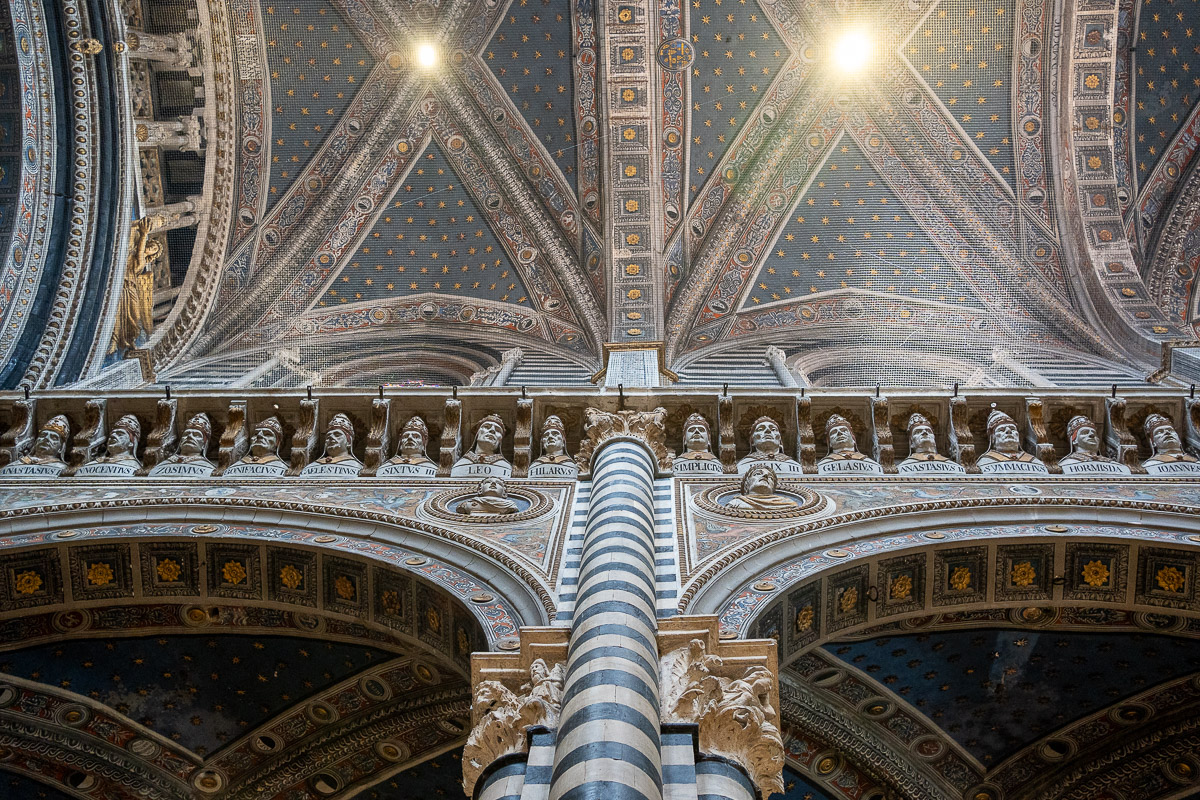
First your eyes go up to take in all the intricate details above, from the zebra columns and starry sky ceilings to the rows of 172 plaster busts of popes staring down at you.
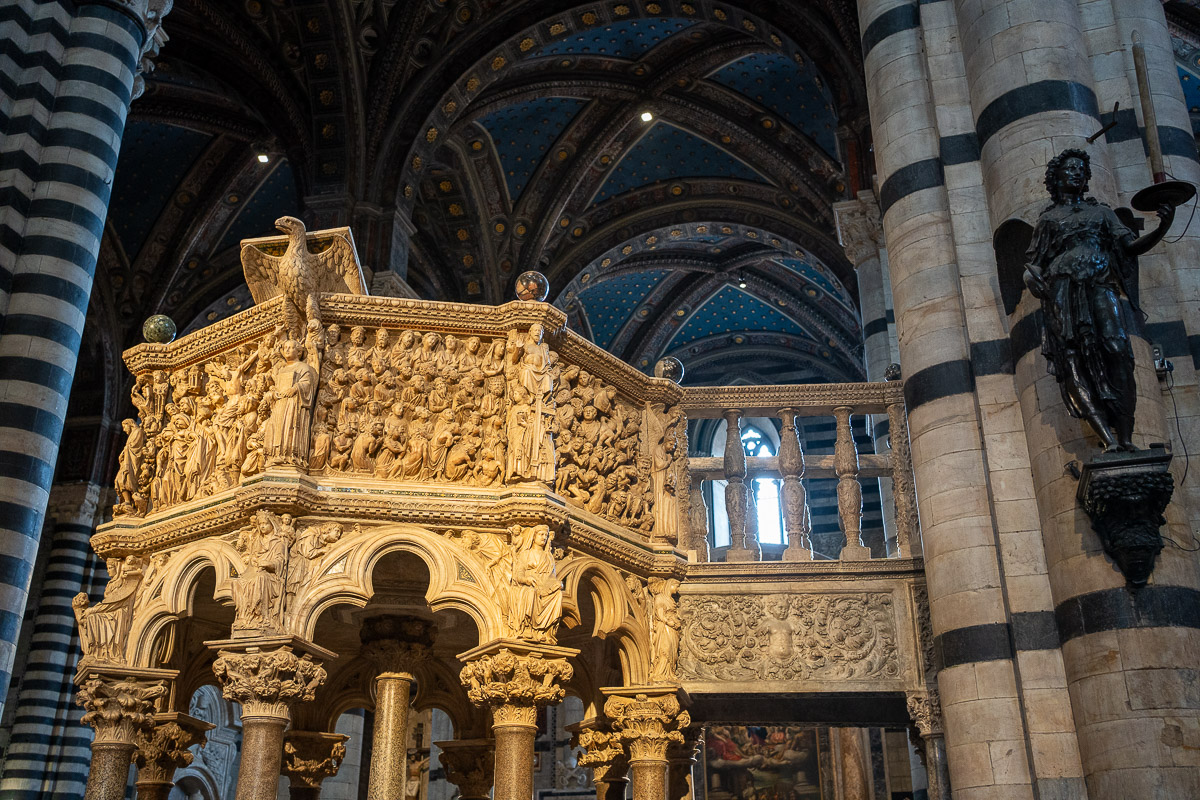
Make your way to one of the cathedral’s masterpieces – the marble pulpit sculpted by Nicola Pisano. He carved scenes from the Life of Christ all around that are so intricate you can make out facial emotions and the physical movement of their clothes.
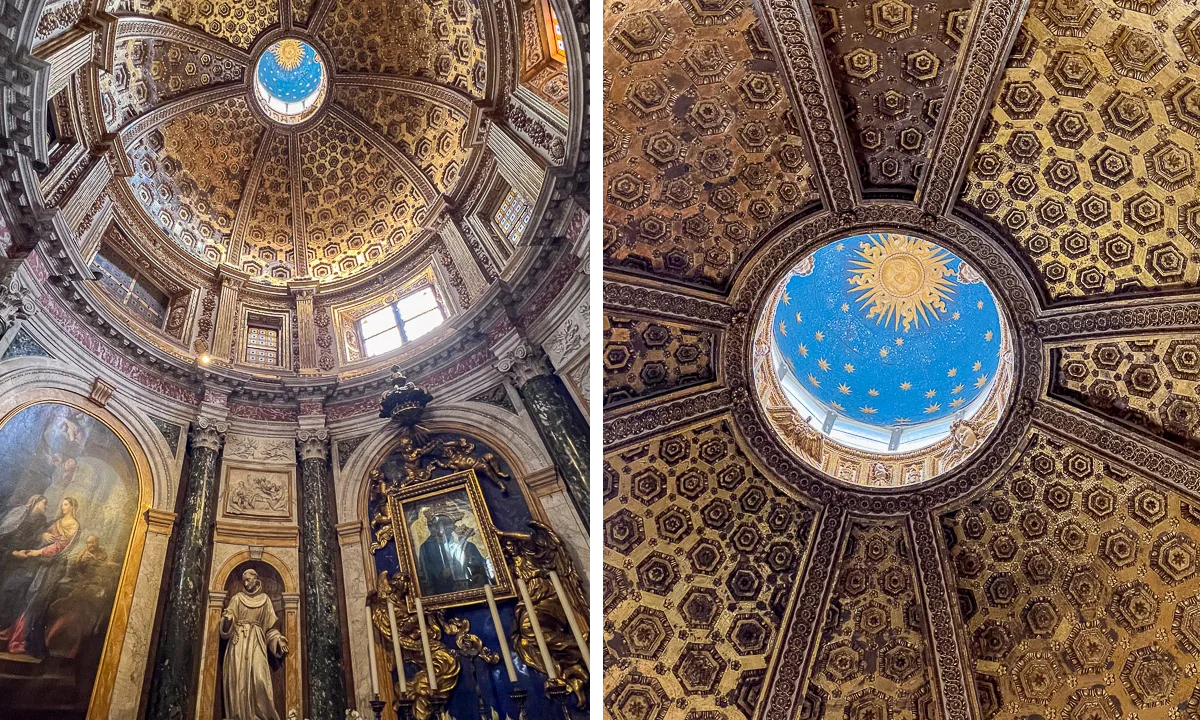
Other riches include a circular chapel with a splendid golden dome ceiling and several sculptures by Michelangelo, Donatello, and other famous sculptors who have all left their mark on the cathedral.
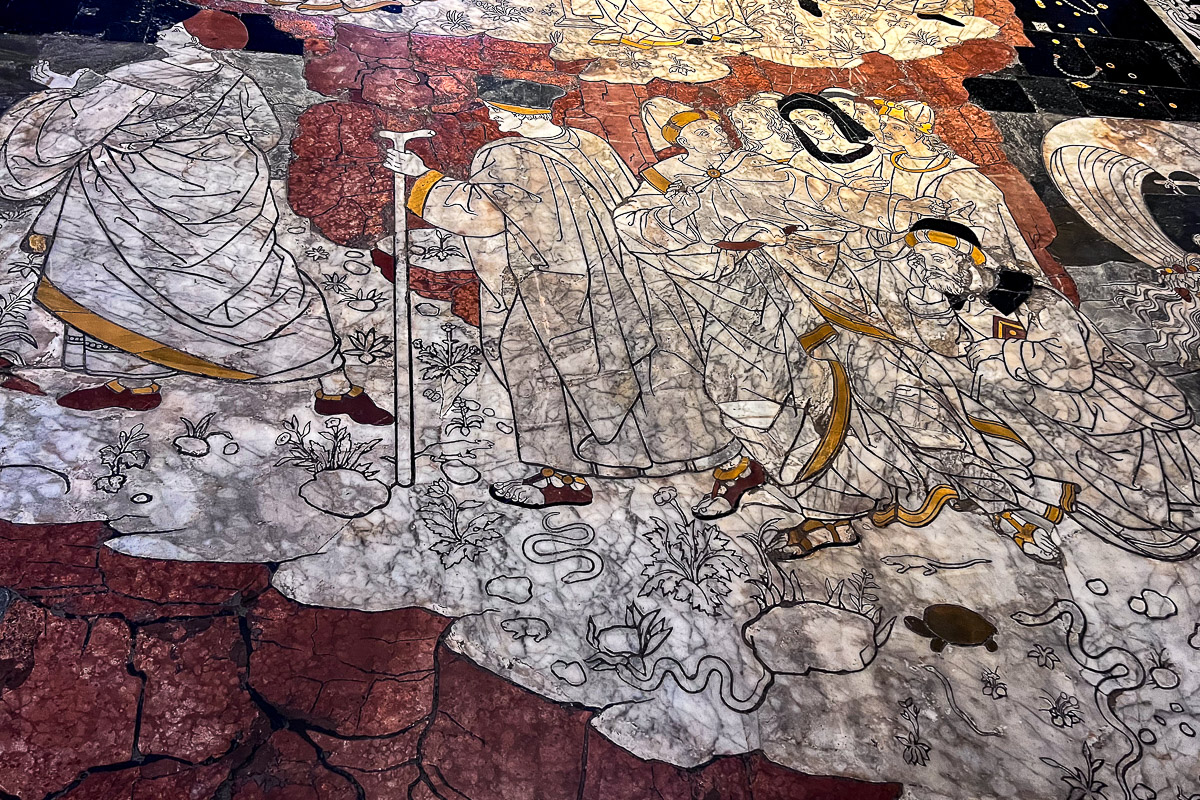
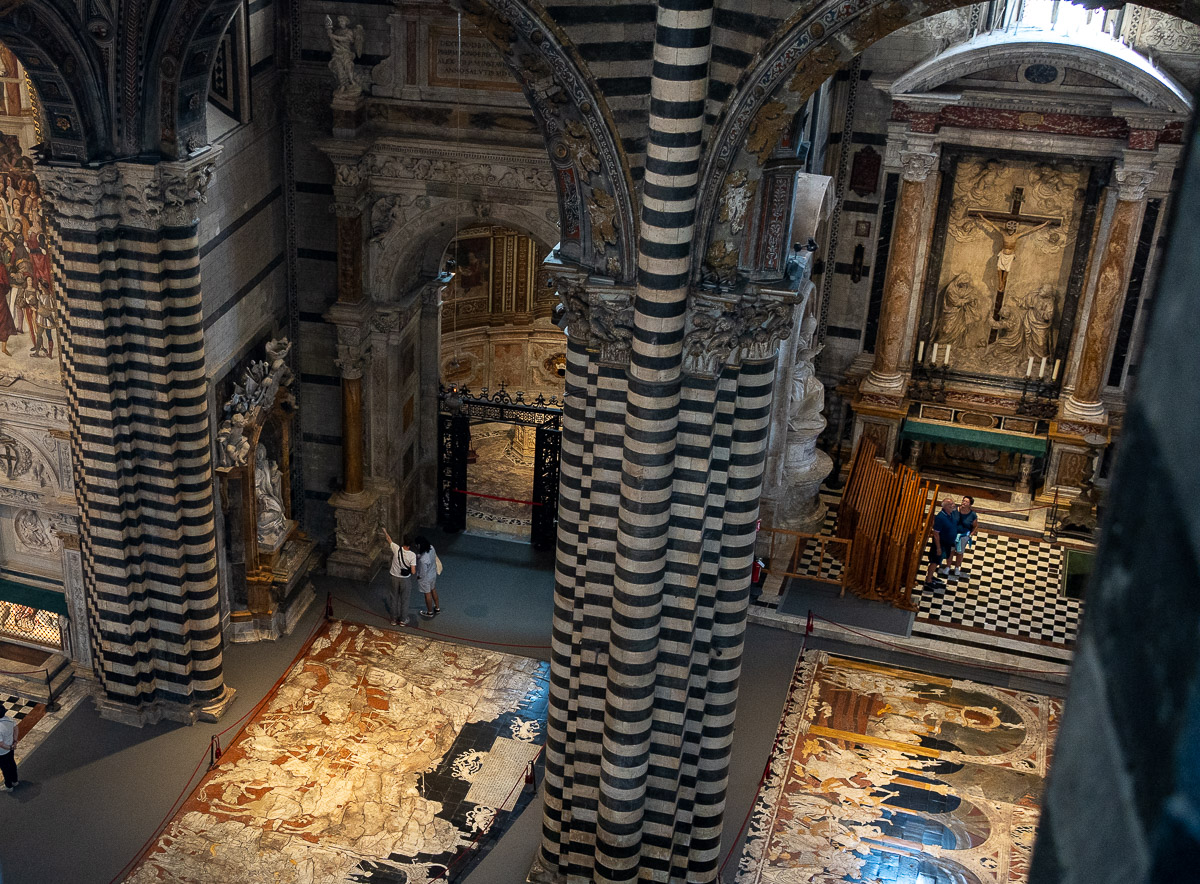
The splendor doesn’t stop at eye level. Look down to see the marble mosaic floor that is thought to be the cathedral’s most prized possession. One of the most ornate floors in all of Italy is entirely covered in intricate and dramatic scenes. Yes, feeling slightly overwhelmed by such feast of craftsmanship everywhere you look is pretty standard here.
Piccolomini Library
Go through an unassuming door on the north aisle of the cathedral to enter a technicolor dream – the Piccolomini Library.
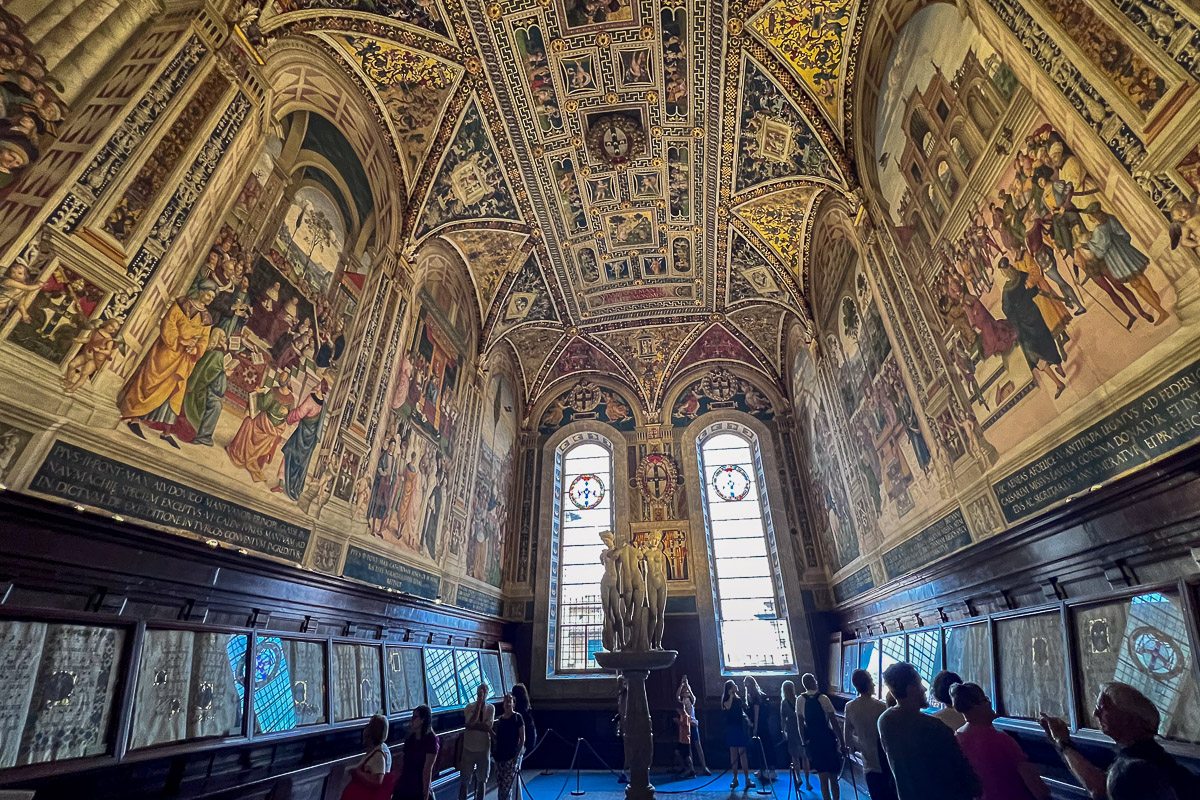
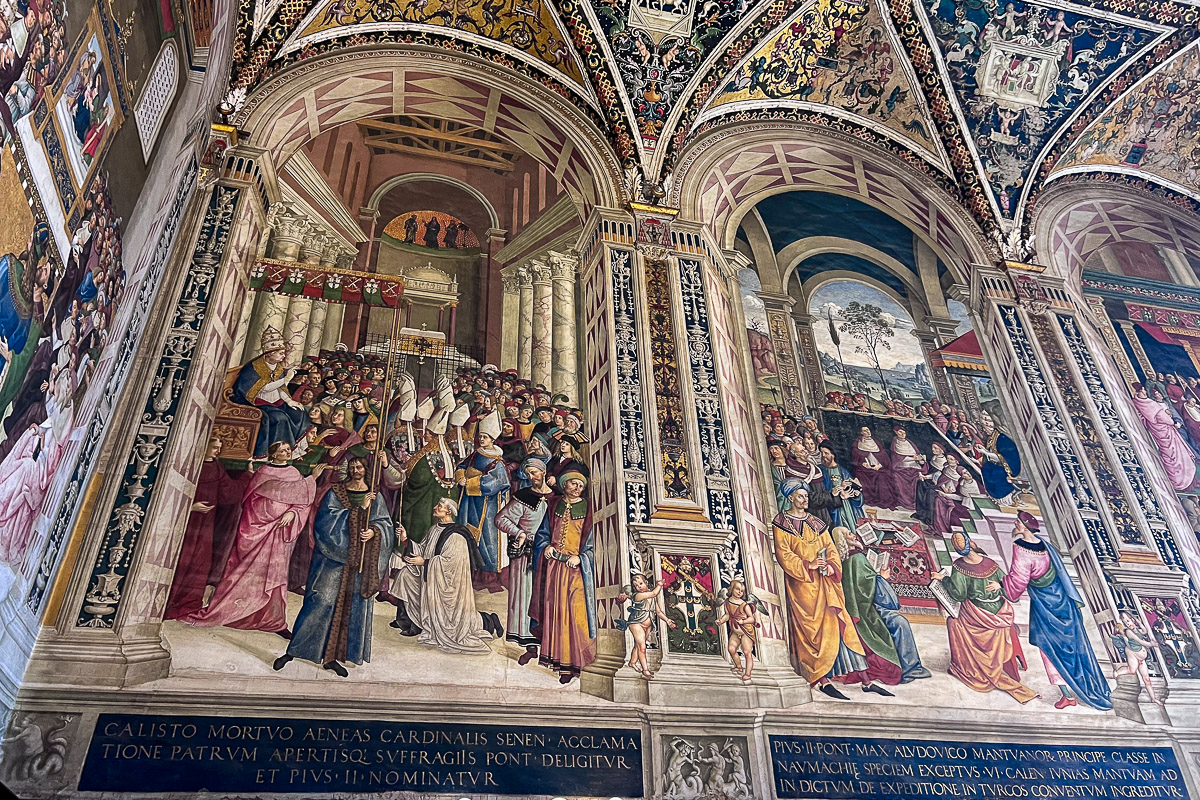
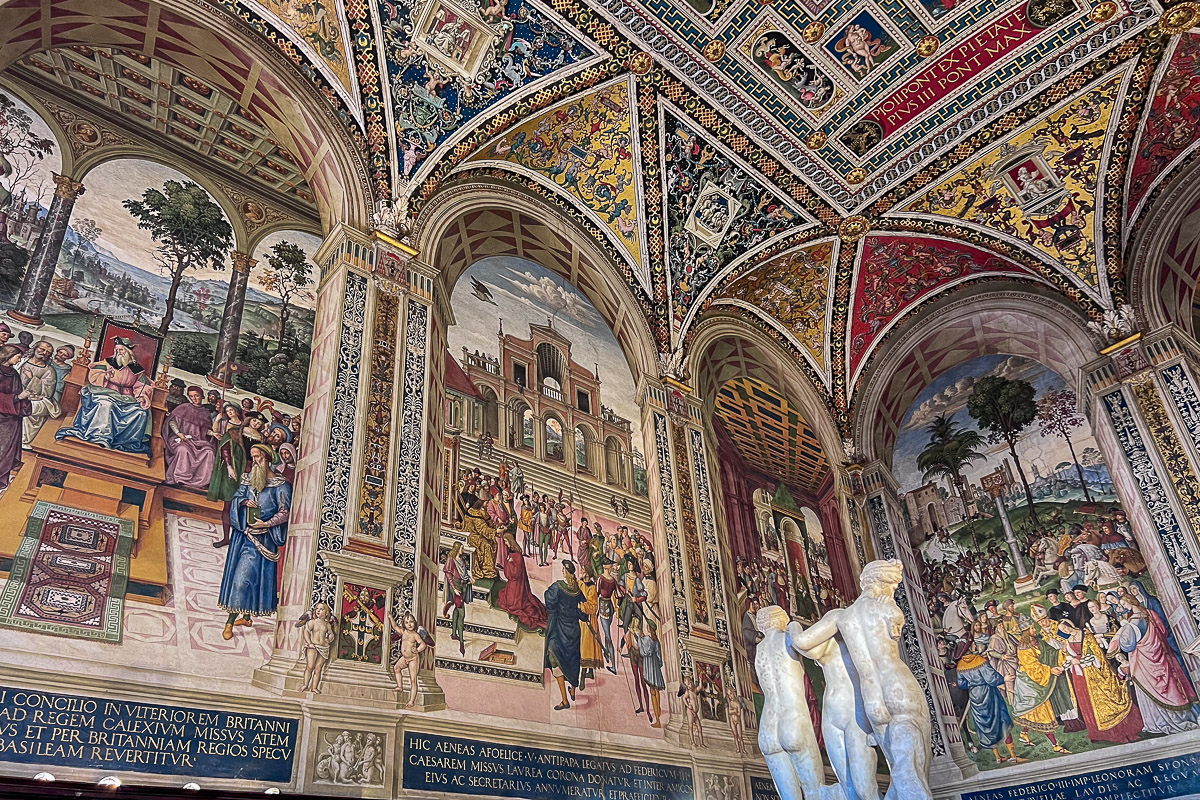
Color-saturated frescoes cover the entire room from walls to ceilings, so bright that they seem illuminated from within.
“Above” the cathedral
The Gate of Heaven (or “Porta del Cielo” ) is a guided tour of the upper part of the cathedral that shouldn’t be missed – it’s one of the best things to do I think. You get access to “hidden” areas of the cathedral but most importantly unique views over the stunning architecture. From a new perspective on the mosaic floor…
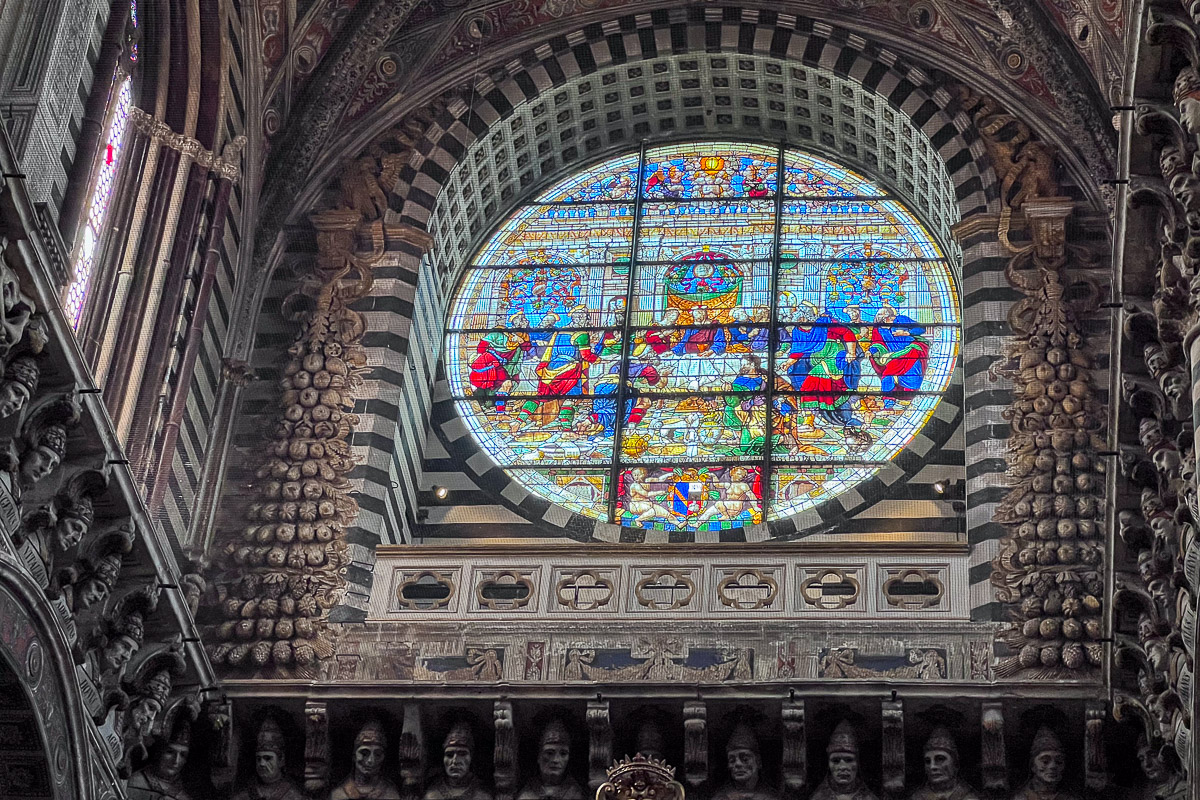
… to close-ups of the magnificent stained glass windows.
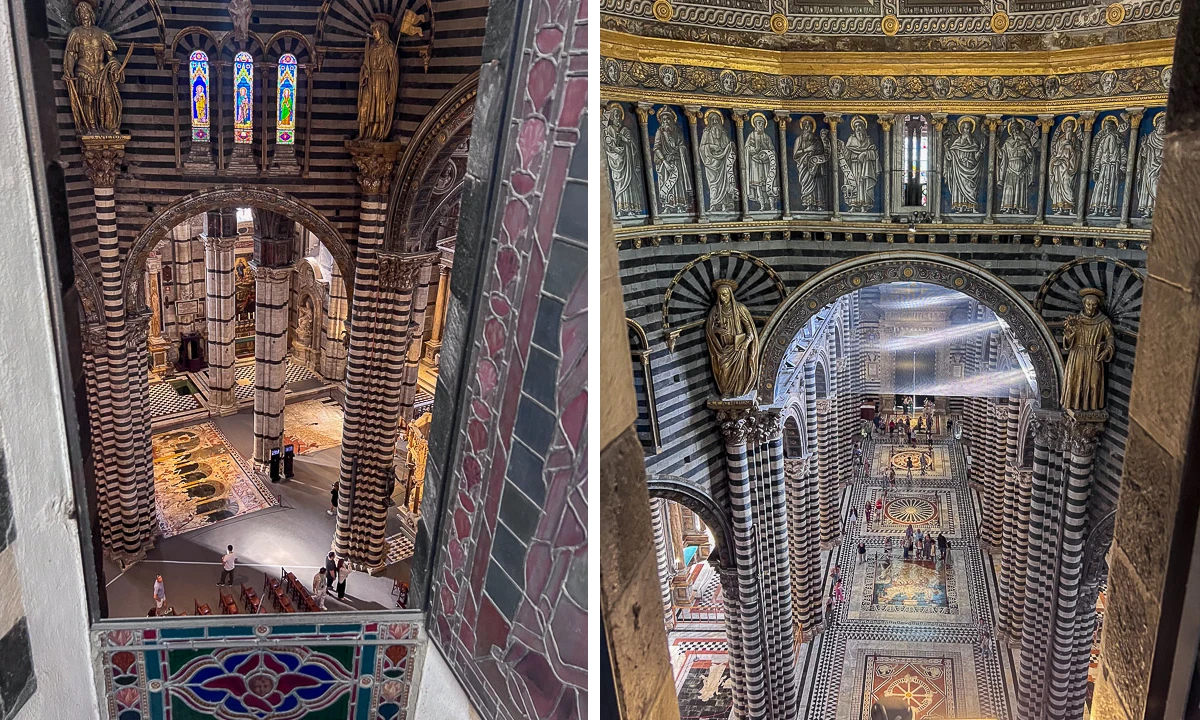
A separate tour Panorama brings you outside on top of the New Cathedral right across which was never completed. An attempt at expanding the church in the 14th century was stopped in its track by the Black Plague, and today there’s a rather stark structure standing (called the Facciatone) you can climb for stunning views.
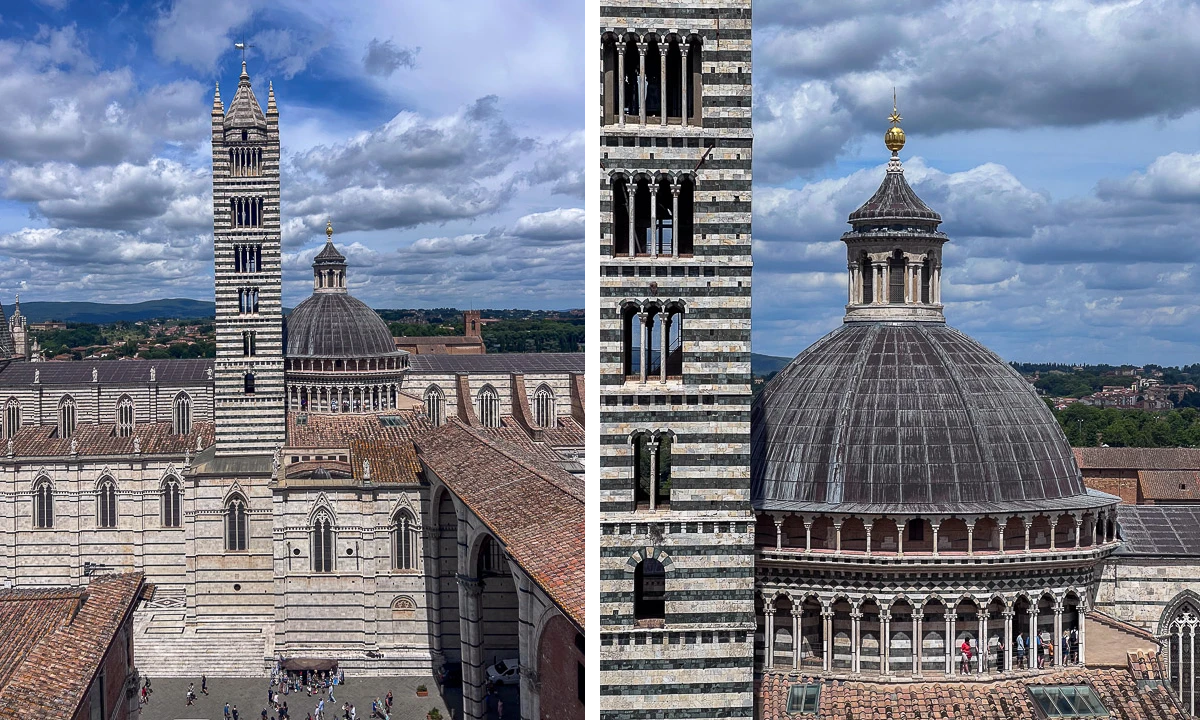
It’s possibly the best panoramic lookout in all of Siena.
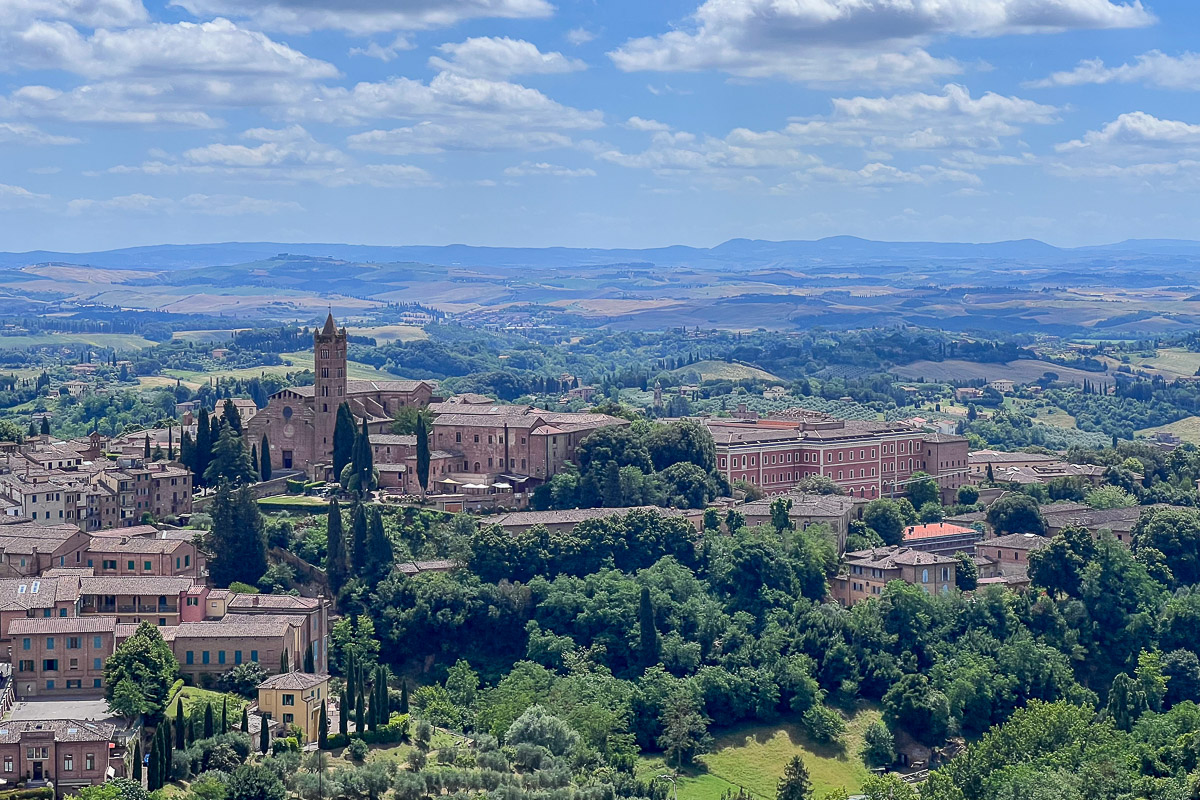
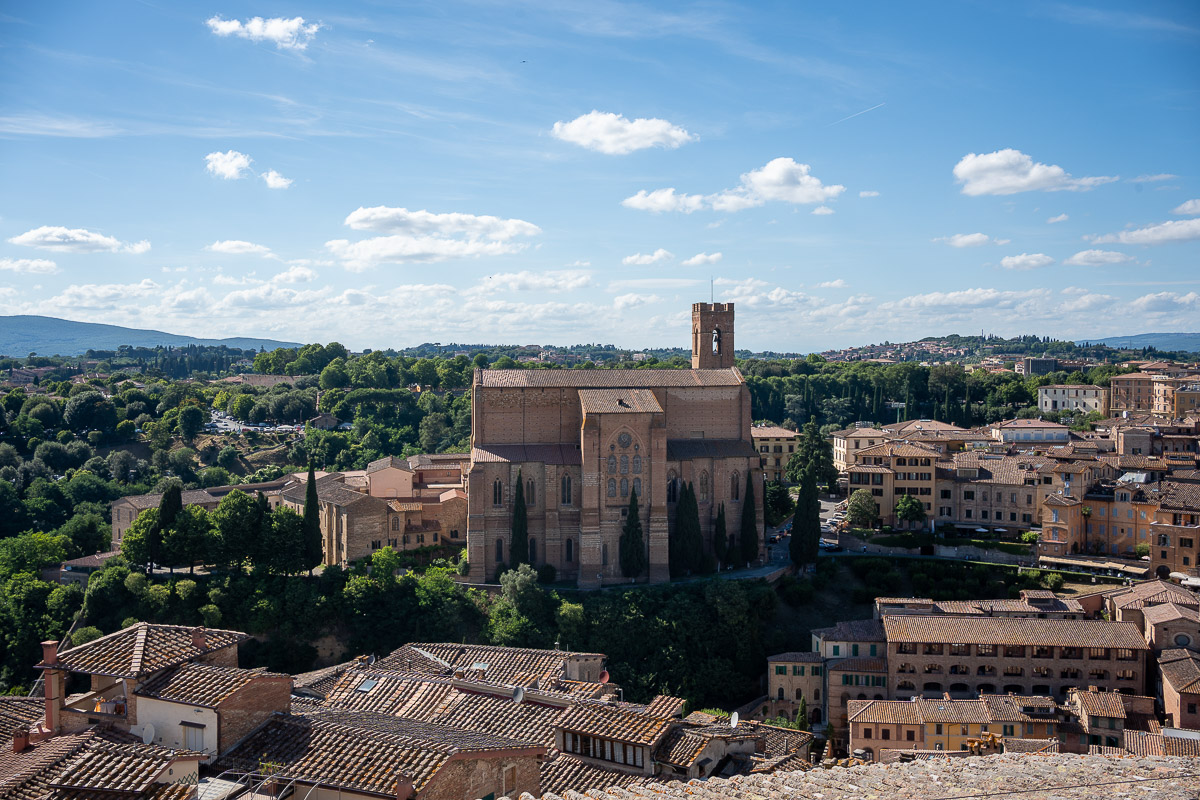
The view over Piazza del Campo alone is worth the climb.
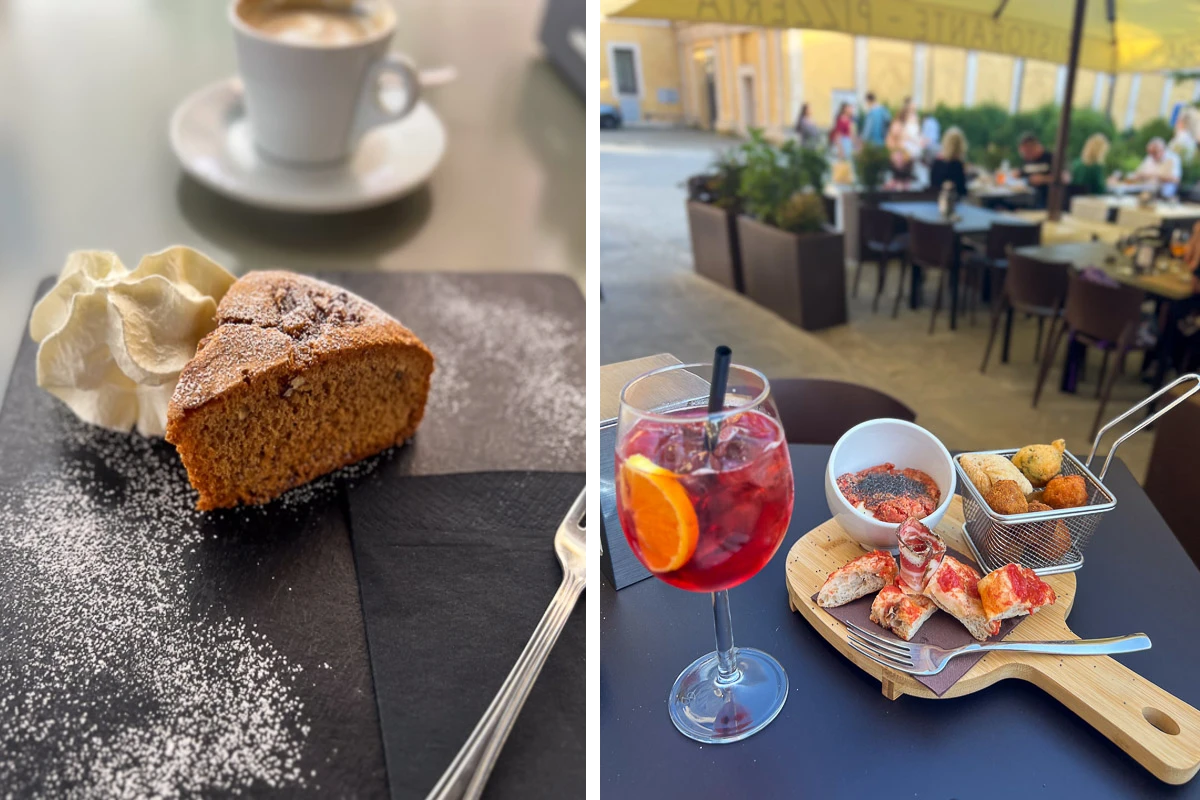
Take a break after your Duomo visit at one of the cafes nearby. I particularly liked the intimate feel of the one right behind the Duomo in Piazza S. Giovanni. As a typical Italian wine bar, you pick whether you want a sweet with a coffee or maybe you’re ready for aperitivo…
Evening stroll
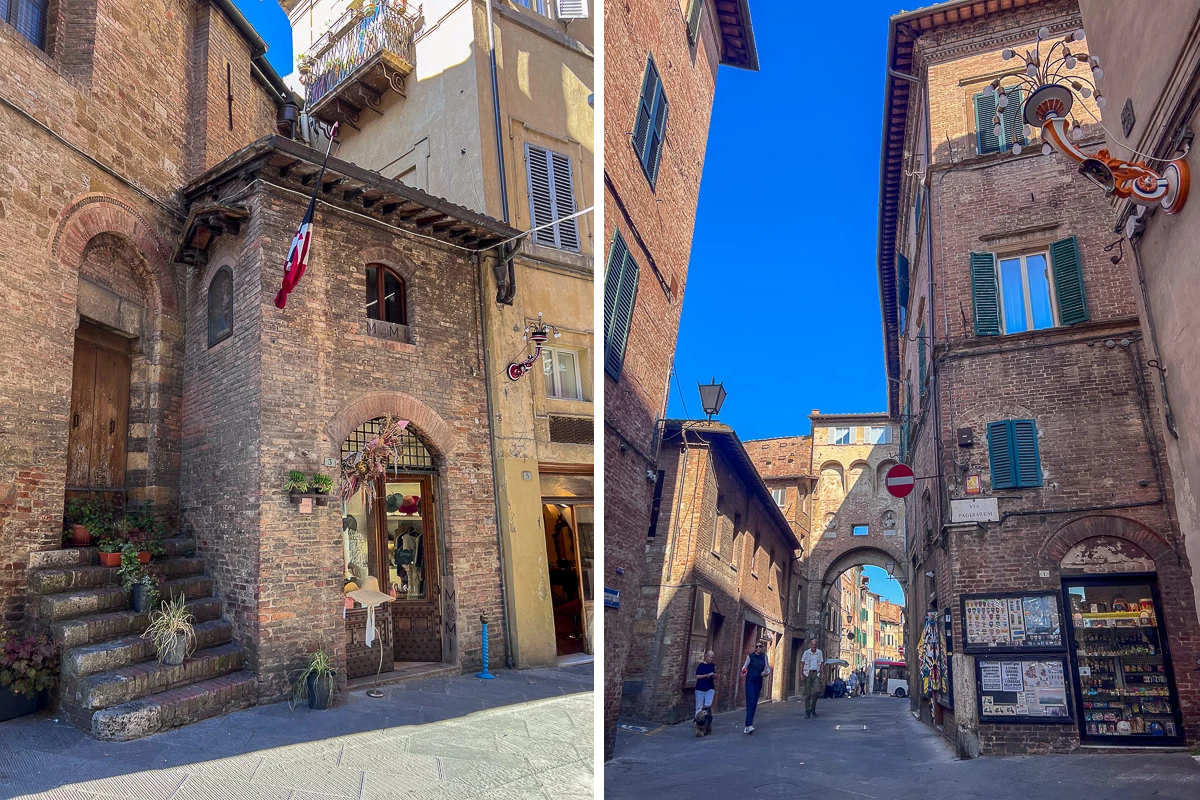
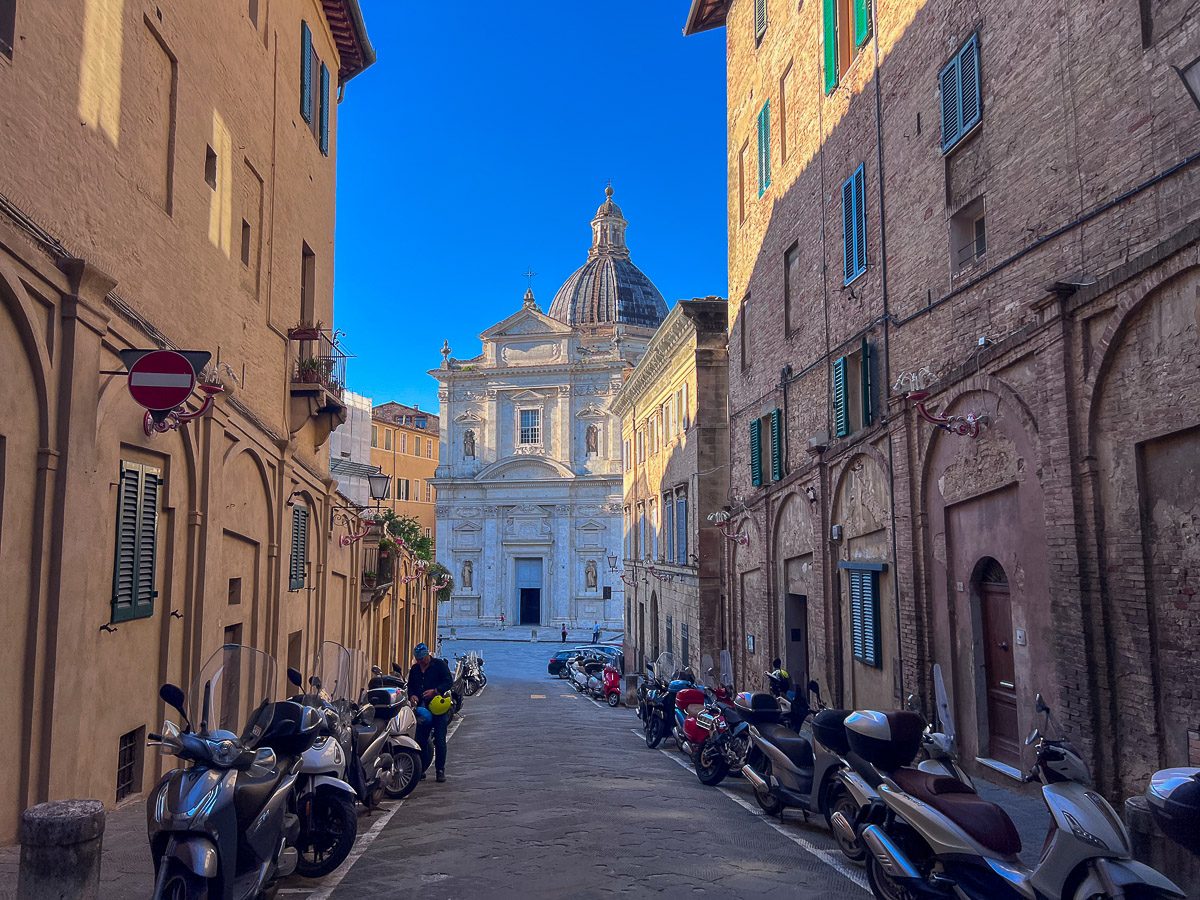
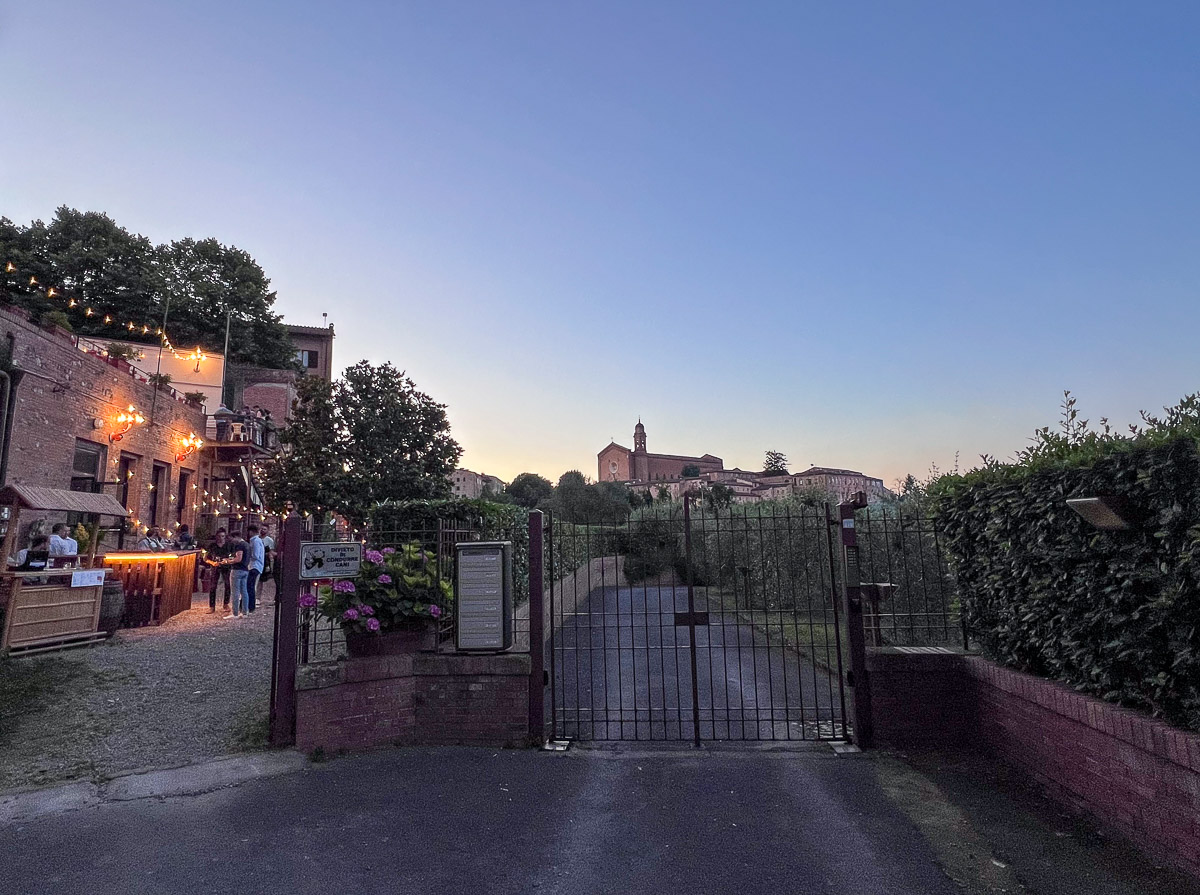
With the two main Siena sights checked off your list, the piazza and the cathedral, you can now just enjoy the city and its undeniable charm. Wandering in the early evening is the best with the dimming light warming up the clay-colored walls all around.
Restaurants outside the main street are inconspicuous so it helps to have an address in mind. I could have easily walked past Bruscello Bistrò and would have missed out on a hidden gem and exquisite cuisine.
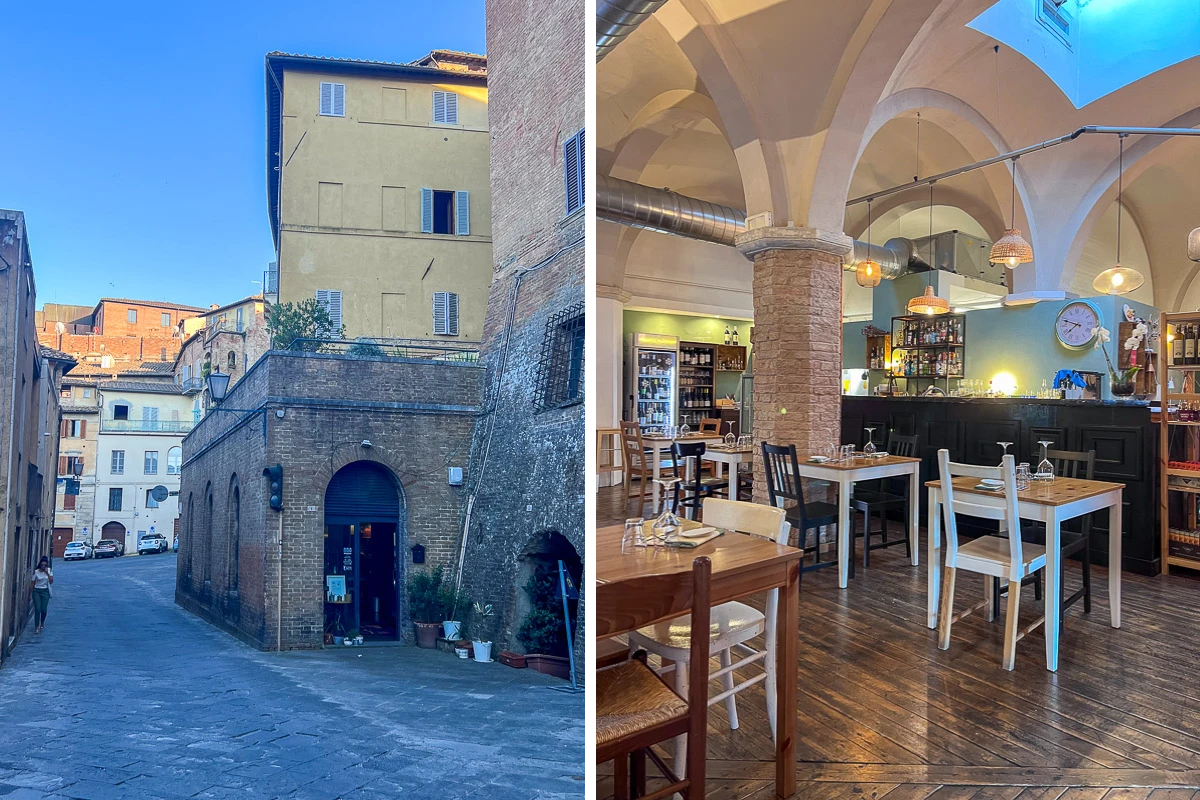
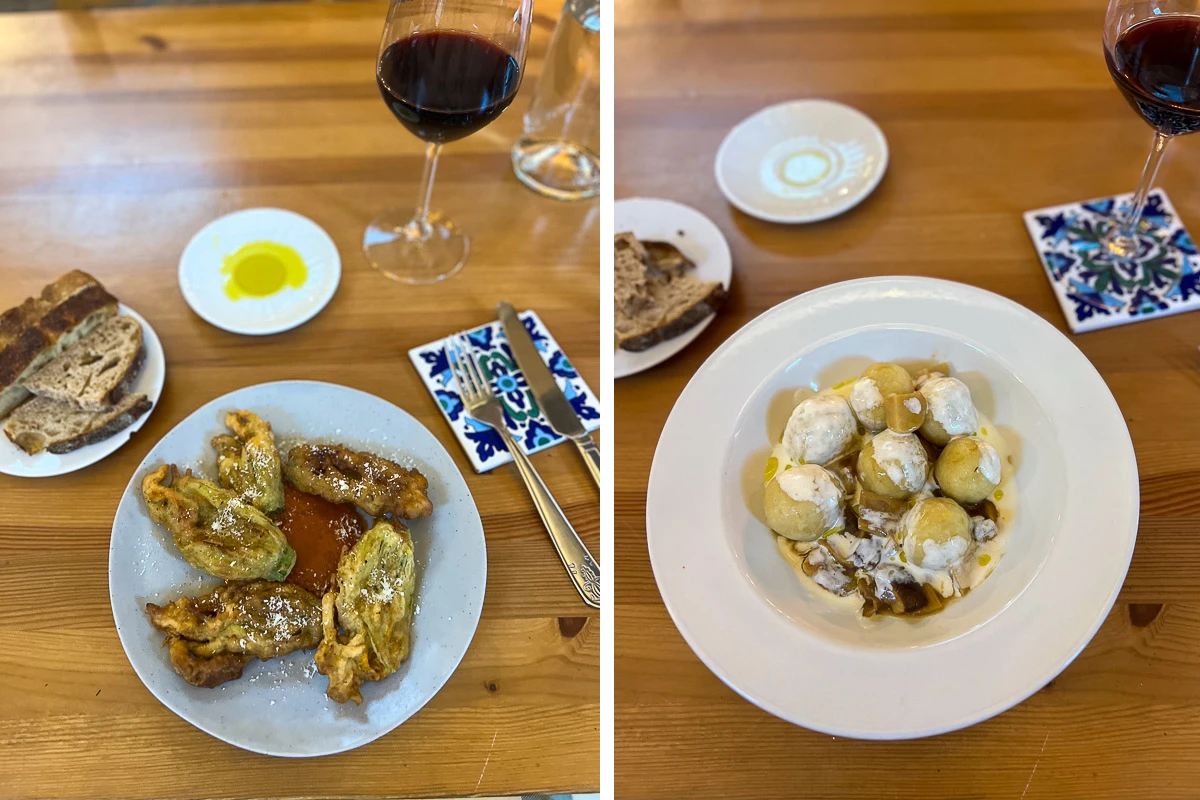
A beautiful take on cucina povera, it’s perfect for vegetarians or anyone craving fresh produce and homemade pastas. The fried zucchini blossoms and gnocchi with mushrooms and cream were comfort on a plate.
Walk off the carbs stopping by empty piazzas, strikingly beautiful at dusk. Cross Piazza del Campo now encircled by mini lights from the restaurants’ terraces with the hum of dinners echoing through.
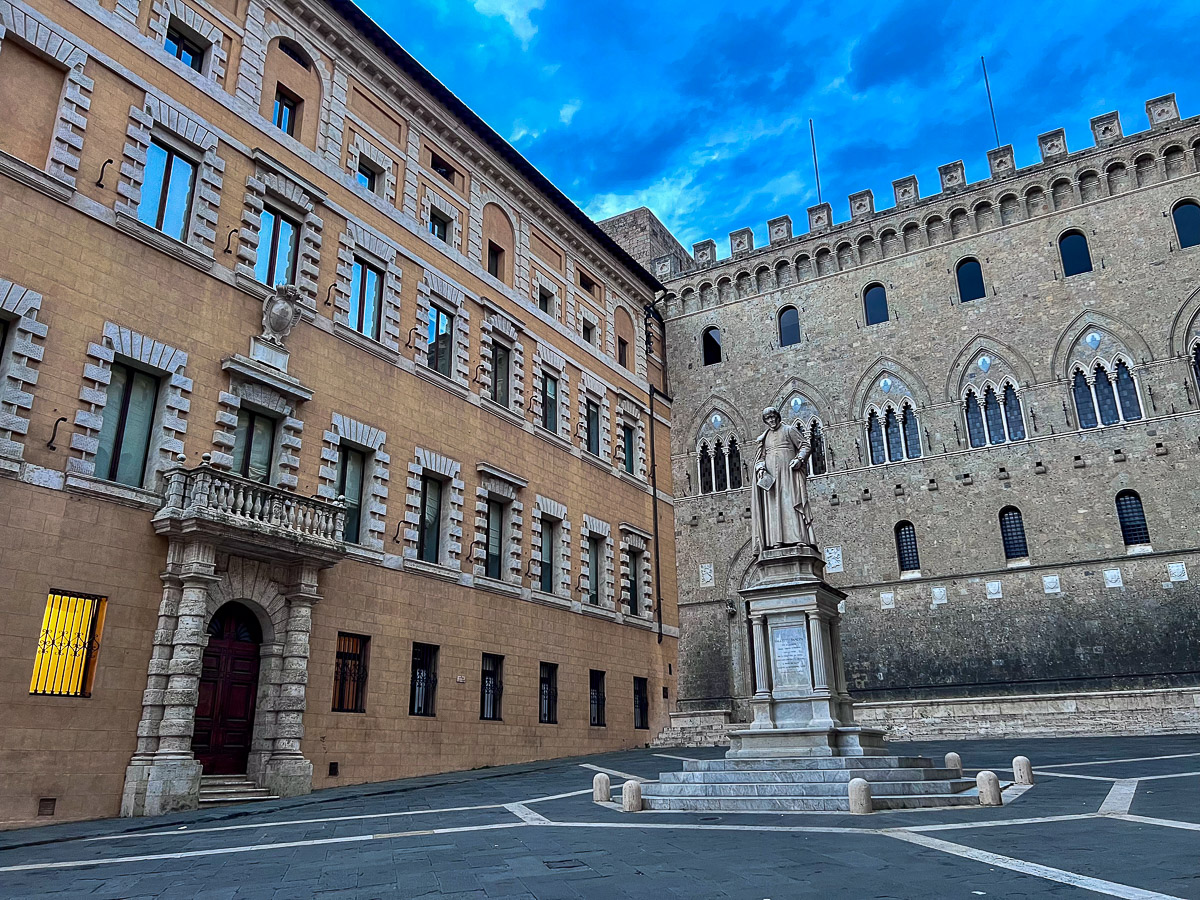
Admire the scale and details of gothic palazzos without anyone else around.
Let your curiosity lead the way, always, and follow alleys that may well turn into dead ends…
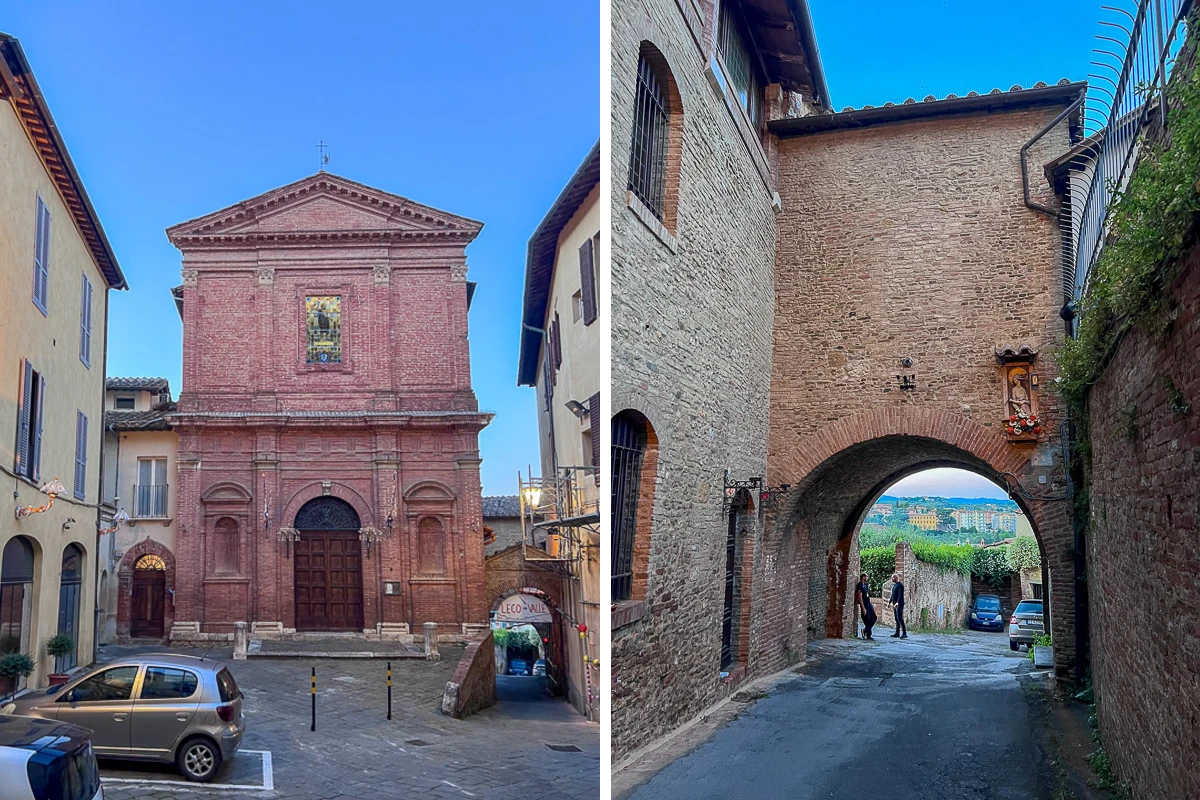
… or open onto magical pop-ups and hidden treasures.


No Comments